
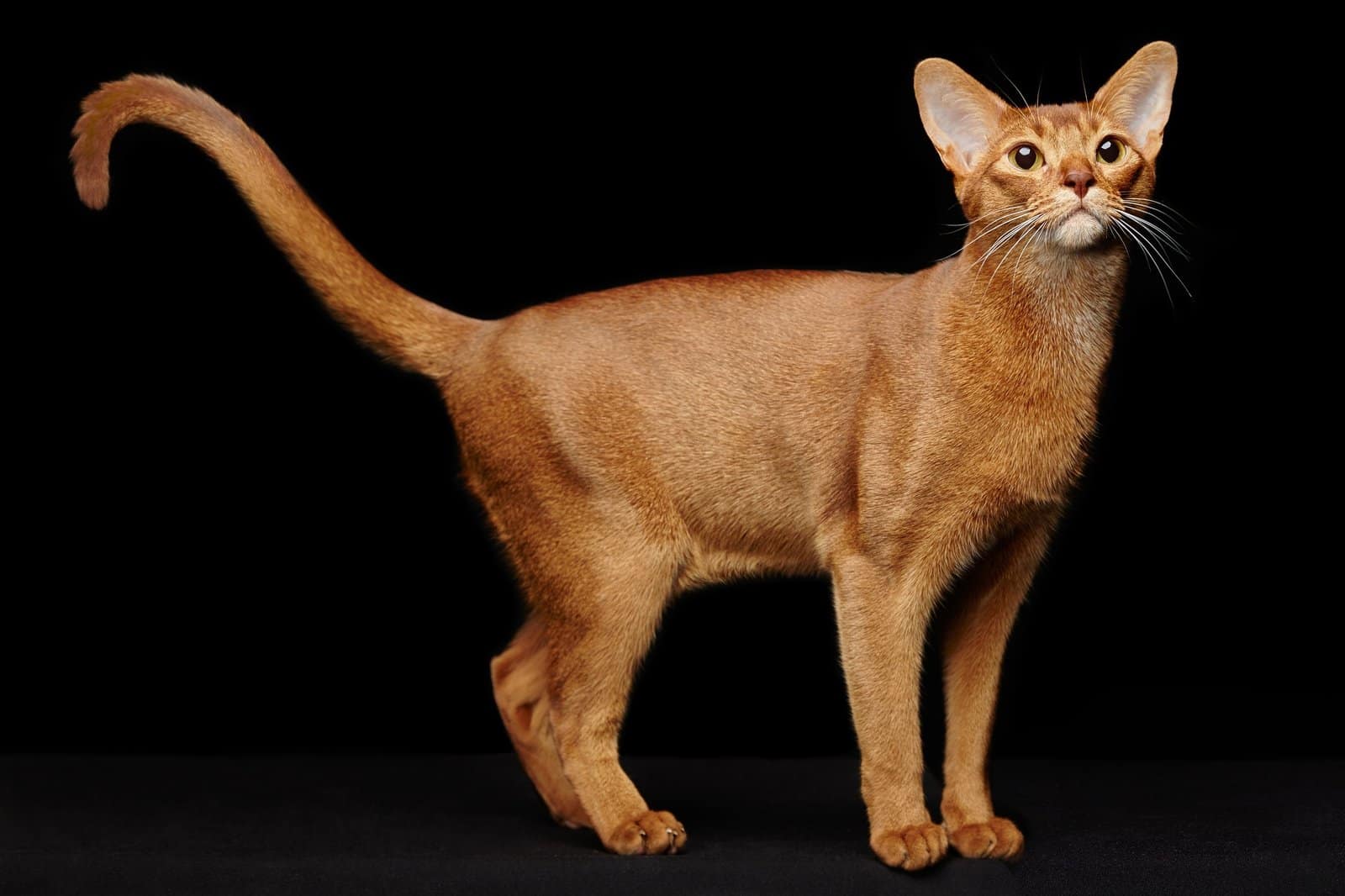
The Abyssinian is a medium-sized, athletic cat with a short, ticked coat and large expressive eyes. Often called the “dog of the cat world”, it’s curious, playful and very people-oriented. This guide covers Abyssinian personality, care, health issues, price and how to know if this high-energy breed is the right cat for you.
Inhaltsübersicht
Abyssinian Cat Overview
| Attribut | Beschreibung |
|---|---|
| Temperament | Lebhaft, neugierig, aufgeschlossen, intelligent und anhänglich (Spitzname "der Hund der Katzenwelt"). |
| Gehäuse Typ | Mittelgroß mit langen Gliedmaßen und gut entwickelter Muskulatur. |
| Gewicht | Etwa 4-7,5 kg (Männchen sind schwerer als Weibchen). |
| Herkunft | Küsten des Indischen Ozeans und Südostasiens (der Legende nach aus Äthiopien). |
| Lebenserwartung | In der Regel 12-15 Jahre (einige Personen über 20 Jahre). |
| Mantel | Kurzes, seidig-weiches Fell mit einzigartigem "Ticking" (wellenförmiges 斑纹). |
| Fellfarben | Zu den üblichen Farbtönen gehören Rot, Zimt, Blau, Hellbraun und Rotbraun; selten gibt es auch silberne Varianten. |
| Shedding Level | ⭐☆☆☆☆ (extrem niedrig: kurzes Haar, leicht zu bürsten). |
| Zuneigung Level | ⭐⭐⭐⭐⭐ (sehr anhänglich, lebt von menschlicher Interaktion). |
| Pflege-Schwierigkeit | ⭐⭐⭐☆☆ (erfordert viel Bewegung und Gesellschaft, ist aber leicht gesund zu erhalten). |
Einführung
Thinking about bringing an Abyssinian cat into your home? This athletic, short-haired “dog of the cat world” is endlessly curious, playful, and people-focused – but it also needs a lot of interaction and mental stimulation.
The Abyssinian is a medium-sized, muscular cat with a sleek, ticked coat that shimmers in the light. Large, alert ears, almond-shaped eyes in gold or green, and the classic “M” marking on the forehead give it a wild, expressive look.
In this guide, you’ll learn what Abyssinians are really like to live with – their personality, care needs, common health issues, and how to tell if this high-energy, dog-like cat is truly the right breed for you.
Abyssinian Cat History & Origin
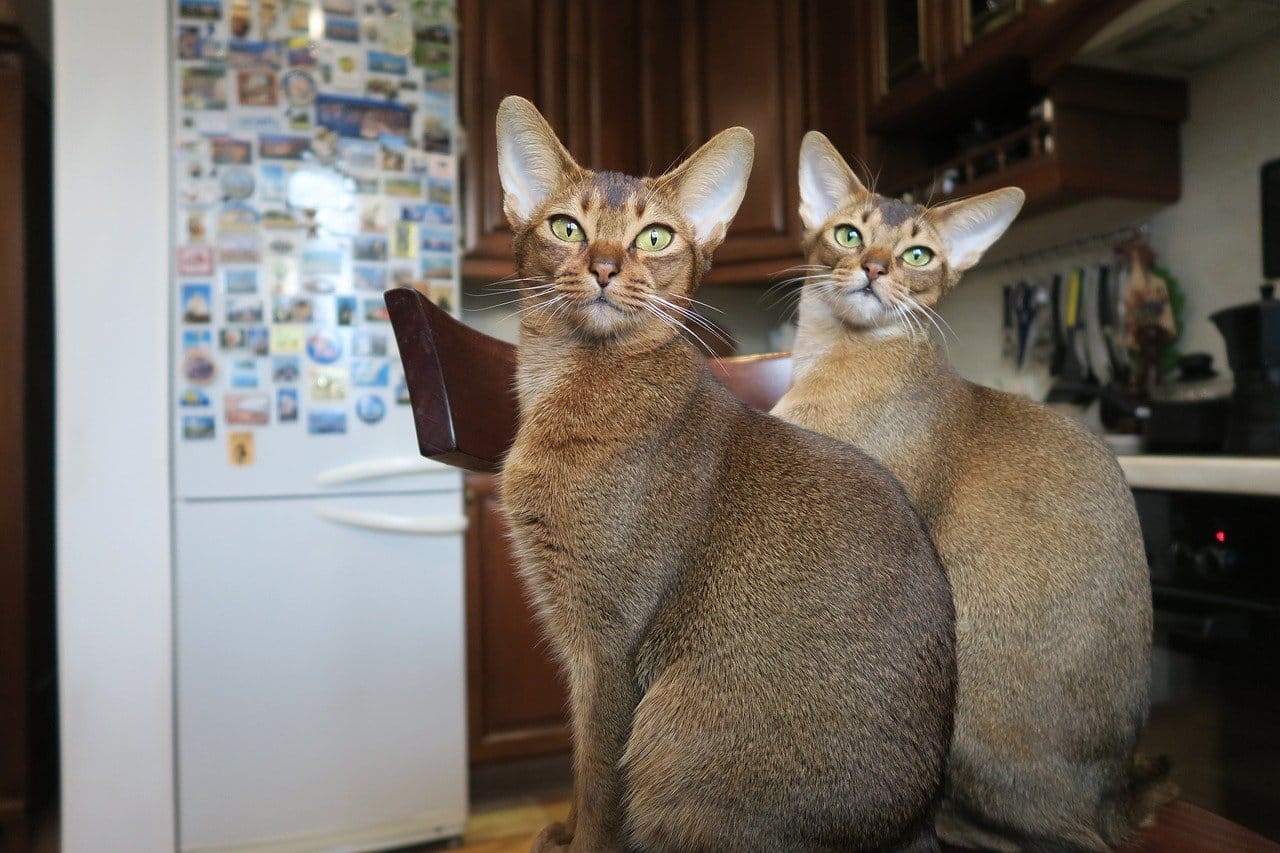
Über den Ursprung der Abessinierkatze gibt es zahlreiche Theorien. Während ihr Name von Äthiopien (früher bekannt als Abessinien) abgeleitet ist, legen genetische Studien nahe, dass ihre Vorfahren aus den Küstenregionen des Indischen Ozeans und Südostasiens stammen.
Obwohl sie historisch mit altägyptischen Katzen in Verbindung gebracht wird, deuten heutige Forschungen darauf hin, dass ihr wahrer Ursprung in Südostasien und an der Küste des Indischen Ozeans liegt, wo sie über Handelswege lange nach der ägyptischen Zeit eingeführt wurde.
Legende und historische Berichte:
Es heißt, dass im 19. Jahrhundert ein britischer Offizier ein weibliches Kätzchen namens "Zula" aus Alexandria, Ägypten, mitbrachte, das später die Grundlage für die Zucht der Rasse bildete.
Ein Eintrag von 1871 in Harper's Weekly zeigte, dass diese Katze auf der Crystal Palace Exhibition eine Auszeichnung erhielt.
Moderne Entwicklung:
Die Rasse wurde Anfang des 20. Jahrhunderts im Vereinigten Königreich und in den USA eingeführt, wobei in den USA in den 1930er Jahren eine groß angelegte Zucht begann.
Appearance: Size, Colors & Coat
Die Abessinierkatze hat einen mittelgroßen, schlanken Körperbau mit langen Gliedmaßen und einer gut entwickelten Muskulatur, die Beweglichkeit und Kraft ausstrahlt. Ihr Körper ist stämmig und dennoch anmutig, ergänzt durch einen langen, dicken Schwanz; Kater sind im Allgemeinen größer als Kätzinnen.
Head & Facial Features: Wedge-shaped head with an ‘M’ marking on the forehead. Large almond-shaped eyes, framed by dark ‘eyeliner’ and whisker pads that enhance their wild elegance. Prominent, forward-tipped ears with pink inner flaps.
Coat & Coloration: Short, close-lying fur that’s dense, smooth, and silky to the touch. Each hair shaft displays distinct color bands (ticking) from root to tip, creating a subtle metallic sheen.
Common Colors: Traditional hues: Ruddy, cinnamon, blue, and fawn. TICA standards also recognize lilac and chocolate variations.
Silver Variants: Lighter base fur with dark-tipped hairs, maintaining the signature ticking pattern.
Personality & Temperament
Abyssinian cats are best known for their high energy and curiosity. They love to climb, jump, and explore every corner of the home, often choosing the highest shelves and cat trees as their favorite spots. It’s common to find an Abyssinian supervising from above or joining in whatever activity their humans are doing.
Energy Level & Play Style
This breed is almost always “on the move”. Abyssinians enjoy interactive games such as fetch, chase, wand toys, and puzzle feeders. Short, intense play sessions throughout the day suit them better than a single long session. Without enough play and stimulation, they can become bored and may turn their intelligence toward mischief, such as opening cupboards or knocking items off tables.
Affection & Attachment to Humans
Abyssinians are very people-oriented and are often called the “dog of the cat world”. They like to follow their owners from room to room and want to be involved in daily life, whether you’re working at a desk, cooking, or relaxing on the sofa.
However, they are not always classic lap cats. Many Abyssinians enjoy brief cuddles and gentle petting, then prefer to sit beside you, on the back of the sofa, or nearby rather than sleeping on your lap for hours. They show affection through interaction, eye contact, and play rather than constant clinginess.
Compatibility With Families & Other Pets
With proper socialization, Abyssinians usually get along well with respectful children, other cats, and even cat-friendly dogs. Their playful nature makes them great companions for households that enjoy interactive pets. They do not typically like being ignored or left out of family activities and may become vocal or restless if they feel lonely.
Because they thrive on company, some owners find that keeping two compatible cats (or a friendly dog) helps prevent boredom and separation stress. Slow, supervised introductions are important when adding an Abyssinian to a multi-pet home.
Ideal Home Type
An Abyssinian is best suited to an active home where people are around regularly and willing to play every day. They do well in apartments as long as there are vertical spaces (cat trees, shelves) and enough toys, but a quiet home with little interaction or long daily absences is not ideal.
In short, choose an Abyssinian if you want a smart, athletic, highly interactive cat that behaves a bit like a playful, loyal dog — and you’re ready to invest time in training, play, and companionship.
Everyday Care for Abyssinian Cats
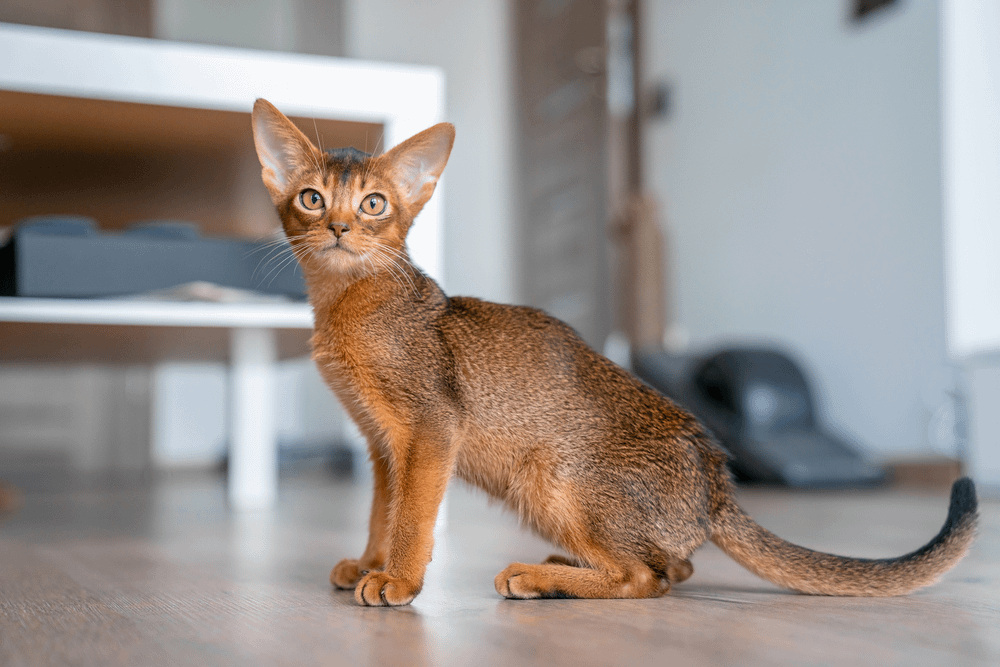
Abyssinians are energetic, intelligent and people-oriented, so their daily care is about more than just food and a litter box. They need the right nutrition, plenty of playtime, a stimulating environment and regular health checks to stay happy.
Diet & Nutrition
As active carnivores, Abyssinian cats do best on a high-quality, high-protein diet.
- Nutrition basics: Choose complete and balanced cat food that meets AAFCO (or equivalent) nutritional standards. Look for animal protein as a main ingredient.
- Life stage formulas: Kittens, adults and seniors have different needs. Use age-appropriate formulas to support growth, maintenance or joint and organ health.
- Portion control: Abyssinians have fast metabolisms and love to move, but they can still gain weight if overfed. Follow feeding guidelines on the package, then adjust based on body condition and activity level.
- Treats in moderation: Use treats for training and bonding, but keep them to a small portion of daily calories to avoid obesity.
- Fresh water: Provide fresh, clean water at all times. Many Abyssinians enjoy running water, so a pet fountain can encourage better hydration.
If you’re considering raw or home-cooked diets, always consult a veterinarian or veterinary nutritionist to avoid nutritional deficiencies.
Bewegung & Interaktion
Daily exercise is essential for this high-energy breed. Without enough play, an Abyssinian can become bored, vocal or destructive.
- Interactive play sessions: Schedule at least one or two dedicated play sessions every day (10–15 minutes each). Use wand toys, feather teasers, light “fetch” toys or tunnels to mimic hunting and chasing.
- Vertical spaces: Cat trees, wall-mounted shelves and window perches let Abyssinians climb, jump and survey their territory from above, which they love.
- Mental stimulation: Rotate toys regularly and offer puzzle feeders or food maze toys. These challenge their intelligence and channel energy into problem-solving instead of mischief.
- Human interaction: Abyssinians thrive on being part of family life. Let them “help” with daily tasks, talk to them and involve them in play with children (supervised and gentle).
Think of exercise and interaction as part of their basic needs, not just optional enrichment.
Umwelt und Bereicherung
A stimulating environment keeps an Abyssinian’s body and brain busy, reducing stress and unwanted behaviors.
- Safe living space: Provide enough room to run, jump and explore. Avoid cluttered or cramped spaces where they can’t move freely.
- Varied toys: Offer a mix of toys—balls, crinkly toys, tunnels, wand toys, puzzle feeders—and rotate them weekly to keep things interesting.
- Optionen zum Kratzen: Multiple scratching posts or boards (vertical and horizontal) help maintain claws and protect your furniture.
- Water interaction: Many Abyssinians are curious about water. A fountain, shallow water dish to paw at or supervised play near a sink can be fun enrichment.
- Outdoor access (safely): If possible, provide a secure “catio,” screened balcony or supervised harness walks. Never allow free roaming outdoors, as this increases risks from cars, predators and disease.
A rich environment is especially important if your Abyssinian spends time alone during the day.
Grooming & Basic Health Care
Compared to long-haired breeds, Abyssinians are low-maintenance, but regular grooming and preventive care are still important.
- Fellpflege: Their short, dense fur usually only needs brushing once a week with a soft brush or grooming glove to remove loose hair and distribute skin oils.
- Nail trimming: Check and trim nails every 2–4 weeks, depending on wear from scratching posts and activity.
- Ear and eye care: Gently wipe away any discharge from the corners of the eyes with a damp, soft cloth. Check ears for dirt, wax or redness; clean with a vet-approved ear cleaner if needed.
- Dental hygiene: Dental disease is common in cats. Offer dental treats, chews or tooth-brushing (if tolerated) and schedule professional cleanings as recommended by your vet.
- Regular vet visits: Annual checkups (or more frequent for seniors) help monitor weight, heart, kidneys, joints and teeth. Ask your vet about vaccination schedules and parasite prevention.
If the coat suddenly becomes dull, patchy or very rough, or if your cat shows any changes in appetite, behavior or energy, see a veterinarian promptly.
Mental Well-Being
Abyssinians are emotionally sensitive and highly social. Protecting their mental health is just as important as meeting their physical needs.
- Training & tricks: Use clicker training or simple commands (“sit”, “high five”, “come”) to engage their intelligence. Many Abyssinians enjoy learning tricks, running obstacle courses or using a cat wheel.
- Companionship needs: This breed dislikes long periods of isolation. If you’re away for many hours each day, consider hiring a sitter, arranging more intense evening play sessions or eventually adding another compatible pet.
- Socialization: Introduce new people, pets and environments gradually and positively. Reward calm, curious behavior with treats and praise.
- Stress reduction: Provide safe Verstecken spots, elevated perches and consistent routines. Watch for signs of stress, such as over-grooming, hiding, aggression or changes in litter box habits, and consult a vet or behaviorist if needed.
With enough attention, play and mental challenges, Abyssinians remain confident, affectionate cats that flourish at the center of family life.
Common Health Issues in Abyssinian Cats
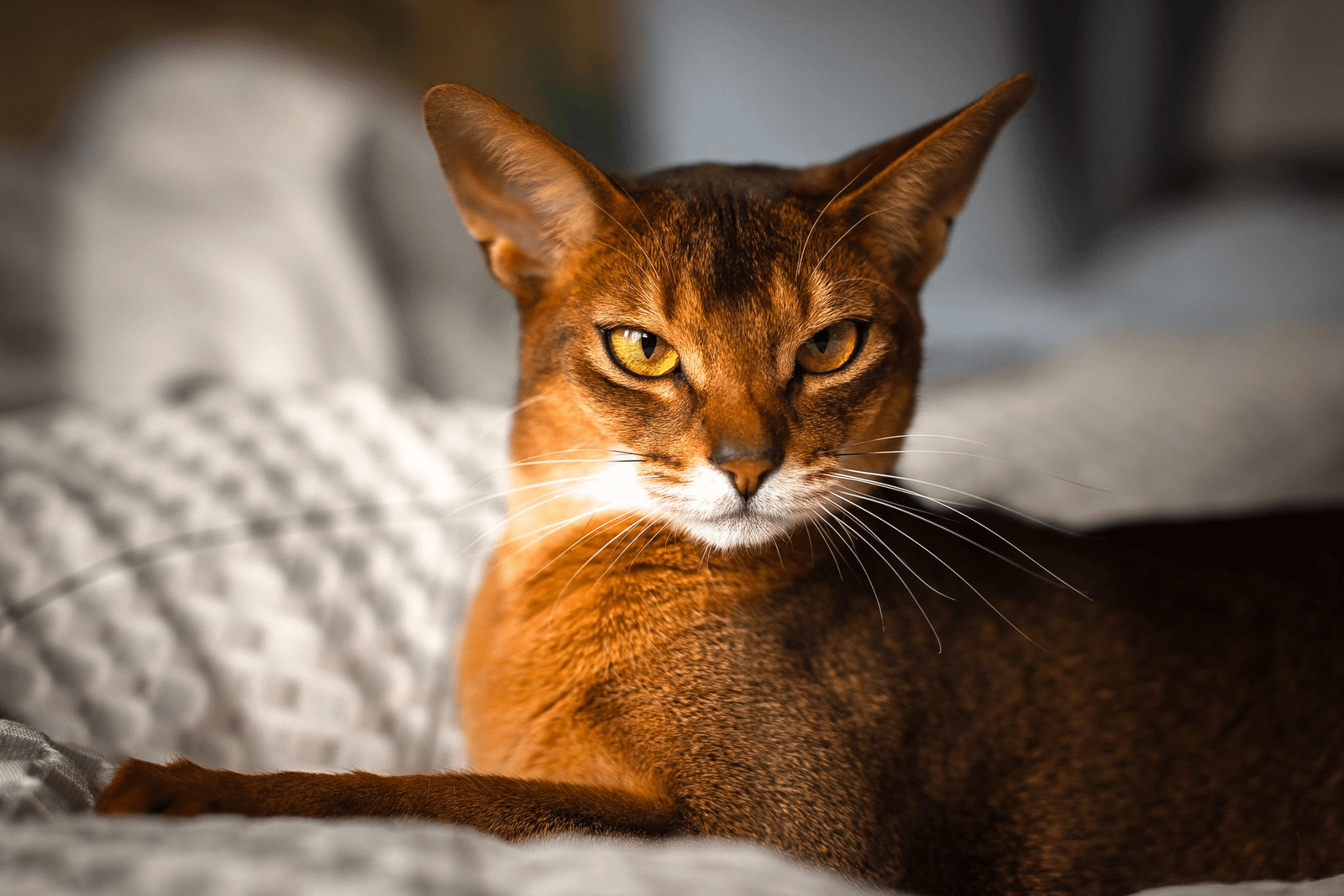
Abyssinian cats are generally healthy, but like all purebred cats they are prone to a few hereditary conditions. Responsible breeders will screen for these problems, and as an owner it helps to know the main risks so you can catch any warning signs early.
| Thema Gesundheit | Merkmale | Erkennung und Prävention |
|---|---|---|
| PK-Mangel | Eine häufige erbliche Anämie, die die Lebensdauer der roten Blutkörperchen beeinträchtigt. | DNA-Gentests (zum Nachweis relevanter Mutationen). |
| Progressive Netzhautatrophie (PRA) | Erbliche Augendegeneration, die in fortgeschrittenen Stadien zur Erblindung führt. | DNA-Gentests. |
| Patellaluxation | Verrenkung der Kniescheibe, die eine Lahmheit der Hinterbeine verursacht. | Es sind keine Gentests verfügbar; zur Beurteilung ist eine professionelle tierärztliche Untersuchung erforderlich. |
| Nieren-Amyloidose | Abnorme Eiweißablagerungen in den Nieren, die die Nierenfunktion beeinträchtigen. | Es gibt keine DNA-Tests; frühzeitige Bluttests können helfen, Warnzeichen zu erkennen. |
Anmerkungen:
In addition to these breed-specific issues, Abyssinians can also develop common feline problems such as dental disease and obesity. Keeping your cat at a healthy weight, feeding a balanced diet and scheduling regular vet checkups will go a long way toward prevention.
If you are buying from a breeder, always ask for health certificates and DNA test results for known hereditary diseases such as PK deficiency and PRA. For rescue cats or mixed heritage, discuss screening tests and an appropriate checkup schedule with your veterinarian.
Is the Abyssinian the Right Cat for You?
Choosing a cat breed is really about matching temperament and lifestyle. Abyssinians are energetic, curious, and very people-focused—wonderful for some homes and too intense for others. Use this quick comparison to see whether this breed fits you.
Who Abyssinian Cats Are Suitable For
| Geeignet für | Why |
|---|---|
| Households that enjoy active, interactive pets | Abyssinians love games, training, and following you around like a little shadow. |
| Experienced cat owners | Their high energy and intelligence benefit from an owner who understands cat behavior. |
| Families with children or other friendly pets | They are social and usually enjoy respectful kids, other cats, and cat-friendly dogs. |
| People who can spend time at home every day | They thrive on daily interaction and may get lonely if left alone for long periods. |
| Pet lovers willing to provide toys, climbing trees, shelves and cat tunnels | A rich environment helps them burn energy and stay mentally stimulated. |
Who Abyssinian Cats Are Not Ideal For
| Not Ideal For | Why |
|---|---|
| Individuals who prefer quiet, low-energy pets | Abyssinians are talkative, active and almost always “on the move.” |
| People who travel frequently or are away from home most of the day | Long periods of isolation can lead to stress, anxiety, or destructive behavior. |
| Owners who want a very kuschelig lap cat that sleeps on them most of the time | They are affectionate, but usually prefer playing and exploring over all-day snuggles. |
| Homes with no space for vertical climbing areas or interactive play | Without cat trees or shelves, they may turn furniture and countertops into playgrounds. |
| Those unwilling to invest time in daily play and environmental enrichment | Bored Abyssinians can become mischievous or demanding for attention. |
If you’re still comparing different personalities and energy levels, check out our complete cat breed list to see how the Abyssinian stacks up against other breeds.
Quick Self-Check
An Abyssinian is probably a great match if:
- You enjoy playful, intelligent cats that want to be part of everything you do.
- You’re happy to schedule daily interactive play and provide cat trees or shelves.
- You like “dog-like” loyalty and companionship more than a quiet, independent cat.
An Abyssinian may not be the best choice if:
- You prefer a calm, low-activity cat that mostly naps on the couch.
- You’re often away from home for long hours or travel frequently.
- You don’t want to deal with constant climbing, exploring, and curiosity.
If you’re looking for an athletic, people-oriented cat that brings a lot of energy and personality into your home, the Abyssinian can be an amazing companion. If you want a quiet, low-maintenance pet, a more relaxed breed may suit you better.
FAQ About Abyssinian Cats
Do Abyssinian cats shed a lot?
Abyssinian cats do shed, but very lightly compared with many other breeds thanks to their short, close-lying coats. Most owners can manage loose hair with a quick brush once or twice a week. They’re often described as “wash-and-wear” cats: a soft bristle brush or grooming glove plus normal household cleaning is usually enough to keep shedding under control, so daily grooming is not required.
Are Abyssinian cats cuddly or clingy?
Abyssinian cats are highly affectionate and people-oriented, but they are not usually all-day lap cats. Instead of staying curled up on you for hours, they prefer to follow you around, “help” with whatever you’re doing and play interactive games. They thrive on exploring, chasing toys and being involved in family life, so the best approach is to offer plenty of attention and playtime while still respecting their independence.
Are Abyssinian cats expensive?
Purebred Abyssinian cats are generally on the expensive side compared with many mixed-breed cats. Prices vary by bloodline, coat color, pedigree and where you live, and rare colors can increase the cost of kittens. Because this breed is relatively rare and in demand, it’s important to choose a reputable breeder or rescue, ask about health testing and avoid unusually cheap offers that may signal poor breeding practices.
Are Abyssinian cats good for allergy sufferers?
No cat breed is truly hypoallergenic, and Abyssinians still produce Fel d 1, the main cat allergen. Their short, low-shedding coats may be easier for some people with mild allergies to tolerate, but they are not a guaranteed solution for allergy sufferers. If you have allergies, it’s best to spend time with an Abyssinian before adopting and to combine regular cleaning, vacuuming, air purifiers and grooming to help reduce (but not eliminate) allergens in the home.
Can Abyssinian cats get along with other pets?
Abyssinian cats generally get along well with other friendly cats and cat-safe dogs thanks to their playful, social nature. Successful relationships depend on slow, controlled introductions, plenty of vertical space and giving each animal its own safe retreat. With patience and supervision—especially during the first few weeks—Abyssinians often become active, engaging companions for other pets in the household.
Quick Facts About Abyssinian Cats
For readers who just want the essentials, here are some quick facts that capture what makes the Abyssinian unique:
Active, elegant companion: Combining ancient heritage, athletic build and dog-like devotion, the Abyssinian is ideal for owners who want an interactive, playful and mentally engaging feline partner rather than a low-energy lap cat.
Show pioneer: One of the earliest breeds to appear in international cat shows; an Abyssinian named “Zula” was exhibited and awarded in the 19th century at the Crystal Palace Cat Show in the UK.
Dog-like loyalty: Abyssinians are famously people-oriented and often follow their owners from room to room. Without enough attention and play, they can become stressed or anxious.
Long lifespan: Many Abyssinians live 12–15 years, and some individuals reach 18–20+ years with good nutrition, regular vet care and an enriched home environment. To see how old your Abyssinian is in “human years”, try our cat age calculator.
Highly intelligent: They learn tricks quickly, enjoy puzzle feeders and food mazes, and often excel at agility-style games, obstacle courses or even using a cat wheel.
Referenzen
"Über die Abessinier". www.cfa.org. Archiviert vom Original am 22. April 2023. Abgerufen am 11. Oktober 2024.
"Beschreibung der Abessinier-Rasse". catzinc.org. Abgerufen am 31. Januar 2018.
"Abessinier". VCA Tierkliniken. Abgerufen am 9. September 2016.
"Über die Abessinier". Archiviert vom Original am 5. Januar 2013. Abgerufen am 31. Januar 2018.
Joshua, Joan O. (2013). Die klinischen Aspekte einiger Katzenkrankheiten. Elsevier. S. 1. ISBN 9781483226002.
"Abessinier". 23. Juli 2013.
"Alles über Abessinierkatzen - Geschichte der Abessinierkatze".
Barnes-Hookey, Jacquie. "Geschichte der Abessinierkatze". Verein für Abessinierkatzen. Abgerufen am 1. Januar 2024.
"Abessinier". Verwaltungsrat der Cat Fancy. Abgerufen am 1. Januar 2024.
Leeson, Janelle. "Abessinier". PetMD. Abgerufen am 3. Januar 2024.
"Abysinischer Standard". Abessinier-Katzenclub. Abgerufen am 3. Januar 2024.
"Abessinier : POINT SCORE" (PDF). Cfainc.org. Vom Original (PDF) archiviert am 1. Juli 2014. Abgerufen am 15. Dezember 2017.
"Standard der Abessinier-Rassegruppe" (PDF). tica.org. 1. Mai 2008. Abgerufen am 11. Oktober 2024.
Highfield, Roger (31. Oktober 2007). "Zimt, die Katze, könnte den Blinden Hoffnung geben". Der Daily Telegraph. Archiviert vom Original am 3. November 2007. Abgerufen am 26. Juni 2023.
Marchei, P.; Diverio, S.; Falloci, N.; Fatjó, J.; Ruiz-de-la-Torre, J. L.; Manteca, X. (23. März 2009). "Rassenunterschiede in der Verhaltensentwicklung von Jungtieren". Physiologie und Verhalten. 96 (4-5): 522-531. doi:10.1016/j.physbeh.2008.11.015. S2CID 12358514. Abgerufen am 6. Januar 2024.
Niewold TA, van der Linde-Sipman JS, Murphy C, Tooten PC, Gruys E (September 1999). "Familiäre Amyloidose bei Katzen: Siamesische und abessinische AA-Proteine unterscheiden sich in der primären Sequenz und dem Muster der Ablagerung". Amyloid. 6 (3): 205-9. doi:10.3109/13506129909007328. PMID 10524286.
"Theodosius-Dobzhansky-Zentrum für Genom-Bioinformatik" (PDF). Dobzhanskycenter.bio.spbu.ru. Archiviert von das Original (PDF) am 17. Dezember 2013. Abgerufen am 15. Dezember 2017.
Worthing, Kate A; Wigney, Denise I; Dhand, Navneet K; Fawcett, Anne; McDonagh, Phillip; Malik, Richard; Norris, Jacqueline M (7 March 2012). "Risikofaktoren für infektiöse Peritonitis bei australischen Katzen". Zeitschrift für Katzenmedizin und -chirurgie. 14 (6): 405-412. doi:10.1177/1098612X12441875. hdl:2123/14691. PMID 22398460. Abgerufen am 7. Januar 2024.
Gough, Alex; Thomas, Alison; O'Neill, Dan G. (2018). Rassebedingte Krankheitsanfälligkeit bei Hunden und Katzen. Hoboken: Wiley Blackwell. S. 227-228. ISBN 978-1-119-22558-4.
Albasan, H.; Osborne, C. A.; Lulich, J. P.; Lekcharoensuk, C. (2012). "Risikofaktoren für Urat-Urolithen bei Katzen". Zeitschrift der Amerikanischen Veterinärmedizinischen Gesellschaft. 240 (7): 842-847. doi:10.2460/javma.240.7.842. PMID 22443437.
Lipinski MJ, Froenicke L, Baysac KC, Billings NC, Leutenegger CM, Levy AM, Longeri M, Niini T, Ozpinar H, Slater MR, Pedersen NC, Lyons LA (Januar 2008). "Der Aufstieg der Katzenrassen: Genetische Bewertungen von Rassen und weltweiten Zufallspopulationen".. Genomik. 91 (1): 12-21. doi:10.1016/j.ygeno.2007.10.009. PMC 2267438. PMID 18060738.
Ravens, Philippa A.; Xu, Bei J.; Vogelnest, Linda J. (2014). "Feline atopische Dermatitis: eine retrospektive Studie von 45 Fällen (2001-2012)". Veterinär-Dermatologie. 25 (2): 95. doi:10.1111/vde.12109. ISSN 0959-4493.
Hnilica, Keith A.; Patterson, Adam P. (19. September 2016). Dermatologie für Kleintiere. St. Louis (Miss.): Saunders. ISBN 978-0-323-37651-8.
Oliver, James A.C.; Mellersh, Cathryn S. (2020). "Genetics". In Cooper, Barbara; Mullineaux, Elizabeth; Turner, Lynn (eds.). BSAVA Lehrbuch der Tierkrankenpflege (Sechste Auflage). British Small Animal Veterinary Association. S. 131. ISBN 978-1-910-44339-2.




 EN
EN DE
DE ES
ES PT
PT