
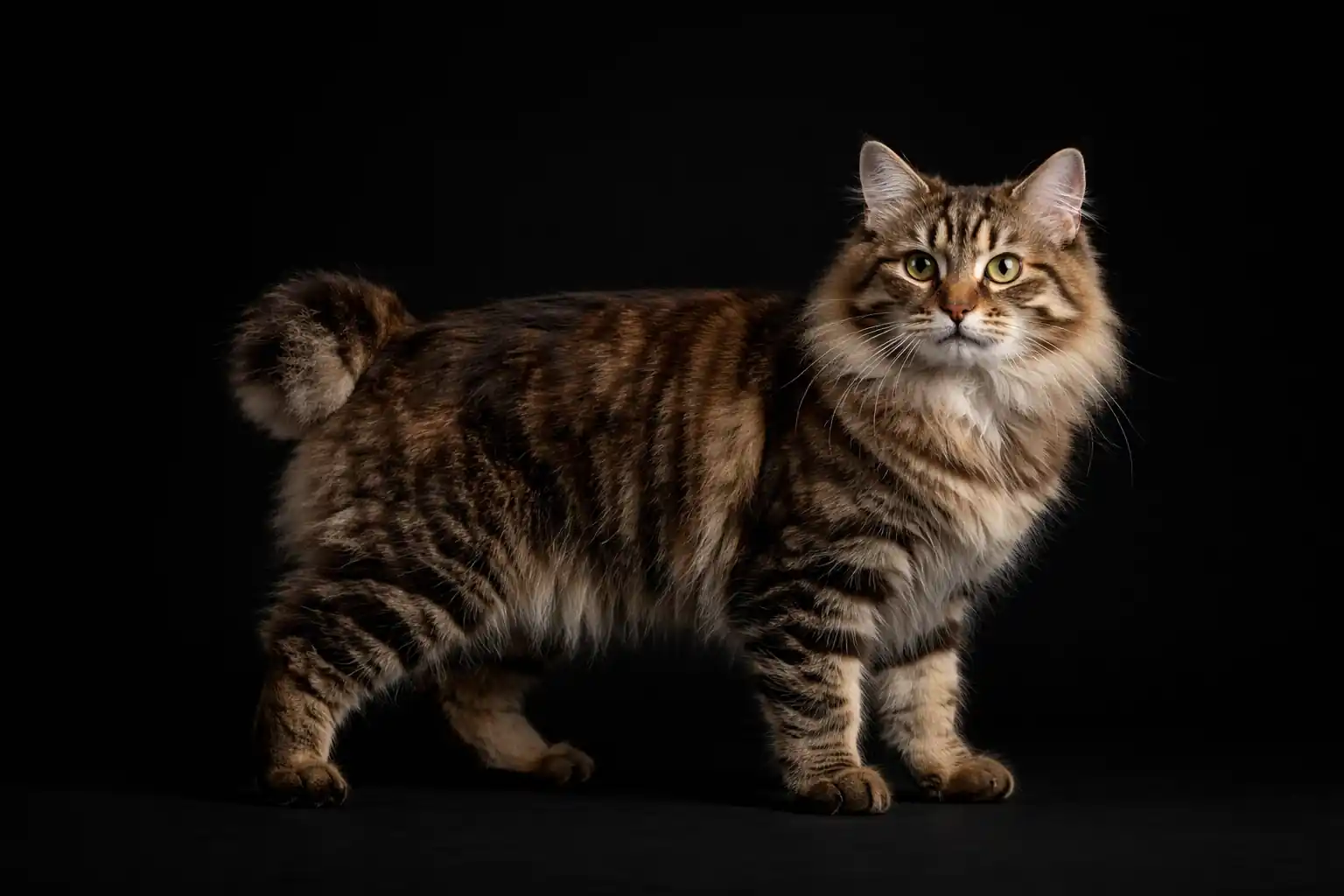
Die Amerikanischer Bobtail is a distinctive domestic cat breed known for its naturally short “bobbed” tail, rugged wildcat appearance, and exceptionally friendly personality. Despite its lynx-like look, this breed is not wild at all — American Bobtails are affectionate, intelligent, and highly social cats that often behave more like dogs than typical cats.
Inhaltsübersicht
Rasse-Übersicht
| Attribut | Beschreibung |
|---|---|
| Persönlichkeit | Anhänglich, freundlich, verspielt, intelligent, hundeähnlich |
| Gehäuse Typ | Mittelgroß bis groß; stämmig, muskulös, rechteckig |
| Gewicht | 7-16 lbs (3-7 kg) |
| Ort der Herkunft | Vereinigte Staaten |
| Lebenserwartung | 13-18 Jahre |
| Mantel Typ | Kurzes oder langes, zotteliges Doppelfell |
| Fellfarben | All colors and patterns (many have wild-looking tabby coats) |
| Shedding Level | ⭐⭐⭐☆☆ (mäßig) |
| Zuneigung zu den Menschen | ⭐⭐⭐⭐☆ (Hoch) |
| Pflege-Schwierigkeit | ⭐☆☆☆☆ (Niedrig; pflegeleicht) |
Einführung
The American Bobtail is a medium-to-large domestic cat breed known for its naturally short tail, muscular build, and rugged, wildcat-like appearance. Major breed organizations describe the breed as athletic, intelligent, gentle, and highly interactive, with a notably adaptable, family-oriented temperament. CFA highlights the American Bobtail’s “mellow, adaptable personality” and high intelligence, while TICA describes it as a naturally occurring breed developed from short-tailed cats in North America.
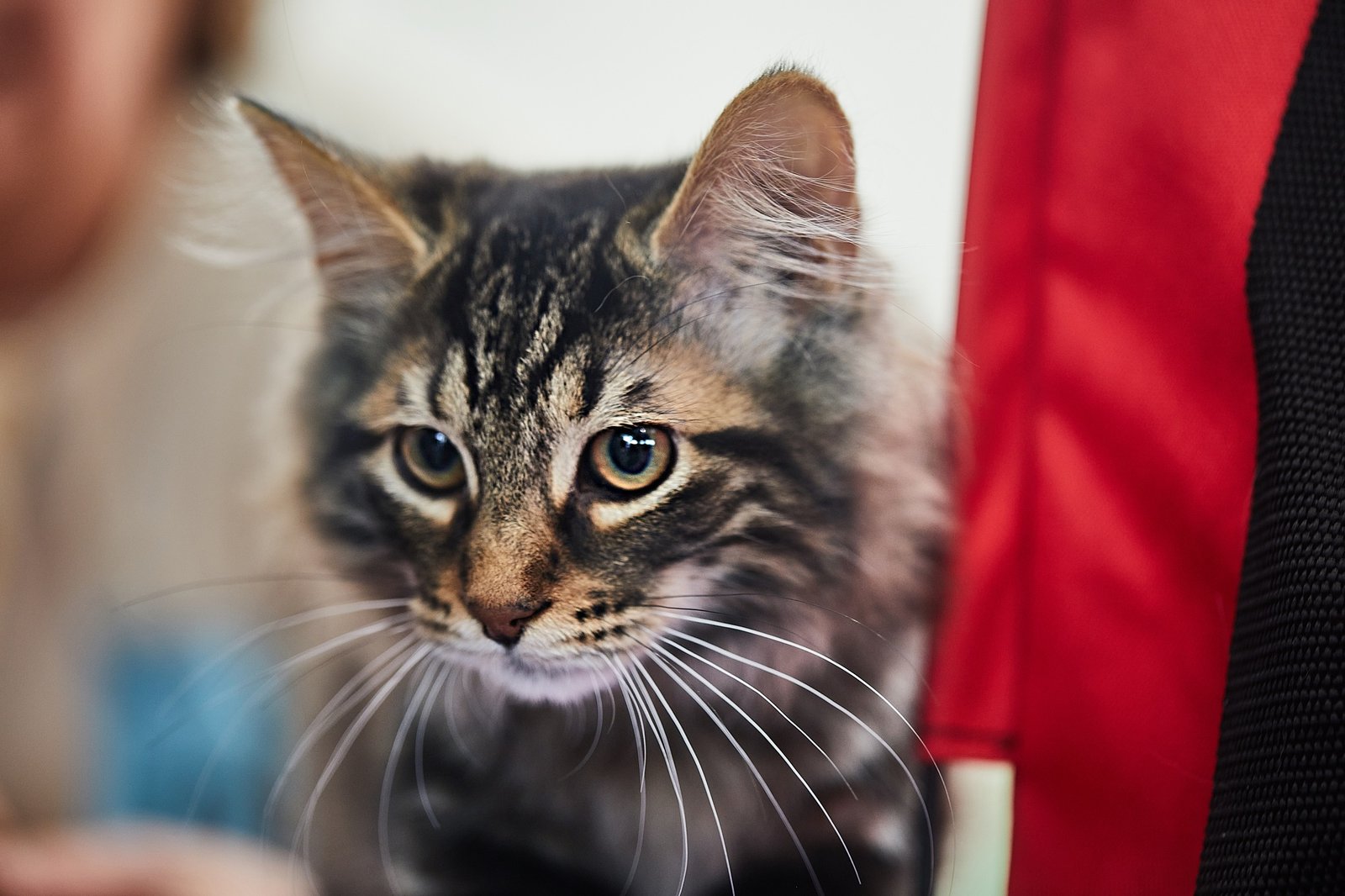
Although the breed may resemble a lynx or small wildcat, the American Bobtail is a domestic cat valued more for companionship than appearance alone. It is typically affectionate, people-oriented, and easy to live with, which is why many owners and breed groups compare its temperament to that of a friendly, dog-like companion.
Overall, the American Bobtail stands out for combining an unusual bobbed tail and strong, athletic body with a temperament that is sociable, affectionate, and well suited to family life.
Geschichte der Rasse
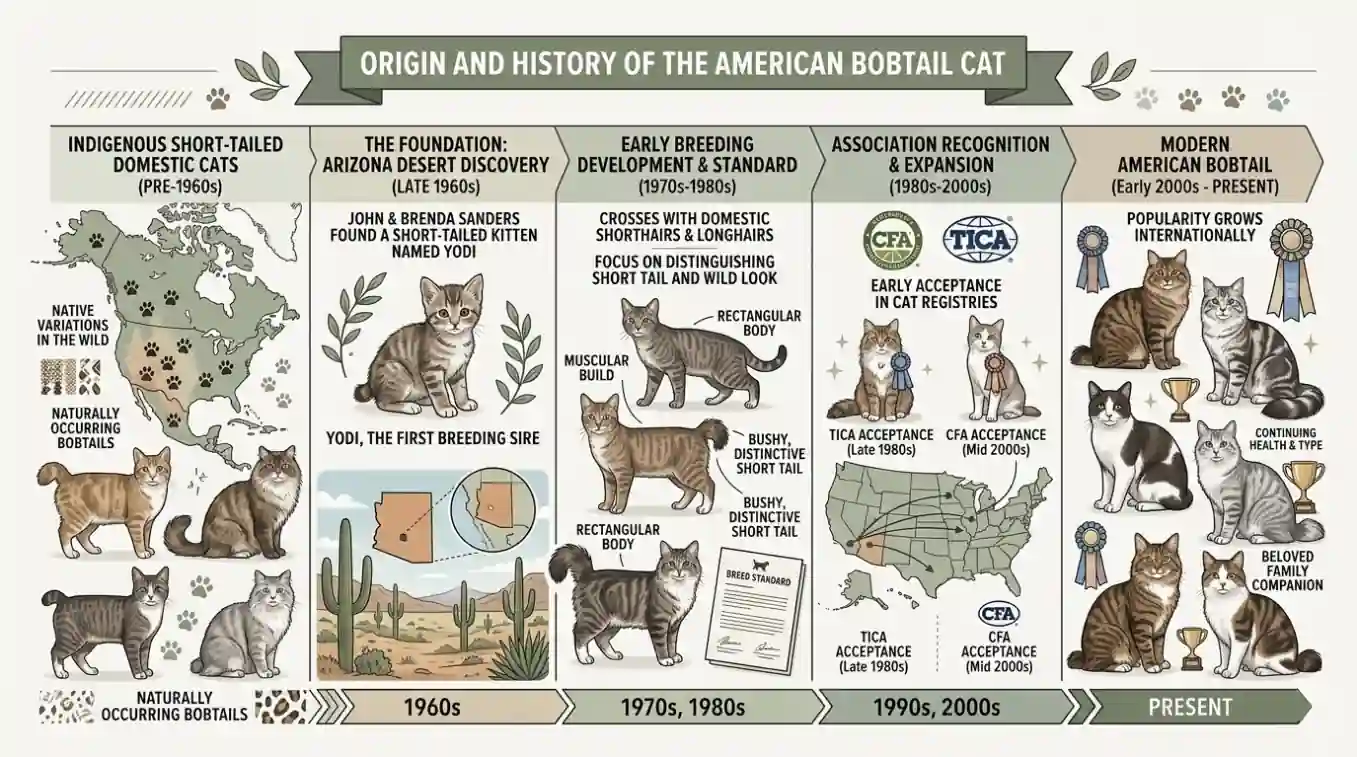
The American Bobtail is a naturally occurring short-tailed domestic breed, not a hybrid created by crossing domestic cats with wild bobcats. Major breed organizations describe it as a mutation breed with a natural bobtail that developed within the domestic cat population in North America.
Most breed histories begin with Jodi, a brown tabby bobtailed cat found in Arizona in the late 1960s by John and Brenda Sanders. When Yodie was bred to their domestic colorpoint cat, Mishi, several kittens also had short tails. Breed organizations treat this litter as an important early milestone because it showed that the bobtail trait could be passed on and helped inspire organized breeding efforts.
However, the modern American Bobtail was not built from one cat alone. TICA and CFA both note that breeders later expanded the gene pool by working with naturally bobtailed domestic cats from different parts of the United States and Canada. That broader foundation is important because it explains why the breed is considered fully domestic and why it is often described as having comparatively diverse bloodlines.
The breed became formally established in the late 20th century. TICA recognized the American Bobtail in 1989, and CFA currently lists the American Bobtail among its recognized breeds. Today, major registries recognize both shorthaired and longhaired American Bobtails, with standards that emphasize a rugged, athletic appearance paired with a stable, affectionate temperament.
Although the American Bobtail is still less common than many more established cat breeds, its history is well documented by major registries: a naturally bobtailed domestic cat inspired the breed, breeders widened the foundation with additional naturally short-tailed cats, and the result was a distinct North American breed known for its wild look and domestic temperament.
Physikalische Merkmale
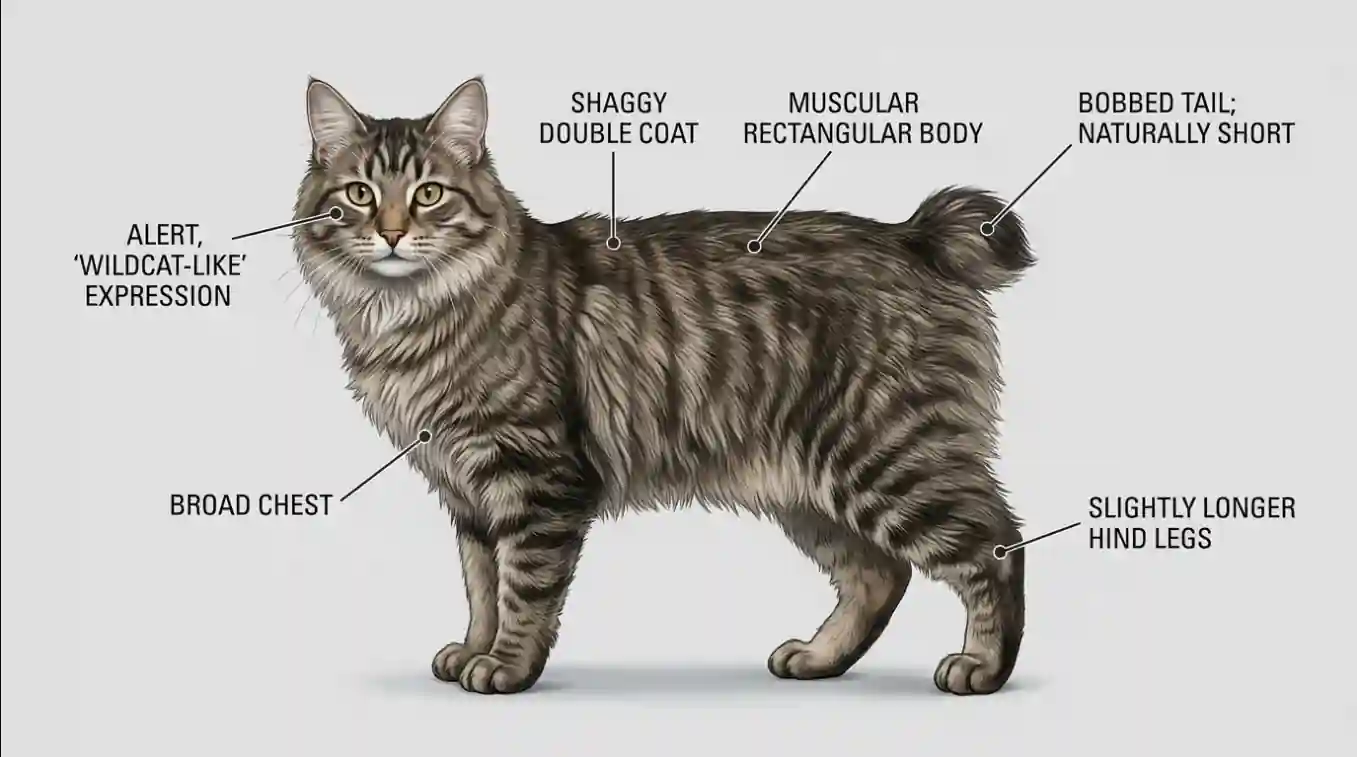
American Bobtail combines a powerful body, naturally bobbed tail, shaggy coat, and distinctly untamed look with the temperament of a fully domestic companion cat. Its appearance is often described as wild, but its structure should still look balanced, healthy, and functional.
The American Bobtail is a medium-to-large cat breed mit einer strong, athletic, rectangular body. Most adults weigh about 7 to 16 pounds, with males often larger than females. The breed is known for its muscular build, solid bone structure, broad chest, and powerful shoulders, giving it a sturdy and capable appearance rather than a delicate one.
One of the breed’s most recognizable features is its naturally shortened tail. In most American Bobtails, the tail measures around 1 to 4 inches long, though length and shape can vary from cat to cat. The tail may be straight, gently curved, slightly kinked, or bumpy, and no two tails look exactly alike. This variation is normal for the breed and is one of the traits that makes the American Bobtail distinctive.
The hind legs are usually slightly longer than the front legs, which creates a somewhat elevated rear posture and contributes to the breed’s rugged, wildcat-like outline. Combined with its substantial body and alert expression, this gives the American Bobtail the strong, natural look for which it is well known.
American Bobtails may be kurzhaarig oder langhaarig, and both coat types have a dense double coat designed to look thick and resilient. Shorthaired cats usually have a plush, slightly springy coat, while longhaired cats tend to have a shaggier texture, often with fuller hair around the neck, belly, britches, and tail. The coat is generally weather-resistant and should look natural rather than overly silky or fine.
This breed appears in almost every color and patterneinschließlich tabby, solid, tortoiseshell, calico, bicolor, and pointed variations. Although all colors are accepted, many American Bobtails are especially noted for tabby or spotted patterns that enhance their wild appearance. Eye color can also vary widely and may include gold, green, blue, copper, or odd eyes, depending on the cat’s color pattern and genetics.
American Bobtail vs Similar Breeds
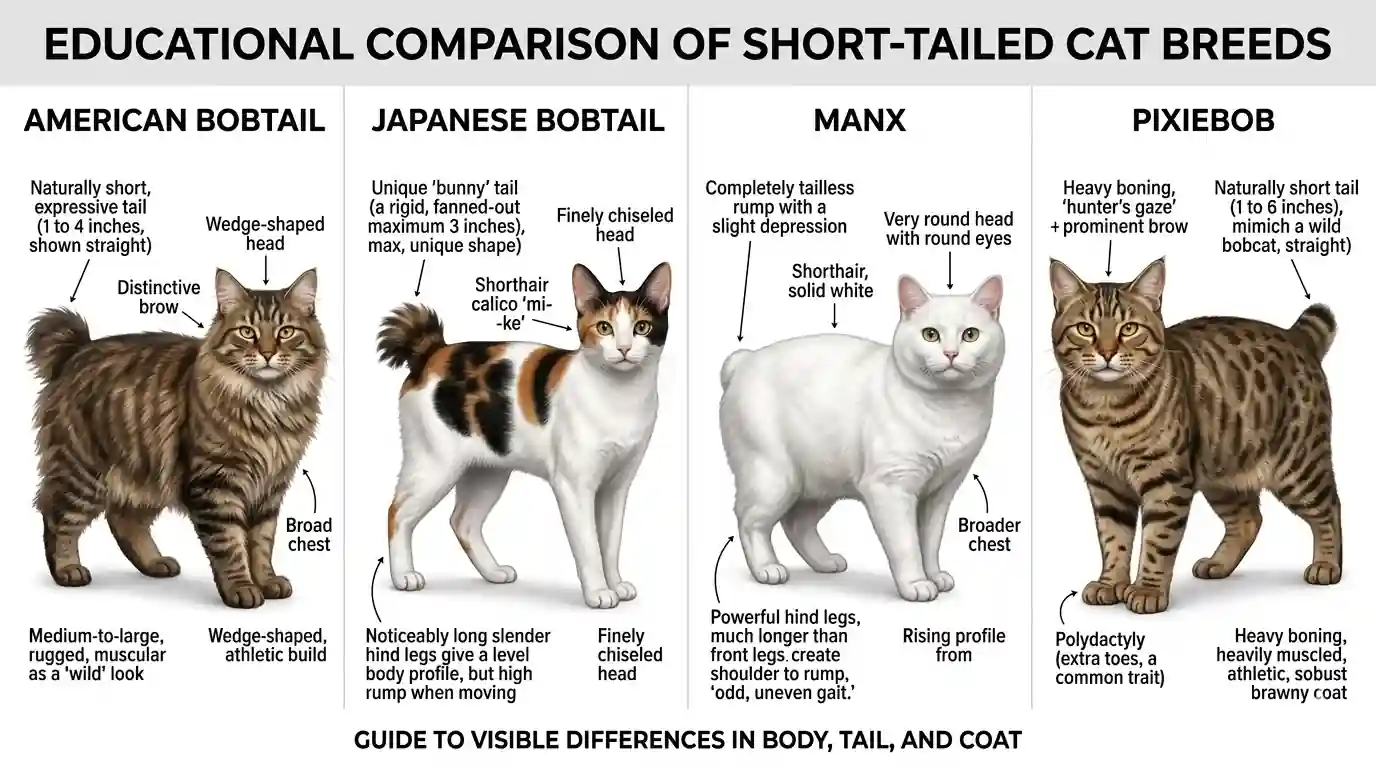
If you are comparing short-tailed cat breeds, the American Bobtail is usually chosen for its sturdy build, affectionate personality, and rugged wildcat look. It is often confused with the Japanese Bobtail, Manx, and Pixiebob, but the breeds differ in body shape, tail type, and owner experience.
Understanding these differences can help you choose the breed that best fits your lifestyle and expectations.
| Rasse | Key Difference | Overall Appearance | Typical Personality |
|---|---|---|---|
| Amerikanischer Bobtail | Naturally short tail from dominant mutation | Rugged, muscular, wildcat-like | Social, playful, dog-like |
| Japanischer Bobtail | Short tail caused by recessive gene | Slim, elegant, oriental type | Active, vocal, people-oriented |
| Manx | Often completely tailless | Round body, compact build | Calm, loyal, intelligent |
| Pixiebob | Selectively bred to resemble a bobcat | Large, heavy, wild appearance | Gentle, loyal, dog-like |
American Bobtail vs Japanese Bobtail
Although both breeds have short tails, the American Bobtail and Japanese Bobtail are genetically and physically different cats.
The American Bobtail is a larger, sturdier breed with a muscular rectangular body and a shaggy coat that often gives it a rugged wildcat look. Its tail mutation is dominant, meaning kittens typically inherit the bobbed tail from just one parent.
The Japanese Bobtail, in contrast, has a slender, refined body type and a distinctive pom-pom tail caused by a recessive gene. These cats are usually more vocal and energetic, while American Bobtails are often described as calmer, more adaptable companions.
American Bobtail vs Manx
Die Manx is another breed famous for its shortened tail, but its appearance and genetics differ from the American Bobtail.
Manx cats often have little to no visible tail, whereas American Bobtails almost always retain a short stub between 1–4 inches long. The Manx body is also more rounded, with a shorter back and powerful hind legs.
American Bobtails tend to have a more elongated, rectangular frame and a distinctly wild look. In terms of temperament, both breeds are known for being affectionate and loyal, although Bobtails are often noted for their playful, dog-like behavior and adaptability to travel or new environments.
American Bobtail vs Pixiebob
Because of their wild appearance, American Bobtails are sometimes mistaken for Pixiebobs, another domestic breed bred to resemble small wildcats.
Pixiebobs generally have a heavier, stockier build and may have extra toes (polydactyl paws), a trait accepted in breed standards. Their coats often resemble those of bobcats with spotted patterns.
American Bobtails, while still wild-looking, tend to have greater variation in coat color and pattern and a slightly lighter build. Personality-wise, both breeds are friendly and loyal, but American Bobtails are often described as particularly social and interactive with families.
Verhalten und Persönlichkeit
Are American Bobtails affectionate?
The American Bobtail is widely described as an affectionate, interactive, and adaptable cat breed. Breed organizations such as the Cat Fanciers’ Association (CFA) and The International Cat Association (TICA) characterize the breed as gentle, loving, intelligent, and strongly people-oriented.
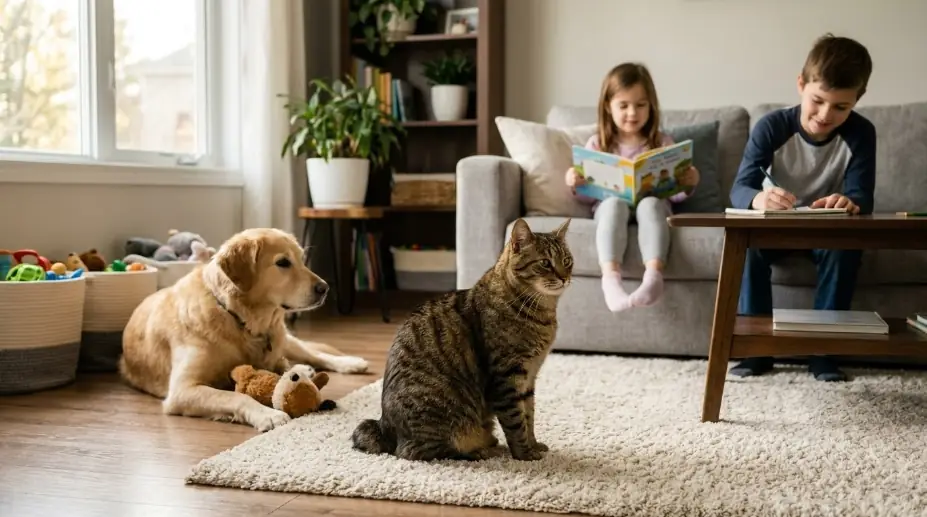
Many American Bobtails form close bonds with the household as a whole, not just one person. TICA notes that they tend to attach to the entire family and generally do well with children, other cats, and even dogs.
How active and intelligent are American Bobtails?
This breed is also known for being bright, curious, and moderately active. CFA highlights the American Bobtail’s high intelligence, while TICA notes that many can learn games such as fetch and may adapt well to leash walking. Because of that combination of intelligence and sociability, they usually benefit from interactive play, climbing space, and enrichment such as puzzle toys or short training sessions.
Why are American Bobtails called dog-like?
American Bobtails are often described as “dog-like,” but that term should be understood as shorthand rather than a literal behavioral guarantee. In practice, it usually refers to their tendency to stay near their people, join household activity, and enjoy interactive games or training. Individual personality still varies by genetics, early socialization, and environment, so not every American Bobtail will be equally outgoing, kuschelig, or trainable.

Care Tips for American Bobtails
Diät
American Bobtails do best on a complete and balanced, high-protein diet matched to their Alter, body condition, and activity level. Because some individuals can become overweight if overfed, owners should measure portions carefully, avoid free-feeding unless advised by a veterinarian, and keep treats in moderation.
A mix of wet Lebensmittel and fresh water access can help support hydration, especially in cats that naturally drink little. Ask your veterinarian to recommend daily Kalorien intake, feeding frequency, and any diet adjustments based on your cat’s weight, health history, and lifestyle.
Best practices:
- Choose food labeled for your cat’s life stage
- Monitor body condition, not just body weight
- Limit high-calorie treats and table scraps
- Transition food gradually to avoid digestive upset
Übung
Amerikanische Bobtails sind im Allgemeinen playful, athletic, and moderately active. Most benefit from tägliches interaktives Spiel, such as wand toys, toy mice, or short chase sessions that mimic hunting behavior. Regular exercise helps maintain a healthy weight, supports joint health, and reduces boredom-related behaviors.
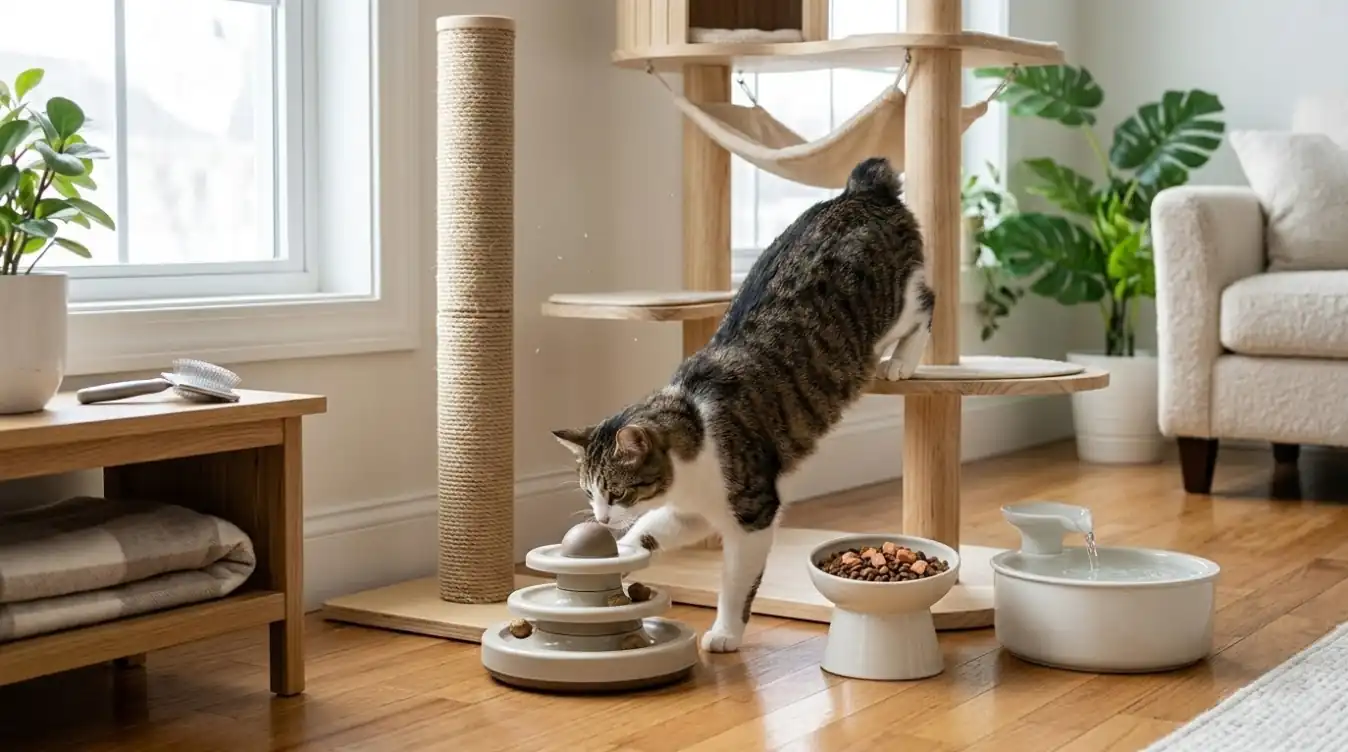
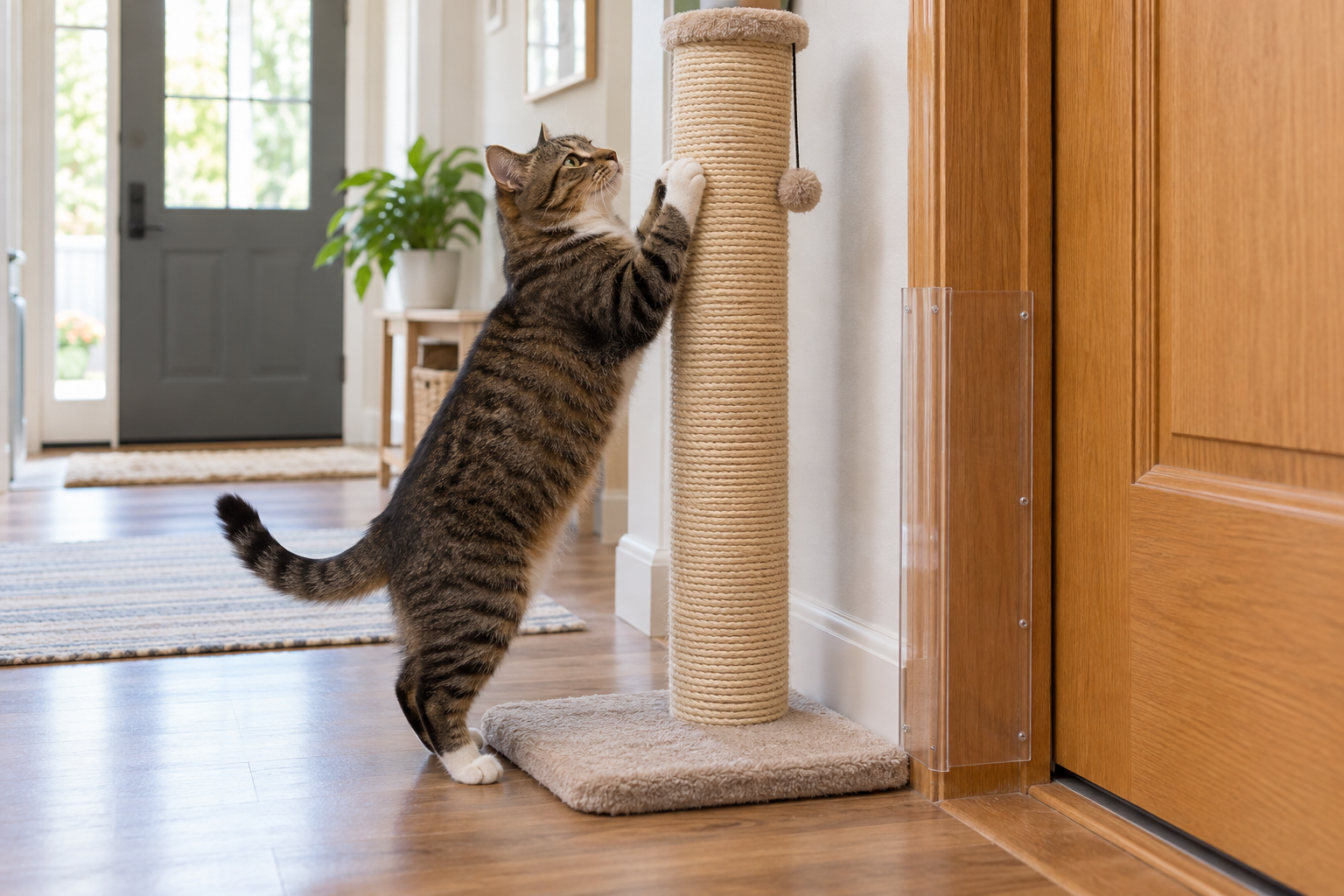
Because many American Bobtails enjoy climbing and exploring, provide cat trees, shelves, scratching posts, and elevated resting spots. Some individuals may enjoy games like fetch or harness training, but these activities should be introduced gradually and based on the cat’s comfort level.
A practical goal: anstreben at least two daily play sessions, adjusting duration and intensity to your cat’s age, stamina, and interest.
Environment and Enrichment
American Bobtails are often described as social, people-oriented cats, so they usually do best in a home that offers regular interaction, routine, and environmental enrichment. While individual temperaments vary, many enjoy being involved in household activity rather than being left without stimulation for long periods.
To keep an American Bobtail mentally and emotionally engaged, offer:
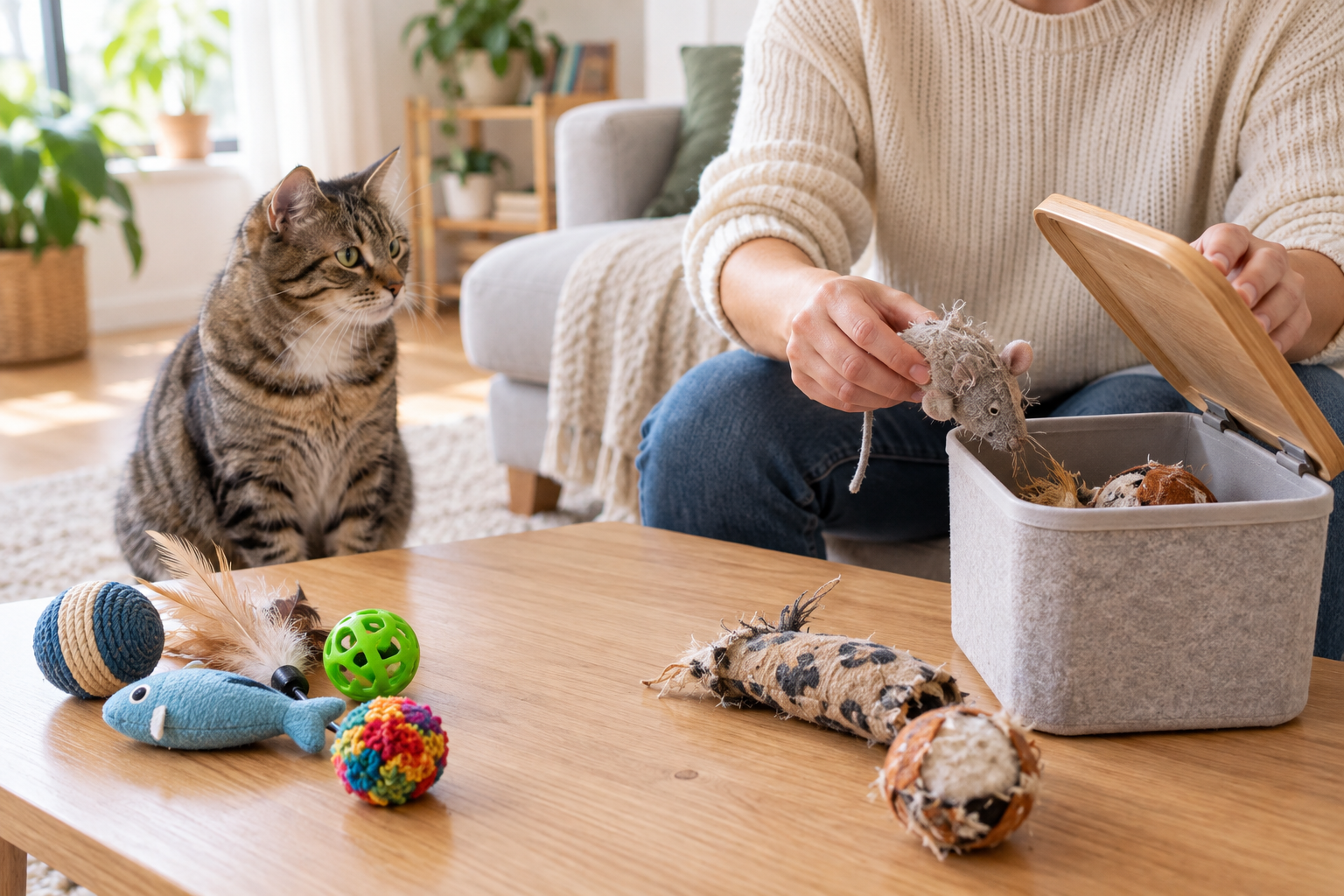
- rotating toys to prevent boredom,
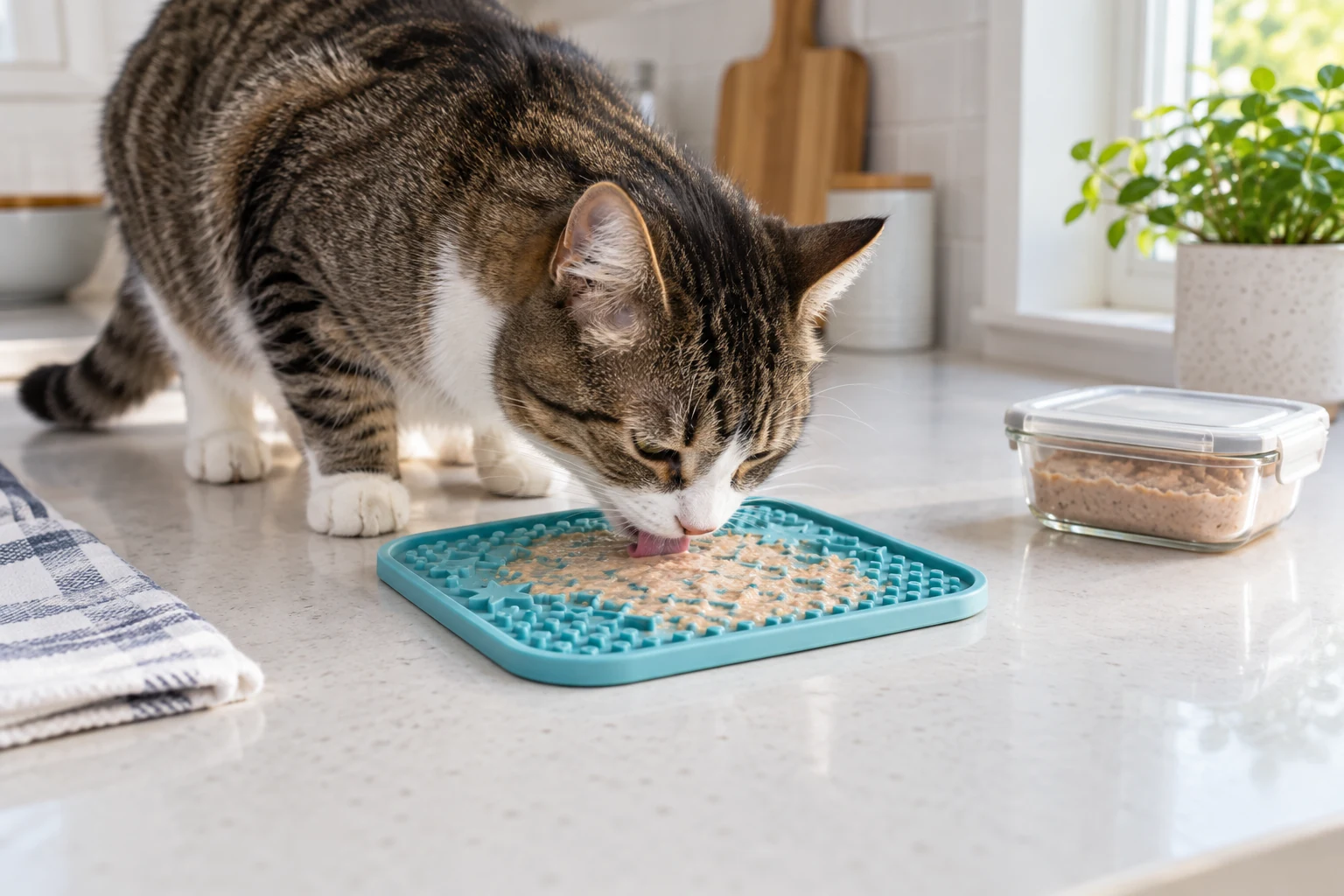
- puzzle feeders or food games,
- scratching areas,
- climbing structures,
- window perches or supervised outdoor-style enrichment.
If your cat enjoys outdoor experiences, use a sicherer Einschluss oder harness-and-leash walks rather than unsupervised roaming. American Bobtails can adapt well to different home sizes, but they usually thrive best when their need for companionship, play, and exploration is consistently met.
Körperpflege
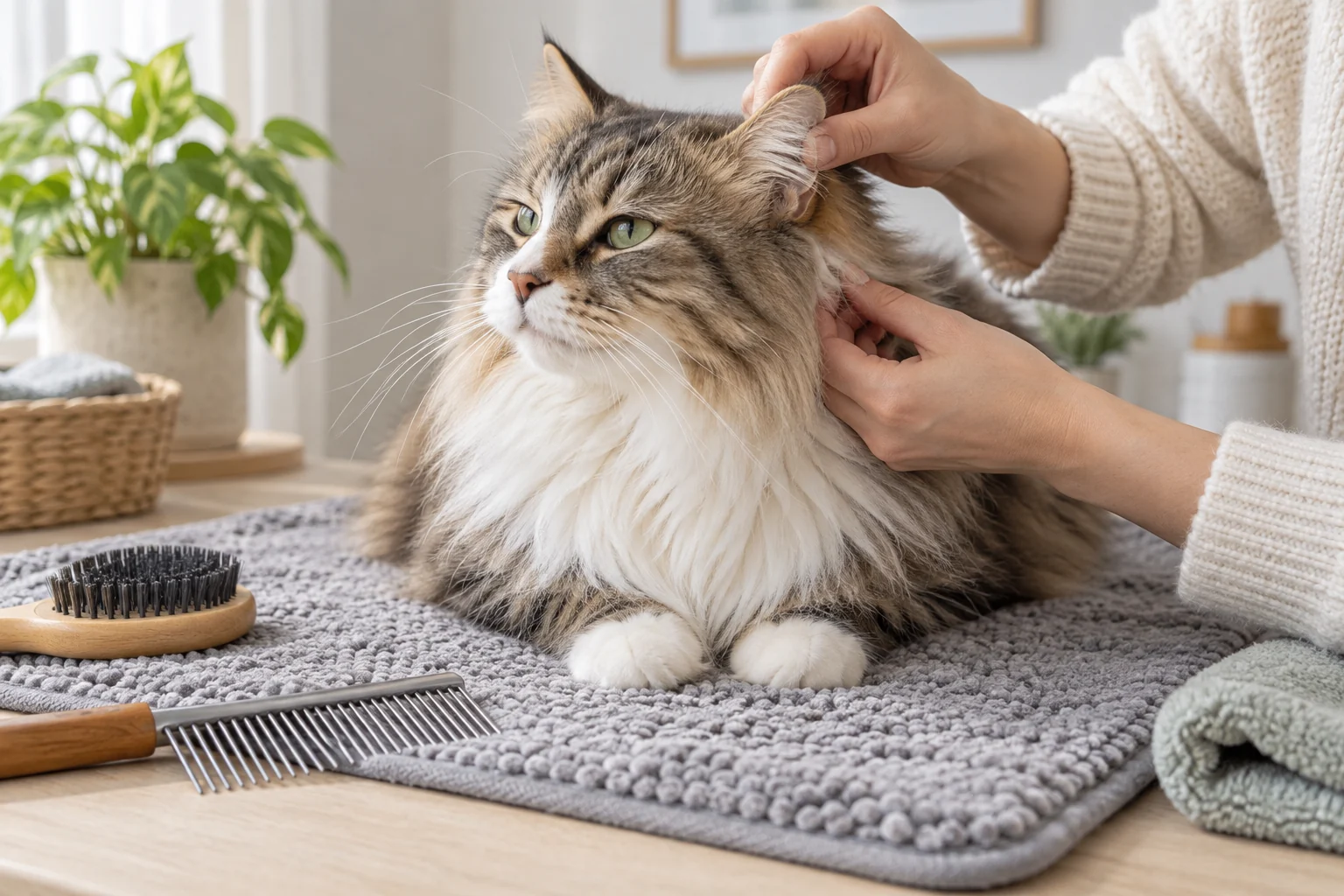
American Bobtail grooming needs depend mainly on coat length and density. Shorthaired cats are usually easier to maintain and often do well with ein- bis zweimaliges Bürsten pro Woche. Longhaired cats typically need more frequent brushing, around two to three times weekly, to remove loose hair, reduce tangles, and help prevent mats.
Routine grooming should also include:
- regular nail trims,
- ear checks for wax or debris,
- dental care at home or through veterinary guidance,
- monitoring the skin and coat for parasites, irritation, or unusual hair loss.
Bathing is usually not necessary unless the cat becomes dirty or has a medical need, but regular brushing helps control shedding and supports coat condition. Overall, the breed is often considered moderate rather than high maintenance in grooming.
Geistige Anregung
American Bobtails are often regarded as intelligent and trainable, and many benefit from activities that challenge both body and mind. Mental enrichment can help reduce stress, prevent boredom, and support better behavior indoors.
Useful options include:
- puzzle toys,
- treat-dispensing feeders,
- short training sessions,
- clicker work,
- scent games,
- hide-and-seek with toys or food rewards.
Some American Bobtails enjoy learning simple behaviors such as coming when called, targeting, sitting, or retrieving toys. Training should be short, reward-based, and consistent. Not every cat will enjoy the same activities, so owners should focus on what keeps their individual cat engaged without causing frustration.
Gesundheitliche Belange
Amerikanische Bobtails sind im Allgemeinen gesunde und widerstandsfähige Katzen Es sind keine Krankheiten bekannt, die ausschließlich diese Rasse betreffen. Allerdings können einige gesundheitliche Probleme auftreten:
Vorbeugende Pflege
Regelmäßige tierärztliche Untersuchungen, Impfungen, Floh-/Zeckenschutz und Zahnpflege gelten für Bobtails wie für jede andere Katze auch. Da Übergewicht ein häufiges Problem bei Hauskatzen ist, sollten Sie Ihr Bobtail-Gewicht durch Portionskontrolle und Aktivität auf einem gesunden Niveau halten.
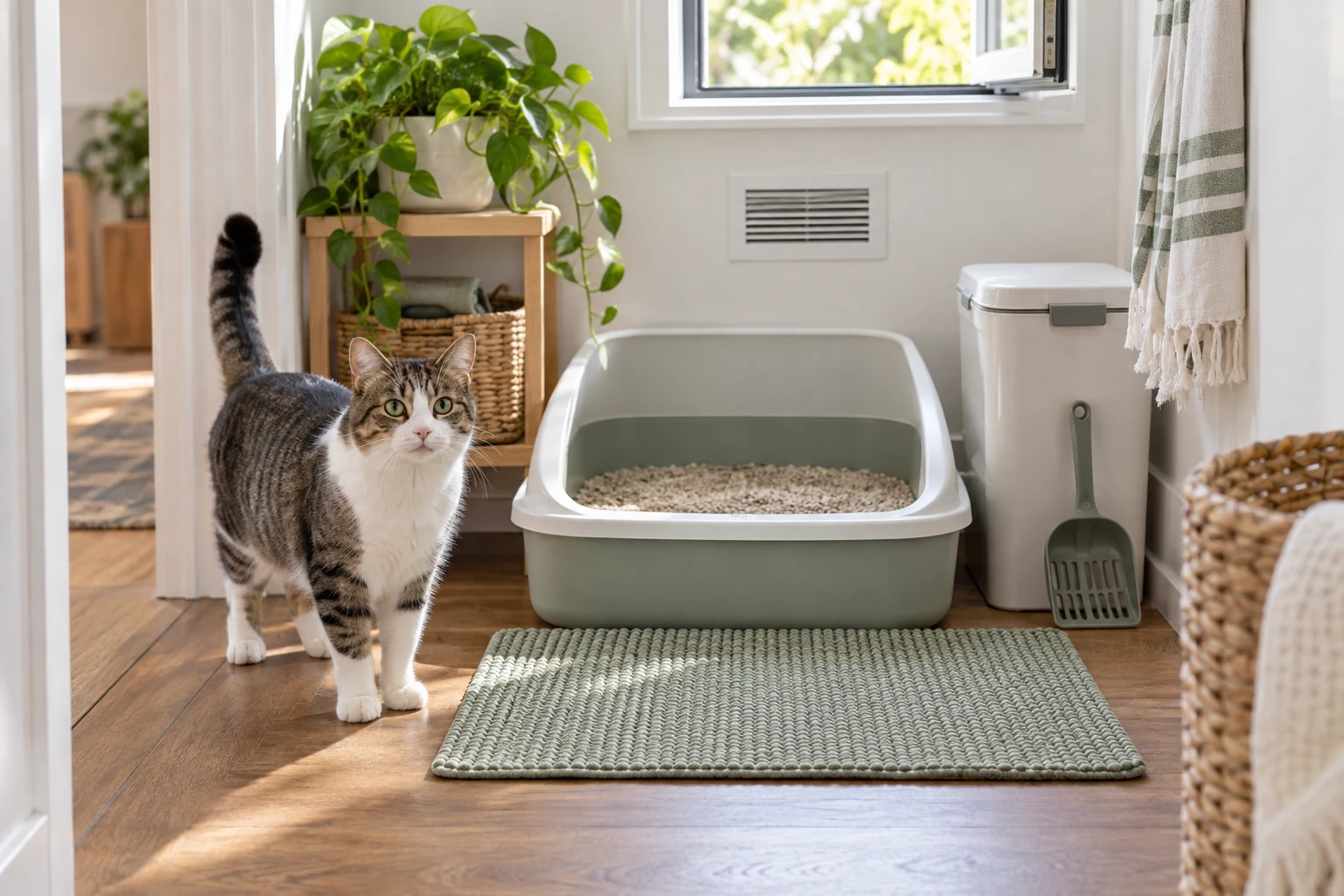
Stellen Sie immer sauberes Wasser bereit, halten Sie die Katzentoilette sauber und achten Sie auf Veränderungen bei Appetit und Verhalten. Eine frühzeitige Erkennung von Gesundheitsproblemen durch routinemäßige tierärztliche Betreuung ist die beste Vorbeugung.
Is the American Bobtail Right for You?
The American Bobtail is usually a good fit for people who want an affectionate, interactive cat that enjoys being part of daily family life. This breed tends to suit homes where someone has time for play, enrichment, and regular companionship. Many American Bobtails do well with children, other cats, and cat-friendly dogs when properly introduced.
It may be a less suitable choice for people who want a highly independent cat that is content to be left alone for long stretches. It may also be less ideal for households looking for a very quiet, low-engagement lap cat or for people with significant cat allergies, since American Bobtails are not considered hypoallergenic.
Best Match
An American Bobtail may be a strong match for:
- people who want a friendly, people-oriented companion
- families with children or other pets
- owners who enjoy interactive play, training, and enrichment
- single adults or seniors who want an engaged but generally adaptable cat
- households that can provide regular attention, playtime, and mental stimulation
May Be Less Ideal For
An American Bobtail may be less suitable for:
- people who are away from home for most of the day on a regular basis
- owners seeking a very independent, low-interaction cat
- households wanting a quiet, low-energy breed with minimal play needs
- people unwilling to keep up with brushing, nail care, and routine health monitoring
- people with moderate to severe cat allergies
Quick Assessment
This breed may be right for you if you want a playful, affectionate cat with a social personality and you can provide regular companionship, enrichment, and interactive play.
This breed may be less right for you if you prefer a highly independent pet, spend long hours away from home, or want a cat with very low social and activity needs.
FAQ
What is the difference between an American Bobtail and a Japanese Bobtail?
American Bobtails are larger, sturdier cats with a naturally short tail caused by a dominant gene mutation. Japanese Bobtails are slimmer cats with a distinctive pom-pom tail produced by a recessive gene. While both breeds are friendly and intelligent, American Bobtails are often described as more laid-back and dog-like in personality.
Bekommen amerikanische Bobtails viel Fell?
American Bobtails are generally considered a moderate-shedding cat breed. Longhaired American Bobtails usually shed more than shorthaired ones, but both coat types are typically manageable with regular brushing. In most homes, brushing once or twice a week helps remove loose hair, reduce matting, and limit fur buildup on furniture and clothing.
Can American Bobtails be held and cuddled?
Many American Bobtails are affectionate cats that enjoy human contact, including sitting close, curling up beside their owners, or accepting gentle handling. They are often described as people-oriented and strongly bonded to their families.
That said, tolerance for being carried or held varies by individual cat. Some American Bobtails enjoy frequent cuddling, while others prefer affection on their own terms. Early socialization, personality, and past handling all influence how physically affectionate a cat becomes.
Sind amerikanische Bobtails teuer?
American Bobtails are often considered a relatively uncommon purebred cat, so purchase price can vary widely depending on breeder reputation, pedigree, location, coat type, and whether the kitten is sold as pet quality or show quality.
In addition to the initial purchase or adoption fee, owners should plan for long-term costs such as food, litter, routine veterinary care, vaccinations, dental care, toys, scratching equipment, and possible emergency medical expenses. For most households, the lifetime cost of care matters more than the kitten’s purchase price alone.
Are American Bobtails hypoallergenic?
No. American Bobtails are not considered hypoallergenic. Like other cats, they produce allergen proteins in saliva, skin, and dander, and these allergens can trigger reactions in sensitive people.
Do American Bobtails get along with other pets?
Yes. American Bobtails are often described as social, adaptable, and tolerant, and many do well with other cats and cat-friendly dogs when introductions are handled properly. Their playful and people-oriented nature can make them a good fit for multi-pet households.
Quick Facts About the American Bobtail
The short tail is a defining breed trait
The American Bobtail’s naturally shortened tail is one of its most recognizable physical features. Tail length and shape can vary from cat to cat, which is normal for the breed.
American Bobtails do not come from wild bobcats
Despite their rugged, wildcat-like look, American Bobtails are a Hauskatzenrasse, not a bobcat hybrid. Their appearance may remind people of wild cats, but the breed developed from domestic cats with a natural tail mutation.
They may mature more slowly than some other cats
American Bobtails are often described as slow to fully mature, with some taking longer than average to reach their adult body size and full emotional maturity. This can mean a longer playful stage compared with some other breeds.
Many are highly trainable
Because the breed is often described as intelligent and people-focused, many American Bobtails respond well to interactive play, routine, and basic training. Some learn games such as fetch or adapt well to harness and leash training.
They are still relatively uncommon
The American Bobtail remains less common than many better-known cat breeds, which can make reputable breeders harder to find in some regions. Prospective owners may need to spend more time researching breeders or checking breed-specific rescue options.
Referenzen
"Vergleich: Japanischer Bobtail, Manx und Amerikanischer Bobtail". Züchter: Japanische Bobtail FAQ. Abgerufen am 12. September 2014.
"Anerkannte und zugelassene Rassen in der WCF". WCF-Online.de. Essen, Deutschland: Weltkatzenverband (WCF). 1. April 2009. Archiviert from the original on February 15, 2013. Retrieved 12 September 2014. PDF version: [1].
"Standard". WCF-Online.de. March 2013. Archived from the original on 12 June 2018. Retrieved 12 September 2014. The specific sections for each competitive division do not include this breed in any of them: long-haired Archiviert 2021-10-20 an der Wiederherstellungsmaschine, semi-long-haired Archiviert 2021-10-23 an der Wiederherstellungsmaschine, short-haired Archiviert 2021-10-23 an der Wiederherstellungsmaschine and Siamese & oriental Archiviert 2021-10-23 an der Wiederherstellungsmaschine.
Cat Fanciers’ Association (CFA). Amerikanischer Bobtail
Cat Fanciers’ Association (CFA). American Bobtail Breed Standard
The International Cat Association (TICA). Amerikanischer Bobtail
WebMD. American Bobtails: What to Know
Google Search Central. Creating Helpful, Reliable, People-First Content
 EN
EN DE
DE ES
ES PT
PT