
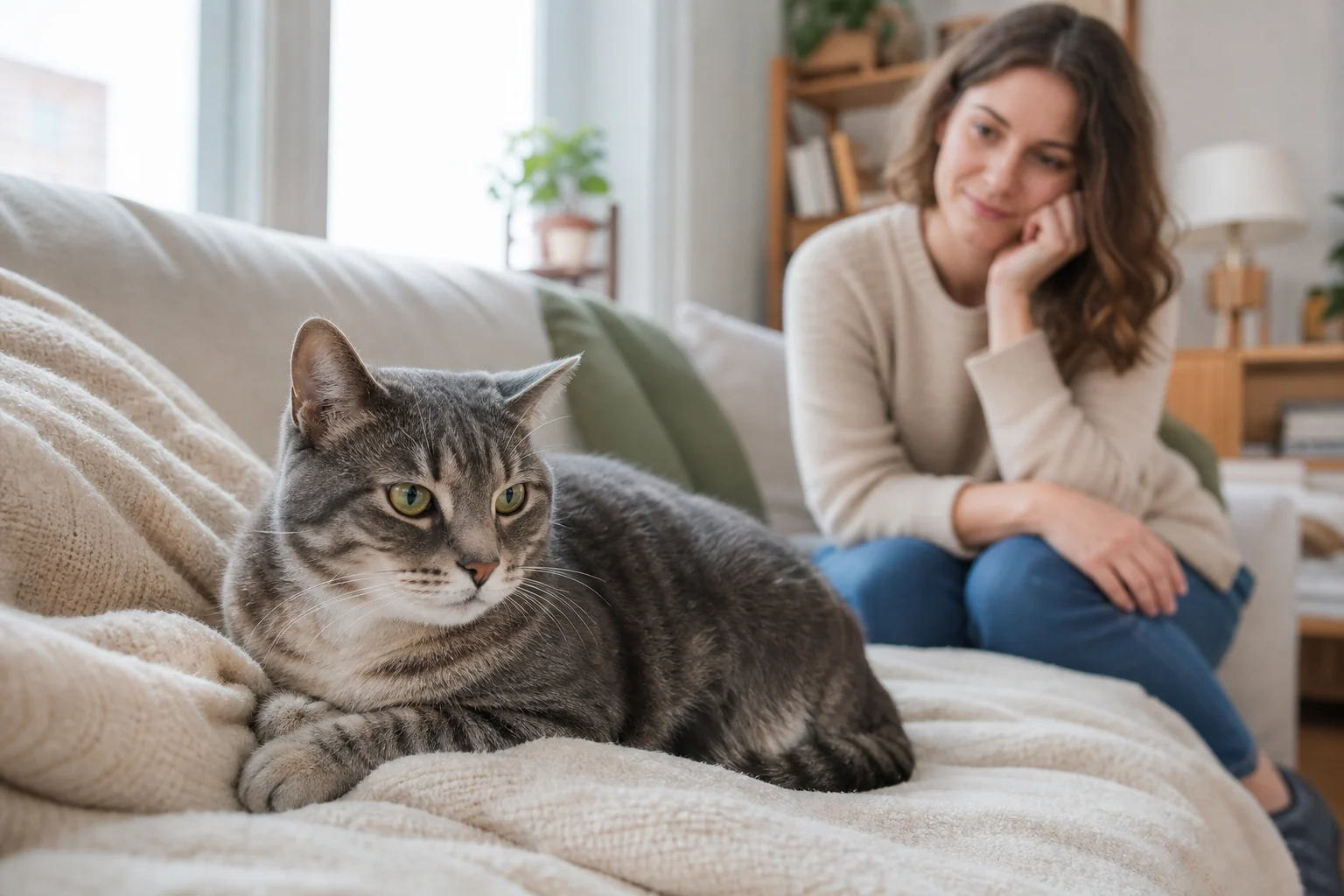
If your cat seems quieter, squintier, more withdrawn, or oddly stiff, pain is one possible reason. The Cat Grimace Scale, more formally the Feline Grimace Scale, is a research-backed way to look at a cat's face for acute pain clues, but it works best when you combine it with behavior, appetite, movement, and veterinary advice.
Cats are good at hiding discomfort, so pain does not always look like crying, limping, or obvious injury. It may look like a cat who stops jumping onto the sofa, sleeps in a tucked position, avoids being touched, or simply looks "not like herself." This guide explains what to watch for at home, when the face can help, and when to call your veterinarian.
This article is educational and cannot diagnose your cat. If your cat has sudden decline, trouble breathing, collapse, blocked urination, poisoning exposure, trauma, repeated vomiting, severe diarrhea, seizures, or will not eat for 24-48 hours, contact a veterinarian or emergency clinic right away.
Inhaltsübersicht
- What is the Cat Grimace Scale?
- How do I check my cat's face without stressing them?
- What subtle behavior changes can mean a cat is hurting?
- How can I tell pain from stress, sleepiness, or normal cat moods?
- Wann sollte ich einen Tierarzt anrufen?
- Why older cats need extra pain observation
- How should I track pain clues at home?
- Schlussfolgerung
- Häufig gestellte Fragen
- Referenzen
What is the Cat Grimace Scale?
The Cat Grimace Scale is a facial-expression tool designed to help assess acute pain in cats. In the original validation study, researchers identified five facial "action units": ear position, orbital tightening around the eyes, muzzle tension, whisker change, and head position 1.
Each feature is scored from 0 to 2: absent, moderately present or uncertain, and obviously present. The full tool is meant for structured pain assessment, not a casual one-glance diagnosis. The official Feline Grimace Scale project lists ongoing publications and resources related to this tool 2.
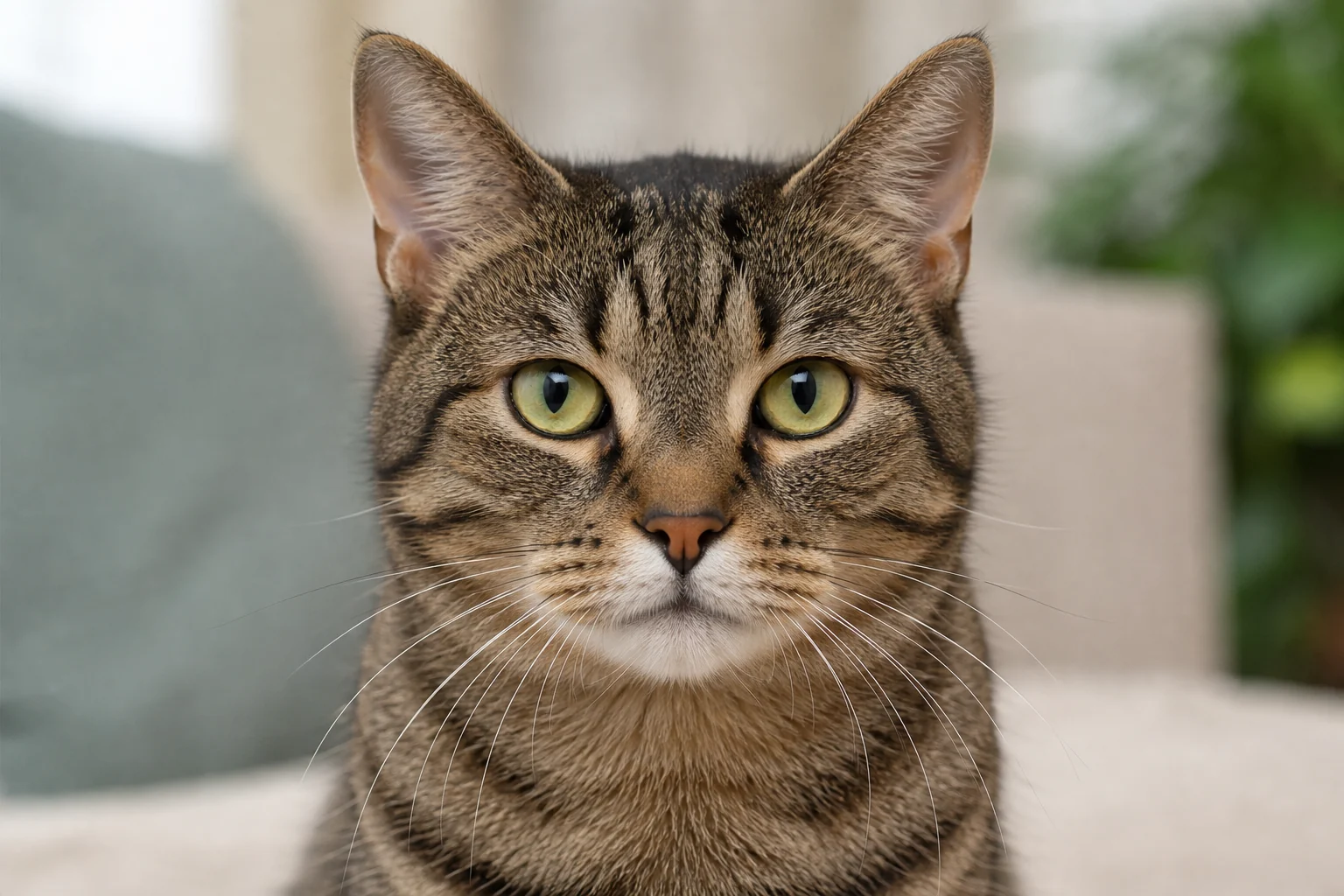
The Feline Grimace Scale looks at the ears, eyes, muzzle, whiskers, and head position together, not one feature alone.
Here is the simple idea behind the five face checks:
| Face area | What relaxed may look like | What can raise concern |
|---|---|---|
| Ohren | Forward or gently neutral | Rotated outward, flattened, or held low |
| Augen | Open and soft | Partly closed, narrowed, or squinting |
| Muzzle | Round and relaxed | Tense, tightened, or drawn back |
| Whiskers | Curved naturally to the sides | Straightened, pushed forward, or bunched |
| Head | Held comfortably above the shoulders | Lowered or tucked toward the body |
Do not use one feature alone. A cat may squint in bright light, flatten ears because of noise, or tuck the head while sleepy. The scale becomes more useful when several facial changes appear together and they do not match your cat's normal state.
How do I check my cat's face without stressing them?
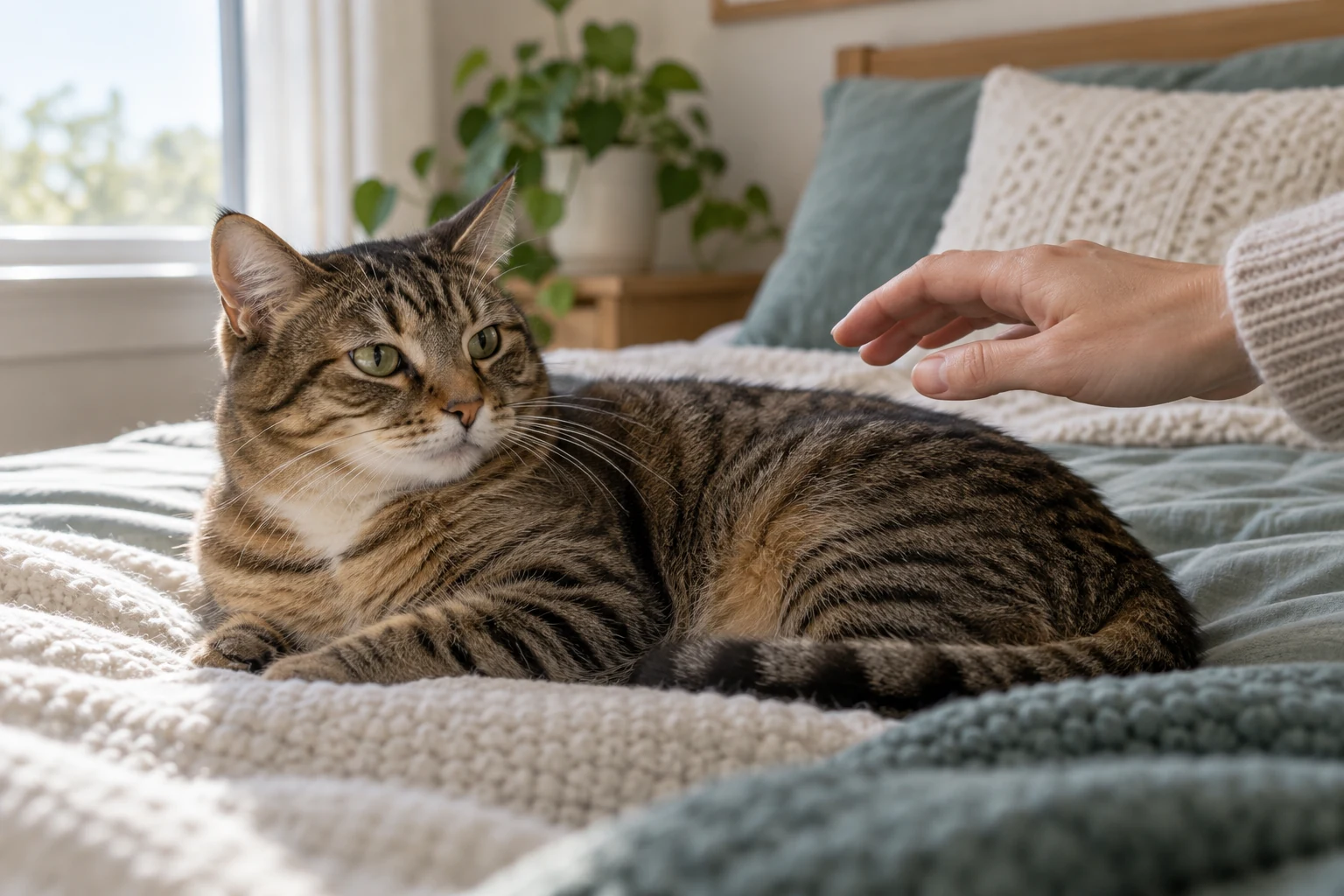
Observe your cat while they are awake, quiet, and not eating, grooming, playing, or actively reacting to something. Pain scoring is less reliable when a cat is asleep, startled, annoyed, or moving around.
Use a calm distance. Sit nearby, take a short video or a few photos if your cat tolerates it, and compare the face to your cat's usual expression. Do not hold the cat still, pry open the mouth, stretch the legs, press on the belly, or test painful areas at home.
A practical check takes less than a minute:
- Look at the whole face first, not just the eyes.
- Compare both ears, the eye shape, the muzzle, whiskers, and head height.
- Ask whether the expression is new for your cat.
- Pair the face check with movement, appetite, litter box, and social behavior.
- Save photos or video for your veterinarian if the change continues.
The Merck Veterinary Manual notes that chronic pain signs can be nonspecific, such as lower activity, less grooming, appetite change, or weight loss, and they point to an underlying problem that needs diagnosis 3. That is why a face check is a clue, not the final answer.
What subtle behavior changes can mean a cat is hurting?
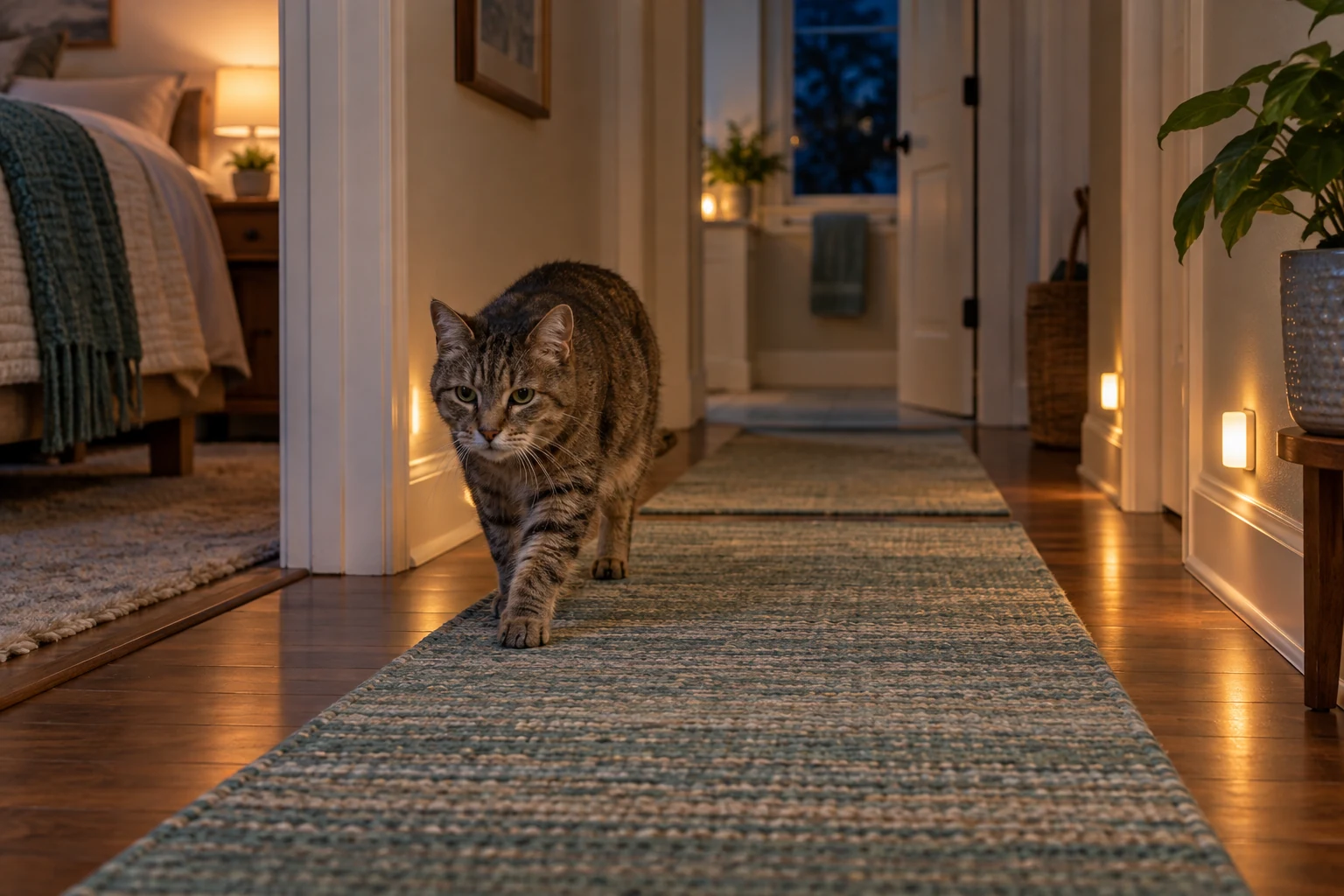
Pain in cats often shows up as a change from normal. A friendly cat may hide. A playful cat may stop climbing. A senior cat may no longer jump to a favorite window. A cat who used to enjoy petting may flinch, turn away, or become irritable.
If hiding is the main change, read our guide to warum Katzen sich verstecken and still consider health causes when the hiding is sudden, intense, or paired with appetite or litter box changes.
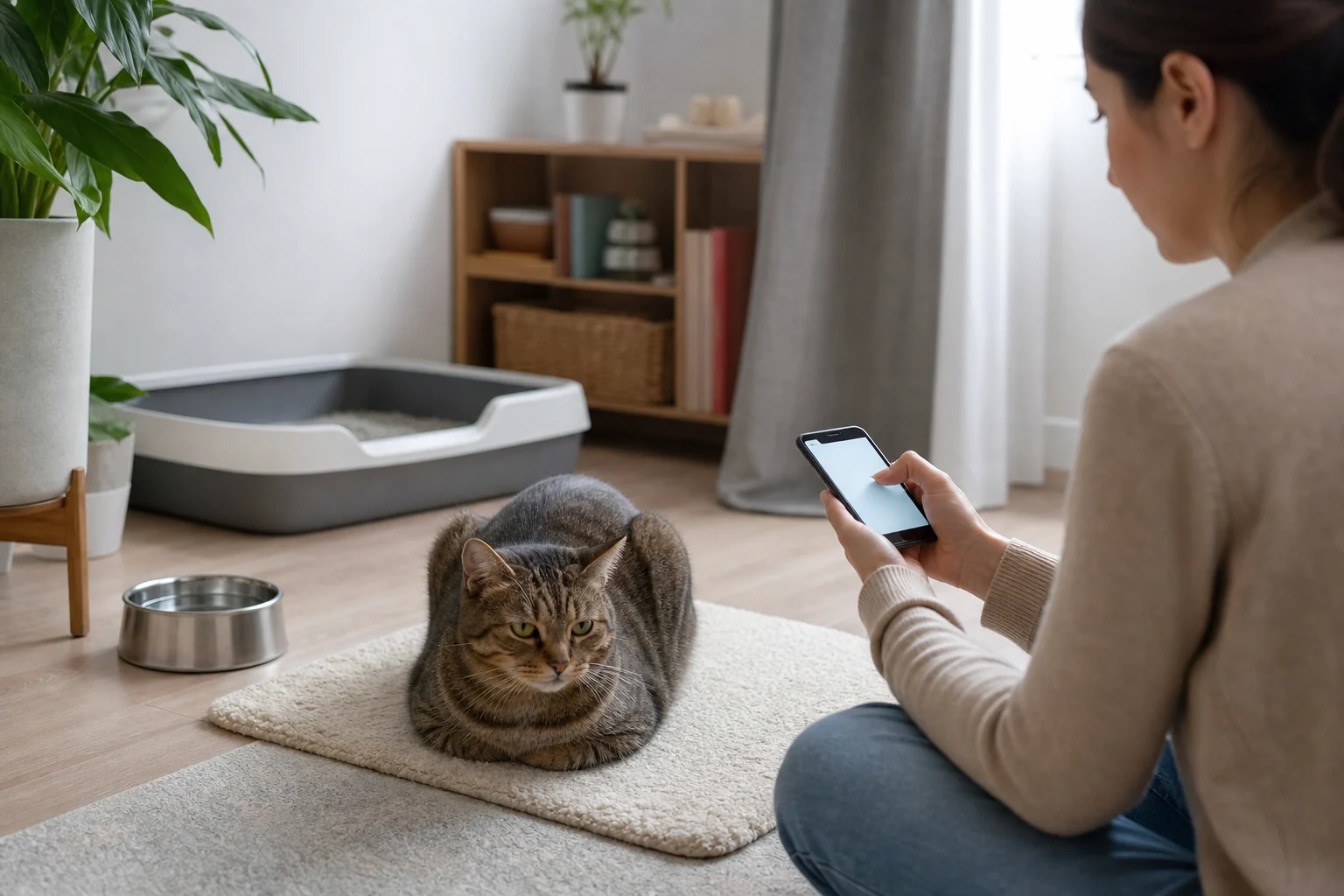
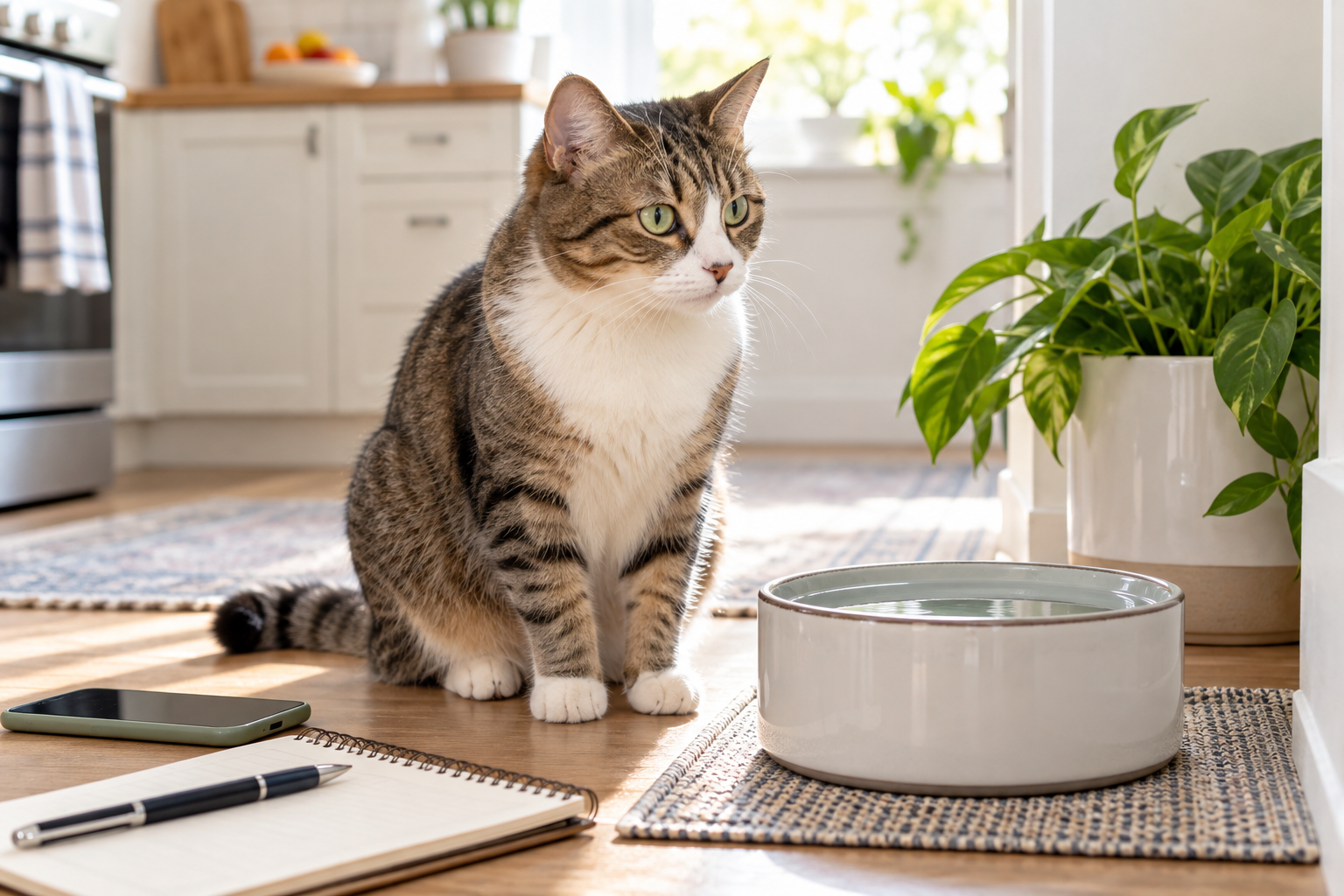
A short home log of appetite, movement, litter box habits, and facial changes can give your veterinarian clearer context.
Watch for these patterns:
| Change you notice | Why it may matter | Was ist als nächstes zu tun? |
|---|---|---|
| Less jumping, stiff stairs, reluctance to climb | Joint pain, injury, weakness, or illness may be involved | Book a vet exam, especially if it lasts more than a day or two |
| Hiding, withdrawal, or unusual aggression | Pain, fear, stress, or illness can all change social behavior | Track triggers and call your vet if it is sudden or worsening |
| Eating less or dropping food | Dental pain, nausea, mouth injury, or systemic illness may be possible | Call your vet promptly if appetite drops |
| Overgrooming one spot or resisting touch | Local pain, skin irritation, arthritis, or injury may be present | Avoid poking the area; document and seek advice |
| Litter box change, straining, crying, or accidents | Urinary, digestive, or mobility pain may be involved | Treat straining to urinate as urgent |
Body condition also matters. A cat who is overweight may hide mobility pain because everyday movement is harder, while a cat losing muscle may look frailer or less willing to jump. Our Leitfaden zur Körper- und Muskelkondition can help you notice changes to discuss with your vet.
How can I tell pain from stress, sleepiness, or normal cat moods?
You cannot always tell from one moment. The safest approach is to compare the expression and behavior to context. A sleepy cat may have narrowed eyes but should relax normally after waking. A stressed cat may flatten ears during a loud sound but should recover when the trigger passes. Pain clues tend to persist, recur, or appear with other changes.
Ask these questions:
- Did this start suddenly?
- Is my cat eating, drinking, peeing, and pooping normally?
- Is my cat avoiding jumping, stairs, grooming, or touch?
- Does the facial tension appear in several quiet moments?
- Is my cat hiding, restless, or unable to get comfortable?
Merck's pet-owner pain guidance lists behavior changes such as eating less, staying still, restlessness, hiding, withdrawal, and mood changes as signs that can suggest pain or discomfort 4. Those signs overlap with stress and illness, so a veterinarian may need an exam, history, and sometimes tests to find the cause.
Wann sollte ich einen Tierarzt anrufen?
Call your veterinarian whenever pain seems likely, your cat's normal routine changes without an obvious harmless reason, or you are unsure. The earlier you ask, the easier it may be to prevent a small problem from becoming a crisis.
Use SnuggleSouls' Ratgeber zur Gesundheit von Katzen as a starting point for learning, but do not delay care for a cat who is declining. If coughing, breathing effort, or open-mouth breathing is part of the picture, see our cat coughing guide und wenden Sie sich umgehend an einen Tierarzt.
Seek urgent or emergency care now if you notice:
- Trouble breathing, blue or pale gums, collapse, or extreme weakness.
- Straining to urinate, repeated litter box trips with little or no urine, or crying in the box.
- Trauma, a fall, a bite wound, sudden severe lameness, or suspected fracture.
- Repeated vomiting, severe diarrhea, bloated painful abdomen, or rapid dehydration.
- Seizures, sudden paralysis, severe disorientation, or inability to stand.
- Poisoning exposure, including lilies, human medication, toxins, or unknown chemicals.
- Not eating for 24-48 hours, especially in kittens, seniors, or cats with known illness.
Urinary pain deserves special caution. If your cat is straining, vocalizing, or making frequent litter box trips, read about Symptome einer Harnwegsinfektion bei Katzen but treat inability to pass urine as an emergency.
Never give human pain medication to a cat unless your veterinarian specifically prescribes it for that cat. Many common human pain relievers are dangerous for cats.
Why older cats need extra pain observation
Senior cats may be more likely to develop joint disease, dental disease, muscle loss, kidney disease, and other conditions that can change comfort and movement. The tricky part is that many cat parents interpret "slowing down" as normal aging.
Cornell Feline Health Center notes that slowed-down or reclusive behavior can be a sign of joint problems and that these signs can be subtle 5. A cat who stops jumping, hesitates before stairs, sleeps in lower places, or becomes less willing to play may not be "just old."
If you are not sure where your cat sits in life stage, the Katzenalter-Rechner can help frame age-related wellness conversations. Age does not diagnose pain, but it can raise the value of regular checkups and careful home observation.
How should I track pain clues at home?
A simple log helps because pain clues are easy to forget under stress. You do not need a perfect chart. Record what changed, when it started, what makes it better or worse, and whether your cat is eating, drinking, using the litter box, grooming, moving, and interacting normally.
Try this format for two or three days, or sooner if symptoms are urgent:
| Zeit | Face or posture | Nahrung und Wasser | Katzentoilette | Bewegung | Notes for vet |
|---|---|---|---|---|---|
| Guten Morgen | Eyes partly closed, head lower | Ate half breakfast | Normal urine | Avoided sofa jump | Took short video |
| Abend | Face normal again | Ate dinner | No stool | Walked normally | Monitor overnight |
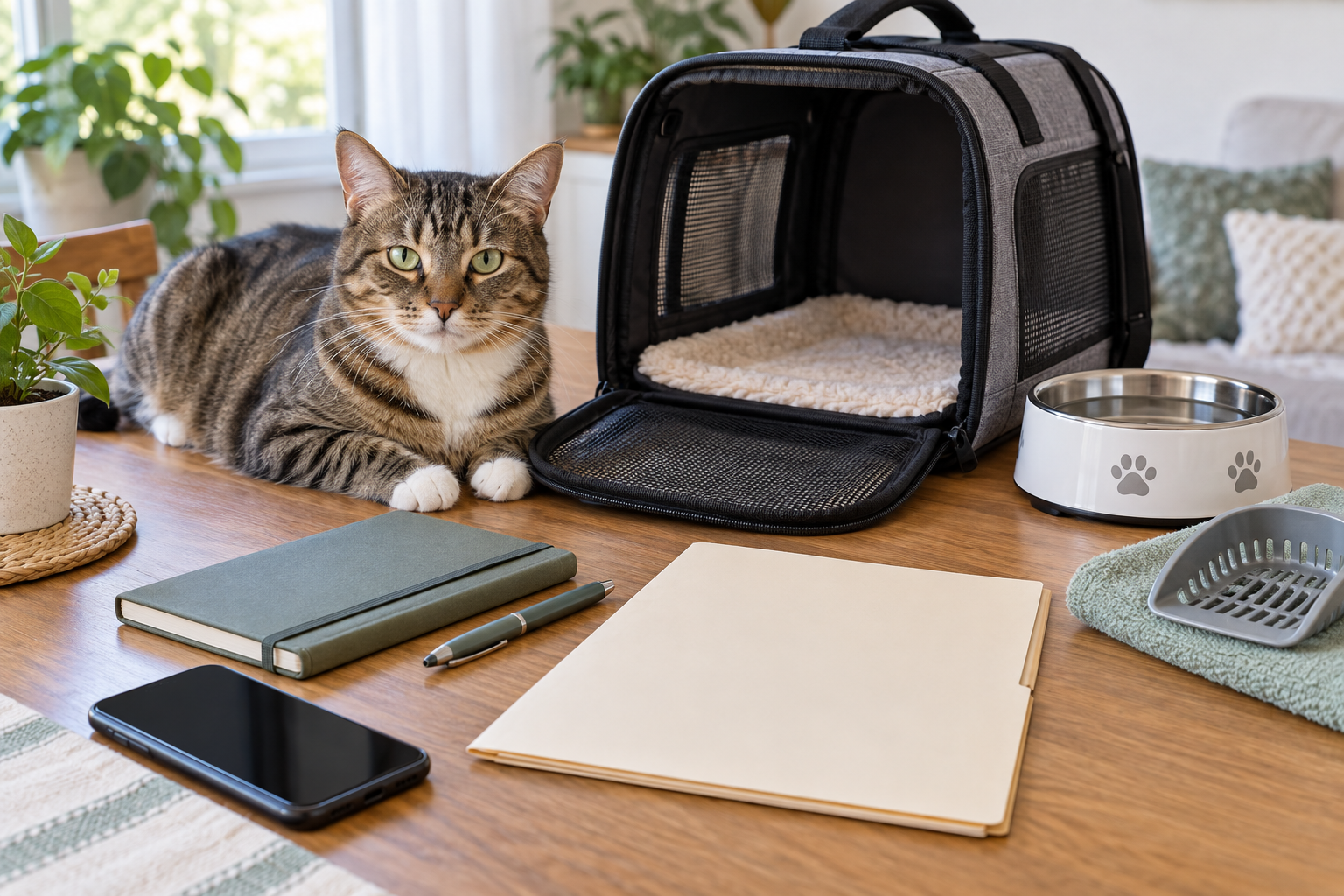
Photos and videos are especially useful for facial tension, limping, posture, or behavior that may disappear at the clinic. Keep clips short, clear, and calm. Your goal is not to prove pain yourself; it is to give your veterinarian better evidence.
Schlussfolgerung:
The Cat Grimace Scale can help you notice facial clues that a cat may be in acute pain, especially when you look at the ears, eyes, muzzle, whiskers, and head position together. It should not replace a veterinary exam or be used to decide medication at home.
If your cat's face looks tense and their behavior has changed, trust the pattern. Observe quietly, write down what you see, save a photo or video, and contact your veterinarian for the safest next step.
Häufig gestellte Fragen
Can I use the Cat Grimace Scale at home?
You can use the basic idea to observe your cat more carefully, but it is not a home diagnosis. The scale is most useful when you learn the official scoring method and share your observations with a veterinarian.
Does squinting always mean my cat is in pain?
No. Cats may squint because of sleepiness, bright light, relaxation, eye irritation, stress, or pain. Squinting is more concerning when it is new, persistent, one-sided, paired with discharge, or appears with other pain clues.
What score means my cat needs pain medicine?
Do not start or change pain medicine based on a home score. The original Feline Grimace Scale research identified a threshold for rescue analgesia in a clinical research context 1, but your veterinarian must decide what is safe for your cat.
Warum versteckt sich meine Katze und frisst nicht?
Hiding plus appetite loss can be a sign of pain, stress, nausea, infection, dental disease, or another illness. Call your veterinarian, especially if your cat skips meals, seems weak, vomits, has litter box changes, or is not improving.
Können Katzen schnurren, wenn sie Schmerzen haben?
Yes, some cats may purr when stressed, uncomfortable, or seeking comfort, not only when happy. Look at the full context: posture, appetite, movement, face, breathing, and whether the behavior is normal for your cat.
Referenzen
[1] Evangelista, M. C., Watanabe, R., Leung, V. S. Y., Monteiro, B. P., O'Toole, E., Pang, D. S. J., & Steagall, P. V. (2019). Facial expressions of pain in cats: the development and validation of a Feline Grimace Scale. Scientific Reports. https://www.nature.com/articles/s41598-019-55693-8
[2] Feline Grimace Scale. (2025). Acute Pain Assessment in Cats using Facial Expressions: Publications. https://www.felinegrimacescale.com/publications
[3] Merck Veterinary Manual. (2023). Recognition and Assessment of Pain in Animals. https://www.merckvetmanual.com/therapeutics/pain-assessment-and-management/recognition-and-assessment-of-pain-in-animals
[4] Merck Veterinary Manual. (2025). Schmerz bei Tieren erkennen und einschätzen. https://www.merckvetmanual.com/special-pet-topics/pain-management/recognizing-and-assessing-pain-in-animals
[5] Cornell Feline Health Center. (2026). Is Your Cat Slowing Down? https://www.vet.cornell.edu/departments-centers-and-institutes/cornell-feline-health-center/health-information/feline-health-topics/your-cat-slowing-down
 EN
EN DE
DE ES
ES PT
PT