
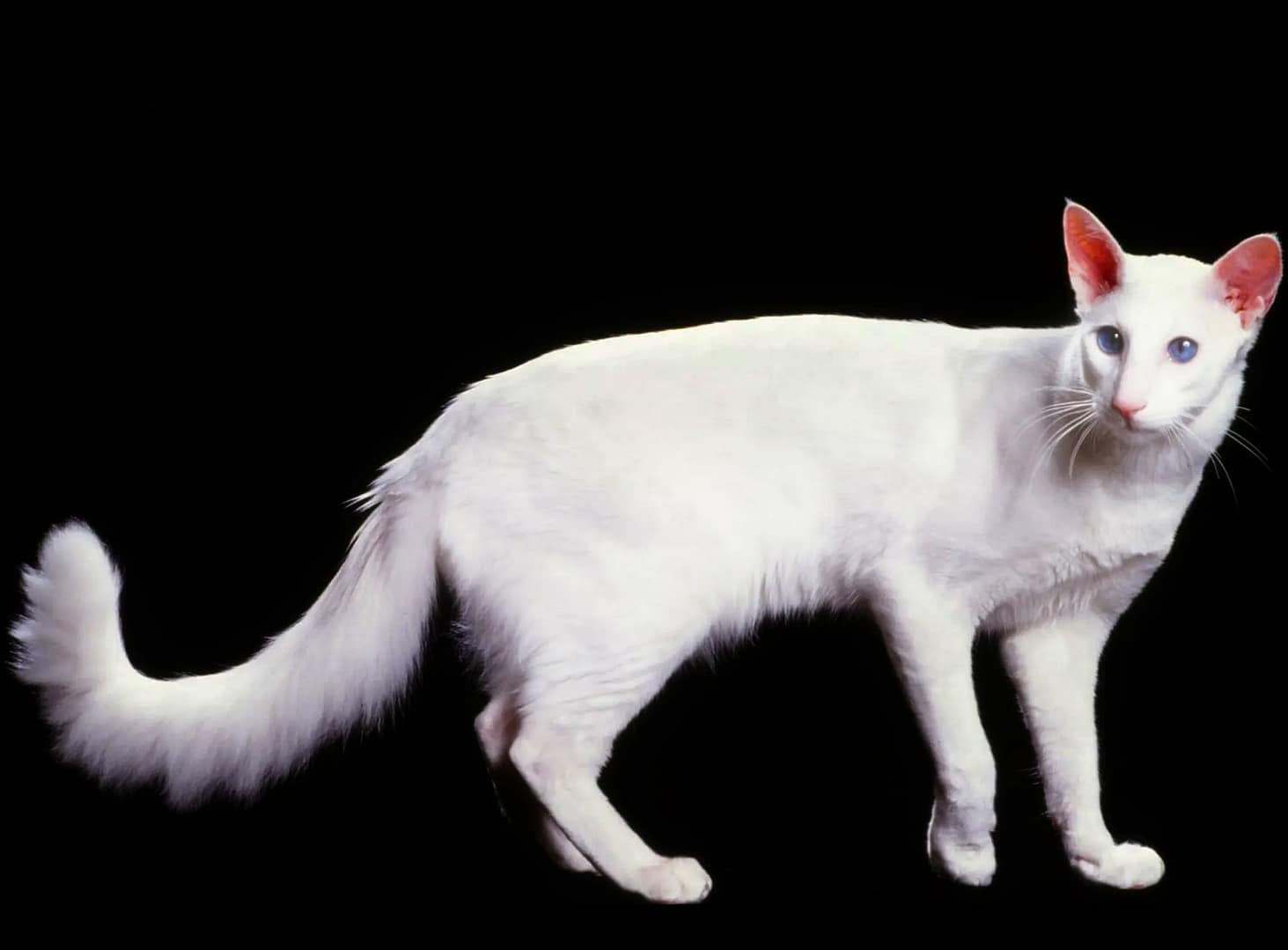
Die Javanische Katze (also called Colorpoint Langhaar) is a Siamese-type, medium-longhaired, colorpoint cat closely tied to the Balinese. In some registries (like CFA), “Javanese” refers to Balinese-type cats in non-traditional point colors such as lynx, tortie, and red/cream points.
Inhaltsübersicht
Rasse-Übersicht
| Charakteristisch | Beschreibung |
|---|---|
| Persönlichkeit | Aufgeschlossen, wissbegierig und anhänglich. Sie sind sehr sozial und anhänglich und folgen ihren Besitzern oft. |
| Gehäuse Typ | Schlank, feinknochig, aber muskulös, mit einem langen röhrenförmig Körper und lange Beine. Elegant und athletisch im Körperbau. |
| Gewicht | ~5–12 pounds (2.3–5.4 kg) as adults (males tend toward the higher end). Small to medium size overall. |
| Herkunft Region | Vereinigte Staaten (Nordamerika) - erstmals von Züchtern in den 1970er Jahren entwickelt; benannt nach der Insel Java, obwohl sie nicht von dort stammt. |
| Lebenserwartung | Approximately 10–15 years on average, with good care. Some may live longer. |
| Mantel Typ | Halblanges, seidiges, einfarbiges Fell (keine Unterwolle), das dicht am Körper anliegt. Gefiederte Rute; minimale Verfilzung. |
| Fellfarben | Vielfalt der Punkt colors beyond the traditional Siamese range – e.g. red, cream, cinnamon, fawn, smoke – often in lynx (tabby) or tortie point patterns. Always with darker “points” (face, ears, legs, tail) on a lighter body. |
| Shedding Level | ⭐☆☆☆☆ (sehr niedrig) |
| Zuneigung zu den Menschen | ⭐⭐⭐⭐⭐ (Extrem hoch) |
| Pflege-Schwierigkeit | ⭐⭐⭐☆☆ (mäßig) |
Javanese Cat (Colorpoint Longhair): 1-Minute Summary
Die Javanische Katze (often called Colorpoint Langhaar) is a Siamese-type, medium-longhaired colorpoint cat known for being extremely affectionate, social, and talkative. Many people describe them as “Klettverschluss-Katzen” because they follow their humans from room to room and want to be involved in everything.
Quick reality check: the name doesn’t mean they come from Java. “Javanese” is a registry/branding term tied to the Balinese/Siamese family—not a geographic origin.
Die wichtigsten Erkenntnisse
- Best for people who want a high-interaction companion (not a “low-attention” cat)
- Geringe Streuverluste and relatively easy coat care (single coat, less matting)
- Most confusion comes from registry naming (Javanese vs Balinese vs Oriental Longhair)
Javanese vs Balinese: Naming & Registry Confusion (Explained Simply)
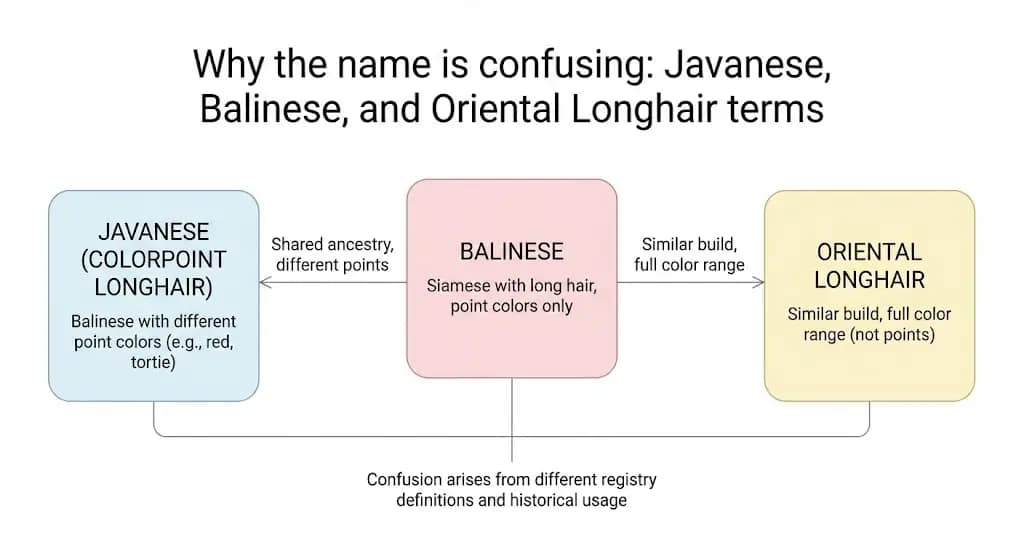
If you’ve heard multiple definitions of “Javanese cat,” you’re not alone. The name is used differently depending on the cat registry and region, which is why search results often disagree.
The short answer
In many modern contexts, “Javanese” is essentially a Balinese/Siamese-type cat with medium-long hair and “extra” point colors (like red/cream, lynx/tabby points, or tortie points). The cat’s look and personality are very similar to Balinese; the label mainly reflects color divisions and registry terminology.
Why the definition varies
- Registry terminology changes over time. Some organizations historically used “Javanese” as a separate label, then later grouped it under Balinese as color divisions.
- Regional naming differs. In some regions, the name “Javanese” has been used for cats that people elsewhere call Orientalisch Langhaar (a related but not identical type), which adds confusion.
How to use this guide
This article focuses on the “Javanese” most people mean in English-language searches:
- Siamese-family / Oriental-type build
- Colorpoint pattern (darker points + lighter body)
- Silky semi-long coat
- Social, intelligent, often vocal temperament
Tip for readers: When browsing breeders or registries, ask what the cat is registered as (Balinese vs Javanese vs Oriental Longhair) and what point colors/patterns are recognized under that registry.
Geschichte der Rasse
Die Javanese cat (often called Colorpoint Longhair) ist eine modern, North American-developed member of the Siamese/Balinese family. Breeders in the late 1970s wanted to keep the sleek Siamese-type body and affectionate temperament while expanding the range of colorpoint (“points”) colors and patterns beyond the traditional palette.
To do this, breeders worked with closely related Siamese-family lines—most commonly Balinese, Siamese, and Colorpoint Shorthair—to produce longhaired colorpoint cats in colors such as lynx (tabby) points, tortie points, and red/cream points.
A quick timeline (why the “Javanese” label changes)
- 1979 (CFA): Non-traditional point colors were accepted under the name “Javanese.”
- 1986 (CFA): The Javanese achieved Voller Meisterschaftsstatus in CFA competition.
- 2008 (CFA): CFA breeders voted to merge Balinese and Javanese into a single breed with separate divisions, which is why you’ll often see Javanese described as a Balinese “division” or color class rather than a fully separate breed today.
Other registries organize things differently. For example, TICA treats the Balinese as part of the Siamese breed group and recognizes a wide range of colors and patterns (including lynx and tortie points)—so cats that CFA readers might call “Javanese” are often simply “Balinese” in those systems.
Finally, some organizations (especially outside North America) have used “Javanese” to mean something closer to Orientalisch Langhaar, which is why the term can look inconsistent across international sources.
Unterm Strich: Javanese cats are purpose-bred Siamese-family colorpoints developed in North America, and the name reflects registry history and color classification, not a natural origin from Java.
Sources (registry references):
- Cat Fanciers’ Association (CFA): Javanese breed article; Balinese breed page (history + 1979/2008 notes)
- Die Internationale Katzenvereinigung (TICA): Balinese breed profile (colors/patterns)
- Weltkatzenkongress: Javanese classification notes (international naming variance)
Physical Characteristics (Appearance)
At a glance: Die Javanesen (Colorpoint Langhaar) has the same sleek, Oriental/Siamese-type build as the Balinese—long, refined lines with firm muscle underneath a silky semi-long coat. (In CFA terminology, Javanese is treated as a Balinese “Javanese Division”—the type is the same; the big difference is color variety.)
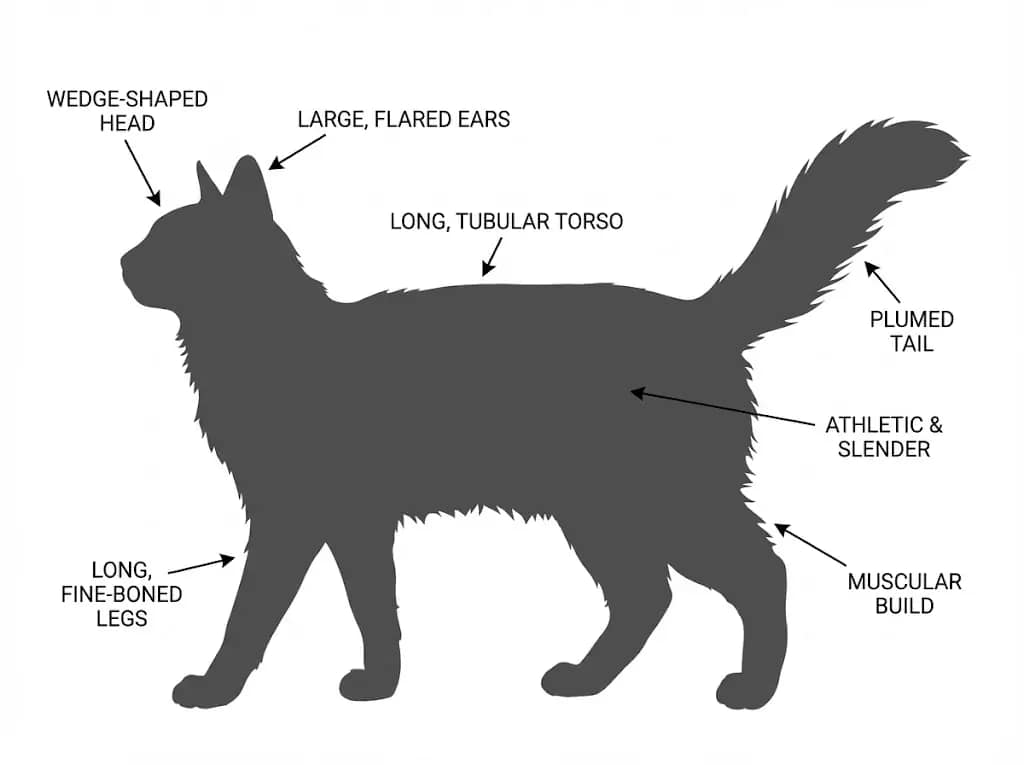
Body type: long, tubular, fine-boned—but athletic
Javanese cats are medium-sized, svelte, and elongated, often described as having a tubular torso with shoulders and hips continuing the same sleek lines. Although they look delicate, the breed standard emphasizes a cat that feels strong, lithe, and muscular in the hand—“elegant refinement” with real athletic power.
Ihre Beine sind long and slim, mit hind legs higher than the front, which contributes to that poised, floating gait and impressive jumping ability.
Head, ears, and eyes: the classic “total wedge”
The head forms a langer, sich verjüngender Keil—straight lines from the nose flaring out to the ear tips to create a clean triangle (“total wedge”).
Ears are one of the most striking features: groß, breit an der Basis, and set to continue the wedge line for an alert, modern look.
For the pointed (SI/BA-type) Javanese, eyes are almond-shaped, slightly slanted, and a vivid blue is expected in breed standards.
(Note: If you see “Javanese” used for non-pointed Oriental Longhair lines in some regions, those cats may have green eyes—this is one reason the name can be confusing.)
Coat: silky, close-lying, and usually low-matting
The Javanese coat is halblang, fine and silky, and lies close to the body, so the cat keeps a sleek outline rather than looking fluffy. The longest fur is on the tail, forming a showy plume.
Coat layering is described slightly differently by organizations, but the practical takeaway is consistent for owners: it’s generally easy-care und weniger anfällig für Verfilzungen than many longhaired breeds. CFA’s standard specifically calls for keine flaumige Unterwolle (a definite double coat is penalized), while TICA describes a silky coat that’s easy to maintain.
Color and pattern: classic “points,” with a wider palette
Like Siamese-family cats, Javanese have colorpoint contrast—a lighter body with darker “points” on the face mask, ears, legs/feet, and tail. Standards emphasize clear definition und contrast between body and points.
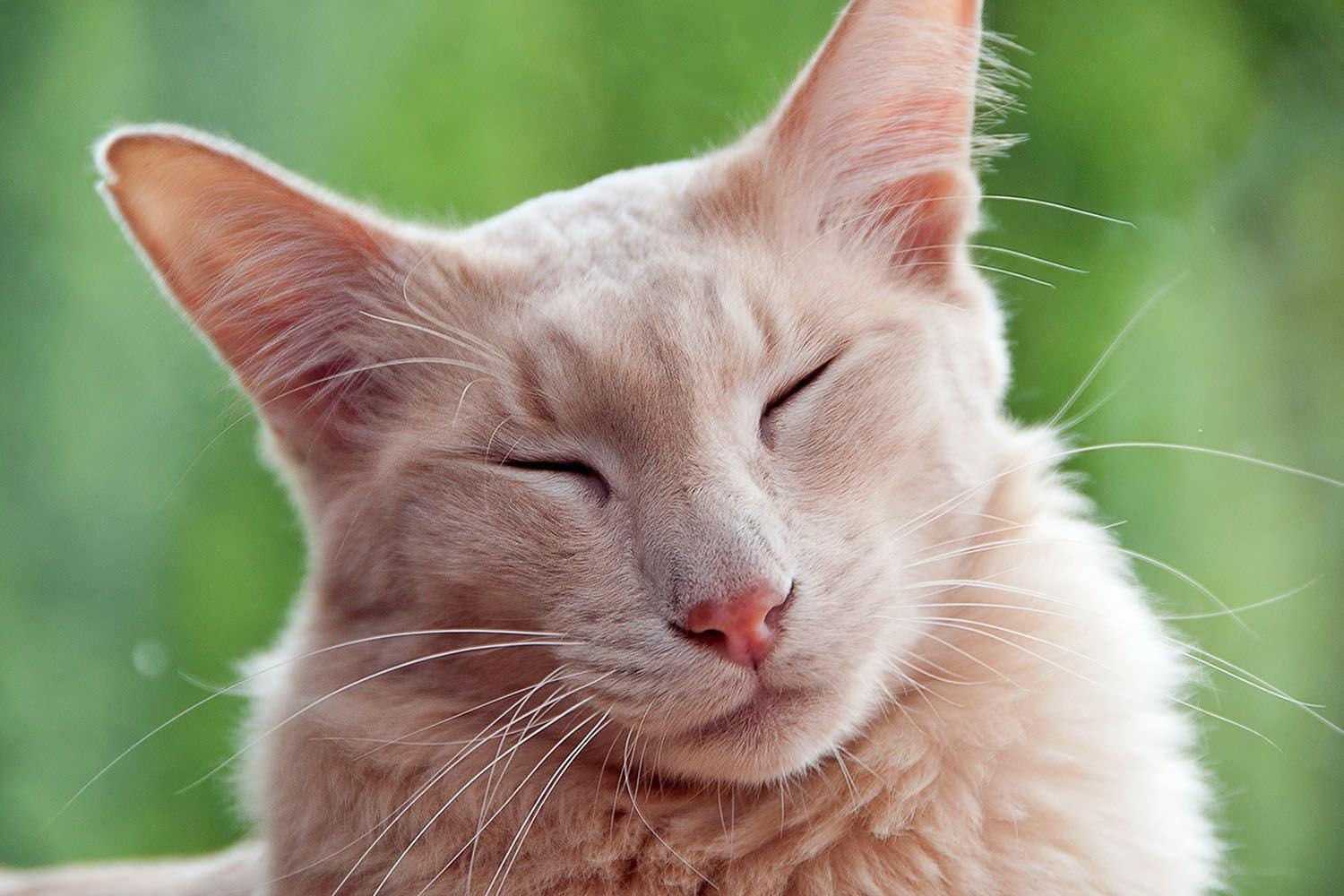
Where Javanese stands out is the expanded point-color range recognized by some registries. In CFA’s Balinese show standard, the “Javanese Division” includes additional point colors (for example red, cream, cinnamon, fawn) and also allows patterns such as lynx (tabby) points und parti-color/tortie-style points.
Verhalten und Persönlichkeit
Javanese cat temperament at a glance
Javanese cats are known for being people-focused, playful, intelligent, and communicative—a classic “Klettverschluss-Katze” that wants to participate in daily life. The Cat Fanciers’ Association (CFA) describes Javanese as active, playful, extremely affectionate, and intelligent, with a strong preference for staying close to their humans.
Affection and attachment
If you want a cat that “keeps you company,” the Javanese is a great match. Many will follow you from room to room, hop into your lap quickly, and seek out touch and attention as part of their normal routine. Breed descriptions from CFA also emphasize that Javanese typically want to be on/near their people (lap, shoulder, and often the bed if allowed).
Owner tip: This closeness is adorable, but it also means Javanese are usually happiest in homes where someone is around often (or where they have another friendly pet companion).
Intelligenz und Trainierbarkeit
Javanese tend to be curious problem-solvers. Many learn household routines quickly and may investigate cabinets, drawers, or food storage if they’re bored or motivated. CFA notes that Javanese are intelligent and have been known to learn fetch and other tricks (especially when rewarded).
Enrichment ideas that match their personality
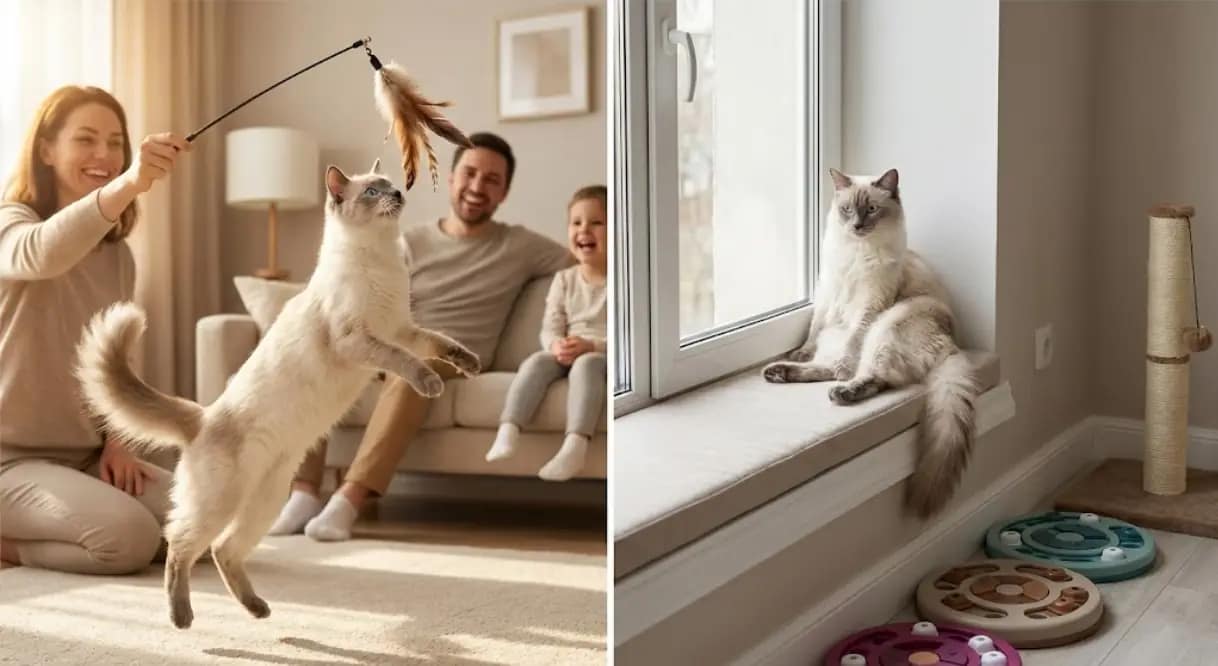
- Short, frequent play sessions (wand toys, chase games)
- Puzzle feeders and “find the treat” games
- Clicker training for simple behaviors (sit, high-five, leash comfort)
Social with family, kids, and other pets
Well-socialized Javanese are typically kontaktfreudig und menschenfreundlich, and many do well in busy households. Because they’re closely related to Balinese/Siamese-family cats, registry descriptions of those sister breeds consistently emphasize a social, high-interaction nature and strong preference for company.
What this means in real life: with respectful handling and gradual introductions, many Javanese integrate well with children, other cats, and cat-friendly dogs—but they usually don’t enjoy being ignored for long stretches.
Vocal, but often “softer” than Siamese
Javanese are often described as talkative—they may chirp, meow, and “comment” when they want attention or interaction. CFA specifically mentions that Javanese do talk and have a variety of voices depending on what they’re communicating.
If you’re worried about volume, it helps to know that their close relatives (Balinese) are commonly described as less vocal than Siamese and sometimes having softer voices, which lines up with many owner experiences of Javanese being chatty without always being as loud as a classic Siamese.
Care Guide (Diet, Exercise, Enrichment, Grooming & Mental Stimulation)
Diet (healthy weight + happier behavior)
Javanese cats are active, social, and often food-motivated—so the goal is a feeding routine that supports lean muscle, stable energy, and good habits.
1. Choose a complete, life-stage diet
Pick a vollständig und ausgewogen cat food that matches life stage (kitten/adult/senior). Pet nutrition organizations note that reputable standards (like AAFCO/FEDIAF) guide nutrient targets by life stage, and “all life stages” foods are formulated for growth/reproduction (often more calorie-dense).
2. Use measured meals (not unlimited refills)
Rather than leaving food out all day, start with measured daily portions and adjust based on body condition and your vet’s guidance—this aligns with veterinary nutrition guidance emphasizing individualized plans and routine nutritional assessment.
3. Treats: keep them small
A common evidence-based rule is to keep treats to ~10% or less of daily calories to avoid unbalancing the diet and unintentionally driving weight gain.
4. Feed the “cat way” (small meals + foraging)
Cats are natural hunters and often do better when they can eat small meals and “work” for some food (foraging/hunting games), especially in indoor settings. Feline feeding consensus guidance highlights strategies like foraging and multiple small meals to support wellbeing and reduce issues linked to stress or overeating.
Easy upgrades (high impact)
- Split the daily portion into 2–4 smaller meals (or use an automatic feeder).
- Verwenden Sie eine puzzle feeder a few times per week (even for wet food).
- In multi-pet homes, offer separate feeding stations to prevent competition and stress.
Exercise (burn energy, prevent boredom behaviors)
Javanese cats are athletic and people-oriented, so exercise should be interactive (not just “toys lying around”).
Daily exercise targets
- Aim for 2 play sessions/day (10–20 minutes each), adjusting to age and fitness.
- Use toys that mimic prey: wand toys, lightweight balls, chase toys.
- If you use a laser pointer, end with a physical toy “catch” and/or a small meal so the hunting cycle feels complete.
Make your home a cat gym
Environmental needs guidelines emphasize providing cats with environments that reduce stress and support natural behaviors—vertical space is a major win.
- Add a tall cat tree, shelves, or window perches.
- Rotate toys weekly to keep novelty high.
Leash training
Many Javanese enjoy harness walks because they’re curious. Start indoors, go slow, and only do supervised outdoor time.
Environment & Enrichment (the “anti-stress” setup)
Because Javanese cats bond strongly with humans, enrichment isn’t optional—it’s preventive care.
A widely used framework for feline wellbeing is the AAFP/ISFM “environmental needs” approach, which centers on providing safe spaces, key resources, play/hunting opportunities, positive human interaction, and respect for the cat’s senses (like scent).
Practical enrichment checklist
- Safe zones: quiet sleeping spots, covered beds, hideaways
- Resources in multiples: 1+ litter box per cat + 1 extra; multiple water/food stations
- Foraging: puzzle feeders, treat trails, “find it” games
- Social needs: scheduled cuddle/play time (especially if you’re away often)
If you’re gone most of the day, consider:
- a compatible pet companion (when appropriate), and/or
- timed feeders + enrichment stations + a predictable routine
AAFP guidance also supports enrichment as a way to reduce stress-related and unwanted behaviors in indoor cats.
Grooming (low maintenance, but don’t skip the basics)
Javanese cat coats are typically easier than many longhaired breeds because they’re silky and less prone to heavy matting—but routine care still matters.
Mantel
- Brush 1–2×/week (more during seasonal sheds).
- Focus on friction areas: behind ears, underarms, base of tail.
Dental care (big quality-of-life factor)
Many Siamese-family cats are prone to dental disease, so home care pays off. AAHA dental guidelines emphasize the importance of home oral hygiene and ongoing preventive care (and note that successful periodontal outcomes often require consistent home care).
- Start slowly with pet-safe toothpaste; aim for frequent brushing (daily if possible).
- Ask your vet about professional dental exams/cleanings and VOHC-accepted products as add-ons.
Ears + nails
- Check ears weekly; clean only if you see wax/debris (and only with cat-safe products).
- Trim nails every 2–4 weeks, and keep scratching posts available.
Mental Stimulation (a must for “Velcro + genius” cats)
Javanese cats are bright and social. When understimulated, they can become noisy, clingy, or mischievous—so mental stimulation is behavior prevention.
Simple mental enrichment ideas
- Clicker training (sit, high-five, target touches) + tiny food rewards
- Food puzzles or scatter feeding (indoor “hunt”)
- Rotate “special toys” (only available during playtime)
- Short, frequent interaction bursts (2–5 minutes) throughout the day
Health Concerns (Common Risks in Javanese / Balinese-Type Cats)
Most Javanese cats live long, healthy lives, but as part of the Siamese/Balinese/Oriental family, they may be more likely than average to experience certain inherited or breed-associated issues—especially amyloidosis, progressive retinal atrophy (PRA), and dental disease.
This section focuses on what owners can watch for, plus which screenings to ask a breeder or veterinarian about.
Das ist wichtig: This is general education, not a diagnosis. If your cat has breathing trouble, sudden weakness, or sudden vision changes, treat it as urgent and contact a vet.
Quick table: symptoms, tests, and prevention
| Zustand | What you may notice (owner-friendly signs) | What a vet uses to confirm | Practical prevention & management |
|---|---|---|---|
| Eye conditions (strabismus & PRA) | Strabismus (crossed eyes) is often present in Siamese-type lines and may be stable; PRA can start as night-vision issues, bumping into objects in dim light, or dilated pupils. | Full eye exam; for PRA, retinal exam ± specialized testing; some genetic tests exist for certain PRA variants (breed/line dependent). | Strabismus: if it’s been present since kittenhood and unchanged, many cats adapt; new/sudden strabismus in an adult should be checked promptly. PRA: no cure, but cats often do well with home adaptations; ask breeders about eye history and screening. |
| AA Amyloidosis (liver/kidney involvement) | Can be vague early: weight loss, poor appetite, lethargy; depending on organ affected, signs may progress. In Siamese/Oriental lines, deposits often involve the liver. | Bloodwork + urinalysis; imaging as needed; definitive diagnosis may require advanced testing. | There’s no single at-home prevention, so focus on (1) choosing breeders who track health in their lines, and (2) routine wellness exams with baseline labs. |
| Heart disease (HCM / cardiomyopathy) | Many cats show no symptoms early. Possible signs later: fast/labored breathing, lethargy, collapse; blood clots can cause sudden hind-limb weakness/pain. | Echocardiogram (heart ultrasound) is the key test for diagnosing cardiomyopathy and assessing severity. | Ask breeders if breeding cats receive periodic echo screening (especially if there’s family history). |
| Dental disease (periodontal disease & tooth resorption) | Bad breath, drooling, red gums, pawing at mouth, dropping food, chewing on one side. Tooth resorption can be schmerzhaft and surprisingly common. | Oral exam; dental X-rays are often needed to detect resorption below the gumline. | Best prevention is tooth brushing (daily ideal) + routine dental checks/cleanings as advised. |
| Respiratory issues (feline asthma / bronchial disease) | Coughing, wheezing, rapid breathing, “hunched” posture during an episode, open-mouth breathing (emergency). | Diagnosis is clinical + imaging and rule-outs; there is no single definitive test. | Long-term control often uses anti-inflammatory therapy (including inhaled or oral corticosteroids) and sometimes bronchodilators. Avoid triggers (smoke, dusty litter, strong fragrances). |
| Joint issues (arthritis; sometimes hip dysplasia) | Reduced jumping, stiffness, less play, slower stairs, Verstecken more. Arthritis can be subtle. | Exam + history; imaging when needed. | Keep an ideal weight, provide ramps/soft bedding, and ask your vet about pain control or joint support if signs appear. |
| Congenital deafness (mainly in white/blue-eyed cats) | Not responding to sound; startled when approached; very deep sleep. Risk is much higher in all-white cats with blue eyes. | BAER hearing test (vet specialist test). | If a kitten appears deaf, test early and adapt the home (hand signals, vibration cues, safe indoor environment). |
Ist diese Rasse das Richtige für Sie?
Javanese cat (often described as Colorpoint Langhaar and closely tied to the Balinese/Siamese family) are typically active, playful, extremely affectionate, and very people-focused—the kind of cat that wants to be on your lap, shoulder, or following you around the house.
They also tend to be . and can be demanding about attention, so lifestyle fit matters.
Quick decision: best match vs not ideal
| Best match if you… | Not ideal if you… |
|---|---|
| Want a very affectionate, interactive companion that seeks closeness daily | Are away from home for long hours most days (they often dislike being left alone) |
| Enjoy a cat that may “talk” to you and communicate often | Need a very quiet pet or a calm, low-social-demand household |
| Can provide daily play + enrichment (climbing, puzzle toys, interactive time) | Prefer a “low-engagement” cat that mostly entertains itself |
| Want a low-shedding longhair-type coat with easier upkeep (silky single coat, minimal shedding/matting) | Expect a truly “hypoallergenic” cat (no breed is guaranteed allergy-safe) |
| Have a family or other pets and can do proper introductions (often fits well in family life) | Want a strictly independent, “seen-not-heard” cat |
First-time cat owners: can it work?
Maybe—if you want a social, involved cat. Javanese/Balinese-type cats are often smart and responsive, but they usually do best with owners who enjoy training, play, and frequent interaction.
If you’re new to cats und you’re away a lot, consider adopting an adult cat with a known temperament or plan for extra companionship and enrichment.
30-second self-check (honest answers)
If you say “yes” to 3 or more, you’re likely a great match:
- Ich kann Ihnen two short play/interaction sessions daily most days.
- I don’t mind a cat that’s vocal and communicative.
- I want a cat that’s emotionally close and follows me around.
- My home has Vertikaler Raum (cat tree/shelves) and enrichment.
- I’m okay with a cat that may struggle if left alone for long periods.
FAQ
Sind Javanische Katzen gute Haustiere?
Ja, sie sind anhänglich, intelligent und loyal. Ideal für Besitzer, die sich einen interaktiven Begleiter wünschen.
Mögen Javakatzen es, gehalten zu werden oder gekuschelt?
Die meisten schon! Sie genießen körperliche Nähe und sitzen oft auf dem Schoß oder schlafen neben Ihnen.
Wie stimmgewaltig sind Javaner Katzen?
Sie sind sehr lautstark, wenn auch etwas leiser als Siamkatzen. Sie werden regelmäßig mit Ihnen "sprechen".
Benötigen Javanische Katzen eine Menge Pflege?
Ganz und gar nicht. Ihr einlagiges Fell ist mit wöchentlichem Bürsten leicht zu pflegen.
Sind Javanische Katzen hypoallergen?
Keine Katze ist hypoallergen, aber Javaner haaren weniger und sind daher für manche Allergiker besser geeignet.
Was ist der Unterschied zwischen einer Javanisch und eine balinesische Katze?
Vor allem die Fellfarben. Javanesen sind balinesische Katzen mit nicht-traditionellen Point-Farben (z.B. rot, creme, schildpatt, luchsfarben).
Bonus Fakten
Nicht von Java
Trotz des Namens haben Javakatzen nie in Java gelebt. Die Rasse wurde in den USA und Kanada entwickelt. Der Name wurde gewählt, um den balinesischen Rassennamen zu ergänzen (Bali und Java sind Inseln, die nebeneinander liegen). - eher eine Anspielung auf das orientalische Erbe als auf die tatsächliche Herkunft.
Ehemalige Rasse Status
Die Javanesen hatten eine Art Identitätskrise. Zu einem bestimmten Zeitpunkt erkannte der CFA die Javanesen als eigenständige Rasse an (getrennt von den Balinesen), machte dies aber später wieder rückgängig. Heute betrachtet der CFA die Javanesen lediglich als eine Farbklasse der Balinesen.. Wenn Sie einige Stammbäume durchsuchen, können Sie ältere Generationen finden, die als Javaner gekennzeichnet sind, deren Nachkommen aber jetzt als Balinesen registriert sind.
Mantel der Viele Farben
Der CFA hat einmal aufgelistet 24 verschiedene Farbpunktvarianten für Javanische Katzen, darüber hinaus zu den vier balinesischen (siamesischen) Farben. Diese umfangreiche Farbpalette bedeutet, dass Javanese/Colorpoint Langhaar wohl eine der vielfältigsten Farbpaletten aller Katzenrassen haben.
Springen Fähigkeit
Javanische Katzen sind unglaubliche Springer. Sie sind dafür bekannt, dass sie mit Leichtigkeit auf die Spitzen von Türen oder auf hohe Regale springen. Für einen entschlossenen Javaner ist kein Ort in Ihrer Wohnung wirklich unerreichbar! Hohe Sitzstangen sind fast ein Muss, sonst müssen sie sich ihre eigenen schaffen, indem sie auf hohe Möbel zugreifen.
Lebensmittel Liebende
Viele Javaner sind vom Essen besessen. Sie haben oft einen großen Appetit und miauen nach Leckereien oder versuchen, das menschliche Essen zu probieren. Ihre Vorliebe für Futter ist sogar so ausgeprägt, dass ihre Besitzer auf ihre Ernährung achten müssen. Das hat den Vorteil, dass sie durch ihre Futtermotivation leichter zu erziehen sind, da sie für ein Lieblingsleckerli viel tun.!
Klettverschluss-Katzen
Ein Spitzname, der den Javanern (und Balinesen) manchmal gegeben wird, ist "Klettverschlusskatze", weil sie an Ihnen kleben sie gerne sind. Wundern Sie sich nicht, wenn Ihr Javanese Ihnen ins Badezimmer folgt, auf Ihren Schreibtisch springt, während Sie arbeiten, und sich generell immer in Ihrer Nähe aufhält. Sie lieben ihre Menschen einfach.
Gesprächig und verständnisvoll
Javaner führen oft Gespräche mit ihren Besitzern. Liebhaber schwören darauf, dass diese Katzen auf Ihre Worte praktisch mit verschiedenen Miauen "antworten" können. Es ist zwar umstritten, wie viel sie verstehen, aber ihre Reaktionsfähigkeit vermittelt den angenehmen Eindruck, dass sie die menschliche Sprache zu verstehen oder sie versuchen es zumindest aufrichtig! Sie verstehen durchaus den Tonfall und reagieren auf ihren Namen oder liebevolles Geplapper.
Einzel-Mantel Vorteil
Da Javaner nur eine Fellschicht haben, sind sie produzieren weniger Allergene durch das Fell und bekommen auch nicht so viele Haarballen (da sie beim Putzen weniger Fell aufnehmen). Keine Katze ist wirklich allergenfrei, aber Javaner erscheinen aus diesem Grund oft auf den Listen der "allergikerfreundlichen" Rassen.
Seltene Edelstein
Javanische Katzen sind relativ selten. In einem örtlichen Tierheim werden Sie vielleicht keine finden (obwohl es sich immer lohnt, bei Rettungsorganisationen nachzuschauen!). Aufgrund ihrer Seltenheit und ihrer speziellen Zucht werden sie von Züchtern manchmal mit einem höheren Preis versehen. Diese Seltenheit kann Javaner-Besitzern das Gefühl geben, dass sie ein besonderes, verstecktes Juwel in der Katzenwelt besitzen.
Teil des Orientalisch Familie
Die Javanesen sind Teil einer größeren Gruppe von Rassen, die oft als Orientalische Familie - einschließlich Siam, Balinese, Orientalisch Kurzhaar, Orientalisch Langhaar, Colorpoint Kurzhaar, usw. Sie alle haben einen gemeinsamen Vorfahren, die Siamkatze. Das bedeutet, dass Sie, wenn Sie eine dieser Rassen lieben, auch die anderen lieben könnten, da sie einen ähnlichen Typ und ein ähnliches Temperament haben (mit leichten Unterschieden vor allem in Fell und Farbe).
Referenzen
Christmann, Karen; Harr, Barbara (2012) [1993]. "Rasse-Artikel: Javanesen". CFA.org. Verein der Katzenliebhaber. Archived from the original on October 29, 2012. Retrieved July 13, 2018.
"Rassenvergleiche - Balinesen - World Cat Congress". www.worldcatcongress.org. Abgerufen am 18. August 2023.
"Javanische Katze". www.cfa.org. Abgerufen am 18. August 2023.
Helgren, J. Anne (1997). "Javanisch". Barron's Encyclopedia of Cat Breeds: Ein vollständiger Leitfaden für die Hauskatzen Nordamerikas. Barron's Educational Series. ISBN 978-0-7641-5067-8..
Alderton, David (1992). "Balinesisch/Javanisch". In Negus, Daphne (ed.). Katzen. Reihe "Eyewitness Handbooks". Dorling Kindersley (DK) / Houghton Mifflin. ISBN 978-1-56458-073-3..
Somerville, Louisa (2007). Der ultimative Leitfaden für Katzenrassen. Edison, New Jersey: Chartwell Books. S. 44. ISBN 9780785822646. Es gibt viel Verwirrung um die Verwendung dieses Namens in der Katzenwelt, obwohl er immer verwendet wird, um Katzen von eindeutig orientalischem Typ zu beschreiben. Er wurde einfach aufgrund der Tradition übernommen, die sich bei der Verwendung der Namen südostasiatischer Länder und Inseln für andere orientalische Rassen, wie z. B. Siam und Balinese, entwickelt hat.
"Über die Balinesen". CFA.org. Cat Fanciers' Association. 2018. Archiviert from the original on July 13, 2018. Retrieved July 13, 2018.
Schneck, Marcus; Caravan, Jill (1990). Fakten über Katzen. Barnes & Noble Bücher. ISBN 978-0-88029-558-1.








 EN
EN DE
DE ES
ES PT
PT