
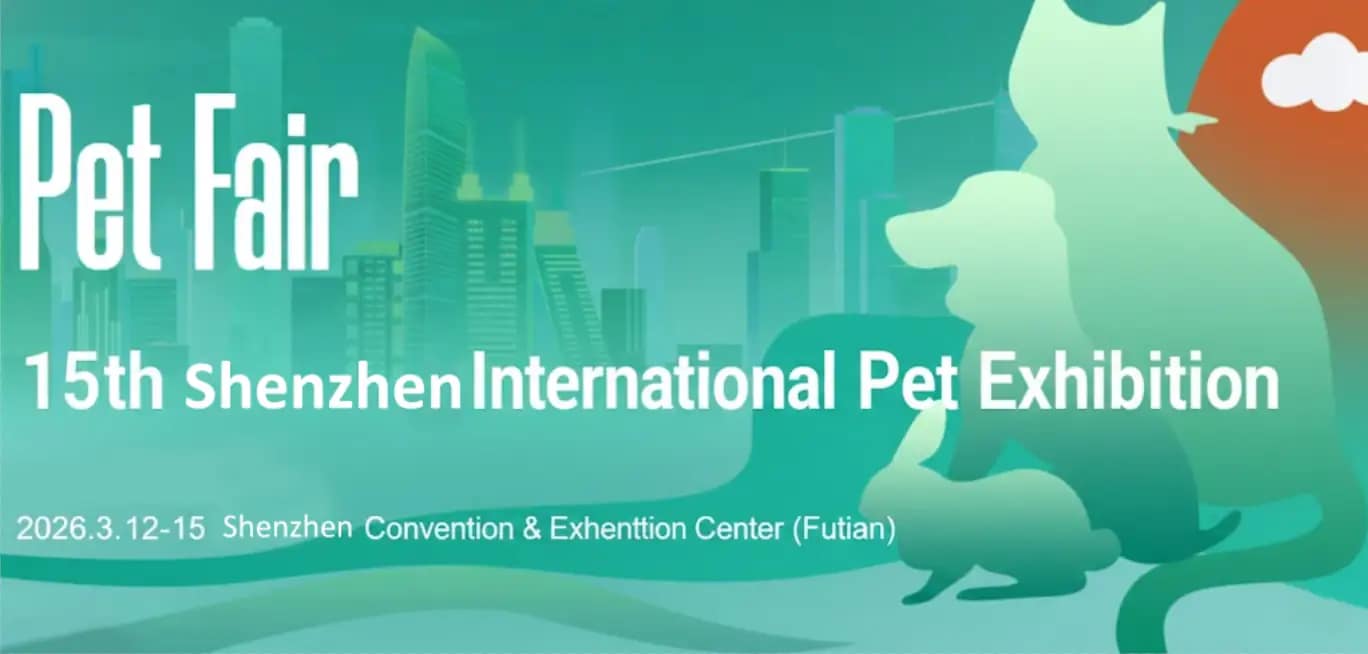
Is China (Shenzhen) Pet Fair 2026 worth visiting in March?
Planning a Shenzhen pet-industry trip can get messy fast. Dates, venue access, and registration rules vary by visitor type. This guide turns the essentials into an actionable plan.
China (Shenzhen) Pet Fair 2026 is worth visiting if the goal is sourcing pet products, meeting suppliers, and tracking category trends in South China; it is less suitable for travelers seeking an entertainment-first “pet carnival” experience.
Keep reading for the practical details that decide whether the four days will be productive—plus transport, timing strategy, and a quick on-site checklist.
This guide follows the SnuggleSouls visitor-first editorial checklist.
Wichtige Informationen zum Ereignis
Schnelle Fakten
| Artikel | Einzelheiten |
|---|---|
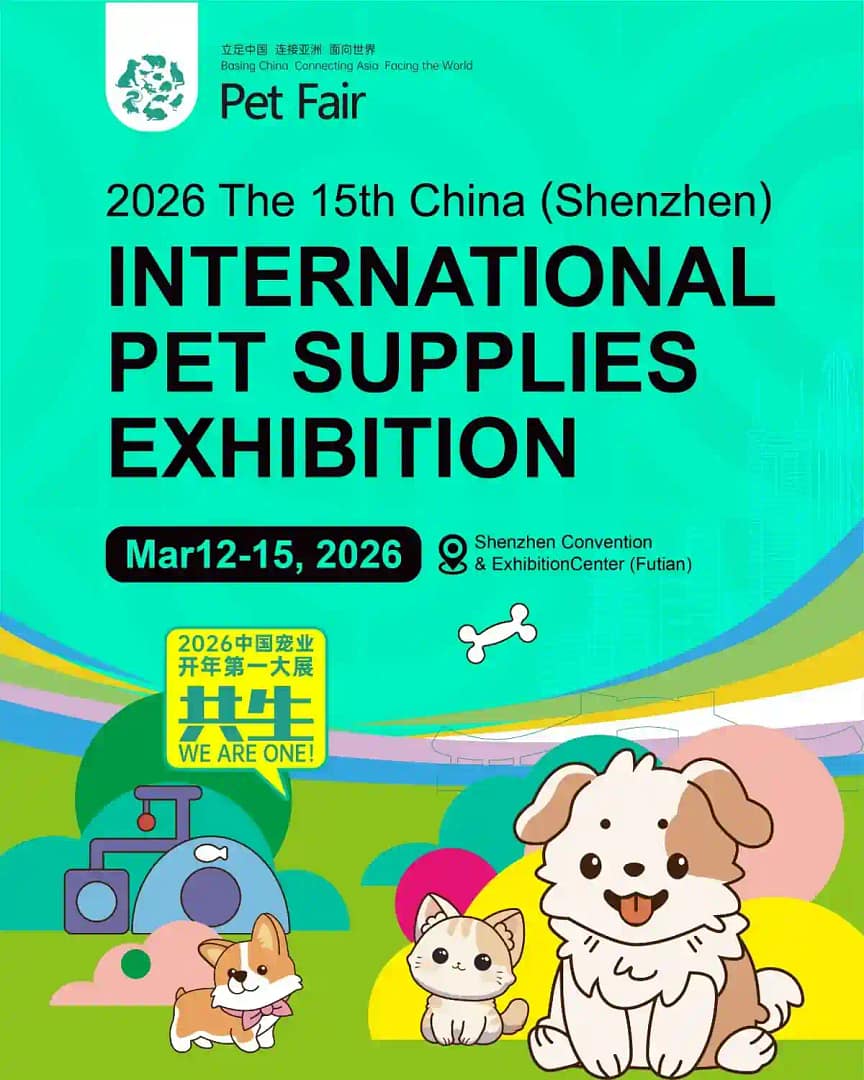
| Veranstaltung | The 15th China (Shenzhen) International Pet Supplies Exhibition (commonly “Shenzhen Pet Fair”) |
| Dates | March 12–15, 2026 (4 days) |
| Veranstaltungsort | Shenzhen Convention and Exhibition Center (Futian) |
| City / Region | Shenzhen, Guangdong, China |
| Venue address | No. 111 Fuhua 3rd Road, Futian District, Shenzhen, Guangdong, China |
| Entry / tickets | Professional audience: pre-registration is free; on-site admission fee is listed as 100 CNY. Other visitor categories: Confirm on the official channel before visiting. |
| Booking / registration | Official visitor/registration channels on the Shenzhen Pet Fair site (often via online form and/or official WeChat/WhatsApp contact). |
| Primary access | Shenzhen Metro to Convention & Exhibition Center Station |
| Nächstgelegener Flughafen | Shenzhen Bao’an International Airport (SZX) |
Tickets and registration
Shenzhen Pet Fair is positioned as an industry exhibition, so entry commonly depends on visitor category (for example: professional buyer, exhibitor, media, or general visitor). The organiser’s English registration information states that professional audience pre-registration is free, while on-site admission is listed as 100 CNY. Anyone traveling specifically for entry should treat pre-registration as the safest route and keep a fallback plan if rules change (for example, bringing business credentials and arriving earlier in the day).
Practical pre-registration checklist (bring or prepare digitally):
- Passport/ID details used in registration
- Business card(s) or a digital “company profile” page
- A short target list: categories, suppliers, or brands to find
- A China-friendly contact method (WeChat is common for post-fair follow-up)
If a public “pet lover” ticketing path is not clearly stated for March 2026, treat it as uncertain and confirm before booking flights. Confirm on the official channel before visiting.
Ankommen
By metro (recommended): The Shenzhen Government Online “What’s On” listing for the exhibition center notes: Metro Line 1 or 4 to Convention and Exhibition Center Station, Exit D. That exit is a practical starting point for most visitors navigating into Futian.
By taxi / ride-hailing: Use the Chinese address for fewer misunderstandings:
- 深圳会展中心(福田)
- 广东省深圳市福田区福华三路111号
Expect traffic in Futian around peak commuter hours; buffer extra time, especially on opening day.
From the airport: Shenzhen Bao’an International Airport (SZX) is the primary international gateway. Plan for a multi-step transfer (airport metro/rail + urban metro, or taxi) depending on luggage and time of day. For the most current airport-to-city options, consult Shenzhen’s official transport guidance.
From Hong Kong (if relevant): Many business travelers route via Hong Kong and cross into Shenzhen. Border crossing time varies widely by checkpoint and time of day, so build contingency time if a same-day arrival is planned.
What can visitors expect to see and do at China (Shenzhen) Pet Fair 2026?
A trade show can feel overwhelming on day one. Without a plan, hours disappear into aisles that do not match purchasing goals. A simple structure turns browsing into targeted sourcing.
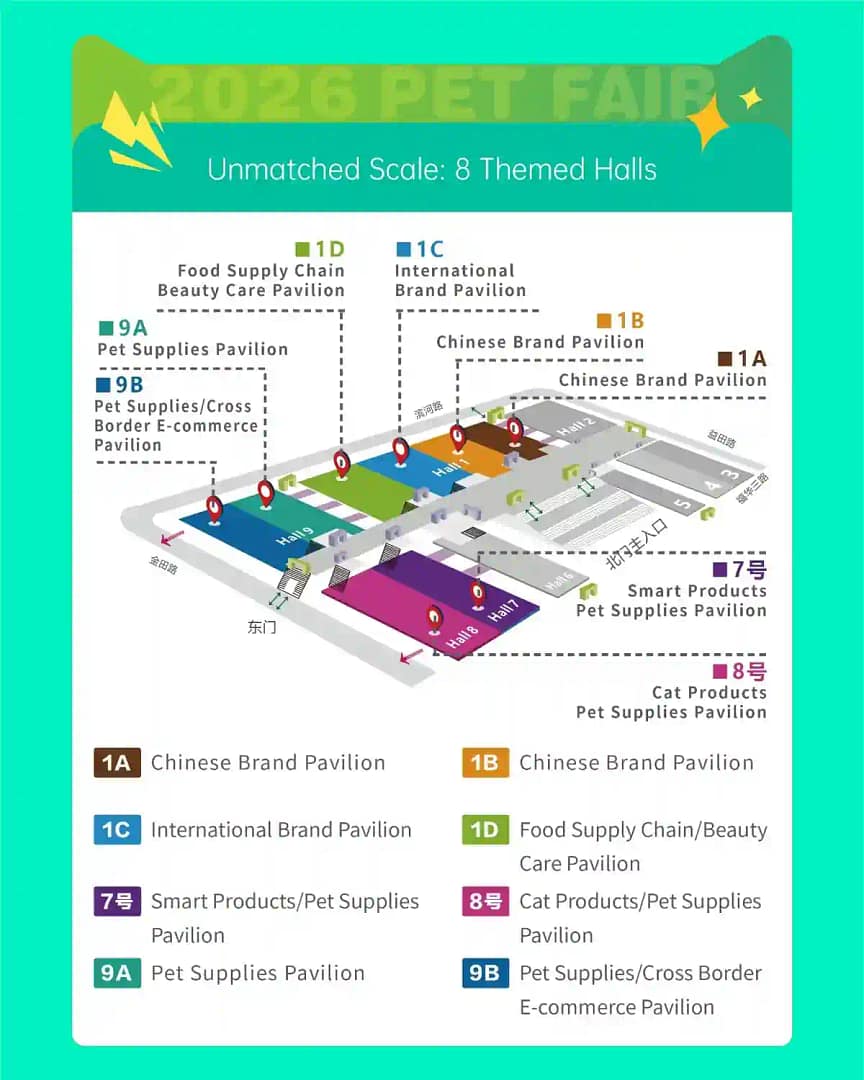
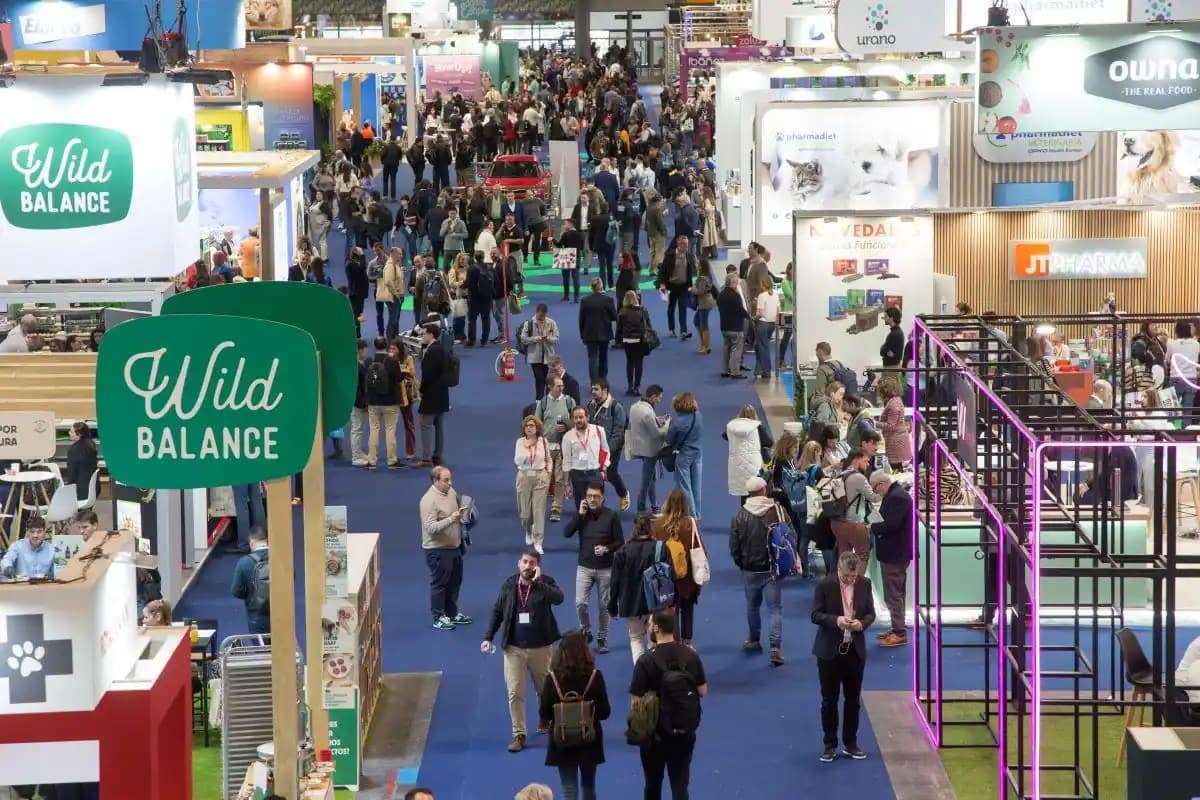
Expect a multi-hall pet-supplies exhibition focused on product categories and supplier discovery, with the organiser describing themed pavilions and a large show floor. Confirm the March 2026 hall map and exhibitor list before arrival.
Dive deeper: turning the show floor into a sourcing map
Most visitors fall into one of two modes: scouting (discovering new suppliers and trends) or buying (confirming specs, MOQs, lead times, compliance documents, and pricing). The most productive approach is to decide which mode applies for each half-day.
Aisle strategy that works in practice
- First 60–90 minutes: fast scan. Photograph booth numbers, category banners, and supplier names; do not stop for long demos yet.
- Next 2–3 hours: shortlist meetings. Return to the top 10–15 booths and ask structured questions (MOQ, lead time, export markets served, certifications, ingredient sourcing, warranty terms for electronics).
- Final hour: consolidate. Collect catalogs digitally where possible, label physical samples immediately, and record a single “next step” per supplier.
Questions that quickly separate serious suppliers from brochure-only booths
- “What is the standard MOQ and what is the trial MOQ?”
- “Which markets do you currently ship to, and what compliance documents can be shared?”
- “What is the lead time for repeat orders vs first orders?”
- “Who handles after-sales support and what is the warranty policy?” (especially for smart devices)
If attending as a pet owner rather than a trade buyer
Some pet fairs in China include consumer-facing zones or companion events, but the March 2026 visitor format may vary. If the organiser’s March pages do not clearly describe public-entry rules, treat the event as trade-first and confirm whether general admission is supported before arriving.
How should buyers and exhibitors plan badges, meetings, and daily timing?
Trade shows reward preparation. Unplanned days tend to become crowded walks with little follow-through. A basic schedule and meeting system keeps the four days manageable.
Plan to arrive early, register in the first hour, and book supplier conversations into time blocks. Use day themes (scout → shortlist → negotiate → follow-up) to avoid repeating the same aisle loops.
Dive deeper: a practical 4-day structure
Day 1: Orientation + discovery
- Pick two priority categories only.
- Walk for coverage, not depth.
- Build a shortlist and set meeting times for Days 2–3.
Day 2: Deep meetings
- Spend more time per supplier.
- Request spec sheets, compliance docs, and clear pricing ladders.
- For OEM/ODM: ask for sampling timelines and packaging options.
Day 3: Negotiation + comparison
- Compare suppliers side-by-side on: MOQ, lead time, price stability, payment terms, and after-sales support.
- If working with cross-border e-commerce, confirm whether the supplier supports DDP/DDU shipping options, labeling requirements, and barcoding.
Day 4: Wrap + follow-up
- Final checks, last samples, and confirm contact points.
- Write follow-up messages the same day while details are fresh.
Meeting and note-taking system (simple, reliable)
| What to record | Why it matters |
|---|---|
| Booth number + hall | Makes follow-up possible after the fair |
| Contact name + WeChat | Primary channel for many China-based suppliers |
| 3 key specs | Stops “catalog confusion” later |
| MOQ + lead time | Core feasibility metrics |
| Next step + deadline | Prevents stalls after travel |
Crowd and comfort tactics
- Wear shoes designed for 15,000–20,000 steps/day.
- Bring a portable charger and a small folder for paper samples.
- Eat off-peak; lunch queues can compress meeting time.
- Expect temperature swings between outdoors and air-conditioned halls.
How can visitors assess product safety and animal welfare on-site?
Pet events can surface questionable claims or uncomfortable live-animal setups. Without a framework, it is hard to judge what is responsible. A few checks reduce risk and support ethical choices.
Use a “verify before buying” mindset: look for traceable documentation, clear labeling, and transparent husbandry standards. If live-animal areas exist, prioritize welfare indicators over photo opportunities.
Dive deeper: a buyer-friendly safety checklist
For food, supplements, and treats
- Ask for ingredient list, country of origin, and testing (especially for claims like “hypoallergenic” or “functional”).
- Check packaging for batch/lot codes and a clearly stated shelf life.
- Treat medical or therapeutic claims cautiously unless backed by credible documentation. If documents are not available on-site, plan to verify post-show.
For smart devices and electronics
- Confirm charging standards, waterproof ratings, and warranty terms.
- Ask where repairs are handled and whether spare parts exist.
- If the device stores pet data, ask what app permissions are required and whether data can be deleted.
For grooming, chemicals, and cleaning products
- Ask for safety data where appropriate and confirm intended species use (cats vs dogs can differ).
- Avoid impulse buying strongly scented products without clear guidance.
For live-animal display areas (if present)
- Look for adequate space, water access, shaded/rest areas, and low-stress handling.
- Avoid vendors who encourage constant handling or photo queues around animals.
- If animal sales are present, ask about vaccination records, veterinary checks, and return policies. If answers are vague, consider walking away.
For pet owners traveling with pets
Many trade venues restrict animals or require strict controls. Do not assume pets are allowed inside the exhibition center. Confirm on the official channel before visiting.
What makes Shenzhen Pet Fair distinctive, and who is it for?
Shenzhen’s location matters: Futian sits in a major commercial district, and the organiser frames the fair around trade connectivity and cross-border commerce. For buyers, that can translate into a dense mix of factories, brand owners, and distribution-focused exhibitors.
Best suited for
- Importers, distributors, and retailers sourcing pet food, supplies, grooming, and devices
- E-commerce sellers looking for OEM/ODM suppliers and packaging-ready SKUs
- Brand teams scouting competitors, pricing structure, and new launches
- Service providers and partners (logistics, packaging, marketing, payments) targeting pet merchants
Who may not enjoy it
- Travelers seeking a relaxed “pet festival” atmosphere with extensive entertainment programming
- Families expecting hands-on animal interaction throughout
- Visitors uncomfortable with crowds and long indoor walking days
Do-not-miss priorities for first-timers
- The official hall distribution map (once published for March 2026): use it to decide which halls to prioritize.
- A structured supplier comparison session (Day 3 works well): it turns browsing into decisions.
- A same-day follow-up routine: messaging suppliers while still on-site yields faster replies later.
Which video offers a realistic preview?
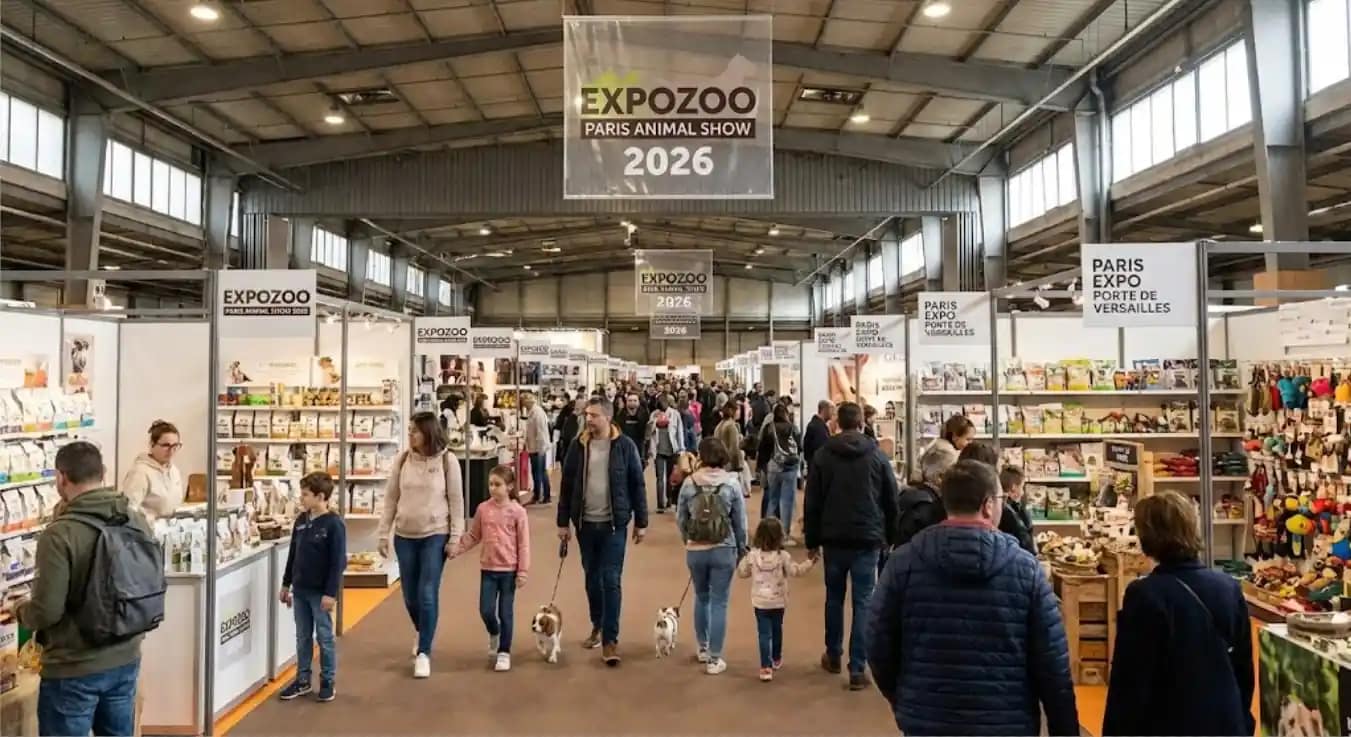
This short walkthrough-style clip helps set expectations for the scale, aisle density, and general pacing typical of the Shenzhen Pet Fair environment
Die Leser können auch unsere 2026 Veranstaltungskalender für einen umfassenden Überblick über bevorstehende Veranstaltungen für Haustiere und Tiere.
Referenzen
- The 15th China (Shenzhen) International Pet Supplies Exhibition: dates and venue (Shenzhen Pet Fair — Official Site).
- Professional Audience Registration: stated pre-registration and on-site admission fee (Shenzhen Pet Fair — Official Site).
- Venue address: Shenzhen Convention & Exhibition Center (Futian) contact information (Shenzhen Convention & Exhibition Center — Official Site).
- Metro access note for Shenzhen Convention and Exhibition Center (Shenzhen Government Online).
- Aviation transport guidance for Shenzhen (Shenzhen Government Online).
Schlussfolgerung
Shenzhen Pet Fair 2026 can be a high-value March trip for structured sourcing and supplier meetings, provided registration is confirmed early and each day is planned around clear purchasing goals.








 EN
EN DE
DE ES
ES PT
PT