
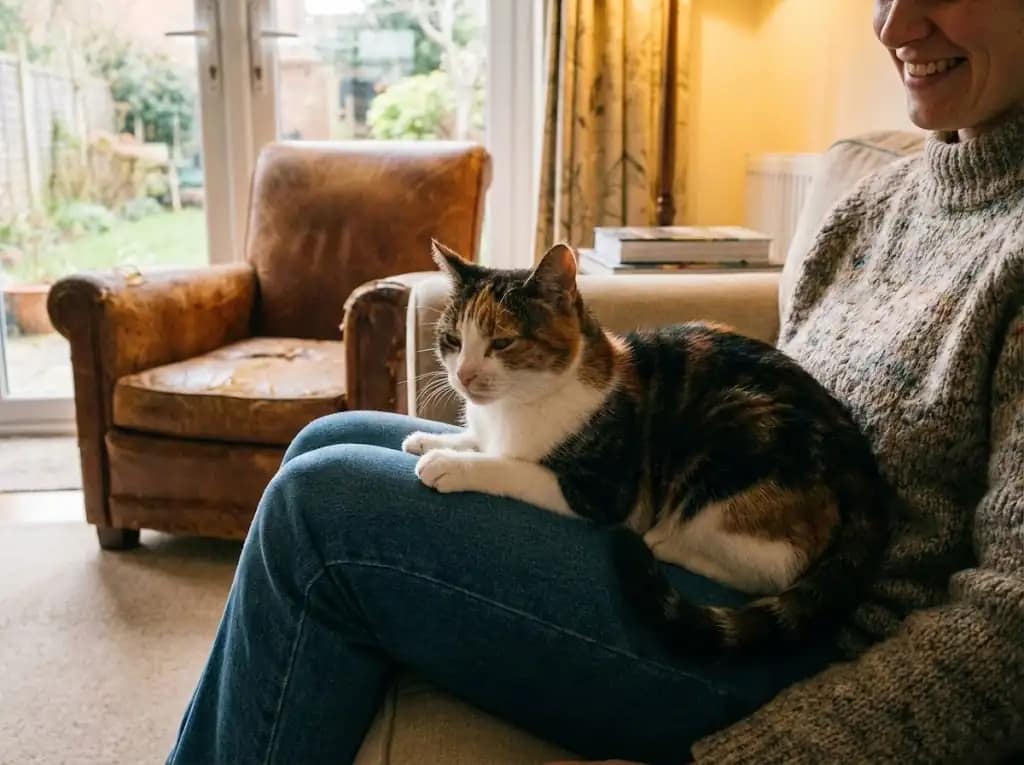
Cat kneading—often called “making biscuits”—is the rhythmic motion where cats press their front paws into a soft surface (like a blanket, bed, or your lap). In most cases, it’s totally normal and often means your cat feels safe and relaxed.
Kurze Antwort: Cats knead because it’s a comforting kittenhood instinct, and adult cats also knead to get cozy before sleep, stretch their muscles, and leave their scent behind.
In this guide, you’ll learn 7 heartwarming reasons cats knead, what it means when they knead blankets oder Sie, and how to enjoy the moment without the claw “ouch.”
If kneading suddenly becomes intense or your cat seems sore/limps, check with your vet.
Inhaltsübersicht
Schnelle Antworten
- Why do cats knead blankets? → comfort, nesting, scent
- Why does my cat knead me (and it hurts)? → affection + habit (fixes below)
- Why does my cat knead and purr? → relaxed + bonding
- Why does my cat drool while kneading? → often relaxed; sometimes dental discomfort if new
- Why does my cat knead and bite/suckle blankets? → self-soothing pattern
- Why is my cat kneading so much all of a sudden? → stress or discomfort (what to check)
(Don’t worry—we’ll cover the cozy reasons und the “ouch” solutions.)
Why Do Cats Knead? 7 Heartwarming Reasons (Making Biscuits Explained)
Kneading isn’t “one thing.” It’s a bundle of instincts and emotions that often show up together—comfort, habit, territory, affection, and sometimes stress relief. Here are the 7 most common reasons your cat makes biscuits (and what each one tends to look like in real life).
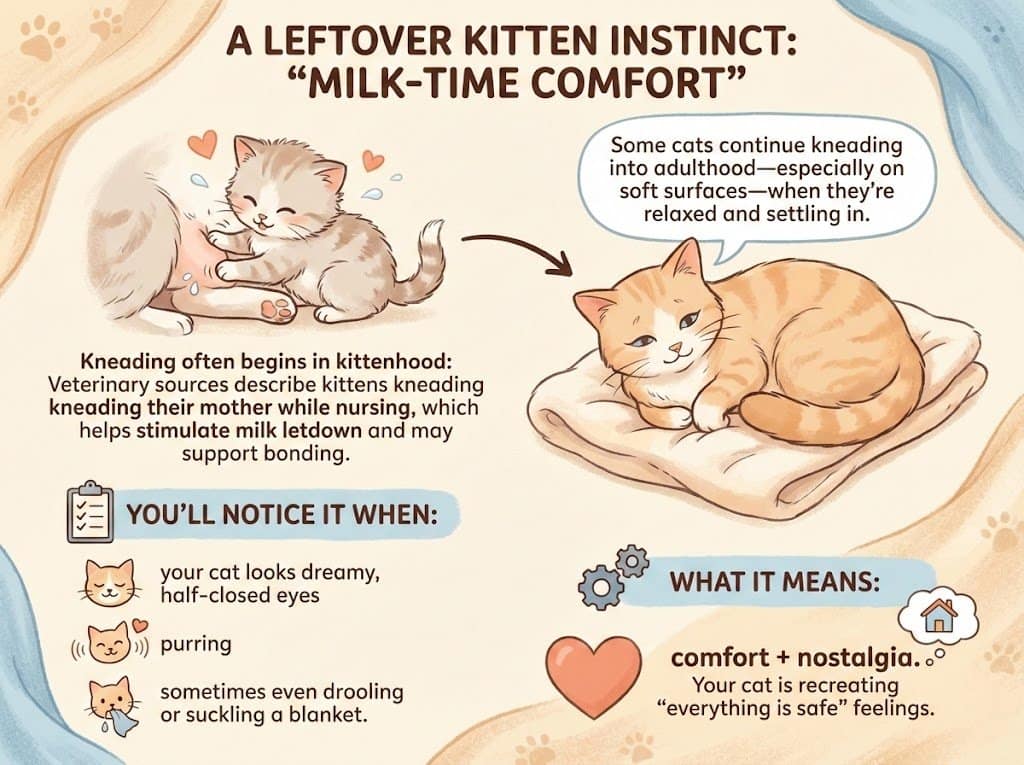
1. A leftover kitten instinct: “milk-time comfort”
Kneading often begins in kittenhood: Kneading often starts in kittenhood. Veterinary sources describe kittens kneading their mother while nursing, which helps stimulate milk letdown and may support bonding. Some cats continue kneading into adulthood—especially on soft surfaces—when they’re relaxed and settling in.
You’ll notice it when: your cat looks dreamy, half-closed eyes, purring, sometimes even drooling or suckling a blanket.
What it means: comfort + nostalgia. Your cat is recreating “everything is safe” feelings.
2. They’re making the bed: “this spot needs fluffing”
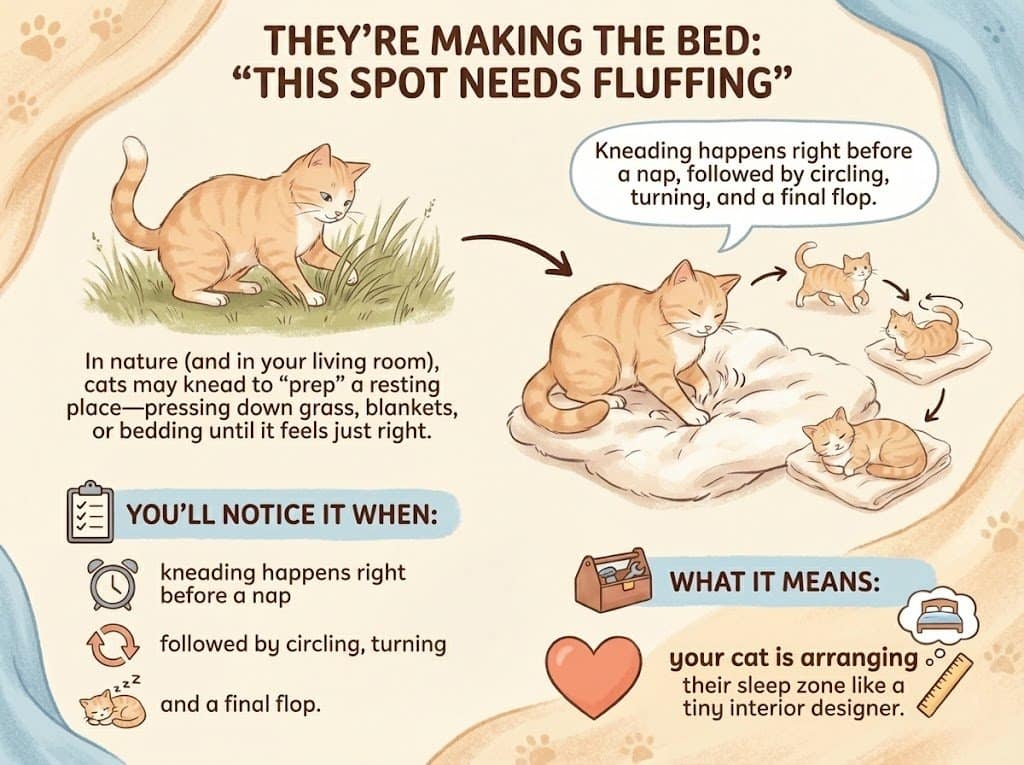
In nature (and in your living room), cats may knead to “prep” a resting place—pressing down grass, blankets, or bedding until it feels just right.
You’ll notice it when: kneading happens right before a nap, followed by circling, turning, and a final flop.
What it means: your cat is arranging their sleep zone like a tiny interior designer.
3. Scent marking: “mine” (and sometimes “you’re mine”)
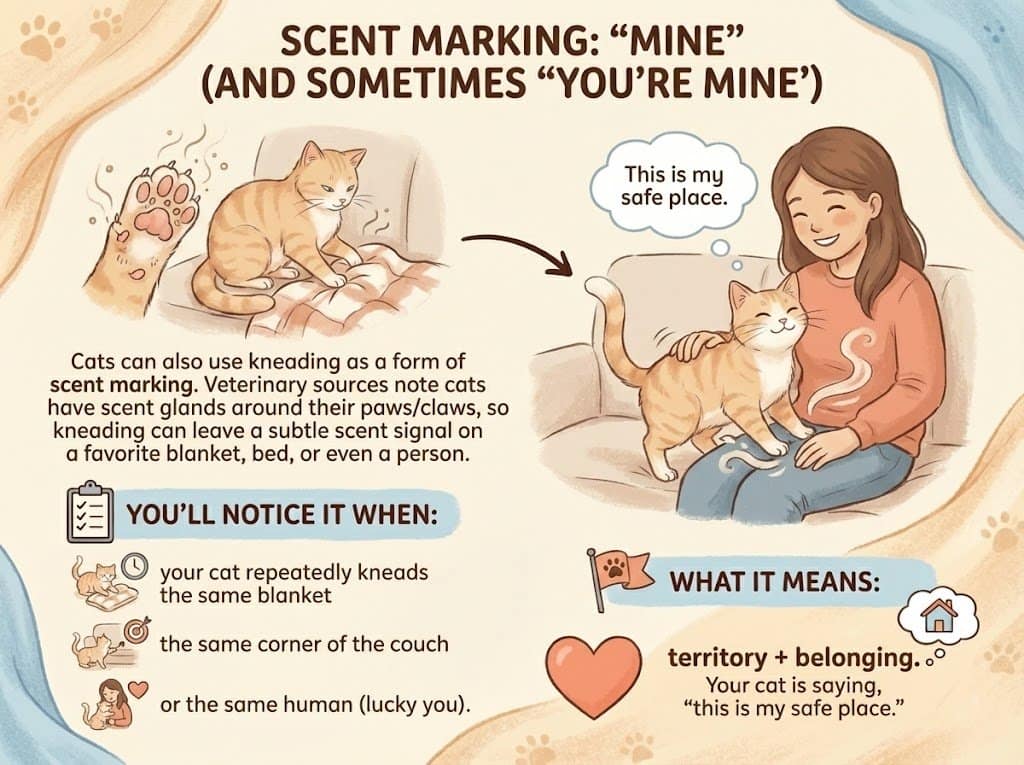
Cats can also use kneading as a form of scent marking. Veterinary sources note cats have scent glands around their paws/claws, so kneading can leave a subtle scent signal on a favorite blanket, bed, or even a person.
You’ll notice it when: your cat repeatedly kneads the same blanket, the same corner of the couch, or the same human (lucky you).
What it means: territory + belonging. Your cat is saying, “this is my safe place.”
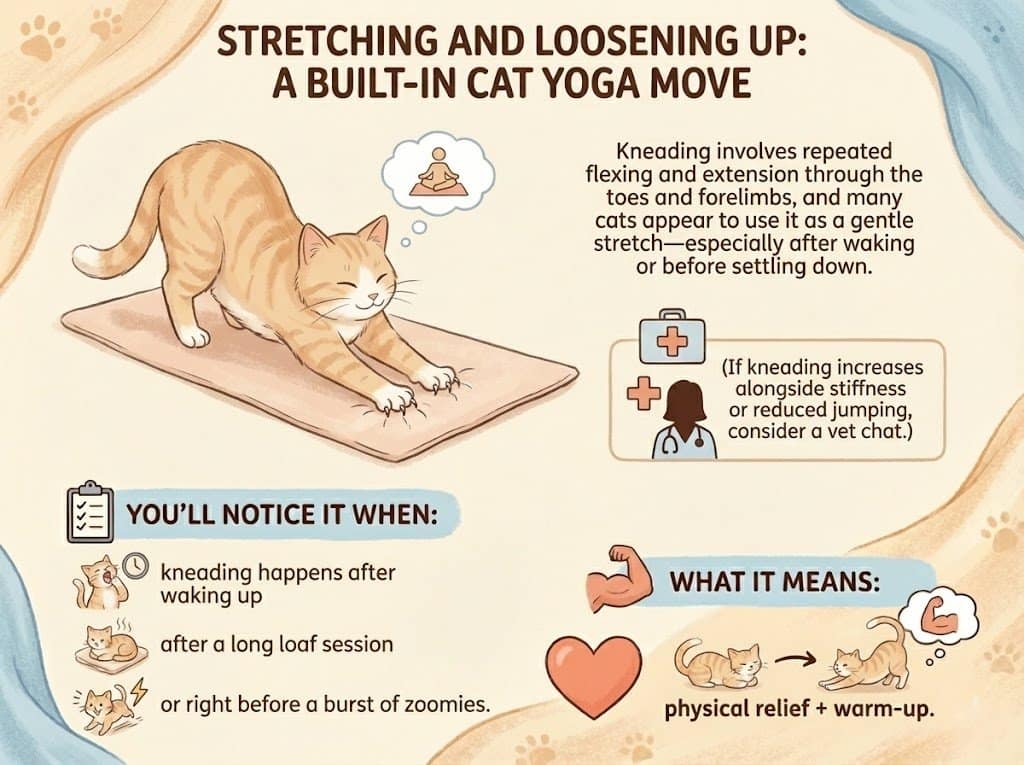
4. Stretching and loosening up: a built-in cat yoga move
Kneading involves repeated flexing and extension through the toes and forelimbs, and many cats appear to use it as a gentle stretch—especially after waking or before settling down. (If kneading increases alongside stiffness or reduced jumping, consider a vet chat.)
You’ll notice it when: kneading happens after waking up, after a long loaf session, or right before a burst of zoomies.
What it means: physical relief + warm-up.
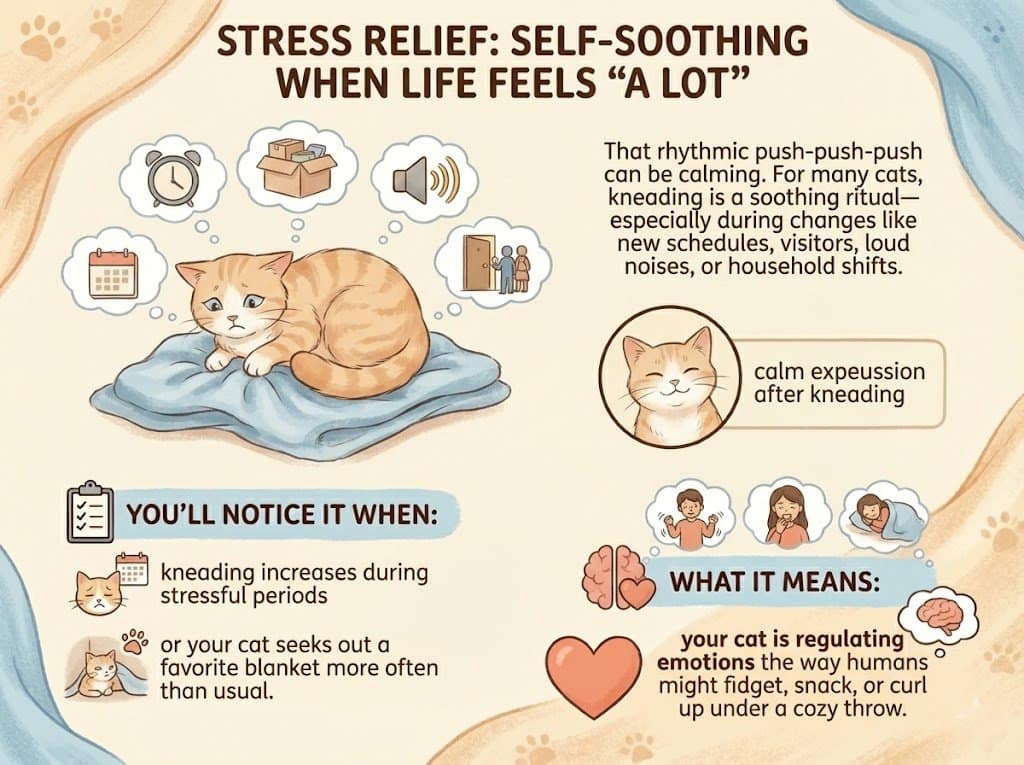
5. Stress relief: self-soothing when life feels “a lot”
That rhythmic push-push-push can be calming. For many cats, kneading is a soothing ritual—especially during changes like new schedules, visitors, loud noises, or household shifts.
You’ll notice it when: kneading increases during stressful periods, or your cat seeks out a favorite blanket more often than usual.
What it means: your cat is regulating emotions the way humans might fidget, snack, or curl up under a cozy throw.
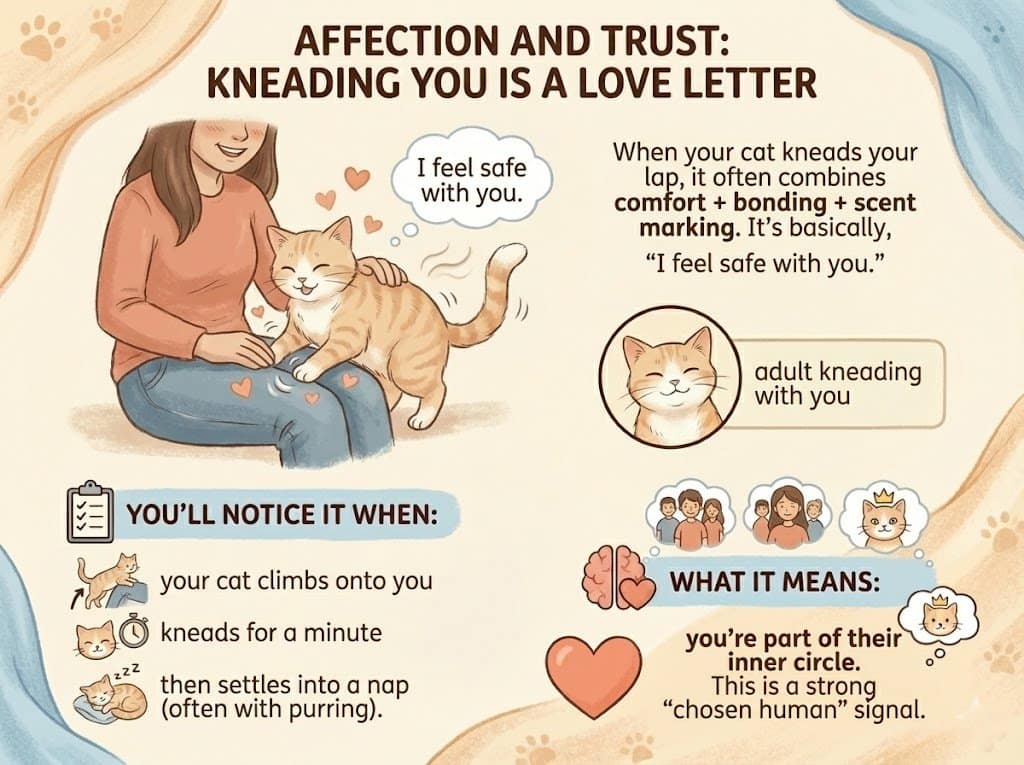
6. Affection and trust: kneading you is a love letter
When your cat kneads your lap, it often combines comfort + bonding + scent marking. It’s basically, “I feel safe with you.”
You’ll notice it when: your cat climbs onto you, kneads for a minute, then settles into a nap (often with purring).
What it means: you’re part of their inner circle. This is a strong “chosen human” signal.
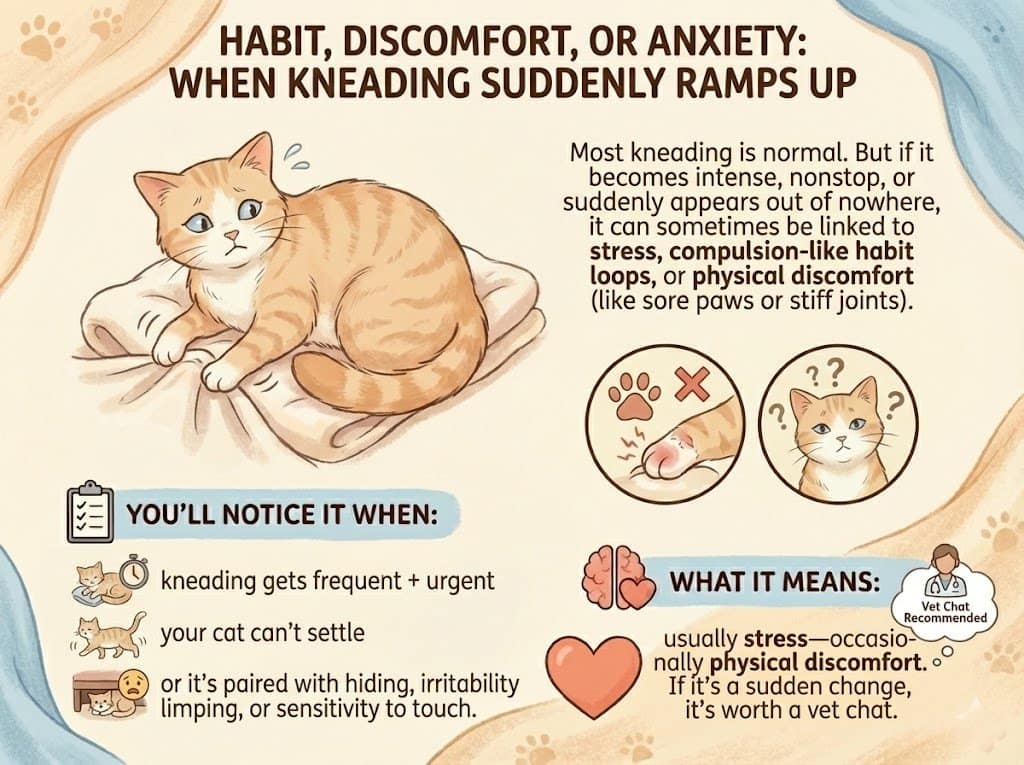
7. Habit, discomfort, or anxiety: when kneading suddenly ramps up
Most kneading is normal. But if it becomes intense, nonstop, or suddenly appears out of nowhere, it can sometimes be linked to stress, compulsion-like habit loops, or physical discomfort (like sore paws or stiff joints).
You’ll notice it when: kneading gets frequent + urgent, your cat can’t settle, or it’s paired with Verstecken, irritability, limping, or sensitivity to touch.
What it means: usually stress—occasionally physical discomfort. If it’s a sudden change, it’s worth a vet chat.
Quick decoding: why blankets and laps are the top knead targets
- Blankets = the perfect soft “give” + easy scent-marking + nap-prep texture.
- Sie = warmth + safety + bonding (and yes, scent-marking you as “family”).
Situation guide: what your cat’s kneading means (and what to do)
Why do cats knead blankets?
Direct answer: Cats knead blankets because the soft “give” feels comforting, it helps them settle a sleep spot, and it can leave a familiar paw-scent on a favorite area.
Common patterns:
- Kneads happen before naps or during wind-down time
- Your cat returns to the same blanket/spot repeatedly
- Often paired with purring, slow blinking, or circling
Was ist zu tun?
Give a dedicated “knead blanket” (washable fleece), place it where kneading already happens, and trim nails to reduce snagging.
Why does my cat knead me (and it hurts)?
Direct answer: Kneading you usually means “I feel safe with you,” but claws hurt because kneading is a toe-flexing motion and many cats don’t fully retract during the rhythm.
Why you get picked:
- warmth + softness (prime knead real estate)
- bonding routine (couch/bedtime association)
What to do (no drama, no scolding):
- put a folded blanket on your lap vor your cat settles
- keep nails trimmed (short + blunt tips)
- reward calm settling (so your cat learns the “safe lap setup”)
Why does my cat knead and purr at the same time?
Direct answer: Kneading + purring is a classic “I’m content and secure” combo, especially when your cat is winding down or bonding.
If it’s normal: your cat is relaxed, eating normally, and kneading is occasional.
If it’s a change: increased kneading plus hiding, irritability, appetite change, or sensitivity to touch → treat it as a behavior change worth noting.
Why does my cat drool while kneading?
Direct answer: Some cats drool when they’re deeply relaxed during kneading/cuddling. If drooling is new, frequent, or paired with mouth discomfort, dental issues become a reasonable “rule out.”
Green flags: only happens during kneading; cat otherwise normal.
Yellow flags: new onset, bad breath, pawing at mouth, reduced appetite.
Was ist zu tun? If yellow flags show up, schedule a dental/oral check.
Why does my cat knead and bite/suckle blankets?
Direct answer: Kneading + biting/suckling is often a self-soothing comfort habit and can show up more in anxious cats or cats with strong “kitten comfort” associations.
Was ist zu tun?
Offer one dedicated “suckle blanket,” keep routines predictable, increase play (soothing through enrichment), and redirect away from skin.
Why is my cat kneading so much all of a sudden?
Direct answer: A sudden spike in kneading is most often stress-driven self-soothing—sometimes discomfort.
Fast checklist (takes 30 seconds):
- Any changes in the home this week? (schedule, visitors, noise, new pet)
- Any movement changes? (hesitates to jump, stiffness, limping)
- Any mood changes? (hiding, irritability, less appetite)
Was ist zu tun? reduce stressors + add predictability; if movement/mood changes appear, check with a vet.
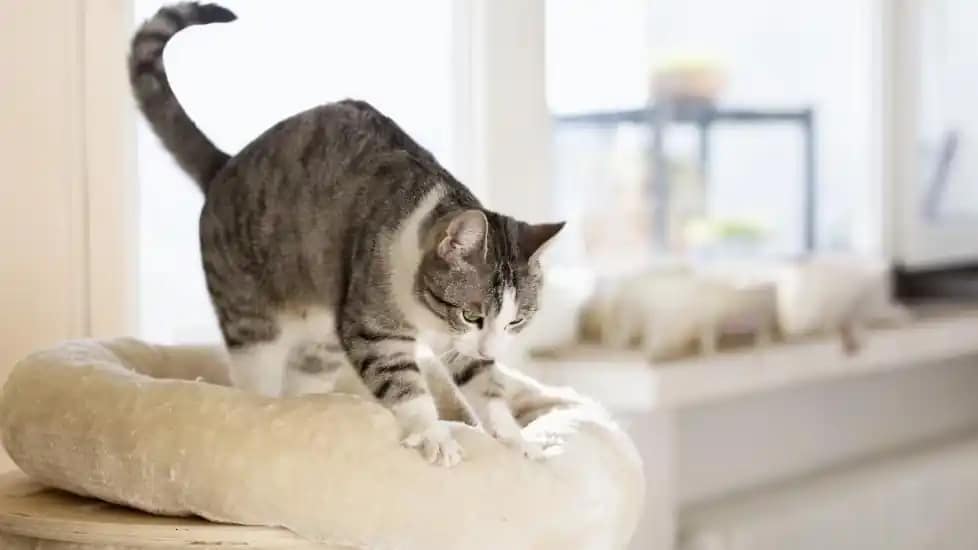
Ist übermäßiges Kneten ein Warnsignal? Wann sollte man aufmerksam werden?
Why is my cat kneading so much all of a sudden?
Direct answer: A sudden increase in kneading is often a self-soothing response to stress—or sometimes a sign your cat is trying to relieve discomfort.
Common triggers:
- changes in routine (travel, new work hours, visitors)
- new pets or household tension
- moving furniture / new smells
- pain signals (stiffness, sensitivity, avoiding jumps)
What to do first:
- do a quick “life change” scan (anything new this week?)
- increase predictability (playtime, feeding schedule, quiet rest spot)
- if you see limping, hiding, appetite changes, or obvious discomfort: vet check
Kneading is widely considered a self-soothing behavior: it’s rhythmic, familiar, and often shows up when cats are settling down, relaxing, or bonding. If your cat’s kneading suddenly becomes häufiger, more intense, or starts happening in unusual places, treat it as a behavior change—stress and physical discomfort are two common contributors. VCA notes that changes like kneading “a lot more than normal” (especially alongside other changes like hiding or appetite shifts) are a good reason to check in with your veterinarian.
- Angstwarnungen: Häufigeres Kneten könnte bedeuten, dass sie sich selbst beruhigt, um Stress abzubauen, beispielsweise aufgrund von Veränderungen in der Routine oder einer neuen Atmosphäre im Haushalt.
- Physikalische PingsArthritis-Schmerzen oder wunde Pfoten können zu zusätzlichen Dehnungen durch Kneten führen.
- Habit loop (rare): In a small number of cats, repetitive kneading can look “stuck on repeat,” especially during stress. Rather than labeling it as a disorder, focus on function: if kneading interferes with normal sleep, play, eating, or seems impossible to interrupt, it’s a good reason to ask a vet (or a qualified behavior professional) for a plan.
Keine Panik – meistens ist das Kneten reine Freude. Wenn es jedoch ununterbrochen auftritt oder mit Verstecken/Lethargie einhergeht, sprechen Sie mit Ihrem Tierarzt. Frühzeitige Maßnahmen wie eine Bereicherung der Umgebung oder sanfte Untersuchungen können Probleme im Keim ersticken. Denken Sie daran, dass Sie ihr Fürsprecher sind; wenn Sie auf diese Signale achten, stärkt dies Ihre Partnerschaft.
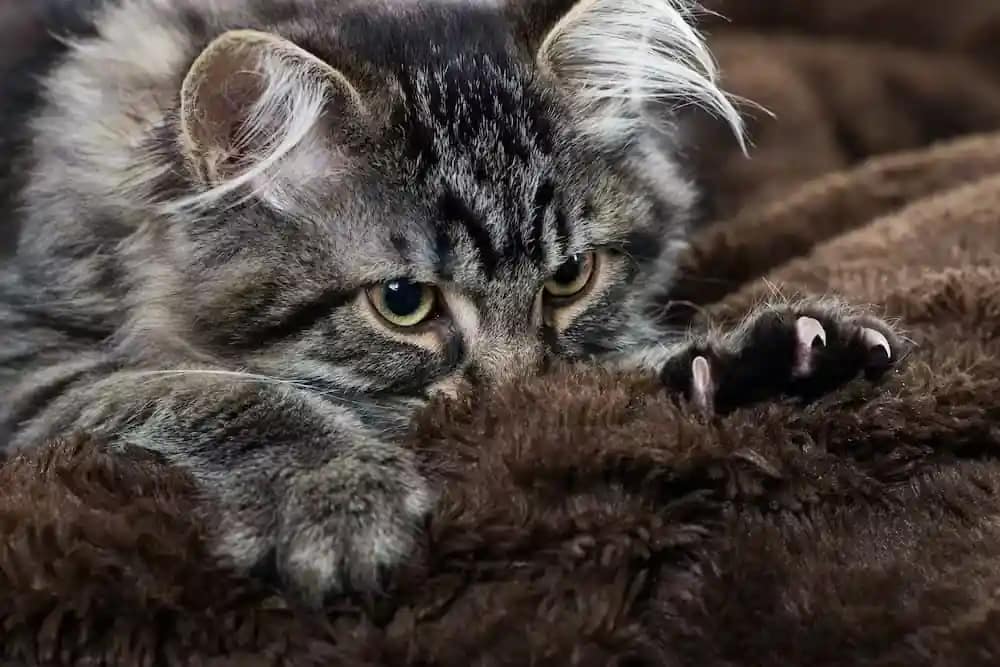
Sanfte Methoden, um das Keksebacken anzuleiten (und nicht zu unterbinden)
Kneten ist so natürlich wie Schnurren – Ihre Katze hat das Recht, dies auszudrücken. Das Ziel? Lenken Sie sie freundlich um, halten Sie ihre Krallen im Zaum, ohne ihr dabei ihre Ausstrahlung zu nehmen. Hier ist ein Leitfaden für Tiereltern:
Do’s for Harmony
- Tierarzt-Check-in zuerst: Schließen Sie gesundheitliche Probleme aus. Bei angstbedingten Knetbewegungen sollten Sie beruhigende Hilfsmittel wie Pheromon-Diffusoren (eine Art sanfte Dufttherapie) oder vom Tierarzt empfohlene Nahrungsergänzungsmittel ausprobieren – immer unter fachkundiger Anleitung.
- Bestimmen & BelohnenRichten Sie gemütliche Kuschelplätze (Decken, Katzenbetten) ein und loben Sie sie (oder geben Sie ihr Leckerlis), wenn sie diese nutzt. Positive Stimmung fördert die richtigen Plätze.
- Pflege der KrallenRegelmäßiges Trimmen stumpft diese Krallen ab und schützt so Ihre Haut und Ihr Sofa. Kombinieren Sie dies mit Kratzbäumen für ganzheitliches Wohlbefinden.
Don’ts to Dodge
Überspringen Sie die SchelteSchreien oder Sprays? Sie verstärken die Angst, lösen das Problem aber nicht – Ihre Katze könnte Ihnen ihre Gewohnheit einfach verheimlichen.
Niemals Krallen entfernen: It’s an outdated, painful myth-buster. Don’t declaw to solve kneading or scratching. The American Animal Hospital Association (AAHA) describes declawing as amputation of the third bone in each toe, and notes it carries surgical risks and pain.
AAHA also cites retrospective studies finding declawed cats were 3–7 times more likely than non-declawed cats to show issues such as chronic back pain and certain problem behaviors (e.g., biting, inappropriate urination, overgrooming). Focus on alternatives like nail trims, scratching posts, positive reinforcement, and (if needed) nail caps.
Mit diesen kleinen Änderungen würdigen Sie ihre Instinkte und gestalten gleichzeitig Ihren gemeinsamen Lebensraum gemütlicher. So schaffen Sie ein perfektes Leben, von dem beide Seiten profitieren.
Zum Abschluss dieser spannenden Geschichte lässt sich sagen, dass das Kneten die tiefsten Gefühle Ihrer Katze offenbart – von den Wurzeln als Kätzchen bis hin zu den Zuneigungen als erwachsenes Tier. Es ist ein Fenster in ihre Welt, das uns daran erinnert, warum wir uns in diese geheimnisvollen Begleiter verliebt haben. Fazit für andere Katzeneltern: Nehmen Sie die Kekse mit Grenzen an. Sorgen Sie für weiche Auslaufmöglichkeiten, schneiden Sie die Krallen und konsultieren Sie Fachleute, wenn sich Muster ändern.
Ihre einfühlsame Pflege verwandelt alltägliche Marotten in geschätzte Rituale und schafft ein Zuhause voller Vertrauen und Nickerchen mit eingezogenem Schwanz. Wo knetet Ihre Katze am liebsten? Teilen Sie es uns in den Kommentaren mit – wir sind alle gemeinsam in diesem flauschigen Trubel.
FAQ
Warum kneten Katzen speziell Decken?
Decken bieten die ideale weiche, nachgiebige Textur, die an die Mutter während des Stillens erinnert, und helfen Katzen, sich zu entspannen und ihr Revier mit Pfotenduft zu markieren. Es ist ein vielseitiges Komfortritual!
Ist es normal, dass erwachsene Katzen wie Kätzchen kneten?
Auf jeden Fall – viele behalten diese beruhigende Gewohnheit ihr Leben lang bei, um sich zu entspannen und Sicherheit zu finden. Wenn es sanft und gelegentlich geschieht, ist es ein Zeichen von Zufriedenheit, nicht von Besorgnis.
Wie kann ich meine Katze davon abhalten, mich mit ihren Krallen zu kneten?
Leiten Sie sie zu einer speziellen Decke oder einem Spielzeug um, schneiden Sie regelmäßig ihre Krallen und legen Sie eine Schutzauflage auf Ihren Schoß. Belohnen Sie sie dafür, dass sie die dafür vorgesehenen Plätze benutzt, um gute Gewohnheiten zu verstärken.
Bedeutet übermäßiges Kneten, dass meine Katze Schmerzen hat?
Es könnte Stress, Angstzustände oder Gelenkprobleme wie Arthritis signalisieren. Achten Sie auf weitere Anzeichen (z. B. Hinken) und konsultieren Sie Ihren Tierarzt für eine maßgeschneiderte Untersuchung.
Kann Kneten ein Zeichen der Zuneigung meiner Katze sein?
Ja! Das ist oft ihre Art, “Ich vertraue dir und liebe dich” zu sagen, und erinnert an das frühe Kneten mit der Mutter, um eine Bindung aufzubauen. Nehmen Sie es als eine herzliche Umarmung Ihrer Katze wahr.
Referenzen
Hart, H., DVM. (2023, December 1). Why do cats knead?
Brister, J. M. (2018, November). Body language of cats.
Yeowell, G., Burns, D., Fatoye, F., Gebrye, T., Wright, A., Mwacalimba, K., & Odeyemi, I. (2021, November 18). Indicators of health-related quality of life in cats with degenerative joint disease: Systematic review and proposal of a conceptual framework.
American Association of Feline Practitioners. (2024, August 26). Find a veterinary professional.
American Animal Hospital Association. (n.d.). AAHA-accredited hospital locator.
Governor of California. (2025, October 9). Governor Newsom takes action to end the puppy mill pipeline, protect cats. CA.gov.
Assemblymember Alex Lee (AD-24). (2025, October 10). California bans cat declawing.
Brister, JM. “Körpersprache von Katzen,” Tierärztlicher Partner. November 2018.









 EN
EN DE
DE ES
ES PT
PT