
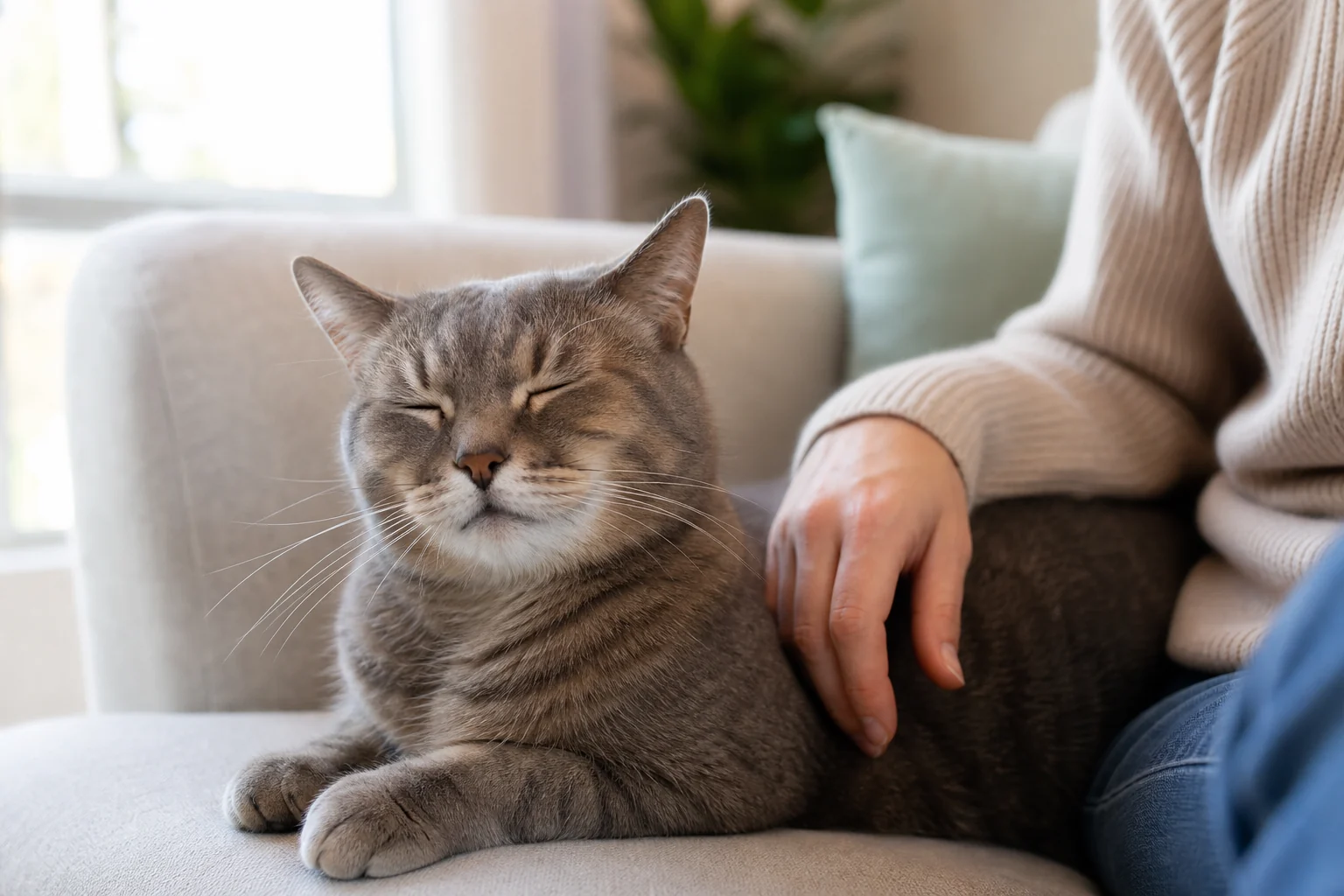
Cats purr for several reasons, not just because they are happy. A soft purr can mean comfort, bonding, attention, stress relief, pain, or illness, so the best answer comes from reading the whole situation: body language, timing, appetite, litter box habits, and whether the purr is normal for your cat.
That is why "my cat is purring" is not enough information by itself. A cat purring with loose posture on your lap is very different from a cat purring while hiding under the bed, refusing food, or sitting silently in a carrier at the vet.
This guide explains the most common reasons cats purr, how to tell a relaxed purr from a concern, and when a purring cat still needs veterinary help.
Inhaltsübersicht
- What does a cat purr usually mean?
- How can I tell if my cat is purring because they are happy?
- When can purring mean stress, pain, or illness?
- What is the difference between purring and meowing?
- What should I check when my cat purrs in an unusual way?
- Schlussfolgerung
- Häufig gestellte Fragen
- Referenzen
What does a cat purr usually mean?
A cat purr usually means your cat is communicating an emotional or physical state, and that state is often pleasant but not always. Britannica describes purring as a sign of contentment in many situations while also noting that cats may purr when frightened, sick, or in pain 1.
Most cat parents first notice purring during cozy moments: a cat curled beside them, leaning into gentle petting, kneading a blanket, or settling after play. In those moments, the purr often fits with comfort, trust, and social bonding.
Purring can also be practical communication. Kittens purr around their mother, adult cats may purr when seeking attention, and some cats purr during predictable daily routines because the sound has become part of how they interact with people. For more everyday behavior context, the SnuggleSouls Ratgeber zum Verhalten von Katzen can help you compare purring with hiding, vocalizing, loafing, and stress signals.
The safest rule is simple: a purr is a clue, not a diagnosis. Look at what your cat is doing before, during, and after the purr.
| Purring situation | Likely meaning | Was als Nächstes zu prüfen ist |
|---|---|---|
| Purring while relaxed on your lap | Comfort, bonding, or attention | Soft eyes, neutral ears, loose muscles |
| Purring before meals | Anticipation or learned request | Appetite, body condition, food routine |
| Purring while kneading | Comfort, arousal, or self-soothing | Whether your cat stays loose or becomes overstimulated |
| Purring at the vet | Stress, uncertainty, or self-soothing | Ears, pupils, posture, breathing, medical signs |
| Purring while hiding or not eating | Possible pain, illness, fear, or stress | Call your veterinarian if this is new or paired with symptoms |
How can I tell if my cat is purring because they are happy?
A happy purr usually appears with relaxed body language and normal behavior. Cats Protection advises reading purring alongside the whole body: relaxed ears, soft or half-closed eyes, small pupils, relaxed whiskers, and a comfortable tail position are more reassuring than the sound alone 2.
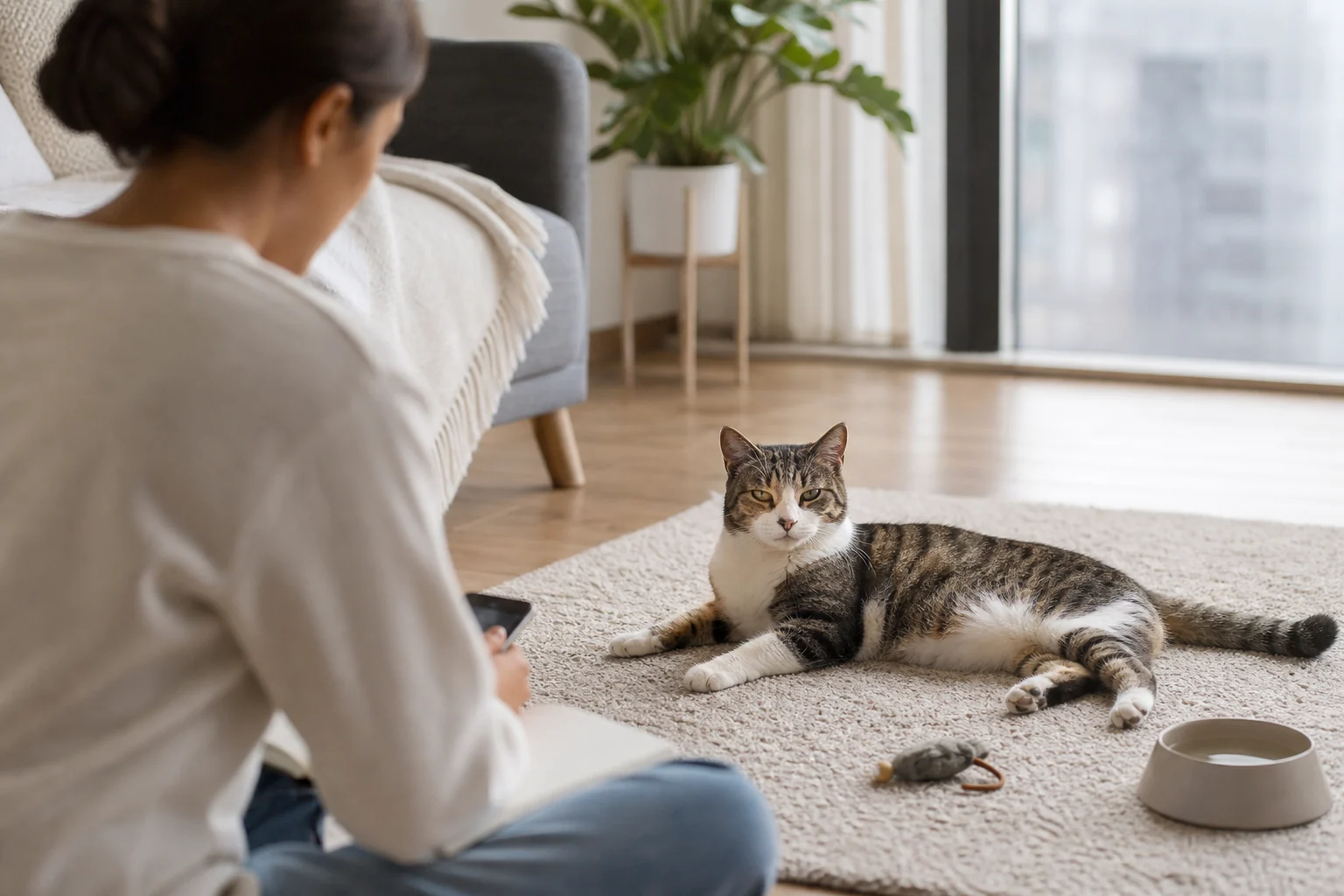
Look for these "green light" clues:
- Your cat approaches voluntarily and can leave whenever they want.
- Their ears are neutral or forward, not pinned back or flattened.
- Their eyes look soft, sleepy, or slow-blinking.
- Their body feels loose rather than tense, crouched, or frozen.
- Their tail is still, gently curved, or moving slowly rather than lashing.
- They keep normal interest in food, water, play, grooming, and the litter box.
Context matters too. A cat who purrs while lying in a familiar sunny spot is usually giving you a different message than a cat who purrs in a noisy waiting room. If your cat often settles into a compact relaxed pose, this guide on Warum Katzen faulenzen can help you compare comfortable resting posture with tense crouching.
Petting can complicate the picture. Some cats purr because they enjoy touch, then become overstimulated if the petting continues too long. If the purr comes with tail thumping, skin twitching, head turning, pawing, or a sudden bite, pause and give your cat space. The purr may have started as pleasure but shifted into "too much."
When can purring mean stress, pain, or illness?
Purring can be a concern when it appears in an unusual situation, comes with tense body language, or happens alongside changes in appetite, movement, grooming, breathing, litter box habits, or social behavior. Cats Protection specifically notes that purring can occur in stressful situations, including vet visits, and can also happen when a cat is in pain 3.
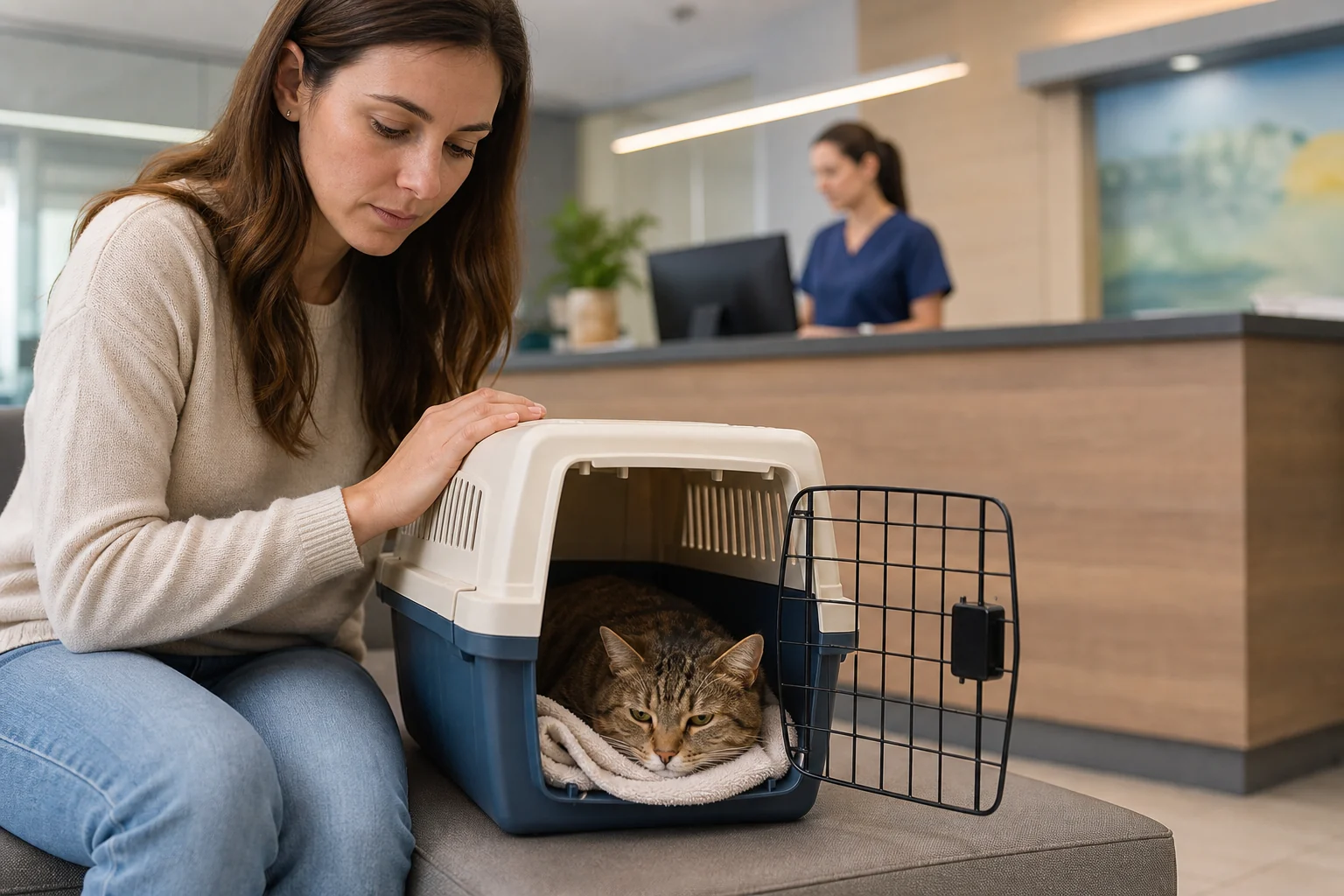
Pay closer attention if your cat is purring while:
- hiding under furniture or avoiding normal rooms
- crouching low with squinty eyes or a tucked posture
- refusing food, drinking much more or less, or losing weight
- breathing fast, open-mouth breathing, or seeming weak
- limping, resisting jumps, or reacting when touched
- crying in the litter box, straining, or urinating outside the box
- grooming less, overgrooming one area, or looking matted
- acting unusually clingy, withdrawn, restless, or irritable
VCA lists unexpected purring among possible pain-related vocal changes, alongside increased meowing, growling, hissing, restlessness, and changes in daily activity 4. Merck Veterinary Manual also emphasizes that pain recognition in animals depends heavily on behavior and context; a quiet cat can still be painful even without dramatic signs 5.
Do not wait if purring appears with emergency signs: trouble breathing, collapse, seizures, suspected poisoning, repeated vomiting, severe diarrhea, trauma, inability to urinate, sudden paralysis, extreme weakness, or not eating for 24 to 48 hours. Those situations need urgent veterinary care even if your cat is purring.
If your cat is purring and hiding, compare the pattern with this guide on warum Katzen sich verstecken. If the purring is paired with accidents, urine marking, or stress around the litter box, this guide to stressbedingte Veränderungen beim Katzenklo may help you organize the clues before you call the vet.
What is the difference between purring and meowing?
Purring is a low, vibrating sound that often continues through breathing, while meowing is a more obvious vocal signal cats commonly use with people. The two can overlap emotionally, but they are not the same message.
Meowing is usually easier for people to interpret because it often points toward a request: food, attention, a door, greeting, play, or discomfort. Purring is subtler. It can happen during comfort, but it can also happen when a cat is trying to soothe themselves.
Nutzen Sie diesen schnellen Vergleich:
| Ton | Common pattern | What it often asks from you |
|---|---|---|
| Relaxed purr | Low vibration, soft body, normal routine | Stay gentle, keep the environment calm |
| Soliciting purr | Purr mixed with attention-seeking movement | Check food, play, affection, or routine |
| Stress purr | Purr with wide pupils, tension, hiding, or vet context | Reduce stressors and watch closely |
| Pain-related purr | Purr with withdrawal, appetite change, mobility change, or illness signs | Wenden Sie sich an Ihren Tierarzt |
| Meow or yowl | Louder vocal request or complaint | Identify the need or symptom pattern |
If vocalizing is the bigger issue in your home, read Warum Katzen so viel miauen next. A cat who is both purring and meowing more than usual may be asking for attention, but sudden vocal changes can also point to pain, anxiety, age-related changes, or illness.
What should I check when my cat purrs in an unusual way?
When a purr feels different, check the basics before assuming your cat is fine. Your goal is not to interpret one sound perfectly. Your goal is to notice whether the purr fits your cat's normal pattern.
Start with this home checklist:
- Zeitplan: Did the purr happen during a normal cozy routine, or at an unusual time?
- Body language: Are the ears, eyes, whiskers, tail, and posture relaxed or tense?
- Appetite and water: Is your cat eating and drinking normally?
- Litter box: Any straining, diarrhea, constipation, blood, accidents, or more frequent trips?
- Movement: Any limping, stiffness, trouble jumping, hiding, or reluctance to be touched?
- Pflege: Is the coat clean, or is your cat grooming less or overgrooming one area?
- Mood: Is your cat more clingy, withdrawn, restless, irritable, or sleepy than usual?
- Pattern: Has the purring suddenly increased, stopped, or changed in tone or context?
For weight, appetite, and body-shape clues, the SnuggleSouls Leitfaden zur Körperkondition can help you describe changes more clearly. Bring those observations to your veterinarian if the purr is paired with physical symptoms or a meaningful behavior change.
Avoid two common mistakes. First, do not dismiss illness because your cat is purring. Second, do not panic every time your cat purrs outside your lap. A single purr at the vet or during a loud moment may be stress communication, but a healthy cat who returns to normal behavior after the event may simply need calm handling and recovery time.
Conclusion: What your cat's purr is really telling you
Cats purr when they are comfortable, bonded, stimulated, stressed, or sometimes unwell. The purr itself is only one part of the message. Body language, context, routine, appetite, litter box habits, movement, and grooming tell you whether the sound is reassuring or worth a closer look.
If your cat is relaxed, eating normally, using the litter box, moving well, and purring in familiar happy situations, enjoy the moment. If the purr is new, intense, paired with hiding or illness signs, or happening when your cat seems tense or painful, contact your veterinarian and describe the full pattern.
Häufig gestellte Fragen
Do cats only purr when they are happy?
No. Cats often purr when they are happy or relaxed, but they can also purr when they are stressed, frightened, sick, or in pain. Read the purr alongside body language and recent behavior changes.
Why does my cat purr at the vet?
Some cats purr at the vet because they are stressed or self-soothing, not because they are enjoying the visit. Watch for wide pupils, flattened ears, tense posture, hiding, fast breathing, or freezing.
Should I worry if my cat suddenly purrs more than usual?
It depends on the context. If your cat is otherwise normal, a new routine or more affection may explain it. If the increase comes with appetite change, hiding, weight loss, litter box problems, limping, weakness, or unusual clinginess, book a veterinary exam.
Warum beißt mich meine Katze, während sie schnurrt?
Some cats purr while they are becoming overstimulated. If you see tail thumping, skin twitching, head turning, pawing, or tense muscles, stop petting and let your cat move away.
Can purring help cats heal?
Some sources discuss low-frequency vibration and self-soothing theories, but cat parents should not treat purring as proof that healing is happening. If your cat may be injured or ill, veterinary care matters more than the presence or absence of a purr.
Referenzen
[1] Britannica. (2026). Why Do Cats Purr? Why Do Cats Purr?
[2] Cats Protection. (2023). Why does my cat purr? Why does my cat purr?
[3] Cats Protection. (2026). Cat Body Language. Körpersprache bei Katzen
[4] VCA Animal Hospitals. (2026). How Do I Know if My Cat is in Pain? How Do I Know if My Cat is in Pain?
[5] Merck Veterinary Manual. (2026). Recognition and Assessment of Pain in Animals. Recognition and Assessment of Pain in Animals
 EN
EN DE
DE ES
ES PT
PT