
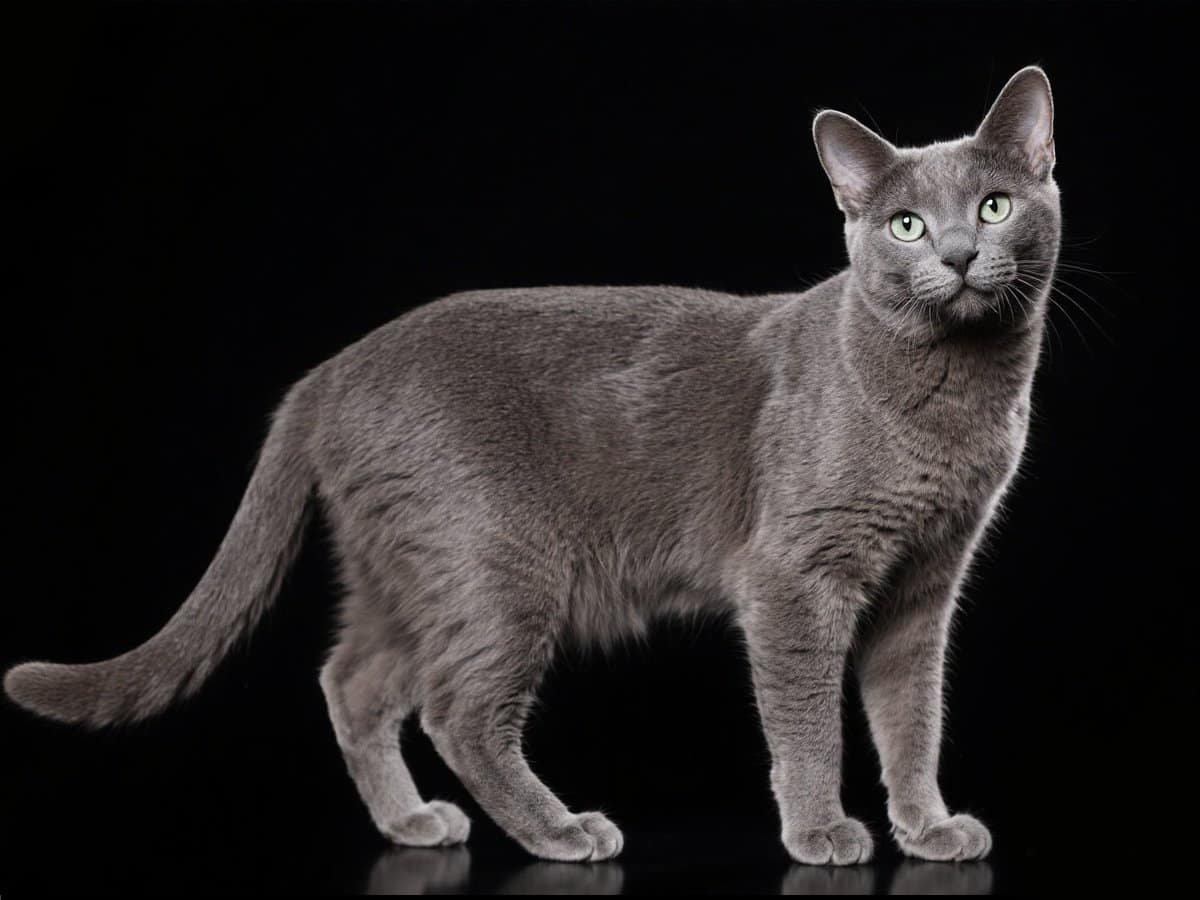
TL;DR: Chartreux cats are quiet, affectionate “low-chaos” companions with a plush blue coat and copper/gold eyes. They’re easy to live with, moderately playful, and usually do well in apartments—just watch weight gain, dental care, and ask about heart screening from reputable breeders.
Quick answers
- Ideal para: calm homes, families, apartment living
- Muda: moderate (seasonal bursts)
- Aseo: peinado semanal
- Energía: moderate, playful in short bursts
- Common watch-outs: weight management, dental care, joint issues
Índice
Chartreux cat at a glance
Looking for quick facts? Here’s the Chartreux cat’s temperament, shedding level, grooming needs, size, lifespan, and whether it’s a good fit for families or apartments.
| Característica | Descripción |
|---|---|
| Temperament / personality | Calm, gentle, affectionate, and quiet (“low-chaos” companion) |
| Vocality | Very quiet; more soft chirps than loud meows |
| Energy level | Moderate; playful in short bursts, then long naps |
| Size & build | Medium-to-large; sturdy, muscular, broad chest, short strong legs |
| Peso | Males ~11–16 lb (5–7 kg); females ~6–11 lb (3–5 kg). |
| Lugar de origen | Francia |
| Vida útil | About 11–15 years (varies by care and genetics) |
| Tipo de abrigo | Short, dense double coat; plush and slightly woolly |
| Colores del manto | Solid blue-gray (“blue”) |
| Nivel de desprendimiento | ⭐⭐⭐☆☆ Moderate (seasonal bursts). Weekly combing; increase during shed weeks |
| Afecto hacia los humanos | ⭐⭐⭐⭐☆ (High). bonds strongly but usually not overly clingy |
| Dificultad asistencial | ⭐⭐☆☆☆ (Fácil/Bajo). Los Chartreux se consideran bajo mantenimientola alimentación regular y el juego moderado los mantienen felices |
Nota: Individual cats vary. If you’re buying from a breeder, ask for health history and screening info; for health concerns, consult a veterinarian.
Introducción
The Chartreux is a rare French cat breed loved for its calm, quiet temperament and plush blue-gray coat. Most Chartreux are affectionate without being clingy—more “near you” than “on you”—and they often communicate with soft chirps instead of loud meows. With copper/gold eyes and a sturdy, muscular build, they’re sometimes mistaken for Russian Blues at a glance.
In this guide, you’ll learn Chartreux personality, shedding and grooming needs, common health watch-outs, and what daily care looks like.
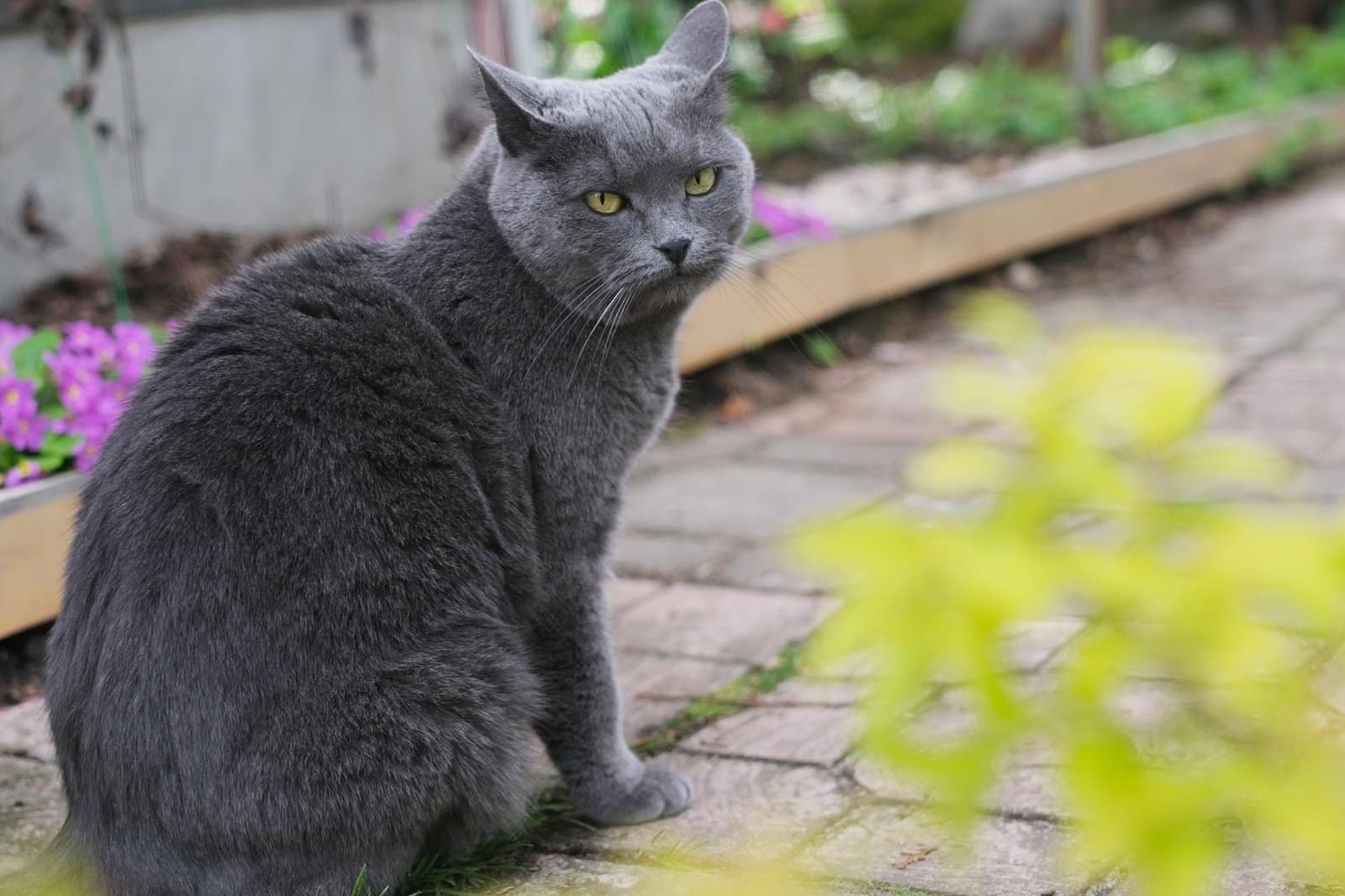
Historia y origen
The Chartreux is a historic French cat breed, but its earliest origins aren’t fully documented. What we can say with more confidence is that blue-gray “Chartreux-type” cats were described in France by the 17th and 18th centuries, valued as skilled ratters and for their dense coats.
Modern Chartreux breeding took shape in the 1920s, when French breeders—including the Légèr sisters—helped preserve and standardize the breed after it became increasingly uncommon. The breed faced major setbacks around Segunda Guerra Mundial, but dedicated enthusiasts worked to rebuild viable lines.
Chartreux cats arrived in the United States in 1970, and the breed received CFA championship recognition in 1987. Today, Chartreux cats remain relatively rare outside France, which is why reputable kittens often involve breeder waitlists.
Legend & name origin (optional deep dive)
Many stories about the Chartreux are more folklore than proven history. One popular legend says Crusaders brought woolly gray cats from the Middle East to France, and that Carthusian (Chartreuse) monks later kept quiet, efficient mousers.
Even the name is debated: some sources connect “Chartreux” to the monks’ famous Chartreuse liqueur, while others link it to a luxury wool once called “pile de Chartreux.” These stories are part of the breed’s charm, even if they’re hard to verify.
Características físicas
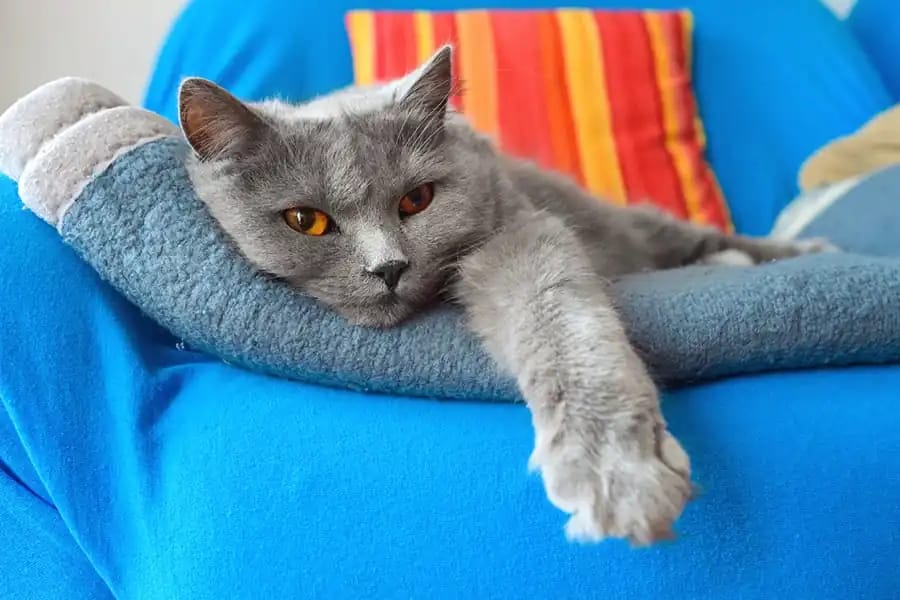
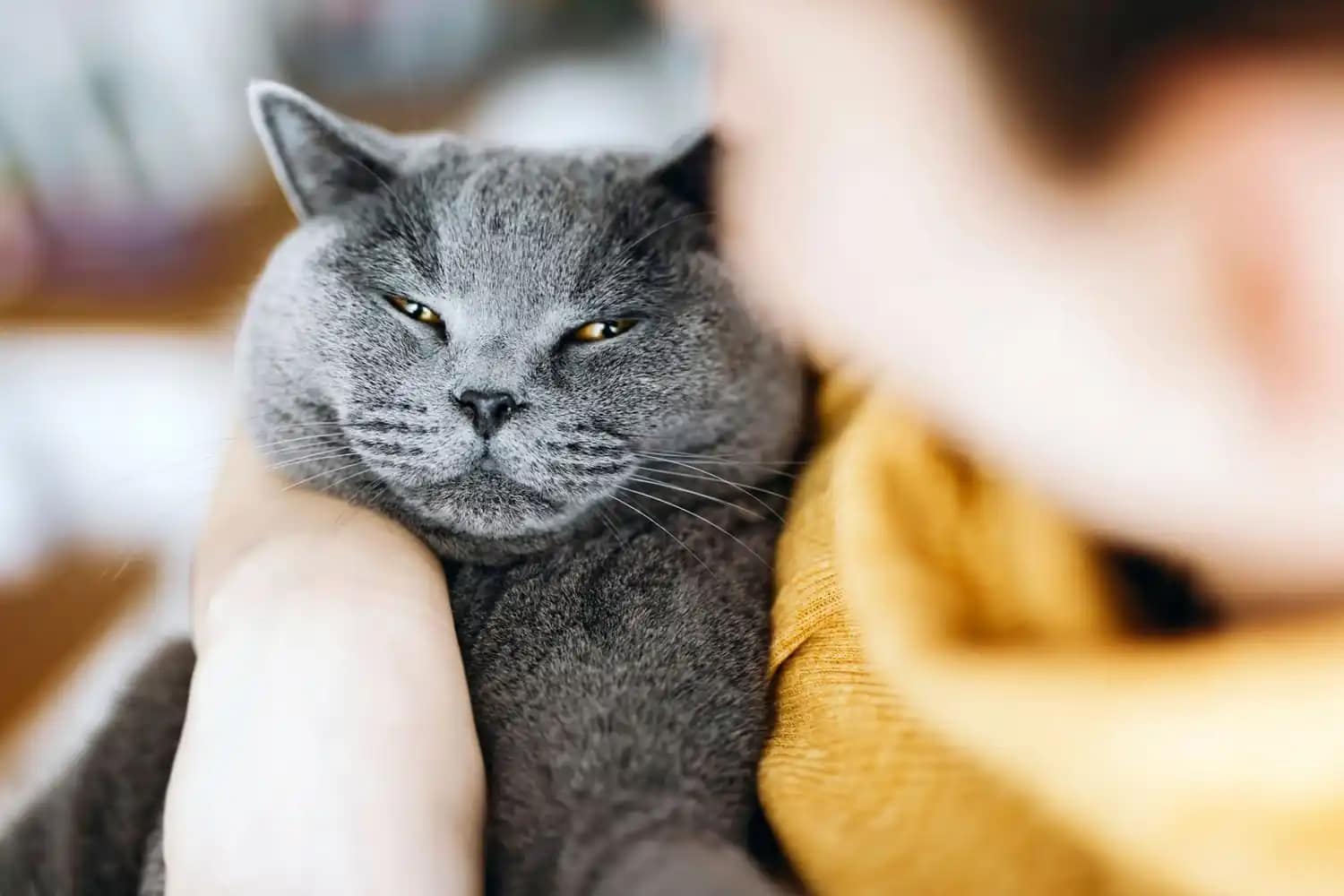
Los gatos Chartreux tienen un característico abrigo azul grisáceo sólido y ojos redondos cobrizos o dorados. Su cabeza es ancha, con mejillas llenas y una expresión amable y sonriente. Son muy musculosos y tienen un cuerpo robusto y fornido.
Los Chartreux tienen hombros anchos, pecho profundo y patas cortas; los criadores suelen decir que parecen "patatas con palillos". Los machos son más grandes que las hembras (alrededor de 11-16 lbs frente a 6-11 lbs).
El pelaje del Chartreux es espeso, afelpado y ligeramente lanoso.. Tiene una capa interior densa para aislar y una capa exterior hidrófuga que protege de la lluvia.
Un peinado suave (en lugar de un cepillado enérgico) ayuda a mantener el pelaje sano. Los Chartreux mudan estacionalmente en grupos, pero por lo demás las necesidades de aseo son modestas.
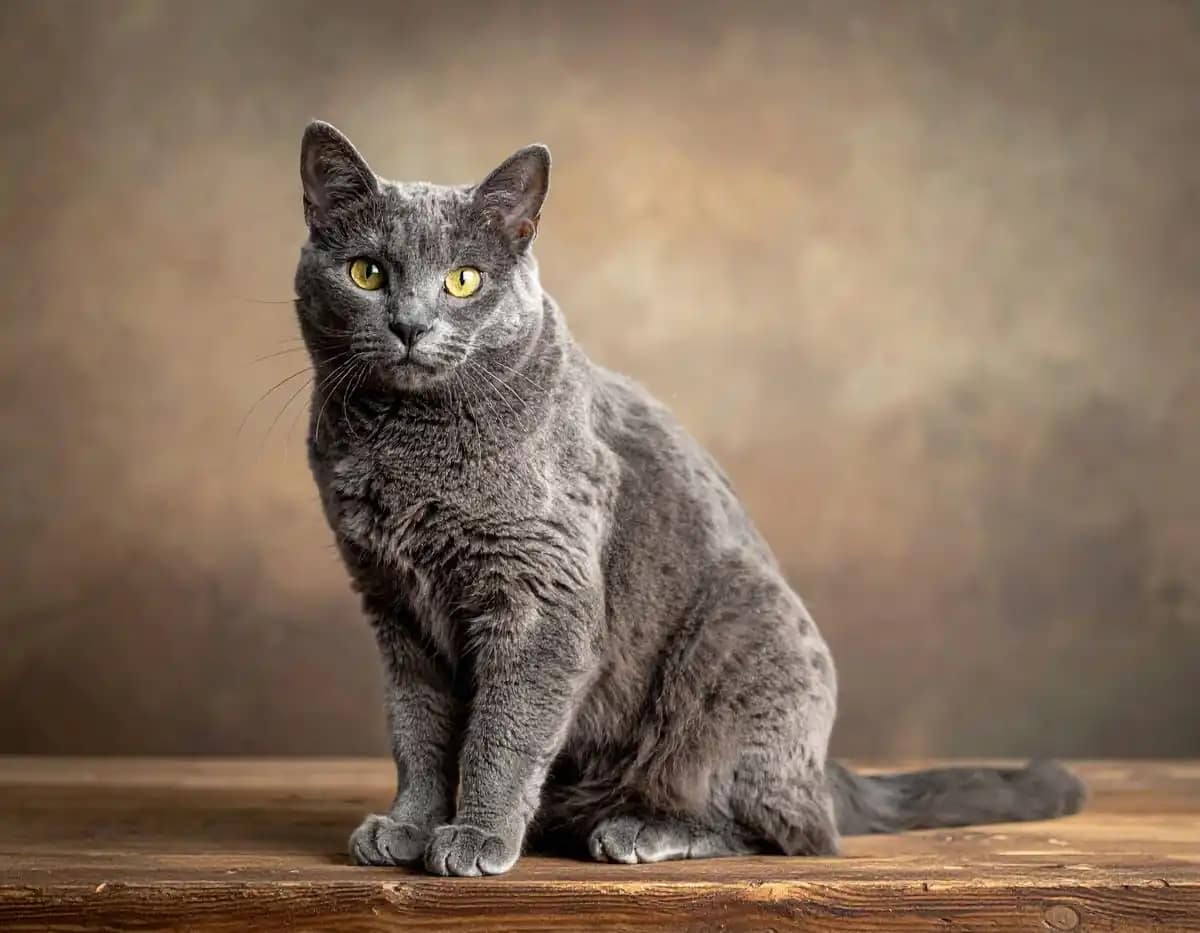
Do Chartreux cats shed? Shedding & grooming guide
Do Chartreux cats shed?
Sí-Chartreux cats shed a moderate amount year-round, with heavier seasonal shedding a few times a year. Their coat is dense and plush (double coat), so grooming is mostly about lifting out loose undercoat gently rather than “brushing hard” for shine.
What shedding looks like (real-life expectations)
- Normal weeks: light-to-moderate hair on bedding, cat trees, and dark clothing
- Seasonal shed weeks: noticeable clumps/tufts, faster coat buildup on furniture
- Good news: the coat usually doesn’t mat easily if you comb consistently
If you keep a simple routine, shedding stays very manageable.
How often should you groom a Chartreux? (simple schedule)
Most owners do great with this:
- 1× per week: quick comb-through (5–8 minutes)
- Seasonal shedding: 2–4× per week for 2–3 weeks
- Bonus: a quick “hands-on check” whenever you’re cuddling (you’ll catch loose fur early)
Best grooming tools for a Chartreux coat
Keep it minimal—Chartreux coats respond better to gentle combing than aggressive brushing.
Recommended:
- Stainless-steel comb (medium + fine spacing) for undercoat lift
- Soft bristle brush (optional) for finishing strokes / surface dust
- Lint roller + washable throw (for your home, not the cat)
Avoid / be careful with:
- Aggressive de-shedding blades (can over-thin a dense coat if overused)
- Very stiff brushes that snag the woolly texture
- Over-brushing daily (can irritate skin and make the coat look “frizzy”)
How to comb a Chartreux properly (5-minute method)
- Start dry (no spray needed). Let your cat sniff the comb.
- Comb with the direction of hair growth—short, gentle strokes.
- Focus on “shed zones”: neck ruff, chest, sides, and hips.
- Use the fine side lightly only if needed (don’t scrape).
- End with a quick hand sweep: if you still pick up lots of fur, do one more gentle pass.
Consejo: If your cat gets impatient, split it into two 3-minute sessions.
Seasonal shedding: what to do when fur “explodes”
When the undercoat starts coming out:
- Increase grooming to every other day for a couple weeks
- Visite two passes: first medium-tooth, then a lighter finishing pass
- Swap in juego interactivo after grooming (it turns the routine into a positive habit)
This is usually the difference between “hair everywhere” and “pretty under control.”
Bathing: do Chartreux need baths?
Usually no. A Chartreux coat is naturally dense and plush, and regular combing handles most issues. Consider a bath only if they get into something sticky/greasy—otherwise, routine grooming is enough.
Hairballs and shedding (quick owner tips)
Because Chartreux shed in bursts, some cats swallow more hair during peak weeks.
- Groom more often during seasonal shed
- Keep water available (hydration helps overall comfort)
- If hairballs become frequent or your cat shows vomiting/lethargy, consult a vet (keep this line short and non-alarming)
Quick grooming checklist
- Weekly combing (5–8 minutes)
- Seasonal shed: comb 2–4× weekly
- Trim nails every 2–4 weeks
- Check ears weekly
- Brush teeth regularly (or start slowly with a routine)
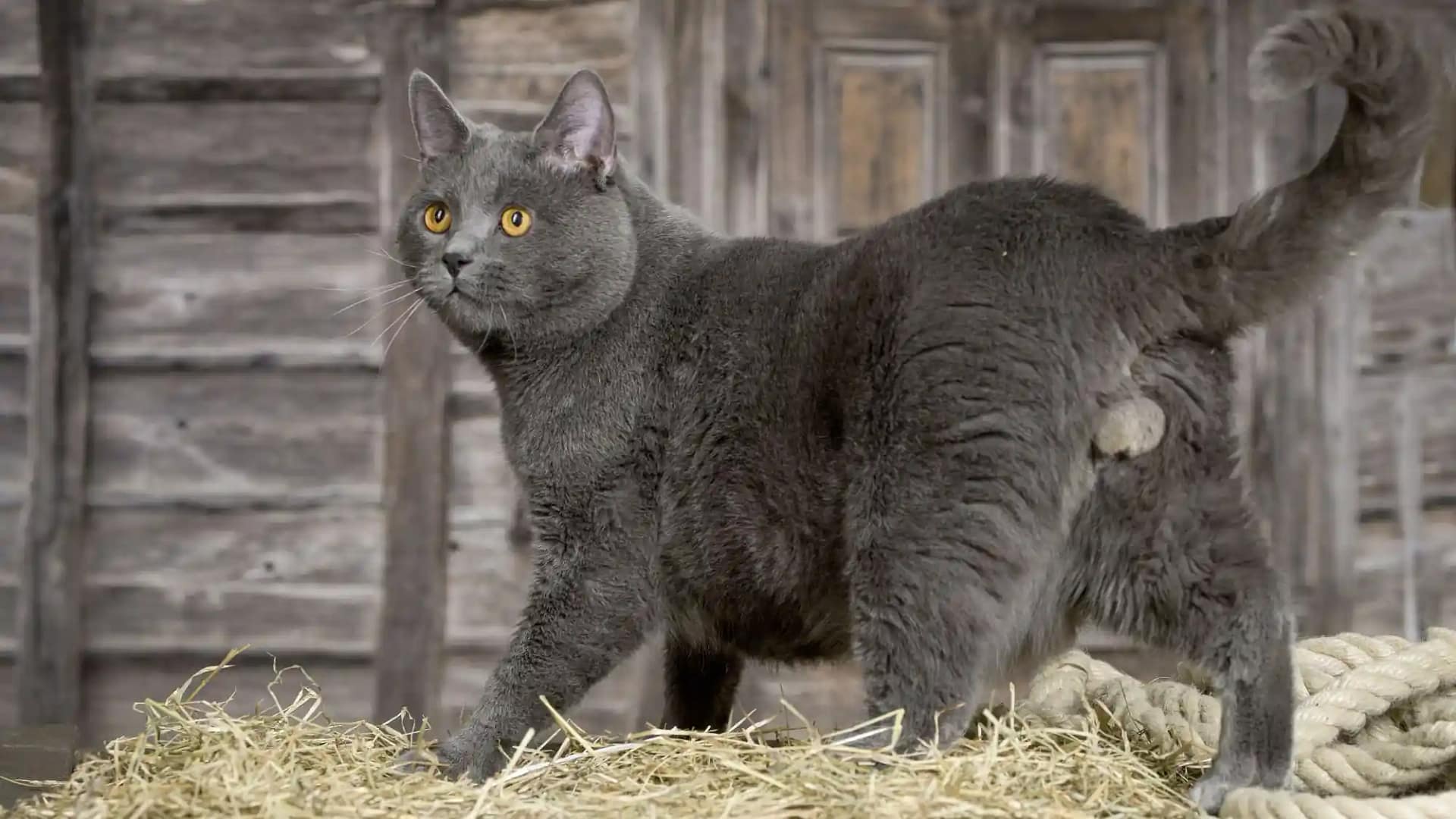
Personality and temperament (Chartreux cats)
Chartreux cats are calm, gentle, and affectionate—often described as “low-chaos” companions. They’re typically quiet (more soft chirps than loud meows), patient with routines, and happiest when they can stay near their people without constant attention. If you want a steady, sweet cat that still plays in short bursts, the Chartreux is a strong match.
Temperament at a glance:
- Energía: moderate (short play bursts, long naps)
- Vocality: quiet / soft chirps
- Afecto: loyal and people-oriented, not overly needy
- Social: usually good with respectful kids and other pets
Are Chartreux cats cuddly (lap cats)?
Many Chartreux enjoy cuddling, but they’re often “near-you” cats rather than constant lap cats. They may follow you from room to room, sit beside you on the couch, and ask for affection on their own schedule. If you like calm companionship without clinginess, this temperament is usually ideal.
Some Chartreux pick one favorite person but remain friendly with the whole household.
Do Chartreux cats bond to one person?
Chartreux cats often form a strong bond with one primary person while staying affectionate with everyone. You might notice they “choose” someone to shadow, greet at the door, or sleep closest to. This is normal for the breed and doesn’t mean they’ll ignore other family members.
Are Chartreux cats quiet or vocal?
Chartreux are known for being quiet cats. Instead of frequent loud meowing, they commonly communicate with soft chirps, gentle trills, eye contact, and body language. If you want a calm home (or live in an apartment), this low-vocal style is a big advantage.
They tend to be quiet and patient, using soft chirps and body language rather than loud meows.
Are Chartreux cats playful or lazy?
Most Chartreux are moderately playful. They often enjoy a few energetic play sessions per day—then happily settle down for long naps. Their play style is usually focused and “hunter-like,” so toys that trigger chasing or stalking (wands, small balls, fluttery toys) tend to work well.
Try 2–3 play sessions daily (5–10 minutes each). End with a treat or meal to mimic the “hunt → eat → rest” cycle.
Can Chartreux cats play fetch or be trained?
Chartreux are typically intelligent and can learn routines quickly. Many do well with positive reinforcement (treats, praise, clicker training) and may enjoy dog-like games such as fetching or carrying toys. Training also helps with confidence and reduces boredom in indoor cats.
Good beginner training ideas:
- “Come” with a treat cue
- Touch/target training
- Harness acclimation (slow and gentle)
Are Chartreux cats good with children?
Chartreux are often patient and gentle with children—especially when kids are taught to handle them respectfully. They tend to do best with calmer households rather than constant chaos, but they’re usually tolerant and adaptable. Always supervise young children and teach “no grabbing” (ears, tail, belly).
Are Chartreux cats good with other cats or dogs?
Many Chartreux do well with other pets when introductions are slow and structured. They’re usually not aggressive or overly territorial, but they can be sensitive to sudden change. A gradual introduction (separate rooms → scent swapping → short supervised meets) gives the best outcome.
Do Chartreux cats get lonely if left alone?
Chartreux generally enjoy human company and can become bored if they’re isolated for long periods without stimulation. They don’t always demand attention, but they often thrive in homes where someone is around regularly (or where they have another friendly pet and plenty of enrichment).
Practical enrichment list (quick win):
- puzzle feeder rotation
- window perch
- scheduled playtime
- safe climbing zones
What kind of home is best for a Chartreux?
A Chartreux usually fits best in a stable, predictable home with daily interaction—cuddles on their terms, short play sessions, and cozy resting spots. They’re a great match for owners who want a calm companion that still has a playful streak.
Care routine for a Chartreux (daily, weekly, monthly)
Chartreux cats do best with a rutina predecible: measured meals, short play sessions, and simple weekly grooming. They’re typically low-maintenance, but they can gain weight if meals and activity aren’t structured.
Daily routine (10–30 minutes total)
- Meals: Feed 2 measured meals (avoid free-feeding if your cat gains weight easily).
- Water + litter: Refresh water and scoop litter (quiet cats can be subtle about discomfort).
- Play (short bursts): 1–2 sessions of 10-15 minutos with wand toys, balls, or “fetch” games.
- Connection time: Calm cuddle/pet time—Chartreux often want to be near you even when they’re not demanding attention.
Weekly routine
- Coat care: Comb once weekly (more during seasonal shedding).
- Nails: Quick nail check/trim as needed (many cats need a trim every 2–4 weeks).
- Home reset: Rotate toys, refresh scratching posts, and move a puzzle toy/feeder to a new spot to keep things interesting.
Monthly routine
- Weight check: Weigh your cat (or do a body-condition check). Adjust portions early if you notice creep.
- Ears + teeth check: Look for redness, odor, or heavy tartar buildup.
- Deep clean: Wash bedding, clean food bowls thoroughly, and check cat trees/perches for loose parts.
Seasonal routine (when shedding spikes)
- Increase combing to 2–4 times per week for a couple of weeks.
- Add play if your cat becomes more sedentary in hot/cold weather.
Diet (what to feed and how much)
Chartreux cats do well on a high-quality, protein-forward diet. The key is consistency and portion control—especially because many Chartreux will happily overeat if food is always available.
Feeding tips
- Choose complete-and-balanced food appropriate for your cat’s life stage (kitten vs adult vs senior).
- Feed two measured meals per day (or 3–4 smaller meals for kittens).
- Keep treats to ≤10% of daily calories (easy way to prevent slow weight gain).
- If your cat starts gaining weight, reduce portions slightly and add a daily play session before switching foods.
Simple portion strategy
- Start with the package guideline, then adjust based on body condition over 2–3 weeks.
- If you’re unsure, your vet can help you set a target weight and daily calories.
Exercise (the Chartreux way)
Chartreux are moderately active: they often prefer short play bursts followed by long naps. Regular play helps prevent boredom and weight gain.
Easy play plan
- 1–2 daily sessions of 10–15 minutes
- Rotate between:
- feather wand “hunt” sessions
- rolling balls / chasing toys
- light fetch games (many Chartreux enjoy this)
Add vertical movement
- Use a tall cat tree, shelves, or window perches—Chartreux love observing from above.
Environment & enrichment (set up a calm “Chartreux-friendly” home)
Chartreux usually thrive in a stable, predictable indoor environment.
What to provide
- Vertical space: cat tree + at least one high perch
- Scratching options: one vertical + one horizontal scratcher
- Puzzle feeders: 2–3 options you rotate weekly
- Quiet rest zones: soft bed in a low-traffic area (they’re calm cats, but they still want a secure retreat)
Optional (great if you have space)
- A secure catio or screened window time for safe outdoor stimulation.
Grooming (dense double coat care)
Chartreux have a plush, dense coat and usually don’t need heavy grooming—just consistent, gentle combing.
Routine
- Normal weeks: comb 1×/week
- Seasonal sheds: comb 2–4×/week
- Focus on removing loose undercoat; avoid over-brushing.
Basic hygiene
- Nails: check regularly
- Ears: quick monthly look
- Teeth: ideally brush regularly (even a few times per week helps)
Mental stimulation & training
Chartreux cats are often intelligent and enjoy learning games, especially when the routine is consistent.
Low-effort mental stimulation
- Puzzle feeders (rotate weekly)
- Treat scavenger hunts (hide a few treats in different spots)
- Clicker training: sit, touch, come—keep sessions short (2–5 minutes)
Rule of thumb: short + consistent beats long + occasional.
Health concerns in Chartreux cats (what to watch for)
Chartreux cats are generally considered a hardy breed, but owners should still watch for a few common issues—especially weight gain in adulthood, dental disease, and occasional knee/joint concerns. Choosing a responsible breeder and keeping your cat lean, active, and on a consistent preventive-care routine goes a long way.
Health issues at a glance (owner-friendly table)
| Health issue (common search term) | What you might notice | What helps (owner actions) |
|---|---|---|
| Weight gain / obesity | Gradual belly/waist loss, less jumping, tiring quickly | Measure meals, reduce treats, daily play, monthly weight checks; ask breeder/vet for diet guidance if body condition slips |
| Dental disease / gingivitis | Bad breath, red gums, tartar, picky eating | Tooth brushing (start slow), dental treats/toys, routine vet dental checks |
| Patellar luxation (kneecap slipping) | Intermittent skipping gait, brief limping | Keep weight lean; vet exam if limping persists; ask breeder about knee history in their lines |
| Hypertrophic cardiomyopathy (HCM) screening | Often no signs early; sometimes exercise intolerance, breathing trouble, fainting | Ask breeder about cardiac screening on breeding cats; vet checkups; echocardiogram if your vet recommends |
Weight gain in adult Chartreux (the most common owner challenge)
Chartreux are naturally muscular and solid, but mature cats can still gain excess weight if food portions creep up and activity drops. A healthy Chartreux should feel firm and muscular, not soft or overly round. If your cat is trending heavier, ask your breeder for diet guidance and work with your vet on a safe plan.
Practical prevention tips:
- Feed measured meals (don’t free-feed all day)
- Keep treats “tiny and rare”
- Add 10–15 minutes of interactive play daily
- Weigh monthly (a cheap baby scale works)
Dental disease (easy to ignore, common in many cats)
Dental disease is common across cat breeds and tends to worsen quietly. The best strategy is prevention: brushing habits, routine checks, and addressing tartar early.
Owner checklist:
- Start tooth brushing slowly (finger brush → soft cat brush)
- Offer dental-approved chews if your cat tolerates them
- Ask your vet how often professional cleaning is appropriate
Patellar luxation (knees): what it is and what to ask
Patellar luxation is when the kneecap slips out of place, sometimes causing a “skipping” gait or intermittent limping. The Chartreux Breed Council notes that careful selection has reduced incidence, and many Chartreux today have healthy knees—but breeders still take knee stability seriously when deciding what cats should be bred.
General veterinary resources also note that severity varies by grade and evaluation often involves an exam and imaging when needed.
What you should do as an owner:
- Keep your cat lean (extra weight stresses joints)
- If limping repeats or worsens, book a vet exam
- Avoid “jumping punishment” if you see skipping—get it checked instead
HCM screening (cardiac health): how to handle it responsibly
Hypertrophic cardiomyopathy (HCM) is the most common heart disease in cats overall, and it can be silent early on. Diagnosis typically involves veterinary evaluation and, when indicated, an echocardiogram.
The Chartreux Breed Council states that many Chartreux breeders periodically screen their breeding cats for HCM. As an owner, you don’t need to panic—just be smart about breeder transparency and routine vet care.
Owner actions that make sense:
- Ask the breeder what heart screening they do for breeding cats
- Keep regular vet checkups (your vet listens for murmurs/arrhythmias)
- Ask your vet whether any additional screening is appropriate for your cat’s age/history
Chartreux vs Russian Blue: how to tell the difference
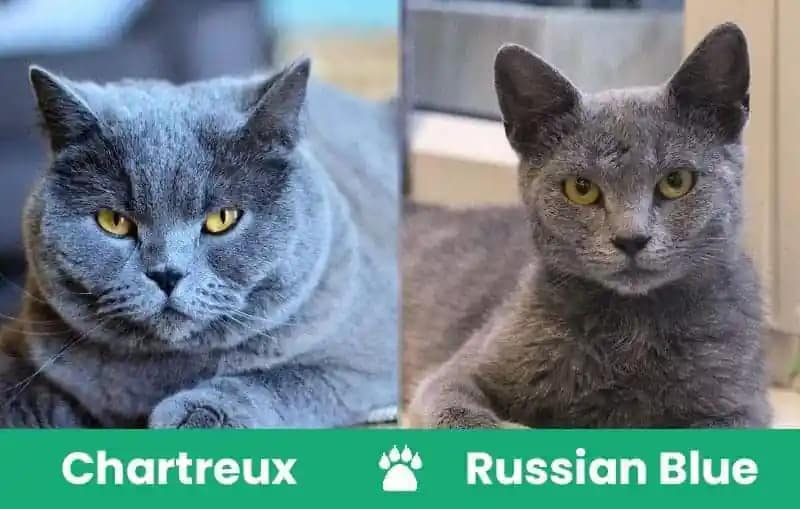
Many people confuse Chartreux and Russian Blue cats because both have blue-gray coats. The easiest way to tell them apart is overall shape and expression: Chartreux are typically stockier and more muscular with a “smiling” face and gold/copper eyes, while Russian Blues are usually sleeker and more fine-boned with a wedge-shaped head and green eyes. (Individual cats can vary, especially mixes—pedigree and breeder records matter.)
Differences at a glance
| Feature | Chartreux | Azul ruso |
|---|---|---|
| Overall build | Stocky, sturdy, muscular | Sleek, graceful, fine-boned |
| Head / expression | Rounder head, full cheeks, “smile” look | More wedge-shaped head, sharper profile |
| Eye color (typical) | Gold / copper | Verde |
| Coat texture | Dense, plush, slightly woolly double coat | Dense, plush but often feels smoother/silkier |
| Vibe | Calm “low-chaos,” often quietly social | Often more reserved with strangers, very bonded with chosen people |
| Activity style | Short play bursts; can be “dog-like” (fetch) | Playful but may be more cautious/observant |
How much does a Chartreux cat cost?
A Chartreux is a rare breed, so the biggest “cost factor” is usually availability. In the U.S., PetMD notes that a Chartreux kitten can cost about $1,300–$1,700, and prices can be higher or lower depending on pedigree, location, and what’s included (vaccines, microchip, spay/neuter, registration, etc.).
Why the price varies so much
- Rarity + waitlists: Chartreux are uncommon outside France, so reputable breeders often have waiting lists.
- Included veterinary care: Some breeders include early vaccines, microchip, and spay/neuter—others don’t.
- Pet quality vs show quality: Show prospects (and breeding rights) usually cost more.
- Your region + transport: Local pickup is safer/cheaper; shipping adds cost and risk.
Adoption vs breeder: what to expect
Adoption fees vary by shelter and country, but are usually far lower than purchasing a kitten from a breeder. That said, “Chartreux” listings in rescues are often raro and may be mixes or misidentified look-alikes (many blue-gray cats get labeled Chartreux). You can still absolutely adopt—just treat the breed label as a best guess unless there’s pedigree documentation.
If your priority is temperament (quiet, gentle, affectionate), you can often find “Chartreux-like” personalities in domestic shorthairs too—without the purebred price tag.
Ongoing yearly costs (quick reality check)
After the initial cost, Chartreux ownership expenses usually look like any other cat: quality food, routine vet care, parasite prevention, and occasional dental cleanings. Because some Chartreux can gain weight as they mature, budgeting for portion control tools (measuring cups, puzzle feeders) and regular vet check-ins is smart.
Is a Chartreux right for you? Quick decision guide
60-second fit check (score yourself)
Give yourself points for each statement:
- 2 points = Yes, this sounds like me
- 1 point = Maybe / sometimes
- 0 points = No, not really
| Fit question | 0 | 1 | 2 |
|---|---|---|---|
| I want a tranquilo cat (not a big meower) | |||
| I prefer a calm, low-drama companion over a high-energy clown | |||
| I can give 20–40 minutes/day of attention (play + company) | |||
| I’m okay with muda moderada, especially seasonally | |||
| I’ll keep portions measured and prevent aumento de peso | |||
| I want a cat that’s affectionate but not constantly demanding |
Your score (0–12):
- 10–12: Strong match
- 7–9: Good match with a few adjustments
- 0–6: Consider another breed or a calmer adult shelter cat
You’ll probably love a Chartreux if…
- Usted quiere un quiet, gentle cat that communicates with soft chirps and body language.
- You like the idea of a cat that hangs near you (follows you around) without needing nonstop lap time.
- You want a cat that is moderately playful (short bursts) and happy to nap afterward.
- You’re looking for a breed that often fits vida en el apartamento well (as long as they get play and vertical space).
A Chartreux may NOT be your best match if…
- Necesita un hipoalergénico breed (Chartreux are no hypoallergenic).
- You want a cat that is very vocal or intensely energetic.
- You don’t have time for daily interaction—Chartreux usually prefer consistent companionship.
- You strongly dislike shedding (they’re not extreme shedders, but not low-shed either).
FAQ about Chartreux cats
¿Los gatos Chartreux son hipoalergénicos?
No—Chartreux cats are not hypoallergenic. Their dense double coat sheds (especially seasonally), and allergens mainly come from proteins in saliva and skin dander rather than fur alone. If allergies are a concern, spend time around a Chartreux first and talk with your doctor about realistic expectations.
Do Chartreux cats shed a lot?
Chartreux cats shed a moderate amount most of the year and can shed more heavily during seasonal coat changes. Weekly combing usually keeps shedding manageable, and you’ll typically need extra grooming during peak shed weeks. If you want a low-shedding breed, Chartreux may not be the best match.
How much grooming does a Chartreux need?
Most Chartreux only need light grooming: a gentle combing about once a week, plus more frequent combing during seasonal shedding. Their coat is plush and dense, so the goal is removing loose undercoat rather than aggressive brushing. Regular nail trims and ear checks round out the routine.
Are Chartreux cats quiet or vocal?
Chartreux cats are generally very quiet. Many communicate with soft chirps, small sounds, and body language instead of loud, frequent meowing. If you prefer a calm, low-noise companion, the Chartreux is often a good fit.
Are Chartreux cats cuddly and affectionate?
Chartreux cats are affectionate, but they’re often “close-by” companions rather than constant lap cats. Many will follow you from room to room, sit nearby, and enjoy cuddle time on their terms. They tend to bond strongly with their household and can be very loyal.
Are Chartreux cats good with children and other pets?
Many Chartreux do well with respectful children and other pets because they’re typically patient and even-tempered. Proper introductions matter—especially with dogs or high-energy cats. With a calm home routine, Chartreux usually adapt well.
Can Chartreux cats be trained?
Yes—many Chartreux are smart and respond well to positive reinforcement. They often enjoy interactive play and can learn simple cues, puzzle toys, and even fetch-style games. Keep sessions short, reward-based, and consistent.
What is the lifespan of a Chartreux cat?
A Chartreux commonly lives around 11–15 years, though individual lifespan varies with genetics, diet, activity level, and veterinary care. Keeping your cat lean, maintaining dental care, and scheduling regular checkups can support long-term health.
Chartreux vs Russian Blue—how can you tell the difference?
Chartreux and Russian Blue cats can look similar, but they often differ in build and eyes. Chartreux are usually stockier and heavily muscled, while Russian Blues are typically more slender and fine-boned. Eye color is also a common clue: Chartreux often have copper/gold eyes, while Russian Blues commonly have green eyes.
How much does a Chartreux cat cost?
Chartreux kittens from reputable breeders are often pricey because the breed is relatively rare and responsible breeding is expensive. Total cost varies by country, pedigree, and waitlists, and you should also budget for vet care, quality food, and supplies. Be cautious of unusually cheap listings that can’t provide health documentation.
Is a Chartreux a good apartment cat?
Often, yes—Chartreux are usually calm and do well indoors as long as they get daily play and enrichment. They tend to enjoy routines, quiet spaces, and climbing/perching spots like cat trees or window ledges. A small home can work great if you provide vertical space and short interactive play sessions.
Datos complementarios
Los gatos Chartreux reciben a veces el apodo de "El gato sonriente de Francia" porque sus mejillas llenas y su boca respingona les dan una expresión constante y satisfecha.
Esta raza también recibe el nombre de "Perro francés" o "Perro-gato francés"los dueños observan muchos rasgos caninos, como seguir a sus dueños y disfrutar de juegos de buscar y traer..
Según la leyenda, los gatos Chartreux eran criados por monjes cartujos en Francia después de las Cruzadas. El nombre puede proceder del famoso licor Chartreuse de los monjes o de una lana de lujo llamada "pile de Chartreux".
En La "X" de Chartreux es muda - el nombre se pronuncia shar-TROO.
Personajes célebres franceses, como el general Charles de Gaulle y la escritora Colette, tuvieron gatos Chartreux.
Los gatos Chartreux siguen siendo relativamente raros fuera de Francia, por lo que encontrar un gatito de calidad suele implicar una lista de espera.
Referencias
“Un año, una carta". LOOF: Libro Oficial de Orígenes Felinos (in French). 2014. Archived from the original on 21 December 2017. Retrieved 30 October 2014.
"naming". Archived from the original on 29 June 2022. Retrieved 14 November 2021.
(en francés) DR Rousselet-Blanc (1992). Larousse (ed.). El chat: Raza y tipo europeo (en francés). p. 160. ISBN 2035174023.
(en inglés) Centro Getty (ed.). "Magdaleine Pinceloup de la Grange, de soltera de Parseval". Museo J. Paul Getty. Consultado el 30 de octubre de 2014.
Kaymak, Nuesret. Todas las razas de gatos de este mundo: Todas las razas de gatos aprobadas. Atelier Kaymak UG. ISBN 978-3-96183-036-7.
Fogle, Bruce (2001). La nueva enciclopedia del gato. New York: DK Publishing Inc [Dorling Kindersley]. ISBN 0-7894-8021-2.
Siegal, Mordecai (1997). "2. Las razas". En Siegal, Mordecai (ed.). El libro de Cornell sobre los gatos: Una referencia médica completa y autorizada para todos los gatos y gatitos (Segunda ed.). Nueva York: Villard. ISBN 978-0-679-44953-9.
Simonnet, Jean (1990). El gato Chartreux. Traducido por Auerbach, Jerome M. París: Synchro Company. ISBN 978-2-9506009-0-5. (Este libro Página de ISBNdb.com listas "Pub Auerbach" como editor, pero el propio libro da "Synchro Company, París" en una página sin numerar inmediatamente después de la página 190).
Helgren, J. Anne (2013). Enciclopedia de razas de gatos (2ª ed.). Barron's Educational Series. ISBN 978-0-7641-6580-1.
Buckland, Alice (2007). Gatos. TAJ Books. ISBN 978-1-84406-101-3.









 EN
EN DE
DE ES
ES PT
PT