
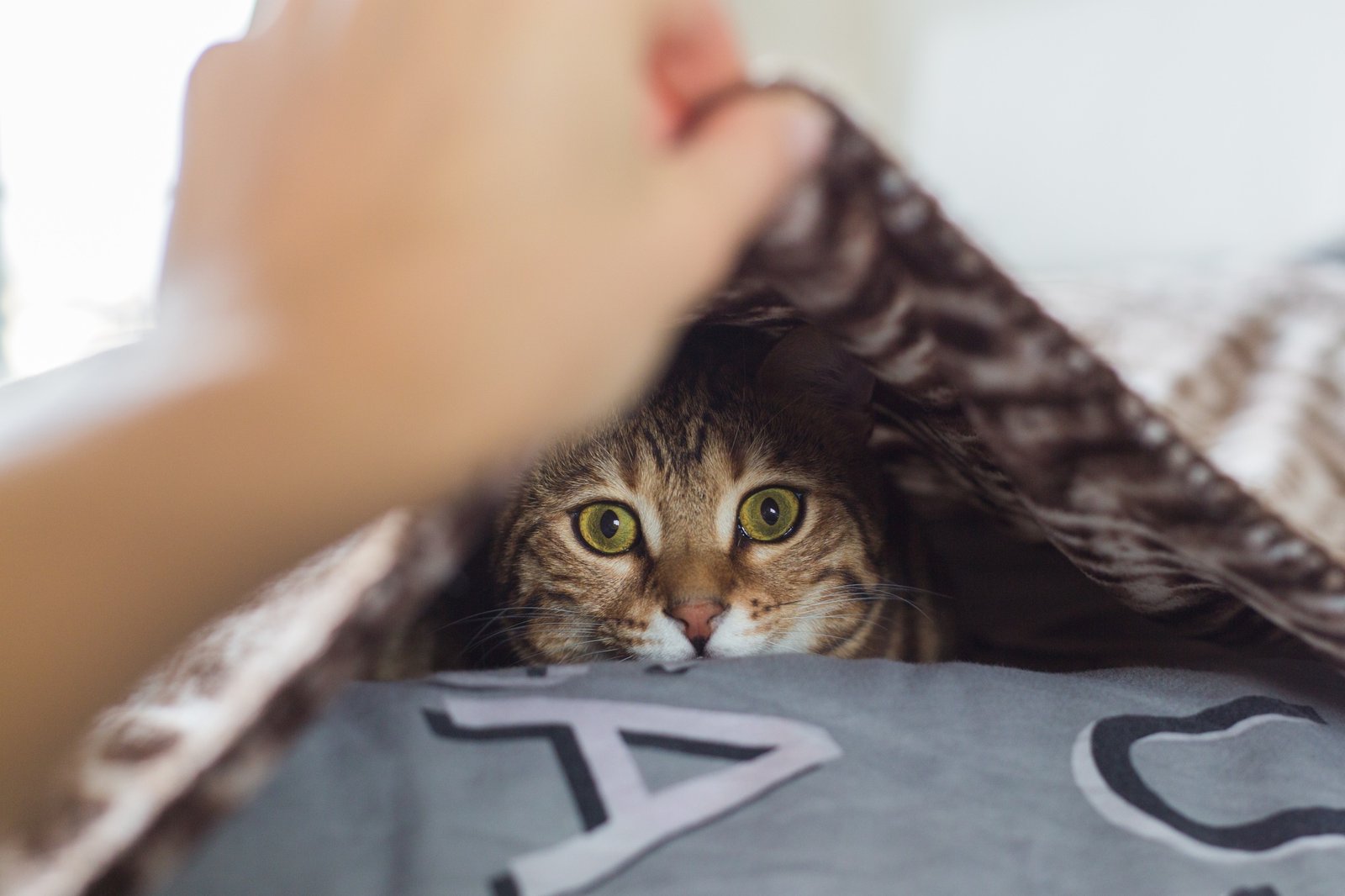
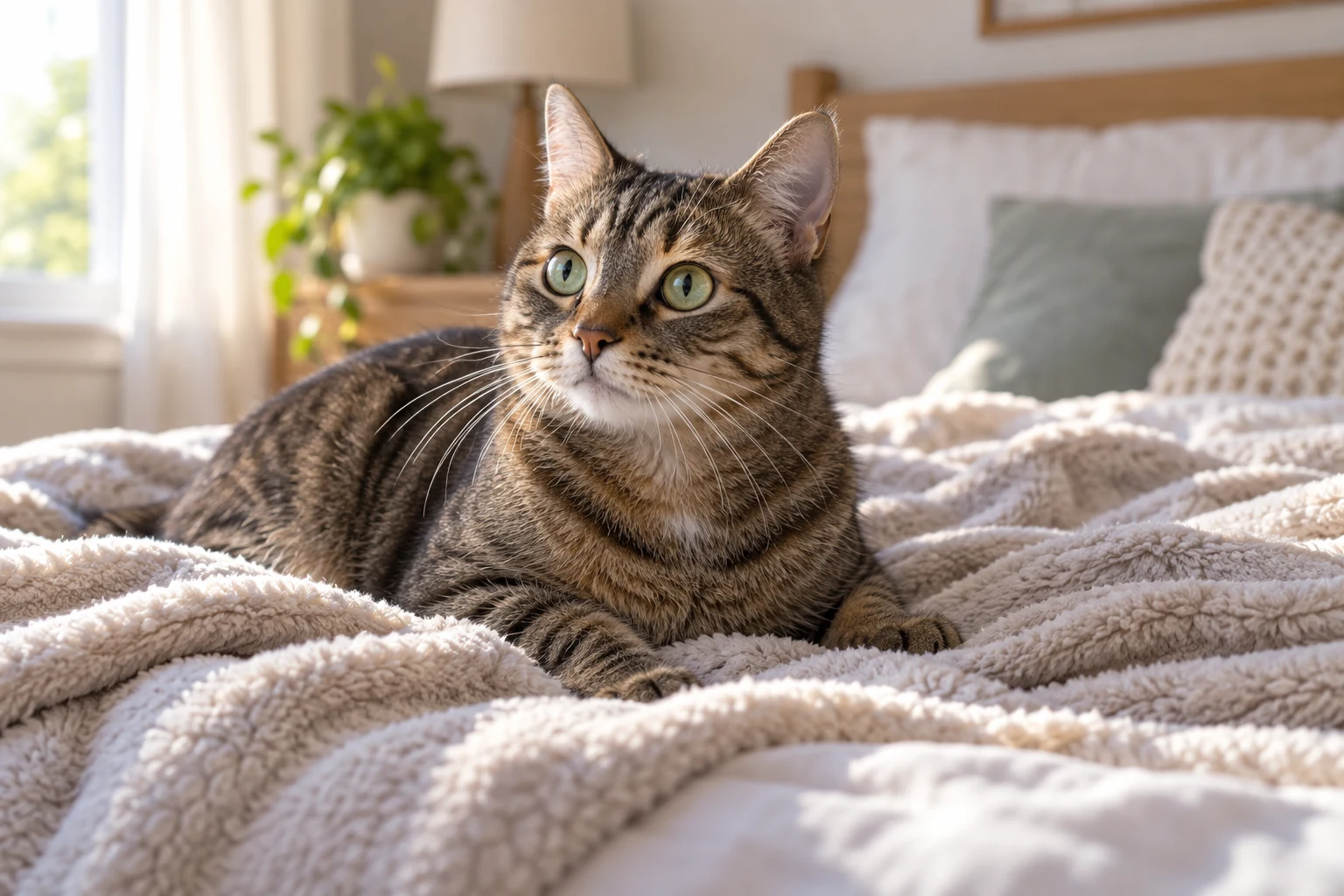
Los gatos se esconden para descansar, sentirse protegidos, evitar el ruido o los conflictos, adaptarse a los cambios o sobrellevar el dolor o una enfermedad. Esconderse suele ser normal cuando se ajusta a la situación y tu gato sigue comiendo, bebiendo, moviéndose, acicalándose y utilizando la bandeja sanitaria con normalidad. Si se esconde de forma repentina o persistente y presenta otros cambios, conviene consultar al veterinario.
La pregunta relevante no es simplemente si tu gato se esconde. Pregúntate si ese comportamiento es normal en este gato, si sale a realizar sus actividades habituales y si ha cambiado algo más.
Índice
- ¿Es normal que mi gato se esconda o debería preocuparme?
- ¿Por qué se esconden los gatos?
- ¿Por qué se esconde mi nuevo gato?
- ¿Cuándo debo llamar al veterinario si mi gato se esconde?
- ¿Qué debo hacer cuando mi gato se esconde?
- ¿Cómo puedo crear escondites más seguros?
- ¿Qué debería tener en cuenta cuando «Hiding is new»?
- ¿Cómo puedo evitar que se escondan por culpa de los conflictos?
- Conclusión
- Preguntas frecuentes
- Referencias
¿Es normal que mi gato se esconda o debería preocuparme?
Que el gato se esconda suele ser normal cuando es algo breve, predecible y va seguido de su rutina habitual. Resulta más preocupante cuando empieza de forma repentina, dura mucho más de lo habitual o va acompañado de cambios en el apetito, el uso de la bandeja sanitaria, la movilidad, el acicalamiento, la respiración o el comportamiento.
| Lo que se nota | Normalmente resulta más tranquilizador | Lo que resulta más preocupante |
|---|---|---|
| Calendario | Se esconde cuando hay visitas, al pasar la aspiradora, durante las siestas u otras situaciones cotidianas | El hecho de esconderse comienza de repente, sin un motivo claro |
| Duración | Sale a las horas habituales para alimentos, juego o atención | Permanece oculto la mayor parte del día o durante períodos cada vez más largos |
| Comer y beber | Ingesta normal | Comer menos, rechazar la comida o beber mucho más o mucho menos |
| Caja de arena | Orina y heces normales | Esfuerzo al defecar, visitas repetidas, accidentes, diarrea o ausencia de uso observada |
| Movimiento | Camina, salta y se estira con normalidad | Cojera, rigidez, debilidad o falta de ganas de moverse |
| Lenguaje corporal | Postura relajada, mirada suave, se acomoda cómodamente | Postura encogida y tensa, orejas pegadas a la cabeza, pupilas dilatadas, temblores, reacción al dolor |
| Rutina general | Hábitos normales de aseo, sueño, juego y socialización | Falta de aseo, somnolencia inusual, vómitos, vocalizaciones o aislamiento |
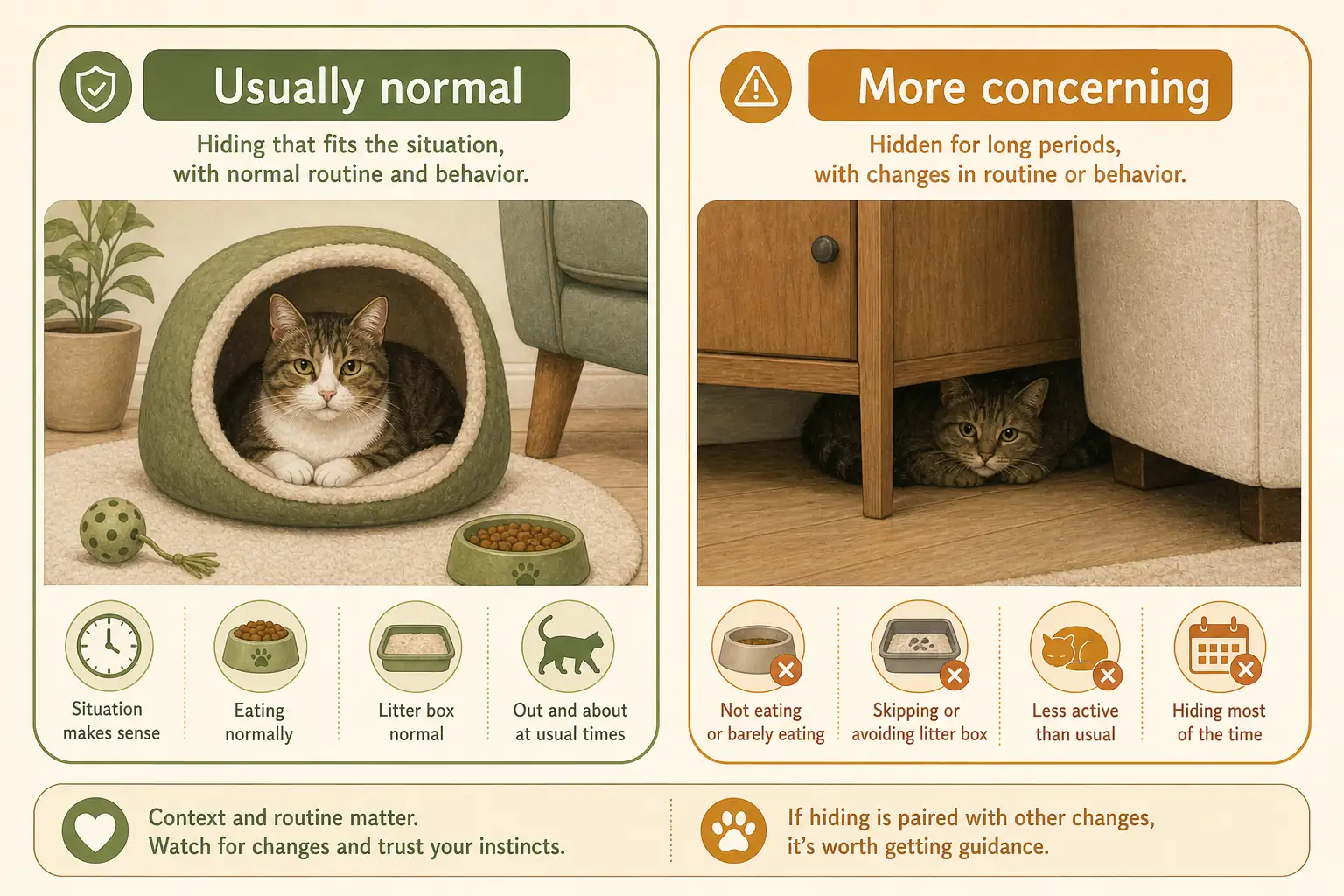
No des por sentado que un gato está bien solo porque esté tranquilo. Los gatos pueden aislarse cuando están estresados o enfermos, así que fíjate en el comportamiento en su conjunto y no solo en el lugar donde se esconde.
¿Por qué se esconden los gatos?
Los gatos se esconden porque un espacio pequeño y cerrado les proporciona intimidad, seguridad, calor y control. Esconderse es un comportamiento normal de adaptación, pero lo que lo desencadena puede variar desde una siesta cualquiera hasta el estrés ambiental o una molestia física.
Entre las causas más comunes se encuentran:
| Posible motivo | Pistas que podrían encajar | Respuesta útil |
|---|---|---|
| Descanso y privacidad | La hora habitual de esconderse; cuerpo relajado; rutina normal después | Dejad que el gato descanse tranquilamente |
| Ruido o visitas | Se esconde cuando se pasa la aspiradora, cuando hay reparaciones, en las fiestas o al oír voces desconocidas | Reduce el ruido y protege la tranquilidad de la habitación |
| Cambio de domicilio | Una mudanza, muebles nuevos, un cambio de horario, una persona nueva o una mascota nueva | Recuperar la previsibilidad y ofrecer opciones |
| Conflicto social | Otra mascota bloquea el paso, mira fijamente, persigue o protege sus recursos | Separar los recursos y reducir el contacto forzado |
| Temperatura o comodidad | Elige un lugar para descansar que sea cálido, oscuro o cerrado | Proporcionar camas seguras y cubiertas en lugares cómodos |
| Dolor o enfermedad | El hecho de esconderse es algo nuevo y va acompañado de cambios en el apetito, el movimiento, el aseo o el uso de la bandeja sanitaria | Acude al veterinario |
Las directrices sobre necesidades ambientales de la AAFP/ISFM señalan que los espacios seguros, los recursos clave separados, las oportunidades de juego y la interacción positiva y predecible son elementos importantes de un entorno saludable para los gatos.1 Un escondite resulta útil cuando el gato puede entrar y salir libremente y no queda atrapado por otra mascota o persona.
¿Por qué se esconde mi nuevo gato?
Un gato nuevo suele esconderse mientras se familiariza con los sonidos, los olores, las personas, los recovecos y las rutinas de la casa. Lo más seguro es ir poco a poco, tener a mano lo imprescindible y dejar que se gane su confianza sin sacarlo de su escondite.
Prepara una habitación tranquila con:
- una cama cubierta por un solo lado o una caja resistente
- la comida y el agua deben colocarse lejos de la bandeja sanitaria
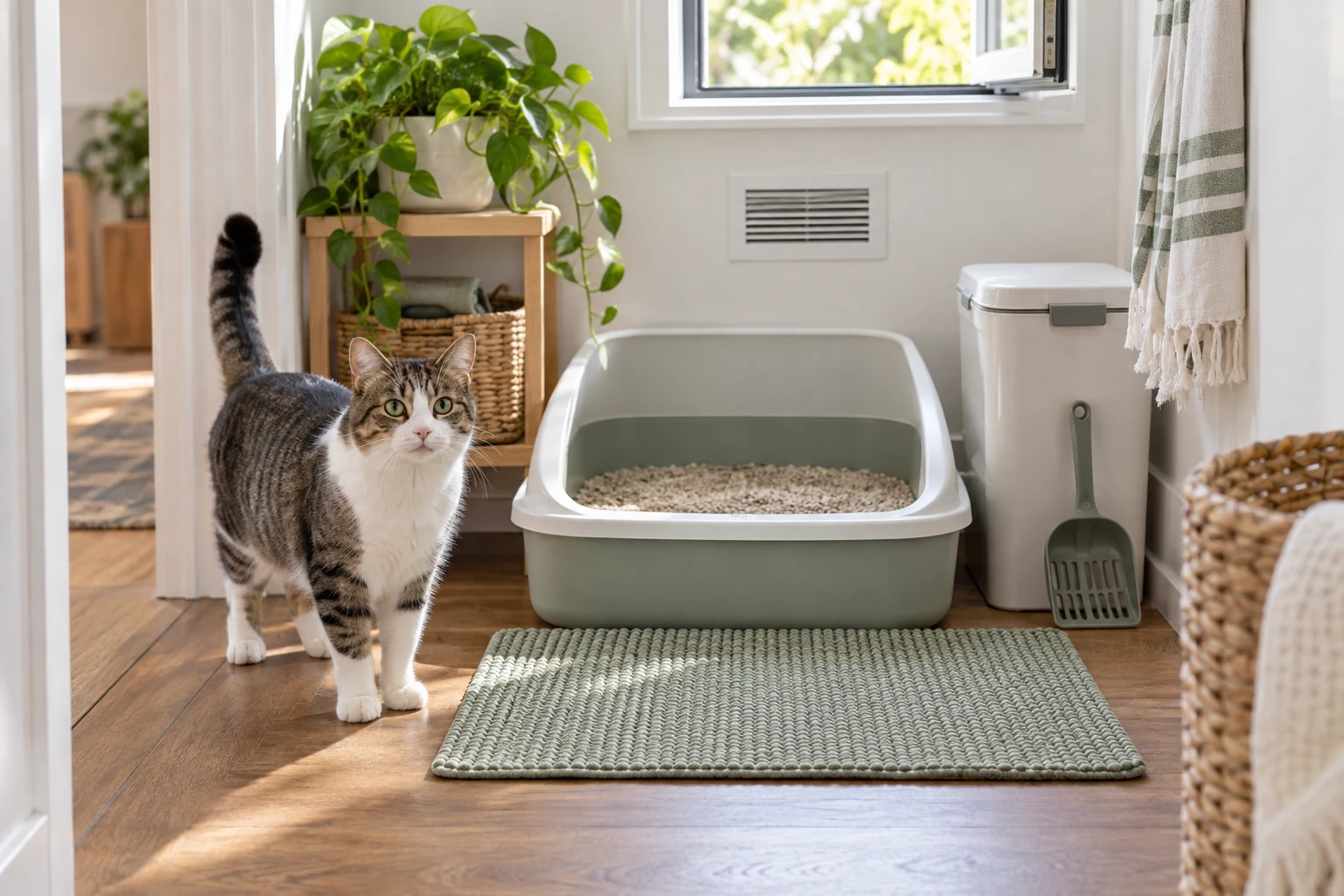
- una caja de arena accesible
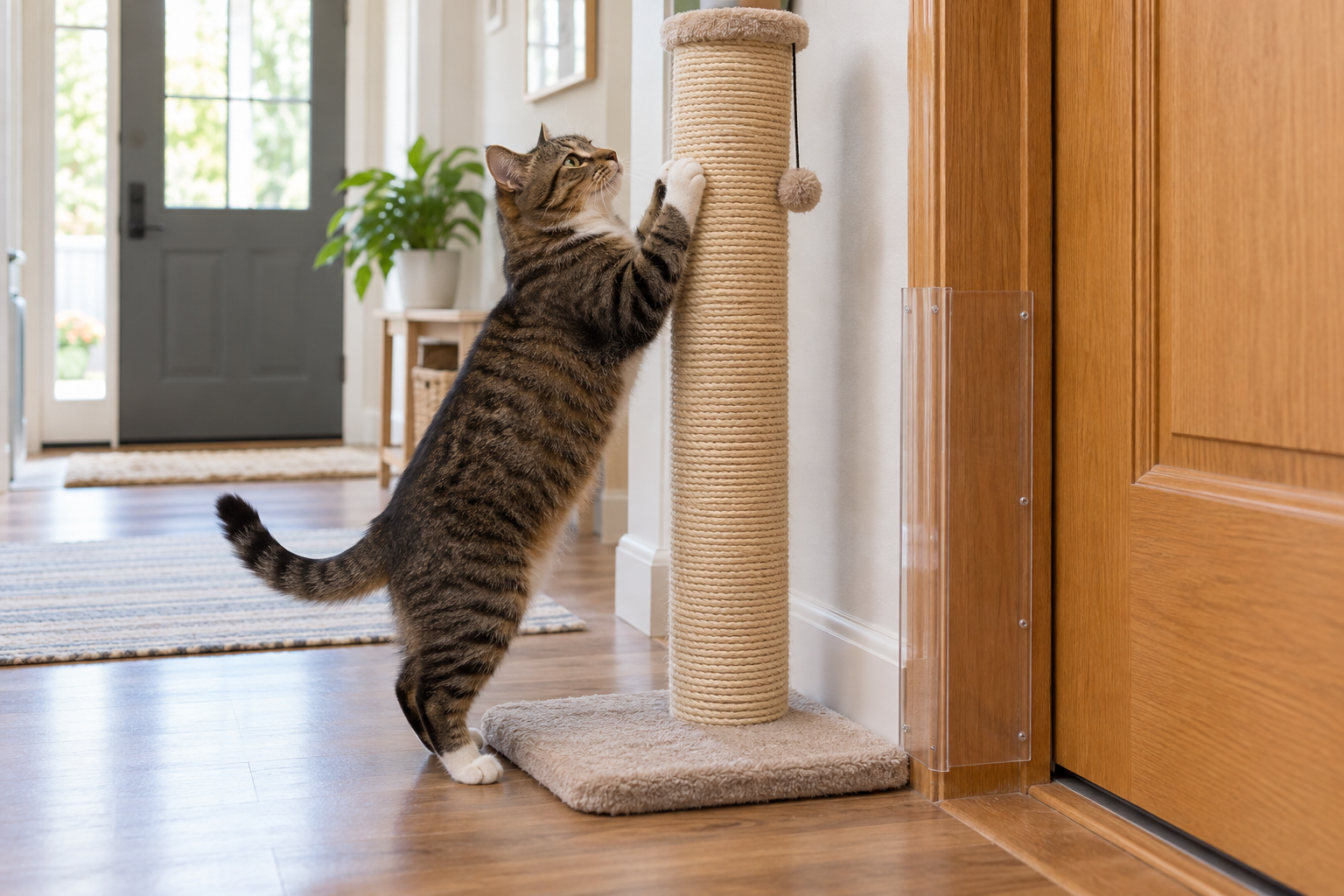
- una superficie para rascar
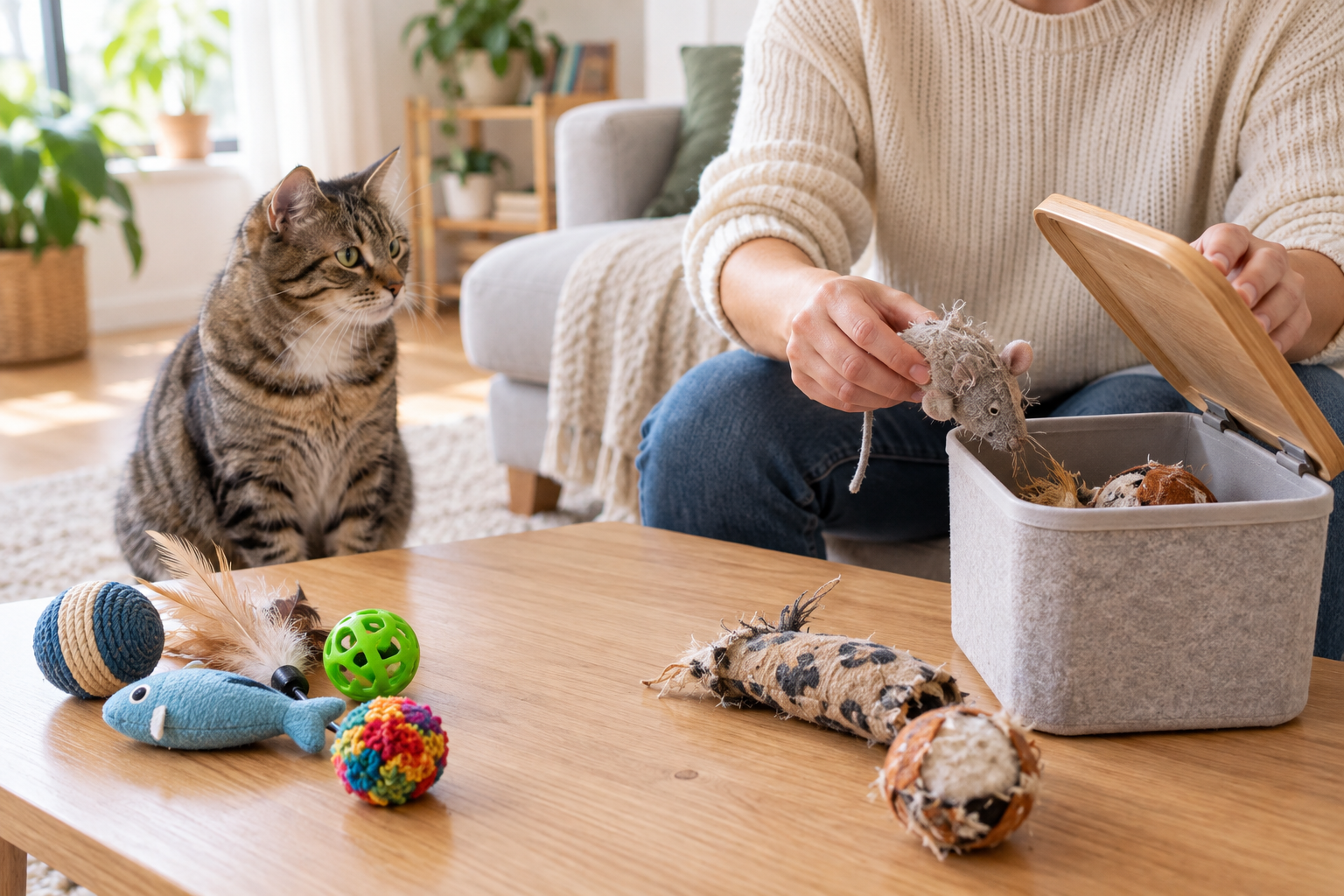
- unos cuantos juguetes sencillos
- una silla o un cojín de suelo donde puedas sentarte tranquilamente
Pasa breves ratos en la habitación sin mirarlo fijamente, sin intentar cogerlo ni bloquear la salida. Habla en voz baja, ofrécele comida o juega con él a una distancia cómoda, y deja que el gato decida si quiere acercarse.
Utiliza la guía de SnuggleSouls sobre el Los primeros 30 días con un gato nuevo para un plan de asentamiento gradual. Organiza el La primera visita al veterinario de un gato nuevo en lugar de dar por sentado que todo acto de ocultación es una forma de adaptación.
¿Cuándo debo llamar al veterinario si mi gato se esconde?
Llama a tu veterinario cuando el hecho de esconderse suponga un cambio repentino de comportamiento, persista sin mejorar o se produzca junto con otro cambio físico o de comportamiento. Los gatos pueden ocultar los síntomas de una enfermedad, por lo que este comportamiento retraído puede ser un indicio precoz más que un diagnóstico.2
Llama cuanto antes si tu gato está escondido y también:
- come menos, rechaza la comida o pierde peso
- vómita repetidamente o tenga diarrea persistente
- tiene dificultades para orinar, va varias veces a la bandeja sanitaria o produce poca o ninguna orina
- respira con dificultad o respira con la boca abierta
- parece débil, se derrumba o no puede caminar con normalidad
- reacciona con dolor al tacto o evita saltar
- tiene una herida, hinchazón o un posible traumatismo
- deja de acicalarse o su pelaje se vuelve de repente descuidado
- emite sonidos inusuales, parece confundido o no consigue tranquilizarse
La incapacidad para orinar, las dificultades respiratorias, el colapso, la debilidad grave, las convulsiones, la sospecha de intoxicación y los traumatismos graves requieren atención veterinaria urgente. No retrases la atención mientras intentas sacar al gato del lugar; llama a la clínica para que te indiquen cómo transportarlo de forma segura.
Las guías de SnuggleSouls sobre Causas médicas de la caja de arena para gatos y diarrea crónica en gatos puede ayudar a organizar las observaciones relacionadas, sin sustituir la evaluación veterinaria.
¿Qué debo hacer cuando mi gato se esconde?
Haz una pausa, asegúrate de que la zona sea segura, pon a su alcance lo imprescindible y deja que el gato decida cuándo salir. No persigas, arrastres, rocíes con spray, acorrales ni castigues a un gato que se haya escondido.
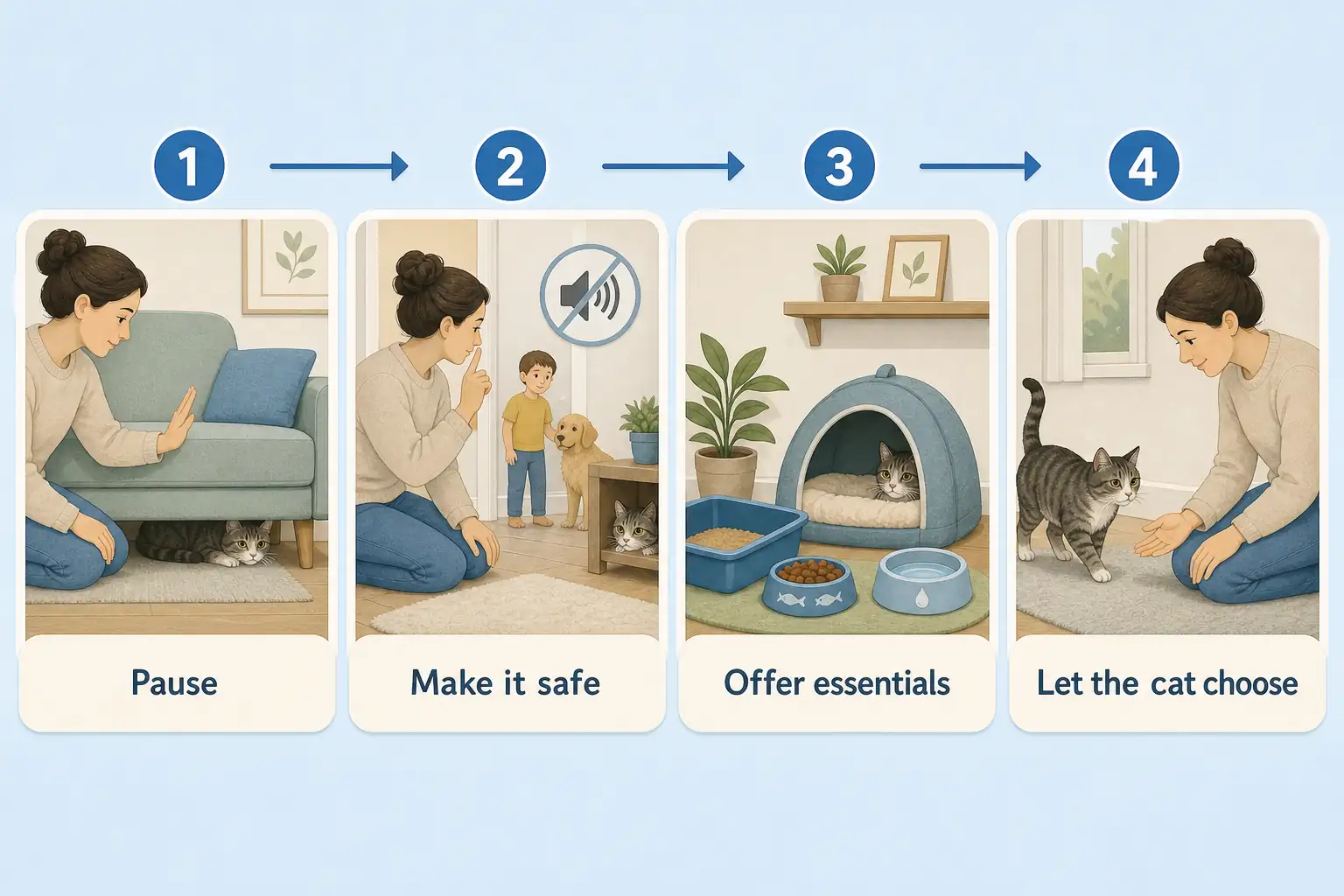
Sigue estos pasos:
- Comprueba desde lejos si hay problemas respiratorios, lesiones o algún peligro inmediato.
- Reduce el ruido y mantén alejados a los niños y a otras mascotas.
- Asegúrate de que el gato no esté atrapado detrás de un electrodoméstico o en un lugar peligroso.
- Deja la comida, el agua y la bandeja sanitaria a la vista, sin que ocupen demasiado espacio en el escondite.
- Quédate sentado cerca, sin hacer ruido, o sal de la habitación si tu presencia aumenta la tensión.
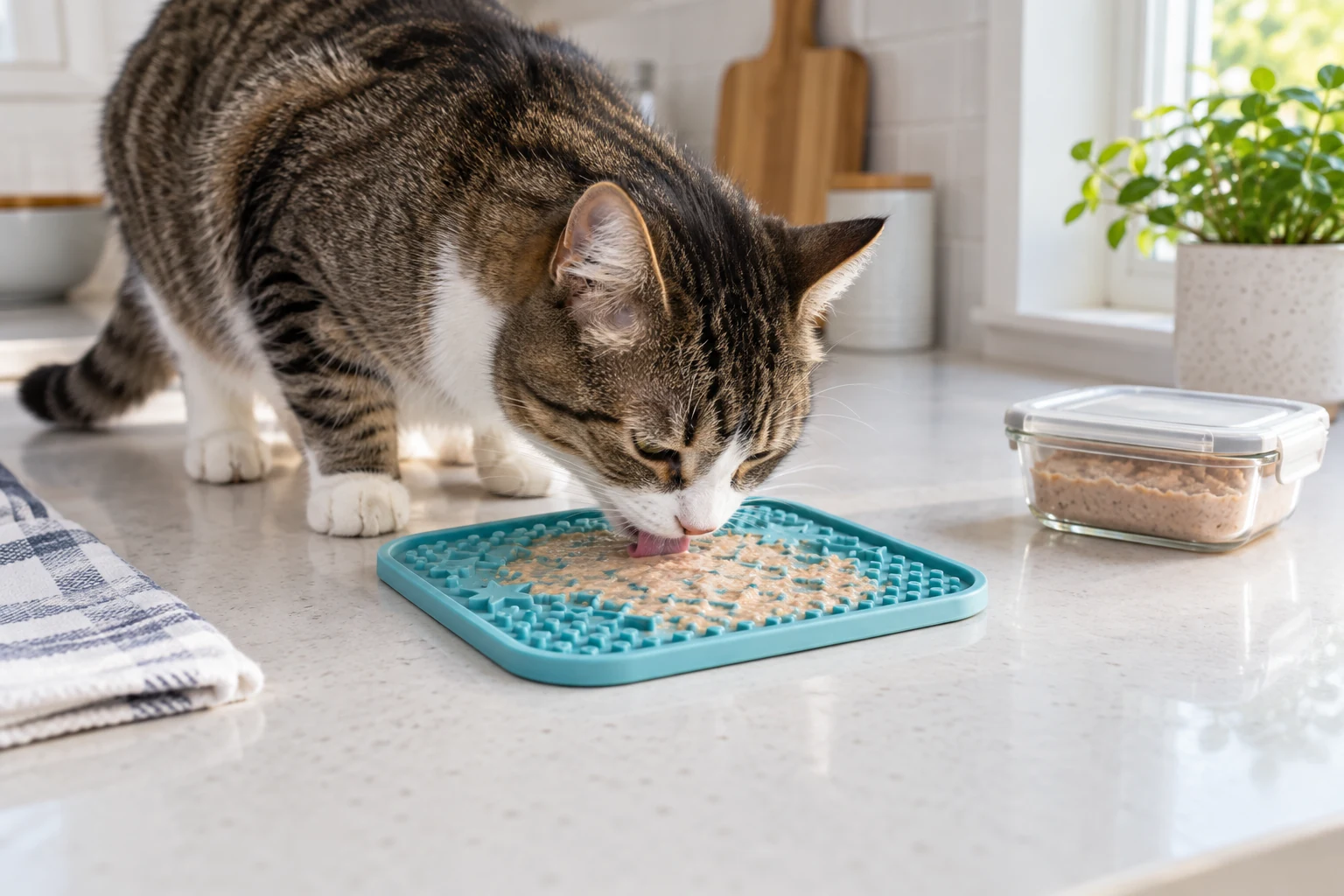
- Ofrécele una golosina o juega un rato con él más tarde, pero no lo utilices para forzar el contacto.
- Llama al veterinario si el patrón o los síntomas que lo acompañan te parecen preocupantes.
El lenguaje corporal puede ayudarte a elegir la distancia adecuada. Una mirada suave y una postura relajada son muy diferentes de una postura encogida, las orejas aplastadas, las pupilas dilatadas o una inmovilidad tensa. Los SnuggleSouls Guía del lenguaje de la cola del gato y la guía sobre el lenguaje corporal de Cats Protection hace hincapié en interpretar las señales teniendo en cuenta el contexto.3
¿Cómo puedo crear escondites más seguros?
Proporciona refugios homologados que ofrezcan privacidad, pero que sigan siendo accesibles para la observación y en caso de emergencia. Una cama cubierta, un transportín abierto, una caja resistente o un cubículo elevado son opciones más seguras que los huecos detrás de los electrodomésticos o dentro de los muebles.
Los buenos escondites deben:
- deja que el gato entre y salga libremente
- tener al menos una ruta despejada que otra mascota no pueda bloquear fácilmente
- estar situado en una zona tranquila pero funcional de la casa
- mantén el lugar seco, estable y libre de cables u otros peligros
- estar localizable en caso de que sea necesario un transporte de emergencia
- estar presentes en más de una zona de un hogar con varios gatos
Nunca cierres todos los escondites con la intención de que el gato se vuelva más sociable. En su lugar, tapa los huecos que sean realmente peligrosos y sustitúyelos por opciones más seguras. Un escondite seguro puede ayudar al gato a sentirse lo suficientemente seguro como para salir de él.
¿Qué debería tener en cuenta cuando «Hiding is new»?
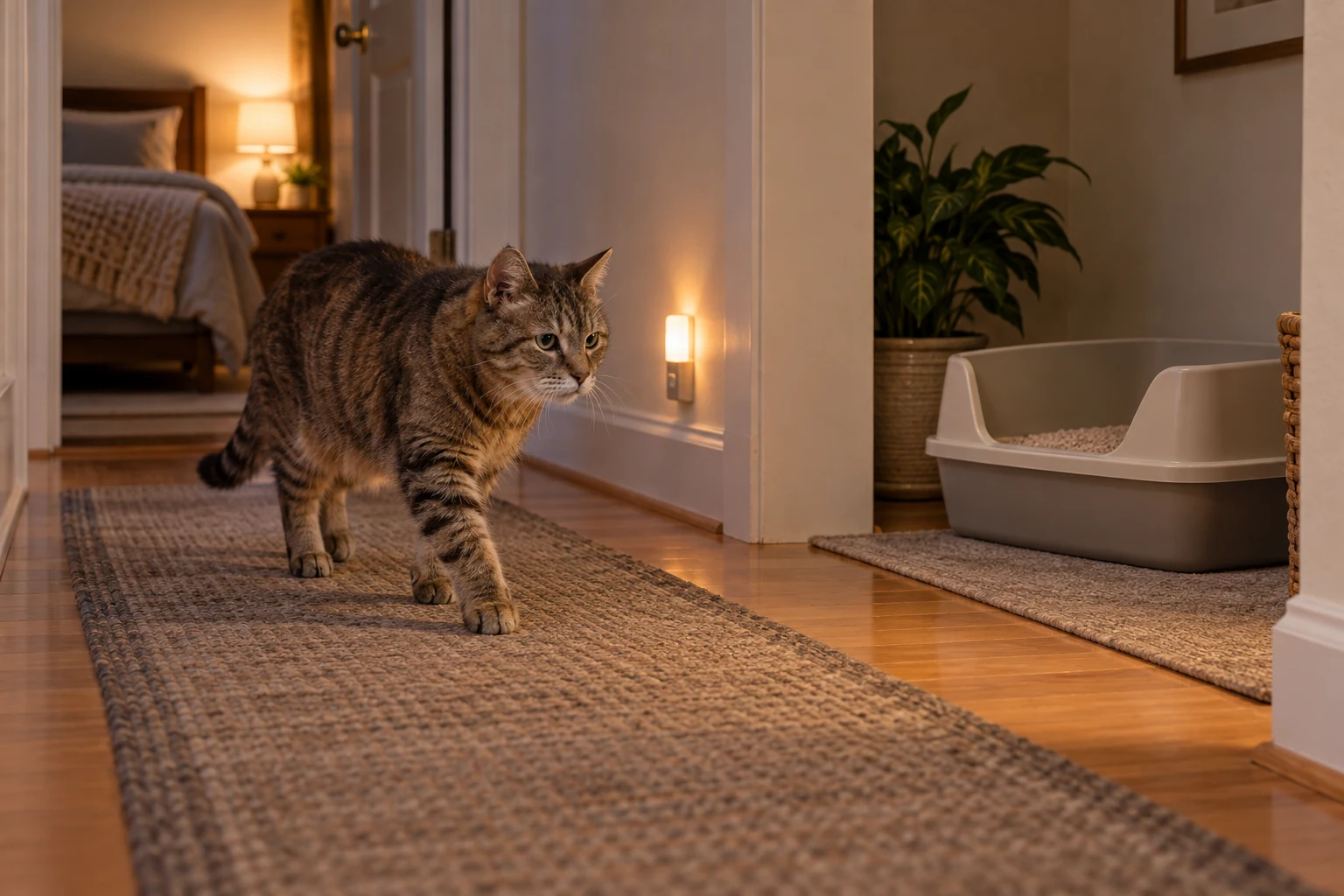
Lleva un control de los hábitos de ocultación, junto con el apetito, la ingesta de líquidos, el uso de la bandeja sanitaria, la actividad física, el aseo y los cambios en el entorno doméstico. Las observaciones concretas ayudan a distinguir una reacción circunstancial de un problema más general de salud o bienestar.
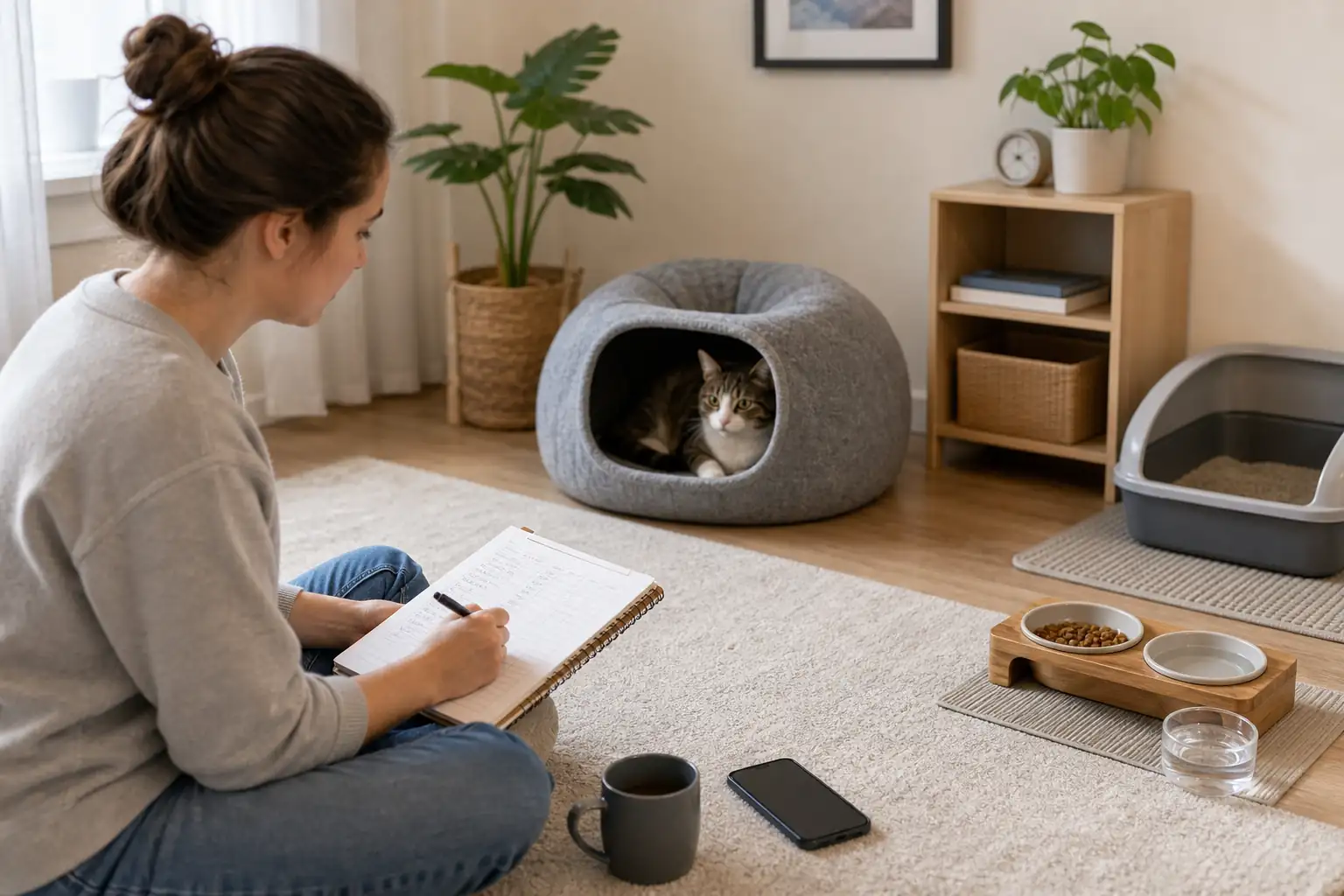
Durante varios días, anota:
- cuándo y dónde se esconde el gato
- cuánto tiempo permanece escondido el gato
- si el gato sale cuando la casa está en silencio
- ingesta de alimentos y agua
- cambios en la orina y las heces
- vómitos o diarrea
- cuidado, paseos, saltos y juegos
- ruidos extraños, visitas, cambios en los horarios o conflictos entre mascotas
- cualquier medicamento nuevo, dieta o acontecimiento reciente
Los vídeos cortos pueden resultar útiles cuando resulta difícil describir el lenguaje corporal o los cambios en los movimientos. No pospongas una cita necesaria solo por tener que rellenar un registro.
¿Cómo puedo evitar que se escondan por culpa de los conflictos?
Reduce los conflictos proporcionando a cada gato un fácil acceso a recursos independientes y múltiples rutas por la casa. Las miradas fijas, los bloqueos, las persecuciones o el comportamiento de protección, aunque sean sutiles, pueden hacer que un gato se esconda, incluso cuando las peleas evidentes son poco frecuentes.
Facilitar:
- varios puntos de distribución de comida y agua
- suficientes bandejas sanitarias en zonas separadas y accesibles
- varias opciones para descansar y esconderse
- perchas verticales y vías de evacuación
- juego individual y atención
- Introducción gradual de nuevas mascotas
Si el hecho de esconderse va acompañado de marcar el territorio con orina o de evitar la bandeja sanitaria, utiliza la guía de SnuggleSouls para El estrés en los gatos y el hecho de que orinen mientras se organiza una evaluación veterinaria adecuada. Echa un vistazo a la Guías sobre el comportamiento de los gatos para el soporte correspondiente a baja presión.
Conclusión
Esconderse es un comportamiento normal y útil en los gatos cuando se adapta a la situación y el gato sigue con su rutina habitual de comer, beber, moverse, acicalarse y usar la bandeja sanitaria. La respuesta más segura es respetar el lugar donde se esconde, reducir la presión y proporcionarle un acceso predecible a lo esencial.
Tómate en serio cualquier cambio repentino o persistente. Si observa que el gato se esconde y, además, presenta falta de apetito, dolor, debilidad, vómitos, diarrea, dificultades respiratorias o cambios en la micción, debe acudir al veterinario. Observa al gato en su conjunto, no solo la zona en la que se esconde.
Preguntas frecuentes
¿Cuánto tiempo debo dejar que mi gato se esconda?
Deja que un gato tranquilo utilice un escondite seguro todo el tiempo que quiera. Acude al veterinario si el comportamiento de esconderse es algo nuevo, se prolonga, empeora o va acompañado de cambios en el apetito, el uso de la bandeja sanitaria, el movimiento, el acicalamiento u otros cambios de salud.
¿Debería sacar a mi gato de su escondite?
No, a menos que el gato se encuentre en peligro inmediato y puedas trasladarlo de forma segura. Tirar de él o acorralarlo puede aumentar su miedo y minar su confianza. Llama a un veterinario para que te oriente sobre cómo actuar si sospechas que puede estar enfermo o herido.
¿Por qué mi gato de repente se esconde de mí?
Un cambio repentino puede producirse a raíz de ruidos, visitas, conflictos, alteraciones en la rutina, dolor o enfermedad. Analiza qué ha cambiado y observa su alimentación, su hidratación, el uso de la bandeja sanitaria, su actividad física, el aseo y el lenguaje corporal.
¿Por qué mi gato se esconde durante el día y sale por la noche?
Algunos gatos se sienten más seguros cuando hay silencio en casa. Esto suele ser habitual en gatos nuevos o cautelosos, pero pide consejo si el gato rechaza la comida, el agua, las bandejas sanitarias o la interacción habitual.
¿Se esconden los gatos cuando están enfermos?
A algunos gatos les pasa. El hecho de esconderse por sí solo no basta para diagnosticar una enfermedad, pero un comportamiento repentinamente retraído, junto con cambios en el apetito, la energía, el acicalamiento, el movimiento, la respiración, los vómitos, la diarrea o la micción, requiere atención veterinaria.
¿Es normal esconderse tras una adopción?
Sí, es habitual que el gato se esconda temporalmente mientras se adapta a su nuevo hogar. Empieza por una habitación tranquila, ofrécele lugares seguros donde esconderse y lo necesario para su bienestar, y deja que sea él quien decida cuándo quiere interactuar contigo. Pide cita con el veterinario si el gato no come o parece encontrarse mal.
¿Por qué mi gato se esconde de otro gato?
Es posible que el otro gato se quede mirándolo fijamente, lo persiga, le bloquee el paso o proteja sus recursos. Separa los recursos clave, crea vías de escape y espacios elevados, y acude al veterinario o a un especialista en comportamiento cualificado si el conflicto persiste.
Referencias
[1] Ellis, S. L. H., y otros. Directrices de la AAFP y la ISFM sobre las necesidades ambientales de los gatos.
[2] Hospitales veterinarios VCA. Cómo reconocer los síntomas de enfermedad en los gatos.
[3] Cats Protection. El lenguaje corporal de los gatos.
 EN
EN DE
DE ES
ES PT
PT