
If it feels like your cat sleeps all day, you’re not imagining it — cats really do nap a lot. In most cases, it’s completely normal and rooted in biology (cats are built for short bursts of activity and long recovery).
In this guide, you’ll learn how many hours of sleep is normal for kittens, adult cats, and seniors, the most common reasons cats sleep so muchy the red flags that mean it’s time to call your vet.
Quick Answer: Is It Normal That Cats Sleep So Much?
Yes — most cats sleep a lot.
Adult cats: typically 12–16 hours/day
Gatitos: a menudo 16–22 hours/day
Senior cats: commonly 16–20 hours/day
Common reasons: energy conservation, dawn/dusk activity rhythm, catnaps/light sleep, boredom, stress, pain, illness, and seasonal changes.
When to worry: if your cat suddenly sleeps much more than usual más you notice appetite changes, ocultar, weight loss, vomiting/diarrhea, breathing issues, mobility pain, or they’re hard to wake.
How Many Hours Do Cats Sleep (By Age)
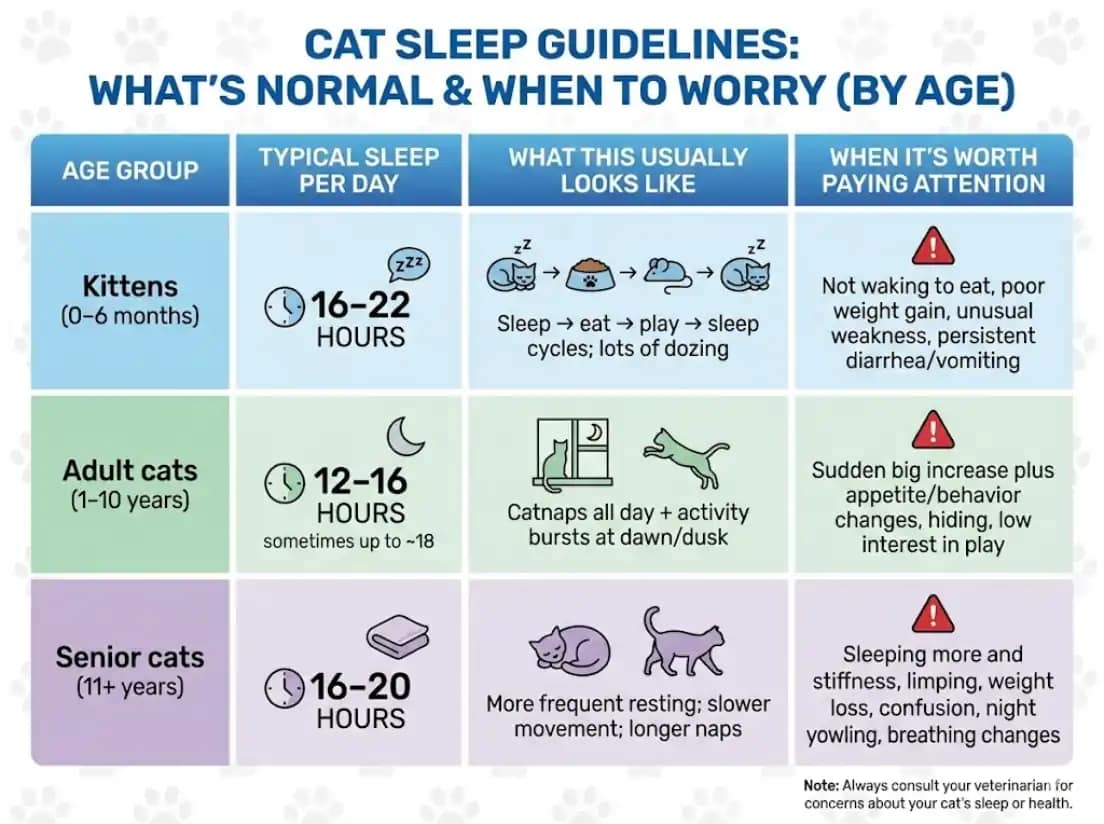
Cats really do sleep a lot—and the “normal” number depends mostly on edad. Use the table below to quickly check what’s typical for kittens, adult cats, and seniors, plus when extra sleep might be a sign to pay closer attention.
Normal Cat Sleep Hours (Quick Table)
| Age group | Typical sleep per day | What this usually looks like | When it’s worth paying attention |
|---|---|---|---|
| Kittens (0–6 months) | 16–22 hours | Sleep → eat → play → sleep cycles; lots of dozing | Not waking to eat, poor weight gain, unusual weakness, persistent diarrhea/vomiting |
| Adult cats (1–10 years) | 12-16 horas (sometimes up to ~18) | Catnaps all day + activity bursts at dawn/dusk | Sudden big increase más appetite/behavior changes, hiding, low interest in play |
| Senior cats (11+ years) | 16–20 hours | More frequent resting; slower movement; longer naps | Sleeping more y stiffness, limping, weight loss, confusion, night yowling, breathing changes |
Key takeaway: the exact number matters less than your cat’s baseline. A sudden change—especially with other symptoms—matters most.
Necesidades de sueño de los gatitos (0-6 meses)
Kittens are growing at warp speed, so they sleep a lot to support brain development, immune function, and healthy growth. Their day often looks like a repeating loop of eating, brief play, and deep rest.
What’s normal at home:
Many short naps throughout the day (and night)
Waking reliably to eat, explore, and play in short bursts
Pay attention if:
Your kitten is hard to wake for meals or seems weak/unsteady, especially with vomiting/diarrhea
Gatos adultos (1-10 años): Los Snoozers Equilibrados
Adult cats usually settle into a steady rhythm: lots of naps, plus predictable “active windows” (often around dawn and dusk). Sleep time varies by temperament and environment—an enriched, playful home often produces a slightly more active cat.
What’s normal at home:
Several daytime naps + an evening or morning play burst
Waking quickly for food, treats, toys, or attention
Pay attention if:
Your cat suddenly skips play/food and sleeps through their usual active time for 24–48 hours
Gatos senior (11+ años): Vuelta al descanso prolongado
As cats age, they often rest more—sometimes because they have less energy, and sometimes because sleep helps them cope with discomfort (like arthritis). Longer naps can be normal, but seniors are also the group where sleep changes are most likely to overlap with health issues.
What’s normal at home:
More frequent resting and longer naps
Still shows interest in food, attention, and gentle play
Pay attention if:
Extra sleep comes with stiffness, limping, weight loss, night yowling, or “not quite themselves” behavior
Cat Sleep Is Age-Appropriate—But Patterns Matter Most
It’s easy to worry when your cat seems to sleep all day, but for most cats, heavy sleep is part of a healthy, instinctive rhythm. The more useful question isn’t “How many hours exactly?”—it’s “Has my cat’s sleep changed?”
If your cat has always been a big sleeper and everything else looks normal, it’s usually fine. If the sleep pattern changes suddenly (or comes with other symptoms), that’s when it’s worth taking a closer look—next, we’ll walk through the most common reasons and the clearest red flags.
Want a deeper breakdown of sleep schedules by age, plus sample routines and what changes are most common as cats grow? Lea la guía completa: ¿Cuánto duermen los gatos? Explicación del sueño de gatitos, adultos y ancianos
Por qué duermen tanto los gatos: Razones comunes
Every time I see my cat sprawled out in a sunbeam without a care in the world, I wonder: Is she really that tired—or just living her best life? If you’ve asked yourself the same question, you’re not alone.
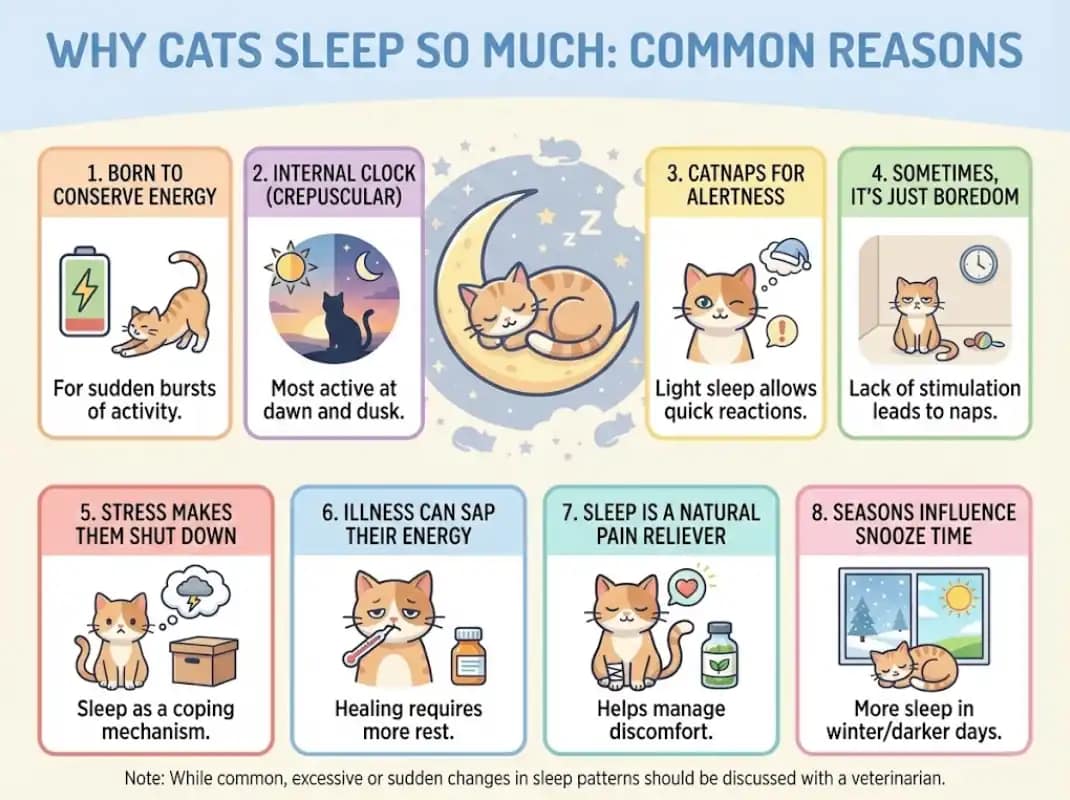
Here’s the truth: cats aren’t being lazy. Their love of sleep is rooted in biology, instinct, and emotional wellbeing. Below are eight common reasons cats sleep so much—plus quick signs to help you figure out which ones fit su cat.
1. Han nacido para conservar energía
What it means: Cats are built for quick bursts of activity followed by long recovery.
Signs it might be this: zoomies → nap marathon; naps after meals/play.
Try this: 5–10 minutes of “hunt-style” play (wand toy) before meals.
Puede que hoy su gato coma en un cuenco de cerámica, pero su cuerpo sigue pensando que es un cazador. Desde sus antepasados salvajes hasta los gatos modernos, los gatos están biológicamente programados para conservar energía entre breves e intensos periodos de actividad, como acechar a una presa o perseguir a un ratón de juguete. Por eso es frecuente ver una ráfaga de zumbidos, seguida de horas de profundo descanso. Incluso los leones duermen entre 16 y 20 horas al día por la misma razón.
Así que mientras Fluffy "caza" una varita de plumas, su cuerpo sigue un patrón de supervivencia: actuar, comer, descansar, repetir. Dormir no es sólo tiempo de inactividad, es tiempo de recuperación.
2. Su reloj interno se ajusta al amanecer y al anochecer
What it means: Cats are crepuscular—most active at dawn/dusk—so they sleep through much of our daytime.
Signs it might be this: early-morning meows; evening energy spikes.
Try this: schedule play + feeding in the evening to reduce late-night pacing.
Por eso parece que tu gatito duerme la mayor parte del día. No es perezoso, sólo lleva un ritmo diferente. Puedes verlo como un jet lag felino.
3. La siesta les ayuda a estar alerta
What it means: Cats do lots of light sleep “catnaps,” so they log many hours while staying responsive.
Signs it might be this: ear twitching; wakes fast to noises.
Try this: give a quiet nap zone so they can get deeper rest too.
Todos hemos oído hablar de la "siesta del gato", y hay ciencia detrás del término. Los gatos duermen a ratos, a menudo entrando y saliendo de un sueño ligero en el que siguen estando semialertados. Si las orejas de su gato se agitan cuando usted agita una bolsa de comida, incluso cuando está "dormido", se trata de un reflejo de supervivencia.
These short dozes add up throughout the day, giving cats a surprising ability to log 12–16 hours of rest while still being ready to saltar at a moment’s notice.
4. A veces, es sólo aburrimiento
What it means: Indoor cats may sleep more when there’s nothing to do.
Signs it might be this: more sleep on quiet days; little self-initiated play.
Try this: rotate toys weekly + add a puzzle feeder or two.
Un gato que no tiene nada que hacer suele pasar el tiempo durmiendo. Especialmente en el caso de los gatos de interior, las largas temporadas de aburrimiento pueden provocar más siestas y menos actividad. No es porque estén agotados, sino porque no tienen otra alternativa mejor.
Por eso el juego y la estimulación son tan importantes. Sin enriquecimiento, su gato puede volverse perezoso por pura costumbre. Por suerte, es fácil solucionarlo con las herramientas y la atención adecuadas.
5. El estrés hace que se apaguen
What it means: Cats often cope with stress by withdrawing—sleeping and hiding more.
Signs it might be this: new pet/move/noise; reduced affection/play.
Try this: protect routines + provide safe hideouts and vertical space.
Los gatos son sensibles a los cambios. Una nueva mascota, una mudanza, los ruidos fuertes e incluso la reorganización de los muebles pueden crearles estrés. Y, a diferencia de los perros, los gatos no suelen reaccionar así, sino retrayéndose y durmiendo más.
Si su gato parece muy somnoliento y además se esconde, evita el afecto o se salta comidas, el estrés emocional podría ser la causa.
6. La enfermedad puede restarles energía
What it means: True lethargy from illness often looks like “extra sleep,” especially if it’s new.
Signs it might be this: sleeping more más appetite change, vomiting/diarrhea, weight loss, or “not themselves.”
Try this: if you see a sudden shift + another symptom, call your vet.
Uno de los primeros signos de que un gato está enfermo es un aumento repentino del sueño. Afecciones como el hipertiroidismo, la diabetes, las enfermedades renales o incluso el dolor provocado por la artritis pueden causar letargo.
Es fácil confundir esto con "hacerse mayor", pero si algo no va bien, siempre merece la pena consultar al veterinario. Confía en tu instinto: tú eres quien mejor conoce a tu gato.
7. El sueño es un analgésico natural
What it means: Cats hide pain; sleeping more can be a subtle way to avoid moving.
Signs it might be this: less jumping, stiffness, limping, staying in one spot.
Try this: add steps/ramps + softer bedding; vet check if mobility changes persist.
A los gatos no les gusta mostrar dolor. De hecho, a menudo lo ocultan hasta que se vuelve insoportable. ¿Una de las formas más sutiles de sobrellevarlo? Durmiendo más. Ya se trate de artritis, lesiones o incluso dolor dental, es posible que su gato duerma más horas simplemente para evitar las molestias.
Si de repente su gato senior parece pegado a un sitio, o evita saltar, el dolor podría ser la razón de las siestas extra.
8. Las estaciones pueden influir en el tiempo de repetición
What it means: Less daylight and colder weather can increase sleep in winter.
Signs it might be this: sleep increases seasonally but appetite/mood stay normal.
Try this: warm bedding + window sun spots + extra indoor enrichment.
El invierno nos adormece a todos, y los gatos no son una excepción. Menos luz diurna, temperaturas más bajas y menos estímulos pueden provocar más sueño en los meses más fríos. Mientras su gato esté sano y contento, estas "cabezadas estacionales" no son motivo de preocupación.
Aun así, es un buen recordatorio para proporcionarles ropa de cama caliente, rincones acogedores e incluso un asiento en la ventana iluminado por el sol para ayudarles a disfrutar de la hibernación con estilo.
Sleep Is a Survival Skill—and a Clue
So why do cats sleep so much? Because their bodies and instincts are designed for it—energy storage, natural rhythms, stress recovery, and sometimes healing.
But here’s the key: it’s not just cuánto your cat sleeps—it’s whether their sleep changes suddenly or comes with other symptoms. Next, I’ll show you exactly how to tell normal sleep de a reason to call the vet.
Want a deeper breakdown of each reason with extra examples? Don’t miss: Why Is My Cat Sleeping So Much? 8 Common Reasons That Might Surprise You
¿El sueño de mi gato es normal o motivo de preocupación?
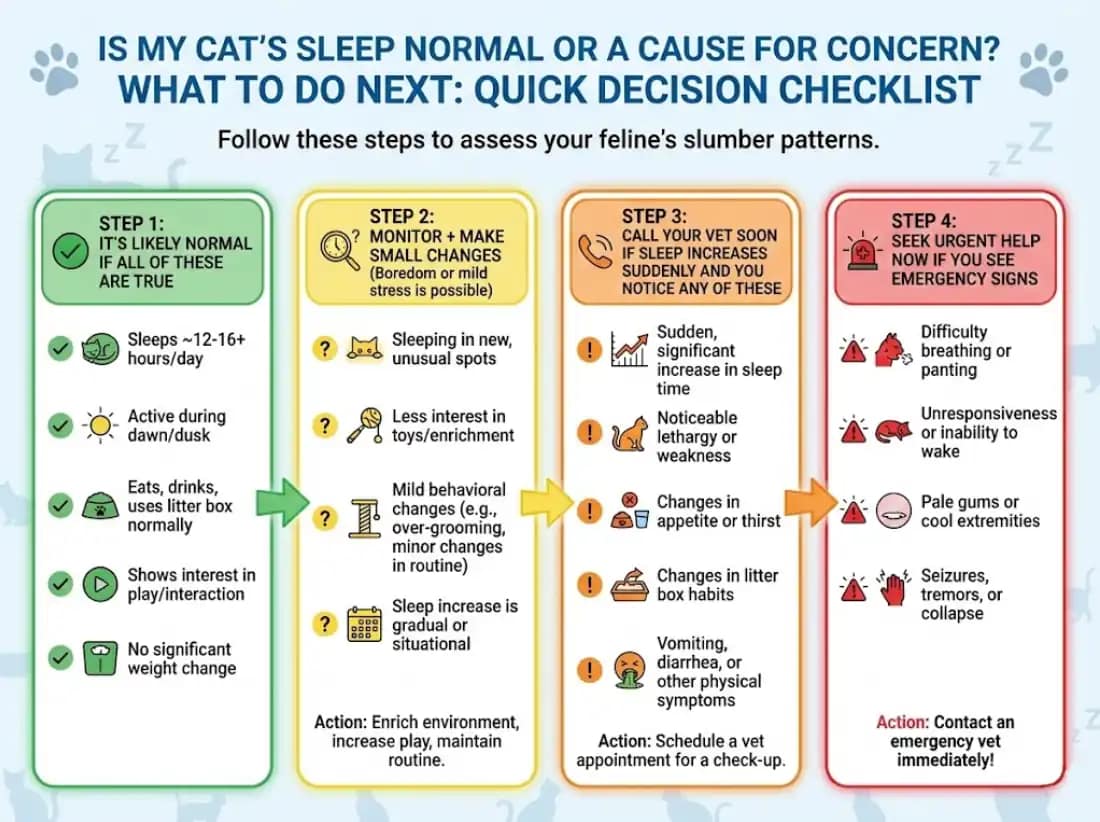
Cats do sleep a lot — so the real question is: has your cat’s sleep changed, and are there other symptoms? Use this quick checklist to decide what to do next.
What to Do Next: Quick Decision Checklist
Step 1: It’s likely normal if ALL of these are true
Your cat wakes up fairly easily and responds to food, treats, or a favorite toy
Appetite, drinking, and litter box habits are normal for them
They still have normal “awake moments” (curiosity, grooming, short play bursts)
This sleep pattern has been consistent for weeks/months (not a sudden shift)
Qué hacer: keep routines steady. If you want to reduce “boredom naps,” try Step 2.
Step 2: Monitor + make small changes (boredom or mild stress is possible)
Try these for 3–7 days, especially for indoor cats:
Add 2 short play sessions daily (5–10 minutes), ideally around dawn/dusk
Rotate toys (swap every few days so they feel “new”)
Provide a quiet nap zone + predictable routine
Reduce obvious stress triggers (loud changes, unfamiliar scents, disrupted feeding times)
If your cat becomes more engaged when awake, the extra sleep was likely boredom or routine-related.
Step 3: Call your vet soon if sleep increases suddenly AND you notice any of these
Eating less, refusing treats, or pérdida de peso
Hiding more than usual or seeming withdrawn
Vómitos o diarrea
Limping, stiffness, avoiding jumps, or signs of pain
Drinking/urination changes
Your cat seems unusually hard to wake, weak, or “not themselves”
Breathing changes (wheezing, labored breathing, persistent coughing)
Qué hacer: call your vet and share: when the sleep change started + any other changes you’ve noticed.
Step 4: Seek urgent help now if you see emergency signs
Open-mouth breathing, blue/gray gums, or severe breathing difficulty
Collapse, seizures, severe disorientation, or inability to stand
Repeated vomiting, severe dehydration, or extreme weakness
Straining to urinate / frequent attempts with little output (especially male cats)
Optional: 3-Day Sleep Log (very helpful if you call the vet)
For the next 72 hours, note:
Approximate sleep blocks (morning/afternoon/night)
Appetite (normal / reduced / not eating)
Litter box (normal / increased / decreased)
Energy while awake (normal / reduced)
Any new stressor (guests, move, new pet, loud noises)
Saber qué es "normal" para Su Gato
Every cat is different. Some are power-nappers; others are more active. The best baseline is your cat’s usual routine:
When are they typically awake and playful?
How often do they zoom around or ask for attention?
Do they have predictable “awake windows” each day?
If your cat has always been a heavy sleeper and everything else looks normal, it may simply be their personality. But if a cat who usually sleeps ~12 hours suddenly starts sleeping ~18 hours, that’s worth noting.
Aumentos (o disminuciones) repentinos del sueño
A sudden shift in how much or when your cat sleeps can be an early sign that something is going on.
Examples of changes to pay attention to:
A cat who used to greet you and play in the evening now sleeps through playtime
A cat who slept at night becomes restless overnight and sleeps more during the day
Sleeping in unusual places (hiding/isolating) when that’s not typical
If the change is sudden and you can’t explain it (like an unusually intense play day), it’s a good reason to monitor closely or call your vet.
Dificultad para despertarse o letargo al despertar
Even sleepy cats should have normal, alert moments when they’re awake. Consider it a concern if:
Your cat is hard to wakeo
When awake they seem “out of it,” weak, wobbly, or uninterested in normal motivators
Quick at-home check: try a normal cue (calling their name, a treat bag sound, a favorite toy). If they’d usually respond but now barely react, that’s a useful clue to record and share with your vet.
Otros síntomas presentes
Ask yourself: Is it just sleep — or sleep plus other changes?
Sleep changes are more concerning when paired with:
Appetite or weight changes
Drinking/urination changes
Reduced grooming, messy coat
Hiding, irritability, clinginess, or mood changes
Litter box accidents
Unusual breathing or loud/labored snoring
Nighttime yowling (especially in seniors)
If you see sleep change + one or more symptoms, it’s time to call your vet.
Comportamiento nocturno
If your cat suddenly becomes very wakeful or agitated at night (especially a senior), it can sometimes be linked to medical issues like pain, thyroid problems, high blood pressure, or cognitive decline. Don’t dismiss big sleep-wake changes as “just old age” without checking in with a vet.
Consulta al veterinario
When in doubt, contacting your vet is never a bad call—especially if the sleep change is significant or paired with other symptoms.
What helps most:
When the change started
Any appetite/litter box/behavior differences
Su 3-day sleep log (above)
Short videos if you can capture unusual behavior
Your vet may recommend an exam and possibly bloodwork to rule out issues like thyroid problems, diabetes, or organ dysfunction. Sometimes everything comes back normal (great!), and sometimes you catch a problem early—either way, you get clarity.
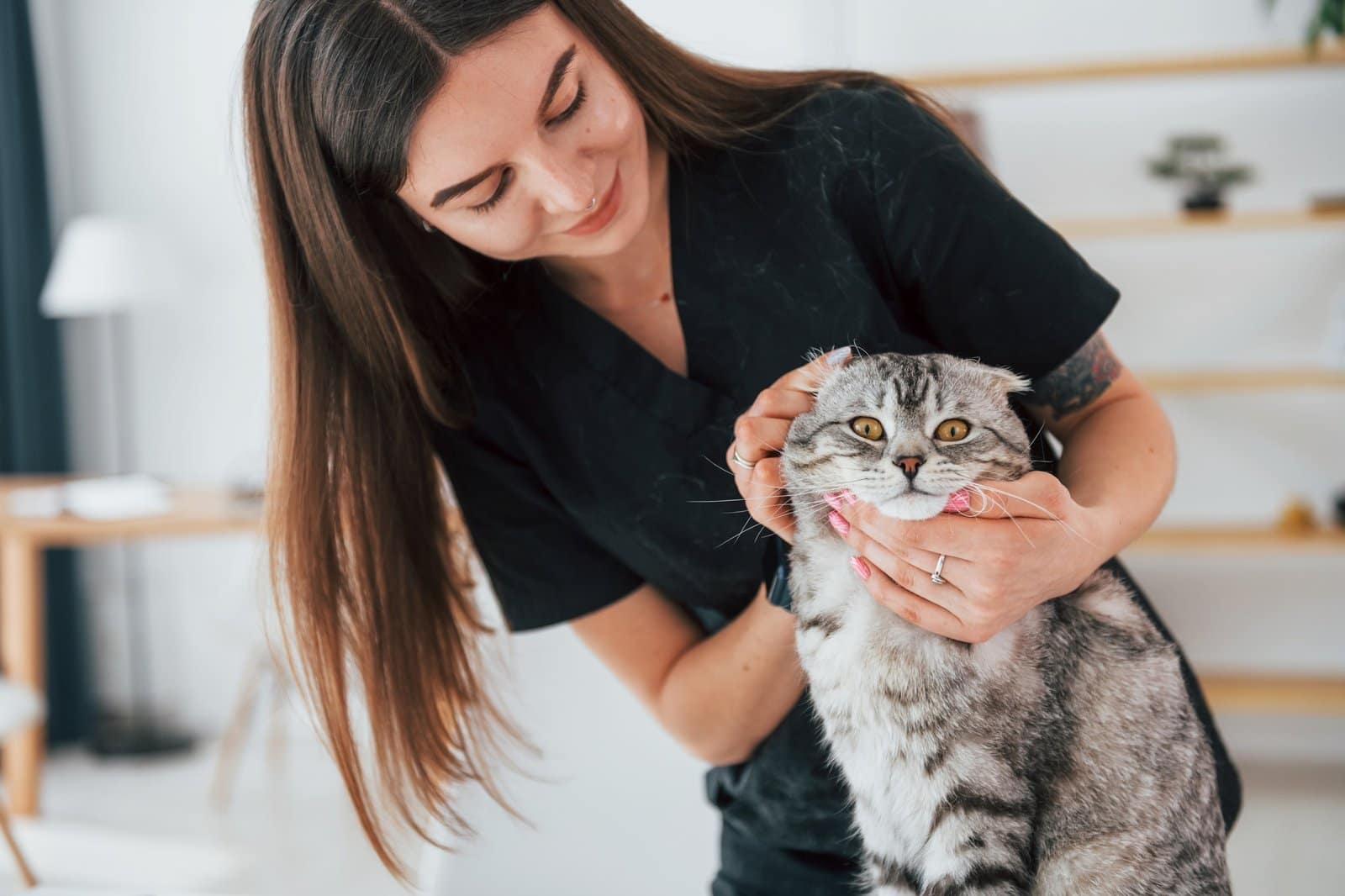
La ciencia del sueño de los gatos: ¿Por qué duermen tanto los gatos?
Los gatos están biológicamente predispuestos al descanso frecuente y profundo. A diferencia de los humanos, que son diurnos (están despiertos durante el día), los gatos son crepusculares. Esto significa que su actividad natural alcanza su punto álgido al amanecer y al anochecer, momentos en los que sus antepasados cazaban con mayor eficacia.
Sus patrones de sueño han evolucionado para soportar estas explosiones de actividad. Los gatos suelen alternar entre el sueño ligero (siesta) y el sueño profundo, conservando la energía para su próxima "caza", aunque ésta consista en perseguir un juguete de plumas en el salón.
Consejo: Si su gato parece más activo cuando usted se está acostando o cuando acaba de despertarse, no se trata de mal comportamiento, sino de la naturaleza. Programar el tiempo de juego durante estas horas puede adaptarse mejor a los instintos de tu gato, quemando energía y promoviendo un mejor sueño nocturno.
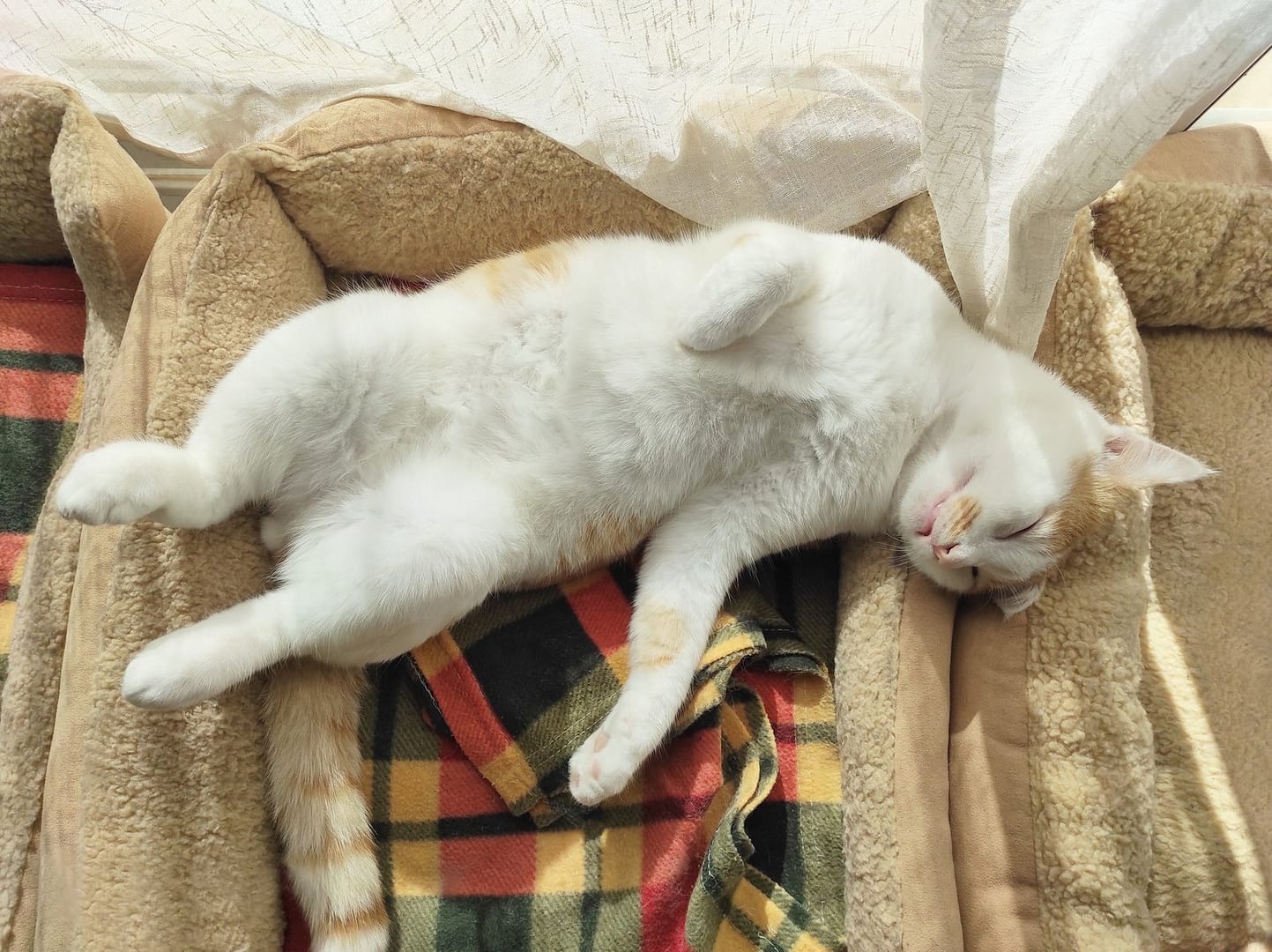
Cómo crear el entorno de sueño ideal para su gato
No importa si su gato duerme 12 o 20 horas al día, una cosa está muy clara: duerme mucho. tesoro un espacio seguro, cálido y propio. Por supuesto, los gatos pueden echarse la siesta en cualquier sitio (teclados, cajas de cartón, pilas de ropa limpia), pero cuando se crea intencionadamente un lugar de descanso solo para ellos, puede hacer maravillas para su bienestar general.
Un entorno de sueño cuidadosamente diseñado ayuda a su gato a conseguir un descanso más profundo y reparador. Puede aliviar el estrés, aliviar las articulaciones de edad avanzada e incluso reducir comportamientos no deseados desencadenados por la incomodidad o la falta de seguridad. A lo largo de los años, hemos visto innumerables veces cómo unos pequeños ajustes -como cambiar la cama a un rincón más tranquilo o añadir una percha acolchada en lo alto- transformaban el ritmo diario de un gato para mejor.
Algunos de los cambios más impactantes que puedes hacer incluyen:
- Providing warmth mediante ropa de cama suave y zonas de siesta iluminadas por el sol (especialmente apreciadas por las personas mayores).
- Offering enclosed, secure hideouts para intimidad y protección, sobre todo para gatos tímidos o ansiosos.
- Creating vertical options como camas altas o perchas para gatos que ansían altura y perspectiva.
- Using familiar scents (como la manta de tu gato o tu camiseta sin lavar) para hacer las camas más acogedoras.
- Positioning beds where your cat already sleepsen lugar de intentar "reubicar" sus hábitos naturales.
- Minimizing noise and traffic...dándoles zonas tranquilas a las que retirarse sin interrupciones.
- Supporting mobility, con lecho ortopédico o escalones para gatos que necesitan un acceso más fácil.
Por supuesto, cada gato tiene sus peculiaridades. Lo que para un felino es un refugio perfecto para dormir la siesta, para otro puede ser una caja de cartón. Pero no se rinda: siga observando y adaptándose. Cuando su gato se sienta seguro, abrigado y en control de su espacio, dormirá de forma natural más sano y satisfecho.
¿Quiere un desglose completo de consejos paso a paso, consideraciones sobre gatos mayores y ejemplos reales de nuestro equipo?
👉Lee la guía completa: Cómo crear el entorno de sueño ideal para su gato
Su gato se merece un lugar para la siesta que diga, "Estás a salvo. Estás en casa. Y sí, esta almohada soleada es toda tuya". A veces, el mejor cuidado empieza simplemente por darles la comodidad necesaria para que descansen bien.
Real-Life Insights: What Your Cat’s Sleep Can Tell You
Over the years—through hands-on experience with my own cats and guidance from veterinarians and feline behaviorists—I’ve learned that cat sleep habits are one of the clearest clues to a cat’s health and emotional wellbeing. The most important takeaway: consistency matters. When your cat’s normal sleep routine changes, it’s worth paying attention.
For example, one of my cats suddenly stopped napping in her usual sunny window spot and started sleeping longer hours in a closet. That shift wasn’t “just mood”—she was quietly dealing with a mild illness. After a vet visit and treatment, she returned to her normal routine. It reminded me of something many professionals repeat: usted es quien mejor conoce a su gato, and if their sleep patterns change and something feels off, it’s smart to seek advice early.
A “Lazy” Cat Is Often a Happy Cat (But Watch for Changes)
Feline behaviorists often point out that a cat who sleeps a lot is frequently a gato contento. Many cats nap long hours simply because they feel safe at home and are following their natural rhythm. As veterinarian Dr. Jennifer Coates, DVM has noted, if a cat has always slept a lot and seems otherwise healthy, it may simply be normal for them.
Cats also have wildly different personalities—some are naturally energetic, while others are true “professional nappers.” Comparing cats is like comparing people: there’s a wide range of what’s normal.
When Extra Sleep Comes From Boredom
That said, not all extra sleep is natural rest—sometimes it’s aburrimiento. I’ve seen how adding structured activity can reduce “nothing-to-do naps” and improve a cat’s mood. A friend once worried her indoor cat was sleeping too much, so she introduced:
short daily play sessions (5–10 minutes)
puzzle feeders or food-hunt games
simple clicker training in the evening
The result was a big improvement: her cat still slept plenty (as cats should), but became more engaged and less prone to marathon snoozes from understimulation.
The Goal: Healthy Rest + Healthy Stimulation
This matches what many veterinarians recommend: cats thrive on a balance of sleep and enrichment. Plenty of rest is normal, but mental and physical stimulation during waking hours supports a healthier weight, better behavior, and a happier, more confident cat.
Reader tip: If your cat’s sleep increases y you notice appetite, energy, grooming, litter box, or social changes, it’s time to call your vet. If sleep increases but everything else is normal, try adding enrichment first and monitor for a week.
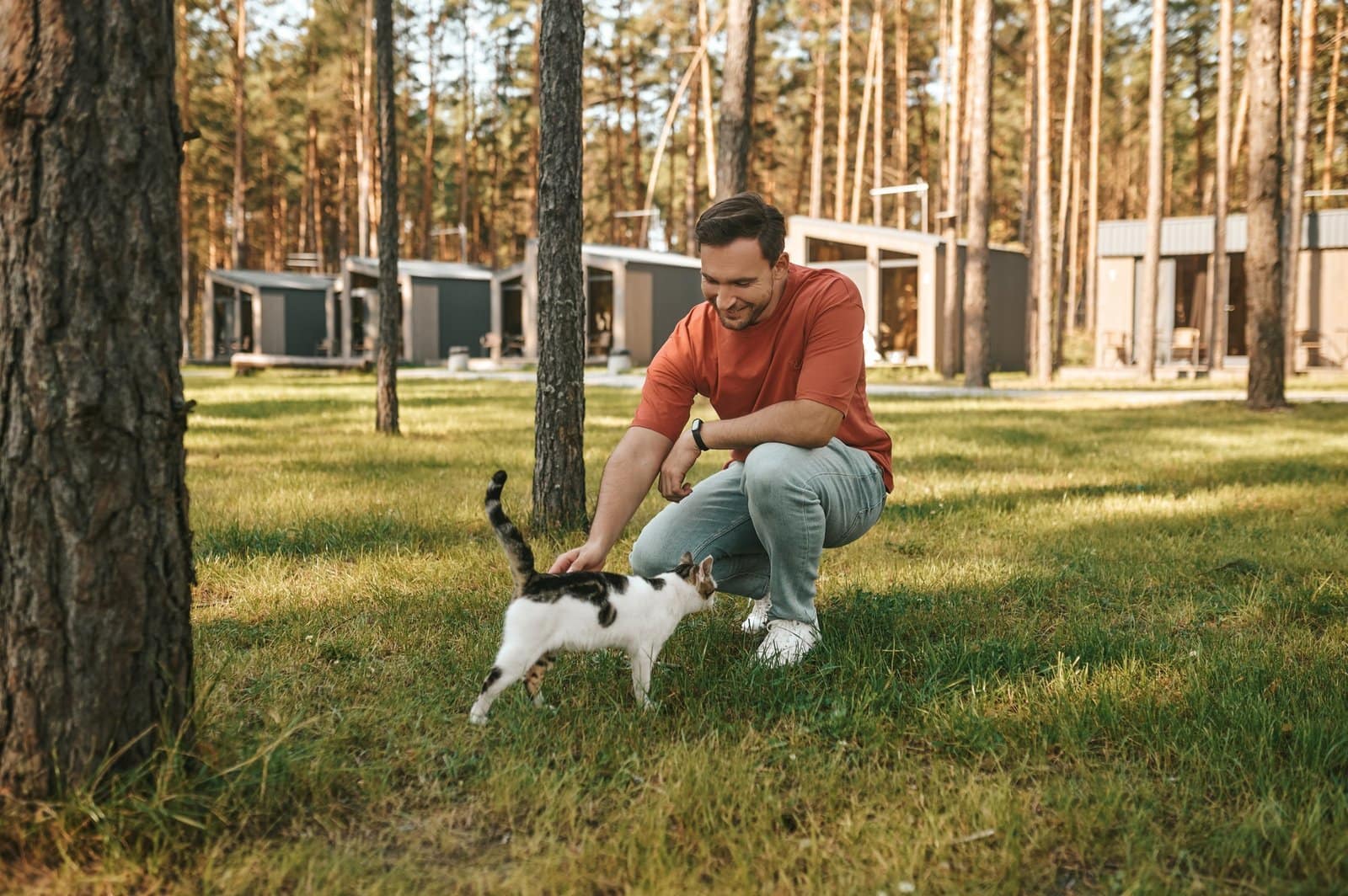
Conclusión
Cats sleep so much for smart, natural reasons—evolution, energy conservation, and a crepuscular body clock that favors activity at dawn and dusk. For most cats, long naps are completely normal and often a sign they feel safe, comfortable, and secure at home. Your role as a cat parent is simple but powerful: support quality rest, provide daily play and enrichment, and watch for sudden changes in sleep that could point to stress, pain, or illness.
The next time you see your cat curled up in a sunbeam or sprawled out in a hilarious sleeping pose, take it as a reminder: sleeping isn’t “lazy”—it’s part of how cats stay healthy. Enjoy those quiet moments… and if anything feels off (like extreme lethargy, appetite changes, hiding, or unusual behavior), trust your instincts and check in with your veterinarian.
Nos encantaría que nos contaras cuál es el lugar favorito de tu gato para dormir o el momento más mono de la siesta. Únete a nuestra comunidad y comparte tus mascotas o da consejos sobre su cuidado para ayudar a los demás..
PREGUNTAS FRECUENTES
¿Cuántas horas al día duermen los gatos?
Los gatos adultos suelen dormir entre 12 y 16 horas al día, pero pueden llegar a dormir hasta 20 horas dependiendo de la edad, la salud y el entorno. Los gatitos y los gatos mayores suelen ser los que más duermen.
¿Por qué de repente mi gato duerme más de lo normal?
Un aumento repentino del sueño podría indicar aburrimiento, estrés, dolor o problemas médicos como enfermedad tiroidea, diabetes o artritis. Vigila si se producen otros cambios y consulta a un veterinario si estás preocupado.
¿Es normal que los gatos duerman durante el día y estén activos por la noche?
Sí, los gatos son crepusculares: son más activos al amanecer y al atardecer. Muchos duermen durante el día y se vuelven juguetones por la mañana temprano o al atardecer.
¿Sueñan los gatos? ¿Por qué se sacuden mientras duermen?
Sí, los gatos entran en la fase REM del sueño, en la que se producen los sueños. Las sacudidas de bigotes, patas o cola durante el sueño son habituales y suelen significar que están soñando o reaccionando en su fase de sueño ligero.
¿Cómo puedo asegurarme de que mi gato duerme bien?
Proporciónele un entorno cálido, tranquilo y seguro para dormir. Asegúrese de que tengan estimulación mental cuando estén despiertos y observe cualquier cambio repentino en el patrón de sueño que pueda indicar problemas de salud subyacentes.
Referencias
Zittritsch, N. (2023, 17 de marzo). ¿Por qué duermen tanto los gatos? PetMD. Obtenido de https://www.petmd.com/cat/behavior/why-do-cats-sleep-so-much.
Overall, K. L. (2013). Manual de medicina conductual clínica para perros y gatos. Elsevier Health Sciences.
Stella, J., Croney, C., y Buffington, T. (2014). Factores ambientales que afectan al sueño y la actividad de los gatos. Revista de Medicina y Cirugía Felina, 16(3), 209-219.
Becker, M. (2012). Su gato: Nuevos y sencillos secretos para una vida más larga y fuerte. Grand Central Publishing.
Ellis, S. L. H., Rodan, I., Carney, H. C., Heath, S., Rochlitz, I., Shearburn, L. D., Sundahl, E., & Westropp, J. L. (2013). Directrices de la AAFP y la ISFM sobre las necesidades medioambientales de los felinos. Revista de Medicina y Cirugía Felina, 15(3), 219-230.
Landsberg, G. M., Hunthausen, W., & Ackerman, L. (2012). Problemas de comportamiento del perro y el gato (3ª ed.). Saunders Elsevier.
Buffington, C. A. T. (2002). Influencias externas e internas en el riesgo de enfermedad en gatos. Revista de la Asociación Americana de Medicina Veterinaria, 220(7), 994-1002.
ArkPet. (2024). Cómo crear el entorno ideal para que duerma su gato. Blog de ArkPet. Obtenido de https://thearkpet.com/blogs/all-you-want-to-know-of-cat/creating-the-ideal-sleeping-environment-for-your-cat









 EN
EN DE
DE ES
ES PT
PT