
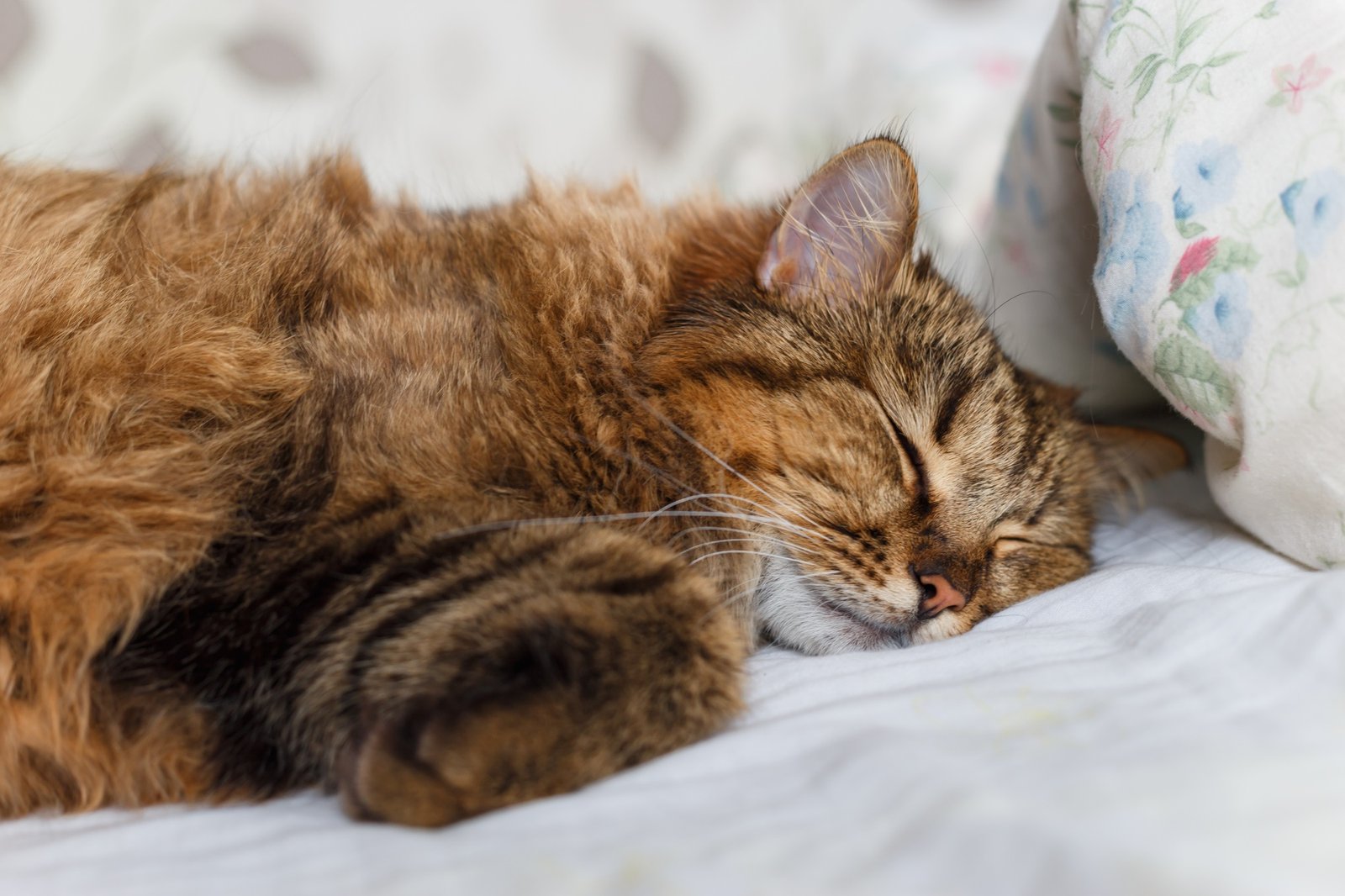
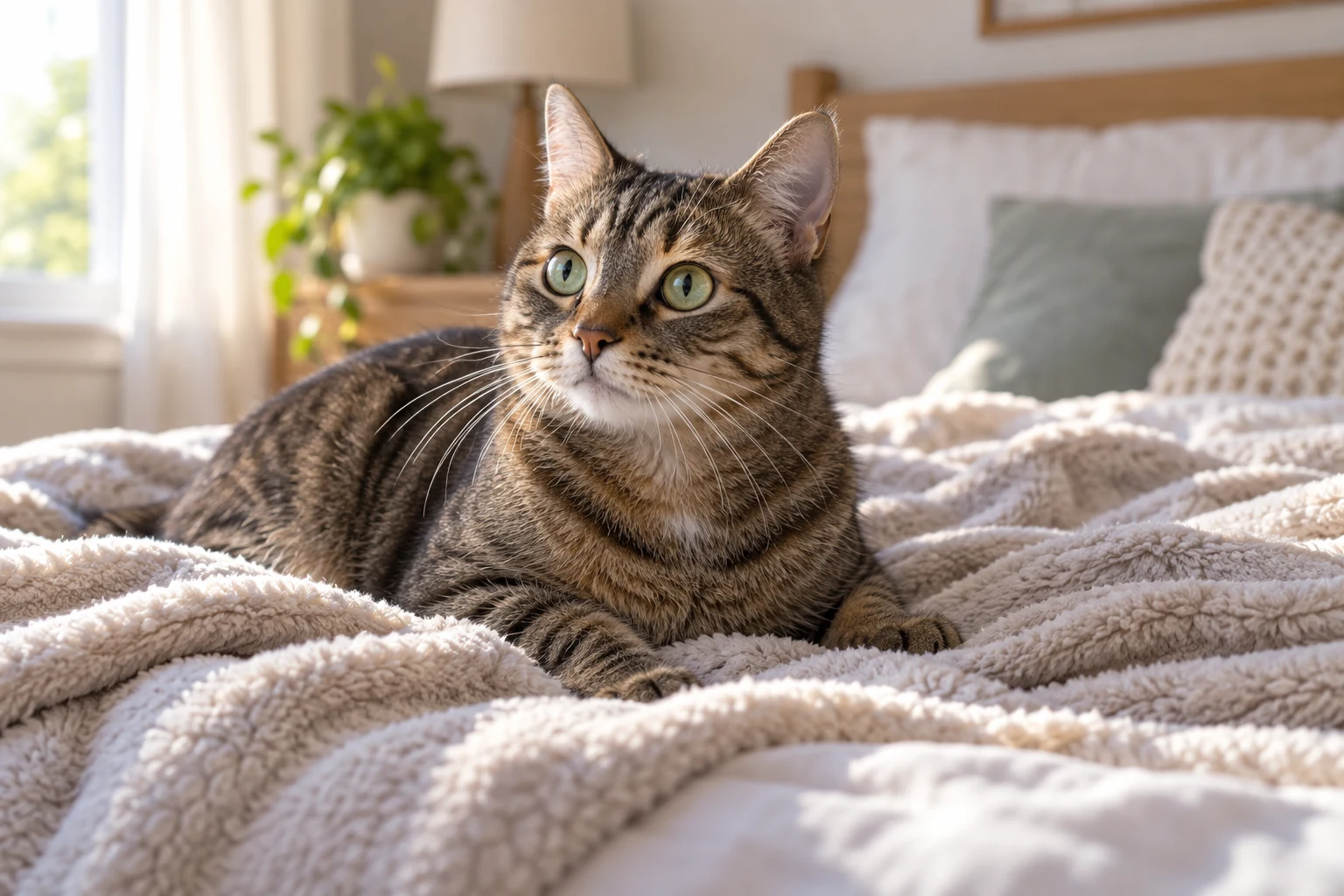
Most healthy adult cats sleep about 12-16 hours a day, while kittens and senior cats often sleep longer. The number matters less than the pattern: a cat who wakes up bright, eats, grooms, plays, and uses the litter box normally is usually resting. A cat who is hard to rouse, weak, ocultar, not eating, or suddenly sleeping much more may be lethargic and should be checked by a veterinarian.
Cats are built for many short naps, not one long human-style sleep block. This guide helps you compare normal sleep by edad, understand why cats nap so much, and decide when extra sleep is just rest versus a possible health warning.
Índice
- How many hours do cats sleep by age?
- Why do cats sleep so much?
- What counts as normal cat sleep?
- When is cat sleep too much?
- Why is my cat awake at night?
- What changes should I track before calling a vet?
- How can I support healthier sleep for my cat?
- Conclusión
- Preguntas frecuentes
- Referencias
How many hours do cats sleep by age?
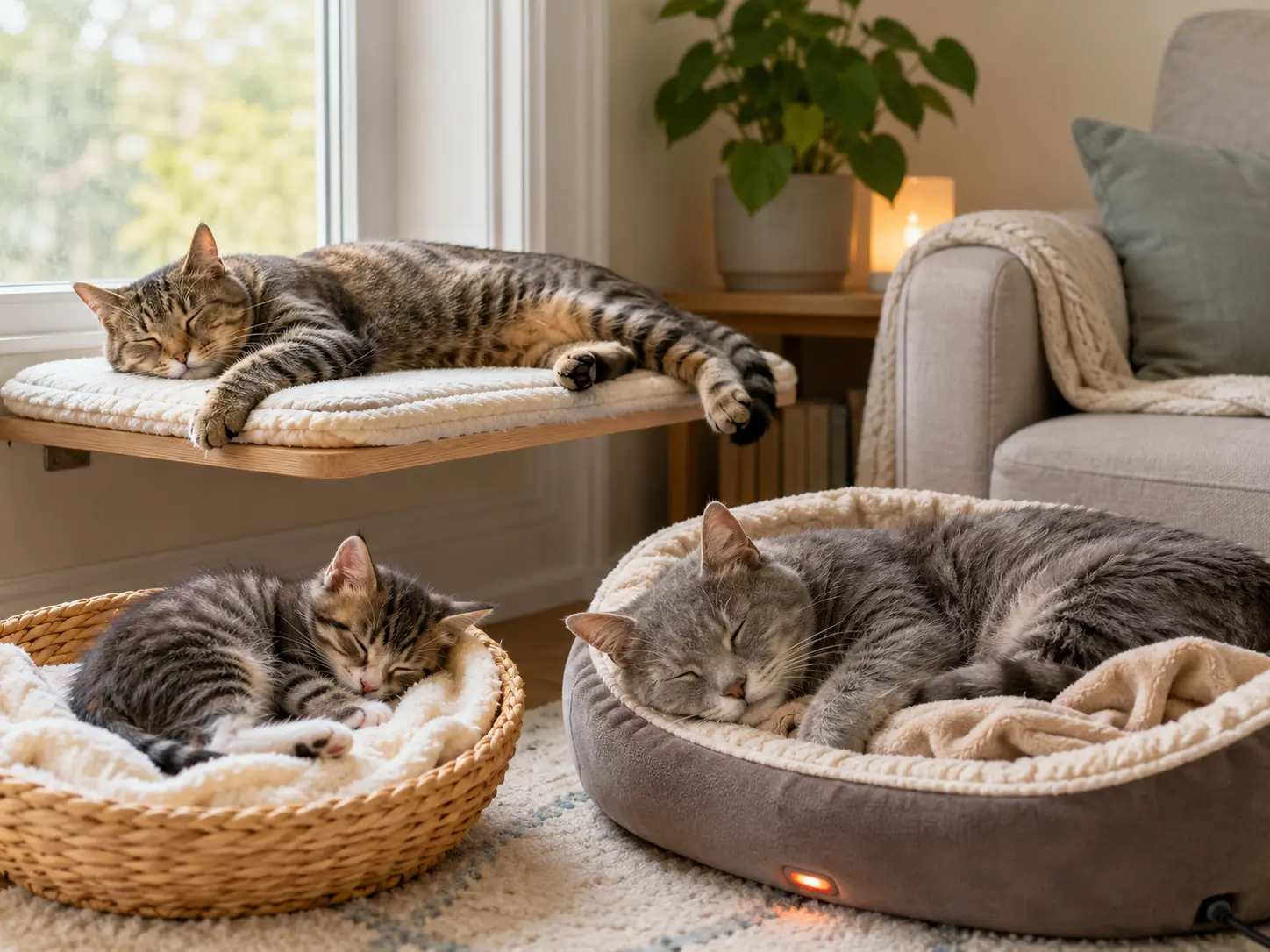
Most cats sleep somewhere between 12 and 16 hours per day, but age changes the range. Kittens often sleep the most because they are growing, adults usually nap in many shorter sessions, and senior cats may rest longer as activity, muscle, and health needs change.
Use this as a practical reference, not a diagnosis:
| Cat’s life stage | Common sleep range | Usually normal when | More concerning when |
|---|---|---|---|
| Young kitten | 18-22 hours | Wakes to nurse or come, gains peso, plays in bursts | Weak, cold, not nursing, crying constantly, diarrhea |
| Older kitten | 16-20 hours | Has energetic play bursts and steady appetite | Suddenly quiet, not eating, hiding, vomiting |
| Adult cat | 12-16 hours | Alert when awake, normal grooming and litter box habits | Hard to wake, withdrawn, appetite or mobility changes |
| Senior cat | 16-20 hours | Gradual increase, still social and eating | Sudden increase, confusion, pain, weight loss, poor grooming |
If you are not sure which life stage fits your cat, use the SnuggleSouls Calculadora de la edad de los gatos as a quick context check. Age does not explain everything, but it gives you a better starting point than comparing every cat to the same number.
Why do cats sleep so much?
Cats sleep so much because they are natural energy conservers. Their bodies are built around short bursts of hunting-style activity followed by rest, grooming, observation, and more rest.
Many cat naps are light sleep. Your cat may look deeply asleep but still twitch an ear, respond to sound, or wake quickly when something interesting happens. Cats also have deeper sleep periods, including REM sleep, when you may notice paw twitches, whisker movement, or tiny facial movements.
This is why a cat can seem to be “asleep all day” while still having a normal pattern. The better question is not only “how many hours?” It is “what does my cat do when awake?”
Healthy rest usually comes with:
- Normal appetite and drinking
- Normal litter box habits
- Usual grooming
- Interest in play, food, windows, people, or routines
- Comfortable movement and jumping
- A fairly stable sleep pattern over time
The Ohio State University Indoor Pet Initiative describes sleeping and resting places as a normal part of indoor cat needs, including the importance of safe, comfortable spaces 1.
What counts as normal cat sleep?
Normal cat sleep is predictable for your cat. Some cats are quiet all afternoon and lively at dusk. Some sleep deeply in the morning, patrol the house in the evening, and curl up again overnight.
A normal sleeper should still be responsive when awake. They may stretch, groom, eat, use the litter box, seek attention, watch birds, play briefly, or move to a favorite sunny spot.
Here is the useful distinction:
| Patrón | Usually normal sleep | Possible lethargy or illness |
|---|---|---|
| Despertar | Wakes and responds normally | Hard to rouse or seems dull |
| Appetite | Eats normally | Eats less, refuses food, or drinks much more |
| Movimiento | Walks, jumps, and stretches as usual | Limping, stiffness, hiding, or reluctance to jump |
| Grooming | Coat looks typical | Greasy coat, mats, or less grooming |
| Mood | Usual social pattern | Withdrawn, irritable, confused, or unusually clingy |
| Caja de arena | Orina y heces normales | Accidents, straining, diarrhea, constipation |
If your cat sleeps a lot but wakes up bright and acts normal, the sleep itself may not be a problem. If sleep comes with a broader behavior change, treat it as information.
When is cat sleep too much?
Cat sleep is more concerning when the change is sudden, extreme, or paired with other signs. More sleep plus weakness, hiding, appetite change, poor grooming, vomiting, diarrhea, breathing trouble, or litter box changes is not just “being lazy.”
VCA notes that cats often hide signs of illness, and subtle changes such as sleeping more, playing less, or restlessness can be early clues 2. Merck also lists illness or disease as a possible cause of behavioral signs such as lethargy, listlessness, withdrawal, decreased grooming, and appetite changes 3.
Call your veterinarian promptly if your cat is sleeping more and also has:
- Not eating or a major appetite change
- Weight loss or sudden weight gain
- Hiding more than usual
- Vomiting, diarrhea, constipation, or straining
- Drinking or urinating more than usual
- Limping, stiffness, or trouble jumping
- Poor grooming or a suddenly messy coat
- Breathing trouble, collapse, seizures, or extreme weakness
- Pain signs, aggression when touched, or unusual vocalizing
If your cat is sleeping more and hiding, compare the pattern with SnuggleSouls’ guide on por qué se esconden los gatos. If the change includes meowing, yowling, or restless vocalizing, the guide on cambios repentinos en la voz can help you organize clues before calling your vet.
Also remember that purring is not proof that everything is fine. Some cats purr when stressed or uncomfortable, so this guide on why purring does not always mean a cat feels fine can help you read the whole picture.
Why is my cat awake at night?
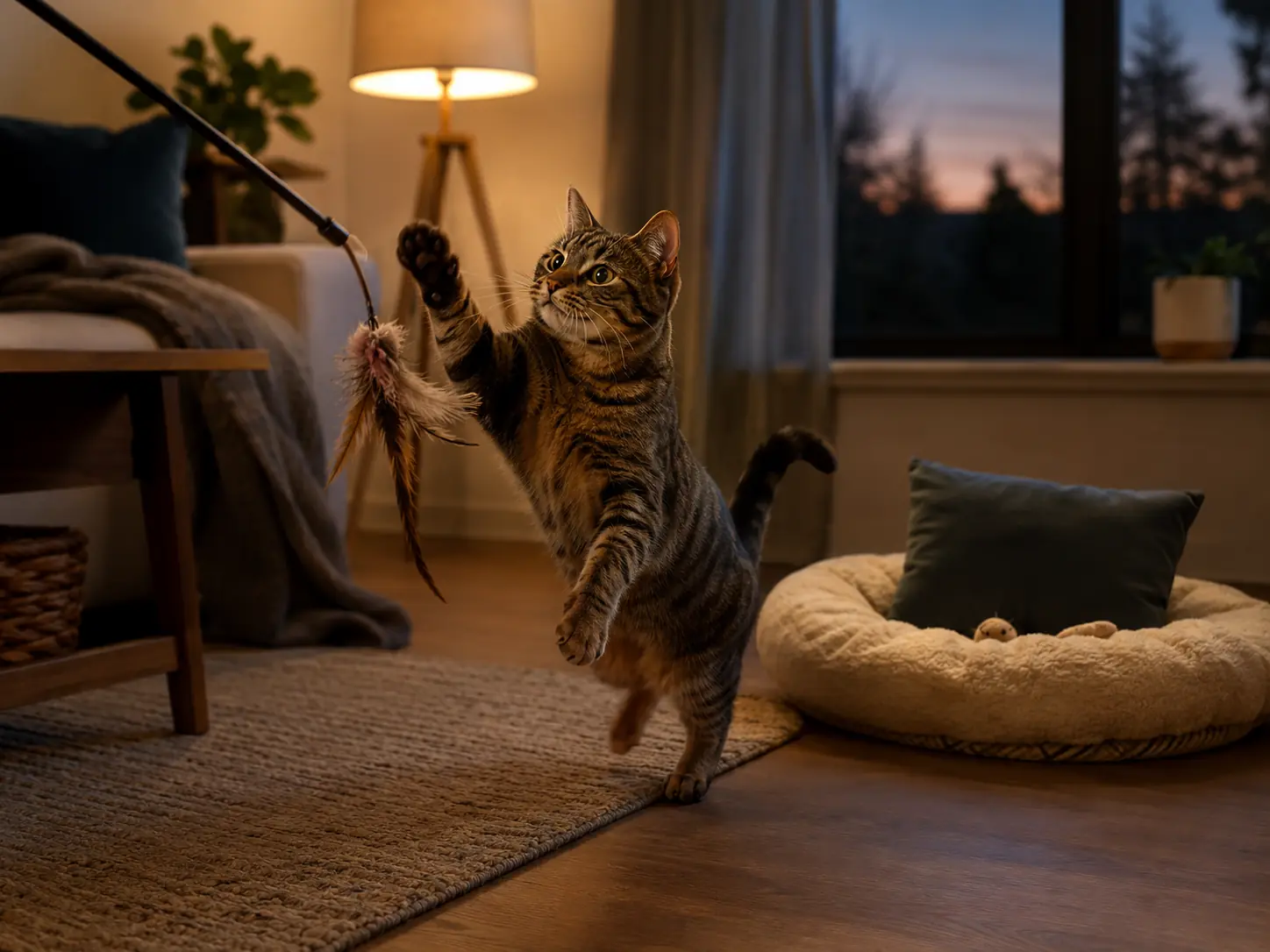
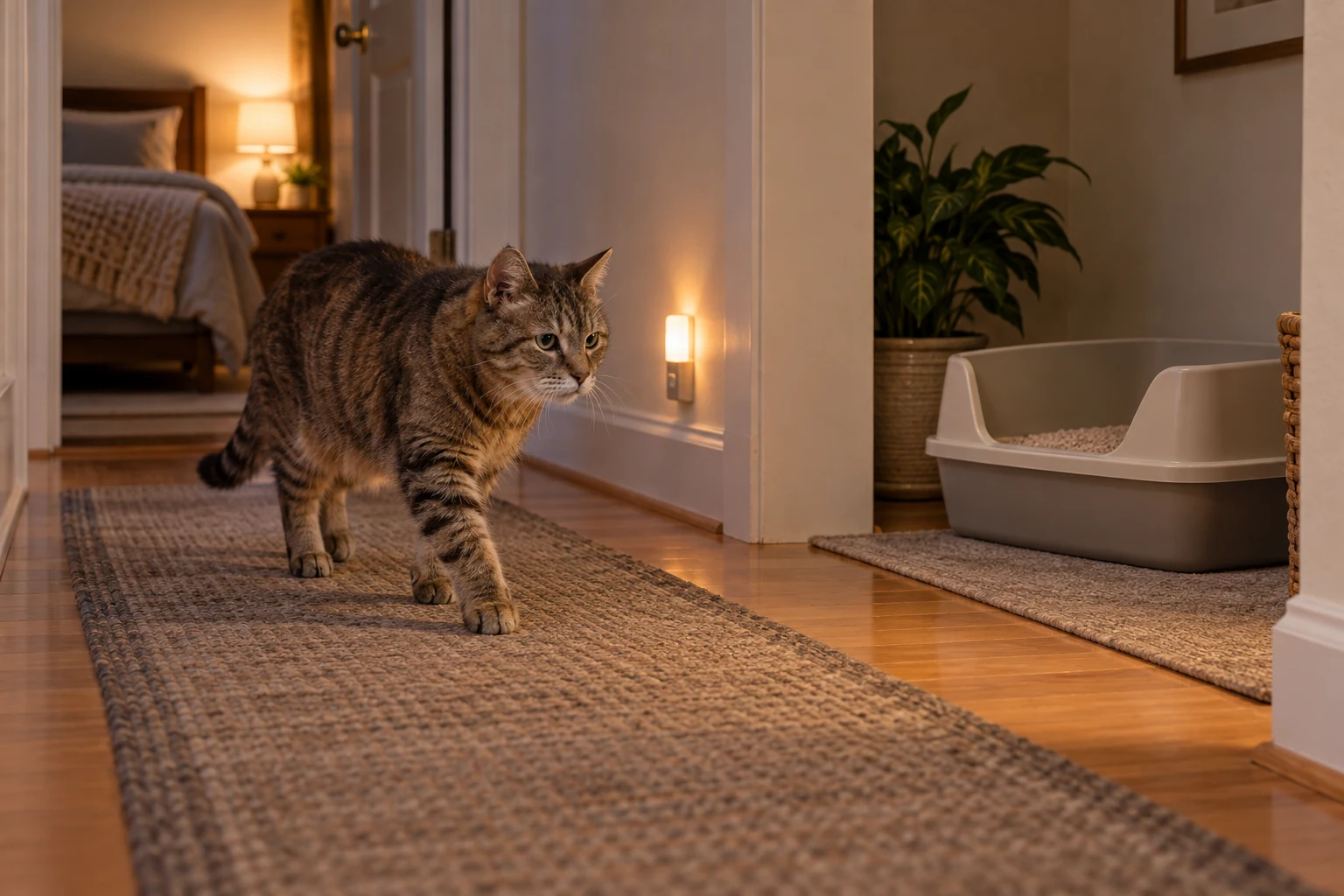
Cats are often most active around dawn and dusk, so evening energy and early-morning movement are common. A cat who wakes you at 3 a.m. is not necessarily abnormal, but the pattern can become stronger if daytime boredom, late meals, or attention rewards teach the cat that nighttime activity works.
Merck notes that normal cat behaviors can become household problems when they are excessive, disruptive, or difficult for the owner to manage 4. Nighttime activity often improves when the cat gets predictable outlets before bedtime.
Try this evening rhythm:
| Paso | Qué hacer | Por qué es útil |
|---|---|---|
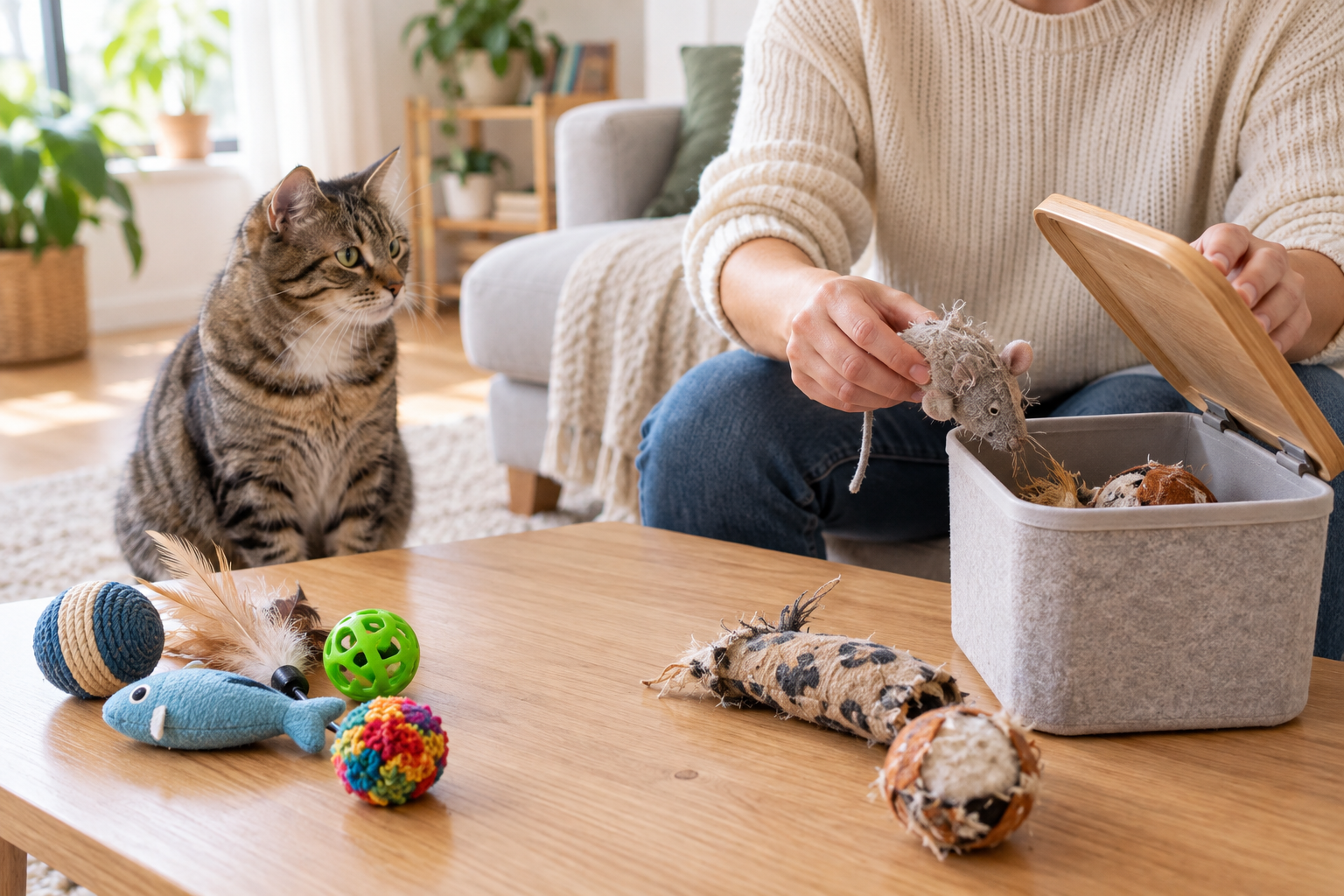
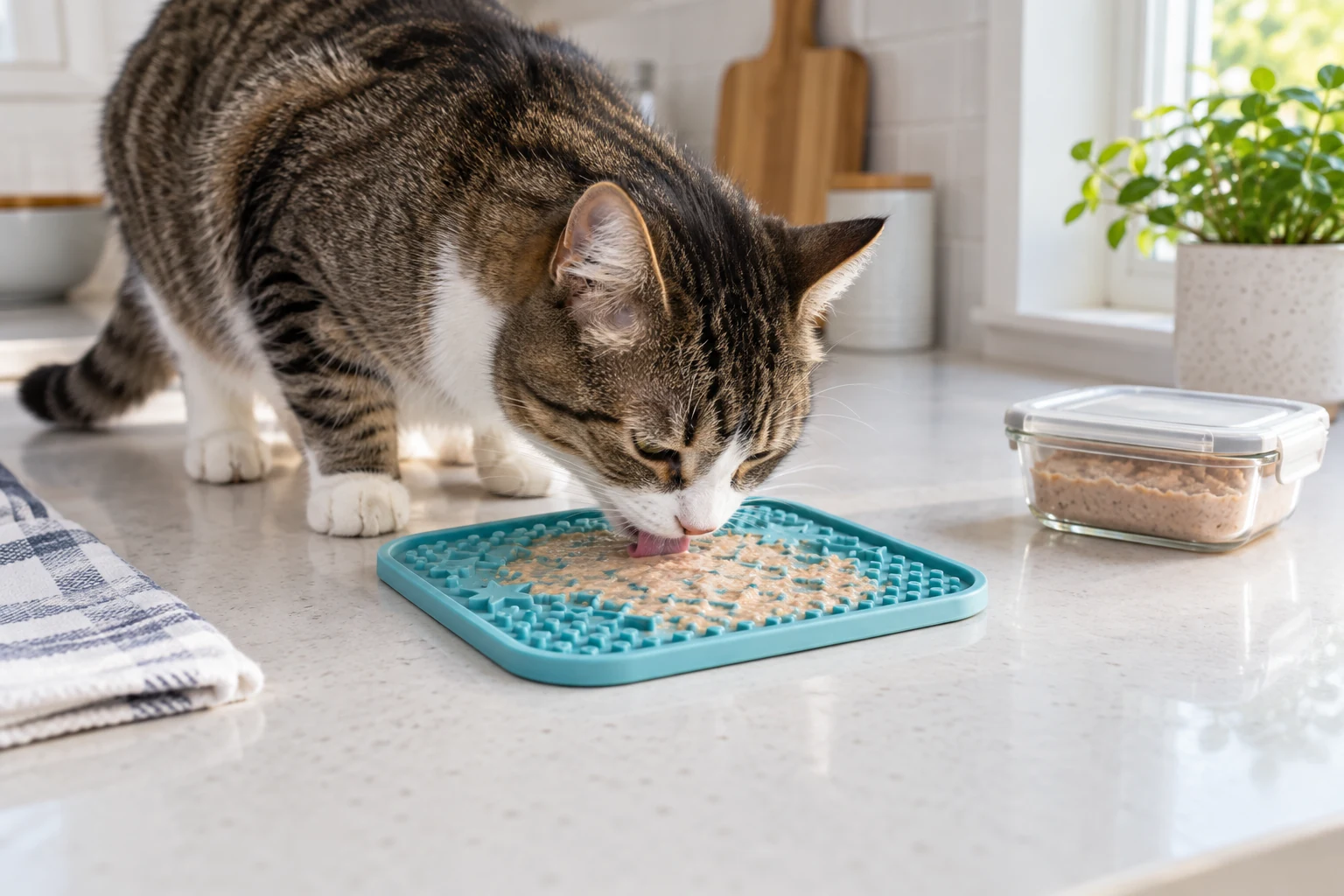
| Jugar | Use a wand toy, chase game, or food puzzle before bed. | Gives a safe outlet for hunting energy. |
| Feed | Offer the final measured meal or snack after play. | Matches the hunt-eat-rest pattern. |
| Settle | Keep the sleeping area comfortable and predictable. | Encourages rest instead of attention-seeking. |
| Avoid rewards | Do not feed or play every time your cat wakes you. | Prevents training the 3 a.m. routine. |
If your cat’s nighttime behavior includes frantic pacing, confusion, distress, pain, or sudden vocal changes, treat it differently. That is not just a sleep schedule issue.
For more body-language clues during play, SnuggleSouls’ guide on ¿Por qué los gatos se retuercen antes de abalanzarse? can help you tell playful energy from tension.
What changes should I track before calling a vet?
Track the pattern, not just the number of hours. A veterinarian can help faster when you can describe what changed, when it started, and what else is different.
Write down:
- Approximate sleep hours before and after the change
- Whether the change was sudden or gradual
- Appetite, thirst, and litter box changes
- Hiding, vocalizing, aggression, or clinginess
- Cambios en el aseo personal
- Weight or body-shape changes
- Mobility: jumping, stairs, stiffness, limping
- Any new stress: move, new pet, new food, weather, visitors
If weight or body condition is part of the concern, use SnuggleSouls’ body condition and muscle condition guide to describe what you see more clearly. If the change includes tail position, twitching, or body tension, the lenguaje del rabo de gato guide may help you describe behavior without guessing.
The 2021 AAHA/AAFP feline life stage guidelines emphasize that care should be adjusted to the cat’s life stage, environment, behavior, and health risks 5. That is why a sleepy kitten, adult, and senior cat should not be judged the same way.
How can I support healthier sleep for my cat?
Support healthy sleep by giving your cat safe resting places, predictable routines, and enough activity when awake. You do not need to force a cat to sleep less; you need to make sure rest is balanced with normal eating, grooming, movement, and enrichment.
Helpful habits include:
- Offer several quiet sleep spots, including warm and elevated options.
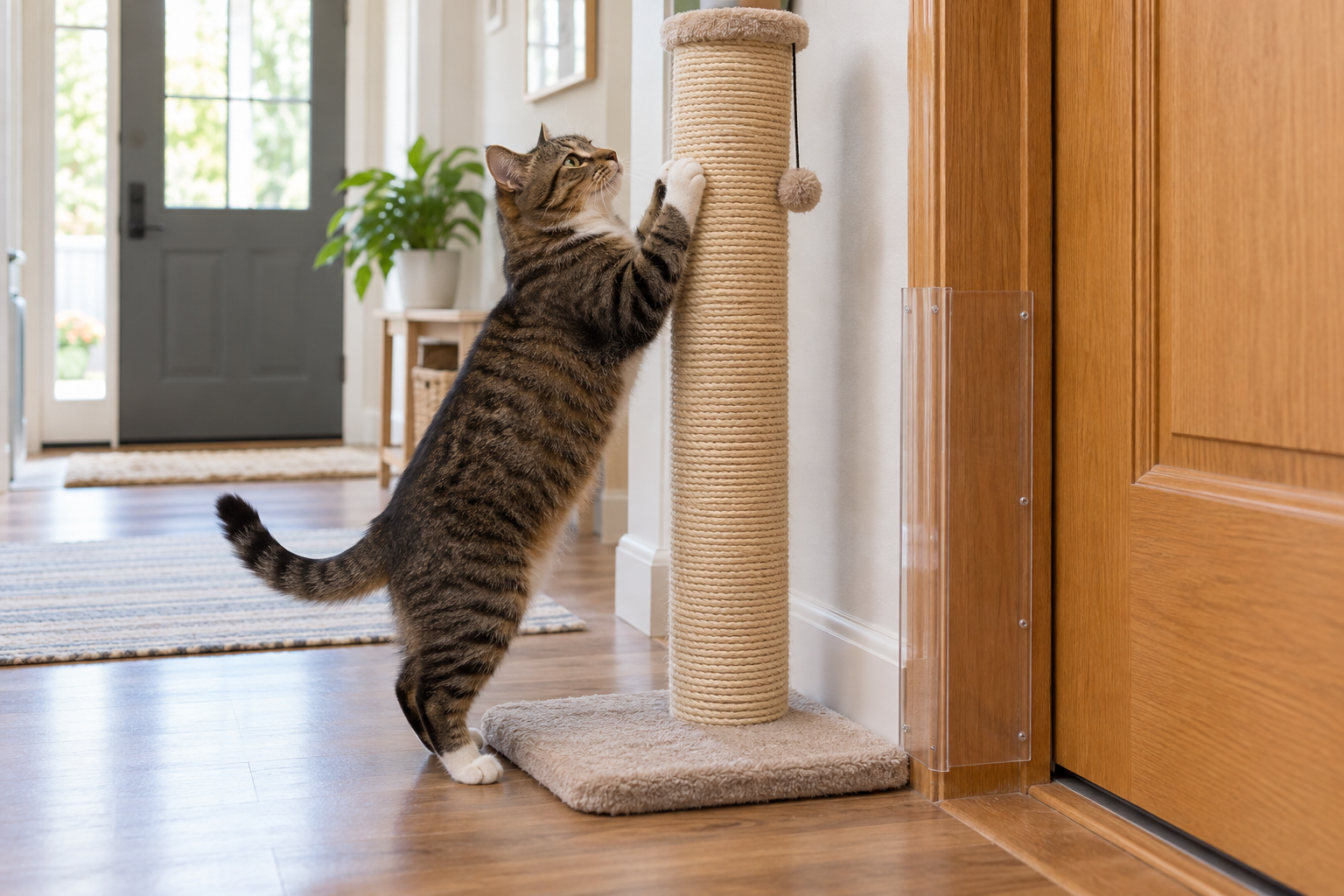
- Keep food, water, litter, scratching, and resting areas predictable.
- Use short play sessions, especially morning and evening.
- Feed measured meals instead of unlimited boredom grazing when weight is a concern.
- Give older cats low beds, ramps, or steps if jumping is harder.
- Keep vet wellness checks current, especially for senior cats.
- Watch for sudden changes instead of obsessing over one daily number.
If your cat sleeps more because life is boring, enrichment can help. If your cat sleeps more because movement hurts, appetite changed, or illness is developing, enrichment is not enough. That is the line to respect.
Conclusión
Cats sleep a lot, and most of the time that is normal. Kittens and senior cats may sleep close to 20 hours, while many healthy adults sleep around 12-16 hours in short naps across the day.
The real warning sign is not a sleepy cat. It is a changed cat. If your cat’s sleep suddenly increases or comes with hiding, poor appetite, weight change, vomiting, diarrhea, poor grooming, pain, weakness, or litter box changes, call your veterinarian.
Preguntas frecuentes
¿Cuántas horas al día duermen los gatos?
Many healthy adult cats sleep about 12-16 hours a day. Kittens and senior cats often sleep longer. The normal range depends on age, health, activity, and routine.
Is it normal for cats to sleep 20 hours a day?
It can be normal for young kittens, some senior cats, or a cat recovering from a busy day. For a healthy adult cat, 20 hours is on the high side. If it is new or paired with other changes, call your veterinarian.
¿Por qué de repente mi gato duerme más de lo normal?
Sudden extra sleep can come from stress, boredom, pain, fever, digestive problems, or many other health issues. Watch appetite, litter box habits, grooming, movement, and hiding. Call your vet if the change lasts or comes with symptoms.
Do cats sleep more as they get older?
Many senior cats rest more, but a sudden increase should not be dismissed as age alone. Older cats can also develop pain, arthritis, kidney disease, thyroid disease, dental disease, or other problems that change activity and sleep.
Are cats nocturnal?
Cats are not strictly nocturnal. Many are crepuscular, meaning they are naturally more active around dawn and dusk. Nighttime activity can also become a learned routine if a cat gets food, play, or attention every time they wake the household.
Should I wake my cat if they sleep all day?
Usually no, unless you need to check whether they are responsive or you are worried about illness. A healthy sleeping cat should wake normally and act like themselves. A cat who is hard to rouse, weak, or not eating needs veterinary advice.
Referencias
[1] Ohio State University Indoor Pet Initiative. Sleeping Habits. https://indoorpet.osu.edu/cats/basicneeds/sleeping
[2] Hospitales veterinarios VCA. Recognizing the Signs of Illness in Cats. https://vcahospitals.com/know-your-pet/recognizing-signs-of-illness-in-cats
[3] Manual Veterinario de Merck. Causas médicas de los signos conductuales. https://www.merckvetmanual.com/multimedia/table/medical-causes-of-behavioral-signs
[4] Merck Veterinary Manual. Problemas de comportamiento en los gatos. https://www.merckvetmanual.com/behavior/behavior-of-cats/behavior-problems-of-cats
[5] AAHA and AAFP. 2021 AAHA/AAFP Feline Life Stage Guidelines. https://www.aaha.org/resources/2021-aaha-aafp-feline-life-stage-guidelines/
 EN
EN DE
DE ES
ES PT
PT