

Ja, die meisten gesunden Katzen können essen Eine kleine Menge naturbelassener, vollständig gegarter Lachs als gelegentliche Belohnung. Er sollte grätenfrei und ungewürzt sein und ohne Öl, Butter, Salz, Knoblauch, Zwiebeln, Zitrone, Soßen oder Gewürze serviert werden. Lachs sollte kein vollwertiges und ausgewogenes Katzenfutter ersetzen, und roher, geräucherter, in Salz oder Öl eingelegter oder gewürzter Lachs ist keine sichere Wahl.
Die sicherste Herangehensweise an Lachs ist ganz einfach: Behandeln Sie ihn als kleine Zugabe und nicht als Hauptmahlzeit. Katzen benötigen eine vollständige und ausgewogene Ernährung, die ihrem Lebensabschnitt entspricht, und Leckerlis sollten nur in Maßen gegeben werden, damit sie keine wichtigen Nährstoffe verdrängen. 1, 2.
Inhaltsübersicht
- Können Katzen bedenkenlos Lachs fressen?
- Welche Lachsart ist für Katzen am sichersten?
- Welchen Lachs sollten Katzen meiden?
- Wie viel Lachs darf ich meiner Katze geben?
- Wann sollte man auf Lachs verzichten?
- Was soll ich tun, wenn meine Katze verdorbenen Lachs gefressen hat?
- Ist Katzenfutter mit Lachs dasselbe wie Lachs als Futter zu geben?
- Häufig gestellte Fragen
- Referenzen
Können Katzen bedenkenlos Lachs fressen?
Katzen können Lachs bedenkenlos fressen, wenn er naturbelassen, gekocht, grätenfrei und frisch ist und in sehr kleinen Mengen gefüttert wird. Das Risiko steigt, wenn der Lachs roh, geräuchert, salzig, fettig, gewürzt, verdorben ist oder zu häufig gefüttert wird.
Lachs ist ein tierisches Eiweiß, weshalb viele Katzen ihn als Leckerbissen empfinden. Das bedeutet jedoch nicht, dass ein Lachsfilet ernährungsphysiologisch mit einem Alleinfuttermittel für Katzen gleichwertig ist. Kommerzielles Katzenfutter, das als „vollständig und ausgewogen“ gekennzeichnet ist, wurde so zusammengestellt, dass es die erforderlichen Nährstoffe in den richtigen Anteilen für die jeweilige Lebensphase einer Katze liefert. 2, während ein einfaches Stück Lachs nur ein einziges Lebensmittel ist.
Verwenden Sie Lachs ausschließlich als:
- Eine kleine Belohnung für zwischendurch.
- Eine Möglichkeit, das Interesse am Futter zu wecken – allerdings nur, wenn Ihr Tierarzt dies für angemessen hält.
- Eine Beilage in sehr geringer Menge, kein Ersatz für die Mahlzeit.
Falls Ihre Katze noch nie Lachs gefressen hat, beginnen Sie mit einem erbsengroßen Stückchen und achten Sie am nächsten Tag auf Erbrechen, Durchfall, Juckreiz, Appetitveränderungen oder ungewöhnliches Verhalten.
Welche Lachsart ist für Katzen am sichersten?
Der sicherste Lachs für Katzen ist naturbelassener, vollständig gegarter, grätenfreier Lachs ohne jegliche Zusätze. Backen, dämpfen, pochieren oder grillen Sie ihn ohne Gewürze, lassen Sie ihn anschließend abkühlen und brechen Sie ein kleines, weiches Stück davon ab.
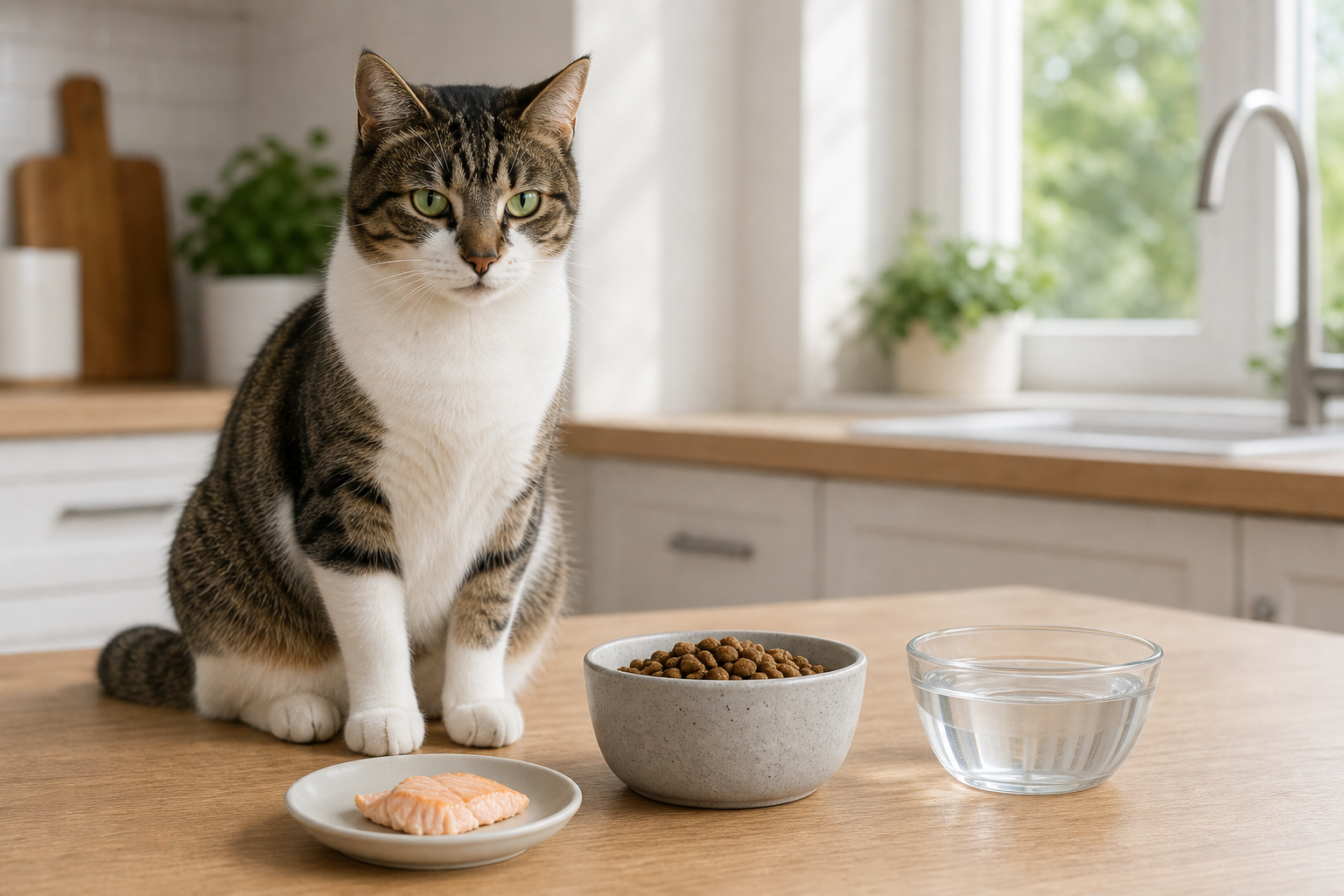
| Lachsart | Können Katzen das fressen? | Was Sie wissen sollten |
|---|---|---|
| Einfach gekochter Lachs | Normalerweise ja, in einer winzigen Menge | Am besten eignet es sich, wenn es vollständig durchgegart, knochenlos, ungewürzt und abgekühlt ist. |
| Gebackener oder gedämpfter Lachs | Normalerweise ja, in einer winzigen Menge | Nur dann unbedenklich, wenn kein Öl, keine Butter, kein Knoblauch, keine Zwiebeln, kein Salz, keine Zitrone, keine Kräuter und keine Soße hinzugefügt wurden. |
| Lachs auf Ihrem Teller | Normalerweise nicht | Rezepte für Menschen enthalten oft Salz, Fett, Knoblauch, Zwiebeln, Gewürze, Zitrusfrüchte oder Soße. |
| Lachs in Wasser aus der Dose | Manchmal, mit Vorsicht | Wählen Sie nach Möglichkeit Produkte ohne Salzzusatz, achten Sie auf Gräten und Zutaten und servieren Sie nur eine winzige Menge. |
| Katzenfutter mit Lachsgeschmack | Ja, sofern vollständig und ausgewogen | Das unterscheidet sich von der Fütterung mit Lachs. Das Etikett sollte dem Lebensabschnitt Ihrer Katze entsprechen. |
Bevor Sie Lachs servieren, gehen Sie diese kurze Checkliste durch:
- Ist es durch und durch gar?
- Ist es knochenfrei?
- Ist es naturbelassen, ohne Salz, Öl, Butter, Soße, Knoblauch, Zwiebeln, Zitrone, Kräuter oder Gewürze?
- Ist das Stück kleiner als ein normales Leckerli?
- Ist Ihre Katze gesund genug für ein neues Leckerli?
Falls eine der Antworten „Nein“ lautet, überspringen Sie diese Frage.
Welchen Lachs sollten Katzen meiden?
Katzen sollten rohen Lachs, geräucherten Lachs, gewürzten Lachs, Lachsknochen, verdorbenen Lachs sowie Lachs, der mit Öl, Butter, Salz, Zwiebeln, Knoblauch, Zitrone, Soßen oder Gewürzen zubereitet wurde, meiden.
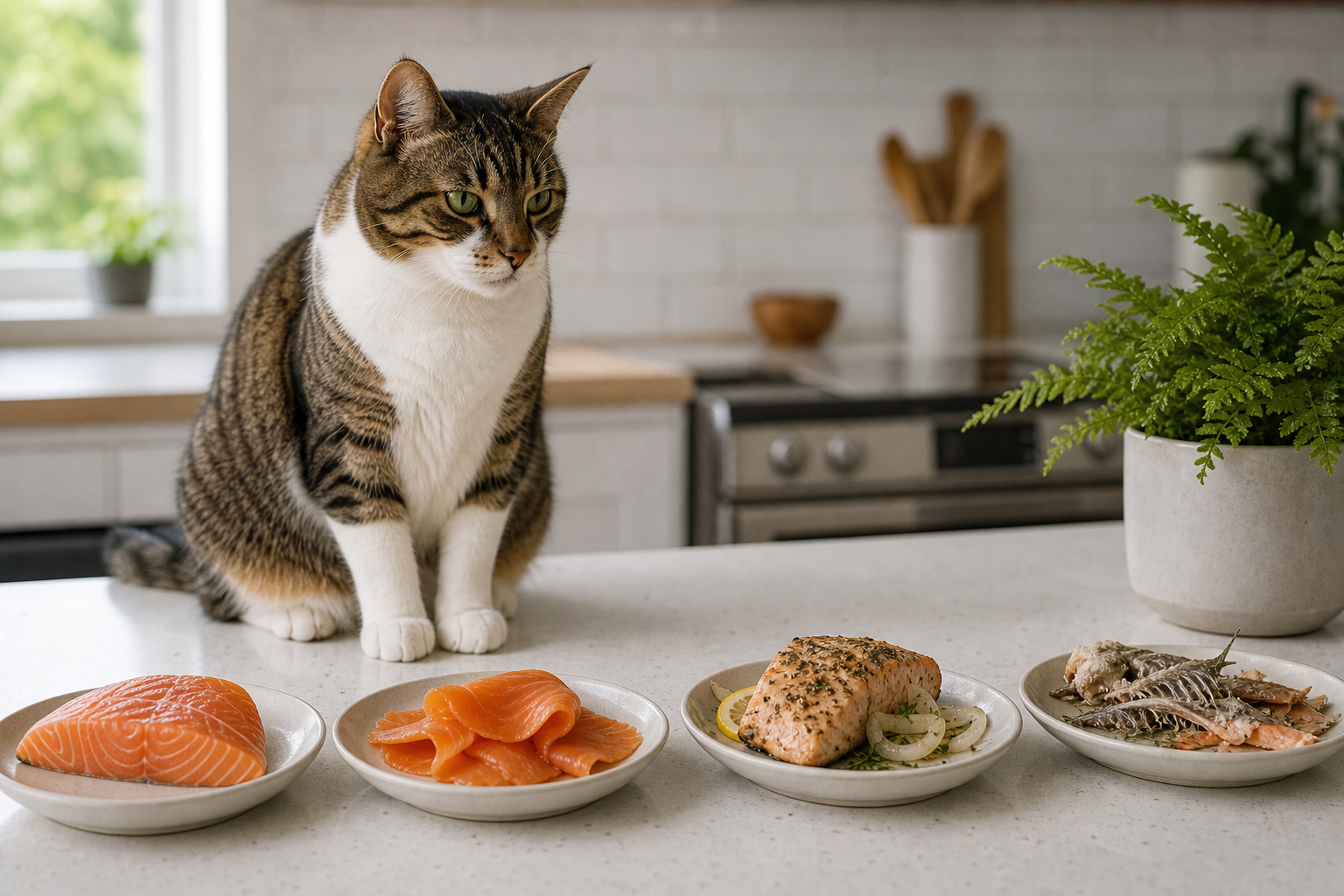
| Lachs, den man meiden sollte | Warum das riskant ist |
|---|---|
| Roher Lachs | Rohe Tiernahrung kann schädliche Bakterien enthalten und Risiken für Haustiere sowie für Personen darstellen, die mit der Nahrung in Berührung kommen. 3. |
| Räucherlachs | Oft sehr salzig und kann Pökelsubstanzen oder Gewürze enthalten. |
| Gewürzter Lachs | Knoblauch, Zwiebeln, zu viel Salz, Gewürze, Soßen und Zitrusfrüchte sind keine geeigneten Zutaten für Katzenleckerlis. |
| Lachsknochen | Kleine Knochen können Verletzungen im Mund, im Rachen oder im Verdauungstrakt verursachen oder eine Erstickungsgefahr darstellen. |
| Lachs mit Öl oder Butter | Zu viel Fett kann die Verdauung beeinträchtigen, insbesondere bei Katzen mit empfindlichem Magen oder einer Pankreatitis in der Vorgeschichte. |
| Verdorbener Lachs | Veralteter Fisch kann Erbrechen, Durchfall, Lethargie oder Schlimmeres verursachen. |
Wenn Sie eine allgemeine Liste mit für Ihre Katze unbedenklichen Lebensmitteln erstellen, sollten Sie Lachs darin nur als “kleine, gekochte Leckerei” aufführen. was Katzen essen können Anmerkungen.
Wie viel Lachs darf ich meiner Katze geben?
Für die meisten gesunden erwachsenen Katzen reichen schon ein paar winzige Flocken von einfachem, gekochtem Lachs aus. Denken Sie dabei eher an eine Leckerli-Portion als an eine Beilage.
Als Faustregel gilt, dass alle Leckerlis und Extras nur einen kleinen Teil der täglichen Kalorien ausmachen sollten, während die Hauptnahrung vollständig und ausgewogen bleibt. Wenn Ihre Katze bereits Leckerlis, Zahnpflege-Snacks, Essensreste vom Tisch oder Futterzusätze erhält, sollte der Lachs in dieses Leckerli-Kontingent einfließen und nicht zusätzlich dazu gegeben werden.
| Die Situation mit der Katze | Idee für eine sicherere Lachsportion |
|---|---|
| Das erste Mal, dass ich Lachs probiere | Eine erbsengroße Flocke, dann abwarten und beobachten. |
| Gesunde erwachsene Katze | Gelegentlich ein paar kleine Flocken, aber nicht täglich. |
| Übergewichtige Katze | Lassen Sie es weg oder nehmen Sie eine ganz kleine Menge zu sich, die Sie auf Ihre Tageskalorien anrechnen. |
| Kätzchen | Fragen Sie zuerst Ihren Tierarzt; Kätzchen benötigen für ihr Wachstum eine ausgewogene und vollwertige Ernährung. |
| Ältere Katze | Seien Sie vorsichtig, insbesondere bei Nieren-, Schilddrüsen-, Zahn- oder Verdauungsproblemen. |
| Katze auf Diät nach ärztlicher Verordnung | Fügen Sie keinen Lachs hinzu, es sei denn, Ihr Tierarzt sagt, dass er zum Ernährungsplan passt. |
Wenn Sie sich nicht sicher sind, ob ein Leckerli zur täglichen Futtermenge Ihrer Katze passt, lesen Sie zunächst die Anleitung unter Wie viel Futter sollte ich meiner Katze geben? oder den Grundbedarf anhand der Katzenkalorienrechner. Diese Hilfsmittel ersetzen zwar nicht den Rat eines Tierarztes, tragen aber dazu bei, dass aus “nur ein bisschen” mehr nicht unbemerkt zu viel wird.
Wann sollte man auf Lachs verzichten?
Lachs sollte vermieden werden, wenn Ihre Katze eine medizinische Diät erhält, eine bekannte Fischunverträglichkeit hat, unter Erbrechen oder Durchfall leidet, eine plötzliche Appetitveränderung aufweist oder unerklärliche Gewicht Gewichtsverlust, Harnwegsbeschwerden oder ein Zustand, bei dem Ernährungsumstellungen unter tierärztlicher Aufsicht erfolgen sollten.
Seien Sie besonders vorsichtig bei:
| Katze oder Situation | Bessere Wahl |
|---|---|
| Verschreibungspflichtige Diätfuttermittel für Harnwege, Nieren, den Magen-Darm-Trakt, Allergien oder zur Gewichtsreduktion | Halten Sie sich an die vorgeschriebene Diät, es sei denn, Ihr Tierarzt genehmigt eine Belohnung. |
| Erbrechen oder Durchfall | Führen Sie keine neuen Futtermittel ein. Rufen Sie Ihren Tierarzt an, wenn die Symptome anhalten, sich verschlimmern oder Lethargie auftreten. |
| Plötzlicher Hunger oder Appetitverlust | Leckereien können ausblenden ein zugrunde liegendes Problem. Behalten Sie die Futteraufnahme im Auge und wenden Sie sich an Ihren Tierarzt. |
| Trächtige oder säugende Katze | Achten Sie auf eine gleichbleibende Ernährung und fragen Sie Ihren Tierarzt, bevor Sie zusätzliche Nahrungsmittel zufüttern. |
| Kätzchen | Geben Sie Alleinfuttermittel für Kätzchen den Vorzug. |
| Katze mit Pankreatitis in der Anamnese | Verzichten Sie auf fettige Beilagen, es sei denn, Ihr Tierarzt gibt Ihnen konkrete Anweisungen. |
| Katze mit Nahrungsmittelallergien | Führen Sie keine Tests an Lachsen durch, ohne dass Ihr Tierarzt einen Plan aufgestellt hat. |
Katzen sind obligate Fleischfresser, doch das bedeutet nicht, dass jedes Tierfutter automatisch gut für sie geeignet ist. Die zuverlässigste tägliche Ernährung ist nach wie vor ein vollwertiges, ausgewogenes Katzenfutter, das speziell auf die Bedürfnisse Ihrer Katze abgestimmt ist. Alter, Körperkondition und gesundheitliche Bedürfnisse 1, 2. Eine größere Auswahl an Lebensmitteln finden Sie unter Die Wahl von gesundem Katzenfutter und Nassfutter vs. Trockenfutter.
Was soll ich tun, wenn meine Katze verdorbenen Lachs gefressen hat?
Sollte Ihre Katze eine winzige Menge an einfachem, gekochtem Lachs gefressen haben, beobachten Sie sie. Sollte Ihre Katze rohen, verdorbenen, salzigen, gewürzten, fettigen, grätenhaltigen oder eine große Menge Lachs gefressen haben, wenden Sie sich bitte an Ihren Tierarzt oder eine Giftnotrufzentrale für Tiere, um eine auf den Einzelfall zugeschnittene Beratung zu erhalten.
| Was ist passiert? | Was ist als nächstes zu tun? |
|---|---|
| Ein winziger Bissen von einfach gekochtem Lachs | Beobachten Sie den Appetit, den Stuhlgang, Erbrechen und das Verhalten. |
| Ich habe gewürzten Lachs gegessen | Überprüfen Sie nach Möglichkeit die Zutaten, insbesondere Knoblauch, Zwiebeln, Salz, Soße oder Gewürze. Rufen Sie Ihren Tierarzt an und fragen Sie ihn um Rat. |
| Habe rohen Lachs gegessen | Wenden Sie sich an Ihren Tierarzt, insbesondere wenn Ihre Katze jung oder alt ist, ein geschwächtes Immunsystem hat oder Symptome zeigt. |
| Möglicherweise hat es Knochen verschluckt | Rufen Sie umgehend Ihren Tierarzt an. Achten Sie auf Würgereiz, Sabbern, Kratzen am Maul, Erbrechen, Schmerzen oder Futterverweigerung. |
| Hat eine große Menge gegessen | Rufen Sie Ihren Tierarzt an, insbesondere wenn Ihre Katze klein oder übergewichtig ist oder bereits Verdauungsprobleme oder Erkrankungen der Bauchspeicheldrüse hatte. |
| Erbrechen, Durchfall, Lethargie, Schwäche, Kollaps, Atembeschwerden, Schmerzen oder wiederholtes Würgen | Suchen Sie dringend tierärztliche Hilfe auf. |
Versuchen Sie nicht, Ihre Katze zum Erbrechen zu bringen, es sei denn, ein Tierarzt oder ein Mitarbeiter der Giftnotrufzentrale weist Sie dazu an. Versuche zu Hause können gefährlich sein.
Ist Katzenfutter mit Lachs dasselbe wie Lachs als Futter zu geben?
Nein. Katzenfutter mit Lachsgeschmack oder auf Lachsbasis kann vollständig und ausgewogen sein, wenn auf dem Etikett angegeben ist, dass es für das jeweilige Lebensstadium Ihrer Katze entwickelt wurde. Ein Stück Lachs aus der Küche ist nicht dasselbe.
Die Angaben auf den Etiketten von Tierfutter und die Angaben zur Nährstoffausgewogenheit sind wichtig, da sie Aufschluss darüber geben, ob das Futter als Alleinfuttermittel konzipiert ist, für welche Lebensphase es bestimmt ist und ob es sich um ein Leckerli, ein Ergänzungsfuttermittel, ein gelegentliches Futter oder eine tägliche Ernährung handelt. 2, 4. Wenn auf einem Produkt angegeben ist, dass es für die gelegentliche oder ergänzende Fütterung bestimmt ist, sollte es nicht das Hauptfutter Ihrer Katze sein.
Diese Unterscheidung ist wichtig für Suchende, die fragen: “Dürfen Katzen Lachs essen?”, denn die Antwort lautet nicht einfach “Ja” oder “Nein”. Ein Alleinfuttermittel auf Lachsbasis kann für manche Katzen geeignet sein. Eine salzige Scheibe Räucherlachs oder ein mit Butter bestrichener Essensrest sind jedoch eine ganz andere Sache.
Häufig gestellte Fragen
Dürfen Katzen gekochten Lachs fressen?
Ja, Katzen können eine kleine Menge einfachen, gekochten Lachses fressen, sofern dieser grätenfrei, ungewürzt und abgekühlt ist. Dies sollte jedoch nur gelegentlich als Leckerli dienen und kein Ersatz für vollwertiges Katzenfutter sein.
Können Katzen rohen Lachs essen?
Roher Lachs ist für Katzen nicht zu empfehlen. Rohe Tiernahrung kann schädliche Bakterien enthalten und sowohl für Haustiere als auch für Menschen Risiken bei der Handhabung mit sich bringen. 3.
Können Katzen Räucherlachs essen?
Räucherlachs ist kein geeignetes Leckerli für Katzen, da er in der Regel salzig ist und Pökelsubstanzen oder Gewürze enthalten kann. Wählen Sie stattdessen einfachen gekochten Lachs oder verzichten Sie ganz auf Lachs.
Können Katzen Lachs aus der Dose essen?
Manche Katzen können eine winzige Menge Lachs aus der Dose zu sich nehmen, sofern dieser in Wasser eingelegt, natriumarm, grätenfrei und ohne Zusatz von Gewürzen ist. Viele Dosenprodukte sind zu salzig oder enthalten Gräten, daher sollten Sie das Etikett sorgfältig prüfen.
Dürfen Kätzchen Lachs essen?
Kätzchen benötigen für ihr Wachstum ein ausgewogenes und vollwertiges Kätzchenfutter. Fragen Sie Ihren Tierarzt, bevor Sie Lachs oder andere Zusätze hinzufügen, insbesondere wenn das Kätzchen noch sehr jung, untergewichtig oder an Verdauungsproblemen leidet.
Ist Lachs für Katzen jeden Tag gut?
Nein. Lachs sollte nicht täglich als Zusatz gefüttert werden, es sei denn, er ist Bestandteil eines vollwertigen und ausgewogenen Katzenfutters. Häufige Zusätze können das Kalorien- und Nährstoffgleichgewicht stören.
Auf welche Anzeichen sollte ich achten, nachdem meine Katze Lachs gefressen hat?
Achten Sie auf Erbrechen, Durchfall, Speichelfluss, Würgereiz, Futterverweigerung, Lethargie, Juckreiz, Schwellungen im Gesicht, Schmerzen oder Verhaltensänderungen. Rufen Sie Ihren Tierarzt an, wenn die Symptome schwerwiegend sind, wiederholt auftreten oder für Ihre Katze ungewöhnlich sind.
Referenzen
[1] Cornell Feline Health Center. Die Fütterung Ihrer Katze.
[2] US-Behörde für Lebens- und Arzneimittel (FDA). Vollwertiges und ausgewogenes Tierfutter.
[3] US-Behörde für Lebens- und Arzneimittelsicherheit (FDA). Lesen Sie die Fakten! Rohe Tiernahrung kann für Sie und Ihr Tier gefährlich sein.
[4] US-Behörde für Lebens- und Arzneimittelsicherheit (FDA). Die Regulierung von Tiernahrung durch die FDA.
 EN
EN DE
DE ES
ES PT
PT