
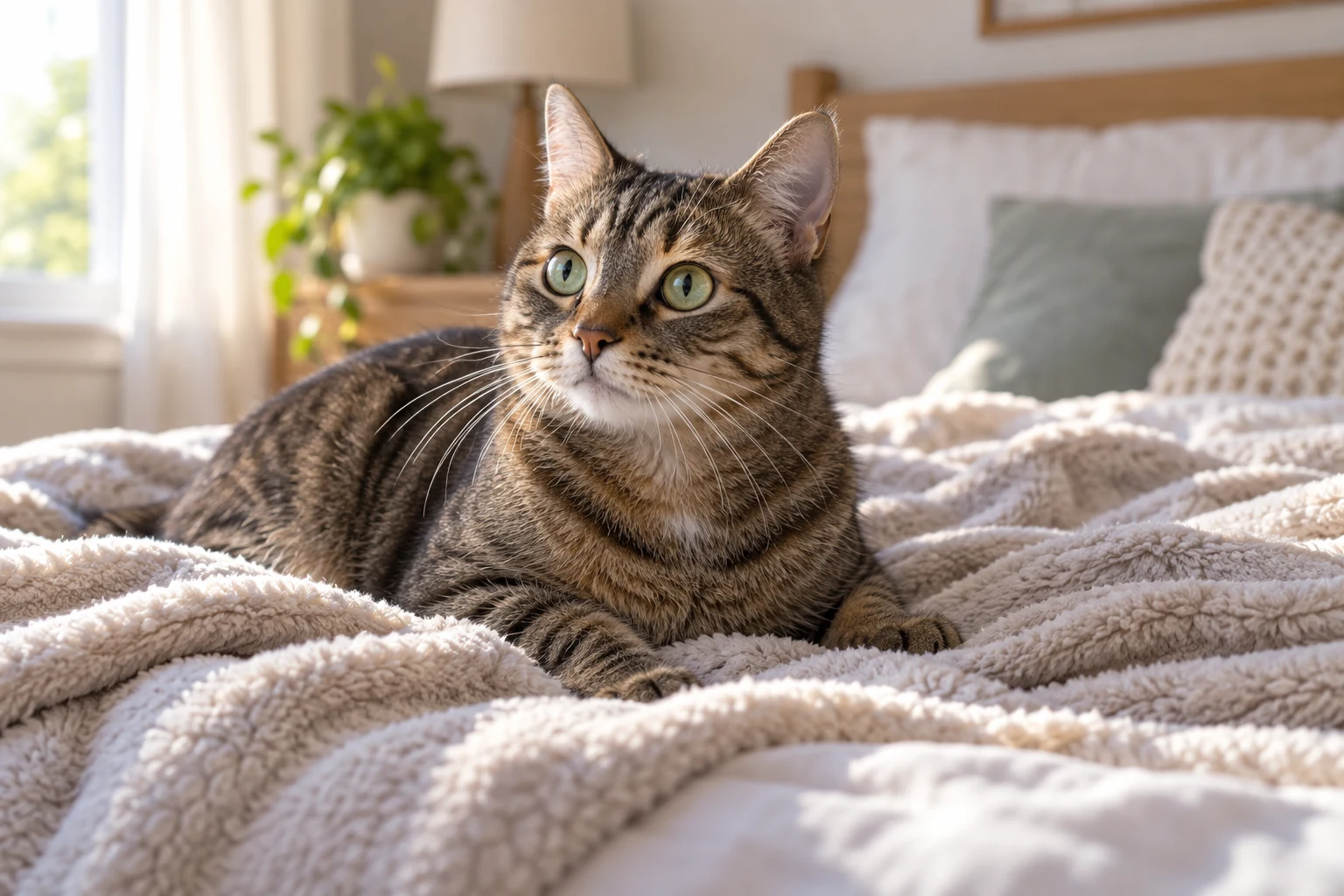
If your cat jerks awake suddenly, it is often a brief startle, sleep start, or reaction to a sound, dream-like sleep movement, or touch. It becomes more concerning when the movement is intense, repeated, paired with confusion, drooling, loss of bladder or bowel control, collapse, breathing trouble, or strange behavior after waking.
The useful question is not just "Did my cat jump?" It is "What happened before, during, and after the wake-up?" A cat who lifts her head, looks around, and goes back to resting is very different from a cat who stiffens, paddles, flails, seems unaware, or acts disoriented. This guide helps you sort common startle patterns from clues that deserve a veterinarian's attention.
Inhaltsübersicht
- Is it normal for a cat to jerk awake suddenly?
- What does a normal sleep start look like?
- Why would a cat startle awake?
- When can sudden waking be a seizure or neurological clue?
- Could pain, skin sensitivity, or stress be involved?
- What should you do in the moment?
- What should you track before calling the vet?
- How can you make sleep safer without making your cat anxious?
- Schlussfolgerung
- Häufig gestellte Fragen
- Referenzen
Is it normal for a cat to jerk awake suddenly?
Yes, a single sudden wake-up can be normal if your cat quickly looks alert, breathes normally, responds to you, and settles again. Cats can twitch, flick their ears, move their paws, or make small noises during REM sleep, and those sleep movements can blend into a sudden wake-up 1.
A normal-looking startle usually has a clear context. A door closed, a phone buzzed, another pet moved, a person touched the bedding, or your cat shifted from deeper sleep into lighter sleep. Some cats are also light sleepers by temperament. They may wake quickly because they are built to notice changes in their surroundings.
What you do next matters. Avoid grabbing or shaking your cat awake. A startled cat may scratch or bite before she realizes where she is. Give her space, speak softly, and watch whether her body relaxes on its own.
What does a normal sleep start look like?
A normal sleep start is brief and self-limited. Your cat may lift her head, jerk one paw, flick both ears, widen her eyes for a moment, or sit up as if she heard something. Within seconds, she should recognize the room, move normally, and either groom, stretch, leave, or settle back down.
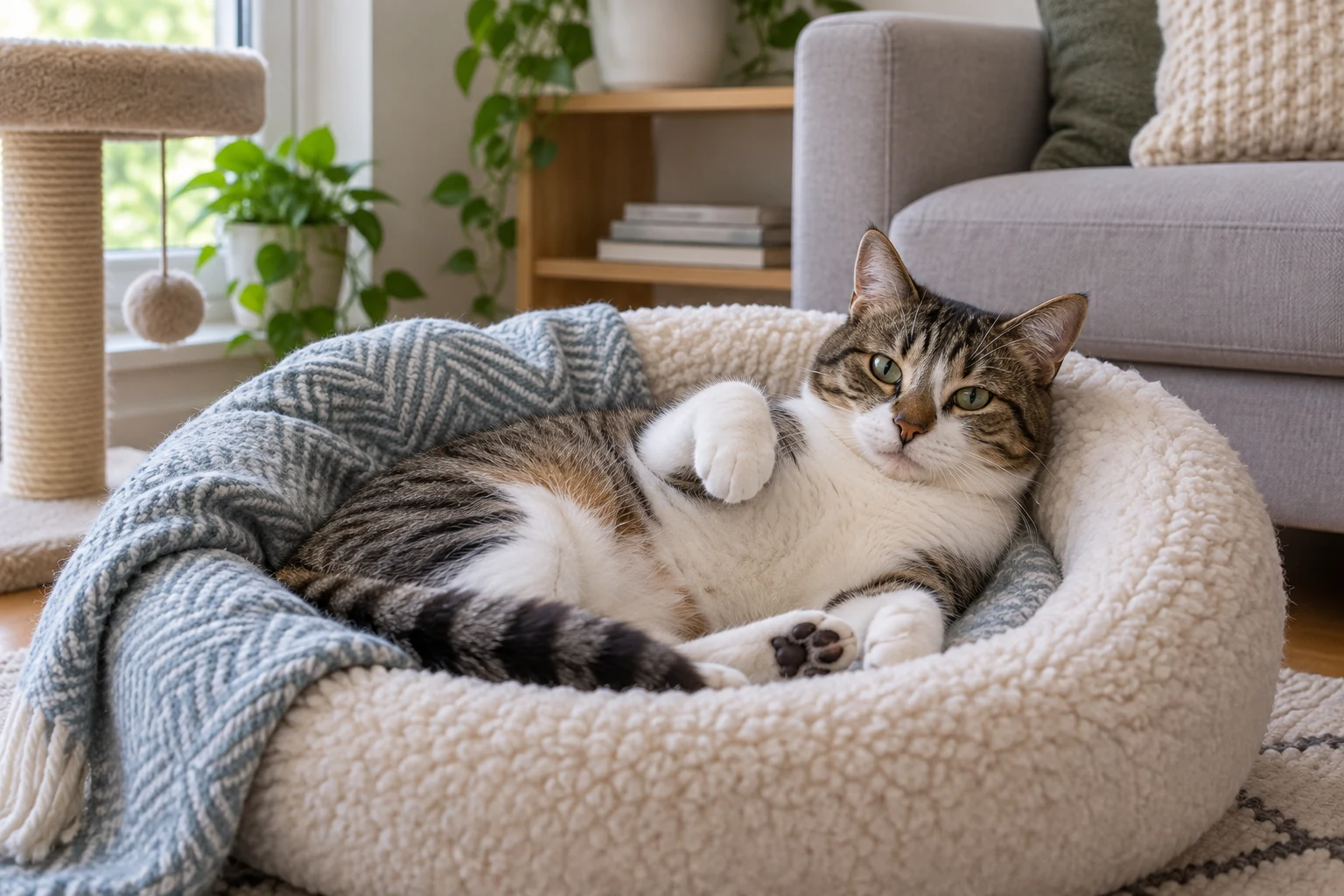
Look at the whole cat, not one twitch. A relaxed body, normal breathing, flexible limbs, normal pupils for the room lighting, and quick recovery are reassuring clues. If the main issue is movement while your cat remains asleep, compare the pattern with our guides to cat twitching in sleep und cat kicking while sleeping.
| Was Sie sehen | More likely benign when | More concerning when |
|---|---|---|
| One quick body jerk | Your cat wakes, looks around, and relaxes | It repeats many times or grows stronger |
| Ear, whisker, or paw flicks | They happen during sleep and stop quickly | They continue while awake or affect one side only |
| Sudden sitting up | There was a sound, touch, or household trigger | Your cat seems unaware, dazed, or panicked afterward |
| A short meow or chirp | Your cat responds normally afterward | Vocalizing continues with pacing, drooling, or collapse |
If the episode is new but mild, track it rather than trying to interpret it from memory. Patterns are easier to judge than one fuzzy midnight moment.
Why would a cat startle awake?
Cats may jerk awake because they heard, felt, smelled, or dreamed something. Their sleep is not one long block. They move between lighter and deeper sleep, and active sleep can include small twitches or movements 1.
Common triggers include:
- A sudden sound, such as a door, appliance, phone alert, thunder, or outdoor animal.
- Bedding movement from a person shifting nearby.
- Another pet walking close to the sleeping spot.
- A dream-like REM sleep movement that turns into waking.
- A painful twinge, itch, or skin sensitivity.
- Nighttime anxiety, especially after a household change.
- Senior-cat changes such as lighter sleep, disorientation, pain, or sensory decline.
If the waking happens mostly at night, look at the whole evening pattern. Cats who roam, call, or repeatedly wake the household may fit a broader Katze ist nachts unruhig pattern. If your cat purrs, twitches, then wakes, the context may also overlap with cat purring while sleeping.
When can sudden waking be a seizure or neurological clue?
Sudden waking deserves veterinary guidance when it looks less like a startle and more like an episode your cat cannot control. Seizures can involve abnormal motor activity, altered awareness, salivation, urination, defecation, or unusual sensory and behavior changes 2, 3.
Call a veterinarian promptly, or seek urgent care if severe, when you see:
- Collapse, loss of consciousness, or inability to respond.
- Rigid limbs, paddling, running motions, or full-body jerking.
- Drooling, urination, defecation, or vomiting during the episode.
- A dazed, blind-seeming, pacing, agitated, or deeply sleepy period after.
- Repeated episodes in one day or clusters close together.
- An episode lasting more than a few minutes.
- New circling, head tilt, weakness, wobbliness, or major balance changes.
- Possible toxin exposure, head trauma, or a fall from furniture.
VCA notes that seizures in cats can occur around changes in brain activity, including as a cat is falling asleep or waking up 2. That does not mean every sudden wake-up is a seizure. It means repeated or intense wake-up episodes deserve careful documentation and a veterinary opinion.
Some senior cats also show odd nighttime behaviors that are easy to dismiss as quirks. If your cat wakes suddenly and then stares, seems confused, or reacts to empty corners, compare the pattern with our guide to Katze, die nachts die Wände anstarrt and bring new neurological or disorientation signs to your vet.
Could pain, skin sensitivity, or stress be involved?
Yes. A cat may jerk awake because a sore joint, skin sensation, itch, flea irritation, tail-base sensitivity, or uncomfortable sleeping position suddenly crosses her threshold. Cats often hide discomfort, so the clue may be a tiny change in posture, grooming, appetite, jumping, or tolerance for touch.
Feline hyperesthesia is one condition that can involve extreme skin sensitivity, often near the back or tail base. Cornell describes signs such as rippling skin, dilated pupils, scratching, biting, vocalizing, drooling, tail chasing, and sudden reactions to touch in affected cats 4. That pattern is not the same as a one-time sleep jerk, but it is worth knowing if your cat bolts awake when her back or tail area is touched.
Pain can also make sleep lighter. If your cat jerks awake and then avoids jumping, hides, resists handling, guards one side, limps, crouches tensely, or changes litter box habits, use our Unauffällige Anzeichen für Schmerzen bei Katzen guide as a home observation aid and contact your veterinarian.
Stress can play a role too. Cats need safe resting places, separated key resources, chances to play, predictable social interaction, and a home environment that respects scent and security 5. A cat who sleeps in a busy pathway, near a noisy appliance, beside a tense pet relationship, or without a retreat may wake sharply because she never feels fully safe.
What should you do in the moment?
Stay calm and make the area safer. Do not put your hands near your cat's mouth, restrain her, shake her, or try to force her to stand. If she is on a bed, sofa, or perch and seems disoriented, quietly move hard objects away and block a fall only if you can do so without grabbing her.
If it looks like a normal startle:
- Speak softly from a short distance.
- Let your cat orient herself.
- Watch her breathing, balance, pupils, and response to your voice.
- Offer space rather than immediate petting.
- Note the time and possible trigger.
If it looks seizure-like, prioritize safety and timing. Keep the room quiet, dim bright lights if easy, remove nearby hazards, and record a video if you can do so safely. Do not place anything in your cat's mouth. VCA specifically warns that trying to put fingers or objects into the mouth during a seizure can injure both the cat and the person 2.
Seek urgent veterinary care if the episode lasts more than a few minutes, repeats, follows toxin exposure or trauma, includes breathing trouble or collapse, or your cat does not return to normal awareness.
What should you track before calling the vet?
Track the details that help a vet separate sleep movement, startle, pain, skin sensitivity, and seizure-like activity. A clear phone video is often more useful than a long description written after everyone is rattled.
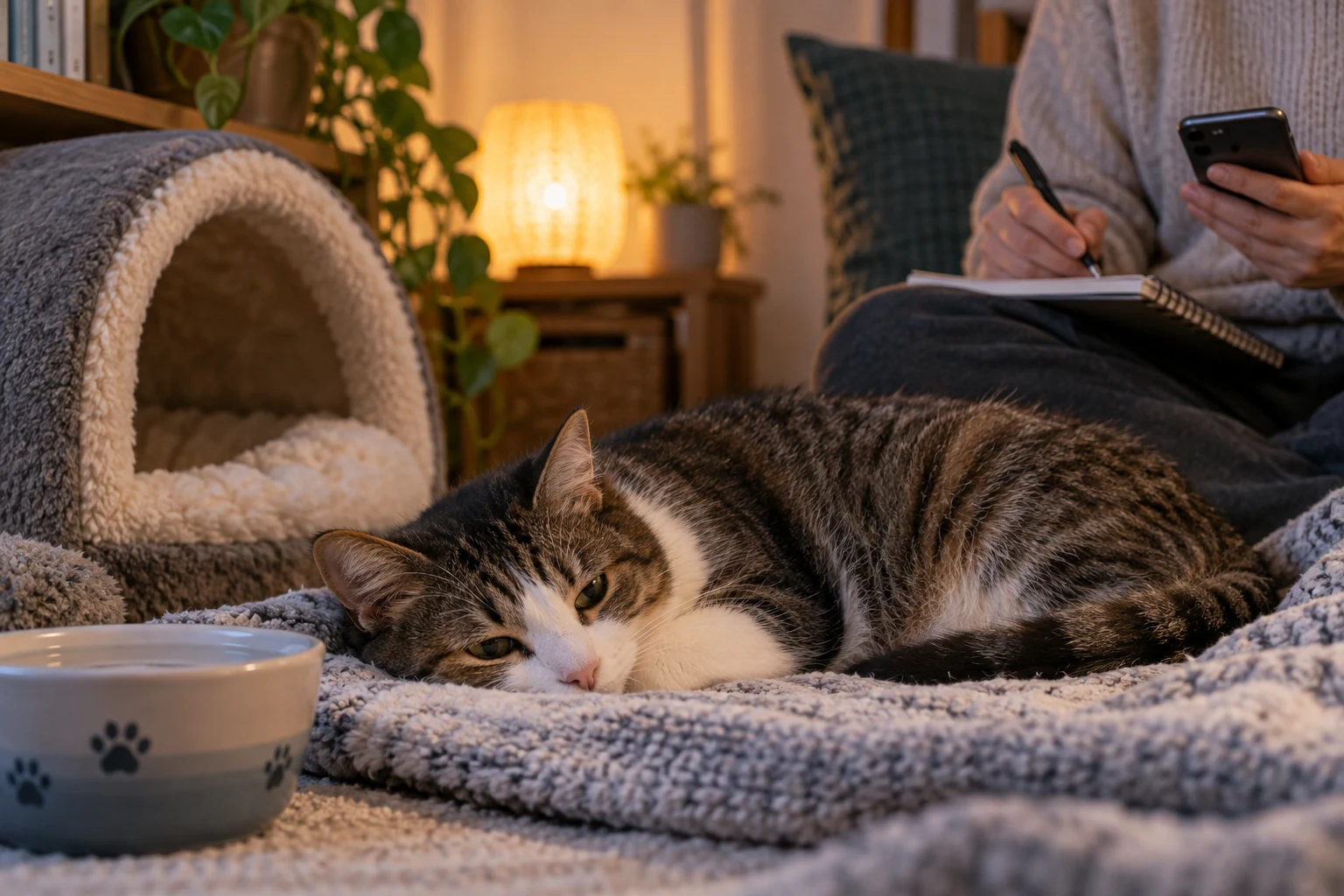
Notieren Sie sich:
- Date and time.
- Whether your cat was asleep, drowsy, awake, eating, playing, or being touched.
- The movement you saw first.
- How long it lasted.
- Whether both sides of the body were involved.
- Breathing pattern and gum color if visible without handling.
- Awareness: did your cat respond to her name, touch, or surroundings?
- Any drooling, vomiting, urination, defecation, or vocalizing.
- Behavior afterward: normal, hungry, sleepy, pacing, hiding, confused, aggressive, or clingy.
- Recent changes: new food, medication, flea product, household stress, falls, illness, or toxin risk.
You can also note whether purring, chirping, or other sounds happened before or after the wake-up. Purring has more than one meaning, so our guide to Warum Katzen schnurren can help you avoid assuming every sound is comfort.
How can you make sleep safer without making your cat anxious?
Make your cat's favorite sleep places calmer and easier to exit. The goal is not to monitor her so closely that she cannot rest. It is to reduce preventable startle triggers and injury risks while you gather useful information.
Try these low-pressure changes:
- Keep one quiet sleeping spot away from doors, appliances, and heavy foot traffic.
- Add a low, stable bed for senior cats or cats who may fall from high perches.
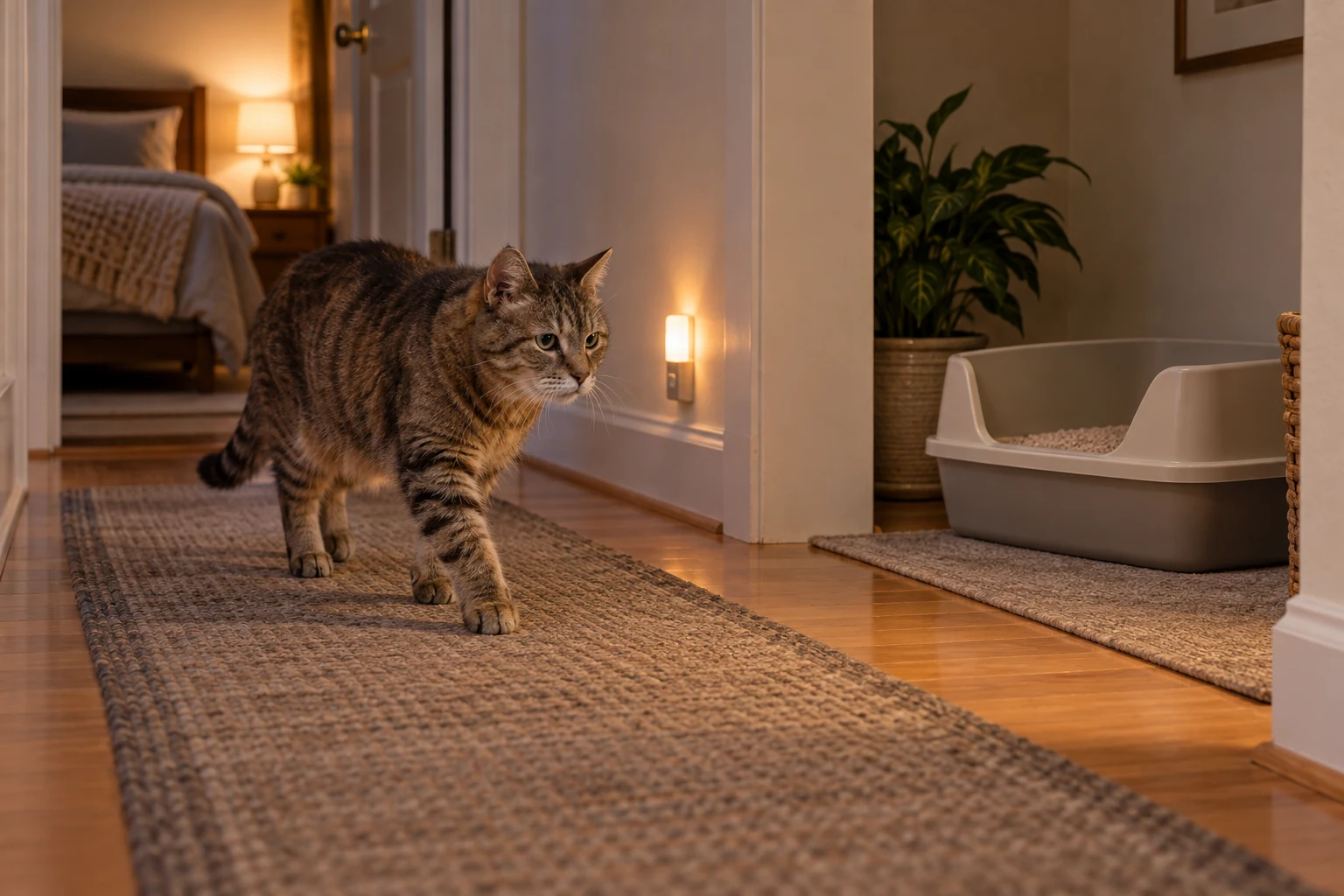
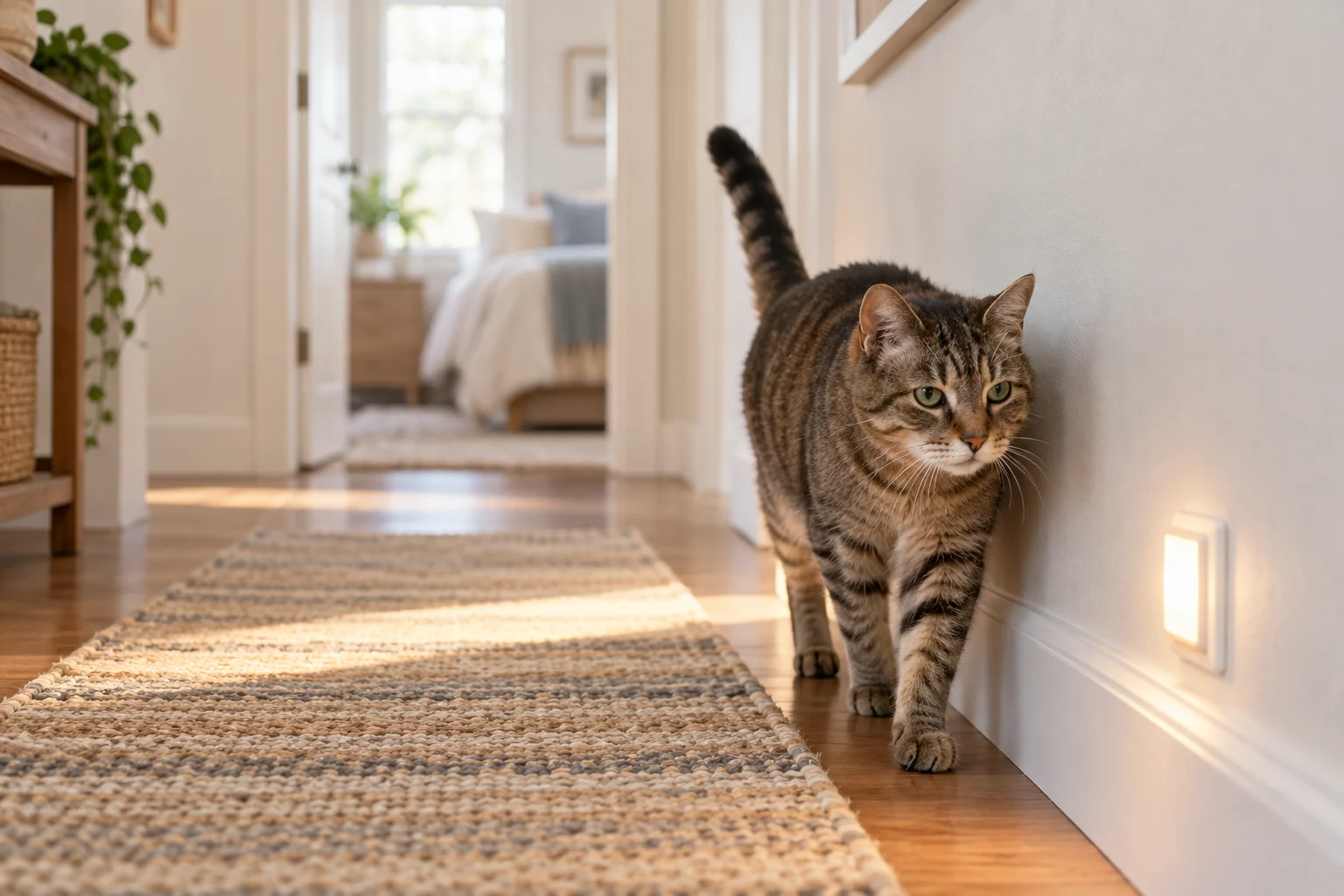
- Leave a soft night light if your cat startles in dark hallways.
- Give each cat access to separate resting, food, water, scratching, and litter areas.
- Avoid waking your cat suddenly for affection.
- Use a predictable evening play and feeding routine.
- Keep bedding clean and check for fleas, skin irritation, or sore spots.
- Remove clutter near favorite beds so a sudden jump is less likely to cause injury.
If your cat only jerks awake once in a while and acts normal afterward, these changes may be enough. If the episodes continue, become more intense, or come with other health or behavior changes, do not keep experimenting at home. A veterinary exam can look for pain, neurological disease, toxin exposure, metabolic issues, and other causes that a home setup cannot rule out.
Schlussfolgerung:
A cat who jerks awake suddenly is not automatically having a medical emergency. Brief startles, sleep starts, and REM-related movements can happen, especially when the cat wakes normally and relaxes again.
The red flags are loss of awareness, strong or repeated jerking, paddling, stiffening, drooling, loss of bladder or bowel control, confusion afterward, breathing trouble, trauma, possible toxin exposure, or a pattern that keeps returning. When in doubt, record a short video, note the timing, and ask your veterinarian. You are not overreacting by paying attention. You are giving your cat's care team better clues.
Häufig gestellte Fragen
Why does my cat suddenly jump awake from sleep?
Your cat may have heard a sound, felt the bed move, had a brief sleep start, reacted to dream-like REM activity, or felt a sudden itch or painful twinge. If she wakes, recognizes the room, moves normally, and settles quickly, it is often not alarming.
Should I wake my cat if she is twitching or jerking in sleep?
Usually no. Let a sleeping cat wake naturally unless she is about to fall or hurt herself. Sudden handling can scare her and may get you scratched or bitten. If the movement is intense, prolonged, repeated, or paired with abnormal breathing or loss of awareness, record safely and call your vet.
Can cats have seizures while falling asleep or waking up?
Yes, seizure-like events can occur around sleep-wake transitions, and VCA notes that seizures may happen as a cat is falling asleep or waking up 2. A normal startle is still much more benign than collapse, paddling, drooling, urination, defecation, or confusion afterward.
Is jerking awake more concerning in senior cats?
It can be. Senior cats may have lighter sleep, pain, sensory changes, high blood pressure, thyroid disease, cognitive changes, or neurological concerns. A new pattern in an older cat is worth discussing with your veterinarian, especially if it comes with pacing, disorientation, appetite change, thirst change, or litter box changes.
Was soll ich zum Tierarzt mitbringen?
Bring a short video, timing notes, a list of possible triggers, recent medications or flea products, diet changes, toxin risks, and what your cat did afterward. Include whether the movement happened while asleep, waking, awake, eating, playing, or being touched.
Referenzen
[1] Cats Protection. (2026). Do cats dream? Exploring feline sleep. Do cats dream? Exploring feline sleep
[2] VCA Animal Hospitals. (2026). Seizures and Epilepsy in Cats. Seizures and Epilepsy in Cats
[3] Merck Veterinary Manual. (2025). Epilepsy in Small Animals. Epilepsy in Small Animals
[4] Cornell Feline Health Center. (2021). Hyperästhesie-Syndrom. Hyperästhesie-Syndrom
[5] Feline Veterinary Medical Association. (2013). 2013 AAFP/ISFM Environmental Needs Guidelines. 2013 AAFP/ISFM Environmental Needs Guidelines
 EN
EN DE
DE ES
ES PT
PT