
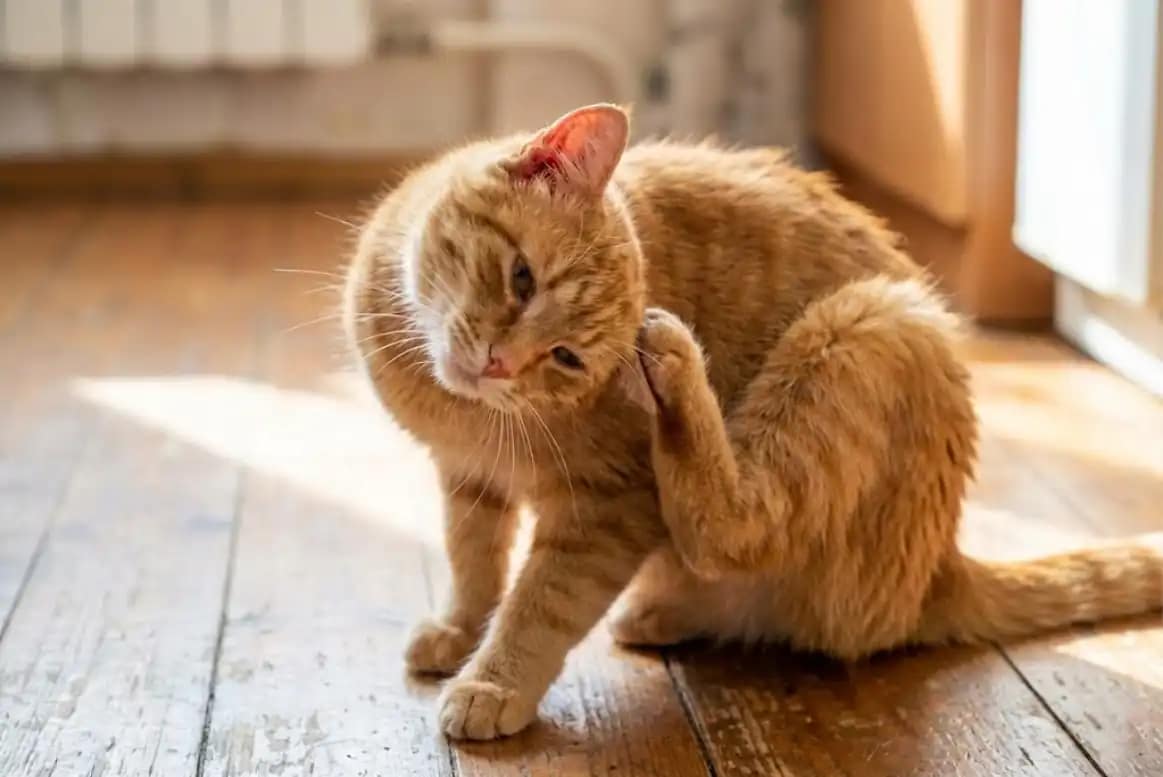
If your cat is scratching their ears, shaking their head, or you’re seeing dark “coffee-ground” debris, ear mites are a common and treatable cause. This guide walks you through symptoms, diagnosis, safe treatment, and prevention—so you know exactly what to do next.
Quick Answer
Ear mites (Ohrmilbe) are tiny parasites that live in a cat’s ear canal and cause intense itching and inflammation. The most common signs are frequent ear scratching, head shakingund dark brown/black debris that looks like coffee grounds. A vet confirms mites with an ear swab/microscope, and treatment is usually prescription parasite medication (ear drops or spot-on) plus gentle ear cleaning. To prevent reinfestation, treat all pets in the home and clean bedding.
Wichtigste Erkenntnisse
Ear mites are highly contagious between cats (and can spread to dogs/ferrets).
“Coffee-ground” ear debris + itching is strongly suggestive, but a vet should confirm the cause.
The safest, most effective treatments are vet-approved parasite meds (drops or spot-on)—not DIY oils.
Treat every pet in the household to stop the cycle of reinfestation. Why you must treat all pets in the household
Seek urgent care if you see ear swelling (hematoma), severe pain, oder head tilt/balance issues.
Go to the vet ASAP if you notice:
A puffy, swollen ear flap (possible aural hematoma)
Head tilt, stumbling, or balance problems
Severe pain, bleeding, or foul-smelling discharge
Your cat is very lethargic, not eating, or cannot be touched near the ears
Introduction: You’re Not Alone (and You Can Fix This)
If your cat is scratching their ears nonstop or shaking their head, it’s scary—but you’re not alone. Ear mites are common, extremely irritating, and very treatable.
This guide will help you:
Spot the most reliable signs
Understand how vets confirm ear mites (and what else it could be)
Treat safely and prevent the “it came back” cycle
We’ll keep it warm and practical—because the goal is simple: get your cat comfortable again, fast.
What Are Ear Mites in Cats? (Otodectes cynotis)
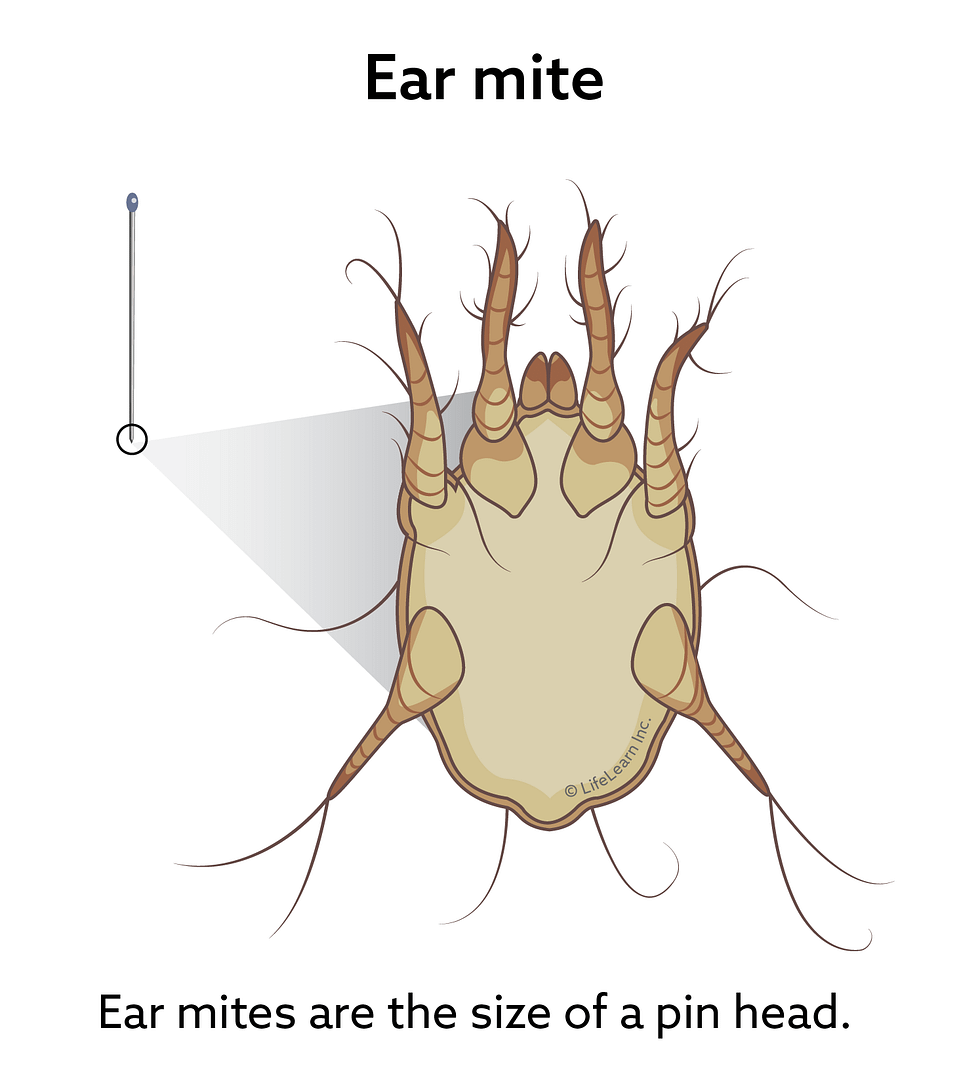
Kurze Antwort: Ear mites are tiny паразitic mites that live on the surface of the ear canal and feed on wax, skin oils, and debris. In cats, the most common species is Ohrmilbe, and it’s a leading cause of intense ear itching and inflammation.
Figure: Illustration of the ear mite Ohrmilbe (highly magnified). Alt text suggestion: “Microscopic ear mite (Otodectes cynotis) that commonly causes itching in cats.”
What ear mites actually do
Ear mites are microscopic—about the size of a pinhead—so you usually won’t see the mites themselves. What you kann notice is the irritation they cause:
Sie crawl on the ear canal skin (they’re “surface parasites,” not burrowers).
They feed on ear wax, oils, and skin debris.
Their movement and feeding can trigger strong itching, redness, and swelling.
Under a microscope, they often look like tiny pale specks with legs (a bit like mini ticks/spiders). To the naked eye, people rarely spot them—most owners notice the Zeichen first (like dark debris and nonstop scratching).
Can humans catch ear mites from cats?
For most households, this is reassuring: cat ear mites are considered animal-adapted and don’t normally infest humans. So while you might worry about “catching” them, ear mites are mainly a problem for Haustiere, not people.
How contagious are ear mites?
Unfortunately, very contagious—especially between Katzen, but also dogs and ferrets.
Ear mites spread most often through:
Direct contact (playing, cuddling, grooming)
Shared bedding, blankets, grooming tools, carriers, or other items—because mites can survive briefly off the host
Think of it like this: a mite can “hitchhike” on fur during close contact. If it reaches the ear canal, it’s harder for your cat to remove it by grooming—so it can settle in and multiply.
Unterm Strich
Ear mites (Ohrmilbe) are tiny, highly contagious ear parasites that commonly cause intense itching and inflammation in cats. You usually won’t see the mites—but you wird see the clues they leave behind. Next, let’s cover the most common symptoms and how to tell ear mites apart from other ear problems.

Symptoms of Ear Mite Infestation in Cats
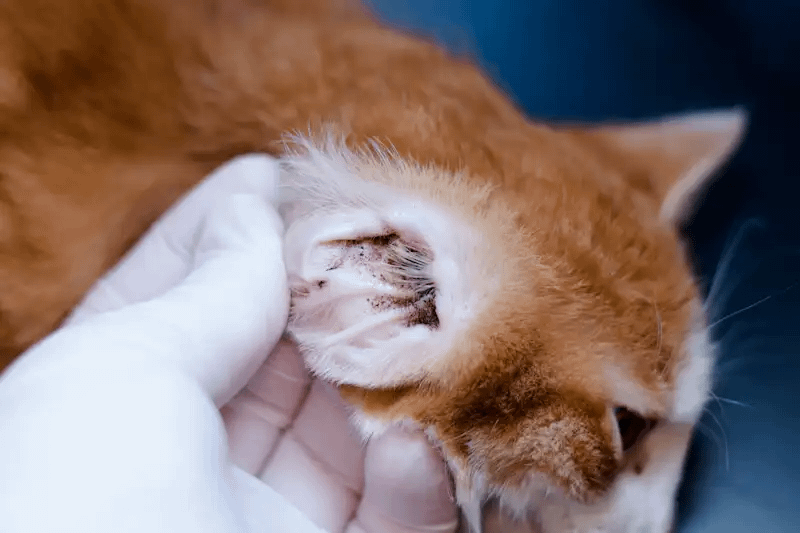
Figure: A veterinarian inspecting a cat’s ear with the telltale “coffee-ground” debris caused by ear mites. This dark, crumbly discharge is a classic sign of an ear mite infestation.
Cats with ear mites often show itchy, irritated ears plus dark debrisaber other ear problems can look similar. If you notice any red flags (below), don’t wait—seek veterinary care promptly. Cornell warns that untreated ear problems can progress and may affect hearing and balance.
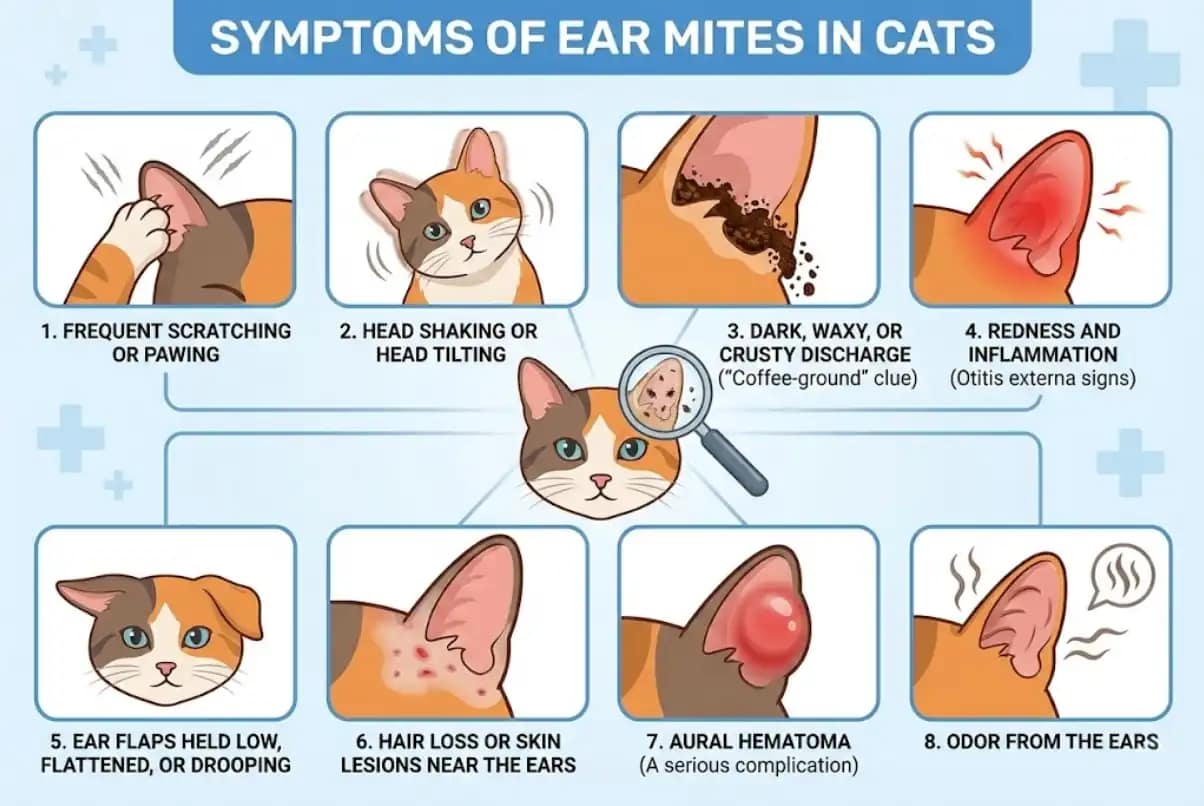
Symptoms of Ear Mites in Cats (What You’ll Actually Notice)
Ear mites in cats typically cause intense itchiness, head shakingund dark “coffee-ground” debris in the ears. These signs can overlap with yeast/bacterial ear infections, allergies, or foreign material—so use this list as guidance, not a final diagnosis.
Most common ear mite symptoms (quick scan):
Relentless scratching or rubbing the ears
Head shaking or head tilt
Dark brown/black crumbly ear discharge (“coffee grounds”)
Red, irritated ear canal or ear flap
Ear odor (especially if infection is present)
1) Frequent scratching or pawing at the ears
What you may see: Your cat repeatedly scratches behind the ears or tries to dig into the ear canal with a hind paw. Many cats also rub their head/ears on furniture or the floor to relieve the itch.
Why it happens: Ear mites irritate the ear canal skin, triggering strong itching and inflammation.
What to watch for: Scratches, scabs, or hair thinning around the ears from over-scratching.
2) Head shaking or head tilting
What you may see: Quick, repeated head shakes (as if trying to fling something out), sometimes with a mild head tilt.
Why it happens: The ear canal feels intensely uncomfortable, so your cat tries to “dislodge” the irritation.
When it’s more concerning: A pronounced head tilt, stumbling, or balance issues can suggest deeper ear involvement—skip home checks and go straight to a vet.
3) Dark, waxy, or crusty discharge (the “coffee-ground” clue)
What you may see: Dark brown/black debris that looks like coffee grounds, dirt, or crumbly wax inside the ear.
What it’s made of: A mix of ear wax, skin debris, irritation-related fluids, and mite waste.
Helpful note: If you gently wipe the visible outer ear (not deep inside) with a cotton ball and see dark, crumbly material, ear mites are a common possibility—but infections can look similar.
4) Redness and inflammation (otitis externa signs)
What you may see: The inner ear flap and ear opening can look red, raw, swollen, or irritated.
Why it matters: Ear mites can trigger otitis externa (outer ear inflammation), and scratching can open the door to secondary bacterial/yeast infections.
What to watch for: Marked pain when you touch the ear, wetness, or pus-like discharge—those are vet-level signs.
5) Ear flaps held low, flattened, or drooping
What you may see: One or both ear flaps held sideways or flattened (“airplane ears”), often paired with a tense or uncomfortable posture.
Why it happens: Cats may hold their ears oddly when the ear canal is painful or intensely itchy.
6) Hair loss or skin lesions near the ears
What you may see: Thinning fur, scabs, scratch marks, or a rash around the ears, neck, or head.
Why it happens: Repeated scratching and rubbing damages the skin barrier. This can also lead to skin infections.
7) Aural hematoma (a serious complication)
What you may see: The ear flap suddenly looks puffy, swollen, or balloon-like, like a soft “pillow.”
Why it happens: Violent head shaking/scratching can rupture a blood vessel in the ear flap, causing blood to collect under the skin.
Was ist zu tun? This usually requires veterinary treatment (sometimes drainage/surgery). Treating the underlying cause (mites/infection) is still important.
8) Odor from the ears
What you may notice: A strong, unpleasant smell—musky, “dirty,” or infected.
Why it happens: Heavy debris plus inflammation (and sometimes secondary infection) can create odor. Smell alone doesn’t confirm mites, but it’s a strong sign something is wrong.
Actionable tip (safe at-home check while you book a vet visit)
If your cat isn’t in severe pain and you don’t see urgent warning signs, you can do a gentle check:
Lift the ear flap and look at the visible area (use a flashlight).
Look for coffee-ground debris, redness, swelling, or sores.
Stop immediately if your cat reacts painfully—don’t probe deeper.
Avoid inserting swabs into the ear canal; let your vet confirm the cause and recommend treatment.
Red Flags: Go to a Vet Today (Don’t Try Home Treatment First)
Ear mites are common and treatable, but these signs can suggest complications (like severe infection, a ruptured eardrum, or middle/inner-ear involvement) and need prompt veterinary care:
Swollen ear flap (puffy “balloon” ear): possible aural hematoma from intense scratching/shaking
Head tilt, stumbling, loss of balance, or eyes flicking side-to-side (nystagmus)
Severe pain when the ear is touched, or your cat cries/hisses when you approach the ear
Thick pus-like, bloody, or very foul-smelling discharge (can indicate serious infection or eardrum damage)
Not eating, Verstecken, extreme lethargy, or sudden behavior change from discomfort
Symptoms not improving within a few days of proper vet-guided treatment, or worsening at any point
Why urgency matters: Cornell notes that outer-ear disease can progress to the middle/inner ear and can permanently affect hearing and balance if not treated promptly.
If you’re unsure, choose safety: call your vet or an emergency clinic and describe the symptoms—ear issues can escalate quickly.
Ear Mites vs Other Cat Ear Problems (How to Tell What’s More Likely)
A lot of ear issues share the same “headline symptoms” (scratching, head shaking, discharge). Veterinary sources note that other conditions can mimic ear mites, so the goal of this table is not to diagnose at home—it’s to help you decide how urgently you need a vet visit and what questions to ask.
| Possible cause | What you might notice at home | Clues that make it more likely | How a vet typically confirms |
|---|---|---|---|
| Ear mites (Otodectes cynotis) | Intense itching, frequent head shaking, dark waxy/crusty debris | Recent contact with other pets; multiple pets itchy; debris can be thick/dark and may smell foul | Otoscope exam and/or microscope exam of ear discharge/debris |
| Yeast/bacterial otitis externa | Head shaking, odor, redness, discharge (may be wet/waxy), painful ears | Often more schmerzhaft, strong odor, can be recurrent; yeast (Malassezia) can overgrow when ear conditions change | Otoscope exam + microscopic exam/cytology to identify yeast/bacteria and inflammation |
| Allergies (food/environmental) | Recurrent itchiness (ears + skin), waxy buildup, redness | Other allergy signs (overgrooming, skin irritation); episodes that come and go | Vet evaluates pattern + ear cytology; may recommend allergy workup/diet trials if appropriate |
| Foreign material (grass seed/debris) | Sudden one-sided head shaking/pawing; discomfort | Often happens after outdoor exposure; may be very sudden and intense | Otoscope exam can reveal foreign objects deep in the canal |
| Inflammatory ear polyp | Head shaking, ear scratching, discharge; sometimes head tilt/balance issues | Chronic or stubborn “ear infection” signs; may involve neurologic signs if deeper structures affected | Ear canal/nasopharynx exam; sometimes imaging; treatment is removal |
| Middle/inner ear involvement (more serious) | Head tilt, balance problems, worsening discomfort | Neurologic/balance signs are red flags | Vet exam; may require deeper evaluation/imaging depending on severity |
Das ist wichtig: It’s possible to have ear mites plus a secondary yeast/bacterial infection—one can trigger the other. Some pets also need sedation for a thorough ear exam if the ears are very sore.
Causes and Transmission: How Do Cats Get Ear Mites?
Ear mites in cats (Ohrmilbe) spread primarily through close contact with other pets—especially kittens, shelter cats, and multi-cat households. It’s not a hygiene issue and it’s not your fault.
The most common ways cats catch ear mites
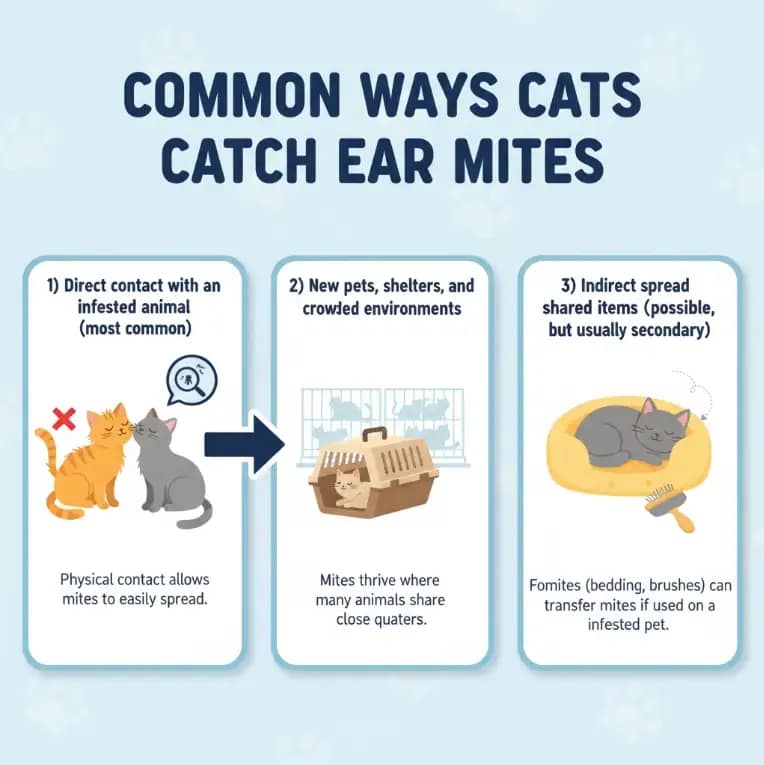
1) Direct contact with an infested animal (most common)
Mites crawl from cat to cat during sleeping, grooming, play-fighting, or cuddling.
Dogs and ferrets can carry the same mites, so cross-species spread in a household is possible.
2) New pets, shelters, and crowded environments
Ear mites are common in shelters, rescues, foster homes, boarding facilities, and homes with multiple animals.
If you adopt or foster, assume a vet ear check is part of the “welcome home” routine.
3) Indirect spread through shared items (possible, but usually secondary)
Mites can survive off-host for a short time, so shared bedding, carriers, brushes, and blankets can contribute—especially during an active outbreak.
Still confirms why cleaning matters, even though direct contact is usually the main driver.
Who’s at higher risk?
Kätzchen and young cats
Katzen im Freien or cats that interact with neighborhood pets
Multi-pet households (especially if one pet has itchy ears)
Newly introduced cats (adoption/foster/visiting pets)
Quick prevention mindset (without blame)
If a new cat joins the home: separate + vet-check ears before free mixing.
If one pet has mites: treat all susceptible pets to prevent a ping-pong reinfestation cycle.
Key takeaway: Ear mites are highly contagious among pets, and controlling them is mostly about treating every at-risk animal + reducing exposure during the outbreak. For more on daily routines to keep your cat healthy, check our daily care guide.
Treatment: Getting Rid of Ear Mites Safely and Effectively
If your cat has ear mites, the good news is that veterinary treatment is very effective, and most cats feel relief quickly once mites are controlled. The goal is to:
Kill mites, 2) clear debris, 3) treat all pets, and 4) recheck so they don’t return.
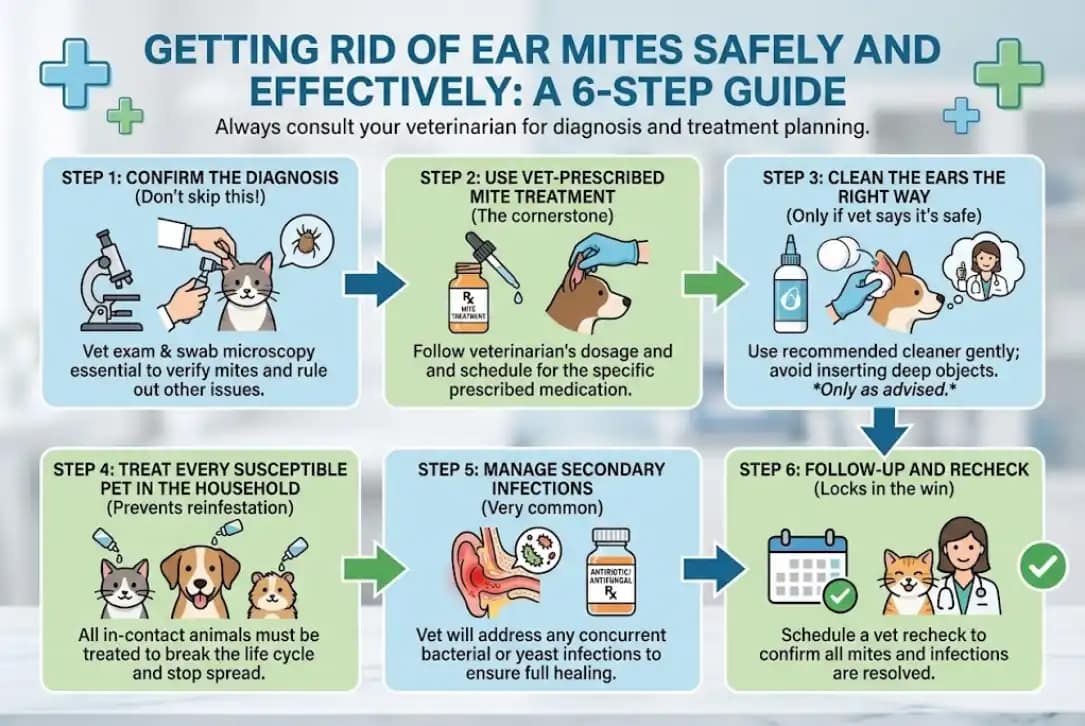
Step 1 Confirm the diagnosis (don’t skip this)
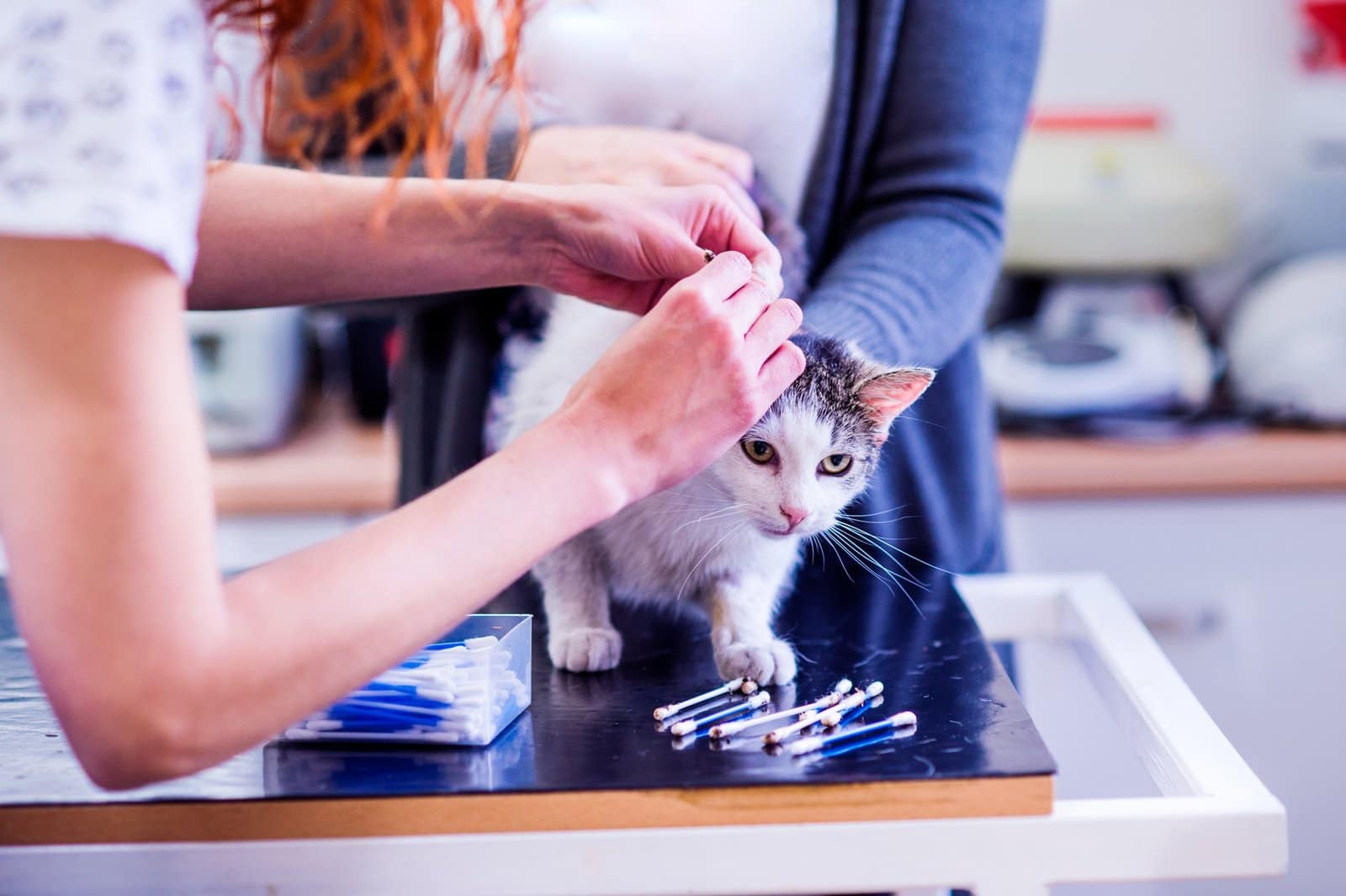
Many ear problems look similar (yeast, bacteria, allergies, polyps). A vet can confirm ear mites by examining ear debris under a microscope and checking for complications like infection or a damaged eardrum.
Step 2 Use vet-prescribed mite treatment (the cornerstone)
Veterinarians treat cat ear mites with medications that kill mites across their life cycle. Your vet will choose what’s safest based on your cat’s age, weight, ear condition, and household setup.
Common vet options include:
- Prescription ear drops (in-ear treatment)
Applied into the ear canal to kill mites and reduce irritation.
Exact schedule depends on the product, so follow your vet’s instructions closely.
- “Spot-on” topical meds (applied to the skin) and/or systemic options
Some prescription products applied to the skin can treat ear mites and often help with other parasites (like fleas).
These can be easier for cats that hate ear handling.
- Other vet-directed protocols (case-by-case)
In select situations, vets may use different approaches for hard-to-medicate cats or complicated infections.
Step 3 Clean the ears the right way (only if your vet says it’s safe)
Ear cleaning can improve comfort and help medication work by removing “coffee-ground” debris. But cleaning technique matters.
Vet-safe home cleaning basics:
Verwenden Sie eine vet-approved ear cleaner (not alcohol, not hydrogen peroxide).
Fill ear canal as directed → massage the ear base 20–30 seconds → let your cat shake → wipe visible debris with cotton/gauze.
Avoid Q-tips deep in the ear canal (risk of injury/packing debris).
If your cat has severe pain, a ruptured eardrum, or intense swelling, the vet explained cleaning may be delayed or done in-clinic.
Step 4 Treat every susceptible pet in the household (prevents reinfestation)
Ear mites spread easily between pets. Even if only one cat is showing symptoms, vets often recommend treating all in-contact cats/dogs/ferrets so mites don’t cycle back.
Treat all pets per vet plan
Wash bedding/blankets in hot water
Clean brushes/carriers
Vacuum common lounging areas
Step 5 Manage secondary infections (very common)
Ear mites can trigger inflammation that allows bacterial or yeast infections to develop. If your cat has odor, pus, severe redness, or pain, your vet may add:
antibiotic/anti-inflammatory ear meds
antifungal treatment
pain relief guidance
Step 6 Follow-up and recheck (locks in the win)
A recheck helps confirm mites are gone and ensures infections are resolving. If symptoms persist, your vet may adjust treatment or investigate other causes (allergy, resistant infection, foreign material, etc.).
Call your vet urgently if you notice:
swollen ear flap (possible hematoma)
head tilt, balance issues, sudden hearing changes
severe pain when the ear is touched
heavy discharge or bleeding
Common mistakes that make ear mites “come back”
Treating only one pet in a multi-pet home
Stopping medication early because symptoms improved
Using harsh cleaners (alcohol/peroxide)
Trying DIY oils/remedies without vet confirmation (can miss infections and eggs)
Want to understand what’s safe at home (and what isn’t)? See our guide: Ear Mites in Cats Treatment: Safe, Vet-Approved Options and Home Support.
Why Prompt Treatment Matters: Risks of Untreated Ear Mites in Cats
Ear mites might start as a simple itch, but if left untreated, they can lead to serious issues for your cat. Here are some potential complications and risks if you don’t address an ear mite infestation in a timely manner:
Quick takeaway: Ear mites don’t just cause itching. Left untreated, they can trigger painful infections, ear injuries, skin wounds, and long-term ear damage—plus spread fast to other pets. If you suspect ear mites, early treatment is the safest, quickest path back to comfort.
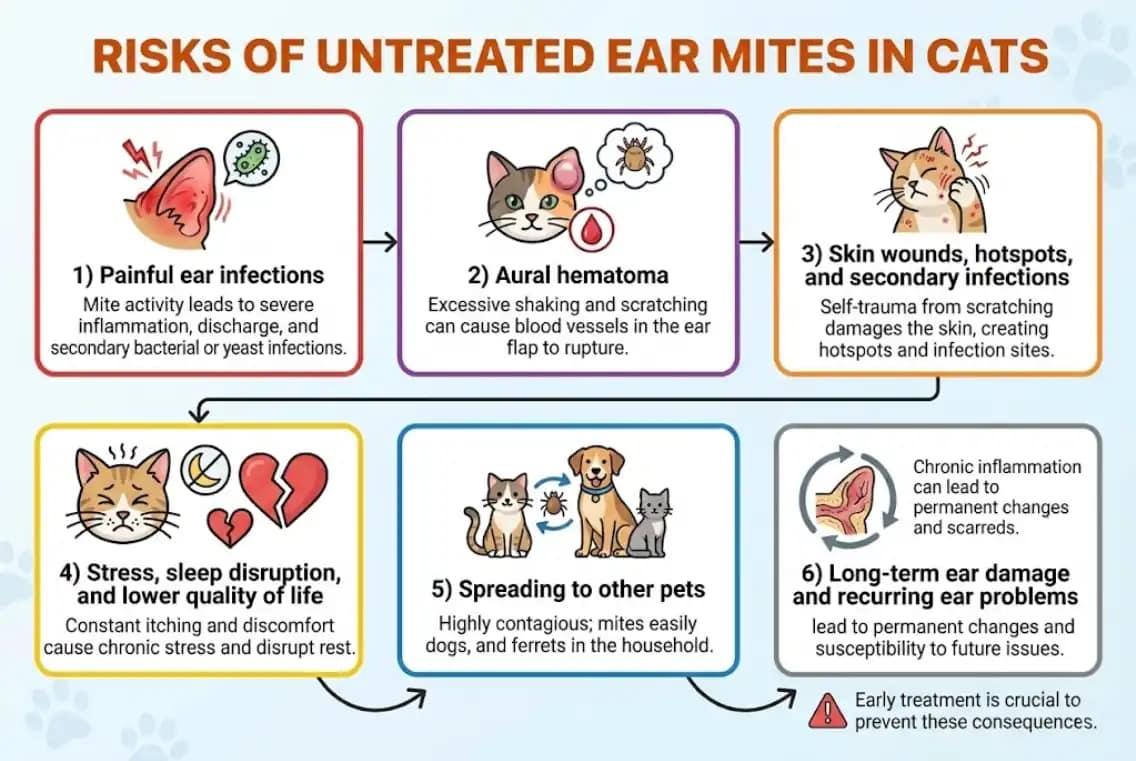
1) Painful ear infections (Otitis externa → deeper infections)
Ear mites irritate and inflame the ear canal. That damaged skin can allow bacteria and yeast to overgrow, turning an itchy problem into a painful ear infection (otitis externa).
What you might notice:
Strong ear odor
Increasing redness/swelling
Thick discharge (dark debris may become wetter, yellowish, or pus-like)
Your cat yelps, pulls away, or won’t let you touch the ear
If infection worsens, it can involve the eardrum and spread deeper (middle/inner ear). That’s harder to treat and may lead to hearing issues or balance problems.
2) Aural hematoma (painful “ear flap swelling”) and ear deformity
Constant head shaking and scratching can rupture a blood vessel in the ear flap, causing an aural hematoma—a soft, balloon-like swelling.
Why it matters: Hematomas often need veterinary care. If they’re ignored, the ear can scar and crinkle (“cauliflower ear”), leaving permanent changes and ongoing sensitivity.
3) Skin wounds, hotspots, and secondary infections
When cats can’t stop scratching, they often create raw skin, scabs, and open wounds around the ears, neck, and face. Those breaks in the skin can become infected and form hot spots or abscesses.
Also, ear mites (and the irritation they cause) can make cats itchy beyond the ears, so owners sometimes mistake the issue for fleas or allergies—delaying the right treatment.
4) Stress, sleep disruption, and lower quality of life
A nonstop itch is exhausting. Cats may become:
Restless and unable to settle
Less playful or withdrawn
Irritable (especially when touched near the head)
Off their food due to discomfort
The sooner you treat the cause, the sooner your cat’s behavior typically returns to normal.
5) Spreading to other pets (and reinfestation cycles)
Ear mites are highly contagious among cats (and can spread to dogs/ferrets). Delaying treatment can turn “one itchy cat” into a full-house problem—making treatment longer, more frustrating, and more expensive.
Practical rule: If one pet has mites, talk to your vet about whether all pets in the home should be treated to prevent reinfestation.
6) Long-term ear damage and recurring ear problems
Chronic inflammation can lead to thickening and narrowing of the ear canal, which may make your cat more prone to future ear infections—even after the mites are gone. Some cats are left with sensitive ears that flare up more easily.
A real-life reminder from the SnuggleSouls community
One community member rescued a stray cat (“Shadow”) whose ears were heavily infested. The irritation progressed into a deeper ear infection, and Shadow developed balance issues that took much longer to resolve.
In contrast, other pet parents who acted early—treating mild head shaking and early debris—often reported a much smoother recovery with fewer complications.
Unterm Strich: Early treatment doesn’t just stop the itch—it helps prevent the chain reaction that can follow. For broader insights on cat health issues like this, explore our Leitfaden zur Gesundheit von Katzen.
Prevention Tips: How to Prevent Ear Mites in Cats (and Catch Them Early)
Ear mites are common—especially in kittens, outdoor cats, and multi-pet homes. While you can’t guarantee your cat will niemals encounter them, you can dramatically lower the risk by focusing on two things: reducing exposure und spotting symptoms early.
Quick prevention summary
Ear mites spread mainly through close contact with infected animals and shared environments. The best prevention is regular ear checks, year-round parasite prevention, quarantining new petsund cleaning shared bedding and tools—especially after an outbreak.
1) Do a weekly ear check (30 seconds)
Goal: catch mites vor irritation turns into infection.
Pick a calm time (after a meal or play).
Gently lift the ear flap and look for:
Dark “coffee-ground” debris
Rötung oder Schwellung
Strong odor
Frequent scratching/head shaking
Healthy ears are usually pale pink, mit minimal wax.
Profi-Tipp: Make this part of your grooming routine—cats tolerate it better when it’s normal.
2) Use vet-recommended parasite prevention (especially in high-risk cats)
Many monthly flea preventatives also help protect against ear mites (product choice depends on your cat’s age, weight, and health history).
Ask your vet about a broad-spectrum preventative if your cat is:
Outdoor/indoor-outdoor
A kitten or recently adopted
In a multi-pet household
Frequently boarded or groomed
Why this works: consistent prevention reduces the chance mites can establish a full infestation.
3) Quarantine new cats (and check ears early)
New rescues and kittens are a common source of mites—no blame, just reality.
Schedule a vet check soon after adoption.
If you have other pets, keep newcomers separate for 7–14 days (or until your vet confirms they’re clear).
Avoid sharing bedding, brushes, and carriers during the intro phase.
This is one of the highest-impact prevention steps in multi-pet homes.
4) Clean the environment during/after an outbreak
Mites don’t live forever off-host, but cleaning helps prevent “round two.”
Wash bedding, blankets, soft toys in hot water, then dry thoroughly.
Vacuum carpets, couches, cat trees, and favorite nap zones.
Wipe hard surfaces and litter area floors regularly during treatment.
Shortcut: If you can only do one thing, prioritize bedding and the cat tree.
5) Limit contact with unknown animals (when possible)
If your cat goes outdoors or attends grooming/boarding, exposure risk goes up.
Avoid direct contact with animals showing ear irritation.
If you know a pet has mites, wait until they’ve completed treatment before playdates.
6) Ask for an ear check at routine vet visits
Even if your cat seems fine, a quick ear exam during annual (or semi-annual) checkups can catch problems early—especially in cats prone to ear issues.
7) Keep shared items truly “shared-safe”
In multi-pet households, mites can pass through close contact and shared items.
Wash shared bedding weekly.
Clean carriers after travel.
Don’t share grooming tools between pets unless cleaned.
8) Skip random OTC mite meds (and never use dog products on cats)
Some over-the-counter ear products are ineffective, and a few can be unsafe for cats—especially products intended for dogs.
If you suspect mites, the safest path is: vet confirmation → correct medication → treat all pets (if advised).
Avoid home “hacks” that can irritate ears or delay treatment.
Ear mite prevention checklist (save this)
Wöchentlich: quick ear look + note scratching/head shaking
Monthly: vet-approved parasite prevention (as recommended)
New pets: isolate + vet check ears before full introduction
After any outbreak: wash bedding + vacuum + clean carriers/tools
Gentle reassurance + next step
Even with excellent prevention, ear mites can still sneak in—especially if your cat meets other animals. If it happens, you didn’t fail. Prevention is about reducing risk and acting early so your cat gets relief fast.
Next: Want a step-by-step plan for what happens after treatment—including how long symptoms should last and how to prevent reinfestation?
Read our full guide: Ear Mite Prevention & Post-Treatment Care for Cats
Coming up next in this article: What recovery looks like after treatment—what’s normal, what’s not, and when to call your vet.
You’ve Got This (and Your Cat Will Feel Better Soon)
Ear mites in cats can feel overwhelming at first—especially when you’re seeing nonstop scratching, head shaking, and that “coffee-ground” ear debris. But here’s the reassuring truth: ear mites are common, highly treatable, and most cats recover quickly with the right plan.
Before you go, remember the simple roadmap:
Confirm the cause: A veterinarian can verify ear mites and rule out look-alikes like yeast or bacterial infections.
Treat fully: Use vet-recommended medication exactly as directed—finishing the full course matters to prevent reinfestation.
Treat all pets: Ear mites spread easily between animals, so household pets often need treatment too.
Follow up + prevent: Rechecks and ongoing parasite prevention help keep mites from coming back.
If you’re in the thick of it right now, take a deep breath. You’re not failing your cat—you’re doing the best possible thing: learning, acting early, and caring deeply. Even if your kitty isn’t thrilled about ear drops today, comfort is coming soon (and forgiveness usually arrives right on schedule).
From the SnuggleSouls-Team: you’re not alone. And with steady, step-by-step care, you’ll get back to peaceful ear scratches—and many purr-filled days ahead.

FAQ
Can humans get ear mites from cats?
No, ear mites are not zoonotic and cannot be passed from cats to humans. While they may cause minor skin irritation in rare cases, humans cannot develop an infestation from ear mites.
How do I know if my cat has ear mites?
Common signs include head shaking, excessive scratching of the ears, black or brown ear discharge resembling coffee grounds, and ear redness or inflammation. A veterinarian can confirm with an ear swab and microscope exam.
Can indoor cats get ear mites?
Yes, even indoor cats can get ear mites, usually through contact with other animals, including newly adopted cats or pets from veterinary clinics, grooming sessions, or boarding facilities.
Should I treat all pets in the house if one has ear mites?
Yes, it’s recommended to treat all pets in a multi-pet household to prevent re-infestation, as ear mites spread easily among animals through direct contact or shared bedding.
Can I use baby oil to treat ear mites in my cat?
While baby oil may smother some ear mites, it doesn’t kill mite eggs or prevent reinfestation. Professional veterinary treatments are more effective and provide long-term relief.
Referenzen
Barnes, C., Weir, M., & Ward, E. (2024). Ear Mites in Cats and Dogs. VCA Tierkliniken.
Dryden, M. W. (2018). Milbenbefall (Otodectische Räude) bei Katzen. Unter Merck-Handbuch für Tiermedizin (Pet Owner ed.). Merck & Co.
Cornell Feline Health Center. (n.d.). Ear Mites: Tiny Critters That Can Pose a Major Threat. Cornell University, College of Veterinary Medicine.
CAPC (Companion Animal Parasite Council) guideline page (gold for prevalence, lifecycle, transmission, “treat all pets”).
Today’s Veterinary Practice (peer-reviewed clinical article/PDF) (strong clinical framing + “coffee-ground debris” + prevalence stat).
University of Saskatchewan (WCVM) parasite page (good for off-host survival nuance: “few days normally; longer in cool/damp”).
EveryCat Health Foundation PDF (practical treatment + cleaning + treat all household animals).












 EN
EN DE
DE ES
ES PT
PT