
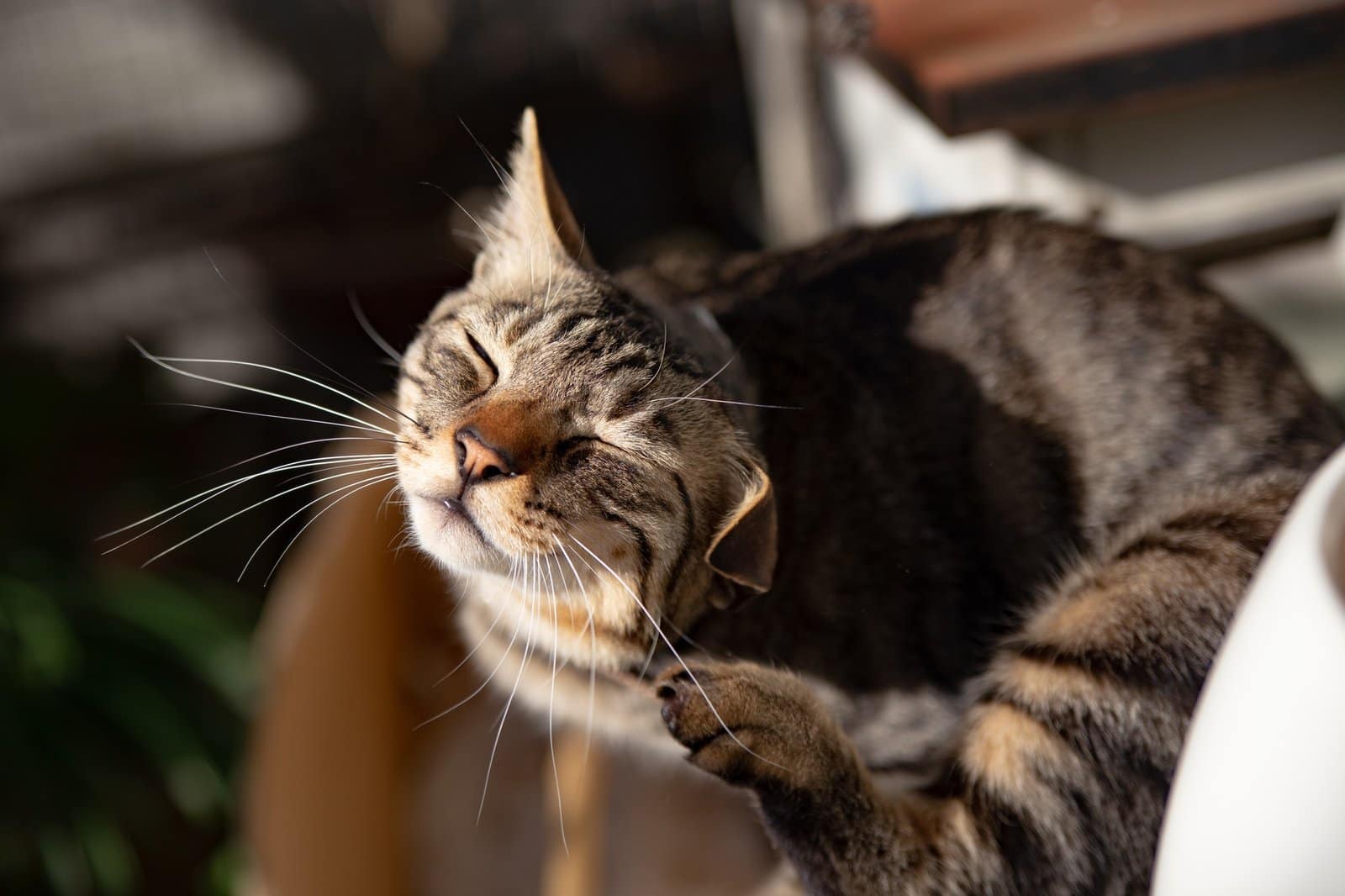
Understanding “Twitchy Cat Syndrome” (Feline Hyperesthesia Syndrome)
Have you ever noticed your cat’s back twitching when you pet them, seen rippling skin along the spine, or watched them suddenly spin and attack their tail? It’s unsettling—and it can happen for several reasons. Sometimes it’s a normal skin reflex or simple overstimulation, but it can also be linked to itchiness (like fleas/allergies), pain, stress, or—less commonly—Felines Hyperästhesie-Syndrom (FHS).
Quick reassurance: occasional back twitching during petting can be normal in cats. Many cats have small muscle movements in the back that show up when they’re touched or excited.
But if the twitching comes with sudden agitation, dilated pupils, frantic running, loud yowling, or tail/self-biting—especially in short “episodes”—that’s when conditions like FHS move higher on the list and a vet check becomes important.
This guide breaks down the most common signs, what can trigger episodes (skin irritation, pain, stress, or neurological issues), and what to do next—especially when it’s time to call a vet.
Start Here: What Your Cat’s Twitching Most Likely Means (Quick Triage)
If you’re seeing back twitching, rippling skin, or sudden tail attacks, use this quick guide to decide what to do.
1. Likely normal / overstimulation (common)
Usually looks like: a brief twitch when you pet the back, then your cat stays relaxed.
More likely if:
Twitching is mild and stops when you stop petting
No frantic running, yowling, or biting
No scabs/hair loss from overgrooming
Try tonight: switch to head/cheek petting, shorter sessions, and stop when your cat gives “that’s enough” signals (tail flicks, skin ripples, tense body).
2. Likely itch/skin irritation (very common)
Usually looks like: twitching + frequent licking/scratching, dandruff, scabs, or hair thinning.
More likely if:
You see “flea dirt” or small scabs (often near the tail base)
Episodes worsen seasonally or after diet/environment changes
Try this week: check with a flea comb, confirm parasite prevention, and book a vet visit if skin changes persist.
3. Possible pain, stress, or episode-based syndrome (needs evaluation)
Usually looks like: your cat flips from normal → frantic/agitated → normal in short bursts.
More likely if you notice:
Dilated pupils, sudden running/jumping, loud yowling
Tail chasing/attacking or biting the back/flanks
Aggression or panic when touched near the tail base
Do next: skip touching during episodes, film one if safe, and schedule a vet check—especially if it repeats.
Urgent: self-injury, collapse, seizure-like activity, or an episode that doesn’t stop.
Cat Back Twitching When I Pet Them: Is It Normal?
Often, yes. Many cats have a mild skin ripple reflex—especially when overstimulated or excited. If your cat stays calm and the twitching stops when you stop petting, it’s usually a “please stop” signal, not a disease.
More likely normal if:
Mild twitching only during petting
No panic, yowling, or biting
No skin scabs/hair loss
More likely not normal if it comes with: dilated pupils, sudden frantic movement, tail attacks, intense grooming/biting, or repeated episode patterns.
Rippling Skin Along the Back: Common Causes (Fleas/Allergies/Pain)
“Rippling skin” can happen when the nerves or muscles in the back are irritated—most often from itch (fleas/allergies) or Schmerzen near the spine or tail base.
Check for itch clues:
Frequent licking/grooming, small scabs, dandruff
Hair thinning near the tail base or flanks
Seasonal flare-ups
Check for pain clues:
Flinching when touched near the lower back
Avoiding jumps, stiffness, Verstecken mehr als üblich
Reacting suddenly when you pet the tail base
If you’re unsure, a vet can help rule out parasites/skin issues and evaluate pain.
Cat Suddenly Attacking Their Own Tail: Play vs Problem
Tail chasing can be normal play, but sudden aggressive tail attacks are more concerning—especially if your cat injures skin or seems panicked rather than playful.
More likely play/boredom:
Happens during zoomies, stops with toys/play
No injury, no repeated “episode” pattern
More likely a problem:
Hard biting, fur pulling, skin wounds
Repeats in short bursts, escalates, looks frantic
Happens after touching the lower back/tail base
If your cat is hurting themselves, treat it as urgent.
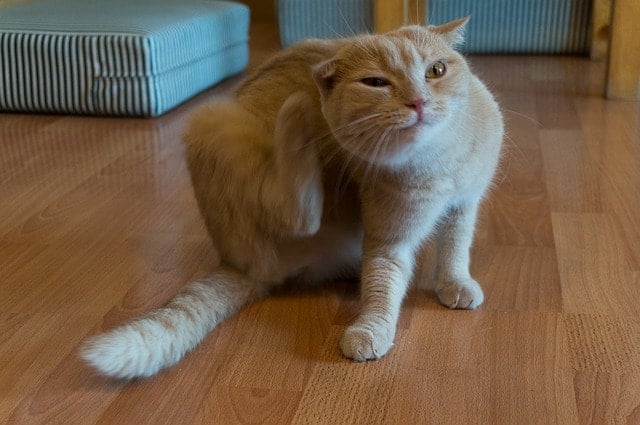
When Feline Hyperesthesia Syndrome (FHS) Becomes More Likely
Feline Hyperesthesia Syndrome (also called Syndrom der zuckenden Katze, Rollende Hautkrankheit, oder Kräuselkrankheit der Haut) is an uncommon condition where cats have short episodes of intense skin sensitivity—usually along the lower back near the tail—paired with unusual behaviors like frantic running, vocalizing, tail chasing, or intense grooming/biting.
The key pattern is episodic: many cats go from normal → frantic → normal within seconds to a few minutes.
Common signs (quick checklist)
Rippling/twitching skin on the lower back
Sudden tail chasing or attacking the tail
Dilated pupils + “trance-like” agitation
Vocalizing, frantic running, jumping
Overgrooming/biting the back or flanks
When to call a vet (clear timing + red flags)
Gehen Sie jetzt zu einem Notfalltierarzt if any of these happen:
A severe episode lasts longer than 2–3 minutes (especially if it won’t stop).
Self-injury is happening (biting hard enough to break skin / bleeding) or your cat is at risk of falling or hurting themselves during frantic running.
Collapse or clear seizure-like activity occurs.
Contact your vet within 24 hours if signs are mild–moderate but concerning, such as:
Repeated episodes of back twitching/rippling skin + agitation, tail chasing, or sudden vocalizing
Painful reaction when touched near the lower back/tail base
Escalating aggression, intense overgrooming/biting, or episodes increasing in frequency
Important (during an episode):
Don’t try to hold, restrain, or pet your cat. Stay calm and reduce stimulation—handling can worsen the reaction and can lead to bites/scratches.
If you’re ever unsure, it’s safer to call your vet—many issues that mimic FHS (fleas/allergies, pain) are treatable and should be ruled out.

Causes Vets Rule Out First (Because They’re More Common Than FHS)
Before labeling twitchy-skin episodes as Hyperästhesie-Syndrom bei Katzen, vets usually rule out more common causes of back twitching, tail attacking, and sudden agitation. This matters because many “FHS-like” behaviors improve a lot once the real trigger (itch, pain, stress) is addressed.
Quick differential checklist (fast, practical)
| Most common cause | What you’ll often notice at home | What to do now (safe steps) | What the vet may do |
|---|---|---|---|
| Overstimulation / “that’s enough” signal | Twitching mainly during petting, cat otherwise relaxed | Stop petting when twitching starts; switch to cheek/head rubs; keep sessions short | Usually none unless other red flags |
| Fleas / mites / allergy itch | Overgrooming, scratching, scabs (often near tail base), dandruff, hair thinning | Flea comb check; ensure consistent vet-grade parasite prevention; avoid changing multiple foods at once | Skin exam, flea/mites checks, allergy plan, diet trial if needed |
| Skin infection/irritation | Redness, sores, “hot spots,” hair loss patches, odor | Don’t apply human creams; prevent licking if wounds are open; book a vet visit | Skin cytology/culture, ringworm testing if suspected |
| Pain (spine, tail, hips) | Flinching near lower back/tail base, stiffness, reluctance to jump, hiding | Avoid touching painful areas; restrict high jumps temporarily; book vet soon | Pain/ortho exam, X-rays, pain-control trial |
| Stress/anxiety or conflict | Episodes around triggers (new pet, visitors, loud noises), worse at certain times | Add routine + enrichment; provide hiding spots; reduce chaos; consider pheromones | Environmental history; behavior plan; referral if needed |
| Neurologic/seizure-like activity (less common) | Blank stare, tremors/jerks, drooling, loss of bladder control, unusual “post-episode” confusion | Film it if safe, keep cat away from stairs, urgent vet if severe | Neuro exam; labs; possible imaging/meds depending on findings |
A simple rule of thumb
If the behavior is mild + only during petting, start with overstimulation management.
If you see skin changes or frequent grooming, assume itch until proven otherwise.
If it happens in short episodes with dilated pupils/frantic movement or your cat hurts themselves, book a vet visit promptly and treat it as higher priority.
Next: If the episode pattern still fits after common triggers are addressed, the symptom checklist below will help you recognize classic FHS episodes and bring a clear history to your vet.
Cat Back Twitching, Rippling Skin & Tail Chasing: FHS Symptoms to Look For
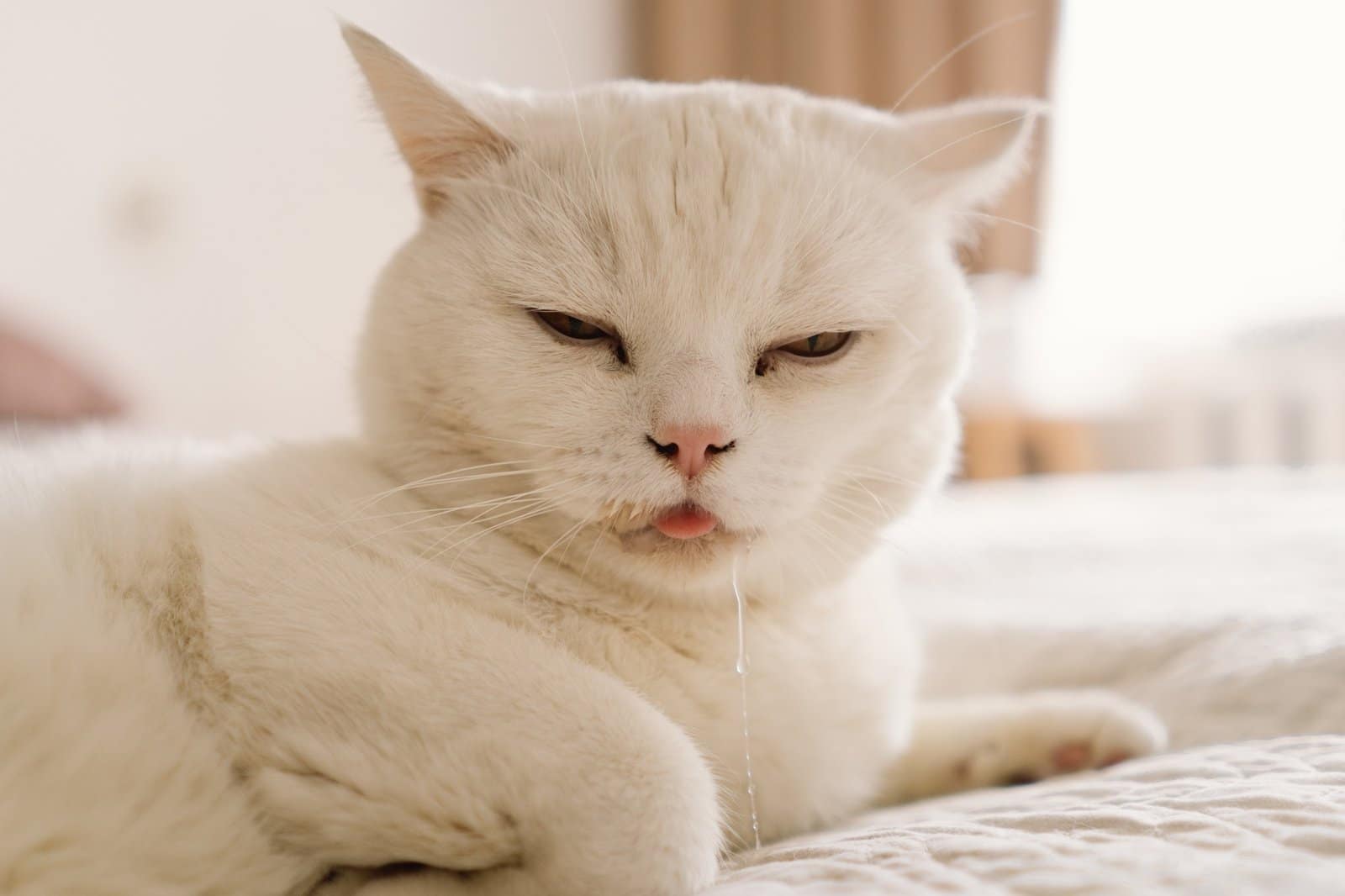
Feline Hyperesthesia Syndrome (FHS) often shows up as Episoden von back twitching/rippling skin, sudden agitation, and behaviors like tail chasing or self-biting—followed by a return to normal. Recognizing the pattern (and what else can mimic it) is the first step toward helping your cat.
Diese Episoden können verblüffend sein - in einem Moment ist Ihre Katze ruhig, im nächsten verhält sie sich, als ob etwas unter ihrer Haut krabbeln würde. Das Erkennen der Symptome (sowohl körperlich als auch verhaltensmäßig) ist der erste Schritt, um Hilfe für Ihre Katze zu bekommen.
FHS episode checklist (what owners usually notice first)
During an episode, many cats show (1) rippling/twitching skin along the back, (2) sudden tail chasing or biting, and (3) dilated pupils with agitation or frantic movement. Not every cat shows every sign, and episodes can range from mild to intense.
| Körperliche Anzeichen (Körper) | Verhaltenssymptome (Aktionen) |
|---|---|
| Zuckende oder kräuselnde Haut auf dem Rücken (insbesondere in der Nähe des Schwanzes). | Plötzliches Laufen und Springen als ob sie von etwas Unsichtbarem aufgeschreckt würden. |
| Muskelkrämpfe entlang der Wirbelsäule (Sie können sehen, wie sich das Fell kräuselt). | Schwanzjagd oder Angriff auf den Schwanz bösartig. |
| Geweitete Pupillen (große, vergrößerte Augen) und eine tranceartiger Blick. | Erregte Vokalisationen - lautes Jaulen oder beharrliches Miauen (oft nachts). |
| Speichelfluss/Träufeln während einer Episode. | Unprovozierte Aggression - plötzlich zuschlagen oder beißen, wenn man versucht, sie zu berühren. |
| Unkontrolliertes Wasserlassen (unwillkürliches Pinkeln) inmitten eines extremen Anfalls. | Zwanghafte Selbstbeschneidung oder Beißen am Rücken, an den Flanken oder an den Pfoten. |
| (Selten) Anfallsartiges Zittern oder Körperzuckungen. | Unruhe oder hektisches Verhalten - ziellos hin und her laufen. |
Wie diese Episoden aussehen: Oft beginnt es mit dem verräterischen "Hautrollen" auf dem Rücken Ihrer Katze - Sie sehen, wie sich das Fell kräuselt, als ob ein elektrischer Strom darunter fließt. Ihre Katze kann plötzlich herumschnellen und sie beißen oder kratzen sich am Rücken oder Schwanzmanchmal bis hin zum Ausreißen des Fells oder der Haut (Selbstverstümmelung ist bei FHS ein ernstes Problem).
Sie könnten quer durch den Raum rennen unerwartet oder aufspringen als ob sie von einer Phantombedrohung aufgeschreckt würden. Viele Katzen werden lautstark vokalisierenmit Jaulen oder Heulen der offensichtlichen Erregung, und ihre die Pupillen werden oft weit und glasig. Wenn Sie versuchen, einzugreifen oder sie während eines Anfalls zu streicheln, erkennen sie Sie möglicherweise nicht sofort und könnten sogar beißen. aggressiv ohne Kontrollewie in Trance.
Manche Katzen scheinen während dieser Anfälle desorientiert oder "geistesabwesend" zu sein, fast so, als wären sie in ihrer eigenen Welt.
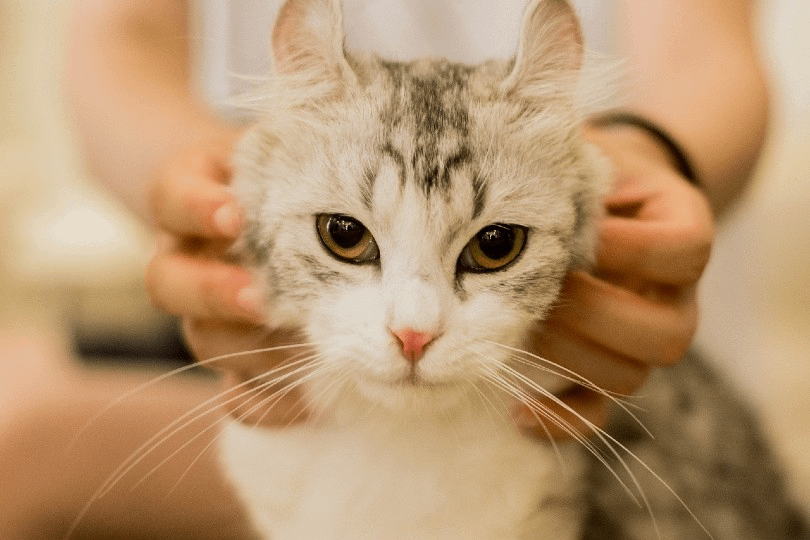
Katzen mit FHS können plötzlich so reagieren, als ob sie von einem Stromstoß berührt würden. Bei FHS kann gewöhnliches Streicheln (insbesondere in der Nähe des Schwanzes) extremes Unbehagen auslösen, so dass sich die Katze herumdreht, faucht oder sich hektisch am Rücken krault. Die Besitzer beschreiben es oft so, als ob "etwas unter der Haut" die Katze stört.
Nicht jede Katze zeigt alle der oben genannten Anzeichen - FHS ist sehr variabel. Bei einer Katze kann es vor allem zu Hautzuckungen und Schwanzwedeln kommen, während eine andere vor allem laut wird und bei Berührung aggressiv reagiert. Die Intensität kann von leicht (nur ein Zittern der Rückenhaut und ein misstrauischer Blick) bis schwer (ein regelrechter Angriff mit dem Schwanz oder ein lang anhaltender Laufanfall) reichen.
Entscheidend ist, dass diese Verhaltensweisen in der Regel auftreten Episoden mit einer Dauer von nur wenige Sekunden bis zu einigen Minuten in den meisten Fällen. Nachdem ein Anfall vorüber ist, kehrt die Katze in der Regel zur Normalität zurück, als ob nichts geschehen wäre - sie kann sogar für kurze Zeit müde oder verwirrt wirken, um dann wieder zu faulenzen.
Tipp: Behalten Sie eine Symptom-Tagebuch für Ihre Katze. Notieren Sie, wann die Anfälle auftreten, wie lange sie andauern, was Ihre Katze kurz zuvor getan hat und welche Anzeichen beobachtet wurden. Besser noch, versuchen, eine Episode zu filmen auf Ihrem Telefon (wenn es sicher ist).
Ein Video, das Sie Ihrem Tierarzt zeigen können, kann unglaublich hilfreich sein, da diese Episoden nur sporadisch auftreten und Ihre Katze sich während des Tierarztbesuchs völlig normal verhalten kann. Wenn Sie das "zuckende" Verhalten auf Video festhalten, kann der Tierarzt genau sehen, was Sie zu Hause beobachten.
What Causes Feline Hyperesthesia Syndrome?
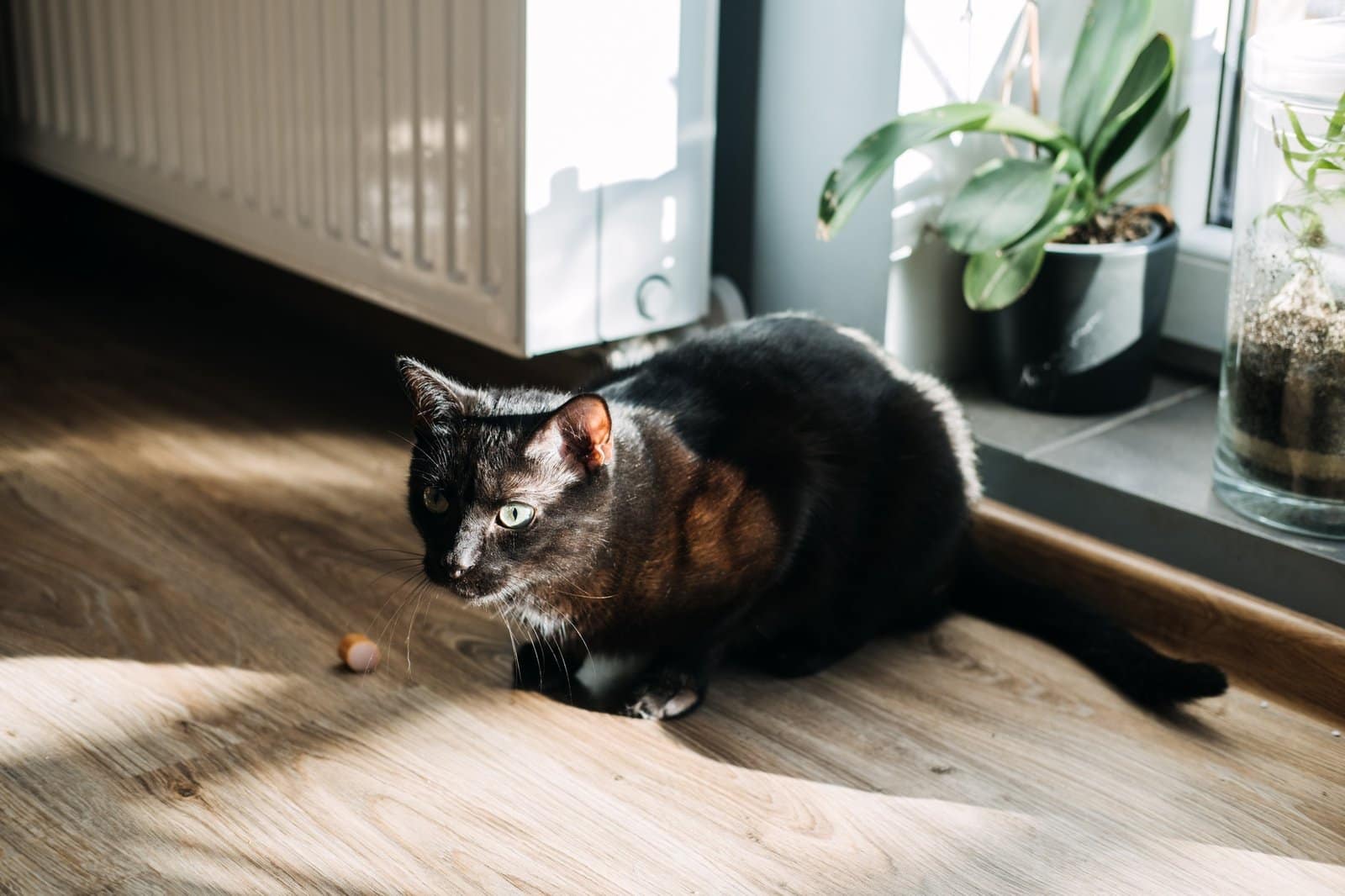
One of the hardest parts about FHS is that there isn’t a single proven cause. In veterinary medicine, it’s often treated as a syndrome—meaning a cluster of signs that can have more than one trigger. In many cats, FHS-like episodes seem to involve a mix of skin irritation, pain or nerve sensitivity, and stress-related behavior changes. That’s why veterinarians typically focus first on ruling out the most common and treatable contributors.
The most common contributors vets check first
Parasites or allergies (itch triggers like fleas, mites, food/environment allergies)
Skin infection or irritation (hot spots, dermatitis, fungal issues)
Pain along the spine or tail (arthritis, injury, disc disease)
Neurologic causes (seizure-like activity in some cats)
Stress/anxiety (can worsen frequency and intensity of episodes)
1. Skin-Related Triggers
Because FHS often involves rippling skin, twitching, and intense sensitivity, vets frequently start by investigating itch and skin discomfort. Allergies are a common culprit—cats dealing with flea allergy dermatitis or food/environment allergies may overgroom, bite at their back, or act frantic simply because they feel miserable.
Even after obvious itch triggers are treated, some cats continue to have episodes. That doesn’t mean the itch was “irrelevant”—it may have been the starter spark that set off a longer-term pattern.
Other possible skin-related triggers include mite infestations, fungal infections, and (rarely) conditions linked to nutrition such as Pansteatitis (inflammation of fat tissue associated with vitamin E deficiency).
Unterm Strich: if a cat is itchy or irritated, the behavior can siehe like FHS—so skin causes should be addressed early.
2. Neurological and Pain-Related Triggers
Another major theory is that FHS can involve neurological overactivity, sometimes described as seizure-like in certain cats. Some veterinarians consider FHS episodes similar to psychomotorische Krampfanfälle, where behavior changes occur without the classic full-body convulsions.
Pain can also drive the same “sudden flip” behavior. If a cat has Nervenschmerzen (for example, from a pinched nerve, tail injury, or spinal disease), they may whip around, bite the tail, or sprint as if something shocked them. Conditions such as Arthritis oder intervertebral disc disease can increase sensitivity along the back and trigger strong reactions to touch.
Sometimes, what looks like FHS improves dramatically when the underlying pain source is treated—suggesting the “syndrome” was a visible symptom of a deeper neurologic or orthopedic issue.
That said, not all cats respond the same way to anti-seizure medication, and tests don’t always reveal a clear neurological abnormality—so neurology doesn’t explain every case.
3. Behavioral and Stress-Related Triggers
Some experts believe FHS can overlap with stress-related or compulsive behaviors. Cats are highly sensitive to environmental change, and stress can show up as overgrooming, agitation, redirected biting, or repetitive behaviors.
One theory is that stress or internal conflict (wanting to run vs. wanting to groom, feeling overstimulated but unable to settle) may “spill over” into frantic grooming or tail-focused behaviors. Over time, these patterns can become more automatic—especially if the cat repeatedly experiences discomfort or anxiety.
Many owners notice episodes worsen during stressful periods, and “high-strung” cats may appear more prone—though the behavioral theory alone doesn’t explain every case, since behavioral treatment doesn’t consistently resolve symptoms in all cats.
Praktisch zum Mitnehmen
Because FHS can have multiple overlapping triggers, vets usually investigate it from several angles at once: skin/itch, pain, neurological causes, and stress. The best outcomes often come from treating what’s most likely—and most fixable—first (like parasites, dermatitis, or pain), while also reducing stressors at home.
Diagnosing Feline Hyperesthesia Syndrome: Why It’s a “Rule-Out” Diagnosis
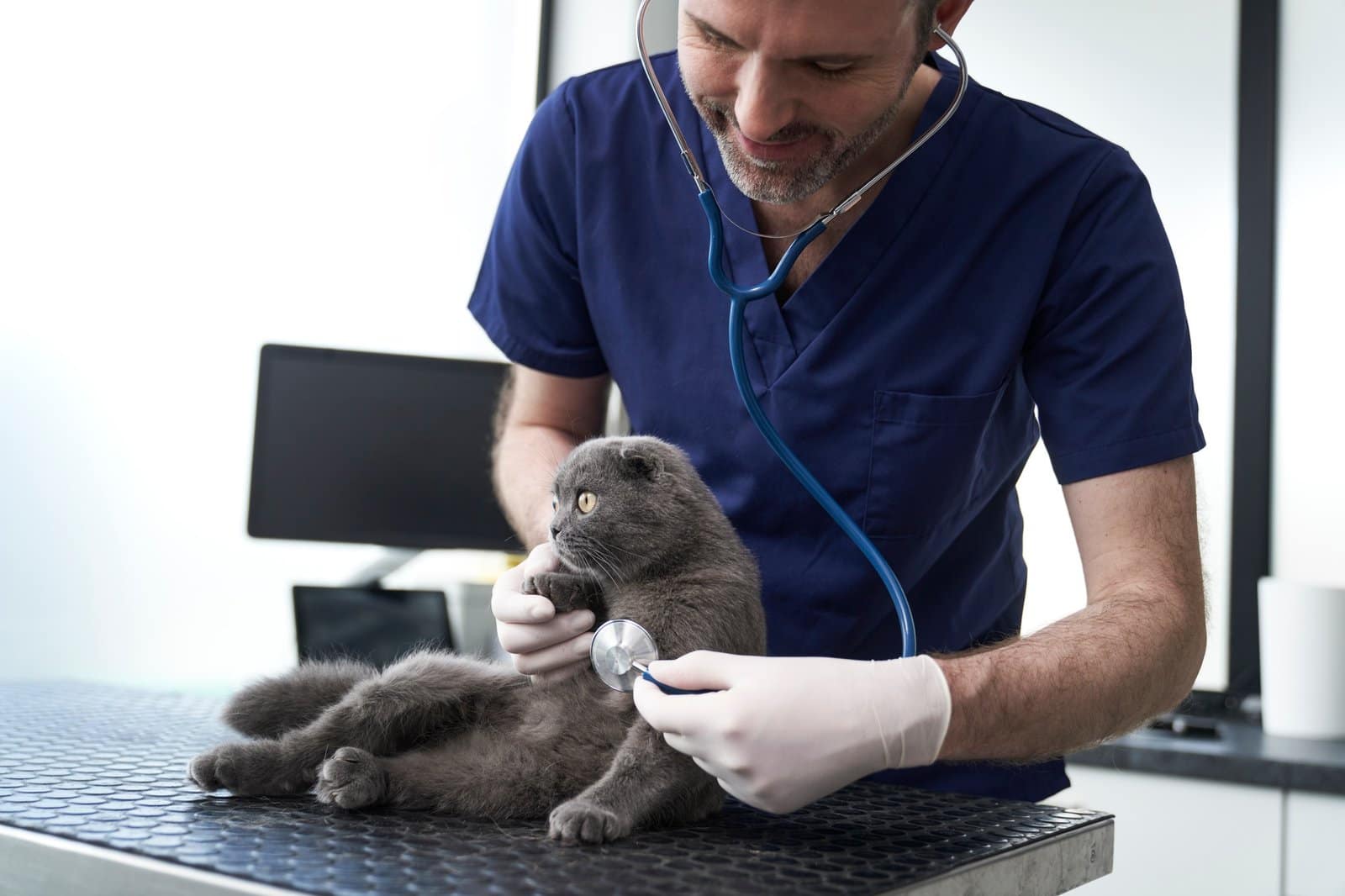
Diagnosing Feline Hyperesthesia Syndrome (FHS) can feel like solving a mystery—because there isn’t one definitive test that confirms it. Instead, most veterinarians diagnose FHS by ruling out other (often more common) causes first, such as skin irritation, pain, parasites, allergies, or neurologic conditions. This is why FHS is called a Ausschlussdiagnose: the label is used only after other explanations for the twitching and episode-like behavior have been carefully checked.
Below is what you can typically expect during the diagnostic process.
1. Detailed history (your notes matter)
Your vet will ask you to describe the episodes as clearly as possible. If you can, bring a short video—it’s one of the most helpful tools because many cats act normal at the clinic.
Be ready to share:
When the episodes started and whether they’re getting more frequent or intense
How long they last (seconds vs minutes)
What happens right before an episode (petting near the tail base, grooming, feeding, nighttime, stress)
Any recent household changes (new pet, move, schedule change), since stress can worsen episodes
2. Physical exam + targeted neurologic check
Next, your vet will do a full physical exam with close attention to your cat’s skin, coat, back, and tail base. They’ll look for clues like fleas, scabs, hair loss, irritation, or wounds from self-biting.
They’ll also do a basic neurologic exam and may gently feel along the spine to check for pain, muscle tension, or hypersensitivity. If your cat reacts strongly when the back or tail base is touched, that’s an important finding—but it can happen with pain or skin disease too, not just FHS.
3. Tests to rule out common lookalikes
Because many conditions can mimic “twitchy cat syndrome,” your vet may recommend tests based on your cat’s signs:
Skin and parasite checks
Flea combing, skin scrapings, and mite checks (even indoor cats can get fleas)
Fungal testing if ringworm or infection is suspected
Allergy discussion (including diet trials when appropriate)
If the behavior improves after treating itch triggers (fleas/allergies), the episodes may have been reactive hyperesthesia, not idiopathic FHS.
Bloodwork
Blood tests help rule out medical problems that can cause agitation, overgrooming, or behavior changes. Your vet may specifically check for Hyperthyreose, plus general health markers.
Pain and orthopedic assessment
If back or tail pain is suspected, your vet may recommend X-rays to look for issues like arthritis or spinal problems. Sometimes vets will do a short pain-control trial to see whether episodes improve—because pain can drive sudden tail attacks and touch sensitivity.
Advanced neurologic testing (only when indicated)
If seizures or serious neurologic disease are suspected (or if initial treatment doesn’t help), your vet may discuss referral tests like MRI/CT and, in some cases, spinal fluid analysis. These are usually reserved for more severe or complicated cases.
Behavior and stress evaluation
Since stress and compulsive behaviors can worsen twitchy episodes, your vet may ask detailed questions about routine, enrichment, conflict with other pets, and environmental triggers. In some cases, a veterinary behaviorist may be recommended.
Why getting the diagnosis right matters
It’s tempting to assume “this must be FHS” and jump straight to treatment—but the risk is missing a treatable root cause. A cat whose symptoms are driven by fleas, allergy dermatitis, or back pain needs a very different plan than a cat with seizure-like episodes or compulsive overgrooming. A careful, step-by-step workup helps your vet choose the safest and most effective path to relief.
Grundlagen der Behandlung: Ein vielschichtiger Ansatz für Komfort und Kontrolle

Wenn bei Ihrer Katze das Feline Hyperästhesie-Syndrom diagnostiziert wurde, fühlen Sie sich vielleicht zunächst überfordert - aber seien Sie beruhigt: Mit dem richtigen Ansatz bessern sich die meisten Katzen. Und diese Verbesserung kommt nicht nur von einer Pille oder einem Produkt. Sie ergibt sich aus der Kombination mehrerer kleiner Veränderungen, die das körperliche Wohlbefinden, das emotionale Gleichgewicht und die neurologische Gesundheit Ihrer Katze unterstützen.
Bei SnuggleSouls haben wir festgestellt, dass die effektivsten FHS-Behandlungspläne in der Regel drei Kernbereiche umfassen:
Linderung von Hautbeschwerden die die Episoden auslösen oder verschlimmern können.
Reduzierung der täglichen Stressfaktoren damit sich Ihre Katze sicher und unter Kontrolle fühlt.
Umgang mit neurologischer Überaktivitäteinschließlich Krampfanfällen oder obsessiven Verhaltensmustern.
Es geht nicht darum, Ihre Katze über Nacht zu "reparieren". Es geht darum, ihre Welt sicherer, ruhiger und berechenbarer zu machen - Schritt für Schritt. Manche Katzen brauchen vielleicht nur eine Flohbekämpfung und einen ruhigeren Platz. Andere brauchen vielleicht Medikamente, Ernährungsumstellung oder Verhaltensunterstützung. Der Schlüssel liegt darin, die Behandlung auf die individuellen Bedürfnisse Ihrer Katze abzustimmen.
Jetzt kommt der beruhigende Teil: Wenn diese Strategien sorgfältig kombiniert werden, treten bei den meisten Katzen weniger und mildere Episoden auf. Viele führen danach ein entspanntes, glückliches Leben.
Sie fragen sich, welche Behandlungen sicher sind, welche Medikamente tatsächlich helfen oder wie Sie zu Hause ein stressarmes Umfeld schaffen können, das eine langfristige Genesung unterstützt?
👉 Lesen Sie den vollständigen Leitfaden: Umfassende Behandlungsmöglichkeiten für das Hyperästhesie-Syndrom der Katze
Denn wenn wir die Katze in ihrer Gesamtheit behandeln - und nicht nur die Symptome -, geben wir ihr die bestmögliche Chance, sich ruhig und wohl zu fühlen und wieder ganz sie selbst zu sein.
Kann man FHS vorbeugen?
Now you may be wondering: can Feline Hyperesthesia Syndrome (FHS) be prevented—especially for your other cats? Because the exact cause isn’t fully understood, there’s no guaranteed way to prevent idiopathic FHS. But you kann lower the odds of FHS-like episodes by reducing common triggers—especially itch, pain, and stress. In practice, prevention is about solid everyday care and catching problems early:
Keep up with parasite prevention
Fleas and other skin parasites can trigger intense itch cycles that look a lot like FHS. Use vet-recommended flea prevention year-round, even for indoor cats (fleas can hitchhike in). If your cat goes outdoors, stay alert for mites and ticks too. Comfortable skin = fewer flare-ups.
Feed a balanced diet (and maintain a healthy weight)
True nutritional deficiencies are uncommon in cats on complete commercial diets—but if you home-cook or feed unconventional foods, make sure the diet is fully balanced. Healthy skin and coat support (including essential nutrients and fatty acids) may reduce hypersensitivity. Also, keep your cat at a healthy weight—obesity can reduce activity and worsen stress-related behaviors.
Build daily play and enrichment into the routine
Cats with consistent outlets for energy tend to be calmer. Aim for daily interactive play (even 10–15 minutes) and add enrichment like puzzle feeders or climbing spaces. This helps prevent boredom and reduces the chance that nervous energy turns into compulsive behaviors.
Reduce stress before it builds
Stress is a common amplifier for many behavior and body-sensitivity issues. When life changes are coming—moving homes, new pets, a baby, schedule shifts—try to keep routines predictable, protect your cat’s “safe zone,” and do changes gradually. Tools like pheromone diffusers/sprays, extra hiding spots, and slow introductions can make a big difference.
Intervene early when something feels “off”
Early treatment can prevent escalation. If your cat suddenly overgrooms, develops scabs, reacts painfully to touch, or starts tail chasing, don’t wait it out—check with a vet. Addressing fleas, allergies, or back/tail pain early may stop a pattern from becoming entrenched.
Consider genetics (and be extra proactive with high-risk cats)
Some breeds appear more predisposed, and family history may raise risk. There’s no DNA test for FHS, but if your cat is likely higher-risk, lean harder into routine, low-stress living, and faster response to early warning signs.
And one last reassurance: even with excellent care, some cats develop FHS without an obvious trigger—it’s not your fault. Focusing on overall wellness, minimizing stress, and responding early is the most effective prevention strategy we currently have.
Schlussfolgerung
FHS progress can take time. Stress chemistry doesn’t reset overnight, and new patterns—like staying calm during petting—often build slowly. Improvement is rarely a straight line: you may see good weeks, then a setback. That’s normal. With consistent support, most cats do get better.
One rule matters most: never punish FHS-related behavior. Your cat isn’t being “bad”—they’re reacting to discomfort or overload they can’t fully control. Punishment creates fear, fear increases stress, and stress can trigger more episodes.
We also know how hopeful it is when, after steady care, they start choosing calm again. You’re not just managing symptoms—you’re building a safer world for your cat and a stronger bond between you.
Over time, those “twitchy” moments can become less frequent and less intense—just small footnotes in an otherwise comfortable life. What lasts is a cat who feels understood and supported, and a guardian who knows how to help.
FAQ
Ist das Feline Hyperästhesie-Syndrom schmerzhaft für meine Katze?
Ja, viele Katzen scheinen während der FHS-Episoden Unbehagen oder sogar Schmerzen zu empfinden, insbesondere wenn sie am Rücken berührt werden. Das Zucken, Beißen und die Unruhe sind Anzeichen dafür, dass Ihre Katze auf etwas Unangenehmes reagiert. Zwischen den Episoden sind sie jedoch normalerweise schmerzfrei.
Kann das Feline Hyperästhesie-Syndrom geheilt werden?
Derzeit gibt es keine dauerhafte Heilung für FHS, aber die Krankheit ist beherrschbar. Viele Katzen leben ein langes, glückliches Leben mit einer Behandlung, die die Symptome reduziert oder fast beseitigt.
Wie lange dauert eine FHS-Episode normalerweise?
Die Episoden dauern in der Regel zwischen einigen Sekunden und zwei Minuten. Sie beginnen und enden oft abrupt, und in den meisten Fällen verhält sich die Katze vor und nach dem Anfall normal.
Ist FHS gefährlich?
FHS ist an sich nicht lebensbedrohlich, kann aber zu schweren Selbstverletzungen führen (z. B. Schwanzverstümmelung oder Stürze während der Episoden). Eine frühzeitige Behandlung und tierärztliche Betreuung können die Risiken erheblich minimieren.
Was kann ich während eines FHS-Anfalls tun, um meiner Katze zu helfen?
Vermeiden Sie es, Ihre Katze anzufassen oder zu bändigen. Sorgen Sie für eine sichere Umgebung, bieten Sie Ablenkungen wie Spielzeug oder Leckerlis an und beobachten Sie die Katze sanft, bis der Anfall vorüber ist. Wenden Sie sich an Ihren Tierarzt, um Strategien für die Langzeitpflege zu finden.
Why does my cat’s back twitch when I pet them?
Mild twitching can be normal or a sign your cat is overstimulated. But if it’s paired with distress (dilated pupils, frantic running, vocalizing, or biting), it may point to itch, pain, stress, or syndromes like FHS—so it’s worth discussing with your vet.
Why is my cat suddenly attacking their own tail?
Sometimes it’s play or pent-up energy, but sudden aggressive tail attacks can also be triggered by discomfort, stress, or medical issues that need evaluation. If your cat injures themselves or the behavior comes in intense episodes, get veterinary guidance.
Referenzen
Amerikanische Tierkrankenhausvereinigung (AAHA). (2023). Verständnis von Verhaltensstörungen bei Katzen. Abgerufen von https://www.aaha.org
Cornell Feline Health Center. (2022). Hyperästhesie-Syndrom bei Katzen. Hochschule für Veterinärmedizin, Cornell University. Abgerufen von https://www.vet.cornell.edu/departments-centers-and-institutes/cornell-feline-health-center
Veterinary Centers of America (VCA) Krankenhäuser. (2022). Hyperästhesie-Syndrom bei Katzen. Abgerufen von https://vcahospitals.com
Biber, B. V. (2003). Kätzisches Verhalten: Ein Leitfaden für Tierärzte. Saunders Elsevier.
Insgesamt, K. L. (2013). Handbuch der klinischen Verhaltensmedizin für Hunde und Katzen. Mosby.
de Lahunta, A., & Glass, E. N. (2009). Veterinärmedizinische Neuroanatomie und klinische Neurologie (3. Aufl.). Saunders.
Rodan, I., & Heath, S. (2016). Gesundheit und Wohlergehen von Katzen in Bezug auf ihr Verhalten. Elsevier.
Landsberg, G. M., Hunthausen, W., & Ackerman, L. (2013). Verhaltensprobleme von Hund und Katze (3. Aufl.). Saunders Elsevier.
Shawsheen Tierklinik. (2024). Verständnis und Behandlung von Hyperästhesie bei Katzen. Abgerufen von https://shawsheenanimalhospital.com/









 EN
EN DE
DE ES
ES PT
PT