
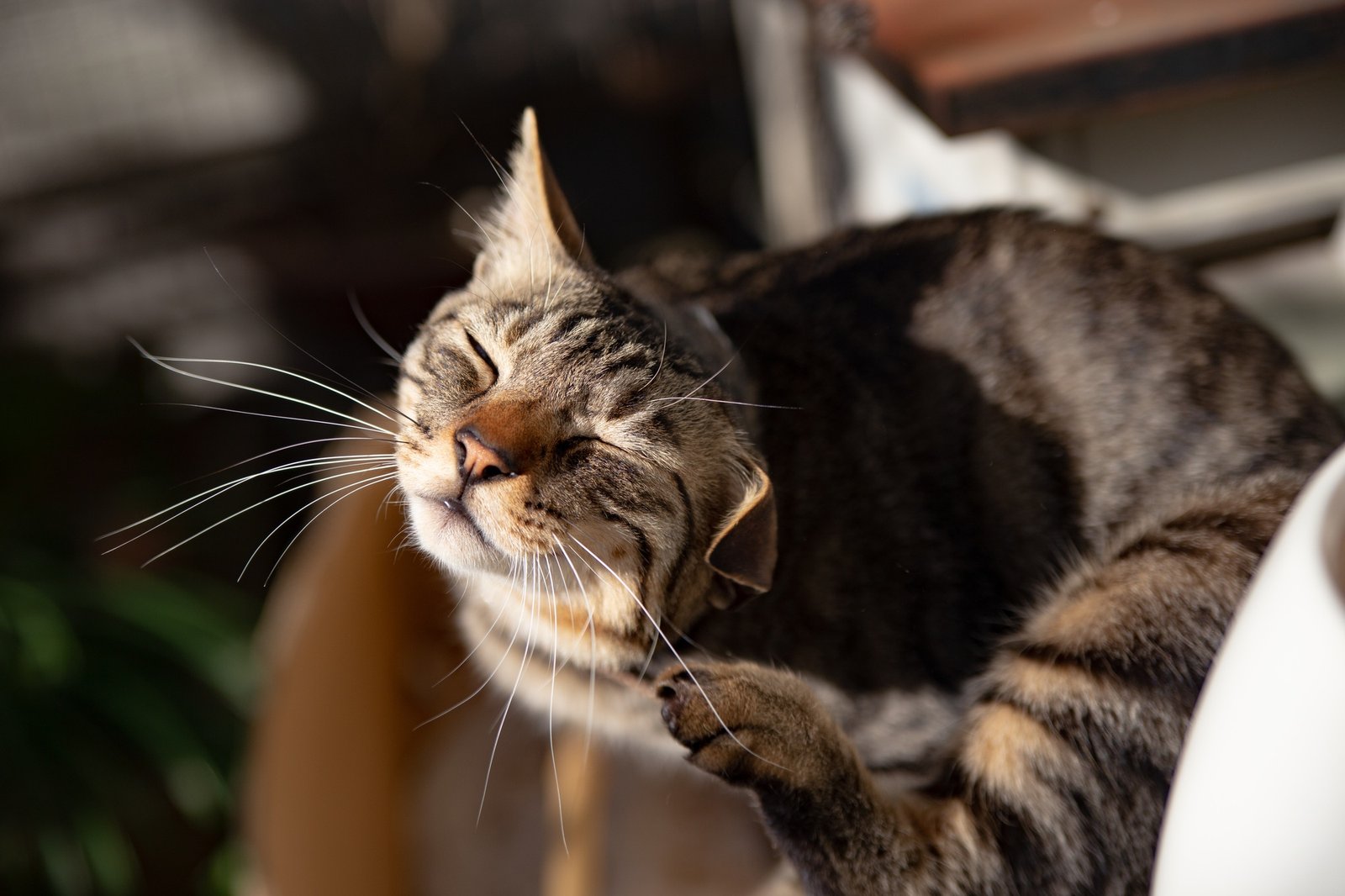
Feline hyperesthesia syndrome (FHS), sometimes called rippling-skin or twitchy-cat syndrome, describes episodes of unusual skin sensitivity and behavior—often rippling over the lower back, sudden grooming or tail biting, agitation, or vocalizing. These signs do not confirm FHS: skin disease, pain, neurologic conditions, and normal behavior can look similar, so veterinary assessment matters.124
This guide explains what to watch for, when a veterinarian should assess your cat, how to keep the moment safe, and what details to record. It is educational information, not a diagnosis or treatment plan.
Table of Contents
- What is feline hyperesthesia syndrome?
- What can feline hyperesthesia look like?
- What else can look like feline hyperesthesia?
- When should I call a vet now?
- What should I do during an episode?
- How do vets evaluate possible feline hyperesthesia?
- What should I track before the vet visit?
- What home changes may help after veterinary assessment?
- Conclusion: What to do next
- Frequently Asked Questions
- References
What is feline hyperesthesia syndrome?
Feline hyperesthesia syndrome is a name for a pattern of episodic skin sensitivity and behavior changes, often involving the back near the tail. Veterinary sources describe it as a syndrome with several possible contributors—not a single cause that can be identified from one sign at home.12
A cat may show rippling skin, sudden grooming or biting, tail chasing, agitation, or vocalizing. Some individual behaviors can also occur in healthy cats—for example, a cat may ripple its skin when its back is scratched—so one observation alone cannot establish FHS.34
What can feline hyperesthesia look like?
Possible episodes involve a sudden change in the cat’s skin, tail, movement, or behavior. Signs may be brief and intermittent, and a cat may seem normal between events; the pattern still needs context and, when repeated or severe, veterinary assessment.124
| What you notice | Possible appearance | What to remember |
|---|---|---|
| Skin or muscle movement | Rippling or twitching over the back, often near the lower back or tail | It can occur for reasons other than FHS. |
| Sudden sensitivity | A strong reaction when the back or tail area is touched | Pain, itch, or another skin problem may be involved. |
| Self-directed grooming | Sudden licking, biting, or scratching at the back, flank, paws, or tail | Repeated biting can injure skin or tail. |
| Tail behavior | Fast tail swishing, chasing, or biting | Note the setting and whether the behavior repeats. |
| Arousal or distress | Dilated pupils, vocalizing, dashing away, hiding, or agitation | Similar behavior can occur with pain, neurologic problems, or fear. |
| Other signs | Drooling or urination/defecation during an event | Tell the veterinarian; do not use any single sign to diagnose FHS. |
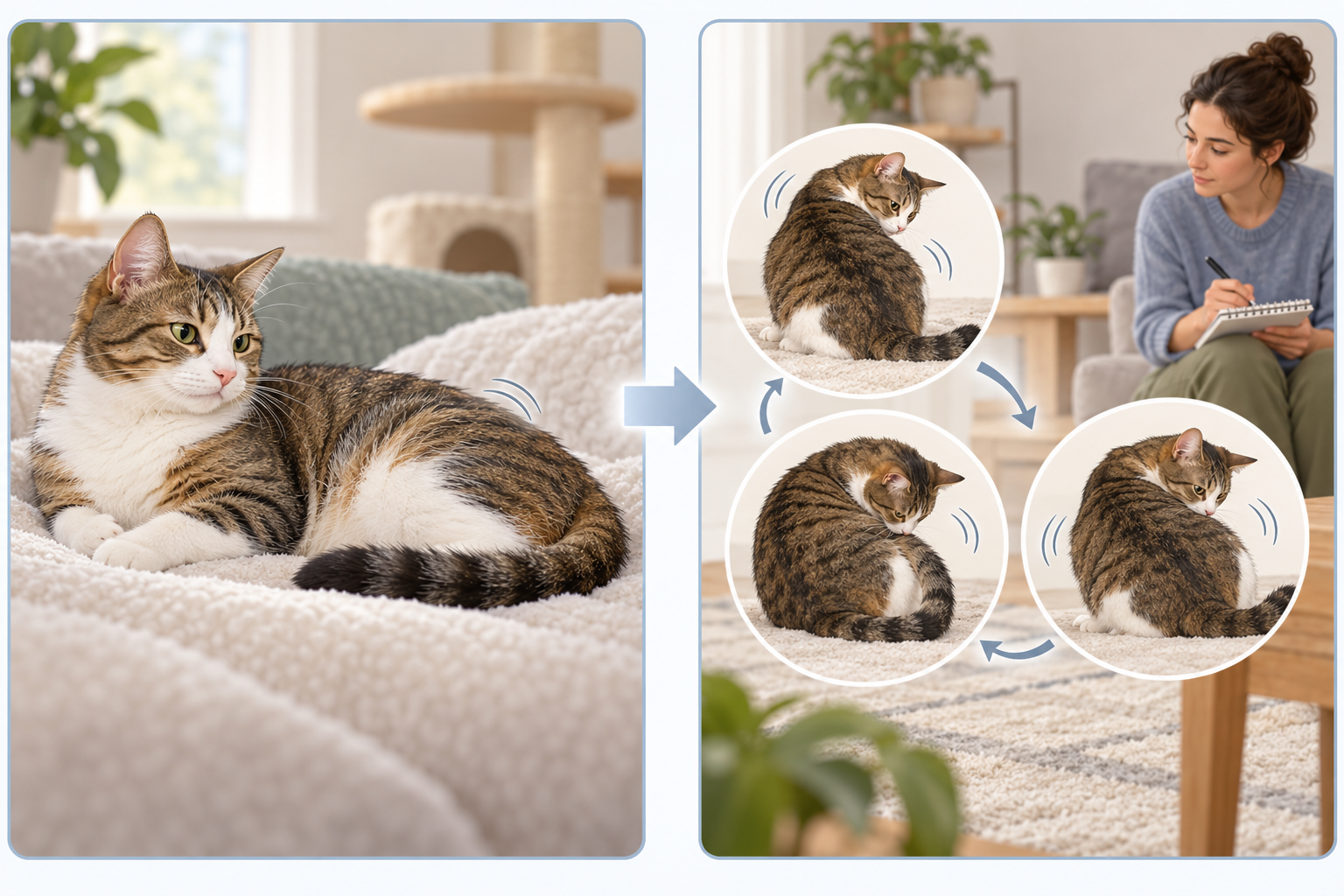
For help describing tail posture, see our cat tail language guide. If an episode includes sudden defensive biting, compare the context with our guide to why cats bite.
What else can look like feline hyperesthesia?
Several skin, pain, neurologic, and behavior problems can produce overlapping signs. Veterinarians generally evaluate these possibilities before concluding that a cat’s behavior is primarily FHS or stress-related.124
| Possible look-alike | Clues a veterinarian may consider | Why it matters |
|---|---|---|
| Fleas, mites, or allergic skin disease | Itching, scabs, hair loss, licking near the tail base | Skin problems can cause sensitivity and self-trauma. |
| Fungal or other skin infection | Scaling, lesions, hair loss, or spread among pets/people | Diagnosis and next steps depend on the cause; see our ringworm guide. |
| Back, tail, joint, or other pain | Sensitivity to handling, stiffness, changed jumping or movement | Pain may be subtle and needs an examination. |
| Neurologic problem or seizure | Unusual movements, altered awareness, imbalance, or a repeated episode pattern | A veterinarian needs to distinguish these from skin or behavior signs. |
| High arousal, fear, or compulsive behavior | Episodes around touch, conflict, or other triggers | Behavior can contribute, but it should not be assumed before medical causes are assessed. |
More than one factor may be present. A video and timeline can help the veterinarian decide which examination or tests are appropriate.45
When should I call a vet now?
Contact a veterinarian for new or repeated back sensitivity, recurring episodes, tail biting, sores, hair loss, or a change in your cat’s normal behavior. Seek emergency veterinary care for an active seizure-like event, collapse, unresponsiveness, trouble breathing, severe injury or bleeding, or sudden inability to walk or balance.16
| Situation | Next step |
|---|---|
| Active seizure-like activity, collapse, unresponsiveness, breathing difficulty, severe bleeding/injury, or sudden loss of balance | Call an emergency veterinary clinic and seek immediate care. Do not put your hands near the cat’s mouth during a seizure-like event.68 |
| Repeated or escalating episodes, tail/skin biting, open sores, or the cat cannot settle or recover as usual | Call your veterinarian promptly for guidance and an appointment. If severe self-injury or neurologic signs are present, use emergency care. |
| New recurring skin rippling, sudden sensitivity, overgrooming, or tail chasing without emergency signs | Arrange a veterinary exam; keep notes or a video if safe. |
| One isolated mild twitch while petting, with the cat otherwise acting normally | Stop touching that area and observe. If it recurs or comes with other changes, contact your veterinarian. A single twitch cannot confirm or rule out FHS.34 |
A sudden increase in hiding, vocalizing, appetite change, or litter-box change also adds useful context. See our guides to why cats hide and why cats meow more than usual; these pages do not replace a veterinary assessment.
What should I do during an episode?
Stay calm, stop touching your cat, and create space. The goal is to reduce immediate risk and observe—not to restrain, punish, or test the sensitive area.
- Move your hands away and stop petting the back or tail.
- Give the cat a clear path to leave; calmly move children and other pets away.
- If safe, remove nearby hazards without grabbing or cornering the cat.
- Do not punish, restrain, chase, or try to hold the tail. Avoid putting your hands near the mouth if the cat is biting or having seizure-like movements.
- If it is safe and does not prolong the episode, note the time or record a short video from a distance.
- Once the event passes, note how the cat behaves afterward and contact your vet according to the signs above.

How do vets evaluate possible feline hyperesthesia?
There is no single at-home sign that proves FHS. A veterinarian will take a history and examine the cat, then choose any skin, pain, neurologic, laboratory, or other checks based on what they find. The purpose is to look for treatable mimics and understand the pattern before assigning a cause.124
| Part of the assessment | What it may help evaluate |
|---|---|
| Skin and coat exam | Fleas or other parasites, irritation, infection, wounds, or overgrooming |
| Pain and movement check | Back, tail, joint, or other painful areas |
| Neurologic exam | Abnormal movement, awareness, balance, or other neurologic signs |
| History and episode video | Timing, frequency, duration, triggers, behavior during and after the event |
| Targeted tests, if indicated | Tests selected for the suspected skin, pain, neurologic, or general health cause |
The work-up depends on the cat. Not every cat needs the same tests, and a response to a treatment trial is something a veterinarian interprets as part of the overall assessment—not a reason to start medication at home.24
What should I track before the vet visit?
Record details that help your veterinarian compare skin, pain, neurologic, and arousal-related clues. A brief log is more useful than trying to recreate or trigger an episode.
| Record | What to note |
|---|---|
| Start and pattern | First noticed, date/time, how often it happens, and whether the pattern is changing |
| Duration and recovery | Approximate length, how the event ends, and how the cat behaves afterward |
| What you saw | Skin movement, grooming/biting area, tail movement, vocalizing, pupils, balance, awareness, or hiding |
| Context | Touch, play, household activity, other pets, new scents, or no obvious trigger |
| Health changes | Appetite, drinking, movement, grooming, skin/coat, litter-box habits, or weight |
| Relevant history | Current medications/supplements, parasite prevention, diet changes, previous skin or pain concerns |
| Video | A short clip taken from a safe distance, only if recording does not interfere with safety |
Your veterinarian may ask when this began, how often it happens, how long it lasts, what happened just before it, and whether your cat is fully normal between episodes. Bring the log and any relevant records.47
What home changes may help after veterinary assessment?
Home adjustments can support comfort, but they do not replace evaluation for pain, skin disease, or neurologic causes. After discussing the case with your veterinarian, you can reduce avoidable stressors and keep the cat’s day predictable.17
- Avoid touching a spot that appears to trigger discomfort while you wait for veterinary advice.
- Keep routines predictable and make quiet resting and hiding places available.
- Provide separate, accessible food, water, litter, scratching, and resting areas in multi-cat homes.
- Offer play and enrichment at a pace your cat tolerates; stop if it appears to trigger or escalate an episode.
- Follow your veterinarian’s plan and report changes, side effects, or worsening self-trauma.
Do not start, stop, or change medications, supplements, flea products, or diets without veterinary guidance. The separate feline hyperesthesia treatment guide covers veterinarian-directed management after assessment; this page focuses on signs, triage, and preparation for care.
Conclusion: What to do next
Feline hyperesthesia is a possible explanation for recurring skin rippling, sensitivity, tail chasing, or sudden self-directed behavior, but these signs overlap with common skin, pain, neurologic, and behavior problems. A single twitch is not a diagnosis. Stop triggering touch, keep the episode safe, record what happens if you can, and contact a veterinarian when signs repeat, worsen, cause injury, or come with other changes.
Frequently Asked Questions
Is feline hyperesthesia always a seizure?
No. Seizure activity is one possible neurologic explanation, but skin disease, pain, arousal, and other causes can look similar. A veterinarian needs to assess the pattern and rule out alternatives.24
Is back twitching always feline hyperesthesia?
No. Some cats ripple their skin during ordinary scratching or touch. Repeated episodes, self-biting, agitation, vocalizing, or other new changes warrant a veterinary discussion.34
How long does an episode last?
Episodes are often brief, but the pattern can vary. Record the approximate duration and how your cat behaves afterward; duration alone does not identify the cause.49
Can stress contribute to feline hyperesthesia signs?
Stress or high arousal may contribute for some cats, but it should not be assumed to be the only cause. Skin disease, pain, and neurologic conditions can produce similar signs.12
What if my cat bites its tail?
Move away and do not grab or punish your cat. Call your veterinarian promptly if tail biting repeats, causes hair loss or sores, or is hard to interrupt safely. Seek emergency care for severe injury, bleeding, collapse, or seizure-like activity.16
Does feline hyperesthesia have a treatment?
Management depends on the cause and the individual cat. A veterinarian should guide the work-up and any treatment; the realistic goal may be better control rather than a guaranteed cure.4
References
[1] Cornell Feline Health Center. Hyperesthesia Syndrome.
[2] Merck Veterinary Manual. Behavior Problems of Cats: Hyperesthesia in Cats.
[3] VCA Animal Hospitals. Cat Behavior Problems: Compulsive Disorders in Cats.
[4] Alison Gerken, DVM, DACVB. Answering FAQs About Feline Hyperesthesia Syndrome. Today's Veterinary Practice, September 1, 2026.
[5] Cornell Feline Health Center. Feline Skin Diseases.
[6] Cornell University College of Veterinary Medicine. Emergency and Critical Care: Emergent Conditions.
[7] Feline Veterinary Medical Association. Indoor cats: physical and emotional needs.
[8] VCA Animal Hospitals. Emergencies in Cats.
[9] Merck Veterinary Manual. Diagnosing Behavior Problems in Cats.
 EN
EN DE
DE ES
ES PT
PT