
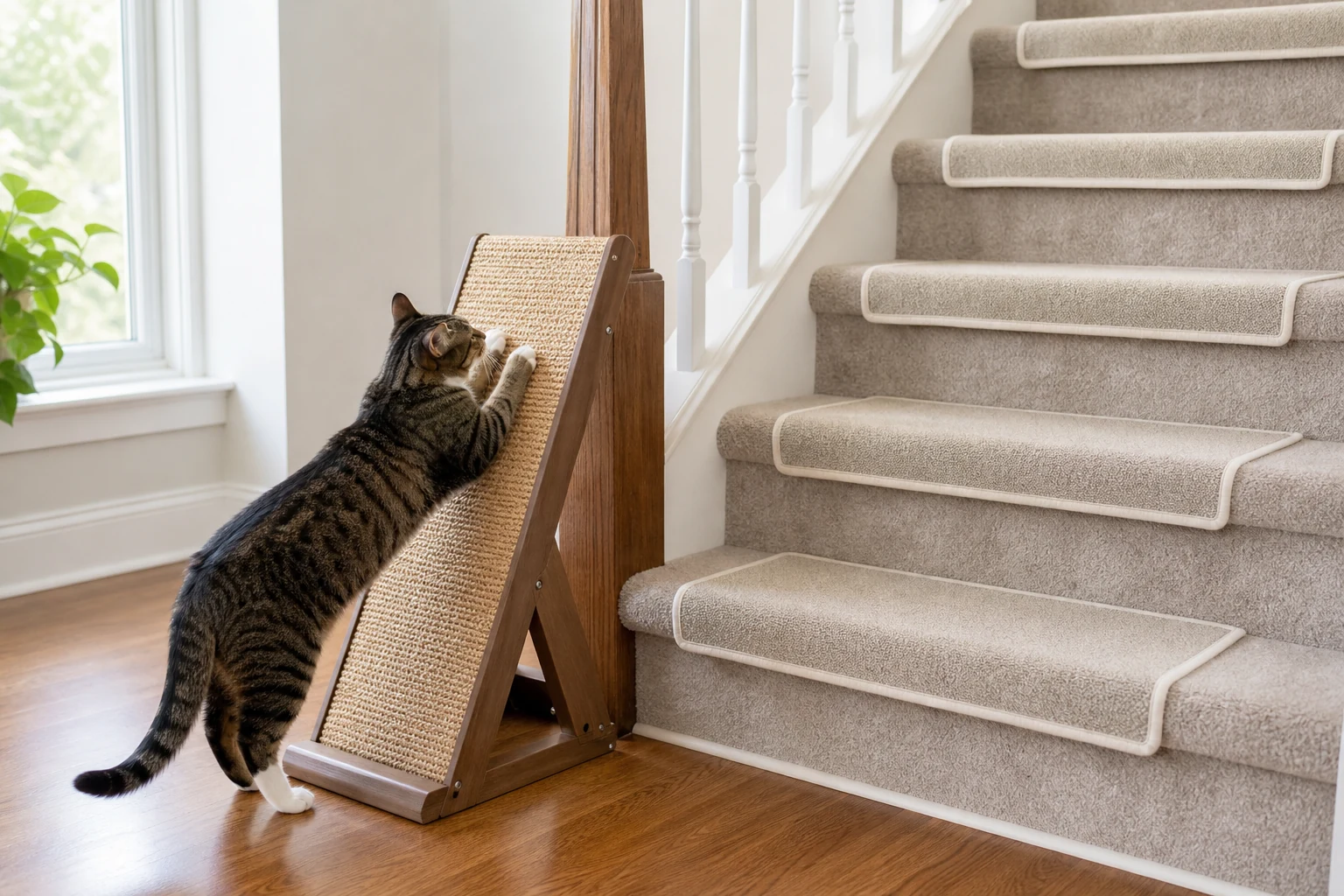
To protect carpeted stairs from cat scratching, combine temporary stair protection with a better legal scratching target placed right beside the stair route. Covers alone rarely solve the behavior, because scratching is normal feline maintenance and communication, not a cat trying to ruin the carpet.
Carpeted stairs are especially tempting because they are stable, textured, visible, and used many times a day. Your cat may scratch the bottom step after waking, rake the side of a stair while running upstairs, or mark the landing near a doorway. The practical goal is to make the stairs less rewarding while making the new scratcher easier, safer, and more satisfying.
This guide focuses on stair-specific choices: tread covers, runners, placement, training, nail care, and when a sudden change may point to stress or pain.
Inhaltsübersicht
- Why do cats scratch carpeted stairs?
- What stair covers are safe for homes with cats?
- What kind of scratcher works best beside stairs?
- Where should you place scratchers near carpeted stairs?
- How do you train a cat to choose the new scratcher?
- Should nail trimming be part of the plan?
- When should stair scratching make you look deeper?
- Schlussfolgerung:
- Häufig gestellte Fragen
- Referenzen
Why do cats scratch carpeted stairs?
Cats scratch carpeted stairs because the surface gives them grip, resistance, scent-marking value, and a full-body stretch in a high-traffic place. International Cat Care explains that scratching helps cats maintain claws, stretch muscles, and communicate through visible marks and scent glands in the paws 1.
Stairs add a few extra attractions. The lower step is often beside an entry route, the side edge is easy to hook with claws, and the carpet pile may feel more satisfying than a flimsy post. If the current scratcher wobbles, sits in a hidden corner, or has a texture your cat dislikes, the stairs win.
If your cat scratches flat carpet elsewhere too, start with SnuggleSouls' broader guide on how to stop cats scratching carpet. Stair problems need the same redirection principle, but with more attention to human safety and stable footing.
| Stair scratching pattern | Was das bedeuten kann | Best first adjustment |
|---|---|---|
| Bottom step only | Marking a route or greeting area | Put a heavy horizontal or angled scratcher on the landing |
| Stair edge or side | Cat likes a firm edge to hook claws | Add a vertical or angled sisal surface beside the same edge |
| Top landing | Marking a resting or lookout route | Add a scratcher near the landing, not only downstairs |
| Sudden intense scratching | Stress, change, conflict, or discomfort may be involved | Check the environment and contact a vet if other signs appear |
What stair covers are safe for homes with cats?
The safest stair protection is secure, flat, non-slip, and easy for humans to walk on. Avoid loose mats, curled plastic, slippery runners, or anything that makes the step edge hard to see.
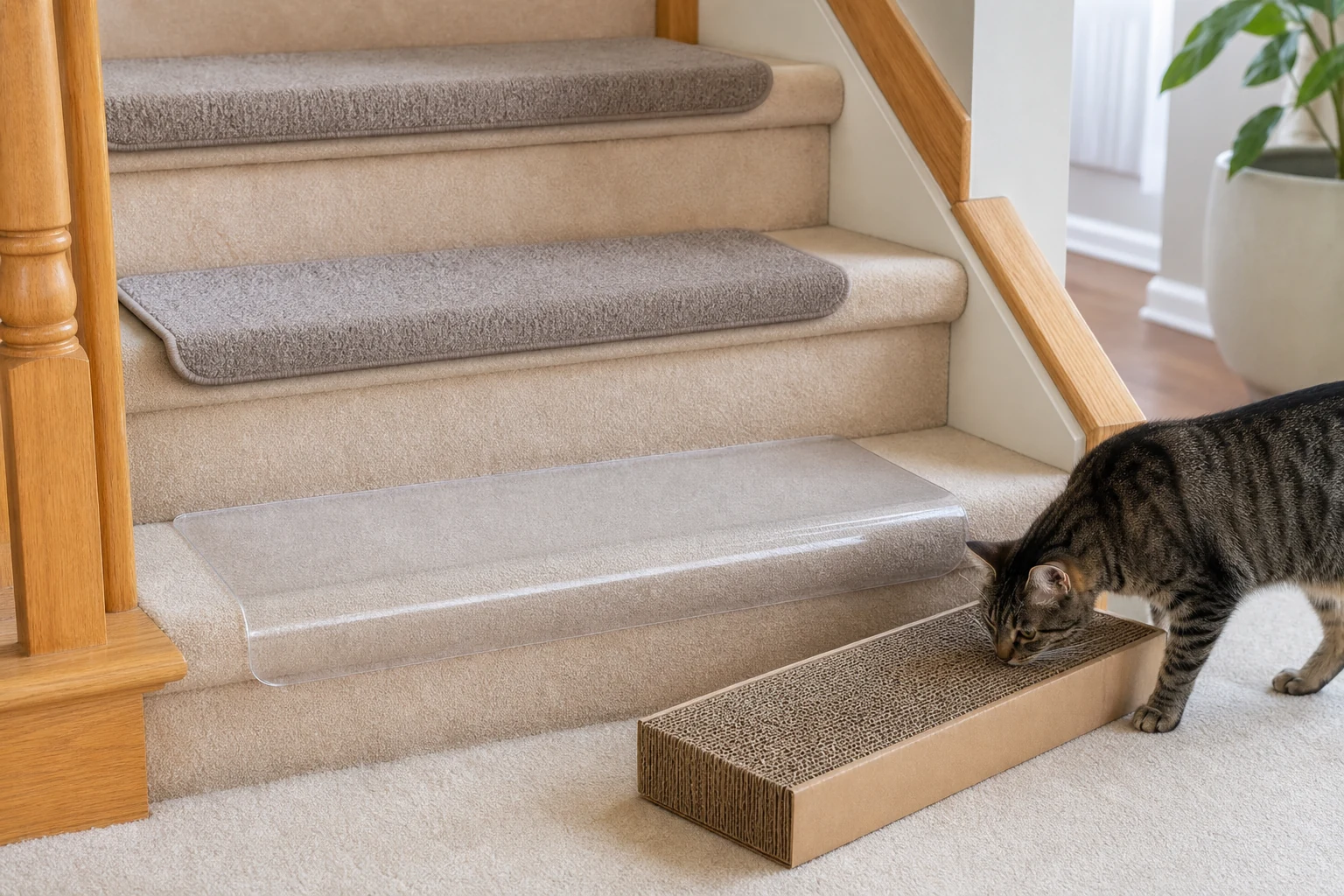
Temporary stair protection should reduce carpet texture access without creating a slipping or tripping hazard.
For many homes, the best options are fitted carpet stair treads, a professionally secured runner, or a clear protective stair mat designed for carpet. If you rent, check the adhesive type before using anything sticky. Some adhesives can leave residue, pull carpet fibers, or lose grip at the stair nose.
Use deterrents as a bridge, not the whole plan. The ASPCA recommends making inappropriate scratching targets unattractive or inaccessible while providing appealing scratching posts in acceptable locations 2. That means a cover is useful only if your cat also has a nearby surface that feels better than the stair.
| Protection option | Vorteile | Watch-outs |
|---|---|---|
| Fitted stair tread covers | Protects high-wear spots and can look tidy | Must grip securely and not curl at corners |
| Clear carpet runner | Reduces access to the carpet texture | Can become slippery if thin, loose, or poorly fitted |
| Temporary furniture-safe tape on vertical trim only | May discourage side-edge raking | Do not place sticky material where paws may stick or where humans step |
| Blocking access briefly | Useful during setup or repair | Not a long-term fix if the cat has no legal outlet |
Build this into a broader safety review if the staircase is near cords, loose rugs, baby gates, or breakable decor. SnuggleSouls' Katzensicherheit für Ihr Zuhause checklist can help you spot hazards before you add new products.
What kind of scratcher works best beside stairs?
For carpeted stairs, the best scratcher is stable, textured, and close enough to compete with the exact step your cat has chosen. Most cats need either a heavy horizontal scratcher, an angled ramp, or a tall vertical post that does not wobble.
Ohio State University's Indoor Pet Initiative notes that scratching posts should match a cat's preferred location, material, height, and stability 3. Stair scratchers must also stay out of the walking path. A scratcher that slides into the stairs can become a trip hazard, so choose a wide base, rubber feet, or a placement against a wall.
Good stair-side choices include:
- A heavy angled sisal board at the base of the stairs.
- A horizontal cardboard scratcher on the landing if your cat rakes carpet flat.
- A tall sisal post beside the newel post or wall if your cat stretches upward.
- A low, wide scratcher near the top landing if the problem happens upstairs.
For a deeper comparison of height, material, and wobble, use SnuggleSouls' guide to the best scratching posts for cats. With stairs, function matters more than style: if the cat cannot dig in confidently, the carpet remains the better option.
Where should you place scratchers near carpeted stairs?
Place the scratcher where the behavior already happens first, then move it gradually only after your cat is using it reliably. A beautiful post across the room does not compete with a stair edge your cat already values.
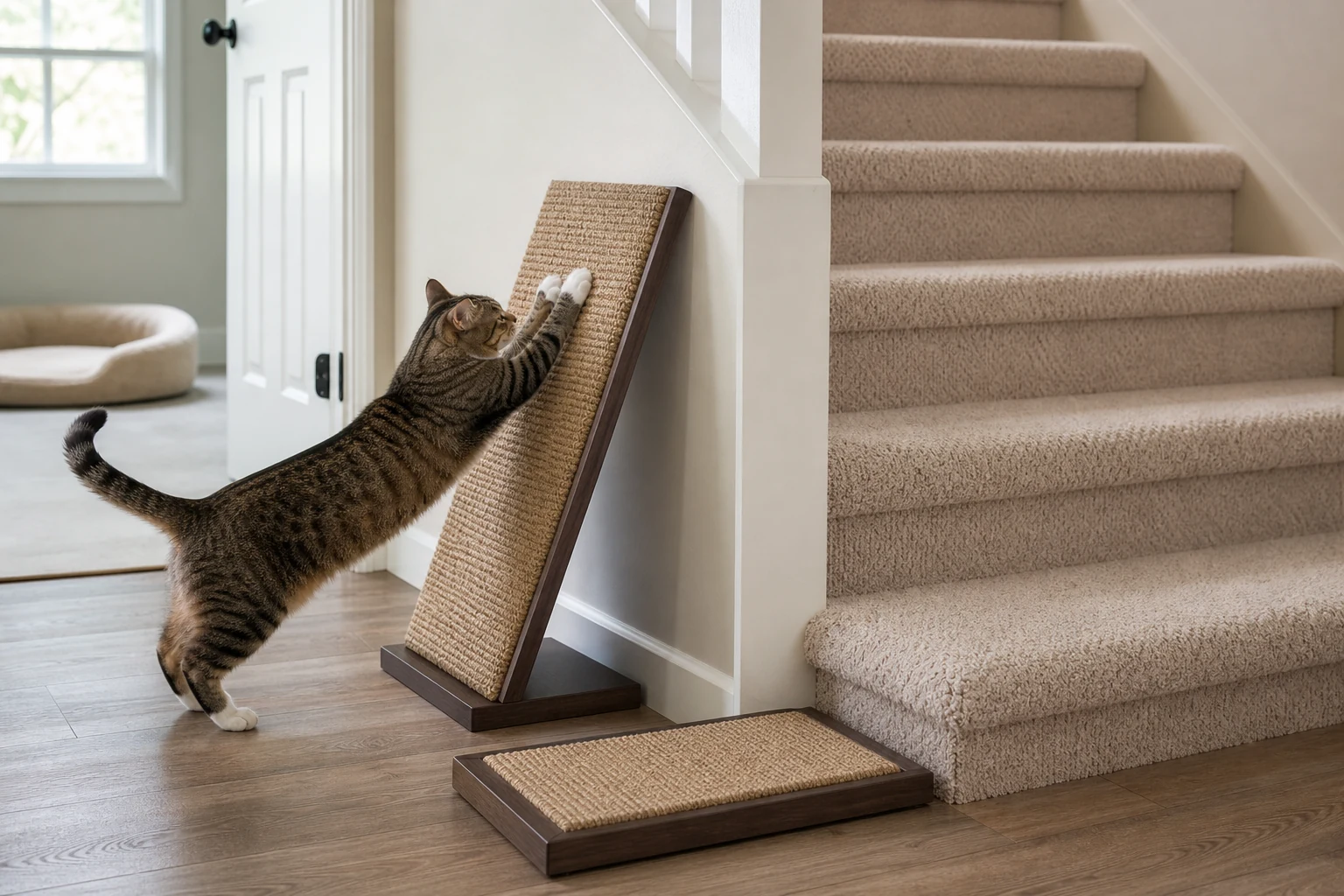
The most useful scratcher is close to the old target, stable under pressure, and easy for the cat to use without blocking the stairs.
Scratching is part of a cat's environmental resource system. The AAFP and ISFM guidelines include scratching areas among key resources cats need, alongside feeding, drinking, toileting, resting, and play areas 4. That is why placement should follow your cat's routine, not just your room layout.
Try this stair placement order:
- Put the first scratcher on the landing beside the most damaged step.
- Keep it parallel to the route so people can walk safely.
- Add a second scratcher near the top landing if the cat scratches upstairs.
- Keep a favorite resting bed, perch, or play route nearby if that is where your cat naturally pauses.
- Once the cat uses the scratcher daily, shift it a few inches at a time if needed.
Do not block the staircase, wedge a scratcher onto a tread, or leave a loose board where people step in the dark. If a product makes the stairs less safe for humans, it is the wrong product.
How do you train a cat to choose the new scratcher?
Training works best when you reward the new choice and quietly reduce access to the old texture. Do not punish stair scratching. Punishment may make your cat avoid you or scratch when you are not watching, without teaching the replacement behavior.
The Oregon Veterinary Medical Association advises giving cats appropriate places to scratch and teaching them to use those places 5. Make the approved target obvious and rewarding:
- Place the scratcher beside the damaged stair before covering the carpet.
- Sprinkle catnip or silvervine on the scratcher if your cat responds to it.
- Use wand play so your cat lands paws on or near the scratcher.
- Reward sniffing, touching, stretching, or scratching with a treat or praise.
- Keep the old stair covered while the new habit forms.
If scratching spikes in the evening, pair this plan with a predictable daily play routine. Many cats scratch after excitement, hunting-style play, or waking from a nap, so ending play near the legal scratcher can help the behavior land in the right place.
Should nail trimming be part of the plan?
Yes, nail trimming can reduce carpet damage, but it does not replace a scratching setup. Cats still need to scratch for stretching, claw-sheath maintenance, and communication.
Check claws every one to two weeks, especially dewclaws and senior-cat nails that may not wear down evenly. If sharp tips are catching in carpet loops, a careful trim may reduce snagging while you train the new stair-side scratcher. SnuggleSouls' low-stress guide can help you trim your cat's nails safely.
Avoid declawing as a stair-protection strategy. Declawing is not a simple nail trim; it is an amputation procedure and can affect welfare. If claws are overgrown, painful, infected, or curling toward the paw pad, ask your veterinarian for individual care.
When should stair scratching make you look deeper?
Most stair scratching is normal behavior in the wrong location. Still, sudden or intense changes can signal stress, conflict, boredom, or discomfort.
Look deeper if you notice:
- Scratching begins suddenly in an adult cat who never targeted stairs before.
- Scratching appears with hiding, appetite change, litter box issues, or aggression.
- One cat scratches more after another pet blocks stair routes.
- Your cat hesitates on stairs, limps, avoids jumping, or seems painful.
- The behavior escalates after moving, renovations, new furniture, or a new baby.
If health signs appear, contact your veterinarian. For urgent symptoms such as breathing trouble, collapse, seizures, suspected poisoning, blocked urination, severe trauma, repeated vomiting, or rapid decline, seek emergency veterinary care. A scratcher protects carpet; it cannot solve illness, pain, or serious household stress by itself.
Schlussfolgerung:
The best way to protect carpeted stairs from cat scratching is to redirect the need, not fight it. Secure the carpet with stair-safe covers, put a stable scratcher beside the exact target, reward the new choice, and keep the setup safe for people using the stairs.
Once the stair routine improves, keep reviewing the home from your cat's point of view. Scratching, play, nail care, resting places, and traffic routes all connect, and SnuggleSouls' Daily Care guides can help you build a calmer setup across the whole home.
Häufig gestellte Fragen
Can I use double-sided tape on carpeted stairs?
Avoid placing sticky tape where people step or where your cat's paws may stick. If you use a sticky deterrent at all, limit it to a vertical surface or trim area and choose a pet-safe, residue-safe product. A secure cover plus a better scratcher is usually safer.
Are plastic stair runners safe with cats?
They can be safe only if they are designed for stairs, lie flat, grip securely, and do not make the step slippery. Thin plastic that curls, slides, or hides the stair edge is a trip hazard.
Should I put a scratching post on the stairs?
Do not put a loose post or board on an actual stair tread. Place a stable angled, horizontal, or vertical scratcher on the bottom landing, top landing, or beside the stair route where it does not block human footing.
Why does my cat scratch the bottom stair most?
The bottom stair is often a high-traffic scent-marking point near doors, people, and resting routes. Put the first replacement scratcher there, then reward your cat for using it before moving anything farther away.
Will trimming my cat's nails stop stair scratching?
Trimming can reduce snagging and damage, but it will not remove the need to scratch. Keep nail care gentle and pair it with a satisfying scratcher that matches your cat's preferred texture and angle.
How long does it take to redirect stair scratching?
Some cats switch within a few days when the new scratcher is placed well. Others need several weeks of covered carpet, rewards, and texture changes. If the behavior is worsening, reassess stress, pain, and whether the scratcher is truly stable.
Referenzen
[1] International Cat Care. (2025). Scratching on furniture and carpets. URL
[2] ASPCA. (n.d.). Destructive Scratching. URL
[3] Ohio State University Indoor Pet Initiative. (n.d.). Scratching. URL
[4] Ellis, S. L. H., Rodan, I., Carney, H. C., et al. (2013). AAFP- und ISFM-Leitlinien für die Umweltbedürfnisse von Katzen. URL
[5] Oregon Veterinary Medical Association. (n.d.). Cat Behavior: Scratching. URL
 EN
EN DE
DE ES
ES PT
PT