
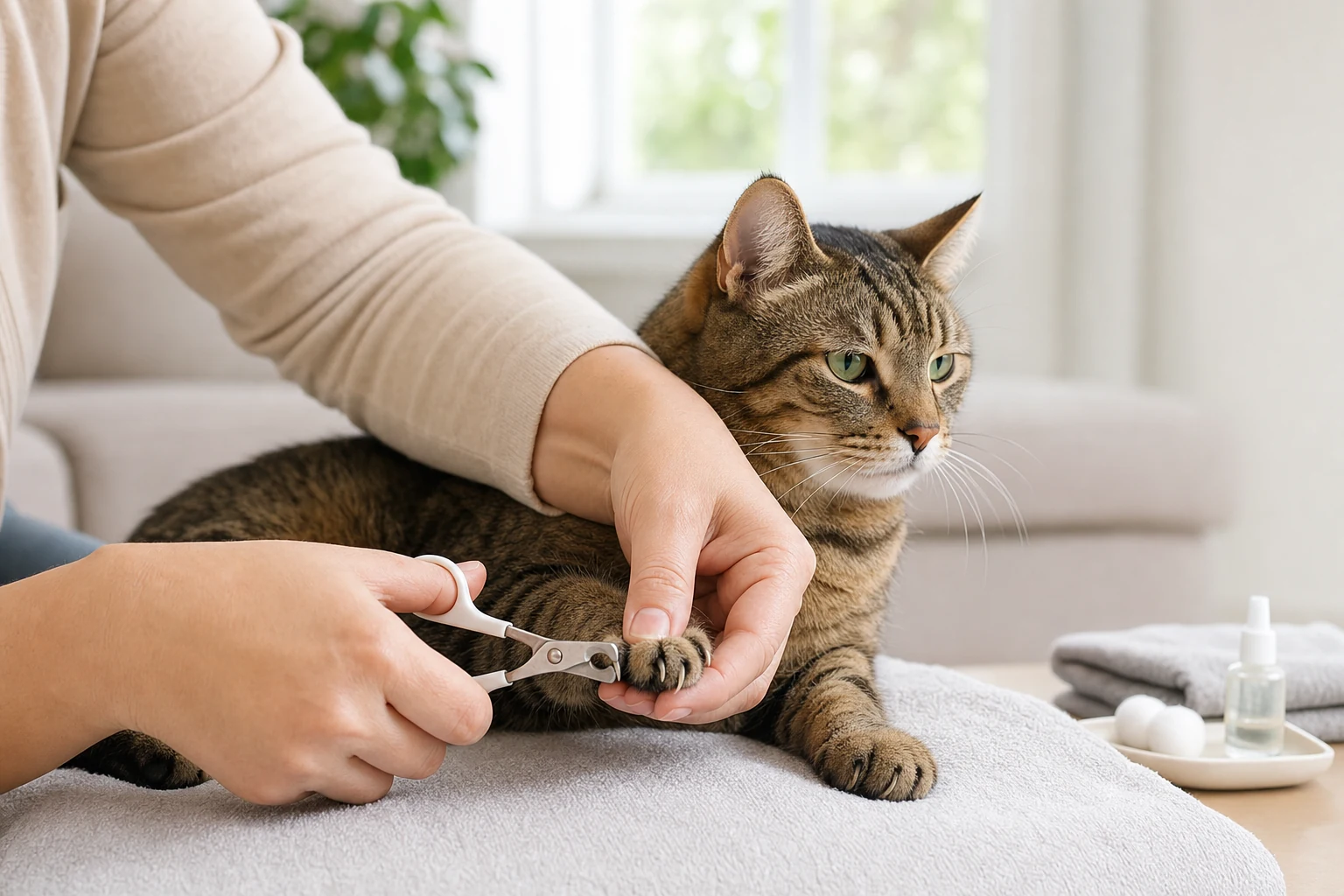
To trim cat nails safely at home, wait until your cat is relaxed, gently extend one claw, and clip only the sharp translucent tip. Stop well before the pink quick, reward your cat after every small success, and end the session before either of you becomes frustrated.
Nail trimming does not need to mean wrestling your cat through all 18 claws at once. Many cats do best when the process is divided into tiny, predictable steps: touch a paw, offer a treat, trim one nail, and pause. This guide explains where to cut, how to build cooperation, and what to do when a home trim is not the safest choice.
Inhaltsübersicht
- Why do cats need their nails trimmed?
- How often should you trim cat nails?
- What do you need before trimming?
- Where should you cut a cat's nail?
- How do you trim cat nails step by step?
- How can you help your cat accept nail trims?
- What should you do if you cut the quick?
- When should you stop a nail-trimming session?
- When should a veterinarian or groomer trim the nails?
- Conclusion: Make each trim small and successful
- Häufig gestellte Fragen
- Referenzen
Why do cats need their nails trimmed?
Regular trims help prevent sharp claw tips from catching on fabric, scratching skin, or growing into the paw pad. Trimming is especially important for senior cats, less-active cats, and cats whose claws do not wear down normally.
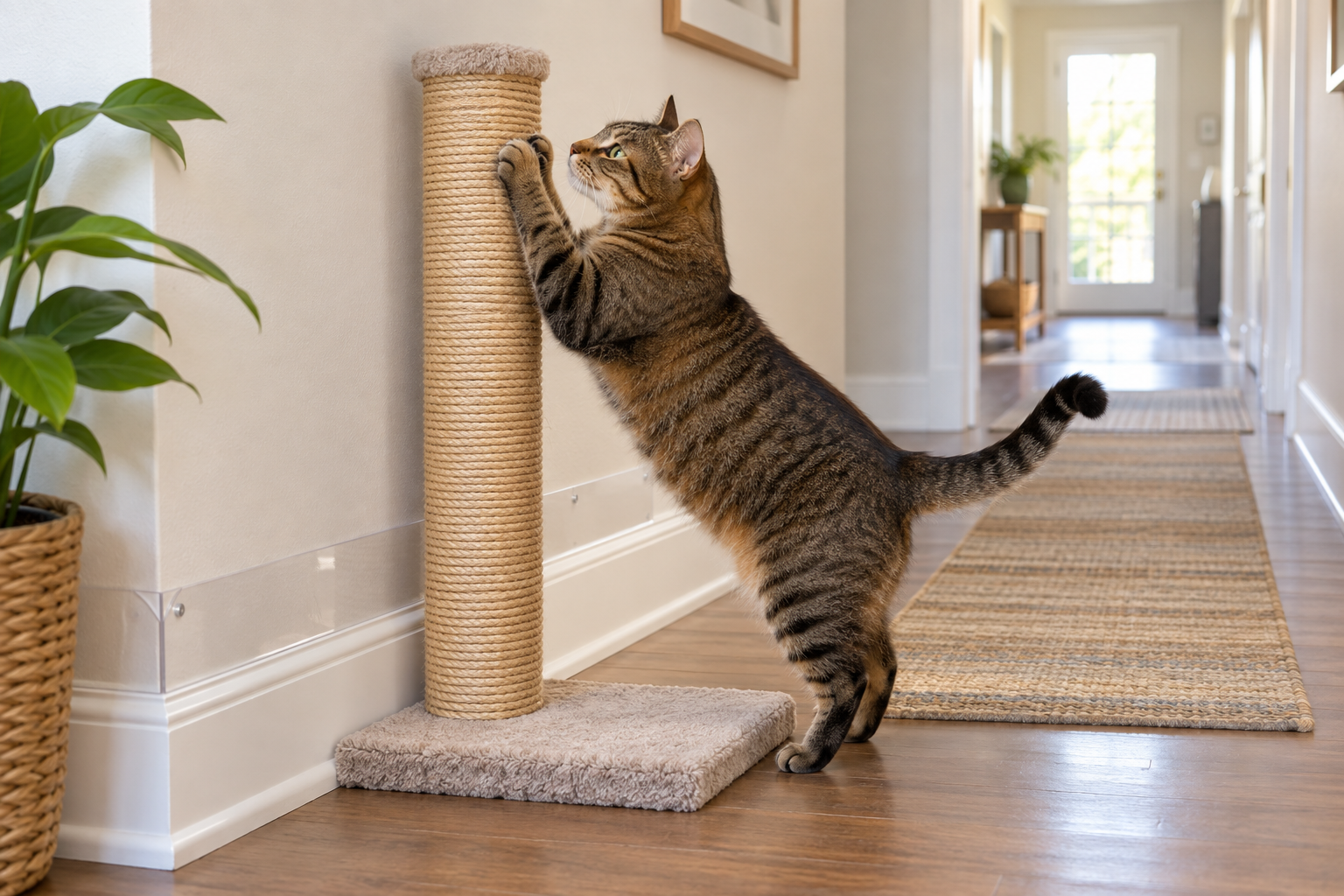
Healthy cats naturally scratch to maintain their claws, stretch, and communicate. Scratching posts are essential, but they do not guarantee that every claw stays short enough. The front dewclaws, which sit higher on the leg, do not contact the floor and can become overgrown more easily.
Check the paws regularly for:
- Claws that curve toward or touch the paw pad.
- A claw that repeatedly catches on blankets or carpet.
- Swelling, redness, discharge, or a bad smell around a nail.
- Limping, licking one paw, or resisting normal movement.
- Split, broken, thickened, or unusually shaped claws.
An embedded claw, painful broken nail, or inflamed paw needs veterinary care rather than a routine home trim.
How often should you trim cat nails?
Many indoor cats benefit from a claw check every one to two weeks and a trim about every two to four weeks, but the right schedule depends on growth rate, activity, age, and scratching habits. VCA recommends checking nails regularly and trimming when needed rather than waiting until they become overgrown.1
Kittens often have needle-sharp tips that need frequent tiny trims. Older cats may need closer monitoring because their claws can become thicker, more brittle, and less effectively shed.
Add a quick paw check to your normal Tägliche Katzenpflege. You do not need to trim at every check. The goal is to notice changes early and keep each session short.
What do you need before trimming?
Prepare everything before bringing your cat into position so the session stays calm and brief. Choose a quiet, well-lit room with a stable surface and an easy exit for your cat.
Have these items within reach:
- Sharp cat nail clippers in a style you can control comfortably.
- High-value treats or a lickable treat.
- Good lighting so you can identify the quick.
- Styptic powder or cornstarch for minor accidental bleeding.
- A towel for a comfortable surface, not forced wrapping.
- A scratching post or pad for normal claw care between trims.
Inspect clippers before each use. Dull or damaged blades may crush or split a nail instead of making a clean cut. Keep clippers and other grooming supplies stored securely as part of Katzensicherheit für Ihr Zuhause.
Where should you cut a cat's nail?
Cut only the narrow, hooked, translucent tip of the claw. The pink area inside a light-colored claw is the quick, which contains blood vessels and nerves; cutting into it causes pain and bleeding.1
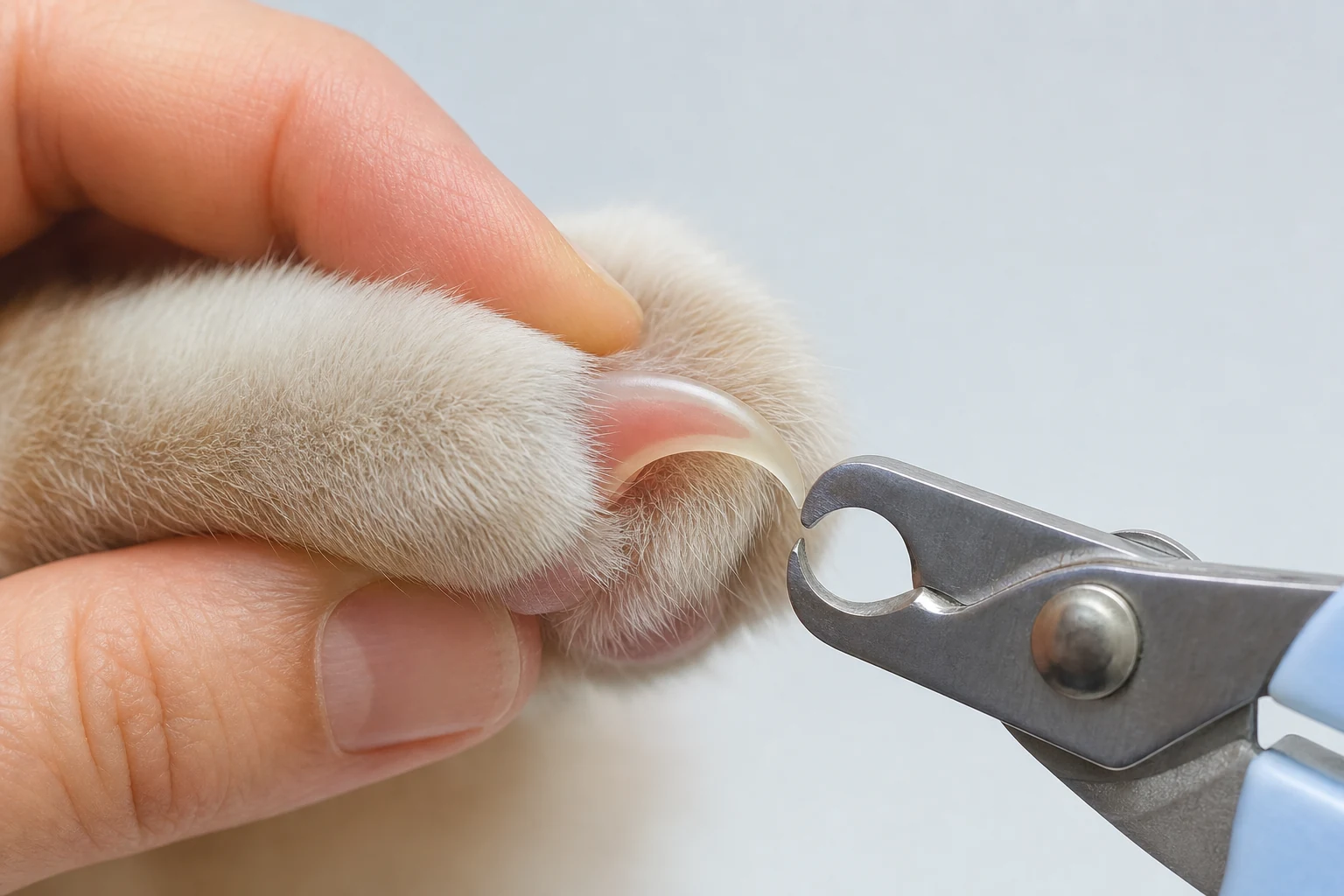
Gently press the top of one toe while supporting the pad underneath to extend the claw. Look from the side in bright light. Place the clipper several millimeters in front of the quick and remove only a small tip.
Dark claws make the quick harder to see. Take off a tiny amount at a time, or ask a veterinarian or experienced groomer to demonstrate. When uncertain, leaving a nail slightly longer is safer than cutting too far.
| Was Sie sehen | Safest response |
|---|---|
| Clear claw with visible pink quick | Clip only the translucent hooked tip |
| Dark claw with no visible quick | Remove a very small tip or get professional help |
| Thick, split, swollen, or painful nail | Stop and contact a veterinarian |
| Claw curving into the paw pad | Arrange prompt veterinary care |
How do you trim cat nails step by step?
The safest method is a series of small actions your cat can tolerate without struggling. Your first successful session may involve only touching a paw or trimming one claw.
- Choose a time when your cat is relaxed, such as after play or a meal.
- Let your cat settle beside you or on a stable, comfortable surface.
- Touch the shoulder and leg, then briefly hold one paw.
- Press one toe gently to extend the claw.
- Identify the quick and position the clipper on the sharp tip.
- Make one confident, clean cut.
- Release the paw immediately and reward your cat.
- Continue only while your cat remains relaxed.
Support the paw without squeezing it. Avoid twisting the leg, pinning the cat down, or holding on when the cat is trying hard to leave. The ASPCA recommends gradually helping cats become comfortable with paw handling and the sound of clippers before expecting a full trim.2
If your cat calmly allows several nails, you can continue. If not, stop after one. A one-nail session that preserves trust is more useful than a complete trim that makes the next attempt frightening.
How can you help your cat accept nail trims?
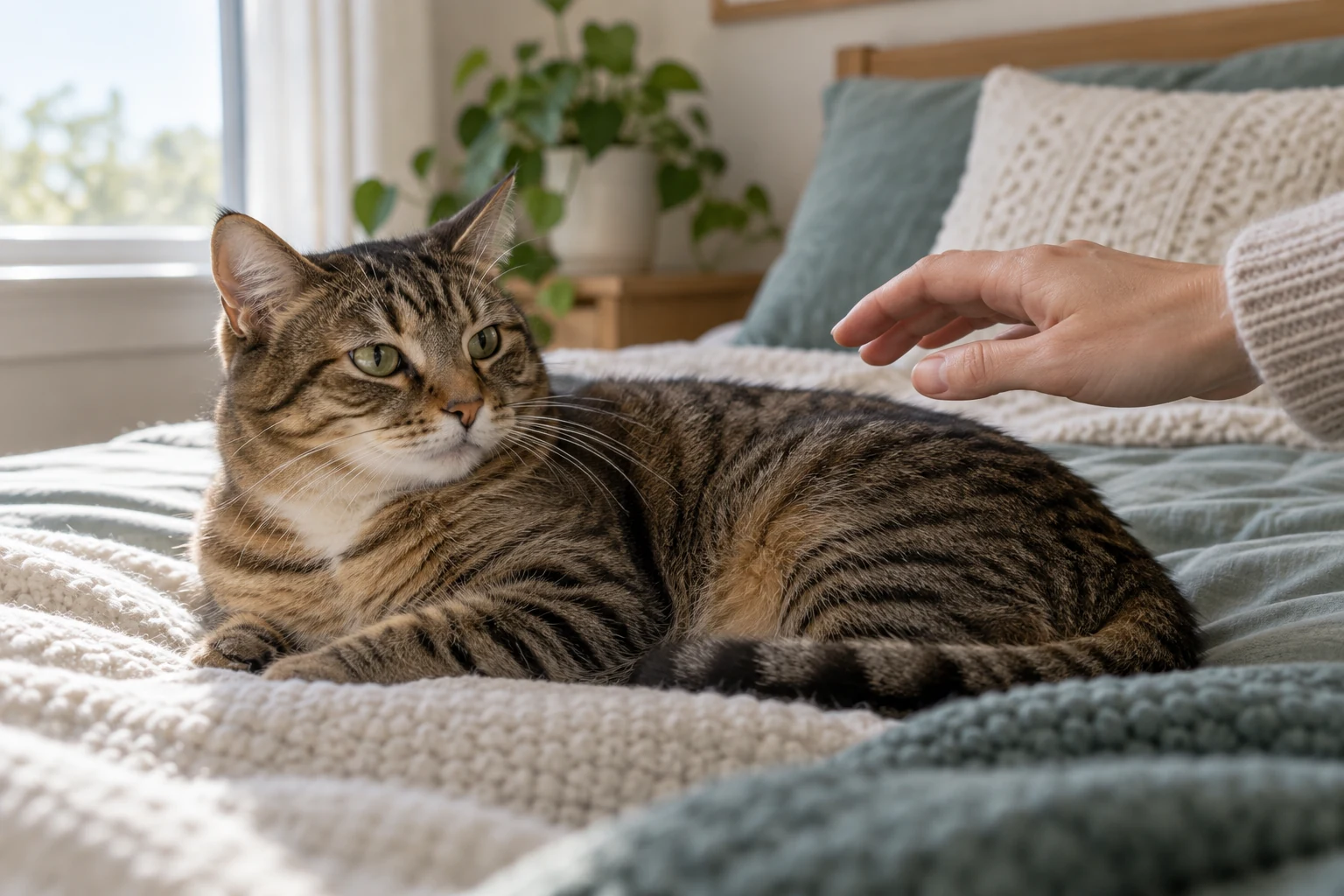
Build acceptance before you need to cut anything. Pair brief paw touches and clipper-related sounds with rewards, allowing your cat to leave after each step.
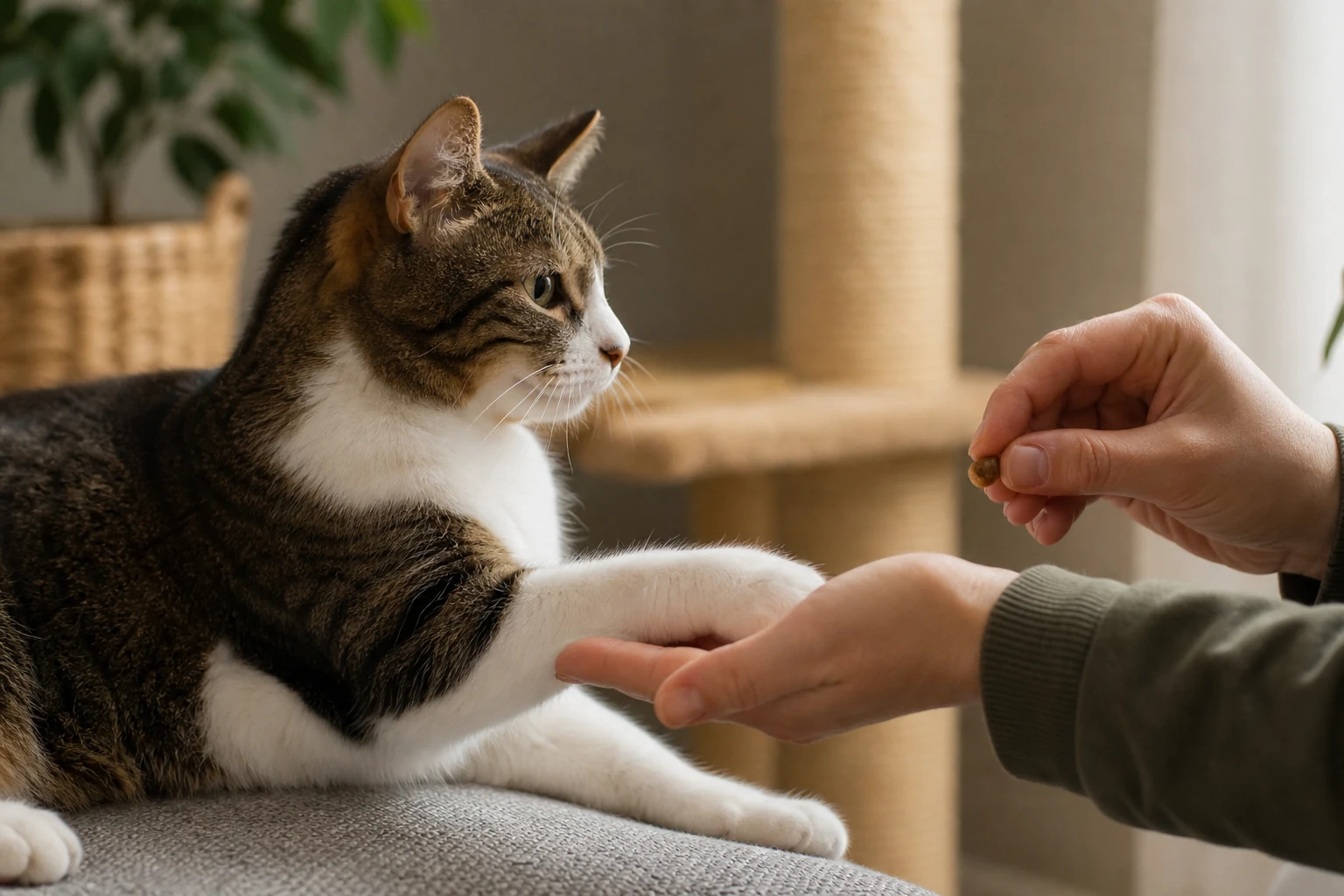
Try this gradual plan over several days:
- Touch a shoulder or front leg, then reward.
- Touch the top of a paw for one second, then reward.
- Hold the paw briefly without extending a claw, then reward.
- Extend one claw, release it, then reward.
- Let your cat inspect the clippers.
- Clip a dry piece of pasta away from the paw so the sound predicts a treat.
- Trim one nail and end the session.
Keep sessions short enough that your cat remains comfortable. Predictability, choice, safe resting places, play, and positive human interaction are important parts of a cat-friendly environment.3 Unser Ratgeber zum Verhalten von Katzen can help you read subtler signs of comfort and stress.
Never punish growling, swatting, or leaving. Those behaviors communicate that the current step is too difficult. Return to an easier step next time.
What should you do if you cut the quick?
If you accidentally nick the quick, stay calm, stop trimming, and apply styptic powder or cornstarch with gentle pressure to the nail tip. Minor bleeding often stops within a few minutes, but the experience can be painful, so end the session and give your cat space.
Contact a veterinarian if bleeding does not stop promptly, the nail is badly split or torn, your cat appears very painful, or the paw later becomes swollen or inflamed. Do not continue trimming other nails after cutting the quick.
Prevent another accident by taking smaller cuts, improving the lighting, and leaving more distance before the quick. If the claws are dark or your cat moves suddenly, professional help may be the safer option.
When should you stop a nail-trimming session?
Stop when your cat shows escalating stress, tries repeatedly to leave, or you can no longer position the clipper accurately. Continuing through a struggle raises the risk of cutting the quick, injuring a joint, or teaching the cat to fear paw handling.
Early signals may include:
- Pulling the paw away repeatedly.
- Mit dem Schwanz wedeln oder damit auf den Boden klopfen.
- Die Ohren drehen sich zur Seite oder legen sich flach an.
- Skin twitching, crouching, or a tense body.
- Growling, hissing, swatting, or turning to bite.
- Sudden hiding before or after grooming.
Learn the Warnzeichen, bevor eine Katze zubeißt and consider whether repeated avoidance connects with broader stress or warum Katzen sich verstecken. Give your cat a break and resume training at an easier stage later.
Avoid having one person forcibly restrain the cat while another rushes through the nails. If safe voluntary handling is not possible, ask your veterinary team for a plan.
When should a veterinarian or groomer trim the nails?
Professional help is the right choice when home trimming cannot be done without fear, force, or a meaningful risk of injury. A veterinarian should also examine abnormal or painful claws rather than simply shortening them.
Arrange veterinary care when:
- A claw has grown into or is touching the paw pad.
- A nail is torn, bleeding, swollen, discolored, or producing discharge.
- Your cat limps, protects a paw, or suddenly resists paw handling.
- Claws have become unusually thick or brittle.
- Your cat has a medical condition that affects handling or healing.
- You cannot safely distinguish where to cut.
A cat-friendly veterinary professional can demonstrate technique, identify health problems, and discuss safer handling options for an individual cat. A groomer may help with routine trims, but painful or abnormal claws belong with a veterinarian.
Conclusion: Make each trim small and successful
Safe cat nail trimming is less about finishing every claw and more about protecting the quick, respecting your cat's limits, and building cooperation over time. Use sharp cat clippers, trim only the translucent tip, reward frequently, and stop while the experience is still manageable.
Check paws regularly and seek veterinary care for embedded, broken, swollen, or painful claws. With patient practice, even trimming one or two nails at a time can keep claws comfortable without damaging trust.
Häufig gestellte Fragen
Can I use human nail clippers on my cat?
Small human clippers can sometimes cut a kitten's thin claw tips, but cat-specific clippers usually provide better control and are shaped for feline claws. Whatever tool you use must be sharp, clean, and comfortable in your hand.
How many nails do cats have?
Most cats have five claws on each front paw, including the higher dewclaw, and four on each back paw. Some cats are polydactyl and have extra toes and claws that also need checking.
Do scratching posts replace nail trimming?
Scratching posts support healthy natural behavior and help cats shed outer claw layers, but they may not keep every claw short. Continue checking all claws, especially dewclaws and the nails of senior or less-active cats.
Should I trim my cat's back claws?
Back claws often grow more slowly and may need less frequent trimming, but they should still be checked. Trim only sharp tips when needed and use the same quick-avoidance precautions.
What if my cat will only let me trim one nail?
Trim one nail, reward your cat, and stop. Repeating calm one-nail sessions is a valid approach and often builds tolerance more effectively than forcing a full trim.
Referenzen
[1] VCA Animal Hospitals. (2026). Krallenpflege und Krallenschnitt bei Katzen. Lesen Sie den VCA-Leitfaden zur Nagelpflege
[2] American Society for the Prevention of Cruelty to Animals. (2026). Cat Grooming Tips: Nail Trimming. Read the ASPCA grooming guide
[3] Feline Veterinary Medical Association and International Society of Feline Medicine. (2013). AAFP- und ISFM-Leitlinien für die Umweltbedürfnisse von Katzen. Read the feline environmental needs guidelines





 EN
EN DE
DE ES
ES PT
PT