
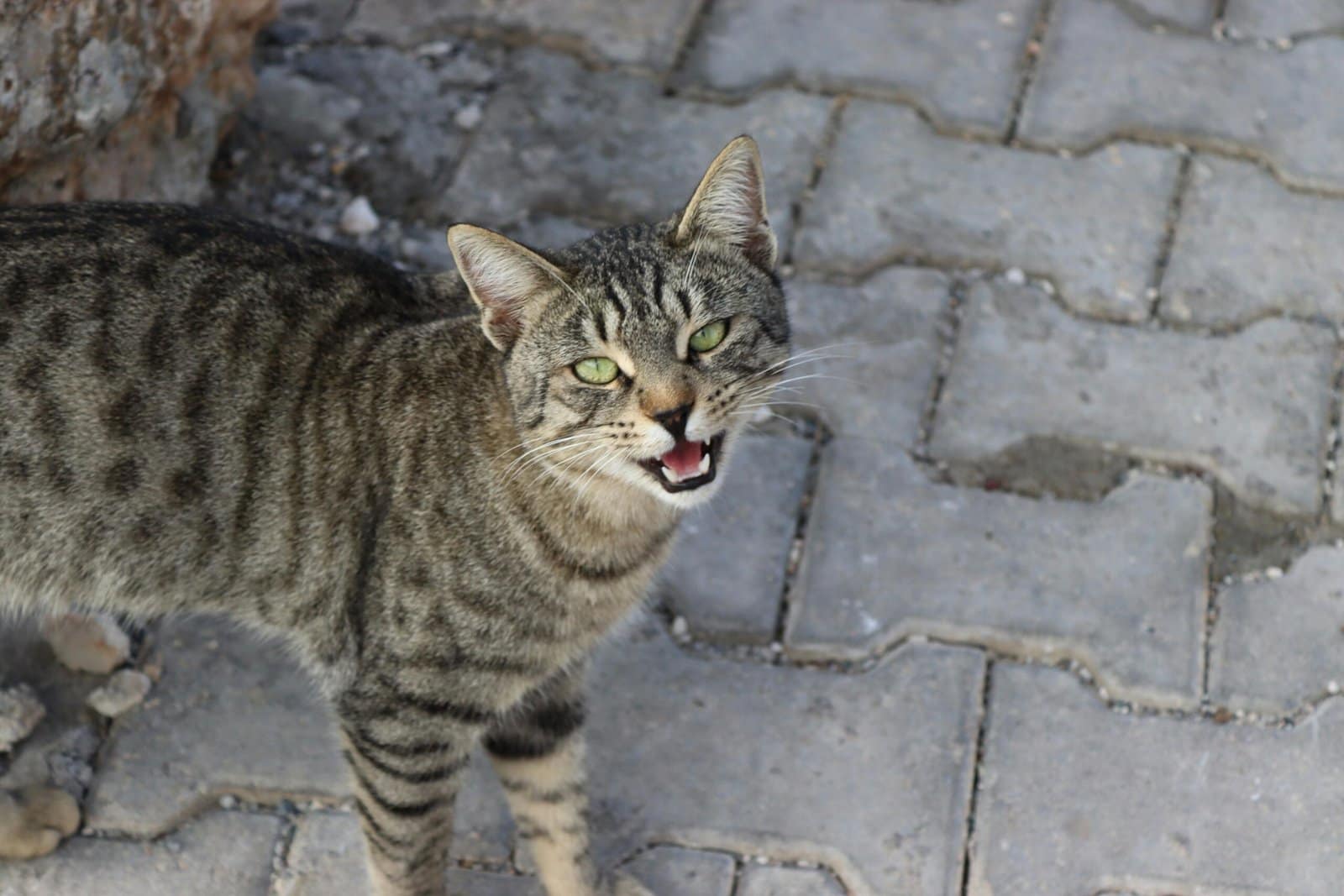
Einleitung: Manchmal ist es nicht nur eine Laune - es ist die Hitze
If your female cat suddenly starts yowling, rubbing on everything, rolling on the floor, or trying to bolt outside, she may be in heat (also called estrus). Heat causes Verhaltensänderungen—not “bad behavior”—and it can look intense the first time you see it.
Quick Answer: How to Tell If a Cat Is in Heat
A cat in heat usually shows behavioral signs (not bleeding) such as:
Loud yowling/caterwauling
Rubbing, rolling, and demanding attention
The mating posture (lordosis): front end down, hindquarters raised, tail held to the side
Restlessness/pacing and clinginess
Escape attempts to find a mate
Verminderter Appetit in some cats
Possible urine marking/spraying
Extra licking of the genital area
Das ist wichtig: Female cats typically keine Menstruationsblutung haben. If you see Blut, thick discharge, lethargy, or your cat seems in pain, it’s safer to contact a veterinarian.
At-a-Glance Checklist (Snip-Friendly Table)
| Sign you’re seeing | What it looks like | Most likely meaning | What to do right now |
|---|---|---|---|
| Loud yowling | Long, intense cries (often at night) | Calling mates | Keep indoors, add play + routine |
| Rubbing/rolling | Rubbing legs/furniture, rolling frequently | Hormonal behavior | Offer attention, enrichment |
| Lordosis pose | Rear up, tail to side, “treading” | Heat behavior | Avoid letting outdoors; reassure |
| Pacing/restless | Can’t settle, wanders room to room | Searching for mate | Provide calm space + distractions |
| Door-dashing | Trying to escape outside | High pregnancy risk | Double-check doors/windows |
| Eating less | Skips meals or becomes picky | Heat can reduce appetite | Monitor hydration + appetite |
| Spraying/marking | Tail quiver + small urine sprays | Scent signaling | Clean thoroughly; keep litter pristine |
| Genital licking | More grooming than usual | Hormonal sensitivity | Watch for blood/discharge → vet |
If you want the full picture—how long heat lasts, how often it happens, what to do, and when to spay—here’s the full guide: Wie lange sind Katzen läufig: Zeitrahmen, Anzeichen und was Sie tun sollten
Now, if you’re here to decode the behaviors that mean “yes, she’s in heat,” let’s break down the 8 most recognizable signs and how to respond calmly.
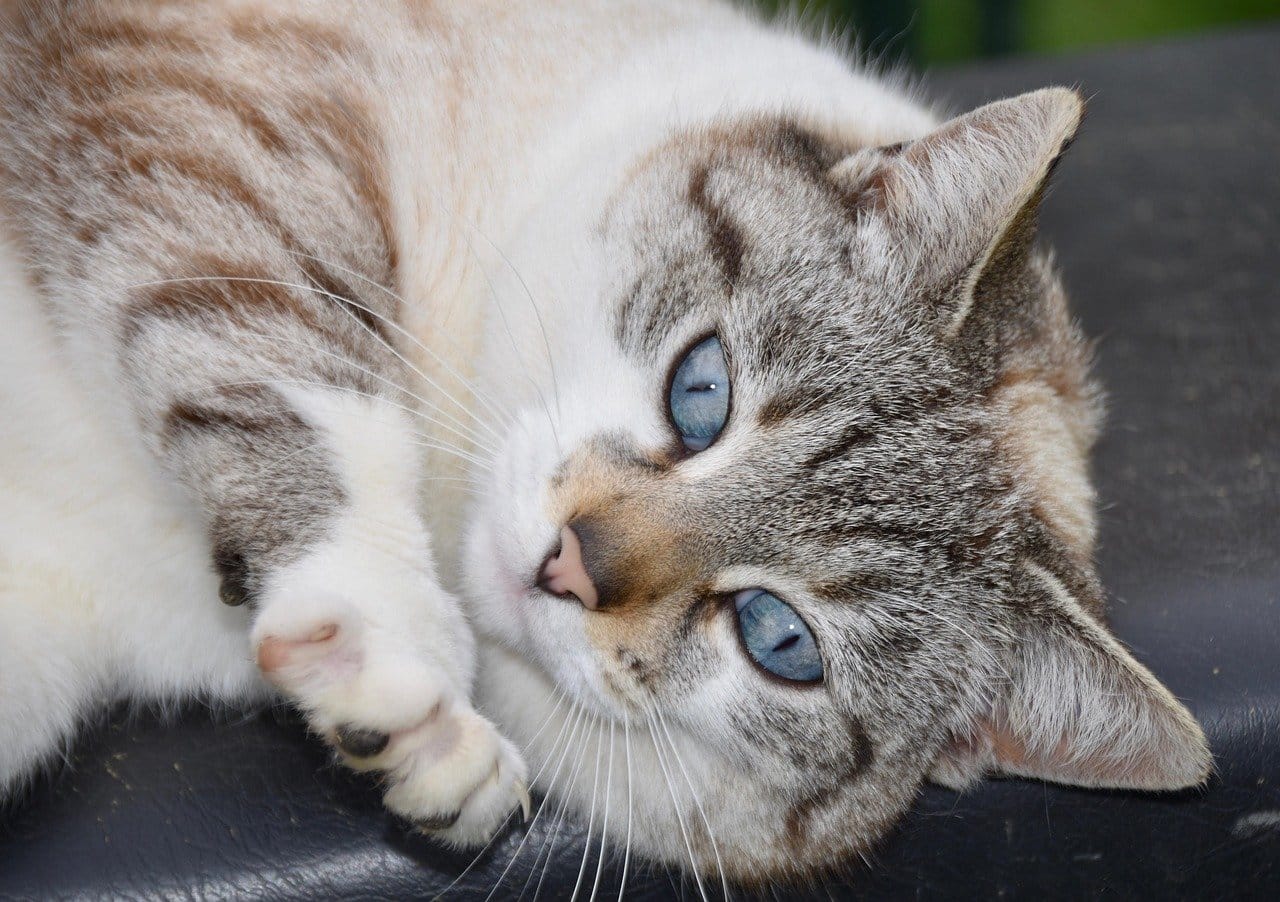
8 Anzeichen dafür, dass Ihre Katze läufig ist
Wie können Sie feststellen, ob Ihre Katze tatsächlich brünstig und sich nicht nur seltsam verhält? Glücklicherweise (oder manchmal leider für unseren Verstand) sendet eine läufige Kätzin einige ziemlich klare Signale aus.
Die Symptome sind fast ausschließlich Verhalten - anders als Menschen oder Hunde, weibliche Katzen keine Menstruationsblutung haben während ihrer Wärmezyklen.
Sie werden also in der Regel kein Blut oder Ausfluss sehen (und wenn doch, ist das nicht normal - dazu später mehr). Stattdessen werden Sie feststellen, dass Ihre Katze handelnd sehr unterschiedlich. Hier sind die klassischen Anzeichen einer läufigen Katze:
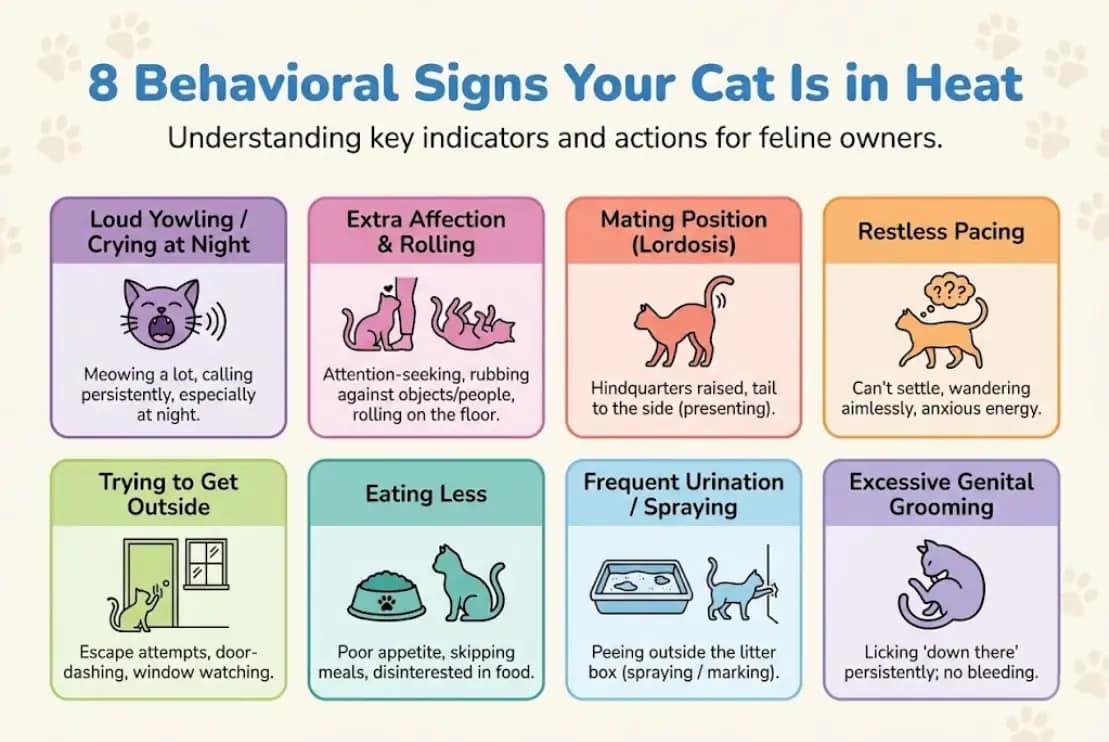
Loud yowling / “crying at night” (meowing a lot, calling)
You’ll usually notice loud yowling or “crying” at night—often described as nonstop “meowing a lot” or calling. These aren’t normal “feed me” meows; they’re longer, louder vocalizations meant to attract male cats.
Viele Menschen beschreiben das Geräusch als Katerwauling. Es kann ziemlich erschreckend sein (und ja, um 3 Uhr morgens auch ein bisschen nervig)! Diese Lautäußerung ist ein Schlüsselindikator des Östrus.
What you’ll notice
Long, drawn-out yowls or “crying” that can sound urgent
Nonstop meowing a lot that’s different from normal food/attention meows
Vocalizing near doors, windows, or after petting
Why it happens
She’s calling to attract male cats and signaling she’s ready to mate (instinct + hormones)
What to do now
Keep her indoors; close windows/doors securely
Add calming structure: play session before bedtime, food puzzle, cozy dark sleeping area
Use white noise at night if needed (for your sanity)
Red flag (not typical heat)
Crying + Verstecken, limping, or obvious pain → consider a vet check.
Extra affection + rubbing & rolling on the floor (attention-seeking)
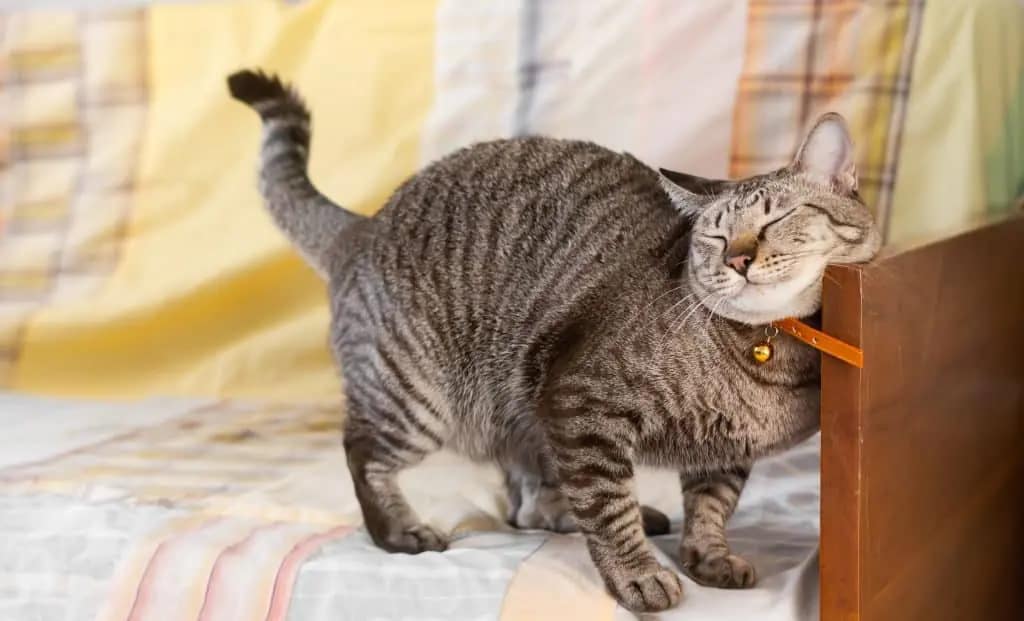
Many cats in heat become extra affectionate and attention-seeking, but the giveaway is the combo of rubbing against objects (your legs, furniture, walls) and rolling on the floor. You might see frequent head-butting, cheek rubbing, and repeated “pet me now” behavior.
Sogar Katzen, die sonst eher zurückhaltend sind, können in der Läufigkeit besondere Aufmerksamkeit suchen. (Umgekehrt werden manche Katzen reizbar wenn sie nicht gezüchtet werden - aber im Allgemeinen bemühen sie sich um Interaktion).
What you’ll notice
Constant rubbing on your legs, furniture, walls
Head-butting, cheek rubbing, rolling, and “pet me now” behavior
Clinginess that feels unusually intense (even in normally aloof cats)
Why it happens
Hormones increase social/sexual behaviors and scent-marking through rubbing
What to do now
Offer attention on your schedule: short petting breaks + interactive play
Provide safe enrichment (scratching post, catnip, wand toys) to burn restless energy
Avoid letting her bolt outside when she follows you to the door
Red flag (not typical heat)
Sudden affection plus aggression/pain when touched, especially around abdomen → vet check.
Mating position: hindquarters raised, tail to the side (lordosis / presenting)
A classic sign is the mating position: she lowers her front end, raises her hindquarters, and moves her tail to the side—often called presenting. Some cats also “tread” with their back legs as if bracing for a mate.
Ihre Hinterbeine können strampeln oder “treten”, als ob sie bereit wäre, ein Männchen zu treffen. Diese Körperhaltung (Lordose genannt) ist eine instinktive Einladung zur Paarung. Sie kann diese Pose auch einnehmen, während Wandern, Dadurch wirkt ihr Rücken übermäßig geschwungen.
What you’ll notice
The pose appears when you pet her lower back
Back legs may “tread” or paddle
She may do a mini version while walking, with an exaggerated sway
Why it happens
This posture is a reflexive mating signal controlled by reproductive hormones
What to do now
Keep petting gentle; avoid overstimulating the lower back if it escalates her agitation
Redirect with play or a treat puzzle when the behavior intensifies
Double-check doors/windows—this sign often pairs with escape attempts
Red flag (not typical heat)
Stiffness, yelping, or discomfort when her back is touched could indicate pain.
Restless pacing (can’t settle, wandering, anxious energy)
A cat in heat often seems ruhelos—pacing room to room, wandering, or acting like she can’t settle. This often happens alongside loud calling because she’s both searching and signaling to potential mates.
What you’ll notice
Pacing room to room, frequent window-checking
Restless energy + increased vocalizing
Less interest in normal naps or routines
Why it happens
She’s hormonally driven to search for mates and respond to scent/sound cues
What to do now
Increase structured play (2–3 short sessions/day)
Add “quiet zones” (covered bed, calm room, dim lighting)
Keep a consistent feeding and bedtime routine
Red flag (not typical heat)
Restlessness with vomiting, lethargy, or collapse is not normal—seek vet help.
Trying to get outside (escape attempts, door-dashing, window watching)
During heat, many queens make escape attempts—camping by doors/windows, scratching, or door-dashing the moment there’s an opening. This “trying to get outside” behavior is a major reason accidental pregnancies happen.
So kommt es zu vielen ungewollten Schwangerschaften. Wenn Sie bemerken, dass Ihre Katze an der Tür herumhängt, daran kratzt oder nach einer Öffnung sucht, wird sie wahrscheinlich vom Paarungsinstinkt getrieben.
What you’ll notice
Camping at doors/windows, scratching, pawing at screens
Door-dashing the moment there’s an opening
Increased interest in outdoor scents and sounds
Why it happens
Mating instinct + pheromone cues can override normal caution
What to do now
Use a “two-step” exit routine: cat behind a door/room before you open exterior doors
Check window screens and latches daily
If she’s persistent, confine her temporarily to a safe room when you’re coming/going
Red flag (not typical heat)
If she escapes and returns injured, lethargic, or refusing food/water, contact a vet.
Eating less (poor appetite, skipping meals)
Some cats in heat have a poor appetite—they may eat less or skip a meal or two because the drive to mate overrides interest in food. Keep offering normal meals and monitor that she returns to usual eating afterward.
Achten Sie einfach darauf, dass sie wieder normal frisst, wenn die Hitze vorbei ist.
What you’ll notice
Skipping a meal, picking at food, or eating smaller amounts
Still active/alert but “too distracted” to eat much
Why it happens
Hormonal drive to mate can temporarily outweigh hunger
What to do now
Offer normal meals at normal times; keep fresh water available
Tempt lightly with warm wet food (don’t radically change diet)
Monitor hydration and energy
Red flag (not typical heat)
No eating for 24 hours plus lethargy, vomiting, or dehydration signs → vet check.
Frequent urination or peeing outside the litter box (spraying / marking)
Some females in heat may urinate more frequently, leave small amounts, or even pee outside the litter box (less common but highly searched). Others spray/mark vertical surfaces with a strong-smelling message to attract males.
Der Urin einer läufigen Kätzin enthält Hormone und Pheromone, die ihre Fruchtbarkeit für alle Kater in der Nähe ankündigen.
Wenn Sie sehen, wie sich Ihre Hündin mit zitterndem Schwanz an eine Wand oder ein Möbelstück klammert - und dabei einen übelriechenden Sprühstoß abgibt - dann markiert sie. Das ist ihre Art, eine duftende Botschaft zu hinterlassen: “Jetzt verfügbar!” Das ist nicht gut für Ihre Möbel, aber es ist normale Biologie.
Sie können dem vorbeugen, indem Sie die Katzentoilette sehr sauber halten (sie neigt weniger zum Markieren, wenn ihre Kiste makellos ist) und indem Sie sie während der Läufigkeit auf einen leicht zu reinigenden Bereich beschränken, falls erforderlich.
What you’ll notice
Small frequent pees or increased litter box visits
Vertical spraying: backing up to a surface, tail quiver, strong odor
Accidents near doors/walls/windows (common “marking” spots)
Why it happens
Urine can carry pheromones that signal fertility to male cats
What to do now
Keep the litter box besonders sauber (scooped 1–2x/day)
Add an extra box temporarily if you have multiple cats
Clean accidents with an enzyme cleaner (prevents repeat marking)
Consider confining her to an easy-clean room during peak days
Red flag (not typical heat)
Straining, crying in the box, blood, or very frequent tiny pees can signal urinary issues—see a vet.
Excessive genital grooming (licking “down there,” no bleeding)
A cat in heat may spend extra time licking her genital area (excessive grooming) even though there should be no blood. Mild clear moisture can happen, but blood or foul discharge isn’t a normal heat sign—get a vet check.
Usually the grooming is just because the area may be a little swollen or feels different hormonally. If you notice Blut, strong odor, or your cat seems painful while urinating, jump to the Red Flags section below—those aren’t typical heat signs and deserve a vet call.
What you’ll notice
Extra grooming focused “down there”
Mild swelling or slightly increased moisture can occur
Often paired with rolling, rubbing, or vocalizing
Why it happens
Hormonal changes can make the area feel different, triggering extra grooming
What to do now
Don’t punish the grooming; it’s instinctive
Keep the environment calm and clean
Monitor for anything unusual (odor, discharge changes)
Red flag (not typical heat)
Blood, thick/foul discharge, strong odor, or obvious pain → vet evaluation.
When It Might Nicht Be Heat (Red Flags That Need a Vet)
Heat is mostly behavioral. But some symptoms suggest something other than estrus—and it’s safer to get veterinary advice.
Contact a vet promptly if you notice:
Blood from the vulva, blood in urine, or a foul-smelling discharge (bleeding isn’t a normal heat sign).
Straining to urinate, crying in the litter box, frequent tiny pees, or urinating outside the box with signs of discomfort (can point to urinary problems rather than heat alone).
Severe lethargy, vomiting, fever, refusal to eat for more than a day, or obvious pain.
A swollen, painful abdomen or sudden collapse (urgent).
What to do right now:
Keep your cat indoors and comfortable.
Note what you’re seeing (blood vs clear discharge, how often she urinates, appetite).
Call your vet and describe the signs—especially if urination looks painful or you see blood.
This guide can help you recognize heat behaviors, but only a vet can rule out illness if red flags appear.
Conclusion: What to Do When Your Cat Is in Heat (Estrus)
Spotting the signs your cat is in heat helps you respond with calm, confident care instead of frustration. The yowling, rolling, clinginess, pacing, and “tail-to-the-side” posture can feel intense—but a female cat in heat isn’t being naughty. She’s reacting to normal hormones and instinct.
Quick recap
Heat is mostly Verhalten (cats typically don’t bleed during heat).
Your main goals are to keep her safe indoors, reduce stress, and prevent accidental mating.
The long-term solution for repeated heat cycles is to talk to your vet about spaying.
What you can do right now
Secure doors/windows and supervise entryways (escape attempts are common).
Angebot extra play + enrichment to burn restlessness.
Keep the litter box besonders sauber and maintain a predictable routine.
If you notice blood, thick discharge, or signs of pain, contact a vet promptly.
Want the full timeline—how long heat lasts, how often it repeats, and when to spay? Read the complete guide here: Wie lange sind Katzen läufig: Zeitrahmen, Anzeichen und was Sie tun sollten
With the right support (and a secure home setup), most cats get through heat more comfortably—and so do you.
FAQ
Can you spay a cat while she’s in heat?
Yes—vets can spay cats even if they’re currently in heat, and your vet can advise on timing for your specific cat.
Hat meine Katze Schmerzen, wenn sie läufig ist?
Normalerweise nicht. Zwar können läufige Katzen Klang Wenn Ihre Katze durch lautes Jaulen verzweifelt ist, sind diese Verhaltensweisen hormonell bedingt und haben nichts mit körperlichen Schmerzen zu tun. Dennoch kann Ihre Katze frustriert oder verunsichert sein.
Bluten weibliche Katzen während der Läufigkeit wie Hunde?
Nein. Katzen haben keine Menstruationsblutung. Wenn Sie Blut bemerken, kann dies ein Anzeichen für eine Krankheit oder Verletzung sein, und ein Tierarztbesuch wird empfohlen.
Wie alt ist eine Katze, wenn sie zum ersten Mal rollig wird?
Die meisten Katzen werden zwischen dem 4. und 6. Lebensmonat zum ersten Mal läufig, bei einigen Rassen kann dies jedoch schon mit 4 Monaten der Fall sein.
Wie lange dauern die Anzeichen von Hitze normalerweise an?
Die Verhaltenssymptome dauern in der Regel 5-7 Tage, können aber auch 2 bis 14 Tage andauern. Sie wiederholen sich oft alle 2-3 Wochen, bis die Katze kastriert oder trächtig wird.
Ist Urinspritzen bei läufigen Katzen normal?
Ja, manche Weibchen versprühen Urin als Paarungssignal. Auf diese Weise signalisieren sie den Männchen in der Nähe ihre Fruchtbarkeit. Es kann helfen, die Katzentoilette sauber zu halten und den Stress zu begrenzen.
Sollte ich meine Katze während der Läufigkeit isolieren?
Ja, wenn intakte Kater in der Nähe sind oder Ihre Katze versucht zu fliehen. Die Bereitstellung eines sicheren, ruhigen Raums hilft, Stress abzubauen und verhindert ungewollte Paarungen.
Referenzen
Llera, R. M., & Yuill, C. (2022). Brunstzyklen bei Katzen. VCA Tierkliniken. Abgerufen von https://vcahospitals.com/know-your-pet/estrus-cycles-in-cats
Lovejoy, J. (2023). Läufige Katzen: Wie lange die Läufigkeit anhält und was zu tun ist. PetMD. Abgerufen von https://www.petmd.com/cat/general-health/cat-in-heat
Wurzel Kustritz, M. V. (2006). Reproduktionsverhalten und Physiologie der Königin. Theriogenologie, 66(5), 701-706. https://www.sciencedirect.com/science/article/abs/pii/S0093691X06002378?via%3Dihub
Bukowski, J. A., & Aiello, S. E. (2023). Zucht und Vermehrung von Katzen. In Merck Veterinary Manual (Pet Owner Edition). Abgerufen von https://www.merckvetmanual.com
Griffin, B. (2001). Proaktive Strategien zur Reduzierung der Überpopulation von Katzen: Kostengünstige Kastrationsprogramme. Zeitschrift der Amerikanischen Veterinärmedizinischen Gesellschaft, 219(12), 1667-1671.










 EN
EN DE
DE ES
ES PT
PT