
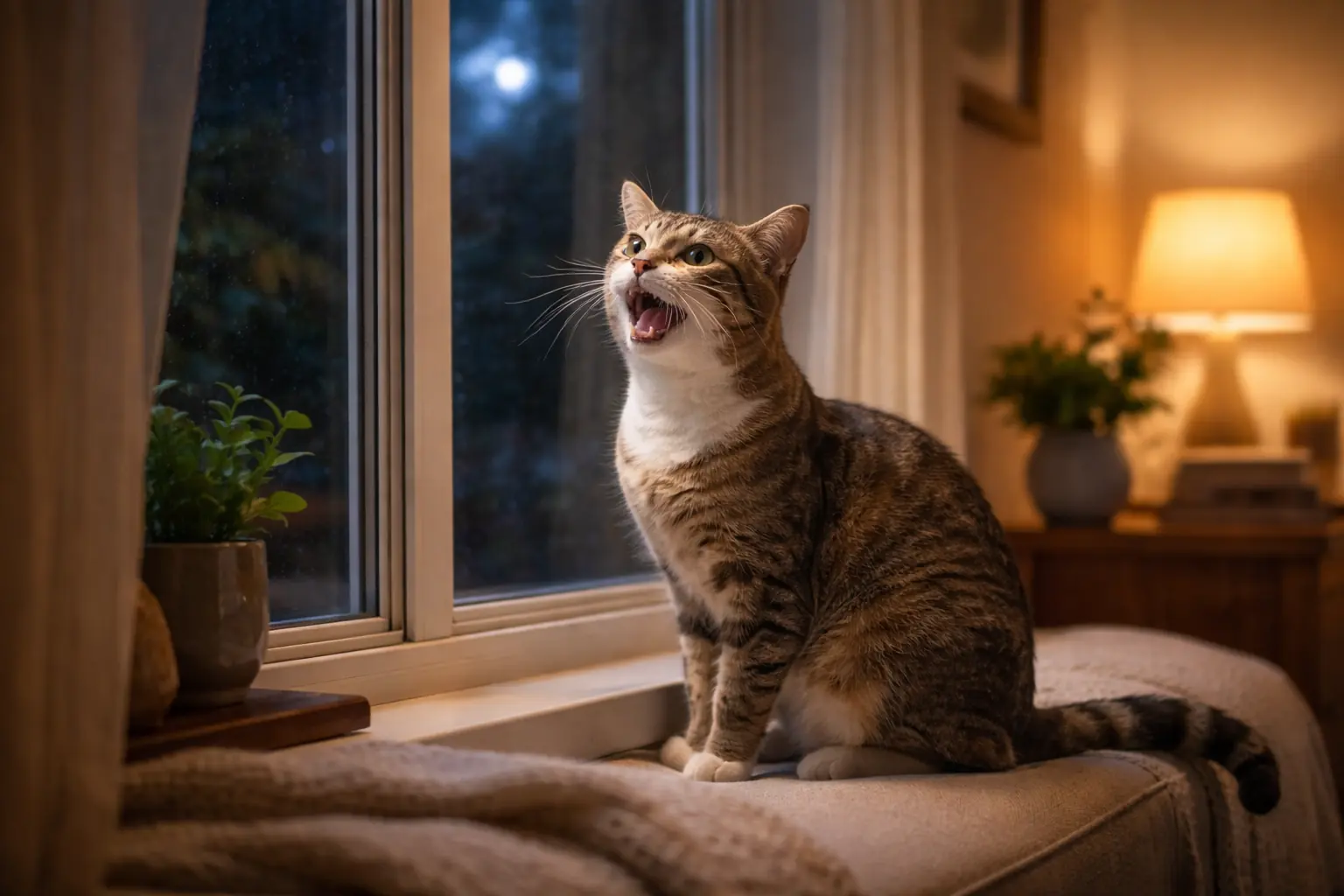
Common signs your female cat is in heat include loud yowling, rolling, rubbing, unusual affection, restlessness, raising her hindquarters, moving her tail to one side, treading with the back feet, urine marking, and trying to escape. Heat behavior can look dramatic, but vomiting, weakness, heavy bleeding, abnormal discharge, pain, or urinary straining are not normal heat signs.
Look for a cluster of behaviors rather than one sign. A vocal cat may want attention, a rolling cat may be playful, and a raised rear can resemble stretching. Heat becomes more likely when several characteristic behaviors appear together in an unspayed female and repeat over several days.
Índice
- What are the clearest signs your cat is in heat?
- Normal heat behavior vs signs to call a vet
- What does the heat mating posture look like?
- Can heat cause yowling, affection, or escape attempts?
- Can cats bleed or have discharge while in heat?
- What can be mistaken for a cat in heat?
- How can I confirm the pattern at home?
- What should I do if my cat is in heat?
- ¿Cuándo debo llamar al veterinario?
- Preguntas frecuentes
- Referencias
What are the clearest signs your cat is in heat?
The clearest signs are a combination of vocal, social, postural, and escape-seeking behaviors. VCA describes common estrus signs as increased affection, rubbing, rolling, vocalization, raising the rear when stroked, and treading with the hind feet 1.
| Possible heat sign | Cómo podría ser | How useful is it? |
|---|---|---|
| Loud calling or yowling | Repeated long vocalizations, often worse at night | Common, but not specific to heat |
| Extra affection and rubbing | Rubbing against people, furniture, or doorways | Common when paired with other signs |
| Rolling on the floor | Repeated rolling and writhing | Supportive, but can also be playful behavior |
| Lordosis posture | Front lowered, hindquarters raised, tail moved aside | One of the more distinctive heat signs |
| Hind-foot treading | Alternating or stepping movement with back feet | Often appears with lordosis |
| Restlessness | Pacing, difficulty settling, attention to exits | Common but can also indicate stress or discomfort |
| Escape attempts | Waiting at doors, pushing screens, trying to run outside | Strong practical warning because pregnancy is possible |
| Urine marking | Small amounts sprayed on vertical surfaces | Can occur, but urinary disease must be ruled out if straining or frequent trips appear |
| Mild appetite decrease | Less interest in food during an intense cycle | Monitor closely; refusal to come or illness signs need a vet |
No single sign confirms heat. A more convincing pattern is an unspayed female showing several signs together, remaining otherwise bright and well, and returning to normal after several days.
Normal heat behavior vs signs to call a vet
Heat usually changes behavior more than physical health. A cat may be noisy, restless, affectionate, and determined to escape while still eating, drinking, walking, and using the litter box without pain.
| Lo que se nota | Can fit normal heat | Call a veterinarian |
|---|---|---|
| Vocalización | Loud yowling or calling with otherwise normal behavior | Crying with pain, weakness, breathing trouble, or collapse |
| Postura corporal | Hindquarters raised, tail to one side, hind-foot treading | Painful abdomen, rigid posture, inability to walk normally |
| Affection | Rubbing, rolling, seeking attention | Sudden clinginess with lethargy, vomiting, or refusal to eat |
| Caja de arena | Possible urine marking outside the box | Repeated straining, little/no urine, crying in the box, blood in urine |
| Discharge | Usually no obvious discharge | Pus-like, foul-smelling, green, yellow, heavy bloody, or unusual discharge |
| Appetite | May eat slightly less for a short period | Refuses food, loses peso, vomits, or seems dehydrated |
| Duración | Several days, commonly around 5-7 days | Heat-like behavior beyond about 14 days or nearly continuous signs |
If your cat cannot urinate, has difficulty breathing, collapses, has seizures, or declines rapidly, seek emergency veterinary care.
What does the heat mating posture look like?
The classic receptive posture is called lordosis. The cat lowers the front of her body, raises the hindquarters, moves the tail to one side, and may tread with her back feet. Light touch near the lower back can trigger the posture in a gata en celo.
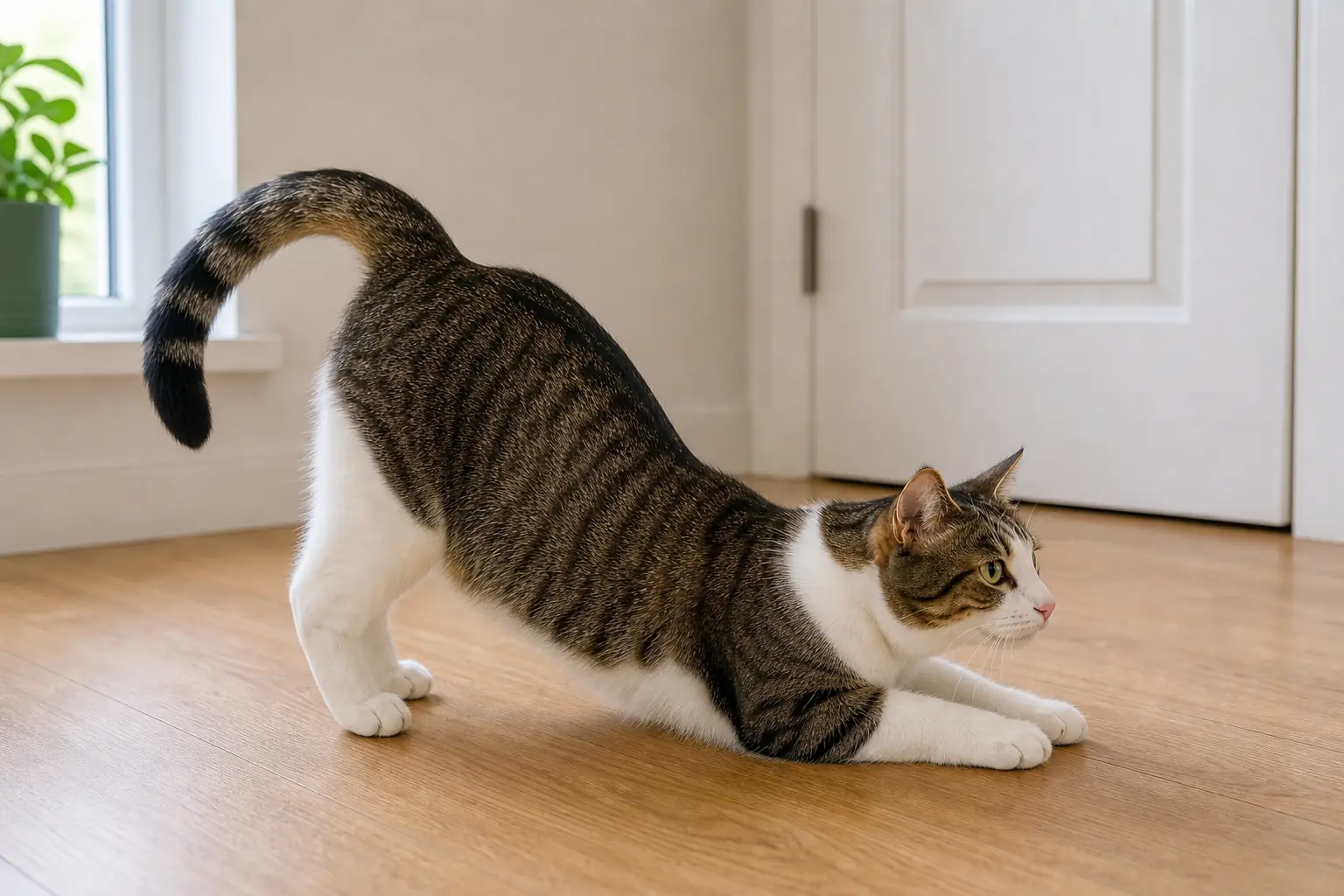
This posture is more useful than yowling alone, but it still should not be treated as a diagnosis from one photograph or moment. Stretching, play, touch sensitivity, and other behaviors can briefly look similar.
Watch the tail, ears, body tension, and surrounding context together. SnuggleSouls’ guide to lenguaje del rabo de gato can help you describe tail movement without assuming every raised or curved tail means heat.
Can heat cause yowling, affection, or escape attempts?
Yes. Heat commonly causes loud calling, extra affection, rubbing, rolling, restlessness, and strong interest in getting outside. These behaviors are driven by reproductive hormones and the cat’s readiness to mate.
Yowling and calling
Heat vocalizations can sound distressed even when the cat is not injured. They may become especially noticeable at night. Compare the sound with your cat’s normal voice and look at the whole behavior pattern.
If vocalization is the only change, heat is only one possibility. Pain, anxiety, hunger, cognitive change, and illness can also alter vocalization. Use the guide on cambios repentinos en la voz to organize clues.
Extra affection, rolling, and rubbing
Some cats become intensely affectionate, repeatedly rub against people or furniture, and roll on the floor. This can be normal during heat if the cat remains physically well.
Escape attempts
An unspayed female in heat may be highly motivated to reach intact males. Keep doors, windows, balconies, screens, and pet doors secure. A cat can become pregnant during a heat cycle, including an early or first recognized heat.
Can cats bleed or have discharge while in heat?
Cats usually do not have obvious bleeding during heat. A tiny amount may be difficult to interpret, but heavy bleeding, pus-like discharge, foul odor, green or yellow discharge, or discharge paired with illness signs is not something to dismiss as normal heat.
Call your vet promptly if discharge appears with:
- Weakness, lethargy, or collapse.
- Vómitos o diarrea.
- Feverish behavior or ocultar.
- Increased thirst or urination.
- Un abdomen hinchado o dolorido.
- Appetite loss.
- Recent mating, pregnancy possibility, or recent heat cycle.
One serious condition a veterinarian may consider is pyometra, an infection of the uterus that can occur in intact female cats. Merck notes that signs can include vaginal discharge in open-cervix cases, while closed-cervix cases may have no visible discharge and can become severely ill 2. Do not use this article to diagnose pyometra; use these warning signs to seek care.
What can be mistaken for a cat in heat?
Several behaviors and medical problems can resemble part of a heat cycle. The main difference is that normal heat usually produces a recognizable cluster of reproductive behaviors without making the cat systemically ill.
| Heat-like behavior | Other possibilities | Clue that changes the next step |
|---|---|---|
| Loud meowing | Attention seeking, stress, pain, illness, aging | Call if new, persistent, or paired with physical changes |
| Rolling or rubbing | Play, scent marking, affection, skin irritation | Check for itching, wounds, hair loss, or discomfort |
| Rear raised when touched | Normal stretch, social response, touch sensitivity | Stop touching if the cat tenses, bites, or seems painful |
| Urinating outside the box | Marking, stress, urinary disease | Straining or little/no urine is urgent |
| Restlessness | Environmental stress, pain, hyperthyroidism, other illness | Call if paired with weight, appetite, thirst, or activity changes |
| Swollen abdomen or nipple changes | Pregnancy or medical condition | Arrange a veterinary exam |
If mating or escape may have occurred, heat signs stopping does not confirm or rule out pregnancy. Review the timeline in ¿Cuánto dura la gestación de las gatas? and contact your veterinarian.
How can I confirm the pattern at home?
You cannot definitively diagnose reproductive status at home, but a short record can help you identify a heat-like pattern and give your veterinarian useful information.
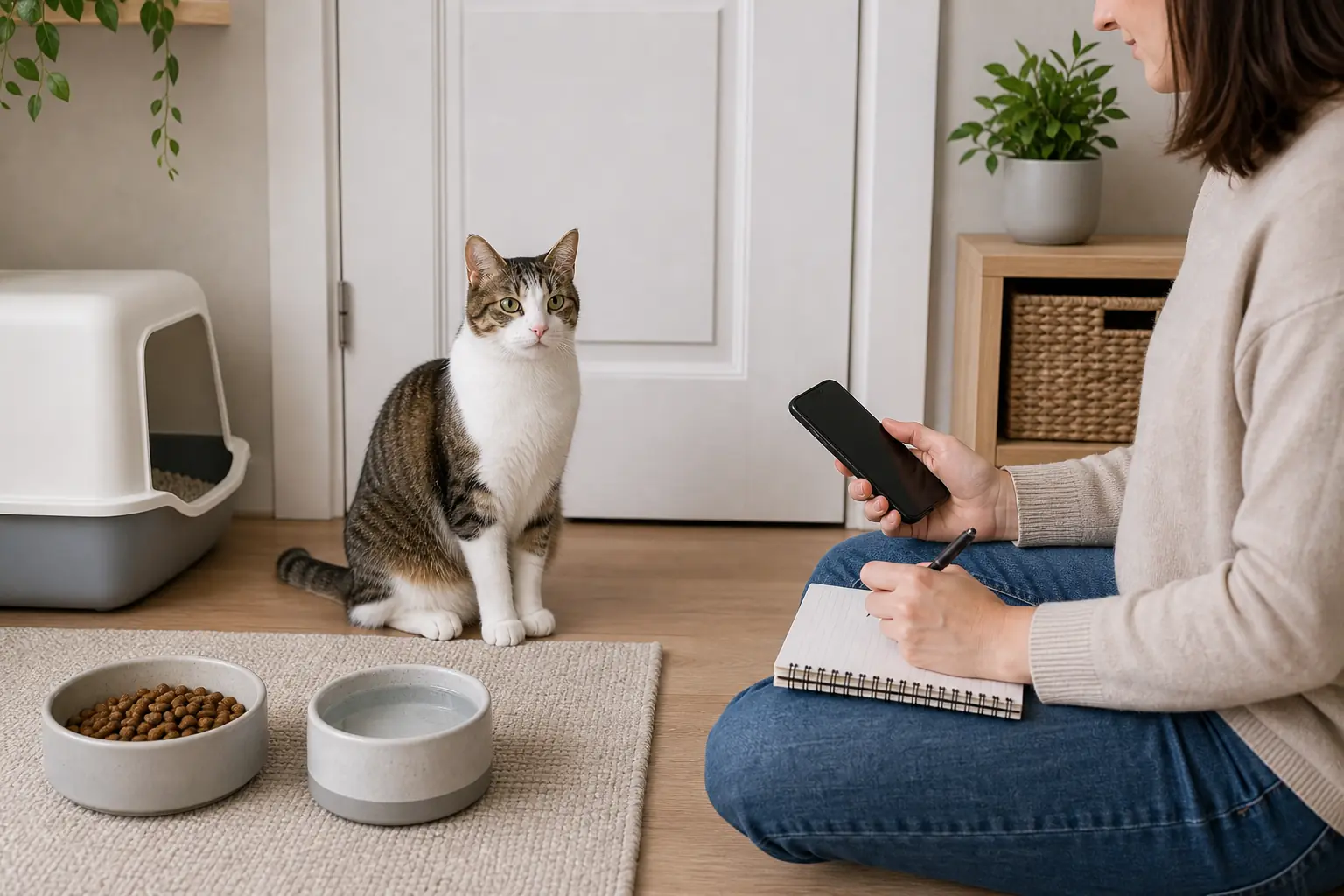
Track for each day:
- Yowling, rolling, rubbing, or unusual affection.
- Lordosis posture, tail movement, and back-foot treading.
- Door or window escape attempts.
- Urine marking versus repeated litter box straining.
- Appetite and water intake.
- Energy, walking, jumping, and grooming.
- Vomiting, diarrhea, pain, discharge, or bleeding.
- First and last day of the behavior cluster.
Take a short video of the posture or behavior if it can be done calmly. Do not repeatedly touch the lower back to trigger the posture. Your veterinarian can use the history, exam, edad, spay status, and other testing when needed.
For detailed cycle timing, use SnuggleSouls’ guide on how long cats stay in heat. It explains typical duration, repeated cycles, and the difference between one long episode and recurring heat.
What should I do if my cat is in heat?
Keep your cat securely indoors, prevent contact with intact males, reduce household stress, and speak with your veterinarian about spaying. Comfort measures can make the period easier, but they do not stop the hormone cycle.
Hazlo:
- Secure doors, windows, screens, balconies, and pet doors.
- Keep her separated from intact males.
- Maintain a clean litter box and fresh water.
- Offer quiet resting spaces and gentle play if she wants it.
- Track dates and symptoms.
- Ask your veterinarian about appropriate spay timing.
No:
- Allow outdoor access.
- Punish yowling, rolling, marking, or restlessness.
- Force handling or repeatedly trigger the mating posture.
- Give human medication, sedatives, hormones, or supplements.
- Assume unusual discharge, pain, or urinary straining is normal heat.
Spaying stops future heat cycles and prevents pregnancy. Cornell notes that spaying eliminates heat-cycle behaviors such as howling and restlessness and offers additional health benefits 3.
¿Cuándo debo llamar al veterinario?
Call your veterinarian when signs do not fit a typical heat pattern, continue beyond about 14 days, or occur with physical illness. Normal heat can be disruptive, but it should not make a cat severely unwell.
Call promptly for:
- Heat-like behavior lasting longer than about 2 weeks.
- Pus-like, foul-smelling, green, yellow, or heavy bloody discharge.
- Vomiting, diarrhea, weakness, collapse, or severe lethargy.
- Refusal to eat or rapid weight change.
- Un abdomen hinchado o dolorido.
- Repeated litter box trips, straining, crying, or little/no urine.
- Dificultades respiratorias.
- Possible mating, pregnancy, or escape outdoors.
- Heat-like behavior in a cat believed to be spayed.
If your cat is already confirmed pregnant, switch from heat-cycle guidance to veterinary pregnancy care. SnuggleSouls’ guide on Cómo cuidar a una gata embarazada can help you organize questions for your vet.
Preguntas frecuentes
What is the first sign a cat is in heat?
The first noticeable sign is often increased affection, rubbing, restlessness, or louder vocalization. Heat is more likely when these signs progress into rolling, lordosis posture, tail movement to the side, hind-foot treading, and escape attempts.
Do cats in heat meow a lot?
Yes. Loud calling and yowling are common heat behaviors. However, meowing alone does not prove heat. Call your vet if vocalization is paired with pain, weakness, breathing trouble, urinary straining, or other illness signs.
Do cats in heat bleed?
Cats usually do not have obvious bleeding during heat. Heavy bleeding, unusual discharge, foul odor, weakness, vomiting, or a swollen abdomen requires veterinary advice.
Is my cat in heat or in pain?
Heat usually causes a cluster of reproductive behaviors while the cat remains otherwise bright and mobile. Pain is more likely when you see guarding, limping, hiding, appetite loss, vomiting, weakness, or a painful response to touch.
Can a spayed cat show signs of heat?
Heat-like behavior in a spayed cat should be discussed with a veterinarian. Possible explanations include another behavior being mistaken for heat or, less commonly, remaining ovarian tissue.
¿Puede una gata quedarse embarazada durante su primer celo?
Yes. A sexually mature cat can become pregnant during a heat cycle, including her first recognized heat. Keep her securely indoors and away from intact males.
How long do signs of heat last?
Many cats show heat signs for about 5-7 days, but a range of roughly 3-14 days can occur. If signs continue beyond about 14 days, contact your veterinarian.
How can I calm a cat in heat?
Provide a secure indoor environment, clean litter box, fresh water, quiet resting space, and gentle play if she wants it. Avoid punishment, forced handling, outdoor access, and unapproved medications or supplements.
Referencias
[1] Hospitales veterinarios VCA. Ciclos estrales en gatos.
[2] Manual Veterinario de Merck. Piometra en animales pequeños.
[3] Centro de Salud Felina de Cornell. Cómo elegir y cuidar a tu nuevo gato.
 EN
EN DE
DE ES
ES PT
PT