
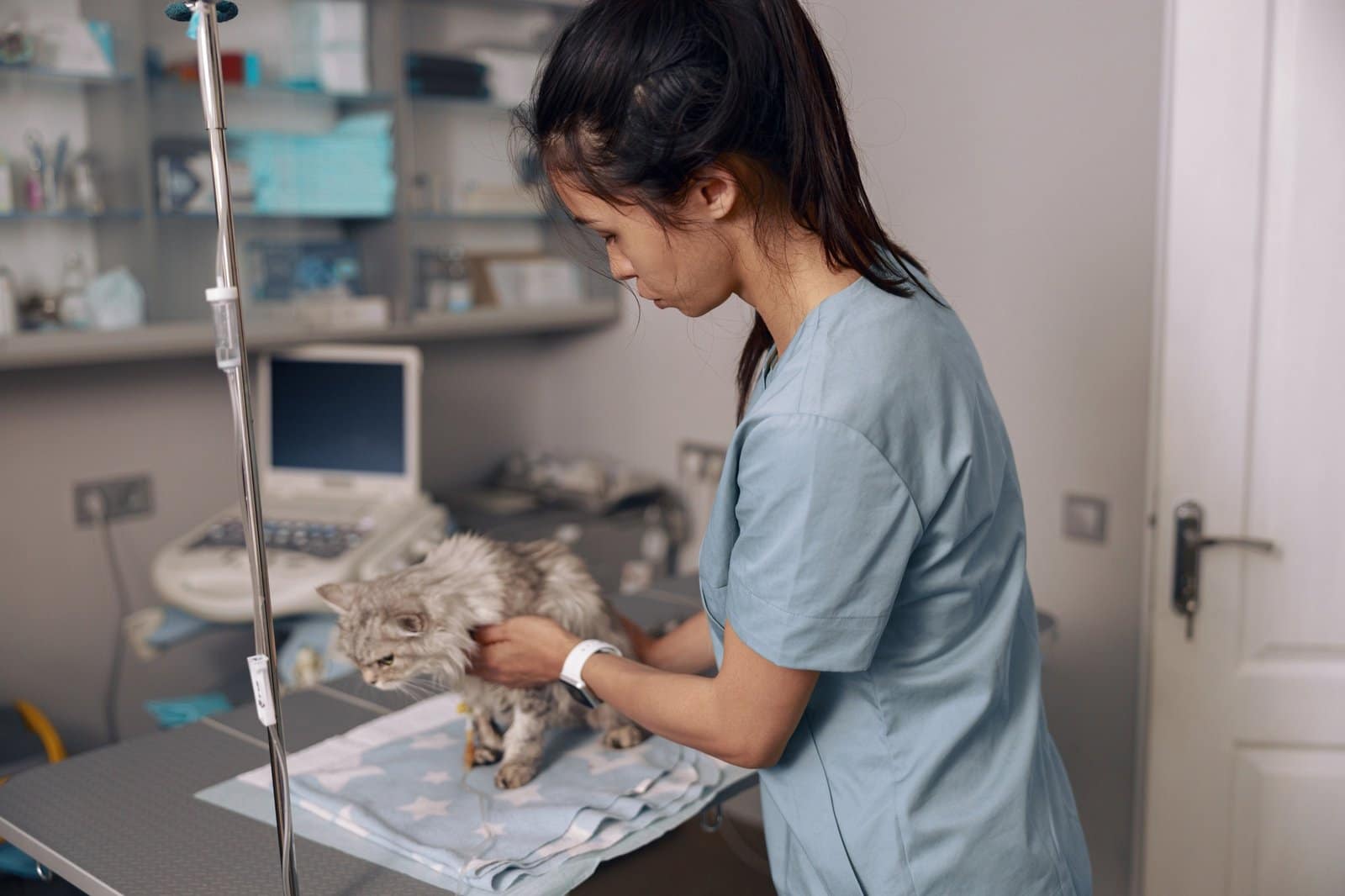
If your cat has diarrhea, it’s normal to worry—especially when it happens suddenly. Most mild cases improve with simple home care, but diarrhea can also be a sign of dehydration, infection, or another condition that needs urgent veterinary help.
This guide covers: what to do in the first 24 hours, what to feed, how to prevent dehydration, what not to give, and when to call a vet.
Importante: This article is educational and can’t replace veterinary diagnosis. If your cat seems unwell, contact your veterinarian.
Why you can trust this page
We created this guide to help cat parents take safe first steps while recognizing when diarrhea may signal something serious. We base our recommendations on reputable veterinary resources (for example, Cornell’s feline health guidance y VCA’s clinical education materials) and we emphasize conservative, safety-first home care.
Índice
Principales conclusiones
- If no red flags, start Home Treatment Plan below (hydration + bland diet).
- Call a vet if diarrhea lasts >24–48h or you see blood/black stool, vomiting, lethargy, or dehydration.
- Avoid human anti-diarrheals (Pepto-Bismol/Imodium).
- Track stool + appetite + energy; reassess within 24–48h.
Quick Answer: What to Do in the Next 24 Hours
Step 1 — Check for red flags (vet now vs. home care)
Call a vet urgently today if you notice any of these:
- Blood in stool (bright red) or black/tarry stool
- Repeated vomiting
- Marked lethargy, weakness, ocultar, or collapse
- Signs of dehydration (dry/sticky gums, sunken eyes, skin “tents,” very little urine)
- Your cat is a gatito, very old, underweight, or has a chronic illness
- Diarrhea lasts more than 24–48 hours
If none of the above applies and your cat is still bright, eating at least a little, and drinking, home care is often reasonable while you monitor closely.
Step 2 — Focus on fluids first
- Oferta agua dulce in multiple bowls (wide/shallow bowls often help).
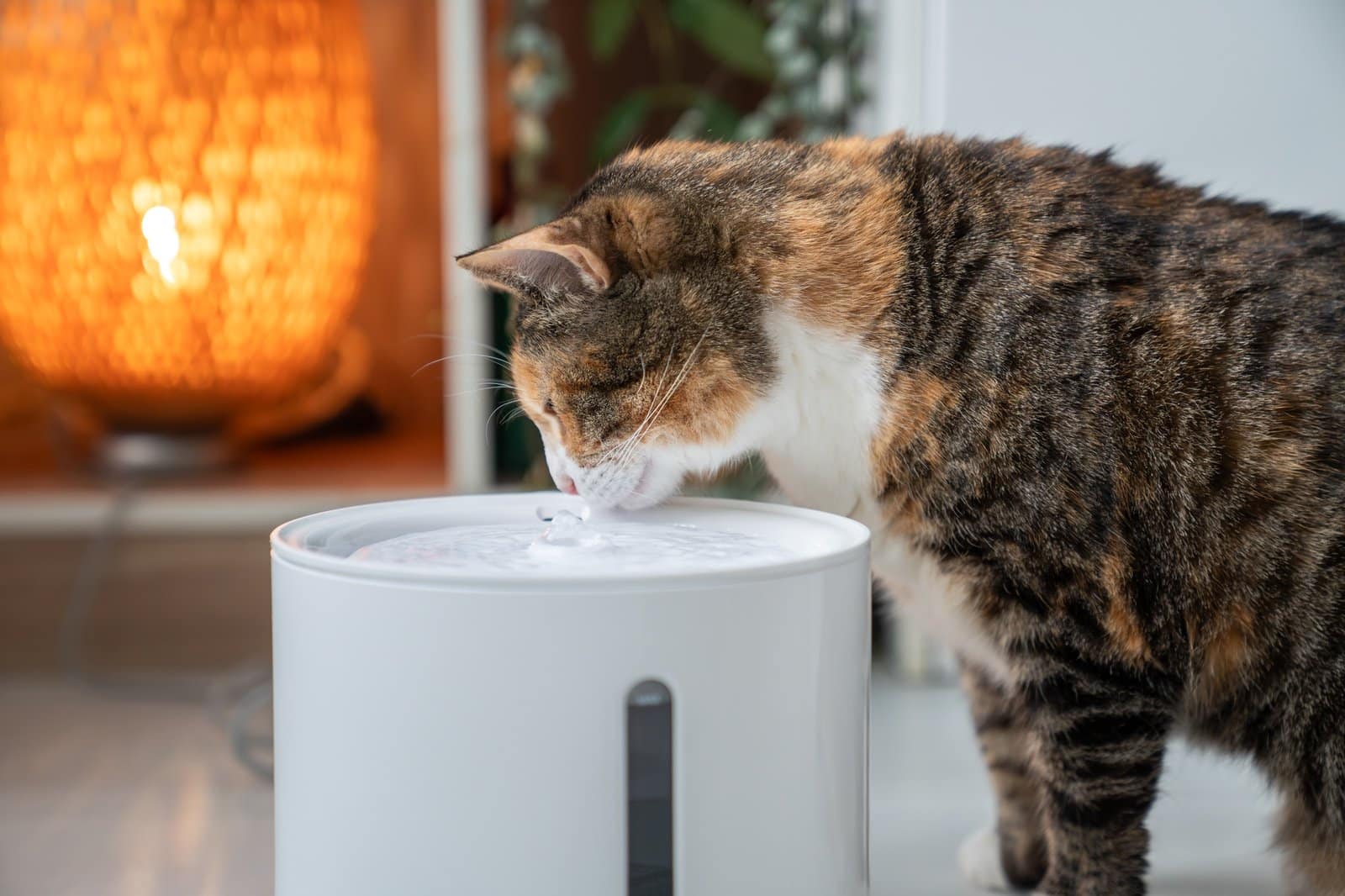
- Consider a water fountain if your cat prefers running water.
- Feed comida húmeda if possible (extra moisture helps).
- You can tempt drinking with a small amount of low-sodium broth (no onion/garlic).
Step 3 — Switch to a bland, easy-to-digest diet
For 1–3 days, feed small, frequent meals of:
- Plain boiled pollo (no seasoning) + plain white rice, OR
- A veterinarian-recommended GI diet
Step 4 — Avoid unsafe human medications
Visite no give Pepto-Bismol, Kaopectate, or Imodium unless your vet specifically instructs you. Some human anti-diarrheal meds can be dangerous for cats.
Step 5 — Reassess at 24–48 hours
- If stool is improving and your cat is otherwise normal, continue bland diet briefly and transition back slowly.
- If there’s no improvement, symptoms worsen, or new red flags appear → call your vet.
Want the deeper “why” behind diarrhea (causes, parasites, chronic disease)? See: Diarrea del gato: Todo lo que debe saber
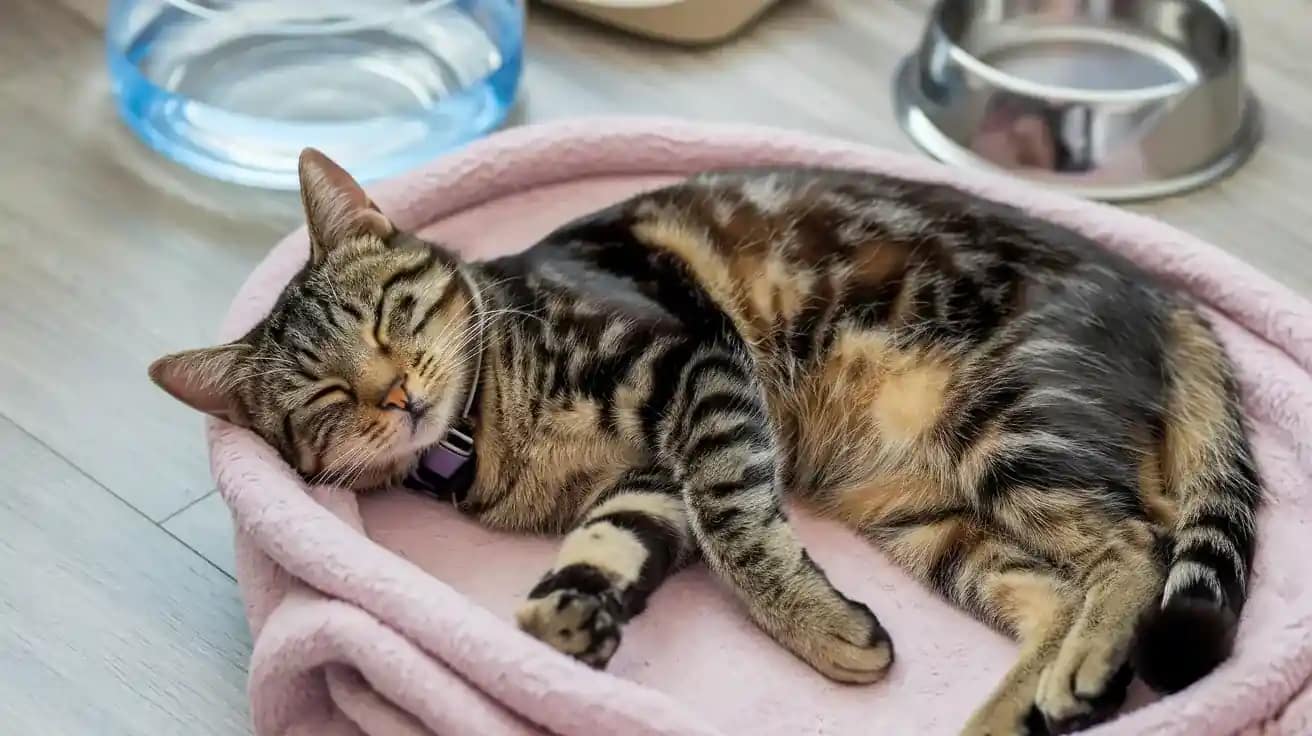
When to Call the Vet (Red Flags Checklist)
Diarrhea can become dangerous quickly—especially if your cat is losing fluids fast or has an underlying illness. Contact a veterinarian immediately if any of the following apply.
Go to an emergency vet now (same day / ASAP)
- Blood in stool (bright red) or black/tarry stool
- Repeated vomiting or can’t keep water down
- Severe lethargy, collapse, extreme weakness, or hiding and “not themselves”
- Signs of dehydration: sticky/dry gums, sunken eyes, very little urine, skin “tents” when gently pinched
- Bloated/painful abdomen or obvious pain when picked up
- Suspected toxin ingestion, foreign object, or sudden severe diarrhea
Call your vet within 24 hours
- Diarrhea lasting more than 24–48 hours
- Not eating for más de 24 horas (cats can get complications from not eating)
- Ongoing soft stool with mucus, frequent urgent trips, or straining to poop
- Your cat has a known chronic condition (kidney disease, diabetes, hyperthyroidism, IBD), is underweight, or is on medication
- Diarrhea started soon after a diet change, new treat, antibiotic, or stress event and isn’t improving
Extra caution (don’t wait) for high-risk cats
- Gatitos, especially under 8–12 weeks (they dehydrate fast)
- Gatos mayores
- Cats who are very small, frail, or already dehydrated
What to track before you call (helps your vet diagnose faster)
- When it started + frequency (how many times/day)
- Stool appearance: watery vs mushy, blood/mucus, color changes
- Vomiting? Appetite? Energy level? Water intake?
- Recent changes: food, treats, meds, plants/cleaners, stress, new pets
Now that you know when to seek urgent care, let’s walk through safe home support for mild diarrhea and how to monitor progress.
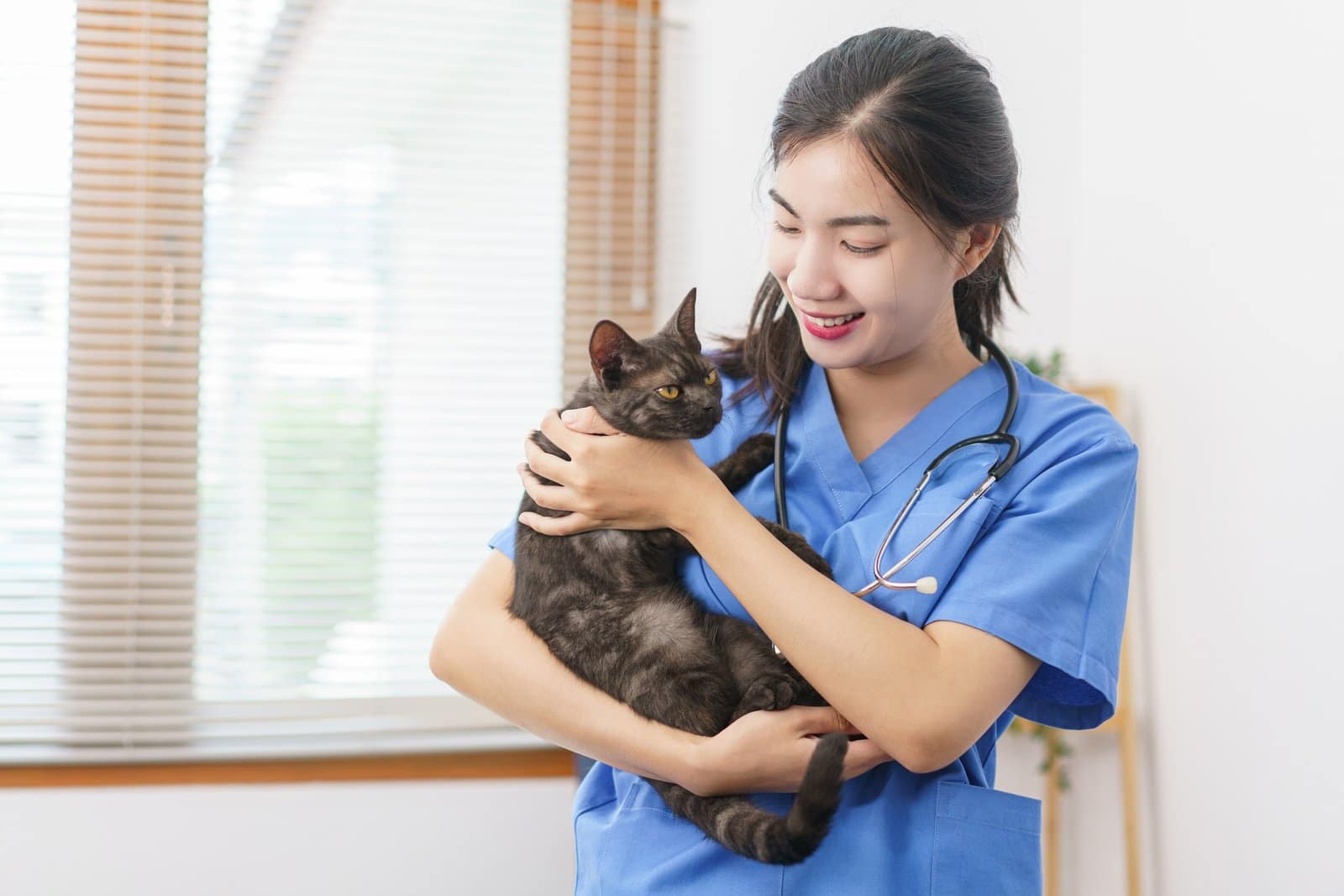
Common Causes of Cat Diarrhea (Quick Summary + Next Step)
Most diarrhea is caused by something simple—like a food change—but some patterns suggest a deeper problem. Use this quick guide to narrow down the likely category and decide what to do next (home support vs vet check).
Most common “short-term” causes (often improves in 24–48 hours)
- Sudden food change (new brand/flavor, more treats than usual)
- Dietary indiscretion (human food, trash, fatty foods)
- Mild stress (travel, visitors, new pet, moving)
- Mild stomach upset (temporary gut imbalance)
What to do now: follow the hydration + bland diet plan, avoid treats, and monitor closely.
Causes where you should think “parasites/infection”
- Parásitos (especially if your cat goes outdoors, is a kitten, or you see mucus/worms)
- Contagious GI infection (risk higher in multi-cat homes/shelters)
What to do now: don’t self-medicate with human drugs; if diarrhea persists, your vet may recommend a fecal test.
Causes that point to an underlying disease (needs vet evaluation)
Consider this bucket if diarrhea is recurrent, lasts more than a few days, or comes with weight loss / poor appetite:
- Food intolerance/allergy
- Inflammatory bowel disease (IBD) / chronic enteropathy
- Organ or hormone issues (e.g., hyperthyroidism in older cats)
- Pancreas/liver problems
- Cáncer (less common, but possible in seniors)
What to do now: book a vet visit—especially if there’s weight loss, lethargy, dehydration, vomiting, or blood.
Medication-related diarrhea
- Antibiotics and some other meds can disrupt gut bacteria and trigger diarrhea.
What to do now: call your vet before stopping any prescription medication.
Want the full list + deeper explanations? Read: Diarrea del gato: Todo lo que debe saber
Table: Causes at a Glance (What changes your next step)
| Likely cause bucket | Common clues | What to do next |
|---|---|---|
| Food change / treats | started after diet switch | bland diet + slow transition |
| Stress-related | recent routine/home change | calm routine + bland diet |
| Parasites/infection | mucus, multi-cat home, kitten/outdoor | vet stool test if not improving |
| Chronic disease | weight loss, recurring episodes | vet evaluation/workup |
| Medication side effect | started after new meds | call vet before changing meds |

Home Treatment Plan for Mild Diarrhea (If No Red Flags)
Only use this plan if your cat is alert and drinking and has no red flags above. If your cat is a kitten, senior, or has chronic illness, call your vet early.
1. Hydration is Key
La diarrea provoca una pérdida importante de líquidos y electrolitos, por lo que la deshidratación es un problema primordial. Por lo tanto, es fundamental garantizar una ingesta adecuada de agua.
Fomentar la ingesta de agua:
- Múltiples fuentes de agua: Place several water bowls in quiet, easily accessible areas, away from litter boxes.
- Preferencia de bolos: Try glass, ceramic, or stainless steel. Shallow, wide bowls can reduce whisker fatigue. Avoid plastic bowls (can harbor bacteria in scratches).
- Frescura y limpieza: Change water daily and clean bowls thoroughly.
- Temperatura: Some cats prefer cool water; others prefer room temperature or slightly warm water.
- Fuentes de agua: Running water can increase drinking.
- Agua aromatizante: Add a small amount of water from canned tuna (in spring water, not oil) or low-sodium chicken/beef broth (no onions/garlic). Discard flavored water after a few hours.
- Comida húmeda: Feed wet food; you can add warm water/broth to dry food.
Homemade Electrolyte Solution (use caution):
- Receta: 1 liter water + 1 tbsp dextrose (or honey) + 1 tsp salt. Boil water, dissolve ingredients, cool completely.
- Administration: Offer small, frequent amounts. If needed, give gently by spoon/syringe at the corner of the mouth.
- Storage: Refrigerate and replace after 24 hours.
- Caution: Don’t exceed quantities. If vomiting occurs, your cat is very young/old, or there’s blood in stool, contact a vet immediately.
2. The Bland Diet Approach (what to feed)
Fasting (with caveats):
Historically, withholding food for 12–24 hours was common, but many veterinarians advise against prolonged fasting—especially for kittens. For mild diarrhea, small frequent meals of a bland diet are often preferred. Consult your vet before fasting.
Ingredientes recomendados para la dieta blanda
- Protein (1 part): Plain boiled chicken breast, lean ground turkey, lean ground beef (drained), or poached white fish (no skin/bones). No seasoning, oil, or additives.
- Carb (1 part): Fully cooked white rice, or peeled boiled mashed potatoes (no butter/seasoning).
- Optional additions: 1–2 tsp canned pure pumpkin (not pie filling). Other options: strained unseasoned meat baby food; tiny amounts of plain low-fat yogurt only if tolerated; scrambled eggs (no oil/butter).
Recetas de dieta blanda y plan de transición
| Componente | Ingredientes y preparación | Pautas para servir |
| Fuentes de proteínas | Pechuga de pollo deshuesada, sin piel, hervida; carne picada magra de pavo hervida (escurrida); carne picada magra de ternera hervida (escurrida); pescado blanco escalfado (sin piel ni espinas); alimentos infantiles a base de carne, colados y sin condimentos; huevos revueltos cocidos (sin aceite ni mantequilla); requesón bajo en grasas. | Cortar en trozos del tamaño de un bocado. Asegúrese de que no contiene condimentos, aceites ni aditivos. |
| Fuentes de carbohidratos | Arroz blanco normal, completamente cocido; patatas peladas, hervidas y trituradas (sin mantequilla ni condimentos); calabaza pura enlatada (sin relleno de tarta). | Se puede añadir calabaza en pequeñas cantidades (1-2 cucharaditas) para aportar fibra. |
| Ratio | Combine proteínas y carbohidratos en una proporción de 1:1. Por ejemplo, 1 taza de pollo por 1 taza de arroz. | |
| Estrategia de alimentación | Sirva comidas pequeñas y frecuentes (4-6 veces al día) en lugar de comidas copiosas para evitar abrumar al estómago sensible. | Ajuste el tamaño de la ración en función del peso y el apetito del gato. |
| Duración | Normalmente, 2-3 días después de que cesen los vómitos y se normalicen las heces. | |
| Transición de vuelta a la dieta habitual (durante 4-5 días) | Día 1-2: 75% dieta blanda, 25% dieta normal. Día 3-4: 50% dieta blanda, 50% dieta normal. Día 5: 25% dieta blanda, 75% dieta normal. Día 6: 100% dieta habitual. | Mezclar gradualmente cantidades crecientes de comida normal con dieta blanda. |
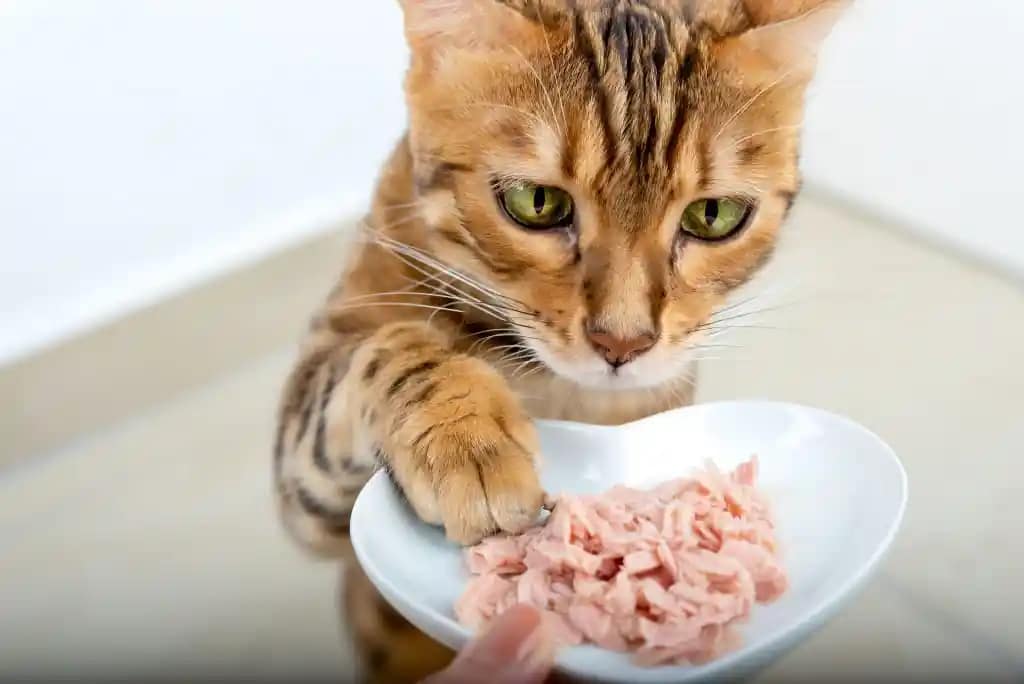
3. Gut Health Boosters (fiber + probiotics)
Probiotics: These live microorganisms can help restore healthy gut bacteria after digestive upset or antibiotics.
Probiotic Dosage & Tips for Cats
| Factor | Directriz/Recomendación |
| Gama de UFC diarias recomendadas | 1-5 mil millones de UFC/día para gatos. Utilice el extremo superior del intervalo (por ejemplo, 5.000 millones de UFC) en caso de problemas gastrointestinales activos o si está tomando antibióticos. |
| Consideraciones clave a la hora de comprar | Suficientes UFC: Asegúrese de que el producto contiene suficientes células viables por dosis. |
| Seguridad para gatitos | En general, son seguros para los gatitos destetados, especialmente los que sufren estrés o están en transición a la alimentación sólida, ya que ayudan a establecer bacterias intestinales sanas y refuerzan la inmunidad. |
| Marcas recomendadas por veterinarios | Purina FortiFlora, FERA All Natural Probiotics, PetUltimates Probiotics, Honest Paws Pre + Probiotics, Jackson Galaxy Cat Probiotic, TummyWorks Probiotic Powder, Proviable-DC, Advita. |
Fiber Supplementation: Soluble fiber (pumpkin/psyllium) can absorb excess water and help firm stools; mixed fiber can help acute and chronic diarrhea, especially large-bowel issues.
- Typical starting amounts: small amounts of pumpkin (1–2 tsp) or psyllium (start low; consult your vet for dosing).
- Caution: Too much fiber can worsen symptoms—especially if there’s an underlying disease.
4. Crucial Warning: Avoid Human Medications!
A critical aspect of home care for feline diarrhea involves a strict prohibition against administering OTC human medications without explicit veterinary consultation.
Pepto Bismol y Kaopectate
Contain bismuth subsalicylate (salicylate-related). Cats are sensitive to salicylates; toxicity can cause vomiting, ulcers, kidney/liver damage. Do not give.
Imodium (Loperamida)
Not safe for unsupervised use. It slows gut movement, can trap toxins/infection, and may cause severe side effects (CNS depression, constipation, toxic megacolon). Only under explicit veterinary guidance.
Yogur
Many adult cats are lactose intolerant; yogurt/milk can worsen diarrhea. If used at all, offer tiny amounts and monitor—cat-specific probiotics are usually safer.

What Your Cat’s Stool Can Tell You (Quick Poop Guide)
What normal poop looks like
A healthy cat stool is usually:
- Brown to dark brown
- Log-shaped / segmented
- Firm but not rock-hard
- No blood, excessive mucus, or visible parasites
Kittens can have slightly softer stool, but it should not be watery or bloody.
Quick warning signs (don’t wait)
Treat these as urgente and contact a vet promptly:
- Black/tarry stool (can indicate bleeding higher up in the GI tract)
- Large amounts of bright red blood
- Watery diarrhea + lethargy/vomiting
- Diarrhea in very young kittens or frail seniors
Stool chart
Cat Stool Chart: A Visual Guide to Your Cat’s Digestive Health
| What you see | Descripción | What it may mean (urgency) |
|---|---|---|
| Coherencia | ||
| Normal | Firme, segmentada, en forma de tronco | Digestión normal (Normal) |
| Hard / pebble-like | Pequeño, seco, difícil de pasar | Constipation or dehydration (Mild–Moderate) |
| Soft / loose | Blando, sin forma, conserva algo de forma | Diet change, food intolerance, mild GI upset (Mild–Moderate) |
| Runny / watery | Líquido, sin forma | Inflammation or infection; dehydration risk rises fast (Moderate–Urgent) |
| Mucus | Capa gelatinosa o estrías | Large-bowel irritation/colitis, stress, or parasites (Moderate) |
| Color | ||
| Normal brown | Marrón uniforme a marrón oscuro | Normal digestion (Normal) |
| Verde | Tinte verdoso | Fast transit or diet change; sometimes infection (Mild–Moderate) |
| Amarillo | Tinte amarillento | Fast transit; possible bile/liver involvement (Moderate) |
| Black / tar-like | Aspecto oscuro, pegajoso y alquitranado | Possible digested blood (GI bleeding) (URGENT) |
| Red (streaks or liquid) | Vetas rojas brillantes o sangre líquida | Lower-GI bleeding/irritation; more blood = more urgent (Moderate–URGENT) |
| White / grey | Pale, chalky, or grey-white | Possible bile flow or pancreas issue (URGENT) |
| Contenido | ||
| Undigested food | Trozos visibles de comida | Food intolerance or poor digestion; if ongoing, needs vet workup (Mild–Moderate) |
| Worms / specks | Trozos pequeños, fibrosos, parecidos al arroz | Possible intestinal parasites (Moderate) |
| Consejo: Severity = how fast to contact a vet. Always treat as URGENTE if your cat is a kitten/senior, seems lethargic, is vomiting repeatedly, won’t eat, shows dehydration signs, or diarrhea lasts >24–48 hours. | ||
Small bowel vs. large bowel diarrhea (fast difference)
This helps you describe symptoms more clearly:
- Small bowel diarrhea: usually larger volume, may come with pérdida de peso o vomiting
- Large bowel diarrhea (colitis): usually small frequent stools, a menudo mucus, a veces colar, a veces fresh red blood
Si su gato tiene ongoing diarrhea (more than a few days), this distinction can help your vet choose the right tests.
What to track (makes vet visits more effective)
Before calling/going in, note:
- When it started + frequency
- Stool appearance (color, watery vs formed, mucus, blood)
- Vomiting? Appetite? Energy level?
- Any diet changes, new treats, stress, meds, or possible toxin exposure
- If possible: a clear photo of stool (gross but helpful)
Prevención de futuros episodios
Muchos casos de diarrea felina pueden prevenirse mediante un cuidado constante y proactivo. Este enfoque implica un compromiso continuo con el bienestar general del gato, combinando la vigilancia diaria del cuidador con la supervisión periódica de un veterinario profesional.
Transiciones dietéticas lentas y constantes
Los cambios bruscos de dieta son una de las principales causas de trastornos digestivos. Para prevenir futuros episodios, es esencial introducir los nuevos alimentos de forma gradual durante un periodo de 7-10 días, dejando al sistema digestivo del gato tiempo suficiente para adaptarse.
Desparasitación regular y prevención de parásitos
Para prevenir las causas parasitarias de la diarrea, es fundamental establecer y seguir un programa regular de desparasitación, en consulta con un veterinario. La prevención de pulgas y garrapatas durante todo el año también minimiza la exposición a parásitos que pueden transmitir problemas gastrointestinales.
Mantener un entorno limpio y sin estrés
A prueba de peligros: Deben tomarse medidas proactivas para mantener los alimentos nocivos, los productos de limpieza domésticos, las plantas tóxicas (por ejemplo, Aloe Vera, Narciso, Filodendros) , y los medicamentos humanos fuera del alcance del gato.
Reducción del estrés: Crear un entorno tranquilo y estable en el hogar es vital para la salud digestiva de los felinos. Reducir al mínimo los cambios bruscos de rutina o de entorno, proporcionar escondites y zonas de descanso adecuadas y garantizar recursos suficientes (comida, agua, cajas de arena) en hogares con varios gatos puede reducir significativamente las molestias gastrointestinales relacionadas con el estrés.
Revisiones veterinarias rutinarias
Los exámenes anuales de bienestar son fundamentales para la detección precoz y el tratamiento de cualquier problema de salud subyacente que pueda predisponer a un gato a padecer diarrea. Los veterinarios están capacitados para identificar cambios sutiles en la salud de un gato que podrían no ser inmediatamente evidentes para los cuidadores.
Este seguimiento profesional constante, combinado con las observaciones del cuidador (incluidos los vídeos de comportamiento grabados por el cliente), constituye una poderosa alianza para mantener la salud felina a largo plazo.
FAQ about Cat Diarrhea Treatment
When is cat diarrhea an emergency (when should I see a vet)?
If you see blood/black stool, repeated vomiting, severe lethargy, dehydration signs, or diarrhea lasting more than 24–48 hours, contact a vet.
What should I feed my cat with diarrhea, and should I fast them?
Most cats do best with small, frequent bland meals (not long fasting).
¿Puedo darle a mi gato Imodium o Pepto-Bismol para la diarrea?
Usually no—these can be unsafe for cats unless a veterinarian explicitly instructs you.
¿Es segura la calabaza en lata para los gatos con diarrea?
Often yes—plain pumpkin (not pie filling) can help firm stools for some cats. Start small and stop if it worsens symptoms.
¿Son seguros los probióticos para tratar la diarrea del gato?
Cat-specific probiotics are commonly used and may help restore gut balance, especially after diet upset or antibiotics.
¿Puede el estrés provocar diarrea en los gatos?
Yes—stress can trigger GI upset in some cats. If diarrhea keeps recurring, address triggers and talk to your vet.
¿Cómo puedo prevenir la diarrea en los gatos en el futuro?
Prevent episodes by slow diet transitions, parasite prevention, reducing stress, and hazard-proofing your home.
Referencias
Clínica A-Animal. (s.f.). Diarrea en gatos. Obtenido de https://www.a-animalclinic.com/site/blog/2024/03/30/diarrhea-in-cats
Agria Pet. (s.f.). Reposición de líquidos para gatos. Obtenido de https://www.agriapet.co.uk/guides-and-advice/fluid-replacement-for-cats/
Servicios de Salud de Alberta. (sin fecha). Recetas de solución de rehidratación oral. Obtenido de https://www.albertahealthservices.ca/assets/info/nutrition/if-nfs-ors-recipes.pdf
Arden Grange. (s.f.). Hoja informativa sobre la diarrea felina.
Arden Grange. (s.f.). Cómo preparar una solución electrolítica para ayudar a su perro con diarrea. Obtenido de https://www.ardengrange.com/blog/how-to-make-electrolyte-solution-help-your-dog-with-diarrhoea
ASPCApro. (sin fecha). Protocolo de la ASPCA para la diarrea en gatitos. Obtenido de https://www.aspcapro.org/sites/default/files/2023-10/aspca-diarrhea-protocol-kittens.pdf
Pregúntale a un veterinario (s.f.). Guía veterinaria completa 2025: Tartrato de tilosina para perros y gatos - Gastrointestinal y más allá. Obtenido de https://askavet.com/blogs/news/comprehensive-vet-guide-2025-tylosin-tartrate-for-dogs-cats-gastrointestinal-and-beyond-%F0%9F%90%BE%F0%9F%92%8A
Más allá de las mascotas. (sin fecha). Parásitos gastrointestinales en gatos. Obtenido de https://beyondpets.com/pet-health-plus/gastrointestinal-parasites-in-cats/
BluePearl Vet (sin fecha). Chequeo intestinal: Tratamiento práctico de la enfermedad inflamatoria intestinal. Obtenido de https://bluepearlvet.com/medical-library-for-dvms/gut-check-practical-treatment-of-inflammatory-bowel-disease/
BluePearl Vet (sin fecha). Ivermectina para perros y gatos. Obtenido de https://bluepearlvet.com/medical-library-for-dvms/gut-check-practical-treatment-of-inflammatory-bowel-disease/
Centro de Salud Felina de Cornell. (sin fecha). Diarrea. Obtenido de https://www.vet.cornell.edu/departments-centers-and-institutes/cornell-feline-health-center/health-information/feline-health-topics/diarrhea
Centro de Salud Felina de Cornell. (sin fecha). Hidratación. Obtenido de https://www.vet.cornell.edu/departments-centers-and-institutes/cornell-feline-health-center/health-information/feline-health-topics/hydration
Centro de Salud Felina de Cornell. (sin fecha). Enfermedad inflamatoria intestinal. Obtenido de https://www.vet.cornell.edu/departments-centers-and-institutes/cornell-feline-health-center/health-information/feline-health-topics/inflammatory-bowel-disease
Universidad de Cornell, Centro de Salud Canina Riney. (s.f.). Diarrea. Obtenido de https://www.vet.cornell.edu/departments-centers-and-institutes/riney-canine-health-center/canine-health-information/diarrhea
Drogas.com. (sin fecha). Pet-A-Lyte Solución Oral de Electrolitos para Perros y Gatos. Obtenido de https://www.drugs.com/vet/pet-a-lyte-oral-electrolyte-solution-for-dogs-and-cats.html
Drogas.com. (sin fecha). Sulfasalazina. Obtenido de https://www.drugs.com/sulfasalazine.html
Holandés. (s.f.). Medicamentos para la diarrea en gatos. Obtenido de https://www.dutch.com/collections/diarrhea-medicine-for-cats
Hospital de animales Golden Paws. (2024). Una dieta blanda para perros y gatos. Obtenido de https://goldenpawsvet.com/wp-content/uploads/2024/08/Bland-Diet.pdf
Great Pet Care. (sin fecha). Cuadro de cacas anormales de gato. Obtenido de https://www.greatpetcare.com/cat-health/abnormal-cat-poop-chart/
Hill's Pet. (s.f.). Cat Diarrhea: Causes and Treatment. Obtenido de https://www.hillspet.com/cat-care/healthcare/cat-diarrhea-causes-and-treatment
HolistaPet. (s.f.). Tabla de cacas de gato. Obtenido de https://www.holistapet.com/blogs/cat-care/cat-poop-chart
KOHA Pet. (s.f.). Dieta blanda para gatos. Obtenido de https://kohapet.com/blogs/news/bland-diet-cats
Lassie. (s.f.). Cómo hacer sustitutos líquidos para gatos. Obtenido de https://de.lassie.co/en/articles/make-liquid-substitute-cats
Medi-Vet (sin fecha). VetClassics Pet-A-Lyte Solución Oral de Electrolitos para Mascotas. Obtenido de https://www.medi-vet.com/VetClassics-Pet-A-Lyte-Oral-Electrolyte-Solution-p/17521.htm
Clínica Veterinaria Noble. (s.f.). ¿Pueden tomar yogur los gatos?. Obtenido de https://noblevetclinic.com/blog/can-cats-have-yogurt
North Kenny Vet. (sin fecha). Diarrea en gatos. Obtenido de https://northkennyvet.com/blog/cat-diarrhea-columbus-oh/
Ontario SPCA. (sin fecha). Consejos esenciales para tratar la diarrea de su gatito. Obtenido de https://ontariospca.ca/blog/essential-tips-for-dealing-with-diarrhea-in-your-kitten/
Veterinaria Patterson. (s.f.). Pet-A-Lyte™ Solución Oral de Electrolitos (Perros y Gatos). Obtenido de https://www.pattersonvet.com/Supplies/ProductFamilyDetails/PIF_32608
PetMD. (s.f.). Tratamiento de la diarrea del gato: Qué dar a los gatos con diarrea. Obtenido de https://www.petmd.com/cat/general-health/cat-diarrhea-treatment#:~:text=Cats%20with%20diarrhea%20need%20to,cat%20to%20drink%20more%20water
PetMD. (s.f.). Diarrea crónica en gatos. Obtenido de https://www.petmd.com/cat/conditions/digestive/chronic-diarrhea-cats
PetMD. (s.f.). Problemas de salud ocultos en los gatos y cómo detectarlos. Obtenido de https://www.petmd.com/cat/general-health/hidden-health-issues-in-cats-and-how-to-spot-them
Petralyte. (s.f.). Suplemento articular y electrolítico para gatos. Obtenido de https://petralyte.com/products/cat-electrolyte-and-joint-supplement
PMC. (s.f.). Pautas para el cuidado senior felino. Obtenido de https://pmc.ncbi.nlm.nih.gov/articles/PMC10812122/
PMC. (s.f.). Pautas de evaluación nutricional de WSAVA. Obtenido de https://pmc.ncbi.nlm.nih.gov/articles/PMC11107980/
Veterinaria preventiva (s.f.). Los mejores suplementos probióticos para perros y gatos. Obtenido de https://www.preventivevet.com/best-probiotic-supplements-for-dogs-and-cats
PubMed. (s.f.). 2021 Directrices de la AAFP para el cuidado de gatos mayores. Obtenido de https://pubmed.ncbi.nlm.nih.gov/34167339/
Instituto Purina. (sin fecha). Enteropatía crónica felina. Obtenido de https://www.purinainstitute.com/centresquare/therapeutic-nutrition/feline-chronic-enteropathy
Academia Royal Canin. (s.f.). Fibra dietética: El arma secreta del clínico. Obtenido de https://academy.royalcanin.com/en/veterinary/dietary-fiber-the-clinicians-secret-weapon
Soluciones Rx. (sin fecha). ¿Qué fármacos se utilizan para tratar la enfermedad inflamatoria intestinal felina?. Obtenido de https://assets.ctfassets.net/4dmg3l1sxd6g/78BhwsfExEmK4TsViseDmH/038d522ec90a3ca555524afb0ed75306/rx-solutions_which-drugs-are-used-to-manage-feline-inflammatory-bowel-disease-24656-article.pdf
Small Door Vet. (sin fecha). Diarrea en gatos. Obtenido de https://www.smalldoorvet.com/learning-center/medical/diarrhea-in-cats/
La práctica veterinaria actual. (s.f.). Intervención GI: Aproximación al diagnóstico y tratamiento del paciente con diarrea aguda. Obtenido de https://todaysveterinarypractice.com/gastroenterology/gi-intervention-approach-to-diagnosis-and-therapy-of-the-patient-with-acute-diarrhea/
Total.veter. (s.f.). Fibra para gatos con diarrea. Obtenido de https://total.vet/fiber-for-cats-with-diarrhea/
UC Davis. (sin fecha). Salud de los gatos. Obtenido de https://ccah.vetmed.ucdavis.edu/cats/cat-health
UVA Health. (s.f.). Soluciones caseras de rehidratación oral. Obtenido de https://med.virginia.edu/ginutrition/wp-content/uploads/sites/199/2023/12/Homemade-Oral-Rehydration-Solutions-11-2023.pdf
Hospitales VCA. (s.f.). 8 remedios caseros para la diarrea y 2 que son peligrosos para tu mascota. Obtenido de https://vcahospitals.com/shop/articles/8-home-remedies-for-diarrhea-and-2-that-are-dangerous-for-your-pet
Hospitales VCA. (s.f.). Clorambucil. Obtenido de https://vcahospitals.com/know-your-pet/chlorambucil
Hospitales VCA. (s.f.). Fenbendazol. Obtenido de https://vcahospitals.com/know-your-pet/fenbendazole
Hospitales VCA. (s.f.). Endoscopia gastrointestinal en gatos. Obtenido de https://vcahospitals.com/know-your-pet/endoscopy-gastrointestinal-in-cats
Hospitales VCA. (s.f.). Metronidazol. Obtenido de https://vcahospitals.com/know-your-pet/metronidazole
Hospitales VCA. (s.f.). Pruebas de diarrea. Obtenido de https://vcahospitals.com/know-your-pet/testing-for-diarrhea
Veterinary Partner. (sin fecha). Tilosina (Tylan®). Obtenido de https://veterinarypartner.vin.com/default.aspx?pid=19239&catId=154455&id=4951826
VetRxDirect. (sin fecha). Pet A-Lyte para perros y gatos - Electrolito oral. Obtenido de https://www.vetrxdirect.com/product/view/pet-a-lyte-electrolyte-solution-for-dogs-and-cats-otc
Vetster. (s.f.). Deshidratación en gatos. Obtenido de https://vetster.com/en/conditions/cat/dehydration
VIN. (s.f.). Abordaje de la diarrea crónica en gatos. Obtenido de https://www.vin.com/apputil/content/defaultadv1.aspx?pId=12886&catId=57099&id=7054646&ind=128&objTypeID=17&print=1
VIN. (s.f.). Cryptosporidium spp. en gatos. Obtenido de https://www.vin.com/apputil/content/defaultadv1.aspx?id=5124213&pid=113
VIN. (s.f.). Endoscopia gastrointestinal. Obtenido de https://www.vin.com/apputil/content/defaultadv1.aspx?id=3852219&pid=11181
WADDL. (s.f.). Panel de diarrea felina. Obtenido de https://tests.waddl.vetmed.wsu.edu/Tests/Details/8006
Farmacia Wedgewood. (s.f.). Clorambucil. Obtenido de https://www.wedgewood.com/medications/chlorambucil/
Wikipedia. (s.f.). Fenbendazol. Obtenido de https://en.wikipedia.org/wiki/Fenbendazole
Veterinarios de Woodward. (s.f.). Sulfasalazina. Obtenido de https://www.woodward-vets.co.uk/images/downloads/medication-leaflets/Sulfasalazine.pdf
Zoetis Petcare. (s.f.). Cómo conseguir que su gato beba más agua. Obtenido de https://www.zoetispetcare.com/blog/article/how-get-cat-drink-more-water








 EN
EN DE
DE ES
ES PT
PT