
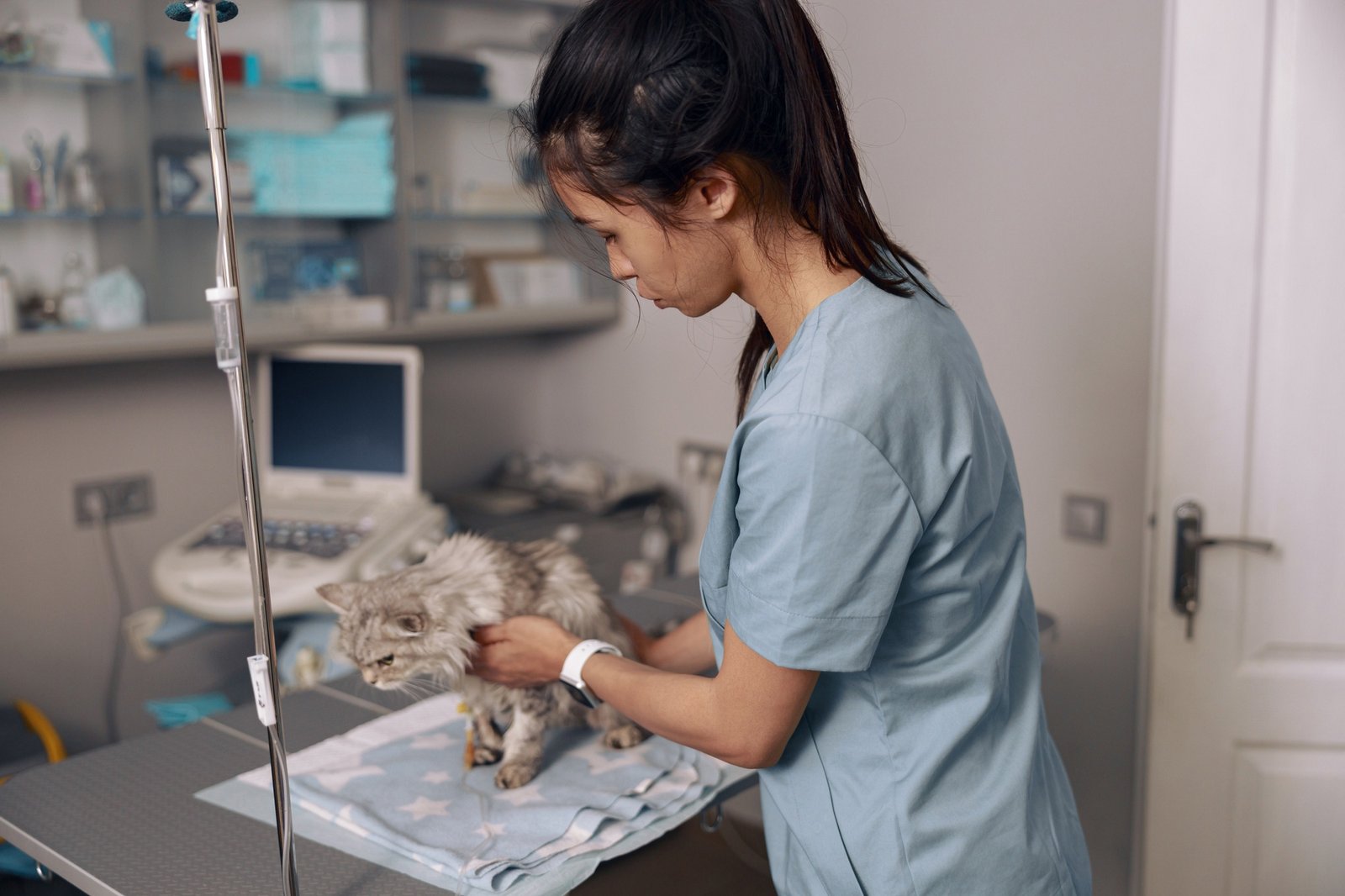
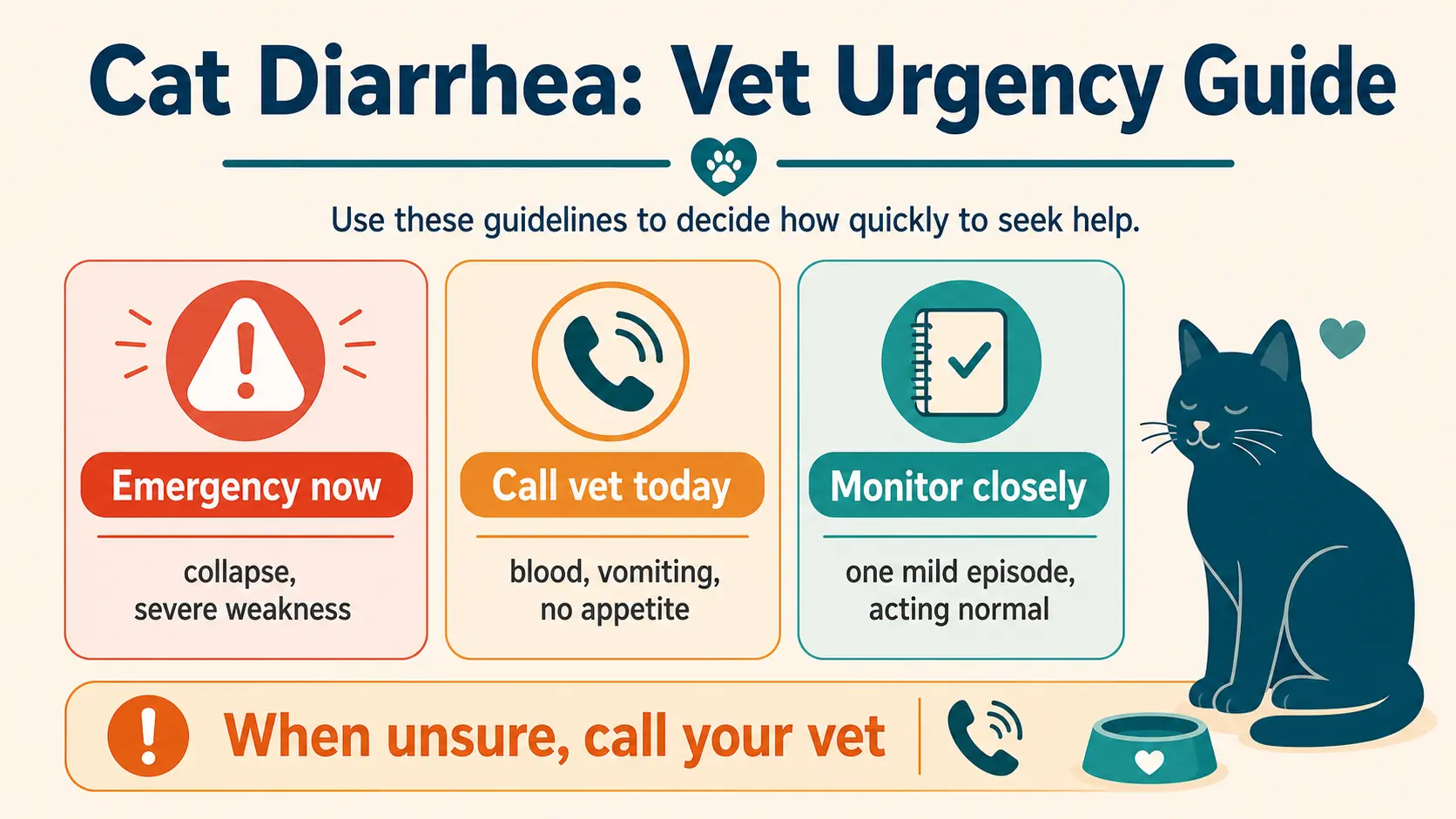
Para cat diarrhea, start by checking urgency: call a veterinarian now for blood or black stool, repeated vomiting, weakness, dehydration concern, refusal to comer, severe pain, toxin exposure, or diarrhea in a kitten, senior, pregnant cat, or medically fragile cat. A stable adult cat with one mild episode may be monitored briefly while you keep water available, record symptoms, and avoid human medicines.
This guide is educational and cannot diagnose your cat or prescribe treatment. Diarrhea is a symptom with many possible causes, so the safest next step depends on your cat’s idade, health, appetite, hydration, stool pattern, and other signs.
Índice
- Is cat diarrhea an emergency?
- What should I do first when my cat has diarrhea?
- What can cause sudden diarrhea in cats?
- What home care is safe for a stable adult cat?
- What should I not give a cat with diarrhea?
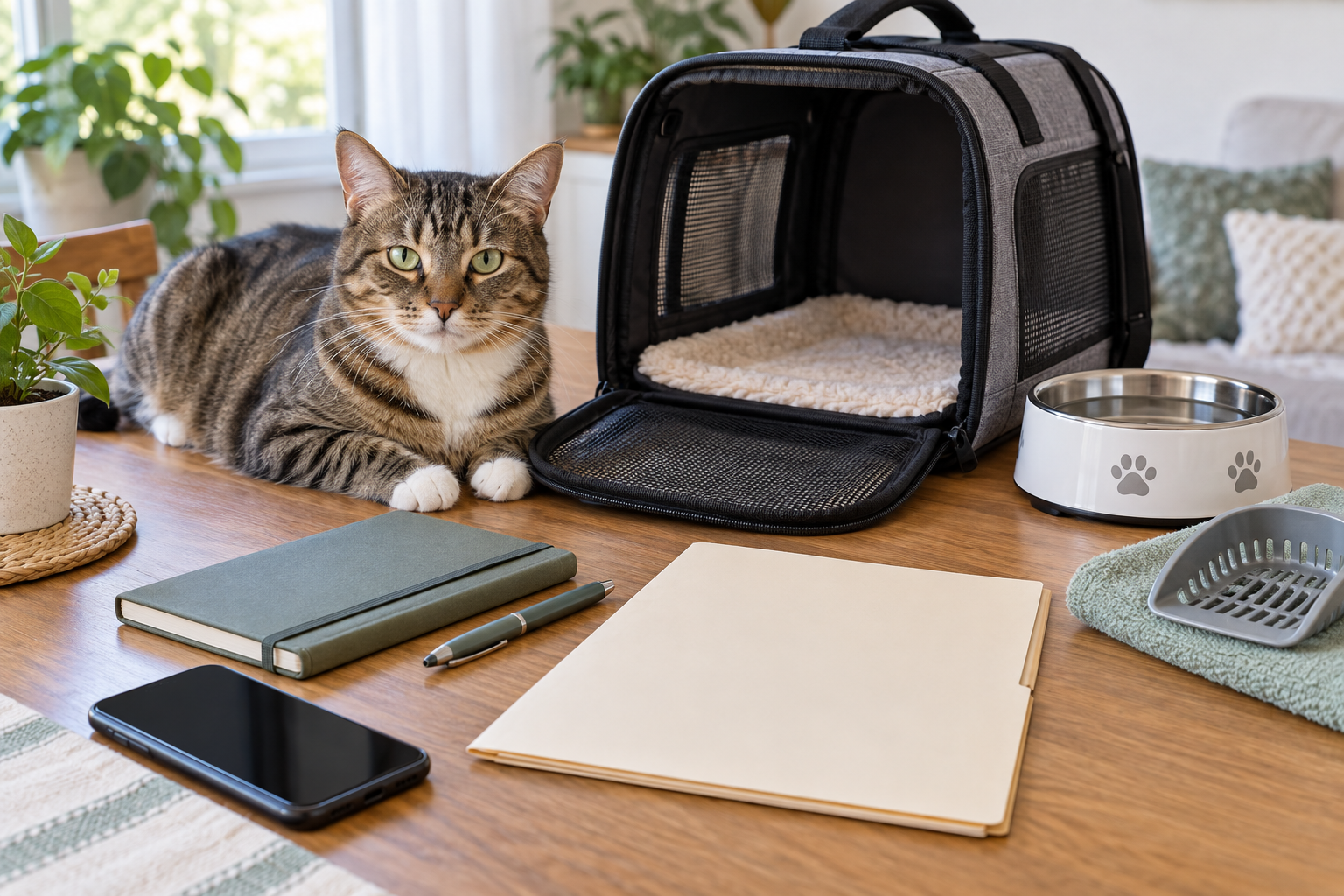
- What should I track before calling the vet?
- What might the veterinarian ask or test for?
- How can I prevent diarrhea from getting worse?
- When is diarrhea chronic instead of a short episode?
- Conclusão
- Perguntas frequentes
- Referências
Is cat diarrhea an emergency?
Cat diarrhea becomes urgent when the cat is systemically unwell, very young or fragile, dehydrated, vomiting repeatedly, refusing food, or passing blood or black stool. Do not wait for several days if the whole-cat picture looks wrong.
| O que você vê | Safer next step |
|---|---|
| Collapse, severe weakness, trouble standing, breathing difficulty, pale gums, severe pain, or possible toxin/foreign-object exposure | Procure atendimento veterinário de emergência agora |
| Blood in stool, black tar-like stool, repeated vomiting, inability to keep water down, dehydration concern, or no appetite | Ligue para um veterinário com urgência |
| Diarrhea in a kitten, pregnant or nursing cat, senior, underweight cat, or cat with diabetes, kidney disease, heart disease, immune issues, or other medical conditions | Ligue imediatamente para o veterinário |
| One mild loose stool in an otherwise bright adult cat that is eating, drinking, and acting normal | Monitor closely and call if it repeats, worsens, or any other sign appears |
Cornell Feline Health Center notes that diarrhea can have many causes and advises prompt veterinary care when diarrhea persists or occurs with poor appetite, lethargy, or vomiting.1
For stool color details, use the tabela de cores das fezes de gato as a description aid, not as a diagnosis tool.
What should I do first when my cat has diarrhea?
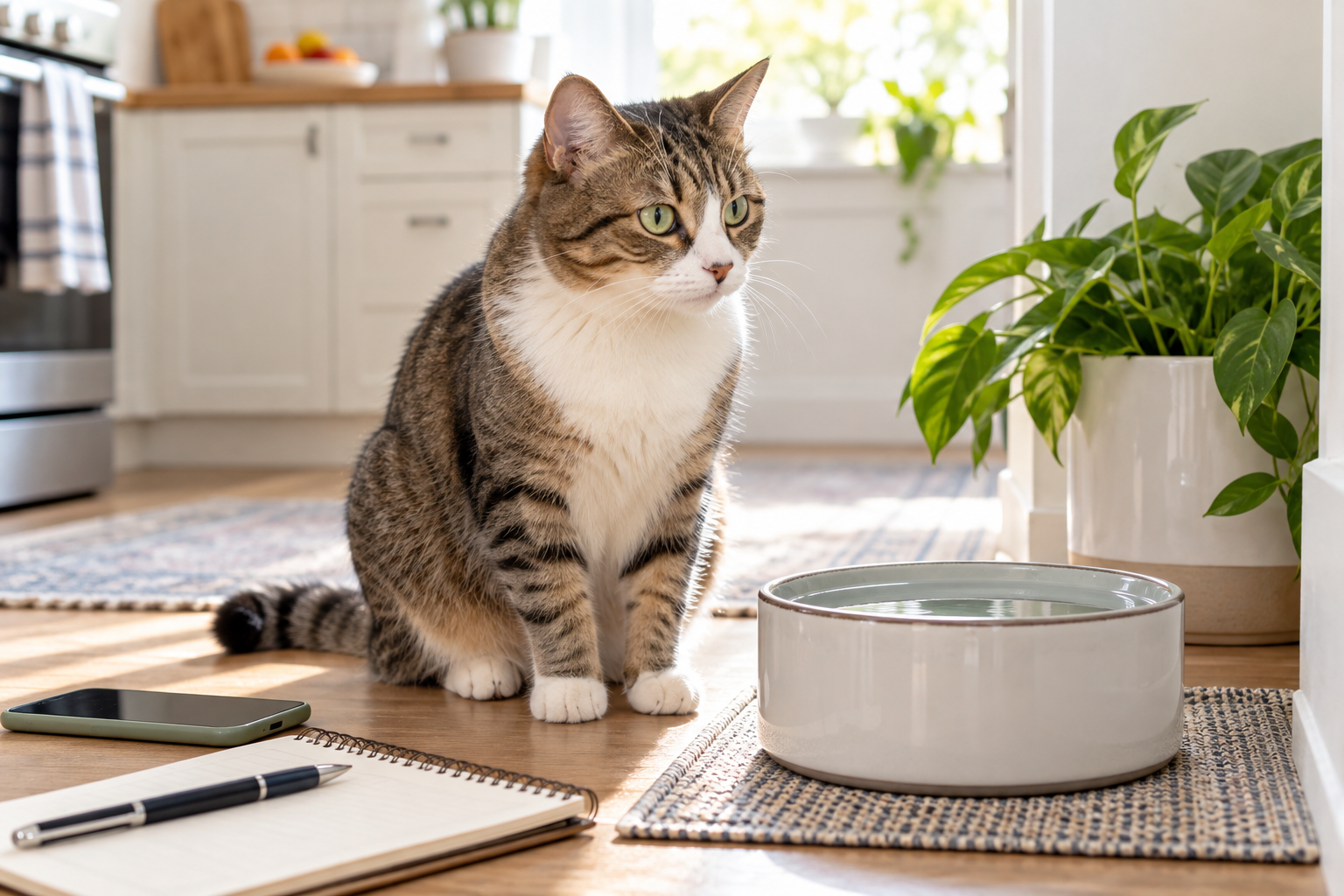
First, decide whether your cat needs urgent veterinary care. If the cat seems stable, keep the routine calm, offer fresh water, avoid new remedies, and start a short symptom log.
Use this first-hour checklist:
- Check energy, appetite, vomiting, breathing, pain, and litter-box behavior.
- Look for blood, black stool, frequent watery stool, or straining.
- Mantenha água fresca à disposição.
- Offer the usual complete-and-balanced food unless your veterinarian says otherwise.
- Stop new treats, table scraps, sudden diet changes, and unapproved supplements.
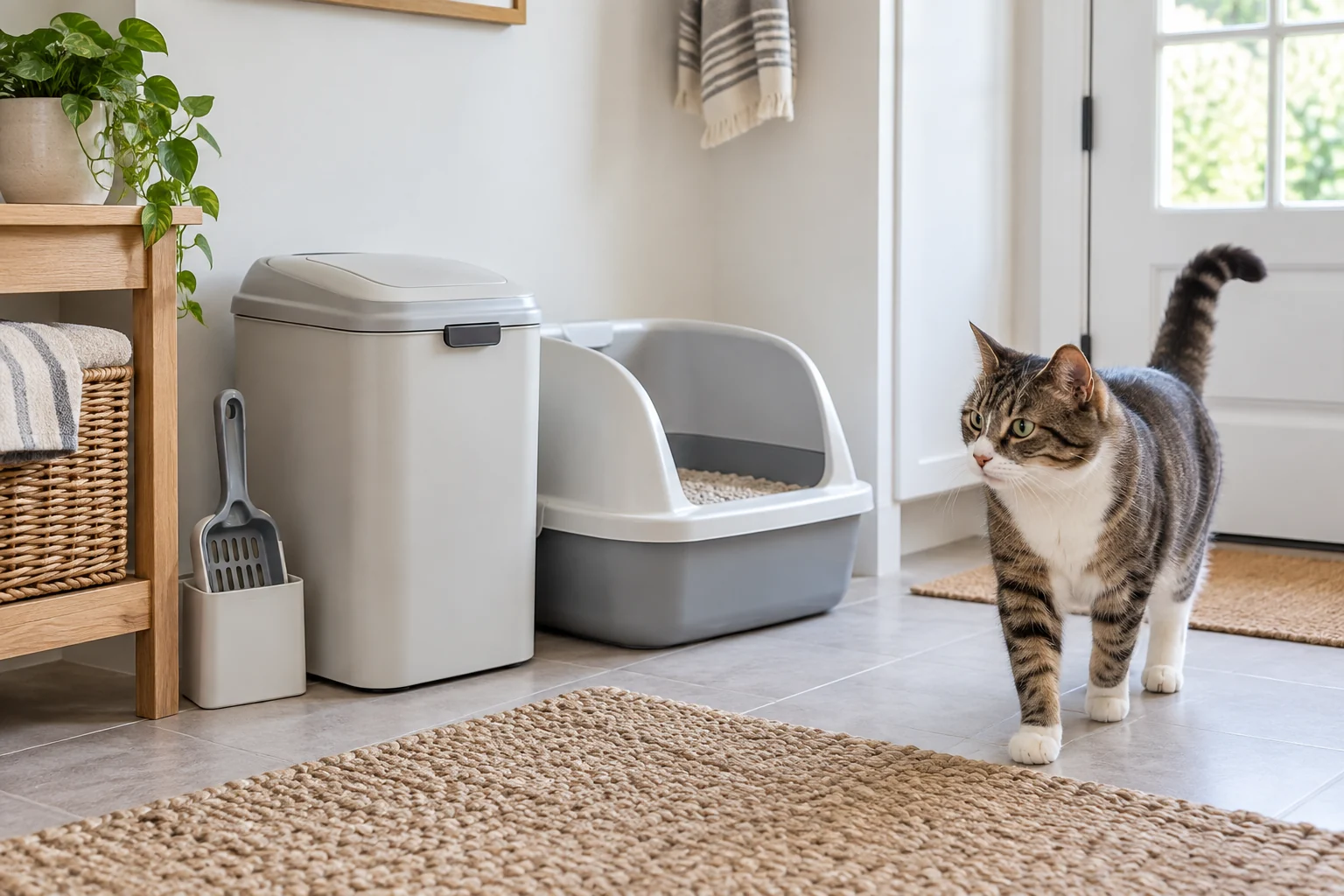
- Wash hands after litter-box cleaning and keep the litter box clean.
- Note the time, stool appearance, appetite, drinking, urination, and any vomiting.
- Call the vet if the episode repeats, worsens, or occurs with any red flag.
Do not fast a cat or withhold water unless a veterinarian gives that instruction. Cats can be vulnerable when they stop eating, and an online article cannot judge hydration or underlying disease.
What can cause sudden diarrhea in cats?
Sudden diarrhea can come from diet changes, parasites, infections, stress, toxins, medications, spoiled food, foreign material, or disease inside or outside the digestive tract. Similar-looking stool can have very different causes.
| Possível causa | Clues to mention to the vet |
|---|---|
| Sudden food change or rich treats | New food, new flavor, table scraps, treat increase, or recent diet transition |
| Spoiled food or scavenging | Trash access, old wet food, outdoor hunting, or unknown food |
| Parasitas | New adoption, outdoor access, multi-pet exposure, or incomplete parasite prevention |
| Infecção | Other pets sick, boarding, shelter exposure, feverish behavior, or severe watery stool |
| Estresse | Move, new pet, visitors, boarding, construction, or routine disruption |
| Medication or supplement reaction | Recent antibiotic, pain medicine, supplement, probiotic, or flea/tick product |
| Toxicity or foreign object | Access to plants, chemicals, string, medication, toys, or household items |
| Medical disease | Peso loss, poor appetite, vomiting, increased thirst, or recurring episodes |
Cornell notes that gastrointestinal parasites can cause diarrhea and that correct identification matters because diagnosis, treatment, and prevention differ by parasite.2 Merck’s overview of feline digestive disorders also describes dietary, infectious, inflammatory, toxic, obstructive, and systemic causes.3
What home care is safe for a stable adult cat?
For a stable adult cat with one mild episode and no red flags, safe home care means observation and routine support, not medication experiments. The goal is to notice whether the episode resolves or becomes a veterinary problem.
Safe support may include:
- keeping fresh water available
- feeding the normal complete-and-balanced food unless instructed otherwise
- pausing new treats, dairy, table scraps, or sudden food changes
- serving smaller normal meals if your cat otherwise feels well
- cleaning the litter box so you can see changes clearly
- recording appetite, stool, vomiting, energy, and urination
- calling the vet if diarrhea continues, repeats, or worsens
If you suspect spoiled wet food, review the Guia para armazenamento de ração úmida para gatos. If the episode followed a diet transition, use choosing the right wet food for your cat e o cat feeding guide for future planning after your cat is well.
What should I not give a cat with diarrhea?
Do not give human anti-diarrhea medicine, leftover antibiotics, random dewormers, pain medicine, essential oils, herbs, electrolyte drinks, or supplements unless your veterinarian specifically recommends the product for your cat.
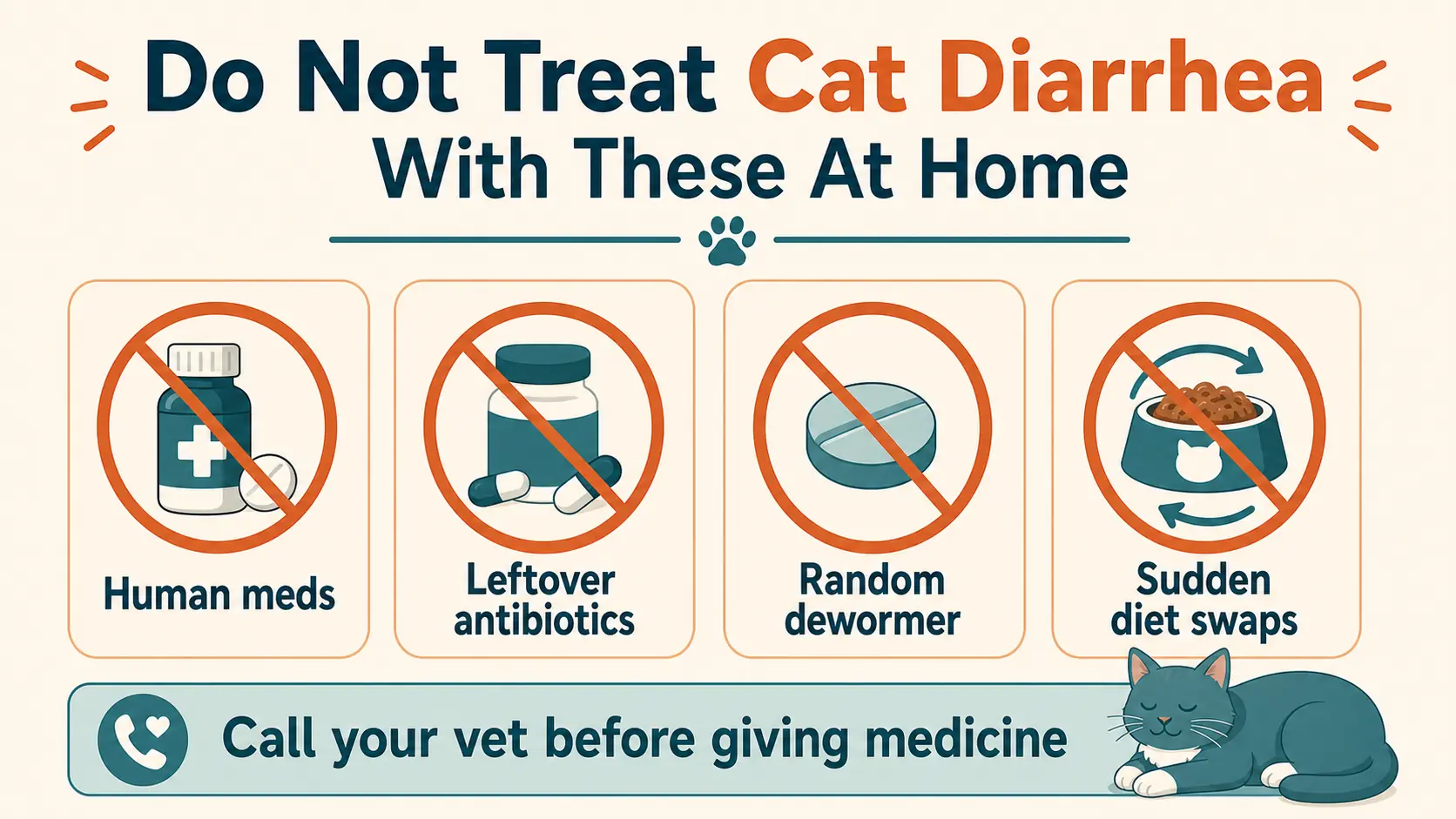
Evite também:
- fasting your cat without veterinary instruction
- changing foods repeatedly in one week
- using another pet’s medication
- guessing doses from forums or social media
- alimentação ou hidratação forçada
- assuming pumpkin, probiotics, or bland food is safe for every cause
- waiting because the stool briefly improves while appetite, weight, or energy worsens
Treatment depends on the cause. A parasite, toxin, obstruction, inflammatory condition, food intolerance, or infection will not be solved by the same home step.
What should I track before calling the vet?
Track what changed, when it changed, and how your cat is acting overall. A short, factual record helps the clinic decide urgency and next steps.
Tenha estes dados em mãos:
- when diarrhea started and how many episodes occurred
- consistência das fezes, cor, presença de muco, sangue ou aspecto escuro
- appetite, drinking, urination, vomiting, energy, and escondido
- body weight or recent weight change if known
- current food, treats, supplements, and recent diet changes
- possible access to trash, spoiled food, plants, string, medication, or chemicals
- parasite prevention and deworming history
- indoor/outdoor access and exposure to other pets
- whether other pets or people in the home have digestive signs
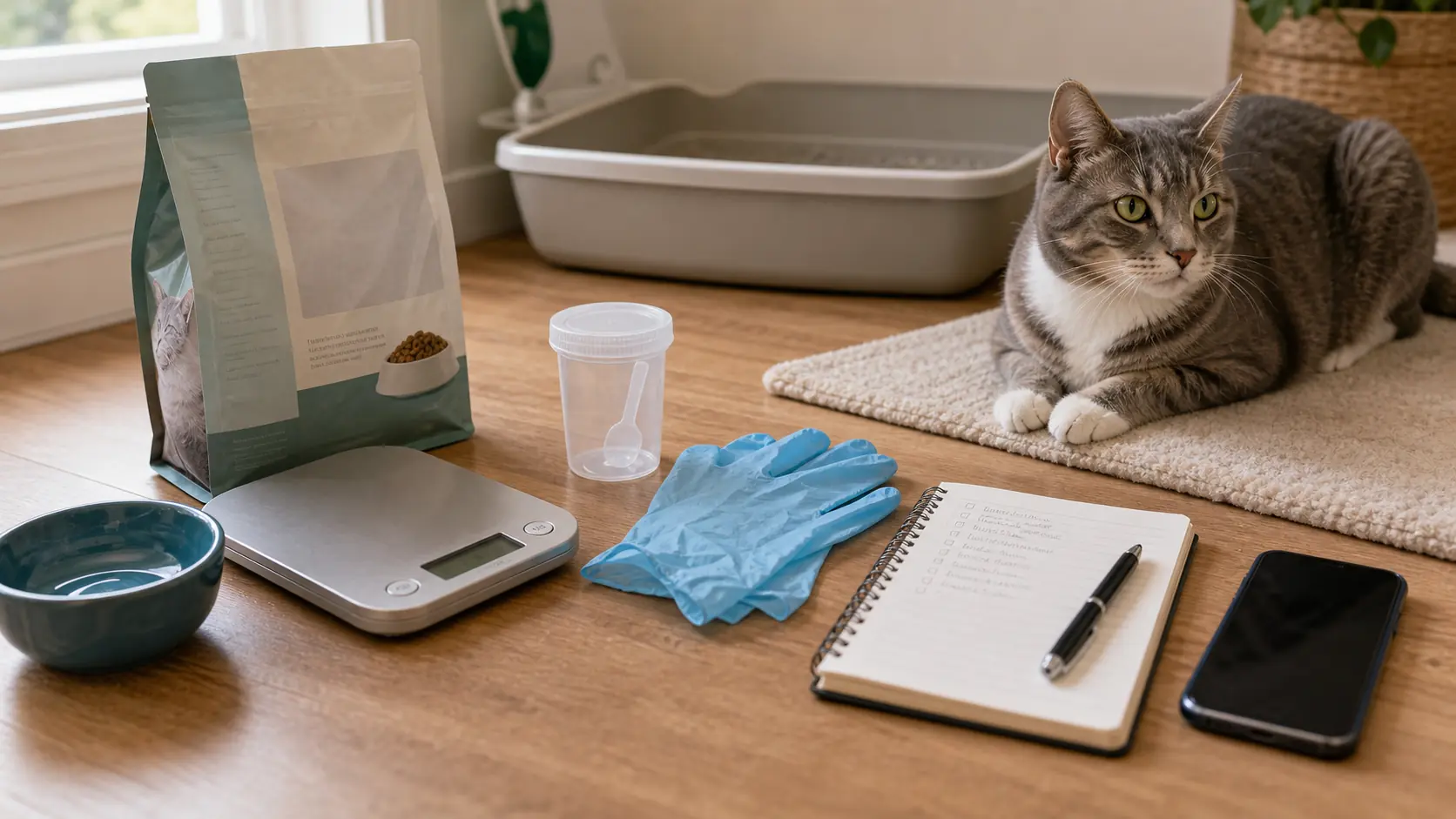
Ask the clinic whether it wants a stool sample and how fresh it should be. Do not delay urgent care while trying to collect one.
What might the veterinarian ask or test for?
The veterinarian may ask about diet, stool pattern, exposure risks, medications, weight, appetite, vomiting, hydration, and other symptoms. Testing depends on the cat’s age, exam, severity, and history.
Possible next steps include:
- physical exam and hydration assessment
- exame de fezes para detectar parasitas ou outras anormalidades
- blood and urine testing
- diet history review or a veterinarian-directed diet trial
- imaging if obstruction, pain, or other disease is suspected
- fluids, anti-nausea care, deworming, or other cause-specific treatment when appropriate
- follow-up if diarrhea returns or does not improve
Do not be surprised if the veterinarian starts with common causes but keeps a broader differential list. Diarrhea is a sign, not a diagnosis.
How can I prevent diarrhea from getting worse?
Prevention during an episode means reducing avoidable irritants and giving the veterinarian a clear pattern to evaluate. Consistency is more useful than cycling through remedies.
Practical steps:
- Keep your cat indoors and away from trash, plants, string, chemicals, and unsafe foods.
- Avoid table scraps, leite, rich treats, and sudden food changes.
- Feed measured portions of the usual complete-and-balanced food if your cat is eating normally.
- Wash bowls and scoop litter promptly.
- Separate pets if the veterinarian suspects an infectious or parasitic cause.
- Keep medication, supplements, and human foods out of reach.
- Follow the vet’s plan exactly if treatment is prescribed.
If diarrhea is tied to repeated diet changes, rebuild the feeding routine slowly once the cat is healthy. For wet-food meal timing, see Com que frequência devo dar comida úmida para o gato?.
When is diarrhea chronic instead of a short episode?
Diarrhea deserves a chronic or recurring workup when it persists, repeatedly returns, or appears with weight loss, appetite change, vomiting, or other ongoing signs. Do not keep treating repeat episodes as isolated accidents.
Use the dedicated chronic diarrhea in cats guide if your cat has ongoing or recurring loose stool. Use the Guia sobre diarreia em gatinhos if the cat is a kitten, because kittens can decline faster than healthy adult cats.
Behavior changes can also matter. If diarrhea comes with hiding or withdrawal, the guide to por que os gatos se escondem can help you describe context, but a sudden behavior change plus illness signs belongs in the veterinary conversation.
Conclusão
The safest “treatment” for cat diarrhea begins with triage. A bright adult cat with one mild loose stool may only need close monitoring and a steady routine, but blood, black stool, repeated vomiting, weakness, no appetite, dehydration concern, pain, toxin exposure, kittens, seniors, pregnancy, or medical conditions should move you toward veterinary care quickly.
Skip the impulse to stop diarrhea with human medicine or leftover treatments. Record what happened, keep water available, avoid sudden food experiments, and let your veterinarian decide whether testing, fluids, diet changes, or medication are needed.
Perguntas frequentes
What can I give my cat for diarrhea at home?
Do not give medicine, supplements, dewormers, antibiotics, or electrolyte drinks unless your veterinarian recommends them. For a stable adult cat with one mild episode, focus on water, normal food, observation, and a symptom log.
Quando devo levar meu gato ao veterinário por causa da diarreia?
Call urgently for blood or black stool, repeated vomiting, weakness, dehydration concern, no appetite, pain, toxin exposure, or diarrhea in a kitten, senior, pregnant cat, or cat with medical conditions.
Can I give my cat human anti-diarrhea medicine?
No. Human anti-diarrhea medicines can be unsafe for cats and may delay needed diagnosis. Call your veterinarian before giving any medication.
Should I stop feeding my cat if it has diarrhea?
Do not fast your cat unless a veterinarian tells you to. Cats can be vulnerable when they stop eating, and appetite changes are important medical information.
Is cat diarrhea from food changes normal?
A sudden food change can trigger loose stool, but do not assume diet is the only cause. Call a vet if diarrhea repeats, is watery, or occurs with vomiting, low appetite, blood, weight loss, or behavior changes.
How long can cat diarrhea last before it is concerning?
Any diarrhea with red flags is concerning immediately. Even without red flags, diarrhea that persists, worsens, or returns repeatedly should be discussed with a veterinarian.
Devo levar uma amostra de fezes ao veterinário?
Ask the clinic first. If requested, use a clean sealed container and follow the clinic’s instructions for freshness, storage, and transport.
Referências
[1] Cornell Feline Health Center. Diarreia.
[2] Centro de Saúde Felina da Cornell. Parasitas gastrointestinais de gatos.
[3] Manual Veterinário da Merck. Distúrbios do estômago e do intestino em gatos.
 EN
EN DE
DE ES
ES PT
PT