

A practical guide to what’s normal vs urgent, what different stool colors can mean, and how to help your cat safely.
Quick Answer (read this first)
Cat diarrhea is usually triggered by diet changes, stress, parasites, or infection, but it can also signal underlying disease. If your cat is a kitten/senior, has vomiting, blood/black stool, looks dehydrated, or diarrhea lasts more than 24–48 hours, contact a vet promptly. If your cat is otherwise alert and drinking, you can support them at home short-term while monitoring closely.
Red Flags — call a vet now if you see any of these
- Blood in stool (red streaks) o black/tarry stool
- Vomiting plus diarrhea
- Lethargy, collapse, severe weakness, or pain
- Signs of dehydration (dry gums, sunken eyes)
- Known toxin exposure, string/foreign object risk
- Diarrhea in kittens, seniors, or cats with chronic illness
- Diarrhea continuing past 24-48 horas or rapidly worsening
If your cat seems stable (alert, drinking, no blood): what to do in the next 24 hours
- Hydration first: fresh water, consider wet food
- Simplify diet: remove treats/table scraps; consider a bland diet short-term
- Monitor stool + behavior: note color, frequency, and energy
Índice
Why does my cat have diarrhea? (Start here)
Seeing diarrhea in your cat can be stressful—especially because it can range from a mild, short-lived upset to a sign of a more serious condition.
En general, diarrhea means the intestines aren’t absorbing water or nutrients normally, so stool becomes loose, frequent, or watery. The key is to identify:
- how severe it is,
- how long it’s been happening, and
- whether warning signs are present.
This guide explains common causes, what stool color can suggest, safe home steps for mild casesy when veterinary care is the safest choice.
Key takeaways (fast facts)
- See a vet if diarrhea lasts >24–48 hours or red flags appear.
- Diarrhea isn’t “normal.” It’s a symptom with many possible causes.
- Duration matters: acute is typically <2–3 days, chronic is >2–3 weeks.
- Color matters: yellow/green/black/bloody stool can signal different problems and may be urgent.
- High-risk cats: kittens, seniors, pregnant cats, and cats with chronic illness can dehydrate quickly.
- Home care helps mild cases: hydration + gentle diet + monitoring.
- Avoid human anti-diarrhea meds unless a veterinarian instructs you.
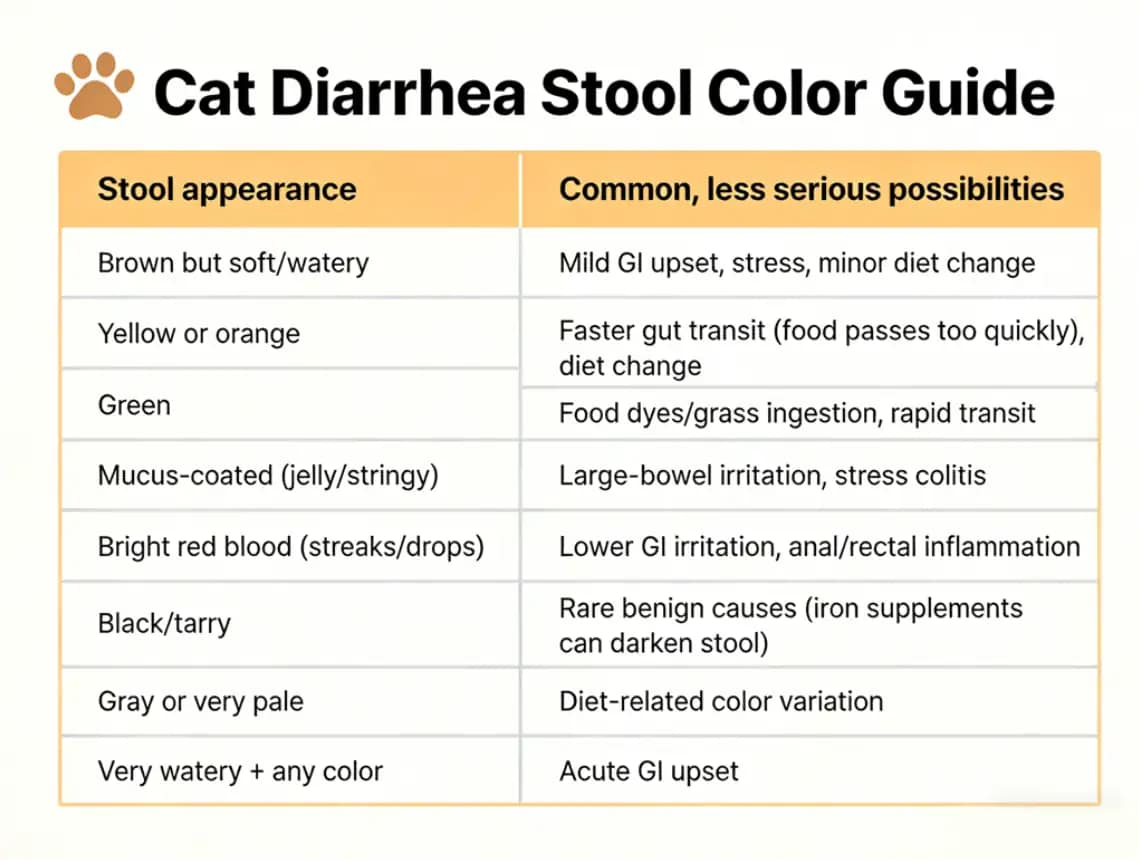
Cat diarrhea stool color guide (what it can suggest)
Stool color can’t diagnose a condition by itself, but it can help you decide how urgent the situation may be. Use this guide alongside symptoms like vomiting, appetite, energy level, and hydration.
| Stool appearance | Common, less serious possibilities | Potential medical concerns | Urgency | What to do next |
|---|---|---|---|---|
| Brown but soft/watery | Mild GI upset, stress, minor diet change | Parasites, infection if persistent | Watchful unless red flags | Hydration + gentle diet; monitor 24 hours |
| Yellow or orange | Faster gut transit (food passes too quickly), diet change | Bile/liver or pancreatic issues (especially if persistent), infection | Moderado → can become urgent | If it lasts >24–48h or with vomiting/lethargy → call vet |
| Verde | Food dyes/grass ingestion, rapid transit | Infection, bile-related irritation | Moderado | If frequent/watery or cat seems unwell → vet |
| Mucus-coated (jelly/stringy) | Large-bowel irritation, stress colitis | Parasites, inflammatory disease if recurring | Mild → Moderate | Monitor; if it persists or includes blood → vet |
| Bright red blood (streaks/drops) | Lower GI irritation, anal/rectal inflammation | Parasites, colitis, ulcers; more serious if large amounts | Moderado (sometimes urgent) | Vet if recurring, significant volume, or cat is unwell |
| Black/tarry | Rare benign causes (iron supplements can darken stool) | Digested blood / upper GI bleeding | Urgent / emergency | Seek emergency veterinary care now |
| Gray or very pale | Diet-related color variation | Possible bile duct/liver issues (esp. if persistent) | Moderado | Call vet if persistent or accompanied by vomiting/lethargy |
| Very watery + any color | Acute GI upset | Rapid dehydration risk | Higher risk | Prioritize hydration; vet sooner if kitten/senior or ongoing |
How to check color accurately (quick tip)
Lighting and litter can distort color. If unsure, scoop a small sample onto a white paper towel to check the true color. Taking a photo can help your vet.
[For a detailed cat poop color and consistency chart, see: Cat Poop Color & Consistency Chart]
Yellow diarrhea in cats: what it often means
Yellow or orange stool can happen when food moves through the intestines too quickly (less time for normal color/consistency). If yellow diarrhea lasts more than 24–48 hours or appears with vomiting, poor appetite, or lethargy, contact a vet.
Green diarrhea: when to worry
Green stool can occur with rapid transit or diet factors, but persistent green watery diarrhea—especially with fever, vomiting, or low energy—should be checked by a veterinarian.
Mucus in stool (jelly-like coating)
Mucus often points to large-bowel irritation (commonly stress-related) but can also occur with parasites or inflammation. If mucus is frequent, recurring, or paired with blood, consult your vet.
Bright red blood vs black/tarry stool
Bright red blood usually indicates irritation or bleeding in the lower GI tract. Black/tarry stool is more urgent because it may suggest digested blood from higher in the digestive tract—seek veterinary care immediately.
Why Does My Cat Have Diarrhea?
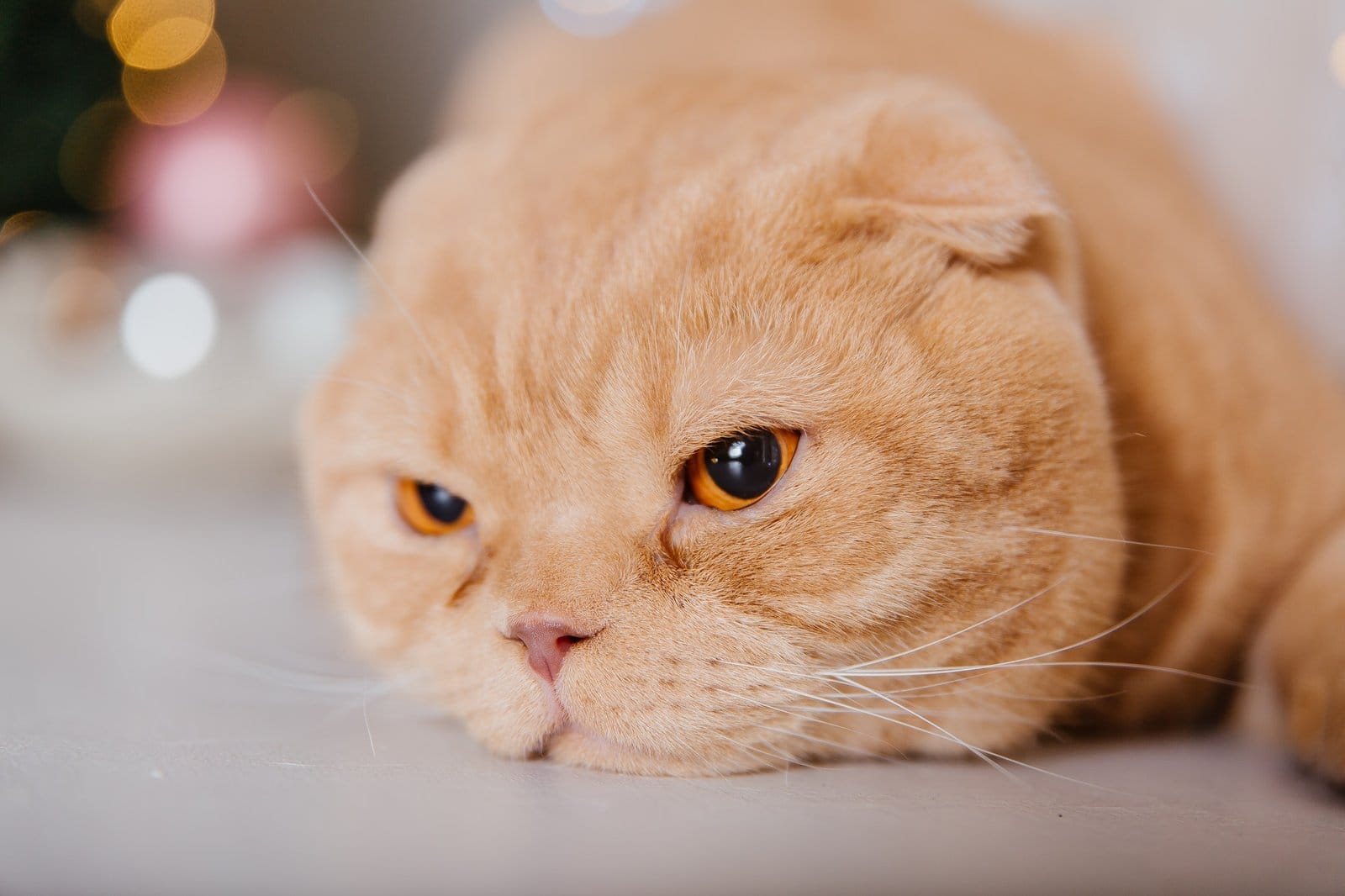
Diarrhea in cats is never normal—it’s a symptom, not a disease. We know as pet experts how worrying it is to see your cat with loose or watery stool.
Many factors can cause it, ranging from something harmless to a life-threatening illness. For example, a simple upset stomach might clear up on its own, but persistent or severe diarrhea needs attention.
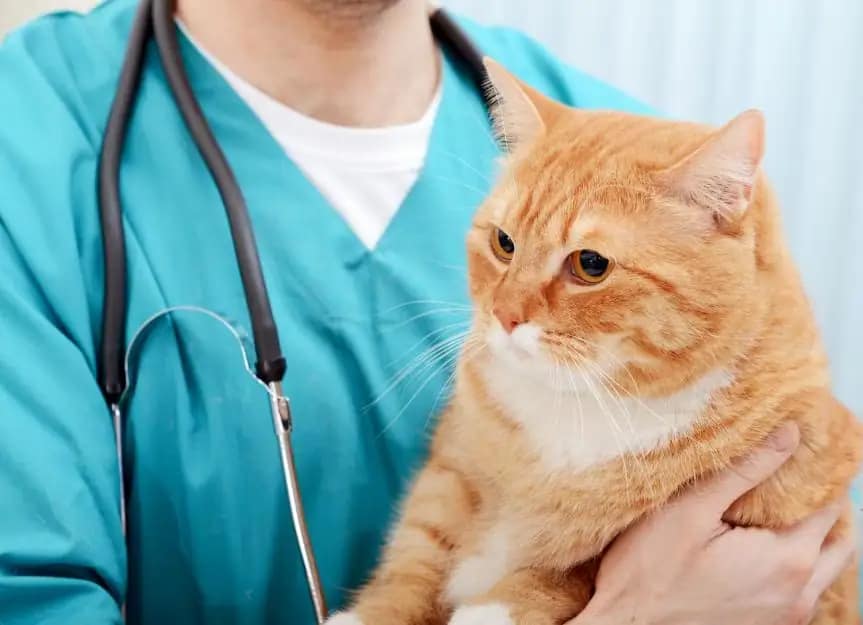
Kittens, elderly cats, pregnant cats, and cats with chronic diseases (like kidney or heart problems) are especially vulnerable. In these pets, diarrhea can quickly lead to dehydration or malnutrition. We always tell cat parents: if diarrhea isn’t better in about a day (24 hours), call your vet.
Also watch for vomiting plus diarrhea. Vomiting together with loose stool is a red flag. That combination is never routine – it could mean an obstruction, poisoning, organ failure or other serious disease.
Resumiendo, we urge you to take note: if your cat’s stool is watery or has changed dramatically, and especially if your cat seems unwell, reach out to a veterinarian promptly.
Acute vs. Chronic Diarrhea: What’s the Difference?
Cat diarrhea is typically grouped into acute o chronic based on how long it lasts. This difference matters because it changes what you should do next—and how urgently.
Acute diarrhea (sudden, short-term)
Acute diarrhea starts quickly and usually improves within 24–72 hours (often a few days). Many cases are caused by something temporary, such as:
- Sudden diet changes (new food, new treats)
- Dietary indiscretion (trash, table scraps, spoiled food)
- Mild infections or a brief gut irritation
- Stressful events (travel, vet visit, moving)
What it often looks like: your cat may still seem mostly normal—eating, drinking, and acting like themselves—despite softer stool.
What to do next: If your cat is otherwise bright and hydrated, you can usually start gentle home care and monitoring. Sin embargo, contact your vet sooner if you notice vomiting, blood/black stool, dehydration, severe lethargy, or if your cat is a kitten, senior, or has chronic illness.
[For more on chronic cases, see: Chronic Diarrhea in Cats: Causes, Vet Tests & Safe Home Care]
Chronic diarrhea (ongoing or recurring)
Chronic diarrhea is diarrhea that lasts more than 2–3 weeks, or diarrhea that keeps coming back in repeated episodes. Chronic cases are more likely to involve an underlying problem, such as:
- Inflammatory bowel disease (IBD)
- Food intolerance or allergy
- Parasites that persist or recur (e.g., Giardia)
- Hormonal or organ disease (e.g., hyperthyroidism, kidney/liver issues)
- Chronic infections or intestinal imbalance
- In some cases, intestinal cancer (especially with weight loss)
Por qué es importante: chronic diarrhea can gradually cause dehydration, weight loss, nutrient malabsorption, and vitamin deficiencies, even if your cat seems “okay” at first.
What to do next: Chronic or recurring diarrhea should trigger a structured veterinary workup, commonly starting with:
- Fecal testing (parasites/protozoa)
- Bloodwork (hydration, inflammation, organ function, thyroid in older cats)
- Imaging (X-ray/ultrasound) when red flags or weight loss are present
- Sometimes a prescription diet trial to evaluate food sensitivity
What your vet may do: common tests for cat diarrhea (and what they rule out)
If diarrhea is persistent, severe, recurring, or paired with red flags (vomiting, blood, dehydration, lethargy), vets often recommend tests that identify the cause rather than treating symptoms blindly.
Before the appointment: what to bring (helps diagnosis)
- A timeline: when it started, how often, and whether it’s improving or worsening
- Stool notes: fecal score (1–7), color changes, mucus, blood, frequency
- Diet details: recent food changes, treats, table scraps, new supplements
- Medication history: antibiotics, dewormers, flea/tick prevention, new meds
- A stool sample (if possible): fresh sample in a clean container (ask your clinic’s preference)
How vets choose which tests to start with
In many clinics, the first test depends on 3 things:
- Duration: acute (<2–3 days) vs chronic (>2–3 weeks)
- Severity + red flags: vomiting, blood/black stool, dehydration, appetite loss
- Risk group: kittens, seniors, pregnant cats, chronic disease, multi-cat homes
Common tests (at-a-glance)
| Test | What it can detect / rule out | When it’s commonly recommended | What it often changes |
|---|---|---|---|
| Fecal exam (microscopy/float/smear) | Many intestinal parasites; sometimes clues of inflammation | Especially in kittens, newly adopted cats, outdoor cats, multi-cat homes | Targeted deworming / parasite treatment |
| Giardia / Coccidia testing (often antigen or specific tests) | Protozoal infections that can cause recurring diarrhea | Persistent loose stool, shelter/rescue history, multiple pets | Specific anti-parasite therapy + hygiene plan |
| Fecal PCR panel (clinic-dependent) | Screens for multiple pathogens (varies by panel) | Recurring/chronic diarrhea or outbreak scenarios | More precise treatment; avoids guessing |
| Bloodwork (CBC + chemistry) | Dehydration, infection/inflammation, organ function (kidney/liver), electrolyte issues | Red flags, lethargy, appetite loss, chronic diarrhea | Fluid plan, supportive care, further workup direction |
| Thyroid test (T4) | Hyperthyroidism (common in older cats) | Chronic diarrhea + weight loss/appetite changes in seniors | Treat thyroid disease rather than only GI symptoms |
| Cobalamin (B12) ± folate | Malabsorption markers; B12 deficiency can worsen chronic GI issues | Chronic diarrhea, weight loss, suspected intestinal disease | Adds supplementation; guides GI workup |
| Urinalysis | Hydration status + kidney clues (supporting data) | Seniors, dehydration concerns, chronic illness | Fluid/renal management adjustments |
| FeLV/FIV testing | Immune status and risk of systemic disease | Rescue cats, unknown history, chronic illness | Broader treatment planning |
| X-rays (radiographs) | Obstruction clues, foreign body patterns, severe constipation vs diarrhea confusion | Vomiting + diarrhea, straining, sudden severe illness | Urgent intervention/surgery decision-making |
| Ultrasound | Intestinal thickening, lymph nodes, some tumors, pancreatitis clues, foreign material | Chronic diarrhea, weight loss, repeated flares | Guides diet trials, meds, biopsy decisions |
| Diet trial (prescription elimination / hydrolyzed) | Food sensitivity/intolerance assessment | Chronic/recurrent diarrhea with negative parasite tests | Diet becomes the “treatment,” reduces unnecessary meds |
| Endoscopy/biopsy (specialty-level) | Confirms IBD vs lymphoma and other intestinal diseases | Long-lasting diarrhea with weight loss or abnormal imaging | More definitive diagnosis + targeted therapy |
What this means for you (reader-friendly takeaway)
A vet workup usually aims to answer one question: Is this likely infectious/parasite-related, diet-related, stress-related, or a deeper medical condition? The tests above help narrow that down so treatment matches the cause.
Questions to ask your vet (improves outcomes and avoids unnecessary meds)
- “What’s the most likely cause based on my cat’s age and symptoms?”
- “Should we start with a fecal test o bloodwork first—and why?”
- “If tests are normal, what’s the next step: prueba de dieta, imaging, or both?”
- “Are there any meds I should avoid for cats with diarrhea?”
- “What signs mean I should go to an emergency clinic today?”
Cat fecal score chart (1–7): track stool consistency
This chart helps you describe your cat’s stool consistently over time. It’s a tracking tool, not a diagnosis.
| Score | What it looks like | Typical meaning |
|---|---|---|
| 1 | Hard, dry pellets/crumbs | Constipation or dehydration risk |
| 2 | Formed but hard; cracks visible | Mild dehydration possible |
| 3 | Formed, firm, moist (ideal) | Normal / healthy digestion |
| 4 | Very soft log; loses shape when picked up | Mild diarrhea |
| 5 | Very moist piles; still some form | Moderate diarrhea |
| 6 | No defined shape; soft spots/piles | Severe diarrhea |
| 7 | Watery puddle; no texture | Severe watery diarrhea; high dehydration risk |
How to record it: If stool varies in one day, record the highest (most watery) score and note any blood or mucus.
Common Causes of Cat Diarrhea
Diarrhea in cats can stem from a wide array of causes, ranging from simple dietary upsets to more complex underlying health conditions. Understanding these potential triggers is the first step toward effective management and prevention.
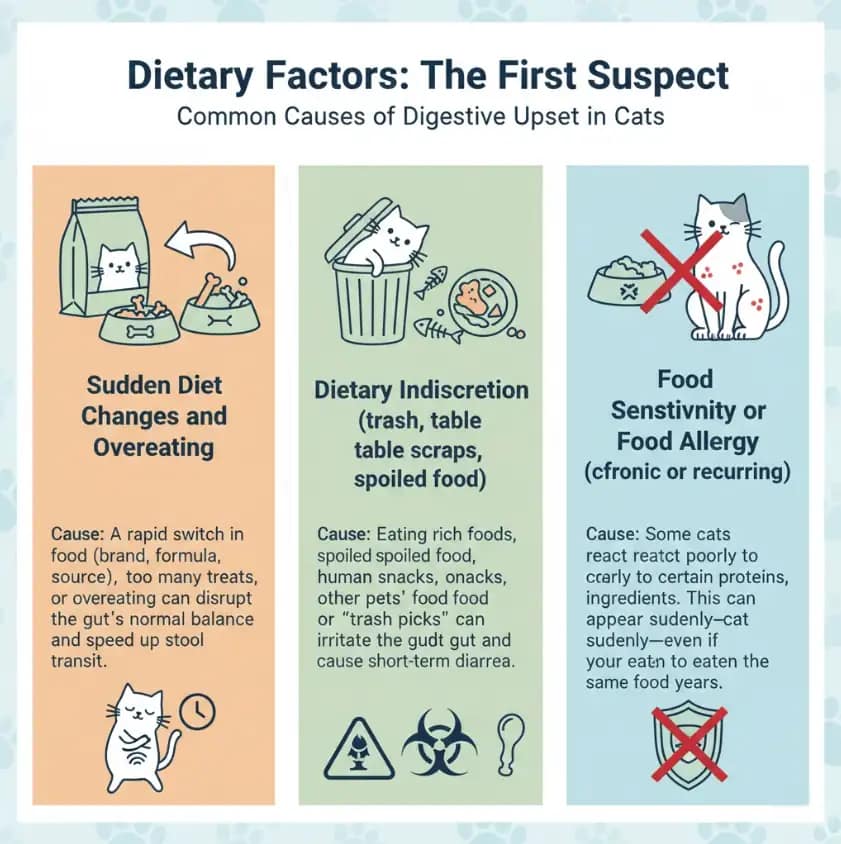
Dietary Factors: The First Suspect
Often, the simplest explanation for a sudden bout of diarrhea lies in your cat’s diet.
Sudden diet changes and overeating
Cause: A rapid switch in food (brand, formula, protein source), too many treats, or overeating can disrupt the gut’s normal balance and speed up stool transit.
Common signs
- Diarrhea starts within 1–3 days of a diet change
- Stool is loose but often still marrón
- Your cat may act mostly normal (eating/playing), though mild gas or urgency is common
What to do (safe first steps)
- Return to the previous diet for 2–3 days if the change triggered symptoms
- Transition slowly over 7–10 days (mix old + new, increasing new gradually)
- Stop treats and table scraps until stool is normal
- Track stool consistency (fecal score) and frequency for 24 hours
When to call a vet
- Diarrhea lasts >24–48 hours, worsens quickly, or your cat shows red flags (vomiting, lethargy, dehydration, blood/black stool)
[For guidance on safe diet transitions and feeding, see our dietary guidelines]
Dietary indiscretion (trash, table scraps, spoiled food)
Cause: Eating rich foods, spoiled food, human snacks, other pets’ food, or “trash picks” can irritate the gut and cause short-term diarrhea.
Common signs
- Sudden diarrhea after a known “oops” moment (or mysterious mischief)
- Possible vomiting, drooling, or gassiness
- Increased urgency or accidents outside the litter box
Qué hacer
- Remove access to the suspected food and stop treats/table scraps
- Offer water frequently; consider wet food to increase hydration
- Feed a gentle, easy-to-digest diet (vet-recommended bland approach)
- Monitor closely for 24 hours and record any blood/mucus
When to call a vet
- If you think your cat ate bones, string, medication, chemicals, or a toxic plant, treat it as urgent
- Any vomiting + diarrhea together, repeated diarrhea, lethargy, refusal to eat, or suspected toxin exposure
Food sensitivity or food allergy (often chronic or recurring)
Cause: Some cats react poorly to certain proteins or ingredients. This can appear suddenly—even if your cat has eaten the same food for years.
Common signs
- Diarrhea that is recurrent or lasts weeks
- Possible mucus, softer stools, or frequent small amounts
- Sometimes itching, ear issues, or vomiting (not always)
Qué hacer
- Avoid switching foods repeatedly “to guess”—it can worsen gut irritation
- Ask your vet about a prueba de dieta (often a prescription or novel-protein approach)
- Keep a simple log: food, treats, stool score, frequency, and any vomiting
When to call a vet
- If diarrhea is persistent, recurring, or paired with weight loss, poor appetite, or lethargy
[Explore if homemade food could help or harm: Is Homemade Cat Food Better? ]
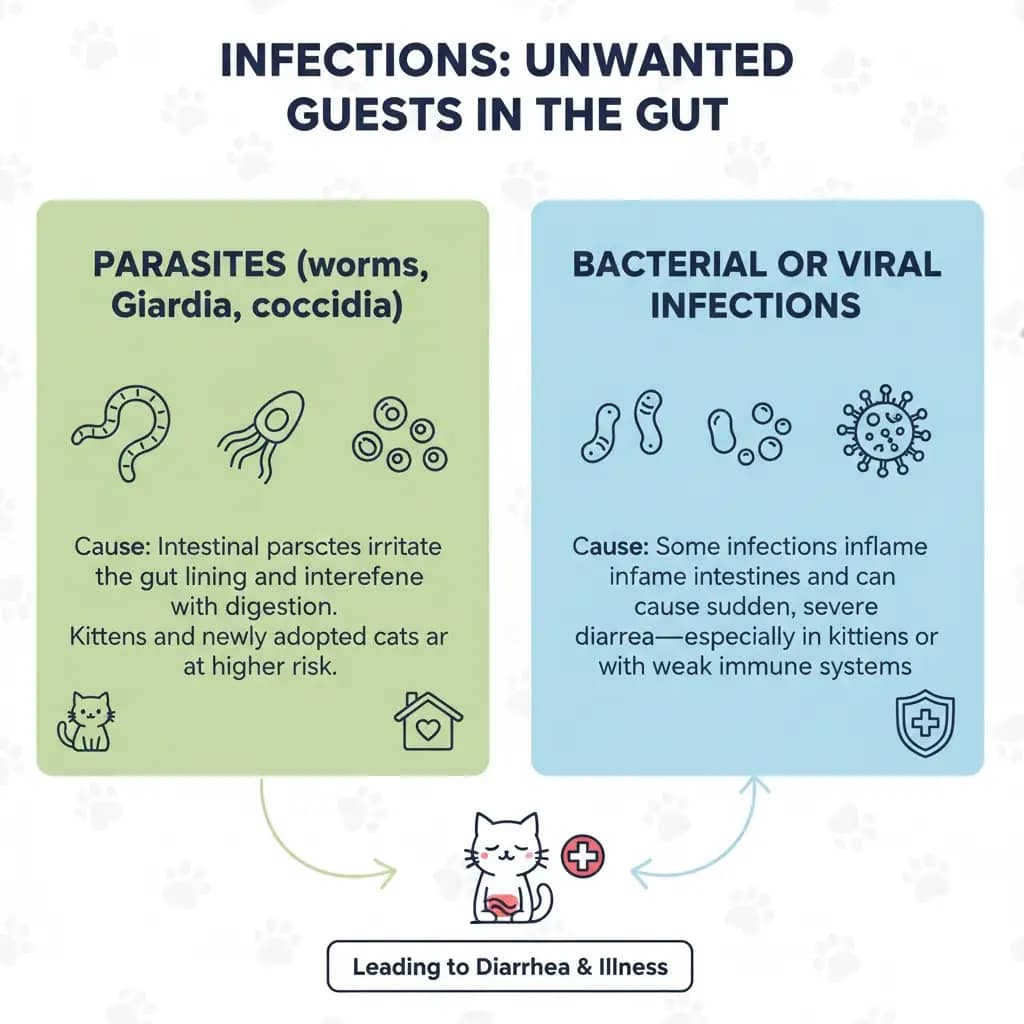
Infections: Unwanted Guests in the Gut
The feline gastrointestinal tract can be a welcoming host for various infectious agents, leading to diarrhea.
Parasites (worms, Giardia, coccidia)
Cause: Intestinal parasites irritate the gut lining and interfere with digestion. Kittens and newly adopted cats are at higher risk.
Common signs
- Loose stool that may be foul-smelling
- Mucus in stool; sometimes blood
- Weight loss, pot-bellied appearance (especially kittens), or dull coat
- Diarrhea that keeps returning after “getting better”
Qué hacer
- Schedule a fecal test (don’t guess treatments—different parasites require different meds)
- Clean litter boxes daily and wash hands after handling feces
- Keep infected cats separated from others if possible until treated
When to call a vet urgently
- Diarrhea plus vomiting, weakness, or refusal to eat
- Kittens with diarrhea (dehydrate fast)
Bacterial or viral infections
Cause: Some infections inflame the intestines and can cause sudden, severe diarrhea—especially in kittens or cats with weak immune systems.
Common signs
- Diarrhea that is frequent or watery
- Fever, low energy, or reduced appetite
- Vomiting may occur
- Rapid worsening over hours to a day
Qué hacer
- Treat as more urgent than a simple diet upset
- Keep your cat hydrated and warm, and limit stress/activity
- Contact a veterinarian for guidance—testing may be needed to confirm the cause
When to call a vet immediately
- Any kitten with severe diarrhea
- Bloody diarrhea, black/tarry stool, repeated vomiting, severe lethargy, dehydration signs
Stress and Anxiety: The Powerful Brain-Gut Connection
It might surprise some, but your cat’s emotional state can directly impact their digestive health.
Stress-related diarrhea (brain–gut connection)
Cause: Stress hormones can change gut movement and gut bacteria, leading to loose stool—sometimes very suddenly.
Common signs
- Diarrhea appears after a stressor (vet visit, travel, guests, moving, new pet)
- Cat may hide, vocalize more, overgroom, or eat less
- Stool may improve once the stressful event ends (but can recur)
Qué hacer
- Identify the trigger and reduce it if possible (quiet room, routine, safe ocultar spots)
- Use low-stress handling and a calm environment during recovery
- Consider a positive carrier setup (leave carrier out with bedding and treats)
- Track recurrence: if diarrhea happens after stress repeatedly, discuss a plan with your vet
When to call a vet
- If diarrhea is severe, lasts >24–48 hours, or your cat shows vomiting/lethargy/dehydration
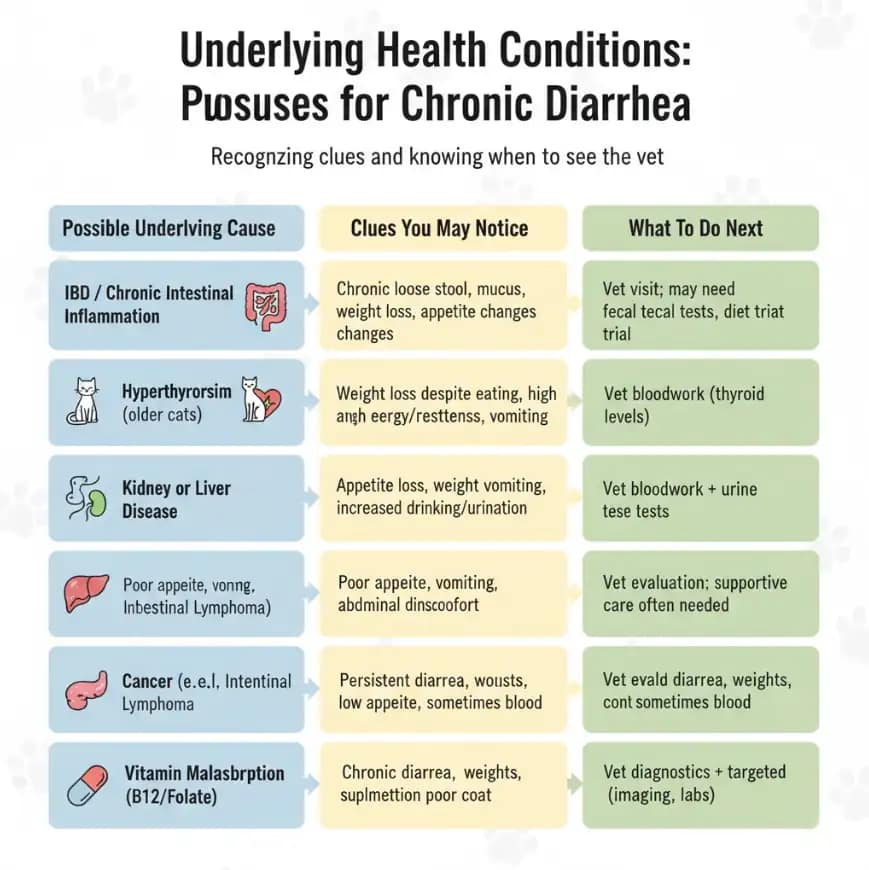
Underlying health conditions (often chronic or recurring)
Cause: When diarrhea lasts weeks or keeps returning, an underlying illness becomes more likely. The goal is to identify the root cause—not just “stop the diarrhea.”
| Possible underlying cause | Clues you may notice | What to do next |
|---|---|---|
| IBD / chronic intestinal inflammation | Chronic loose stool, mucus, weight loss, appetite changes | Vet visit; may need fecal tests, bloodwork, diet trial |
| Hyperthyroidism (older cats) | Weight loss despite eating, high energy/restlessness, vomiting | Vet bloodwork (thyroid levels) |
| Kidney or liver disease | Appetite loss, weight loss, vomiting, increased drinking/urination | Vet bloodwork + urine tests |
| Pancreatitis | Poor appetite, vomiting, abdominal discomfort | Vet evaluation; supportive care often needed |
| Cancer (e.g., intestinal lymphoma) | Persistent diarrhea, weight loss, low appetite, sometimes blood | Vet diagnostics (imaging, labs) |
| Vitamin malabsorption (B12/folate) | Chronic diarrhea, weight loss, poor coat | Vet testing + targeted supplementation |
When to call a vet promptly: Any diarrhea lasting >2–3 weeks, recurring episodes, or diarrhea with weight loss, low appetite, or lethargy.
Toxins/poisons and foreign objects (urgent causes)
Cause: Some exposures irritate the gut or cause systemic poisoning. Foreign objects can obstruct or damage the intestines.
Common signs
- Sudden vomiting + diarrhea
- Drooling, tremors, weakness, or collapse (poisoning red flags)
- Straining, repeated trips to the litter box, or small amounts of watery stool (possible obstruction)
- Abdominal pain, bloating, or “hunched” posture
Qué hacer
- If you suspect poison or a foreign object: contact a vet or emergency clinic immediately
- Do not give human medications or attempt home “detox” methods
- If safe, bring the product label/plant photo or describe what was swallowed
Treat as an emergency
Black/tarry stool, repeated vomiting, severe lethargy, dehydration signs, or known ingestion of medication/chemicals/string/bones/toxic plants
Medication side effects (especially antibiotics)
Cause: Some medications irritate the gut or disrupt beneficial gut bacteria, leading to loose stool.
Common signs
- Diarrhea begins during a new medication or shortly after starting antibiotics
- Mild appetite change or gassiness may appear
- Stool may normalize after the medication ends (but not always)
Qué hacer
- Do not stop prescription medication on your own
- Call your vet and describe timing (when meds started vs diarrhea onset)
- Ask whether a cat-specific probiotic is appropriate and how to use it safely
When to call a vet urgently
Diarrhea becomes watery/frequent, or your cat shows vomiting, weakness, refusal to eat, or dehydration
Special focus: Kitten diarrhea and vulnerable cats (what’s different)
Kitten diarrhea is more urgent than adult diarrhea because kittens dehydrate and lose energy faster. Senior cats and cats with chronic illness are also higher-risk—new diarrhea can be an early sign of an underlying condition.
Quick triage: when kitten diarrhea is an emergency
Contact a vet the same day (or emergency clinic) if your kitten has diarrhea plus any of these:
- Vómitos
- Not eating / not nursing
- Lethargy, weakness, or collapse
- Blood in stool o black/tarry stool
- Signs of dehydration (dry/sticky gums, sunken eyes)
- Very frequent watery stool (fecal score 6–7)
- Age under ~12 weeks, small/underweight, or recently rescued/shelter kitten
Why this matters: diarrhea isn’t just “messy”—it can quickly cause dangerous fluid and electrolyte loss in small bodies.
Home monitoring for kittens (what to track so a vet can help faster)
Use this quick checklist for 24 hours while you arrange care or monitor a mild case:
- Hydration: gums should feel moist (not tacky); watch for sunken eyes
- Energía: normal play vs unusually quiet or “hiding”
- Appetite: nursing/eating normally? any refusal?
- Stool severity: record fecal score (especially 6–7 watery)
- Frequency: how many episodes in 12 hours
- Weight: daily weight checks are helpful in small kittens (loss is a red flag)
What to do next: If diarrhea is not improving quickly—or if any red flags appear—don’t “wait it out.” Kittens often need veterinary fluids and targeted treatment.
Senior cats and other vulnerable cats (don’t blame age)
En senior cats, new diarrhea shouldn’t be dismissed as “just old age.” It can be linked to kidney or liver changes, hyperthyroidism, pancreatitis, IBD, medication side effects, or even cancer—especially if diarrhea persists or keeps returning.
What to do next
- Schedule a vet visit if diarrhea lasts >24–48 hours (sooner if the cat seems unwell).
- Bring a fresh stool sample if possible and a list of current foods/medications.
- Ask your vet what to test first (often fecal test + basic bloodwork, then imaging if needed).
When to Act: Warning Signs That Mean “Call the Vet”
When to Act: Warning Signs That Mean “Call the Vet”
Cat diarrhea can be mild and short-lived—but it can also signal dehydration, poisoning, infection, or a blockage. The safest approach is to look at (1) how your cat is acting, (2) what the stool looks likey (3) how long it lasts.
Quick rule of thumb
- Adult cat acting normal: monitor closely for up to 24 hours (with hydration + gentle diet).
- Any red flag or high-risk cat: call a veterinarian right away.
- Diarrhea lasting more than 24–48 hours: contact your vet even if your cat seems “mostly okay.”
Key symptoms to watch for
Use this checklist to describe symptoms clearly (helpful for vet calls and AI/featured snippets too):
1. Stool changes (what you see in the litter box)
- Consistency: loose, pudding-like, or fully watery stool
- Frequency: going more often than usual, urgency, accidents outside the box
- Mucosidad: jelly-like coating or slimy strands (often suggests intestinal inflammation)
2. Stool color changes (triage value)
Any color change can be useful information—but some are more urgent than others:
- Bright red blood: fresh bleeding (often lower GI irritation, parasites, inflammation)
- Black/tarry stool: may indicate digested blood from higher in the GI tract → treat as urgent
- Yellow/orange/green/gray: can happen with rapid intestinal transit, diet changes, or irritation; becomes more concerning if paired with vomiting, lethargy, or lasting >24–48 hours
Tip: Take a clear photo of the stool (if possible) to show your veterinarian.
3. Pain or abdominal discomfort (how your cat behaves)
- Hunched posture, hiding, crying/meowing unusually
- Swollen belly, tenderness, restlessness
- Excess gas plus discomfort
4. Straining or “can’t pass stool”
If your cat strains repeatedly but produces only tiny amounts of watery diarrhea, this can be seen with constipation, colitis, or a blockage—and a blockage is an emergency (especially if vomiting is also present).
Urgent red flags: seek veterinary care immediately
Contact your veterinarian ahora or go to an emergency animal hospital if you notice any of the following:
“Go now” signs
- Vomiting with diarrhea (higher dehydration risk; can also signal obstruction/toxin ingestion)
- Blood in stool (bright red) or black/tarry stool
- Refusing food or not eating normally for ~24 hours
- Severe lethargy/weakness (your cat seems “not themselves”)
- Suspected toxin exposure (medications, cleaners, lilies, antifreeze, etc.)
- Possible foreign object ingestion (string, toys, fabric) or repeated unproductive straining
Dehydration warning signs (don’t wait)
- Sticky/dry gums, sunken eyes, very low energy
- Reduced drinking or very concentrated urine
- Skin tenting (skin doesn’t snap back quickly when gently lifted)
High-risk cats: use a shorter window
These cats can decline quickly and should be treated as urgent sooner:
- Gatitos (dehydrate very fast)
- Gatos mayores
- Cats with chronic disease (kidney disease, diabetes, hyperthyroidism, heart disease, cancer)
- Gatas embarazadas or immunocompromised cats
For high-risk cats: even “mild” diarrhea is a reason to call the vet promptly, especially if there’s any appetite change.
Why timing matters
Diarrhea causes fluid and electrolyte loss. Cats—especially kittens and seniors—can become dehydrated quickly, and dehydration can turn a manageable stomach upset into a serious medical emergency. When in doubt, it’s safer to call your veterinarian early and describe:
- duration (hours/days),
- stool frequency + fecal score (if you use one),
- color (brown/yellow/green/bloody/black),
- appetite, vomiting, energy level, and hydration.
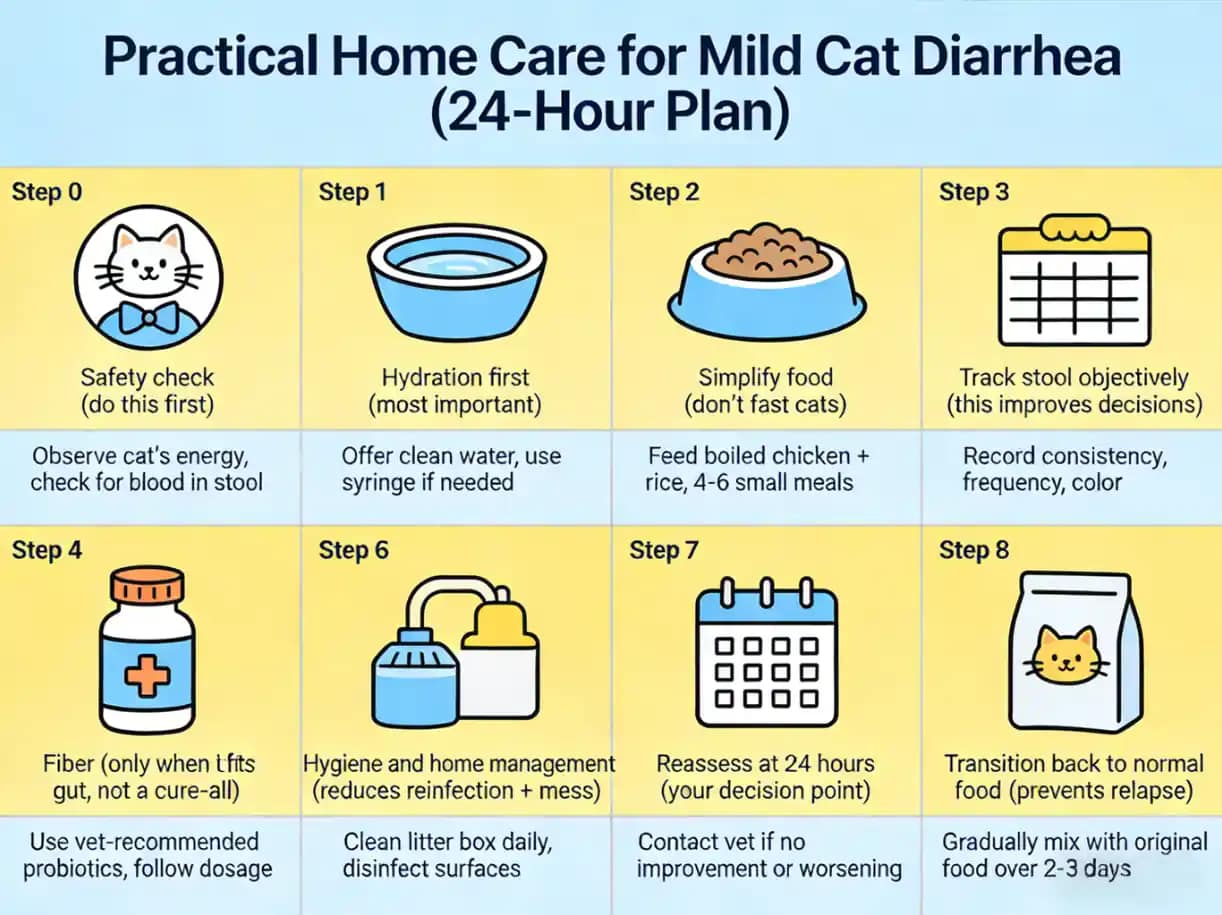
Practical home care for mild cat diarrhea (a 24-hour plan)
This home-care plan is for cats who are bright/alert, still drinking, and do no have urgent warning signs.
Step 0 — Safety check (do this first)
Stop home care and contact a vet urgently if any are true:
- Vómitos along with diarrhea
- Blood (bright red) or black/tarry stool
- Your cat is very lethargic, weak, or in pain
- Refuses food or can’t keep water down
- Signs of deshidratación (dry/sticky gums, sunken eyes)
- Your cat is a gatito, senior, embarazada, or has a chronic illness
- Diarrhea lasts more than 24–48 hours or worsens quickly
If none apply, proceed with the steps below.
Step 1 — Hydration first (most important)
Diarrhea causes fluid and electrolyte loss. Your goal is to make drinking easy and appealing.
Hazlo:
- Keep agua dulce available at all times.
- Consider a water fountain (many cats drink more from moving water).
- Oferta unsalted broth (diluted, onion/garlic-free) if your cat won’t drink plain water.
- If your cat eats wet food, add 1–2 tablespoons of warm water to increase fluids.
Avoid:
- Sugary drinks or flavored “human” electrolyte products unless your vet approves.
Step 2 — Simplify food (don’t fast cats)
Withholding food can backfire in cats. Instead, aim for a gentle, consistent plan.
Hazlo:
- Remove treats, table scraps, and new foods for now.
- Alimentar a small, frequent schedule (e.g., 3–6 small meals/day).
- Use either:
- your vet’s GI/low-fat dieto
- a dieta blanda short-term if your vet recommends it (common options include plain cooked poultry and a simple carbohydrate).
Avoid:
- Sudden diet switches (unless your vet directs it).
- Milk/dairy, fatty foods, rich treats.
If diarrhea started right after a food change:
- Go back to the previous food and plan a slow transition over 7–10 days once stool is normal.
Step 3 — Track stool objectively (this improves decisions)
Use a simple tracking system so you can act early and describe symptoms clearly.
Record twice daily:
- Fecal score (1–7)
- Frecuencia
- Any blood, mucus, or unusual color
- Appetite, water intake, energy level
Rule of thumb:
- If stools become more watery (score rises) or red flags appear → vet.
Step 4 — Fiber (only when it fits the pattern)
Fiber can help some cats, especially when stool is frequent with small amounts (often large-bowel irritation), but it isn’t perfect for every case.
If your cat has frequent small stools or mucus:
- Ask your vet about a small amount of calabaza en conserva o unflavored psyllium.
Avoid fiber-first if:
- Your cat is vomiting, severely lethargic, or stool is watery “puddles” (priority becomes hydration/vet evaluation).
Step 5 — Probiotics (support the gut, not a cure-all)
Probiotics can be useful when diarrhea is triggered by stress, mild GI upset, or after antibiotics—but they should not delay vet care when red flags exist.
Hazlo:
- Utilice un cat-appropriate probiotic (vet-recommended).
- Introduce gradually and monitor stool.
No lo hagas:
- Treat probiotics as a substitute for diagnosis if diarrhea is chronic or recurring.
Step 6 — Hygiene and home management (reduces reinfection + mess)
Hazlo:
- Scoop litter more often and clean soiled areas promptly.
- Wash hands after cleanup (especially important if parasites are possible).
- If you have multiple cats and suspect infection, consider temporary separation and ask your vet about fecal testing.
Step 7 — Reassess at 24 hours (your decision point)
At the 24-hour mark, use this decision rule:
- Improving (firmer stool, fewer trips, normal behavior): continue gentle plan another 24 hours, then transition back slowly.
- Not improving or worse: contact your vet (especially if >24–48 hours total).
Step 8 — Transition back to normal food (prevents relapse)
When stool is normal for 24–48 hours:
- Gradually reintroduce the regular diet over 3–7 days.
- Reintroduce treats last, one at a time.
What not to do at home (common mistakes)
- Don’t give human anti-diarrheal meds (many are unsafe for cats unless your veterinarian instructs you).
- Don’t fast cats without veterinary guidance.
- Don’t assume “acting normal” means “safe” if diarrhea persists beyond 24–48 hours.
Special Focus: Preventing Future Upsets (How to Prevent Cat Diarrhea)
Preventing diarrhea is usually easier than treating it. The best long-term strategy is to reduce the most common triggers—sudden diet changes, unsafe foods, parasites, toxins, and foreign objects—and to catch early signs before they escalate.
Prevention checklist (fast facts)
- Transition food slowly (7–10 days) to avoid stomach upset.
- Keep human food and toxins away (many cause vomiting/diarrhea fast).
- Prevent parasites with routine vet-guided testing and treatment.
- Cat-proof “chew/swallow” hazards like string, ribbons, and small toys.
- Track patterns (food, stress, stool consistency) so you can prevent repeat episodes.
Safe Feeding Practices and Gradual Diet Transitions
1. Transition food the right way (7–10 day plan)
Sudden food switches are one of the most common reasons cats develop loose stool. A gradual transition gives the gut time to adapt.
Simple 7–10 day transition schedule
| Day | Old food | New food |
|---|---|---|
| 1–2 | 75% | 25% |
| 3–4 | 50% | 50% |
| 5–6 | 25% | 75% |
| 7+ | 0% | 100% |
What to do next: If diarrhea starts during a transition, pause at the current ratio for 2–3 days (or return to the previous diet if stools worsen), then continue more slowly.
2. Avoid common diet “landmines”
Some foods trigger diarrhea simply because they’re too fatty, too rich, or not meant for cats.
- Skip table scraps (especially fatty meats, gravy, dairy, spicy foods).
- Limit treats during sensitive periods (food changes, travel, vet visits).
- Don’t offer cow’s milk (many cats are lactose intolerant).
What to do next: If your cat has recurring diarrhea, ask your vet whether a prueba de dieta (limited ingredient / hydrolyzed protein) is appropriate.
[Safe food specifics: Can Cats Eat Raw Meat? Risks, Safety Tips & Alternatives]
3. Store food safely
Spoiled or contaminated food can upset the gut.
- Keep dry food in an airtight container (ideally in the original bag inside the container).
- Wash bowls regularly and replace old kibble before it goes stale.
- Refrigerate wet food promptly and discard leftovers per label directions.
What to do next: If multiple pets develop diarrhea at the same time, consider food spoilage or contamination and contact your vet.
Environmental Hazard Control (Toxins + Foreign Objects)
1. Cat-proof your home (the top diarrhea hazards)
Many household items can cause sudden diarrhea (and sometimes worse).
- Human medications (especially acetaminophen/Tylenol, ibuprofen, aspirin)
- Cleaners and chemicals (bleach, detergents, disinfectants)
- Rodenticides, fertilizers, antifreeze
- Toxic plants (notably lilies)
What to do next: If you suspect toxin exposure, don’t “wait and see.” Contact a veterinarian or emergency clinic immediately.
2. Secure trash and “snack access”
Trash raids and spoiled food are common triggers.
- Utilice lidded trash cans or keep trash behind closed doors.
- Keep counters clear of leftovers, bones, and wrappers.
3. Prevent foreign-object ingestion
String, ribbons, hair ties, and small toys can cause serious GI irritation or obstruction.
- Store string-like items out of reach.
- Choose cat toys that can’t be swallowed.
- Supervise play with teaser wands—put them away after.
What to do next: If your cat is vomiting, straining, lethargic, or has diarrhea plus poor appetite after chewing/swallowing something, treat it as urgent.
Regular Veterinary Check-ups and Parasite Prevention
1. Routine fecal testing (even if your cat looks fine)
Some cats carry parasites without obvious symptoms, and diarrhea can appear later.
- Ask your vet how often your cat should get a examen fecal, based on lifestyle (indoor-only vs outdoor, multi-cat home, new rescue, etc.).
What to do next: For new cats/kittens or shelter adoptions, request a fecal test early—this prevents “mystery diarrhea” spreading in the household.
2. Deworming and parasite prevention (vet-guided)
Parasite prevention is not one-size-fits-all. The right plan depends on age, exposure, and local parasite risks.
- Follow your veterinarian’s recommended deworming schedule.
- Keep litter boxes clean (daily scooping helps reduce reinfection risk).
What to do next: If diarrhea recurs every few weeks, ask your vet whether parasites like Giardia o coccidia should be specifically tested for.
3. Wellness exams (catch chronic causes early)
Chronic diarrhea can be tied to underlying health issues. Routine exams help spot early changes before symptoms worsen.
What to do next: If diarrhea becomes frequent or lasts longer than expected, ask your vet about the next best step: fecal testing, bloodwork, diet trial, or imaging.
Make prevention easier: track what triggers your cat
If your cat has had diarrhea more than once, a quick log can prevent future episodes.
Keep a simple “stool + trigger” note:
- Food (brand/flavor/treats)
- Stress events (travel, guests, new pet)
- Stool consistency (use your fecal score)
- Any red flags (vomiting, blood, lethargy)
What to do next: Bring this log to your vet—it speeds up diagnosis and makes treatment more targeted.
We’re here to help (next steps)
If you’re dealing with cat diarrhea right now, you’re not alone—and you don’t have to guess. Use this guide to quickly decide what’s safe to monitor at home and when it’s time to contact a veterinarian.
Quick next-step checklist
- If your cat is acting normal and drinking: focus on hydration, a simple diety stool tracking for the next 24 hours.
- Call a vet within 24–48 hours if diarrhea doesn’t improve or keeps returning.
- Seek urgent care now if you see vomiting, blood or black/tarry stool, severe lethargy, refusal to eat, signs of dehydration, or if your cat is a kitten, senior, pregnant, or has a chronic illness.
What to record before you call your vet
Having clear notes helps your vet triage faster:
- Stool consistency (fecal score 1–7) y frequency
- Any sangre, mucus, or unusual color
- Appetite, energy level, vomiting, and water intake
- Recent cambios en la dieta, new treats, medications, stressors, or toxin exposure
Every cat is different, and online advice can’t replace an exam. If your instincts say something is off—or your cat is worsening—trust that signal and get professional help. With prompt care, most cats improve quickly, and your calm attention makes a real difference.
PREGUNTAS FRECUENTES
Why does my cat have diarrhea?
Cat diarrhea is most commonly triggered by diet changes, stress, parasites, infections, food sensitivities, or medication side effects, but it can also be a sign of an underlying illness if it persists or keeps returning. If your cat seems unwell, has red flags (vomiting, blood/black stool, dehydration), or diarrhea lasts more than 24–48 hours, contact your veterinarian.
What should I feed a cat with diarrhea?
For mild diarrhea in an otherwise bright, hydrated adult cat, feed a simple, easy-to-digest diet and remove treats/table scraps until stools normalize. If diarrhea started right after switching foods, returning to the previous food and then transitioning slowly over 7–10 days often helps. Avoid fatty foods and avoid human anti-diarrhea medications unless your vet specifically instructs you.
¿Cuándo debo llevar a mi gato al veterinario por diarrea?
Contact your vet if diarrhea lasts more than 24–48 hours, or immediately if there is vomiting, blood or black/tarry stool, severe lethargy, refusal to eat, or signs of dehydration. Kittens, seniors, and cats with chronic disease can decline quickly, so a shorter window (same-day) is safer for them.
What does yellow or bloody cat diarrhea mean?
Yellow or green stool can happen when the intestines move too fastmientras que blood (bright red) or black/tarry stool can indicate bleeding and should be treated as urgent—especially if your cat is weak, vomiting, or not eating. Stool color cannot diagnose a specific disease by itself, but it’s useful for deciding how quickly to seek care.
Can I treat my cat’s diarrhea at home?
Sí-mild diarrhea for less than 24 hours in a cat that’s otherwise acting normal may improve with hydration, a simplified diet, and close monitoring. Do not use human medications (e.g., Pepto-Bismol, Imodium) unless your veterinarian explicitly directs you, and stop home care and call a vet if symptoms worsen or red flags appear.
Is diarrhea in kittens dangerous?
Yes—kitten diarrhea can become dangerous quickly because kittens dehydrate faster and are more likely to have parasites or infectious causes. If a kitten has diarrhea plus vomiting, lethargy, poor appetite, blood/black stool, or any dehydration signs, treat it as urgente and contact a veterinarian promptly.
These answers are general education and do not replace veterinary diagnosis.
Referencias
Armstrong Pet Hospital. (n.d.). Sucralfate. Obtenido de https://armstrongpethospital.com/wp-content/uploads/2024/09/Sucralfate.pdf
Autumn Trails Vet. (2023, December 4). 5 tratamientos eficaces para la diarrea del gato. Obtenido de https://autumntrailsvet.com/5-effective-treatment-approaches-for-managing-cat-diarrhea/
Best Friends Vet. (n.d.). Giardia. Obtenido de https://bestfriendsvet.com/library/giardia/
Best Friends Veterinary Hospital. (n.d.). IBD in Cats Life Expectancy. Obtenido de https://www.bestfriendsveterinaryhosp.com/site/blog/2022/07/15/ibd-cats-life-expectancy
Cat Care Center. (n.d.). Blood Tests for Cats. Obtenido de https://www.catcarecenter.com/services/cats/blood-tests-for-cats
Protección de los Gatos. (sin fecha). Chronic Diarrhoea Guidelines for Vets. Obtenido de https://www.cats.org.uk/media/11997/chronic-diarrhoea-guidelines-for-vets.pdf
Centennial Animal Hospital. (n.d.). Fecal Exam for Cats. Obtenido de https://www.centennialanimalhospital.com/pet-care/cat-services/fecal-exam
Centro de Salud Felina de Cornell. (sin fecha). Diarrea. Obtenido de https://www.vet.cornell.edu/departments-centers-and-institutes/cornell-feline-health-center/health-information/feline-health-topics/diarrhea
Centro de Salud Felina de Cornell. (sin fecha). Poisons. Obtenido de https://www.vet.cornell.edu/departments-centers-and-institutes/cornell-feline-health-center/health-information/feline-health-topics/poisons
Doobert. (2023, January 4). Here’s What to Feed a Cat with Diarrhea. Obtenido de https://doobert.com/heres-what-to-feed-a-cat-with-diarrhea/
Holandés. (s.f.). Medicamentos para la diarrea en gatos. Obtenido de https://www.dutch.com/collections/diarrhea-medicine-for-cats
DVM360. (s.f.). How to Manage Feline Chronic Diarrhea, Part I: Diagnosis. Obtenido de https://www.dvm360.com/view/how-manage-feline-chronic-diarrhea-part-i-diagnosis
Fear Free Happy Homes. (n.d.). Relieve Your Pet’s Stress-Related Diarrhea. Obtenido de https://www.fearfreehappyhomes.com/relieve-your-pets-stress-related-diarrhea/
Fear Free Pets. (n.d.). Stress Diarrhea. Obtenido de https://fearfreepets.com/stress-diarrhea/
Ingleside Animal Hospital. (n.d.). Blood Tests for Cats. Obtenido de https://www.ingleside.com/services/cats/blood-tests-for-cats
Kovita Pets. (n.d.). Cat Diarrhea: A Definitive Guide. Obtenido de https://www.kovitapets.com/blog/cat-diarrhea-a-definitive-guide
Lappin, M. R. (2023, October). Nutrition Exchange. Obtenido de https://assets.ctfassets.net/4dmg3l1sxd6g/3mqgPNNAdwNI8s4GdaqivQ/77789cf44c29673b638a9581569749ec/0288356_NutritionExchange_October2023_Singles.pdf
Marks, S. L. (2020). Acute and Chronic Diarrhea in Dogs and Cats: Diagnosis and Management. Clínicas Veterinarias de Norteamérica: Práctica de pequeños animales, 50(2), 241-259. Retrieved from https://pmc.ncbi.nlm.nih.gov/articles/PMC7151799/
Merck Vet Manual. (n.d.). Drugs Used to Control or Stimulate Vomiting in Monogastric Animals. Obtenido de https://www.merckvetmanual.com/pharmacology/systemic-pharmacotherapeutics-of-the-digestive-system/drugs-used-to-control-or-stimulate-vomiting-in-monogastric-animals
Nestle Purina. (2007). Sistema de puntuación fecal. Obtenido de https://vhc.missouri.edu/wp-content/uploads/2020/07/Nestle-Purina-Fecal-Scoring-System.pdf
Optimeal. (2023, December 19). Cat Probiotics for Diarrhea. Obtenido de https://optimeal.com/blogs/news/cat-probiotics-for-diarrhea
PetMD. (s.f.). Los mejores probióticos para gatos. Obtenido de https://www.petmd.com/cat/vet-verified/best-cat-probiotics
PetMD. (s.f.). Food Reactions in Cats. Obtenido de https://www.petmd.com/cat/conditions/digestive/c_ct_food_reactions_gastrointestinal
PetMD. (s.f.). Metronidazole for Dogs & Cats. Obtenido de https://www.petmd.com/pet-medication/metronidazole-for-dogs-cats
Pineridge Pet Clinic. (n.d.). When Your Pet Isn’t Eating: Using Ultrasound to Diagnose Digestive Issues. Obtenido de https://www.pineridgepetclinic.com/veterinary-ultrasound-in-deltona-fl/when-your-pet-isnt-eating-using-ultrasound-to-diagnose-digestive-issues/
PMC. (s.f.). Abdominal ultrasound plays a vital role in the diagnostic work-up of many cats presenting to general and specialist practitioners. Obtenido de https://pmc.ncbi.nlm.nih.gov/articles/PMC10814209/
Prevost Vet Clinic. (n.d.). Fecal Exam. Obtenido de https://www.prevostvetclinic.ca/pet-care/cat-services/fecal-exam
Purina. (s.f.). Cat Diarrhea: Causes & Treatment. Obtenido de https://www.purina.com/articles/cat/health/digestion/cat-diarrhea-causes-treatment
Purina. (s.f.). Gastroenteritis en gatos. Obtenido de https://www.purina.com/articles/cat/health/digestion/gastroenteritis-in-cats
Royal Canin (2020). Sistema de puntuación fecal para gatos. Obtenido de https://my.royalcanin.com/UserFiles/Docs/Digital-Toolkit/gi-fecal-scoring-chart-cat.pdf
Sharon Lakes. (n.d.). Life Expectancy IBD Cats. Obtenido de https://www.sharonlakes.com/site/blog-south-charlotte-vet/2021/01/15/life-expectancy-ibd-cats
Small Door Vet. (sin fecha). Diarrea en gatos. Obtenido de https://www.smalldoorvet.com/learning-center/medical/diarrhea-in-cats/
Small Door Vet. (sin fecha). Giardia in Cats. Obtenido de https://www.smalldoorvet.com/learning-center/medical/giardia-in-cats/
The Animal Hospitable. (2020, September). CatWatch. Obtenido de https://theanimalhospitable.com/storage/app/media/Dog-catwatch/CatWatch2020/catwatch-2020-09.pdf
Hospitales VCA. (s.f.). 8 remedios caseros para la diarrea y 2 que son peligrosos para tu mascota. Obtenido de https://vcahospitals.com/shop/articles/8-home-remedies-for-diarrhea-and-2-that-are-dangerous-for-your-pet
Hospitales VCA. (s.f.). Sucralfate. Obtenido de https://vcahospitals.com/know-your-pet/sucralfate
Vet Referral Center. (2024, February 15). Diarrea en gatos. Obtenido de https://www.vetreferralcenter.com/site/blog/2024/02/15/diarrhea-cats
Vetster. (s.f.). Dietary Indiscretion in Cats. Obtenido de https://vetster.com/en/conditions/cat/dietary-indiscretion-in-cats
VIN. (s.f.). Fecal Examination. Obtenido de https://www.vin.com/doc/?id=5709783
Voorhees Veterinary Center. (2023, October 15). Diarrea en gatos. Obtenido de https://www.voorheesvet.com/site/blog/2023/10/15/diarrhea-cats
WebMD. (s.f.). Anti-Diarrheal Medications for Cats and Dogs: OTC & Rx. Obtenido de https://www.webmd.com/pets/pet-meds/diarrhea
WebMD. (s.f.). Metronidazole for Giardia in Dogs & Cats. Obtenido de https://www.webmd.com/pets/pet-meds/metronidazole-giardia-dogs-cats









 EN
EN DE
DE ES
ES PT
PT