
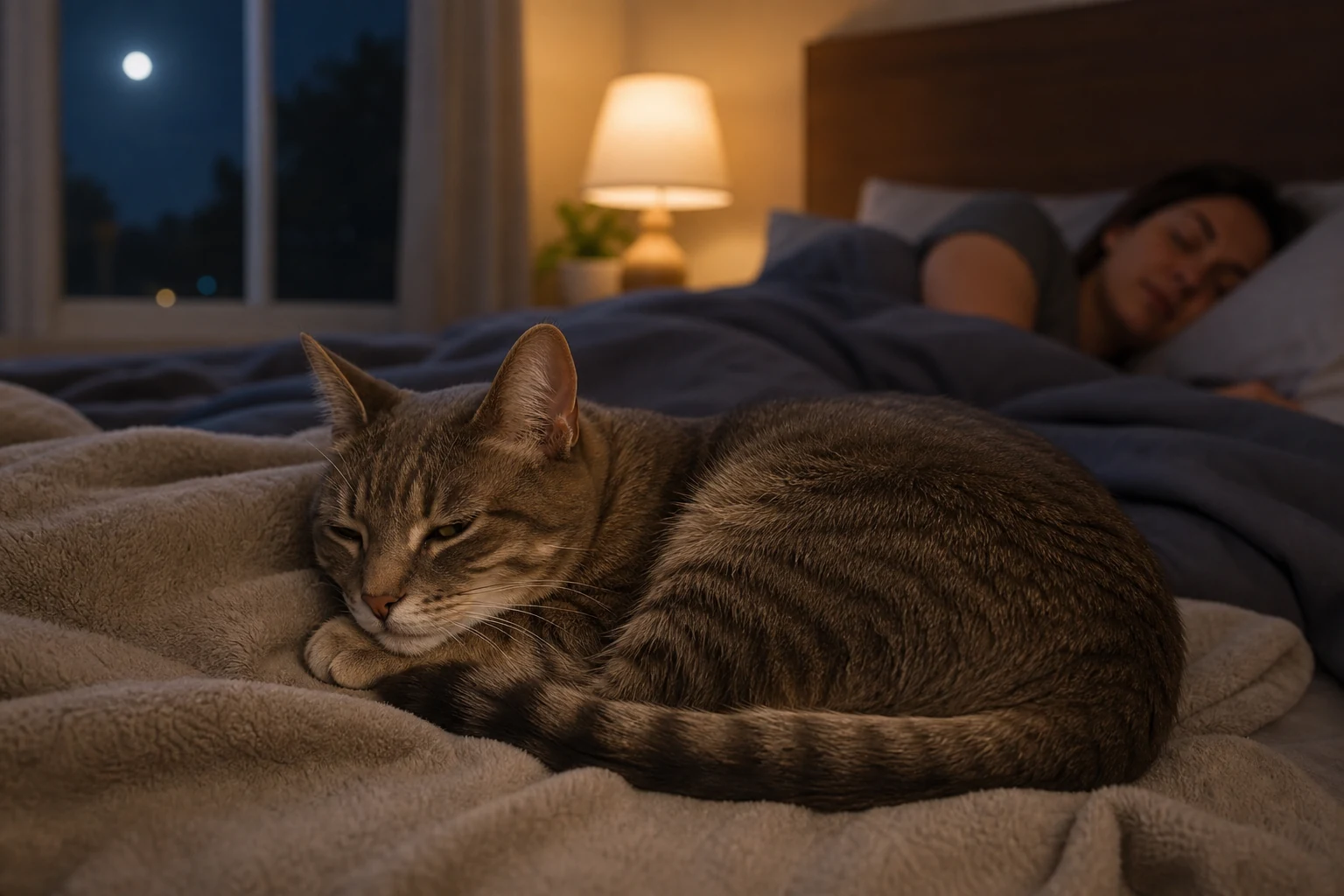
If your cat purrs at night, it is often a normal comfort behavior: your cat may be settling down, seeking closeness, or self-soothing in a familiar routine. The part that matters is context. A relaxed cat who eats, plays, sleeps, and uses the litter box normally is very different from a cat who suddenly starts loud nighttime purring while hiding, breathing oddly, or resisting touch.
Purring can feel mysterious because cats use it in more than one emotional state. Many cats purr when they are content, but some also purr when they are stressed, uncomfortable, or trying to calm themselves. That does not mean every midnight rumble is a warning sign. It means you should read the whole cat, not just the sound.
This guide helps you sort common bedtime purring from stress or health clues, decide what to watch overnight, and know when a veterinarian should be involved.
Índice
- Why does my cat purr at night?
- How can you tell if nighttime purring is comfort or stress?
- When can nighttime purring point to pain or illness?
- When is nighttime purring different from yowling?
- What should you track before calling the vet?
- How can you make nights calmer for a purring cat?
- Conclusión
- Preguntas frecuentes
- Referencias
Why does my cat purr at night?
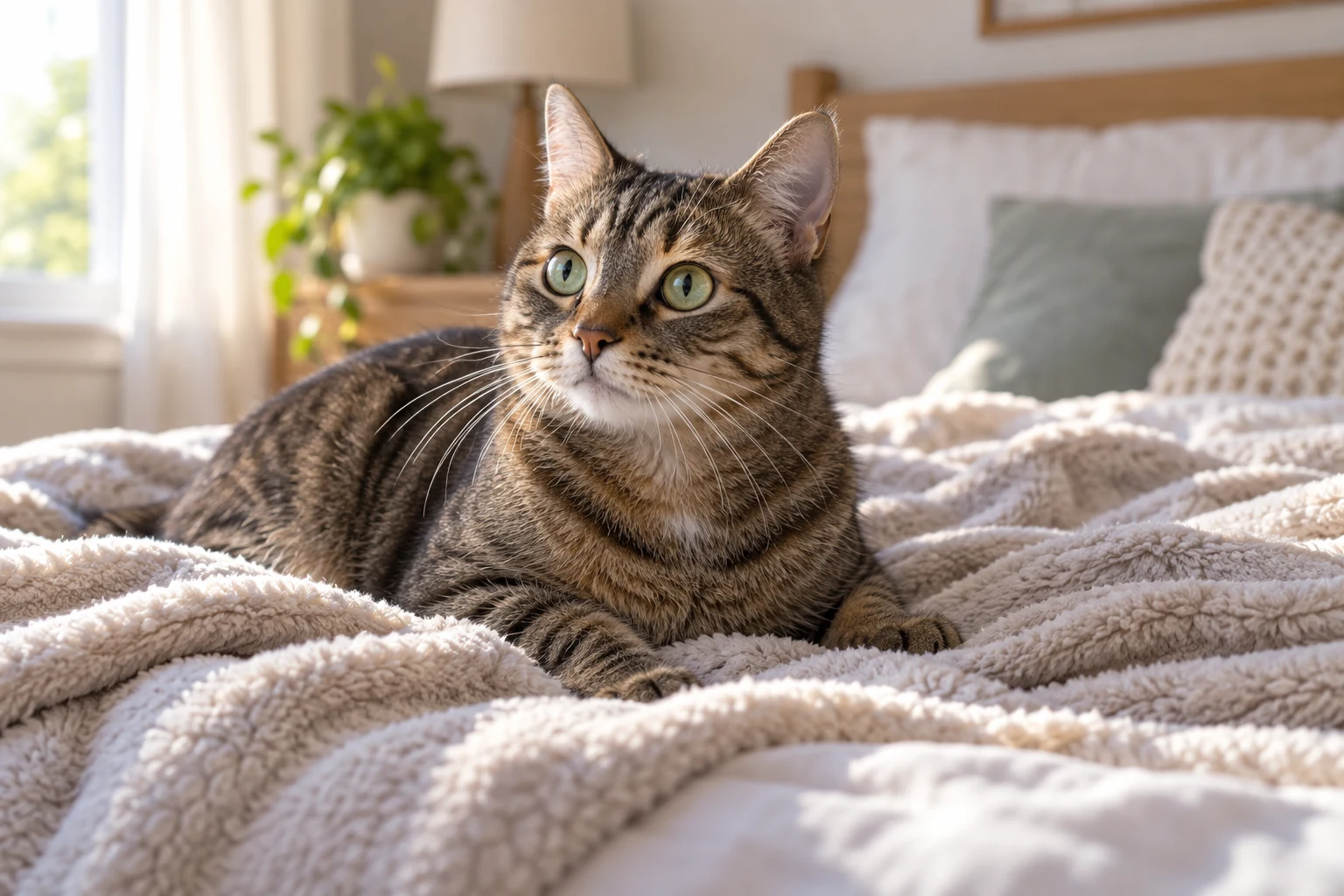
Most nighttime purring comes from routine, comfort, and social connection. Cats are crepuscular, so many are naturally more active around dusk and dawn. When the house gets quiet, a cat may climb onto the bed, settle beside a favorite person, knead a blanket, and purr as part of a predictable wind-down.
Common benign reasons include:
- Your cat is comfortable and relaxed near you.
- Your cat has learned that bedtime brings warmth, attention, or a soft resting spot.
- Your cat is asking for gentle contact, food, water, or access to a preferred room.
- Your cat is self-soothing after normal household stimulation.
- Your cat is recovering from a busy day and using a familiar sleep routine.
If the purring matches your cat's usual pattern, the body is loose, the appetite is normal, and the next morning looks ordinary, it is usually reasonable to treat it as a comfort behavior. For a broader explanation of purring in different contexts, see our guide to por qué ronronean los gatos.
The key is change. A new, louder, more persistent, or more urgent nighttime purr deserves more attention than a long-standing bedtime habit.
How can you tell if nighttime purring is comfort or stress?
The fastest way to interpret nighttime purring is to look at posture, facial expression, movement, and what happened before the purring started. Cat welfare guidelines emphasize that cats need safe places, predictable resources, play, and a sense of control in their environment; when those needs are strained, behavior can shift 1.

| Clue | Comfort purring often looks like | Stress purring may look like |
|---|---|---|
| Postura corporal | Loose, resting on side or tucked comfortably | Crouched, tense, frozen, or ready to leave |
| Ojos | Soft, blinking, normal pupils for the room light | Wide eyes, dilated pupils, hard stare |
| Orejas | Neutro o ligeramente hacia delante | Flattened, sideways, or constantly swiveling |
| Cola | Still, loosely wrapped, or slow relaxed movement | Tucked, tight, flicking, or held close |
| Interaction | Leans in, chooses contact, can walk away calmly | Avoids touch, hides, startles, or becomes irritable |
| Patrón | Familiar bedtime routine | Sudden change after noise, visitors, conflict, or illness |
International Cat Care notes that stress signs can include freezing, tense posture, rapid breathing, and a tail tucked close to the body 2. Those signs matter more than the purr itself. A cat can make a soothing sound while still feeling uneasy.
If your cat is purring but also hiding under furniture, avoiding a familiar person, or guarding a painful spot, compare the pattern with our guide to hiding behavior. Hiding plus a new nighttime vocal pattern is more meaningful than purring alone.
When can nighttime purring point to pain or illness?
Nighttime purring can be a health clue when it is new, intense, paired with other symptoms, or happens while your cat appears uncomfortable. Do not try to diagnose the cause from purring alone. Use the purr as one piece of a larger pattern and involve your veterinarian when the pattern points to discomfort.
Possible concern signs include:
- Purring while hunched, withdrawn, or unable to get comfortable.
- Purring when touched in one area, followed by flinching, swatting, growling, or moving away.
- Sudden reduction in jumping, grooming, play, or normal movement.
- Lower appetite, weight loss, vomiting, diarrhea, or unusual thirst.
- Litter box changes, including straining, accidents, or urinating more often.
- Restlessness at night in a senior cat, especially with confusion, weight change, or increased drinking.
- Any breathing change, open-mouth breathing, blue or pale gums, collapse, or repeated distress.
Merck Veterinary Manual explains that chronic pain signs in pets can be subtle, such as decreased activity, reduced appetite, weight loss, or poor grooming, and that behavior at home helps veterinarians assess what is happening 3. Cornell also notes that older cats can show behavior changes when medical problems such as pain, mobility loss, kidney disease, diabetes, or hyperthyroidism affect daily life 4.
For pain-specific body language, use our guide to signos sutiles de dolor en los gatos as a next step. It can help you describe what you see, but it should not replace veterinary care.
Call an emergency veterinarian now if your cat has trouble breathing, open-mouth breathing, collapse, seizures, suspected poisoning, repeated vomiting, severe diarrhea, trauma, inability to urinate, sudden paralysis, or rapid decline. Breathing distress is urgent in cats, and Cornell describes difficulty breathing as a serious sign that can come from conditions affecting the airways, heart, or chest space 5.
When is nighttime purring different from yowling?
Purring is usually a low, rhythmic vibration. Yowling is louder, more projected, and often sounds like a complaint, call, or distress signal. The difference matters because nighttime yowling can be linked to attention-seeking, mating behavior in intact cats, disorientation, pain, sensory decline, thyroid disease, or other health issues, especially in senior cats.
If your cat is making long, loud nighttime calls, read our guide to un gato que maúlla por la noche rather than treating it as ordinary purring. If the sound is closer to repeated meows, chirps, or demand vocalization, our guide to excessive meowing may fit better.
| Sound pattern | Lo que esto podría indicar | ¿Qué hacer ahora? |
|---|---|---|
| Quiet purr while resting beside you | Comfort, bonding, bedtime routine | Observe body language and keep the routine predictable |
| Purr plus kneading and soft blinking | Relaxation or social closeness | Let your cat choose contact and avoid overstimulation |
| Purr plus hiding, tension, or flinching | Stress, fear, pain, or discomfort | Track the pattern and call your vet if it repeats or worsens |
| Loud yowl, pacing, or confusion | Distress, senior change, pain, or medical issue | Schedule a veterinary exam, sooner if sudden or severe |
| Purr with breathing effort | Possible respiratory or heart-related emergency | Acude al veterinario de urgencia |
The practical rule: a familiar low purr with relaxed body language is usually less concerning than a new sound that wakes you because your cat seems unsettled, disoriented, or uncomfortable.
What should you track before calling the vet?
If the purring is new or hard to interpret, write down a short pattern log for a few nights. This is not busywork. It gives your veterinarian clearer information and helps you avoid guessing from one sleepy moment.
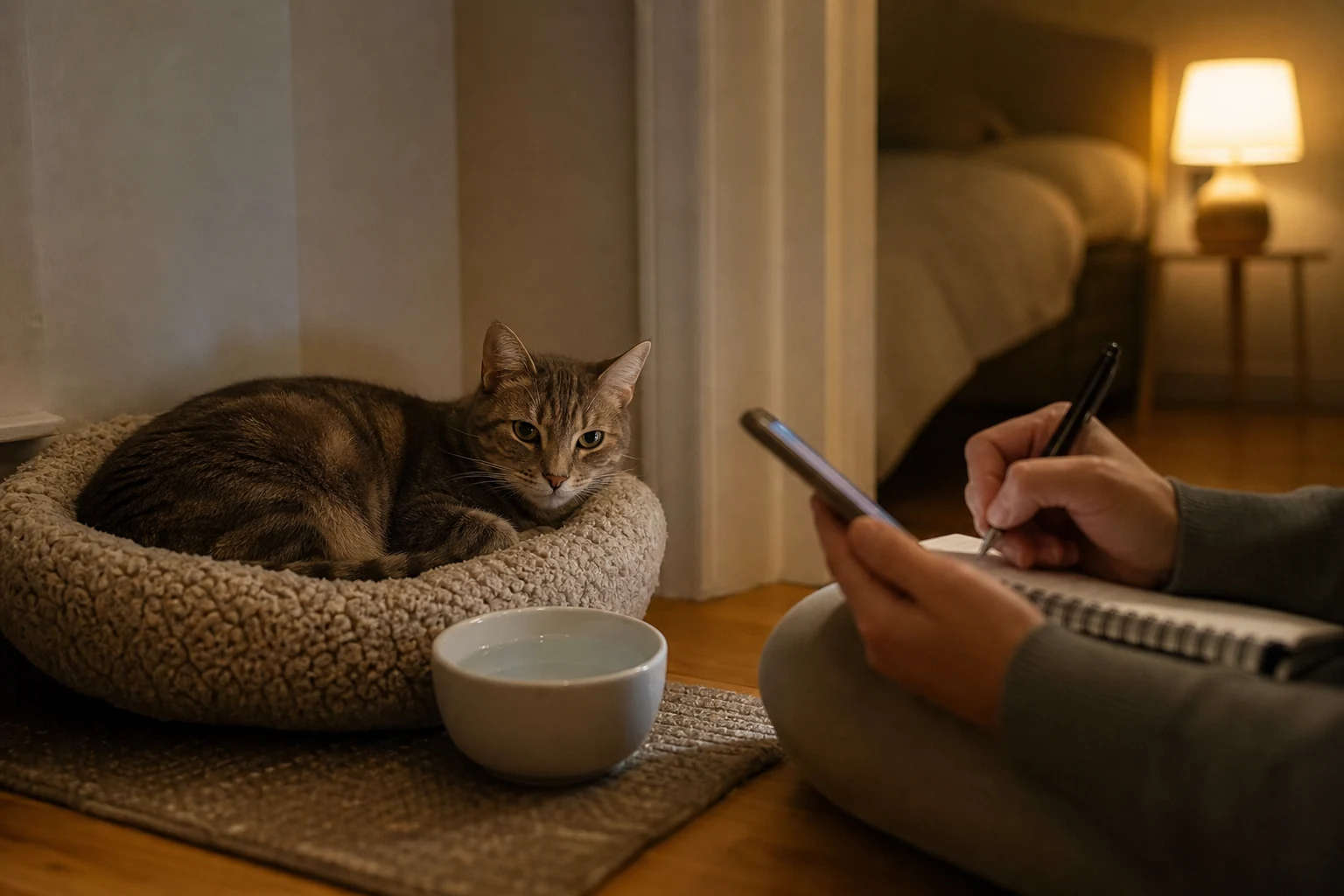
Track these details:
- Time the purring starts and how long it lasts.
- Where your cat is: bed, hallway, litter box, hiding place, window, food bowl.
- Body posture, ears, eyes, tail, and willingness to be touched.
- Appetite, water intake, grooming, play, and jumping during the day.
- Litter box output and any accidents or straining.
- Recent changes: guests, moving furniture, new pets, outdoor cats near windows, schedule changes, diet changes, or loud noises.
- Whether the purring stops with reassurance, food, play, access to a room, or quiet space.
Litter box changes deserve special attention because stress and health problems can both show up there. If accidents appear alongside nighttime restlessness, compare the pattern with our guide to Cambios en el uso de la bandeja sanitaria relacionados con el estrés, then contact your veterinarian if the change is sudden, repeated, or paired with straining.
A useful log can be simple:
| Night | Purring pattern | Body clues | Food/water/litter box | Possible trigger |
|---|---|---|---|---|
| Monday | 15 minutes at 2 a.m. | Loose body, wanted chin rubs | Normal | Rain and thunder |
| Tuesday | 40 minutes at 3 a.m. | Crouched, hid under bed | Ate less dinner | New visitor |
| Wednesday | Repeated on and off | Flinched when lifted | Smaller urine clumps | Call vet |
If your instinct says the pattern is unusual for your cat, trust that enough to gather details and call the clinic. You do not need to prove something is wrong before asking for guidance.
How can you make nights calmer for a purring cat?
For a healthy cat whose nighttime purring seems comfort- or attention-related, the goal is not to punish the purr. The goal is to make the evening predictable and meet your cat's needs before everyone is trying to sleep.
Try this bedtime routine:
- Offer a short interactive play session in the evening.
- Follow play with a small planned meal or treat portion if it fits your cat's diet.
- Refresh water and make sure litter boxes are clean.
- Keep favorite resting spots accessible.
- Give your cat a safe place away from dogs, children, visitors, or household noise.
- Avoid rough late-night play with hands or feet.
- Keep responses boring and consistent if your cat is using purring plus nudging to train you into midnight snacks.
The AAFP/ISFM environmental needs framework focuses on safe places, separated key resources, play and predatory behavior outlets, positive human interaction, and stable scent communication 1. Those basics are especially helpful at night because small stressors feel bigger when the house is quiet and choices are limited.
If your cat purrs, kneads, and gets overstimulated, keep petting brief and predictable. Watch for tail twitching, skin rippling, head turns toward your hand, or sudden stillness. Stop before the interaction turns into a bite or swat.
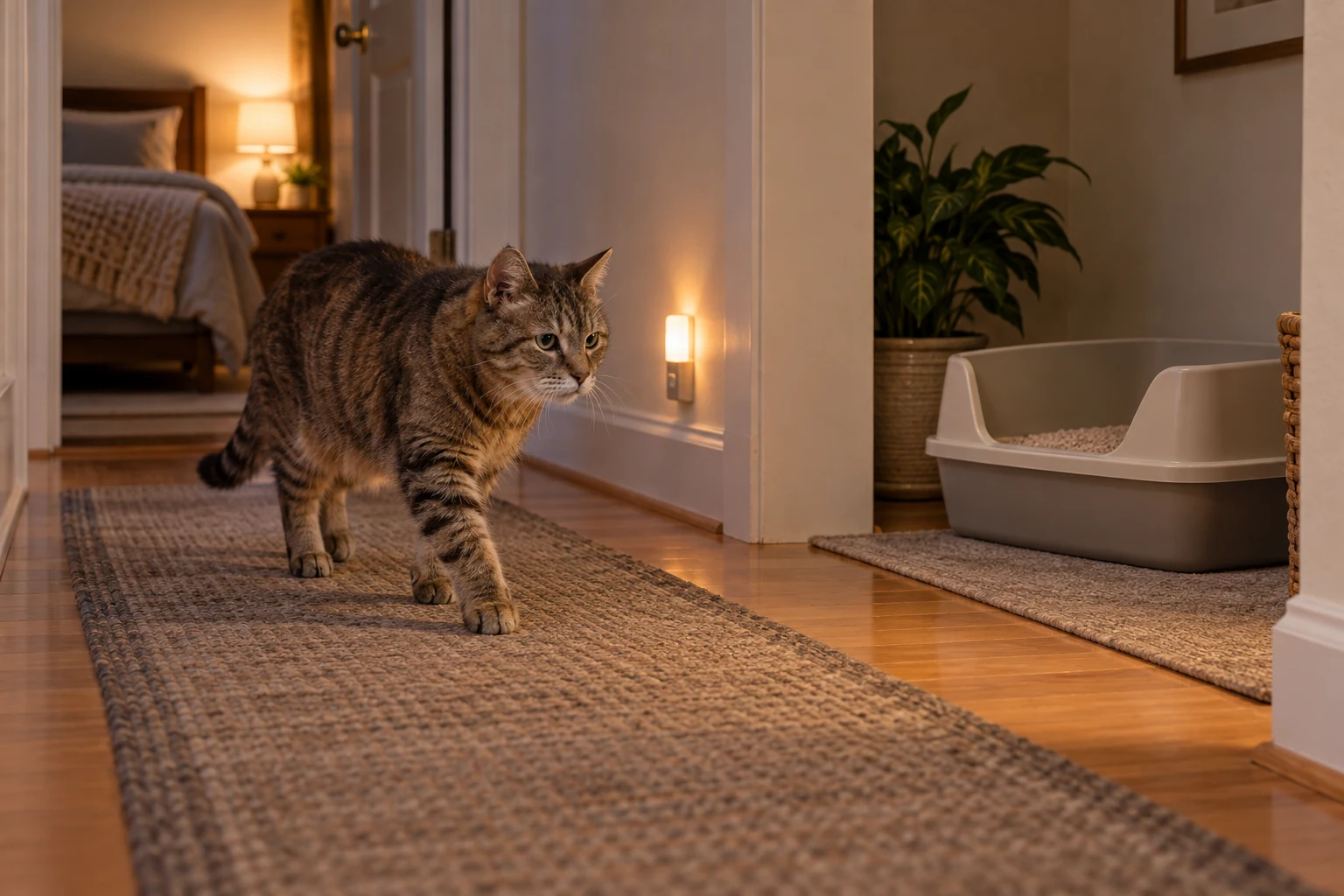
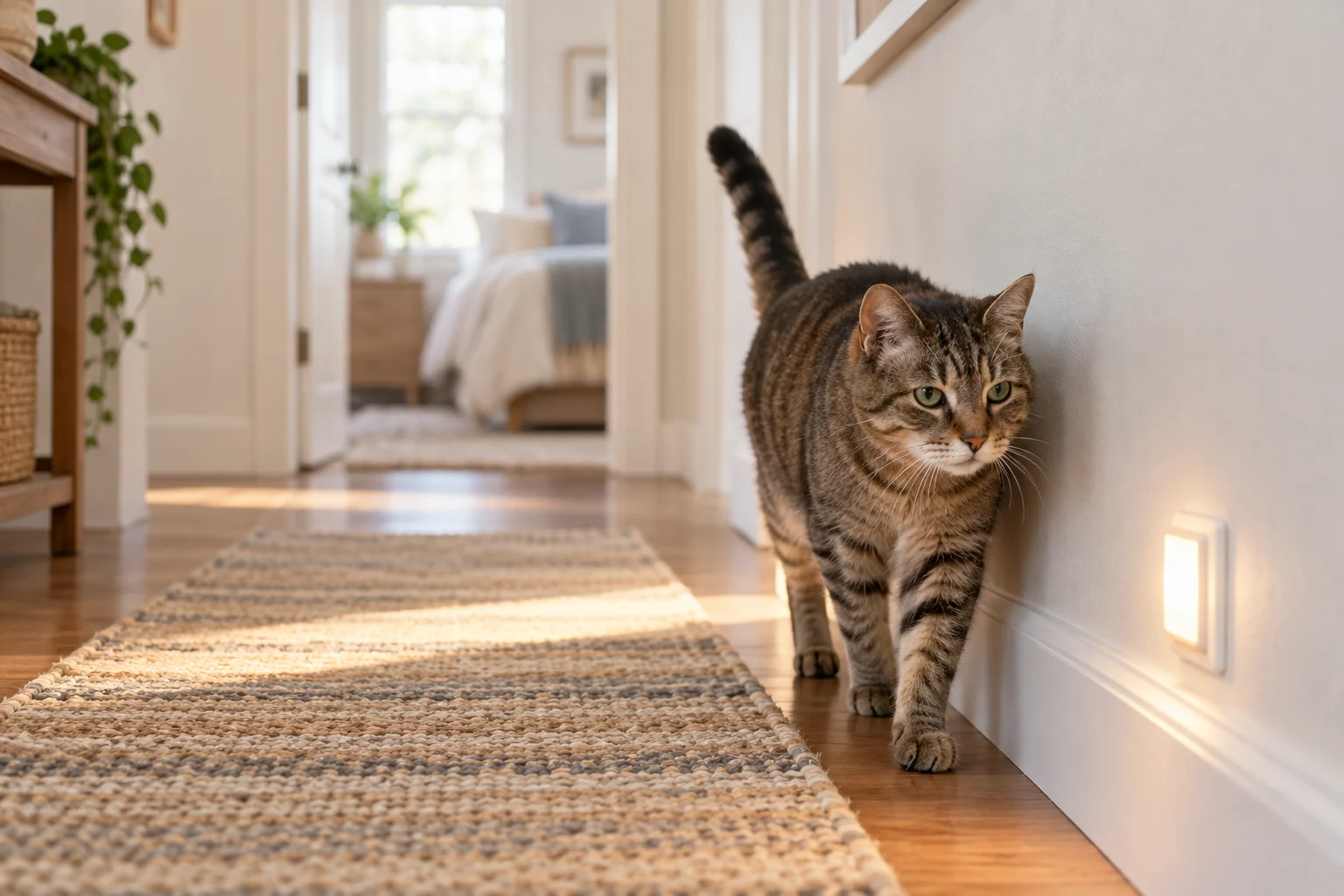
For senior cats, add practical support: night lights, easy access to water, low-sided litter boxes, warm resting spots, and steps or ramps to favorite beds. If nighttime behavior changes suddenly, schedule a veterinary exam rather than assuming it is just aging.
Conclusion: What your cat's nighttime purring means
Cat purring at night is often a normal sign of comfort, bonding, and bedtime routine. It becomes more important when it is new, intense, paired with tense body language, or appears with appetite, movement, breathing, grooming, or litter box changes.
Read the whole cat: sound, posture, pattern, and daily habits. A relaxed cat who purrs beside you at bedtime usually needs consistency and gentle boundaries. A cat who purrs while hiding, flinching, breathing oddly, or acting unlike themselves needs closer observation and, when signs persist or look urgent, veterinary help.
Preguntas frecuentes
Why does my cat purr loudly beside me at night?
Your cat may be comfortable, asking for contact, or settling into a routine that includes you. Loudness alone is not a problem if your cat is relaxed, eating normally, moving normally, and acting like themselves during the day.
¿Pueden los gatos ronronear cuando tienen dolor?
Yes, some cats may purr when they are uncomfortable or trying to self-soothe, but purring alone does not diagnose pain. Look for behavior changes such as hiding, poor grooming, reduced appetite, lower activity, flinching, aggression when touched, or trouble getting comfortable 3.
Should I wake up if my cat purrs at night?
You do not need to wake fully for a familiar, relaxed bedtime purr. You should pay attention if the purring is new, unusually persistent, paired with restlessness or hiding, or accompanied by any breathing trouble, collapse, vomiting, straining to urinate, or rapid decline.
Why does my senior cat purr and wander at night?
Senior cats can change nighttime behavior because of pain, sensory decline, cognitive changes, thyroid disease, kidney disease, diabetes, or other medical issues. Cornell notes that older cats may show behavior changes when health problems affect mobility, thirst, urination, or comfort 4. A new senior nighttime pattern deserves a veterinary check.
Is it okay to comfort a cat who is purring at night?
Yes, if your cat chooses contact and stays relaxed. Use calm, brief interaction rather than intense petting. If your cat seems tense, hiding, or overstimulated, give them a safe quiet space and observe for other signs.
Referencias
[1] AAFP and ISFM. (2013). Directrices sobre las necesidades ambientales de los gatos. https://catvets.com/resource/aafp-isfm-environmental-needs-guidelines/
[2] International Cat Care. (2024). Stress in cats. https://icatcare.org/articles/stress-in-cats/
[3] Manual Veterinario de Merck. (2025). Reconocimiento y evaluación del dolor en los animales. https://www.merckvetmanual.com/special-pet-topics/pain-management/recognizing-and-assessing-pain-in-animals
[4] Centro de Salud Felina de Cornell. (2026). The Special Needs of the Senior Cat. https://www.vet.cornell.edu/departments-centers-and-institutes/cornell-feline-health-center/health-information/feline-health-topics/special-needs-senior-cat
[5] Cornell Feline Health Center. (2026). Dyspnea (Difficulty Breathing). https://www.vet.cornell.edu/departments-centers-and-institutes/cornell-feline-health-center/health-information/feline-health-topics/dyspnea-difficulty-breathing

 EN
EN DE
DE ES
ES PT
PT