
Índice
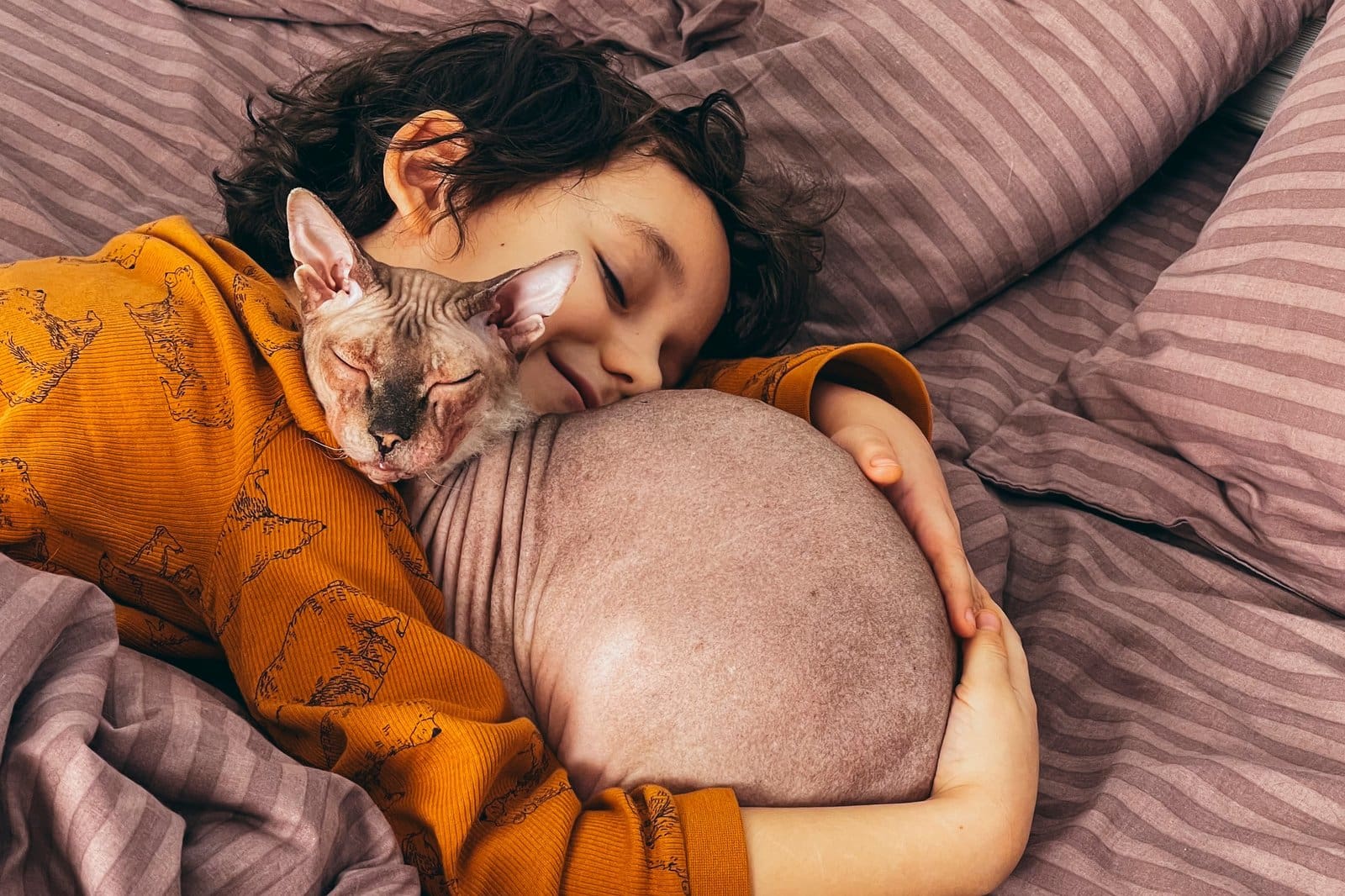
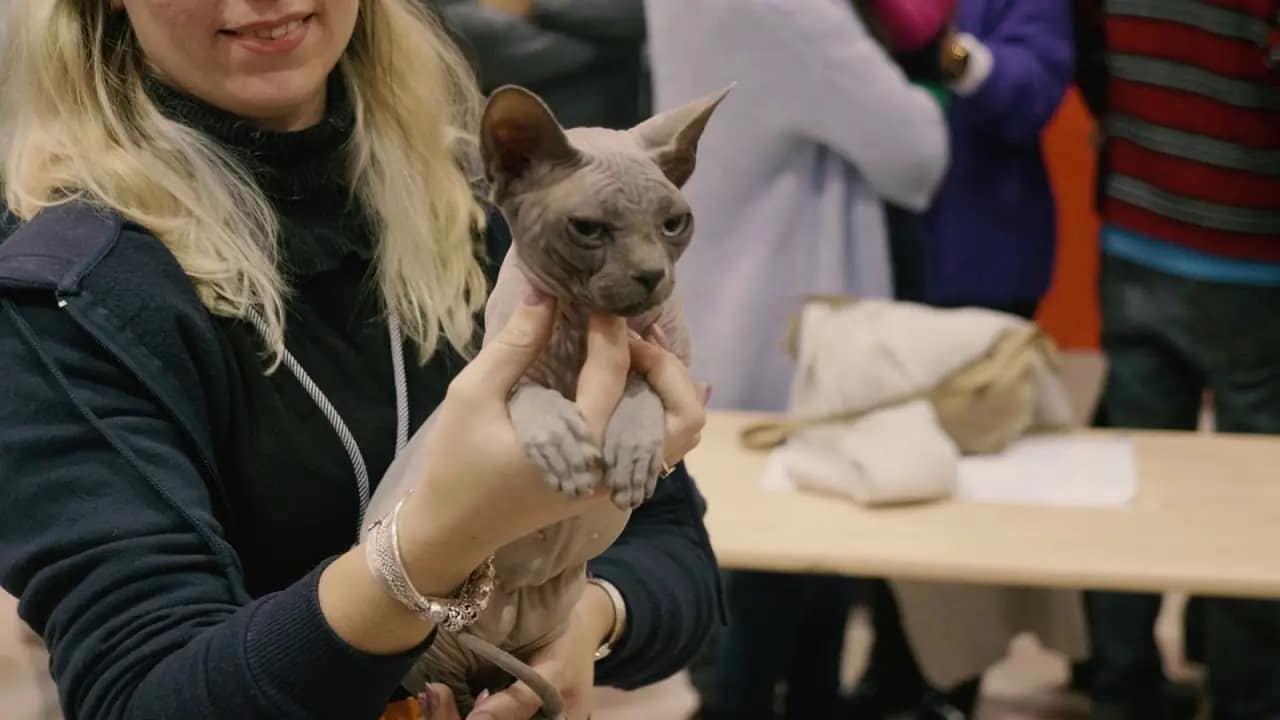
Hairless cats (often called “naked cats”) are breeds with little to no fur—sometimes just peach-fuzz—so they’re poca pelusa and feel warm to the touch. They’re famous for peluche personalities, but they also need skin care, warmth, and regular cleaning.
They’re not truly hypoallergenic, because most allergies come from proteins in saliva and skin oils, not just fur.
6 Hairless (or Nearly Hairless) Cat Breeds
- Sphynx
- Bambino
- Peterbald
- Donskoy (Don Sphynx)
- Lykoi (part-hairless “wolf cat”)
- Levkoy ucraniano
In this guide you’ll get:
- A detailed profile of each breed (who it’s best for + watch-outs)
- A quick comparison chart (personality, grooming, energy)
- The essentials: shedding, allergies, daily care, and cost
Quick Answers (Most-Asked Questions)
- Do hairless cats need special care? Yes—think weekly baths, regular ear cleaning, and protection from cold and sun.
- Do hairless cats shed? Most shed muy poco, but “hairless” doesn’t always mean zero shedding (some have fuzz or partial coats).
- Are hairless cats hypoallergenic? Not completely. Allergies usually come from proteins in saliva/skin oils, not fur—less fur can help, but it’s not a guarantee.
Hairless Cat Care in 60 Seconds (Read This First)
If you read only one section, make it this—hairless cats are affectionate, but not low-maintenance.
- Bathing: usually weekly (skin oils build up without fur)
- Ears + nails: clean ears often; wipe nail beds (“toe gunk” happens)
- Warmth: sweaters, heated beds, cozy blankets
- Sun: prioritize shade; limit long direct sun to prevent irritation
- Food: many run warm and may need slightly more calories (ask your vet)
Decision Table: Compare Hairless Cat Breeds (Fast Pick)
Use this chart to compare temperament, grooming effort, and energy level at a glance.
| Raza | Personality snapshot | Grooming | Energy | Best for | Not ideal for | Coat predictability (adult) | Key watch-out |
|---|---|---|---|---|---|---|---|
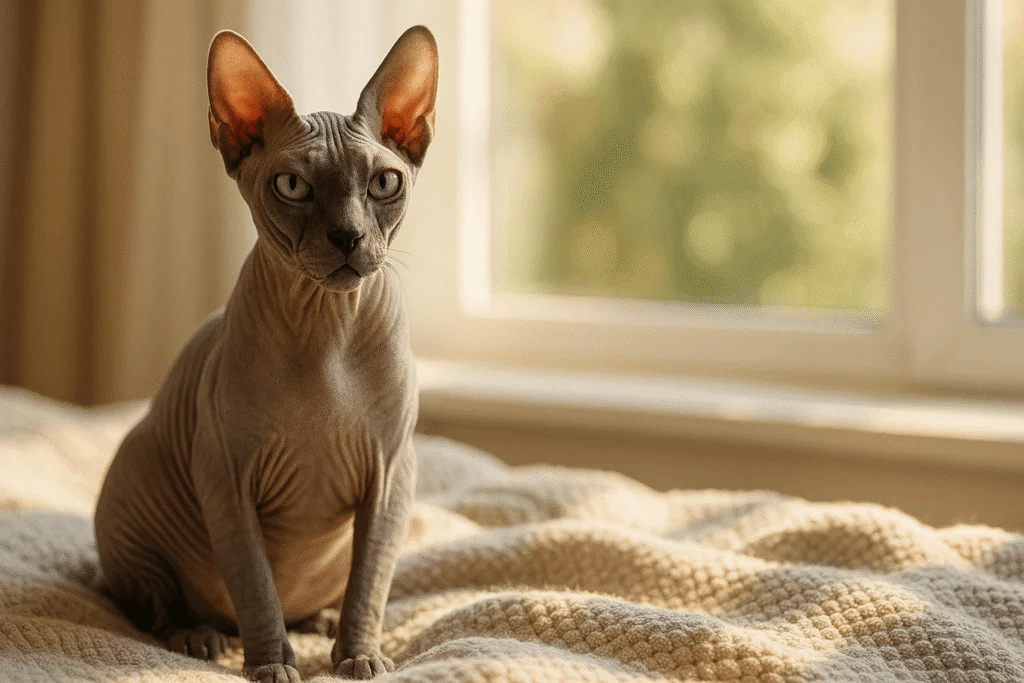
| Sphynx | Velcro-affectionate, social | Alta | Med | Home a lot; wants cuddly companion | Away all day; low-maintenance seekers | Alta | Oily skin + frequent ear cleaning |
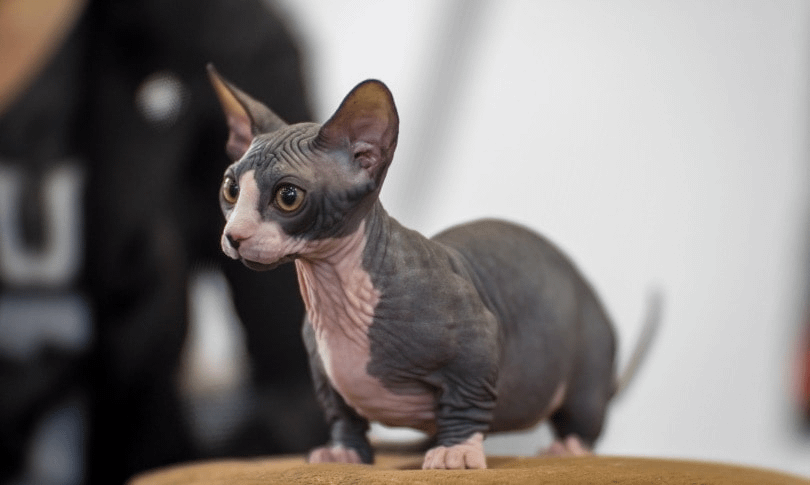
| Bambino | Cuddly, playful, people-first | Alta | Med | Wants Sphynx vibe + smaller body | Concerned about dwarfism ethics; lots of high jumps | Med | Mobility/joint risk → add ramps/steps |
| Peterbald | Chatty, intense bond, “helper cat” | Med–High | Alta | Wants interactive, active cat | Wants quiet/independent cat | Low–Med | Coat may vary; boredom → mischief |
| Donskoy | Smart, friendly, trainable | Alta | Med | Family home; likes training/play | Low-contact homes; frequent travel | Bajo | Multiple coat types → ask which |
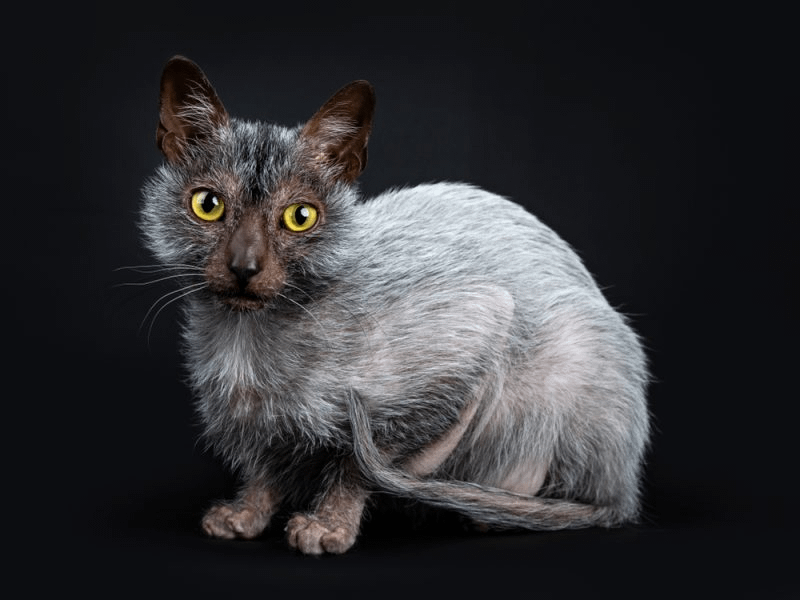
| Lykoi | Curious, hunter-ish, entertaining | Moderado | Alta | Wants unique look + active play | Expects “zero shedding” year-round | Med | Molt cycles; appearance changes |
| Levkoy ucraniano | Gentle, calm, loyal | Alta | Low–Med | Calm companion; consistent routine | Concerned about folded-ear health | Med–High | Ear/joint monitoring; vet diligence |
(Clave: Alto acicalamiento = baños regulares, hidratación de la piel, limpieza de oídos; Moderado = algunos cuidados especiales pero menos frecuentes; el nivel de energía varía de tranquilo a muy activo).
Before You Choose: Shedding, Allergies, Care & Cost
Health & Ethics (Fast, Factual)
Two traits in this guide deserve extra care when choosing a breeder or adoption source:
- Folded ears (Levkoy / Scottish Fold-type trait): Welfare and veterinary sources report the folded-ear mutation is linked to abnormal cartilage development and painful arthritis (osteochondrodysplasia), with severity varying by cat. Qué hacer: prioritise welfare-first sourcing, ask about mobility/pain screening, and consider adult adoption where movement is observable.
- Very short legs (Bambino / Munchkin-type trait): Welfare sources note short-limbed cats may have compromised jumping/climbing ability and may be at increased risk of joint issues; some jurisdictions restrict breeding of cats with heritable defects. Qué hacer: choose ethical sources, ask about gait/mobility history, provide ramps/steps, and avoid encouraging high jumps.
Conclusión: This isn’t about shaming owners—it’s about making a fully informed, welfare-first choice. If you’re unsure, bring your questions to a veterinarian before committing.
Do Hairless Cats Shed?
Most “hairless” breeds are poca pelusa, but it depends on the coat type:
- Truly hairless (often Sphynx/Donskoy/Peterbald types): minimal shedding because there’s little to no fur.
- Peach fuzz / velour coats: may shed a tiny amount, usually far less than typical cats.
- Partial-coat breeds (like Lykoi): can shed noticeably during coat cycles, then shed very little at other times.
What this means for your home: You’ll likely have less cat hair on clothes and furniture, but you may do more skin-care cleaning (baths, wipes, bedding changes).
Are Hairless Cats Hypoallergenic?
Not completely. Cat allergies are usually triggered by proteins found in saliva and skin oils (which end up on the cat’s skin and your surfaces). Because hairless cats have less fur to trap and spread allergens, some people find them easier, but many allergy sufferers still react.
If you have allergies, try this before committing:
- Spend time with the exact breed (or even the specific cat) you want.
- Touch the cat, then touch your face (carefully) and see your reaction.
- Ask the breeder/rescue if you can do multiple visits, not just one.
Hairless Cat Care: The Real Day-to-Day
Hairless cats can be wonderfully affectionate, but they’re not “low maintenance.” Here’s the practical routine:
Weekly (common for most hairless breeds)
- Bath or warm wipe-down to remove oil buildup
- Ear cleaning (oil/wax builds up faster without fur)
- Nail/skin checks (oily residue can collect around nails)
Daily / As needed
- Keep them warm: blankets, heated bed, sweaters in cold homes
- Limit direct sun: window lounging is fine, but long sun exposure can irritate skin
- Wash bedding more often (oils transfer to blankets)
Good news: Once you get a routine, it’s quick—many owners treat it like a 10–15 minute “spa session.”
How Much Does a Hairless Cat Cost?
Pricing varies by country, lineage, and availability, but hairless cats are often more expensive than common breeds because of limited breeding programs and demand.
Typical costs you’ll see:
- Breeder kittens: often in the high hundreds to a few thousand (varies widely)
- Adult rehomes / rescues: usually less, and sometimes the easiest path to a healthy, socialized companion
Money-saving (and often easier) options: hairless cats sometimes become available as adult rehomes, retired breeders, or through breed-specific rescues. Adults can be a great choice because their temperament is clearer and many already tolerate bath/ear routines.
Before you commit, use the Breeder & Adoption Checklist below to avoid scams and reduce health surprises.
Breeder & Adoption Checklist (Avoid scams + reduce health surprises) {#breeder-adoption-checklist}
If you’re buying or adopting a hairless (or nearly hairless) cat, this checklist will save you time, money, and heartbreak. Hairless cats are amazing—but because they’re rarer, they’re also more targeted by scams and poor breeding.
Step 1: Decide your “non-negotiables” before contacting anyone
- Indoor-only? (Strongly recommended for most hairless cats because of sun/cold/skin risks.)
- Grooming reality: weekly bathing/wipe-down + ear cleaning.
- Time at home: many hairless breeds are people-focused and dislike long isolation.
- Budget beyond purchase price: routine vet care + skin/ear supplies + warm bedding/sweaters.
Quick rule: if you want “low shedding” but also “low maintenance,” pause—hairless cats trade fur cleanup for skincare routines.
Step 2: Minimum standards any ethical source should meet
Whether breeder o rescue, you should be able to confirm:
- Clear identity + verifiable track record (website, social, reviews, references).
- Willing to do a video call (see the cat live, not just photos).
- Written agreement/contract (even with rescues, usually an adoption contract).
- The cat is comfortable being handled (ears/paws touched) or the caretaker can explain what they’re working on.
Step 3: The hairless-specific questions (copy/paste message)
Send this as a single message/email:
“Hi! I’m interested in (breed/cat name). Could you share:
- The cat’s current care routine (bathing/wipes, ear cleaning frequency, nail-bed cleaning)?
- Any history of skin irritation, recurring ear buildup, or digestive sensitivity?
- What the cat eats now (brand + amount) and any food issues?
- What the cat is like day-to-day (clingy vs independent, vocal vs quiet, energy level)?
- If the breed has variable coat types, what coat type this cat is expected to have as an adult?
- What vet checks have been done recently, and can you share documentation?
- What is your rehoming/return policy if it doesn’t work out?”**
Why this works: it filters out low-quality sellers fast and signals you’re a responsible home.
Step 4: Red flags (walk away fast)
- Refuses video call or won’t show the cat live.
- Pressure tactics: “Pay today or it’s gone” + unusual payment methods.
- No paperwork, no vet records, or evasive answers.
- Won’t answer basic routine questions (especially skin/ears).
- Price is dramatically lower than typical for rare breeds with no explanation.
Step 5: The “best value” path many people overlook (adults > kittens)
Hairless cats sometimes appear as:
- Adult rehomes (owner life changes)
- Retired breeders
- Breed-specific rescues
Adults can be easier: temperament is clearer, and many already tolerate bathing/ear routines.
Step 6: Pickup / adoption day checklist (10-minute inspection)
(You’re not diagnosing—just spotting obvious issues.)
- Skin looks generally clean (not greasy to the point of residue everywhere).
- Ears aren’t extremely dirty or foul-smelling.
- Eyes are clear (no heavy discharge).
- Cat breathes normally at rest (no constant wheeze/cough).
- Cat moves comfortably (especially important for short-legged or folded-ear lines).
- You receive written feeding instructions + transition tips.
Do this next: schedule a vet check within a few days of bringing the cat home.
Printable checklist (save / screenshot)
Source verification
- Live video call completed
- Contract/adoption agreement provided
- Vet records shared (recent visit, vaccines if applicable)
- Clear return/rehoming policy
Care routine
- Bathing/wipe schedule explained
- Ear cleaning routine explained
- Nail-bed cleaning routine explained
- Warmth plan discussed (heated bed/sweater/blankets)
Health + temperament
- Any chronic skin/ear issues disclosed
- Cat’s daily temperament described honestly
- Energy level + play needs described
- Mobility looks comfortable (watch gait, jumps, stairs)
Which Hairless Breed Fits Your Lifestyle? (Fast Decision Guide)
- Want the classic affectionate “velcro cat”? → Sphynx
- Want Sphynx vibes + short legs? → Bambino (more health considerations)
- Want athletic, chatty, high-energy companion? → Peterbald
- Want intelligent, trainable, family-friendly energy? → Donskoy
- Want a rare, wild look with coat cycles? → Lykoi
- Want calm + unusual folded-ear look? → Levkoy ucraniano (extra ear/joint considerations)
Conozca a su gato: 6 razas encantadoras
Sphynx
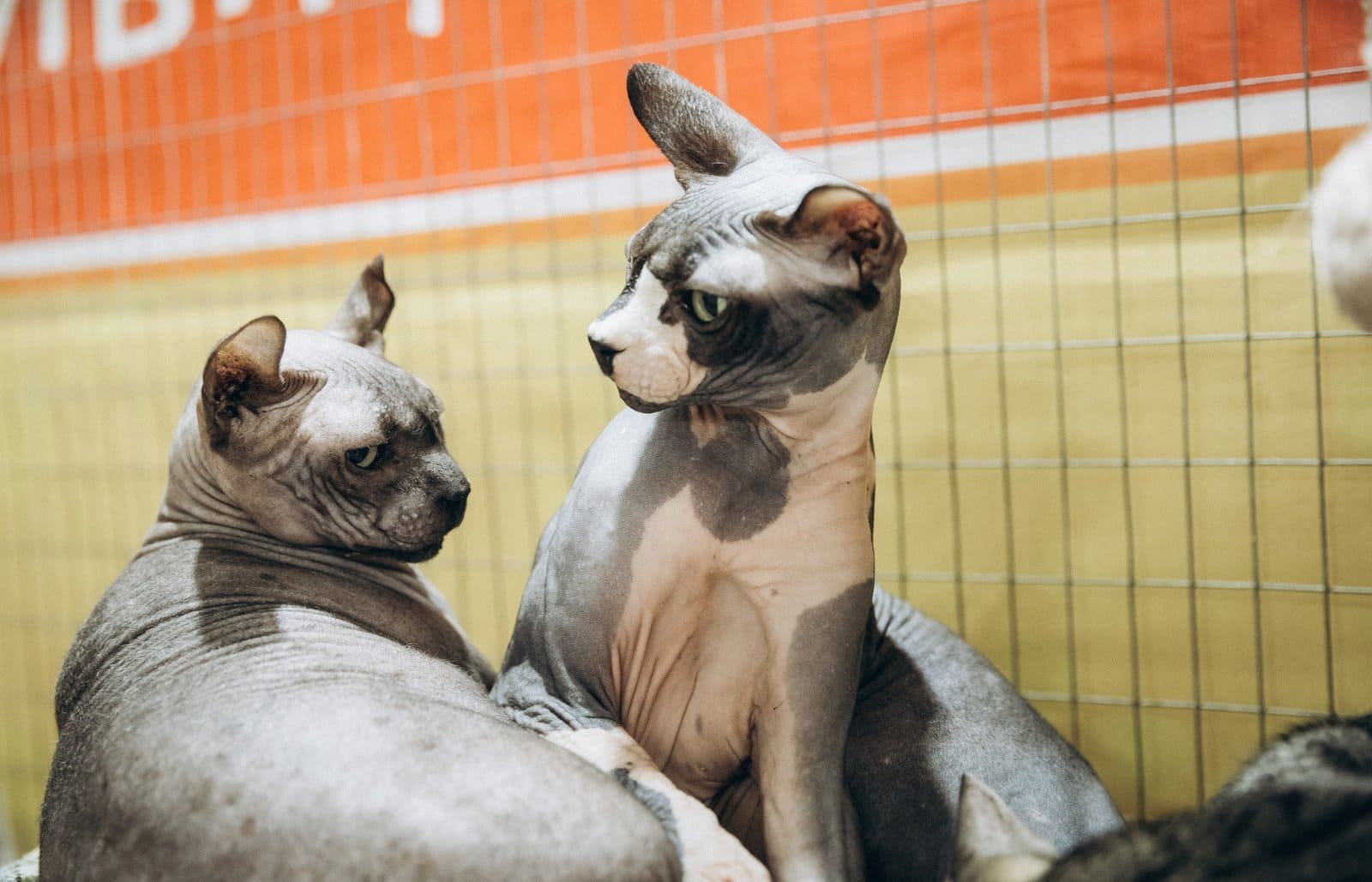
De un vistazo
- Muda: Very low (many have fine “down,” not true baldness).
- Personality: Social, affectionate, people-focused
- Aseo: High (skin oils + ears)
- Energía: Medium (playful bursts, then cuddles)
- Best known for: The classic “velcro cat” reputation
What they’re like to live with
Sphynx cats are famous for being outgoing and contact-seeking—the type who will follow you room to room, sit on your lap, and want to be included in everything. Many owners choose Sphynx for that dog-like companionship vibe.
Coat & shedding (set expectations correctly)
Despite the “hairless” label, many Sphynx cats aren’t completely bare: breed standards describe an appearance of hairlessness, with some hair often present in specific areas.
Practically: you’ll see very little fur around the home, but you’ll manage skin oils instead.
Care reality (the stuff people forget to mention)
- Weekly baths or wipe-downs are common because skin oils build up without fur.
- Ears need regular cleaning (oil/wax can accumulate faster).
- Nail beds/toes need checking (“toe gunk” can happen).
- Warmth + sun management matter more than for furry cats.
Best for
- Someone who wants a very interactive cat and is home often
- Families who enjoy daily play + handling (gentle, consistent routines)
Not ideal for
- Anyone wanting a “low-maintenance” cat
- Homes where the cat will be alone most days
If you’re adopting/buying
Ask what the breeder/rescue does for: skin care routine, ear care, and any vet screening they recommend for their lines.
Más información Sphynx
Bambino
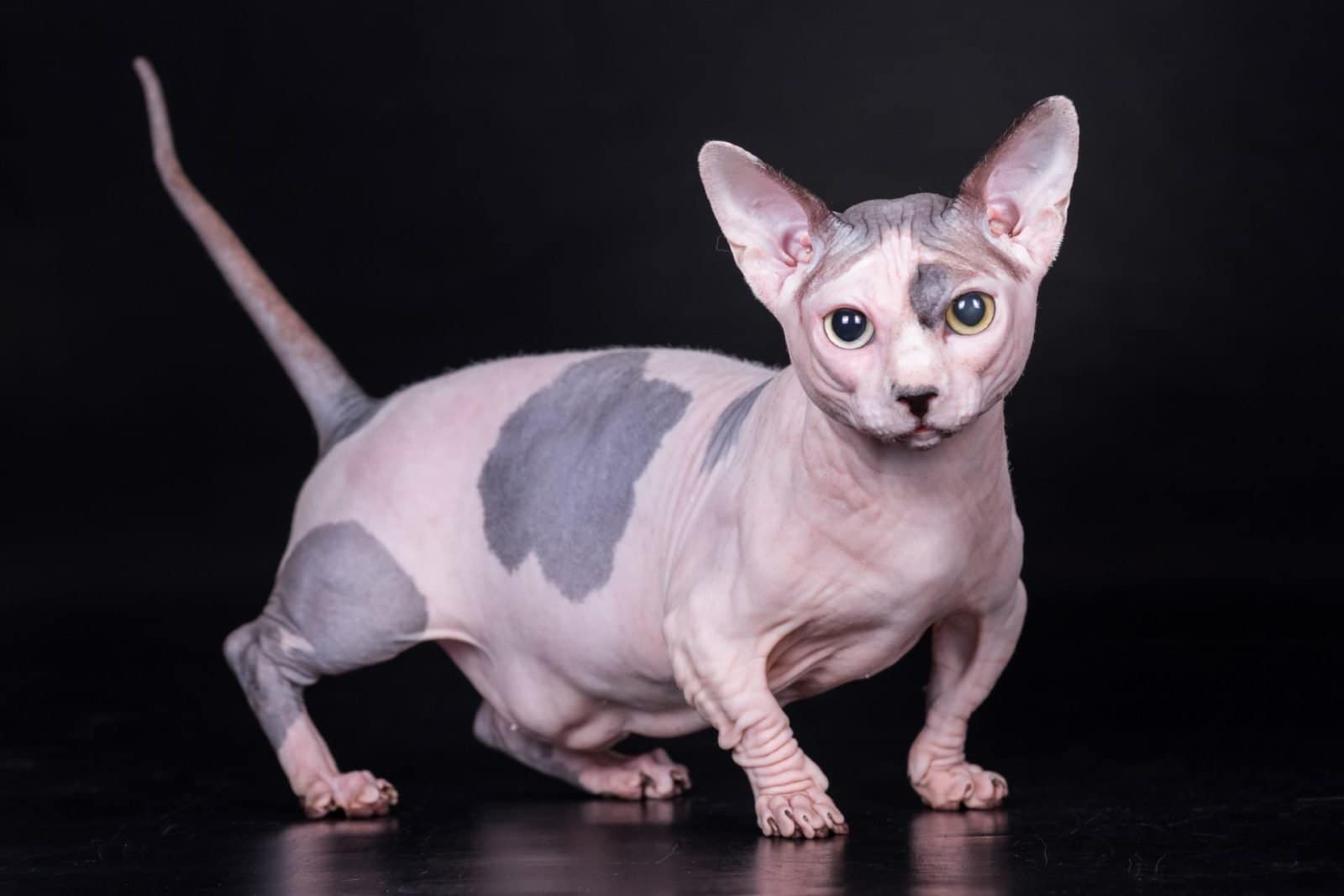
De un vistazo
- Muda: Very low (hairless trait varies)
- Personality: Friendly, playful, people-oriented
- Aseo: High (similar skin care to Sphynx)
- Energía: Medium (often active but mobility varies)
- Nota importante: Se trata de un Sphynx × Munchkin type cross; many groups treat it as experimental/controversial.
What they’re like to live with
Bambinos are often described as cuddly, social, and playful—many people love the “Sphynx-like” friendliness in a smaller, short-legged body. They tend to enjoy lap time and interactive play.
Why this breed needs extra context (trust-builder)
Some sources describe Bambino as an experimental breed and note that major registries may not accept it, partly due to concerns about breeding for extreme traits.
This doesn’t mean every individual cat suffers—but it hace mean readers appreciate honest guidance.
Care reality
- Skin care is similar to other hairless cats: regular baths/wipes + ear cleaning.
- Because of short legs, use ramps/low steps to favorite beds/sofas and avoid encouraging big jumps.
Health / welfare notes (write this carefully, but don’t skip it)
Short-legged (dwarf) cats can face mobility and joint-related issues, and welfare organizations discuss concerns around dwarfism-focused breeding.
If you keep this breed in your list, the “best content” move is being transparent: encourage people to choose ethical breeders, ask about mobility, and consider adult adoption.
Best for
- People who want a very social cat and can do regular grooming
- Homes willing to set up mobility-friendly furniture
Not ideal for
- Anyone uncomfortable with ethical debate around dwarfism breeding
- Homes that want a cat built for high jumping/climbing
If you’re adopting/buying
Ask specifically about: mobility, spine/joint history, and what the breeder does to reduce risk.
Peterbald
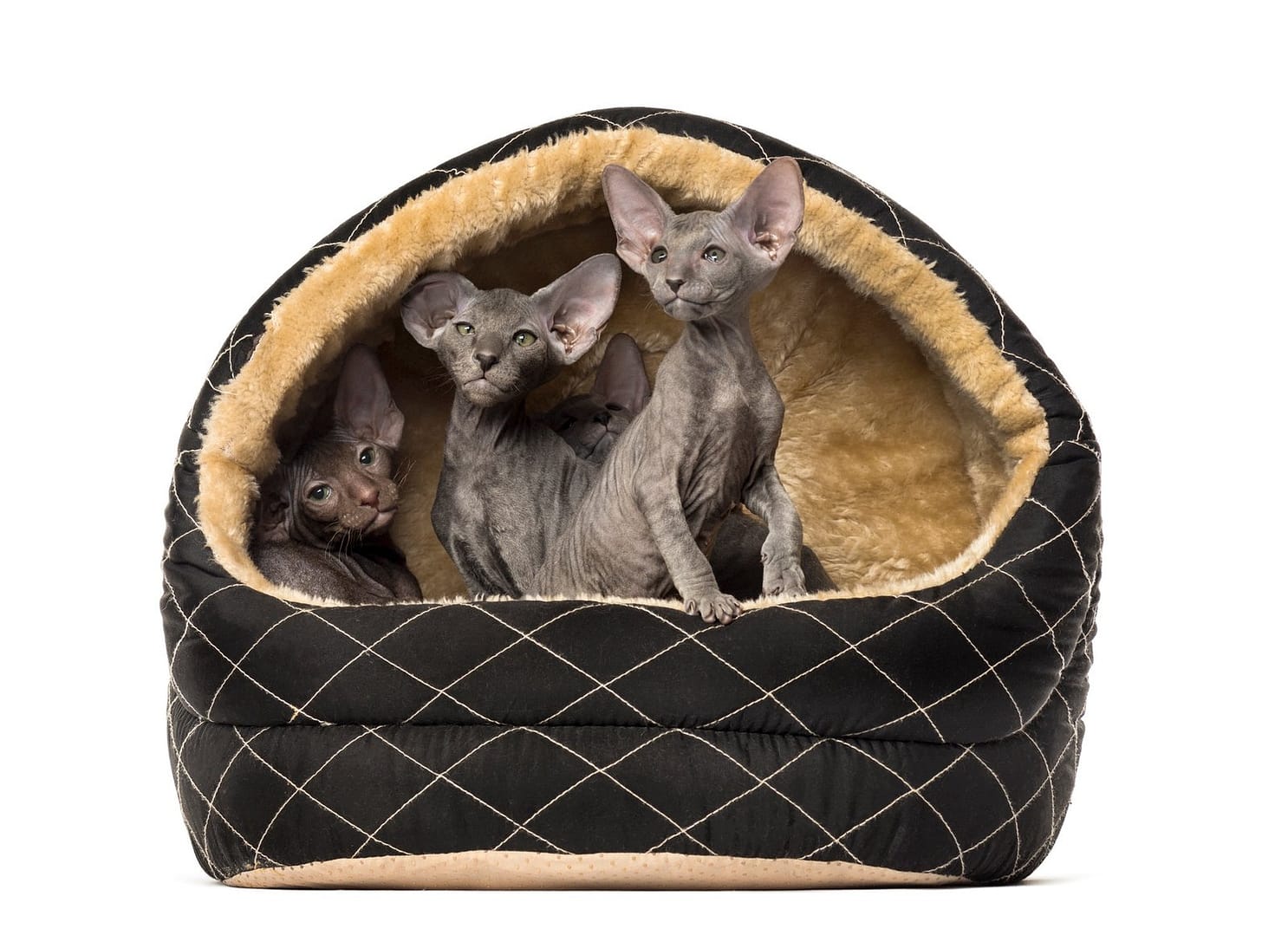
De un vistazo
- Muda: Low to moderate (coat ranges from bald to fully coated).
- Personality: Extremely social, loyal, curious
- Aseo: Medium–high (depends on coat type)
- Energía: High (often playful + “helper cat”)
- Best known for: Elegant build + high “people time” needs
What they’re like to live with
Peterbalds are often described as highly social and family-friendly—many bond tightly and prefer being near their humans. TICA notes they’re extremely loyal and among the most social breeds.
Coat & shedding (help readers choose correctly)
A key Peterbald trait is coat variety: some are completamente calvo, while others have fuzz/velour or even a fuller coat.
So your best-content angle is: “Peterbald can mean anything from near-hairless to coated—confirm coat type before assuming shedding.”
Care reality
- Oil + ear wax management is common even in “fuzzy” coat types.
- They often like warmth and may seek blankets/heated beds (typical of low-coat cats).
- Provide daily play and puzzle toys—this breed can get bored.
Best for
- People who want a very interactive, chatty companion
- Homes that enjoy training, play, and frequent handling
Not ideal for
- Anyone wanting an independent “low-contact” cat
- Busy households where the cat will be alone often
If you’re adopting/buying
Ask what coat type the kitten/adult is expected to have and what grooming routine the breeder/rescue uses.
Donskoy
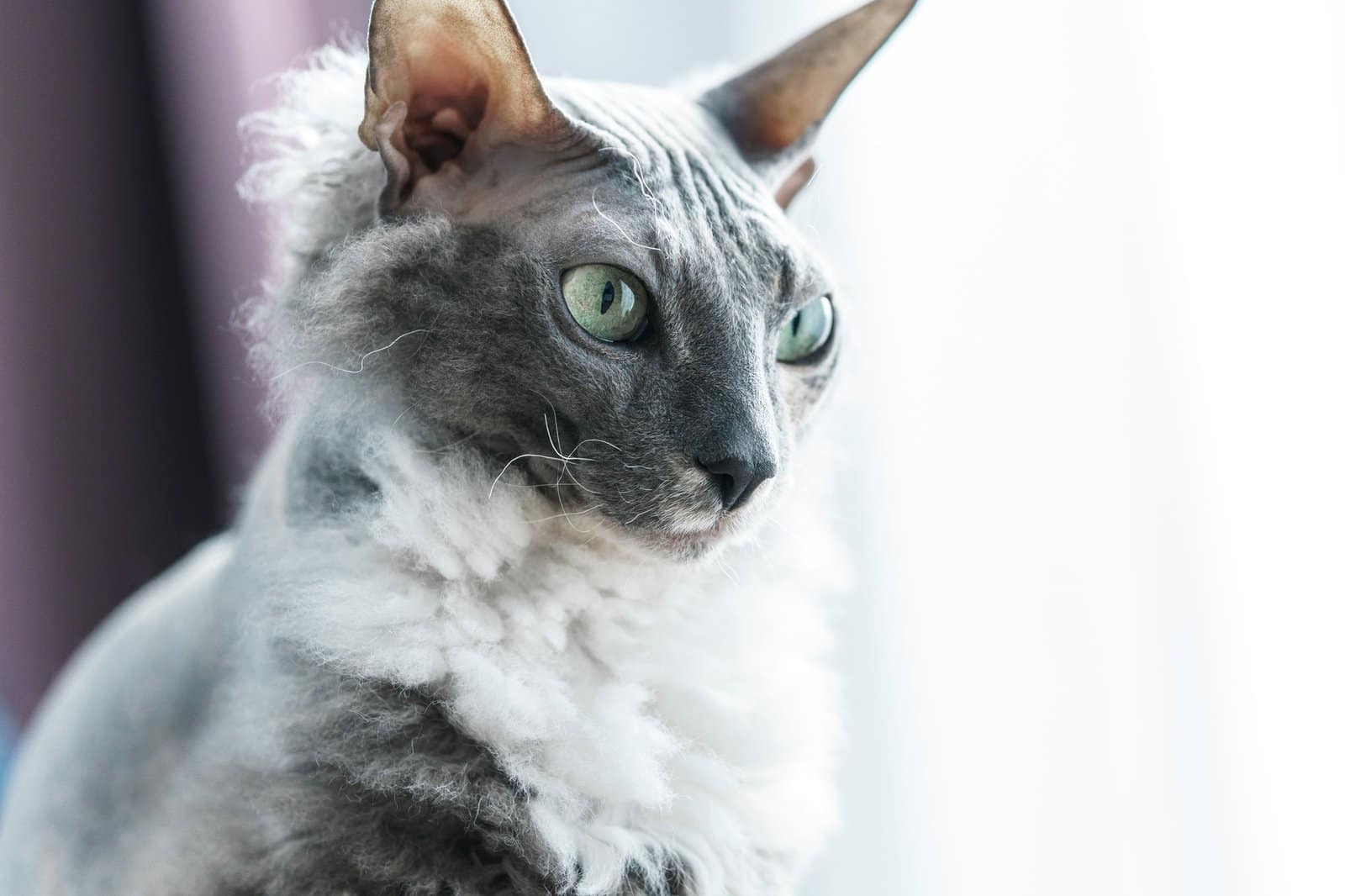
De un vistazo
- Muda: Very low to low (coat type varies)
- Personality: Smart, friendly, interactive
- Aseo: High (skin/ears), but varies by coat type
- Energía: Medio
- Unique detail: Donskoy has four coat types (Rubber Bald, Flocked, Velour, Brush).
What they’re like to live with
Donskoys are often described as people-focused and intelligent, and many do well in family settings with play + companionship. If you want “hairless-cat affection” but with more coat variation than the Sphynx stereotype, this breed is a common pick.
Coat & shedding (your chance to be more helpful than competitors)
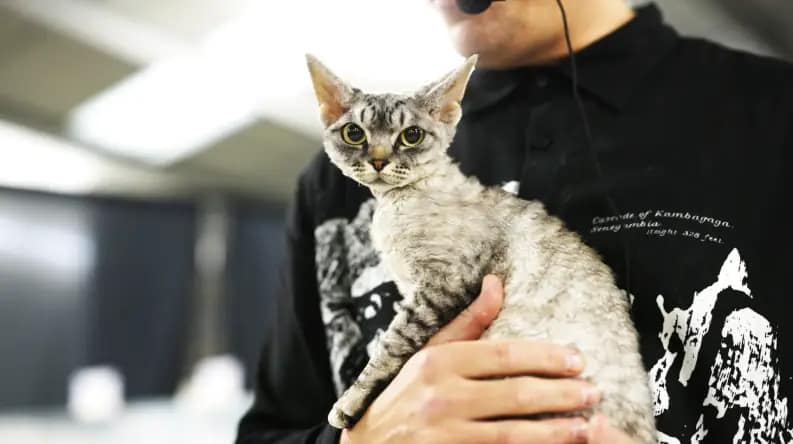
TICA describes four coat types—some born bald and stay that way, while others may have flock/velour/brush textures and keep a bit of hair in places.
So your article should tell readers: “Donskoy can be truly bald o partially coated—ask which coat type you’re getting.”
Care reality
- Expect regular baths/wipes for oily skin (especially bald/flocked types).
- Ear cleaning is important.
- Temperature + sun protection matter (indoor life is safest for most hairless cats).
Best for
- Families who want a friendly, interactive cat
- Owners who can commit to a simple weekly grooming routine
Not ideal for
- People who travel frequently or want a truly “hands-off” pet
If you’re adopting/buying
Ask which coat type the cat is (Rubber Bald / Flocked / Velour / Brush) and what grooming schedule the breeder/rescue recommends.
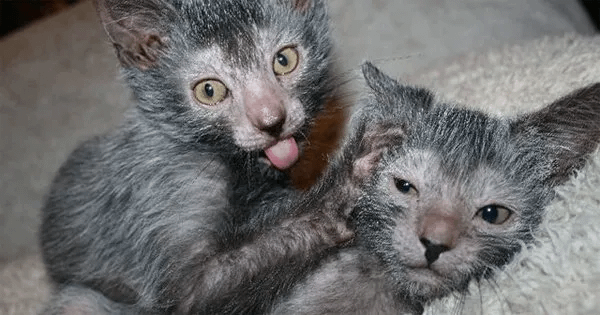
Lykoi (“Wolf Cat”)
De un vistazo
- Muda: Seasonal/variable (coat coverage changes with molt cycles).
- Personality: Curious, playful, often very people-attuned
- Aseo: Moderate (depends on coat cycle)
- Energía: Alta
- Best known for: Roan “werewolf” look + partial hairlessness.
What they’re like to live with
Lykoi are a great fit for people who want an active, curious cat with a very distinctive look. They’re often described as engaged and entertaining—more “explorer” than “decorative lap cat.”
Coat & shedding (make this crystal clear)
Unlike truly hairless breeds, Lykoi are partially hairless and have a unique roan coat pattern described in breed standards.
Coat coverage can change with molt cycles, so readers should expect periods of more noticeable shedding, then quieter phases.
Care reality
- Many need less bathing than fully hairless cats, but still benefit from occasional bathing/wipes if oils build up.
- Provide daily play and enrichment—high-energy cats do best with structure.
Best for
- People who want a high-energy, unusual companion
- Homes that enjoy interactive play and don’t mind coat cycles
Not ideal for
- Anyone expecting “zero shedding” year-round
- People who want a calm, always-cuddly lap cat
If you’re adopting/buying
Because rarity varies, encourage readers to prioritize ethical sources and ask about coat cycle expectations and grooming habits.
Más información Lykoi
Levkoy ucraniano

De un vistazo
- Muda: Very low
- Personality: Often gentle, social, people-oriented
- Aseo: High (skin + ears)
- Energía: Low–moderate
- Nota importante: Folded ears come from the same folded-ear trait associated with painful skeletal disease in Scottish Folds (risk can remain even with careful breeding).
What they’re like to live with
Levkoys are often described as affectionate and calm, making them appealing to people who want a softer-energy companion than some other hairless breeds.
Why you must include an ethics/health note (this is “best content” behavior)
International Cat Care and other welfare-focused sources explain that the Scottish Fold folded-ear mutation is linked to osteochondrodysplasia, a painful disorder affecting bone and cartilage development.
Because Levkoy breeding involves folded-ear genetics, readers deserve clear guidance: folded ears are cute, but health/welfare considerations are real.
Care reality
- Skin care is typical for hairless cats: baths/wipes, ear cleaning, warmth, and sun management.
- Folded ears can mean extra ear care and more frequent vet check-ins.
Registry / rarity note (avoid overclaiming)
Some sources note the Levkoy is not widely recognized by major registries like CFA or TICA, and availability may be limited.
(If you sell to multiple countries, consider adding a one-line “Check local laws and welfare guidance” note.)
Best for
- Experienced owners who can do regular grooming and prioritize welfare-first sourcing
- People who want a calm companion and can commit to proactive vet care
Not ideal for
- Anyone uncomfortable with folded-ear welfare concerns
- People wanting a widely standardized, easily found breed with broad registry coverage
If you’re adopting/buying
Encourage readers to ask about: joint health history, vet evaluations, mobility, and whether the breeder prioritizes welfare over appearance.
Nuestra promesa: Toda una vida de abrazos
En SnuggleSoulsNuestra misión es sencilla: ayudarle a encontrar y disfrutar de una toda una vida de abrazos con el amigo felino adecuado. Tanto si le atrae el el brioso Sphynx, el diminuto Bambino o el meloso LevkoyEstamos aquí para ayudarle en todo momento.
Nuestro equipo cuenta con décadas de experiencia combinada en el cuidado, el comportamiento y la nutrición de gatos, y nos hemos volcado en la cría y rehabilitación de gatos de todas las razas (con o sin pelo). Prometemos compartir orientación honesta y práctica para que se sienta seguro y preparado como padre de animales de compañía.
Traer un nuevo gato a casa, especialmente uno tan especial como uno de raza sin pelo, puede ser tan difícil como gratificante. Pero recuerda que nunca estás solo en este viaje. Estamos contigo a través de todas las noches acogedoras e incluso los ocasionales baños desordenados.
Al elegir un SnuggleSoul, pasas a formar parte de nuestra familia, una comunidad que cree que todos los gatos merecen comprensión, paciencia y un amor infinito. Te deseamos muchos ronroneos, cabezazos y cálidos abrazos en tu futuro.
¿Quiere saber más?
¿Listo para seguir aprendiendo? Nosotros le cubrimos. Consulte nuestra Guía para principiantes Adopción de gatos para obtener consejos sobre cómo traer a casa a un nuevo miembro de la familia felina, o explore nuestra Raza de gato Enciclopedia para profundizar en cada tipo de personalidad felina.
Nuestros recursos están pensados para ayudar a usted conviértete en el mejor padre de gatos que puedas ser. El conocimiento es amor en acción - y estamos encantados de ayudarle en su búsqueda para amar a su gato aún mejor.
Encuentre su pareja perfecta entre todas las razas de gatos
En SnuggleSouls, creemos que todos los gatos merecen un hogar para siempre, y todos los amantes de los gatos merecen el compañero felino perfecto. Tanto si te atrae el encanto de razas de gatos pequeñosla naturaleza equilibrada de gatos medianoso la majestuosa presencia de razas de gatos grandesTenemos guías detalladas para ayudarte a elegir.
¿Prefieres que el aseo sea coser y cantar? Echa un vistazo a nuestras razas de gatos de pelo corto, gatos sin peloy razas con poco pelo. ¿Anhela abrigos de lujo? Nuestro guía de razas de gatos de pelo largo podría derretirte el corazón.
Si usted o los miembros de su familia son alérgicos, no se preocupe: también hemos elaborado una lista de confianza de razas de gatos hipoalergénicos que podrían funcionar mejor para los hogares sensibles.
Explore todas nuestras guías de razas para encontrar el alma cariñosa que realmente está hecha para usted.
PREGUNTAS FRECUENTES
¿Los gatos sin pelo son realmente hipoalergénicos?
No del todo. Siguen produciendo alérgenos, pero algunos alérgicos las toleran mejor debido a su menor excreción.
¿Necesitan baños los gatos sin pelo?
Los gatos sin pelo necesitan baños semanales para eliminar la grasa y la suciedad acumuladas en su piel.
¿Los gatos sin pelo se resfrían con facilidad?
Sí. Sin pelaje, necesitan ambientes cálidos, camas con calefacción o ropa cómoda para estar a gusto.
¿Los gatos sin pelo son buenos con las familias y los niños?
Absolutamente. La mayoría son sociables, cariñosos y se llevan muy bien con los niños y otras mascotas si se les socializa adecuadamente.
¿Cuánto cuesta un gato sin pelo?
Los precios oscilan entre $1.000-$2.000 de los criadores, pero los rescates o los criadores retirados pueden ofrecer opciones de adopción.
¿Puedo adoptar un gato sin pelo en lugar de comprarlo?
Los refugios y las redes de adopción de razas específicas a veces tienen Sphynx u otras razas sin pelo disponibles para adopción.
¿Qué raza de gato sin pelo es la más cariñosa?
El Sphynx suele considerarse el más cariñoso, conocido por seguir a sus dueños a todas partes y ansiar atención.
Do hairless cats smell more?
They can seem “oilier” because there’s no fur to absorb skin oils. With regular baths and clean bedding, odor usually isn’t a problem.
Do hairless cats need sunscreen?
If they spend long periods in strong direct sun, their skin can get irritated. Most owners focus on shade, window filtering, and limiting exposure rather than frequent products.
Do hairless cats get acne or skin issues?
Some can. Regular gentle bathing, clean bedding, and avoiding harsh products helps. If irritation persists, a vet can recommend safe options.
Do hairless cats need a special diet?
They often have high appetites and may need slightly more calories to stay warm, but quality protein and vet-guided portions matter more than “special” formulas.
Can hairless cats live outdoors?
Not recommended. They’re vulnerable to sunburn, cold, and skin injuries. They’re usually happiest as indoor cats with warm lounging spots.
Sources & breed standards
Sphynx aren’t always totally hairless (often downy)
Donskoy coats can vary (hairless/velour/brush)








 EN
EN DE
DE ES
ES PT
PT