
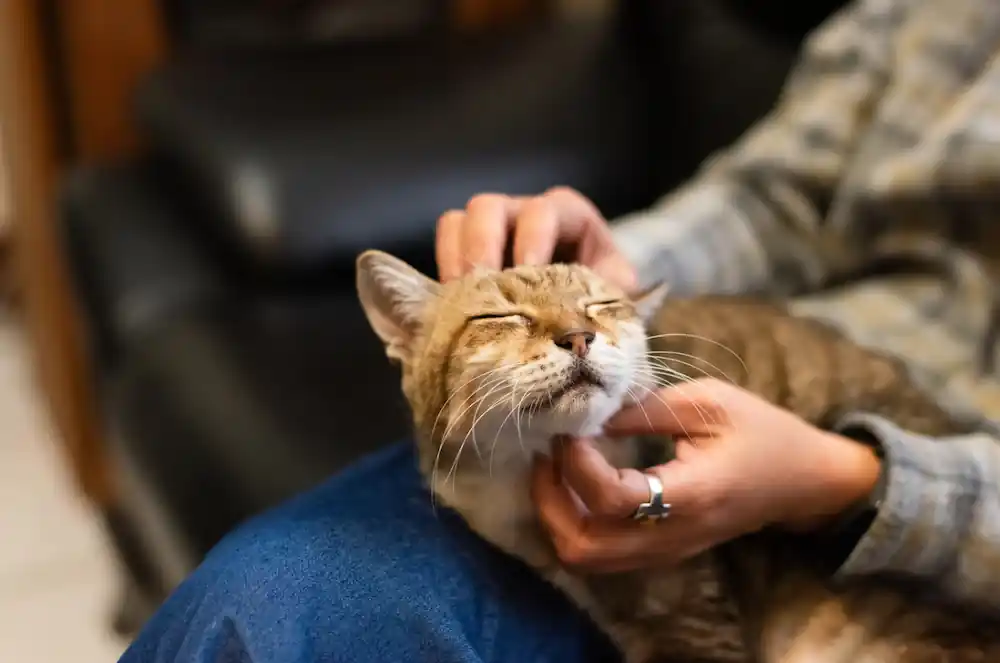
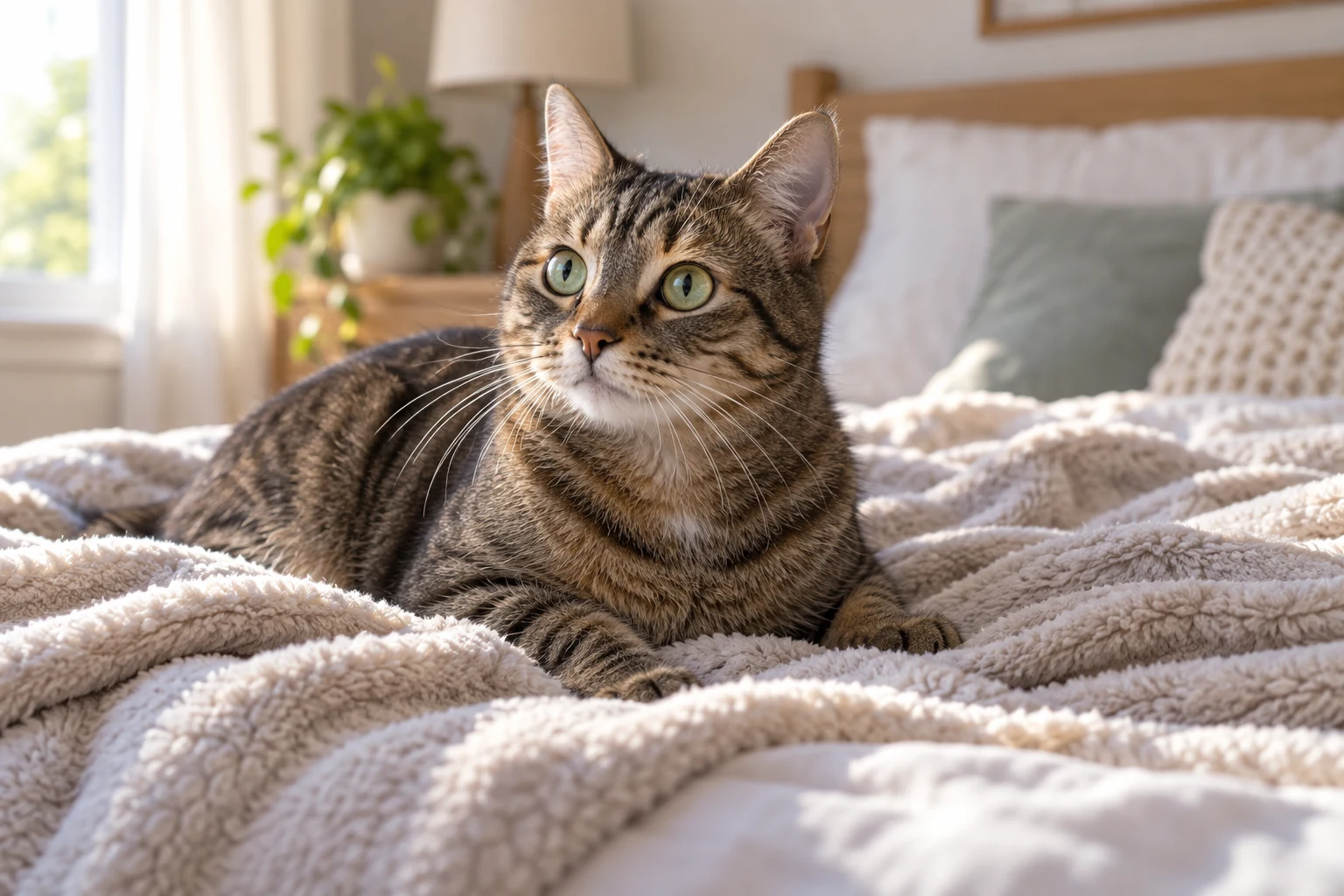
Es posible que tu gato sea cariñoso porque confía en ti, se siente seguro y a gusto a tu lado, disfruta de tu rutina, busca atención o, sencillamente, tiene una personalidad cariñosa. Los mimos suelen ser normales cuando es tu gato quien busca el contacto, parece relajado y sigue comiendo, jugando, acicalándose, durmiendo y utilizando la bandeja sanitaria con normalidad. Un comportamiento repentino de dependencia, acompañado de otros cambios, merece una atención más detallada.
La pregunta que hay que plantearse no es solo “¿Por qué mi gato es tan cariñoso?”, sino también “¿Es esto normal en mi gato y qué nos indican el resto de su cuerpo y su rutina?”. Un gato que es cariñoso por naturaleza es diferente de un gato que suele ser independiente y que, de repente, no puede separarse de ti.
Índice
- ¿Por qué mi gato es tan cariñoso?
- ¿Es normal o motivo de preocupación que mi gato se acurruque?
- ¿Cuáles son las razones más comunes por las que los gatos se vuelven cariñosos?
- ¿Cómo se manifiesta el lenguaje corporal de un gato cariñoso?
- ¿Por qué mi gato se ha vuelto de repente tan pegajoso?
- ¿Cuándo debo llamar al veterinario si mi mascota se vuelve repentinamente muy dependiente?
- ¿Cómo debo reaccionar ante un gato muy cariñoso?
- ¿Qué debo tener en cuenta si mi gato de repente se vuelve muy pegajoso?
- Preguntas frecuentes
- Referencias
¿Por qué mi gato es tan cariñoso?
La mayoría de los gatos cariñosos buscan consuelo, calor, contacto social, atención o una rutina compartida y predecible. Algunos gatos siempre han sido cariñosos, mientras que otros se vuelven más sociables a medida que se adaptan a un hogar, comprenden que una persona es de fiar o descubren que los mimos les proporcionan calor y una atención agradable.
Cada gato es único. Puede que uno duerma sobre tu pecho todas las noches, mientras que otro demuestre su cariño sentándose a dos pies de distancia. Ninguna de estas formas de comportarse demuestra que un gato quiera más a una persona que el otro. Lo que importa es si el comportamiento es voluntario, relajado y normal para ese gato en concreto.
Entre los comportamientos cariñosos más comunes se encuentran:
- Descansar a tu lado o encima de ti.
- Frotar las mejillas o el costado del cuerpo contra ti.
- Se acerca con la cola erguida o ligeramente curvada.
- Parpadeo lento.
- Amasar una superficie blanda o tu regazo.
- Ronronear en un ambiente relajado.
- Te sigo de una habitación a otra.
- Te saludo tras una ausencia.
- Dormir cerca de allí.
¿Es normal o motivo de preocupación que mi gato se acurruque?
Las muestras de cariño suelen ser normales cuando es el gato quien inicia el contacto, puede alejarse libremente y, por lo demás, sigue con su rutina habitual. Resulta más preocupante cuando son repentinas, frenéticas, persistentes o van acompañadas de cambios físicos o de comportamiento.
| Lo que se nota | Lo más probable es que sea normal | Lo que resulta más preocupante |
|---|---|---|
| Calendario | Una rutina diaria habitual, como pasar la tarde en el sofá | Un cambio repentino y significativo en la personalidad habitual del gato |
| Postura corporal | Cuerpo suelto, mirada suave, orejas neutras, patas relajadas | Postura encogida y tensa, orejas pegadas a la cabeza, pupilas dilatadas, temblores, quietud inusual |
| Elección | El gato se acerca y se marcha cuando quiere | Parece que el gato no puede estar tranquilo a menos que te toque. |
| Rutina | Comer, beber, asearse, jugar, dormir y utilizar la bandeja sanitaria con normalidad | Apeto, sed, peso, cambios en el sueño, el movimiento, el aseo o el uso de la bandeja sanitaria |
| Vocalización | Ronroneos, gorjeos o saludos silenciosos que nos resultan familiares | Nuevos maullidos, llantos, inquietud o maullidos de angustia |
| Tocar | Le gusta que le acaricien sus seres queridos y se aleja cuando ya ha tenido suficiente. | Se sobresalta, protege una zona, muerde de repente o parece que le duele |
| Duración | El cariño encaja con la personalidad ya formada del gato | La dependencia emocional persiste, se intensifica o perturba las actividades normales |
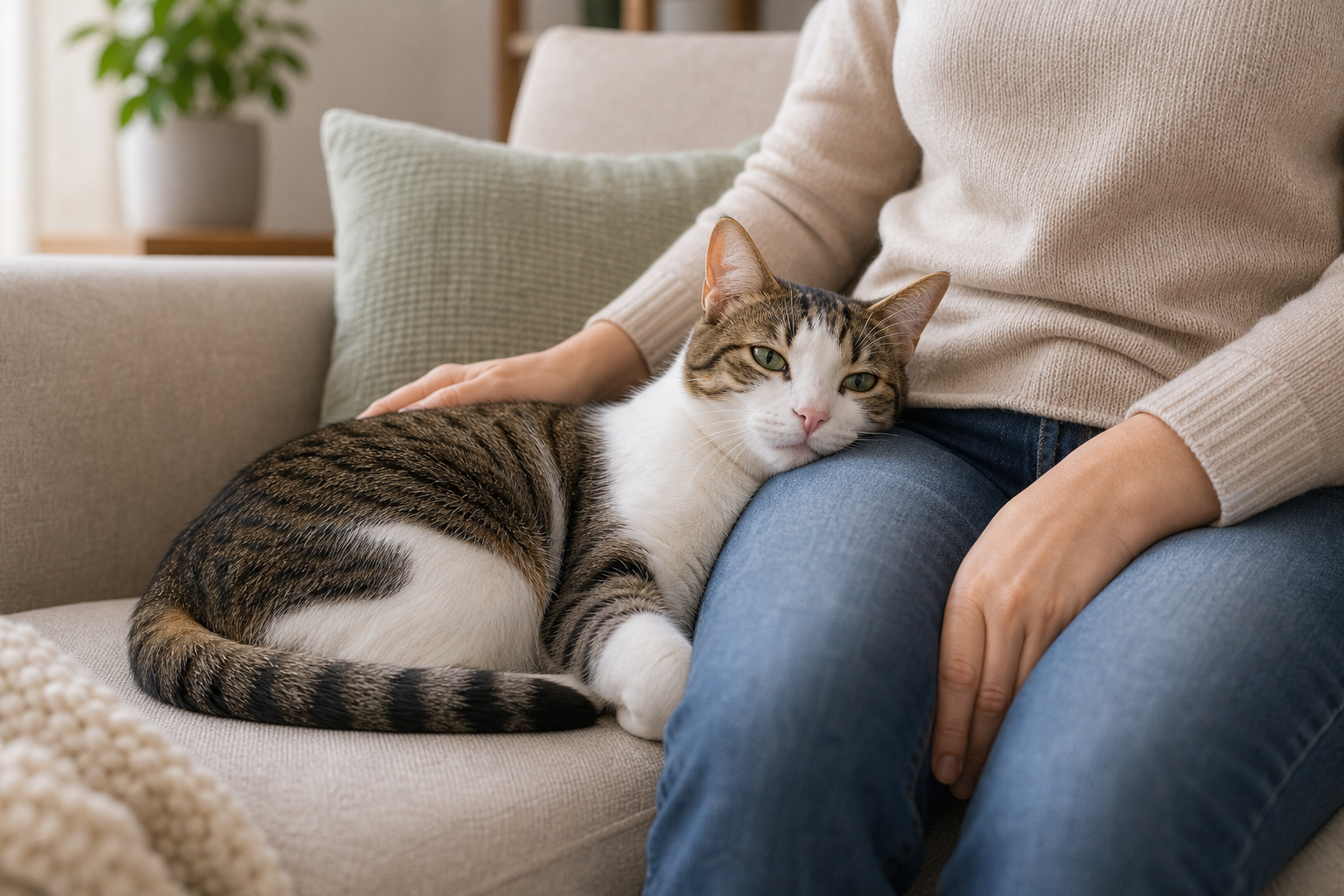
No juzgues su comportamiento basándote únicamente en los mimos. Un gato que ronronea puede seguir estando estresado o incómodo, y un gato que no se encuentra bien puede buscar el contacto físico o, por el contrario, esconderse. La guía de SnuggleSouls sobre por qué ronronean los gatos explica por qué el contexto es importante.
¿Cuáles son las razones más comunes por las que los gatos se vuelven cariñosos?
Los gatos se vuelven cariñosos por varias razones comunes. A menudo, se dan varias razones a la vez.
Tu gato confía en ti
Un gato que descansa junto a ti se está poniendo en una posición vulnerable. El hecho de que se acerque a ti por voluntad propia suele significar que tu gato espera que seas tranquilo, predecible y que le transmitas seguridad.
La confianza suele desarrollarse a través de experiencias repetidas y sin presiones: comidas regulares, juegos suaves, compañía tranquila, respeto de los límites y permitir que el gato se acerque o se aleje. Las directrices de la AAFP/ISFM sobre las necesidades ambientales hacen hincapié en una interacción social predecible y positiva entre humanos y gatos, así como en el respeto de las preferencias de cada gato en particular. 1.
Estás calentito y a gusto
Los gatos suelen elegir lugares cálidos para descansar, y el regazo, el pecho, una pierna cubierta con una manta o un rincón junto a una persona pueden resultarles especialmente atractivos. Si tu gato se vuelve más cariñoso cuando hace frío o durante las tardes tranquilas, es posible que la explicación sea simplemente el calor y la comodidad.
Los mimos forman parte de tu rutina
Los gatos aprenden rápidamente los hábitos de la casa. Si te sientas en la misma silla después de cenar, trabajas en el mismo escritorio o te acuestas a una hora predecible, es posible que tu gato considere ese momento como un rato de interacción social programado.
El cariño basado en la rutina suele ser tranquilizador. El gato se acerca a horas habituales, se acomoda cómodamente y después sigue con su vida como de costumbre.
Tu gato quiere que le prestes atención o quiere acceder a algo
A veces, los mimos son una forma de interacción social; otras veces, son una petición cortés. Es posible que tu gato te esté pidiendo que juegues con él, que le des de comer, que le abras la puerta, que le limpies la bandeja sanitaria o que le prestes atención.
Fíjate en lo que ocurre a continuación. ¿Tu gato te da un mimosito y luego te lleva hasta un juguete o un cuenco? Ese comportamiento podría ser una forma de comunicación aprendida, más que una dependencia inusual.
La personalidad de tu gato o la etapa de su vida han cambiado
Algunos gatitos se vuelven más cariñosos a medida que maduran y se adaptan. Algunos gatos adultos se vuelven más cariñosos tras la adopción, una vez que ganan confianza o a medida que cambian las relaciones dentro del hogar. Los gatos mayores pueden buscar más cariño o seguridad, aunque cualquier cambio de comportamiento en un gato de edad avanzada también debe valorarse teniendo en cuenta los cambios en su estado de salud.
Algo cambió en el entorno
Las visitas, las obras, los viajes, los cambios de horario, una nueva mascota, la ausencia de un miembro de la familia, los ruidos fuertes o los cambios en la disposición de los muebles pueden hacer que un gato busque a una persona conocida. Esto no significa automáticamente que padezca un trastorno. Puede tratarse de una respuesta temporal para adaptarse a la situación.
Proporciona a tu gato lugares seguros donde descansar, cuidados predecibles, ocultar lugares y cómo reaccionar ante ellos. Si la reacción se intensifica o persiste una vez que el cambio se haya estabilizado, consulta con tu veterinario.
¿Cómo se manifiesta el lenguaje corporal de un gato cariñoso?
El lenguaje corporal afectuoso suele parecer relajado, espontáneo y fácil de interrumpir. Fíjate en el gato en su conjunto, en lugar de en una sola señal.
| Pista del lenguaje corporal | A menudo tranquilo o cariñoso | Posible estrés o sobreestimulación |
|---|---|---|
| Ojos | Mirada suave, pupilas normales, parpadeo lento | Pupilas dilatadas, mirada fija e intensa, exploración rápida del entorno |
| Orejas | Neutro o ligeramente hacia delante | Aplastado, girado bruscamente hacia un lado, moviéndose constantemente de un lado a otro |
| Cola | Cola erguida en señal de saludo, con una suave curva y envuelta de forma relajada | Movimientos rápidos y violentos, espasmos bruscos, cola entre las patas |
| Cuerpo | Relajado, en equilibrio, inclinado o descansando cómodamente | Rígido, encogido, oprimido, intentando escapar |
| Patas | Amasado relajado o suave | Garras aferradas, patas preparadas para huir |
| Sensibilidad táctil | Se inclina hacia delante, se mantiene relajado y se marcha con calma | Espasmos en la piel, giro de la cabeza, sacudidas de la cola, mordiscos o mordeduras |
Si te cuesta interpretar los movimientos de la cola, utiliza la guía de SnuggleSouls para lenguaje del rabo de gato. Cats Protection también recomienda observar la postura, las orejas, los ojos y la cola, y tener en cuenta el contexto en su conjunto, en lugar de interpretar una sola señal por separado 2.
Deja de acariciar a tu gato antes de que tenga que morder para poner fin a la interacción. Si las muestras de cariño suelen acabar en mordiscos, consulta esta guía sobre sobreestimulación por caricias y mordiscos.
¿Por qué mi gato se ha vuelto de repente tan pegajoso?
Un comportamiento repentinamente dependiente puede deberse a un cambio inofensivo, como un descenso de las temperaturas, una nueva rutina, un ruido que le asusta o el hecho de pasar más tiempo juntos. Sin embargo, también puede producirse un cambio repentino de personalidad cuando un gato está estresado, se siente incómodo, está envejeciendo o no se encuentra bien.
Empieza preguntando qué ha cambiado en los últimos días o semanas:
- ¿Se ha ido alguien o ha vuelto alguien?
- ¿Ha cambiado tu horario?
- ¿Hay alguna mascota nueva, algún visitante, un bebé, algún olor, algún sonido o alguna obra?
- ¿Ha hecho más frío?
- ¿Tu gato ha... alimentos, ¿se ha cambiado la arena, la medicación o la zona para dormir?
- ¿Tu gato come, bebe, se mueve, se acicala y utiliza la bandeja sanitaria con normalidad?
No des por sentado que toda actitud dependiente se debe a la ansiedad por separación. Los gatos pueden seguirte o sentarse cerca de ti por muchas razones. Hay que preocuparse cuando el comportamiento es nuevo, intenso y va acompañado de síntomas como esconderse, cambios en el apetito, pérdida de peso, aumento de la sed, vómitos repetidos, diarrea, falta de aseo, dolor, inquietud o cambios en el uso de la bandeja sanitaria.
¿Cuándo debo llamar al veterinario si mi mascota se vuelve repentinamente muy dependiente?
Llama a tu veterinario cuando ese comportamiento repentino de pegarse a ti vaya acompañado de otro cambio significativo, se prolongue sin una explicación clara o no sea propio de tu gato. Los gatos suelen ocultar los síntomas de enfermedad, por lo que los cambios de comportamiento pueden ser un indicio temprano más que un diagnóstico. 3.
Pide cita con el veterinario si la dependencia se acompaña de:
- Comer menos, rechazar la comida o empezar a comer de repente mucho más.
- Beber más o orinar con más frecuencia.
- Pérdida de peso o cambio visible en la silueta.
- Vómitos, diarrea, estreñimiento o cambios en las heces.
- Se esconde, muestra signos de debilidad, tiene somnolencia inusual o descuida su aseo.
- Nuevos aullidos, llantos, inquietud nocturna o confusión.
- Cojera, rigidez, dificultad para saltar o para reaccionar al tacto.
- Visitas repetidas a la bandeja sanitaria, accidentes o esfuerzo al defecar.
- Un cambio repentino de comportamiento en un gato mayor.
Acude urgentemente al médico si presentas dificultad para respirar, desmayo, convulsiones, sospecha de intoxicación, vómitos repetidos, diarrea grave, traumatismos, incapacidad para orinar, parálisis repentina, debilidad extrema o un deterioro rápido del estado de salud.
Si la dependencia va acompañada de síntomas de abstinencia, compara ese patrón con por qué se esconden los gatos. Si el cambio principal es vocal, utiliza la guía que aparece en cambios repentinos en la voz. Los accidentes relacionados con el estrés o el marcaje con orina también merecen atención; la guía sobre Cambios en el uso de la bandeja sanitaria relacionados con el estrés Puede ayudar a ordenar las pistas, pero la incapacidad para orinar es una urgencia.
¿Cómo debo reaccionar ante un gato muy cariñoso?
Responde haciendo que las muestras de cariño sean voluntarias, predecibles y fáciles de rechazar. Disfruta de la cercanía sin sujetar a tu gato, sin obligarle a que te deje acariciarlo ni interpretando cada acercamiento como una petición de que le toques.
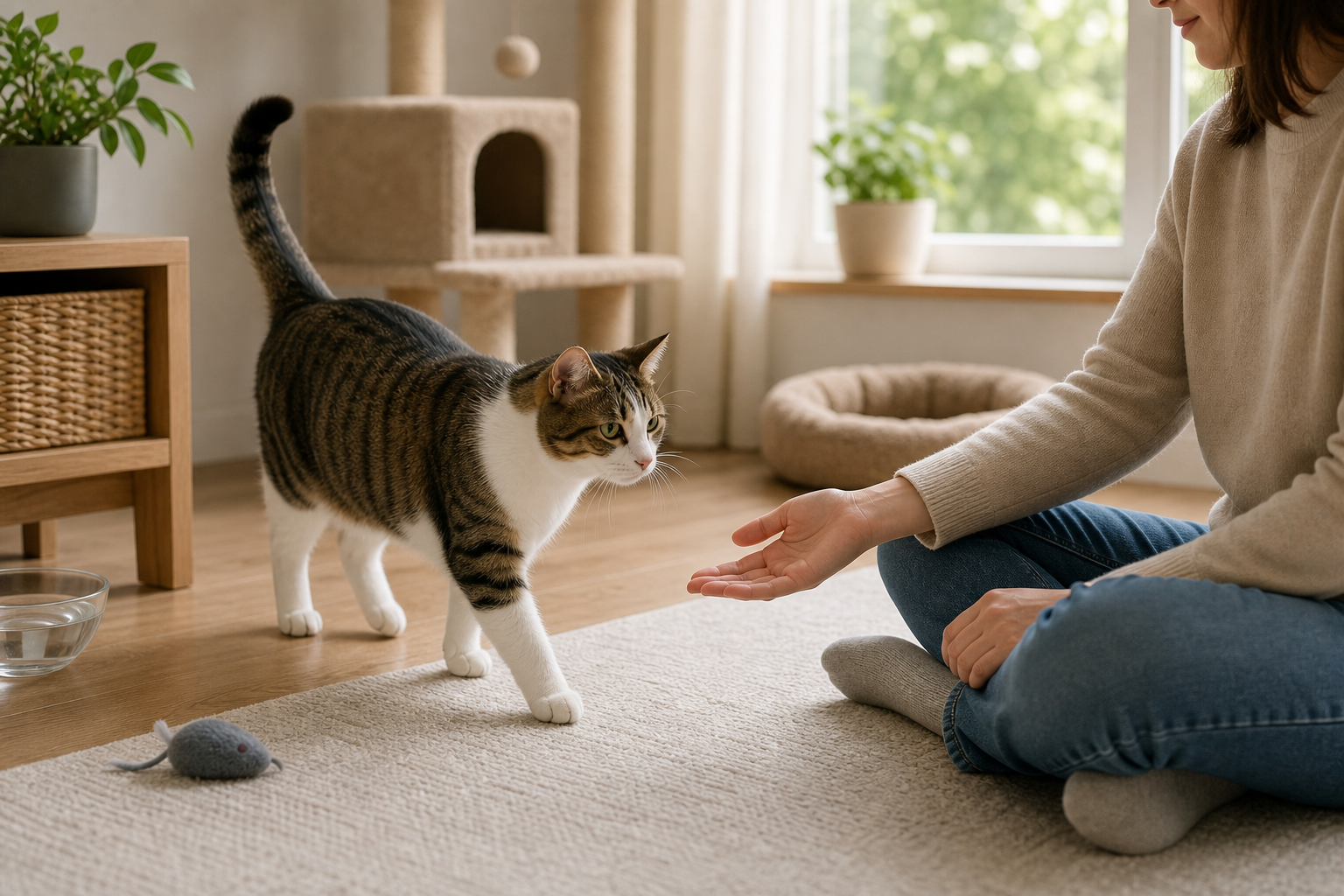
Prueba este método:
- Deja que tu gato se acerque primero.
- Mantén la mano quieta y deja que te olfatee o te frote la mejilla.
- Las zonas preferidas por las mascotas son, a menudo, las mejillas, la barbilla, la cabeza o los hombros.
- Haz una pausa tras unas cuantas brazadas.
- Sigue solo si tu gato se inclina hacia atrás o te pide claramente más.
- Detente si la cola se agita, las orejas giran, la piel se contrae, el cuerpo se tensa o el gato se gira bruscamente hacia tu mano.
- Asegúrate de que haya camas, lugares donde esconderse, espacios elevados, agua, bandejas sanitarias, superficies para rascar y oportunidades para jugar.
No castigues a tu gato por mostrarse muy pegajoso ni lo apartes bruscamente. Si necesitas espacio, levántate con calma, dirígelo hacia una cama cercana, propónle una sesión de juego o crea un lugar cómodo para que descanse a tu lado.
¿Qué debo tener en cuenta si mi gato de repente se vuelve muy pegajoso?
Anota cuándo se produce ese comportamiento y qué otros cambios se producen. Un breve registro puede revelar si la dependencia emocional se debe a una rutina, a un desencadenante ambiental, a un síntoma físico o a un cambio gradual en el estado de salud.
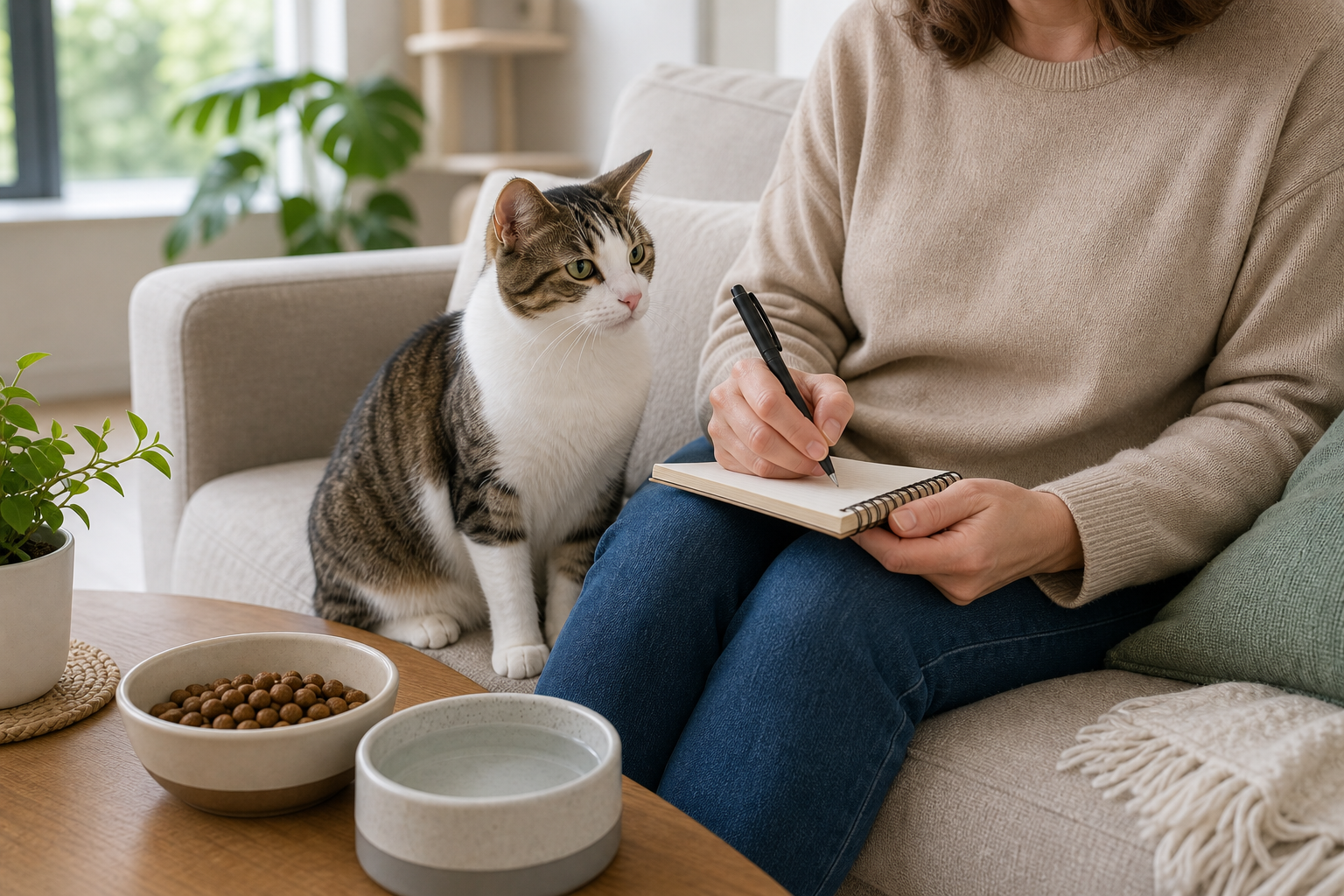
Durante siete días, ten en cuenta lo siguiente:
- Momento y duración del comportamiento dependiente.
- Lo que ocurrió justo antes.
- Si tu gato es el que toma la iniciativa y se marcha por voluntad propia.
- Apetito y consumo de golosinas.
- Cambios en la ingesta de líquidos y en la micción.
- Heces, vómitos o diarrea.
- Dormir, jugar, acicalarse, saltar y pasear.
- Nuevos sonidos, tendencia a esconderse, mordiscos o inquietud.
- Cambios en la composición del hogar o en los horarios.
- El peso corporal, si puedes medirlo de forma segura.
Si los cambios de peso o de figura forman parte de la rutina, utiliza los SnuggleSouls Guía sobre el estado físico para describir lo que ves. Lleva tus notas y vídeos breves al veterinario si el comportamiento persiste o va acompañado de otros cambios.
Preguntas frecuentes
¿Me quiere mi gatito tan cariñoso?
Es probable que el hecho de que tu gato se acerque a ti por voluntad propia refleje confianza, seguridad, comodidad y una relación social positiva. Los gatos muestran su apego de diferentes maneras, por lo que los mimos son una señal de cariño, pero no la única prueba de que existe un vínculo.
¿Por qué mi gato de repente se pone cariñoso por la noche?
Los mimos nocturnos pueden ser una muestra de cariño, de tranquilidad en el hogar, de rutina o de un deseo de atención. Llama a tu veterinario si el cambio es repentino y va acompañado de maullidos nocturnos, confusión, inquietud, cambios en el apetito, dolor o cambios en el uso de la bandeja sanitaria.
¿Por qué mi gato solo quiere mimos cuando estoy en la cama?
Tu cama es cálida, mullida, predecible y huele a algo familiar. Algunos gatos prefieren recibir cariño cuando el ambiente es tranquilo y la persona está quieta, lo que hace que la hora de acostarse sea el momento más seguro para socializar.
¿Por qué mi gato se muestra más cariñoso cuando vuelvo a casa?
Es posible que tu gato te esté dando la bienvenida, buscando tranquilidad, pidiendo comida o que juegues con él, o volviendo a su rutina habitual. Esto suele ser normal si el gato se tranquiliza y, por lo demás, se comporta con normalidad.
¿Por qué mi gato de repente me sigue a todas partes?
Un gato puede seguirte para llamar tu atención, por costumbre, por la comida, por curiosidad, por estrés ambiental o para sentirse seguro. Si este comportamiento de seguirte de forma repentina y persistente va acompañado de cambios en el apetito, la sed, el peso, la movilidad, los maullidos o el uso de la bandeja sanitaria, conviene llamar al veterinario.
¿Puede un gato volverse más cariñoso porque está enfermo?
Sí. Algunos gatos que no se encuentran bien buscan más cercanía, mientras que otros se esconden. El hecho de que de repente se muestren más pegajosos no es un diagnóstico en sí mismo, pero debe evaluarse junto con el apetito, la energía, el aseo, el movimiento, los vómitos, las heces, la micción y otros cambios.
¿Debería coger en brazos a mi gatito tan mimoso?
Solo si a tu gato le gusta que lo cojas en brazos y su cuerpo permanece relajado. Muchos gatos cariñosos prefieren sentarse al lado de una persona en lugar de que los cojan en brazos. Respetar esa preferencia ayuda a mantener la confianza.
¿Por qué mi gato se acurruca conmigo y luego me muerde?
Es posible que el gato se sienta sobreestimulado o quiera que la interacción termine. Presta atención a movimientos bruscos de la cola, espasmos en la piel, cambios en la posición de las orejas, tensión o un giro de la cabeza antes de que muerda, y deja de acariciarlo antes de que eso ocurra.
Referencias
- Ellis, S. L. H. y otros. Directrices de la AAFP y la ISFM sobre las necesidades ambientales de los gatos.
- Protección de los gatos. El lenguaje corporal de los gatos.
- Hospitales veterinarios VCA. Cómo reconocer los síntomas de enfermedad en los gatos.
 EN
EN DE
DE ES
ES PT
PT