
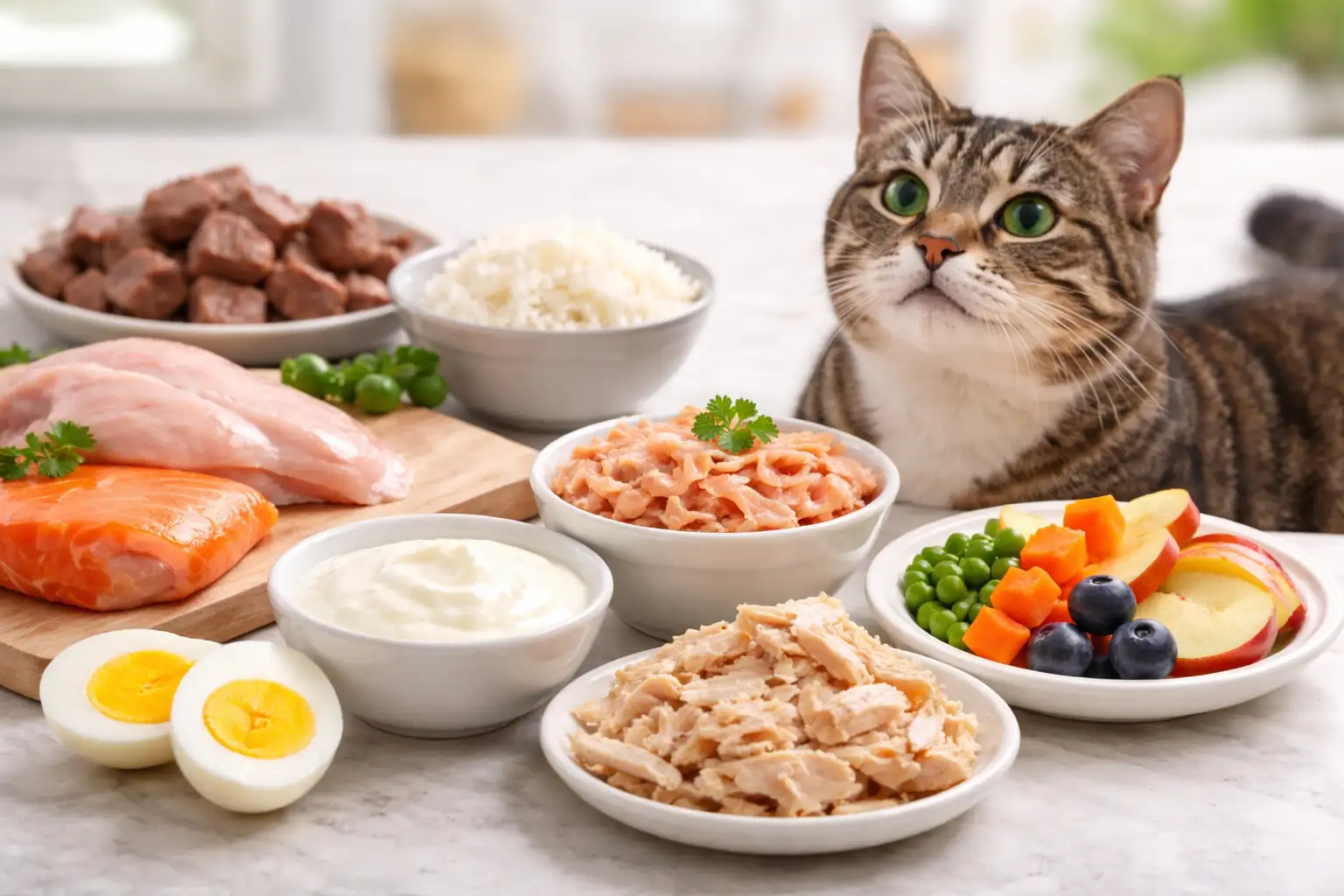
Cats can eat small amounts of some plain cooked human foods, such as unseasoned cooked chicken, turkey, lean meat, cooked huevo, or a tiny amount of certain plain vegetables. But most of your cat’s calories should come from complete and balanced cat food. Avoid toxic or risky foods, including onion, garlic, chocolate, caffeine, alcohol, grapes, raisins, xylitol, raw dough, bones, and carne cruda or fish.
Use this guide as a safety filter, not as a homemade diet plan. Cats are obligate carnivores with specific nutrient needs, and a complete and balanced food is the safest daily foundation 1, 2. Human foods should be occasional extras only.
Índice
- What can cats eat safely?
- Quick cat-safe food decision table
- Safe human foods cats can eat in small amounts
- Human foods cats should not eat
- How much human food can I give my cat?
- What should I do if my cat ate something unsafe?
- When should human foods be off-limits?
- How to introduce a new safe treat
- Preguntas frecuentes
- Referencias
What can cats eat safely?
Cats can safely eat some plain cooked animal proteins and a few simple plant foods in very small amounts. The safest choice is always plain, cooked, unseasoned, boneless, and served as a treat rather than a meal.
The most important rule is this: cat food comes first. The FDA explains that complete and balanced pet foods are formulated to provide the nutrients needed for a stated life stage 2. A bite of chicken, egg, or fish is not the same thing as a balanced cat diet.
Before giving any human food, ask four questions:
- Is it known to be safe for cats?
- Is it plain, cooked, boneless, and unseasoned?
- Is the portion tiny enough to count as a treat?
- Is my cat healthy enough for a new food?
If any answer is no, skip it.
Quick cat-safe food decision table
This table is built for the common “can my cat eat this?” moment. When in doubt, choose the safer column and ask your veterinarian.
| Food category | Usually okay in tiny amounts | Use caution | Do not feed |
|---|---|---|---|
| Plain cooked meat | Chicken, turkey, lean beef, lean pork with no seasoning | Fatty meat, deli meat, processed meat | Bones, seasoned meat, onion/garlic recipes, raw meat |
| Pescado | Plain cooked salmón o tuna as an occasional treat | Canned fish, high-salt fish, frequent fish treats | Raw fish, smoked fish, fish bones, seasoned fish |
| Huevos | Fully cooked plain egg | Frequent egg treats or high-fat preparations | Raw egg, egg dishes with salt, butter, onion, garlic, or cheese |
| Dairy | Usually best avoided; some cats tolerate a tiny lick | Plain unsweetened yogurt or small cheese taste if tolerated | Large dairy portions, sweetened dairy, xylitol-containing products |
| Vegetables | Plain cooked green beans, pumpkin, carrot, or peas in tiny amounts | Any new vegetable if your cat has GI issues | Onion, garlic, chives, leeks, heavily seasoned vegetables |
| Fruit | Tiny pieces of some plain fruit if tolerated | Apple or blueberry in very small amounts | Grapes, raisins, citrus peels, pits, seeds, sweetened fruit |
| Drinks | Fresh water | None as a treat habit | Alcohol, coffee, tea, energy drinks, leche as a routine drink |
| Packaged human food | Usually skip | Check ingredients carefully | Chocolate, candy, xylitol, salty snacks, sauces, baked goods |
Safe human foods cats can eat in small amounts
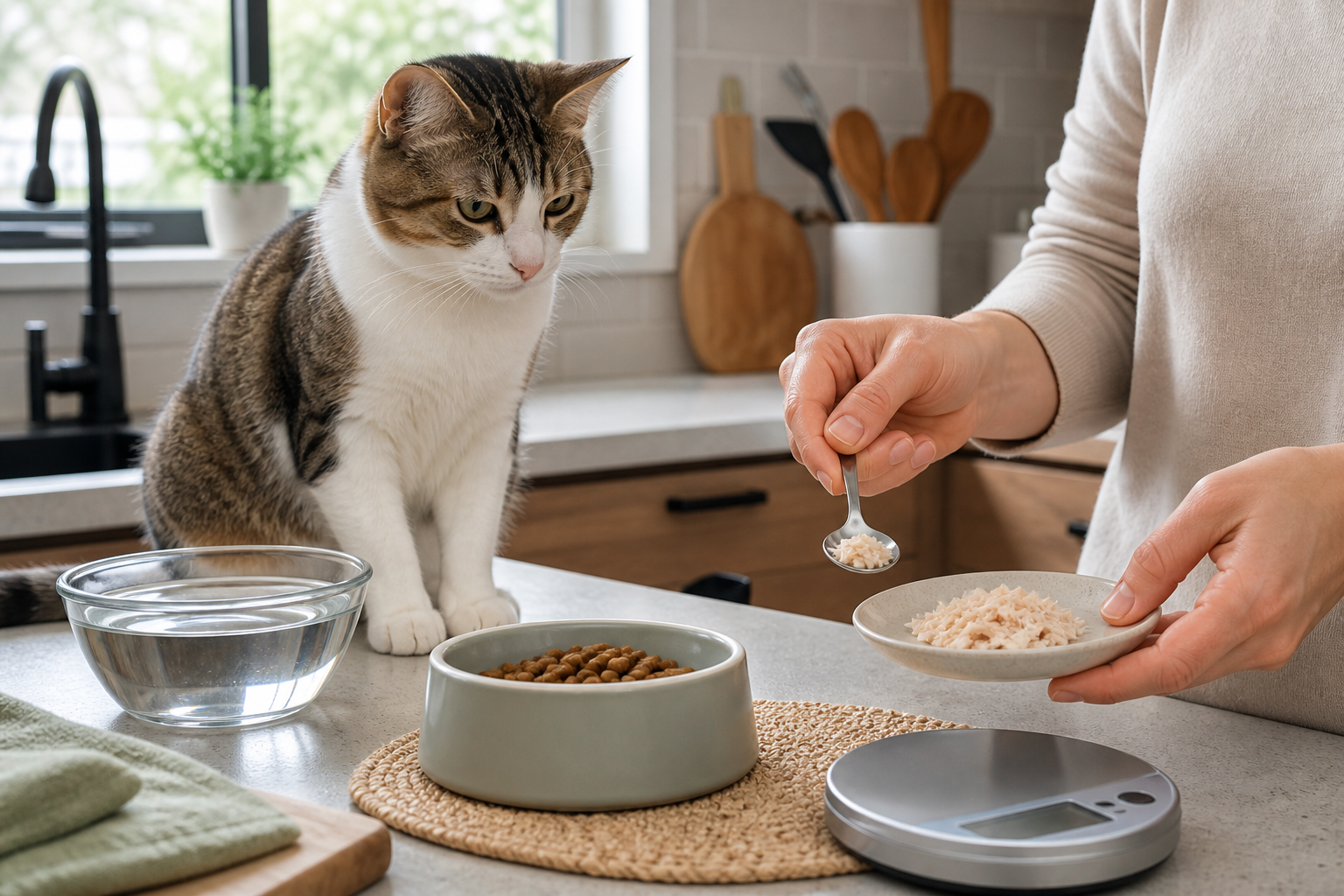
The safest human foods for cats are plain cooked proteins with no seasoning. Some simple plant foods may be okay as tiny treats, but they are optional. Cats do not need fruit, vegetables, or table scraps to be healthy.
| Alimentación | Safer way to offer it | Notas |
|---|---|---|
| Cooked chicken | Plain, skinless, boneless, shredded or diced tiny | No salt, butter, garlic, onion, sauce, or breading. |
| Cooked turkey | Plain, lean, boneless, tiny pieces | Avoid deli turkey, gravy, stuffing, and seasoned holiday leftovers. |
| Lean cooked beef | Plain, cooked through, very small amount | Avoid fatty scraps and seasoned ground meat. |
| Fully cooked egg | Tiny piece of scrambled or boiled egg with no butter or salt | See the dedicated guide on can cats eat eggs before using it often. |
| Plain cooked salmon | Boneless, fully cooked, unseasoned, tiny flakes | Use rarely; see can cats eat salmon. |
| Plain tuna | Tiny amount, occasional only | Tuna is not a balanced meal; see can cats eat tuna. |
| Plain cooked pumpkin | Tiny amount only if tolerated | Ask your vet if using it for stool concerns. |
| Cooked green beans | Plain, soft, chopped, tiny amount | Helpful only as an occasional low-calorie treat for some cats. |
| Cooked carrot or peas | Plain, soft, tiny pieces | Not necessary, but some cats tolerate small amounts. |
| Small fruit pieces | Tiny amount of cat-safe fruit only | Fruit is optional and often not interesting to cats. Avoid grapes and raisins. |
Plain is doing a lot of work here. Many foods that sound safe become unsafe when prepared for humans. A chicken bite from a soup, casserole, sandwich, marinade, stir-fry, or holiday plate may contain onion, garlic, salt, butter, spices, sauce, bones, or too much fat.
Human foods cats should not eat
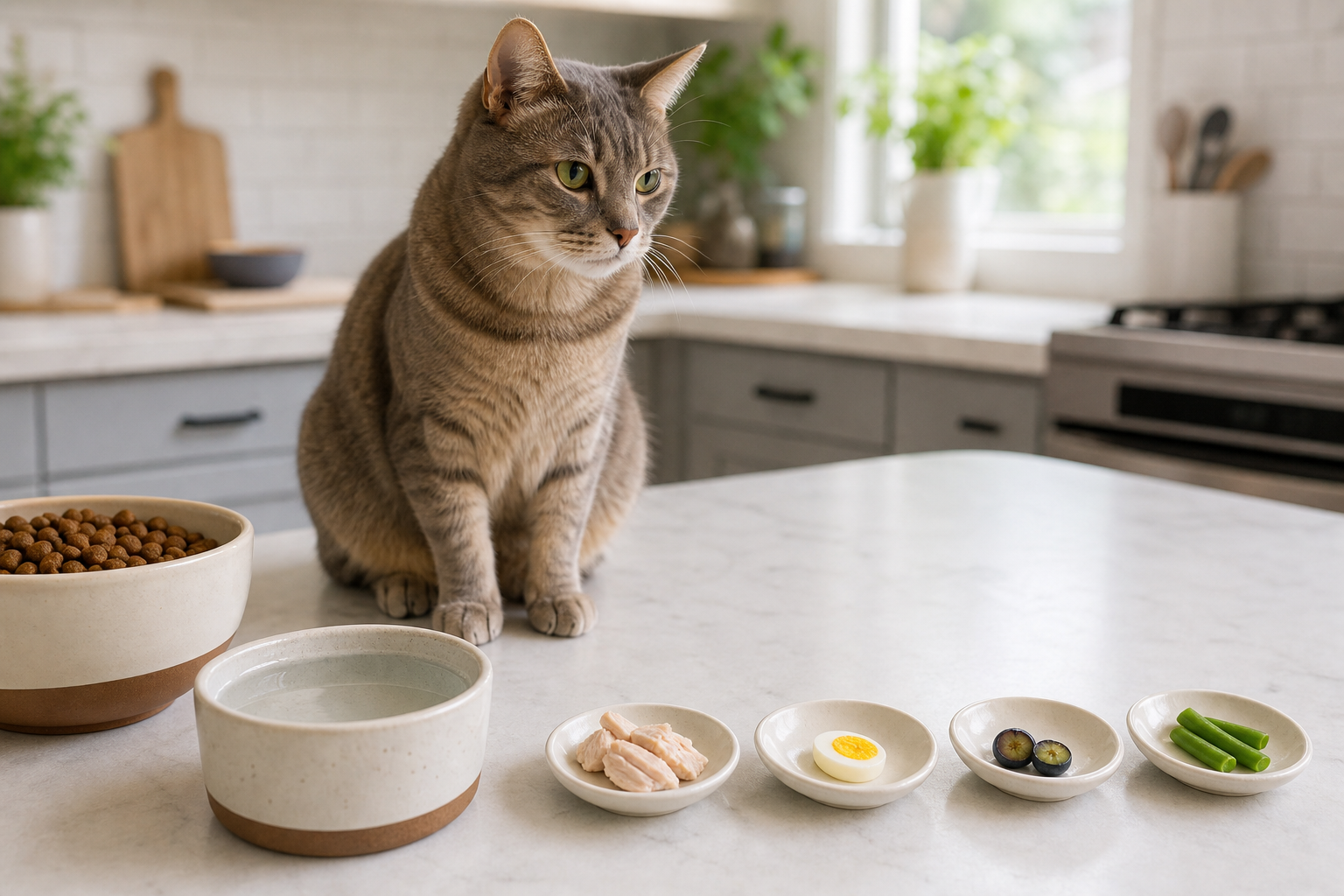
Cats should not eat toxic, high-risk, heavily seasoned, raw, salty, fatty, sugary, or bone-containing human foods. Some require urgent veterinary or poison-control advice even if the amount seems small.
| Food or ingredient | Why to avoid it |
|---|---|
| Onion, garlic, chives, leeks | ASPCA lists these as foods to avoid for pets; they can be dangerous in fresh, cooked, powdered, or hidden ingredient forms 3. |
| Chocolate | Contains methylxanthines and is listed by ASPCA as unsafe for pets 3. |
| Coffee, tea, caffeine, energy drinks | Caffeine-containing products are unsafe and can cause serious signs 3. |
| Alcohol | Unsafe even in small amounts; keep drinks and alcohol-containing foods away 3. |
| Grapes and raisins | Listed by ASPCA as foods to avoid for pets 3. Treat exposure as a call-your-vet situation. |
| Xilitol | A sweetener in some gum, candy, baked goods, and dental products; keep away from cats and call for advice if exposure is possible. |
| Raw dough | Yeast dough can expand and alcohol can be produced during fermentation 3. |
| Raw meat, raw fish, raw eggs | Raw pet foods can carry harmful bacteria and create risks for pets and people 4. |
| Bones | Choking, mouth injury, obstruction, or digestive injury risk. |
| Smoked, cured, deli, or salty meats | Often too salty and may contain unsafe seasonings. |
| Fat trimmings, fried foods, butter-heavy foods | Can cause digestive upset and may be risky for cats with pancreatitis history. |
| Milk and large dairy portions | Many cats do not tolerate lactose well; dairy can cause vomiting or diarrhea. |
| Candy, baked goods, desserts | Often contain sugar, fat, chocolate, xylitol, raisins, dairy, or other unsafe ingredients. |
If you are not sure whether an ingredient is safe, do not feed it “just to see.” It is easier to choose a cat treat than to manage a poisoning scare.
How much human food can I give my cat?
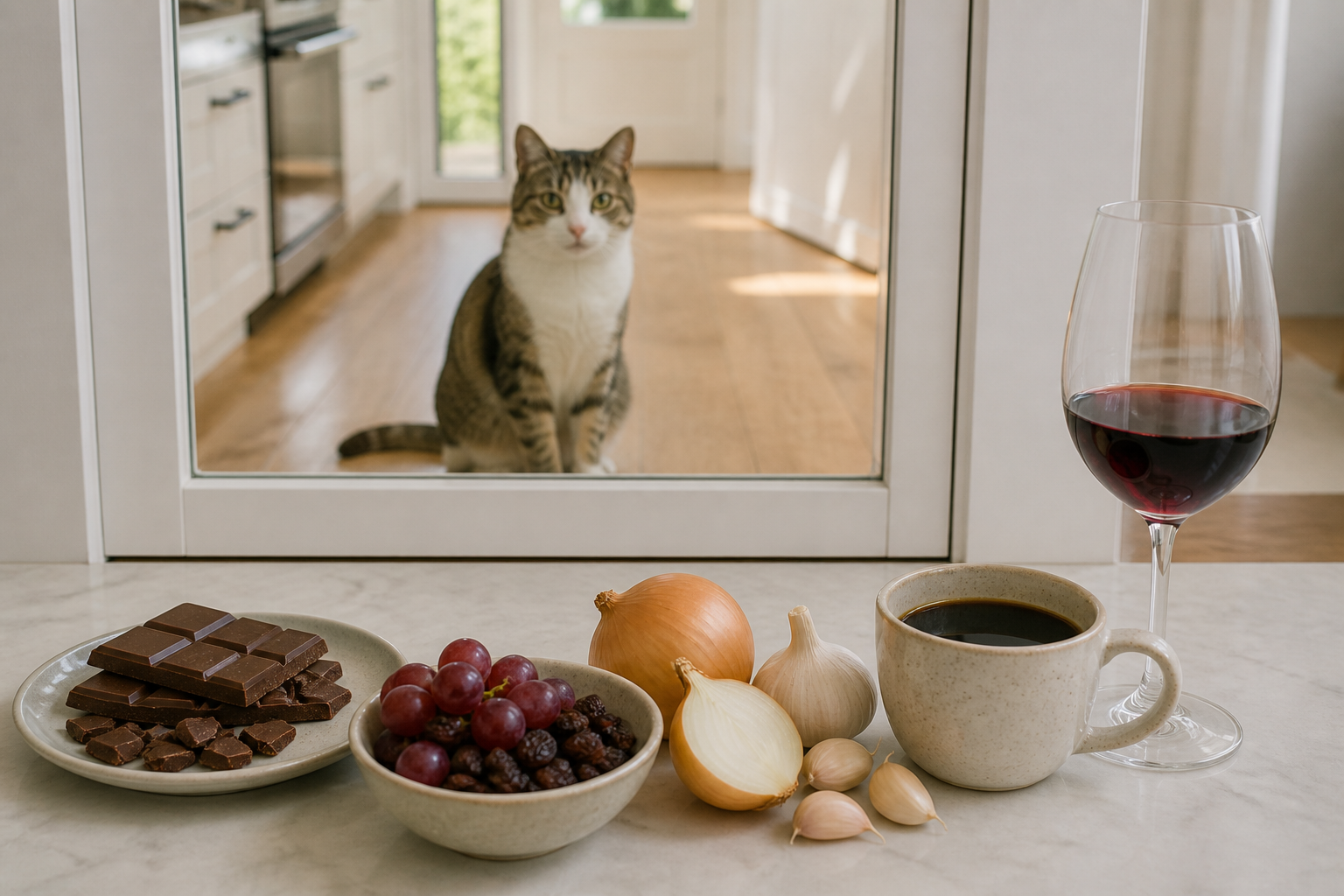
For most healthy adult cats, human food should be limited to tiny treat portions. A few small flakes or pea-sized pieces are usually enough for a taste.
A practical portion rule:
- Start with one pea-sized bite for a new food.
- Keep treats occasional, not daily by default.
- Count all treats together, including commercial treats, dental treats, toppers, table bites, and food used for training.
- Do not let treats replace complete cat food.
| Cat size or situation | Safer treat approach |
|---|---|
| First time trying a food | One tiny bite, then wait and watch. |
| Healthy adult cat | A few tiny pieces occasionally. |
| Overweight cat | Skip human food or use the smallest possible amount within the day’s calories. |
| Gatito | Ask your vet; kittens need consistent kitten-formulated nutrition. |
| Senior cat | Use extra caution, especially with kidney, thyroid, dental, digestive, or weight changes. |
| Cat on prescription food | Do not add human foods unless your vet approves. |
For daily feeding decisions, use SnuggleSouls’ guide on ¿Cuánto debo darle de comer a mi gato? or estimate a starting point with the calculadora de calorías para gatos. If your main question is diet format, compare wet vs dry cat food instead of trying to fill gaps with human foods.
What should I do if my cat ate something unsafe?
If your cat ate a toxic food, a risky ingredient, or an unknown amount, call your veterinarian, an emergency clinic, or an animal poison control service. Do not wait for symptoms if the food is high-risk.
| What happened | ¿Qué hacer ahora? |
|---|---|
| Ate onion, garlic, chives, leeks, chocolate, grapes, raisins, caffeine, alcohol, xylitol, or raw dough | Call a vet or poison control service now. |
| Ate raw meat, raw fish, or raw egg | Call your vet, especially for kittens, seniors, immunocompromised cats, or symptoms. |
| Ate bones, string, wrapper, plastic, or packaging | Call your vet. Do not pull string from the mouth or anus. |
| Ate a small bite of plain safe food | Monitor if your cat is otherwise normal. |
| Vomiting, diarrhea, drooling, tremors, weakness, collapse, breathing trouble, pain, pale gums, seizures, repeated retching, or not eating | Seek urgent veterinary care. |
Before you call, gather:
- What your cat ate.
- The ingredient list or packaging.
- Estimated amount.
- Time of exposure.
- Your cat’s weight, edad, health conditions, and medications.
- Current symptoms, if any.
Do not try to make your cat vomit unless a veterinarian or poison control professional tells you to. Home attempts can be dangerous.
When should human foods be off-limits?
Human foods should be off-limits when your cat has medical conditions, a prescription diet, vomiting, diarrhea, sudden appetite changes, weight loss, urinary signs, food allergies, or a history of pancreatitis.
| Cat or situation | Why to avoid human foods |
|---|---|
| Prescription urinary, kidney, diabetes, allergy, GI, or weight-loss diet | Extras can interfere with the plan. |
| Vómitos o diarrea | New foods can make it harder to identify the cause. |
| Sudden appetite loss or sudden hunger | Food changes may ocultar an underlying issue. |
| Weight loss | Extra treats can delay proper diagnosis. |
| Straining to urinate or litter box changes | This can be urgent and is not a treat problem. |
| Pregnant or nursing cat | Nutrition needs are specific and should be guided by a vet. |
| Gatito | Growth diets need consistency. |
| Known food allergy or itchy skin flare | New proteins can complicate diet trials. |
If your cat is not steady on their normal food, solve the main diet question first. SnuggleSouls’ guide to choosing healthy cat food is a better starting point than experimenting with table food.
How to introduce a new safe treat
Introduce one safe treat at a time, in a tiny amount, and watch your cat for the next 24 hours. If your cat vomits, has diarrhea, scratches intensely, hides, refuses food, or acts unwell, stop the treat and call your vet if signs persist or worry you.
Simple introduction steps:
- Choose one plain, safe food.
- Offer a pea-sized amount.
- Do not introduce another new food that day.
- Watch appetite, stool, vomiting, itching, energy, and litter box habits.
- If all is normal, keep it as an occasional treat only.
Do not use human foods to force variety. Cats can be perfectly happy and healthier on a steady complete food. If your cat seems bored, begging, or picky, the answer is usually routine, enrichment, portion accuracy, or a better cat-food fit, not a rotating menu of human foods.
Preguntas frecuentes
What human foods can cats eat?
Cats can eat tiny amounts of plain cooked chicken, turkey, lean meat, fully cooked egg, or plain cooked fish if the food is boneless, unseasoned, and safe for that cat. These are treats, not meal replacements.
Can cats eat fruit?
Some cats can have tiny pieces of certain plain fruits, but fruit is optional and not needed. Avoid grapes and raisins completely, and avoid pits, seeds, sweetened fruit, citrus peels, and fruit desserts.
Can cats eat vegetables?
Some cats tolerate tiny amounts of plain cooked green beans, pumpkin, carrot, or peas. Never give onion, garlic, chives, or leeks, and do not use vegetables as a substitute for complete cat food.
Can cats eat chicken?
Yes, cats can eat a small amount of plain cooked chicken if it is boneless, skinless, and unseasoned. Avoid fried chicken, rotisserie skin, bones, seasoning, gravy, garlic, onion, and high-salt preparations.
Can cats eat cheese?
Cheese is not toxic in the same way as onion or chocolate, but many cats do not tolerate dairy well and cheese is salty and calorie-dense. See SnuggleSouls’ guide on can cats eat cheese before offering it.
Can cats eat raw meat?
Raw meat is not recommended as a casual treat. The FDA warns that raw pet foods can carry harmful bacteria and create risk for both pets and people 4. See can cats eat raw meat for a fuller safety discussion.
Is homemade cat food better than commercial cat food?
Not automatically. Homemade diets can become deficient or imbalanced if they are not formulated by a qualified veterinary nutrition professional. Complete and balanced commercial cat food is usually the safer daily foundation 2.
What should I do if I cannot find a food on this list?
Do not feed it until you check a reliable source or ask your veterinarian. For high-risk exposures, call a vet or poison control service instead of searching for reassurance.
Referencias
- Cornell Feline Health Center. Cómo alimentar a tu gato.
- U.S. Food and Drug Administration. Complete and Balanced Pet Food.
- ASPCA. Alimentos que no debe dar a su mascota.
- U.S. Food and Drug Administration. Conozca los hechos Las dietas a base de alimentos crudos pueden ser peligrosas para usted y su mascota.
 EN
EN DE
DE ES
ES PT
PT