
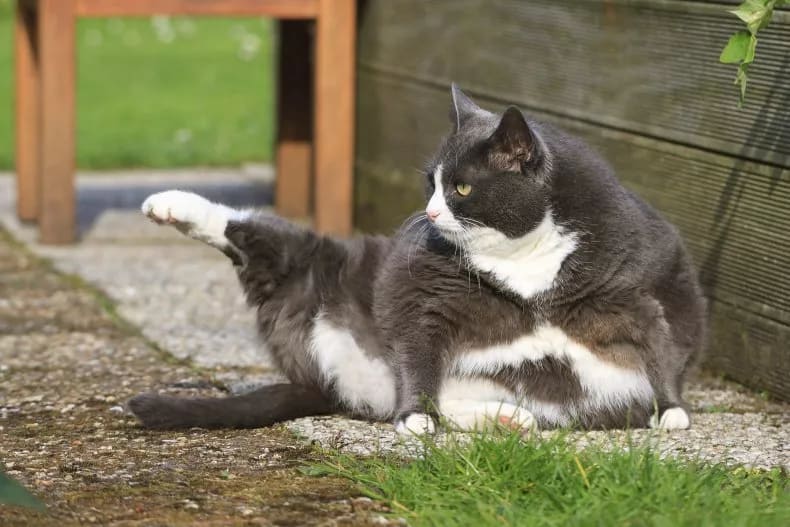
Helping a cat lose weight is no easy task—and one tabby named Lou has made it very clear that she prefers sunbathing over step counts.
A hilarious TikTok shared by her owner, Annabelle Williams (@annabelleleewilliams), has already earned over 455,000 views, proving that Lou’s refusal to exercise is oddly relatable.
Lou the “Laid-Back Queen”
In the clip, Lou is seen lounging on a leash outdoors, basking in the sunshine. Her vet advised her to lose 5 pounds, but instead of walking, Lou chooses the art of relaxation—occasionally rolling over with great effort.
Despite her dad’s encouragement—“Let’s go five steps”—Lou barely manages one, and only to shift her position.
Viewers couldn’t stop laughing, especially after spotting the AirTag clipped to her collar.
- One joked: “Is the AirTag so you know if she’s in the kitchen or the living room?”
- Outro escreveu: “Thank God you had the AirTag—you nearly lost her on that second roll.”
- A fan defended Lou’s style: “She’s not made for the walking life. She’s a laid-back sunbathing queen.”
Her owner playfully replied: “Sadly, she got that from her mother.”
@annabelleleewilliams sound up to hear her dad trying to encourage her 🫠 #fyp #catsoftiktok #cattok #catmom #fatcat
♬ original sound – annabelle lee
The Serious Side: Cat Obesity Risks
While Lou’s antics are lighthearted, cat obesity is a genuine health concern. According to VCA Animal Hospital, overweight cats face higher risks of:
- Diabetes mellitus
- Câncer
- Heart disease and hypertension
- Osteoarthritis and joint degeneration
- Bladder stones
- Anesthetic complications
Simply cutting back on food isn’t enough—doing so can cause nutrient deficiencies. Instead, vets recommend:
- A calorie-restricted diet with precise portions
- Specially formulated food (kibble or canned) or custom nutrition plans
- Monthly weigh-ins to track safe progress
- Treat limits (no more than 10% of daily calories)
- Play-based exercise or rehab support
Cats and Human Obesity Research
Interestingly, cats may also help researchers understand human obesity. Studies show that when overweight cats are placed on calorie-restricted diets, their gut microbiomes change in ways similar to humans—boosting levels of propionic acid (linked to appetite control) and beneficial bacteria like Prevotella 9 copri.
That means Lou’s weight-loss journey, stubborn as it may be, connects to broader science that could help both pets and people.
Conclusões para os pais de animais de estimação
Lou may have chosen rolling over the treadmill, but her story is a reminder: helping cats stay at a healthy weight takes patience, planning, and a sense of humor.
PERGUNTAS FREQUENTES
Q: How can I tell if my cat is overweight?
Check with your vet, but generally, you should be able to feel (not see) your cat’s ribs, and they should have a defined waistline when viewed from above.
Q: What’s the safest way for cats to lose weight?
Work with a vet to design a calorie-controlled plan. Gradual weight loss—about 1–2% of body weight per week—is considered safe.
Q: Do cats need exercise to lose weight, or is diet enough?
Both matter. Diet plays the biggest role, but interactive play and enrichment help burn calories and keep cats happy.









 EN
EN DE
DE ES
ES PT
PT