

What should visitors expect at K-PET Fair Daejeon 2026?
Winter pet events can feel chaotic: queues move slowly, noise builds fast, and purchases pile up. Without a simple plan, the day becomes stressful for both people and pets.
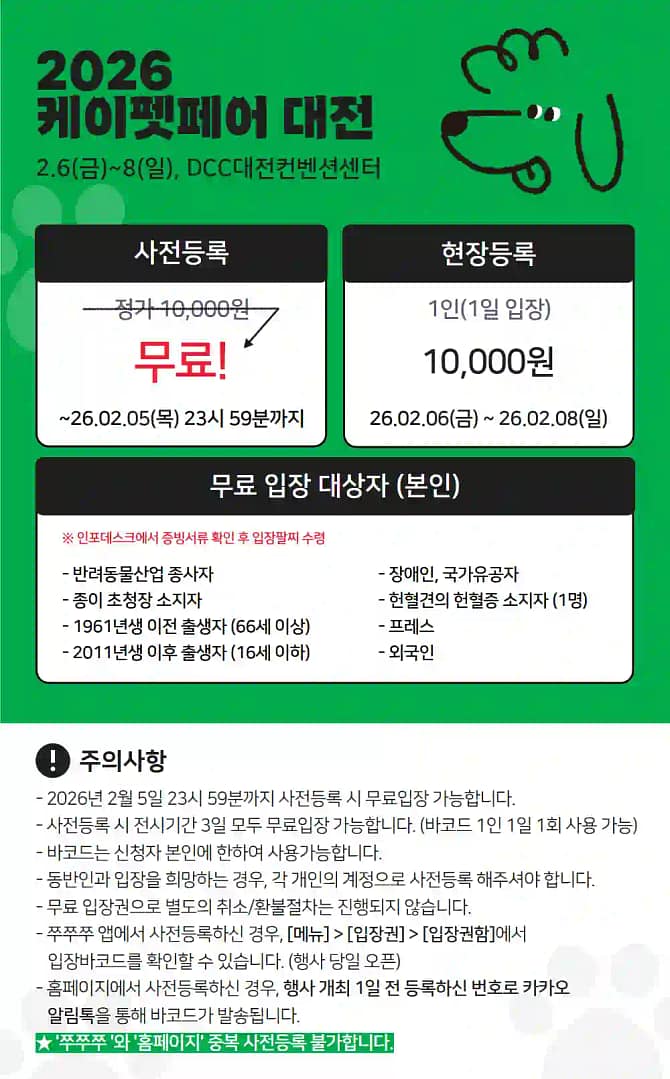
K-PET Fair Daejeon 2026 runs 6–8 February 2026 at DCC (Daejeon Convention Center) 2nd Exhibition Center in Daejeon, South Korea, focusing on pet food, supplies, and services with barcode-based entry rules and pet-friendly conditions.

The sections below cover the practical decisions that usually matter most: entry and fees, transport to DCC, a simple show-floor route, and welfare-minded etiquette for crowded indoor halls.
SnuggleSouls is a cat-care knowledge site for guardians who want science-backed answers.
Informações sobre o evento principal
| Fatos rápidos | Detalhes |
|---|---|
| Datas do evento (2026) | Fri 6 Feb – Sun 8 Feb 2026 |
| Hours | 10:00–18:00 (last entry 17:30). Entry time may be brought forward if queues are heavy. |
| Local do evento | DCC (Daejeon Convention Center) 2nd Exhibition Center |
| Cidade / país | Daejeon, South Korea |
| Endereço | 87 Expo-ro, Yuseong-gu, Daejeon (Doryong-dong) |
| Taxa de inscrição | Pre-registration by Thu 5 Feb 2026 23:59: free. On-site registration: KRW 10,000 for one-day entry. |
| Booking / registration | Official pre-registration: https://k-pet.co.kr/registration/ |
| Pet entry policy | Companion animals allowed; leash required. A stroller/wagon/carrier/sling is recommended for safer movement in crowds. |
| Parking (venue guidance) | 30 minutes free, then KRW 500 per 15 minutes; daily max KRW 10,000. Parking rules can change—confirm on the official venue notice before visiting. |
| Enquiries (organiser) | Visitor enquiries: +82-2-6121-6247 (K-PET Fair office) |
How to get there (DCC-published options)
- Rail + local transit: KTX to Daejeon Station, then subway Line 1 to Government Complex Station and a connecting bus to the DCC terminus is one commonly listed route.
- City buses: Multiple routes serve the venue area; confirm live arrivals on the day in a local transit app.
- Dirigir: Follow Expo-ro signage for DCC/DCC2; use on-site paid parking and allow extra time for exit queues.
- Taxi: Allow extra buffer for traffic; pickup points can be busy during peak exit windows.
- Nearest airport (for international visitors): Check airport-limousine connections via Daejeon terminals close to travel dates because timetables can change.
Entry rules worth knowing
- Free entry is time-limited: pre-register by 5 Feb 2026 23:59 for free entry during the show period (barcode rules apply).
- Register companions separately: barcodes are not transferable, and each attendee should register individually.
- Late arrivals feel rushed: last entry is listed as 17:30.
What is the layout and what can be seen on the show floor?
Indoor pet fairs can blur together: similar booths, repeating products, and loud demo corners. Without a route, time gets lost and purchases happen under pressure.
K-PET Fair is presented as a multi-brand exhibition where pet products and services are compared side by side. The Daejeon page includes links for a booth layout and participating brands when those assets are published—use them as a map rather than wandering.

Dive deeper: a low-stress show-floor method
Start with “need-to-buy,” then switch to “nice-to-try.”
Use the first hour for necessities (food, litter, grooming basics, travel gear). Crowds tend to thicken later, and vendor staff can spend more time on questions early.
Use a cat-owner checklist to locate relevant booths quickly.
Even at general pet shows, cat-relevant categories are usually present if searched intentionally: wet food textures, storage and feeding accessories, litter and odour control, scratching materials, carriers, and enrichment toys. When labels are hard to compare, look for clear ingredient lists, country of manufacture, and expiry dates.
Prevent impulse buys with three questions.
1. Does it fit the pet’s size and temperament? 2.What is the ongoing cost for 3–6 months (refills, filters, supplements, litter)? 3. Is the return/exchange policy clearly stated? If the policy is unclear, treat the purchase as final.
Expect variation by city.
Some editions are reported as having hundreds of booths; exhibitor mix can differ by location and date. Use the official brand list once it appears to decide which categories deserve time.
How can visitors plan entry, timing, and crowd strategy?
Arriving at the wrong time can mean long queues, packed aisles, and tired pets. A timing plan usually saves more energy than any single deal.
Free entry depends on meeting the organiser’s pre-registration deadline, and entry timing may be adjusted earlier depending on queue conditions. Build flexibility into the day.
Dive deeper: a simple visit plan that works
Before arrival (15 minutes)
- Complete pre-registration and save confirmations; keep phone battery reserve for scanning.
- Set a spending ceiling for “nice-to-have” items and carry hands-free (backpack or foldable tote).
Two timing patterns
- Focused buying: arrive near opening, complete priority booths first, and leave by early afternoon.
- Learning-focused browsing: arrive after the initial rush, accept slower movement, and spend time on ingredient comparisons and service questions.
Inside the hall
Walk the perimeter first, then cut inward to target booths. Take brief corridor breaks every hour (especially with a cat in a carrier) to check ventilation, temperature, and stress signs. Leave buffer time for parking payment and loading at the end of the day.
To reduce end-of-day friction, keep bulky purchases for the final loop, photograph receipts (and any warranty/return notes), and compare unit prices on consumables (per gram or per litre) rather than bundle totals. This also helps with returns later.
What pet etiquette, welfare, and safety checks matter most on-site?
Crowds increase stress: unfamiliar animals, sudden noises, and tight aisles. Without clear etiquette, minor frictions quickly become safety problems.
This edition permits pet entry but states conditions: leashes are required, and carriers/strollers are recommended to manage dense foot traffic.

Dive deeper: welfare-first choices (especially for cats)
Decide whether a cat should attend
Most cats cope better without crowded indoor exposure. If the goal is shopping for cat products, attendance without the cat often improves welfare and shopping efficiency. If a cat must attend, keep the carrier closed, covered on three sides, and away from aisle edges.
Carry a minimal “pet-ready” kit
For cats: absorbent pad, wipes, water and a collapsible bowl, plus a breathable cover. For dogs: waste bags, water, and a short fixed-length leash. For all pets: identification details and a quick exit plan if anxiety escalates.
Follow basic pet etiquette and reduce disease risk
In crowded aisles, avoid touching or feeding others’ pets without consent, manage accidents quickly, and skip leash greetings in narrow spaces. Avoid bringing ill, very young, or incompletely vaccinated pets. For cats, keep the carrier closed at all times inside the hall.
Apply quick “ethical vendor” checks
Treat medical and supplement claims cautiously: ask for ingredient lists, usage guidelines, and clear “not a substitute for veterinary care” framing. If any live-animal interactions appear, prioritise welfare conditions (water, space, supervision) and report concerns to event staff.
Event highlights: what stands out, who it suits, and who may skip
What stands out (concrete): time-limited free entry via pre-registration, an indoor all-weather venue, and a stated pet-entry rule set that requires leashes and recommends safe transport options.
Mais adequado para: cat and dog households comparing everyday consumables and gear; new pet guardians wanting basic product explanations; visitors who prefer list-based shopping.
Who may skip: pets that are noise-sensitive or reactive; visitors who dislike crowded indoor browsing.
Do not miss (planning-first): pre-register before 5 Feb 2026 23:59; check the booth map/brand list links once posted; prioritise pet comfort over “seeing everything.”
Video: a quick look at organiser-published walkthrough content
This organiser-uploaded walkthrough shows the booth style and product variety commonly used across K-PET Fair and related shows.
Os leitores também podem conferir nosso Calendário de eventos de 2026 para obter uma visão geral abrangente dos próximos eventos para animais e animais de estimação.
Referências
- 2026 케이펫페어 대전 (dates, venue, fees, pet entry, access notes) (K-PET Fair)
- Transportation information (교통 안내) (Daejeon Convention Center)
- Parking information (주차 안내) (Daejeon Convention Center)
- 2024 케이펫페어 행사 정보 (venue listing and entry fee model) (COEX Visitor)
- K-Pet Fair delights pups and their parents (Korea JoongAng Daily)
- Daejeon Convention Center (DCC) (VisitKorea)
Conclusão
K-PET Fair Daejeon 2026 is easiest as a structured indoor visit: register early for free entry, use the official map when posted, and prioritise pet comfort and safety.
FAQs for “What should visitors expect at K-PET Fair Daejeon 2026?”
When is K-PET Fair Daejeon 2026?
It runs Fri 6 Feb – Sun 8 Feb 2026.
What are the opening hours and last entry time?
Hours are 10:00–18:00, com last entry at 17:30. The organiser also notes entry time may be adjusted earlier if queues build.
Where is it held?
Em DCC (Daejeon Convention Center), 2nd Exhibition Center, Daejeon, South Korea.
How much are tickets?
The standard on-site price is KRW 10,000, mas pre-registration is free (see next FAQ).
How do I get free entry (and what’s the deadline)?
Pre-register by Thu 5 Feb 2026, 23:59 to enter free during the show period (barcode rules apply).
How do barcodes work—can I share mine?
The organiser states barcode entry is per person, and barcodes are issued for use (commonly treated as one barcode per person per day). Don’t plan on sharing/forwarding barcodes.
Are pets allowed inside?
The official event page explicitly says companion dogs are allowed and implies control rules apply. Always follow on-site staff guidance.
Are cats allowed?
Because the organiser wording specifically mentions cães, cat entry may be treated differently by edition/venue. If you’re considering bringing a cat, confirm with the organiser before you go—and strongly consider attending without your cat for welfare and ease.
Do pets need a leash or carrier?
For dogs, leash control is required per organiser guidance; for safety in dense aisles, a stroller/wagon/carrier is often the lowest-stress option.
What’s the best time to arrive to avoid crowds?
If you’re shopping for essentials, arrive near opening; if you’re browsing, arrive after the first rush. Also keep in mind last entry is 17:30.
How do I get to DCC from Daejeon Station?
DCC’s guidance commonly lists: Daejeon Station (Subway Line 1) → Government Complex Station → transfer to bus (e.g., 705/707) to DCC.
How much is parking at DCC?
DCC lists 30 minutes free, then KRW 500 per 15 minutes, com um KRW 10,000 daily maximum (confirm day-of in case policies change).









 EN
EN DE
DE ES
ES PT
PT