
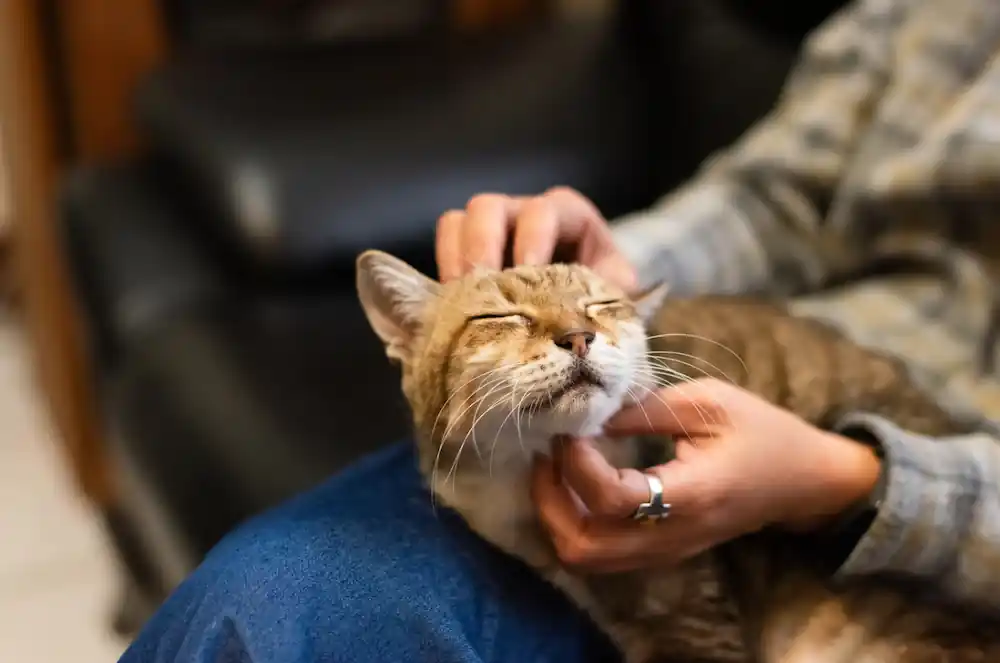
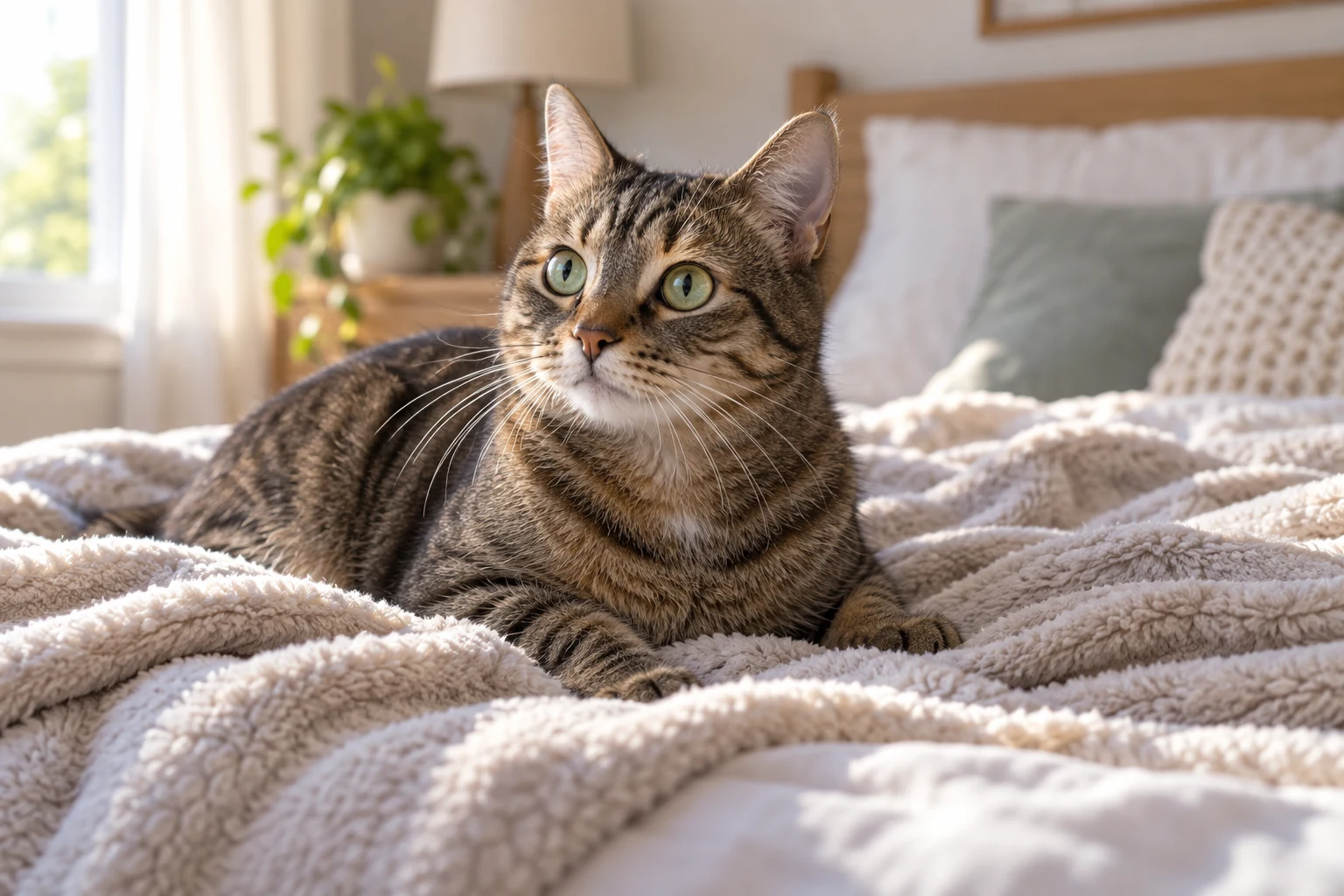
Your cat may be cuddly because they trust you, feel safe and warm beside you, enjoy your routine, want attention, or simply have an affectionate personality. Cuddling is usually normal when your cat chooses the contact, looks relaxed, and continues eating, playing, grooming, sleeping, and using the litter box normally. Sudden clinginess paired with other changes deserves closer attention.
The useful question is not only “Why is my cat affectionate?” It is also “Is this normal for my cat, and what does the rest of their body and routine say?” A naturally cuddly cat is different from a normally independent cat who suddenly cannot leave your side.
Inhaltsübersicht
- Why is my cat so cuddly?
- Is my cat’s cuddling normal or concerning?
- What are the most common reasons cats become affectionate?
- What does affectionate cat body language look like?
- Why is my cat suddenly so clingy?
- When should I call a vet about sudden clinginess?
- How should I respond to a very cuddly cat?
- What should I track if my cat suddenly becomes clingy?
- Häufig gestellte Fragen
- Referenzen
Why is my cat so cuddly?
Most cuddly cats are seeking comfort, warmth, social contact, attention, or a predictable shared routine. Some cats have always been affectionate, while others become more social as they settle into a home, learn that a person is safe, or discover that cuddling leads to warmth and pleasant attention.
Cats are individuals. One may sleep on your chest every night; another may show affection by sitting two feet away. Neither style proves that one cat loves a person more. What matters is whether the behavior is voluntary, relaxed, and normal for that cat.
Common affectionate behaviors include:
- Resting beside or on you.
- Rubbing cheeks or the side of the body against you.
- Approaching with an upright or gently curved tail.
- Slow blinking.
- Kneading a soft surface or your lap.
- Purring in a relaxed context.
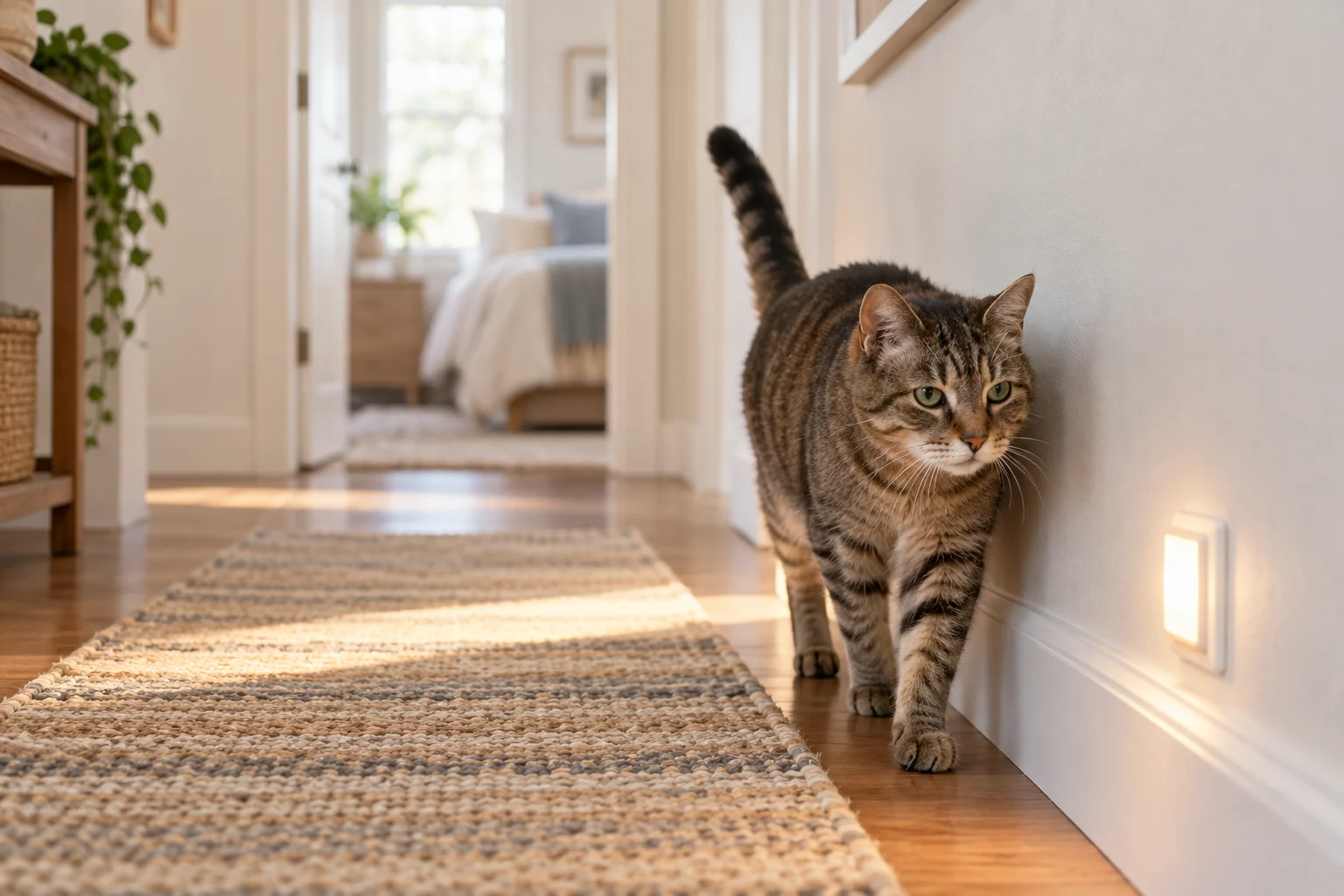
- Following you between rooms.
- Greeting you after an absence.
- Sleeping nearby.
Is my cat’s cuddling normal or concerning?
Cuddling is usually normal when the cat initiates contact, can leave freely, and otherwise follows their usual routine. It becomes more concerning when it is sudden, frantic, persistent, or paired with physical or behavioral changes.
| Was dir auffällt | More likely normal | Noch besorgniserregender |
|---|---|---|
| Zeitplanung | A familiar daily pattern, such as evening sofa time | A sudden major change from the cat’s usual personality |
| Body posture | Loose body, soft eyes, neutral ears, relaxed paws | Tense crouch, flattened ears, wide pupils, trembling, unusual stillness |
| Choice | Cat approaches and leaves freely | Cat seems unable to settle unless touching you |
| Routine | Normal eating, drinking, grooming, play, sleep, and litter box use | Appetite, thirst, Gewicht, sleep, movement, grooming, or litter box changes |
| Vokalisierung | Familiar purrs, chirps, or quiet greetings | New yowling, crying, restlessness, or distressed meowing |
| Touch | Enjoys familiar petting and moves away when finished | Flinches, guards an area, bites suddenly, or seems painful |
| Dauer | Affection fits the cat’s established personality | Clinginess continues, intensifies, or disrupts normal activities |
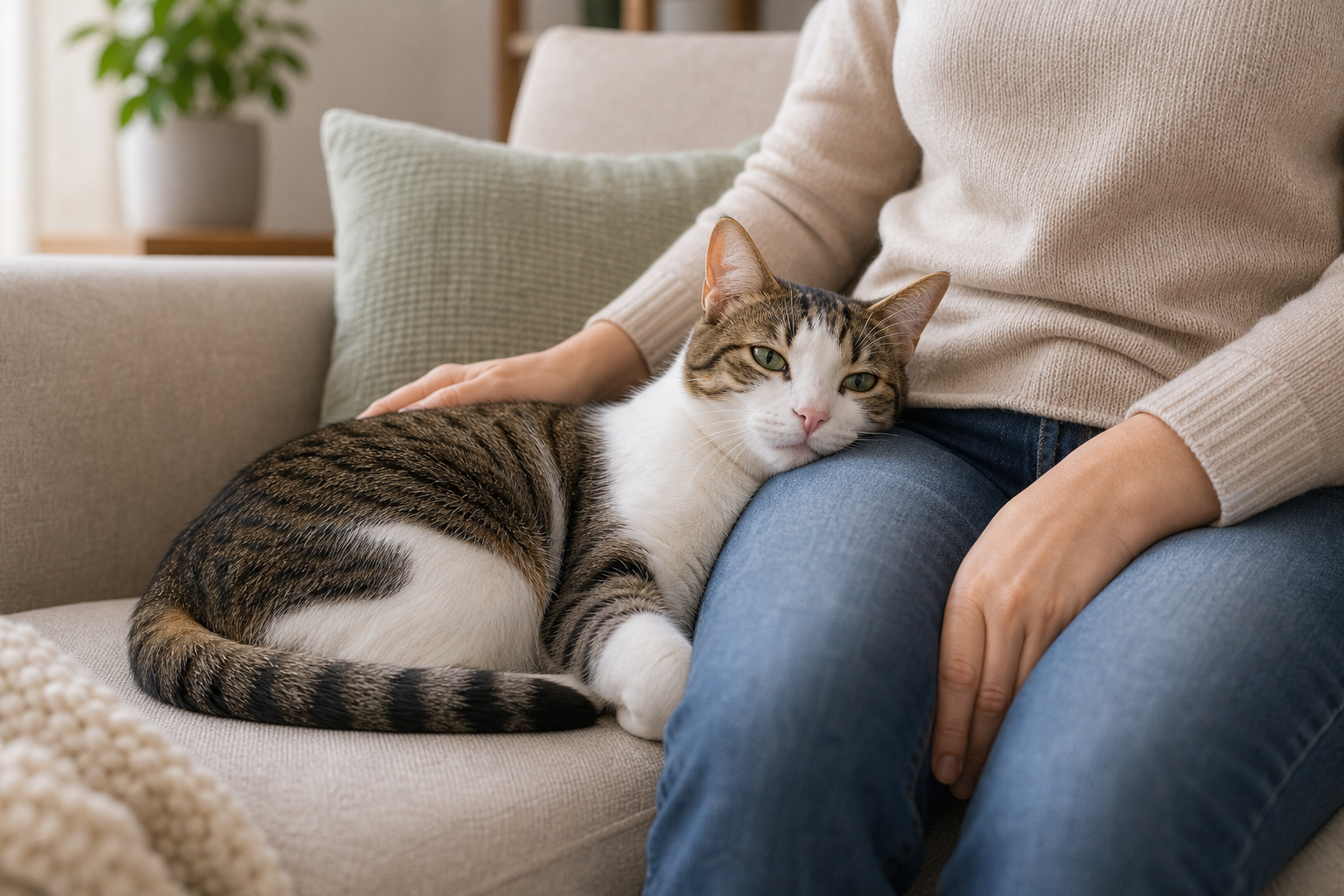
Do not judge the behavior by cuddling alone. A purring cat can still be stressed or uncomfortable, and a cat who feels unwell may seek closeness or hide instead. SnuggleSouls’ guide on Warum Katzen schnurren explains why context matters.
What are the most common reasons cats become affectionate?
Cats become affectionate for several ordinary reasons. Often, more than one reason is true at the same time.
Your cat trusts you
A cat who rests against you is placing themselves in a vulnerable position. Voluntary closeness often means your cat expects you to be calm, predictable, and safe.
Trust usually grows through repeated low-pressure experiences: consistent meals, gentle play, quiet companionship, respecting boundaries, and allowing the cat to approach or leave. The AAFP/ISFM environmental needs guidelines emphasize predictable, positive human-cat social interaction and respecting an individual cat’s preferences 1.
You are warm and comfortable
Cats often choose warm resting places, and a lap, chest, blanket-covered leg, or spot beside a person can be especially appealing. If your cat becomes more cuddly in cold weather or during quiet evenings, warmth and comfort may be the simple explanation.
Cuddling is part of your routine
Cats learn household patterns quickly. If you sit in the same chair after dinner, work from the same desk, or go to bed at a predictable time, your cat may treat that moment as scheduled social time.
Routine-based affection is usually reassuring. The cat approaches at familiar times, settles comfortably, and carries on normally afterward.
Your cat wants attention or access to something
Sometimes cuddling is social; sometimes it is a polite request. Your cat may be asking for play, a meal, a door to be opened, a clean litter box, or your attention.
Look at what happens next. Does your cat cuddle briefly, then lead you toward a toy or bowl? That pattern may be learned communication rather than unusual dependency.
Your cat’s personality or life stage has changed
Some kittens become more affectionate as they mature and settle. Some adult cats become cuddlier after adoption, after gaining confidence, or as household relationships change. Senior cats may seek more warmth or reassurance, though new behavior in an older cat should also be viewed alongside health changes.
Something in the environment changed
Visitors, construction, travel, schedule changes, a new pet, a missing household member, loud noises, or furniture changes can make a cat seek a familiar person. This does not automatically mean a disorder. It may be a temporary coping response.
Give your cat safe resting areas, predictable care, Verstecken places, and the choice to approach. If the response becomes intense or continues after the change settles, speak with your vet.
What does affectionate cat body language look like?
Affectionate body language usually looks loose, voluntary, and easy to interrupt. Read the whole cat rather than one signal.
| Body-language clue | Often relaxed or affectionate | Possible stress or overstimulation |
|---|---|---|
| Augen | Soft gaze, normal pupils, slow blink | Wide pupils, hard stare, rapid scanning |
| Ohren | Neutral or gently forward | Flattened, rotated sharply sideways, constantly flicking |
| Schwanz | Upright greeting tail, gentle curve, relaxed wrap | Fast thrashing, sharp twitching, tucked tail |
| Body | Loose, balanced, leaning or resting comfortably | Rigid, crouched, compressed, trying to escape |
| Pfoten | Relaxed or gentle kneading | Claws gripping, paws braced for escape |
| Touch response | Leans in, remains loose, leaves calmly | Skin twitching, head turn, tail lashing, nip or bite |
If tail movement is hard to read, use the SnuggleSouls guide to Katzen-Schwanz-Sprache. Cats Protection also recommends reading posture, ears, eyes, tail, and context together rather than interpreting one signal alone 2.
Stop petting before your cat needs to bite to end the interaction. If affection often changes into nipping, review this guide on petting overstimulation and biting.
Why is my cat suddenly so clingy?
Sudden clinginess may follow a harmless change, such as colder weather, a new routine, a frightening noise, or more time spent together. But a sudden personality change can also occur when a cat is stressed, uncomfortable, aging, or unwell.
Start by asking what changed in the last few days or weeks:
- Did someone leave or return?
- Did your schedule change?
- Is there a new pet, visitor, baby, scent, sound, or construction project?
- Did the weather become colder?
- Has your cat’s Lebensmittel, litter, medication, or sleeping area changed?
- Is your cat eating, drinking, moving, grooming, and using the litter box normally?
Do not assume all clinginess is separation anxiety. Cats may follow or sit close for many reasons. Concern rises when the behavior is new, intense, and paired with signs such as hiding, appetite change, weight loss, increased thirst, repeated vomiting, diarrhea, poor grooming, pain, restlessness, or litter box changes.
When should I call a vet about sudden clinginess?
Call your veterinarian when sudden clinginess comes with another meaningful change, lasts without an obvious explanation, or feels unlike your cat. Cats often hide signs of illness, so behavior changes can be an early clue rather than a diagnosis 3.
Book a veterinary visit if clinginess is paired with:
- Eating less, refusing food, or suddenly eating much more.
- Drinking or urinating more.
- Weight loss or visible body-shape change.
- Vomiting, diarrhea, constipation, or stool changes.
- Hiding, weakness, unusual sleepiness, or poor grooming.
- New yowling, crying, nighttime restlessness, or confusion.
- Limping, stiffness, difficulty jumping, or reacting to touch.
- Repeated litter box visits, accidents, or straining.
- A sudden personality change in a senior cat.
Seek urgent care for trouble breathing, collapse, seizures, suspected poisoning, repeated vomiting, severe diarrhea, trauma, inability to urinate, sudden paralysis, extreme weakness, or rapid decline.
If clinginess comes with withdrawal, compare the pattern with warum Katzen sich verstecken. If the main change is vocal, use the guide on plötzliche Stimmveränderungen. Stress-related accidents or urine marking also deserve attention; the guide to stressbedingte Veränderungen beim Katzenklo can help organize the clues, but inability to urinate is an emergency.
How should I respond to a very cuddly cat?
Respond by making affection voluntary, predictable, and easy to leave. Enjoy the closeness without holding your cat in place, forcing petting, or treating every approach as a request to be touched.
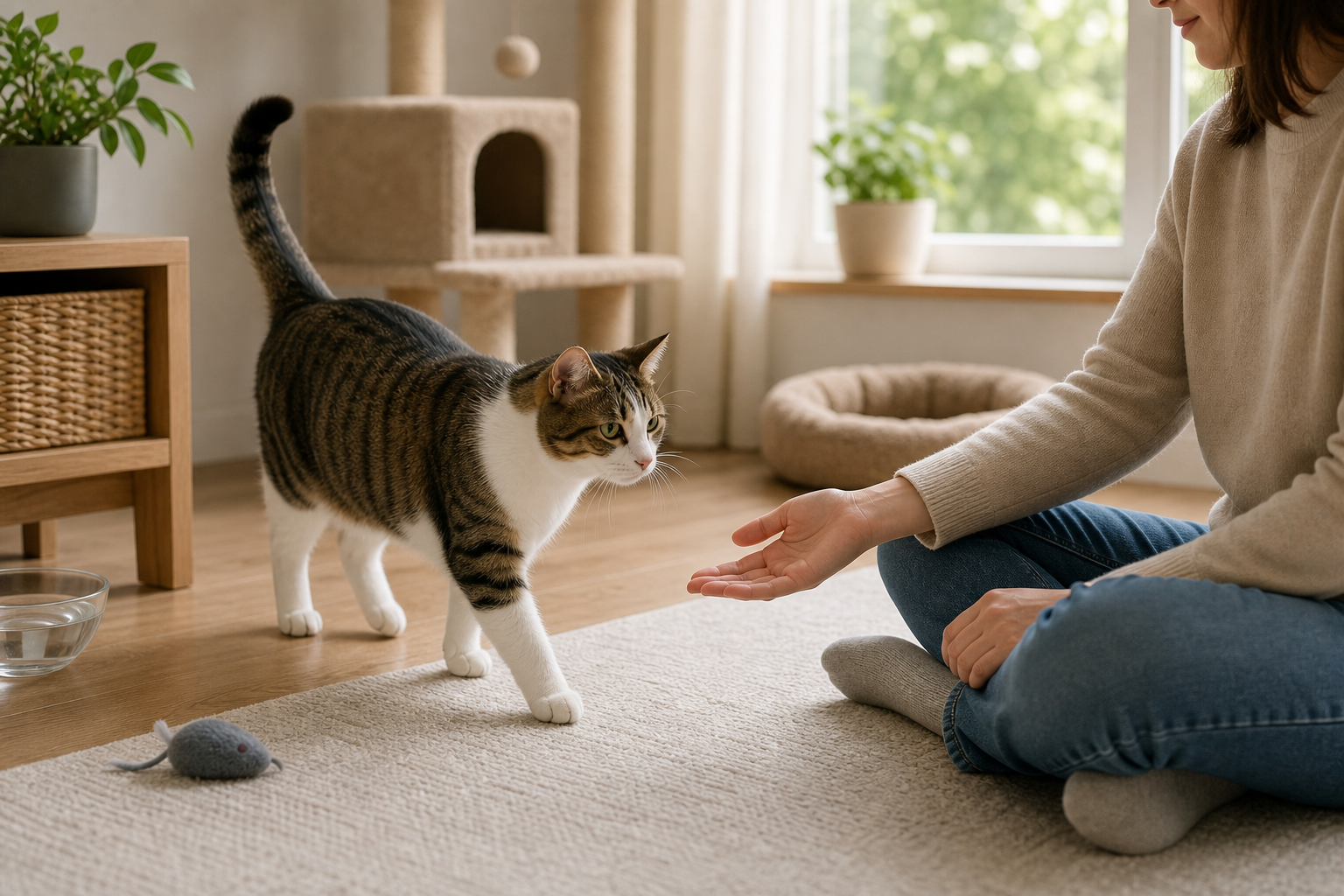
Try this approach:
- Let your cat approach first.
- Offer a still hand and allow a sniff or cheek rub.
- Pet familiar preferred areas, often cheeks, chin, head, or shoulders.
- Pause after a few strokes.
- Continue only if your cat leans back in or clearly asks for more.
- Stop if the tail lashes, ears rotate, skin twitches, body tenses, or the cat turns sharply toward your hand.
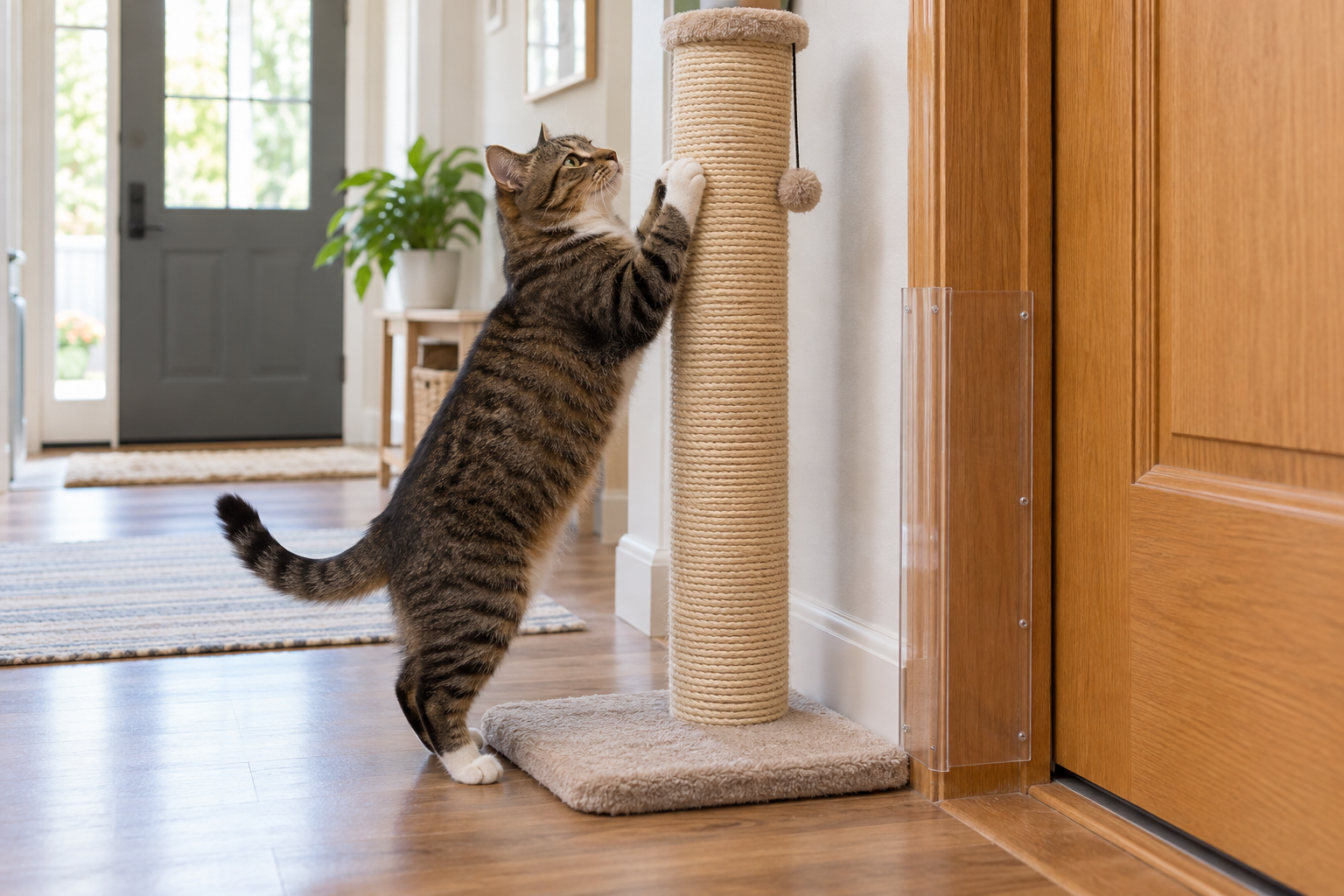
- Keep beds, hiding areas, elevated spaces, water, litter boxes, scratching surfaces, and play opportunities available.
Do not punish clinginess or push your cat away roughly. If you need space, calmly stand up, redirect to a nearby bed, offer a play session, or create a comfortable resting spot beside you.
What should I track if my cat suddenly becomes clingy?
Track when the behavior happens and what else changes. A short record can reveal whether clinginess follows a routine, environmental trigger, physical symptom, or gradual health change.
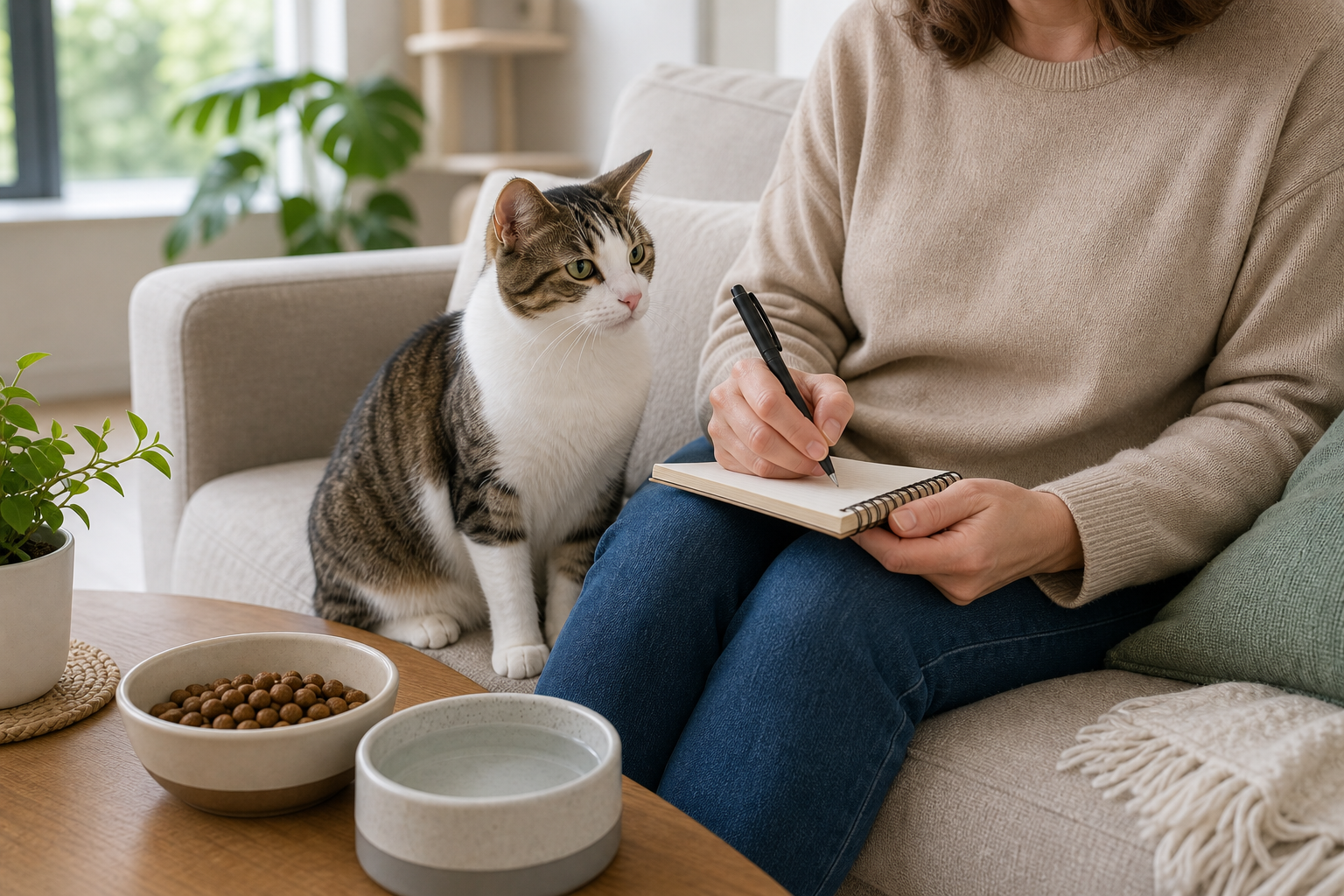
For seven days, note:
- Time and duration of clingy behavior.
- What happened immediately before it.
- Whether your cat initiates and leaves voluntarily.
- Appetite and treat intake.
- Water intake and urination changes.
- Stool, vomiting, or diarrhea.
- Sleep, play, grooming, jumping, and walking.
- New vocalization, hiding, biting, or restlessness.
- Household or schedule changes.
- Body weight if you can measure it safely.
If weight or body shape changes are part of the pattern, use the SnuggleSouls body condition guide to describe what you see. Bring your notes and short videos to your veterinarian if the behavior persists or comes with other changes.
Häufig gestellte Fragen
Does my cuddly cat love me?
Your cat’s voluntary closeness likely reflects trust, safety, comfort, and a positive social relationship. Cats show attachment differently, so cuddling is one affectionate signal rather than the only proof of a bond.
Why is my cat suddenly cuddly at night?
Nighttime cuddling may reflect warmth, household quiet, routine, or a desire for attention. Call your vet if the change is sudden and paired with nighttime yowling, confusion, restlessness, appetite change, pain, or litter box changes.
Why is my cat cuddly only when I am in bed?
Your bed is warm, soft, predictable, and smells familiar. Some cats prefer affection when the environment is quiet and the person is still, making bedtime their safest social window.
Why is my cat more affectionate after I return home?
Your cat may be greeting you, seeking reassurance, requesting food or play, or returning to a familiar routine. This is usually normal if the cat settles and otherwise behaves normally.
Why is my cat suddenly following me everywhere?
A cat may follow you for attention, routine, food, curiosity, environmental stress, or reassurance. Sudden persistent following deserves a vet call when paired with appetite, thirst, weight, mobility, vocal, or litter box changes.
Can a cat become cuddly because they are sick?
Yes. Some unwell cats seek extra closeness, while others hide. Sudden clinginess is not a diagnosis, but it should be evaluated alongside appetite, energy, grooming, movement, vomiting, stool, urination, and other changes.
Should I pick up my cuddly cat?
Only if your cat enjoys being picked up and their body stays relaxed. Many affectionate cats prefer sitting beside a person rather than being held. Respecting that preference helps preserve trust.
Why does my cat cuddle and then bite me?
The cat may become overstimulated or want the interaction to stop. Watch for tail lashing, skin twitching, ear changes, tension, or a head turn before the bite, and pause petting sooner.
Referenzen
- Ellis, S. L. H., et al. AAFP- und ISFM-Leitlinien für die Umweltbedürfnisse von Katzen.
- Cats Protection. Cat Body Language.
- VCA Tierkrankenhäuser. Anzeichen einer Erkrankung bei Katzen erkennen.
 EN
EN DE
DE ES
ES PT
PT