
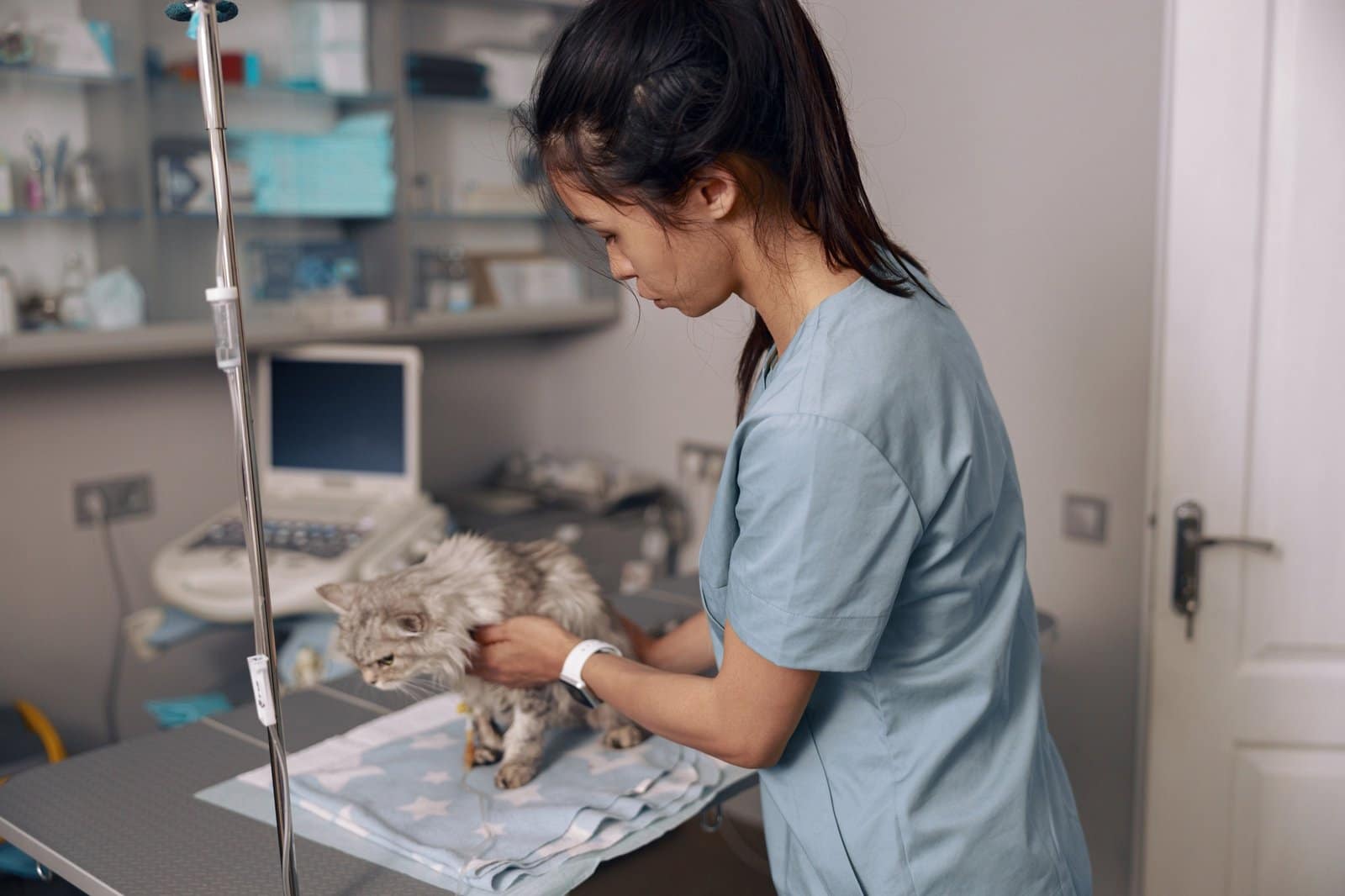
If your cat has diarrhea, it’s normal to worry—especially when it happens suddenly. Most mild cases improve with simple home care, but diarrhea can also be a sign of dehydration, infection, or another condition that needs urgent veterinary help.
This guide covers: what to do in the first 24 hours, what to feed, how to prevent dehydration, what not to give, and when to call a vet.
Das ist wichtig: This article is educational and can’t replace veterinary diagnosis. If your cat seems unwell, contact your veterinarian.
Why you can trust this page
We created this guide to help cat parents take safe first steps while recognizing when diarrhea may signal something serious. We base our recommendations on reputable veterinary resources (for example, Cornell’s feline health guidance und VCA’s clinical education materials) and we emphasize conservative, safety-first home care.
Inhaltsübersicht
Wichtigste Erkenntnisse
- If no red flags, start Home Treatment Plan below (hydration + bland diet).
- Call a vet if diarrhea lasts >24–48h or you see blood/black stool, vomiting, lethargy, or dehydration.
- Avoid human anti-diarrheals (Pepto-Bismol/Imodium).
- Track stool + appetite + energy; reassess within 24–48h.
Quick Answer: What to Do in the Next 24 Hours
Step 1 — Check for red flags (vet now vs. home care)
Call a vet urgently today Wenn Sie eines der folgenden Symptome bemerken:
- Blood in stool (bright red) or black/tarry stool
- Repeated vomiting
- Marked lethargy, weakness, Verstecken, or collapse
- Signs of dehydration (dry/sticky gums, sunken eyes, skin “tents,” very little urine)
- Your cat is a Kätzchen, very old, underweight, or has a chronic illness
- Diarrhea lasts more than 24–48 hours
If none of the above applies and your cat is still bright, eating at least a little, and drinking, home care is often reasonable while you monitor closely.
Step 2 — Focus on fluids first
- Angebot Süßwasser in multiple bowls (wide/shallow bowls often help).
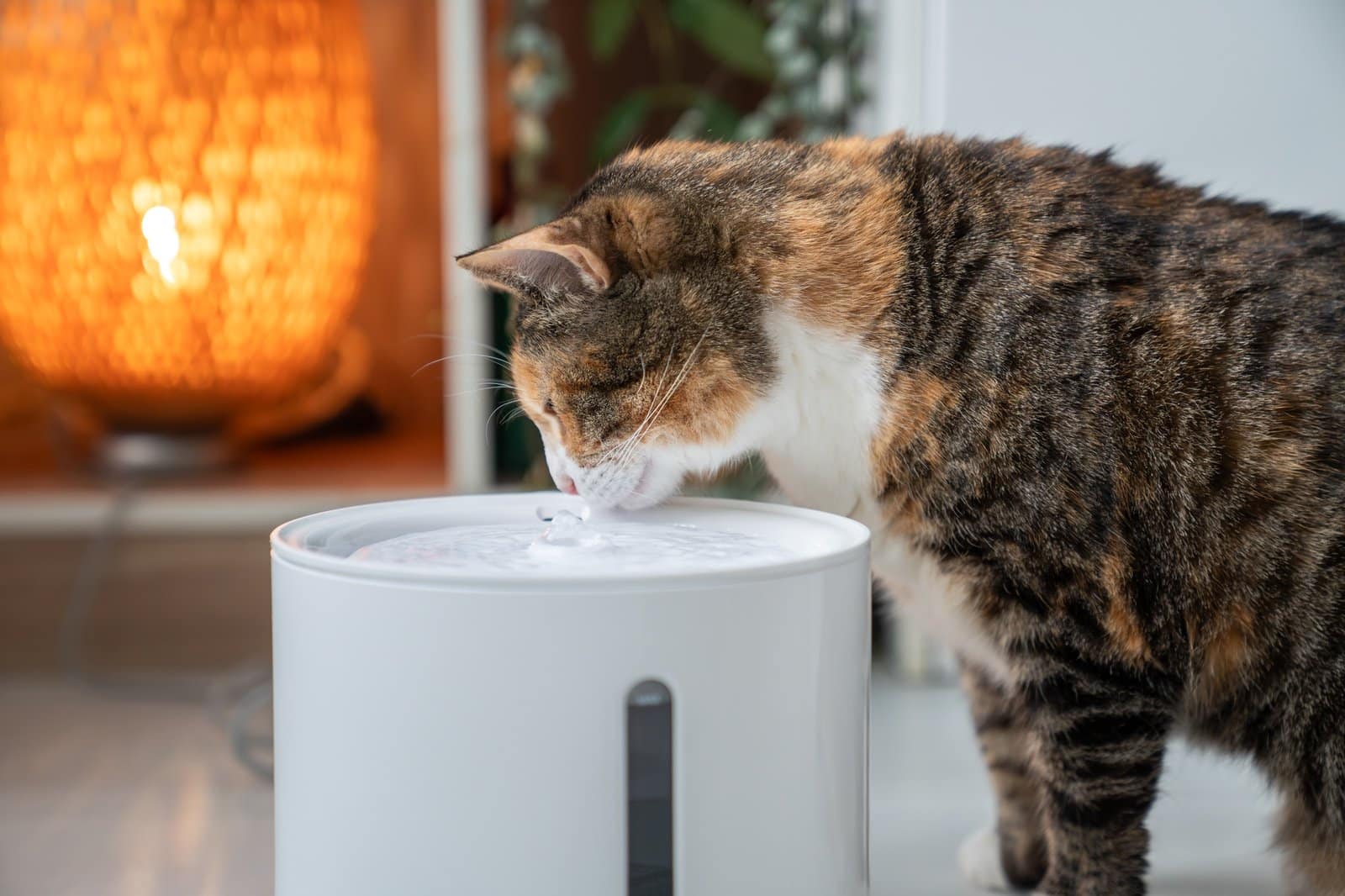
- Consider a water fountain if your cat prefers running water.
- Futtermittel Nassfutter if possible (extra moisture helps).
- You can tempt drinking with a small amount of low-sodium broth (no onion/garlic).
Step 3 — Switch to a bland, easy-to-digest diet
For 1–3 days, feed small, frequent meals of:
- Plain boiled Huhn (no seasoning) + plain white rice, OR
- A veterinarian-recommended GI diet
Step 4 — Avoid unsafe human medications
Do nicht give Pepto-Bismol, Kaopectate, or Imodium unless your vet specifically instructs you. Some human anti-diarrheal meds can be dangerous for cats.
Step 5 — Reassess at 24–48 hours
- If stool is improving and your cat is otherwise normal, continue bland diet briefly and transition back slowly.
- If there’s no improvement, symptoms worsen, or new red flags appear → call your vet.
Want the deeper “why” behind diarrhea (causes, parasites, chronic disease)? See: Katzendurchfall: Alles, was Sie wissen müssen
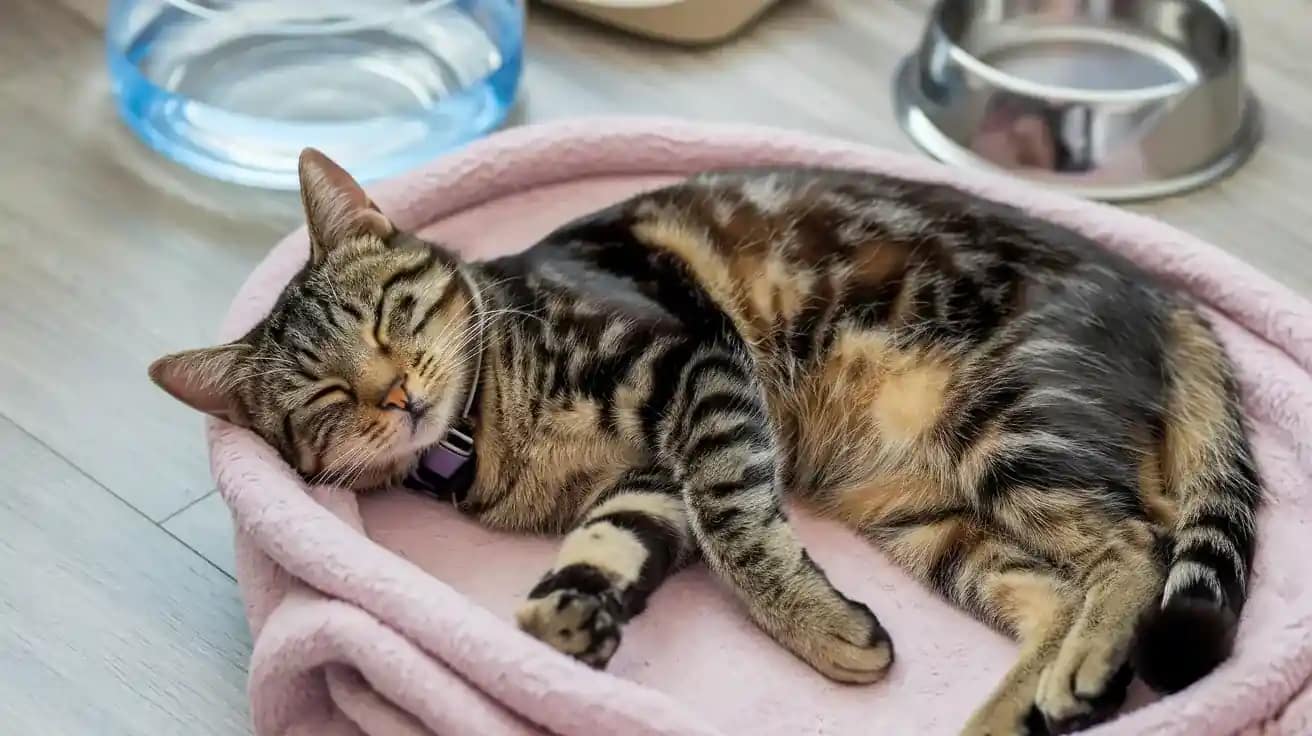
When to Call the Vet (Red Flags Checklist)
Diarrhea can become dangerous quickly—especially if your cat is losing fluids fast or has an underlying illness. Contact a veterinarian immediately if any of the following apply.
Go to an emergency vet now (same day / ASAP)
- Blood in stool (bright red) or black/tarry stool
- Repeated vomiting or can’t keep water down
- Severe lethargy, collapse, extreme weakness, or hiding and “not themselves”
- Signs of dehydration: sticky/dry gums, sunken eyes, very little urine, skin “tents” when gently pinched
- Bloated/painful abdomen or obvious pain when picked up
- Suspected toxin ingestion, foreign object, or sudden severe diarrhea
Call your vet within 24 hours
- Diarrhea lasting more than 24–48 hours
- Not eating for mehr als 24 Stunden (cats can get complications from not eating)
- Ongoing soft stool with mucus, frequent urgent trips, or straining to poop
- Your cat has a known chronic condition (kidney disease, diabetes, hyperthyroidism, IBD), is underweight, or is on medication
- Diarrhea started soon after a diet change, new treat, antibiotic, or stress event and isn’t improving
Extra caution (don’t wait) for high-risk cats
- Kätzchen, especially under 8–12 weeks (they dehydrate fast)
- Ältere Katzen
- Cats who are very small, frail, or already dehydrated
What to track before you call (helps your vet diagnose faster)
- When it started + frequency (how many times/day)
- Stool appearance: watery vs mushy, blood/mucus, color changes
- Vomiting? Appetite? Energy level? Water intake?
- Recent changes: food, treats, meds, plants/cleaners, stress, new pets
Now that you know when to seek urgent care, let’s walk through safe home support for mild diarrhea and how to monitor progress.
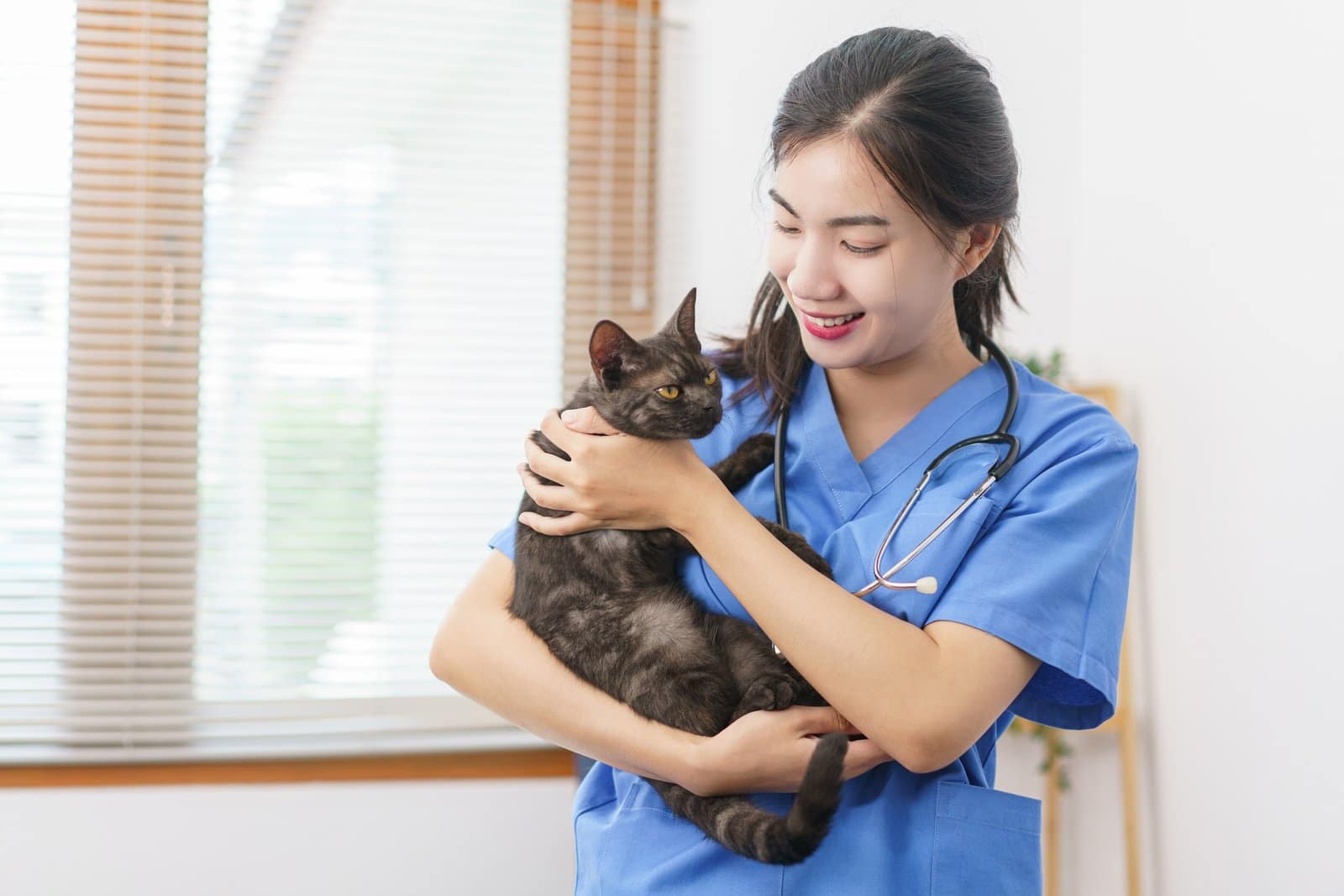
Common Causes of Cat Diarrhea (Quick Summary + Next Step)
Most diarrhea is caused by something simple—like a food change—but some patterns suggest a deeper problem. Use this quick guide to narrow down the likely category and decide what to do next (home support vs vet check).
Most common “short-term” causes (often improves in 24–48 hours)
- Sudden food change (new brand/flavor, more treats than usual)
- Dietary indiscretion (human food, trash, fatty foods)
- Mild stress (travel, visitors, new pet, moving)
- Mild stomach upset (temporary gut imbalance)
What to do now: follow the hydration + bland diet plan, avoid treats, and monitor closely.
Causes where you should think “parasites/infection”
- Parasiten (especially if your cat goes outdoors, is a kitten, or you see mucus/worms)
- Contagious GI infection (risk higher in multi-cat homes/shelters)
What to do now: don’t self-medicate with human drugs; if diarrhea persists, your vet may recommend a fecal test.
Causes that point to an underlying disease (needs vet evaluation)
Consider this bucket if diarrhea is recurrent, lasts more than a few days, or comes with weight loss / poor appetite:
- Food intolerance/allergy
- Inflammatory bowel disease (IBD) / chronic enteropathy
- Organ or hormone issues (e.g., hyperthyroidism in older cats)
- Pancreas/liver problems
- Krebs (less common, but possible in seniors)
What to do now: book a vet visit—especially if there’s weight loss, lethargy, dehydration, vomiting, or blood.
Medication-related diarrhea
- Antibiotics and some other meds can disrupt gut bacteria and trigger diarrhea.
What to do now: call your vet before stopping any prescription medication.
Want the full list + deeper explanations? Read: Katzendurchfall: Alles, was Sie wissen müssen
Table: Causes at a Glance (What changes your next step)
| Likely cause bucket | Common clues | What to do next |
|---|---|---|
| Food change / treats | started after diet switch | bland diet + slow transition |
| Stress-related | recent routine/home change | calm routine + bland diet |
| Parasites/infection | mucus, multi-cat home, kitten/outdoor | vet stool test if not improving |
| Chronic disease | weight loss, recurring episodes | vet evaluation/workup |
| Medication side effect | started after new meds | call vet before changing meds |

Home Treatment Plan for Mild Diarrhea (If No Red Flags)
Only use this plan if your cat is alert and drinking and has no red flags above. If your cat is a kitten, senior, or has chronic illness, call your vet early.
1. Hydration is Key
Durchfall führt zu einem erheblichen Flüssigkeits- und Elektrolytverlust, so dass Dehydrierung ein Hauptproblem darstellt. Die Sicherstellung einer ausreichenden Wasserzufuhr ist daher von größter Bedeutung.
Förderung des Wasserverbrauchs:
- Mehrere Wasserquellen: Place several water bowls in quiet, easily accessible areas, away from litter boxes.
- Schüssel-Präferenz: Try glass, ceramic, or stainless steel. Shallow, wide bowls can reduce whisker fatigue. Avoid plastic bowls (can harbor bacteria in scratches).
- Frische und Sauberkeit: Change water daily and clean bowls thoroughly.
- Temperatur: Some cats prefer cool water; others prefer room temperature or slightly warm water.
- Wasserfontänen: Running water can increase drinking.
- Aromatisiertes Wasser: Add a small amount of water from canned tuna (in spring water, not oil) or low-sodium chicken/beef broth (no onions/garlic). Discard flavored water after a few hours.
- Nassfutter: Feed wet food; you can add warm water/broth to dry food.
Homemade Electrolyte Solution (use caution):
- Das Rezept: 1 liter water + 1 tbsp dextrose (or honey) + 1 tsp salt. Boil water, dissolve ingredients, cool completely.
- Administration: Offer small, frequent amounts. If needed, give gently by spoon/syringe at the corner of the mouth.
- Storage: Refrigerate and replace after 24 hours.
- Caution: Don’t exceed quantities. If vomiting occurs, your cat is very young/old, or there’s blood in stool, contact a vet immediately.
2. The Bland Diet Approach (what to feed)
Fasting (with caveats):
Historically, withholding food for 12–24 hours was common, but many veterinarians advise against prolonged fasting—especially for kittens. For mild diarrhea, small frequent meals of a bland diet are often preferred. Consult your vet before fasting.
Empfohlene Blandiät-Zutaten
- Protein (1 part): Plain boiled chicken breast, lean ground turkey, lean ground beef (drained), or poached white fish (no skin/bones). No seasoning, oil, or additives.
- Carb (1 part): Fully cooked white rice, or peeled boiled mashed potatoes (no butter/seasoning).
- Optional additions: 1–2 tsp canned pure pumpkin (not pie filling). Other options: strained unseasoned meat baby food; tiny amounts of plain low-fat yogurt only if tolerated; scrambled eggs (no oil/butter).
Blandiät-Rezepte & Übergangsplan
| Komponente | Zutaten und Zubereitung | Servierrichtlinien |
| Protein-Quellen | Einfache, gekochte Hühnerbrust ohne Haut und Gräten; gekochtes mageres Putenfleisch (abgetropft); gekochtes mageres Rindfleisch (abgetropft); pochierter weißer Fisch (ohne Haut/Gräten); durchgeseihte, ungewürzte Babynahrung auf Fleischbasis; gekochtes Rührei (ohne Öl/Butter); fettarmer Hüttenkäse. | In mundgerechte Stücke schneiden. Darauf achten, dass keine Gewürze, Öle oder Zusatzstoffe verwendet werden. |
| Kohlenhydrat-Quellen | Einfacher, vollständig gekochter weißer Reis; geschälte, gekochte und pürierte Kartoffeln (ohne Butter/Gewürze); reiner Kürbis aus der Dose (keine Kuchenfüllung). | Kürbis kann in kleinen Mengen (1-2 Teelöffel) als Ballaststoff hinzugefügt werden. |
| Ratio | Kombinieren Sie Eiweiß und Kohlenhydrate in einem Verhältnis von 1:1. Z. B. 1 Tasse Huhn zu 1 Tasse Reis. | |
| Fütterungsstrategie | Servieren Sie kleine, häufige Mahlzeiten (4-6 Mal am Tag) anstelle von großen, um den empfindlichen Magen nicht zu überfordern. | Passen Sie die Portionsgröße an das Gewicht und den Appetit Ihrer Katze an. |
| Dauer | In der Regel 2-3 Tage nachdem das Erbrechen aufgehört hat und sich der Stuhlgang normalisiert hat. | |
| Übergang zurück zur normalen Ernährung (über 4-5 Tage) | Tag 1-2: 75% Schonkost, 25% normale Ernährung. Tag 3-4: 50% Schonkost, 50% normale Ernährung. Tag 5: 25% Schonkost, 75% normale Ernährung. Tag 6: 100% regelmäßige Ernährung. | Mischen Sie nach und nach immer größere Mengen an normaler Nahrung mit Brei. |
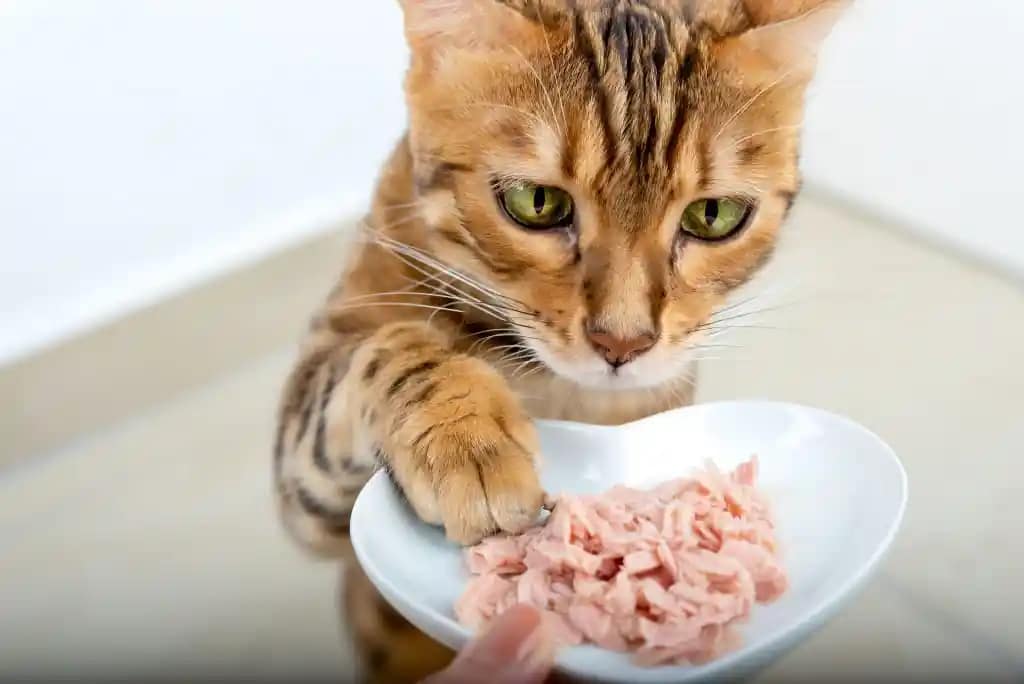
3. Gut Health Boosters (fiber + probiotics)
Probiotics: These live microorganisms can help restore healthy gut bacteria after digestive upset or antibiotics.
Probiotic Dosage & Tips for Cats
| Faktor | Leitfaden/Empfehlung |
| Empfohlener täglicher KBE-Bereich | 1-5 Milliarden KBE/Tag für Katzen. Verwenden Sie den höheren Wert (z. B. 5 Milliarden KBE) bei aktiven Magen-Darm-Problemen oder bei der Einnahme von Antibiotika. |
| Wichtige Überlegungen beim Kauf | Ausreichend KBEs: Stellen Sie sicher, dass das Produkt genügend lebensfähige Zellen pro Dosis enthält. |
| Sicherheit für Kätzchen | Generell sicher für entwöhnte Kätzchen, insbesondere für solche, die unter Stress stehen oder auf feste Nahrung umgestellt werden, da sie zur Bildung gesunder Darmbakterien beitragen und die Immunität stärken. |
| Tierärztlich empfohlene Marken | Purina FortiFlora, FERA All Natural Probiotics, PetUltimates Probiotics, Honest Paws Pre + Probiotics, Jackson Galaxy Cat Probiotic, TummyWorks Probiotic Powder, Proviable-DC, Advita. |
Ballaststoffergänzung: Soluble fiber (pumpkin/psyllium) can absorb excess water and help firm stools; mixed fiber can help acute and chronic diarrhea, especially large-bowel issues.
- Typical starting amounts: small amounts of pumpkin (1–2 tsp) or psyllium (start low; consult your vet for dosing).
- Caution: Too much fiber can worsen symptoms—especially if there’s an underlying disease.
4. Crucial Warning: Avoid Human Medications!
A critical aspect of home care for feline diarrhea involves a strict prohibition against administering OTC human medications without explicit veterinary consultation.
Pepto Bismol und Kaopektat
Contain bismuth subsalicylate (salicylate-related). Cats are sensitive to salicylates; toxicity can cause vomiting, ulcers, kidney/liver damage. Do not give.
Imodium (Loperamid)
Not safe for unsupervised use. It slows gut movement, can trap toxins/infection, and may cause severe side effects (CNS depression, constipation, toxic megacolon). Only under explicit veterinary guidance.
Joghurt
Many adult cats are lactose intolerant; yogurt/milk can worsen diarrhea. If used at all, offer tiny amounts and monitor—cat-specific probiotics are usually safer.

What Your Cat’s Stool Can Tell You (Quick Poop Guide)
What normal poop looks like
A healthy cat stool is usually:
- Brown to dark brown
- Log-shaped / segmented
- Firm but not rock-hard
- No blood, excessive mucus, or visible parasites
Kittens can have slightly softer stool, but it should not be watery or bloody.
Quick warning signs (don’t wait)
Treat these as urgent and contact a vet promptly:
- Black/tarry stool (can indicate bleeding higher up in the GI tract)
- Large amounts of bright red blood
- Watery diarrhea + lethargy/vomiting
- Diarrhea in very young kittens or frail seniors
Stool chart
Cat Stool Chart: A Visual Guide to Your Cat’s Digestive Health
| What you see | Beschreibung | What it may mean (urgency) |
|---|---|---|
| Konsistenz | ||
| Normal | Fest, segmentiert, stammförmig | Normal digestion (Normal) |
| Hard / pebble-like | Klein, trocken, schwer passierbar | Constipation or dehydration (Mild–Moderate) |
| Soft / loose | Muskulös, ungeformt, behält etwas Form | Diet change, food intolerance, mild GI upset (Mild–Moderate) |
| Runny / watery | Flüssigkeit, keine Form | Inflammation or infection; dehydration risk rises fast (Moderate–Urgent) |
| Schleim | Geleeartiger Belag oder Schlieren | Large-bowel irritation/colitis, stress, or parasites (Moderate) |
| Farbe | ||
| Normal brown | Gleichmäßig braun bis dunkelbraun | Normal digestion (Normal) |
| Grün | Grünliche Tönung | Fast transit or diet change; sometimes infection (Mild–Moderate) |
| Gelb | Gelbliche Tönung | Fast transit; possible bile/liver involvement (Moderate) |
| Black / tar-like | Dunkles, klebriges, teerartiges Aussehen | Possible digested blood (GI bleeding) (URGENT) |
| Red (streaks or liquid) | Leuchtend rote Schlieren oder flüssiges Blut | Lower-GI bleeding/irritation; more blood = more urgent (Moderate–URGENT) |
| White / grey | Pale, chalky, or grey-white | Possible bile flow or pancreas issue (URGENT) |
| Inhalt | ||
| Undigested food | Sichtbare Essensreste | Food intolerance or poor digestion; if ongoing, needs vet workup (Mild–Moderate) |
| Worms / specks | Kleine, faserige, reisähnliche Stücke | Possible intestinal parasites (Moderate) |
| Tipp: Severity = how fast to contact a vet. Always treat as URGENT if your cat is a kitten/senior, seems lethargic, is vomiting repeatedly, won’t eat, shows dehydration signs, or diarrhea lasts >24–48 hours. | ||
Small bowel vs. large bowel diarrhea (fast difference)
This helps you describe symptoms more clearly:
- Small bowel diarrhea: usually larger volume, may come with Gewichtsverlust oder Erbrechen
- Large bowel diarrhea (colitis): usually small frequent stoolsoft mucusmanchmal Durchsuchenmanchmal fresh red blood
Wenn Ihre Katze ongoing diarrhea (more than a few days), this distinction can help your vet choose the right tests.
What to track (makes vet visits more effective)
Before calling/going in, note:
- When it started + frequency
- Stool appearance (color, watery vs formed, mucus, blood)
- Vomiting? Appetite? Energy level?
- Any diet changes, new treats, stress, meds, or possible toxin exposure
- If possible: a clear photo of stool (gross but helpful)
Vorbeugung künftiger Episoden
Viele Fälle von Katzendurchfall lassen sich durch konsequente, proaktive Pflege vermeiden. Dieser Ansatz beinhaltet ein kontinuierliches Engagement für das allgemeine Wohlbefinden der Katze und kombiniert die tägliche Wachsamkeit der Pfleger mit regelmäßiger professioneller tierärztlicher Überwachung.
Langsame und stetige Ernährungsumstellung
Eine abrupte Umstellung der Ernährung ist eine der Hauptursachen für Verdauungsbeschwerden. Um zukünftige Episoden zu vermeiden, ist es wichtig, neue Nahrungsmittel schrittweise über einen Zeitraum von 7-10 Tagen einzuführen, damit das Verdauungssystem der Katze ausreichend Zeit hat, sich anzupassen.
Regelmäßige Entwurmung und Parasitenprophylaxe
Die Aufstellung und Einhaltung eines regelmäßigen Entwurmungsplans in Absprache mit dem Tierarzt ist entscheidend für die Vorbeugung parasitärer Ursachen von Durchfall. Eine ganzjährige Floh- und Zeckenprophylaxe minimiert ebenfalls die Exposition gegenüber Parasiten, die Magen-Darm-Probleme übertragen können.
Aufrechterhaltung einer sauberen und stressfreien Umgebung
Gefahrenabwehr: Es sollten vorbeugende Maßnahmen ergriffen werden, um schädliche Lebensmittel, Haushaltsreiniger, giftige Pflanzen (z. B. Aloe Vera, Narzissen, Philodendren) und Medikamente für den Menschen außer Reichweite der Katze zu halten.
Stressabbau: Die Schaffung eines ruhigen und stabilen häuslichen Umfelds ist für die Gesundheit der Verdauung von Katzen von entscheidender Bedeutung. Die Minimierung plötzlicher Änderungen der Routine oder der Umgebung, die Bereitstellung geeigneter Verstecke und Sitzgelegenheiten sowie die Sicherstellung ausreichender Ressourcen (Futter, Wasser, Katzenklos) in Haushalten mit mehreren Katzen können stressbedingte Magen-Darm-Beschwerden erheblich reduzieren.
Tierärztliche Routineuntersuchungen
Jährliche Wellness-Untersuchungen sind entscheidend für die frühzeitige Erkennung und Behandlung von Gesundheitsstörungen, die eine Katze zu Durchfall verleiten könnten. Tierärzte sind darin geschult, subtile Veränderungen im Gesundheitszustand einer Katze zu erkennen, die für das Pflegepersonal nicht sofort ersichtlich sind.
Diese konsequente professionelle Überwachung in Verbindung mit den Beobachtungen des Pflegepersonals (einschließlich der vom Kunden aufgezeichneten Videos des Verhaltens) bildet eine leistungsstarke Partnerschaft für die langfristige Erhaltung der Gesundheit von Katzen.
FAQ about Cat Diarrhea Treatment
When is cat diarrhea an emergency (when should I see a vet)?
If you see blood/black stool, repeated vomiting, severe lethargy, dehydration signs, or diarrhea lasting more than 24–48 hours, contact a vet.
What should I feed my cat with diarrhea, and should I fast them?
Most cats do best with small, frequent bland meals (not long fasting).
Kann ich meiner Katze Imodium oder Pepto-Bismol gegen Durchfall geben?
Normalerweise keine—these can be unsafe for cats unless a veterinarian explicitly instructs you.
Ist Dosenkürbis sicher für Katzen mit Durchfall?
Often yes—plain pumpkin (not pie filling) can help firm stools for some cats. Start small and stop if it worsens symptoms.
Sind Probiotika zur Behandlung von Katzendurchfall sicher?
Cat-specific probiotics are commonly used and may help restore gut balance, especially after diet upset or antibiotics.
Kann Stress bei Katzen Durchfall verursachen?
Yes—stress can trigger GI upset in some cats. If diarrhea keeps recurring, address triggers and talk to your vet.
Wie kann ich Durchfall bei Katzen in Zukunft verhindern?
Prevent episodes by slow diet transitions, parasite prevention, reducing stress, and hazard-proofing your home.
Referenzen
A-Tierklinik. (n.d.). Diarrhöe bei Katzen. Abgerufen von https://www.a-animalclinic.com/site/blog/2024/03/30/diarrhea-in-cats
Agria Pet. (n.d.). Flüssigkeitsersatz für Katzen. Abgerufen von https://www.agriapet.co.uk/guides-and-advice/fluid-replacement-for-cats/
Alberta Health Services. (n.d.). Rezepte für orale Rehydratationslösungen. Abgerufen von https://www.albertahealthservices.ca/assets/info/nutrition/if-nfs-ors-recipes.pdf
Arden Grange. (n.d.). Datenblatt zu Katzendurchfall.
Arden Grange. (n.d.). Wie man eine Elektrolytlösung herstellt, die Ihrem Hund bei Durchfall hilft. Abgerufen von https://www.ardengrange.com/blog/how-to-make-electrolyte-solution-help-your-dog-with-diarrhoea
ASPCApro. (n.d.). ASPCA Durchfall-Protokoll für Kätzchen. Abgerufen von https://www.aspcapro.org/sites/default/files/2023-10/aspca-diarrhea-protocol-kittens.pdf
Fragen Sie einen Tierarzt. (n.d.). Umfassender tierärztlicher Leitfaden 2025: Tylosin Tartrat für Hunde und Katzen - Magen-Darm und darüber hinaus. Abgerufen von https://askavet.com/blogs/news/comprehensive-vet-guide-2025-tylosin-tartrate-for-dogs-cats-gastrointestinal-and-beyond-%F0%9F%90%BE%F0%9F%92%8A
Jenseits von Haustieren. (n.d.). Magen-Darm-Parasiten bei Katzen. Abgerufen von https://beyondpets.com/pet-health-plus/gastrointestinal-parasites-in-cats/
BluePearl Vet. (n.d.). Darm-Check: Praktische Behandlung von entzündlichen Darmerkrankungen. Abgerufen von https://bluepearlvet.com/medical-library-for-dvms/gut-check-practical-treatment-of-inflammatory-bowel-disease/
BluePearl Vet. (n.d.). Ivermectin für Hunde und Katzen. Abgerufen von https://bluepearlvet.com/medical-library-for-dvms/gut-check-practical-treatment-of-inflammatory-bowel-disease/
Cornell Feline Health Center. (n.d.). Diarrhöe. Abgerufen von https://www.vet.cornell.edu/departments-centers-and-institutes/cornell-feline-health-center/health-information/feline-health-topics/diarrhea
Cornell Feline Health Center. (n.d.). Hydratation. Abgerufen von https://www.vet.cornell.edu/departments-centers-and-institutes/cornell-feline-health-center/health-information/feline-health-topics/hydration
Cornell Feline Health Center. (n.d.). Entzündliche Darmerkrankung. Abgerufen von https://www.vet.cornell.edu/departments-centers-and-institutes/cornell-feline-health-center/health-information/feline-health-topics/inflammatory-bowel-disease
Cornell University, Riney Canine Health Center. (n.d.). Diarrhöe. Abgerufen von https://www.vet.cornell.edu/departments-centers-and-institutes/riney-canine-health-center/canine-health-information/diarrhea
Drugs.com. (n.d.). Pet-A-Lyte Orale Elektrolytlösung für Hunde und Katzen. Abgerufen von https://www.drugs.com/vet/pet-a-lyte-oral-electrolyte-solution-for-dogs-and-cats.html
Drugs.com. (n.d.). Sulfasalazin. Abgerufen von https://www.drugs.com/sulfasalazine.html
Niederländisch. (n.d.). Durchfallmedizin für Katzen. Abgerufen von https://www.dutch.com/collections/diarrhea-medicine-for-cats
Golden Paws Tierklinik. (2024). Eine fade Diät für Hunde und Katzen. Abgerufen von https://goldenpawsvet.com/wp-content/uploads/2024/08/Bland-Diet.pdf
Großartige Haustierpflege. (n.d.). Abnorme Katze Poop Chart. Abgerufen von https://www.greatpetcare.com/cat-health/abnormal-cat-poop-chart/
Hill's Pet. (n.d.). Cat Diarrhea: Causes and Treatment. Abgerufen von https://www.hillspet.com/cat-care/healthcare/cat-diarrhea-causes-and-treatment
HolistaPet. (n.d.). Katzenkot-Tabelle. Abgerufen von https://www.holistapet.com/blogs/cat-care/cat-poop-chart
KOHA Pet. (n.d.). Blande Diät für Katzen. Abgerufen von https://kohapet.com/blogs/news/bland-diet-cats
Lassie. (n.d.). Wie man Flüssigkeitsersatz für Katzen herstellt. Abgerufen von https://de.lassie.co/en/articles/make-liquid-substitute-cats
Medi-Vet. (n.d.). VetClassics Pet-A-Lyte Orale Elektrolytlösung für Haustiere. Abgerufen von https://www.medi-vet.com/VetClassics-Pet-A-Lyte-Oral-Electrolyte-Solution-p/17521.htm
Noble Vet Clinic. (n.d.). Können Katzen Joghurt essen?. Abgerufen von https://noblevetclinic.com/blog/can-cats-have-yogurt
North Kenny Vet. (n.d.). Diarrhöe bei Katzen. Abgerufen von https://northkennyvet.com/blog/cat-diarrhea-columbus-oh/
Ontario SPCA. (n.d.). Wichtige Tipps für den Umgang mit Durchfall bei Ihrem Kätzchen. Abgerufen von https://ontariospca.ca/blog/essential-tips-for-dealing-with-diarrhea-in-your-kitten/
Patterson Tierarzt. (n.d.). Pet-A-Lyte™ Orale Elektrolytlösung (Hunde und Katzen). Abgerufen von https://www.pattersonvet.com/Supplies/ProductFamilyDetails/PIF_32608
PetMD. (n.d.). Behandlung von Katzendurchfall: Was man Katzen mit Durchfall geben sollte. Abgerufen von https://www.petmd.com/cat/general-health/cat-diarrhea-treatment#:~:text=Cats%20with%20diarrhea%20need%20to,cat%20to%20drink%20more%20water
PetMD. (n.d.). Chronische Diarrhöe bei Katzen. Abgerufen von https://www.petmd.com/cat/conditions/digestive/chronic-diarrhea-cats
PetMD. (n.d.). Versteckte Gesundheitsprobleme bei Katzen und wie man sie erkennt. Abgerufen von https://www.petmd.com/cat/general-health/hidden-health-issues-in-cats-and-how-to-spot-them
Petralyte. (n.d.). Elektrolyt- und Gelenkergänzungsmittel für Katzen. Abgerufen von https://petralyte.com/products/cat-electrolyte-and-joint-supplement
PMC. (n.d.). Leitlinien für die Seniorenpflege von Katzen. Abgerufen von https://pmc.ncbi.nlm.nih.gov/articles/PMC10812122/
PMC. (n.d.). WSAVA-Leitlinien für die Ernährungsbewertung. Abgerufen von https://pmc.ncbi.nlm.nih.gov/articles/PMC11107980/
Preventive Vet. (n.d.). Die besten probiotischen Ergänzungsmittel für Hunde und Katzen. Abgerufen von https://www.preventivevet.com/best-probiotic-supplements-for-dogs-and-cats
PubMed. (n.d.). 2021 AAFP-Leitlinien für die Pflege von älteren Katzen. Abgerufen von https://pubmed.ncbi.nlm.nih.gov/34167339/
Purina Institut. (n.d.). Chronische Enteropathie bei Katzen. Abgerufen von https://www.purinainstitute.com/centresquare/therapeutic-nutrition/feline-chronic-enteropathy
Royal Canin Academy. (n.d.). Ballaststoffe: Die Geheimwaffe des Klinikers. Abgerufen von https://academy.royalcanin.com/en/veterinary/dietary-fiber-the-clinicians-secret-weapon
Rx-Lösungen. (n.d.). Welche Medikamente werden zur Behandlung von entzündlichen Darmerkrankungen bei Katzen eingesetzt?. Abgerufen von https://assets.ctfassets.net/4dmg3l1sxd6g/78BhwsfExEmK4TsViseDmH/038d522ec90a3ca555524afb0ed75306/rx-solutions_which-drugs-are-used-to-manage-feline-inflammatory-bowel-disease-24656-article.pdf
Small Door Vet. (n.d.). Diarrhöe bei Katzen. Abgerufen von https://www.smalldoorvet.com/learning-center/medical/diarrhea-in-cats/
Die Tierarztpraxis von heute. (n.d.). GI-Intervention: Ansatz zur Diagnose und Therapie des Patienten mit akuter Diarrhöe. Abgerufen von https://todaysveterinarypractice.com/gastroenterology/gi-intervention-approach-to-diagnosis-and-therapy-of-the-patient-with-acute-diarrhea/
Total.vet. (n.d.). Ballaststoffe für Katzen mit Diarrhöe. Abgerufen von https://total.vet/fiber-for-cats-with-diarrhea/
UC Davis. (n.d.). Katzengesundheit. Abgerufen von https://ccah.vetmed.ucdavis.edu/cats/cat-health
UVA Gesundheit. (n.d.). Hausgemachte Lösungen zur oralen Rehydrierung. Abgerufen von https://med.virginia.edu/ginutrition/wp-content/uploads/sites/199/2023/12/Homemade-Oral-Rehydration-Solutions-11-2023.pdf
VCA-Krankenhäuser. (n.d.). 8 Hausmittel gegen Durchfall und 2, die für Ihr Haustier gefährlich sind. Abgerufen von https://vcahospitals.com/shop/articles/8-home-remedies-for-diarrhea-and-2-that-are-dangerous-for-your-pet
VCA-Krankenhäuser. (n.d.). Chlorambucil. Abgerufen von https://vcahospitals.com/know-your-pet/chlorambucil
VCA-Krankenhäuser. (n.d.). Fenbendazol. Abgerufen von https://vcahospitals.com/know-your-pet/fenbendazole
VCA-Krankenhäuser. (n.d.). Gastrointestinale Endoskopie bei Katzen. Abgerufen von https://vcahospitals.com/know-your-pet/endoscopy-gastrointestinal-in-cats
VCA-Krankenhäuser. (n.d.). Metronidazol. Abgerufen von https://vcahospitals.com/know-your-pet/metronidazole
VCA-Krankenhäuser. (n.d.). Tests für Durchfall. Abgerufen von https://vcahospitals.com/know-your-pet/testing-for-diarrhea
Tierärztlicher Partner. (n.d.). Tylosin (Tylan®). Abgerufen von https://veterinarypartner.vin.com/default.aspx?pid=19239&catId=154455&id=4951826
VetRxDirect. (n.d.). Pet A-Lyte für Hunde und Katzen - Elektrolyt zum Einnehmen. Abgerufen von https://www.vetrxdirect.com/product/view/pet-a-lyte-electrolyte-solution-for-dogs-and-cats-otc
Vetster. (n.d.). Dehydrierung bei Katzen. Abgerufen von https://vetster.com/en/conditions/cat/dehydration
VIN. (n.d.). Ansatz für chronischen Durchfall bei Katzen. Abgerufen von https://www.vin.com/apputil/content/defaultadv1.aspx?pId=12886&catId=57099&id=7054646&ind=128&objTypeID=17&print=1
VIN. (n.d.). Cryptosporidium spp. bei Katzen. Abgerufen von https://www.vin.com/apputil/content/defaultadv1.aspx?id=5124213&pid=113
VIN. (n.d.). Gastrointestinale Endoskopie. Abgerufen von https://www.vin.com/apputil/content/defaultadv1.aspx?id=3852219&pid=11181
WADDL. (n.d.). Feline Diarrhöe Panel. Abgerufen von https://tests.waddl.vetmed.wsu.edu/Tests/Details/8006
Wedgewood-Apotheke. (n.d.). Chlorambucil. Abgerufen von https://www.wedgewood.com/medications/chlorambucil/
Wikipedia. (n.d.). Fenbendazol. Abgerufen von https://en.wikipedia.org/wiki/Fenbendazole
Woodward Tierärzte. (n.d.). Sulfasalazin. Abgerufen von https://www.woodward-vets.co.uk/images/downloads/medication-leaflets/Sulfasalazine.pdf
Zoetis Petcare. (n.d.). Wie Sie Ihre Katze dazu bringen, mehr Wasser zu trinken. Abgerufen von https://www.zoetispetcare.com/blog/article/how-get-cat-drink-more-water





 EN
EN DE
DE ES
ES PT
PT