

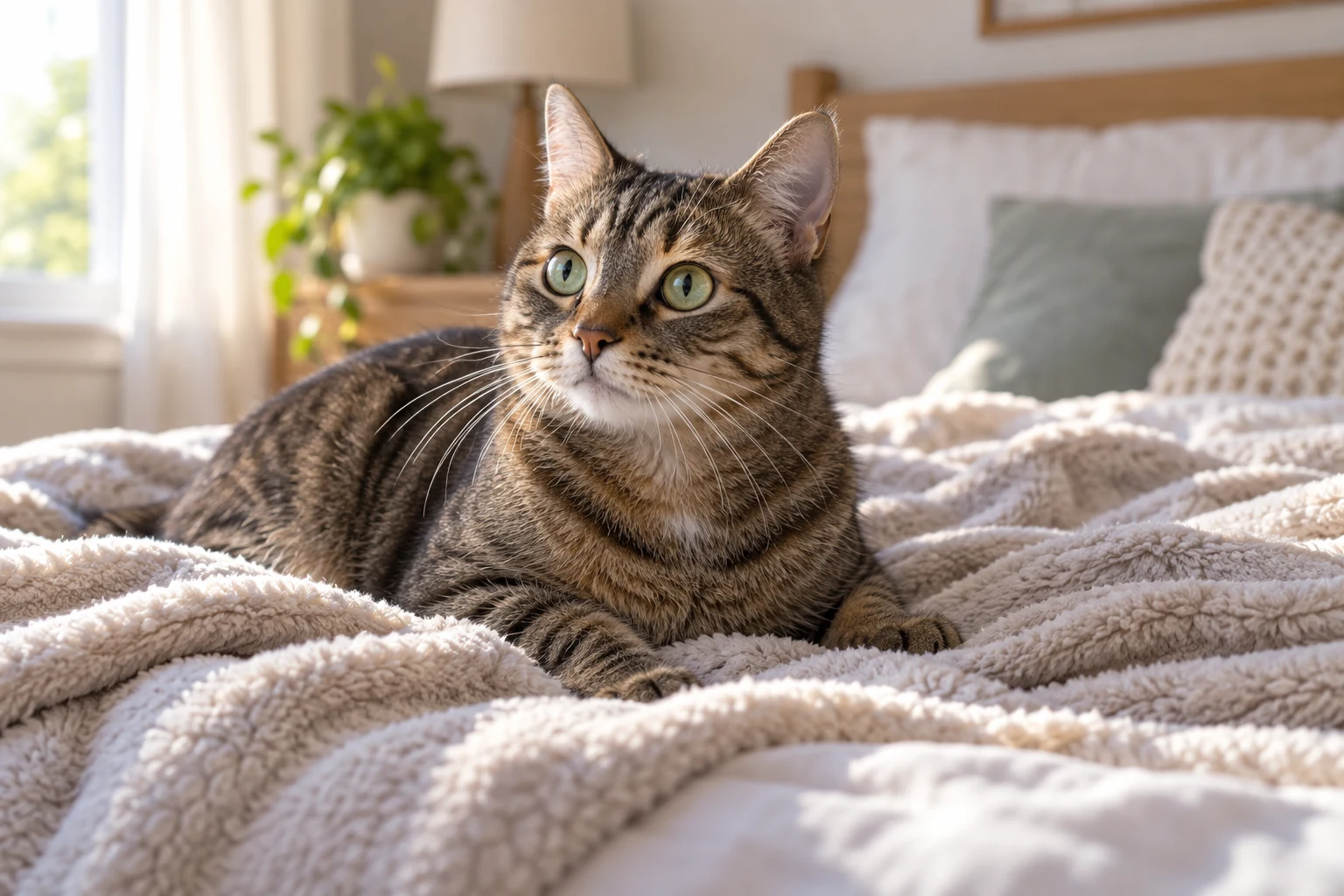
A cat sitter debrief is a short review you do after you get home: what your cat ate, how the litter box looked, whether behavior changed, and what should be improved before the next trip. It is not about grading the sitter. It is about turning fresh details into safer, clearer care for your cat next time.
The best time to do it is the same day you return, while photos, food levels, litter notes, and small behavior clues still make sense. Cats Protection recommends leaving cat sitters practical details such as food, litter, medication, emergency contacts, and carrier location before a holiday, and the same categories are useful when you review how the trip went afterward 1.
Use this checklist with the sitter's messages, your own home check, and your cat's normal baseline. If your cat has diabetes, kidney disease, urinary history, appetite problems, medication needs, or recent illness, ask your veterinarian what changes should count as urgent for that individual cat.
Inhaltsübersicht
- What should you review with a cat sitter after you get home?
- Which food, water, and medication notes matter most?
- How should you review litter box and cleanup notes?
- What behavior changes should you ask about?
- Which follow-up questions should you send the sitter?
- What red flags need a veterinarian after a trip?
- How do you improve the next cat sitter handoff?
- Schlussfolgerung
- Häufig gestellte Fragen
- Referenzen
What should you review with a cat sitter after you get home?
Review five areas first: food, water, litter, behavior, and anything the sitter had to improvise. Those five categories tell you whether your cat stayed close to normal, whether the home setup worked, and whether your next instruction sheet needs clearer details.
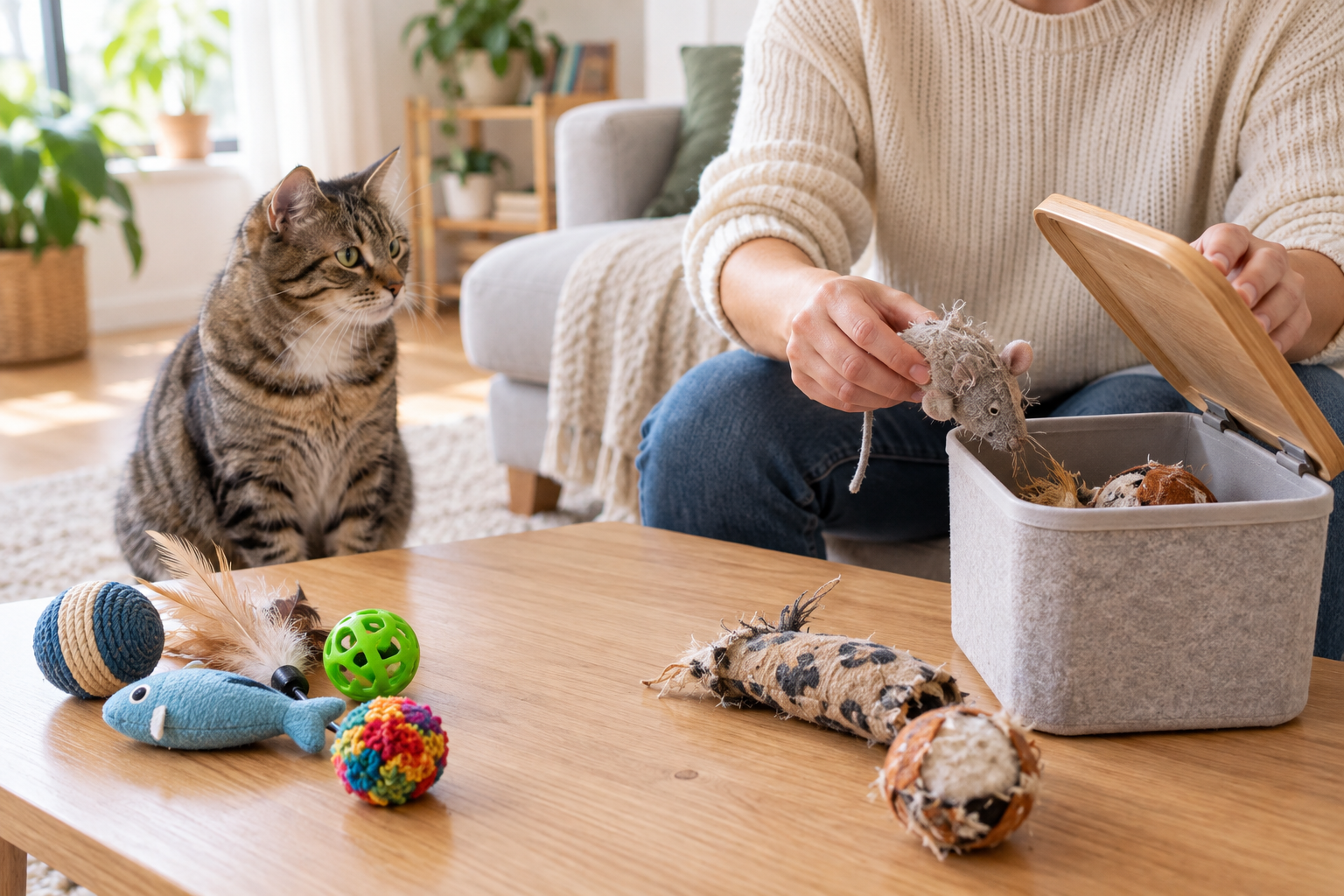
Start by gathering the sitter's messages, photos, and timestamps. If you used the SnuggleSouls cat sitter update template, place each update beside what you see at home: remaining food, water bowls, litter boxes, medication containers, toys, hiding spots, and any messes.
Then separate the notes into three groups:
- Normal: your cat was seen, ate close to normal, used the litter box, and returned to their usual routine quickly.
- Needs follow-up: food was left, one litter box looked different, your cat hid more than expected, or the sitter had a minor access or supply issue.
- Urgent: no urine, repeated vomiting, breathing trouble, collapse, severe lethargy, possible toxin exposure, or a cat who is not eating after you return.
AAHA's pet sitter guidance emphasizes daily routine, feeding amounts, medications, litter box details, supply locations, and emergency contacts before a trip 2. A debrief uses the same framework in reverse: did the plan give the sitter enough information to care for your cat without guessing?
Which food, water, and medication notes matter most?
Food and water notes matter when they show a clear change from your cat's normal pattern. A small amount of leftover food may be ordinary for some cats, but a cat who skipped most meals, drank far more or less than usual, or refused a favorite food deserves closer observation.
Ask three practical questions:
| Debrief question | Warum das wichtig ist | What to check at home |
|---|---|---|
| How much food was offered and how much was left? | Appetite changes can be stress-related, but they can also signal illness. | Compare cans, pouches, measuring scoops, and leftovers. |
| Were water bowls or fountains changed as planned? | Hydration is easy to miss if several bowls are placed around the home. | Check bowl levels, cleanliness, fountain function, and spills. |
| Were medications, supplements, or special diets given exactly as written? | Missed or uncertain doses need a veterinarian's guidance for some cats. | Count remaining doses and review the sitter's notes before giving anything extra. |

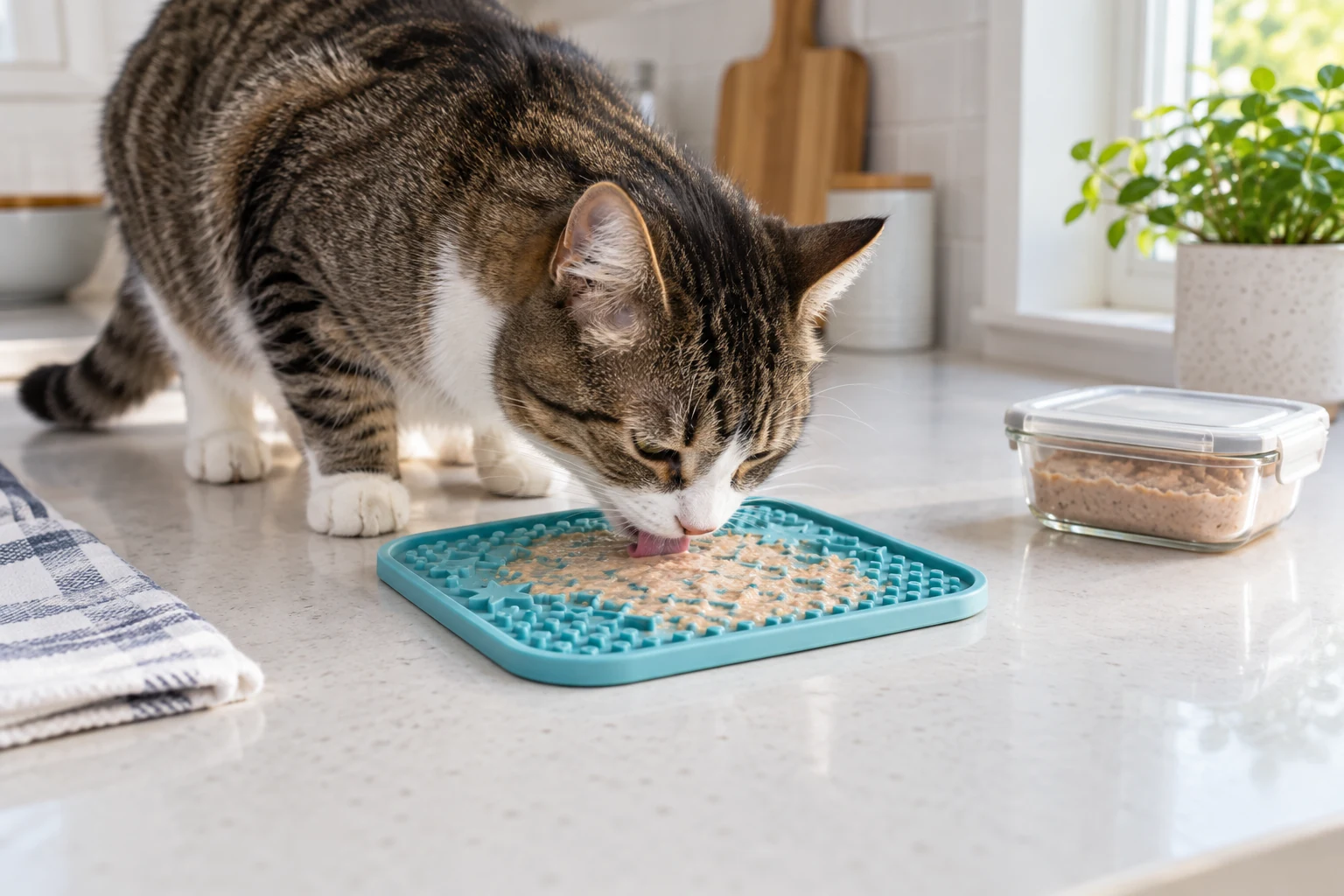
Food and water notes are easiest to interpret when you compare what was offered, what was left, and what looked different from normal.
If your cat ate less during the first visit but improved later, write that down as a travel-stress clue for next time. If your cat ate very little across multiple visits, came home to a full bowl, or is still refusing food, call your veterinarian for advice rather than waiting to see whether it passes.
For future trips, make the feeding section of your Anweisungen für den Katzensitter specific enough that the sitter can report exact changes: "ate half of breakfast," "licked gravy only," "dry food untouched," or "water fountain unplugged and restarted." Those details are much more useful than "food seemed fine."
How should you review litter box and cleanup notes?
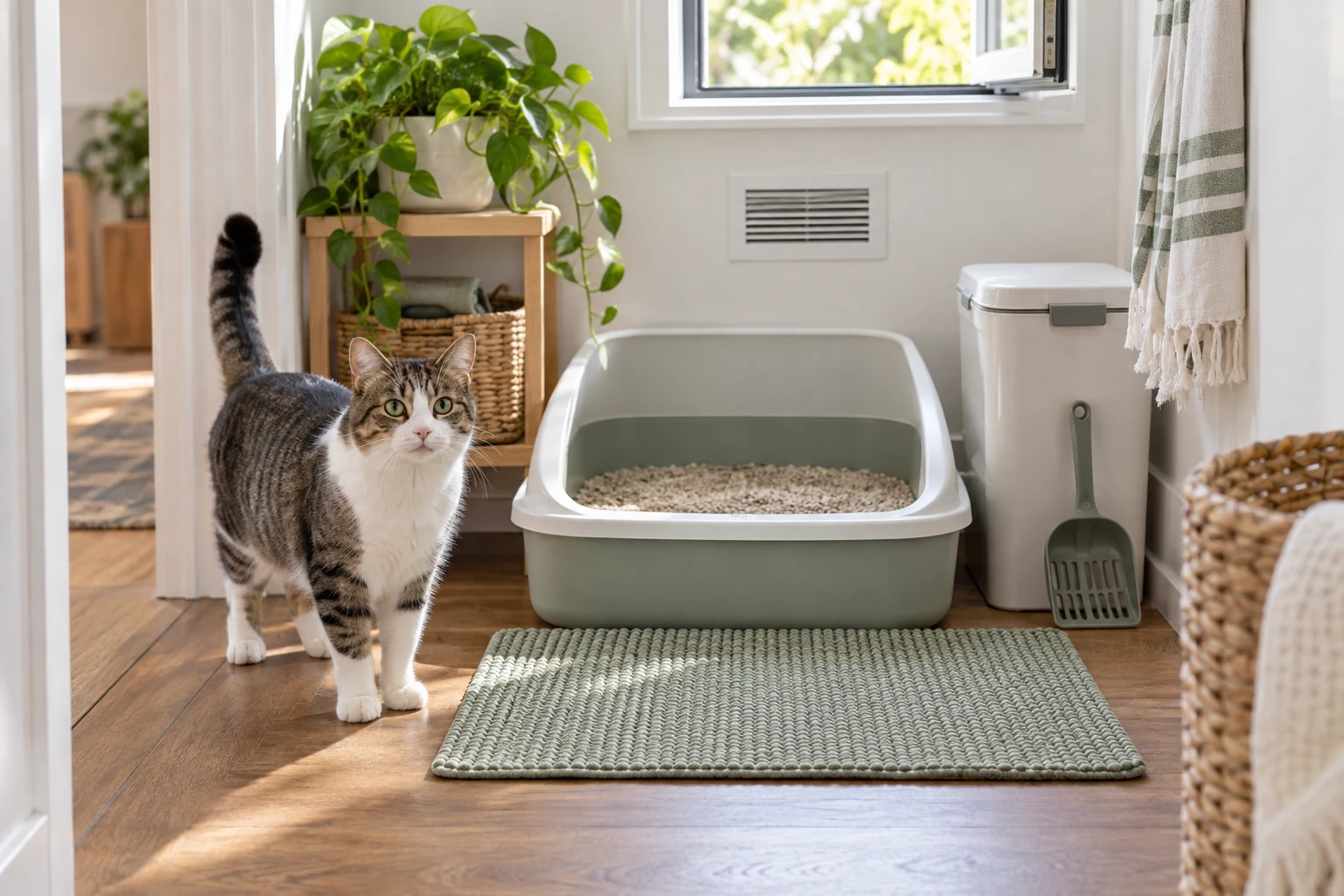
Review litter notes by comparing what the sitter reported with what you know about your cat's normal urine clumps, stool shape, box preference, and accident history. The goal is not to inspect every detail forever. It is to catch changes that are easy to miss after a busy trip.
Check these items before you fully reset the litter area:
- Number and location of boxes used.
- Whether any box looked unused when it normally gets used.
- Urine clump size, frequency, or missing urine.
- Stool amount, firmness, color, mucus, or blood.
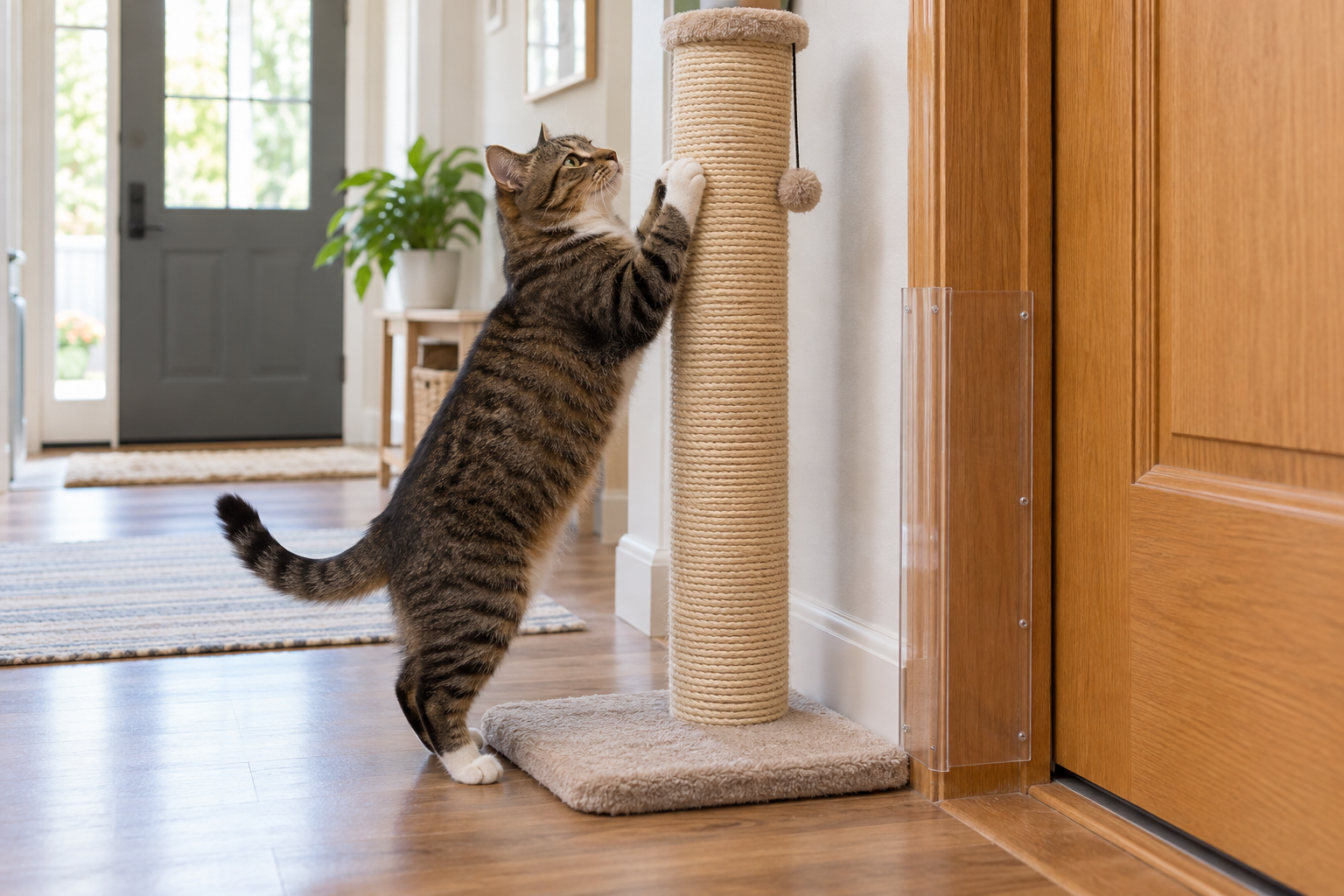
- Accidents near doors, rugs, beds, laundry, or hiding areas.
- Whether the sitter had trouble finding scoop bags, trash bags, litter, or cleaning supplies.

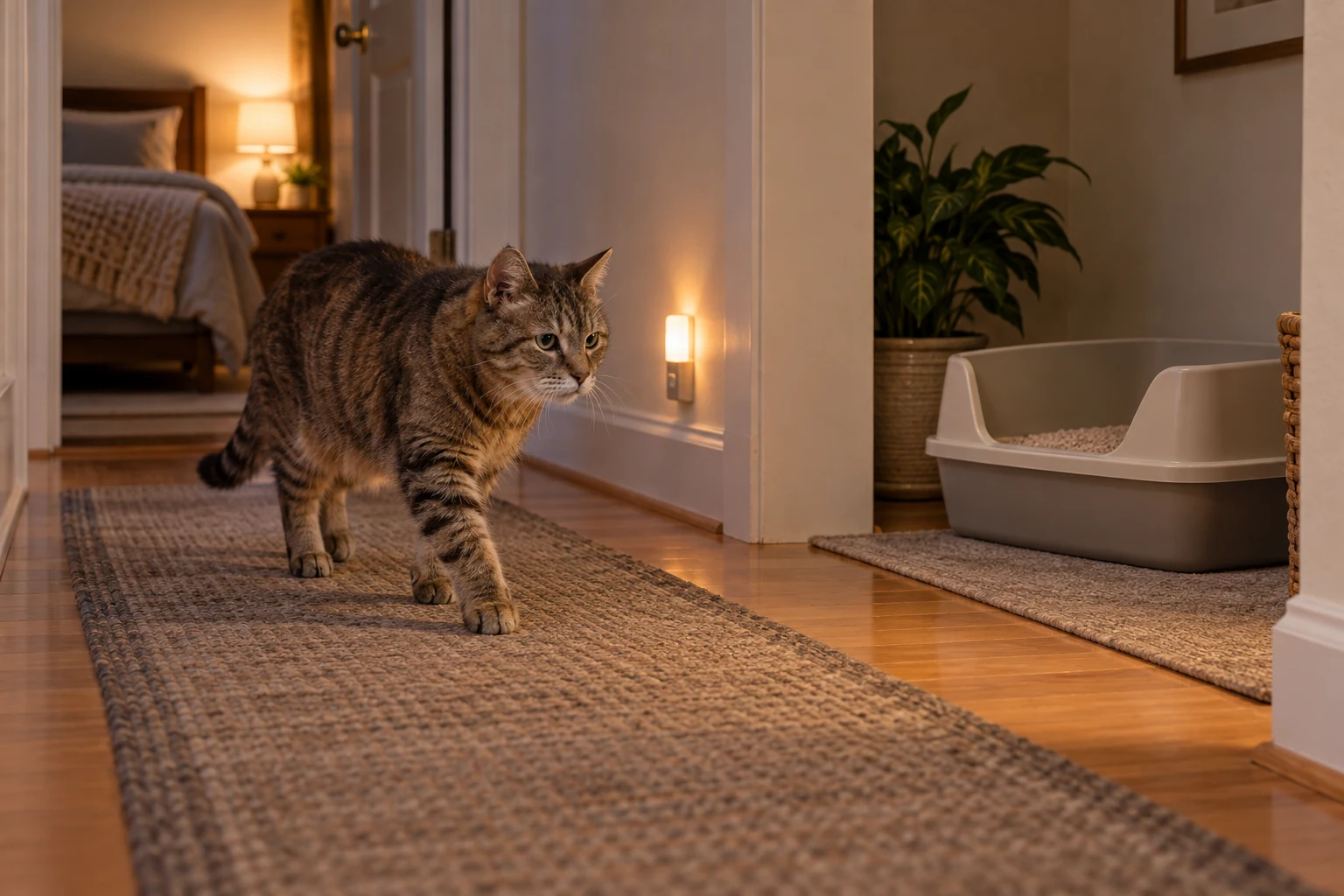
Litter and behavior notes help you spot whether your cat simply had a routine disruption or needs closer monitoring.
If stool looked unusual, compare the pattern with the SnuggleSouls Farbkarte für Katzenkot and call your veterinarian for blood, black stool, severe diarrhea, repeated vomiting, or a cat who seems weak or painful. If urine appeared outside the box, use the Probleme mit der Katzentoilette guide only after you have ruled out urgent medical signs.
Urinary changes deserve extra caution. AVMA explains that urethral obstruction is the most serious FLUTD cause and can be life-threatening, while Cornell lists frequent attempts to urinate, discomfort, and blood in urine among lower urinary tract signs 3, 4. If your cat is straining, producing little or no urine, crying in the box, licking the genital area repeatedly, vomiting, hiding, or acting weak, treat it as urgent and contact a veterinarian or emergency clinic immediately.
What behavior changes should you ask about?
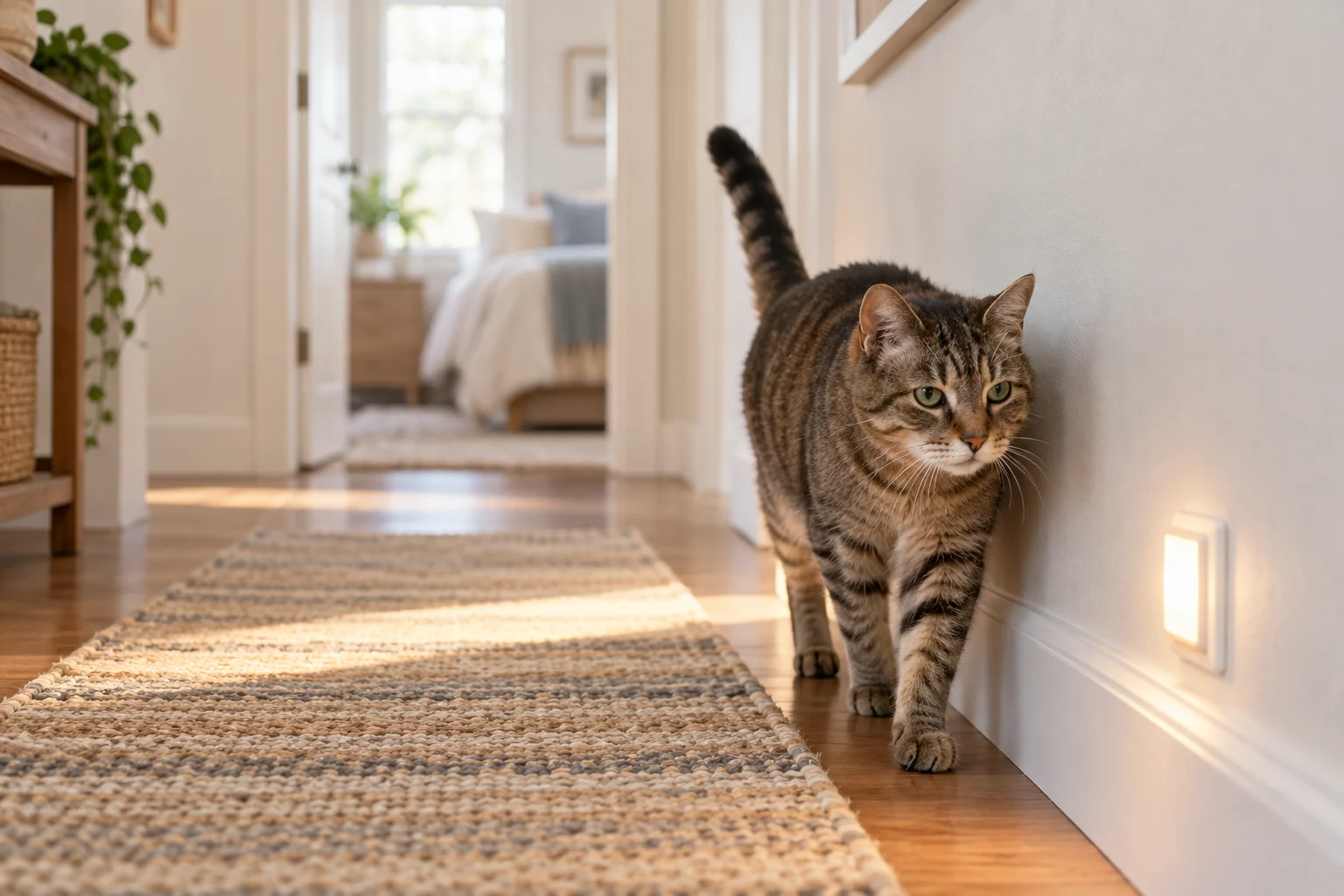
Behavior changes matter most when they are new, intense, or paired with appetite, litter, breathing, mobility, or pain clues. Some cats hide for a visit or two when a sitter comes in. A cat who never appeared, growled from a hiding spot, stopped eating, or seemed unable to move normally needs a different response.
Ask the sitter what they actually saw, not only whether your cat was "good." Useful behavior details include:
- Where your cat spent most of the visit.
- Whether your cat approached, hid, vocalized, swatted, hissed, froze, or paced.
- Whether your cat played, sniffed food, groomed, or used favorite resting spots.
- Whether there were signs of stress near windows, doors, another pet, or noisy appliances.
- Whether your cat looked stiff, limped, had trouble jumping, or seemed disoriented.
If the sitter noticed tail lashing, pinned ears, crouching, twitching skin, or a sudden change in friendliness, compare those details with your cat's usual body language. The SnuggleSouls guide to Katzen-Schwanz-Sprache can help you turn vague notes like "she seemed mad" into more useful observations about tension, overstimulation, fear, or pain.
For shy cats, add context instead of blame. "Did she stay under the bed the whole visit?" is better than "Was she friendly?" A nervous cat may still be coping well if they ate, drank, used the litter box, and relaxed after the sitter left. A hidden cat who skipped meals or stopped using the box needs closer follow-up.
Which follow-up questions should you send the sitter?
Send follow-up questions that are short, factual, and easy to answer. The sitter is more likely to give useful information if you ask about specific observations instead of asking for a broad review.
Use this message template:
> Thank you for taking care of [cat's name]. I am doing a quick debrief so I can make the next trip easier for everyone. Could you tell me: > > 1. Which meals were fully eaten, partly eaten, or skipped? > 2. Did the water bowls or fountain look normal each visit? > 3. Did you notice any litter box change: smaller urine clumps, no urine, loose stool, constipation, or accidents? > 4. Where did [cat's name] spend most visits? > 5. Was anything confusing in my instructions or hard to find? > 6. What should I prepare differently next time?
If medication was involved, add a direct question: "Were any doses late, missed, spit out, or uncertain?" Do not give an extra dose to "make up" for uncertainty unless your veterinarian tells you to. For many medicines, guessing can cause more harm than a missed dose.
Keep the tone practical. Good sitters usually appreciate specific follow-up because it helps them improve future visits. If the sitter missed important updates, arrived at unclear times, ignored written instructions, or minimized a health concern, update your process before booking again. The SnuggleSouls guide on So wählen Sie einen Katzensitter aus can help you decide whether the issue was a fixable handoff problem or a sitter-fit problem.
What red flags need a veterinarian after a trip?
Call a veterinarian promptly if your cat is not eating, is repeatedly vomiting, has diarrhea with weakness or dehydration signs, is hiding in a way that seems painful or abnormal, or has any concerning litter box change. Go to emergency care for breathing trouble, collapse, seizures, suspected poisoning, trauma, severe pain, or possible urinary blockage.
Nutzen Sie diese Tabelle zur schnellen Einstufung:
| What you notice after returning | Warum das wichtig ist | Ein sicherer nächster Schritt |
|---|---|---|
| No urine, straining, crying in the box, or tiny repeated attempts | Possible urinary obstruction or painful lower urinary tract disease. | Contact an emergency vet now, especially for male cats. |
| Repeated vomiting, vomiting with lethargy, or vomiting plus diarrhea | MSD notes that vomiting can appear with signs such as lethargy, diarrhea, abdominal pain, dehydration, or shock 5. | Call a veterinarian the same day or seek emergency care if severe. |
| Not eating after you return, especially after skipped meals during the trip | Appetite loss can become risky quickly in cats. | Call your veterinarian for timing based on age, weight, and health history. |
| Sudden hiding, aggression, weakness, limp, or disorientation | Stress can cause hiding, but pain or illness may look similar. | Check food, litter, breathing, and mobility; call your vet if the change is new or intense. |
| Blood in urine or stool | Blood should not be treated as a normal post-trip stress sign. | Call your veterinarian; seek urgent care if paired with pain, weakness, or no urine. |
Do not rely only on cameras, automatic feeders, or "the sitter said she was fine" if your cat is clearly not normal now. Your cat's current behavior, appetite, hydration, litter box output, and energy level matter more than any single update from yesterday.
How do you improve the next cat sitter handoff?
Improve the next handoff by turning every confusing moment into one clearer instruction. A debrief is only useful if it changes the next trip plan.
Update your sitter sheet with:
- Exact meal amounts, photos of normal portions, and what counts as "not eating."
- Water bowl and fountain locations, including how to refill or restart them.
- Litter box locations, scoop frequency, disposal instructions, and what changes to report.
- Favorite hiding spots and how long hiding is normal for your cat.
- Carrier location and emergency clinic details.
- Medication steps, including what to do if a dose is refused.
- Backup contact and backup key plan.
- Photo expectations for food, cat sighting, litter area, and anything unusual.
If the debrief showed that your cat needed more frequent visits, a longer visit window, or an overnight sitter, adjust the care plan before your next booking. The SnuggleSouls guide to Katzen in Ruhe lassen can help you think through visit frequency, but your own debrief gives you the cat-specific evidence.
For cats who were calm and predictable, keep the system simple: one concise instruction sheet, one update format, one emergency plan, and supplies in the same place every time. For cats who struggled, schedule a pre-trip meet-and-greet, label supplies more clearly, ask for more detailed updates, and talk to your veterinarian before the next absence if appetite, urinary, medication, senior, or anxiety issues came up.
Schlussfolgerung:
A cat sitter debrief should be calm, specific, and practical. Review food, water, litter, behavior, medication, access problems, and anything the sitter had to guess about. Then turn those notes into better instructions for the next trip.
Most small issues are fixable with clearer prep. The important part is knowing which details can wait and which should not: no urine, repeated vomiting, breathing trouble, collapse, severe lethargy, possible poisoning, trauma, or a cat who will not eat needs veterinary guidance, not another round of messages.
Häufig gestellte Fragen
How soon should I debrief a cat sitter after a trip?
Debrief the same day you return if possible. Food levels, litter box output, medication counts, and behavior notes are easiest to interpret before you clean everything, refill bowls, or forget the timing.
What should I ask if my cat hid from the sitter?
Ask where your cat hid, whether they came out after the sitter stepped back, whether food was eaten, whether the litter box was used, and whether the sitter saw signs of fear, pain, or illness. Hiding alone can be stress-related, but hiding with appetite or litter changes needs closer attention.
Should I change cat sitters if the updates were vague?
Not always. First decide whether your instructions were specific enough. If you asked for "an update" and received "all good," improve the template. If you requested food, litter, photos, and red-flag notes and the sitter ignored that, choose a more reliable sitter next time.
What if the sitter missed a medication dose?
Do not double the next dose unless your veterinarian says to. Note the medication name, time due, time missed, and your cat's current condition, then call your veterinarian or pharmacy for specific instructions.
What is the most important post-trip health check?
Check whether your cat is eating, drinking, urinating, passing stool, breathing normally, moving normally, and acting close to their baseline. Appetite and litter box changes are especially important because cats can hide illness well.
Referenzen
[1] Cats Protection. (2026). Going On Holiday Without Your Cat. Cats Protection guide
[2] AAHA. (2025). Auf das Unerwartete vorbereitet sein: Wichtige Hinweise für Tiersitter. AAHA-Ressource
[3] American Veterinary Medical Association. (2026). Erkrankungen des unteren Harntrakts bei Katzen. AVMA pet owner resource
[4] Cornell Feline Health Center. (2026). Erkrankungen des unteren Harntrakts bei Katzen. Cornell Feline Health Center topic
[5] MSD Veterinary Manual. (2026). Erbrechen bei Katzen. MSD Veterinary Manual pet owner topic
 EN
EN DE
DE ES
ES PT
PT