
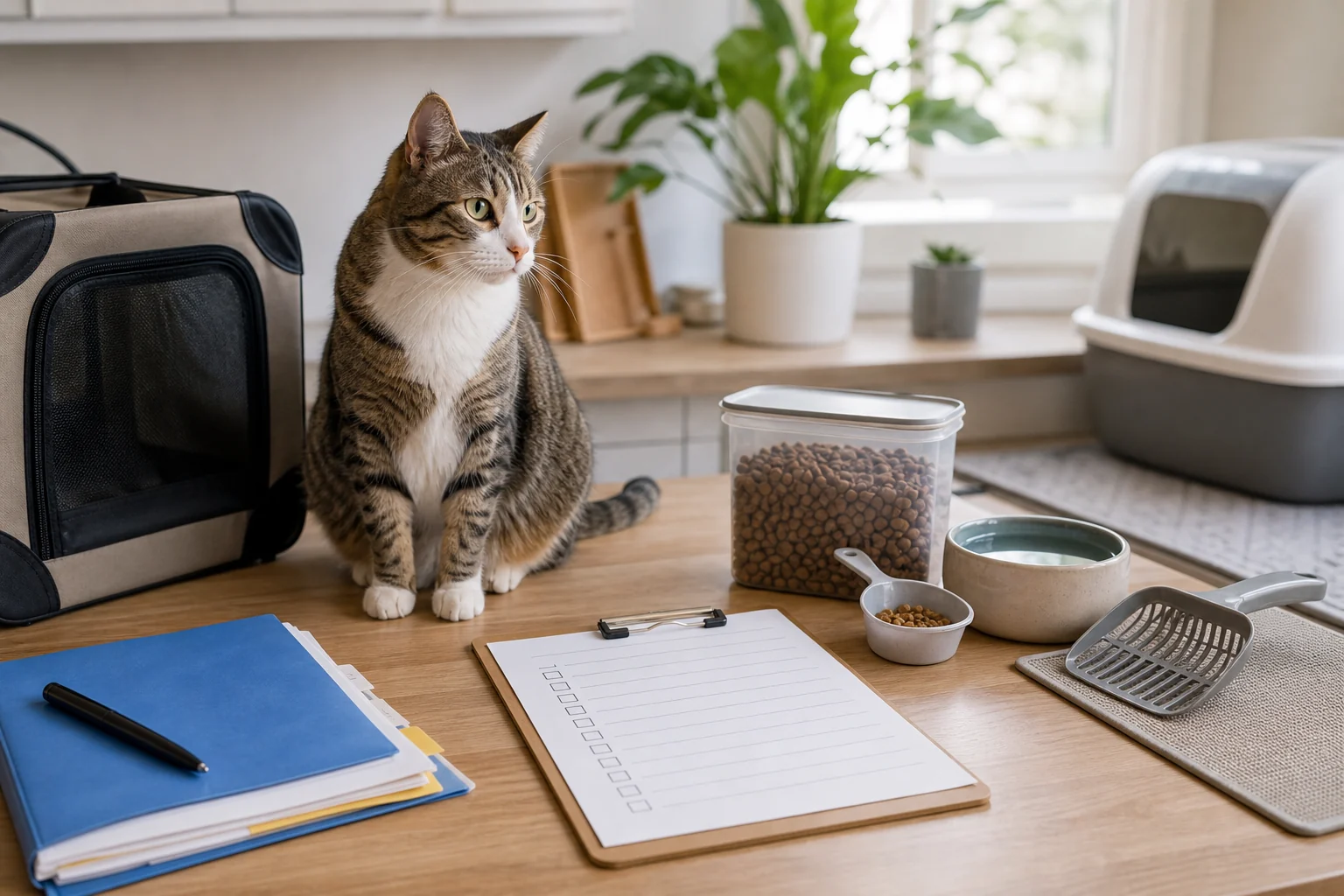
Cat sitter instructions should make feeding, water, litter, updates, home access, and emergency decisions clear before you travel.
The safest version is one printed sheet plus a shared digital copy, written before you leave so nobody has to guess at the door.
A good sitter can only follow the routine you leave behind. Cats often rely on predictable resources, familiar hiding places, quiet handling, and clean toileting areas, and the AAFP/ISFM environmental guidelines describe how unmet environmental needs can contribute to stress and unwanted behavior 1. Clear instructions protect that routine when your normal caregiving rhythm is interrupted.
Use this guide as a practical handoff template. It is especially useful if your cat eats wet food, has a strict meal plan, uses multiple litter boxes, hides from visitors, needs medication prescribed by a veterinarian, or has any health history that could turn a small missed detail into a larger problem.
Inhaltsübersicht
- What should cat sitter instructions include?
- What should the daily visit schedule say?
- What feeding and water instructions should you write down?
- How should you explain litter box care?
- What behavior and comfort notes help the sitter?
- What home access and safety notes should you leave?
- What emergency information should a cat sitter have?
- What updates should the sitter send?
- When should you change the plan before leaving?
- Schlussfolgerung
- Häufig gestellte Fragen
- Referenzen
What should cat sitter instructions include?
Cat sitter instructions should include your cat's identity, normal routine, feeding amounts, water setup, litter box care, hiding places, health notes, emergency contacts, home access, and update expectations. Keep the first page short enough to use during a real visit, then add detail underneath.
If you are still deciding who should provide care, start with SnuggleSouls' guide on So wählen Sie einen Katzensitter aus. Once the sitter is chosen, the written handoff should answer the questions they would otherwise text you about while you are unavailable.
At minimum, include:
- Your travel dates, time zone, and best way to reach you.
- Your cat's name, age, photo, microchip number if available, and normal personality.
- Feeding schedule, exact portions, food location, treat limits, and cleanup notes.
- Water bowl or fountain instructions.
- Litter box locations, scooping routine, trash location, and what changes to report.
- Medication instructions exactly as your veterinarian prescribed them.
- Carrier location, vet contact, emergency hospital, and payment authorization plan.
- Backup local contact who can enter the home.
- Door, key, alarm, parking, elevator, gate, trash, thermostat, and plant safety notes.
- What the sitter should send after each visit.
Put the checklist somewhere obvious, such as a kitchen counter or cat care station. Also send a digital copy in case the paper is misplaced. The goal is not a perfect document; it is a document that makes the next right action obvious.
What should the daily visit schedule say?
The daily visit schedule should say the date, approximate visit window, meal timing, litter task, water task, play or companionship plan, and required update for every visit. Do not write only "come once a day" if your cat's care depends on timing.
Use your cat's actual needs to set visit frequency. SnuggleSouls' guide to how long cats can be left alone can help with the baseline, but the sitter sheet should be more specific than a general time limit.
| Die Situation mit der Katze | Visit schedule to consider | Instruction detail to add |
|---|---|---|
| Healthy adult cat on a simple dry-food routine | At least one dependable visit daily | Food amount, water refresh, litter scoop, behavior check, home safety check. |
| Cat eating wet food | One to two visits daily | Meal timing, leftover food disposal, dish washing, appetite report. |
| Kitten, senior cat, or very social cat | Two visits or longer visits | Extra observation, gentle play, warmth or cooling notes, appetite and litter details. |
| Mehrkatzenhaushalt | Visits long enough to observe each cat | Separate feeding spots, who eats what, who hides, and how to prevent one cat blocking another. |
| Cat with medication or health history | Schedule approved by your veterinarian | Exact medication timing and red flags that should trigger a call. |
Write the visit plan as a checklist, not a paragraph. A sitter arriving after work or in bad weather should be able to scan it quickly and still complete the essentials.
What feeding and water instructions should you write down?
Feeding instructions should name the exact food, amount, serving time, bowl location, treat limit, and what counts as abnormal appetite. Water instructions should say where every bowl or fountain is, how to clean or refill it, and whether your cat normally drinks more or less than average.
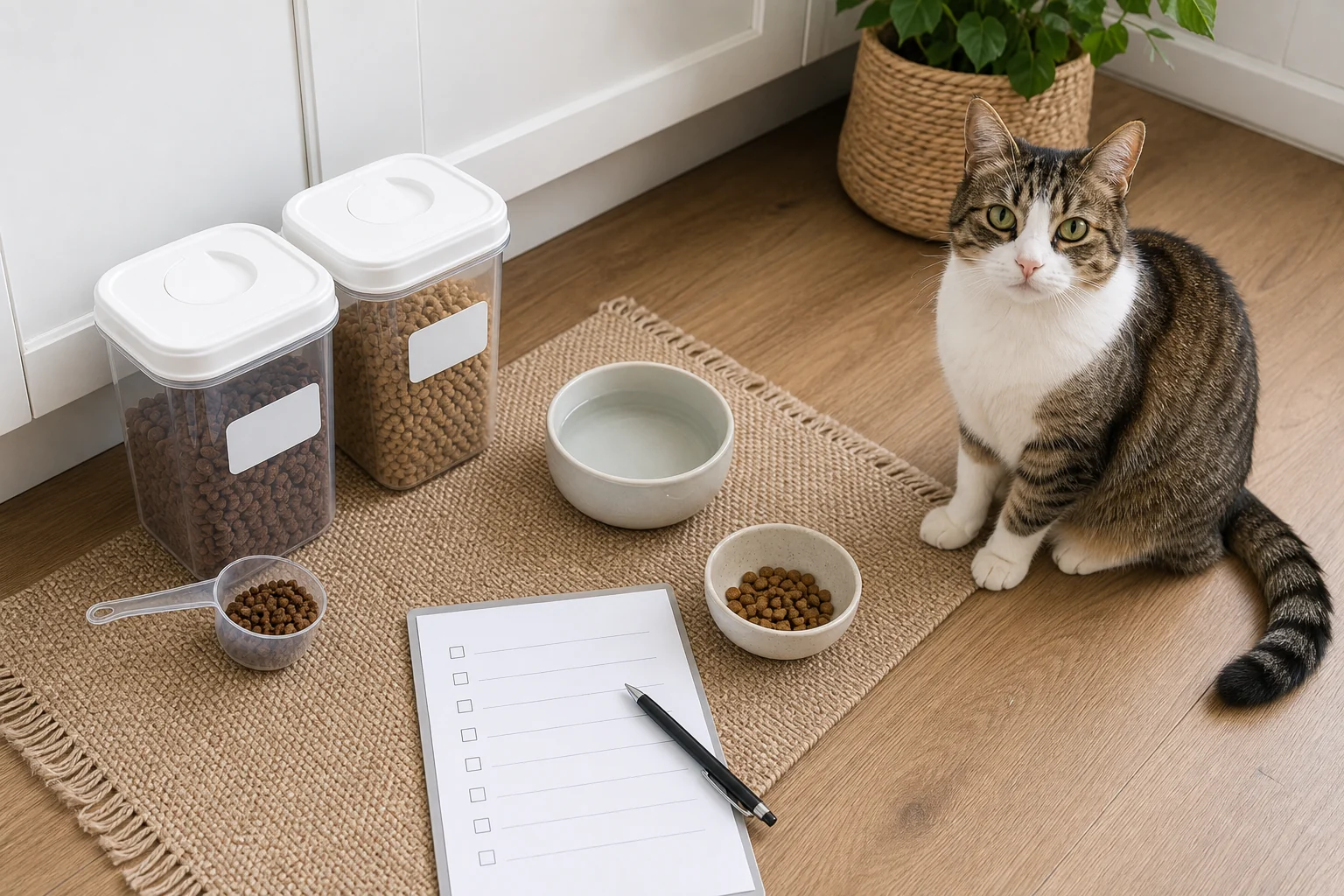
Written feeding notes should tell the sitter exactly what to serve, when to serve it, and what appetite changes to report.
If you have recently changed your cat's food, portion, or meal timing, settle that before you travel whenever possible. Use your veterinarian's advice for medical diets, and use tools such as a Fütterungsplan für Katzen nach Alter oder eine Katzenkalorienrechner only as planning aids, not as a reason to make a sudden trip-week diet change.
Your feeding section should include:
- Food brand or description, flavor, texture, and storage location.
- Exact amount per meal, using the scoop, scale, can fraction, or measuring cup the sitter will use.
- Meal times and whether food should be removed after a set period.
- Whether dry food, wet food, treats, toppers, or puzzle feeders are allowed.
- What to do if one cat eats another cat's food.
- How much appetite change should be reported.
- Whether vomiting, repeated gagging, diarrhea, or no appetite requires an urgent call.
Be precise with medications, supplements, and prescription diets. Do not ask a sitter to adjust doses, skip doses, or improvise if something goes wrong unless your veterinarian has written those instructions for your cat. If a dose is missed, the sitter should follow the vet's written plan or call you and the clinic.
How should you explain litter box care?
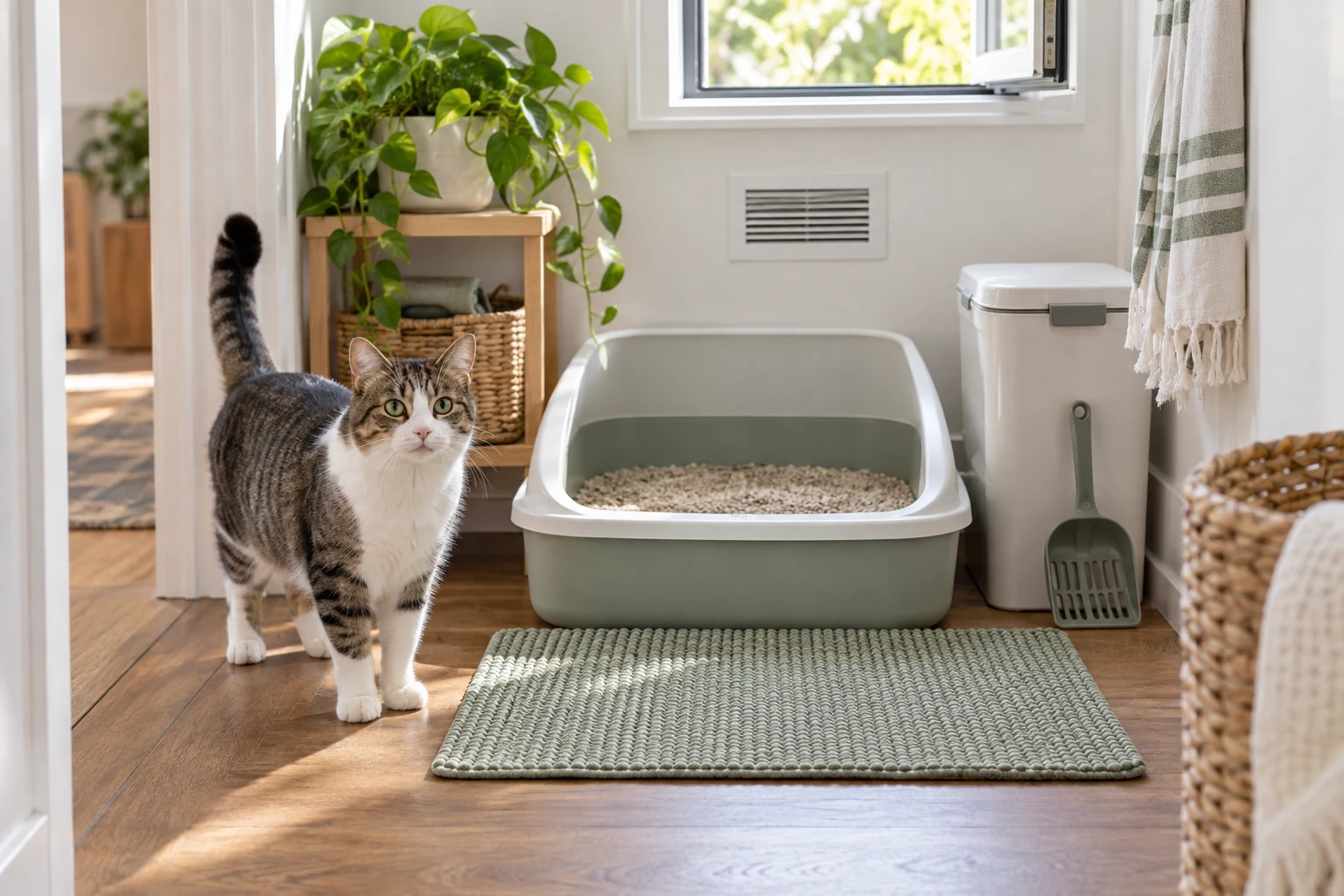
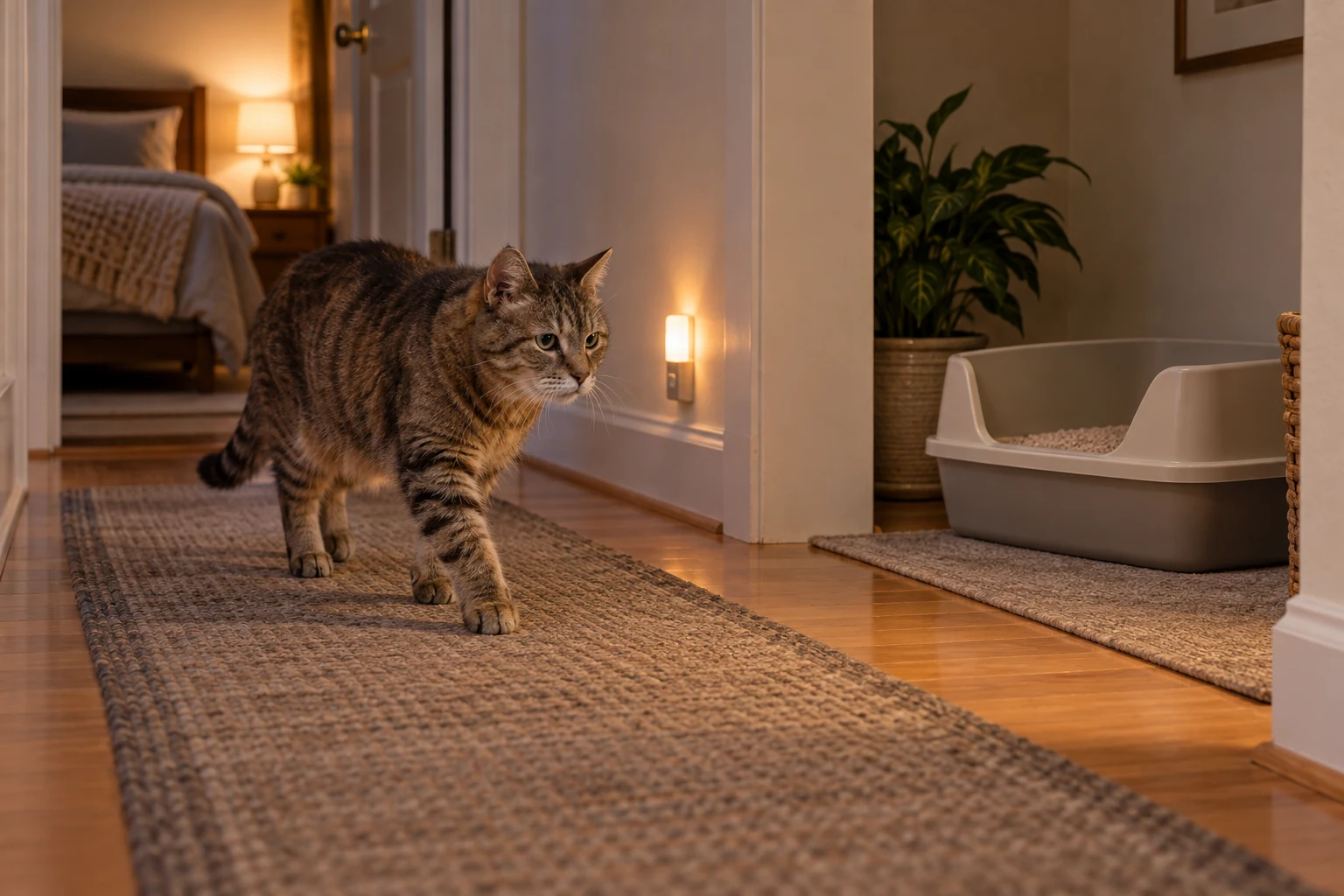
Litter instructions should say where each box is, how often to scoop, where waste bags go, how much litter to add, what cleaning products are safe, and which urine or stool changes should be reported. Cats may avoid dirty, poorly placed, or stressful litter areas, so this section deserves real detail.
ASPCA general cat care guidance notes that indoor cats need a litter box in a quiet, accessible location and that solid waste should be scooped at least once daily 2. Your sitter does not need a lecture, but they do need to know what "normal" looks like in your home.
Notieren Sie sich:
- Number and location of boxes.
- Litter type and where extra litter is stored.
- Scoop schedule for each visit.
- Trash, odor, and cleaning instructions.
- Whether the sitter should top up litter.
- Normal urine clump size and stool pattern if you know it.
- Warning signs: no urine, repeated trips, crying in the box, blood, diarrhea, constipation, or accidents outside the box.
If your setup is already tricky, review the Die beste Einrichtung für ein Katzenklo und how often to clean the litter box before you leave. A sitter can maintain a good setup, but they usually cannot fix a stressful one during a short visit.
For urinary red flags, be direct. A cat straining to urinate, producing little or no urine, crying in the litter box, or seeming painful can need urgent veterinary care, especially male cats. Tell the sitter to contact you and a veterinarian immediately rather than waiting for the next scheduled visit.
What behavior and comfort notes help the sitter?
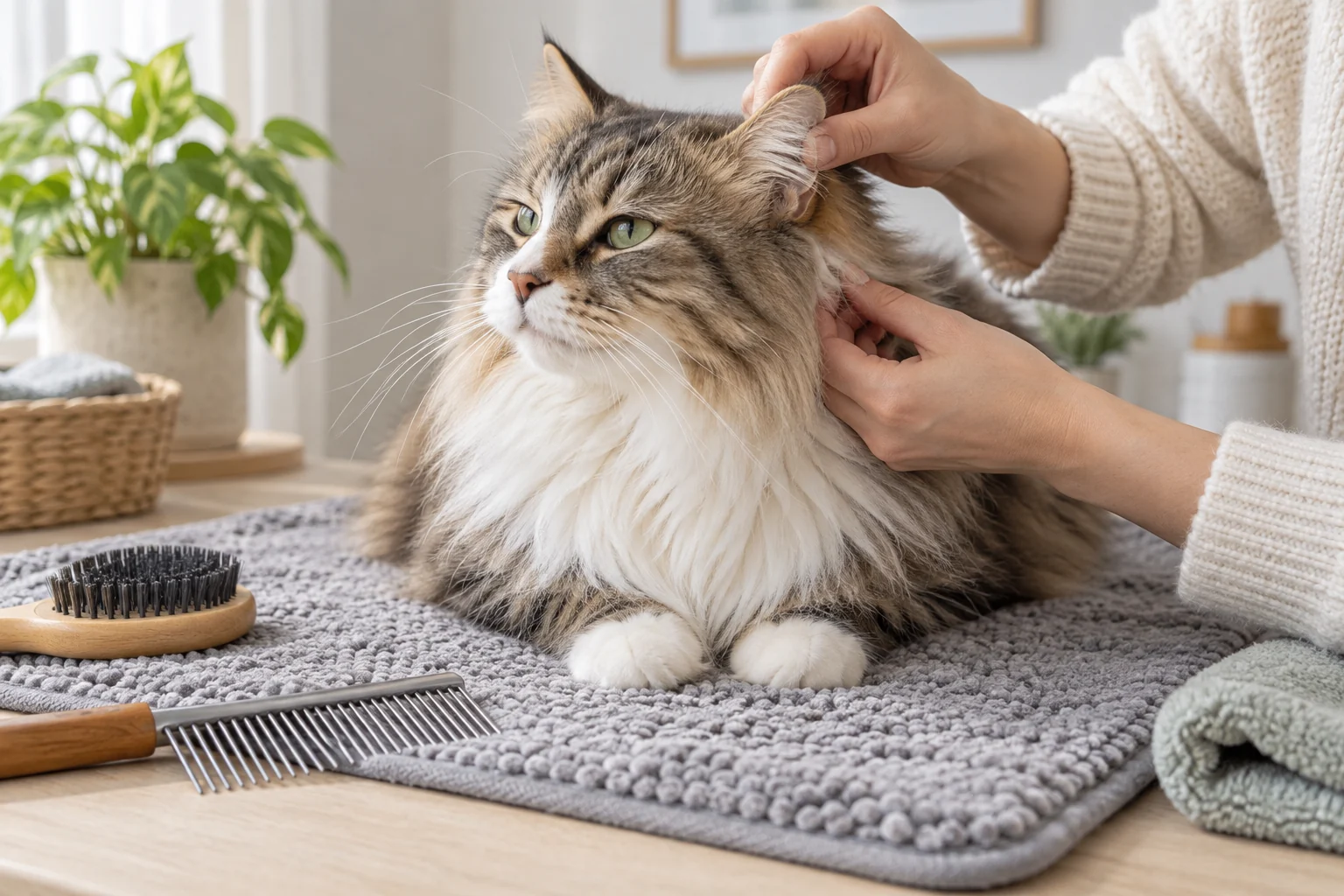
Behavior notes should explain what your cat normally does, where they hide, how they like to be approached, and what changes matter. This keeps the sitter from mistaking fear for rudeness, silence for wellness, or clinginess for normal affection when it is new.
Helpful comfort notes include:
- Favorite hiding spots and safe rooms.
- Whether your cat may be under the bed, in a closet, on a cat tree, or behind furniture.
- How to confirm the cat is safe without dragging them out.
- Favorite toys, brushing preference, and petting limits.
- Words, sounds, or routines your cat recognizes.
- Things that scare your cat, such as vacuum cleaners, doorbells, strangers, or being picked up.
- Whether doors or windows are escape risks.
The FelineVMA page summarizing the AAFP/ISFM environmental guidelines explains that cats need appropriate environmental resources and may experience stress when those needs are not met 1. For a sitter, that translates into practical instructions: keep the cat's resources predictable, let the cat choose contact when possible, and report behavior that is unusual for that individual cat.
For shy cats, ask for proof of care rather than forced photos. Food level, water level, litter use, and a calm check of known hiding places may tell you more than a picture of a terrified cat pulled into the open.
What home access and safety notes should you leave?
Home access notes should make entry and exit simple, secure, and repeatable. Safety notes should remove hazards before the sitter arrives and tell the sitter which rooms, plants, foods, cords, windows, and doors need attention.
Before travel, finish basic Katzensicherheit für Ihr Zuhause. Put away string, ribbon, hair ties, sewing thread, rubber bands, fragile objects, open trash, human food, cleaning products, and unsafe plants. Cornell Feline Health Center warns that lilies can cause life-threatening kidney failure in cats even in tiny amounts, and its hazard list also includes toxic foods, household chemicals, and medications 3.
Leave these home details:
- Key, lockbox, alarm, gate, parking, elevator, and building entry instructions.
- Rooms that should stay closed.
- Window, balcony, fireplace, appliance, and toilet-lid instructions.
- Thermostat range and what to do during heat, cold, or power failure.
- Cleaning supplies safe for cat messes.
- Flashlight location and breaker panel location if relevant.
- Where extra food, litter, towels, trash bags, and bowls are stored.
- Whether anyone else has permission to enter.
Do not leave hazards for the sitter to manage if you can remove them first. The best instructions are easier because the home is already set up for success.
What emergency information should a cat sitter have?
Emergency instructions should say who to call, which veterinary clinic to use, where the carrier is, how payment or treatment authorization works, and which signs require immediate action. This is the part to write before you are tired, late, or already on the road.
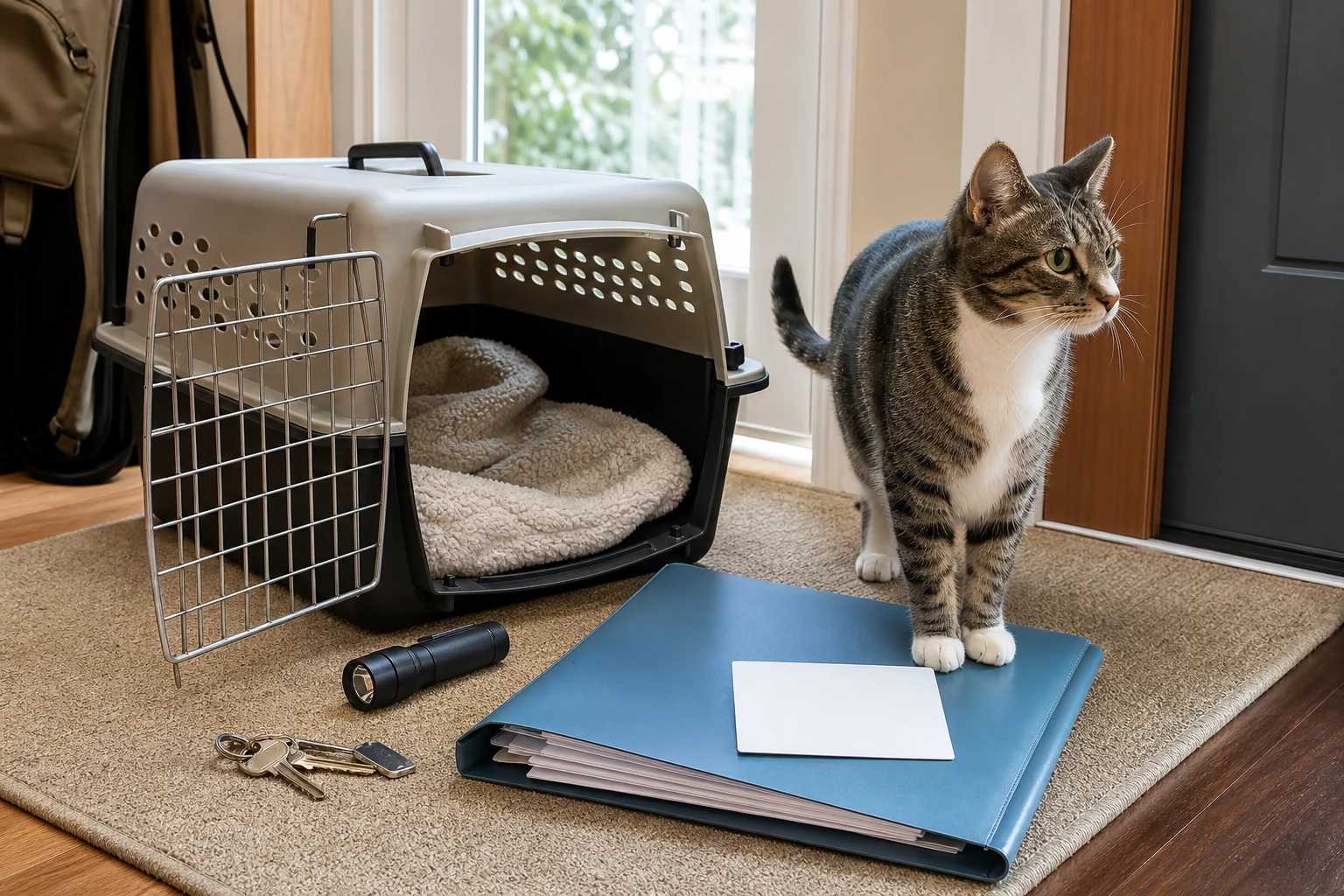
An emergency handoff should make the carrier, vet records, backup contacts, and urgent-care plan easy to find.
AAHA recommends preparing emergency contact information for a sitter, including the primary veterinarian, nearest 24-hour emergency clinic, poison control hotline, insurance details if applicable, and a nearby trusted contact 4. Pet Sitters International also emphasizes having client contact details, emergency contacts, and a veterinary release or emergency care authorization on file because a sitter may not be able to reach the owner immediately 5.
Include:
- Your veterinarian's name, phone number, address, and hours.
- Nearest 24-hour emergency clinic.
- Poison control contact and whether the sitter is authorized to call.
- Your backup local contact.
- Carrier location and how to close it securely.
- Vaccine record, medication list, insurance information, and microchip number if available.
- Written permission for emergency veterinary evaluation if you cannot be reached.
- Payment instructions, such as a card on file with the clinic, if you use that system.
- Your preferred decision order: call you, call backup, call vet, go to emergency clinic.
Make the red flags impossible to miss:
| Call urgently if the sitter sees | Warum das wichtig ist |
|---|---|
| Trouble breathing, open-mouth breathing, collapse, seizure, sudden weakness, or sudden paralysis | These can be emergencies and should not wait. |
| Straining to urinate, crying in the litter box, or no urine seen | Urinary blockage can become life-threatening. |
| Repeated vomiting, severe diarrhea, blood, poisoning exposure, or suspected swallowed string | Cats can decline quickly, and some toxins require prompt care. |
| Not eating for 24 hours, especially in an overweight cat, kitten, senior, or sick cat | Appetite loss can signal illness and needs veterinary guidance. |
| Injury, escape, overheating, hypothermia, or rapid behavior change | The sitter needs a clear escalation plan. |
This article is educational and cannot replace your veterinarian's instructions. If your cat has a known medical condition, ask your clinic what specific signs should trigger a call before you leave.
What updates should the sitter send?
The sitter should send a short update after every visit with timing, food, water, litter, behavior, home safety, and a photo when possible. The update should be factual enough that you can spot a pattern across several visits.
A useful update looks like this:
| Element aktualisieren | Example detail |
|---|---|
| Arrival and departure | "Arrived 6:05 pm, left 6:32 pm." |
| Cat seen | "Milo was on the cat tree; photo attached." |
| Lebensmittel | "Ate most wet food from morning; served 1/2 can fresh food." |
| Wasser | "Water bowl washed and refilled; fountain running." |
| Abfälle | "Two urine clumps, one normal stool, no accidents." |
| Verhalten | "Relaxed, accepted play for five minutes, no hiding." |
| Startseite | "Thermostat normal, windows closed, no messes." |
Avoid update language that hides useful information. "All good" is not enough if your cat has a history of appetite, urinary, stress, or medication concerns. Ask the sitter to name what they checked, even when everything is normal.
When should you change the plan before leaving?
Change the plan before leaving if your cat is not eating normally, recently had surgery, started a new medication, has unstable illness, has a urinary history, or seems unusually stressed. In those situations, a once-daily sitter sheet may not be enough.
Call your veterinarian before travel if your cat:
- Has not eaten normally in the last day.
- Is vomiting repeatedly or has severe diarrhea.
- Is straining in the litter box.
- Recently had anesthesia, dental work, injury, or a new diagnosis.
- Needs injections or time-sensitive medication.
- Is a kitten, senior, pregnant, fragile, or medically complex.
- Has escaped recently or is likely to bolt through the door.
Sometimes the safer choice is veterinary boarding, a trained professional sitter, twice-daily visits, postponing travel, or taking your cat with you. If travel is the better plan, use a traveling with a cat checklist and ask your vet about stress reduction rather than trying unapproved sedatives or supplements.
Schlussfolgerung:
Cat sitter instructions work best when they are specific, visible, and easy to follow under pressure. Write one clear handoff that covers feeding, water, litter, behavior, access, updates, and emergency decisions, then set up the home so the sitter can complete each visit without improvising.
The biggest goal is consistency. Your cat should keep their familiar routine, your sitter should know exactly what to check, and everyone should know when a change is serious enough to call a veterinarian.
Häufig gestellte Fragen
How long should cat sitter instructions be?
Aim for one quick-reference page plus supporting details. The first page should cover meals, water, litter, contacts, carrier location, and urgent red flags; extra pages can explain personality, hiding places, medication notes, and home access.
Should I print cat sitter instructions or send them digitally?
Do both. A printed sheet is easier to use during a visit, while a digital copy helps if the paper is misplaced or the sitter needs to check details before arriving.
What should I write if my cat hides from the sitter?
List normal hiding places, how to confirm your cat is safe, and when hiding is unusual. Ask the sitter to avoid pulling your cat out unless there is an emergency or a veterinarian has told you to do so.
Should I leave medication instructions for a cat sitter?
Yes, but write them exactly as your veterinarian prescribed them. Include the medication name, dose, time, storage location, and what to do if a dose is missed; do not ask the sitter to guess or adjust medication.
What is the most important emergency detail to leave?
Leave your veterinarian, nearest emergency clinic, carrier location, backup contact, and written authorization for urgent care if you cannot be reached. Without those details, the sitter may lose time during a real emergency.
Can automatic feeders replace a cat sitter?
No. Feeders and fountains can support a care plan, but they cannot notice vomiting, litter box problems, escape risks, heat issues, appetite loss, injury, or a frightened cat who needs help.
Referenzen
[1] FelineVMA. (2013). 2013 AAFP/ISFM Environmental Needs Guidelines. https://catvets.com/resource/aafp-isfm-environmental-needs-guidelines/
[2] ASPCA. (2026). General Cat Care. https://www.aspca.org/pet-care/cat-care/general-cat-care
[3] Cornell Feline Health Center. (2026). Common Cat Hazards. https://www.vet.cornell.edu/departments-centers-and-institutes/cornell-feline-health-center/health-information/feline-health-topics/common-cat-hazards-0
[4] AAHA. (2025). Auf das Unerwartete vorbereitet sein: Wichtige Hinweise für Tiersitter. https://www.aaha.org/resources/preparing-for-the-unexpected-essential-pet-sitter-instructions/
[5] Pet Sitters International. (2026). 3 Pet First Aid Precautions Professional Pet Sitters Should Take. https://www.petsit.com/pet-first-aid-precautions
 EN
EN DE
DE ES
ES PT
PT