
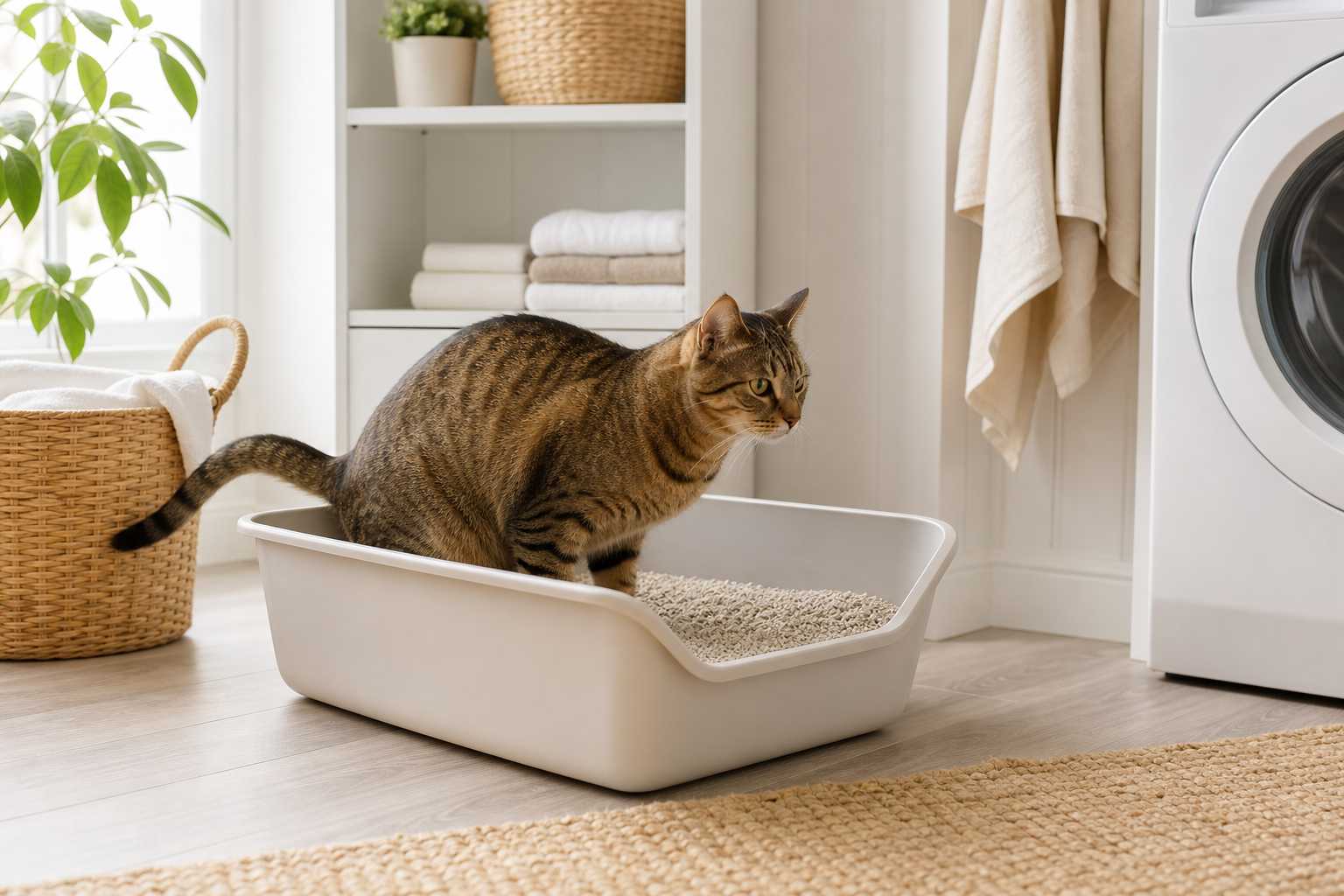
Most cats do not need a “better” lid; they need a box that feels safe, clean, roomy, and easy to reach. An uncovered box is often the simplest starting point because it gives a cat clear sightlines and a fast exit, but some cats do use a covered box happily. The useful answer comes from observing your own cat rather than treating one style as universal.
Covered boxes can make a room look tidier and can contain some kicked litter. They can also trap odor, feel cramped, and make it harder for a cat to see or leave if another pet approaches. Use the setup that your cat chooses consistently and comfortably.
Inhaltsübersicht
- What is the real difference between covered and uncovered litter boxes?
- When might a covered box work well?
- When is an uncovered box usually the safer choice?
- What matters more than the lid?
- How to test your cat's preference safely
- Signs the current setup is not working
- When to call a veterinarian
- Schlussfolgerung
- Häufig gestellte Fragen
- Referenzen
What is the real difference between covered and uncovered litter boxes?
The key difference is not cleanliness for people; it is the cat's experience while entering, using, and leaving the box. An open box provides visibility and more air flow. A covered box can reduce scattered litter and visual clutter, but the enclosure may hold smells that a cat notices far more strongly than a person does. Guidance from the Ohio State Indoor Pet Initiative emphasizes a large, accessible box in a low-traffic location, with enough resources that cats do not feel trapped or challenged 1.
| Setup | Potential benefit | Potential downside | Best use case |
|---|---|---|---|
| Uncovered | Clear view, easy escape, better airflow | More visible litter and tracking | Default starting point, multi-cat homes, wary cats |
| Covered | Can contain some kicked litter and look neater | Can trap odor; doorway can feel confining | A cat who has already shown it prefers a large, flap-free model |
Neither style compensates for a box that is too small, dirty, noisy, or difficult to reach. A cat may reject either type when those basics are wrong.
When might a covered box work well?
A covered litter box can work for a confident cat that enters readily, turns around comfortably, and leaves without hesitation. It is more likely to be acceptable when the hood is roomy, the entrance is wide, the box is scooped at least daily, and there is no swinging door flap. A flap can make noise, brush whiskers, and reduce a cat's ability to see the room before exiting.
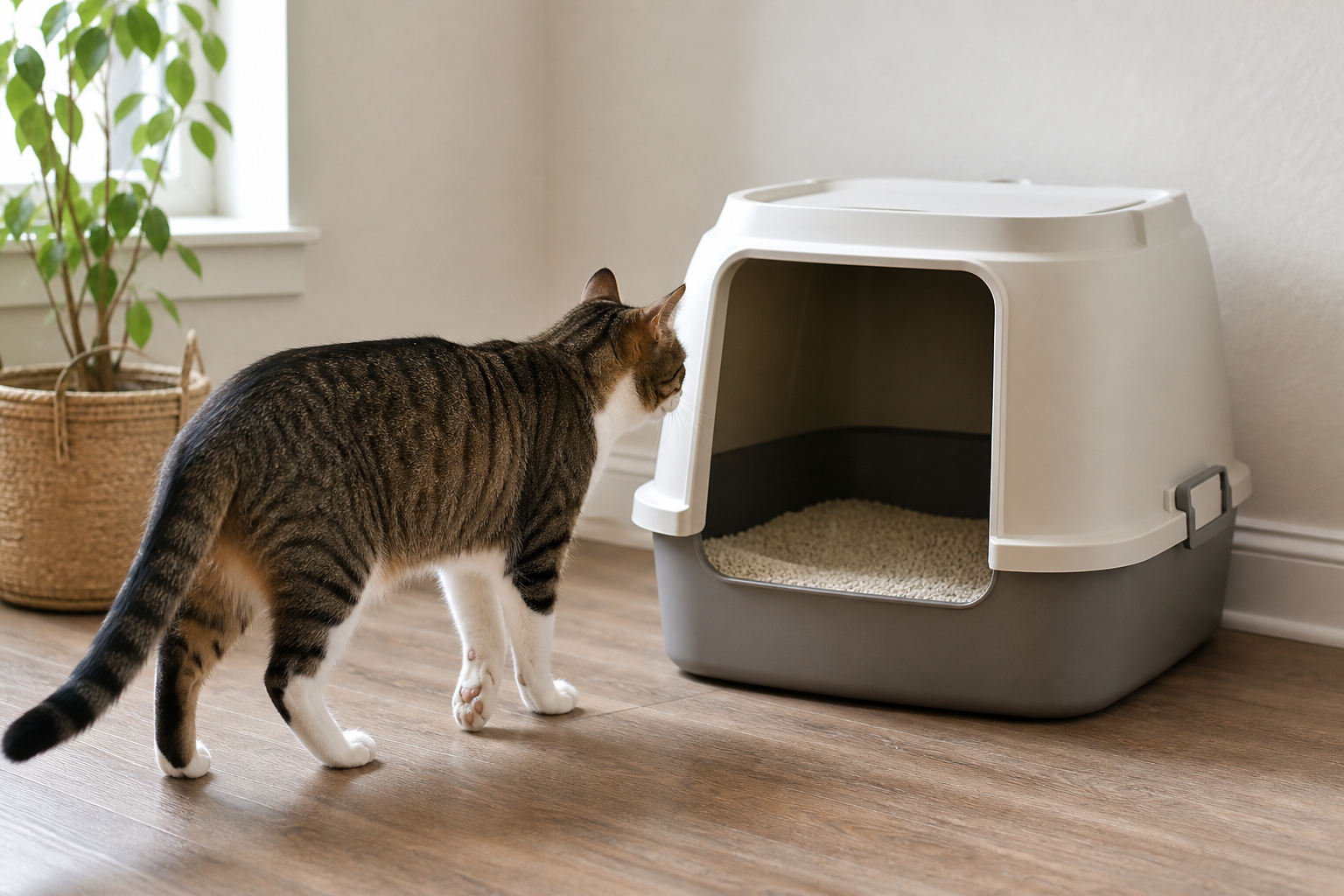
If you try a hood, keep the underlying box large. A small covered model can become a compact, stale-smelling space quickly. Clean it thoroughly, including the inside of the hood, and do not assume odor control for people equals comfort for the cat. The ASPCA notes that litter-box problems can be driven by aversion to the box or its conditions 2.
Covered boxes can be reasonable in a quiet, single-cat home when the cat has clearly used that style reliably. They are not automatically an upgrade for every cat.
When is an uncovered box usually the safer choice?
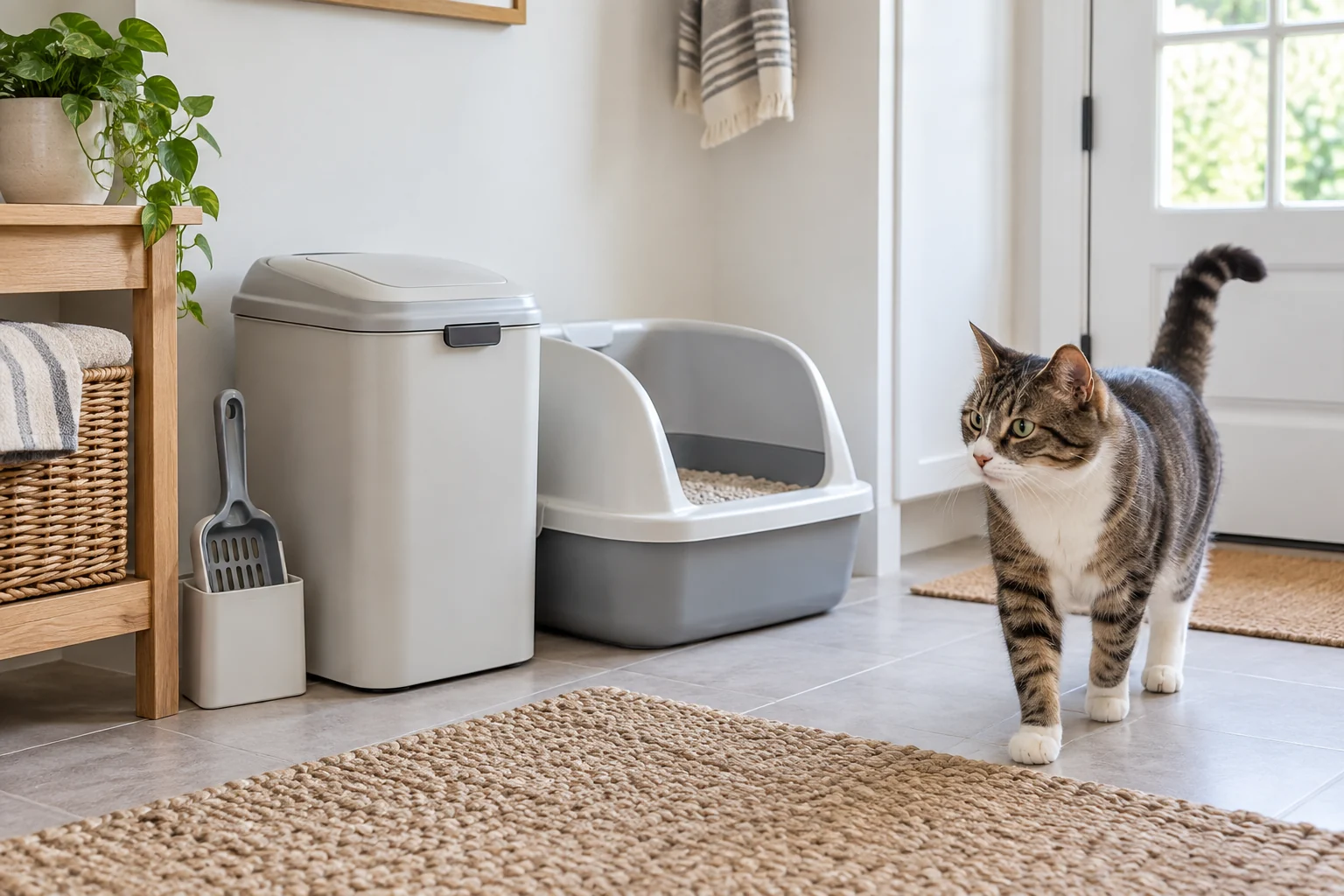
An uncovered box is usually the practical default for kittens learning the routine, senior cats with mobility limits, anxious cats, and cats in multi-cat homes. It lets a cat scan the surroundings and leave quickly. That matters if another cat, dog, child, appliance, or narrow hallway can make the location feel risky.
Open boxes also make maintenance easier to judge. You can see clumps and waste promptly instead of discovering a dirty interior after the fact. Follow a consistent Reinigungsplan für die Katzentoilette and use unscented litter unless your cat already accepts another type. Sudden changes in box style, litter texture, or fragrance can all create friction.
For a cat that sprays vertically, a high-sided open box may handle the mess without closing off the cat's view. For a cat that kicks litter, place a tracking mat outside the box and choose a box with taller sides rather than assuming a cover is the only solution.
What matters more than the lid?
Size, location, cleanliness, number of boxes, and easy access determine comfort more reliably than the presence of a cover. A useful cat litter box setup guide starts with those basics.
- Größe: The box should be long enough for the cat to enter, turn, dig, and posture comfortably. Large cats often need a jumbo box or a storage-tote style solution with a safe, low entry.
- Number: A common starting guideline is one box per cat plus one extra, distributed through the home rather than grouped in one spot 1.
- Location: Choose a quiet, easy-to-reach area away from food and water. Avoid corners where a cat has only one exit, especially in homes with multiple pets.
- Cleanliness: Scoop daily and wash the box regularly with mild, unscented products. Strong fragrances can create a new aversion.
- Zugang: Give kittens, seniors, and cats with joint discomfort a low entry. A cat should not need to climb or squeeze to use the box.
These details are also why switching from open to covered can backfire: the change often changes several things at once—space, odor, sightlines, and the exit route.
How to test your cat's preference safely
The cleanest test is to offer both styles at the same time. Put a large open box and a large, flap-free covered box in comparable quiet locations, use the same unscented litter and depth, and keep both equally clean. Do not remove the familiar box during the trial.
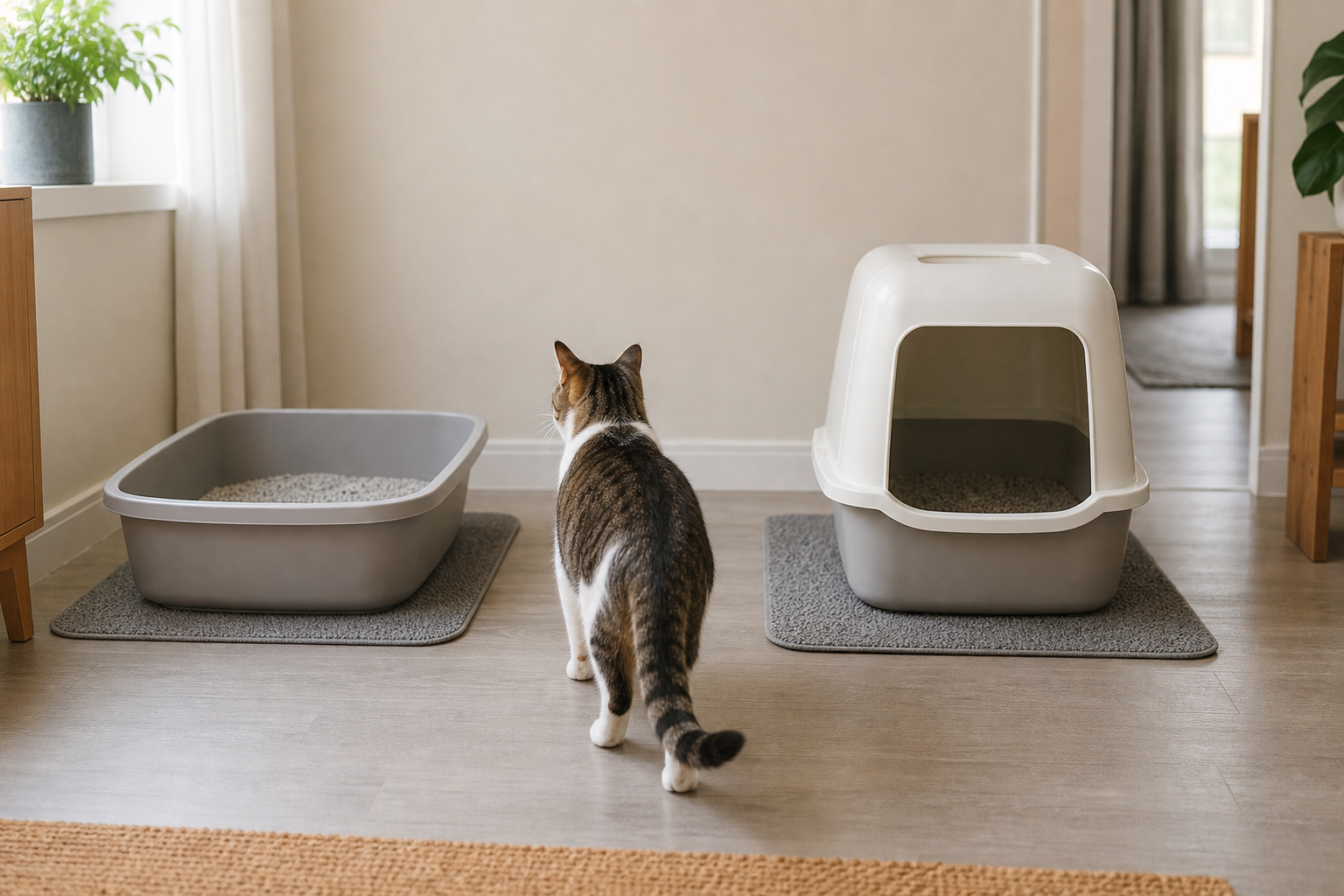
Watch for one to two weeks. Preference is not just which box gets used once; look for relaxed entry, normal digging and covering, regular use, and no accidents. If your cat consistently favors one box, maintain that option. If both boxes are used, the open one can remain a useful backup.
Avoid forcing the test by locking a cat in a room or abruptly taking away the box it already trusts. A gradual choice-based approach protects routine and gives you clearer information.
Signs the current setup is not working
Hesitating at the entrance, perching on the edge, eliminating beside the box, racing away afterward, or suddenly choosing rugs, laundry, or a bed can mean the setup deserves attention. A covered box is only one possible factor; dirtiness, a new pet, conflict, loud appliances, a blocked exit, or a health problem can all be involved.
If a cat starts avoiding the box, clean and add accessible boxes first, then review location and household stress. See our guide to why litter box avoidance can show up elsewhere in the home und die stress-related peeing guide for practical environment checks. Do not punish accidents; punishment can increase fear and does not identify the cause 2.
When to call a veterinarian
Any sudden change in urination or litter-box use warrants a prompt veterinary conversation, because behavior and medical conditions can look similar. Seek urgent veterinary care if your cat is straining, making repeated trips with little or no urine, crying while trying to urinate, has blood in the urine, seems painful, vomits, collapses, or becomes unusually quiet. A male cat that cannot pass urine is an emergency.
For non-urgent changes, arrange an exam rather than assuming the litter-box lid is the cause. This overview of medical causes of changes in urination can help you prepare observations for the visit. The Feline Veterinary Medical Association also recommends evaluating medical contributors alongside environmental and behavioral factors 3.
Conclusion: Let Your Cat's Comfort Decide
Start with a large, clean, uncovered box in a quiet place, then let your cat’s behavior guide any experiment with a covered model. A cover is acceptable only when the cat is comfortable using it; it should never trade away space, cleanliness, visibility, or a safe exit. For more practical home routines, explore our Daily Care guides.
Häufig gestellte Fragen
Do cats prefer covered or uncovered litter boxes?
There is no universal preference. Many cats do well with open boxes because they provide airflow and visibility, while some confidently use a large covered box. Offer both during a calm trial if you need an answer for your cat.
Should I remove the door flap from a covered litter box?
Usually, yes. A flap can make the entry feel less predictable, brush sensitive whiskers, and block the cat’s view of the room. A wide, flap-free opening gives a covered box a better chance of being accepted.
Can a covered litter box cause accidents outside the box?
It can contribute if it feels cramped, dirty, frightening, or hard to escape, but it is not the only explanation. Check health, litter cleanliness, location, social stress, and access before drawing a conclusion.
How many litter boxes do I need for two cats?
A common starting point is three boxes for two cats, placed in more than one part of the home 1. The best number and placement depend on the cats’ relationship, home layout, and whether either cat guards resources.
Referenzen
[1] Ohio State University Indoor Pet Initiative. Katzenklos. Quelle
[2] American Society for the Prevention of Cruelty to Animals. Probleme mit der Katzentoilette. Quelle
[3] Feline Veterinary Medical Association. House-Soiling Guidelines. Quelle
 EN
EN DE
DE ES
ES PT
PT