
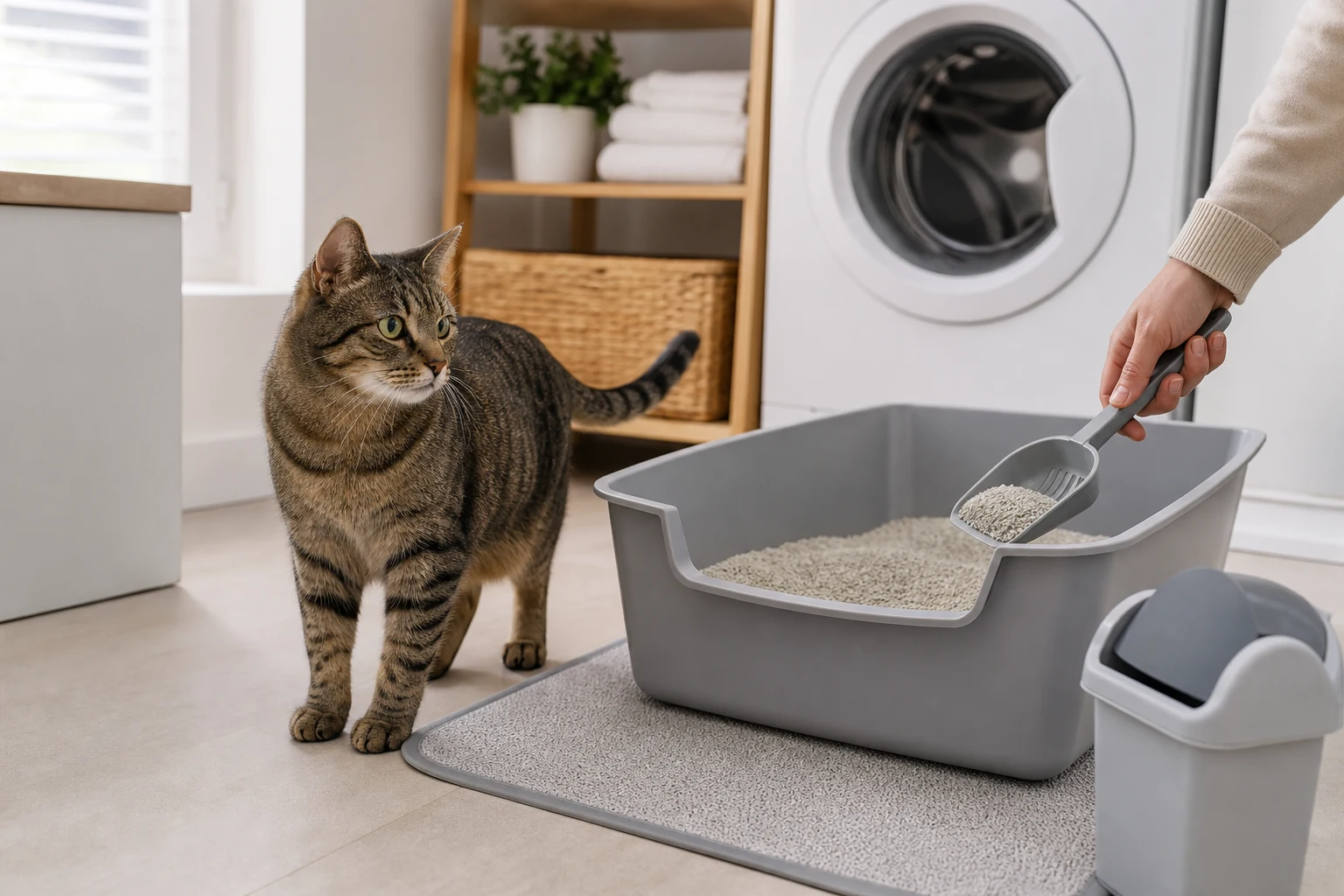
Entfernen Sie den Kot mindestens einmal täglich aus dem Katzenklo und überprüfen Sie es nach Möglichkeit morgens und abends. Leeren Sie das Katzenklo vollständig, reinigen und trocknen Sie es und füllen Sie es nach einem Zeitplan wieder auf, der zur Art der Streu und zu Ihrer Katze passt – in der Regel alle ein bis vier Wochen oder früher, wenn nach dem Entleeren noch Geruch, Rückstände oder Feuchtigkeit zurückbleiben.
Bei einer sauberen Katzentoilette geht es nicht nur darum, das Haus in einem angenehmen Zustand zu halten. Katzen sind auf einen bequemen, verlässlichen Ort für ihre Notdurft angewiesen, und eine verschmutzte Katzentoilette kann manche Katzen dazu bringen, zu zögern oder sich einen anderen Ort zu suchen. Das praktische Ziel ist eine Routine, die Sie regelmäßig wiederholen können: Entfernen Sie täglich die Ausscheidungen, füllen Sie nach Bedarf Streu nach und reinigen Sie die Katzentoilette gründlich, bevor sich Ablagerungen festsetzen, die sich nur schwer entfernen lassen.
Inhaltsübersicht
- Wie oft sollte man ein Katzenklo reinigen?
- Was solltest du jeden Tag tun?
- Wie oft sollte man die Streu komplett austauschen?
- Wie reinigt man ein Katzenklo gründlich und sicher?
- Sollte man in einem Haushalt mit mehreren Katzen öfter putzen?
- Kann eine verschmutzte Katzentoilette dazu führen, dass eine Katze sie meidet?
- Wann ist ein Wechsel der Katzentoilette ein Warnzeichen, das einen Tierarztbesuch erforderlich macht?
- Wie kann man die Zeitplanung vereinfachen?
- Fazit: Schaffen Sie eine Routine, auf die sich Ihre Katze verlassen kann
- Häufig gestellte Fragen
- Referenzen
Wie oft sollte man ein Katzenklo reinigen?
In den meisten Haushalten sollte die Streu mindestens einmal täglich mit der Schaufel entfernt, die Katzentoilette zweimal täglich überprüft und je nach Streuart und Verschmutzungsgrad der Schale alle ein bis vier Wochen ein vollständiger Streuwechsel samt Reinigung durchgeführt werden. International Cat Care empfiehlt, mit Urin verschmutzte Streu und Kot mindestens zweimal täglich zu entfernen, während die Richtlinien der AAHA/AAFP besagen, dass Katzentoiletten täglich ausgeschöpft und regelmäßig gereinigt werden sollten.1 2
Nutzen Sie den Zeitplan als Ausgangspunkt, anstatt auf ein festes Datum zu warten. Führen Sie die Grundreinigung früher durch, wenn:
- Der Abfall zerfällt und lässt sich nicht vollständig aufschaufeln.
- Der Boden oder die Seiten bleiben feucht oder klebrig.
- Der Geruch bleibt auch nach der Entsorgung des Abfalls bestehen.
- Deine Katze fängt an zu schnüffeln, zögert, setzt sich auf die Kante oder geht schnell wieder weg.
- Die Schachtel weist Kratzer, Risse oder Rückstände auf, die sich nicht mehr abwaschen lassen.
Das Tablett selbst ist nur ein Teil eines guten Die beste Einrichtung für die Katzentoilette. Auch Größe, Aufstellungsort, Streutiefe, Zugänglichkeit und die Anzahl der Katzentoiletten beeinflussen, ob sich eine Katze beim Benutzen wohlfühlt.
| Aufgabe | Praktischer Zeitplan für den Start | Mach es lieber früher, wenn |
|---|---|---|
| Urinklumpen und Kot entfernen | Mindestens einmal täglich; idealerweise morgens und abends | Mehrere Katzen halten sich in diesem Bereich auf, es entsteht ein Geruch oder eine Katze ist krank |
| Streu nachfüllen | Nach dem Schöpfen, je nach Bedarf | Die Schicht wird für normales Graben zu flach. |
| Entfernen Sie sichtbare Verschmutzungen von den Kanten der Schachtel oder der Unterlage | Sobald es bemerkt wurde | Eine Katze hat Durchfall, Urin läuft an der Seite herunter oder es gibt starke Streuspuren |
| Leeren, waschen, trocknen und wieder befüllen | In der Regel alle 1–4 Wochen, gemäß den Anweisungen auf der Verpackung | Es treten Geruch, Feuchtigkeit, Rückstände oder Vermeidungsverhalten auf |
| Die physische Box austauschen | Wenn es beschädigt oder schwer zu reinigen ist | Es entstehen tiefe Kratzer, Risse, anhaltende Gerüche oder gefährliche Kanten |
Was solltest du jeden Tag tun?
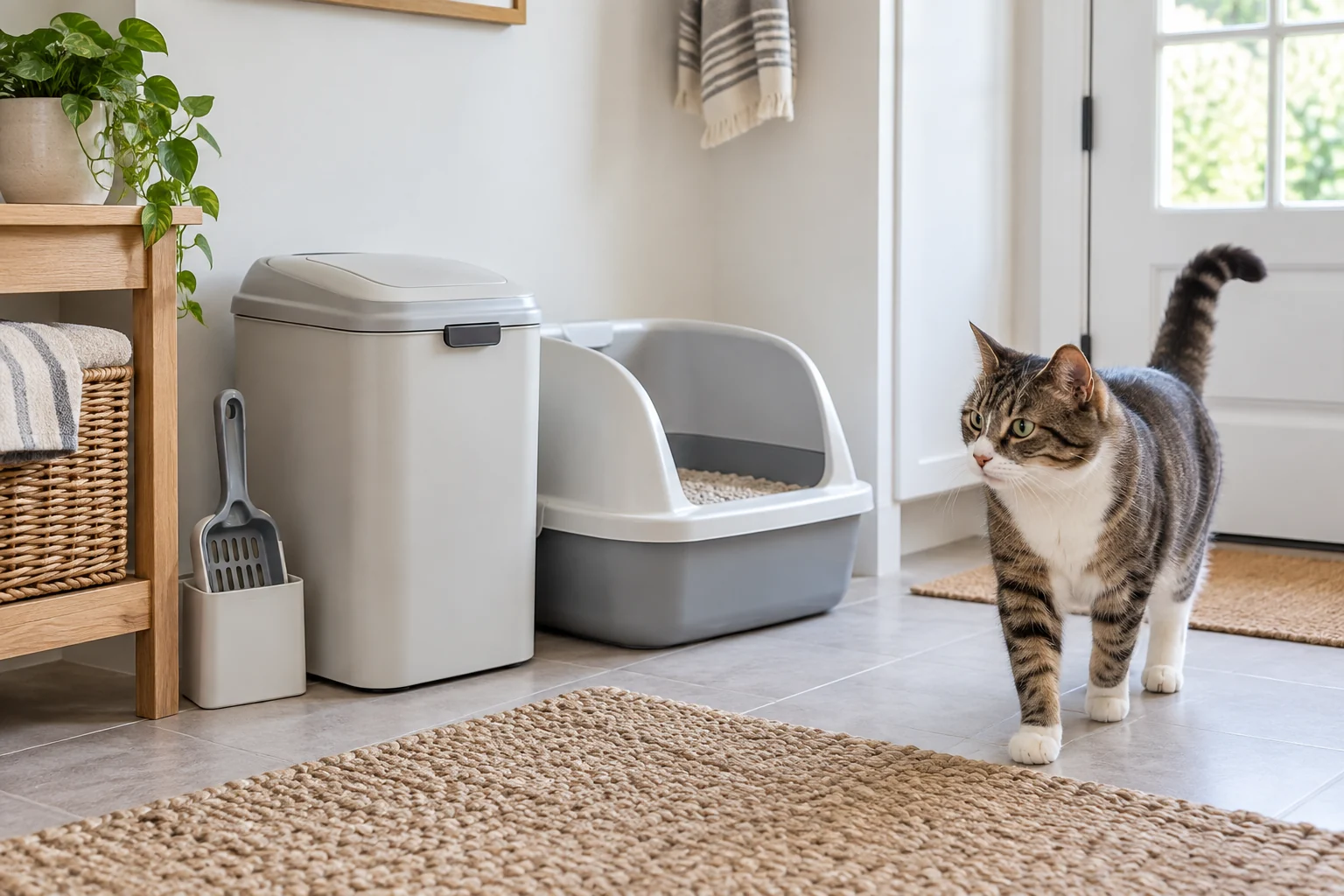
Entfernen Sie täglich Kot und Urinklumpen, achten Sie auf ungewöhnliche Ausscheidungen, füllen Sie die Streu bei Bedarf nach und kehren oder saugen Sie die um die Katzentoilette herum verstreute Streu auf. Durch eine Kontrolle morgens und abends erkennen Sie Verschmutzungen früher und können gesundheitliche Veränderungen besser bemerken, ohne dass die Pflege zu einer langwierigen Pflicht wird.
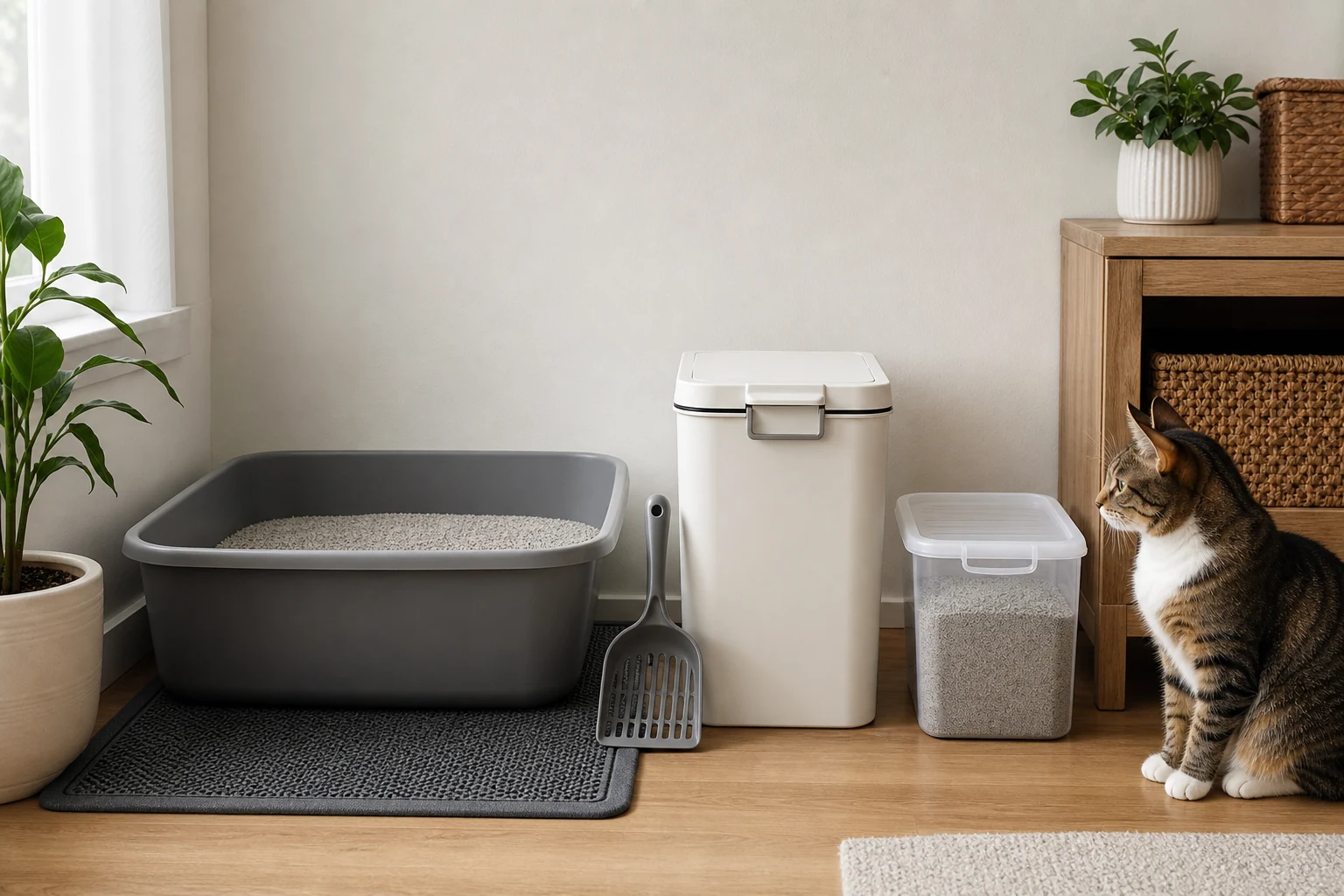
Bewahren Sie diese Utensilien so griffbereit auf, dass Sie sie leicht entnehmen können:
- Eine robuste Schaufel mit Öffnungen, die auf Ihre Streu abgestimmt sind.
- Ein kleiner, verschließbarer Abfallbehälter oder ein Abfallbeutel.
- Unparfümierte Ersatzstreu.
- Eine waschbare Katzentoilettenmatte sowie eine spezielle Handbürste oder ein Staubsaugeraufsatz.
- Auf Wunsch Einweghandschuhe, anschließend gründliches Händewaschen.
Spülen Sie Katzenkot oder Katzenstreu nicht in die Toilette, es sei denn, das Produkt und Ihre örtliche Abwasserbehörde geben ausdrücklich an, dass dies zulässig ist. Viele Arten von Katzenstreu können die Abflussleitungen verstopfen, und Katzenkot sollte sicher mit dem Hausmüll entsorgt werden.
Das tägliche Entleeren des Katzenklos liefert Ihnen zudem einen nützlichen Überblick über den Gesundheitszustand Ihrer Katze. Achten Sie auf wesentliche Veränderungen hinsichtlich der Größe der Urinklumpen, der Häufigkeit, der Stuhlkonsistenz, Blutspuren, Pressen beim Stuhlgang oder wiederholte erfolglose Toilettenbesuche. Das Katzenklo kann ein Problem aufdecken, noch bevor die Katze an anderer Stelle offensichtliche Krankheitsanzeichen zeigt.
Weitere wiederholbare Routinen finden Sie im SnuggleSouls-Leitfaden zu Tägliche Katzenpflege.
Wie oft sollte man die Streu komplett austauschen?
Wechseln Sie die Streu so oft vollständig aus, dass die Katzentoilette nach dem Auskratzen trocken, geruchsarm und rückstandsfrei bleibt. In vielen Haushalten erfolgt der Wechsel zwischen einmal pro Woche und alle paar Wochen, doch dabei spielen die Art der Streu, das Material der Katzentoilette, die Anzahl der Katzen und die individuellen Gewohnheiten eine Rolle.
Die Empfehlungen unterscheiden sich, da sich Produkte und Haushalte voneinander unterscheiden. Die ASPCA rät zu einer wöchentlichen vollständigen Reinigung und einem wöchentlichen Austausch, während die Empfehlungen der Tierärzte der Texas A&M University vorsehen, die Einstreu alle zwei bis drei Wochen zu waschen und auszutauschen.3 4 Befolgen Sie die Anweisungen des Herstellers der Katzenstreu und passen Sie die Menge anschließend entsprechend dem tatsächlichen Zustand der Katzentoilette und der Reaktion Ihrer Katze an.
Bei klumpendem Katzenstreu können Sie in der Regel täglich die mit Urin verschmutzten Klumpen entfernen, sodass ein vollständiger Wechsel seltener erforderlich ist, solange der verbleibende Streu sauber bleibt. Nicht klumpendes Katzenstreu muss oft häufiger komplett ausgetauscht werden, da der Urin im gesamten Katzenklo aufgesaugt wird. Versuchen Sie niemals, ein verschmutztes Katzenklo zu kaschieren, indem Sie einfach frisches Katzenstreu über stark verschmutztes Streu schütten.
Vermeiden Sie es, bei der routinemäßigen Reinigung plötzlich die Konsistenz oder den Duft der Katzenstreu zu wechseln. Katzen reagieren oft empfindlich auf Veränderungen unter den Pfoten und auf starke Gerüche. Wenn Sie das Produkt wechseln müssen, führen Sie die neue Katzenstreu schrittweise ein oder bieten Sie sie in einer separaten Katzentoilette an.
Wie reinigt man ein Katzenklo gründlich und sicher?
Um eine gründliche Reinigung sicher durchzuführen, leeren Sie die Streu in einen Müllbeutel, waschen Sie die Schale bei Bedarf mit heißem oder warmem Wasser und einer kleinen Menge unparfümierter, milder Seife, spülen Sie sie gründlich ab, trocknen Sie sie vollständig ab und füllen Sie frische Streu ein. Die Leitlinien der AAHA/AAFP raten dazu, Seife oder aggressive Chemikalien nach Möglichkeit zu vermeiden, und weisen darauf hin, dass heißes Wasser am besten geeignet ist.1
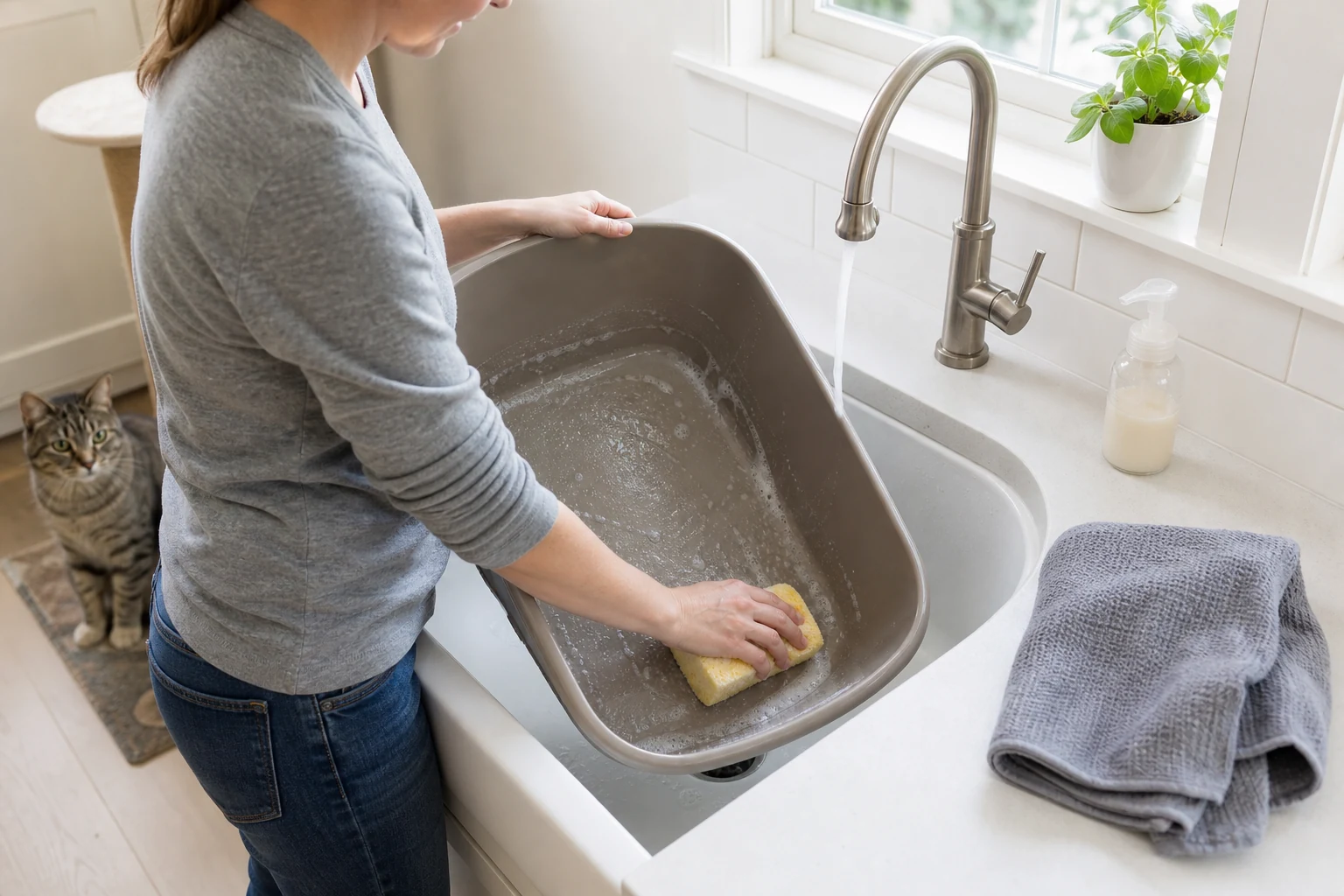
Befolgen Sie diese einfache Vorgehensweise:
- Bringen Sie Ihre Katze aus dem Reinigungsbereich weg und stellen Sie ihr ein anderes Katzenklo zur Verfügung.
- Leeren Sie den gesamten Abfall in einen stabilen Beutel; entsorgen Sie ihn nicht im Freien.
- Spülen Sie lose Rückstände mit warmem oder heißem Wasser ab.
- Verwenden Sie einen eigenen Schwamm und eine kleine Menge parfümfreier, milder Seife nur dann, wenn Wasser allein nicht ausreicht.
- Spülen Sie so lange, bis keine Seifen- oder Reinigungsmittelrückstände mehr vorhanden sind.
- Trocknen Sie das Tablett vollständig ab, bevor Sie es wieder befüllen.
- Geben Sie die übliche Streuart und -tiefe an und stellen Sie die Box anschließend wieder an ihren gewohnten Platz zurück.
Vermeiden Sie Ammoniak, stark parfümierte Reinigungsmittel, Geruchsneutralisierungssprays und ätherische Öle. Ein Geruch, der für Menschen "frisch" wirkt, kann für eine Katze überwältigend sein, und chemische Rückstände können die Katzentoilette weniger attraktiv machen. Mischen Sie Reinigungsmittel niemals miteinander.
Schwangere und Personen mit einem geschwächten Immunsystem sollten aufgrund des Infektionsrisikos durch Katzenkot nach Möglichkeit ein anderes Haushaltsmitglied bitten, die Reinigung des Katzenklos zu übernehmen. Ist dies nicht möglich, befolgen Sie die ärztlichen Anweisungen genau, tragen Sie Handschuhe und waschen Sie sich gründlich die Hände.
Sollte man in einem Haushalt mit mehreren Katzen öfter putzen?
Ja. Mehr Katzen bedeuten in der Regel eine schnellere Ansammlung von Kot, daher sollten Sie die Katzentoiletten häufiger kontrollieren und säubern, anstatt davon auszugehen, dass zusätzliche Streu das Problem ausgleicht. Stellen Sie genügend Katzentoiletten an verschiedenen, gut erreichbaren Stellen bereit, damit eine verschmutzte oder besetzte Katzentoilette nicht zur einzigen Option wird.
Ein gängiger Ausgangspunkt ist eine Katzentoilette pro Katze plus eine zusätzliche, doch die Platzierung ist ebenso wichtig wie die Anzahl. Katzentoiletten, die nebeneinander aufgestellt sind, können aus Sicht der Katze wie eine einzige Station wirken. Verteilen Sie sie daher auf ruhige, gut zugängliche Bereiche, insbesondere in einer Wohnung mit mehreren Etagen.
Reinigen Sie jedes Katzenklo, auch das, das weniger beliebt zu sein scheint. Ein Katzenklo wird möglicherweise nur zu bestimmten Zeiten benutzt, und wenn es verschmutzt bleibt, verliert es als Alternative an Attraktivität. Beobachten Sie, welche Katzen welche Katzenklos benutzen, falls Spannungen oder Revierverhalten auftreten sollten.
Kann eine verschmutzte Katzentoilette dazu führen, dass eine Katze sie meidet?
Ja. Manche Katzen halten den Toilettengang zurück oder suchen sich eine andere Unterlage, wenn das Katzenklo verschmutzt ist, stark riecht, schwer zugänglich ist oder an einem Ort steht, der Stress auslöst. Die ASPCA zählt das tägliche Auskratzen und regelmäßiges Reinigen zu den Maßnahmen, mit denen Probleme mit dem Katzenklo behoben werden können.3
Wenn Ihre Katze ihr Geschäft an einer anderen Stelle verrichtet, reinigen Sie die Stelle mit einem geeigneten enzymatischen Reiniger und verbessern Sie die Einrichtung des Katzenklos, aber bestrafen Sie die Katze nicht. Bestrafung kann Ängste verstärken und löst weder Unbehagen, Zugangsprobleme, soziale Konflikte noch Krankheiten.
Nutzen Sie diese Leitfäden, um den Kontext zu untersuchen:
- Beginnen Sie mit den gängigen Probleme mit der Katzentoilette.
- Berücksichtigen Sie die umweltbedingten Auslöser, die dahinterstehen stressbedingtes Wasserlassen.
- Umfassendere Betrachtung Ratgeber zum Verhalten von Katzen auf Veränderungen im Alltag oder in Beziehungen.
Das Reinigen ist ein wichtiger erster Schritt, stellt jedoch keine vollständige Diagnose dar. Eine Katze kann eine vollkommen saubere Katzentoilette meiden, weil diese zu klein ist, abgedeckt ist, schwer zu betreten ist, von einer anderen Katze bewacht wird oder mit Schmerzen verbunden ist.
Wann ist ein Wechsel der Katzentoilette ein Warnzeichen, das einen Tierarztbesuch erforderlich macht?
Wenden Sie sich umgehend an einen Tierarzt, wenn sich das Verhalten beim Toilettengang plötzlich ändert oder Sie Anstrengung, häufige Toilettengänge, Blut, Weinen, Erbrechen, ausgeprägte Lethargie, verminderten Appetit, Durchfall, Verstopfung oder ungewöhnlichen Urinausfluss bemerken. Ein Kater, der wiederholt versucht zu urinieren, dabei aber nur wenig oder gar keinen Urin absetzt, leidet möglicherweise an einer lebensbedrohlichen Verstopfung und benötigt sofortige tierärztliche Notfallversorgung.
Gehen Sie nicht davon aus, dass eine Katze "schwierig" ist, nur weil sie außerhalb des Katzenklos uriniert oder ihren Kot absetzt. Schmerzhafte Harnwegserkrankungen, Verstopfung, Arthritis, Verdauungsprobleme und andere Beschwerden können das Verhalten einer Katze beim Benutzen des Katzenklos verändern. Lesen Sie mehr darüber Medizinische Ursachen für das Urinieren außerhalb der Katzentoilette und eine Untersuchung veranlassen, wenn die Veränderung ungeklärt ist, anhält oder mit anderen Symptomen einhergeht.
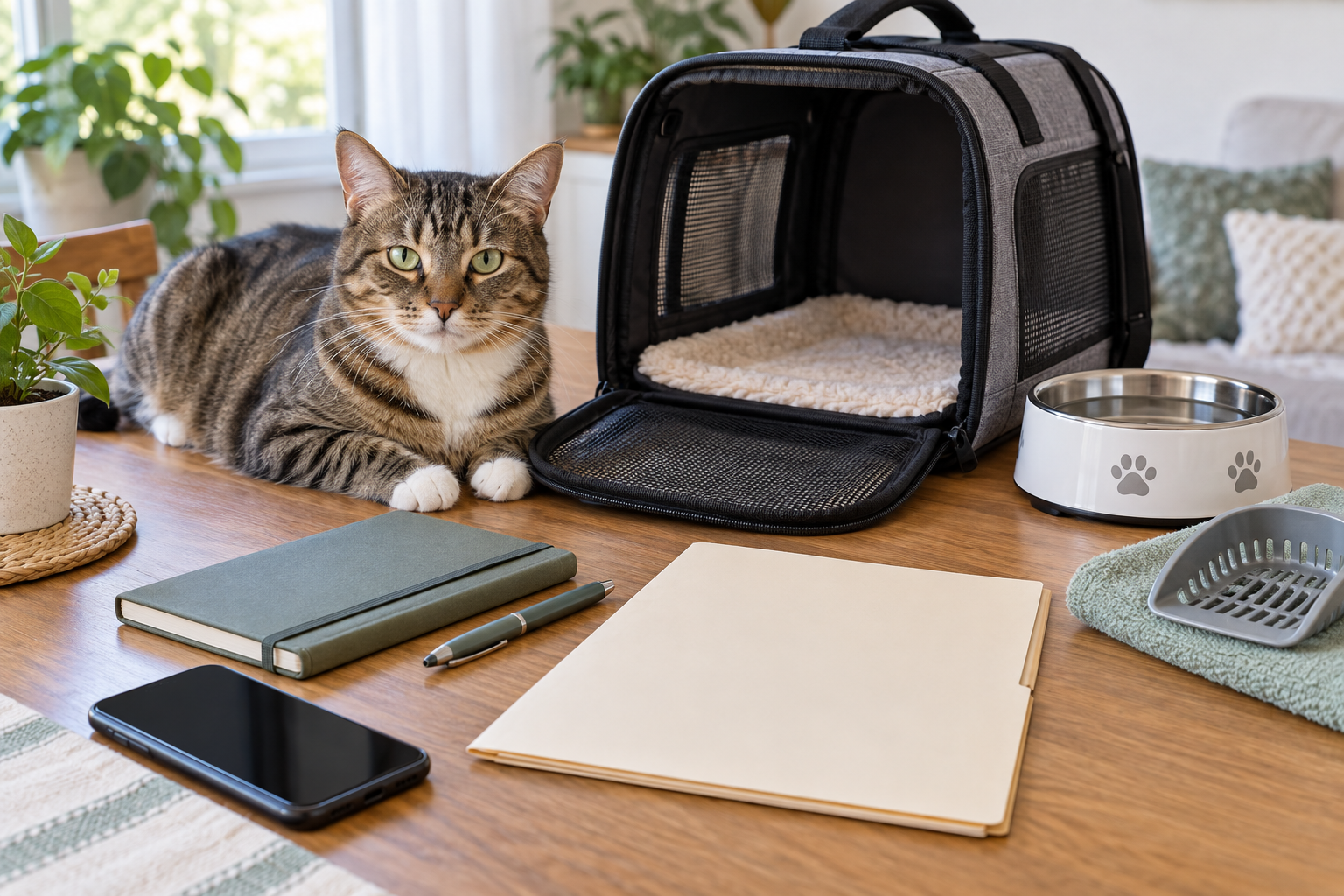
Achten Sie beim Einsammeln darauf, was sich wann verändert hat. Fotos von ungewöhnlichem Stuhlgang, ein kurzes Verhaltensprotokoll und Angaben zur Häufigkeit können Ihrem Tierarzt helfen, das Muster zu erkennen.
Wie kann man die Zeitplanung vereinfachen?
Erleichtern Sie sich die Reinigung, indem Sie sie in Ihre bestehenden Routinen einbauen, beispielsweise nach dem Frühstück und vor dem Schlafengehen. Stellen Sie Reinigungsutensilien neben jede Katzentoilette, richten Sie eine wiederkehrende Erinnerung für die gründliche Reinigung ein und legen Sie klare Zuständigkeiten unter den Haushaltsmitgliedern fest.
Probieren Sie dieses unkomplizierte System aus:
- Morgen: Entnehmen Sie den Inhalt jeder Box und überprüfen Sie Urin und Stuhl.
- Abend: Erneut auskratzen, Streu nachfüllen und verschmutzte Streu entfernen.
- Wöchentlich: Überprüfen Sie die Oberflächen der Behälter, Matten, Schaufeln und die umgebenden Wände.
- Geplante Grundreinigung: Leeren, reinigen, trocknen und wieder auffüllen, bevor sich Gerüche oder Rückstände ansammeln.
- Monatliche Überprüfung: Achten Sie auf Risse, tiefe Kratzer, beschädigte Fressnäpfe und Veränderungen in den Vorlieben Ihrer Katze.
Befolgen Sie bei automatischen Katzentoiletten die Wartungs- und Sicherheitshinweise des Herstellers, leeren Sie die Abfallschublade, bevor sie überläuft, und überprüfen Sie das Gerät regelmäßig. Der automatische Betriebszyklus entbindet Sie nicht von der Pflicht, Urin, Kot, Geruch, Sauberkeit sowie die Bereitschaft Ihrer Katze, die Katzentoilette zu benutzen, im Auge zu behalten.
Fazit: Schaffen Sie eine Routine, auf die sich Ihre Katze verlassen kann
Ein zuverlässiger Zeitplan für die Katzenkiste ist ganz einfach: Schaufeln Sie mindestens einmal täglich die Streu aus, überprüfen Sie die Katzenkiste nach Möglichkeit zweimal täglich und führen Sie regelmäßig eine gründliche Reinigung durch, bevor die Katzenkiste zu riechen beginnt oder sich Rückstände bilden. Passen Sie den Zeitplan an die Art der Streu, die Anzahl der Katzen, eventuelle Erkrankungen und die Vorlieben Ihrer Katze an.
Die nützlichste Gewohnheit ist es, beim Aufräumen aufmerksam zu sein. Eine aufgeräumte Box sorgt für Wohlbefinden, und durch tägliches Beobachten können Sie Vermeidungsverhalten oder gesundheitliche Veränderungen frühzeitig erkennen.
Häufig gestellte Fragen
Reicht es aus, die Katzentoilette einmal am Tag zu säubern?
Einmal täglich ist die empfohlene Mindesthäufigkeit für die meisten Katzentoiletten. Für viele Katzen ist es besser, morgens und abends den Sand zu wechseln, insbesondere in Haushalten mit mehreren Katzen oder wenn eine Katzentoilette häufig benutzt wird.
Wie oft sollte ich ein Katzenklo reinigen?
Waschen Sie die Katzentoilette regelmäßig, in der Regel alle ein bis vier Wochen, und früher, wenn nach dem Auskratzen Geruch, Feuchtigkeit oder Rückstände zurückbleiben. Befolgen Sie die Anweisungen des Herstellers Ihrer Streu und passen Sie den Zeitplan anhand des Verhaltens Ihrer Katze und des Zustands der Katzentoilette an.
Kann ich eine Katzentoilette mit Bleichmittel reinigen?
Aggressive Chemikalien und starke Gerüche können Rückstände hinterlassen und die Nutzung der Box beeinträchtigen. Daher sind heißes oder warmes Wasser und, falls erforderlich, eine kleine Menge unparfümierter, milder Seife die sicherere Wahl für die regelmäßige Reinigung. Mischen Sie Reinigungsmittel niemals miteinander.
Sollte ich nach einer gründlichen Reinigung etwas von der alten Streu aufbewahren?
Die meisten erwachsenen Katzen, die eine ihnen vertraute Katzentoilette und Streu nutzen, benötigen keine Rückgabe der verschmutzten Streu. Eine vollständig gereinigte Katzentoilette mit der gewohnten, geruchsneutralen Streu ist in der Regel ausreichend; vermeiden Sie es, die Streusorte, die Katzentoilette und den Standort auf einmal zu ändern.
Warum riecht das Katzenklo direkt nach dem Auskratzen schon wieder?
Ein anhaltender Geruch kann auf kleine Abfallreste, feuchte Streu, Rückstände auf der Schale oder eine beschädigte Katzentoilette hindeuten. Leeren und reinigen Sie die Schale, überprüfen Sie sie auf Risse oder tiefe Kratzer und wenden Sie sich an einen Tierarzt, falls sich der Geruch des Urins oder Kots Ihrer Katze stark verändert.
Referenzen
[1] American Animal Hospital Association. (2021). Allgemeine Überlegungen zur Katzentoilette. Seite mit den AAHA/AAFP-Leitlinien
[2] International Cat Care. (2025). Die Wahl einer Katzentoilette für Ihre Katze. Artikel von International Cat Care
[3] Amerikanische Gesellschaft zur Verhütung von Tierquälerei. (2026). Probleme mit der Katzentoilette. Leitfaden der ASPCA
[4] Veterinärmedizinische Fakultät der Texas A&M University. (2023). Ein Leitfaden zum Umgang mit der Katzentoilette. Artikel der Texas A&M University zum Thema Tiermedizin
 EN
EN DE
DE ES
ES PT
PT