
Inhaltsübersicht
10 Hypoallergenic Cat Breeds for Allergy Sufferers
What “hypoallergenic” really means (Fel d 1), plus how to choose the best cat if you’re allergic.
If you love cats but allergies make it miserable, you’re not alone. The good news: while no cat breed is 100% allergy-free, some breeds are often easier to live with because they may produce less Fel d 1 (a common cat allergen protein) and/or shed less, which can reduce how much allergen spreads around your home.
This guide covers 10 popular breeds often recommended for allergy sufferers, plus practical steps you can use to reduce symptoms—no matter which cat you choose.
Wichtiger Hinweis: Allergy reactions vary a lot by person and by individual cat. The best “hypoallergenic” cat is the one you can spend time with comfortably before adoption.
Key takeaways (read this first)
- Most people react to proteins (especially Fel d 1) found in a cat’s saliva/skin—not “fur” itself. Fur mainly carries allergens around when cats shed and groom.
- “Hypoallergenic” = potentially fewer symptoms, not “allergy-proof.”
- Breeds that may help usually fall into two groups:
- Lower Fel d 1 (in some individuals)
- Low-shedding / low-dander spread
- Your results improve massively when you combine breed choice with home routines (HEPA filtration, cleaning, grooming habits, and smart bedroom rules).
What “hypoallergenic cats” really means (and why fur isn’t the main issue)
Cat allergies are usually triggered by proteins—especially Fel d 1—found in a cat’s saliva, skin oils, and dander. When cats groom, allergen gets onto the coat and skin. Then shedding, petting, and normal movement can spread allergens onto furniture and into the air.
So when people say a cat is “hypoallergenic,” they usually mean one (or more) of these:
- The cat may produce less Fel d 1 (this can vary by individual cat, even within the same breed)
- The coat type leads to less shedding or less visible fur spread
- The cat’s grooming/shedding patterns result in less allergen distribution around the home
Coat length isn’t a reliable predictor of allergen levels—a long-haired cat can still be tolerable if it produces less Fel d 1 and your home routine keeps allergens from building up.
Bathing or wipe-downs can reduce allergens on the cat temporarily, but allergens can return quickly—so treat washing as a supporting tactic, not the core strategy.
Bottom line: “Hypoallergenic” is about reducing exposure, not eliminating allergens. Coat length and occasional bathing matter less than consistency—the breeds and routines that you can maintain are what usually determine whether symptoms stay controlled.
How to choose the best cat if you’re allergic (step-by-step)
Step 1: Identify your sensitivity level
If you have asthma, severe reactions, or you’re unsure, consider talking with a clinician. If you already know your symptoms are mild/moderate, you can move to practical testing.
Step 2: Test with the individual cat (not just the breed)
Whenever possible, spend time with the cat you may adopt:
- Visit for at least 30–60 minutes
- Touch the cat, then avoid touching your face
- Monitor symptoms for the next several hours
If you can, repeat on a second day—reactions can be inconsistent.
Step 3: Choose traits that reduce allergen spread
Look for:
- Low-shedding coats (often easier for your home environment)
- Cats that tolerate regelmäßige Pflege (or bathing, for hairless breeds)
- Temperament fit (a needy, high-contact cat might increase exposure—still doable, just plan accordingly)
Step 4: Plan your “allergy strategy” at home
Even the best breed won’t help much if allergens build up. Use the checklist near the end of this article—it’s the difference-maker.
Which type of “hypoallergenic” cat do you need?
Different people react differently—so the “best” cat depends on warum your allergies flare up. Most allergy-friendly recommendations fit into one of these buckets:
1. Lower-allergen (Fel d 1) reported in some individuals
These breeds are often mentioned because some cats may produce less of the major allergen protein.
Common picks: Siberian, Balinese, Russian Blue
Am besten geeignet für: people who react strongly even when shedding is low
2. Low-shedding / low-spread coats
These breeds can shed less or distribute less loose fur around the home, which may reduce allergen spread.
Common picks: Devon Rex, Cornish Rex, Siamese, Oriental Shorthair
Am besten geeignet für: people whose symptoms correlate with fur/dander buildup at home
3. Hairless (no fur shedding, but requires skin care)
Hairless cats don’t shed fur, but allergens can still be on skin oils and saliva—cleaning routines matter.
Common picks: Sphynx
Am besten geeignet für: people willing to do consistent wipe-downs/bathing
Tipp: If you’re choosing between two breeds, focus on the one whose care routine you can realistically maintain. Consistency beats perfection.
Quick comparison: 10 hypoallergenic cat breeds (at a glance)
Use this table to narrow down which breeds match your allergy needs und lifestyle.
| Rasse | Why it may help allergies | Personality snapshot | Grooming / cleaning effort | Energie |
|---|---|---|---|---|
| Sibirisch | Some individuals may have lower Fel d 1 | Zärtlich, spielerisch | Higher brushing (thick coat) | Hoch |
| Balinese | Often reported lower Fel d 1 + lighter shedding | Social, smart, talkative | Wöchentliches Bürsten | Hoch |
| Russisch Blau | Dense coat can shed less; some report lower allergen impact | Quiet, loyal | Low brushing | Mäßig |
| Devon Rex | Geringe Streuverluste coat type | Soziales, kuschelig, “shadow cat” | Occasional wipe/bath | Hoch |
| Cornish Rex | Geringe Streuverluste coat type | Athletic, affectionate | Low brushing; occasional bath | Hoch |
| Sphynx | No fur shedding; needs skin care to manage oils/allergen transfer | Extroverted, clingy | Regular baths/wipes | Hoch |
| Orientalisch Kurzhaar | Short coat; low grooming | Vocal, curious | Minimal brushing | Hoch |
| Javanisch | Single coat; can shed less than typical longhair | Very social, talkative | Regelmäßiges Bürsten | Hoch |
| Siamesisch | Short coat; lower shedding than many | Very vocal, affectionate | Gelegentliches Bürsten | Hoch |
| Bengalisch | Short coat; often low shedding (varies) | Intelligent, intense | Minimal coat upkeep | Sehr hoch |
Anmerkung: “Why it may help” is about tendencies, not guarantees. Individuals vary.
Treffen Sie Ihre Katze: 10 entzückende Rassen
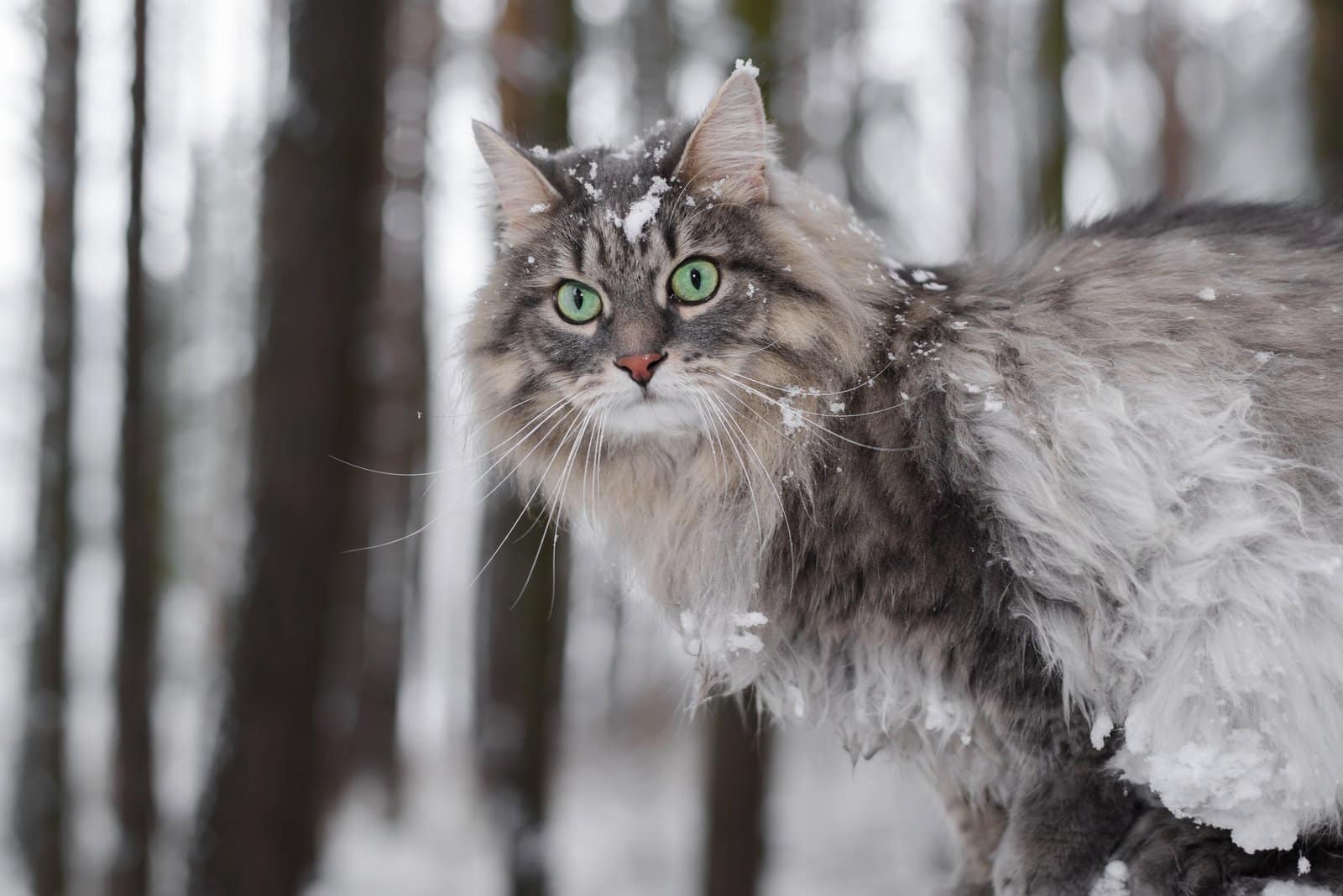
Sibirisch
Allergy notes
Siberians are frequently mentioned for allergy-sensitive homes because some individuals may produce lower levels of Fel d 1 (the protein many people react to). Their long coat isn’t the allergen, but it can carry allergens—so grooming and cleaning routines matter a lot.
Personality & lifestyle fit
Affectionate, playful, and family-friendly. Siberians often enjoy being near people, joining household activities, and playing hard—then cuddling hard.
Grooming & allergy-management tips
- Brush thoroughly 1–2x/week (more during seasonal shedding)
- Use a lint roller/throw blanket strategy on couches
- Vacuum regularly to keep dander from settling into fabrics
Watch-outs
High coat maintenance and more vacuuming than short-haired breeds. If you dislike grooming, this breed can become “high effort.”
Quick verdict
Am besten geeignet für: allergy-sensitive cat lovers who want a fluffy, affectionate cat and don’t mind consistent grooming.
Lesen Sie mehr über Sibirisch
Balinese

Allergy notes
Balinese are often recommended because they’re commonly reported as lower-Fel-d-1 compared to many cats (individual results vary). Their silky coat can also be easier to maintain than heavier long-haired coats.
Personality & lifestyle fit
Social, intelligent, and typically very people-focused. If you like a cat that interacts, follows you around, and “talks,” this breed fits.
Grooming & allergy-management tips
- Brush wöchentlich (more if you notice shedding)
- Keep bedding and throws washable (reduces allergen buildup)
- If you’re very sensitive, consider a bedroom no-cat rule
Watch-outs
Can be needy if left alone often; also typically vocal. Great for engaged owners, less ideal for very busy schedules.
Quick verdict
Am besten geeignet für: allergy-sensitive owners who want a smart, interactive companion and can offer attention and play.
Lesen Sie mehr über Balinese
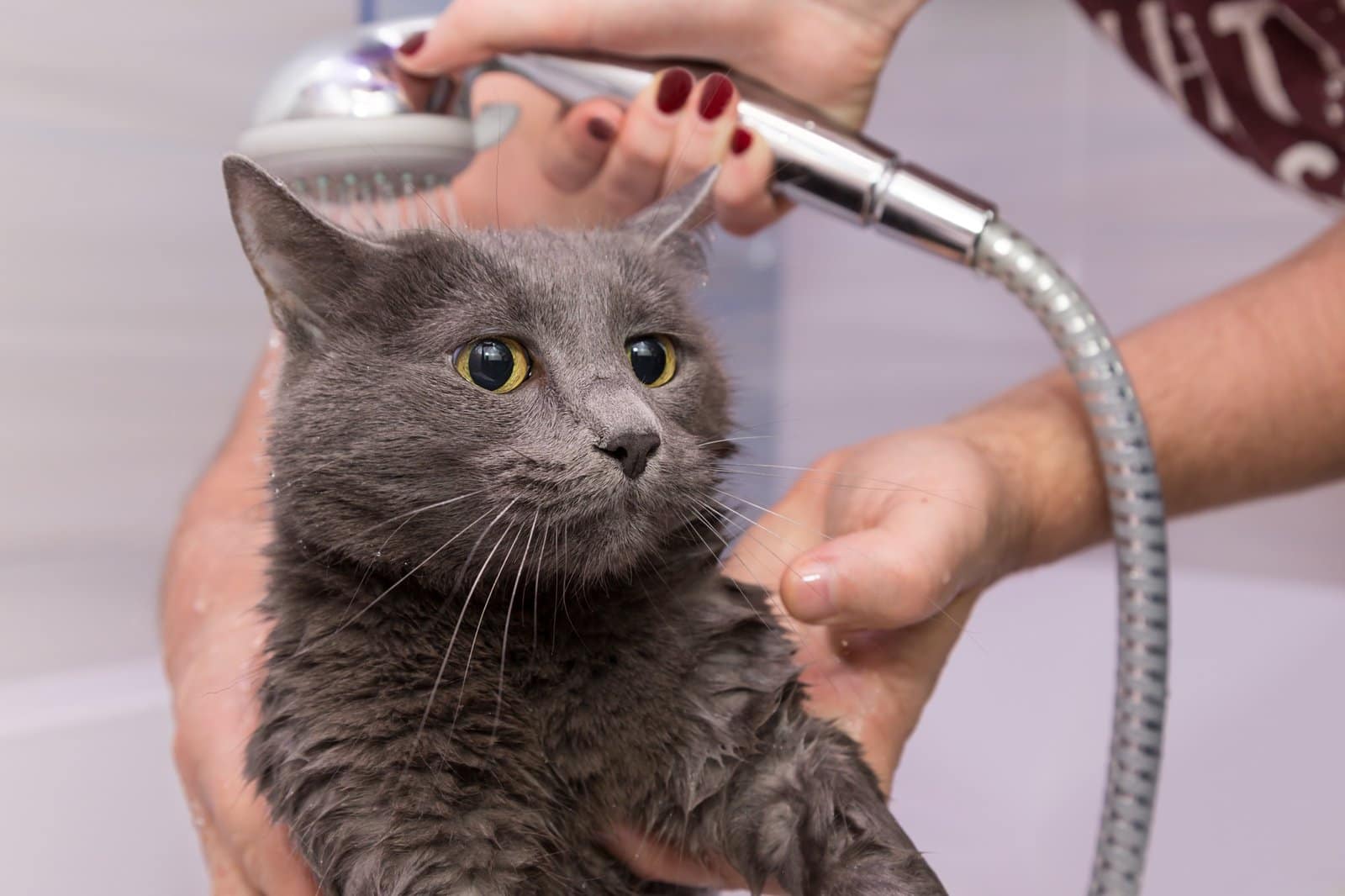
Russisch Blau
Allergy notes
Russian Blues are sometimes easier for allergy sufferers because they’re often lower-shedding in practice and some owners report fewer reactions. It’s not a guarantee—test with the individual cat if possible.
Personality & lifestyle fit
Calm, loyal, and gently affectionate. Often bonds strongly with family but may be reserved with strangers. Great for quieter homes.
Grooming & allergy-management tips
- Brush occasionally (1–2x/month or as needed)
- Focus more on home routines: vacuuming, air purifier, washing textiles
- Hand-wash after long cuddle sessions if you react easily
Watch-outs
Can be shy and routine-oriented. Not the best match for chaotic, loud households.
Quick verdict
Am besten geeignet für: allergy-sensitive people who want a quieter, steady companion rather than a constant entertainer.
Lesen Sie mehr über Russisch Blau
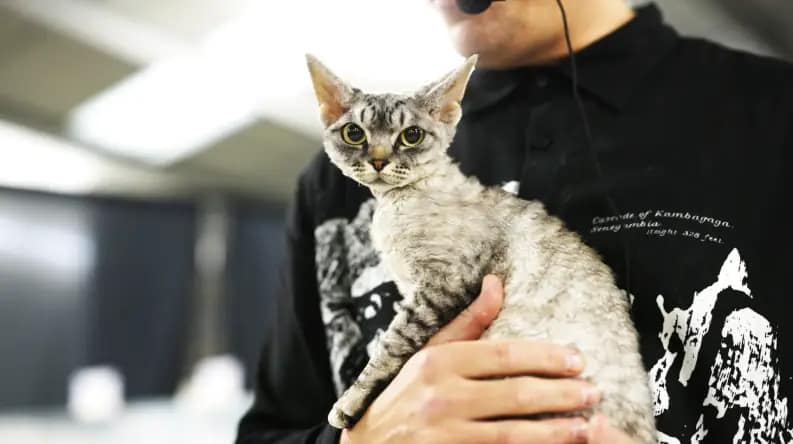
Devon Rex
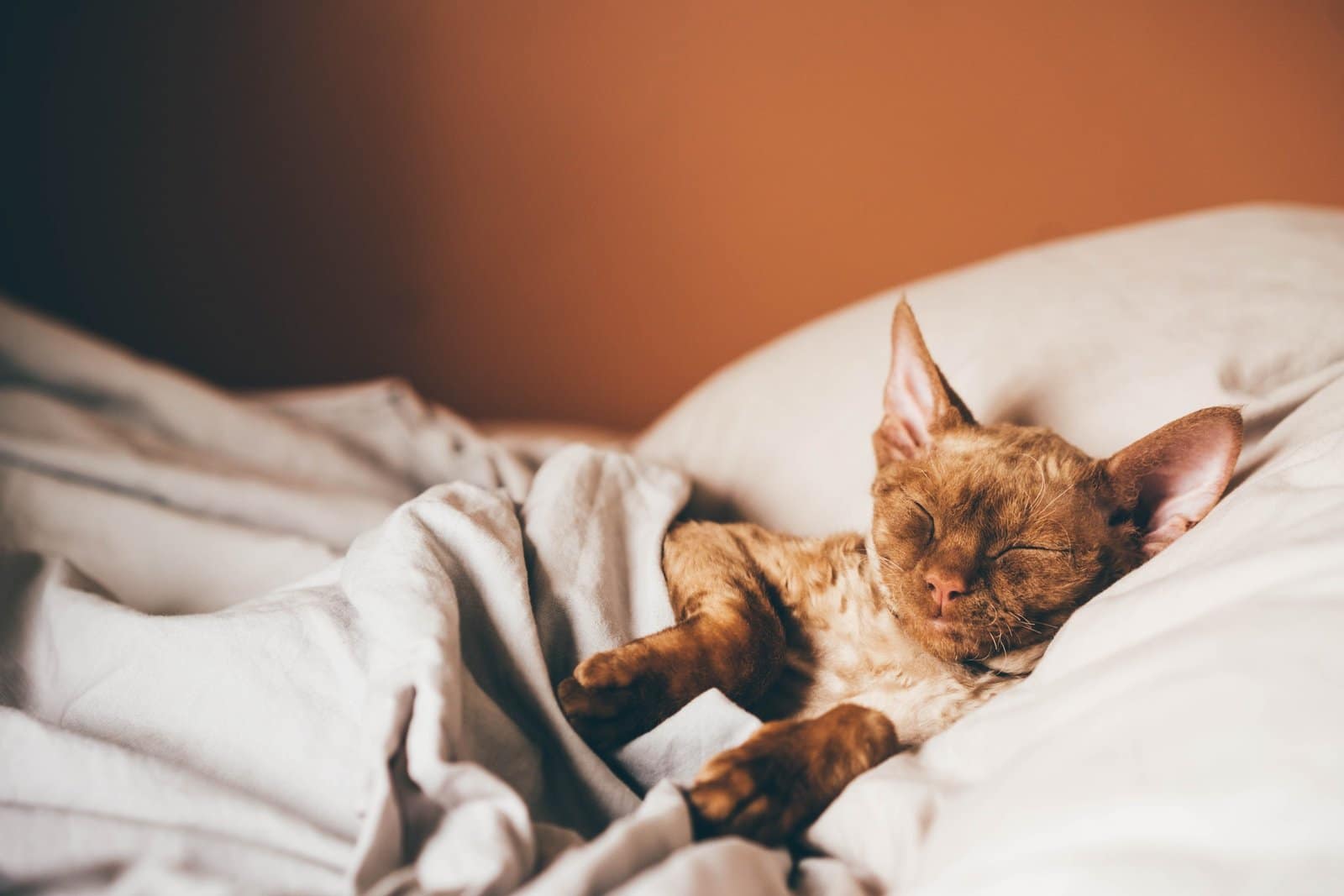
Allergy notes
Devon Rex cats often shed less due to coat type, which may help reduce allergen spread around the house. They still produce allergen proteins, so the goal is lower exposure, not elimination.
Personality & lifestyle fit
Extremely social, affectionate, and “always with you.” Many Devons act like little shadows—great if you want a clingy cuddle buddy.
Grooming & allergy-management tips
- Minimal brushing (some prefer gentle wiping)
- Some Devons do better with an occasional bath/wipe if skin oils build up
- Keep soft furniture cleaned (they like laps and blankets)
Watch-outs
High attention needs. If you’re away long hours daily, this breed may become bored or anxious.
Quick verdict
Am besten geeignet für: allergy-sensitive owners who want a low-shedding, highly affectionate cat and can provide daily interaction.
Lesen Sie mehr über Devon Rex
Cornish Rex

Allergy notes
Cornish Rex coats are typically low-shedding and can reduce how much fur carries allergens around. Many sensitive owners find them manageable—especially with consistent cleaning habits.
Personality & lifestyle fit
Athletic, playful, energetic, and people-oriented. Often a great fit for active families and anyone who enjoys interactive play.
Grooming & allergy-management tips
- Very low brushing needs
- Some benefit from occasional wiping/bathing depending on skin oils
- Prioritize frequent vacuuming if you have fabric-heavy rooms
Watch-outs
High energy and stimulation needs. A bored Cornish Rex will invent activities (sometimes destructive ones).
Quick verdict
Am besten geeignet für: allergy-sensitive households that want a playful, social cat and can commit to daily play.
Lesen Sie mehr über Cornish Rex
Sphynx

Allergy notes
Sphynx cats don’t shed fur, which can reduce allergen spread via hair—but allergens can still sit on skin oils and be transferred through contact. With this breed, allergy management depends heavily on regular skin care.
Personality & lifestyle fit
Outgoing, affectionate, and often dog-like in social behavior. Many Sphynx cats want constant closeness and warmth.
Grooming & allergy-management tips
- Gentle bath/wipe routine (often weekly-ish, adjust to your cat)
- Wash blankets and pillow covers frequently (they love cuddling on fabric)
- Keep nails/ears clean per vet guidance (common maintenance areas)
Watch-outs
Higher ongoing maintenance: bathing, temperature sensitivity, potential skin issues, and generally higher care costs.
Quick verdict
Am besten geeignet für: allergy-sensitive owners who want a super-cuddly cat and are comfortable with regular bathing/skin upkeep.
Lesen Sie mehr über Sphynx
Orientalisch Kurzhaar

Allergy notes
Oriental Shorthairs have short coats and typically low grooming needs, which can help keep the home environment cleaner. They’re not reliably “low allergen,” so your best strategy is testing + strong home routines.
Personality & lifestyle fit
Very curious, very social, and often very vocal. They thrive on attention and engagement.
Grooming & allergy-management tips
- Occasional brushing (mostly “maintenance bonding”)
- Provide lots of enrichment to reduce stress-grooming
- Use washable throws on favorite lounging spots
Watch-outs
Can be loud and needy. If you want a quiet, independent cat, this isn’t it.
Quick verdict
Am besten geeignet für: people who want an energetic, talkative companion and can manage allergies with routines and cleaning.
Lesen Sie mehr über Orientalisch Kurzhaar
Javanesen (Colorpoint Langhaar)
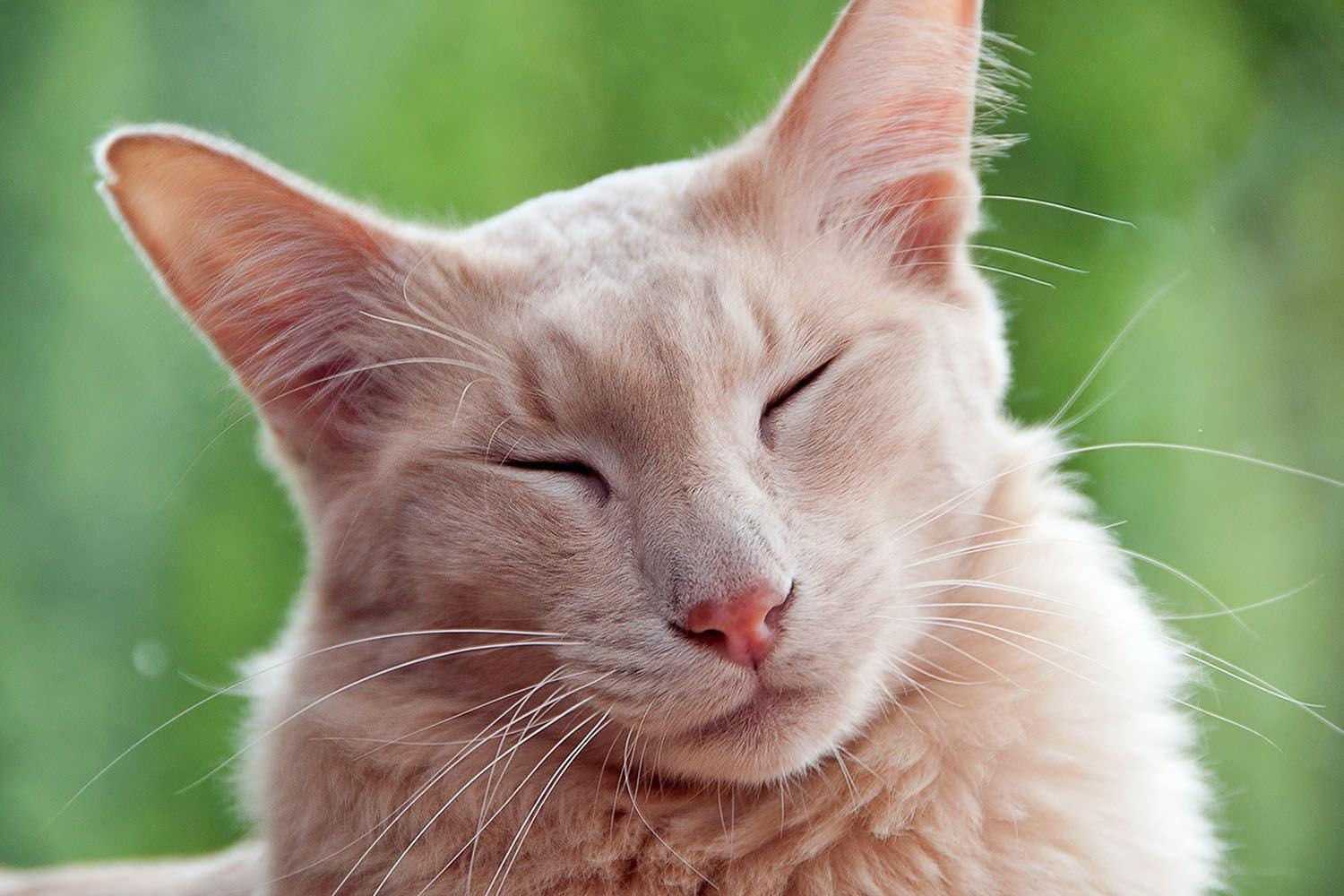
Allergy notes
Javanese are often described as easier for allergy sufferers because they may shed less than many long-haired breeds (coat structure matters more than length alone). Individual tolerance varies—testing is still important.
Personality & lifestyle fit
Playful, intelligent, and strongly attached to their people. If you want a cat that interacts and “converses,” this is a candidate.
Grooming & allergy-management tips
- Brush 2–3x/week to catch loose hair before it spreads
- Keep a consistent cleaning routine for sofas and bedding
- If you react strongly, limit bedroom access
Watch-outs
High social needs and vocal tendencies. They can become unhappy when ignored.
Quick verdict
Am besten geeignet für: allergy-sensitive owners who want a loyal, interactive cat and can keep up with regular brushing.
Lesen Sie mehr über Javanisch
Siamesisch

Allergy notes
Siamese are often suggested for allergy-sensitive homes because their short coat can mean less shed hair moving around the house. That said, they’re not reliably low-allergen—many people do well, some don’t.
Personality & lifestyle fit
Deeply affectionate, very vocal, and extremely people-focused. Siamese often want to be involved in everything you do.
Grooming & allergy-management tips
- Minimal grooming; occasional brushing helps reduce loose hair
- If you’re sensitive, focus on limiting fabric allergen buildup (washable throws + frequent laundry)
- Hand-wash after extended cuddles
Watch-outs
They can be loud and may struggle with loneliness. Consider a companion cat if you’re away often.
Quick verdict
Am besten geeignet für: owners who want a “best friend” cat and can handle high interaction (and manage allergies with cleaning routines).
Lesen Sie mehr über Siamesisch
Bengalisch

Allergy notes
Bengals often have short coats and may shed less, but they’re not consistently hypoallergenic. If allergies are a major concern, testing your reaction matters even more with this breed.
Personality & lifestyle fit
Very high energy, highly intelligent, and intensely curious. Bengals need engagement—think climbing, puzzle toys, interactive play.
Grooming & allergy-management tips
- Coat care is easy; the bigger issue is environment control
- Keep surfaces clean because Bengals are active and spread allergens around simply by moving everywhere
- Provide enrichment to avoid stress behaviors
Watch-outs
Not ideal for low-energy households. Under-stimulated Bengals can become destructive or develop behavioral issues.
Quick verdict
Am besten geeignet für: experienced, active owners who want a dynamic cat and are willing to test allergy tolerance and maintain strong home routines.
Lesen Sie mehr über Bengalisch
Honorable mentions: more breeds sometimes recommended for allergy-sensitive homes
We chose the 10 breeds above because they’re the most commonly discussed and searched. However, you may also see these breeds mentioned in allergy-friendly roundups. They aren’t guaranteed to be hypoallergenic—individual cats vary—so treat this as a “shortlist to test,” not a promise.
Birmanisch
Why it’s mentioned: Short coat + often lower shedding in practice
Good fit for: People who want a friendly, people-focused cat
Watch-outs: Very social—more close contact can increase exposure if routines aren’t strong
LaPerm
Why it’s mentioned: Coat type is often described as lower shedding for some cats
Good fit for: Owners who want a playful, affectionate companion
Watch-outs: Coat and shedding still vary—testing matters
Selkirk Rex
Why it’s mentioned: Some owners report manageable shedding; coat type is a common reason it’s included
Good fit for: Families wanting a laid-back temperament
Watch-outs: Grooming needs can be higher than people expect (coat care still matters)
Snowshoe
Why it’s mentioned: Sometimes listed due to short coat and moderate shedding
Good fit for: Social homes—often people-oriented
Watch-outs: Not reliably “low-allergen”—treat as a “test first” option
Ocicat
Why it’s mentioned: Short coat and often easier coat upkeep
Good fit for: Active owners who want a confident, playful cat
Watch-outs: Higher activity can spread allergens around simply because the cat is everywhere
Hypoallergenic cat myths (and what actually matters)
Myth: “Fur causes cat allergies”
Reality: Most allergies are triggered by proteins. Fur mainly spreads allergens around the home.
Myth: “Hairless cats are allergy-free”
Reality: Hairless cats can still trigger allergies because allergens can be on skin oils and saliva. Care routines matter.
Myth: “Long-haired cats always cause worse allergies”
Reality: Coat length isn’t the deciding factor. Home allergen buildup + grooming/cleaning habits are often more important.
Myth: “One hypoallergenic breed works for everyone”
Reality: Individual cats vary. Testing your reaction to the specific cat is one of the smartest steps you can take.
Allergy-Reduction Checklist (works with any cat breed)
Choosing a breed is only half the equation. Most allergy success comes from reducing how much allergen builds up and spreads in your home. Use this checklist even if you adopt the “most hypoallergenic” cat—because no cat is fully allergy-free.
Quick wins (do these first)
- Make your bedroom a cat-free zone.
Why it helps: You spend ~1/3 of your day there; lowering exposure during sleep is a major symptom reducer for many people. - Add a HEPA air purifier in the bedroom (and/or living room).
Why it helps: Captures airborne particles that carry allergens. - Wash hands after cuddling and avoid touching your eyes/face right away.
Why it helps: A lot of irritation is direct transfer.
Weekly cleaning routine (simple but powerful)
- Vacuum 2–4× per week (more if carpeted).
Tipp: Focus on bedrooms, sofas, and the cat’s favorite spots. - Wash soft fabrics weekly: throws, couch covers, pillow covers, and pet bedding.
Why it helps: Fabrics trap allergens and re-release them when disturbed. - Wipe hard surfaces and floors (especially near litter areas).
Why it helps: Dander settles and becomes airborne again when you walk around.
Grooming routine (reduces spread)
- Regelmäßig bürsten (frequency depends on coat):
- Short coat: 1–2×/week
- Medium/long coat: 3–5×/week
- Heavy coat (e.g., very fluffy cats): ideally most days
Why it helps: Captures loose hair/dander before it lands on furniture.
- Groom in a “designated zone” (a specific room or balcony area), then clean that area.
Why it helps: Stops allergen from getting distributed throughout the whole home. - If your cat tolerates it: use gentle wipe-downs (especially helpful for low-shedding and hairless breeds).
Why it helps: Reduces buildup on skin/coat that transfers to hands and surfaces.
Advanced options (optional, high-impact for some homes)
These aren’t mandatory—but if your allergies are stubborn, they can move the needle. Always prioritize safety and comfort for both you and your cat.
1. Spay/neuter (especially important for males)
Research has found male cats often have higher Fel d 1 levels than females, and studies have examined long-term effects of castration on Fel d 1 production. Individual variation is still large, but if your cat is not fixed, this is worth discussing with a vet.
2. Allergen-reducing diets (ask your vet before switching foods)
There’s research on diets using an egg-derived anti-Fel d 1 IgY ingredient designed to neutralize “active” Fel d 1 in saliva (which then reduces allergen deposited onto hair during grooming). Studies report reductions in active Fel d 1 on hair over time (often weeks). Results vary by cat, but it’s a legitimate option to consider with veterinary guidance—especially for moderate allergies.
3. Bathing / wipes (useful, but don’t over-rely on it)
Washing can reduce Fel d 1 temporarily, but research shows levels may return toward baseline within about a day, and reductions may not be maintained long-term without frequent repetition. If your cat tolerates it, gentle wipe-downs can be easier than full baths.
4. Air filtration upgrades (beyond “just buy a purifier”)
Air filtration can reduce airborne cat allergen in many studies, and controlled studies also report reduced allergic responses with portable HEPA cleaners in specific settings. The biggest gains usually come from:
- Correct sizing for the room (CADR appropriate for room size)
- Placement where the cat spends time + where you sleep
- Pairing it with vacuuming + fabric washing (filters help most as part of a bundle)
5. If symptoms are severe: add a medical “support plan”
If you have asthma, wheezing, or severe swelling, consider discussing a plan with a clinician/allergist. Home routines help—but health comes first.
Home rules that reduce exposure (without reducing love)
- Keep the cat off pillows and your face area.
Why it helps: Direct contact = direct exposure. - Choose easy-to-clean “cat zones.” Put a washable blanket on the sofa where your cat likes to sit.
Why it helps: You can wash one blanket instead of the entire couch. - Use a covered hamper for clothes and wash “cat clothes” more often.
Why it helps: Clothing holds allergens close to your face all day.
Litter box + dust control (often overlooked)
- Scoop daily and keep the litter area well ventilated.
- Avoid dusty tracking: use a good mat and clean around the box frequently.
Why it helps: Dust can worsen irritation and carry particles.
If you’re adopting soon: the “test and plan” approach
- Test your reaction with the individual cat (not just the breed). Visit for 30–60 minutes, then monitor symptoms later that day.
- Start with strict bedroom rules and HEPA, then relax only if symptoms stay controlled.
- Have a backup plan: if symptoms are severe, consider a different individual cat (or a lower-exposure setup).
When to get extra help
Wenn Sie eine asthma, severe swelling, or breathing issues around cats, it’s wise to seek medical guidance. Home routines help, but health comes first.
Conclusion: the best hypoallergenic cat is the one you tolerate
No cat is completely allergy-free—but many people with allergies successfully live with cats by combining:
- a breed that may be easier to tolerate (lower shedding and/or potentially lower Fel d 1), and
- consistent habits that reduce allergen buildup in the home.
If you’re choosing between breeds, try to meet the individual cat first and monitor your symptoms. Your response can vary a lot from cat to cat—even within the same breed.
Related reading (next steps for allergy-sensitive cat lovers)
If allergies are the main concern, these guides help you reduce symptoms and choose the right fit:
- Beginner’s Guide to Cat Adoption (prepare your home + what to ask shelters/breeders)
- Katzenrassen-Enzyklopädie (deeper dives on temperament + care)
Tip: If you’re deciding between two breeds, test your reaction to the individual cat and use the checklist above to reduce exposure.
Looking for other coat types and care levels? Browse our Katzenrassen-Enzyklopädie and breed guides for wenig scheuernd, Kurzhaarund hairless Katzen.
FAQ: Hypoallergenic cats and allergies
What is Fel d 1, and why does it matter?
Fel d 1 is a common allergen protein associated with cat allergies. It can spread through saliva (from grooming), skin oils, and dander.
Which cat breed is best for allergy sufferers?
There’s no universal best breed—individual cats vary. Many people start with breeds commonly recommended for allergies (like Siberian, Balinese, Devon Rex, Cornish Rex, and Russian Blue), then confirm by spending time with the cat before adopting.
Sind Bengalkatzen hypoallergen?
Bengals are often described as low-shedding, but they’re not reliably hypoallergenic. If you’re sensitive, it’s best to test your reaction to the individual cat.
Are Siberian cats actually good for allergies even though they’re fluffy?
Some Siberians are reported to be easier to tolerate, but their thick coat can still carry allergens. Consistent brushing and cleaning routines make a big difference.
Do male or female cats cause more allergies?
Allergy response varies widely, and the biggest practical driver is usually overall allergen exposure in your home (cleaning, grooming, air filtration), not sex alone.
What’s the single best home rule to reduce cat allergies?
Keeping the bedroom (especially pillows and bedding) as a low-allergen zone is one of the most impactful steps for many people.
Can I live with a cat if I have allergies?
Many people with mild to moderate allergies do. Success usually comes from combining a manageable breed choice with consistent allergen-reduction habits (HEPA, cleaning, grooming, and smart home rules).










 EN
EN DE
DE ES
ES PT
PT