
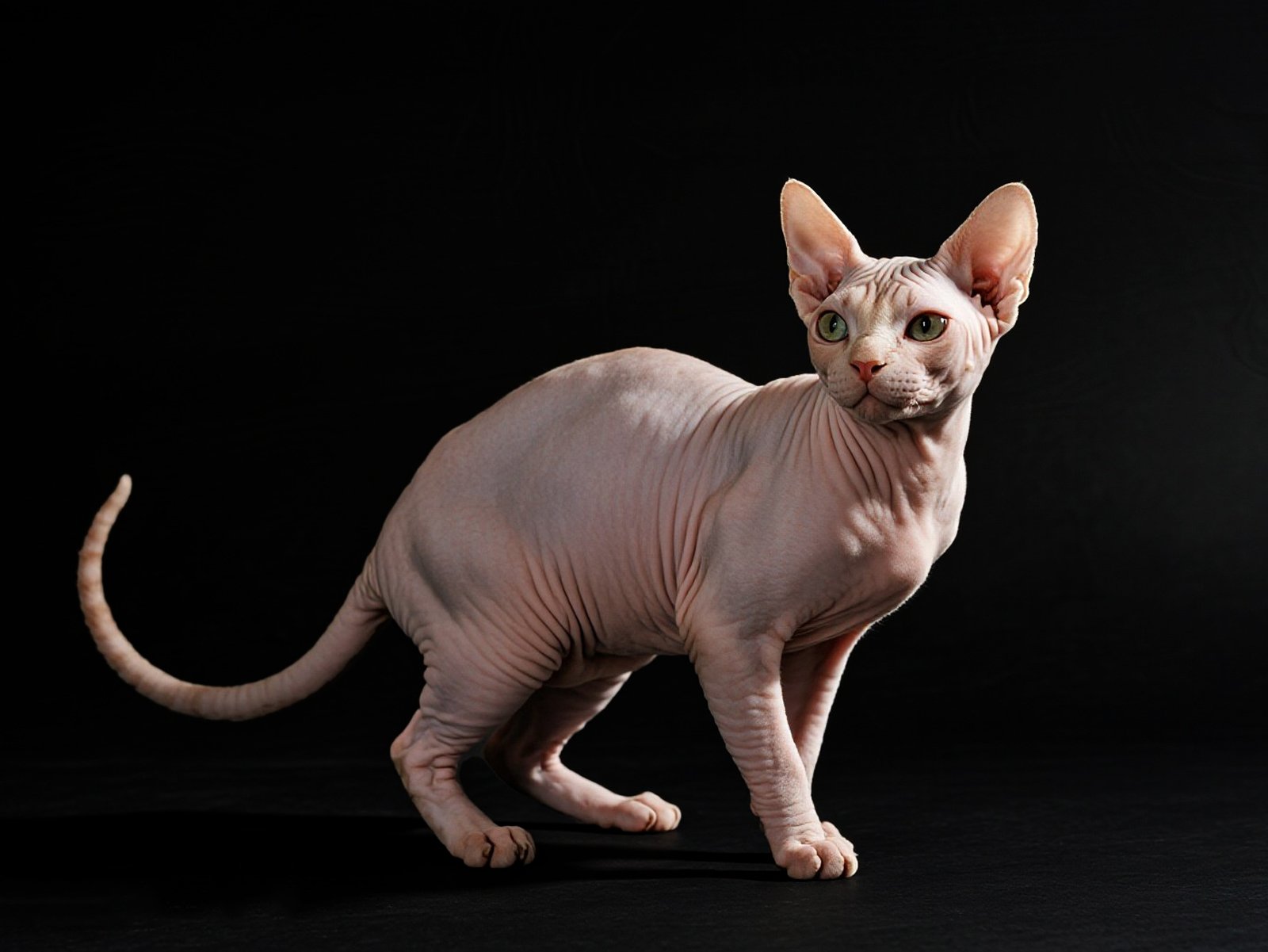
Kurze Antwort: Die Sphynx ist eine gesellige, menschenbezogene Katze, die für ihre “pfirsichflaumartige” Haut (sie ist nicht wirklich kahl), ihr großes Bedürfnis nach Wärme und den im Vergleich zu den meisten anderen Rassen höheren Pflegeaufwand bekannt ist – hauptsächlich das Abwischen bzw. Baden der Haut nach Bedarf, Ohrenreinigung, Krallenpflege und Zahnhygiene. Sie fühlen sich in Haushalten wohl, in denen oft jemand anwesend ist und sich um die regelmäßige Pflege sowie Gesundheitsuntersuchungen (insbesondere Herzuntersuchungen auf HCM) kümmern kann.
Inhaltsübersicht
Rasse-Übersicht
| Charakteristisch | Beschreibung |
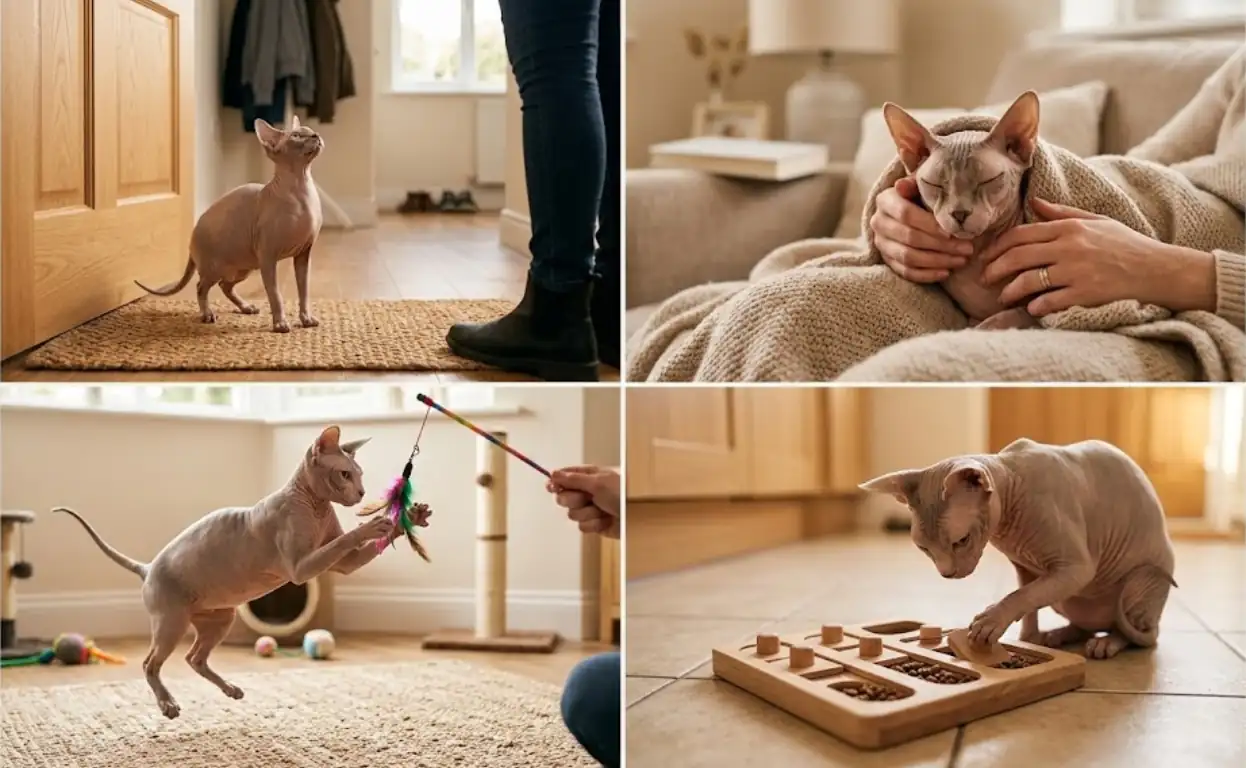
| Persönlichkeit | Lebhaft, treu und aufgrund ihrer tiefen Zuneigung und ihres Bedürfnisses nach Gesellschaft oft als “hundeartig” beschrieben. Sehr gesellig, offen gegenüber Fremden und liebt es, im Mittelpunkt zu stehen; begrüßt ihre Besitzer oft an der Tür und sucht nach Streicheleinheiten. |
| Gehäuse Typ | Mittlere Körperlänge mit kräftiger Muskulatur, einem rundlichen Bauch sowie einer breiten, gerundeten Brust und einem breiten, gerundeten Hinterteil. Der Körper ist kräftig und muskulös, nicht zierlich, wobei die Hinterbeine etwas länger sind als die Vorderbeine. |
| Gewicht | Das Gewicht liegt in der Regel zwischen 6 und 12 Pfund (2,7–5,4 kg), wobei einige Exemplare bis zu 16 Pfund erreichen können. Weibchen sind in der Regel kleiner als Männchen. |
| Herkunft Region | Kanada, genauer gesagt Toronto, Ontario, in den 1960er Jahren, bedingt durch eine natürliche genetische Mutation |
| Lebenserwartung | Die Spanne reicht von 8 bis 20 Jahren, wobei häufig Durchschnittswerte zwischen 13 und 15 Jahren genannt werden. |
| Mantel Typ | Erscheint haarlos, ist jedoch mit einem sehr feinen, weichen Flaum bedeckt, der eine wildleder- oder pfirsichartige Textur aufweist. An den Pfoten, den Außenkanten der Ohren, am Schwanz, am Hodensack und am Nasenrücken kann kurzes, feines Haar vorhanden sein. |
| Fellfarben | Alle bei Katzen vorkommenden Farben und Muster sind zulässig, darunter Lavendel, Rot, Schwarz, tabby, weiß, schildpattfarben, schokoladenbraun und dreifarbig |
| Shedding Level | ☆☆☆☆☆ (Sehr niedrig) |
| Zuneigung zu den Menschen | ⭐⭐⭐⭐⭐ (Extrem hoch) |
| Pflege-Schwierigkeit | ⭐⭐⭐⭐☆ (mäßig bis hoch) |
Einführung
Die Sphynx-Katze ist eine mittelgroße Rasse, die vor allem für ihr “haarloses” Aussehen bekannt ist – obwohl sie ist nicht wirklich haarlos. Die meisten Sphynx-Katzen haben eine Schicht aus sehr feines Daunenfutter das verleiht der Haut ein Gämse/wildlederartig Gefühl und lässt sie warm anfühlen.
Trotz des ägyptisch klingenden Namens ist die Sphynx eine moderne Rasse, entwickelt auf der Grundlage eines natürliche (spontane) Mutation erstmals dokumentiert in Toronto, Kanada, im Jahr 1966. Der Name “Sphynx” wird gemeinhin mit der Ägyptische Sphinx wegen des markanten, skulpturalen Aussehens dieser Rasse.
Was die meisten Menschen überzeugt, ist nicht nur das Aussehen – es ist auch das Wesen. Große Katzenzuchtverbände beschreiben die Sphynx als neugierig, intelligent, äußerst freundlich und sehr kontaktfreudig, da sie oft den größten Teil des Tages in der Nähe ihrer Menschen verbringen möchten (daher werden sie häufig als “Klettkatzen” bezeichnet).
Dieser Leitfaden fasst Fakten zur Rasse anhand veröffentlichter Rasseninformationen und Standards der wichtigsten Katzenregister (z. B. CFA, TICA) zusammen. Bei gesundheitlichen Fragen wenden Sie sich bitte an einen Tierarzt.
Geschichte der Rasse
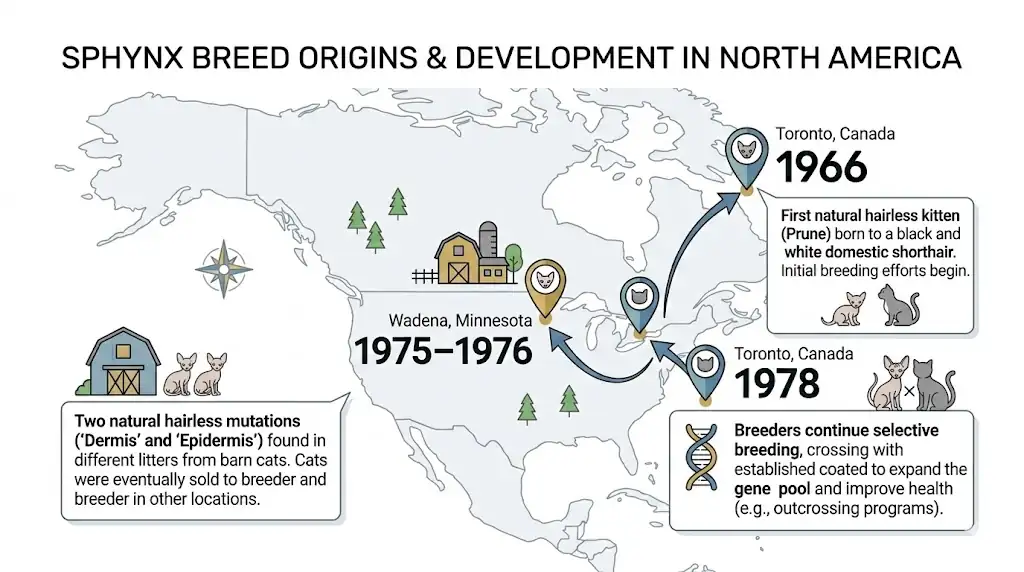
Die Die Sphynx ist eine moderne, nordamerikanische Katzenrasse Sie entstanden aus natürlich vorkommenden “haarlosen” Mutationen bei Hauskatzen und wurden anschließend durch sorgfältige, gesundheitsorientierte Zuchtprogramme stabilisiert. Die heutigen Sphynx-Blutlinien wurden in den 1970s als mehrere nicht miteinander verwandte haarlose Katzen aufgenommen wurden, um die genetische Vielfalt zu erweitern.
Wichtige Meilensteine (Zeitplan)
- 1966 – Toronto, Ontario (Kanada): In Toronto kam ein spontanes haarloses Kätzchen zur Welt, das den Anstoß für das frühe Zuchtinteresse am Typ “Canadian Hairless” gab. In einigen Rassegeschichten wird dieses Kätzchen als “Zurückschneiden.”
- 1975–1976 — Minnesota (USA): Zwei haarlose Kätzchen, die später den Namen Epidermis und Dermis, tauchten in Minnesota auf und wurden zu wichtigen Stammkatzen für den sich entwickelnden Sphynx-Genpool.
- 1978 – Toronto, Ontario (Kanada): Ein zweites wichtiges Ereignis betraf Drei haarlose Kätzchen in Toronto gerettet, wodurch eine weitere Stammlinie hinzukam, die von Züchtern genutzt wird, um die Rasse zu diversifizieren und zu stärken.
Wie Züchter die moderne Sphynx-Rasse stabilisiert haben
Da die frühen haarlosen Linien klein waren, griffen die Züchter auf geplante Kreuzung (die Kreuzung von haarlosen Katzen mit gesunden Katzen mit normalem Fell und die Auswahl von Nachkommen, die dieses Merkmal trugen). Rasseverbände weisen darauf hin, dass Amerikanische Kurzhaarkatze und Devon Rex gehörten zu den Kreuzungen, die zur Verbesserung der genetischen Vielfalt bei gleichzeitiger Beibehaltung des Sphynx-Aussehens genutzt wurden.
Genetik: Warum Sphynx-Katzen “haarlos” aussehen”
Die moderne Genforschung bringt den Sphynx-Felltyp mit Varianten in KRT71 (Keratin 71). Die mit dem Sphynx-Syndrom verbundene “haarlose” Variante kann die Haarstruktur erheblich beeinträchtigen –Es kann zwar Haar wachsen, doch dieses bricht leicht ab oder fällt aufgrund einer schlechten Follikelstruktur aus., was zu dem fast haarlosen Erscheinungsbild führt.
Aus züchterischer Sicht ist das “haarlose” Merkmal der Sphynx rezessiv gegenüber einem normalen Fell (Eine Katze benötigt in der Regel zwei Kopien, um haarlos zu sein).
Nicht dasselbe wie die russischen haarlosen Rassen (wichtige Klarstellung)
Die Sphynx unterscheidet sich genetisch von einigen russischen haarlosen Rassen wie der Donskoy (Don Sphynx), wo das Merkmal „haarlos“ in den Rassestandards wie folgt beschrieben wird: dominant—das heißt, es kann auftreten, wenn nur ein Elternteil das Gen weitergibt.
Physikalische Merkmale
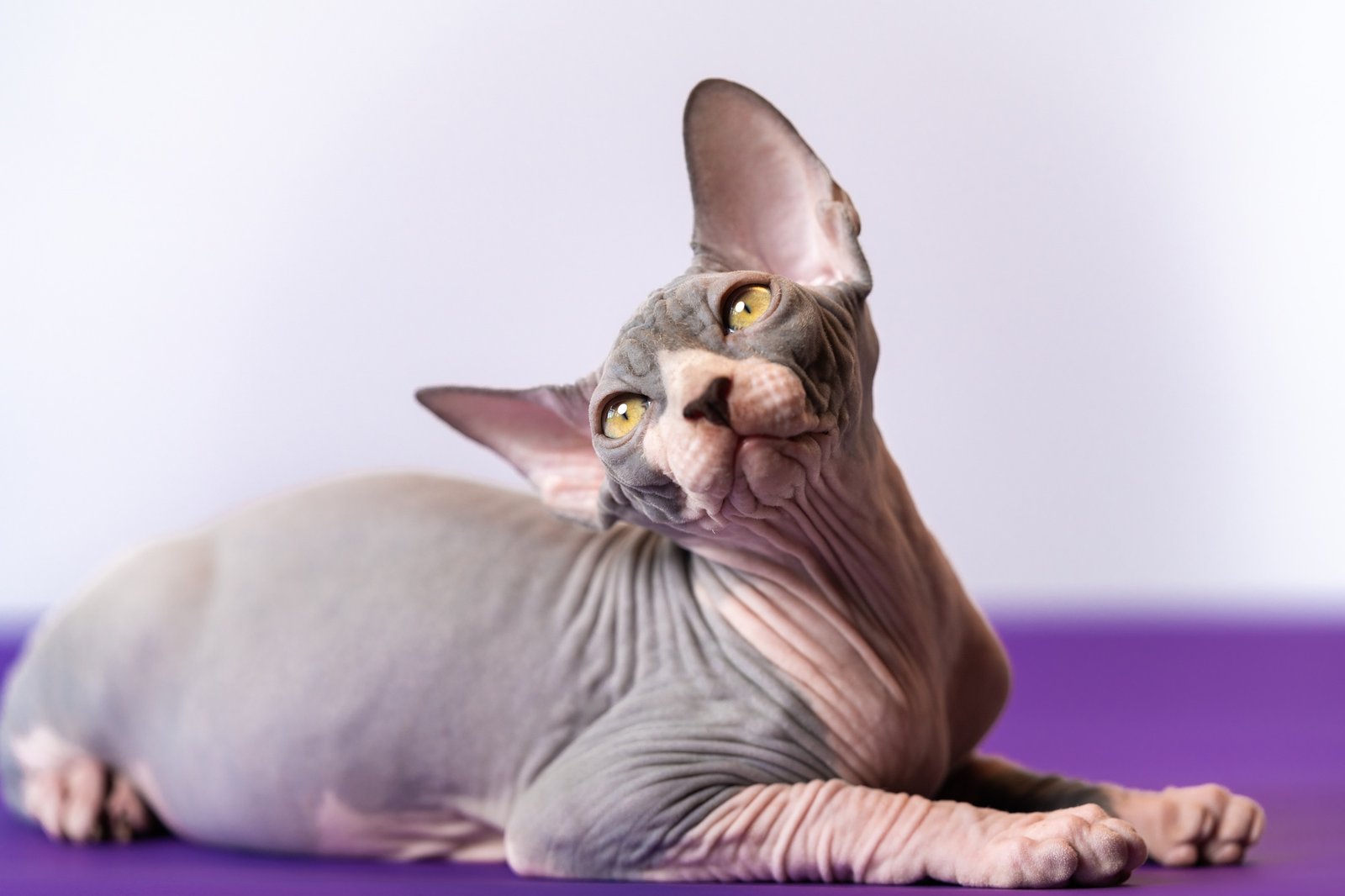
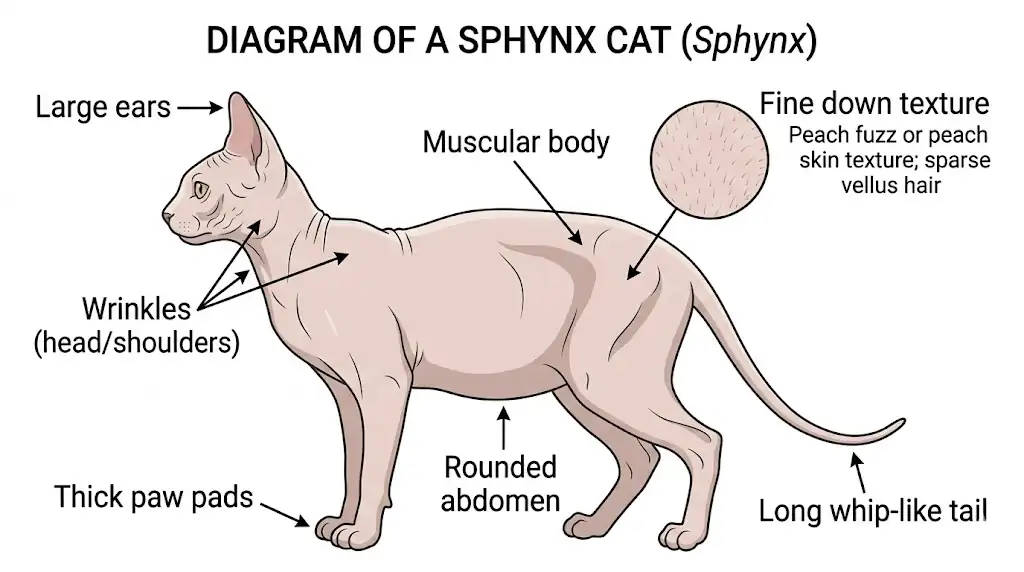
Schnellidentifizierung: Eine Sphynx ist eine mittelgroße, muskulöse Katze dass scheint haarlos zu sein aber ist nicht wirklich kahl, in der Regel mit warme, chamois- oder pfirsichartige Haut und sichtbare Falten.
Haut und “Fell” (nicht wirklich haarlos)
Obwohl die Rasse als haarlos beschrieben wird, geht aus den wichtigsten Rassestandards hervor, dass Sphynx-Katzen möglicherweise ein sehr feines, fast nicht wahrnehmbares Flaumhaar und eine eine Textur, die an Gämsleder oder Pfirsichflaum erinnert. Einige Kurzes, feines Haar ist erlaubt auf der Nasensteg und in bestimmten Bereichen wie dem Außenkanten des Ohrs, Füße, Schwanzund männlicher Genitalbereich.
Die Haut von Sphynx-Katzen ist oft bei Kätzchen sehr faltig; von Erwachsenen wird erwartet, dass sie deutliche Falten, insbesondere am Kopf, jedoch nicht so stark, dass die normale Funktion beeinträchtigt wird. Schnurrhaare und Augenbrauen können spärlich, unterbrochen oder fehlend.
Da eine Sphynx kein Isolierfell hat, kann sie sich fühlt sich wärmer an, obwohl die Rasse Die tatsächliche Körpertemperatur ist nicht höher als andere Katzen.
Größe und Körperbau (überraschendes Gewicht für diese Größe)
Sphynx-Katzen sind mittelgroß und haben oft für ihre Größe ein beträchtliches Gewicht; Frauen sind im Allgemeinen kleiner als die Männchen. Der Körper sollte sich anfühlen, als ob hart und muskulös, nicht zart, mit einem breite, rundliche Brust.
Ein charakteristisches Merkmal ist die voller, rundlicher Bauch, was im Rassestandard so beschrieben wird, als hätte die Katze “reichlich gefressen”,” aber nicht dick. (Tierhalter sollten den Körperzustand ihres Tieres dennoch gemeinsam mit ihrem Tierarzt beurteilen, falls sie sich unsicher sind.)
Kopf und Gesichtsausdruck
Der Kopf ist ein modifizierter Keil, ein wenig länger als breit, mit markante Wangenknochen. A deutlicher Schnurrhaarbeginn und eine markantes Kinn zu einer größeren quadratische Schnauze Aussehen.
Ohren (eines der auffälligsten Merkmale)
Die Ohren der Sphynx sind sehr groß, breit an der Basis, öffnenund aufrecht. In der Vorderansicht ist das Der äußere Ansatz des Ohrs liegt ungefähr auf Augenhöhe.; die Die Innenseite ist von Natur aus unbehaart.
Beine, Pfoten und “Luftkissen”-Ballen
Die Beine sind kräftig und muskulös, mit Hinterbeine etwas länger als die Vorderseite. Pfoten sind oval mit lange Zehenund die Die Pfotenballen sind dicker als bei vielen anderen Rassen – oft wird beschrieben, dass man den Eindruck hat, auf “Kissen” oder “Luftkissen.”
Schwanz
Der Schwanz ist lang, biegsam und peitschenartig, sich zu einer feinen Spitze verjüngend; ein “Löwenschwanz” (ein kleines Büschel Haare an der Spitze) wird in der Norm als zulässig angesehen.
Verhalten und Persönlichkeit
Auf einen Blick: Sphynx-Katzen werden von Zuchtverbänden und erfahrenen Besitzern allgemein als menschenbezogen, anhänglich, verspielt und aufmerksamkeitsbedürftig. Viele bauen eine enge Bindung auf, sind am liebsten in der Nähe ihrer Menschen und fühlen sich am wohlsten mit tägliche Interaktion und Bereicherung. (Das individuelle Temperament hängt von der Genetik, der frühen Sozialisierung, den Gewohnheiten und dem Gesundheitszustand ab.)
Soziales Temperament: Ein Begleiter, bei dem der Mensch im Mittelpunkt steht
Sphynx-Katzen werden gemeinhin als sehr gesellig und kontaktfreudig, wobei sie bekannte Personen oft begrüßen und Besuchern gegenüber Neugier zeigen. Sie folgen Familienmitgliedern möglicherweise von Zimmer zu Zimmer und suchen sich einen warmen Schoß oder eine Decke. Dieses Verhalten als “Schattenkatze” ist ein häufiger Grund dafür, dass die Rasse als "hundeähnlich"—nicht, weil sie sich in jeder Hinsicht wie Hunde verhalten, sondern weil sie oft zeigen, treu, auf den Menschen eingestellt Anhang.
Zuneigung und Umgangstoleranz
Viele Sphynx-Katzen lieben es, geknuddelt zu werden und haben gerne häufigen Kontakt. Da sie sich in der Regel wohlfühlen, wenn man sanft mit ihnen umgeht, eignen sie sich gut für Haushalte, die sich ein interaktives, “eng verbundenes” Haustier wünschen – insbesondere, wenn die erste Begegnung ruhig und respektvoll verläuft.
Verspieltheit, Intelligenz und Lernfähigkeit
Sphynx-Katzen sind typischerweise aktiv und neugierig. Die meisten gedeihen am besten mit:
- Interaktives Spiel (Zauberstab-Spielzeug, Verfolgungsspiele)
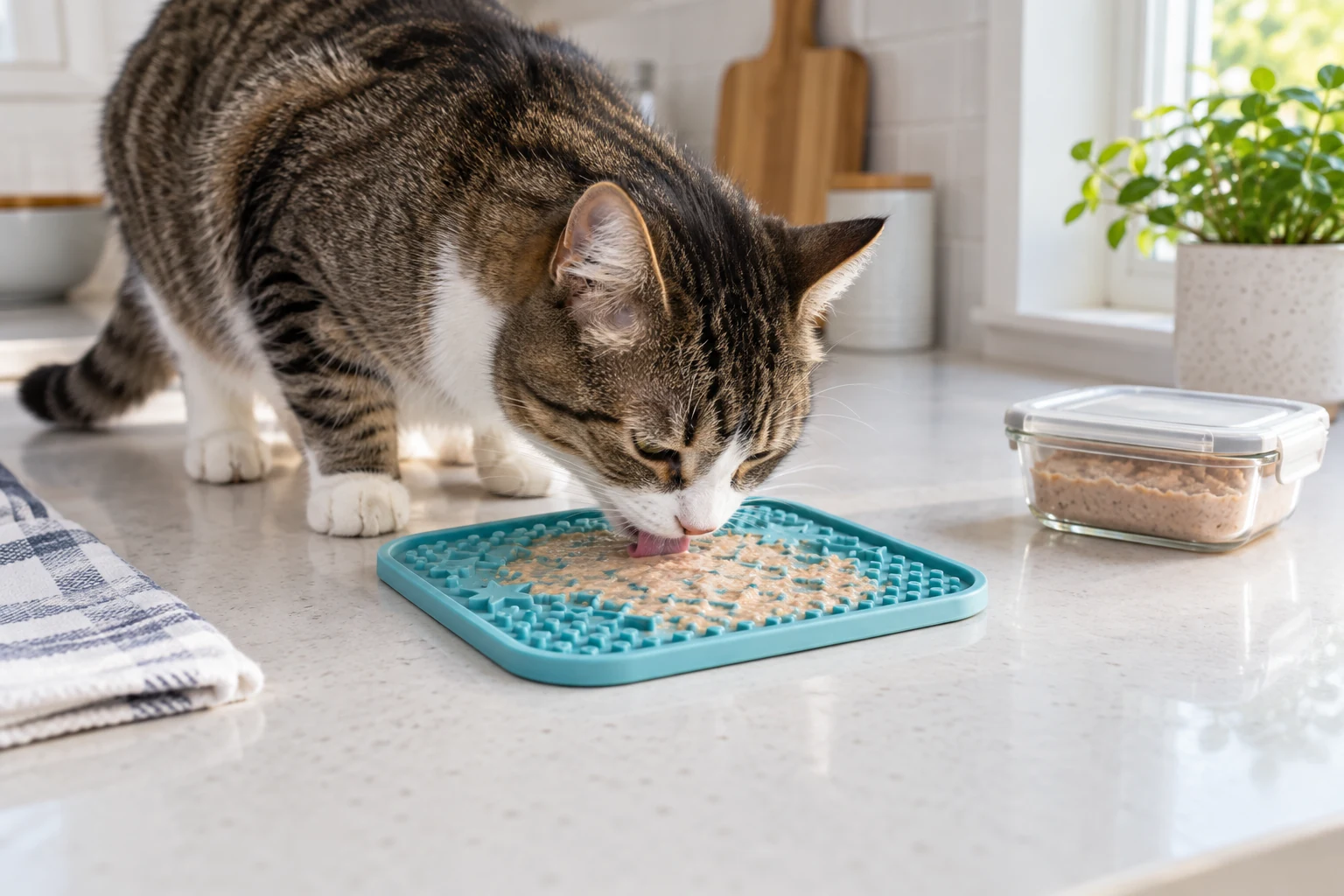
- Lebensmittel Rätsel / Rätselfutterautomaten
- Kurze Trainingseinheiten mit positiver Verstärkung (z. B. „Sitz“, „Ziel“ und Spiele, bei denen etwas geholt werden muss)
Das ist nicht nur “Spaß” – es vertreibt Langeweile und fördert das emotionale Wohlbefinden einer Rasse, die sich oft nach Beschäftigung sehnt.
Zeit für sich selbst: eine realistische Erwartung
Da viele Sphynx-Katzen sehr menschenbezogen sind, Lange Strecken, die man alleine zurücklegt, können eine Herausforderung sein. Manche reagieren möglicherweise mit Stressverhalten wie Anhänglichkeit, dem Verlangen nach Aufmerksamkeit oder zerstörerischem Kratzen. Wenn Sie aufgrund Ihres Tagesablaufs den größten Teil des Tages nicht zu Hause sind, sollten Sie Folgendes in Betracht ziehen:
- ein verträgliches zweites Haustier (sofern angebracht),
- Mittagsbesuche / Haustierbetreuung,
- abwechselnde Bereicherung (Rätsel, sichere Klettermöglichkeiten, Sitzstangen an Fenstern).
Sprachverhalten: von Natur aus gesprächig, doch der Kontext spielt eine Rolle
Sphynx-Katzen sind oft ausgesprochener als der Durchschnitt, indem sie mit Miauen zum Spielen auffordern, um Aufmerksamkeit bitten oder alltägliche Bedürfnisse signalisieren. Sollte das Miauen plötzlich auftreten, übermäßig stark werden oder mit Veränderungen beim Appetit, beim Verhalten in der Katzentoilette oder beim Schlaf einhergehen, sollten Sie dies als potenzielles Stress oder Gesundheitssignal und einen Tierarzt aufsuchen.
Verträglichkeit mit Kindern und anderen Haustieren
Viele Sphynx-Katzen fühlen sich in lebhaften Haushalten und Haushalten mit mehreren Haustieren wohl wenn es richtig eingeführt wird. Frühzeitige Sozialisierung, schrittweises Kennenlernen und die Schaffung von Rückzugsmöglichkeiten (Kratzbäume, ruhige Räume) sind der Schlüssel zum Erfolg – insbesondere im Umgang mit Hunden oder lebhaften Kindern.
Sphynx-Katzen werden im Allgemeinen als liebevolle, gesellige “Menschenkatzen” beschrieben, die Wärme, Kuscheleinheiten und häufigen Kontakt genießen. Sie blühen oft durch tägliches Spielen und geistige Anregung auf, und manche können mit langen Phasen der Einsamkeit Schwierigkeiten haben. Viele sind gesprächig und wollen Aufmerksamkeit; plötzliche Verhaltensänderungen oder intensives Miauen sollten auf Stress oder medizinische Ursachen untersucht werden.
Pflegeanleitung
Hinweis zur Gesundheit: Dieser Leitfaden dient zu Informationszwecken und ersetzt keinesfalls die Beratung durch einen Tierarzt. Wenn Ihre Sphynx-Katze anhaltendes Erbrechen oder Durchfall, Gewichtsverlust, Lethargie, Hautwunden oder Ohrenschmerzen aufweist, vereinbaren Sie einen Termin beim Tierarzt.
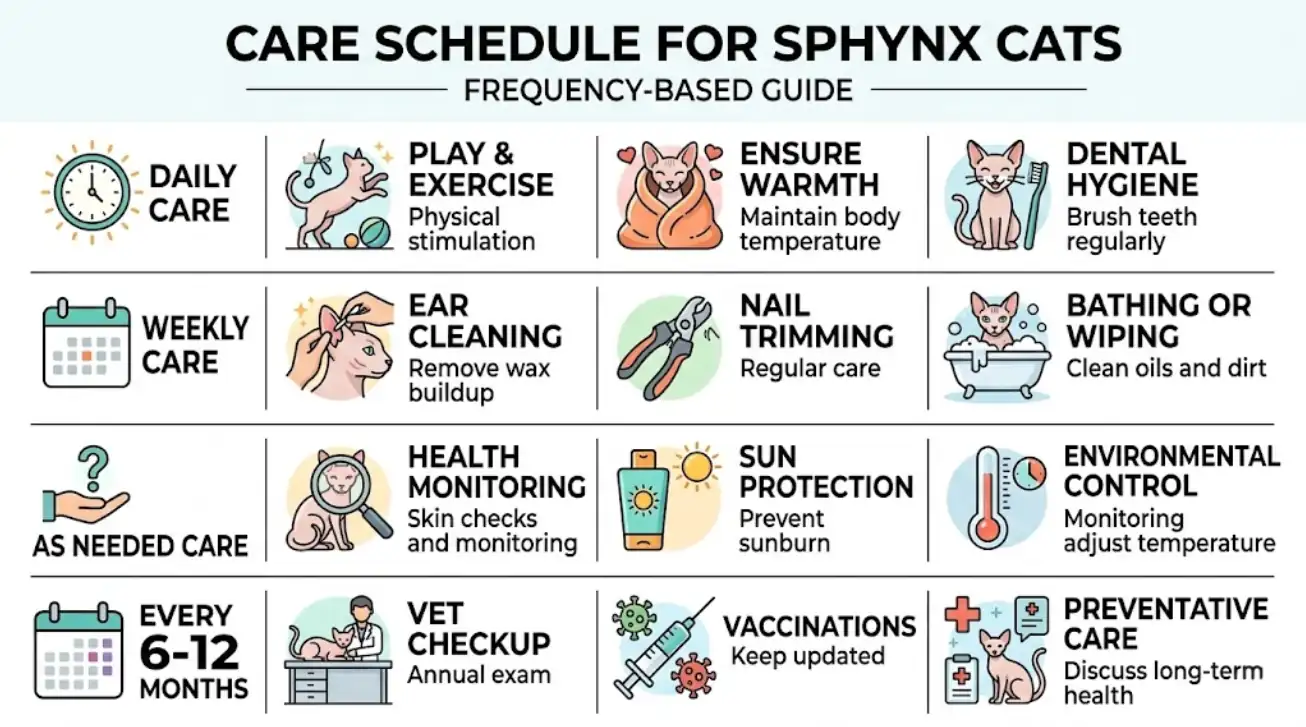
Kurzübersicht zur Pflege (auf einen Blick)
| Frequenz | Was ist zu tun? | Warum das wichtig ist |
|---|---|---|
| Täglich | Warme Ruheplätze + frisches Wasser; kurzes interaktives Spiel; kurze Hautkontrolle | Sphynx-Katzen frieren leicht und profitieren von regelmäßigen Beschäftigungsangeboten. |
| Wöchentlich | Ohren kontrollieren + nur das abwischen, was man sehen kann; Krallen kontrollieren und prüfen, ob das Tier sich kratzt | Verhindern Sie Wachsablagerungen und Hautirritationen; bei Wohnungskatzen ist oft eine regelmäßige Kontrolle der Krallen erforderlich. |
| Je nach Bedarf | Baden/Abwischen je nach Fettgehalt; Futterportionen an den Körperzustand anpassen | Die Regulierung der Hautfettproduktion ist individuell unterschiedlich; die Gewichtskontrolle sollte individuell angepasst werden. |
| Alle 6-12 Monate | Wellness-Untersuchung + Überprüfung der Ernährung/des Gewichts | Durch Vorsorge lassen sich Probleme frühzeitig erkennen; Ernährungspläne sind am wirksamsten, wenn sie individuell zugeschnitten sind. |
Ernährung (was man füttern sollte + wie man sicherstellt, dass es “tierärztlich unbedenklich” ist)
So sieht eine ausgewogene Ernährung für Sphynx-Katzen aus
- Legen Sie Wert auf vollwertiges und ausgewogenes Katzenfutter (Fertigfutter ist in der Regel zuverlässiger als selbst zubereitetes Futter, wenn es um die Versorgung mit essenziellen Nährstoffen wie Taurin geht).
- Katzen sind obligate Fleischfresser: Im Allgemeinen gedeihen sie am besten mit einer Ernährung, die der Nahrung ihrer Beutetiere ähnelt –proteinreich, mäßig fettreich und kohlenhydratarm.
- Verwenden Sie Körperliche Verfassung (kein Betteln) zur Festlegung der Futterportionen. Bitten Sie Ihren Tierarzt, den Körperzustand Ihrer Katze zu bewerten, und passen Sie die Kalorienzufuhr entsprechend an.
Auswahl eines Lebensmittels (einfache Checkliste)
Wenn Sie Futtermittel vergleichen, sollten Sie sich auf wissenschaftlich fundierte Auswahlkriterien stützen (Herstellungsstandards, Fütterungsversuche, Qualitätskontrolle) und nicht nur auf die Zutatenliste.
Empfindlicher Magen und IBD
Es wird berichtet, dass einige Sphynx-Linien empfindliche Verdauungssysteme, und jede Katze kann eine chronische Enteropathie bzw. eine chronisch-entzündliche Darmerkrankung (IBD) entwickeln.
- Erfassen Sie wöchentlich Stuhlgang, Appetit und Gewicht.
- Falls Erbrechen/Durchfall anhält länger als 1–2 Tage, oder wenn Lethargie bzw. Appetitlosigkeit auftritt, suchen Sie einen Tierarzt auf.
- Bei Verdacht auf eine chronisch-entzündliche Darmerkrankung (IBD) beginnen Tierärzte häufig mit Diätversuche (Diäten mit neuen Proteinen oder hydrolysierten Proteinen) und die Reaktion über mehrere Wochen hinweg bewerten.
Bewegung (damit sie schlank, warm und bei Verstand bleiben)
Sphynx-Katzen sind in der Regel sehr aktiv und profitieren von tägliches interaktives Spiel und Möglichkeiten zum Klettern, Herumtollen und Entdecken.
Praktisches Ziel: mehrere kurze Spielrunden pro Tag (Kätzchen brauchen mehr; ältere Katzen brauchen zwar auch noch Spiel, aber sanfter).
Hochwertige Aktivitäten
- Spielzeug zum Werfen (werfen → jagen → “fangen”, um Frustration zu verringern)
- Futterrätsel / Leckerli-Schnitzeljagden zur Verlängerung der Fütterungszeit
- Kurze Trainingseinheiten (Sitz, Berühren, Apportieren) mit positiver Verstärkung
Umgebung & Ausgestaltung (Wärme + Sonnenschutz + “Katzenbedürfnisse”)
Temperatur und Komfort
Sphynx-Katzen neigen dazu, sich an warme Orte begeben denn da sie keine Haare haben, frieren sie leichter.
Bitte geben Sie Folgendes an:
- Beheiztes Bett (haustierfreundlich), dicke Decken, zugfreie Schlafplätze
- Weiche Pullover nur, wenn Ihre Katze sie verträgt (Achten Sie auf Hautreizungen)
Sonnenschutz (auch in Fensternähe wichtig)
Katzen können erkranken Sonnenhautentzündung (Sonnenschaden)—meist an den Ohren, der Nase und den Augenlidern—vor allem bei heller oder unpigmentierter Haut.
Wenn sich Ihre Katze sonnt:
- Vermeiden Sie intensive direkte Sonneneinstrahlung
- Nutzen Sie Möglichkeiten zur Beschattung und zum UV-Schutz; fragen Sie Ihren Tierarzt nach tierfreundlichem Sonnenschutz
Bereicherung, die den Bedürfnissen von Katzen gerecht wird
Halten Sie sich an das AAFP/ISFM-Rahmenkonzept für “Umweltbedürfnisse”: Bieten Sie sichere Ruheplätze, vielfältige Ressourcen, Möglichkeiten zum Spielen und Jagen, vorhersehbare Abläufe sowie positive Interaktion mit Menschen.
Mindestkonfiguration
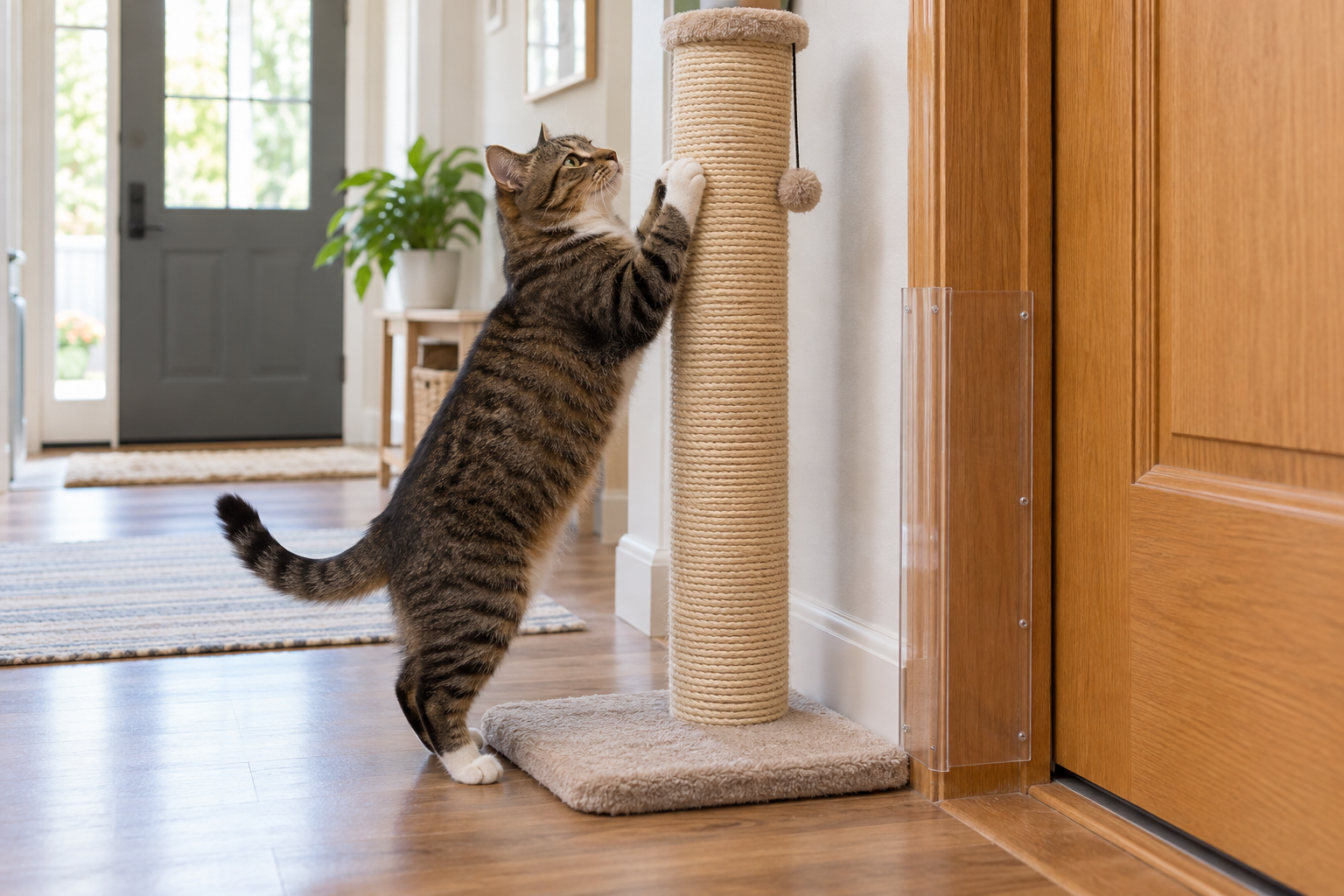
- Vertikaler Platz (Kratzbaum/Regale), Kratzflächen, Fensterliegeplatz
- Futter, Wasser und Streu in Haushalten mit mehreren Haustieren getrennt aufbewahren
- Ruhiger Rückzugsort (vor allem, wenn Ihre Sphynx-Katze ein “Klett-Typ” ist, aber leicht überreizt wird)
Pflege (Haut, Baden, Ohren, Krallen – mit Feingefühl, das Vertrauen schafft)
Hautfettregulierung (warum Sphynx-Katzen “Hautpflege” benötigen)
Zuchtverbände weisen darauf hin, dass Sphynx-Katzen folgende Merkmale aufweisen können: fettige Haut und dass Baden dabei helfen kann, die Talgproduktion zu regulieren (und möglicherweise Allergene auf der Haut zu reduzieren).
Badehäufigkeit: die zuverlässigste Formulierung
Es gibt tatsächliche Abweichung bei Katzen. Ein Rasseexperte betont, dass bei fettiger Haut regelmäßiges Baden wichtig ist, während ein anderer davor warnt, dass Das wöchentliche Baden ist ein weit verbreiteter Irrglaube. und dass Zu häufiges Baden kann das Hautgleichgewicht stören und die Talgproduktion steigern.
Bewährte Vorgehensweise:
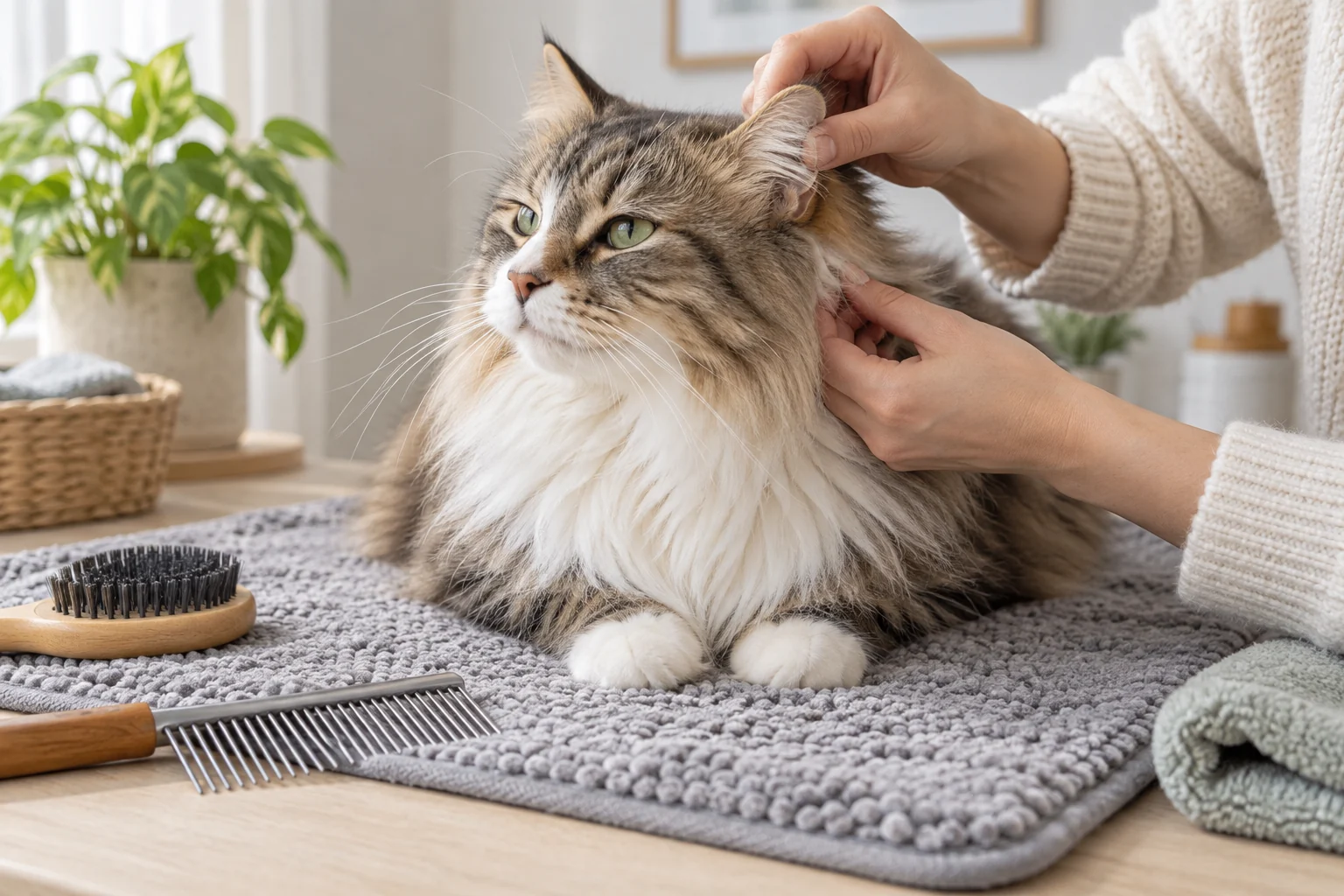
- Beginnen Sie mit sanftem Abwischen (ein warmes, feuchtes Tuch) und baden nur so oft, wie es der Fettgehalt des Fells Ihrer Katze erfordert.
- Wenn Sie baden, verwenden Sie ein mildes Katzenshampoo, gründlich ausspülen und die Anwendung abbrechen, wenn Sie Trockenheit, Schuppenbildung oder Rötungen feststellen – wenden Sie sich dann an Ihren Tierarzt.
Ohren (bitte mit Vorsicht vorgehen)
- Verwenden Sie eine tierärztlich empfohlener Ohrenreiniger + Wattebausch/Mullbinde.
- Verwenden Sie niemals Wattestäbchen im Gehörgang. (Verletzungsgefahr und Gefahr, dass Fremdkörper tiefer eindringen).
Regelmäßige Kontrollen sind wichtig: Schwellungen, Ausfluss, Verfärbungen oder anhaltendes Kratzen sollten Anlass für einen Tierarztbesuch sein.
Nägel
Hauskatzen müssen oft die Krallen geschnitten bekommen etwa alle 2–4 Wochen, je nach Wachstum und Kratzgewohnheiten.
Tipp: Stellen Sie mehrere Kratzflächen bereit, um übermäßigen Haarwuchs zu reduzieren.
Geistige Anregung (beugt Langeweile und Anhänglichkeitsstress vor)
Sphynx-Katzen sind in der Regel sehr menschenbezogen und profitieren von strukturierte Interaktion + Neuheit.
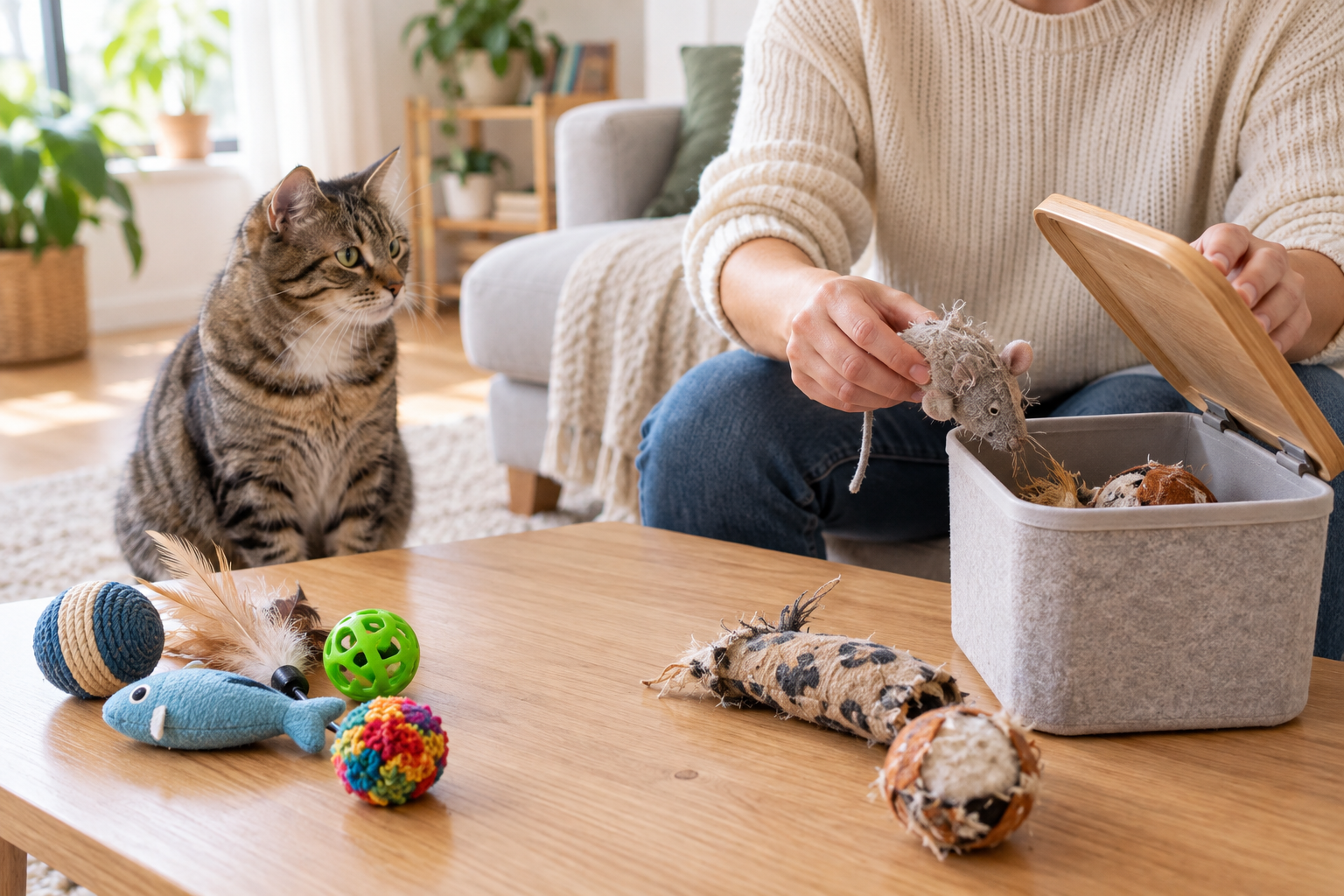
Verwenden Sie ein einfaches Rotationssystem:
- Halten Sie insgesamt 6–10 Spielzeuge bereit; legen Sie jeweils 2–3 davon bereit und wechseln Sie diese alle paar Tage aus.
- Stellen Sie 3–5 Mal pro Woche Puzzle-Futterautomaten oder “Leckerli-Spuren” auf
- Trainieren Sie jeweils nur ein kleines Verhalten (berühren → sitzen → apportieren)
Gesundheitliche Belange
| Zustand | Beschreibung und Symptome | Management und Prävention |
|---|---|---|
| Hypertrophe Kardiomyopathie (HCM) | Verdickung des Herzmuskels; kann zu Durchblutungsstörungen, Atemproblemen, Lethargie oder plötzlicher Lähmung der Beine führen. | Regelmäßige Herzuntersuchungen (z. B. Echokardiogramme), HCM-Untersuchungen bei Zuchttieren, frühzeitige Diagnose zur medizinischen Behandlung. |
| Parodontalerkrankung | Eine Zahnfleischentzündung, die Mundgeruch, Zahnverlust und Zahnfleischschäden verursacht. | Tägliches Zähneputzen mit katzenverträglicher Zahnpasta; regelmäßige professionelle Zahnreinigungen. |
| Ohrinfektionen | In großen Ohren sammeln sich Schmutz und Feuchtigkeit an; Anzeichen hierfür sind Kratzen, Kopfneigen, Ausfluss und Rötungen. | Wöchentliche Ohrreinigung mit einer vom Tierarzt empfohlenen Lösung; tiefes Reinigen mit Wattestäbchen vermeiden. |
| Hautprobleme | Enthält Urticaria pigmentosa (rote, juckende Beulen) und Seborrhoe (fettige, juckende Haut). | Wöchentliche Bäder mit mildem Shampoo; hochwertige Ernährung; tierärztliche Beratung bei diagnostizierten Hauterkrankungen. |
| Erbliche Myopathie | Eine Muskelerkrankung, die Zittern, Kopfnicken, Schwäche und einen abnormalen Gang verursacht. | Genetische Tests vor der Zucht; unterstützende Maßnahmen nach Bedarf; keine Heilung möglich, aber die Lebensqualität lässt sich verbessern. |
| Magen-Darm-Probleme | Empfindlicher Magen-Darm-Trakt, Anfälligkeit für chronisch-entzündliche Darmerkrankungen (IBD) und Nahrungsmittelunverträglichkeiten; zu den Symptomen zählen Erbrechen, Durchfall und Appetitlosigkeit. | Achten Sie auf die Ernährung und den Stuhlgang; halten Sie sich an die vom Tierarzt empfohlenen Ernährungspläne; suchen Sie einen Tierarzt auf, wenn die Symptome anhalten. |
| Infektionen der Atemwege | Vor allem bei Kätzchen gehören Niesen, eine verstopfte Nase und erschwerte Atmung zu den Symptomen. | Eine warme, zugfreie Umgebung; regelmäßige Tierarztbesuche; rechtzeitige Impfungen. |
Ist diese Rasse das Richtige für Sie?
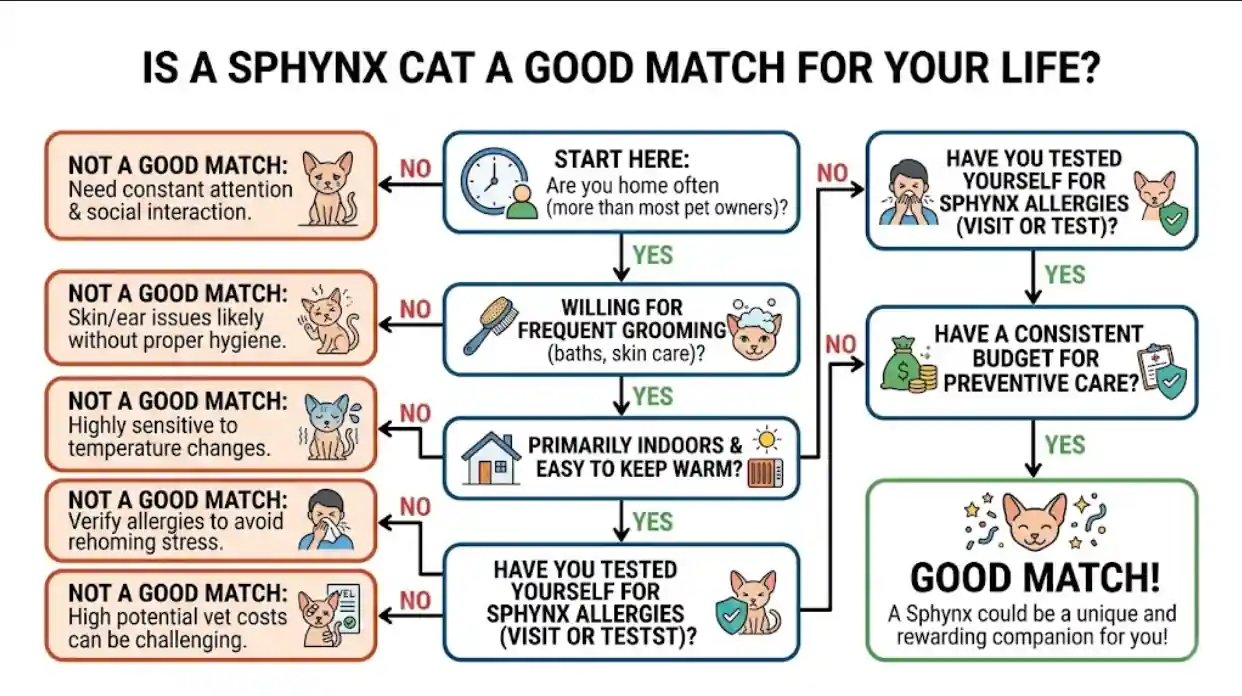
Schnelle Entscheidung: Eine Sphynx ist eine Der Mensch steht im Mittelpunkt, eine sehr interaktive Katze, die dazu neigt, mehr Pflegeaufwand, als es den Anschein hat (Haut/Ohren + Wärme + Zuwendung). Entscheiden Sie sich für diese Rasse als Begleithund – nicht, weil sie “pflegeleicht” ist.”
Am besten geeignet für
- Du möchtest eine anhängliche, gesellige “Schattenkatze”.” Viele Sphynx-Katzen sind äußerst menschenbezogen, anhänglich und folgen einem oft auf Schritt und Tritt, um Kontakt zu suchen.
- Du bist viel zu Hause (oder hast andere Haustiere/Menschen, die dir Gesellschaft leisten). Sie verlangen oft nach Interaktion und können dabei ziemlich gesprächig sein.
- Du hast nichts gegen eine gesprächige, ausdrucksstarke Katze. Sie sind in der Regel keine Haustiere, die “still im Hintergrund” bleiben.
- Sie sind auf die routinemäßige Pflege von Haut und Ohren vorbereitet. Sphynx-Katzen müssen regelmäßig gebadet und ihre Ohren regelmäßig kontrolliert und gereinigt werden; sie gehören nicht zu den Katzen, die “keine Pflege benötigen”.
- Drinnen kannst du sie warm und sicher unterbringen. Da die Tiere nur ein sehr dünnes Fell haben, wird in den meisten seriösen Ratgebern empfohlen, nur in Innenräumen Wohnen, mit Vorkehrungen gegen Sonne und Kälte.
- Sie haben kein Problem damit, die Kosten für eine seltene, pflegeintensive Rasse einzuplanen. Die Anschaffungskosten sowie die laufenden Kosten für Pflegehilfsmittel und medizinische Versorgung können deutlich über dem Durchschnitt liegen.
Nicht geeignet für
- Du bist die meiste Zeit des Tages weg und sich eine unabhängige Katze wünschen, die mit minimalem Kontakt gut zurechtkommt. (Viele Sphynx-Katzen blühen bei häufigem Kontakt mit Menschen richtig auf.)
- Du möchtest ein Haustier, das wirklich pflegeleicht ist. Zur Pflege von Sphynx-Katzen gehören häufig Bäder (ohne es zu übertreiben), Hautpflege und Ohrenhygiene.
- In Ihrem Zuhause kann es nicht durchgehend angenehm (warm und zugfrei) bleiben, oder Sie möchten, dass Ihre Katze draußen herumstreift.
- Sie leiden unter mittelschweren bis schweren Katzenallergien. Sphynx-Katzen produzieren nach wie vor Allergene in Hautsekrete und Speichel (Fel d 1 ist ein Hauptauslöser für Katzenallergien), daher ist keine Katzenrasse “wirklich hypoallergen”.”
- Sie sind noch nicht bereit für Gespräche über Vorsorgeuntersuchungen zur Herzgesundheit. Sphynx-Katzen können ein erhöhtes Risiko für eine hypertrophe Kardiomyopathie (HCM) aufweisen; seriöse Quellen empfehlen eine kontinuierliche tierärztliche Überwachung (häufig mittels Echokardiogramm) für gefährdete Katzen.
“Checkliste ”Unverhandelbare Punkte“
Wenn Sie antworten Nein Wenn einer dieser Punkte zutrifft, ist diese Rasse wahrscheinlich nicht die richtige Wahl:
- Zeit: Können Sie folgende Angaben machen täglich Interaktion und Spiel?
- In Innenräumen: Wird deine Katze überleben? nur in Innenräumen mit Sonnen- und Kälteschutzmaßnahmen?
- Pflege: Sind Sie bereit, die Hautpflege (Bäder, aber nicht übermäßig) sowie die Kontrolle und Reinigung der Ohren regelmäßig durchzuführen?
- Allergien: Haben allergieanfällige Familienmitglieder bereits Zeit mit dieser Hunderasse verbracht? (Ohne Gewähr.)
- Krankenversicherung: Wirst du Züchter wählen, die ihre Tiere untersuchen lassen und einen tierärztlichen Plan zur Herzüberwachung haben (Diskussion zum Thema HCM)?
Tischversion (Drop-in)
| Geeignet für | Warum es gut passt | Nicht geeignet für | Warum es nicht zusammenpasst |
|---|---|---|---|
| Menschen, die sich einen sehr geselligen, liebevollen Begleiter wünschen | Oft “menschenorientiert”, äußerst freundlich, aufmerksamkeitssuchend | Menschen, die oft verreisen oder eine eigenständige Katze möchten | Viele blühen durch häufigen Austausch auf und können ihre Bedürfnisse deutlich zum Ausdruck bringen |
| Besitzer, die sich zur regelmäßigen Pflege verpflichten können | Erfordert regelmäßige Pflege von Haut und Ohren; nicht pflegeleicht | Wer glaubt, “haarlos = keine Körperpflege” | Regelmäßige Bäder und Ohrkontrollen werden allgemein empfohlen |
| Wohnräume, die Wärme und Sonnenschutz bieten | Empfehlung ausschließlich für den Innenbereich; Gefahr von Sonnenbrand/Unterkühlung | Haushalte, in denen das Surfen im Freien erwartet wird | Das Fehlen eines Fells erhöht das Umweltrisiko |
| Menschen, die gesprächige, ausdrucksstarke Katzen mögen | Keine typisch “ruhige” Rasse | Lärmempfindliche Haushalte | Kann gesprächig/ausdrucksstark sein |
| Personen mit einer leichten Allergie, bei denen eine Verträglichkeit nachgewiesen wurde | Die Reaktionen sind individuell unterschiedlich; probieren Sie es zunächst aus. | Haushalte mit mittelschweren bis schweren Allergien | Allergene bleiben bestehen (Fel d 1 aus Drüsen/Speichel) |
| Käufer, die über das nötige Budget für die Kosten seltener Rassen verfügen | Die anfänglichen und laufenden Kosten können höher ausfallen | Eigentümer mit begrenztem Budget | Die Kosten umfassen Verbrauchsmaterialien sowie Vorsorgeuntersuchungen und Überwachung |
FAQ
Wie viel kostet eine Sphynx-Katze?
Sphynx-Katzen sind im Allgemeinen zu den teureren Katzenrassen, wobei die Preise je nach Region, Abstammung und Gesundheitsuntersuchungen stark variieren.
Als grobe Richtgröße für die USA werden in Preisübersichten seriöser Züchter üblicherweise folgende Preise angegeben: ~$2.000–$5.000+ für ein reinrassiges Sphynx-Kätzchen, wobei für Ausstellungslinien höhere Preise möglich sind. Um Betrug zu vermeiden, empfiehlt die TICA, sich über die typische Preisspanne der Rasse zu informieren und Vorsicht walten zu lassen bei verdächtig niedrige Preise und riskante Zahlungsmethoden.
Wie groß werden Sphynx-Katzen?
Sphynx-Katzen sind mittelgroß, mit einem typischen Gewicht von 6–12 lb (2,7–5,4 kg). Ausgewachsene Weibchen sind oft 7–10 Pfund, sowie erwachsene Männer 8–12 lb.
Wie lange leben Sphynx-Katzen?
Eine häufig genannte Lebenserwartung beträgt etwa 7–15 Jahre, wobei die Lebenserwartung von der Genetik, der Vorsorge und der Früherkennung von Herzerkrankungen beeinflusst wird.
Verlieren Sphynx-Katzen ihr Fell?
Sphynx-Katzen sie sehen zwar haarlos aus, sind aber nicht wirklich haarlos—die meisten haben ein feines Flaumfell (und können an Stellen wie Nase, Ohren und Schwanz kurze Haare haben). Da sie kein volles Fell haben, ist der Haarausfall in der Regel minimal, auch wenn noch einige feine Härchen vorhanden sein können.
Wie fühlen sich Sphynx-Katzen an?
Ihre Haut wird oft als Gämse/wildlederartig (manche vergleichen ihn mit einem weichen Pfirsich oder einer Nektarine), und sie können spüren, warm bei der Berührung.
Woher kommen Sphynx-Katzen?
Die heutigen Sphynx-Katzen gehen zurück auf eine spontane Mutation zur Haarlosigkeit im Jahr 1966 in Toronto/Ontario, Kanada, gefolgt von einer sorgfältigen Auskreuzung, um einen gesunden Genpool aufzubauen.
Haben Sphynx-Katzen gesundheitliche Probleme?
Wie viele Rassekatzen neigen auch Sphynx-Katzen zu bestimmten Erkrankungen – insbesondere hypertrophe Kardiomyopathie (HCM). Die Zuchtverbände betonen, dass Züchter und Besitzer folgenden Aspekten Vorrang einräumen sollten: kardiologische Vorsorgeuntersuchung mittels Echokardiogramm (Herzultraschall) durchgeführt von einem Tierkardiologen.
Wenn Sie Werbung für DNA-Tests sehen: Die NCSU weist darauf hin, dass HCM zeigt, dass unvollständige Penetranz, und eine Katze kann trotz eines negativen Testergebnisses für eine bekannte Mutation dennoch an HCM erkranken – daher sind Gentests ersetzt nicht Echokardiographie.
Sind Sphynx-Katzen für Allergiker geeignet?
Sphynx-Katzen sind nicht hypoallergen. Das wichtigste Katzenallergen Fel d 1 wird hauptsächlich in Talg- und Speicheldrüsen gebildet und kann auch auf der Haut und in der Umwelt vorkommen.
Manche Menschen berichten von einer besseren Verträglichkeit bei Sphynx, doch die Reaktionen variieren—Am sichersten ist ein persönlicher Testbesuch. vor der Adoption.
Wie oft müssen Sphynx-Katzen gebadet werden?
Weil sie möglicherweise fettige Haut, kann das Baden dabei helfen, Talgansammlungen in den Griff zu bekommen (und möglicherweise Allergene auf der Haut zu reduzieren).
Die TICA weist jedoch darauf hin, dass ein weit verbreiteter Irrtum darin besteht, dass Sphynx-Katzen wöchentlich gewaschen werden müssen; Zu häufiges Baden kann das Hautgleichgewicht stören, und sanftes Baden alle paar Monate kann für viele Katzen ausreichend sein (bei Bedarf ergänzt durch punktuelle Reinigung).
Bonus Fakten
Irreführende Bezeichnung (stammt nicht aus dem alten Ägypten)
Die Rasse ist nach dem Sphinx Denkmal aufgrund seines Aussehens – nicht, weil es sich bei den Katzen um eine altägyptische Rasse handelt.
Nicht wirklich haarlos
Sowohl die CFA als auch die TICA betonen, dass Sphynx-Katzen nicht völlig haarlos; viele haben ein feines Flaumhaar und können an bestimmten Stellen kurze Haare aufweisen.
“Klettkatze”-Charakter
Sphynx-Katzen werden allgemein beschrieben als sehr menschenbezogen, anhänglich und aufmerksamkeitsbedürftig—oft als “Klettkatze” bezeichnet.”
Einzigartige Genetik
Der haarlose Phänotyp der Sphynx-Katze steht im Zusammenhang mit Mutationen im KRT71-Gen (im Gegensatz zu einigen anderen haarlosen Rassen).
Referenzen
“Die Sphynx”. The Cat Fanciers’ Association. Abgerufen am 27. Oktober 2020. Im Jahr 1966 brachte eine Hauskatze Geburt bei einem haarlosen Kätzchen in Toronto, Kanada. Es stellte sich heraus, dass es sich um eine natürliche genetische Mutation handelte, und so entstand die Sphynx-Katze, wie wir sie heute kennen.
– Kirstin Fawcett (15. Mai 2015). “11 nicht ganz so flauschige Fakten über Sphynx-Katzen”. Mentaler Zuckerwatte. Abgerufen am 27. Oktober 2020. Doch die heutige kanadische Sphynx – die haarlose Rasse, die wir in Nordamerika kennen – trotzt seit Mitte der 1960er Jahre allen Erwartungen, als eine Katze in Ontario ein haarloses Kätzchen zur Welt brachte, das Ergebnis einer natürlichen genetischen Mutation. Mitte der 1970er Jahre kamen dann bei Besitzern in Toronto und Minnesota jeweils zwei separate Würfe haarloser Kätzchen zur Welt. Dank verschiedener Zuchtbemühungen führten ihre Abstammungslinien zu dem liebevollen Tier, das wir heute so schätzen.
“TICA – Einführung in die Sphynx-Rasse” (PDF). Die Internationale Katzenvereinigung. Archiviert (PDF) aus der Originalversion vom 4. Februar 2024. Abgerufen am 4. Februar 2024.
“Sphynx-Standard vom 05.02.2014” (PDF). Die Internationale Katzenvereinigung. Abgerufen am 27. Oktober 2020.
James Thoene (15. Juli 2016). “Die Geschichte der Sphynx”. Beeblebrox Sphynx. Archiviert vom Original am 26. Februar 2013. Abgerufen am 27. Oktober 2020.
“Die prestigeträchtigen Sphynx-Katzen galten einst als ‘wildlebende’ Rasse”. Wadena Pioneer Journal. 21. Januar 2012. Abgerufen am 27. Oktober 2020.
Julia Wilson (5. Juli 2017). “Rassenprofil der Sphynx-Katze”. Katzenwelt. Abgerufen am 20. Oktober 2020.
Jamie Bradburn (20. März 2013). “Toronto Invents: Die Sphynx-Katze”. Torontoist. Abgerufen am 27. Oktober 2020.
“Sphynx / Nackthund”. Petfinder. Abgerufen am 27. Oktober 2020.
Gandolfi, Barbara; Outerbridge, Catherine A.; Beresford, Leslie G.; Myers, Jeffrey A.; Pimentel, Monica; Alhaddad, Hasan; Grahn, Jennifer C.; Grahn, Robert A.; Lyons, Leslie A. (Oktober 2010). “Die nackte Wahrheit: Mutationen bei den Katzenrassen Sphynx und Devon Rex im KRT71-Gen”. Das Genom der Säugetiere. 21 (9–10): 509–515. doi:10.1007/s00335-010-9290-6. ISSN 0938-8990. PMC 2974189. PMID 20953787.
“Registrierungsrichtlinien für Sphynx-Katzen” (PDF). Sphynx-Rassenbeirat. 2017. Abgerufen am 30. Oktober 2019.
Gandolfi, B.; Alhaddad, H.; Joslin, S. E.; Khan, R.; Filler, S.; Brem, G.; Lyons, L. A. (2000). “Eine Spleißvariante im KRT71-Gen steht im Zusammenhang mit dem Lockenfell-Phänotyp von Selkirk-Rex-Katzen”. Wissenschaftliche Berichte. 3: 2000. doi:10.1038/srep02000. PMC 3683669. PMID 23770706.
“Katzenrassenverzeichnis: Sphynx”. Tierwelt entdecken. Discovery Communications, LLC. 10. September 2008. Archiviert vom Original am 1. Juli 2012. Abgerufen am 27. Oktober 2020.
Findlay, Sonia. “Was man über eine Sphynx-Katze wissen sollte”. WebMD. Abgerufen am 19.10.2023.
Asselineau, B.; Abitbol, M.; Deputte, B. L. (01.11.2012). “Verhalten sich Katzen etablierter Rassen gegenüber Menschen anders als nicht reinrassige Katzen?”. Zeitschrift für Veterinärverhalten. 7 (6): e1. doi:10.1016/j.jveb.2012.09.006. ISSN 1558-7878.
“So halten Sie Sphynx-Katzen und andere haarlose Katzen warm”. PetMD. Abgerufen am 11.07.2021.
Allred, Alexandra Powe (14. Mai 2014). Die meistgesuchten Katzen: Das Top-10-Buch über geheimnisvolle Mäusejäger, talentierte Tabbykatzen und katzenhafte Kuriositäten. Potomac Books, Inc., S. 102. ISBN 978-1-61234-293-1.
Robbins, Nancy. Hauskatzen: Ihre Geschichte, Rassen und andere Fakten. Barnes and Noble Press. S. 264. ISBN 978-1-9870-6180-2.
“Die große Frage: Was ist mit Allergien?”. Ankhamun und Utopia Sphynx. Archiviert vom Original am 18. Juli 2011. Abgerufen am 9. Februar 2017.
Åhman, Susanne E.; Bergström, Karin E. (Dezember 2009). “Hautkolonisierung durch Malassezia-Arten bei gesunden und seborrhoischen Sphynx-Katzen sowie ein Vergleich mit der Kolonisierung bei Devon-Rex-Katzen”. Zeitschrift für Katzenmedizin und -chirurgie. 11 (12): 970–976. doi:10.1016/j.jfms.2009.04.011. ISSN 1098-612X. PMC 11318777 – über Elsevier Science Direct.
“Über die Sphynx”. Cat Fanciers Association. Archiviert vom Original am 23. April 2019. Abgerufen am 27. Oktober 2020.
Irvine, Angela; Trevor, Dawes; McAuliffe, Michael; Bowd, Neil (2006). Sphynx: Erfahrungen aus Australien. OzSphynx. S. 14. ISBN 9780646473093.
Albasan, H.; Osborne, C. A.; Lulich, J. P.; Lekcharoensuk, C. (2012). "Risikofaktoren für Urat-Urolithen bei Katzen". Zeitschrift der Amerikanischen Veterinärmedizinischen Gesellschaft. 240 (7): 842-847. doi:10.2460/javma.240.7.842. PMID 22443437.
Teng, Kendy Tzu-yun; Brodbelt, Dave C; Church, David B; O'Neill, Dan G (2024). "Lebenserwartungstabellen für die jährliche Lebenserwartung und Risikofaktoren für die Sterblichkeit bei Katzen im Vereinigten Königreich".. Zeitschrift für Katzenmedizin und -chirurgie. 26 (5). doi:10.1177/1098612X241234556. ISSN 1098-612X. PMC 11156239.
“Hypertrophe Kardiomyopathie”. Veterinärmedizinische Fakultät der Cornell University. Januar 2014. Abgerufen am 11. Januar 2020.
Kittleson, Mark D.; Meurs, Kathryn M.; Harris, Samantha P. (Dezember 2015). “Die genetischen Grundlagen der hypertrophen Kardiomyopathie bei Katzen und Menschen”. Zeitschrift für Veterinärkardiologie. 17 (Beilage 1): S53 – S73. doi:10.1016/j.jvc.2015.03.001. ISSN 1760-2734. PMC 5909964. PMID 26776594.
“Hypertrophe Kardiomyopathie bei Katzen (HCM)”. MedVet Medical & Cancer Centers for Pets. 2. Dezember 2016. Abgerufen am 31. Oktober 2019.
“Forschung zu HCM bei Sphynx-Katzen”. Veterinärmedizinische Fakultät der North Carolina State University. Archiviert vom Original am 18. Juni 2015. Abgerufen am 1. Februar 2013.
Chetboul, V.; Petit, A.; Gouni, V.; Trehiou-Sechi, E.; Misbach, C.; Balouka, D.; Carlos Sampedrano, C.; Pouchelon, J. L.; Tissier, R.; Abitbol, M. (Dezember 2012). “Prospektives echokardiographisches und Gewebedoppler-Screening einer großen Sphynx-Katzenpopulation: Referenzbereiche, Prävalenz von Herzerkrankungen und genetische Aspekte”. Zeitschrift für Veterinärkardiologie. 14 (4): 497–509. doi:10.1016/j.jvc.2012.08.001. PMID 23131204.
“Angeborenes myasthisches Syndrom”. Sphynx Cat Association (SCA). Archiviert vom Original am 31. Oktober 2019. Abgerufen am 31. Oktober 2019.
“Sphynx – Hereditäre Myopathie”. Die Internationale Gesellschaft für Tierschutzwissenschaft. Abgerufen am 30. Oktober 2019.
Martin, Paul T.; Shelton, G. Diane; Dickinson, Peter J.; Sturges, Beverly K.; Xu, Rui; LeCouteur, Richard A.; Guo, Ling T.; Grahn, Robert A.; Lo, Harriet P.; North, Kathryn N.; Malik, Richard (01.12.2008). “Muskeldystrophie im Zusammenhang mit einem α-Dystroglykan-Mangel bei Sphynx- und Devon-Rex-Katzen”. Neuromuskuläre Störungen. 18 (12): 942-952. doi:10.1016/j.nmd.2008.08.002. ISSN 0960-8966. PMC 2646259. PMID 18990577.
Martin, P. T.; u. a. (2008). “Mit Muskeldystrophie einhergehender Alpha-Dystroglykan-Mangel bei Sphynx- und Devon-Rex-Katzen”. Neuromuskuläre Störungen. 12. 18 (12): 942–52. doi:10.1016/j.nmd.2008.08.002. PMC 2646259. PMID 18990577.
 EN
EN DE
DE ES
ES PT
PT