
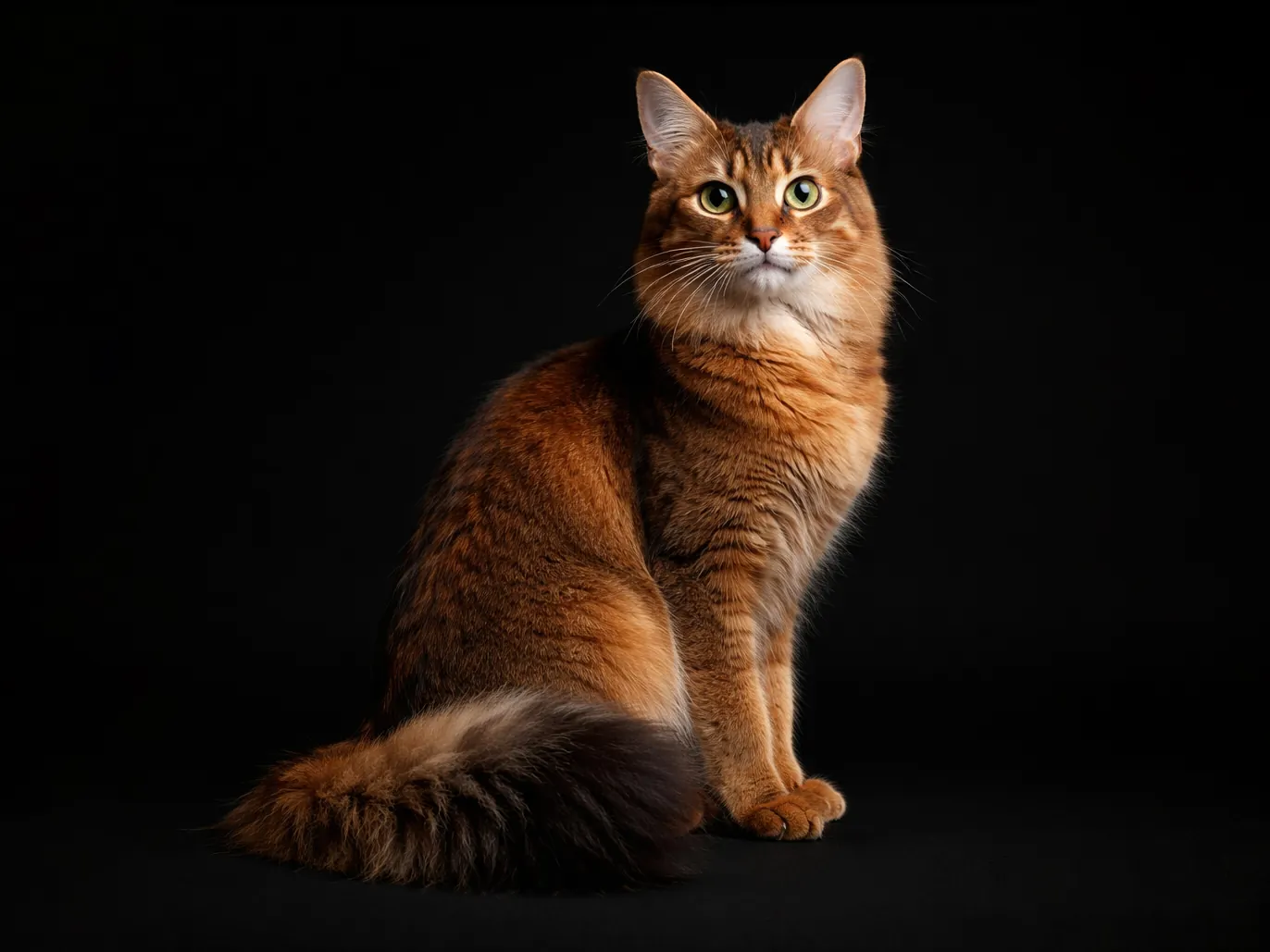
A Somali cat is a high-energy, people-oriented breed—often described as the Halblanghaar Abessinier—known for a ticked, silky coat and an inquisitive “always involved” personality. They’re affectionate but not always lap cats, and they do best with daily play, climbing space, and mental puzzles.
What this guide covers: temperament in real homes, care needs (especially enrichment), and breed-linked health risks with practical screening questions for breeders.
Inhaltsübersicht
Rasse-Übersicht
| Charakteristisch | Beschreibung |
| Persönlichkeit | Verspielt, lebhaft, unterhaltsam, neugierig, intelligent, sozial, anhänglich, treu, aktiv, abenteuerlustig, kontaktfreudig |
| Gehäuse Typ | Mittelgroß, schlank, wohlproportioniert, muskulös, athletisch gebaut. |
| Gewicht | 6-12 lbs (ca. 2,7-5,4 kg) |
| Herkunft Region | Vereinigte Staaten (entwickelt), langhaarige Nachkommen von Abessinierkatzen, die mit dem alten Abessinien (heutiges Äthiopien) verbunden sind |
| Lebenserwartung | 12-16 Jahre (einige Quellen sprechen von bis zu 17-19 Jahren) |
| Mantel Typ | Halblang bis lang, üppig, doppelt behaart, superweich, extrem fein, seidig, nicht wollig. Voll mit übertriebenen Ohrbüscheln, extra dick am Hals (Kragen) und an den Hinterbeinen (Hosen). |
| Fellfarben | Abgehakt tabby Muster. Gängige Farben sind Ruddy (übliche Farbe), Sorrel (rot/zimtfarben), Blue, Fawn. Auch Schwarz Silber, Sorrel Silber, Blau Silber, Fawn Silber. Andere anerkannte Farben sind Lilac, Chocolate, Cream. Jedes Haar hat 3-20 Farbstreifen |
| Shedding Level | ⭐⭐⭐☆☆ (mäßig) |
| Zuneigung zu den Menschen | ⭐⭐⭐⭐☆ (mäßig bis hoch) |
| Pflege-Schwierigkeit | ⭐⭐⭐☆☆ (mäßig) |
Einführung
Die Somali-Katze ist die longhaired version of the Abyssinian, prized for its shimmering ticked coat and athletic build. Its full, plumed tail and foxlike outline are why many breed organizations note the nickname “fox cat.”
Known for being bright, busy, and people-oriented, Somalis tend to stay close to their humans—supervising, playing, and exploring—rather than lounging all day. If you want an interactive companion who thrives on daily play and mental stimulation, the Somali’s Abyssinian-rooted curiosity and energy are a big part of the breed’s appeal.

Geschichte der Rasse
Die Somali cat is the semi-longhaired version of the Abyssinian, developed when breeders intentionally preserved a naturally occurring longhair trait that sometimes appeared in Abyssinian lines.
How the Somali became a breed
Longhaired “Abyssinian-type” kittens were historically treated as an off-standard surprise in some Abyssinian litters. A small group of breeders chose to develop these cats into a consistent type rather than breed the trait out.
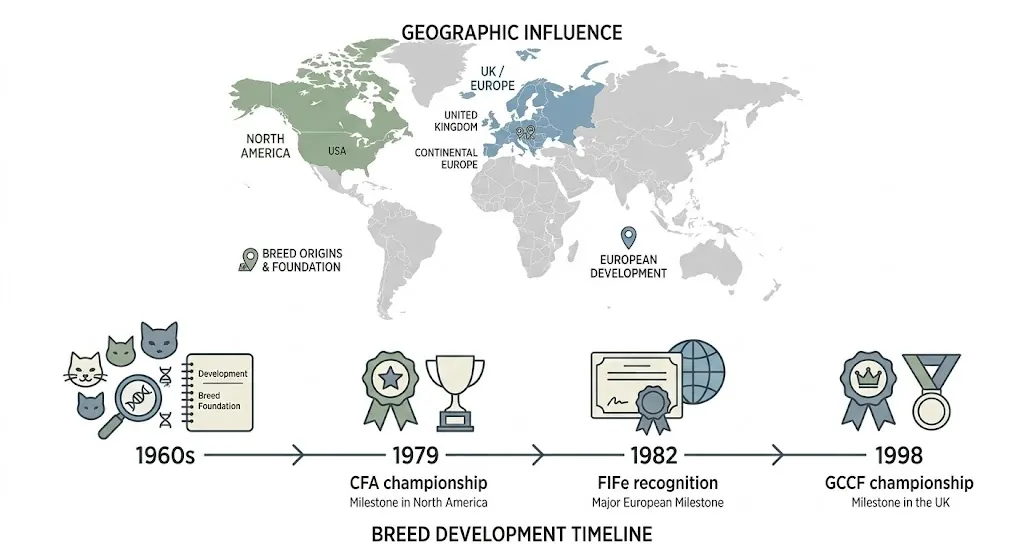
In der mid-1960s, American breeder Evelyn Mague produced one of the first documented longhaired Abyssinians (“George”) and began promoting the developing breed under a new name: Somali.
Why the breed is called “Somali”
Der Name does not mean the breed originated in Somalia. It was chosen to “pair” with the Abyssinian name: Somalia borders Abyssinia (modern-day Ethiopia)—a symbolic way to describe how closely related the Somali is to the Abyssinian.
Recognition timeline (registry-by-registry)
Cat breed recognition differs by organization, so it’s best to cite the registry you’re referencing:
- CFA (Cat Fanciers’ Association): began registering Somalis in 1976; championship status in 1979.
- FIFe (Fédération Internationale Féline): recognition noted as 1982.
- GCCF (UK): Somalis imported to the UK in 1980; GCCF championship status in 1998.
GCCF also notes that the first Somali recognized by a cat-fancy organization was Mayling Tutsuta, bred by Canadian judge Ken McGill.
Physikalische Merkmale
Auf einen Blick: The Somali is a medium-to-large, athletic, “ready-to-spring” cat mit einer modified wedge head, large tufted ears, almond-shaped eyes with “eyeliner” markings, a soft, extremely fine double coatund eine full, fox-like brush tail.
Build and silhouette
The Cat Fanciers’ Association (CFA) show standard describes the Somali as well-proportioned, firm-muscled, lithe, and vigorous, mit einer slightly arched back that gives the impression of a cat about to spring.
Head, ears, and eyes (distinctive facial “expression”)
- Kopf: a modified, slightly rounded wedge with gentle contours (not flat planes).
- Ohren: large, alert, broad and cupped, mit tufts considered desirable.
- Die Augen: large, almond-shaped, brilliant and expressive, typically accented by a dark “lid” line with lighter “spectacles,” plus short dark “pencil” markings that emphasize the eyes. CFA lists eye color as gold or green (with richer color preferred).
Coat texture and length (why they look “plush”)
CFA specifies a coat that is very soft, sehr feinund double-coated, mit mittlere Länge (slightly shorter over the shoulders). A ruff (collar) and breeches (thicker fur on the hind legs) are preferred because they create the breed’s full-coated look.
Ticked (agouti) pattern and “shimmer”
The Somali’s signature look comes from agouti ticking: each hair shows alternating darker and lighter bands, producing a translucent, shimmering effect rather than bold stripes. TICA describes this as an iridescent-quality coat created by even, dark ticking contrasted with lighter bands.
Tail and “fox cat” impression
CFA calls for a tail with a full brush, thick at the baseund slightly tapering, with length balanced to the torso—one of the key traits behind the Somali’s well-known “fox-like” appearance.
Hinweis für die Leser: These details are drawn from major registry descriptions and show standards; individual pet Somalis can vary while still reflecting the breed’s core type.

Verhalten und Persönlichkeit
In einem Satz: The Somali cat is an active, curious, highly intelligent, people-oriented breed that thrives on interactive play and daily mental stimulation.
Temperament snapshot
- Energie: high; expects daily play and climbing time
- Curiosity: “nothing goes unexplored” in the home
- Intelligence: quick learner; may figure out latches/doors and puzzle-style challenges
- Social style: affectionate and engaged, often happiest when included in household activity
1) Playful, athletic, and always “on the move”
Somalis are widely described by cat registries as aktiv und neugierig—the kind of cat that seeks high vantage points, explores rooms thoroughly, and turns play into a daily routine.
What this looks like at home: jumping, climbing, chasing toys, and “supervising” from the top of doors, shelves, or cat trees.
2) Smart explorers (“preposition cats”)
The Somali (and the closely related Abyssinian) is famously nicknamed a “preposition cat” because it’s often in, under, over, between, and through everything—an easy shorthand for their nonstop exploration.
CFA specifically notes they’re intrigued by challenges like closed cupboards and may learn how to unlatch them.
3) Social and people-focused—affectionate, but not always a lap cat
Somalis tend to form strong bonds and enjoy human company, often choosing to be nearby and involved rather than quietly independent.
Many owners describe them as affectionate zu ihren eigenen Bedingungen—happy to follow you, sit close, or perch beside you, but not necessarily content to be held for long periods.
4) Communication: expressive without constant loud meowing
While individual cats vary, Somalis are commonly described as interactive and expressive, using quieter vocalizations and body language to stay engaged with their people (especially when they want attention or play).
5) With kids and other pets: usually friendly, best with matched energy
Most Somalis do well in active homes and can be a strong fit for families when children are taught gentle handling and interactions are supervised.
They also tend to do best with playmates (another social cat or cat-friendly dog) when introduced properly—because interactive play helps meet their high stimulation needs.
6) Boredom is the real behavior risk
A Somali’s intelligence and energy are an advantage only if they have outlets. Without enough play, climbing, and enrichment, cats commonly redirect energy into problem behaviors (scratching household items, chewing, knocking things over, etc.).
Praktische Erkenntnisse: plan on daily interactive play, vertical space, and rotating toys—otherwise the Somali may “make their own fun.”

Somali vs. Abyssinian: What’s the Difference?
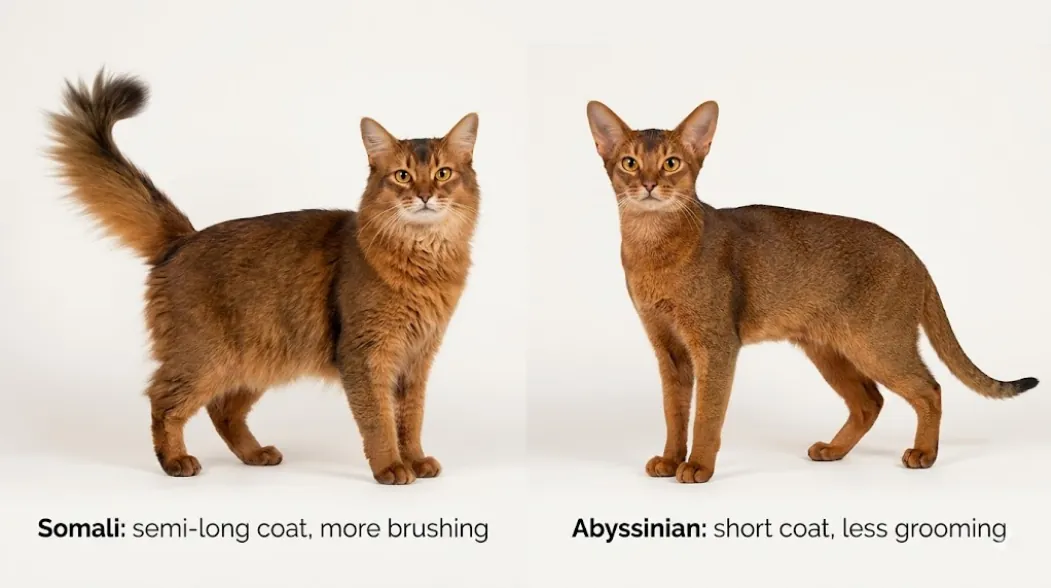
Die Somali is essentially the semi-longhaired (longhaired) version of the Abyssinian. In day-to-day life, the biggest difference is coat length and grooming: Somalis have a fuller, shaggy ticked coat (often with ear tufts und eine fox-like tail), while Abyssinians have a short, ticked coat that’s typically lower-maintenance. Temperament is broadly similar: both are athletic, curious, people-oriented Katzen.
Quick Comparison (Owner-Relevant Differences)
| Topic | Somali | Abessinier |
|---|---|---|
| “What it is” | Semi-longhaired Abyssinian type | Short-haired breed type |
| Mantel | Longer, shaggy angekreuzt coat; often ruff/ear tufts; fox-like tail | Short, close-lying angekreuzt Mantel |
| Körperpflege | More brushing needed (more coat volume) | Generally less grooming (short coat) |
| Look/Outline | “Fluffier silhouette” due to coat length | Sleeker silhouette |
| Temperament (high level) | Very active, engaged, people-oriented | Very active, engaged, intensely curious |
| Optimale Passform | You want Aby energy + more coat/“fox” look and can groom | You want Aby energy with minimal coat upkeep |
(“Ticked” = each hair shows banding, producing the hallmark shimmering look.)
The Differences That Actually Matter
1) Coat & grooming workload
If you want the Abyssinian vibe with more coat, pick Somali. Somali coats are described as the Abyssinian look “with a full ruff… and a dramatic, bushy tail,” which usually means more brushing than a short-haired Aby.
2) Appearance: “fox cat” vs. sleek athlete
Somalis commonly show more “features created by fur” (ruff, ear furnishings, bushier tail), while Abyssinians read as more streamlined because the ticked pattern sits on a short coat.
3) Personality: more similar than different
Both breeds are consistently described by major cat registries as active/athletic, alert, and intensely curious, and strongly people-oriented—so don’t choose between them expecting a calm vs. wild split. Choose mainly by coat and grooming tolerance.
Unterm Strich
Wählen Sie Somali if you want a fluffier, fox-tailed, semi-longhaired version of the Aby type and don’t mind extra grooming; choose Abessinier if you want the same high-energy, curious personality with a short, lower-maintenance coat.
Pflegeanleitung
Somali cats are athletic, curious, and very active, and they tend to do best in homes that provide structured feeding, daily interactive play, and lots of enrichment.
Diät
Das Ziel: keep your Somali at an ideal body condition (not just a number on the scale) with a complete-and-balanced diet and measured portions. Cornell recommends working with your veterinarian to determine ideal weight and adjust the diet accordingly.
What to feed
- Choose a cat Lebensmittel labeled complete and balanced for your cat’s life stage (kitten / adult / senior).
- When comparing brands, use evidence-based questions (e.g., quality control, nutrition expertise, feeding trials) rather than relying only on an ingredient list.
How often to feed
- As a general schedule, Cornell notes:
- Kittens (to ~6 months): ~3 meals/day
- 6–12 months: ~2 meals/day
- Adults (≈1 year+): 1–2 meals/day in most cases
- If your Somali prefers “nibbling,” you can split the daily ration into multiple small portions using timed feeders or food puzzles—without leaving unlimited food out. (This helps prevent boredom eating.)
Portion control + boredom
- Many cases of “always hungry” are actually under-stimulated cats looking for something to do. Use Lebensmittelpuzzle, brief training sessions, and extra play to turn snack-seeking into healthy activity.
- Wenn Ihre Katze refuses food and is losing weight, that can be medically urgent—Cornell advises a veterinary exam.
Übung
Somalis are often happiest when they get interactive play every day, not just solo toys—both CFA and TICA describe them as notably active and athletic.
A practical routine
- Angestrebt werden multiple short play sessions daily (more effective than one long session).
- Use toys that mimic prey (wand toys, “chase” toys). Let your cat “catch” the toy sometimes to avoid frustration.
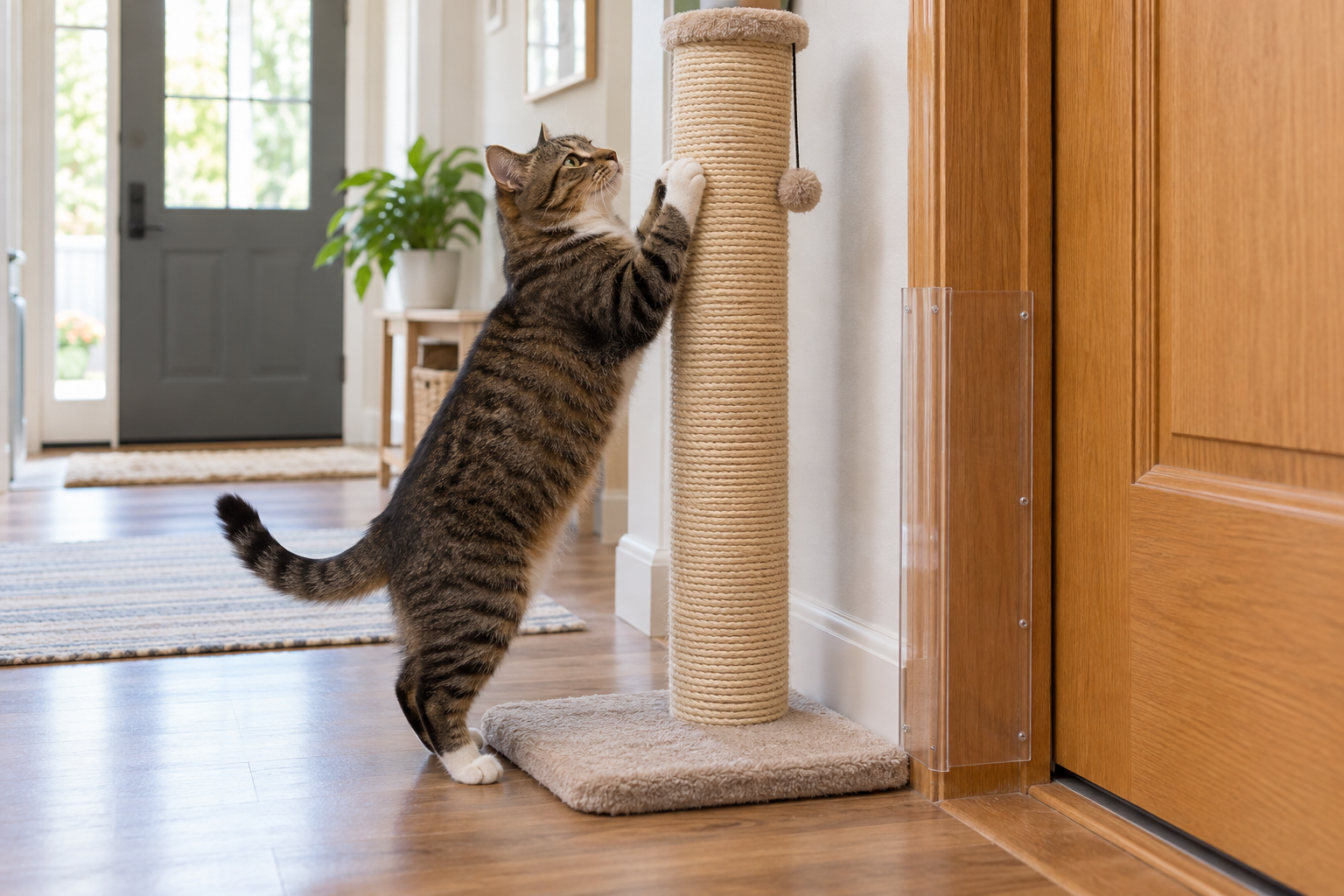
- Add “free exercise” opportunities: tall cat trees, safe shelves, and scratchers to encourage climbing and sprint bursts.
Optional: harness time
- If you do outdoor time, keep it controlled (harness, stroller, or catio). Introduce harness training gradually and make it positive.
Umwelt und Bereicherung
AAFP/ISFM guidelines emphasize that meeting a cat’s environmental needs is essential for wellbeing—not optional—especially for smart, busy breeds.
Set your home up for success
- Cat-proof curiosity: secure breakables, block unsafe gaps, and keep strings/elastic/unsafe chewables out of reach.
- Vertikaler Raum: at least one tall climbing option + a few elevated resting spots.
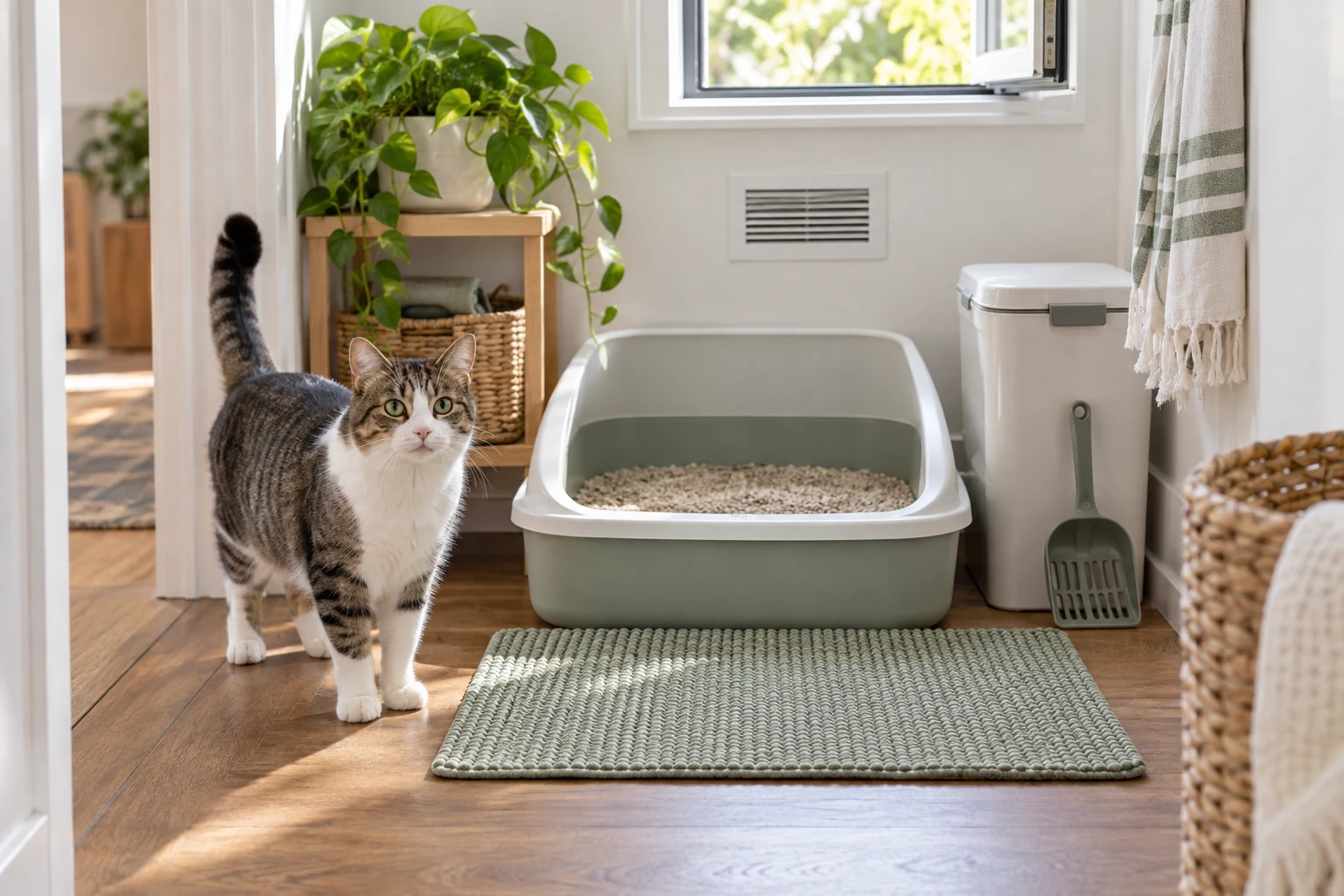
- Resource layout (especially multi-cat homes): place food, water, litter boxes, and resting areas in multiple locations so cats don’t have to “compete.”
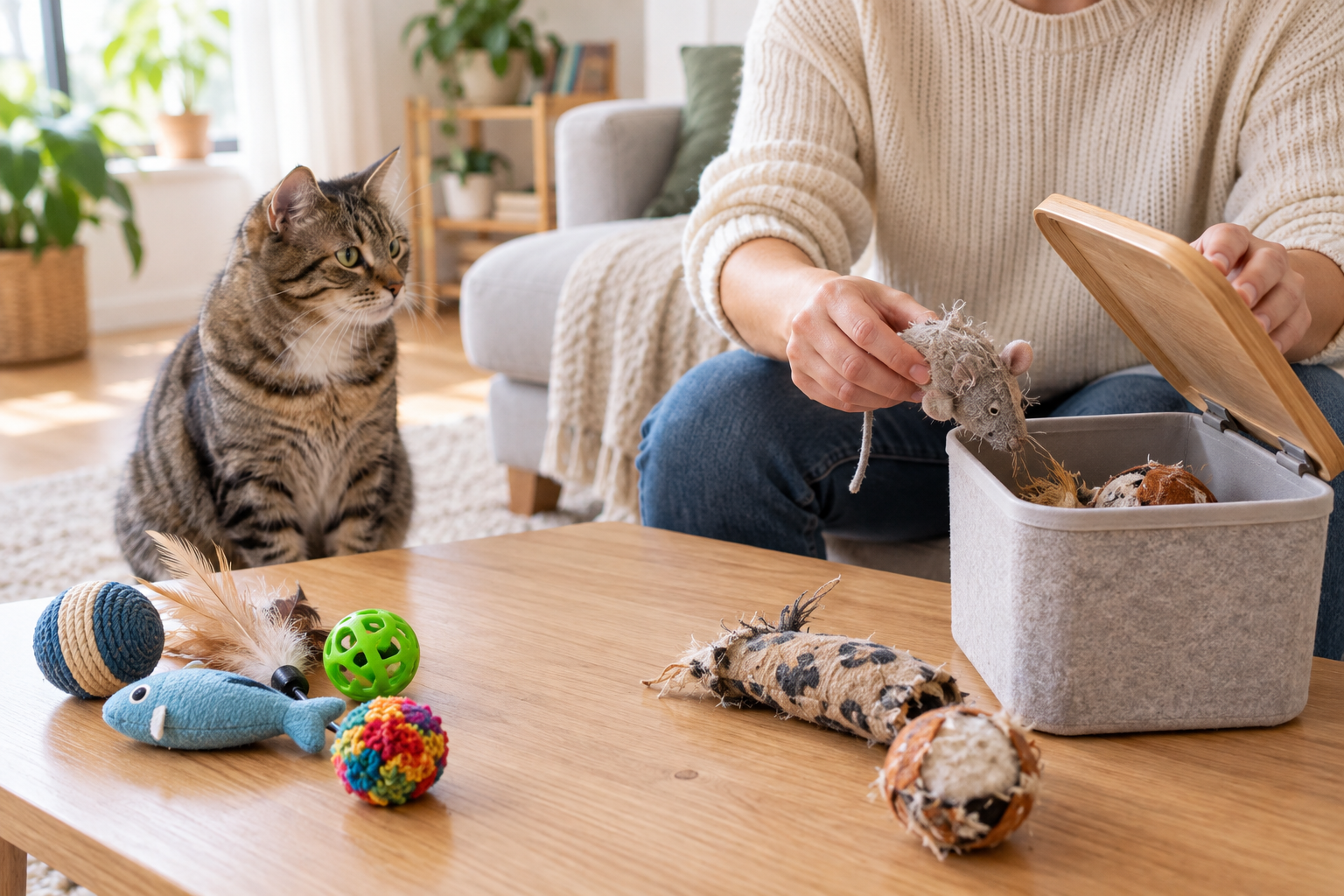
- Spielzeug-Rotation: rotate toys weekly to keep novelty high.
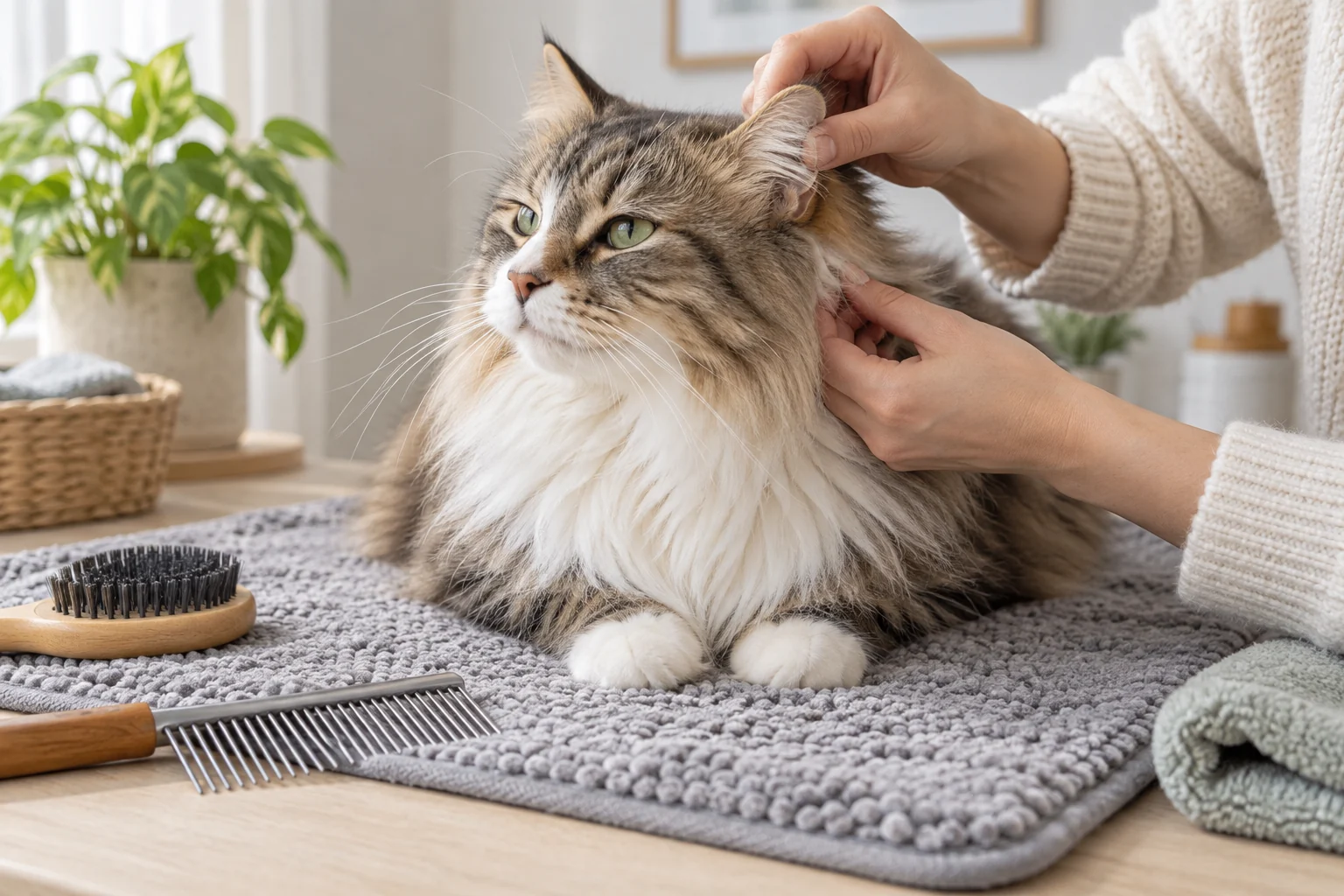
Körperpflege
Somalis have a soft, semi-long coat. Even when a coat is relatively low-matting, regular brushing helps reduce shedding and prevents tangles from becoming painful mats.
Low-stress grooming plan
- Keep sessions short and calm; stop if your cat is stressed and try again later. Reward relaxed behavior.
- Use tools your cat tolerates best (comb, slicker, rake).
- If mats develop, don’t yank—severe mats may need professional grooming or veterinary help.
Mental Stimulation (Training + Brain Games)
Somalis are famously curious and intelligent, and they thrive when you give them “jobs” to do.
High-value enrichment ideas
- Clicker or reward-based training: sit, target, come, “high five,” fetch (short sessions).
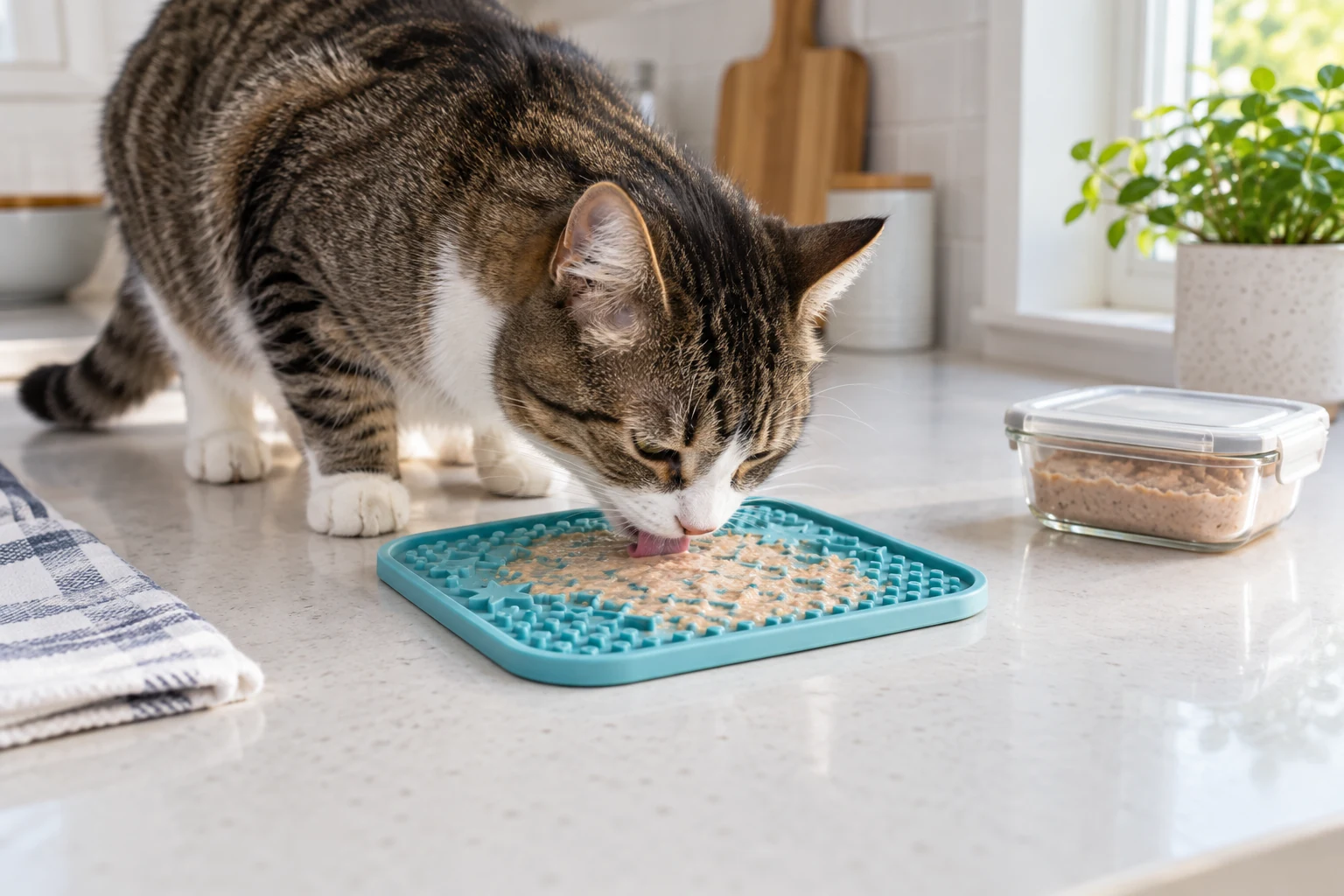
- Puzzle feeders / food balls: mimic natural foraging and make meals more satisfying.
- DIY enrichment: supervised cardboard-box puzzles, paper bags (handles removed), and treat scavenger hunts.

Gesundheitliche Belange
| Zustand | Beschreibung und Symptome | Management und Prävention |
|---|---|---|
| Zahnkrankheit | Zahnfleischentzündungen und Zahnwurzelentzündungen durch Zahnsteinablagerungen können zu Zahnverlust oder systemischen Problemen führen. | Putzen Sie die Zähne mindestens 3 Mal pro Woche; planen Sie regelmäßig professionelle Zahnreinigungen ein. |
| Fettleibigkeit | Kann Diabetes, Arthritis, Fettleber und eine verkürzte Lebenserwartung verursachen. | Füttern Sie eine ausgewogene Ernährung, überwachen Sie die Portionen, regen Sie zum Spielen an, um das Essen aus Langeweile zu ersetzen. |
| Durch Impfung vermeidbare Infektionen | Risiko für Tollwut, Panleukopenie, Calicivirus, Rhinotracheitis, usw. | Halten Sie die wichtigsten Impfungen aufrecht. |
| Parasiten | Dazu gehören Würmer, Flöhe, Zecken und Milben; können Schmerzen oder Krankheiten verursachen, einige sind zoonotisch. | Verwenden Sie regelmäßig vom Tierarzt empfohlene Parasitenschutzmittel und Entwurmungsmittel. |
| Asthma | Verursacht Atembeschwerden bei Katzen. | Regelmäßige tierärztliche Untersuchungen; Überwachung und frühzeitige Behandlung von Atemproblemen. |
| Verdauungsprobleme / Erbrechen | Kann zu schlechter Nährstoffaufnahme und Unwohlsein führen. | Hochwertige, altersgerechte Nahrung anbieten; bei anhaltenden Symptomen Tierarzt aufsuchen. |
| Pyruvat-Kinase-Mangel (PKD) | Vererbter Enzymmangel in den roten Blutkörperchen, der Anämie verursacht; Symptome: Lethargie, blasses Zahnfleisch, Müdigkeit, Durchfall, Appetitlosigkeit, Gewichtsverlust. | Genetische Tests für die Zucht; regelmäßige Blutuntersuchungen; Überwachung auf Anämie-Symptome. |
| Progressive Netzhautatrophie (PRA) | Vererbte Blindheit, die sich im Alter von 1,5 bis 4 Jahren entwickelt; beginnt mit Nachtblindheit. | Genetisches Screening; Vermeidung von Zuchtträgern; Überwachung auf Ungeschicklichkeit bei schwachem Licht. |
| Nieren-Amyloidose | Eiweißablagerungen in Nieren, Leber oder Bauchspeicheldrüse führen zu Organversagen; Anzeichen: übermäßiger Durst, Wasserlassen, Gewichts-/Appetitverlust, Lethargie. | Unterstützende Pflege mit spezieller Diät und Medikamenten; regelmäßige tierärztliche Überwachung. |
| Osmotische Fragilität von Erythrozyten | Genetisch bedingte Anämie aufgrund brüchiger roter Blutkörperchen; tritt typischerweise bei jungen Somaliern (6 Monate-5 Jahre) auf. | Keine Heilung; Bluttransfusionen bei schweren Episoden. |
| Neonatale Isoerythrolyse (NI) | Tödliche Immunreaktion bei Neugeborenen, wenn die Blutgruppen von Mutter und Kätzchen nicht übereinstimmen; die meisten sterben innerhalb weniger Tage. | Testen Sie vor der Zucht die Blutgruppe; vermeiden Sie unverträgliche Paarungen. |
Is a Somali Cat Right for You?
Best fit for: people who want a highly interactive, athletic, “always involved” companion and can provide daily play, climbing space, and company.
Nicht ideal für: homes that need a calm, independent lap cat or can’t offer regular enrichment and attention.
Quick decision checklist
A Somali is likely a good match if you can consistently provide:
- 60–90 minutes/day of active engagement (play, training, puzzle feeders, exploration), split into short sessions
- Vertical territory (tall cat tree, shelves, window perches) and safe “cat-proofed” rooms
- Routine social contact (they often prefer being near you and involved in whatever you’re doing)
- Geistige Anregung (rotating toys, food puzzles, clicker training)
A Somali may struggle if you:
- Are away most days with little interaction (some Somalis can become stressed or mischievous when under-stimulated)
- Prefer a quiet, low-energy “lap-first” cat
- Can’t tolerate climbing, curiosity-driven chaos, or occasional attention-seeking behaviors
Who this breed tends to suit:
Experienced or prepared cat owners
- Comfortable with an intelligent, high-energy cat that needs structure and enrichment.
Homes set up for climbing and exploration
- Cat trees, shelves, scratching posts, puzzle toys, and a safe indoor layout (or secure catio).
People with flexible schedules or work-from-home time
- More frequent interaction helps prevent boredom-related behaviors.
Families with older, respectful children
- Best when kids understand gentle handling and interactive play.
Multi-pet homes with friendly, social animals
- Often works well with another active cat or a cat-friendly dog, especially if introductions are slow and positive.
Who this breed is usually not ideal for:
First-time owners expecting “easy + quiet”
- This breed typically requires more engagement than average.
Very busy households with long daily absences
- Some Somalis may develop stress behaviors if they lack companionship and stimulation.
Minimalist homes with fragile décor (or no cat-proofing)
- Curious jumpers can knock items over, open doors/cabinets, and explore relentlessly.
Homes with frequent loud chaos or very young kids
- A sensitive, easily over-stimulated cat may find this stressful.
Territorial multi-cat households
- If there’s competition for attention or resources, conflict can increase unless you have space and a solid introduction plan.
Somali Cat FAQ
What is the Somali cat’s nickname?
Most commonly: “fox cat”—a nod to the Somali’s bushy, plumed tail and fox-like look. Many breed registries also describe the Somali as the semi-longhaired / long-haired cousin of the Abyssinian.
Sind Somali-Katzen stimmgewaltig?
Often “communicative” without being loud. Many Somalis rely heavily on body language and may communicate with people in ways that “may not be vocal,” rather than frequent, loud meowing. (Individual cats vary.)
Sind Somali-Katzen gerne Schoßkatzen?
Usually not a stereotypical lap cat—their high energy and curiosity often keep them moving. That said, many will visit your lap briefly or snuggle nearby (including under blankets) when they choose.
Sind Somali-Katzen gut mit Kindern und anderen Haustieren verträglich?
Often a good fit with respectful kids and friendly pets because Somalis crave companionship and engagement.
Welche Art von Pflege brauchen Somali-Katzen?
Moderate grooming: despite the longer coat, breed guidance says Somalis are not difficult to groom.
Sind Somali-Katzen anfällig für bestimmte gesundheitliche Probleme?
Somalis are often described as robust, but there are breed-associated inherited risks that reputable breeders and owners screen for: Pyruvate kinase (PK) deficiency, Progressive retinal atrophy (PRA rdAc) and Some breed guidance also recommends asking breeders about family history of renal amyloidosis.
Können Somali-Katzen trainiert werden?
Yes—Somalis are typically very intelligent and learn quickly, especially when training is interactive and rewarding.
Bonus facts (breed-typical, not universal)
“Hairdresser” behavior
Some Somalis may “help” by rearranging your hairstyle—a playful, breed-described quirk.
“Making biscuits” (kneading)
Kneading is a common feline comfort behavior—and Somali descriptions specifically mention Kneten as one way they show affection.
Slow to mature (especially coat color/ticking)
Somalis may be slow to mature in coat color and ticking, with guidance noting it can take up to ~18 months for full maturity in these features.
Ticking detail (why the coat “shimmers”)
The Somali’s coat is a form of agouti ticking: each hair shaft has alternating color bands, producing an iridescent/shimmering look.
Curious explorers (“preposition cats”)
They’re often called “preposition cats” because they explore above, below, in, under, and through everything—great for enrichment, and a reason they dislike boredom.
Referenzen
“Somali-Katzen | Somali-Katzenrassen-Infos & Bilder | petMD”. www.petmd.com. Abgerufen am 2016-04-15.
“Rassenprofil: Die Somali”. cfa.org. Archiviert vom Original am 2018-06-25. Abgerufen am 2016-04-13.
“Le Chat Somali”. www.micetto.com. Abgerufen am 2016-04-21.
Fogle, Bruce (2001) [1997]. Die Enzyklopädie der Katze: Der ultimative visuelle Führer. Dorling Kindersly Pr. S. 224. ISBN 978-1-4053-3490-7.
“Somali”. Tierplanet. Abgerufen am 2016-04-11.
Stephens, Gloria; Yamazaki, Tetsu (1990). Das Vermächtnis der Katze. San Francisco: Chronicle.
“Fellarten und Farben”. Somali-Katzenclub.
Oliver, James A.C.; Mellersh, Cathryn S. (2020). "Genetics". In Cooper, Barbara; Mullineaux, Elizabeth; Turner, Lynn (eds.). BSAVA Lehrbuch der Tierkrankenpflege (Sechste Auflage). British Small Animal Veterinary Association. S. 131. ISBN 978-1-910-44339-2.
Narfström, Kristina; David, Victor; Jarret, Oswald; Beatty, Julia; Barrs, Vanessa; Wilkie, David; O'Brien, Stephen; Menotti-Raymond, Marilyn (2009-09-01). “Netzhautdegeneration bei der Abessinier- und Somalikatze (rdAc): Korrelation zwischen Genotyp und Phänotyp und rdAc-Allelhäufigkeit in zwei Kontinenten”. Veterinär-Ophthalmologie. 12 (5): 285–291. doi:10.1111/j.1463-5224.2009.00710.x. ISSN 1463-5224. PMID 19751487.
 EN
EN DE
DE ES
ES PT
PT