
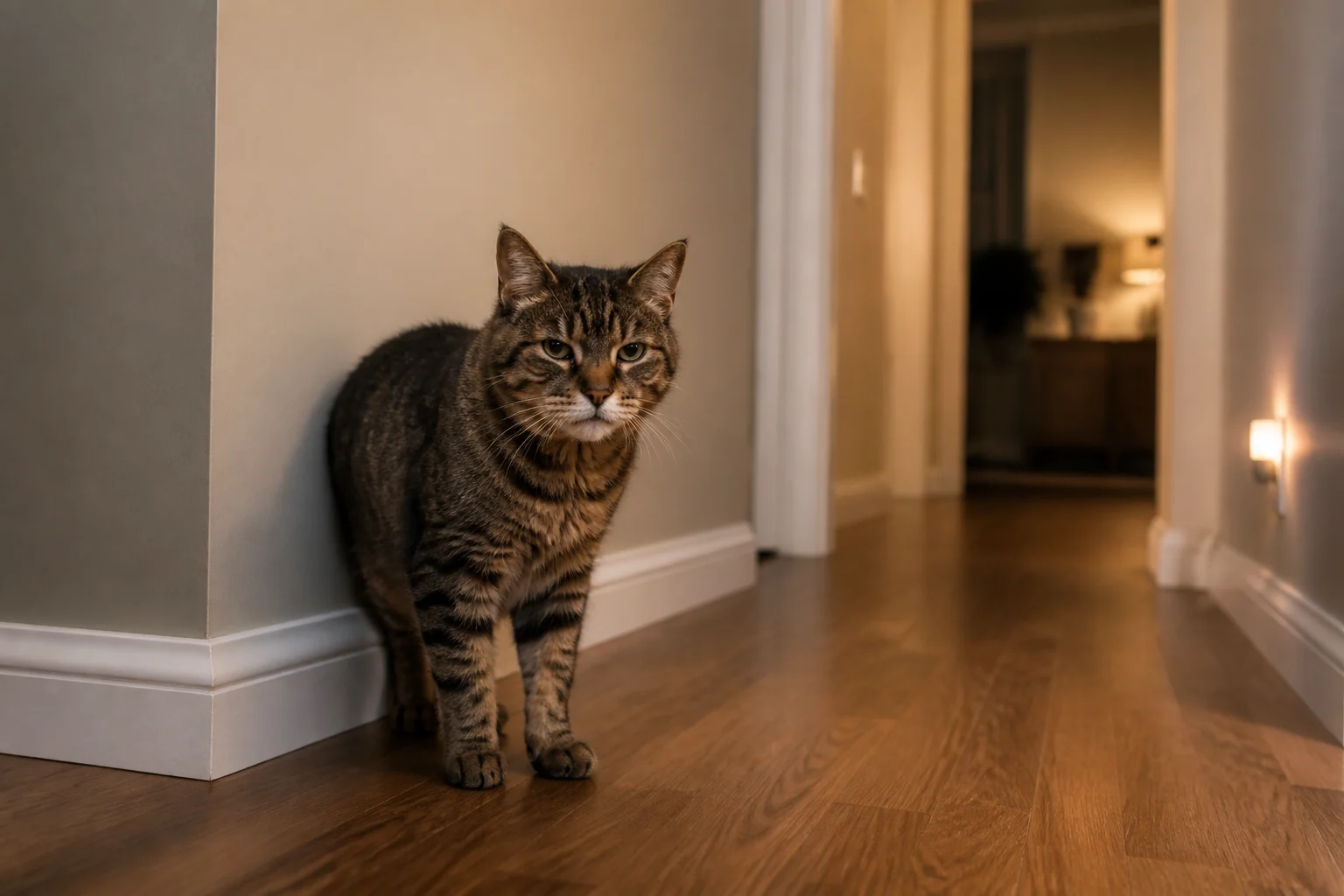
Wenn Ihre ältere Katze in Ecken stecken bleibt, betrachten Sie dies als eine Verhaltensänderung, die es zu beobachten gilt, und nicht als eine skurrile Angewohnheit, die man ignorieren kann. Eine ältere Katze hält möglicherweise in einer Ecke inne, weil der Weg verwirrend ist, der Raum schummrig ist, sich der Boden unsicher anfühlt, Schmerzen ihre Drehbewegungen beeinträchtigen oder kognitive oder neurologische Veränderungen ihre Orientierung beeinträchtigen.
Der sicherste nächste Schritt besteht darin, das Gesamtbild zu betrachten. Achten Sie darauf, ob sich Ihre Katze umdrehen kann, ob sie auf ihren Namen reagiert, ob das Verhalten neu ist oder zunimmt und ob sich auch Appetit, Durst, die Nutzung des Katzenklos, Schlaf, Lautäußerungen, Sehvermögen oder Bewegungsfähigkeit verändert haben. Dieser Leitfaden erklärt, was das Verhalten, in einer Ecke festzusitzen, bedeuten kann, was Sie zu Hause überprüfen sollten und wann ein Tierarzt hinzugezogen werden sollte.
Inhaltsübersicht
- Ist es normal, dass sich eine ältere Katze in Ecken festfährt?
- Warum bleiben ältere Katzen in Ecken stecken?
- Was sollten Sie im Zimmer als Erstes überprüfen?
- Welche Anzeichen deuten auf Seh- oder Mobilitätsprobleme hin?
- Wann sollten Sie einen Tierarzt anrufen?
- Wie kannst du heute Abend Kreuzungen und Straßenabschnitte sicherer machen?
- Fazit: Was tun, wenn sich Ihre ältere Katze in einer Ecke festsitzt?
- Häufig gestellte Fragen
- Referenzen
Ist es normal, dass sich eine ältere Katze in Ecken festfährt?
Gelegentliches Verharren in einer Ecke kann harmlos sein, insbesondere wenn Ihre Katze schnüffelt, lauscht, einem Geräusch folgt oder überlegt, wohin sie als Nächstes gehen soll. Besorgniserregender wird es, wenn eine ältere Katze wiederholt in eine Ecke läuft, dort stehen bleibt, als wüsste sie nicht, wie sie wieder herauskommen soll, sich nur schwer umleiten lässt oder wenn dieses Verhalten zusammen mit nächtlichem Umherstreifen, Heulen, Unsauberkeit, Appetitveränderungen oder Mobilitätsproblemen auftritt.
Das Cornell Feline Health Center nennt räumliche Desorientierung, langes, ausdrucksloses Starren, veränderte Schlaf-Wach-Rhythmen und nächtliches Miauen als Anzeichen, die bei älteren Katzen im Zusammenhang mit einer kognitiven Dysfunktion auftreten können. 1. International Cat Care beschreibt räumliche Desorientierung im Zusammenhang mit kognitiven Funktionsstörungen zudem als Verwirrung darüber, wo sich die Katze befindet, einschließlich des Festsitzens in Ecken 2.
Das bedeutet jedoch nicht, dass jede ältere Katze, die in einer Ecke sitzt, an Demenz leidet. Eine Katze kann durch eine beengte Raumaufteilung, schlechte Beleuchtung, rutschige Böden, Veränderungen des Hör- oder Sehvermögens, Arthritis, Schmerzen, Bluthochdruck, Schilddrüsenerkrankungen, Nierenerkrankungen oder andere gesundheitliche Probleme beeinträchtigt sein. Wenn das Verhalten dem starren Anstarren einer leeren Wand ähnelt, vergleichen Sie das Verhaltensmuster mit unserem Leitfaden zu Katze, die nachts die Wände anstarrt.
Verwenden Sie diesen ersten Filter:
| Was Sie sehen | Beruhigender | Noch besorgniserregender |
|---|---|---|
| Frequenz | Selten, kurz und stabil | Neu, wiederholt oder zunehmend |
| Antwort | Dreht sich um, wenn er gerufen wird, und geht ganz normal davon | Wirkt verloren, schreckt seltsam auf oder kann sich nicht orientieren |
| Bewegung | Dreht sich, geht rückwärts und läuft normal | Steif, wackelig, kreisend, schleppend oder zögerlich |
| Tageszeit | Tritt in der Nähe eines bestimmten Geruchs, Geräusches oder Gegenstands auf | Tritt meist nachts oder nach Schlafstörungen auf |
| Weitere Anzeichen | Das Fressen, Trinken, die Fellpflege und die Gewohnheiten beim Toilettengang sind normal | Es liegt eine Veränderung in Bezug auf Gesundheit, Verhalten, Sehvermögen oder Mobilität vor |
Wenn Sie sich unsicher sind, nehmen Sie ein kurzes Video auf. Ein 20-Sekunden-Clip, der die Körperhaltung Ihrer Katze, ihren Weg, ihre Reaktion auf Ihre Stimme und die nächsten Schritte zeigt, kann für Ihren Tierarzt hilfreicher sein als eine lange schriftliche Beschreibung.
Warum bleiben ältere Katzen in Ecken stecken?
Ältere Katzen bleiben aus verschiedenen möglichen Gründen in Ecken stecken, wobei mehrere Ursachen gleichzeitig vorliegen können. Zu den wichtigsten Ursachen zählen Orientierungslosigkeit, sensorische Veränderungen, Schmerzen oder Steifheit, Hindernisse auf dem Weg sowie Erkrankungen, die das Verhalten verändern.
Kognitive Funktionsstörungen sind eine mögliche Erklärung dafür, wenn eine ältere Katze sich an vertrauten Orten verloren zu fühlen scheint, umherirrt, nachts laut miaut, ihr Schlafverhalten ändert, Routinen vergisst oder mit leerem Blick verharrt. Cornell weist darauf hin, dass diese Anzeichen bei Katzen ab einem Alter von 10 Jahren auffallen können, betont jedoch auch, dass ähnliches Verhalten durch körperliche Erkrankungen, Schmerzen, Schilddrüsenerkrankungen, Bluthochdruck, Nierenprobleme oder neurologische Erkrankungen beeinflusst werden kann. 1.
Diese Überschneidung ist von Bedeutung. Die Tabelle des „MSD Veterinary Manual“ zu medizinischen Ursachen von Verhaltensauffälligkeiten bringt Desorientierung, veränderte Schlafzyklen, starres Anstarren, Lautäußerungen, Unsauberkeit im Haus, Schmerzen, sensorische Funktionsstörungen, endokrine Erkrankungen und neurologische Erkrankungen mit Verhaltensänderungen in Verbindung. 5. Im Klartext: Ein Problem an der Ecke kann ein Hinweis auf die Gesundheit des Gehirns, der Augen, der Ohren, der Gelenke, auf Schmerzen, auf das Katzenklo oder auf den gesamten Körper sein.
Zu den gängigen Mustern gehören:
- Kognitive oder räumliche Desorientierung: Ihre Katze betritt eine ihr vertraute Umgebung, scheint aber nicht in der Lage zu sein, den Weg dorthin zu planen.
- Sehveränderung: Sie läuft an Wänden entlang, stößt gegen Möbel, zögert bei schwachem Licht oder verfehlt Türöffnungen.
- Schmerzen oder Steifheit: Enge Kurven tun ihr weh, das Rückwärtsfahren fällt ihr schwer, oder auf rutschigem Boden bleibt sie wie angewurzelt stehen.
- Frust über die Route: Ein Stuhl, eine Kiste, eine geschlossene Tür, ein Babygitter oder eine veränderte Anordnung der Möbel versperren ihr den Weg, an den sie sich erinnert.
- Nächtliche Angstzustände: Dunkelheit, nachlassende Sinneswahrnehmung oder ein veränderter Schlaf-Wach-Rhythmus führen dazu, dass sich das Zuhause weniger vorhersehbar anfühlt.
- Körperliche Erkrankung: Schilddrüsenerkrankungen, Bluthochdruck, Nierenerkrankungen, neurologische Probleme oder Schmerzen können das Verhalten und die Orientierung verändern.
Sollten die Eckenprobleme während des Roamings über Nacht auftreten, lesen Sie mehr über ein Katze ist nachts unruhig und beide Verhaltensweisen gemeinsam zu beobachten. Diese Kombination ist aussagekräftiger als jedes der beiden Anzeichen für sich genommen.
Was sollten Sie im Zimmer als Erstes überprüfen?
Beginnen Sie mit dem Raum, denn die Umgebung lässt sich am einfachsten sofort überprüfen. Suchen Sie nach einem einfachen Grund, warum Ihre ältere Katze möglicherweise in eine Sackgasse gerät, den Weg verliert oder sich nicht in der Lage fühlt, sicher zu wenden.
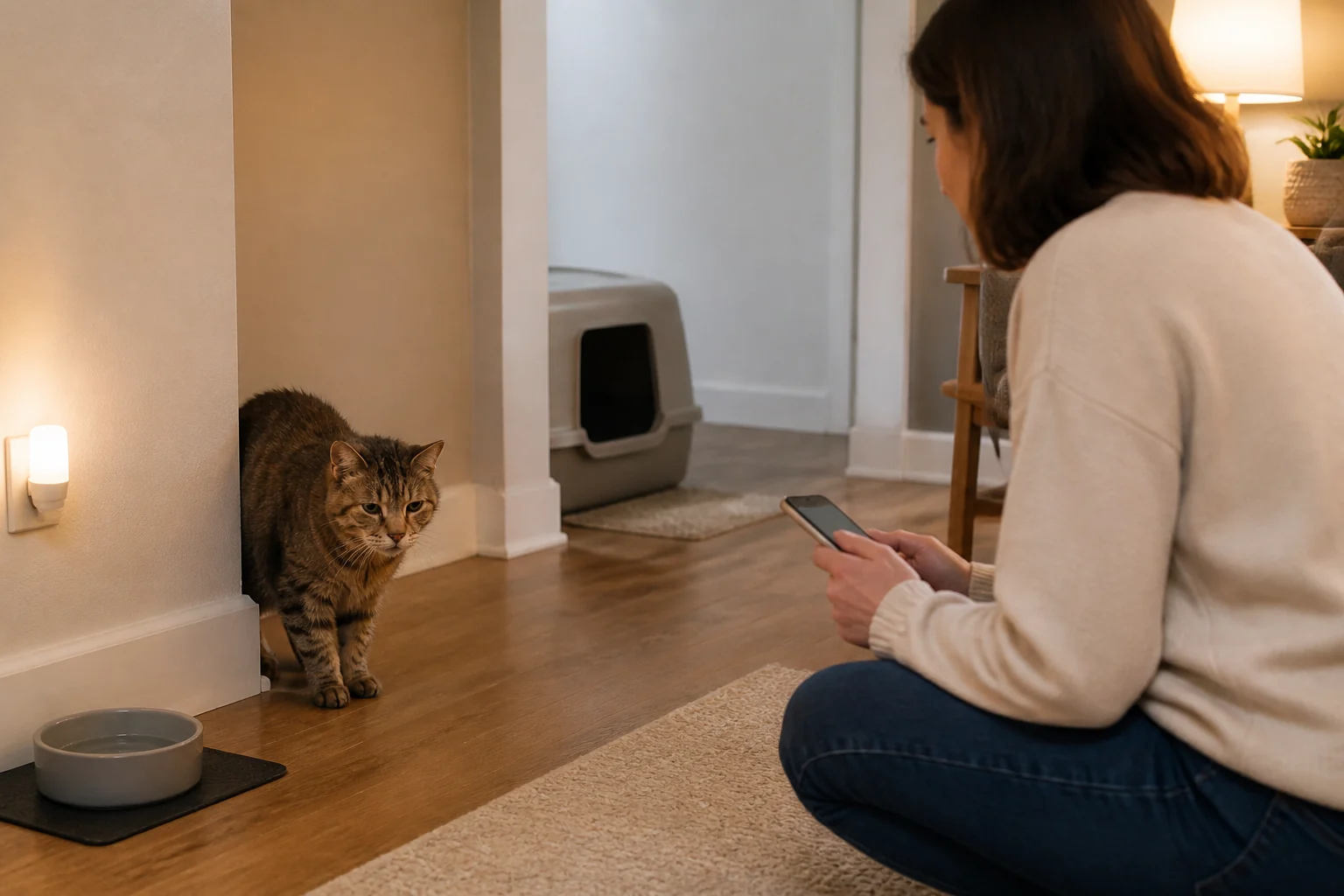
Eine ruhige Überprüfung der Ecken kann Aufschluss darüber geben, ob Ihre ältere Katze verwirrt ist, durch Möbel behindert wird, Schwierigkeiten beim Sehen hat oder Probleme damit hat, vertraute Gegenstände zu erreichen.
Überprüfen Sie diese Angaben, bevor Sie alles umziehen:
- Befindet sich die Ecke in der Nähe einer Schüssel, eines Katzenklos, eines Schlafplatzes, einer Tür, einer Treppe, einer Heizung, einer Lüftungsöffnung oder eines Fensters?
- Wurden kürzlich Möbel, Kisten, Teppiche, Wäschekörbe, Türen oder Haustiergitter verschoben?
- Ist der Boden rutschig, glänzend, uneben oder bietet er einer älteren Katze zu wenig Halt?
- Erscheint dir die Strecke frei, aber aus der Perspektive einer Katze gesehen schmal?
- Ist es nachts im Zimmer dunkler als sonst?
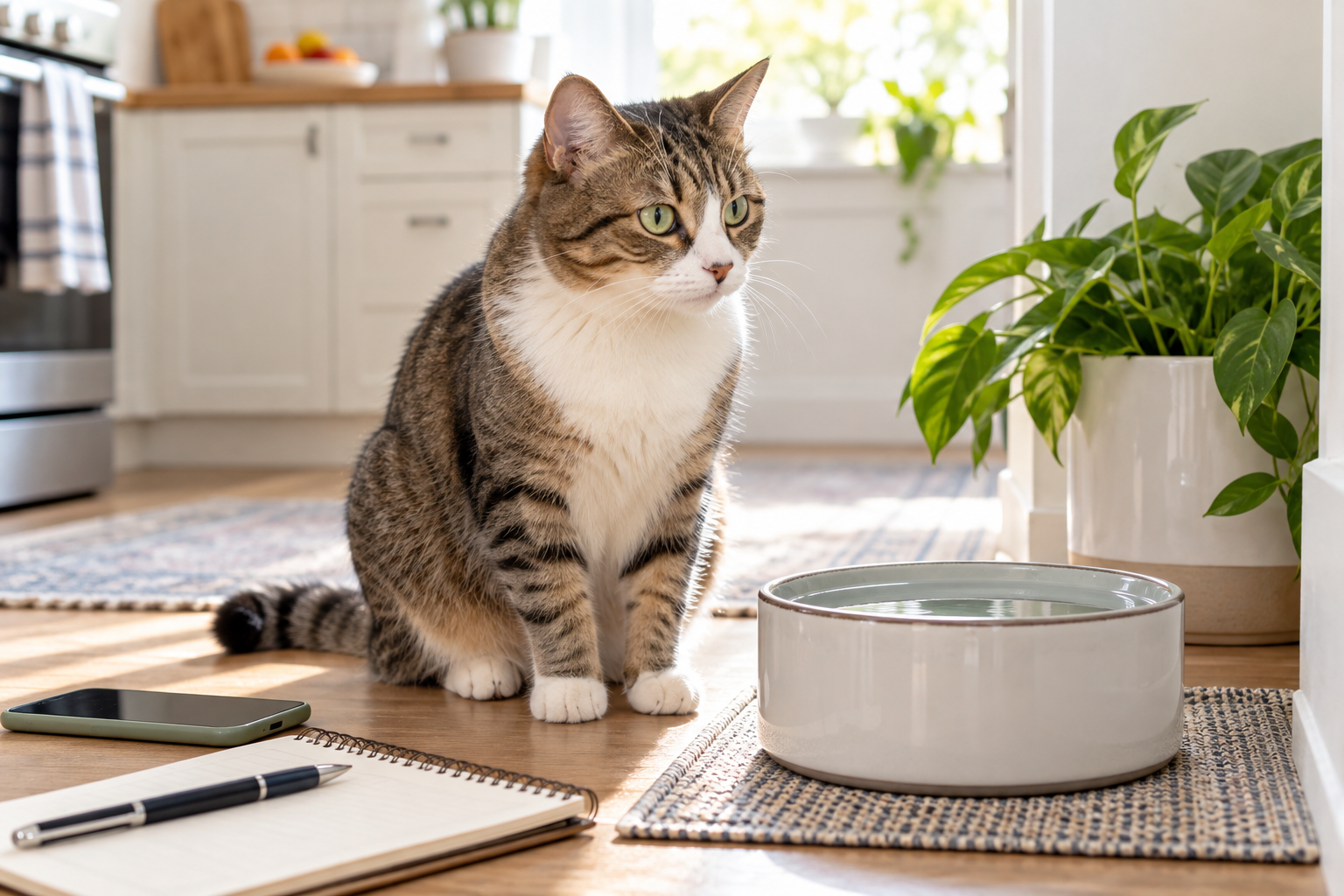
- Sind Futter, Wasser, Streu und die Lieblingsplätze zum Ausruhen noch leicht zu finden?
- Sind hinter der Wand neue Geräusche zu hören, beispielsweise von Sanitäranlagen, der Heizungs-, Lüftungs- und Klimatechnik, Schädlingen oder Tieren im Freien?
- Bleibt Ihre Katze nur an einer Stelle stecken oder an mehreren vertrauten Ecken?
Beobachten Sie Ihre Katze dann, ohne sie zu erschrecken. Rufen Sie leise aus kurzer Entfernung. Achten Sie darauf, ob sie den Kopf in Ihre Richtung dreht, sich normal umdreht, zurückweicht, um sich selbst kreist, miaut, sich duckt, gegen die Wand stößt oder erstarrt. Fassen Sie sie nicht an, es sei denn, sie ist in Gefahr; plötzliches Anfassen kann eine verwirrte oder verletzte Katze erschrecken.
Führen Sie über zwei oder drei Episoden hinweg ein kurzes Tagebuch:
| Angabe zur Erfassung | Warum das hilft |
|---|---|
| Zeit und Ort | Zeigt an, ob es sich um ein Nacht-, Beleuchtungs- oder Routenmuster handelt |
| Dauer | Unterscheidet eine kurze Pause von einer anhaltenden Orientierungslosigkeit |
| Reaktion auf den Namen | Hilft dabei, gezielte Ermittlungen von Verwirrung zu unterscheiden |
| Bewegung nach dem Verlassen | Zeigt Steifheit, Wackeln, Kreisen oder normale Erholung |
| Notizen zu Essen, Wasser, Streu und Schlaf | Stellt einen Zusammenhang zwischen diesem Verhalten und umfassenderen gesundheitlichen Veränderungen bei älteren Katzen her |
Sollte das Verhalten plötzlich auftreten, schwerwiegend sein oder mit Schwäche, Kollaps, Krampfanfällen, Atembeschwerden, Harnverhalt, wiederholtem Erbrechen, einem Trauma oder einer raschen Verschlechterung einhergehen, überspringen Sie die Protokollierung und suchen Sie unverzüglich tierärztliche Hilfe auf.
Welche Anzeichen deuten auf Seh- oder Mobilitätsprobleme hin?
Seh- und Mobilitätsprobleme können dazu führen, dass sich eine Ecke wie eine Falle anfühlt. Eine Katze, die nicht gut sehen kann, folgt möglicherweise Kanten, übersieht Öffnungen, stößt gegen Gegenstände oder zögert bei schwachem Licht. Eine Katze mit Schmerzen oder Steifheit erreicht möglicherweise die Ecke und vermeidet dann die scharfe Kurve, die zum Verlassen der Ecke erforderlich ist.
In den Leitlinien der Cornell University zum Thema Sehvermögen bei Katzen wird darauf hingewiesen, dass sehbehinderte Katzen gegen Möbel stoßen, auf Treppen stolpern oder Schwierigkeiten haben können, das Katzenklo oder den Fressnapf zu finden, und dass manche Anzeichen für Sehstörungen so subtil sind, dass sie ohne eine augenärztliche Untersuchung beim Tierarzt übersehen werden können. 3. Für eine ältere Katze ist das Verhalten in schummrigen Ecken daher ein wichtiger Kontext und nicht nur eine Frage der Raumaufteilung.
Achte auf visuelle Hinweise:
- gegen Möbel, Türrahmen oder Gegenstände stoßen, die sich nicht bewegt haben
- Sprünge falsch einschätzen oder niedrigere Routen wählen
- Zögern an Treppen, Schwellen oder in dunklen Fluren
- erweiterte Pupillen, ungleich große Pupillen, trübe Augen, Rötungen, Schielen oder Ausfluss
- die bei Tageslicht selbstbewusster wirken als nachts
- sich in der Nähe von Wänden aufzuhalten, anstatt offene Flächen zu durchqueren
Achten Sie auf Anzeichen für Bewegungseinschränkungen oder Schmerzen:
- langsames Drehen, steife Hinterbeine oder Unwilligkeit, sich zu drehen
- Treppen, Sofas, Betten oder Fensterbänke meiden
- vor dem Betreten des Katzenklos kurz innehalten
- an tiefer gelegenen Orten schlafen als zuvor
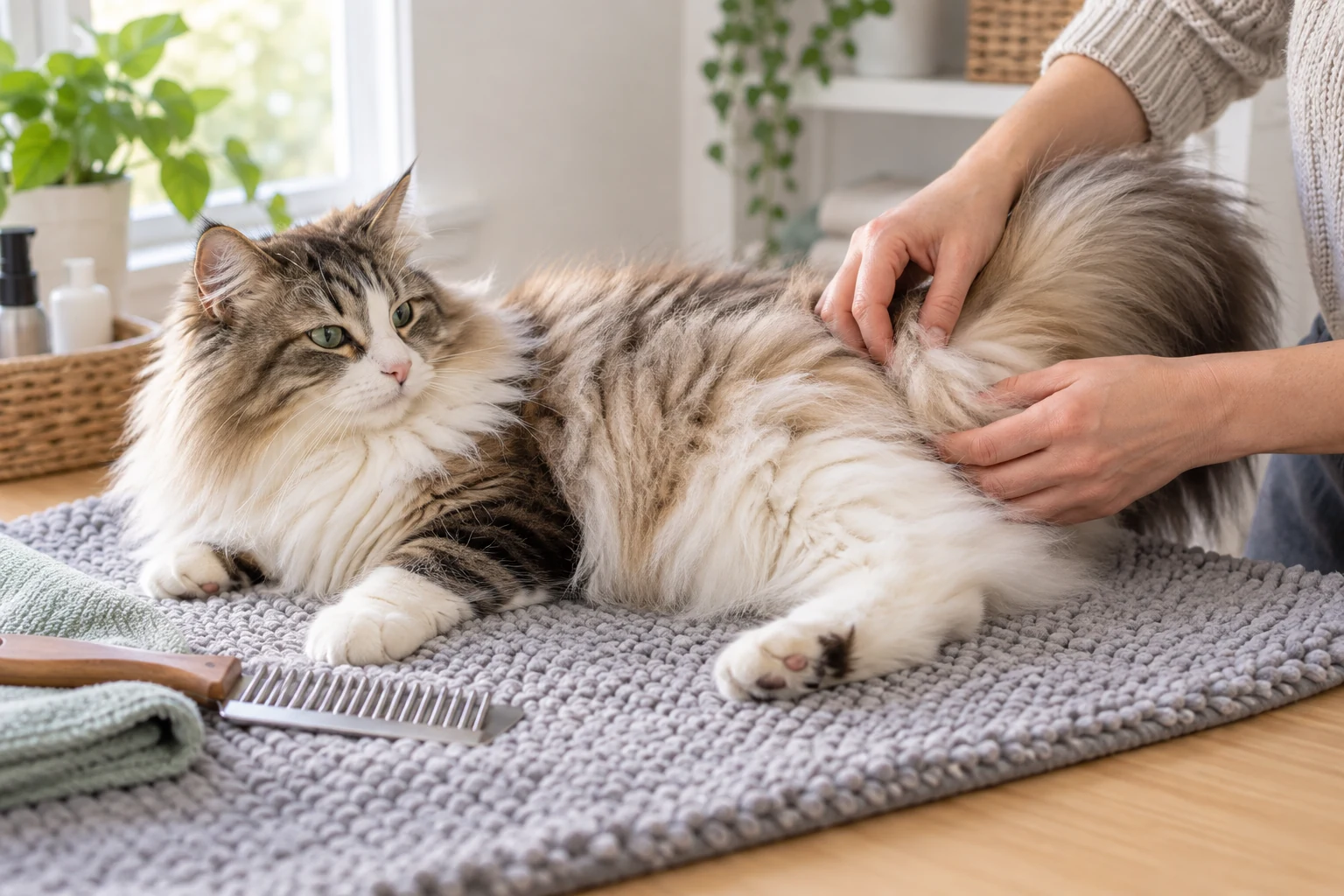
- verminderte Fellpflege, insbesondere entlang des Rückens oder der Hinterhand
- Reizbarkeit bei Berührung, Zurückziehen oder ein angespannter Gesichtsausdruck
Falls Steifheit Teil des Musters sein könnte, vergleichen Sie Ihre Beobachtungen mit Anzeichen für Arthritis bei älteren Katzen. Schmerzen werden bei Katzen leicht unterschätzt und äußern sich oft eher in einer Änderung des Laufwegs als in offensichtlichem Weinen.
Wann sollten Sie einen Tierarzt anrufen?
Wenden Sie sich an Ihren Tierarzt, wenn das Feststecken einer älteren Katze in Ecken ein neu auftretendes, wiederkehrendes oder zunehmendes Problem ist, das sich nur schwer unterbrechen lässt oder mit Veränderungen in Bezug auf Appetit, Durst, Gewicht, Toilettenbenutzung, Schlaf, Lautäußerungen, Fellpflege, Sozialverhalten, Sehvermögen oder Bewegung einhergeht. Die Leitlinien der AAFP zur Seniorenbetreuung betonen, dass die Pflege älterer Katzen am besten funktioniert, wenn Pflegepersonen und Tierärzte subtile Veränderungen über einen längeren Zeitraum hinweg beobachten, da ältere Katzen oft unter mehreren Gesundheitsproblemen gleichzeitig leiden. 4.
Vereinbaren Sie umgehend einen Termin, wenn Sie Folgendes bemerken:
- Sich in Ecken festfahren sowie nächtliches Rufen oder Umherirren
- lange Zeit Wände, leere Flächen oder Ecken anstarren
- in vertrauten Räumen scheinbar verloren
- gegen Gegenstände stoßen oder trübe, gerötete, schmerzende oder ungleichmäßig aussehende Augen
- verstärkter Durst, vermehrtes Wasserlassen, Gewichtsverlust, Erbrechen oder Appetitveränderungen
- Unfälle außerhalb des Katzenklos
- Drehen im Kreis, Kopfdrücken, Schwäche, Schwanken, Zittern oder Krampfanfälle
- Verstecken, plötzliche Aggressivität, verminderte Fellpflege oder Anzeichen von Schmerzen
- Unwillen, zu springen, Treppen zu steigen, sich umzudrehen oder in das Katzenklo zu gehen
Wenn nächtliches Anrufen zum Verhaltensmuster gehört, finden Sie in unserem Leitfaden zu Katze, die nachts miaut kann Ihnen helfen, den Ablauf vor dem Termin zu planen. Wenn das Gesicht, die Körperhaltung oder das Verhalten Ihrer Katze angespannt wirkt, nutzen Sie Unauffällige Anzeichen für Schmerzen bei Katzen als Orientierungshilfe, nicht zur Selbstdiagnose.
Suchen Sie sofort einen Tierarzt auf, wenn Ihre Katze nicht urinieren kann, Atembeschwerden hat, zusammenbricht, Krampfanfälle erleidet, plötzlich gelähmt ist oder unter starker Schwäche leidet, möglicherweise mit einem Gift in Kontakt gekommen ist, wiederholt erbricht oder unter schwerem Durchfall leidet, ein Trauma erlitten hat oder sich ihr Zustand rapide verschlechtert. Geben Sie der Katze keine Schmerzmittel, Beruhigungsmittel, Nahrungsergänzungsmittel oder Medikamentenreste für Menschen, es sei denn, Ihr Tierarzt hat dies ausdrücklich für diese Katze angeordnet.
Wie kannst du heute Abend Kreuzungen und Straßenabschnitte sicherer machen?
Sie können die Orientierung in der Wohnung erleichtern, während Sie einen Termin beim Tierarzt vereinbaren. Achten Sie dabei auf Vorhersehbarkeit, Halt, Beleuchtung und einen ungehinderten Zugang zu wichtigen Dingen. Diese Maßnahmen dienen der Unterstützung; sie ersetzen jedoch keine Untersuchung, wenn das Verhalten neu auftritt oder medizinisch bedenklich ist.
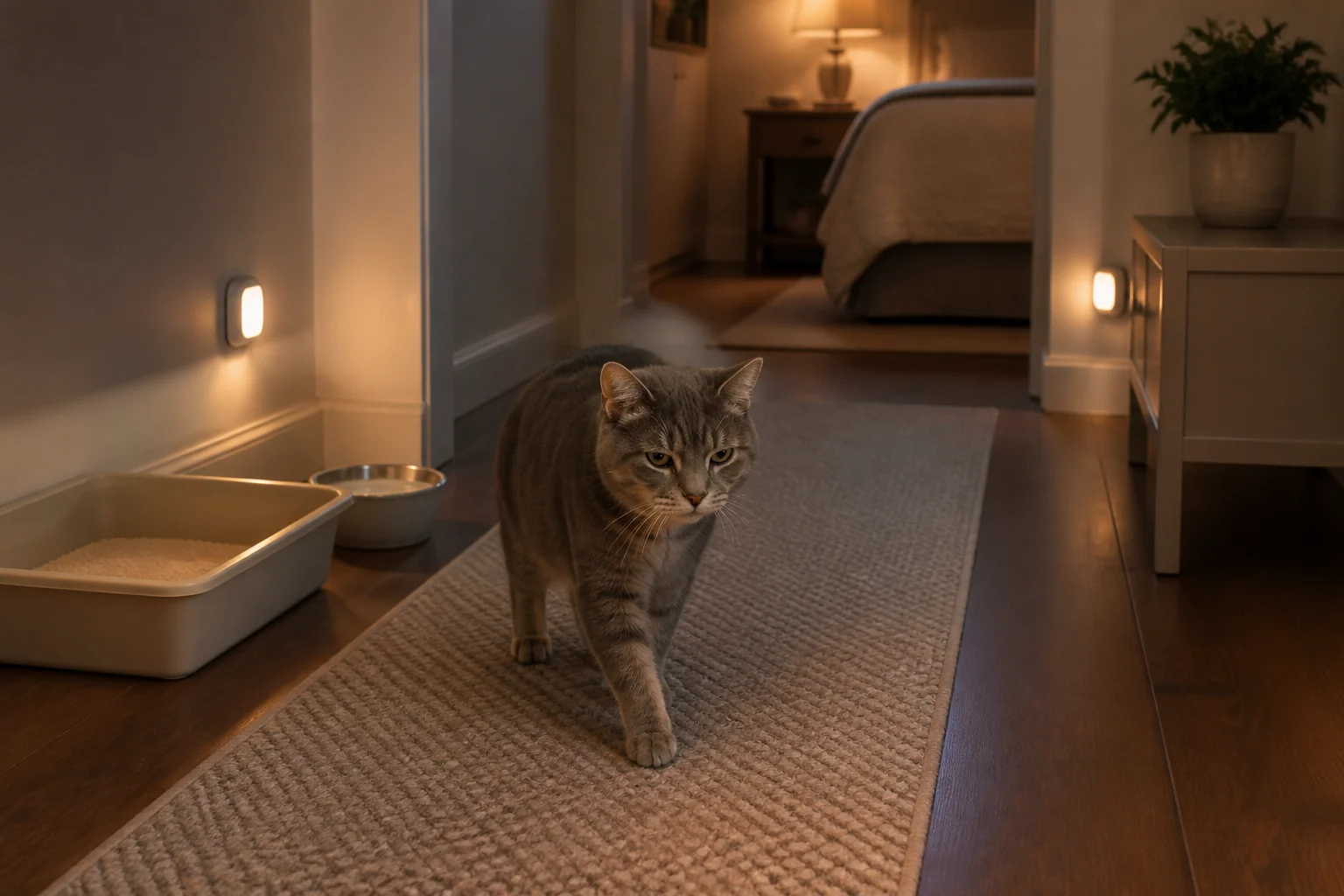
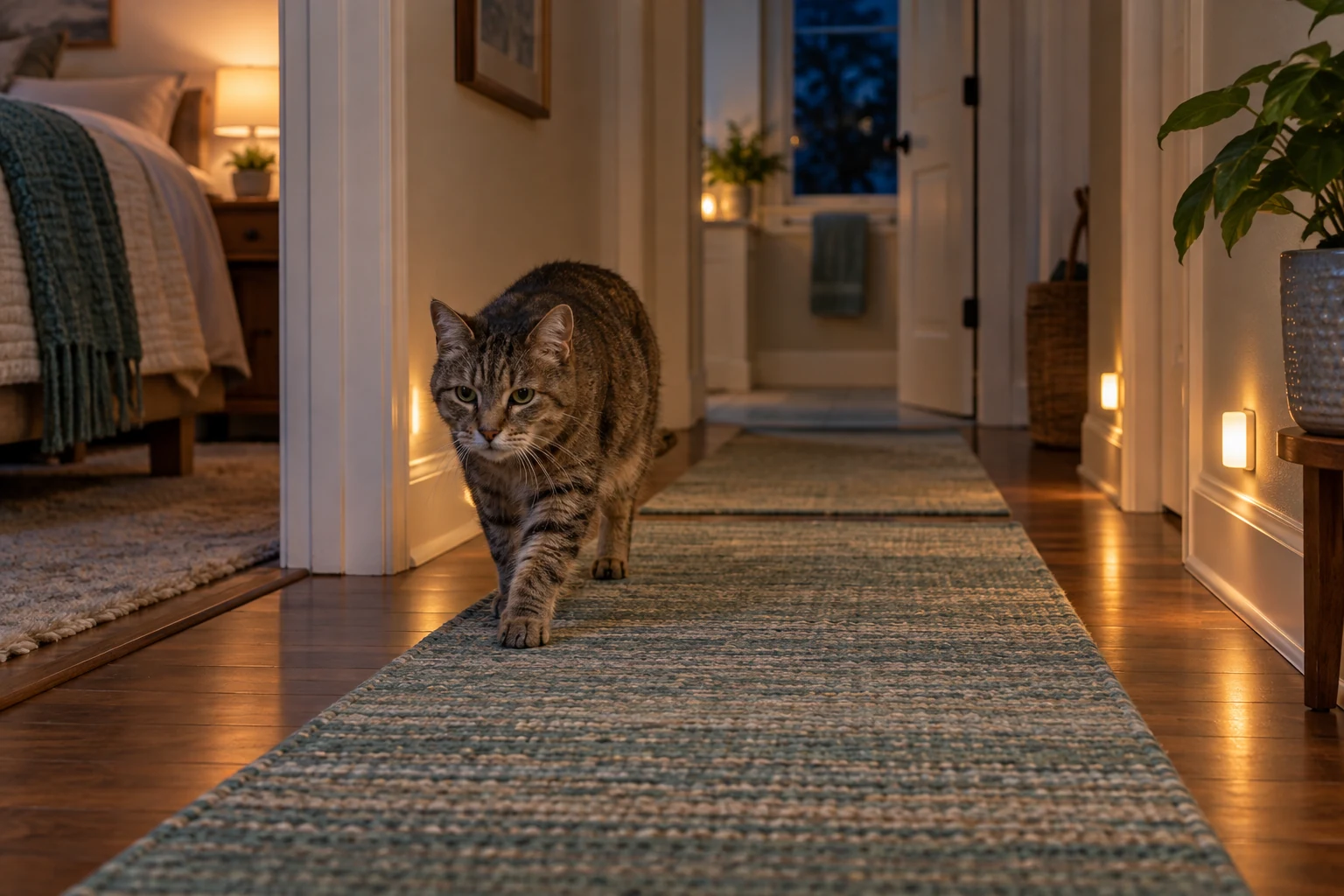
Vorhersehbare Wege, sanfte Beleuchtung und ein einfacher Zugang zu den wichtigsten Dingen können einer älteren Katze das Bewegen in der Nacht erleichtern, während Sie tierärztliche Hilfe organisieren.
Probieren Sie diese stressarmen Anpassungen aus:
- Bringen Sie sanfte Nachtlichter in der Nähe von Fluren, Ecken sowie an den Stellen an, an denen die Tiere Zugang zu Futter, Wasser und Katzentoiletten haben.
- Bewahren Sie Möbel und wichtige Ressourcen stets an denselben Orten auf.
- Räumen Sie Kartons, Körbe, Kabel und schmale Hindernisse von den gewohnten Wegen weg.
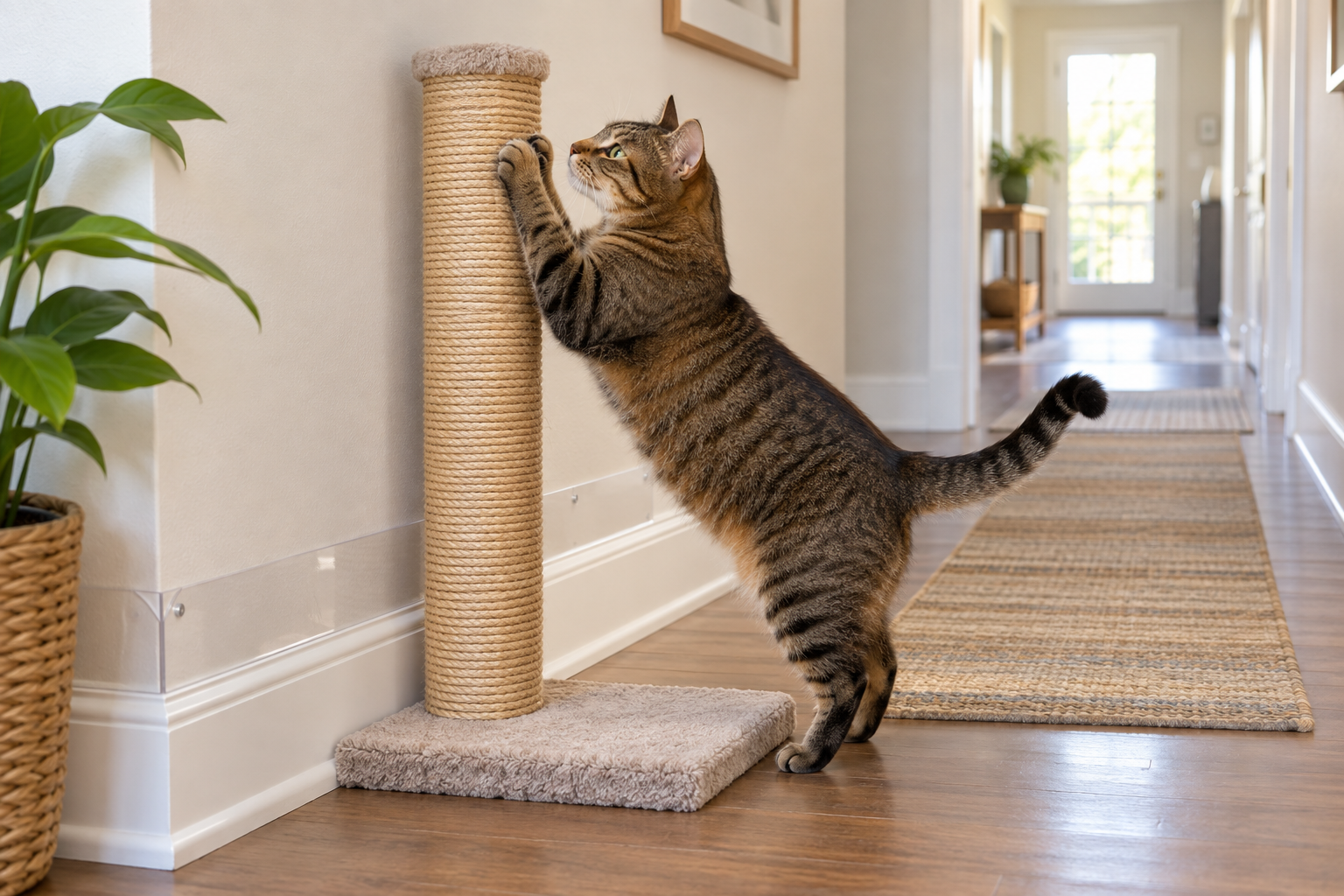
- Legen Sie auf rutschigen Böden rutschfeste Läufer oder Matten aus.
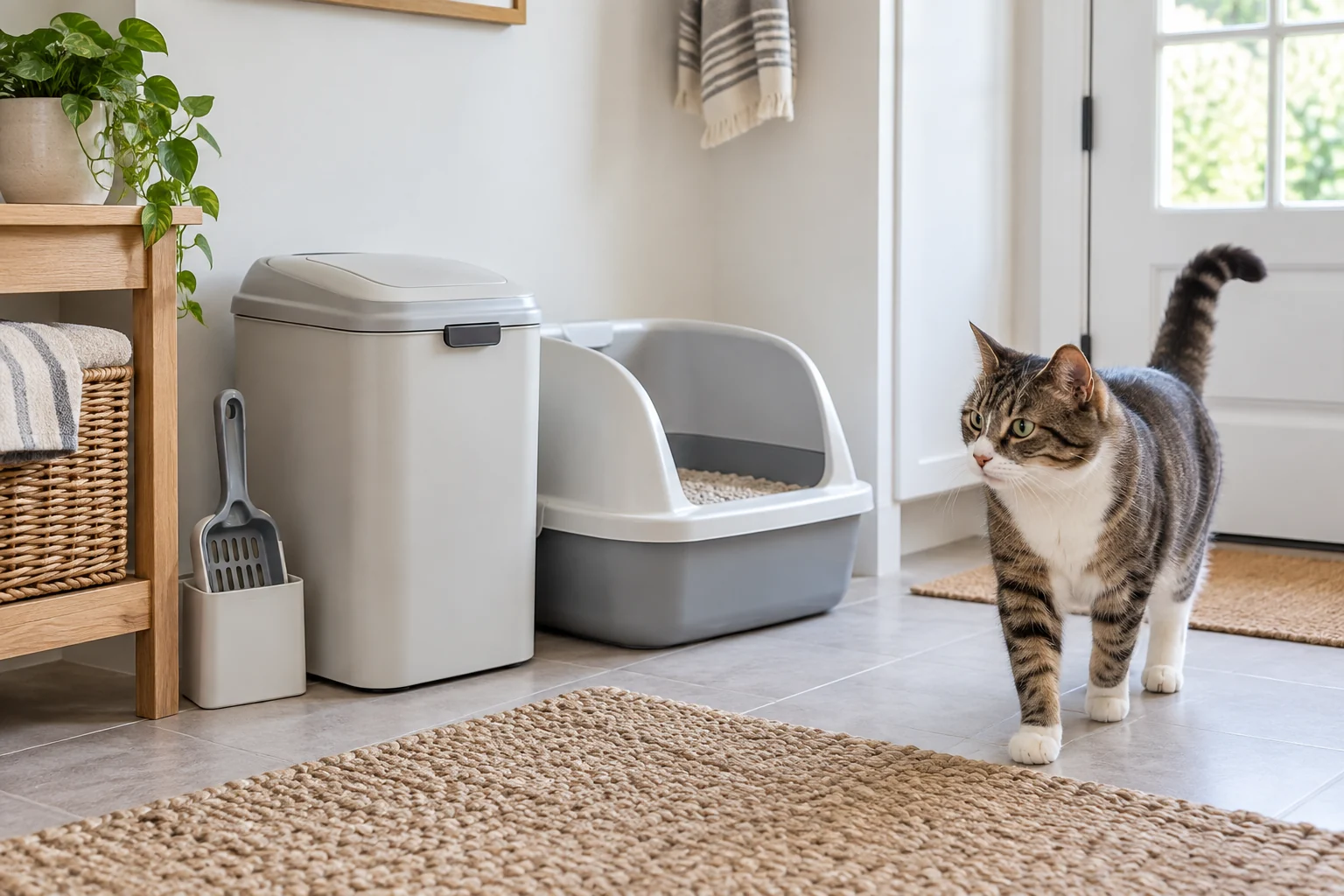
- Stellen Sie Wasser und ein Katzenklo mit niedrigem Einstieg auf denselben Boden, auf dem Ihre Katze schläft.
- Sperren Sie nur wirklich unsichere Sackgassen ab und lassen Sie einen freien, offenen Fluchtweg offen.
- Vermeiden Sie plötzliche Umgestaltungen des gesamten Raums; ändern Sie jeweils nur ein oder zwei Dinge.
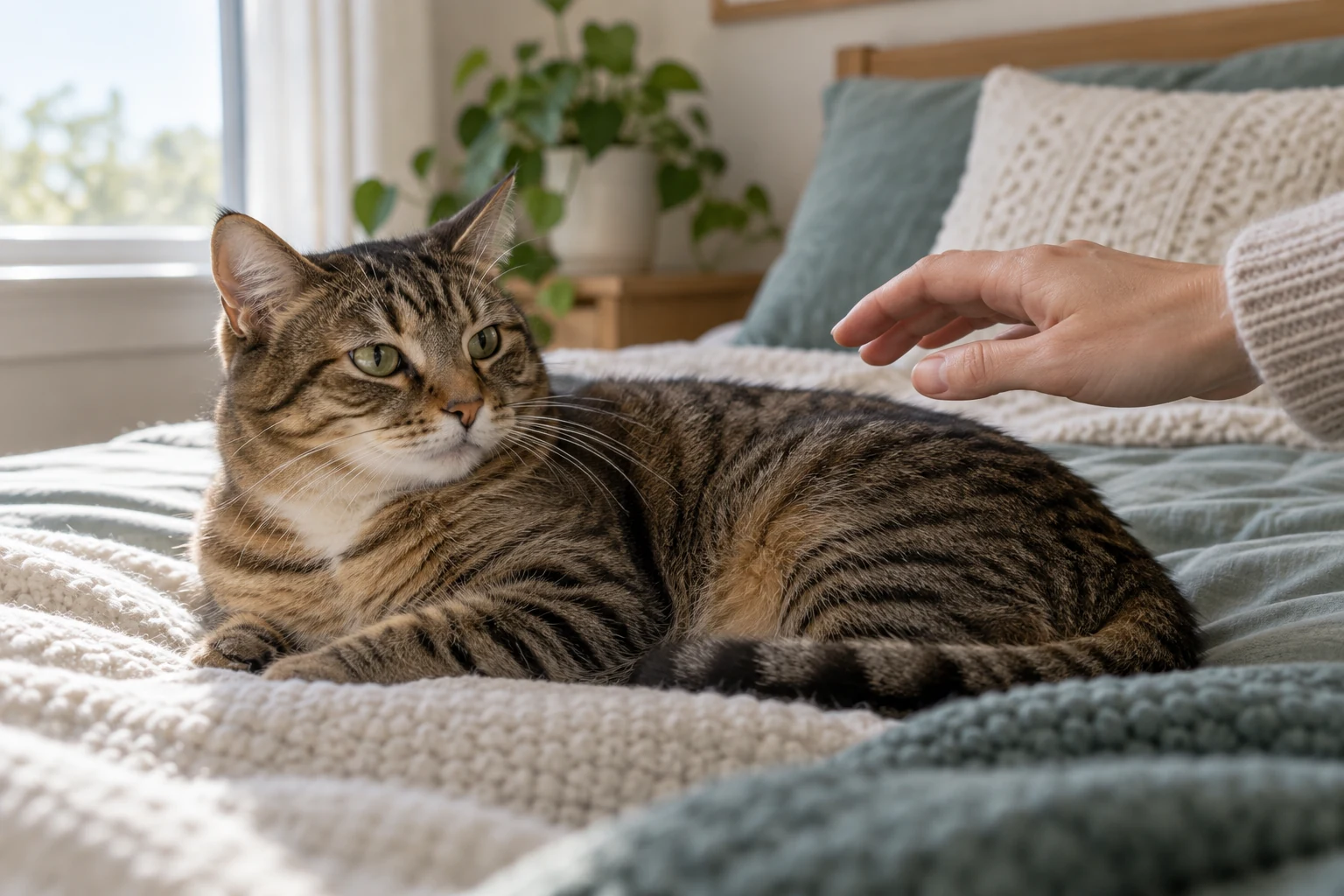
- Sprechen Sie mit ruhiger Stimme, wenn Ihre Katze festzustecken scheint, und geben Sie ihr dann Zeit, sich wieder zu orientieren.
- Nehmen Sie kurze Videos für Ihren Tierarzt auf – sowohl vor als auch nach Veränderungen in der Umgebung.
Falls Arthritis oder Steifheit eine Rolle spielen könnten, lesen Sie hier, wie Sie Wie man einer Katze mit Arthritis zu Hause helfen kann mit Rampen, leicht zugänglichen Katzentoiletten, rutschfesten Böden und bequemen Ruheplätzen.
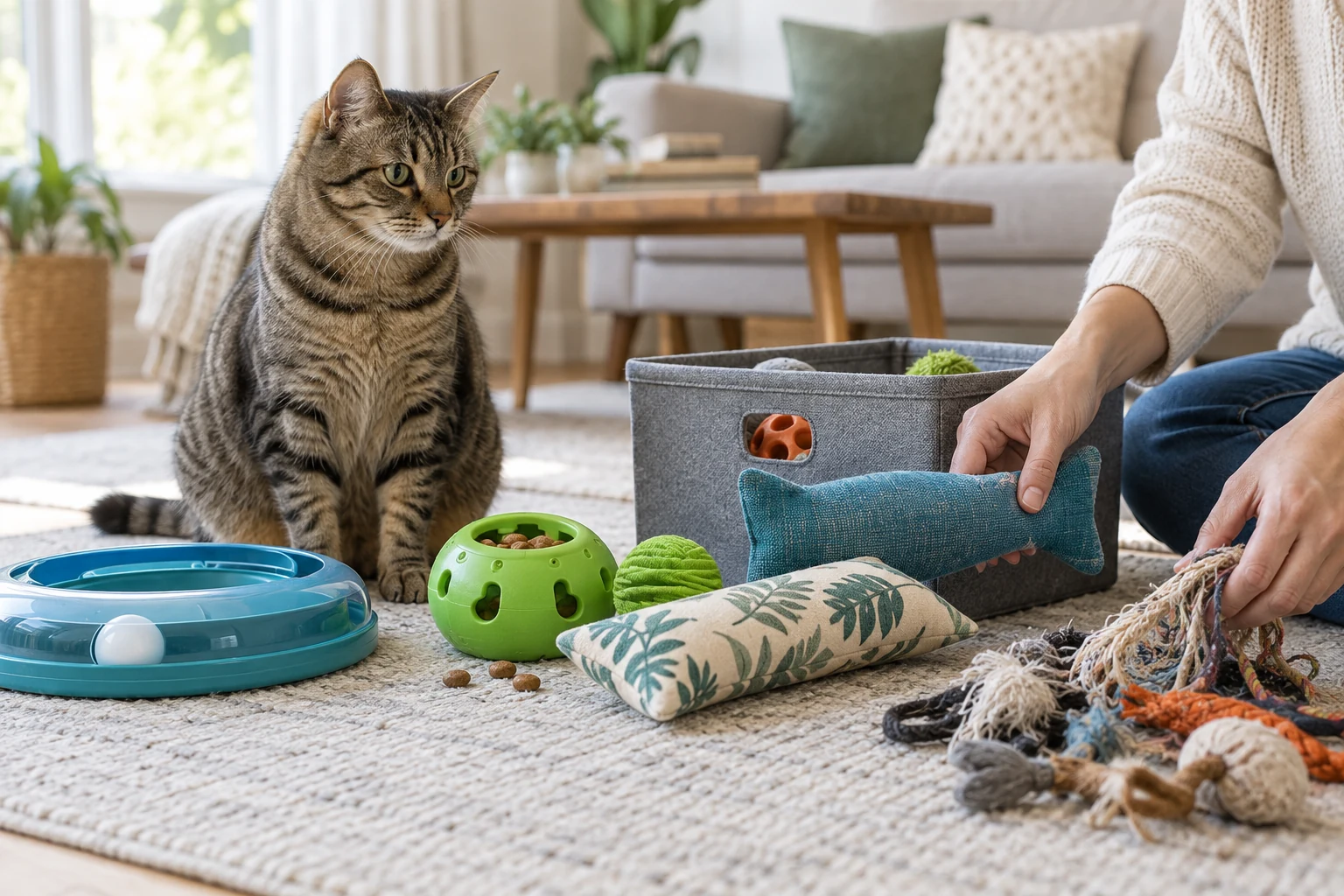
Bei Katzen mit Verdacht auf kognitiven Verfall kommt es auf die Routine an. Halten Sie die Fütterungszeiten vorhersehbar, vermeiden Sie es, wichtige Dinge ohne Grund zu verlegen, und setzen Sie auf einfache, vertraute Beschäftigungsmöglichkeiten statt auf anspruchsvolle Rätsel, die eine verwirrte Katze frustrieren könnten. Wenn sich Ihre Katze nachts verirrt, ist ein kleinerer, sicherer Schlafbereich mit Wasser, einem Bett und einem leicht zugänglichen Katzenklo möglicherweise einfacher als das ganze Haus – vorausgesetzt, die Einschränkung versetzt sie nicht in Panik.
Fazit: Was tun, wenn sich Ihre ältere Katze in einer Ecke festsitzt?
Wenn eine ältere Katze in Ecken stecken bleibt, kann das ein kleines Problem mit der Raumaufteilung sein, aber auch ein Hinweis auf Orientierungslosigkeit, Sehverlust, Schmerzen, nachlassende Sinneswahrnehmung oder eine Erkrankung. Der entscheidende Faktor ist das Muster: Wie oft kommt es vor, kann sich Ihre Katze wieder orientieren und was hat sich sonst noch verändert?.
Sehen Sie sich den Raum an, sorgen Sie für bessere Beleuchtung und rutschfeste Böden, sorgen Sie dafür, dass die benötigten Dinge leicht zu finden sind, und nehmen Sie kurze Videos auf. Wenn das Verhalten neu ist, wiederholt auftritt oder mit einer Veränderung des Gesundheitszustands oder der Bewegungsfähigkeit einhergeht, wenden Sie sich an Ihren Tierarzt. Ältere Katzen verdienen eine sorgfältige Beobachtung, da viele Ursachen für verwirrendes Verhalten leichter zu behandeln sind, wenn sie frühzeitig erkannt werden.
Häufig gestellte Fragen
Warum steht meine alte Katze mit dem Gesicht zur Ecke?
Eine ältere Katze steht möglicherweise mit dem Gesicht zur Ecke, weil sie lauscht, schnüffelt, verwirrt ist, unter Sehproblemen leidet, Schmerzen hat, durch die Raumaufteilung behindert wird oder eine durch eine Erkrankung bedingte Verhaltensänderung zeigt. Wenn dies einmal vorkommt und die Katze anschließend ganz normal weitergeht, beobachten Sie das Verhalten. Wenn es sich wiederholt oder die Katze orientierungslos wirkt, wenden Sie sich an Ihren Tierarzt.
Ist das Feststecken in Ecken ein Anzeichen für Demenz bei Katzen?
Dies kann ein Anzeichen für eine kognitive Dysfunktion bei Katzen sein, insbesondere wenn es zusammen mit Orientierungslosigkeit, nächtlichem Lautgeben, Schlafstörungen, Unsauberkeit im Haus oder verminderter Interaktion auftritt. 1. Für eine Selbstdiagnose reicht das nicht aus, da Sehverlust, Schmerzen, sensorische Veränderungen, neurologische Erkrankungen und Stoffwechselerkrankungen ähnliche Symptome aufweisen können.
Kann eine Sehschwäche dazu führen, dass eine Katze in einer Ecke festsitzt?
Ja. Katzen mit Sehproblemen stoßen möglicherweise gegen Möbel, schätzen Treppen falsch ein, haben Schwierigkeiten, ihre Fressnäpfe oder Katzentoiletten zu finden, oder verhalten sich bei schlechten Lichtverhältnissen unsicherer. 3. Eine tierärztliche Augenuntersuchung ist wichtig, wenn Sie trübe Augen, ungleiche Pupillen, Schielen, Anstoßen oder plötzliches Zögern bemerken.
Soll ich meine Katze aus der Ecke holen?
Wenn sie in Sicherheit ist, sprechen Sie zunächst leise mit ihr und geben Sie ihr einen Moment Zeit, sich umzudrehen. Vermeiden Sie es, sie festzuhalten oder zu erschrecken, es sei denn, sie könnte stürzen, sich verletzen oder sich nicht bewegen. Wenn sie sich wiederholt nicht orientieren kann, filmen Sie den Vorfall und wenden Sie sich an Ihren Tierarzt.
Können Nachtlichter einer älteren Katze helfen, die verwirrt wirkt?
Nachtlichter können manchen älteren Katzen helfen, insbesondere wenn sich ihr Sehvermögen, ihr Gedächtnis oder ihr Selbstvertrauen in der Nacht verändern. Sie entfalten ihre Wirkung am besten in Kombination mit freien Laufwegen, rutschfesten Oberflächen, einer festen Aufstellung von Fressnapf und Katzentoilette sowie einer tierärztlichen Nachsorge bei neuen Verhaltensänderungen.
Referenzen
[1] Cornell Feline Health Center. (2024). Kognitive Dysfunktion. Cornell-Gesundheitszentrum für Katzen
[2] International Cat Care. (2024). Kognitives Dysfunktionssyndrom (Altersschwäche, Demenz) bei Katzen. Internationale Katzenpflege
[3] Cornell Feline Health Center. (2026). Sehstörungen bei Katzen: Eine Vielzahl möglicher Ursachen. Cornell-Gesundheitszentrum für Katzen
[4] American Association of Feline Practitioners. (2021). 2021 AAFP-Leitlinien für die Pflege von älteren Katzen. PubMed Central
[5] MSD Veterinary Manual. (2026). Medizinische Ursachen für Verhaltensauffälligkeiten. MSD-Handbuch für Tiermedizin
 EN
EN DE
DE ES
ES PT
PT