
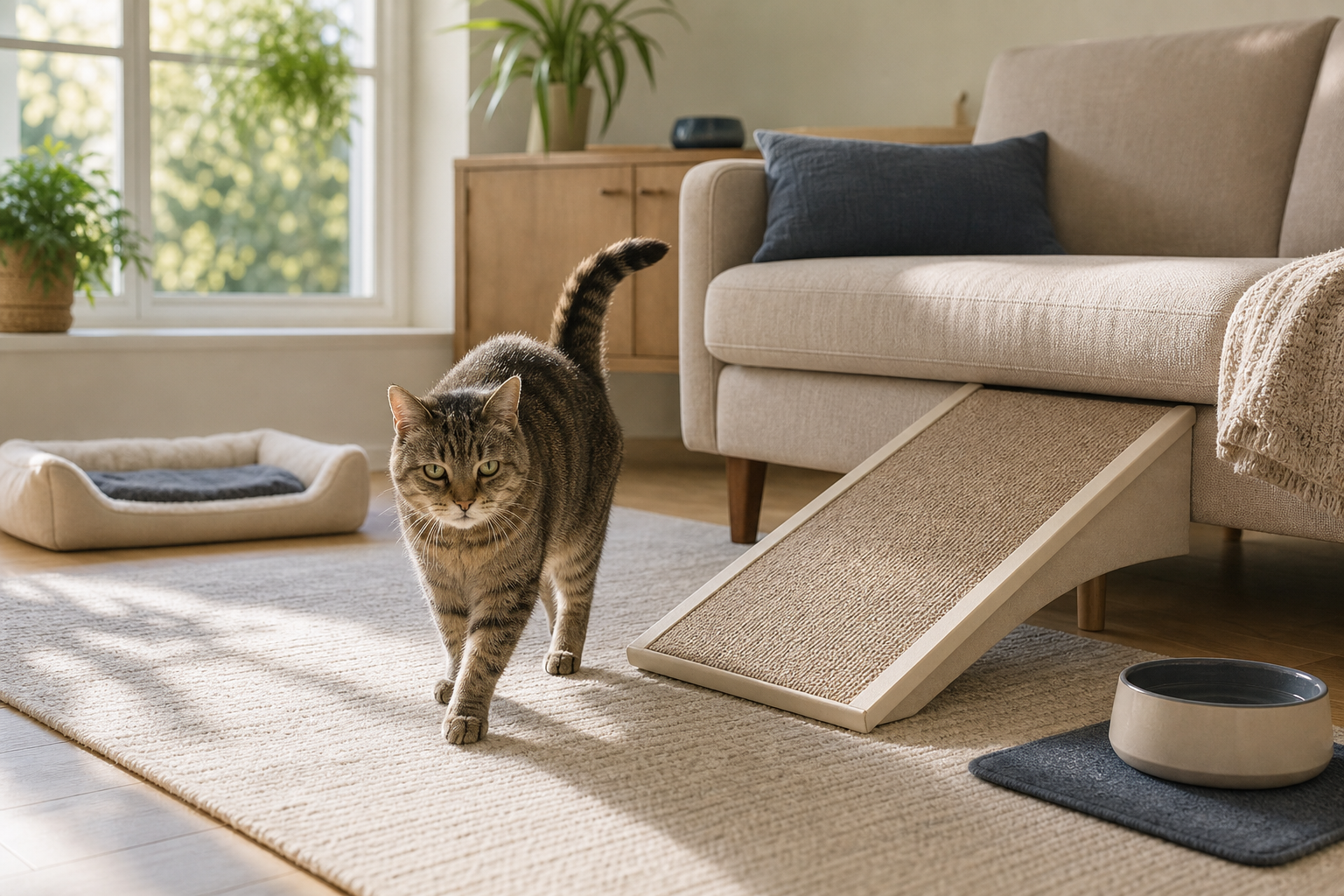
You can help an arthritic cat at home by reducing painful jumps, improving traction, making the litter box easier to enter, and tracking small comfort changes that your veterinarian can use. Home adjustments do not replace pain control or diagnosis, but they can make daily life much easier while your cat's care plan is being built.
Cats with arthritis often do not limp dramatically. They may stop jumping to a favorite chair, hesitate on stairs, sleep in lower places, avoid grooming hard-to-reach areas, or have accidents because the litter box feels difficult 2. The goal at home is simple: make every important resource easy to reach without forcing your cat to ask for help.
This guide focuses on practical changes a cat parent can make safely: ramps, low-entry litter boxes, soft resting spots, grooming support, and a weekly comfort log. If your cat has sudden weakness, cannot stand, stops eating, cries in pain, strains to urinate, collapses, or declines quickly, contact a veterinarian urgently.
Inhaltsübersicht
- What home changes help an arthritic cat most?
- How should you change the litter box for an arthritic cat?
- Where should food, water, beds, and scratching areas go?
- What comfort checks should you track each week?
- When should you call the veterinarian?
- How can you support grooming without hurting your cat?
- What should you avoid doing at home?
- Conclusion: Make daily life easier, then track what changes
- Häufig gestellte Fragen
- Referenzen
What home changes help an arthritic cat most?
The most helpful changes are the ones that remove effort from daily routines: grip on slippery floors, steps or ramps to favorite spots, low resting places, and short routes to food, water, litter boxes, and beds. International Cat Care notes that home modifications can support comfort and quality of life alongside a veterinary treatment plan 1.
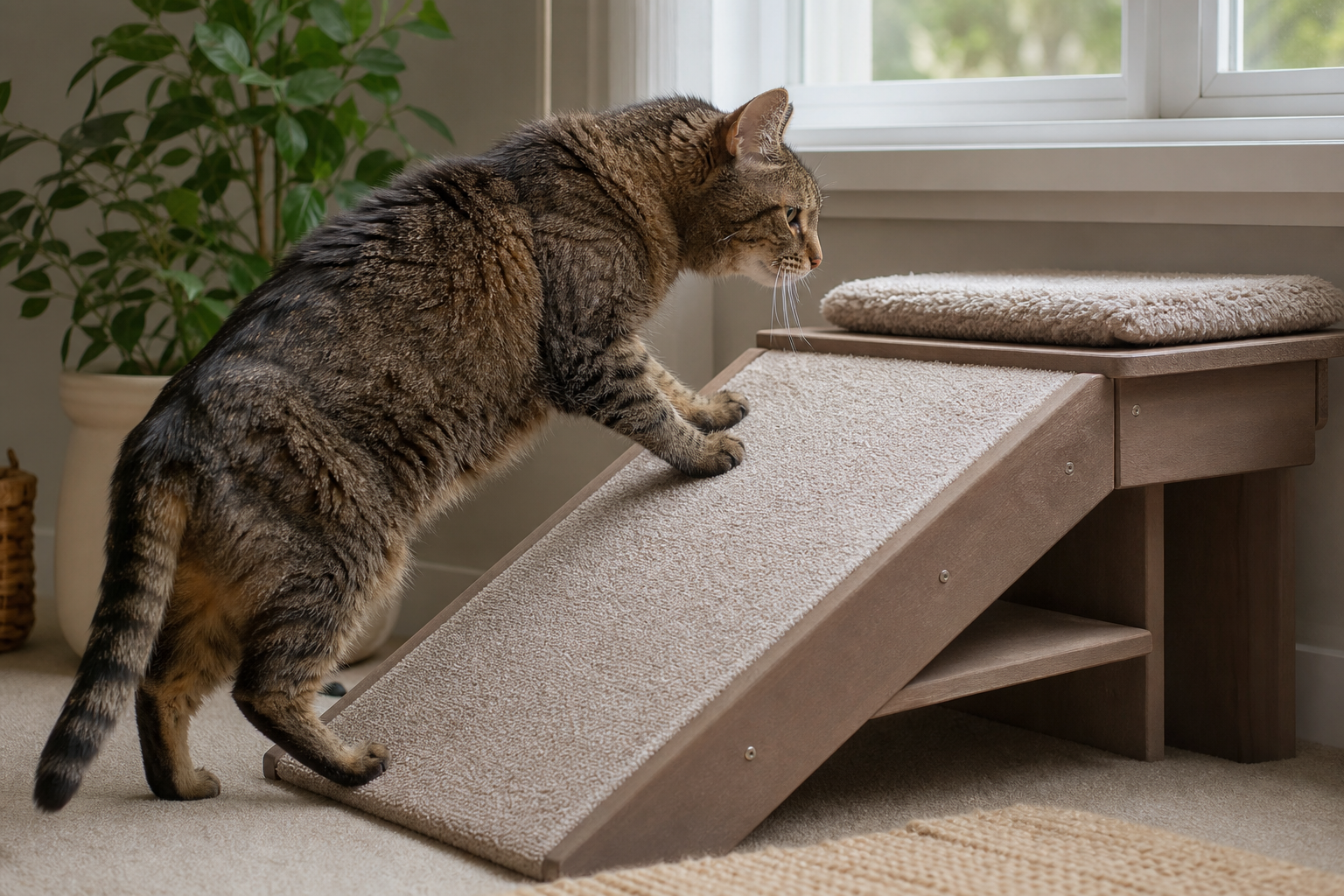
A shallow ramp works best when it is stable, wide enough for your cat to turn confidently, and covered with a grippy surface such as carpet or rubber. If a ramp is too steep, use several low steps instead. The setup should let your cat reach the sofa, bed, window perch, or favorite chair without launching up or dropping down.
Start with the places your cat already chooses. Many cats will ignore a new "perfect" bed but gladly use a ramp to the old sunny chair. Put the ramp or steps in the route your cat naturally takes, reward calm investigation, and avoid forcing your cat onto the equipment.
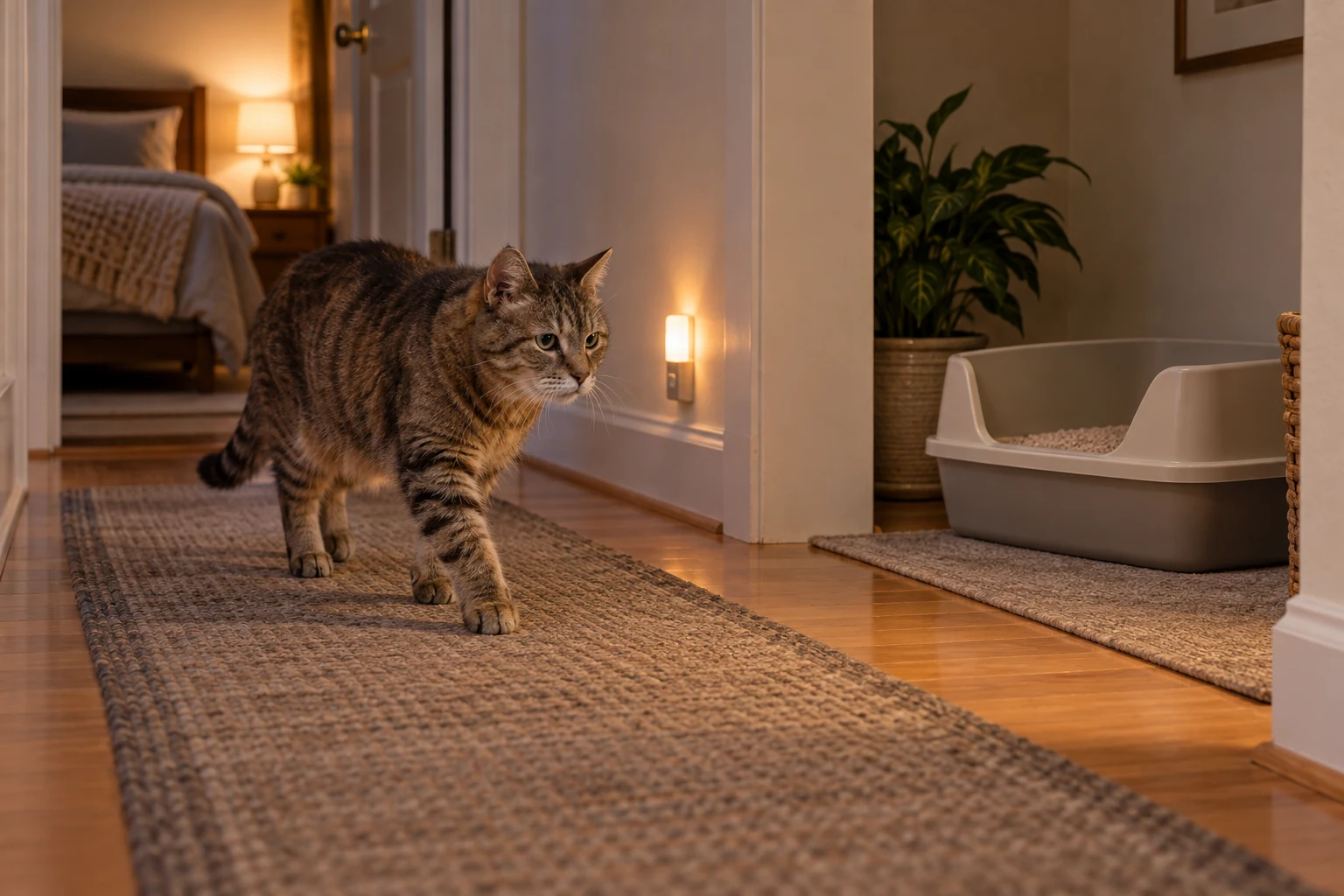
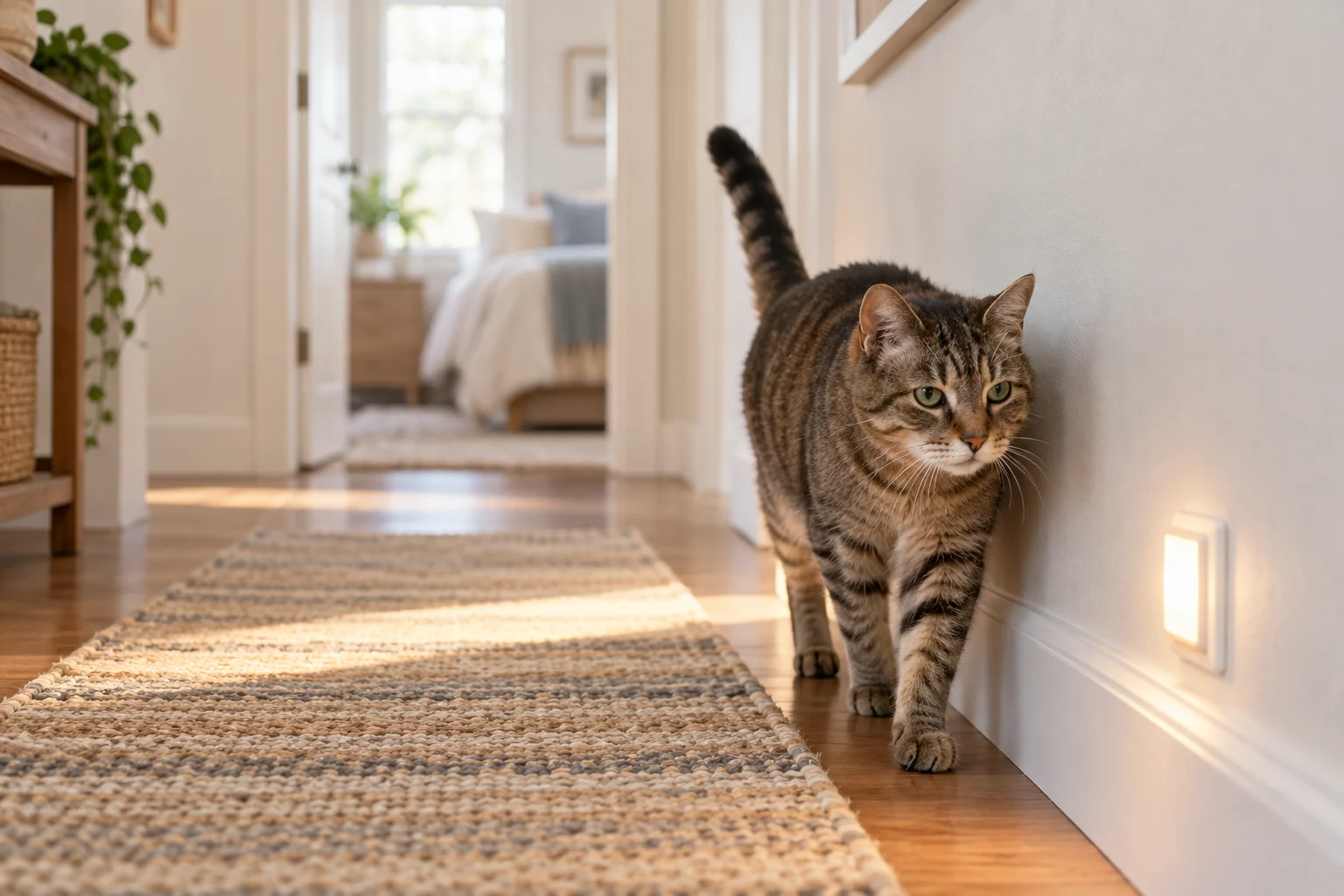
Use rugs, runners, or yoga mats on slick flooring, especially near food bowls, litter boxes, stairs, and favorite sleeping areas. Cats with sore joints may brace their paws and shoulders when the floor slides under them, so traction can reduce fear as well as physical strain 1.
| Home area | Arthritis-friendly change | Warum das hilft |
|---|---|---|
| Sofa or bed | Low steps or a shallow ramp | Reduces jumping and hard landings |
| Hallways | Non-slip runners | Helps a stiff cat walk with confidence |
| Window perch | Lower perch or ramped access | Keeps enrichment available without climbing |
| Sleeping spot | Soft bed in a warm, quiet area | Supports rest and easier rising |
| Nahrung und Wasser | Multiple low-effort stations | Prevents long walks when joints are sore |
How should you change the litter box for an arthritic cat?
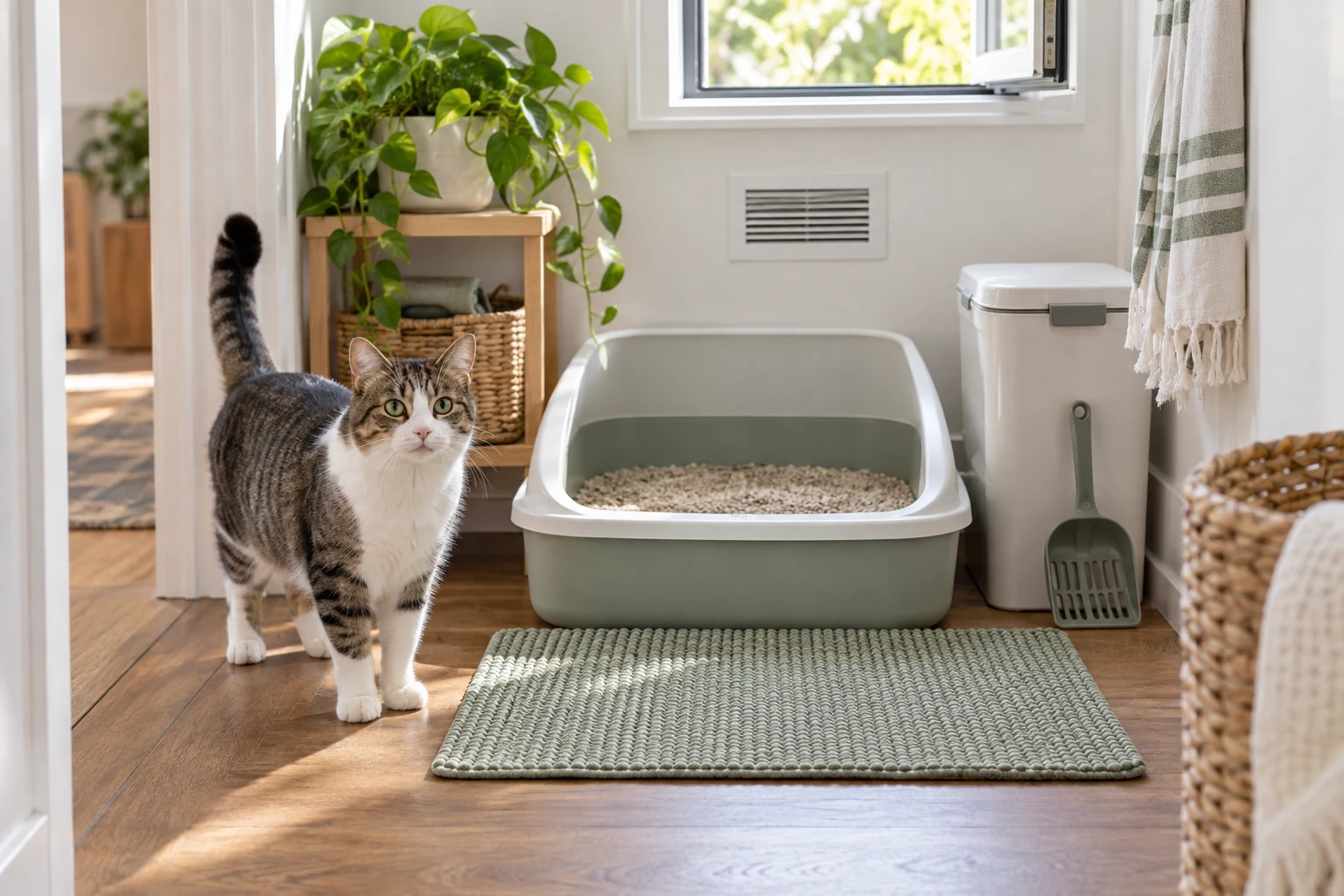
Choose a large uncovered box with at least one low entrance, place it where your cat can reach it without stairs, and keep it very clean. International Cat Care recommends low-sided trays, boxes on each floor when needed, enough room for the cat to move comfortably, a quiet location, and clean litter for cats with joint pain or mobility problems 1.
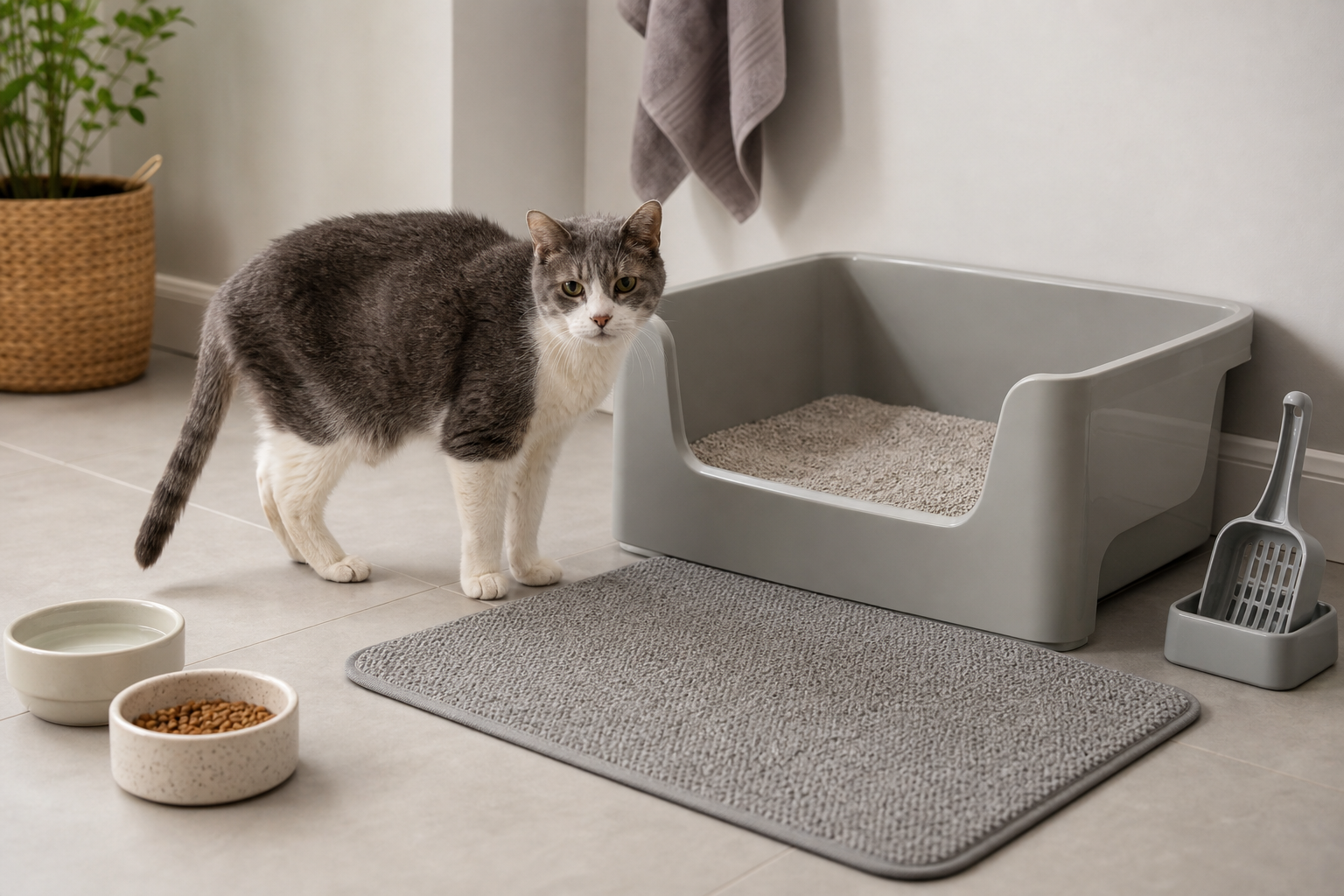
For many cats, the best starting point is a wide, rectangular, uncovered box with an entry cut low on one side. If your cat is large, stiff, or hesitant to turn, use the large cat litter box size guide to think through entry height and floor space. For the broader setup, SnuggleSouls' Die beste Einrichtung für ein Katzenklo explains size, placement, and cleaning basics.
Place at least one box on the same floor where your cat spends most of the day. A box in the basement may have worked for years, then suddenly become too hard when hips, knees, elbows, or the spine are sore. If your cat has started toileting outside the box, treat that as information, not misbehavior. AAFP/ISFM house-soiling guidance emphasizes optimizing the litter box and meeting environmental needs rather than blaming the cat 4.
Try softer, unscented litter if your cat seems reluctant to dig or stand in the box. Avoid liners if claws catch in them. A soft mat outside the box can add traction, but make sure it does not slide.
Where should food, water, beds, and scratching areas go?
Put essential resources where your cat can reach them without jumping, squeezing through narrow spaces, or crossing slippery floors. The 2013 AAFP/ISFM environmental guidelines describe key feline resources as food, water, toileting areas, rest and sleep areas, and elevated areas or perches 5. For an arthritic cat, those resources still matter, but the access route may need to change.
Add water bowls in two or three quiet places, especially if your cat takes medication or has kidney, urinary, or senior-cat monitoring needs. Keep food and water away from the litter box. If your cat prefers raised bowls, use only a low, stable elevation that does not force neck or shoulder strain.
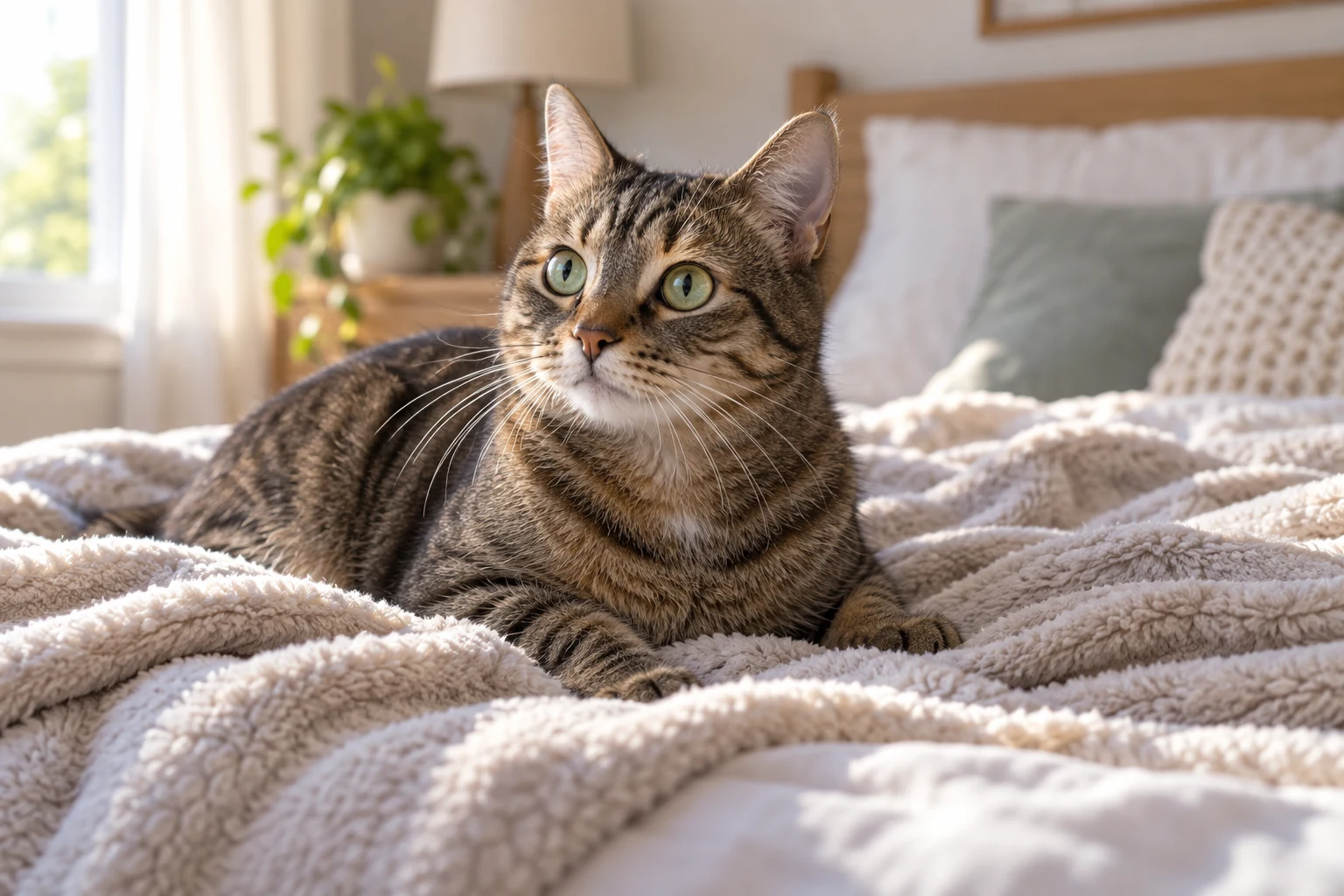
Beds should be soft, warm, and easy to enter. A low-sided bed near a sunny window or warm room can be more useful than a high cat tree. If your cat likes covered beds, choose one with a wide opening and enough room to turn around without twisting sharply.
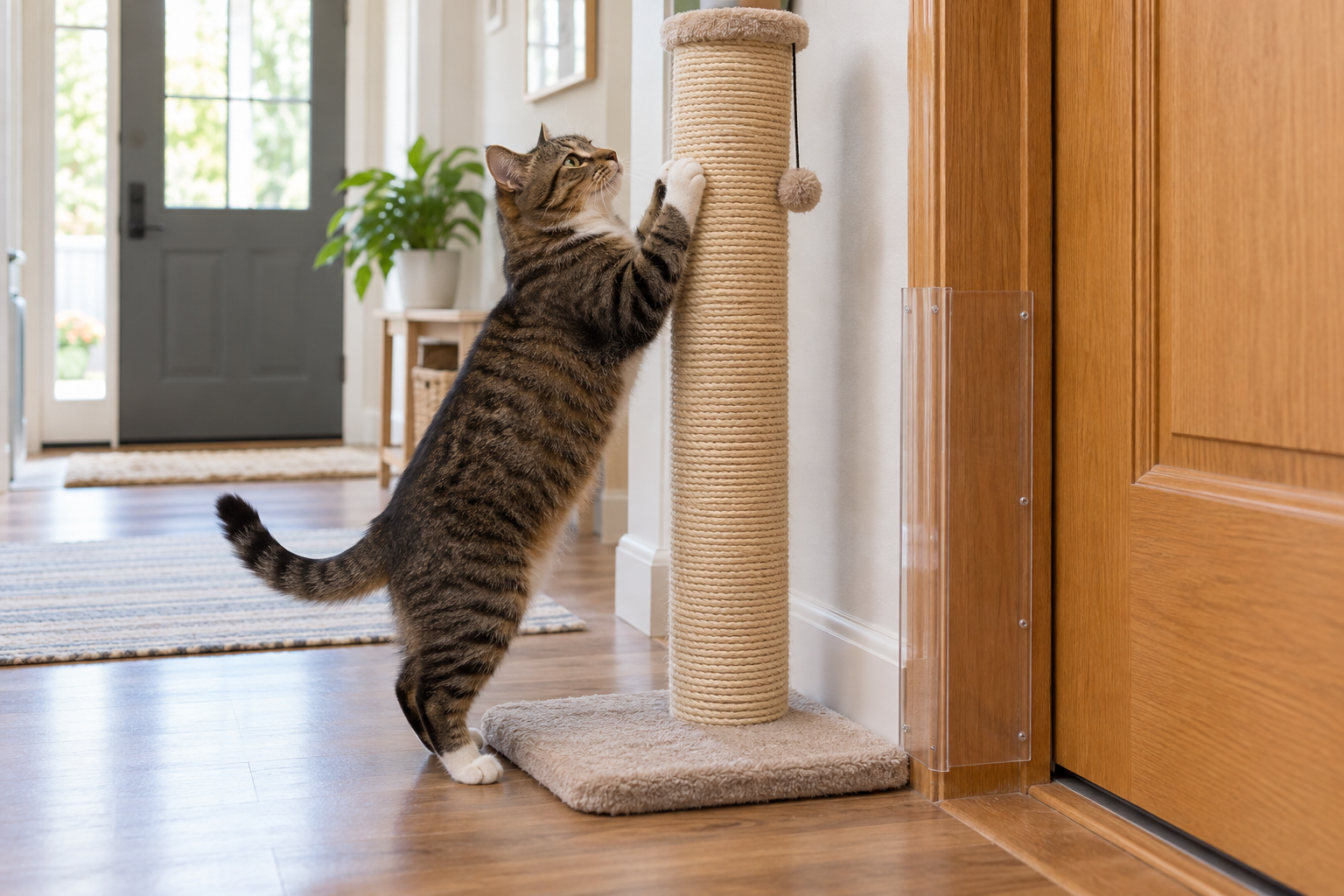
Scratching still matters because it lets cats stretch, mark territory, and maintain claws. Offer a horizontal scratcher or a low angled scratcher if tall vertical posts are hard. Place it near resting areas so your cat can scratch after waking without walking far.
What comfort checks should you track each week?
Track movement, appetite, grooming, litter box use, mood, and favorite-place access once or twice a week. The FDA notes that cats can hide osteoarthritis pain, and home observations about activity and behavior help veterinarians understand what is happening outside the exam room 3.
Use a simple note on your phone rather than a complicated scoring system. Videos are especially helpful: record your cat walking, using stairs, entering the litter box, grooming, and getting onto a favorite resting spot. International Cat Care also notes that videos from home can help the veterinarian assess movement 1.
| Weekly check | Better sign | Concerning change |
|---|---|---|
| Jumping or ramp use | Uses ramp calmly, fewer hard jumps | Avoids favorite places or falls |
| Katzentoilette | Enters and turns without hesitation | Accidents, constipation signs, crying, or straining |
| Körperpflege | Coat stays clean with gentle help | Mats, greasy coat, or painful reaction to touch |
| Appetite and weight | Stable appetite and body condition | Weight loss, poor appetite, or rapid gain |
| Mood | Social pattern is familiar | Hiding, irritability, withdrawal, or unusual quietness |
If you are not sure whether a change may be pain, compare it with SnuggleSouls' guide to cat pain clues. Facial expression alone is not enough for chronic arthritis, but it can be one useful piece when combined with movement, appetite, and behavior.
When should you call the veterinarian?
Call your veterinarian if stiffness, reduced jumping, litter box difficulty, grooming changes, hiding, irritability, appetite change, weight change, or accidents persist for more than a short one-off episode. SnuggleSouls' guide to Anzeichen für Arthritis bei älteren Katzen can help you organize the clues before the appointment.
Seek urgent care sooner if your cat cannot rise, cries in pain, drags a limb, has a sudden severe limp, stops eating for 24-48 hours, repeatedly vomits, has severe diarrhea, collapses, has trouble breathing, or strains to urinate. A blocked urinary cat is an emergency, and pain signs should not be watched for days when your cat is rapidly worsening.
Do not start human pain medication at home. Many common human drugs can be dangerous for cats, and arthritis treatment has to account for kidney health, hydration, other conditions, and the cat's exam findings. Home changes are supportive; pain control and medical decisions belong with your veterinary team.
How can you support grooming without hurting your cat?
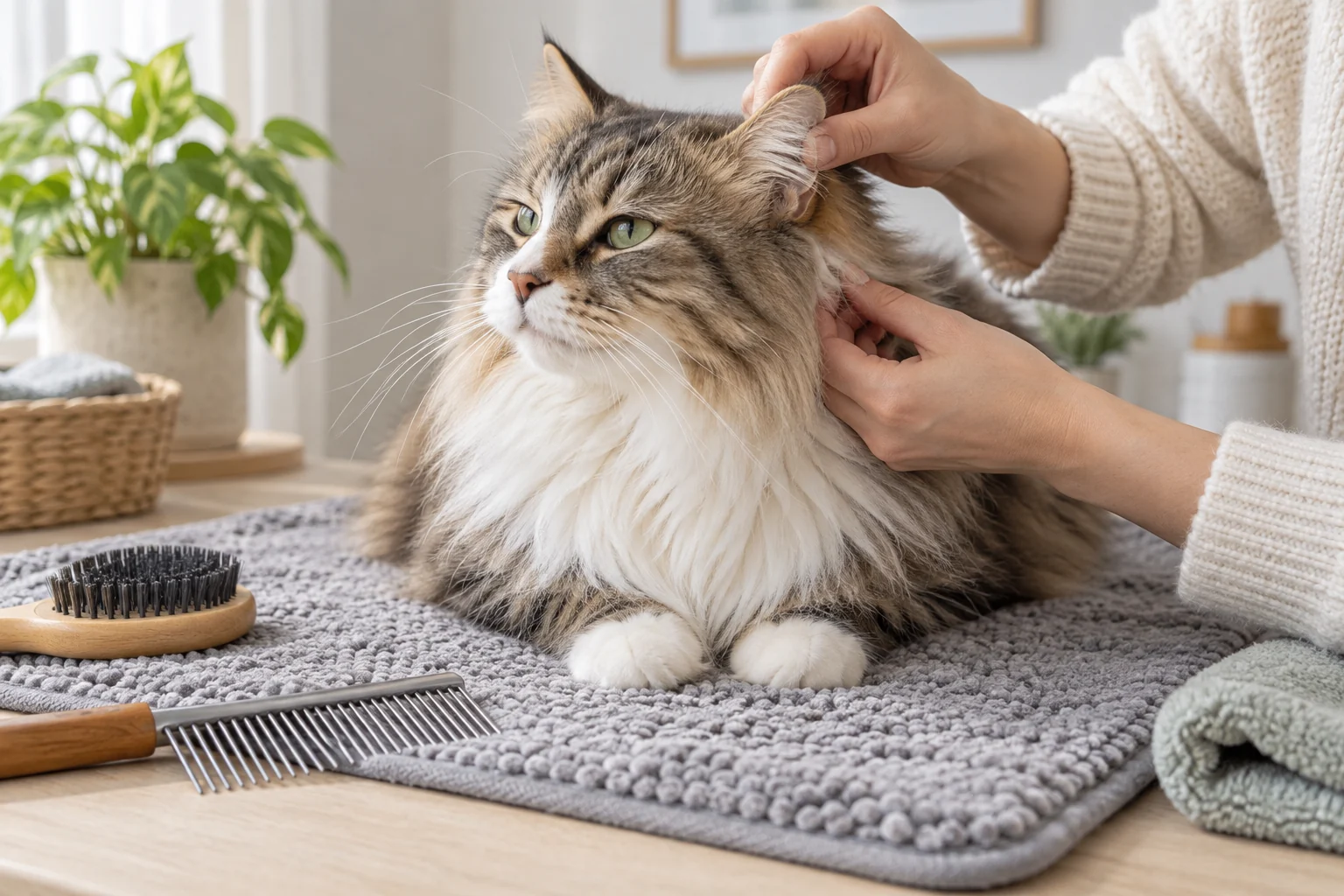
Support grooming with short, gentle sessions, easy-to-reach resting positions, and help from your vet or groomer when mats are already tight. Arthritic cats may stop grooming the lower back, hips, belly, and rear legs because twisting hurts. That can lead to mats, dandruff, and skin irritation.
Use a soft brush, work in tiny sessions, and stop before your cat gets tense. Never hold a sore cat down to force brushing. If mats have formed, read SnuggleSouls' guide to preventing mats in longhaired cats and ask your veterinary team or a cat-safe groomer for help with painful knots.
Check claws, too. Cats with limited scratching or reduced activity can develop overgrown nails that press into paw pads or make walking awkward. If your cat tolerates handling, keep sessions brief and low-stress; SnuggleSouls' guide to trimming cat nails safely explains the basics. If paws are painful, ask the clinic for help.
What should you avoid doing at home?
Avoid forcing exercise, making abrupt layout changes, using slippery ramps, or assuming arthritis is just "old age." Cornell notes that reduced activity in an older cat may reflect joint pain rather than normal aging alone 2. A cat who stops jumping, grooming, or using the box is giving you useful information.
Do not put every resource in one distant room. That may seem tidy for humans, but a sore cat may skip water, delay toileting, or stop using a favorite bed if the route is too hard. Spread resources gently without overwhelming the home.
Avoid weight-loss attempts without a plan if your cat is older, ill, or eating poorly. Lean body condition can help reduce joint stress, but sudden food restriction can be unsafe. If weight is part of the conversation, use the cat BMI weight calculator as a starting context and ask your vet for an individual target.
Finally, avoid measuring success by whether your cat seems "young again." The better goal is steadier movement, fewer painful choices, easier toileting, better rest, and a cat who can keep favorite routines with less effort.
Conclusion: Make daily life easier, then track what changes
Helping an arthritic cat at home starts with removing small daily barriers: hard jumps, slick floors, high litter box sides, distant water bowls, and beds that are difficult to enter. Ramps, low steps, rugs, soft beds, low-entry litter boxes, and short resource routes can protect comfort while your veterinarian guides diagnosis and pain management.
Watch the cat in front of you. If a change makes your cat move more calmly, rest more comfortably, or use the litter box more reliably, keep it. If pain signs continue or worsen, bring your notes and videos to your veterinary team so your cat's home life is part of the care plan.
Häufig gestellte Fragen
Can I treat my cat's arthritis at home without a vet?
No. You can make the home easier and safer, but arthritis diagnosis and pain control need a veterinarian. Home changes are supportive, especially ramps, traction, low-entry litter boxes, soft beds, and weekly behavior notes.
Are ramps or stairs better for an arthritic cat?
Either can work if the angle is gentle, the surface has grip, and the structure does not wobble. A ramp may be easier for some cats, while low steps with broad treads may feel more familiar to others.
What kind of litter box is best for a cat with arthritis?
A large uncovered box with one low entrance is often easiest. Place it on the same floor as your cat's main living area, keep it clean, and use a soft unscented litter if hard pellets seem uncomfortable.
Should I stop my arthritic cat from jumping?
Reduce the need to jump rather than trying to police every movement. Add ramps, steps, lower perches, and soft landing routes so your cat can choose easier access to favorite places.
How do I know if the home changes are working?
Look for calmer movement, more consistent litter box use, easier rising from rest, fewer missed jumps, better grooming tolerance, and a return to favorite routines. If signs do not improve, or your cat worsens, call your veterinarian.
Referenzen
[1] International Cat Care. (2024). Changes to the home environment for cats with muscle/joint pain or mobility problems: a guide for caregivers. Read the caregiver guide
[2] Cornell Feline Health Center. (n.d.). Is Your Cat Slowing Down? Lesen Sie den Leitfaden der Cornell University
[3] U.S. Food and Drug Administration. (n.d.). Osteoarthritis in Cats: More Common Than You Think. Read the FDA guide
[4] Feline Veterinary Medical Association and International Society of Feline Medicine. (2014). AAFP/ISFM-Leitlinien von 2014 zur Diagnose und Behandlung von Unsauberkeitsverhalten bei Katzen. Lesen Sie die Richtlinien
[5] AAFP and ISFM. (2013). Leitlinien zu den Umweltbedürfnissen von Katzen. Lesen Sie die Richtlinien
 EN
EN DE
DE ES
ES PT
PT