
Índice
Quick Answer (Tabby Cat in 30 Seconds)
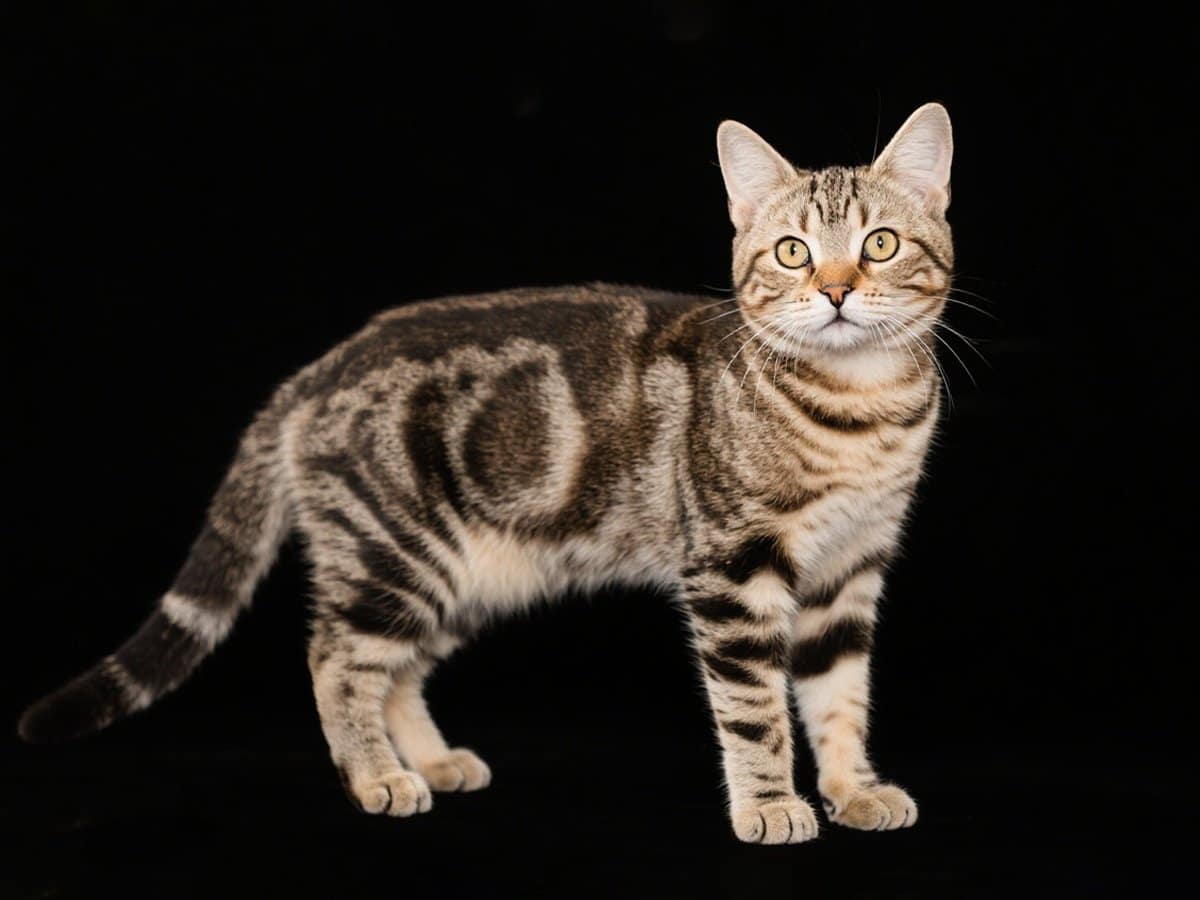
A tabby cat is not a breed — it’s a coat pattern found in many breeds and mixed-breed cats. Most tabbies have an “M” marking on the forehead plus one of five main patterns: classic, mackerel, spotted, tickedo patched.
Key takeaways
- Tabby = pattern, not a breed.
- En 5 tabby patterns are easy to tell apart once you know what to look for.
- Personality depends more on breed, genetics, and upbringing than the tabby pattern itself.
- Most healthy indoor cats live 13–17+ years (tabbies included) with good care and vet support.
Tabby Cat at a Glance
| Característica | Descripción |
| Personalidad | A menudo descrito como friendly, curious, affectionate (varies by individual) |
| Tipo de carrocería | Depends on the underlying breed; many adult cats fall around 3,6-5,4 kg (8-12 lb) |
| Peso | Highly variable, typically 8-12 pounds (3.6-5.4 kg) for most domestic cats, but can range from 5 pounds (2.2 kg) for smaller breeds to 25 pounds (11 kg) for larger breeds |
| Origen Región | The tabby pattern is thought to originate from wild ancestors like the African wildcat. The name “tabby” derives from the “Attabiy” district in Baghdad, famous for its striped silk |
| Vida útil | Commonly 13–17+ years with good indoor care |
| Tipo de abrigo | Can be short, medium, or long-haired, depending on the underlying breed. All tabby patterns feature “agouti” hairs, which have alternating bands of light and dark color |
| Colores del manto | Brown, gray, orange/red, black, cream; can also appear in calico/tortoiseshell mixes |
| Nivel de desprendimiento | ⭐⭐⭐⭐☆ (Medium to High) |
| Afecto hacia los humanos | ⭐⭐⭐⭐⭐ (Muy alto) |
| Dificultad asistencial | ⭐⭐⭐⭐☆ (Medium to High) |
Introducción
Tabby cats are some of the most common (and most loved) cats in the world — but tabby isn’t a breed. A tabby is defined by a coat pattern, and that pattern can appear in many different breeds and mixed-breed cats.
Most tabbies share a few visual clues: an “M” marking on the forehead, striped lines on the face, and one of five main body patterns (classic, mackerel, spotted, ticked, or patched).
If you’re here because you’re wondering, “What breed is my tabby?” — this guide will help you identify the pattern, understand typical temperament myths, and learn practical care and health tips.
Historia de la raza
En origins of the tabby pattern are deeply rooted in the evolutionary history of domestic cats. It is widely believed that the distinctive markings of tabby cats were inherited from their antepasados salvajes, most notably the African wildcat.
This pattern served a crucial purpose en su natural habitat, proporcionando excellent camouflage amidst tall grasses and bushes, allowing them to remain undetected by both prey and predators.
The success of this camouflage likely contributed to the pattern’s genetic dominance y widespread presence en modern domestic cats.
The term “tabby” itself carries a rich historical and cultural narrative, tracing its roots back centuries.
The word is thought to have originated from the “Attabiy” district in Baghdad, a region renowned for its production of a unique striped silk fabric.
This fabric, described in 14th-century Middle French como “atabis,” later evolved into “tabis,” and eventually into the English word “tabby”. En visual resemblance entre el intricate patterns of this luxurious silk y el markings on cats led to the adoption of the term to describe these felines.
Interestingly, it wasn’t until the 1770s that the word “tabby” was commonly used on its own to refer to a cat; prior to that, the full phrase “tabby cat” was more typical.
Beyond its etymological journey, the distinctive “M” marking on a tabby’s forehead has also inspired various folklore and superstitions throughout history, with some legends connecting it to figures like the Virgin Mary or the Prophet Mohammed.
How to Identify a Tabby Pattern (Fast)
Look at your cat’s sides and shoulders:
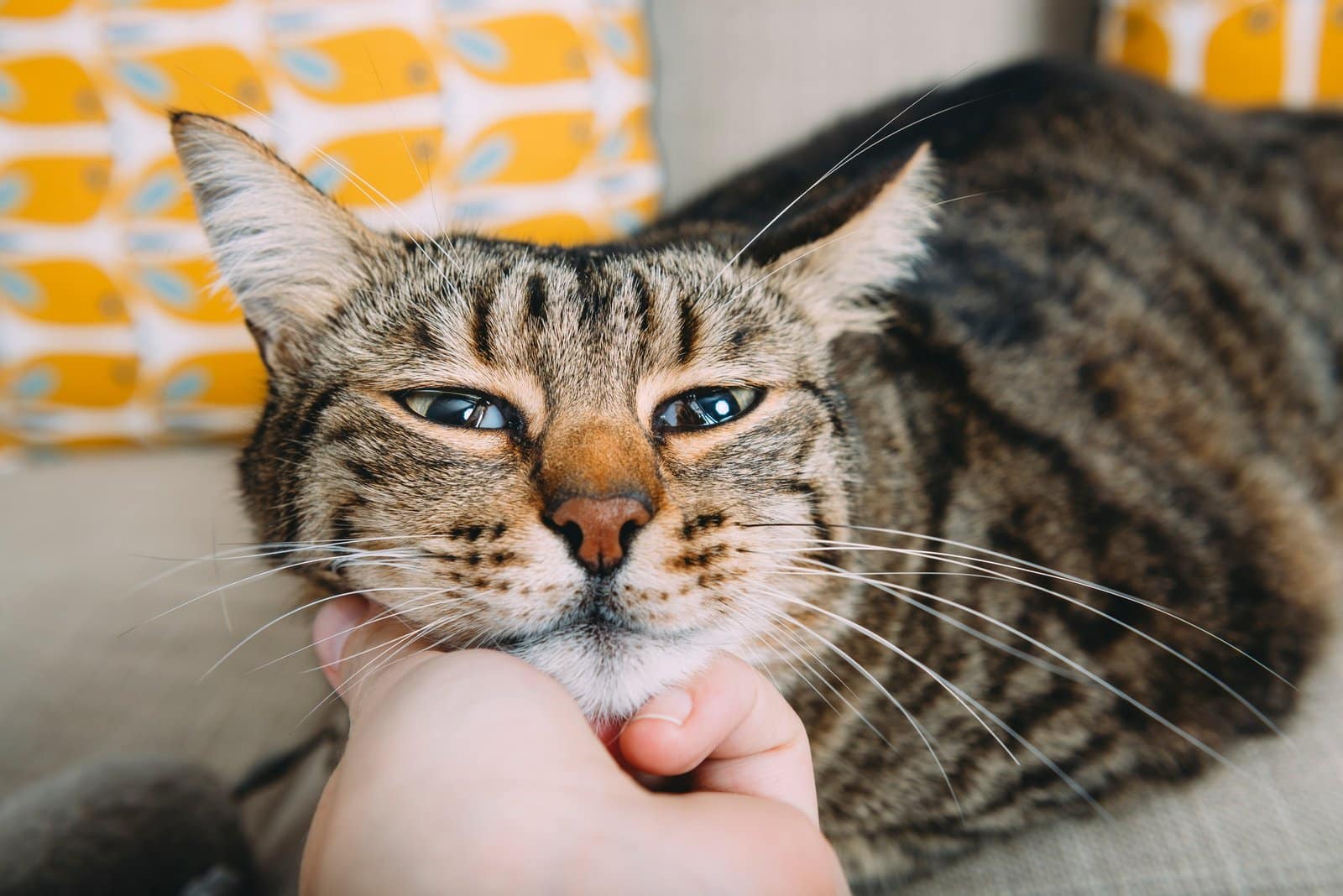
- Swirls / bullseye circles on the sides → Classic tabby
- Thin vertical stripes like a fish skeleton → Mackerel tabby
- Distinct spots (not full stripes) → Spotted tabby
- Body looks “solid,” but the hairs are banded (shimmery) → Ticked tabby
- Tabby stripes + orange/red patches (often female) → Patched tabby
The 5 Tabby Patterns (Comparison Table)
Use the markings on your cat’s sides (not just the face) to identify the pattern.
| Tabby Pattern | What it looks like | Fast ID tip |
|---|---|---|
| Classic (Blotched) | Bold swirls on the sides; often a “target/bullseye” look | Look for big circular swirls (“cinnamon roll” pattern) |
| Mackerel | Thin, vertical stripes running down the sides | Looks like a tiger or “fishbone” striping |
| Spotted | Distinct spots across the sides (may be broken stripes) | Spots are separate dots, not full stripes |
| Ticked (Agouti) | No big side markings; coat looks shimmery because hairs are banded | Body looks more “solid,” with pattern mostly on face/legs |
| Patched (Torbie/Caliby) | Tabby pattern mixed with orange/red patches (sometimes with white) | Looks like tabby + tortoiseshell/calico combined |
Common Mix-ups (Quick Clarity)
- Spotted vs. Mackerel: spotted tabbies often have “broken stripes” that look like spots from a distance.
- Ticked vs. Classic/Mackerel: ticked tabbies usually no have strong side markings—look for banded hairs and subtle body patterning.
- Patched tabby: “patched” refers to color patches (orange/cream) layered with tabby striping.
More detail: Classic (Blotched) Tabby
Classic tabbies have bold swirling patterns on the sides, often forming a bullseye shape. A “butterfly” marking can appear on the shoulders, with thicker lines along the spine.
More detail: Mackerel Tabby
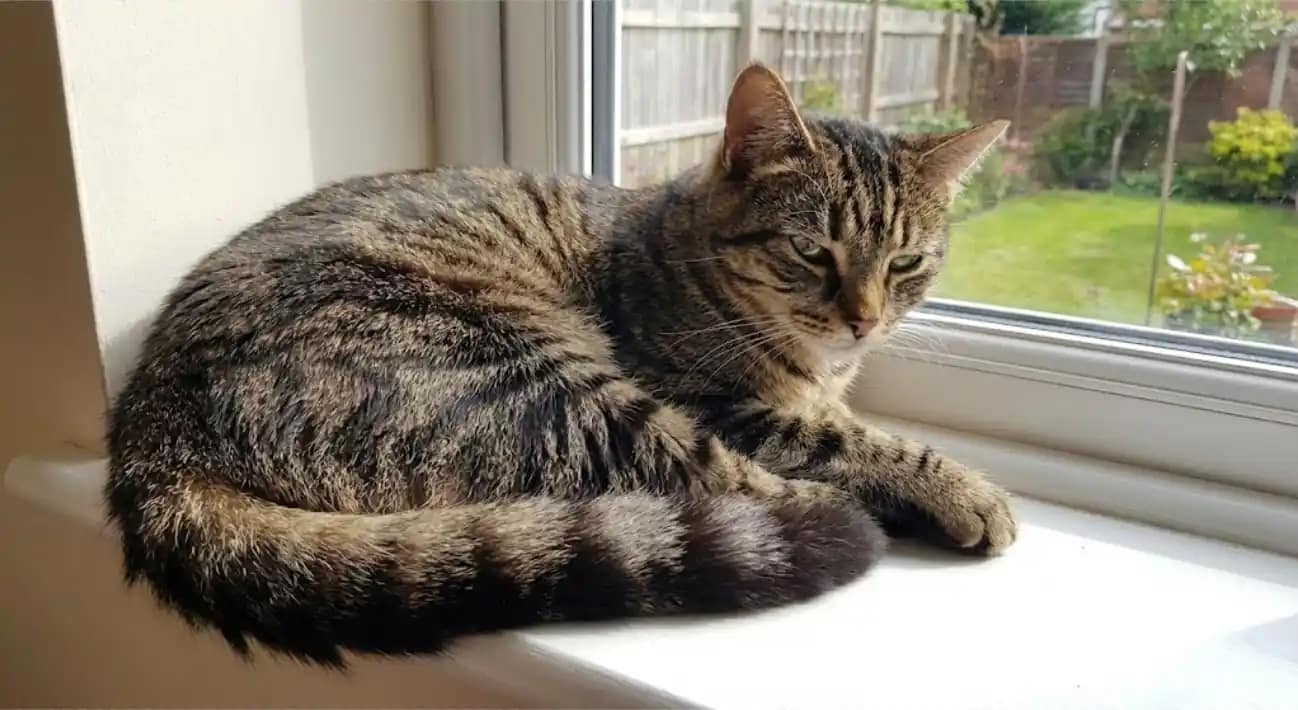
Mackerel tabbies have narrow, parallel stripes that run vertically down the sides. They often have rings around the tail and legs, and thinner stripes along the spine.
More detail: Spotted Tabby
Spotted tabbies show spots across the sides, which can range in size and may form from broken mackerel striping. Some breeds are known for strong spotting.
More detail: Ticked (Agouti) Tabby
Ticked tabbies look more uniform on the body with less obvious striping. The “pattern” comes from banded hairs, with markings often most visible on the face and legs.
More detail: Patched Tabby (Torbie/Caliby)
Patched tabbies combine tabby striping with orange/red (or cream) patches. If white is present too, some people call it caliby. The tabby pattern appears inside the color patches.
Comportamiento y personalidad
Quick answer: A tabby coat pattern doesn’t causa a personality. Domestic cats vary widely in sociability and temperament, and that variability is shaped more by early experiences, environment, and individual characteristics than by coat pattern.
What really shapes a tabby cat’s temperament
Because “tabby” is a pattern (not a breed), tabby cats can range from clingy to independent, confident to cautious. Research reviews on cat temperament and sociability emphasize that behavior differences between cats are real and are influenced by factors like early-life socialization, genetics/breed background, the human household, and the cat’s social/physical environment.
Common traits many tabby owners report (with a reality check)
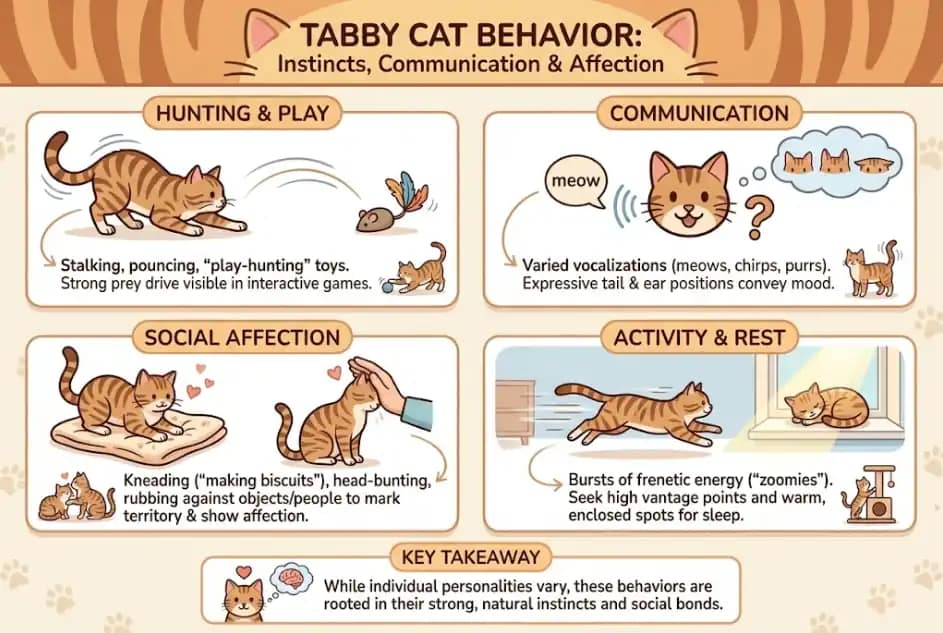
Many tabby-patterned house cats are often described as:
- Friendly and people-oriented (enjoy being near their humans)
- Curious and playful
- Quick learners (especially with routines)
- Vocal when they’ve learned it gets results
- Active in bursts (play hard, nap hard)
Reality check: these are common descriptions, not guarantees. Even within the same household, cats can differ a lot in how social or peluche they are.
Social behavior: why some tabbies follow you everywhere
Cats that were well-socialized to people as kittens often show what researchers describe as “friendliness to humans,” and cat–human interactions are strongly influenced by both the cat and the owner (who initiates contact, how the human responds, and daily routines).
So if your tabby shadows you from room to room, greets you at the door, or “supervises” chores, it’s usually a mix of bonding + routine + reinforcement (they’ve learned that being close leads to attention, play, or food).
Communication: meows, purrs, and “head-bonks”
- Meowing: Studies describe meows as the most common human-directed cat vocalization, used in different everyday contexts (food, greeting, isolation, handling).
- Purring: Purring often happens when cats are relaxed, but it can also occur when a cat is frightened, in pain, or sick—so context and body language matter.
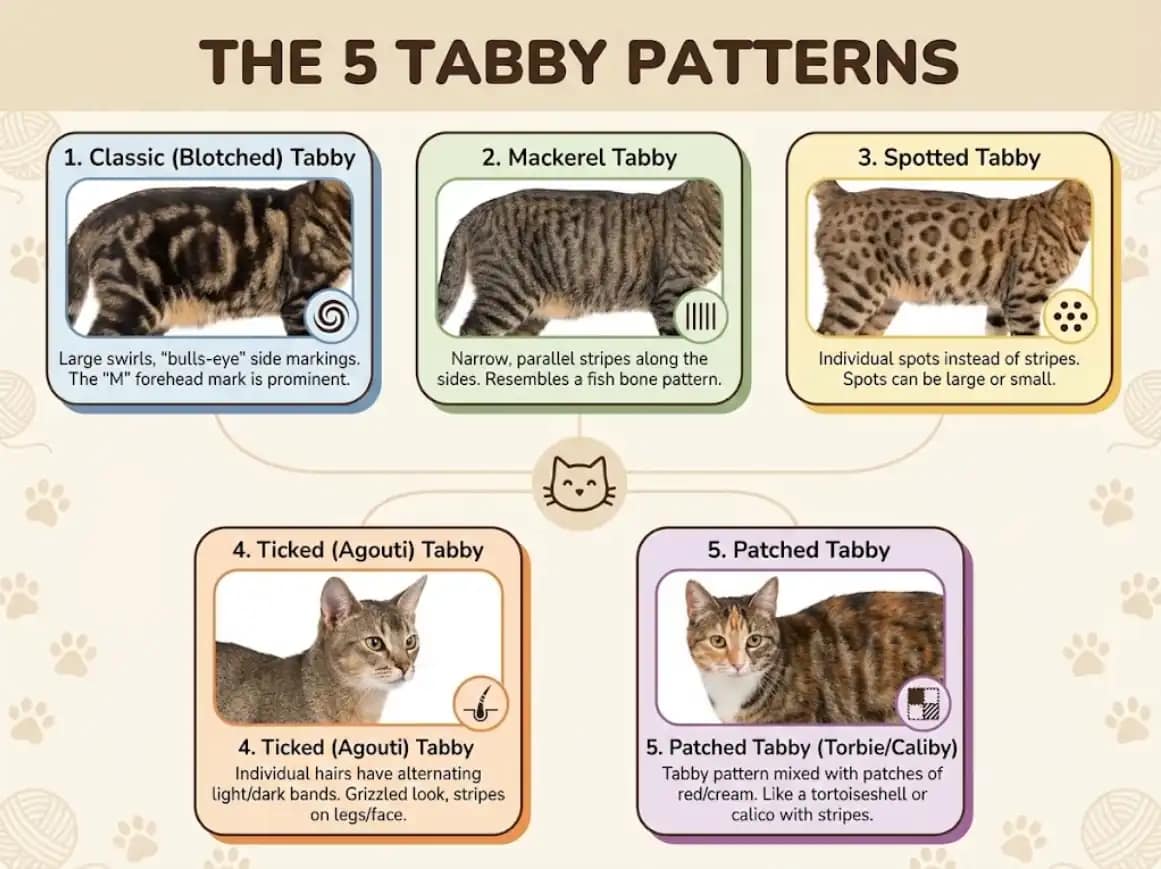
- Head-butting / bunting: When a cat headbutts or rubs their face on you, they’re often depositing pheromones from facial glands—commonly interpreted as trust/bonding and making you part of their “inner circle.”
Activity level and downtime
Most cats cycle between short active bursts and long rest periods. Many cats sleep 12–18 hours per day, so it’s normal for an active tabby to play hard and then crash in a sunny spot.
The “orange tabby = velcro cat” reputation (what’s fact vs. folklore)
Orange tabbies are disproportionately male because orange coat color is linked to the X chromosome—male cats need only one copy to be orange, while females need two.
That male-skew can influence what people observepero coat color itself isn’t a reliable predictor of personality. Treat the “orange tabbies are friendlier” idea as a fun stereotype, not a rule—individual temperament always wins.
Care Guide For Tabby Cat
Dieta
Quick rule: Choose a cat food that’s “complete and balanced” for your cat’s life stage (kitten / adult / senior), and don’t rely on vibes or trendy ingredients lists.
Los gatos son carnívoros obligados, meaning they rely on nutrients found in animal products; they evolved to eat prey that’s high protein, moderate fat, low carb.
How to pick a good food (simple checklist):
- Look for the nutritional adequacy statement and confirm it’s made for gatos, not dogs (cats need nutrients like taurina y pre-formed vitamin A).
- Pick a formula labeled for your cat’s life stage and condition, and start with the package feeding guide—then adjust if weight changes.
- Don’t judge quality by the ingredient list alone—WSAVA notes ingredient lists can be misleading, and recommends using more meaningful label/manufacturer information to evaluate foods.
Wet vs dry (what matters):
- Wet food has much higher moisture (canned foods can be ~75% water), which can help some cats who don’t drink much.
- Dry food can be convenient; just store it properly and mind portions.
- Whichever you choose: your cat should have clean, fresh water available at all times.
Supplements & treats (don’t overdo it):
If your cat eats a balanced complete diet, supplements are usually unnecessary and can be harmful unless your vet recommends them. Treats and supplements aren’t complete foods and are often labeled for “intermittent or supplemental feeding only.”
For more on feeding, check this cat feeding guide. If considering homemade options, review the pros, cons, and safety checklist for homemade cat food.
Ejercicio
Quick rule: Most indoor cats do best with 2–3 short play sessions (10–15 minutes each) per day—short bursts beat one long marathon.
Easy ways to hit that target:
- Wand toys (prey-style chase), small balls, kicker toys
- “Up and down” play: encourage jumping onto safe furniture or a cat tree
- End play with a small meal or treat to mimic “hunt → eat → nap” (many cats settle better afterward)
If your cat is destroying stuff or waking you up at night, more structured daily play often helps.
Medio ambiente y enriquecimiento
Quick rule: Meeting a cat’s environmental needs is essential (not optional) for wellbeing—especially for indoor cats.
The AAFP/ISFM guidelines describe a “five pillars” framework for a healthy feline environment and emphasize that understanding these needs helps reduce stress and stress-related problems.
High-impact home setup (the “starter pack”):
- A safe place (covered bed/box/carrier left out) so your cat can retreat when stressed
- Vertical space (perches/shelves/cat tree) so your cat can climb and observe
- Scratching zones (at least one tall vertical + one horizontal scratcher) to support natural behavior and scent marking
- Routine and predictability (cats cope better with familiar patterns and consistent schedules)
Multi-cat tip (prevents drama): Provide multiple sets of key resources (food, water, litter boxes, toys), not “one shared station.”
Safety note (worth a visible callout): Common poison exposures include over-the-counter human medications (like ibuprofen/acetaminophen) and other everyday household items—keep meds and supplements secured and never “human-dose” a cat.
For tips on creating an ideal setup, see this guide on creating the ideal sleep environment for your cat. If dealing with accidents, learn how to clean cat pee from your bed.
Grooming
Quick rule: Regular brushing is the simplest way to cut shedding and reduce hairballs.
Cornell vets specifically recommend getting your cat used to daily brushing and combing to reduce hairball risk (especially for long-haired cats).
Practical grooming schedule:
- Short-haired tabbies: brush a few times per week (more during heavy shed)
- Medium/long-haired tabbies: brush daily; consider professional grooming if mats form
Bathing is optional for most cats—use it only if truly needed (mess, medical, heavy shedding), and keep it calm/low-stress.
Estimulación mental
Quick rule: A bored cat doesn’t just get “naughty”—lack of stimulation is linked to stress and behavior problems, so enrichment should be part of normal care.
Simple enrichment ideas that actually work:
- Rotate toys weekly (novelty matters)
- Use puzzle feeders / treat balls for part of meals
- Add “micro-hunts”: hide small treats in 3–5 spots
- Teach one easy cue (“sit,” “touch,” “up”) for 2 minutes/day
- Create a window perch or “cat TV” viewing spot (safe, secure)
AAFP notes that providing proper enrichment supports cats’ physical and mental health and helps reduce stress-related issues.
Health Concerns (Tabby Cats)
Importante: “Tabby” is a coat pattern, so tabby cats generally face the same common health issues as other domestic cats. Always contact a veterinarian if symptoms are severe, sudden, or worsening.
Quick emergency rule
Seek urgent veterinary care immediately if your cat cannot urinate, collapses, has repeated vomiting/diarrhea with dehydration, trouble breathing, or significant bleeding. (Urinary blockage is especially time-critical.)
| Condición | What it is + common signs | What you can do now (safe first steps) | When to see a vet ASAP |
|---|---|---|---|
| Vómitos | Can be caused by hairballs, diet changes, toxins, infections, or underlying disease. Cats may drool, retch, and heave before vomiting. | Remove access to potential toxins/strings/plants, offer fresh water, and monitor closely. If it’s mild and short-lived, your vet may recommend supportive care. | Repeated vomiting, vomiting lasting >24 hours, blood/“coffee ground” material, severe lethargy, dehydration, or a kitten/senior cat acting unwell. |
| FLUTD (Feline Lower Urinary Tract Disease) | A group of bladder/urethra problems. Signs include frequent trips to the litter box, straining, crying, blood in urine, peeing outside the box, and excessive licking of the genital area. | Encourage hydration (more water bowls/fountain), consider wet food, reduce stress, keep litter boxes clean, and maintain a healthy weight. | If your cat is straining and producing little/no urine → emergency. Urinary blockage can be life-threatening. |
| Fleas | Signs include itching, overgrooming, flea dirt, skin redness, hair loss; heavy infestations can contribute to anemia—especially in kittens. | Use vet-recommended flea prevention, wash bedding, vacuum, and treat all pets in the household to break the flea life cycle. | Pale gums, weakness, severe skin irritation, or suspected anemia—especially in kittens/small cats. |
| Tenias | Often acquired when cats ingest infected fleas (common with Dipylidium caninum). Signs may include rice/cucumber-seed-like segments near the anus or in stool, occasional vomiting, or weight loss. | Vet-prescribed deworming + strict flea control to prevent reinfection. | If your cat is losing weight, vomiting repeatedly, or you’re seeing recurring segments after treatment. |
| Diarrea | Can be caused by diet changes/spoiled food, parasites, infections, allergies, stress, or chronic GI disease. | Ensure water access; avoid sudden diet switches; keep the litter box clean so you can monitor stool changes. Check this cat poop color & consistency chart. | Diarrhea that is grave, your cat seems unwell/not eating, or it continues more than a few days; sooner for kittens/seniors or if there’s a lot of blood. |
| Eye problems (e.g., conjunctivitis, injury, glaucoma) | Signs include redness, swelling, discharge, squinting, watery/cloudy eyes, or a visible third eyelid. | Keep the area clean (no harsh chemicals) and prevent rubbing/scratching; avoid using human eye drops unless your vet instructs it. | If your cat is squinting, in pain, has thick discharge, cloudiness, swelling, or symptoms in one eye after possible trauma. |
| Age-related issues (senior cats) | Older cats may develop arthritis pain, dental disease, reduced appetite, weight/muscle loss, or chronic kidney/thyroid issues. | Schedule regular wellness checks, track weight/appetite, adjust the home (easy-access litter box, steps/ramps), and discuss screening tests with your vet. | Sudden weight loss, persistent appetite changes, ocultar, reduced mobility, or behavior changes—especially in seniors (cats hide illness well). |
Is a Tabby-Patterned Cat Right for You?
Quick note: “Tabby” is a coat pattern, not a breed—so the points below apply to most tabby-patterned cats (and many pet cats in general). Your cat’s actual temperament will depend more on individual personality, breed background, and environment than on coat pattern alone.
A great fit if you…
| Adecuado para | Why this tends to work well |
|---|---|
| People who want companionship, affection, and emotional comfort | Many people experience real benefits from the human–animal bond, including emotional support and improved well-being. |
| Busy people who want a pet that doesn’t require walks | Cats can thrive indoors when their needs are met—especially play, routine, and stimulation. |
| Apartment dwellers / small-space homes | Indoor cats do well with enrichment (vertical space, play, scratching options) even in smaller homes. |
| First-time cat owners who can commit to simple daily care | The biggest “musts” are consistent food/water, daily litter box upkeep, and a few minutes of play. Litter box setup and cleanliness matter a lot for long-term success. |
| Families ready to provide interaction and mental stimulation | Lack of stimulation can contribute to stress and behavior issues; structured play and enrichment help prevent boredom. |
Not the best match if you…
| No apto para | What to know (and why it matters) |
|---|---|
| People with cat allergies or high sensitivity to dander | Pet allergies are common and can be significant; it’s worth testing your tolerance and talking to a clinician before committing. |
| Anyone unwilling to maintain a litter box daily | Many litter box problems get worse when boxes aren’t clean or well placed; prevention is much easier than “fixing it later.” |
| People expecting cero furniture damage risk | Scratching is normal behavior, not “bad attitude.” You’ll need scratching alternatives and training, not punishment. |
| Light sleepers who need guaranteed quiet nights | Cats are often most active around amanecer y atardecer (crepuscular), so early-morning zoomies can happen. |
| Anyone unprepared for ongoing costs (food, litter, preventive vet care, surprises) | Regular checkups and preventive care are strongly recommended, and unexpected costs do happen. |
If you’re on the fence (practical ways to make it work)
- Allergies: spend time with cats first (friend/shelter), keep the bedroom cat-free, and seek medical advice if symptoms are significant.
- Night activity: add an evening play session and a predictable routine—many cats settle better with consistent enrichment.
- Scratching worries: place scratching posts where the cat already scratches, reward the “right” behavior, and manage stress triggers.
- Lifestyle fit: if you want a calmer companion, consider adopting an para adultos cat whose personality is already clear.
PREGUNTAS FRECUENTES
Is “tabby” a breed of cat?
No, “tabby” is a coat pattern, not a specific cat breed. Many different cat breeds and mixed breeds can have a tabby pattern.
Do all tabby cats have an “M” on their forehead?
Yes, one of the most distinctive features of any tabby cat, regardless of its specific pattern, is the “M” shaped marking on its forehead, just above the eyes. This marking is a genetic trait.
Are tabby cats more affectionate than other cats?
While many cats with tabby patterns are known for being friendly, intelligent, and affectionate, their personality is primarily determined by their underlying breed, individual genetics, and upbringing, not solely by their coat pattern. However, orange tabbies are often perceived as particularly affectionate, which may be linked to the fact that most orange tabbies are male, and male cats tend to be more social.
What are the different types of tabby patterns?
There are five main tabby patterns: Classic (blotched/swirling), Mackerel (tiger-like stripes), Spotted (distinct spots), Ticked (individual hairs with bands of color, subtle pattern), and Patched (tabby pattern combined with red/orange/cream patches, like a Torbie or Caliby).
Do tabby cats shed a lot?
The shedding level of a tabby cat depends on its underlying breed and coat length. All cats shed year-round, with heavier shedding periods once or twice a year. Regular brushing can help manage shedding significantly.
How long do tabby cats live?
La esperanza de vida de un gato atigrado es comparable a la de cualquier gato doméstico y suele oscilar entre los 13 y los 17 años, aunque algunos viven 20 años o más. Factores como el estilo de vida en interiores o al aire libre, la dieta y los cuidados veterinarios desempeñan un papel mucho más importante que el propio patrón del pelaje.
Bonus Facts (Science-Backed + Fun Lore)
Orange tabby cats are usually male (genetics)
Quick fact: Acerca de 4 in 5 orange cats are male because orange coat color is sex-linked on the X chromosome.
Male cats (XY) only need one orange-linked X to appear orange, while female cats (XX) usually need orange on ambos X chromosomes to be fully orange—so fully orange females are less common.
“Velcro cat” reputation (popular, not guaranteed)
Quick fact: Many people describe orange tabbies as extra affectionate—but this is more “pet-owner folklore” than a proven rule.
In recent genetics reporting, researchers noted that some owners attribute personality quirks to orange cats, but early checks (like brain gene-expression comparisons) didn’t find clear behavior differences between orange and non-orange cats.
A more realistic explanation: because orange cats are disproportionately male, the stereotype may reflect typical sex-based or socialization differences (plus individual temperament), not coat color itself.
Why tabby patterns are so common (the “default pattern” effect)
Quick fact: Many cats are “tabby underneath,” even if the pattern is faint or hidden.
One key switch is the agouti locus: cats with a non-agouti genotype can look solid-colored, but the tabby pattern may still exist genetically and sometimes shows as “ghost striping.”
Pattern type also has known genetic contributors—for example, classic (blotched) vs. mackerel patterning has been linked to variants in Taqpep in published research.
Ancient roots: tabby-like striping in wild ancestors
Quick fact: Domestic cats descend from wildcats with naturally striped coats.
En African wildcat (a close ancestor in cat domestication) is described as a tabbylike cat with a light coat and narrow dark stripes, and it lives across open and forested habitats where such patterning can plausibly help with concealment.
More broadly, scientific work on felids has linked coat pattern traits with ecology and habitat—supporting the idea that patterns can be adaptive rather than purely decorative.
The “M” on the forehead: genetics + legends
Quick fact: The forehead “M” is part of the tabby facial pattern, but humans added stories to explain it. Many cultures share folklore tying the “M” to religious or historical figures; these are legends, not genetics.
What science supports is that coat patterns (including facial markings) emerge from genetic patterning during development—so the “M” is best understood as part of the tabby pattern system rather than a special standalone mark.
Referencias
Syufy, Franny (12 July 2021). “All About Tabby Cats and Their Color Patterns”. The Spruce Pets. Archivado from the original on 1 December 2016. Retrieved 7 September 2021 – via About.com.
Driscoll, Carlos A.; Menotti-Raymond, Marilyn; Roca, Alfred L.; Hupe, Karsten; Johnson, Warren E.; et al. (27 July 2007). “The Near Eastern Origin of Cat Domestication”. Science. 317 (5837): 519–523. Código:2007Sci…317..519D. doi:10.1126/science.1139518. PMC 5612713. PMID 17600185. Archivado from the original on 5 June 2023. Retrieved 26 April 2023.
Driscoll, Carlos A.; Clutton-Brock, Juliet; Kitchener, Andrew C.; O’Brien, Stephen J. (June 2009). “The Taming of the Cat”. Scientific American. 300 (6): 68-75. Código:2009SciAm.300f..68D. doi:10.1038/SCIENTIFICAMERICAN0609-68 (inactive 1 November 2024).
“tabby | Definition of tabby”. Oxford Dictionaries. Archived from the original on 30 September 2018. Retrieved 30 September 2018.
Glevin, James E. The Modern Middle East: A History. Oxford University Press. p. 21.
Le Strange, Guy. Baghdad: During the Abbasid Caliphate. p. 138.
“tabby – Origin and meaning of tabby by Online Etymology Dictionary”. Etymonline.com. Archivado from the original on 14 May 2011. Retrieved 16 July 2010.
Kaelin, C. B.; Xu, X.; Hong, L. Z.; David, V. A.; McGowan, K. A.; et al. (September 2012). “Specifying and sustaining pigmentation patterns in domestic and wild cats”. Science. 337 (6101): 1536–1541. Código:2012Sci…337.1536K. doi:10.1126/science.1220893. PMC 3709578. PMID 22997338.
Kaelin, Chris; Barsh, Greg (August 2010). “Tabby pattern genetics – a whole new breed of cat”. Investigación sobre células pigmentarias y melanoma. 23 (4): 514–516. doi:10.1111/j.1755-148X.2010.00723.x. PMID 20518859.
“Glossary of Cat Terms”. Archivado from the original on 18 December 2009. Retrieved 24 November 2009.
Ottoni, Claudio; Van Neer, Wim; De Cupere, Bea; Daligault, Julien; Guimaraes, Silvia; et al. (19 June 2017). “The palaeogenetics of cat dispersal in the ancient world”. Nature Ecology & Evolution. 1 (7): 0139. Código:2017NatEE…1..139O. doi:10.1038/s41559-017-0139. S2CID 44041769.
"Americano de pelo corto". CFA.org. The Cat Fanciers’ Association. Archivado from the original on 2 January 2018. Retrieved 2 July 2022.
Pettitt, Jane (13 April 2021). “Cat Fur Patterns, Colors and Markings”. PetsKB. Archivado from the original on 3 July 2022. Retrieved 3 July 2022.
Leaman, T.; Rowland, R.; Long, S.E. (January 1999). “Male tortoiseshell cats in the United Kingdom”. Registro veterinario. 144 (1): 9–12. doi:10.1136/vr.144.1.9. PMID 10028567.
Cats of a Different Color, Agouti. Archivado 10 February 2008 at the Wayback Machine
Beaver, Bonnie V. (2003). Feline Behavior. doi:10.1016/B0-7216-9498-5/X5001-1. ISBN 978-0-7216-9498-6.[page needed]
Stelow, Elizabeth A.; Bain, Melissa J.; Kass, Philip H. (2 January 2016). “The Relationship Between Coat Color and Aggressive Behaviors in the Domestic Cat”. Journal of Applied Animal Welfare Science. 19 (1): 1–15. doi:10.1080/10888705.2015.1081820. PMID 26467020. S2CID 7645478.
Delgado, Mikel M.; Munera, Jacqueline D.; Reevy, Gretchen M. (2012). “Human Perceptions of Coat Color as an Indicator of Domestic Cat Personality”. Anthrozoös. 25 (4): 427–440. doi:10.2752/175303712X13479798785779. S2CID 143028278.
Oliver Lawson Dick, ed. Aubrey’s Brief Lives. Edited from the Original Manuscripts, 1949, p. xxxvi.
Kathleen Walker-Meikle, Medieval Cats (British Library, 2011).
“Taiwan’s cat-loving President to adopt dogs too, East Asia News & Top Stories”. The Straits Times. 27 May 2016. Archivado from the original on 28 May 2016. Retrieved 22 June 2016.
“Ithaca Kitty was a success across America”. Ithacajournal.com. 28 July 2016. Archivado from the original on 22 March 2019. Retrieved 6 March 2017.
“I Met Morris | Busy Beaver Button Museum”. ButtonMuseum.org. Archivado from the original on 27 June 2022. Retrieved 17 July 2022.
Maru – The most watched animal on YouTube – Japan Tour, 24 March 2017, archived from the original on 29 June 2020, retrieved 10 June 2022
Hampshire, Kristen; Bass, Iris; Paximadis, Lori (2011). Cat Lover’s Daily Companion. Quarry Books. ISBN 9781616734787.
“History – 10 Downing Street”. gov.uk.









 EN
EN DE
DE ES
ES PT
PT