
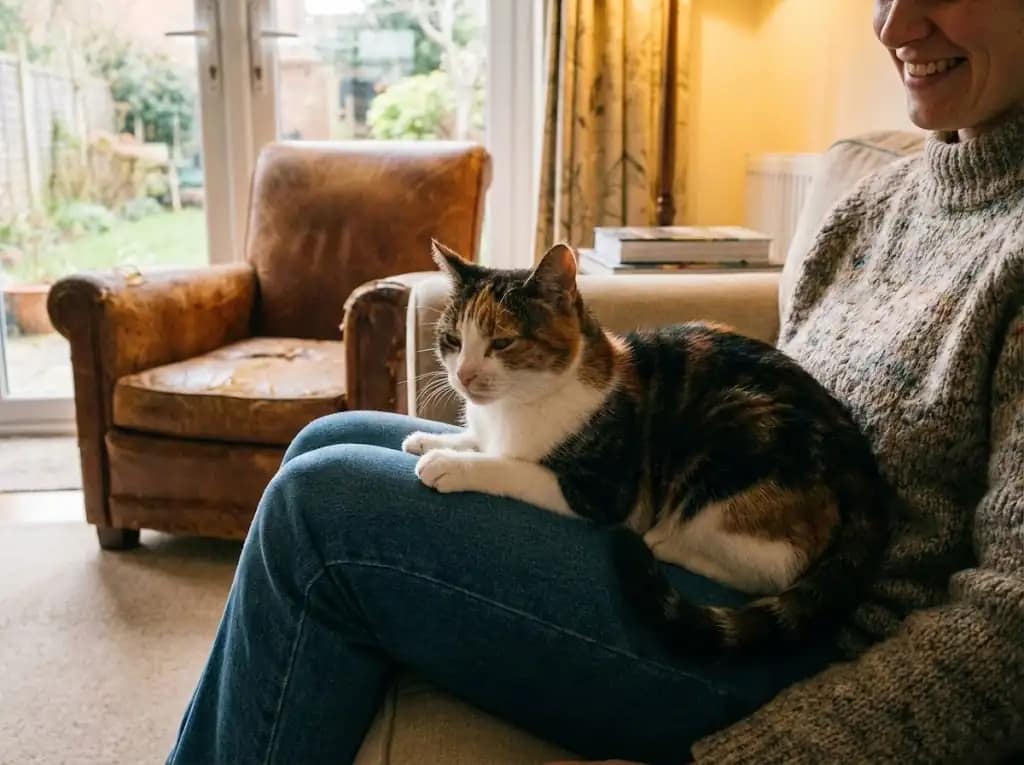
Cat kneading—often called "haciendo galletas"—is the rhythmic motion where cats press their front paws into a soft surface (like a blanket, bed, or your lap). In most cases, it’s totally normal and often means your cat feels safe and relaxed.
Quick answer: Cats knead because it’s a comforting kittenhood instinct, and adult cats also knead to get cozy before sleep, stretch their muscles, and leave their scent behind.
In this guide, you’ll learn 7 heartwarming reasons cats knead, what it means when they knead blankets o usted, and how to enjoy the moment without the claw “ouch.”
If kneading suddenly becomes intense or your cat seems sore/limps, check with your vet.
Índice
Quick answers
- Why do cats knead blankets? → comfort, nesting, scent
- Why does my cat knead me (and it hurts)? → affection + habit (fixes below)
- Why does my cat knead and purr? → relaxed + bonding
- Why does my cat drool while kneading? → often relaxed; sometimes dental discomfort if new
- Why does my cat knead and bite/suckle blankets? → self-soothing pattern
- Why is my cat kneading so much all of a sudden? → stress or discomfort (what to check)
(Don’t worry—we’ll cover the cozy reasons y the “ouch” solutions.)
Why Do Cats Knead? 7 Heartwarming Reasons (Making Biscuits Explained)
Kneading isn’t “one thing.” It’s a bundle of instincts and emotions that often show up together—comfort, habit, territory, affection, and sometimes stress relief. Here are the 7 most common reasons your cat makes biscuits (and what each one tends to look like in real life).
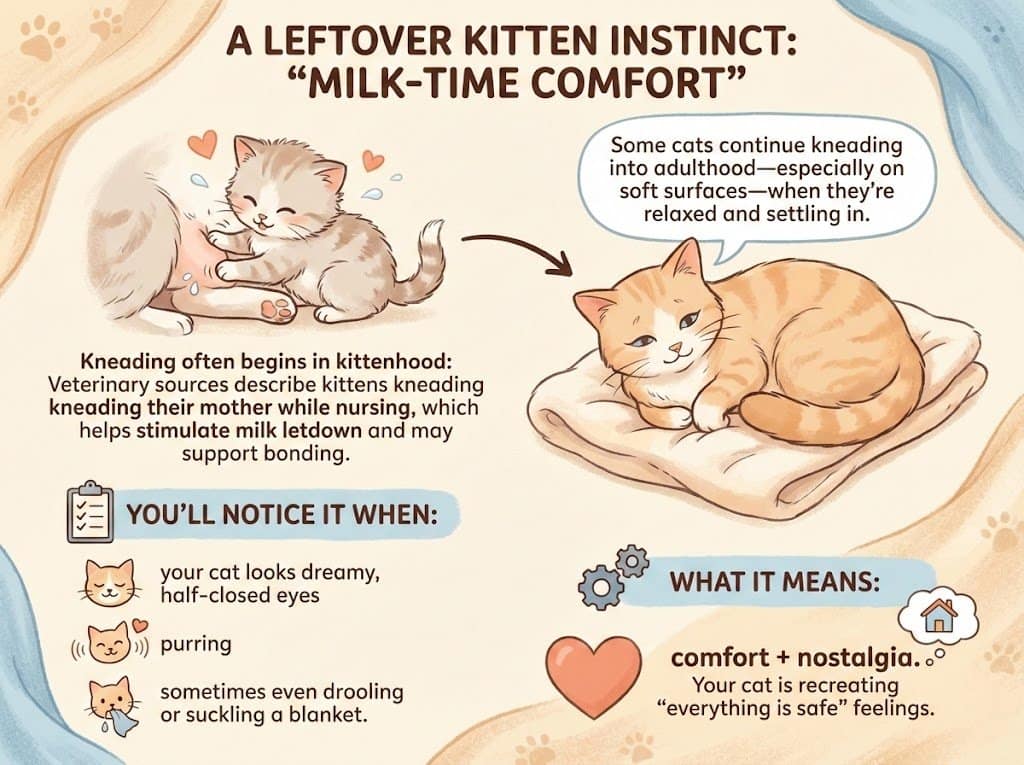
1. A leftover kitten instinct: “milk-time comfort”
Kneading often begins in kittenhood: Kneading often starts in kittenhood. Veterinary sources describe kittens kneading their mother while nursing, which helps stimulate milk letdown and may support bonding. Some cats continue kneading into adulthood—especially on soft surfaces—when they’re relaxed and settling in.
You’ll notice it when: your cat looks dreamy, half-closed eyes, purring, sometimes even drooling or suckling a blanket.
What it means: comfort + nostalgia. Your cat is recreating “everything is safe” feelings.
2. They’re making the bed: “this spot needs fluffing”
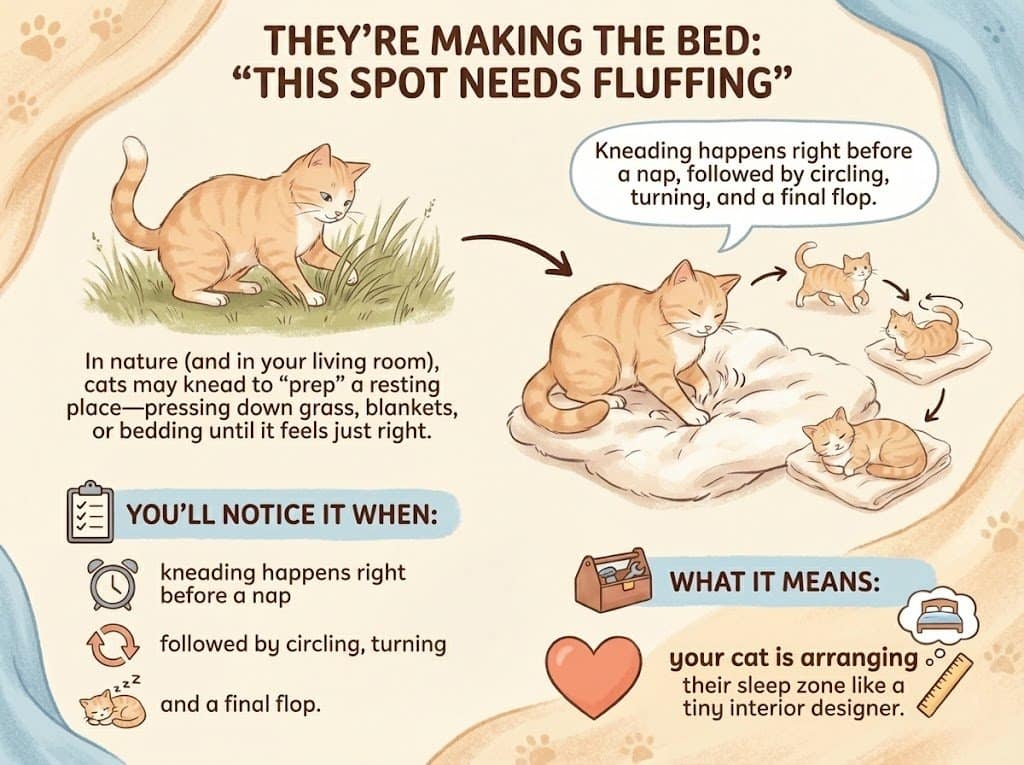
In nature (and in your living room), cats may knead to “prep” a resting place—pressing down grass, blankets, or bedding until it feels just right.
You’ll notice it when: kneading happens right before a nap, followed by circling, turning, and a final flop.
What it means: your cat is arranging their sleep zone like a tiny interior designer.
3. Scent marking: “mine” (and sometimes “you’re mine”)
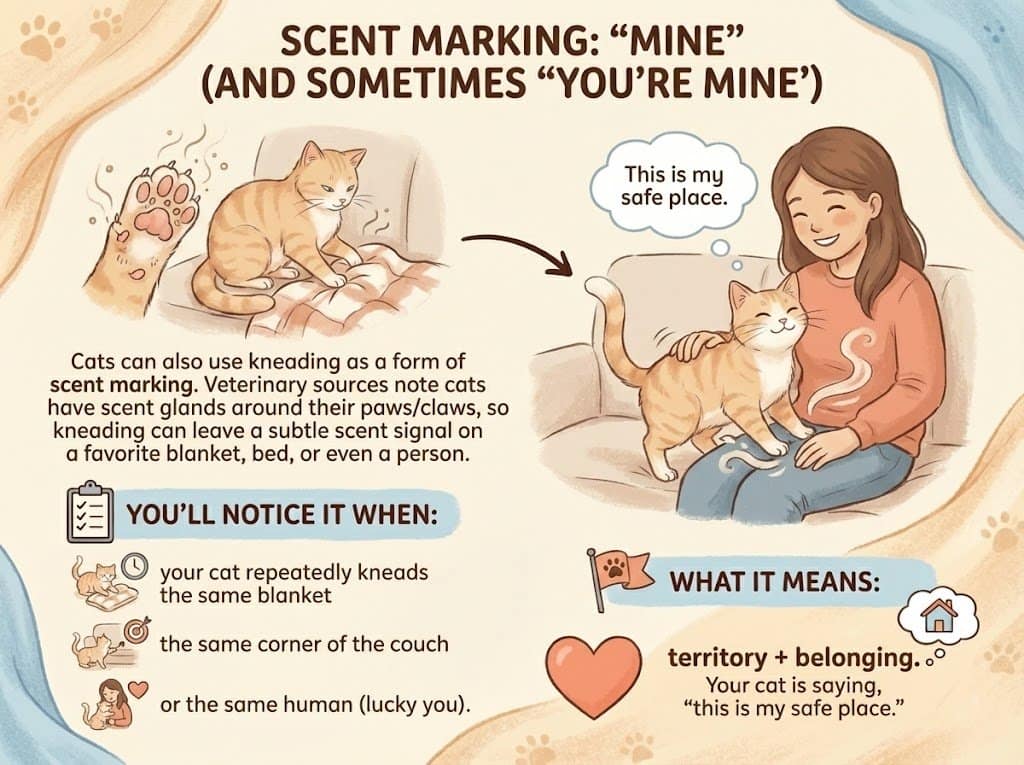
Cats can also use kneading as a form of scent marking. Veterinary sources note cats have scent glands around their paws/claws, so kneading can leave a subtle scent signal on a favorite blanket, bed, or even a person.
You’ll notice it when: your cat repeatedly kneads the same blanket, the same corner of the couch, or the same human (lucky you).
What it means: territory + belonging. Your cat is saying, “this is my safe place.”
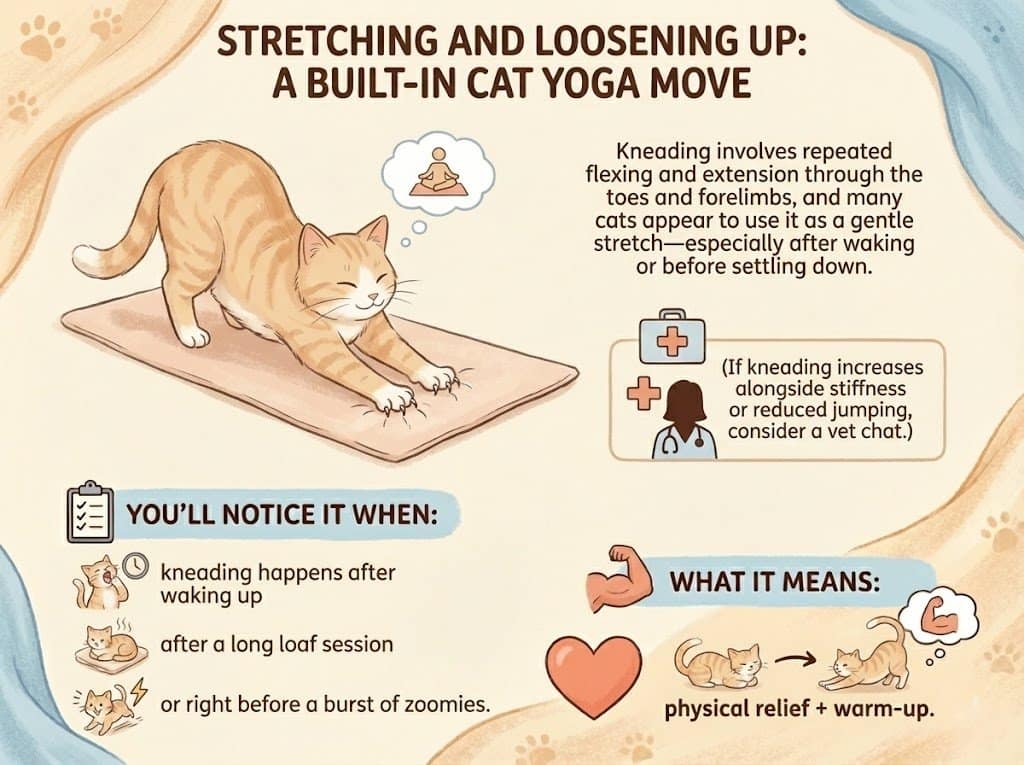
4. Stretching and loosening up: a built-in cat yoga move
Kneading involves repeated flexing and extension through the toes and forelimbs, and many cats appear to use it as a gentle stretch—especially after waking or before settling down. (If kneading increases alongside stiffness or reduced jumping, consider a vet chat.)
You’ll notice it when: kneading happens after waking up, after a long hogaza session, or right before a burst of zoomies.
What it means: physical relief + warm-up.
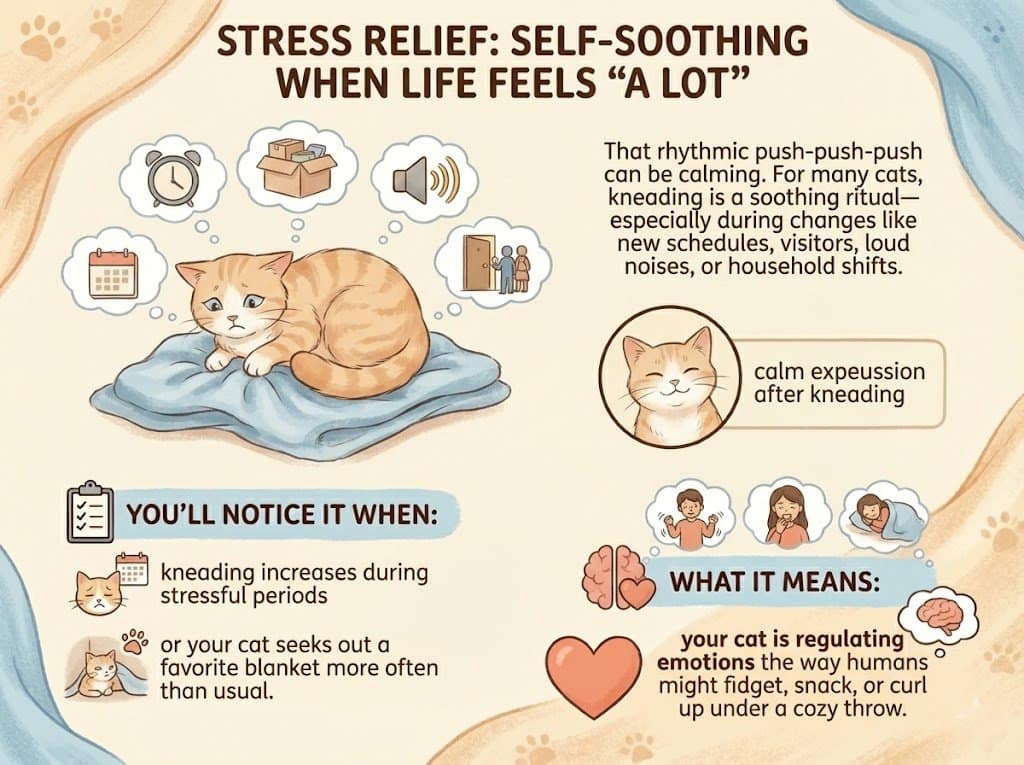
5. Stress relief: self-soothing when life feels “a lot”
That rhythmic push-push-push can be calming. For many cats, kneading is a soothing ritual—especially during changes like new schedules, visitors, loud noises, or household shifts.
You’ll notice it when: kneading increases during stressful periods, or your cat seeks out a favorite blanket more often than usual.
What it means: your cat is regulating emotions the way humans might fidget, snack, or curl up under a cozy throw.
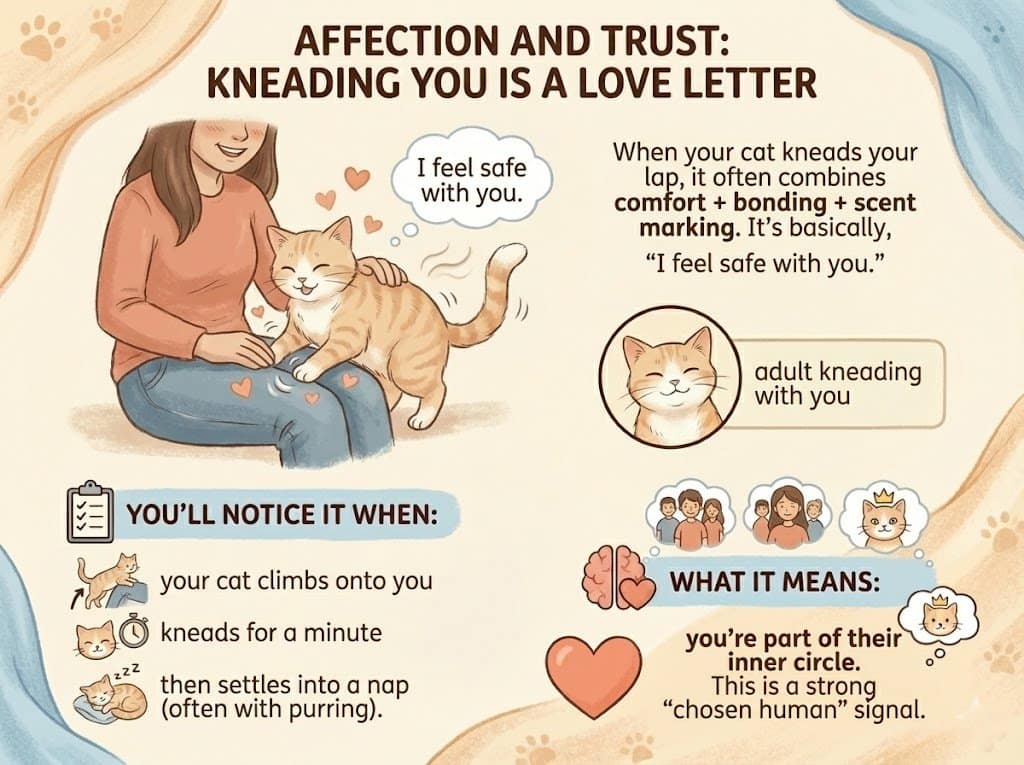
6. Affection and trust: kneading you is a love letter
When your cat kneads your lap, it often combines comfort + bonding + scent marking. It’s basically, “I feel safe with you.”
You’ll notice it when: your cat climbs onto you, kneads for a minute, then settles into a nap (often with purring).
What it means: you’re part of their inner circle. This is a strong “chosen human” signal.
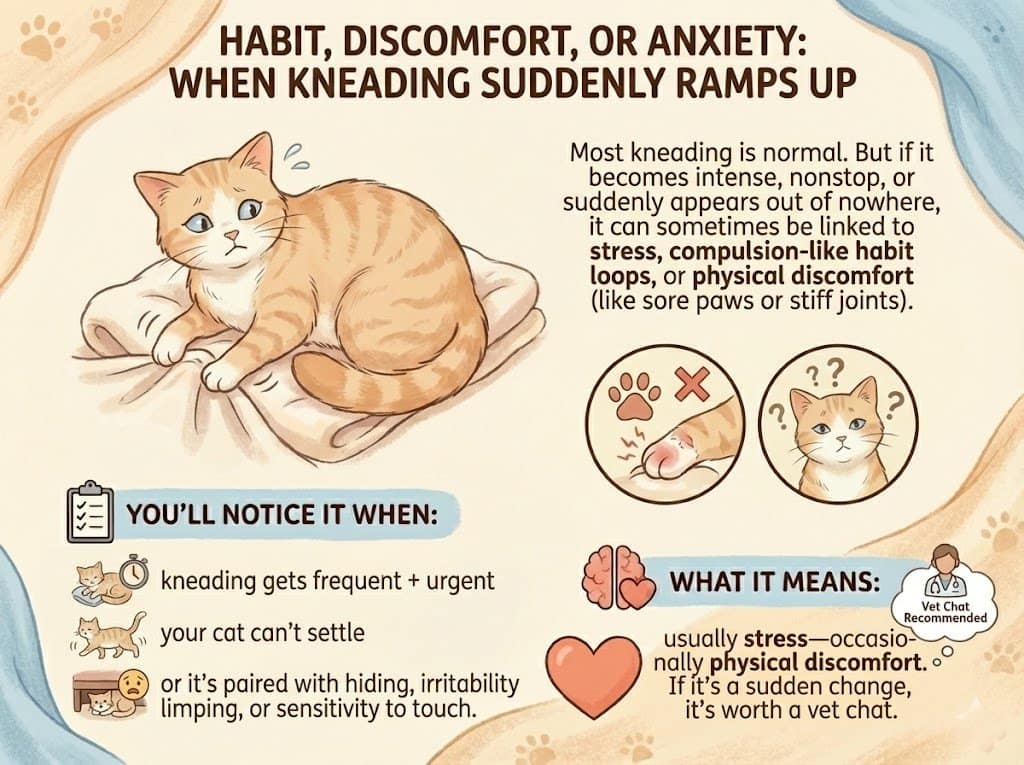
7. Habit, discomfort, or anxiety: when kneading suddenly ramps up
Most kneading is normal. But if it becomes intense, nonstop, or suddenly appears out of nowhere, it can sometimes be linked to stress, compulsion-like habit loops, or physical discomfort (like sore paws or stiff joints).
You’ll notice it when: kneading gets frequent + urgent, your cat can’t settle, or it’s paired with ocultar, irritability, limping, or sensitivity to touch.
What it means: usually stress—occasionally physical discomfort. If it’s a sudden change, it’s worth a vet chat.
Quick decoding: why blankets and laps are the top knead targets
- Blankets = the perfect soft “give” + easy scent-marking + nap-prep texture.
- Usted = warmth + safety + bonding (and yes, scent-marking you as “family”).
Situation guide: what your cat’s kneading means (and what to do)
Why do cats knead blankets?
Direct answer: Cats knead blankets because the soft “give” feels comforting, it helps them settle a sleep spot, and it can leave a familiar paw-scent on a favorite area.
Common patterns:
- Kneads happen before naps or during wind-down time
- Your cat returns to the same blanket/spot repeatedly
- Often paired with purring, slow blinking, or circling
Qué hacer:
Give a dedicated “knead blanket” (washable fleece), place it where kneading already happens, and trim nails to reduce snagging.
Why does my cat knead me (and it hurts)?
Direct answer: Kneading you usually means “I feel safe with you,” but claws hurt because kneading is a toe-flexing motion and many cats don’t fully retract during the rhythm.
Why you get picked:
- warmth + softness (prime knead real estate)
- bonding routine (couch/bedtime association)
What to do (no drama, no scolding):
- put a folded blanket on your lap antes de your cat settles
- keep nails trimmed (short + blunt tips)
- reward calm settling (so your cat learns the “safe lap setup”)
Why does my cat knead and purr at the same time?
Direct answer: Kneading + purring is a classic “I’m content and secure” combo, especially when your cat is winding down or bonding.
If it’s normal: your cat is relaxed, eating normally, and kneading is occasional.
If it’s a change: increased kneading plus hiding, irritability, appetite change, or sensitivity to touch → treat it as a behavior change worth noting.
Why does my cat drool while kneading?
Direct answer: Some cats drool when they’re deeply relaxed during kneading/cuddling. If drooling is new, frequent, or paired with mouth discomfort, dental issues become a reasonable “rule out.”
Green flags: only happens during kneading; cat otherwise normal.
Yellow flags: new onset, bad breath, pawing at mouth, reduced appetite.
Qué hacer: If yellow flags show up, schedule a dental/oral check.
Why does my cat knead and bite/suckle blankets?
Direct answer: Kneading + biting/suckling is often a self-soothing comfort habit and can show up more in anxious cats or cats with strong “kitten comfort” associations.
Qué hacer:
Offer one dedicated “suckle blanket,” keep routines predictable, increase play (soothing through enrichment), and redirect away from skin.
Why is my cat kneading so much all of a sudden?
Direct answer: A sudden spike in kneading is most often stress-driven self-soothing—sometimes discomfort.
Fast checklist (takes 30 seconds):
- Any changes in the home this week? (schedule, visitors, noise, new pet)
- Any movement changes? (hesitates to jump, stiffness, limping)
- Any mood changes? (hiding, irritability, less appetite)
Qué hacer: reduce stressors + add predictability; if movement/mood changes appear, check with a vet.
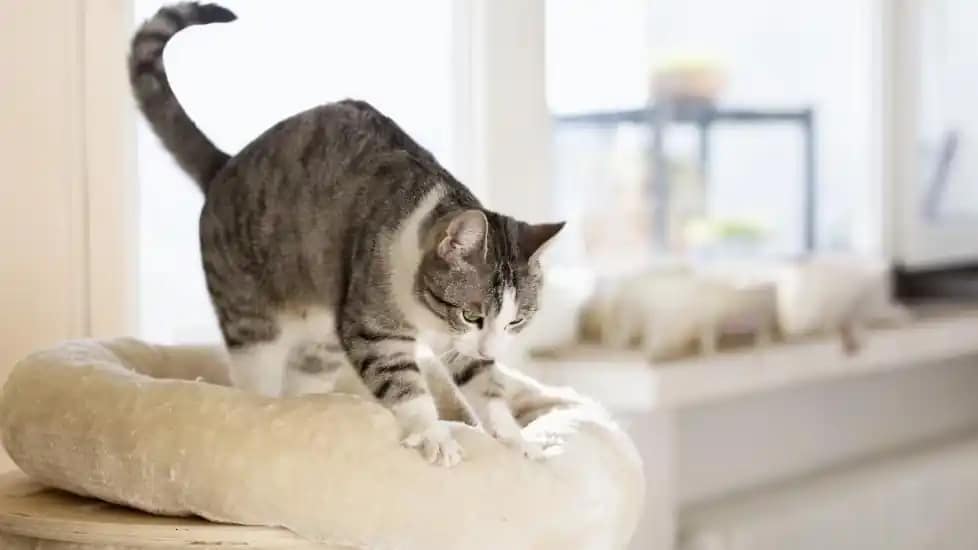
¿Es el amasamiento excesivo una señal de alarma? Cuándo prestar atención
Why is my cat kneading so much all of a sudden?
Direct answer: A sudden increase in kneading is often a self-soothing response to stress—or sometimes a sign your cat is trying to relieve discomfort.
Common triggers:
- changes in routine (travel, new work hours, visitors)
- new pets or household tension
- moving furniture / new smells
- pain signals (stiffness, sensitivity, avoiding jumps)
What to do first:
- do a quick “life change” scan (anything new this week?)
- increase predictability (playtime, feeding schedule, quiet rest spot)
- if you see limping, hiding, appetite changes, or obvious discomfort: vet check
Kneading is widely considered a self-soothing behavior: it’s rhythmic, familiar, and often shows up when cats are settling down, relaxing, or bonding. If your cat’s kneading suddenly becomes más frecuente, more intense, or starts happening in unusual places, treat it as a behavior change—stress and physical discomfort are two common contributors. VCA notes that changes like kneading “a lot more than normal” (especially alongside other changes like hiding or appetite shifts) are a good reason to check in with your veterinarian.
- Alertas de ansiedad: Más amasamientos podrían significar que se está tranquilizando a sí misma debido al estrés, como cambios en la rutina o nuevas vibraciones en el hogar.
- Pings físicosLos dolores articulares o las patas doloridas pueden requerir estiramientos adicionales mediante masajes.
- Habit loop (rare): In a small number of cats, repetitive kneading can look “stuck on repeat,” especially during stress. Rather than labeling it as a disorder, focus on function: if kneading interferes with normal sleep, play, eating, or seems impossible to interrupt, it’s a good reason to ask a vet (or a qualified behavior professional) for a plan.
No te asustes, la mayoría de las veces acariciar es un placer. Pero si lo hace sin parar o lo acompaña con esconderse o letargo, habla con tu veterinario. Los ajustes tempranos, como enriquecer el entorno o hacer exámenes suaves, pueden cortar los problemas de raíz. Recuerda que tú eres su defensor; estar atento a estas señales fortalece vuestra relación.
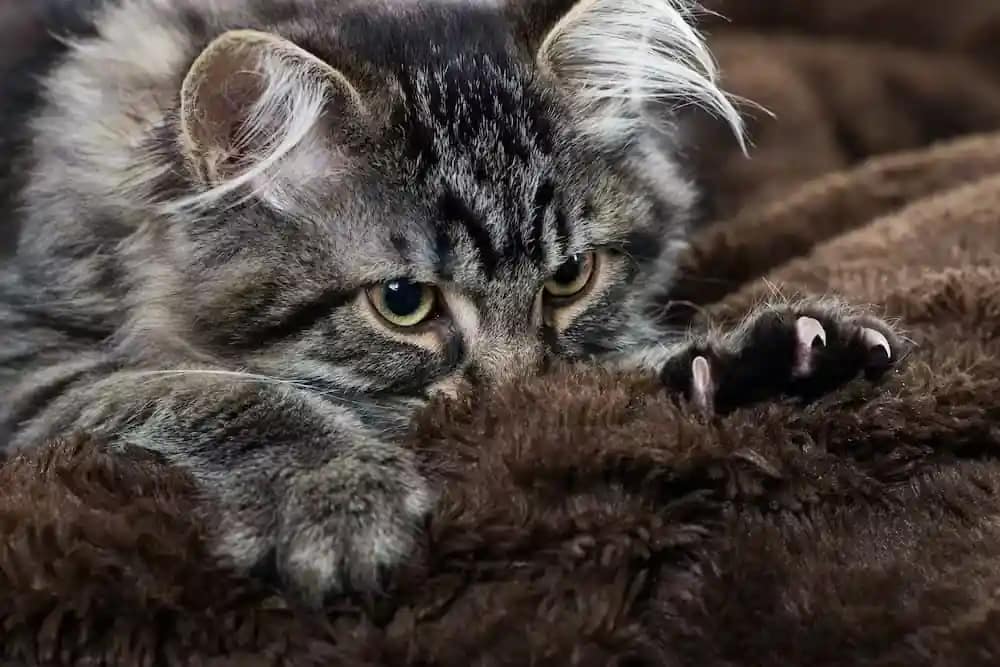
Formas amables de guiar (no detener) la elaboración de galletas
Amasar es tan natural como ronronear: tu gato merece expresarlo. ¿El objetivo? Redirigirlo con amabilidad, manteniendo las garras bajo control sin apagar su chispa. Aquí tienes un manual para dueños de mascotas:
Do’s for Harmony
- Primero, registro veterinario: Descarta problemas de salud. Para los casos de ansiedad, prueba con remedios calmantes como difusores de feromonas (piensa en una terapia de aromas suaves) o suplementos recomendados por el veterinario, siempre bajo supervisión profesional.
- Designar y recompensar: Prepara lugares acogedores para que se acurruque (mantas, camas para gatos) y elógiala (o dale golosinas) cuando los use. Las vibraciones positivas la animan a elegir los lugares adecuados.
- Rutina para el cuidado de las garras: Los cortes regulares desafilan esos ganchos, protegiendo tu piel y tu sofá. Combínalos con rascadores para que disfrute de una felicidad total.
Don’ts to Dodge
Evita los regaños¿Gritos o aerosoles? Aumentan el miedo, no solucionan el problema: tu gato podría simplemente ocultarte su hábito.
Nunca le cortes las uñas: It’s an outdated, painful myth-buster. Don’t declaw to solve kneading or scratching. The American Animal Hospital Association (AAHA) describes declawing as amputation of the third bone in each toe, and notes it carries surgical risks and pain.
AAHA also cites retrospective studies finding declawed cats were 3–7 times more likely than non-declawed cats to show issues such as chronic back pain and certain problem behaviors (e.g., biting, inappropriate urination, overgrooming). Focus on alternatives like nail trims, scratching posts, positive reinforcement, and (if needed) nail caps.
Con estos pequeños cambios, honras sus instintos y, al mismo tiempo, creas un espacio compartido más acogedor. Se trata de lograr una vida perfecta en la que todos salgan ganando.
Para concluir esta historia que nos hace vibrar, el amasamiento revela las comodidades más profundas de tu gato, desde sus raíces de gatito hasta los afectos de adulto. Es una ventana a su mundo, que nos recuerda por qué nos enamoramos de estos enigmáticos compañeros. Conclusión para los demás padres de gatos: Acepta las galletas con límites. Proporciona salidas suaves, recorta esas garras y consulta a los profesionales si los patrones cambian.
Tu cuidado atento convierte las peculiaridades cotidianas en rituales entrañables, fomentando un hogar rebosante de confianza y siestas con el rabo entre las patas. ¿Cuál es el lugar favorito de tu gato para amasar? Compártelo en los comentarios: todos estamos juntos en esta peluda aventura.
PREGUNTAS FRECUENTES
¿Por qué los gatos amasan específicamente las mantas?
Las mantas ofrecen esa textura suave y flexible ideal que recuerda a la madre durante la lactancia, lo que ayuda a los gatos a relajarse y marcar su territorio con el olor de sus patas. ¡Es un ritual de confort multifuncional!
¿Es normal que los gatos adultos amasen como los gatitos?
Por supuesto, muchas personas mantienen este hábito relajante durante toda su vida para sentirse tranquilas y seguras. Si es suave y ocasional, es una señal de satisfacción, no de preocupación.
¿Cómo puedo evitar que mi gato me arañe?
Diríjala hacia una manta o un juguete específico, córtele las uñas con regularidad y utilice una capa protectora en su regazo. Recompénsela por utilizar los lugares permitidos para reforzar los buenos hábitos.
¿Amasar excesivamente significa que mi gato tiene dolor?
Podría indicar estrés, ansiedad o problemas articulares como artritis. Esté atento a otros signos (por ejemplo, cojera) y consulte a su veterinario para que le haga un chequeo personalizado.
¿Amasar puede ser una muestra de afecto por parte de mi gato?
¡Sí! A menudo es su forma de decir “confío en ti y te quiero”, como un eco de aquellos primeros amasamientos con mamá para crear vínculos. Aprecialo como un sincero abrazo felino.
Referencias
Hart, H., DVM. (2023, December 1). Why do cats knead?
Brister, J. M. (2018, November). Body language of cats.
Yeowell, G., Burns, D., Fatoye, F., Gebrye, T., Wright, A., Mwacalimba, K., & Odeyemi, I. (2021, November 18). Indicators of health-related quality of life in cats with degenerative joint disease: Systematic review and proposal of a conceptual framework.
American Association of Feline Practitioners. (2024, August 26). Find a veterinary professional.
American Animal Hospital Association. (n.d.). AAHA-accredited hospital locator.
Governor of California. (2025, October 9). Governor Newsom takes action to end the puppy mill pipeline, protect cats. CA.gov.
Assemblymember Alex Lee (AD-24). (2025, October 10). California bans cat declawing.
Brister, JM. “El lenguaje corporal de los gatos,” Socio veterinario. Noviembre de 2018.









 EN
EN DE
DE ES
ES PT
PT