
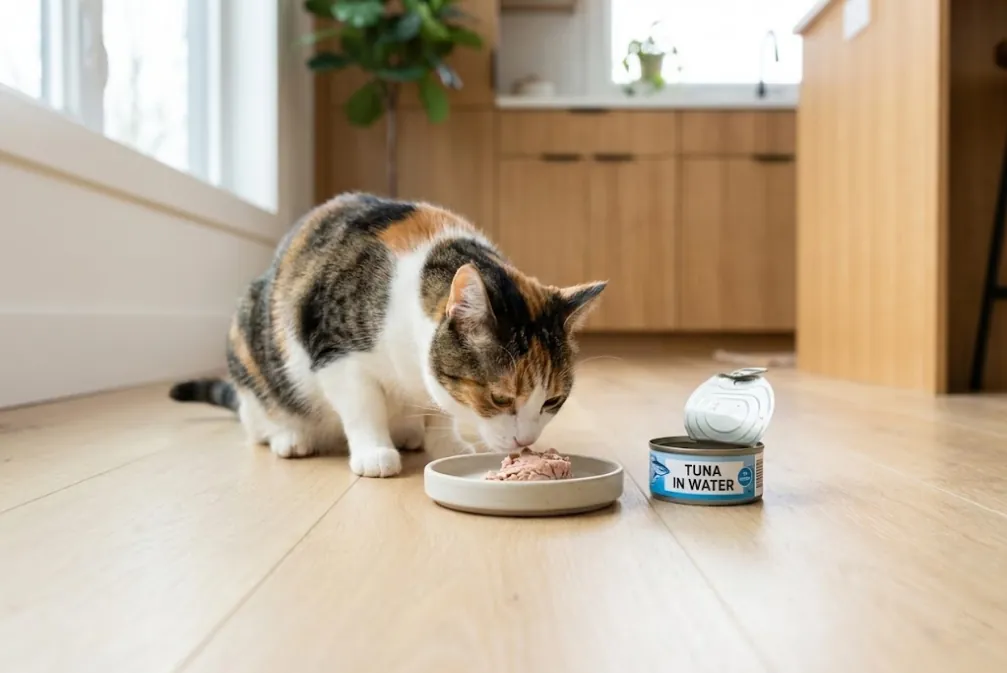
Most healthy adult cats can come a tiny amount of plain, fully cooked tuna or no-salt-added tuna packed in water as an occasional treat. Human tuna should not replace complete and balanced cat food. Avoid raw, seasoned, oil-packed, brine-packed, and frequent large servings, and ask your veterinarian before offering tuna to cats with medical or dietary needs.
The safest approach is to treat tuna as an optional taste, not a nutritional supplement or meal. Cats do not need human canned tuna when their regular diet is complete and balanced.
Índice
- Which tuna can cats eat?
- ¿Qué cantidad de atún puedo dar a mi gato?
- Can cats eat canned tuna made for people?
- Why should cats not eat tuna every day?
- Is mercury in tuna a risk for cats?
- Is tuna cat food different from human tuna?
- When should tuna be off-limits?
- What should I do if my cat ate unsafe tuna?
- Conclusión
- Preguntas frecuentes
- Referencias
Which tuna can cats eat?
The safest human tuna option is a very small amount of plain tuna with no salt, oil, seasoning, sauce, onion, or garlic. Plain cooked tuna or no-salt-added tuna packed in water is preferable to brine-packed, oil-packed, raw, or seasoned tuna.
| Tuna type | Recommendation | Why |
|---|---|---|
| Plain fully cooked tuna | Tiny occasional treat | Avoid bones, oil, salt, and seasoning |
| No-salt-added tuna packed in water | Tiny occasional treat | Drain it and check the ingredient list |
| Tuna packed in brine | Evite | Usually adds unnecessary sodium |
| Tuna packed in oil | Evite | Adds fat and calories and may upset digestion |
| Seasoned tuna or tuna salad | Evite | May contain salt, onion, garlic, sauces, or other unsuitable ingredients |
| Raw tuna | Evite | Raw animal foods can carry harmful bacteria and other risks |
| Tuna-flavored complete cat food | Check the label | It may be suitable as a main diet if complete, balanced, and appropriate for the cat’s life stage |
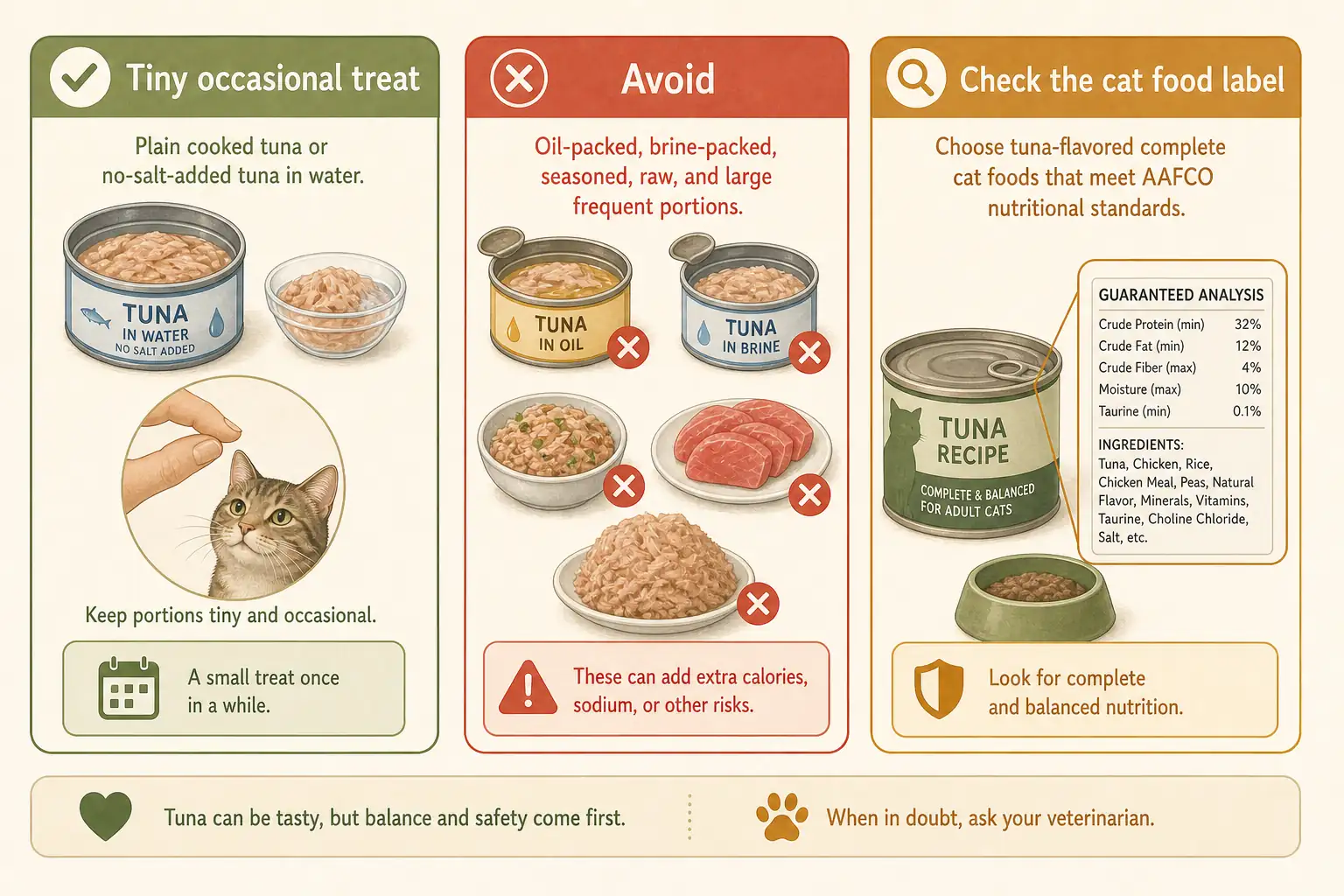
If you cannot verify the ingredients, skip the tuna. A cat does not miss a nutritional requirement by not eating human tuna.
¿Qué cantidad de atún puedo dar a mi gato?
Offer only a tiny treat-size amount, not a side dish or replacement meal. Start with one or two small flakes and count tuna within the cat’s existing treat allowance rather than adding it on top of daily food.
| Cat or situation | Safer decision |
|---|---|
| First tuna taste for a healthy adult | Offer one small flake and watch for digestive or skin changes |
| Healthy adult already receiving treats | Replace part of the existing treat allowance; do not add a large serving |
| Overweight or weight-loss plan | Skip tuna or ask the veterinarian how it fits the plan |
| Gatito | Prioritize complete kitten food and ask before adding extras |
| Senior cat | Ask first when kidney, thyroid, digestive, dental, or weight issues are present |
| Prescription or therapeutic diet | Do not add tuna unless the veterinary team approves it |
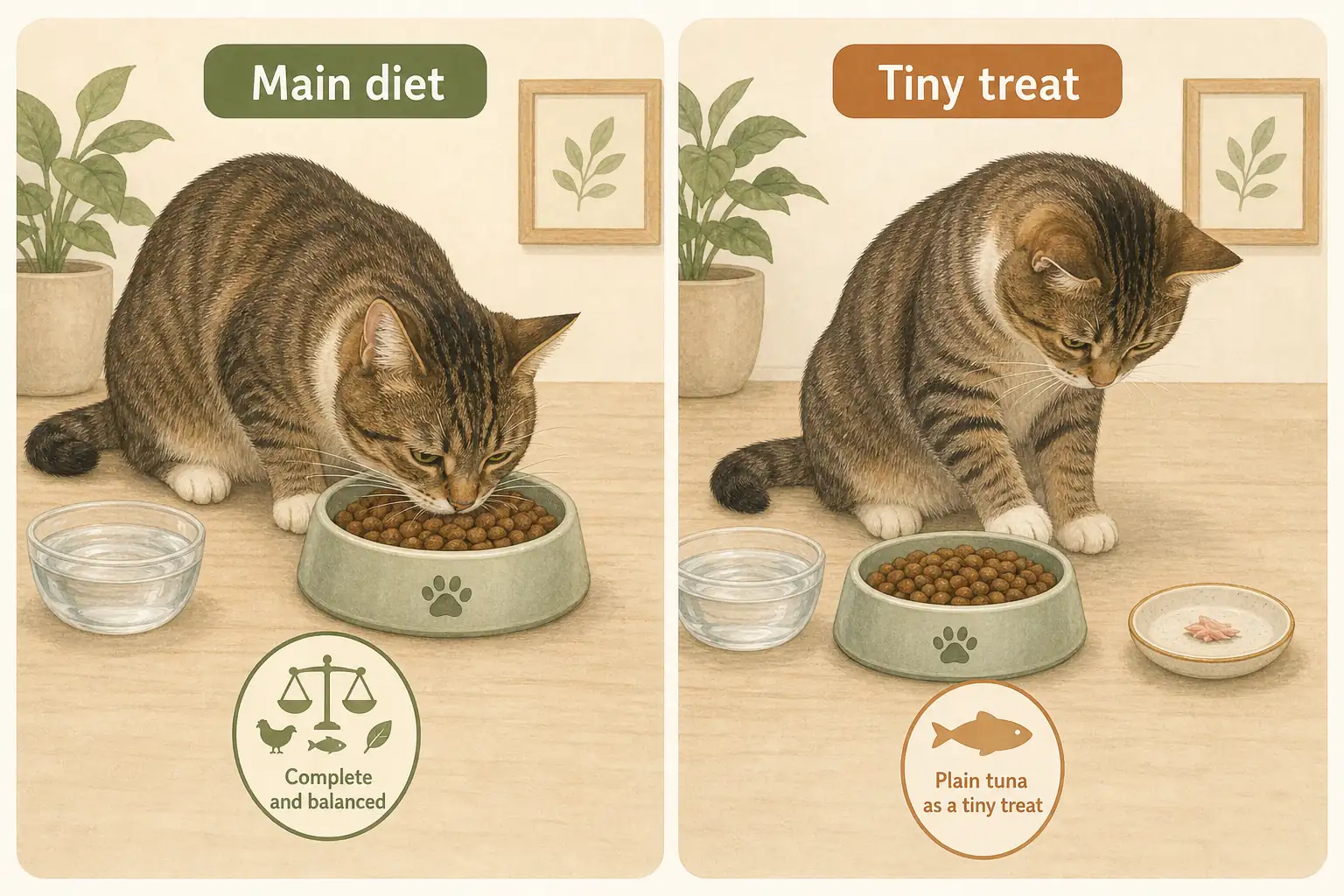
Cornell explains that cats need nutrients in the correct proportions and recommends nutritionally complete and balanced commercial cat foods for regular feeding.1 Use the SnuggleSouls calculadora de calorías para gatos to organize questions about daily intake, but ask a veterinarian for individualized feeding advice.
Can cats eat canned tuna made for people?
Cats can sometimes have a tiny amount of human canned tuna, but the label and packing liquid matter. Choose no-salt-added tuna in water, drain it, and avoid products with brine, oil, broth ingredients, flavors, spices, onion, or garlic.
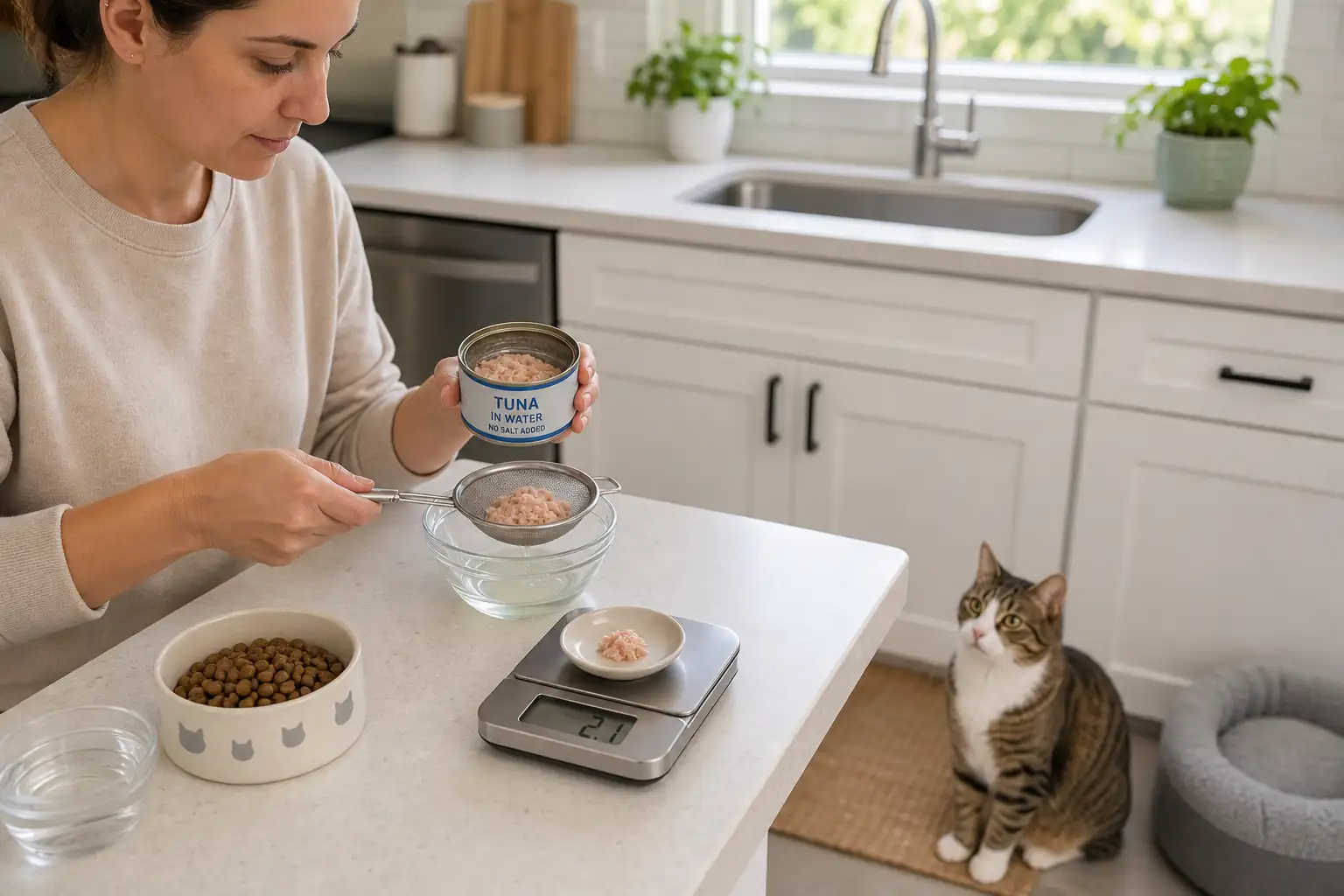
Use this label check:
- Confirm it is tuna packed in water.
- Look for no salt added or a low-sodium option.
- Check that no seasoning, onion, garlic, sauce, or flavoring is listed.
- Drain the liquid.
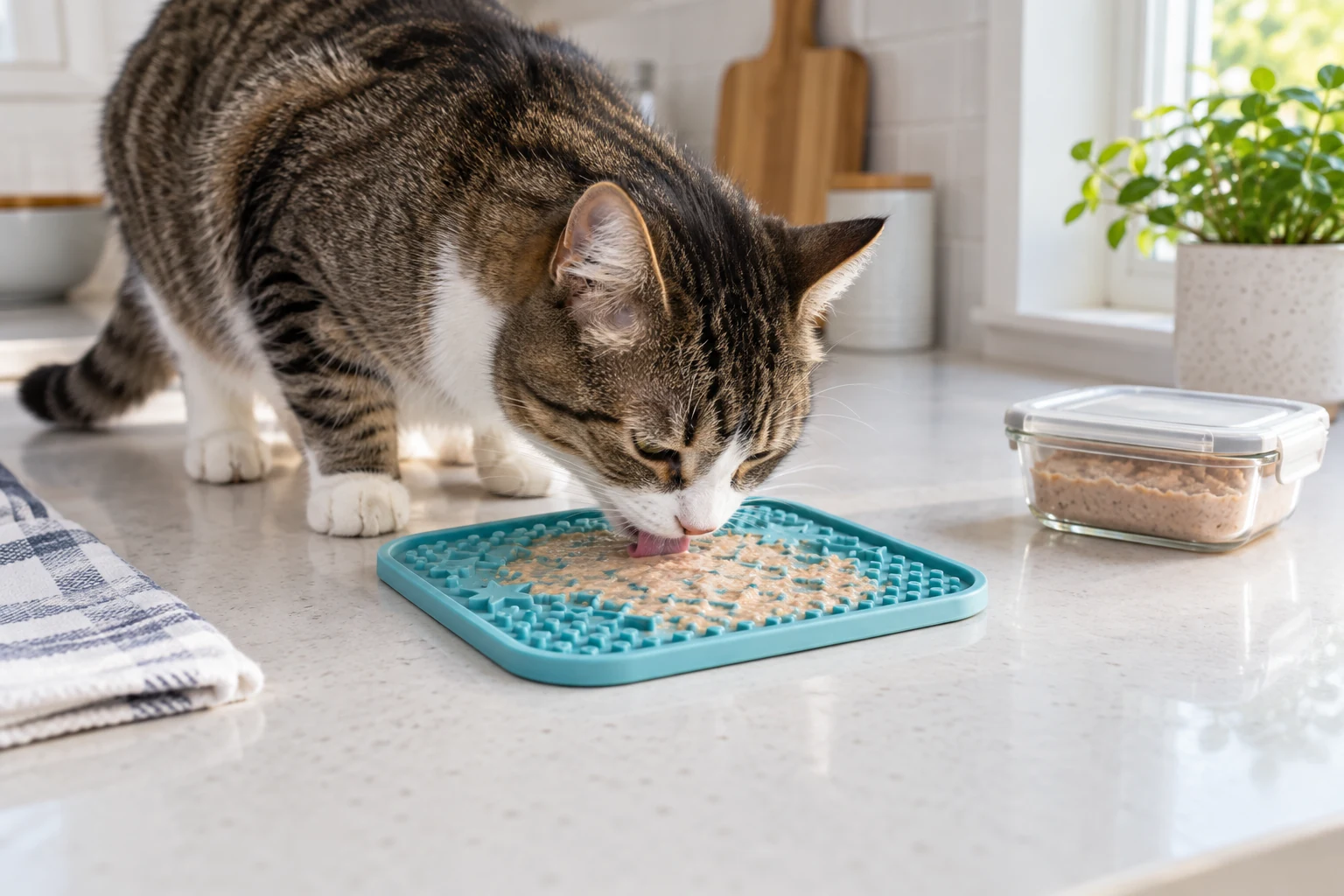
- Offer only a tiny amount on a separate dish.
- Refrigerate or discard the remaining opened product safely.
Do not regularly pour tuna water over meals. It may add sodium or ingredients, encourage food refusal without the topper, and make it harder to assess the cat’s normal appetite.
Why should cats not eat tuna every day?
Human tuna is not a complete and balanced cat diet. Frequent servings can displace essential nutrients, add calories or sodium, encourage selective eating, and increase repeated exposure to contaminants such as mercury.
The FDA explains that a completo y equilibrado pet food provides required nutrients at appropriate levels and should carry a nutritional adequacy statement.2 Human tuna does not carry that assurance for cats.
Daily tuna can create practical problems:
- the cat refuses regular food and waits for tuna
- treats crowd out balanced meals
- calorías intake rises unnoticed
- sodium or oil intake increases
- medical or prescription diets become less consistent
- mercury exposure repeats over time
For broader meal selection, use the SnuggleSouls guide to choosing the right wet food and the guide to ¿Qué cantidad de comida húmeda hay que darle a un gato?.
Is mercury in tuna a risk for cats?
Tuna can contain methylmercury, and mercury levels vary by tuna species and product. There is no useful universal home calculation for a safe cat dose, so the conservative choice is to keep human tuna tiny and infrequent rather than feeding it routinely.
FDA fish guidance for people distinguishes tuna types because albacore or white tuna generally contains more mercury than canned light tuna.3 That human guidance does not establish a cat feeding dose, but it supports the reason not to treat every tuna product as equivalent or feed tuna frequently.
Do not try to use tuna as a regular source of protein or omega-3s for your cat. If nutrition or supplementation is the goal, ask the veterinarian about a complete diet or a product designed for that cat’s needs.
Is tuna cat food different from human tuna?
Yes. Tuna-flavored or tuna-based cat food can be suitable for regular feeding when the label states that it is complete and balanced for the cat’s life stage. Human canned tuna is a single food and should be treated only as an occasional extra.
Check the cat-food label for:
- a nutritional adequacy or complete-and-balanced statement
- the intended life stage
- whether it is for maintenance, growth, all life stages, or supplemental feeding
- feeding directions
- calorie information when available
A product labeled for intermittent or supplemental feeding is not a complete daily diet. Tuna flavor also does not make a food appropriate for every cat, especially cats with allergies, prescription diets, or medical conditions.
When should tuna be off-limits?
Skip tuna when it conflicts with a prescribed diet, the cat is unwell, or the ingredients and quantity are uncertain. New treats are not useful when a cat already has vomiting, diarrhea, appetite changes, urinary signs, or unexplained weight loss.
| Cat or situation | Recommended response |
|---|---|
| Kidney, urinary, heart, digestive, allergy, or weight condition | Ask the veterinarian before offering tuna |
| Prescription diet | Do not add tuna unless specifically approved |
| Kitten, pregnant, or nursing cat | Keep nutrition consistent and ask before adding extras |
| Vomiting, diarrhea, poor appetite, or unexplained weight loss | Avoid new treats and contact the veterinarian |
| Known fish sensitivity | Avoid tuna |
| Raw, spoiled, heavily salted, seasoned, or oily tuna | Do not offer |
Use the broader SnuggleSouls qué pueden comer los gatos guide for other foods, and compare tuna with the salmon safety guide rather than assuming all fish are interchangeable.
What should I do if my cat ate unsafe tuna?
Check the type, ingredients, amount, and the cat’s condition. Call a veterinarian promptly for a large amount, raw or spoiled tuna, possible onion or garlic exposure, or any symptoms.
| What happened | ¿Qué hacer ahora? |
|---|---|
| Tiny bite of plain tuna and cat is well | Monitor appetite, stool, vomiting, and behavior |
| Ate oil-packed or brine-packed tuna | Call for advice if the amount was substantial or the cat has medical needs |
| Ate seasoned tuna or tuna salad | Check ingredients and call the veterinarian, especially for onion or garlic |
| Ate raw or spoiled tuna | Contact the veterinarian |
| Repeated vomiting, diarrhea, weakness, tremors, collapse, breathing trouble, or severe behavior change | Acude al veterinario de urgencia |
Do not induce vomiting or give a home remedy unless a veterinarian or animal poison-control professional instructs you to do so.
Conclusión
Most healthy adult cats can have a tiny taste of plain cooked tuna or no-salt-added tuna packed in water, but they do not need it. Human tuna should remain an occasional treat, never a replacement for complete and balanced cat food.
Avoid raw, seasoned, oily, salty, and frequent large servings. Read labels carefully, keep portions visibly tiny, and ask your veterinarian before offering tuna to kittens, medically fragile cats, or cats following a prescription diet.
Preguntas frecuentes
Can cats eat tuna from a can?
Sometimes, in a tiny amount. Choose no-salt-added tuna packed in water, drain it, and check that no seasoning, onion, garlic, oil, or brine is present.
¿Pueden los gatos comer atún todos los días?
No. Human tuna is not complete and balanced for cats, and frequent feeding can displace essential nutrition, add calories or sodium, encourage selective eating, and increase mercury exposure.
¿Pueden los gatos comer atún en aceite?
Avoid it. Oil adds unnecessary fat and calories and may upset digestion. A tiny amount of no-salt-added tuna in water is a more conservative option.
Can cats eat raw tuna?
Raw tuna is not recommended. Raw animal foods can carry harmful bacteria and create risks for both cats and people handling the food.4
Is canned light tuna better than albacore for cats?
Albacore generally contains more mercury than canned light tuna, but neither should become a regular cat food. Keep any human tuna tiny and infrequent.
¿Pueden comer atún los gatitos?
Kittens need complete and balanced kitten food for growth. Ask a veterinarian before adding tuna or other extras, especially for a very young, underweight, or unwell kitten.
Why does my cat only want tuna?
Tuna has a strong smell and taste, and repeated offerings can encourage a cat to wait for it. Stop using tuna as a routine topper and contact a veterinarian if the cat refuses complete food or has an appetite change.
Referencias
[1] Centro de Salud Felina de Cornell. Cómo alimentar a tu gato.
[2] U.S. Food and Drug Administration. Complete and Balanced Pet Food.
[3] U.S. Food and Drug Administration. Advice about Eating Fish.
[4] U.S. Food and Drug Administration. Get the Facts! Raw Pet Food Diets Can Be Dangerous to You and Your Pet.
 EN
EN DE
DE ES
ES PT
PT