
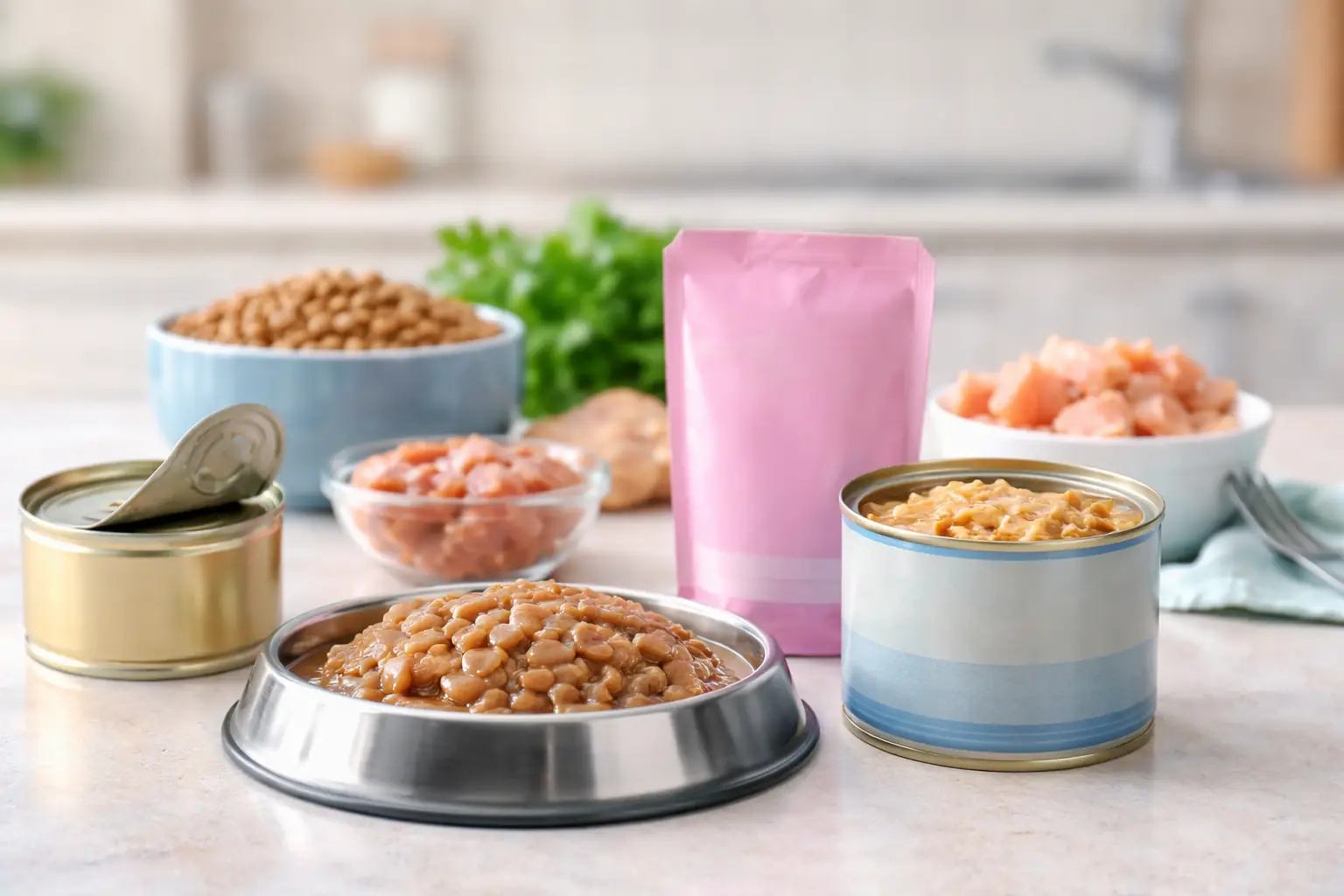
Elegir la comida húmeda adecuada para tu gato no consiste tanto en encontrar la lata más bonita como en elegir la que mejor se adapte a nutrición, etapa de la vida, textura, calorías y necesidades médicas. Un buen alimento húmedo para gatos debe estar etiquetado como «completo y equilibrado» para la etapa de vida de tu gato, aportar suficientes proteínas de origen animal, ofrecer una cantidad de humedad que tu gato realmente consuma y adaptarse a la rutina de alimentación de tu hogar. Los gatos son carnívoros obligados, lo que significa que dependen de los nutrientes que se encuentran en los productos de origen animal, por lo que la formulación del alimento es más importante que las afirmaciones publicitarias que aparecen en la parte delantera del envase.
Si estás en el pasillo de la comida para mascotas y no sabes cómo elegir comida húmeda para gatos sin tener que analizar cada ingrediente, empieza por esta sencilla regla: Comprueba primero la declaración de adecuación nutricional y, a continuación, compara el contenido de humedad, las proteínas, las calorías, la textura y el historial de salud de tu gato.. La lista de ingredientes puede ser de ayuda, pero no debería ser el único factor decisivo, ya que los ingredientes se enumeran por orden de peso y esto puede resultar engañoso cuando los ingredientes con alto contenido en humedad aparecen en primer lugar.
Índice
Respuesta rápida: La lista de comprobación de 3 minutos para la comida húmeda para gatos
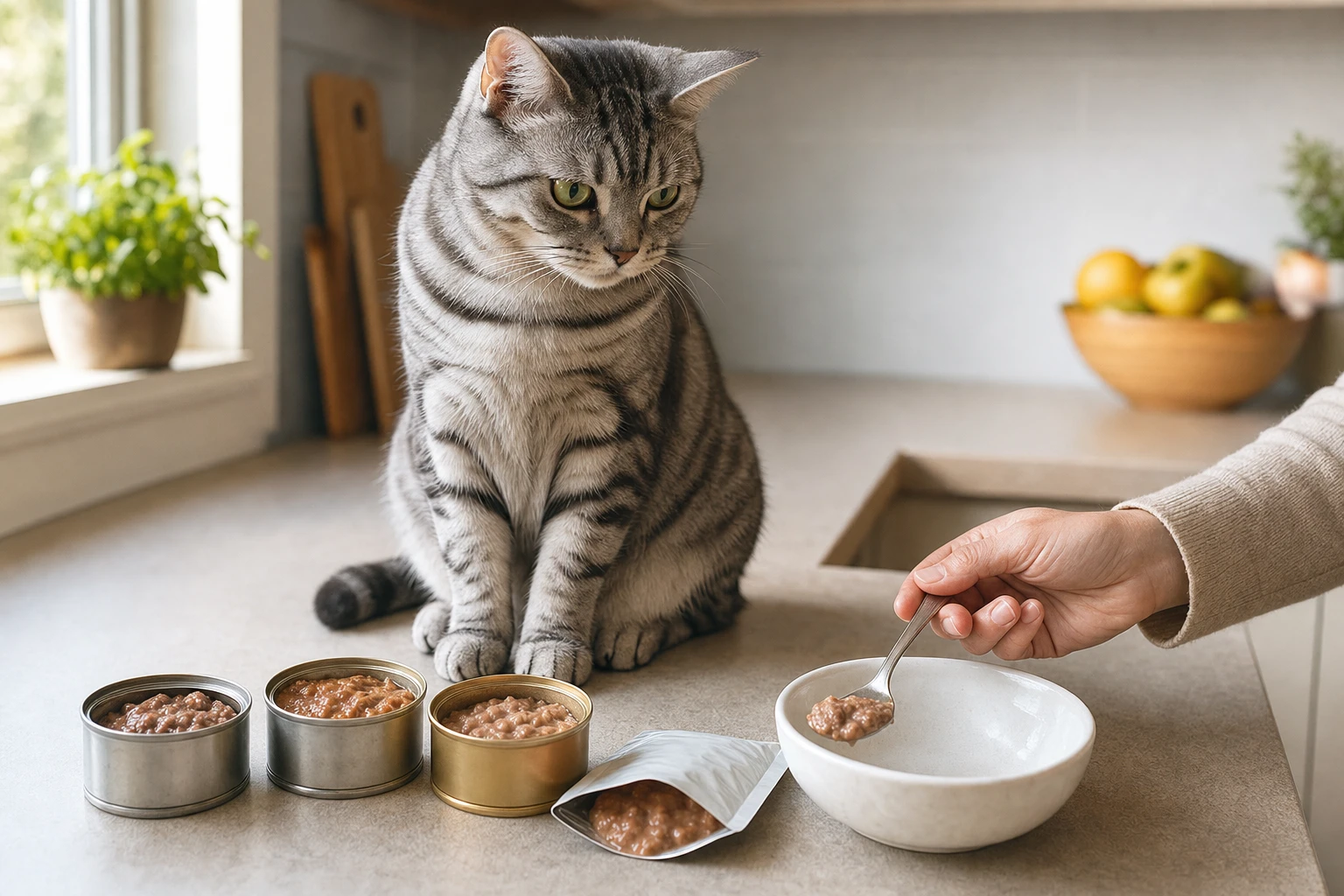
La forma más rápida de elegir comida húmeda para gatos es fijarse en cinco aspectos imprescindibles antes de comparar sabores. La comida debe indicar que es completo y equilibrado, se adapte a la etapa de vida de tu gato, indique claramente el aporte calórico, tenga una textura que le resulte agradable a tu gato y evite promesas que suenen impresionantes pero que no expliquen su adecuación nutricional. Si tu gato padece una enfermedad renal, problemas urinarios, diabetes, vómitos crónicos, alergias, obesidad o pérdida de apetito inexplicable, consulta a tu veterinario antes de cambiar su dieta.
| Qué hay que comprobar | Lo que quieres ver | Por qué es importante |
|---|---|---|
| Declaración de adecuación nutricional | “Completo y equilibrado” para el mantenimiento y el crecimiento de los adultos, o para todas las etapas de la vida | Esto te indica si el alimento puede servir como dieta principal, y no solo como complemento o golosina. |
| Etapa de la vida | Cachorros, gatos adultos, gatos mayores o para todas las etapas de la vida, dependiendo de tu gato | Los gatitos necesitan un aporte nutricional que favorezca su crecimiento, mientras que los adultos suelen necesitar calorías control. |
| Humedad | Los alimentos en conserva suelen contener al menos un 75% de humedad | La comida húmeda puede contribuir a la ingesta diaria de agua, sobre todo en el caso de los gatos que beben poco. |
| Calorías | kcal por lata, sobre, bandeja u onza | Controlar el tamaño de las raciones evita el aumento gradual de peso. |
| Textura | Paté, carne picada, tiras, trozos, caldo o salsa | Muchos gatos aceptan o rechazan la comida en función de la textura en la boca, antes incluso que por su valor nutricional. |
| Aptitud médica | Dieta veterinaria, si es necesario | Los problemas urinarios, renales, de diabetes, gastrointestinales y de peso pueden requerir fórmulas personalizadas. |
Este artículo se centra en cómo elegir un pienso húmedo para el mantenimiento habitual de gatos sanos. En cuanto a las raciones, complementa esta guía con el artículo de SnuggleSouls sobre ¿Qué cantidad de comida húmeda hay que darle a un gato? o utiliza el calculadora de calorías para gatos una vez que sepas las calorías que tiene la comida.
Empieza por la etiqueta, no por el nombre del sabor
Las etiquetas de los alimentos para mascotas están diseñadas para vender, pero la frase más importante suele aparecer en letra pequeña y es fácil pasarla por alto. VCA Animal Hospitals explica que el declaración de adecuación nutricional Es el elemento más importante de la etiqueta, ya que indica si el alimento es completo, equilibrado y adecuado para la etapa de vida correspondiente. Esta indicación suele aparecer junto al análisis garantizado o las instrucciones de alimentación, y puede hacer referencia a los perfiles nutricionales de la AAFCO o a ensayos de alimentación.
Una regla práctica: si un alimento húmedo no es completo y equilibrado, utilízalo como complemento, aderezo o golosina ocasional, en lugar de como dieta principal de tu gato.
Un alimento etiquetado como “solo para alimentación intermitente o complementaria” puede resultar útil. Puede ayudar a animar a un gato enfermo a come, aportar hidratación o facilitar la administración de medicamentos. Sin embargo, no debe sustituir a una dieta completa, a menos que tu veterinario lo recomiende expresamente. A la larga, alimentar a tu mascota con un pienso incompleto como dieta principal puede provocar desequilibrios nutricionales.
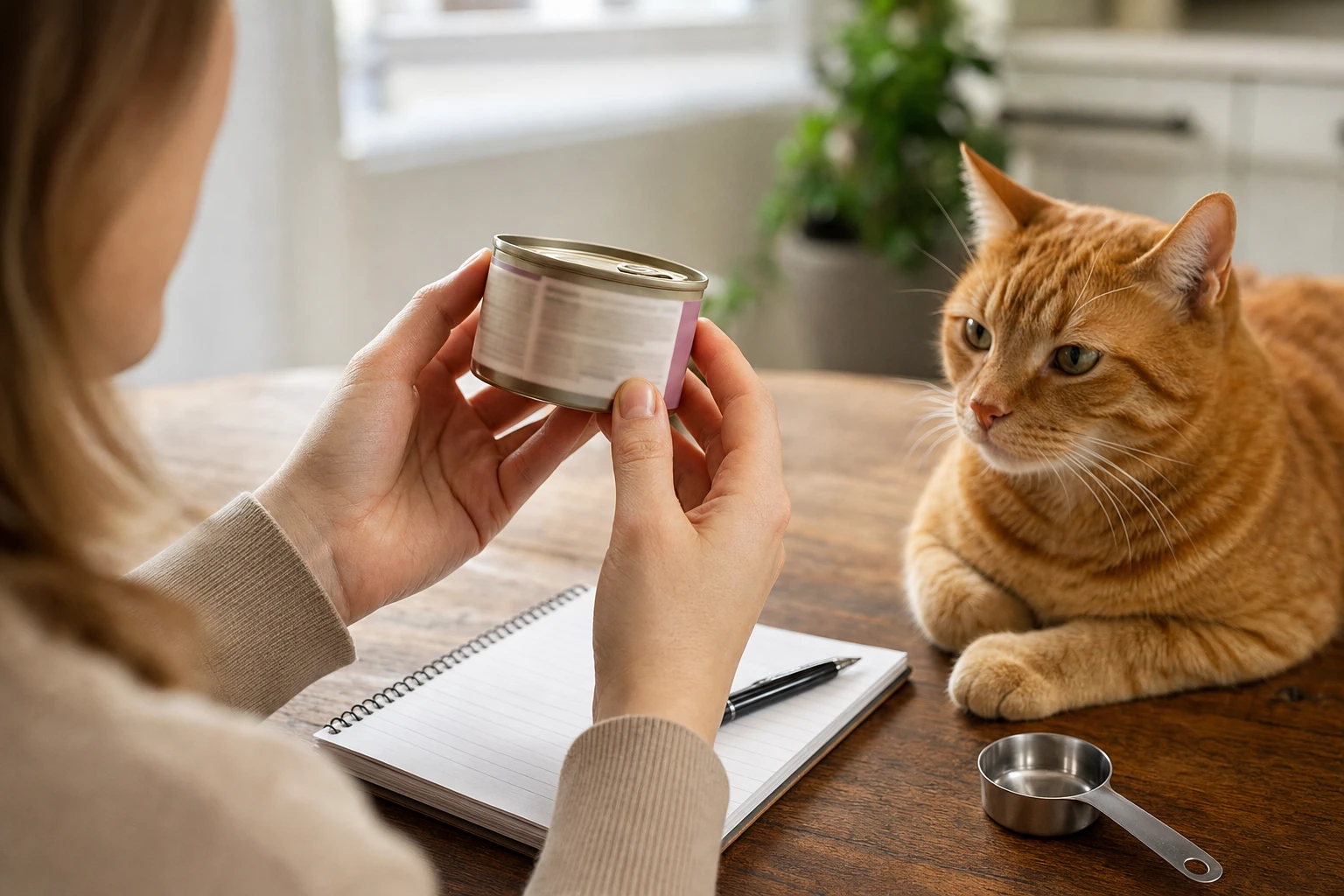
El análisis garantizado es útil, pero no lo dice todo. En él se indican los valores mínimos y máximos de nutrientes como las proteínas, las grasas, la fibra y la humedad. Dado que la comida húmeda contiene mucha más agua que la seca, el porcentaje de proteína bruta que figura en la lata puede parecer bajo en comparación con el pienso seco, incluso cuando el contenido de proteína en materia seca es razonable. Por eso, comparar los alimentos húmedos y secos basándose únicamente en el porcentaje de proteínas indicado puede inducir a error a los lectores.
| Área de etiquetas | Cómo leerlo | Error habitual |
|---|---|---|
| Declaración de adecuación nutricional | Comprueba en qué etapa de la vida se encuentra y si la alimentación es completa y equilibrada. | Elegir un «topper» como plato principal. |
| Análisis garantizado | Analiza conjuntamente las proteínas, las grasas, la fibra, el contenido de agua y las calorías | Comparación entre alimentos húmedos y secos sin tener en cuenta el contenido de humedad. |
| Lista de ingredientes | Úsalo para identificar fuentes de proteínas y posibles desencadenantes | Assuming the first ingredient alone proves quality. |
| Feeding guidelines | Treat as a starting point, not a rule | Feeding the can’s full amount even when the cat gains weight. |
| Marketing claims | Ask what the claim means nutritionally | Letting “premium,” “natural,” or “gourmet” replace label checks. |
Adapta la alimentación a la etapa de vida de tu gato
A kitten, an indoor adult, and a senior cat may all enjoy the same salmón pâté, but they do not always need the same formulation. Kittens require food that supports growth, while adult cats often need maintenance nutrition and careful calorie control. Senior cats vary widely: some need highly digestible calories and soft textures, while others need weight management or a veterinary diet based on disease status.
Cornell’s Feline Health Center notes that cats rely on animal-derived nutrients and need balanced commercial foods unless a veterinarian provides a home-formulated medical recipe. This matters because “homemade,” “fresh,” or “human-grade” language does not automatically mean complete nutrition. A polished-looking food can still be inappropriate if it does not meet your cat’s life stage.
| Cat Type | Best Wet Food Direction | What to Watch |
|---|---|---|
| Gatito | Complete and balanced for growth or all life stages | Small, frequent meals and enough calories for growth. |
| Healthy adult | Complete and balanced for adult maintenance | Calories, body condition, and texture preference. |
| Indoor neutered adult | Moisture-rich food with controlled calories | Weight gain from oversized portions or mixed dry/wet feeding. |
| Senior cat | Easy-to-eat texture and veterinary review if appetite changes | Dental pain, kidney disease, hyperthyroidism, arthritis, or nausea. |
| Overweight cat | Calorie-controlled plan with measured portions | Rapid dieting is unsafe; ask a vet for weight-loss targets. |
| Cat with medical history | Veterinary guidance before switching | Kidney, urinary, diabetes, GI, allergy, or heart conditions. |
If you are planning a life-stage transition, the SnuggleSouls guide on when to switch from kitten to cat food is a useful next step. It is especially helpful when your cat looks adult-sized but still needs growth-focused nutrition.
Comprende por qué es importante la hidratación, pero no descuides las calorías
Wet food is often recommended because it adds water to the diet. Cornell states that canned cat food has a moisture content of at least 75%, making it a meaningful dietary water source. Texas A&M similarly explains that wet food is usually about 75–80% water, while dry food contains far less water and is more calorie dense. This is one reason wet food is often discussed for cats that do not drink much on their own.
Moisture can support hydration habits, but it is not a cure-all. A cat with urinary signs, constipation, kidney disease, or diabetes needs veterinary evaluation, not just a different can. Wet food may be part of the plan, but medical conditions can require prescription diets, diagnostics, medication, or monitoring.
For healthy cats, the main practical advantage is that wet food can make meals feel more satisfying while delivering more water. The challenge is that cans and pouches vary widely in calories. Some small cans are light; others are surprisingly energy dense. If you feed both wet and dry food, you must count both. Texas A&M quotes Dr. Deb Zoran noting that many adult cats need about 200 calories per day, though the correct amount depends on the individual cat.
To go deeper on the hydration and urinary-health context, read SnuggleSouls’ guide to the benefits of wet food for cats. For scheduling, the article on how often to feed cat wet food can help you turn calories into meals.
Las proteínas, los hidratos de carbono y el problema de la materia seca
Cats need animal-derived nutrients, but you should be careful with simplistic protein comparisons. A wet food that lists 10% crude protein may look weaker than a dry food with 35% crude protein, yet the wet food is mostly water. To compare foods more fairly, you can estimate dry matter by subtracting moisture from 100 and then dividing the nutrient percentage by the dry-matter percentage.
For example, if a wet food has 78% moisture and 10% crude protein, the dry matter is 22%. Ten divided by 22 equals about 45% protein on a dry-matter basis. You do not need to calculate this every time you shop, but understanding the concept protects you from rejecting a good wet food because the “as fed” protein number looks low.
| Example Food | Humedad | Crude Protein on Label | Approximate Dry-Matter Protein | What It Teaches |
|---|---|---|---|---|
| Wet food example | 78% | 10% | 45% | Wet-food protein often looks low because water dilutes the printed percentage. |
| Dry food example | 10% | 35% | 39% | Dry-food labels often look higher, but the comparison changes after moisture adjustment. |
Carbohydrates also deserve context. Cats are adapted to a meat-based diet, and many wet foods are lower in carbohydrates than kibble, but “grain-free” does not automatically mean better. Grain-free foods can still contain starches such as potato, peas, lentils, or tapioca. If your cat has a confirmed allergy, your veterinarian may suggest an elimination diet, but guessing at allergies based on marketing claims can lead to unnecessary diet changes.
Elige la textura como si estuvieras probando un hábito, no solo un sabor
In my experience, many cats make their decision before they taste the food. They sniff, lick the surface, feel the texture, and walk away if the mouthfeel is unfamiliar. Texas A&M notes that cats can develop learned food preferences and may resist changing from dry to wet food if they were not introduced to varied textures earlier in life.
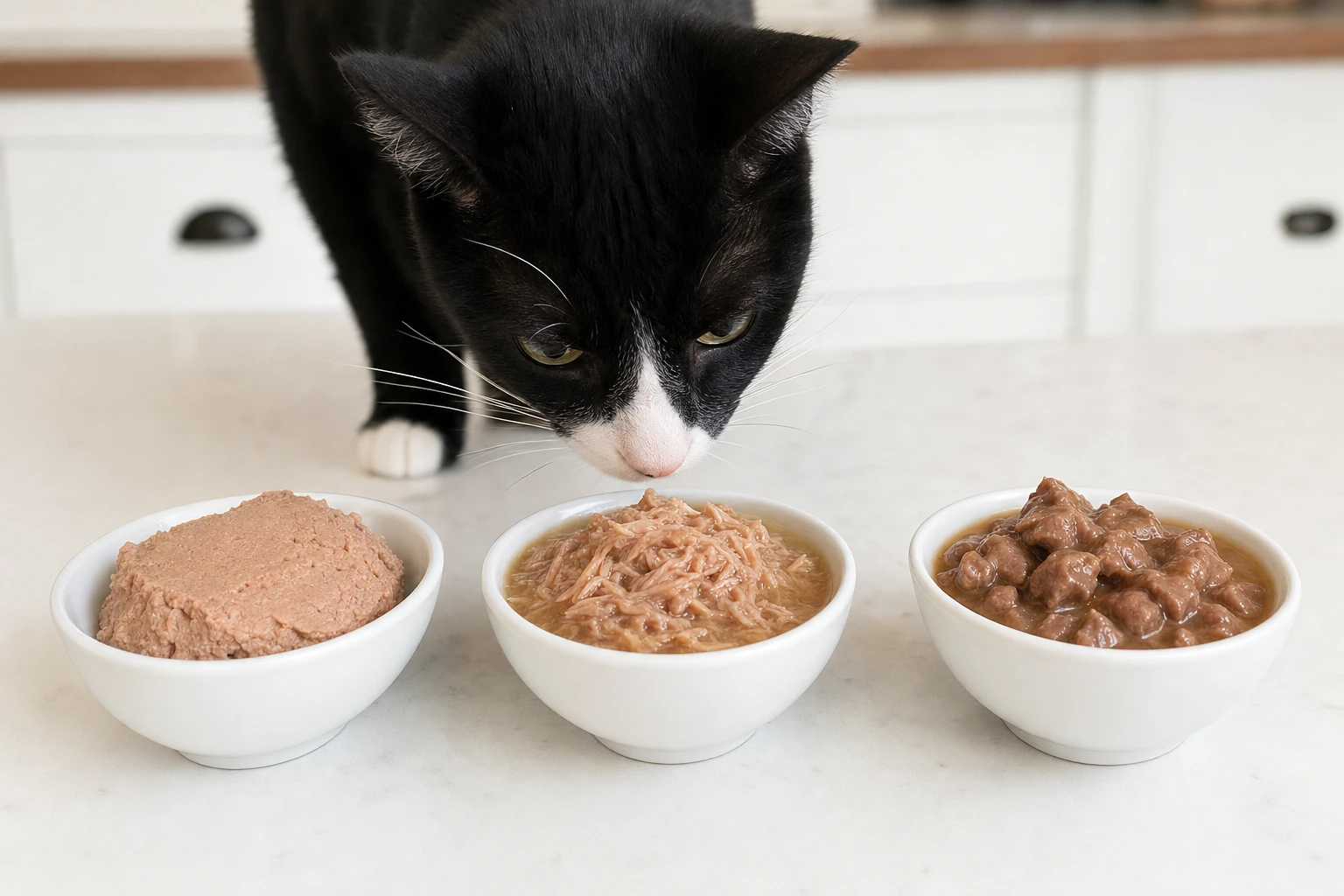
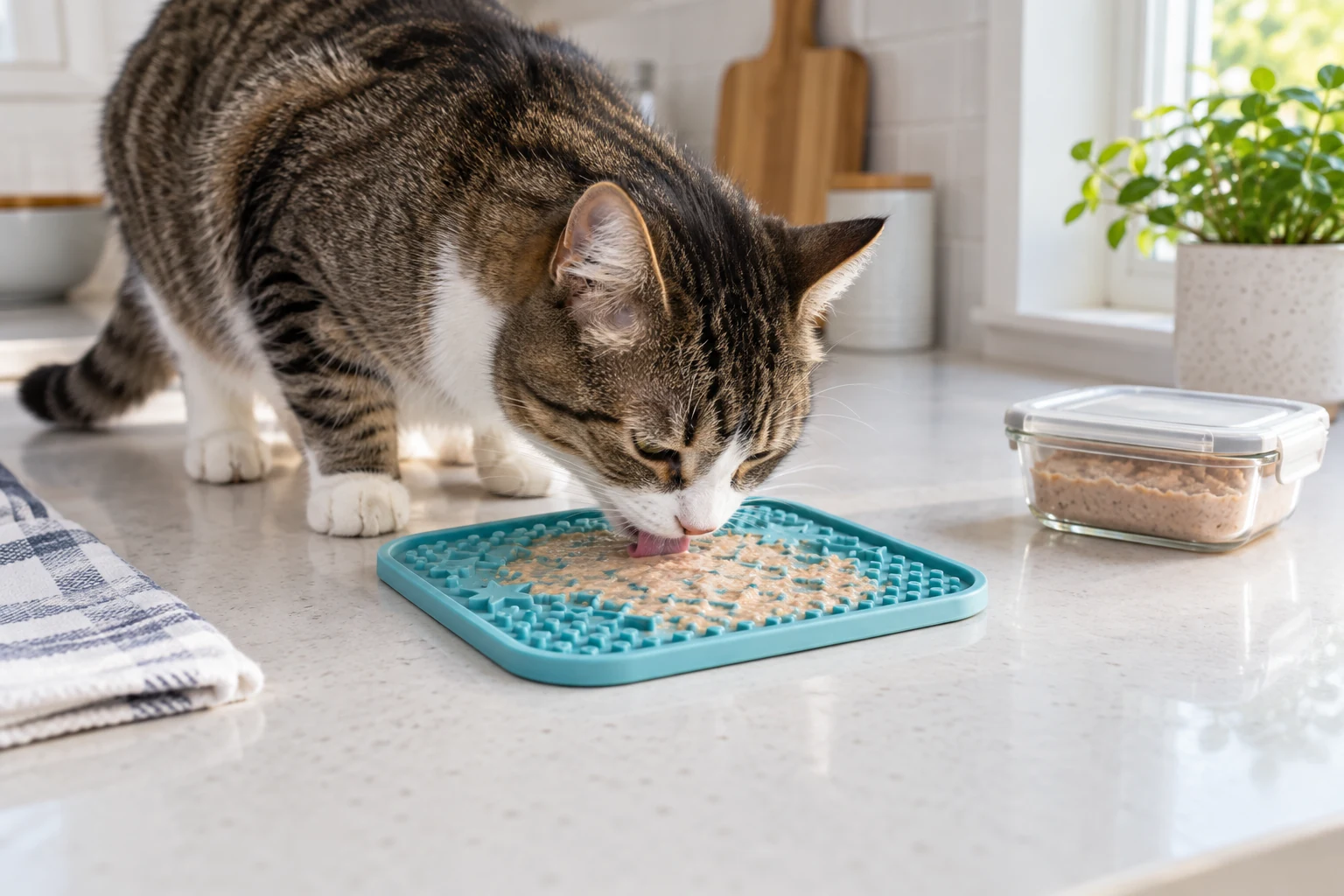
A practical testing method is to buy two or three textures in small quantities rather than stocking up on one case. Offer a teaspoon of each at normal mealtime, remove leftovers promptly, and watch your cat’s body language. Some cats prefer smooth pâté because it is easy to lick. Others prefer shreds in broth because the aroma spreads. Cats with dental discomfort may avoid chunks, while cats that enjoy licking gravy may leave the solids behind.
| Textura | Ideal para | Possible Downside |
|---|---|---|
| Pâté | Cats that prefer smooth, uniform texture; cats with missing teeth | Some cats find it dense unless water is mixed in. |
| Minced or morsels | Cats transitioning from kibble to wet food | Can dry out quickly if left out. |
| Shreds in broth | Cats attracted to aroma and licking | Some cats lick broth and leave meat pieces. |
| Chunks in gravy | Cats that enjoy chewing soft pieces | Gravy-heavy foods may vary in calories and starches. |
| Broths or toppers | Temporary appetite support or moisture boost | Often not complete and balanced as a main diet. |
If your cat refuses food during a stressful adoption period, see the SnuggleSouls guide to the Los primeros 30 días con tu nuevo gato. For a healthy cat, patience and gradual exposure usually work better than forcing a dramatic switch.
Desmontando mitos: afirmaciones que suenan mejor de lo que son
Wet cat food marketing can make shoppers feel that every choice is either perfect or dangerous. The truth is calmer. Good foods can look boring, and fancy foods can be nutritionally incomplete. Your goal is not to chase every trend; it is to choose a complete, appropriate food your cat eats reliably.
| Claim or Belief | What It Really Means | Better Question to Ask |
|---|---|---|
| “Premium” | A marketing term with no single nutritional standard | Is it complete and balanced for my cat’s life stage? |
| “Human-grade” | May describe ingredient handling, not necessarily feline balance | Does the food meet cat nutrient needs as a complete diet? |
| “Grain-free” | No grains, but may still contain other starches | Does my cat have a diagnosed grain allergy or medical reason? |
| “Meat first” | Ingredients are listed by weight, including water | What is the whole formulation and calorie profile? |
| “By-product free” | Avoids a term some owners dislike | Are the protein sources digestible and nutritionally appropriate? |
| “Gravy lovers” | Often palatable and moisture-rich | Is my cat eating the solids, or only licking the gravy? |
The ingredient list can help you avoid known triggers, but it is not a complete quality score. VCA explains that whole meat can appear first because of water weight, so ingredient order must be interpreted with the full label in mind.
Cómo hacer la transición a un nuevo alimento húmedo
The safest transition is usually gradual. Mix a small amount of the new wet food with the familiar food, then increase the new portion over 7–10 days. Sensitive cats may need two to three weeks. If your cat has a history of vomiting, diarrhea, pancreatitis, inflammatory bowel disease, urinary disease, diabetes, or kidney disease, ask your veterinarian before starting.
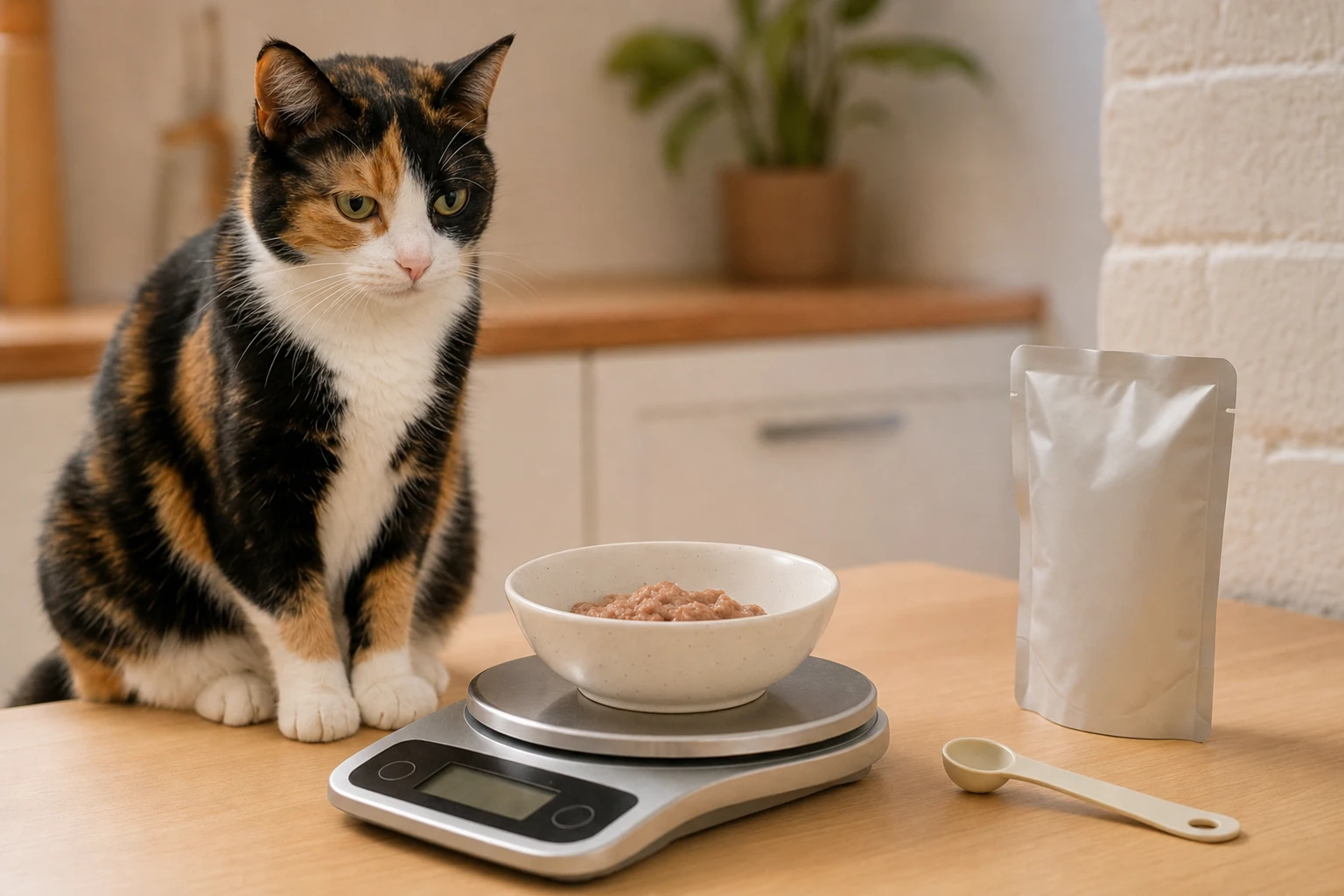
| Día | New Food | Familiar Food | What to Watch |
|---|---|---|---|
| 1–2 | 10–25% | 75–90% | Sniffing, licking, stool changes, appetite. |
| 3–4 | 25–50% | 50–75% | Mild hesitation is normal; repeated vomiting is not. |
| 5–7 | 50–75% | 25–50% | Adjust pace if stool softens. |
| 8–10 | 100% | 0% | Continue monitoring weight and litter-box habits. |
Do not leave wet food out all day to “see if they come back to it.” Wet food is perishable, and safe handling matters. Use the SnuggleSouls wet cat food storage guide for the two-hour room-temperature rule, refrigeration basics, and leftover safety.
Adaptar la elección de alimentos al estado físico y al riesgo para la salud
After you choose a wet food, the next question is whether it is working. Your cat’s coat, stool, appetite, energy, body condition, and litter-box habits matter more than the brand story. An indoor neutered cat can gain weight quietly if portions are not measured. A senior cat can lose weight despite eating because of dental pain, kidney disease, hyperthyroidism, diabetes, or nausea.
Use body condition as your feedback loop. You should be able to feel ribs with light pressure, see a waist from above, and notice an abdominal tuck from the side. If you are unsure, the SnuggleSouls cat body condition score calculator y cat body condition and muscle condition guide can help you describe what you are seeing before discussing it with your veterinarian.
| If Your Cat Is… | Wet Food Direction | Vet Input Needed? |
|---|---|---|
| Healthy and stable | Complete adult maintenance food; measured meals | Routine wellness visits. |
| Overweight | Lower-calorie plan and measured portions | Yes, for safe weight-loss rate. |
| Underweight | Higher-calorie, palatable food; investigate cause | Yes, especially if weight loss is new. |
| Urinating more or straining | Do not self-treat with random wet food | Yes, promptly. |
| Vomiting often or having diarrhea | Simplify diet and track symptoms | Yes, if repeated or severe. |
| Diagnosed kidney, urinary, or diabetes issue | Therapeutic diet may be recommended | Yes, before switching. |
Cuándo llamar al veterinario antes de elegir o cambiar de comida húmeda
Wet food is a daily care decision, but it can overlap with medical care. Call your veterinarian before switching if your cat has a diagnosed condition, is on prescription food, is losing weight, is drinking or urinating more, vomits repeatedly, has chronic diarrhea, strains in the litter box, refuses food, or suddenly changes appetite. Male cats that strain to urinate may have a blockage, which is an emergency.
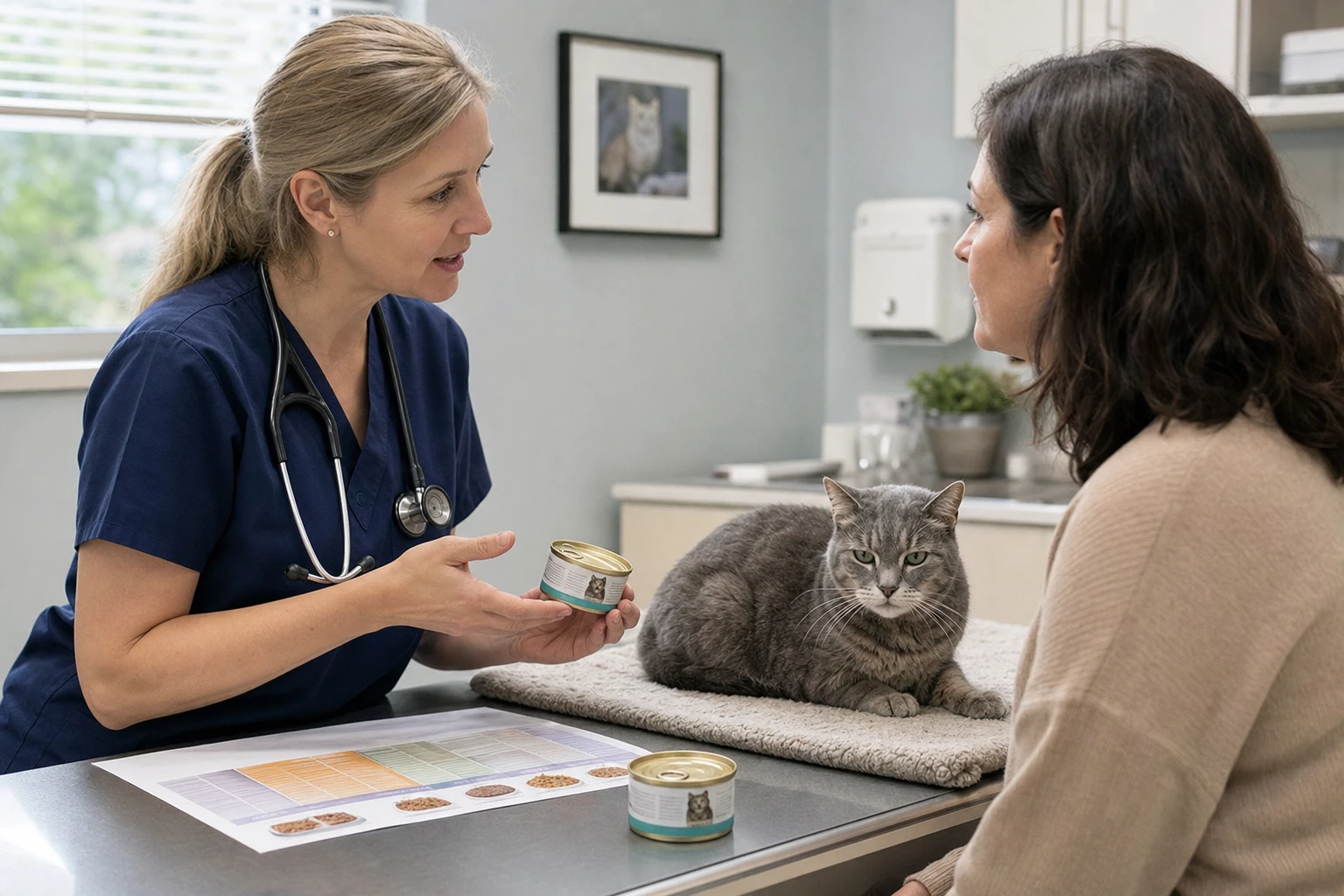
Cornell cautions that homemade diets are difficult to balance and that nutritionally balanced commercial foods are generally recommended unless a veterinarian provides a medical recipe. Cornell also warns against carne cruda because it can carry infectious disease risk. These points are important because owners often turn to homemade or raw diets when they feel overwhelmed by labels. The safer path is usually to bring the label, calorie information, and your cat’s health history to a veterinary appointment.
Conclusión
Choosing the right wet food for your cat becomes much easier when you ignore the noise and follow a sequence. First, confirm that the food is complete and balanced for the right life stage. Next, compare moisture, calories, protein context, texture, and your cat’s health needs. Finally, transition gradually and monitor body condition, stool, appetite, and litter-box habits.
The best wet cat food is not always the most expensive one. It is the food your cat can safely eat every day, in the right amount, with nutrition that matches their edad and health. For a broader feeding foundation, start with the SnuggleSouls complete cat feeding guide, then use the calculadora de calorías para gatos to turn your chosen food into a practical meal plan.
PREGUNTAS FRECUENTES
¿Cómo elijo la mejor comida húmeda para mi gato?
Elige un pienso húmedo que sea completo y equilibrado para la etapa de vida de tu gato, que indique claramente las calorías, que tenga una textura que le guste a tu gato y que se adapte a sus necesidades médicas. Si tu gato está sano, puedes comparar varias fórmulas con tranquilidad. Si tu gato tiene problemas urinarios, renales, de diabetes, gastrointestinales, de alergias o de peso, consulta a tu veterinario antes de cambiar de pienso.
¿Es la comida húmeda mejor para los gatos que la seca?
La comida húmeda no es necesariamente mejor para todos los gatos, pero aporta mucha más humedad que la comida seca. Según Cornell, la comida enlatada para gatos contiene al menos un 75% de humedad, mientras que la comida seca contiene mucha menos agua. Muchos gatos pueden alimentarse bien con comida húmeda, comida seca o una combinación de ambas, siempre que se controlen las calorías y los nutrientes.
¿Qué significa “completo y equilibrado” en la comida para gatos?
“Completo y equilibrado” significa que el alimento está formulado para aportar los nutrientes esenciales en las proporciones adecuadas para una etapa de la vida concreta. VCA considera que la declaración de adecuación nutricional es la parte más importante de la etiqueta de un alimento para gatos, ya que indica si la dieta es completa, equilibrada y adecuada para la etapa de la vida correspondiente. Los alimentos que no incluyen esta declaración pueden ser complementos o golosinas, en lugar de comidas principales.
¿Qué textura de comida húmeda es la más adecuada para los gatos exigentes?
No existe una textura que sea la mejor para todos. Algunos gatos prefieren el paté suave, otros los trocitos en caldo y a otros les gusta la comida picada o con trozos. Prueba con pequeñas raciones a las horas habituales de comida y evita comprar una caja completa hasta que tu gato haya comido esa comida de forma constante durante varios días.
¿Es mejor para los gatos la comida húmeda sin cereales?
Que un pienso no contenga cereales no significa automáticamente que sea mejor. Puede resultar útil para gatos con una alergia confirmada a los cereales, pero muchos piensos sin cereales contienen otros almidones. Céntrate primero en que sea un pienso completo y equilibrado, en la etapa de vida del gato, en el aporte calórico y en su estado de salud.
¿Cómo debo acostumbrar a mi gato a un nuevo alimento húmedo?
A la mayoría de los gatos les va mejor con una transición gradual de entre 7 y 10 días, empezando por mezclar una pequeña cantidad del nuevo pienso con el que ya conocen. Reduce el ritmo si las heces se ablandan o si le baja el apetito. Si tu gato tiene antecedentes médicos o rechaza la comida, consulta a tu veterinario.
¿Cuándo debo llamar al veterinario si mi mascota come comida húmeda o si nota cambios en su apetito?
Llama al veterinario si tu gato rechaza la comida, pierde peso, vomita repetidamente, tiene diarrea crónica, hace esfuerzo al orinar, bebe o orina más de lo habitual, o padece alguna enfermedad conocida. Los gatos machos que hacen esfuerzo al orinar en la bandeja sanitaria deben ser atendidos con carácter de urgencia, ya que la obstrucción urinaria puede poner en peligro su vida.
Referencias
[1] Cornell Feline Health Center — Cómo alimentar a tu gato
[2] VCA Animal Hospitals — Deciphering Cat Food Labels
[3] Texas A&M VMBS — Nutritional Needs: A Guide To Choosing Cat Food
[4] AAFCO — Reading Labels
[5] Chewy — 5 Things to Avoid When Choosing a Wet Cat Food
 EN
EN DE
DE ES
ES PT
PT