

Índice
How long do cats live? (Quick answer)
Most pet cats live about 13–17 years. With consistent preventive care and a safe home environment, many cats reach their late teens, and some live 20+ years. (Your cat’s lifestyle—especially indoor vs. outdoor—has the biggest impact.)
De un vistazo
- Typical lifespan (most cats): 13–17 years
- Often longer with excellent care: late teens to 20+
- Biggest lifespan factor: indoor safety + preventive vet care
- Other major factors: genetics/breed, weight, dental health, spay/neuter status
Quotable takeaway: A well-cared-for indoor cat often lives into the mid-to-late teens—and 20+ isn’t rare with great preventive care.
What you’ll learn in this guide
- The latest lifespan numbers (and what they really mean)
- Indoor vs. outdoor: why lifespan changes so much
- Lifespan by breed/type (plus a simple table)
- Cat age stages + a clean cat-to-human age chart
- A practical checklist to help your cat live longer
Key takeaways (copy/paste friendly)
- Spay/neuter: neutered/spayed cats show longer lifespans in large datasets
- Most cats: 13–17 years
- Indoor cats: often reach the mid-to-late teens with routine preventive care
- Outdoor access: lifespan is often substantially shorter due to injury, parasites, and infectious disease risks
- Breed/genetics: crossbred cats tend to live longer on average than many purebreds
If you only remember one thing: daily preventive care + indoor safety are the biggest levers you control.
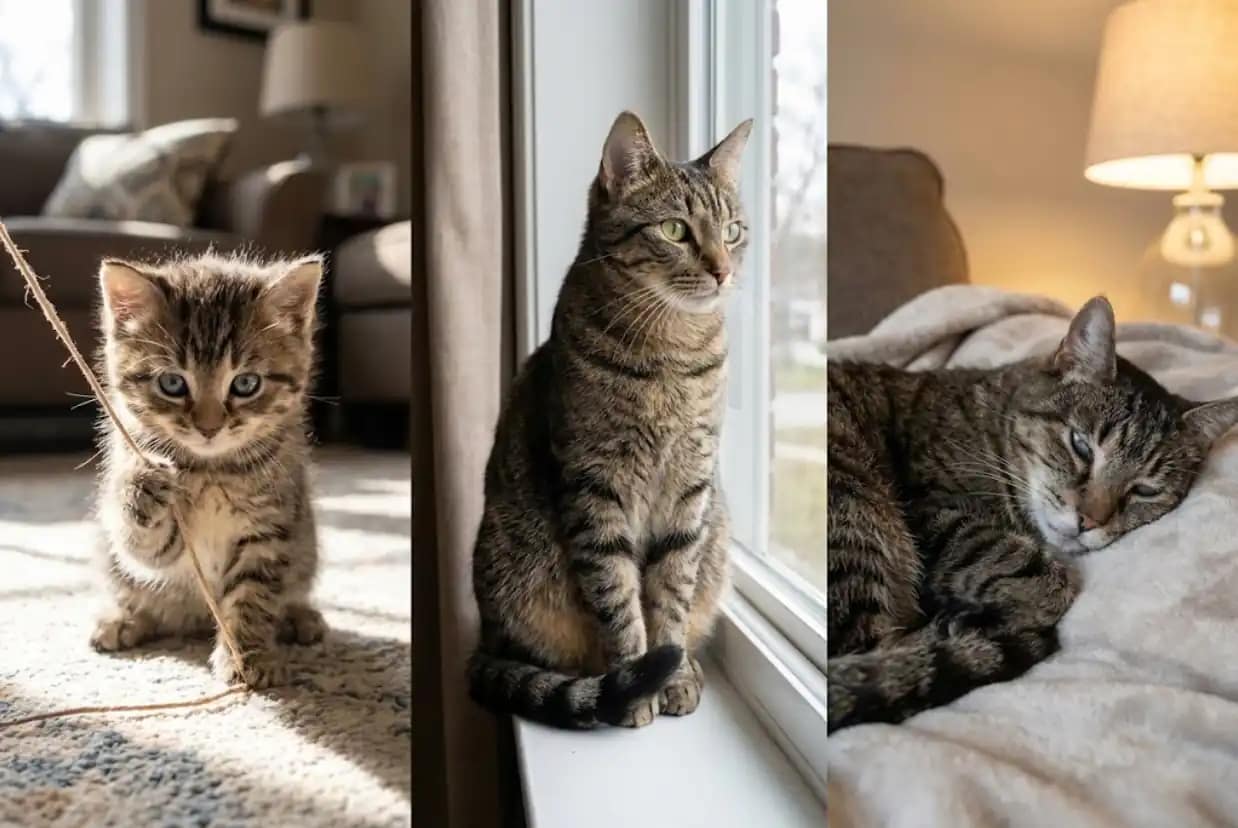
Average Cat Lifespan: What the Numbers Say
If you search “how long do cats live,” you’ll see diferente numbers. That’s because sources are answering different questions (pet-cat averages vs. population life expectancy). Here’s the easiest way to read the data:
Lifespan numbers at a glance
| Number you’ll see | What it means | Best used for |
|---|---|---|
| 13–17 years | A common “average lifespan” range quoted for pet cats | Setting realistic expectations for most household cats |
| 20+ years | Not typical, but achievable—especially with strong preventive care | “What’s possible” with excellent long-term care |
| ~11.7 years (≈11.74) | Life expectancy at birth in a large UK companion-cat dataset (includes higher-risk cats and early-life deaths) | Understanding population-level risk and how factors (sex, breed, bodyweight) shift lifespan |
Sources: PetMD (updated Jan 5, 2026) for the 13–17 range and 20+ possibility. VetCompass/RVC for the UK life tables and risk-factor findings.
How to interpret these numbers (so you don’t get misled)
- “Average lifespan (13–17)” is a practical pet-owner number: it reflects typical cats living in homes with routine care.
- “Life expectancy at birth (~11.7)” is a population statistic: it includes cats who die young and cats with higher-risk circumstances, which pulls the number down.
- A simple way to remember it: pet-owner averages describe “many indoor pets,” while life expectancy at birth describes “the whole population.”
What the newest large dataset highlights (UK VetCompass life tables)
These findings help explain por qué one cat might live far longer than another:
| Factor | What the dataset found | What you can do about it |
|---|---|---|
| Sex | Female cats lived about 1.33 years longer than males (at birth) | You can’t change sex, but you puede control preventive care and weight |
| Raza | Birmano y Birmano had the longest life expectancy from age 0 (~14.4 years); Sphynx the shortest (~6.8 years) | Use breed as a planning signal: earlier screening + tailored care for higher-risk breeds |
| Bodyweight status | Non-ideal bodyweight (too light or too heavy) was linked with shorter life expectancy | Keep your cat at an ideal body condition and address weight changes early |
Data summary from the Royal Veterinary College’s VetCompass release (May 2024), referencing the JFMS life-table study.
Record-holder (for context, not expectation)
Some cats far exceed averages. PetMD notes the record-holder Creme Puff reached 38 years—a reminder that “average” is not the ceiling.
Quotable takeaway: For most pet owners, plan around 13–17 years—and treat weight, preventive care, and lifestyle safety as the biggest lifespan levers.
Use 13–17 years for most household planning. Use ~11.7 years only when discussing population-wide life expectancy and risk factors.

Lifespan by Cat Type
Cat lifespan by lifestyle and type (quick table)
Quick guide: Lifestyle usually matters more than breed. Use this table to estimate a realistic range, then scroll down for the “how to help your cat live longer” checklist.
| Cat type | Typical lifespan | Why it differs | Best owner actions |
|---|---|---|---|
| Indoor-only | Often 13–17+ years | Fewer injuries, fights, parasites, and infectious disease exposure | Enrichment + weight control + regular vet checkups |
| Indoor + supervised outdoor time (catio / harness) | Often 10-16 años (varies widely) | Risk depends on supervision, traffic exposure, and parasite prevention | Catio/harness + flea/tick prevention + avoid unsupervised roaming |
| Free-roaming / outdoor | Often 2–5 years | Higher risk of trauma (cars), poisoning, fighting, parasites, and infections | If possible: transition indoors; otherwise: supervised time + vaccines + parasite control |
| Large breeds (e.g., Maine Coon, Ragdoll) | Often 10–13 years | Larger body size can be linked with faster aging + breed-related conditions | Maintain lean weight + early screening + joint/heart awareness |
| Small/medium breeds (e.g., Siamese, Burmese) | Often 15–20 years | Many smaller breeds trend longer-lived on average | Dental care + weight control + routine preventive care |
| Mixed-breed / domestic shorthair | Often 15–18+ years | Genetic diversity may reduce some inherited disease risk | Focus on lifestyle: indoor safety + diet + regular vet care |
Quotable takeaway: The biggest lifespan “multiplier” you control is lifestyle—indoor safety + preventive care usually matter more than breed.
Nota: These are typical ranges, not guarantees. Individual lifespan depends on health history, body condition, preventive care, and local risk factors.
Cat age in human years (quick chart)
Si su gato es 12 years old, she’s roughly in her mid-60s in “human years.” By 15, she’s often comparable to someone in their mid-to-late 70s. This isn’t a perfect science, but it’s a useful way to remember one thing:
Quotable takeaway: After age 11, small changes (appetite, weight, thirst, litter box habits) matter more—because your cat is now in the senior stage.
Quick answer: how cats age
- Year 1: ~15 human years
- Year 2: ~24 human years
- Each year after that: ~4 human years (approx.)
Cat age to human age (quick chart)
This is a helpful approximation—not a medical rule. Individual cats age differently.
| Cat age | Approx. human age | Life stage (simple) |
|---|---|---|
| 1 year | ~15 years | Young |
| 2 years | ~24 years | Young adult |
| 3 years | ~28 years | Adult |
| 5 years | ~36 years | Adult |
| 10 years | ~56 years | Senior |
| 15 years | ~76 years | Senior |
| 20 years | ~96 years | Very senior |
Tip for readers: If you only check one thing as your cat ages, monitor weight + appetite + water intake monthly and talk to your vet if anything shifts.
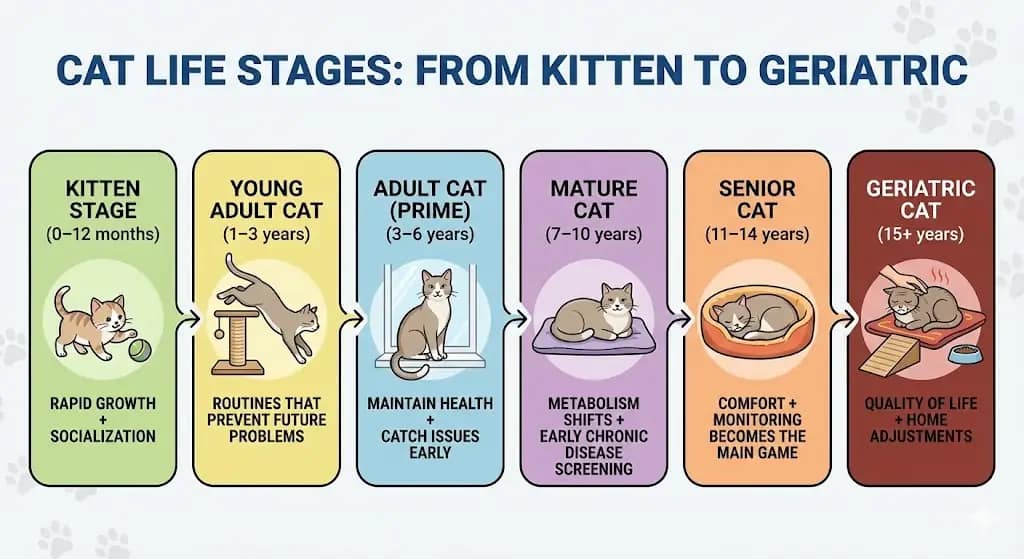
Cat life stages by age (kitten to geriatric)
Cats don’t age at the same pace their whole life. A 1-year-old cat matures fast, while a 10-year-old cat changes more gradually. Use these stages to match your cat’s food, play, and vet care to her current needs.
Quick life-stage overview
| Life stage | Age range | What to focus on most |
|---|---|---|
| Kitten stage | 0–12 months | growth, socialization, vaccines, spay/neuter planning |
| Young adult cat | 1–3 years | routine building, weight prevention, behavior enrichment |
| Adult cat (prime) | 3–6 years | maintenance, dental habits, early screening basics |
| Mature cat | 7–10 years | weight/metabolism, early chronic disease screening |
| Senior cat | 11–14 years | mobility, kidney/thyroid monitoring, comfort |
| Geriatric cat | 15+ years | pain control, senior-friendly home setup, quality of life |
Kitten stage (0–12 months): rapid growth + socialization
Definition: The kitten stage is when your cat grows fastest and learns what “normal life” is—handling, household sounds, routines, and play boundaries.
What to expect
- high energy, frequent play needs
- teething/chewing, exploring, climbing
- learning litter box habits and bite inhibition
Care checklist (do these now)
- Feed a kitten-formula diet (growth support) and keep fresh water available [Related: Feeding guidelines for all stages]
- Start gentle handling daily (paws, mouth, ears) to make vet care easier later
- Use toys—not hands—to prevent “play-biting” habits
- Begin parasite prevention and core vaccines on your vet’s schedule
- Plan spay/neuter timing with your vet (often around 5–6 months)
Banderas rojas
- not eating for 24 hours, diarrhea that persists, lethargy, breathing issues
Young adult cat (1–3 years): routines that prevent future problems
Definition: Young adult cats are full-sized and often at peak curiosity—this is the best time to lock in healthy routines.
What to expect
- strong play drive, hunting behavior, “teenage” testing of boundaries
- appetite stabilizes; weight can creep up if food is free-fed
Care checklist
- Switch to high-quality adult food as advised; keep portions measured
- Aim for daily interactive play (short sessions work best)
- Keep scratching posts + climbing space to reduce stress behaviors [Related: Behavior insights]
- Maintain annual wellness exams and dental checks
Banderas rojas
- sudden weight change, ongoing vomiting, new litter box avoidance
Adult cat (prime) (3–6 years): maintain health + catch issues early
Definition: Prime adult years are often the healthiest—your goal is to prevent weight gain and catch silent problems early.
What to expect
- energy is still high but may be more “bursty” than kitten-level
- behavior is more consistent; routines are easier to keep
Care checklist
- Keep a stable feeding schedule; avoid high-calorie “free treats”
- Build dental habits (tooth brushing or vet-approved dental support)
- Keep enrichment: window perch, puzzle feeders, rotation of toys
- Consider basic annual screening if your vet recommends it (especially if weight is changing)
Banderas rojas
- gradual weight gain, reduced grooming, reduced jumping (early pain signs)
Mature cat (7–10 years): metabolism shifts + early chronic disease screening
Definition: Mature cats are “middle-aged”—this is when weight gain, dental disease, and early kidney/thyroid changes become more common.
What to expect
- slightly less play stamina
- easier weight gain if calories aren’t adjusted
- subtle mobility changes may appear
Care checklist
- Track body condition monthly (photos help)
- Increase low-impact play (wand toys, short chase games)
- Talk to your vet about periodic bloodwork/urinalysis based on risk
- Add comfort supports: soft bedding, easy access to litter/food
Banderas rojas
- drinking more water, peeing more, loud yowling at night, persistent bad breath
Senior cat (11–14 years): comfort + monitoring becomes the main game
Definition: Senior cats need more frequent check-ins because chronic diseases and pain are more likely—and early treatment improves quality of life.
What to expect
- less jumping, more sleeping
- possible stiffness, slower grooming, pickier eating
Care checklist
- Consider twice-yearly vet visits (common recommendation for seniors)
- Keep litter boxes easy to enter; add a second box if stairs are involved
- Prioritize hydration (wet food, fountain if she likes it)
- Keep gentle play for muscle and joint health
Banderas rojas
- appetite drop, weight loss, ocultar, confusion, missing the litter box
Geriatric cat (15+ years): quality of life + home adjustments
Definition: Geriatric cats are in their “golden years”—comfort, pain management, and an easy environment matter as much as nutrition.
What to expect
- more pronounced mobility limits
- coat may become messy due to reduced grooming
- hearing/vision changes can appear
Care checklist
- Put food/water/litter on the same level; avoid forcing stairs
- Use low-entry litter boxes and non-slip mats
- Add steps/ramps to favorite resting places
- Help with gentle grooming and nail trims
- Consider vet checkups every ~6 months if feasible
Banderas rojas
- sudden weakness, open-mouth breathing, collapse, not eating for 24 hours (urgent)
Practical tip: Your cat may not fit perfectly into one stage. Use the stage that matches her current energy, mobility, appetite, and health—not only her birthday.
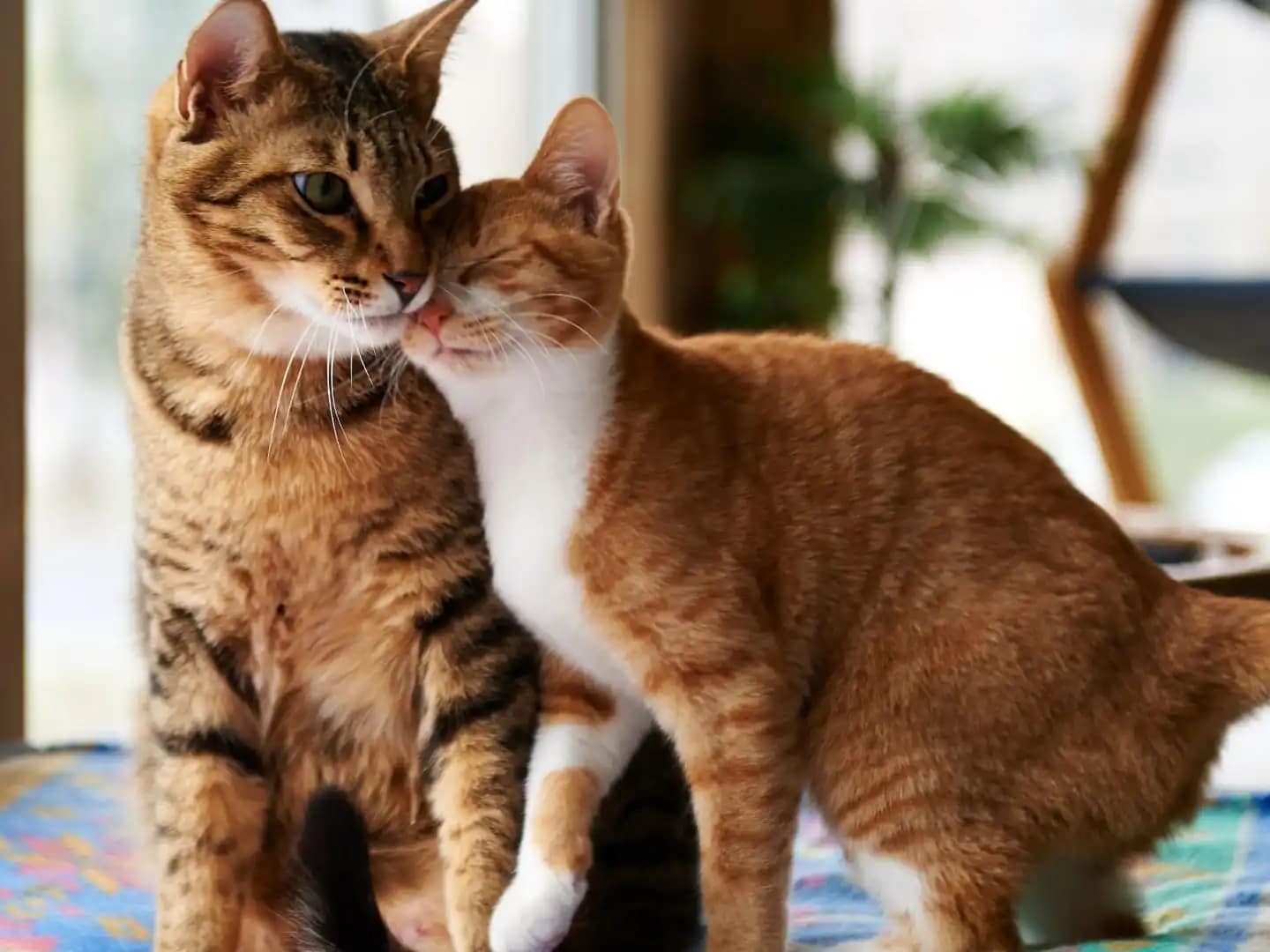
Helping Your Cat Live a Longer, Healthier Life
Quick answer: Cats tend to live longest when owners focus on the biggest levers: safe environment (indoors), healthy weight, dental care, routine vet checks, and low stress.
Use the checklist below and choose 2–3 upgrades you can start this week—small habits add up over years.
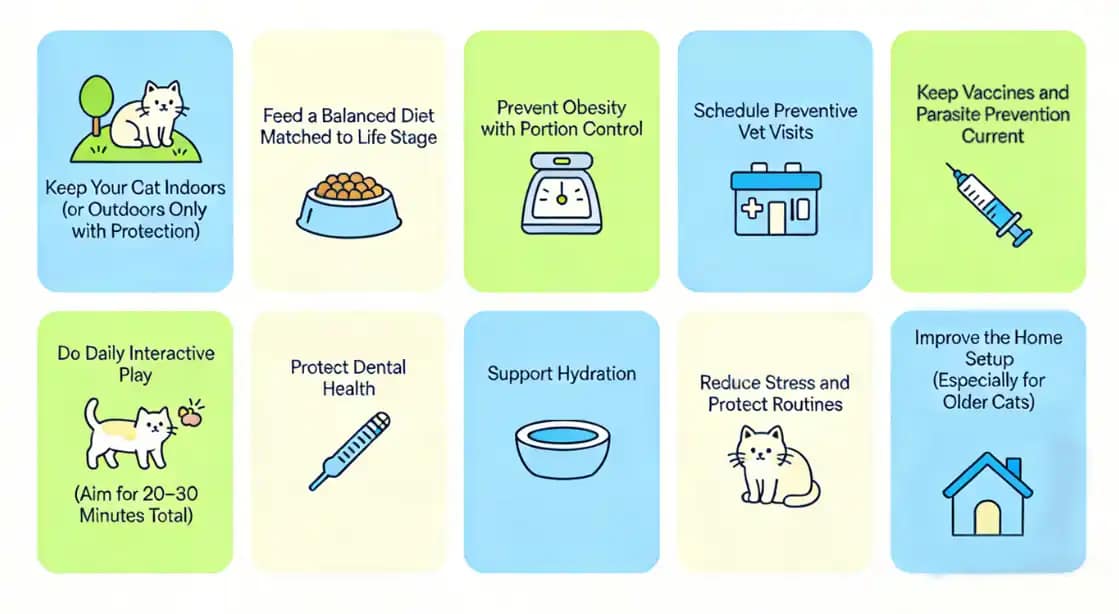
Checklist: 10 ways to help your cat live longer
- Keep your cat indoors (or outdoors only with protection).
- Por qué es importante: Indoor cats avoid many of the biggest lifespan risks (traffic, fights, toxins, infectious disease).
- Do this: Keep indoor-only if possible; if outdoors, use a catio, recinto de seguridado harness + supervision.
- Feed a balanced diet matched to life stage.
- Por qué es importante: Long-term nutrition affects weight, organs, and disease risk.
- Do this: Choose a high-quality food for kitten/adult/senior; keep meals consistent; limit treats and avoid “free-feeding” if weight is creeping up.
- Prevent obesity with portion control.
- Por qué es importante: Extra weight increases diabetes risk and strains joints and the liver.
- Do this: Measure portions; reduce calories gradually; swap some treats for play; re-check weight monthly. [Related tool: Calculadora de calorías para gatos]
- Do daily interactive play (aim for 20–30 minutes total).
- Por qué es importante: Play preserves muscle, reduces boredom/stress, and helps maintain a healthy weight.
- Do this: Short sessions count; use wand toys, balls, or chase games; make it part of your routine.
- Protect dental health.
- Por qué es importante: Dental disease is common and painful, and can reduce appetite and overall health.
- Do this: Brush when possible with cat-safe toothpaste; use dental treats/chews; ask your vet about routine dental checks.
- Schedule preventive vet visits (increase frequency with age).
- Por qué es importante: Early detection is one of the biggest longevity multipliers.
- Do this: Adults: at least yearly. Seniors: consider twice yearly. Ask which screening tests make sense as your cat ages.
- Keep vaccines and parasite prevention current.
- Por qué es importante: Preventable infections and parasites can shorten lifespan.
- Do this: Follow your vet’s schedule for vaccines and flea/tick/parasite control—even indoor cats can be exposed.
- Support hydration.
- Por qué es importante: Hydration supports kidney and urinary health.
- Do this: Offer clean water daily; try multiple water stations or a fountain; consider adding wet food if it fits your cat’s needs.
- Reduce stress and protect routines.
- Por qué es importante: Chronic stress can worsen behavior issues and affect health.
- Do this: Keep feeding/play times consistent; offer hiding spots; introduce changes slowly; watch for over-grooming or persistent hiding.
- Improve the home setup (especially for older cats).
- Por qué es importante: Enrichment keeps cats mentally healthy; accessibility prevents falls and strain as they age.
- Do this: Provide vertical space, scratchers, and puzzle toys; for seniors add ramps/steps, low-entry litter boxes, and comfy warm beds.
Senior cat longevity: what to do after age 11
After about age 11, the goal shifts from “general prevention” to catching change early y improving comfort.
Focus on these 5 things:
- Vet checks: consider every 6 months if possible
- Ask about: kidneys, thyroid, dental health, blood pressure, arthritis pain
- Make life easier: ramps/steps, low-sided litter box, food/water on one floor
- Preserve muscle: gentle play and short daily sessions
- Track at home: monthly weight + note appetite, water intake, grooming, and litter habits
Red flags to act on quickly: weight loss, big drinking/urination changes, reduced jumping, litter box accidents, hiding more than usual.
Conclusion: One Life Well-Lived
Every cat gets one life—and it’s natural to want it to be long. While we can’t control every factor, you can strongly influence how long your cat lives by focusing on the things that matter most: indoor safety, healthy nutrition, daily play, dental care, and regular veterinary checkups.
The best plan is simple and consistent:
- Keep your cat indoors (or safely contained outdoors) to reduce accidents, fights, and infectious disease.
- Feed a balanced, age-appropriate diet and protect a healthy weight.
- Play every day to support muscles, mobility, and mental well-being.
- Schedule routine vet visits (and more often for seniors) so problems like kidney disease, thyroid issues, or arthritis are caught early.
- Adjust your home as your cat ages—easy-access litter boxes, ramps, soft bedding, and low-stress routines.
Your cat’s lifespan isn’t only measured in years—it’s measured in comfort, curiosity, and quality of life. Start with one small upgrade today (a vet appointment, a new play routine, a healthier feeding plan), and build from there. Because cats may not have nine lives—but with your care, one life can be full, healthy, and deeply joyful.
FAQ (People Also Ask)
How long do cats usually live?
Most pet cats live about 13–17 years, and many indoor cats reach their late teens or 20s with consistent preventive care.
- Indoor safety and regular vet checkups are the biggest controllable factors.
- Weight control and dental health strongly affect healthy aging.
- Breed/genetics and spay/neuter status can shift the average.
How long do indoor cats live vs. outdoor cats?
Indoor cats generally live longer than cats that roam outdoors because they face fewer injuries, parasites, and infectious disease risks.
- Outdoor roaming increases the risk of trauma (cars, fights), parasites, and infections.
- “Indoor + supervised outdoor” (catio/harness) can reduce risk compared to free roaming.
- Preventive care matters more as cats age (kidneys, thyroid, arthritis).
What is the average cat lifespan by breed size?
Smaller and medium cats often live longer than very large breeds, while genetics can make certain breeds longer- or shorter-lived.
- Very large breeds may show aging-related issues earlier.
- Mixed-breed cats often benefit from broader genetic diversity.
- Always judge the individual cat’s health, not the breed label alone.
Does spaying or neutering help cats live longer?
Spayed/neutered cats often have longer lifespans in large datasets, likely because they roam less and avoid reproductive-related risks.
- Can reduce roaming and fighting-related injuries.
- Helps prevent certain reproductive diseases.
- Ask your vet about the best timing based on your cat’s situation.
What are the life stages of a cat (and what changes in care)?
Cats move through stages—kitten, young adult, adult, mature, senior, and geriatric—and the “right” care changes as risks change.
- Kittens: growth nutrition, vaccines, socialization, parasite prevention.
- Adults: weight control, dental care, annual checkups.
- Seniors: more frequent checkups and screening for chronic disease. [Related tool: Age calculator for stage-specific tips]
What is 1 cat year equal to in human years?
A common guideline is: 1 cat year ≈ 15 human years, 2 cat years ≈ 24, and then each additional year ≈ ~4 human years.
- It’s an approximation, not a medical rule.
- Lifestyle, breed, and health conditions affect “biological age.”
- Use behavior + vet screening to judge aging more accurately.
How can I help my cat live longer?
The best levers are indoor safety, a peso saludable, dental carey regular preventive vet visits—especially as your cat becomes a senior.
- Feed a complete, age-appropriate diet and measure portions.
- Keep teeth/gums healthy (home care + vet dental checks).
- Add daily play and enrichment to reduce stress and obesity risk.
- Do senior screening (kidney/thyroid, BP, etc.) as recommended.
What are common health issues in senior cats?
Senior cats commonly face kidney disease, dental disease, arthritis, hyperthyroidism, and diabetes, and early detection can improve quality of life.
- Watch for appetite, drinking, litter box, weight, or mobility changes.
- Schedule vet visits more often in senior years (commonly every 6 months).
- Make the home senior-friendly (low-entry litter box, ramps, warm bedding).
Can cats live 20 years or more?
Sí-20+ years is possible, especially for indoor cats with excellent preventive care and good chronic disease management.
- Consistent weight control is strongly linked to healthier aging.
- Genetics plays a role, but routine care is usually the difference-maker.
- Senior screening helps catch kidney/thyroid issues earlier.
Referencias
How Long Do Cats Live?. Obtenido de https://www.chewy.com/education/cat/health-and-wellness/how-long-do-cats-live
The average cat lives 11.74 years, according to new research. Obtenido de https://www.companionanimalpsychology.com/2024/06/the-average-cat-lives-1174-years.html
9 lives and more? 60 years of groundbreaking medical advancements have improved cat health and longevity. Obtenido de https://www.kiro7.com/news/9-lives-more-60-years-groundbreaking-medical-advancements-have-improved-cat-health-longevity/UPR52SPZ55IQJFFJOXMNXOFIH4/
Creme Puff (cat). Obtenido de https://en.wikipedia.org/wiki/Creme_Puff_(cat
Does CBD help cat lifespan?. Obtenido de https://total.vet/cbd-cat-lifespan/
Understanding Cat Lifespans: How Long Do Cats Live?. Obtenido de https://tica.org/blogs/understanding-cat-lifespans-how-long-do-cats-live/
AAHA/AAFP Feline Life Stage Guidelines. Obtenido de https://catvets.com/resource/aaha-aafp-feline-life-stage-guidelines/
Updated Senior Care Guidelines. Obtenido de https://catvets.com/updated-senior-care-guidelines/
Special needs of the senior cat. Obtenido de https://www.vet.cornell.edu/departments-centers-and-institutes/cornell-feline-health-center/health-information/feline-health-topics/special-needs-senior-cat
General Healthcare for Senior Cats. Obtenido de https://www.felinehtc.com/general-healthcare-for-senior-cats
Indoor vs outdoor cat lifespan risks statistics UC Davis. Obtenido de https://total.vet/cbd-cat-lifespan/
Can an Indoor Cat Be a Part-Time Outdoor Cat?. Obtenido de https://www.petmd.com/cat/care/can-indoor-cat-be-part-time-outdoor-cat
How Long Do Cats Live?. Obtenido de https://www.petmd.com/cat/care/how-long-do-cats-live
Revista de Medicina y Cirugía Felina, 26(1), 10816413. Retrieved from https://pmc.ncbi.nlm.nih.gov/articles/PMC10816413/
The Far-Reaching Effects of Spaying or Neutering Cats. Obtenido de https://www.englishtownvet.com/blog/the-far-reaching-effects-of-spaying-or-neutering-cats/
The Relationship Between Spaying, Neutering, and Cancer. Obtenido de https://carecharlotte.com/blog/the-relationship-between-spaying-neutering-and-cancer/
2021 AAHA/AAFP Feline Life Stage Guidelines. Obtenido de https://www.aaha.org/wp-content/uploads/globalassets/02-guidelines/feline-life-stage-2021/2021-aaha-aafp-feline-life-stage-guidelines.pdf
AAHA/AAFP Feline Life Stage Guidelines. Obtenido de https://catvets.com/resource/aaha-aafp-feline-life-stage-guidelines/
Cat Age Chart. Obtenido de https://www.pumpkin.care/blog/cat-age-chart/
Canine and Feline Age Chart Poster. Obtenido de https://www.aaha.org/wp-content/uploads/globalassets/02-guidelines/canine-life-stage-2019/canine_and_feline_age_chart_poster.pdf
How Cats Age. Obtenido de https://www.pawschicago.org/news-resources/all-about-cats/kitty-basics/how-cats-age
The 6 Life Stages of Your Feline. Obtenido de https://www.freshstep.com/cat-care/the-6-life-stages-of-your-feline/
Common Senior Cat Problems. Obtenido de https://www.hillspet.com/cat-care/routine-care/common-senior-cat-problems
When is a cat considered a senior?. Obtenido de https://www.dutch.com/blogs/cats/when-is-a-cat-considered-a-senior
7 Common Diseases to Watch for in Senior Cats. Obtenido de https://www.akcreunite.org/senior-cat-diseases/
Most Common Illnesses in Senior Cats. Obtenido de https://www.petmd.com/cat/general-health/most-common-illnesses-in-senior-cats
Dental Problems in Cats. Obtenido de https://www.springhouseanimalhospital.com/site/blog/2021/10/18/dental-problems-cats
Common Cat Dental Problems. Obtenido de https://www.woburnanimalhospital.com/site/blog/2024/01/31/common-cat-dental-problems
Kidney Disease in Cats. Obtenido de https://www.petmd.com/cat/conditions/urinary/kidney-disease-cats
Enfermedad renal crónica. Obtenido de https://www.vet.cornell.edu/departments-centers-and-institutes/cornell-feline-health-center/health-information/feline-health-topics/chronic-kidney-disease
Hyperthyroidism in Cats. Obtenido de https://veterinarypartner.vin.com/doc/?id=4951398
Thyroid Disorders in Cats. Obtenido de https://www.medvet.com/thyroid-disorders-in-cats/
Feline Arthritis. Obtenido de https://www.uniquelycats.com/blog/feline-arthritis/
Early Arthritis in Cats. Obtenido de https://www.woofdoctor.vet/early-arthritis-cats/
Dementia in Cats. Obtenido de https://www.petmd.com/cat/conditions/neurological/dementia-cats
Older Cats Behavior Problems. Obtenido de https://www.aspca.org/pet-care/cat-care/common-cat-behavior-issues/older-cats-behavior-problems
Longevity Study in Cats. Obtenido de https://www.purinainstitute.com/science-of-nutrition/extending-healthy-life/longevity-study-in-cats
Managing Cat Obesity. Obtenido de https://terralindavet.com/2025/05/15/managing-cat-obesity/
Mapache de Maine. Obtenido de https://www.petmd.com/cat/breeds/maine-coon
Cat Vaccinations: What Vaccines Do Cats Need?. Obtenido de https://www.petmd.com/cat/general-health/cat-vaccinations-what-vaccines-do-cats-need
2020 AAHA/AAFP Feline Vaccination Guidelines. Obtenido de https://www.aaha.org/wp-content/uploads/globalassets/02-guidelines/feline-vaccination-guidlines/resource-center/2020-aahaa-afp-feline-vaccination-guidelines.pdf
2021 AAHA/AAFP Feline Life Stage Guidelines. Obtenido de https://pmc.ncbi.nlm.nih.gov/articles/PMC10812130/
2021 Directrices de la AAFP para el cuidado de gatos mayores. Obtenido de https://pmc.ncbi.nlm.nih.gov/articles/PMC10812122/
Environmental Enrichment for Indoor Cats. Obtenido de https://www.thedrakecenter.com/resources/materials/cats/environmental-enrichment-indoor-cats
Indoor Cat Enrichment. Obtenido de https://www.hhhstopeka.org/education/indoor-cat-enrichment/
FELIWAY® Optimum. Obtenido de https://us.feliway.com/
Feliway for Cats: How It Helps with Anxiety and Scratching. Obtenido de https://medicanimal.com/blogs/pet-advice/feliway-for-cats-how-it-helps-with-anxiety-and-scratching
Cat Health Check: Recognizing Signs of Illness and When to Visit the Vet. Obtenido de https://www.pettsie.com/blogs/blog/cat-health-check-recognizing-signs-of-illness-and-when-to-visit-the-vet
Enfermedad renal crónica. Obtenido de https://www.vet.cornell.edu/departments-centers-and-institutes/cornell-feline-health-center/health-information/feline-health-topics/chronic-kidney-disease
Feeding Your Cat. Obtenido de https://www.vet.cornell.edu/departments-centers-and-institutes/cornell-feline-health-center/health-information/feline-health-topics/feeding-your-cat
2023 AAHA Selected Endocrinopathies of Dogs and Cats Guidelines: Therapy. Obtenido de https://www.aaha.org/resources/2023-aaha-selected-endocrinopathies-of-dogs-and-cats-guidelines/therapy-4/
Feline Hyperthyroidism: Diagnosis & Therapeutic Modalities. Obtenido de https://todaysveterinarypractice.com/endocrinology/feline-hyperthyroidism-diagnosis-therapeutic-modalities/
2021 AAHA/AAFP Feline Life Stage Guidelines. Obtenido de https://pmc.ncbi.nlm.nih.gov/articles/PMC10812130/
2021 AAHA/AAFP Feline Life Stage Guidelines. Obtenido de https://pmc.ncbi.nlm.nih.gov/articles/PMC10845473/
Best Cat Toothbrushes and Dental Tools. Obtenido de https://www.petmd.com/cat/vet-verified/best-cat-toothbrushes-and-dental-tools
Flexadin for Dogs and Cats OTC Reviews. Obtenido de https://www.vetrxdirect.com/product/view/flexadin-for-dogs-and-cats-otc/variation-14144?reviews_page=4
Flexadin Cat. Obtenido de https://www.petsmart.com/cat/health-and-wellness/vitamins-and-supplements/flexadin-cat-82269.html
Maine Coon Health Problems. Obtenido de https://untamed.com/blogs/cat-breeds/maine-coon-health-problems
Helping Cats Cope with Stress. Obtenido de https://luvncare.net/helping-cats-cope-with-stress/
Cat Body Condition Score Chart. Obtenido de https://www.petobesityprevention.org/catbcs
Using a Cat Body Condition Score. Obtenido de https://www.royalcanin.com/us/cats/health-and-wellbeing/using-a-cat-body-condition-score
2021 AAHA/AAFP Feline Life Stage Guidelines. Obtenido de https://www.aaha.org/wp-content/uploads/globalassets/02-guidelines/feline-life-stage-2021/2021-aaha-aafp-feline-life-stage-guidelines.pdf
Enfermedad renal crónica. Obtenido de https://www.vet.cornell.edu/departments-centers-and-institutes/cornell-feline-health-center/health-information/feline-health-topics/chronic-kidney-disease
Feline Arthritis. Obtenido de https://www.uniquelycats.com/blog/feline-arthritis/
Older Cats Behavior Problems. Obtenido de https://www.aspca.org/pet-care/cat-care/common-cat-behavior-issues/older-cats-behavior-problems












 EN
EN DE
DE ES
ES PT
PT