

Índice
In 2 minutes, you’ll know if a Ragdoll fits your home—and exactly how to care for one.
Respuesta rápida
Ragdolls are large, gentle, people-oriented cats often described as “puppy-like” because they follow family members around and enjoy attention. Many relax in your arms, which inspired the breed name.
Most owners love them for:
- Very affectionate, calm temperament (great for families who want a peluche cat)
- Big size + slow maturity (many don’t fully mature until ~3–4 years)
- Moderate grooming (silky semi-long coat; brushing 1–2× weekly is typical)
- Indoor-only is strongly recommended (trusting personality can make them poor outdoor survivors)
- Health planning matters: ask breeders about heart screening / genetic testing for HCM in Ragdoll lines
Ideal para: homes that want a gentle companion and can provide daily attention.
No es ideal para: people who want an independent cat or a cat that safely roams outdoors.
Ragdoll at a glance
| Característica | Descripción |
| Personalidad | Relajado, alegre, cariñoso, tranquilo, relajado, inteligente, tolerante con los niños y otras mascotas, rasgos de perro. |
| Tipo de carrocería | Large; males often heavier than females (see peso range below) |
| Peso | Varones: 15–20 lb (6.5–9 kg) • Mujeres: 10–15 lb (4.5–6.5 kg) (individuals vary) |
| Origen Región | Riverside, California, EE.UU. |
| Vida útil | Commonly 12–17 years with good indoor care (some live longer) |
| Tipo de abrigo | Semi-long, silky; tends to mat less than dense undercoat breeds, but still needs routine brushing |
| Colores del manto | Foca, Azul, Chocolate, Lila, Rojo, Crema, Canela, Leonado (también variaciones Carey y Lince). |
| Nivel de desprendimiento | ⭐⭐⭐☆☆ (Moderate) heavier seasonal shedding possible |
| Afecto hacia los humanos | ⭐⭐⭐⭐⭐ (Muy alto) |
| Dificultad asistencial | ⭐⭐⭐☆☆ (Moderado) |
Owner tip: because Ragdolls can be so relaxed, they may not “complain loudly” when uncomfortable. Watch for subtle changes (appetite, ocultar, litter box habits) and contact your vet if something feels off.
Introducción
En Gato ragdoll is known for its large size, striking blue eyes, and notably affectionate temperament. Many Ragdolls enjoy being held and may relax in your arms—one reason people describe them as “floppy” or “ragdoll-like.”
They’re often compared to dogs because they can be loyal, social, and playful: following you room to room, greeting you at the door, and enjoying interactive games.
If you want a calm companion that thrives on closeness, a Ragdoll can be an excellent fit—especially in indoor family homes.

Historia de la raza
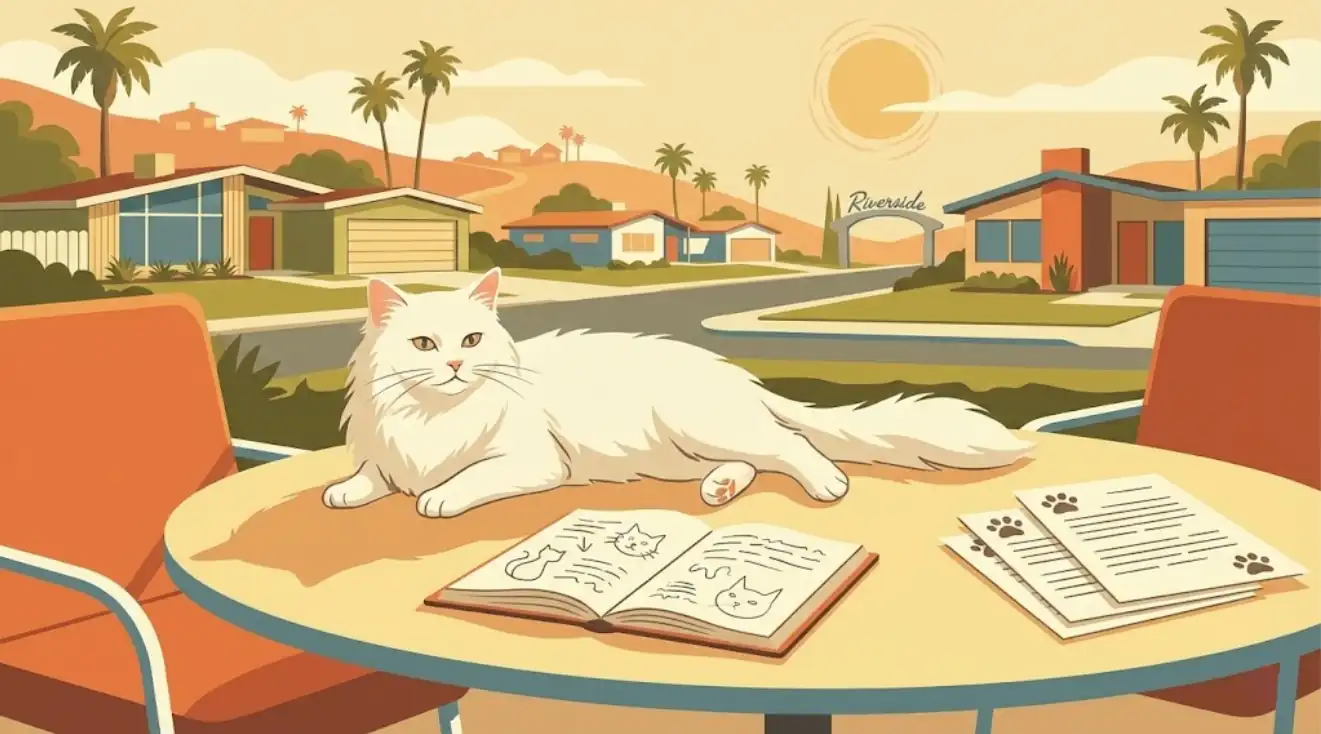
En Ragdoll cat breed was developed in the 1960s in Riverside, California, by breeder Ann Baker.
Most breed histories trace the Ragdoll’s foundation to a non-pedigreed white domestic longhair named Josephine. In CFA’s account, Josephine is described as the foundation cat and a carrier of the colorpoint gene, which aligns with the pointed pattern seen in Ragdolls today.
Early breeding records frequently highlight a small group of cats that became the breed’s core lines—especially Daddy Warbucks, Fugianna, and Buckwheat—from which modern Ragdolls are widely reported to descend.
One early milestone often cited is the first Ragdolls being registered with the National Cat Fanciers’ Association (NCFA) on December 30, 1966incluyendo Daddy Warbucks y Fugianna among the first registered cats.
As the breed gained attention, Baker selected and crossed domestic longhairs for the temperament and look she wanted, gradually shaping what became the modern Ragdoll. CFA notes that Baker also linked the breed name to reports that Josephine was so placid she would “go limp” when held—an origin detail that remains part of Ragdoll lore even if not universal in today’s cats.
When interest in the breed expanded, Baker created the International Ragdoll Cat Association (IRCA) en 1971, aiming to keep tight control over breeding and registration. Over time, some early breeders chose to pursue broader recognition through more traditional cat associations and independent clubs.
Historical accounts also note that Denny y Laura Dayton purchased early breeding cats from Baker (often dated to 1969) and later played a key role in organizing breed clubs and publications that helped standardize and promote Ragdolls more widely.
In major cat-fancy recognition milestones, CFA reports that Ragdolls were accepted for registration in 1993 and advanced to championship status in 2000.
Physical Characteristics (Size, Build, Coat, Color)
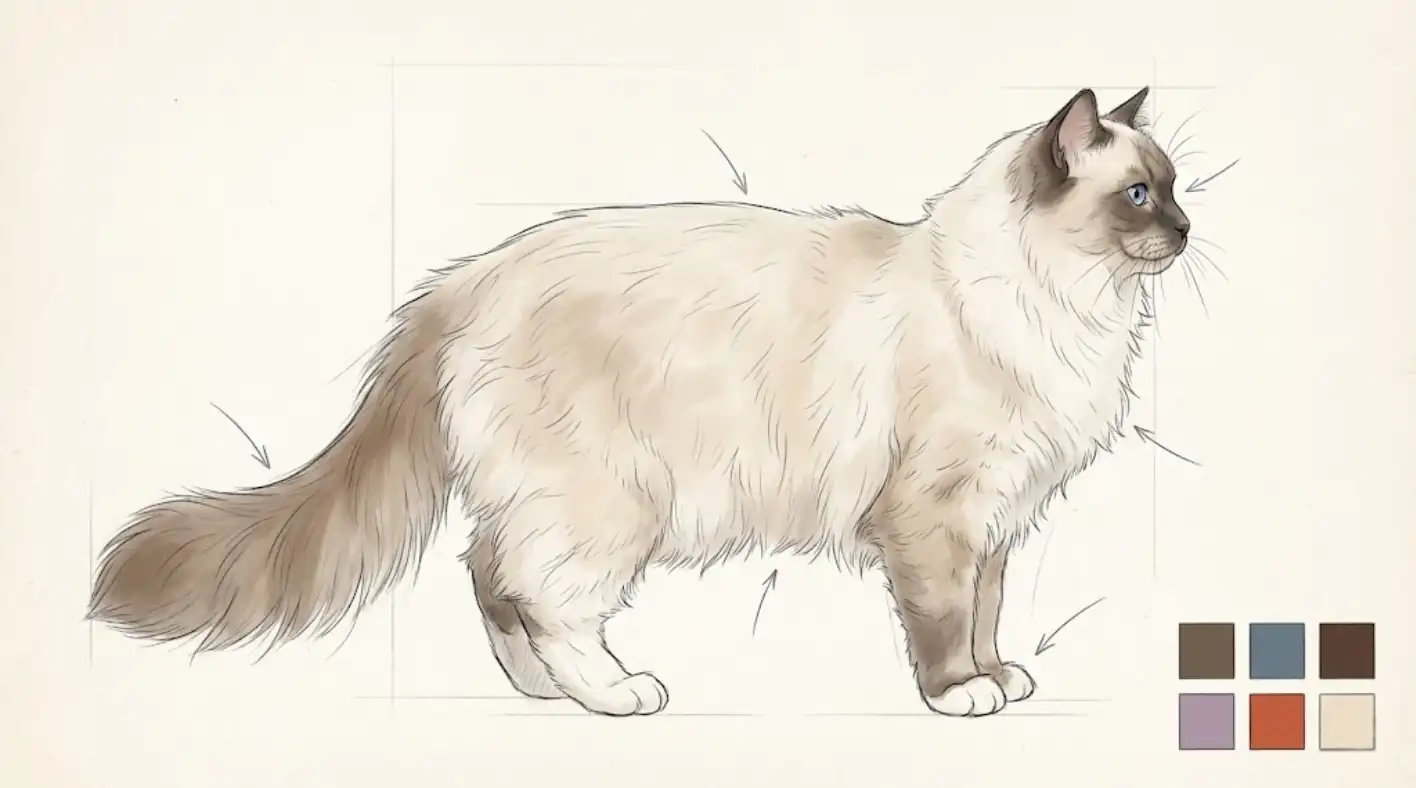
En Gato ragdoll es un large, heavy-boned breed with a long, muscular body and an overall “subdued power” look rather than an extreme, exaggerated type.
Size & weight (adult):
- Varones: commonly 15–20 lb (6.5–9 kg), and it’s not unusual for some mature males to reach 20+ lb.
- Mujeres: typically 10–15 lb (4.5–6.5 kg) and are noticeably smaller than males.
Slow maturation (a hallmark of the breed):
Ragdoll is slow-maturing and may not reach full size and weight until around 4 years. Their coat and color can continue developing for years—some references place “full coat color” at about 2 years, while breed standards also note color may not fully mature until around 3 years.
Body, head, and eyes (what “purebred type” looks like):
- Body: medium-long to long torso, broad chest, substantial boning, and a moderate lower-abdominal stomach pad is considered acceptable.
- Ojos: large oval blue eyes are a defining trait; standards penalize/avoid non-blue eye color for the breed.
- Tail: long and fully plumed.
Coat texture (why they feel “silky”):
El abrigo es semilargo and described as silky softcon minimal/insignificant undercoat (more guard hairs than dense wool). This affects the feel and how the coat lies on the body.
Color, patterns, and why kittens start out white:
Ragdoll is a colorpoint breed: the body is lighter, while the ears, face (mask), legs/feet, and tail are darker (“points”).
This is tied to TYR (tyrosinase) gene variants that influence pigment production in a temperature-sensitive way (a key reason “points” develop more strongly on cooler body areas).
Kitten color development (what owners should expect):
- Ragdoll kittens are commonly described as being born white, with colors/patterns appearing gradually afterward—often becoming visible within the first 1–2 weeks.
- Final depth of color can take años, so a young kitten’s markings may not match their eventual adult look.
Commonly recognized point colors and variations:
A widely cited set of point colors includes seal, blue, chocolate, lilac, red, and cream, with variations such as lynx (atigrado points) y tortie/parti-color depending on genetics and registry standards.
Ragdoll temperament at a glance
Ragdolls are widely described as calm, affectionate, and people-oriented—often happiest when they can stay near their favorite humans.
They’re famous for the “ragdoll flop” (many relax and go limp when cuddled or held), which is a commonly reported breed trait and part of how the breed got its name.
Affection level: “shadow cat” energy
Many Ragdolls will greet you at the door, hang out beside you, and follow you from room to room.
This clingy-sweet behavior isn’t unique to Ragdolls—research suggests cats can form secure attachment bonds with caregivers (similar categories to dogs/children), which helps explain why some cats prefer staying close to “their person.”
What this means for owners: if you want a lap-friendly companion, a Ragdoll is often a strong fit; if you want a highly independent “roommate cat,” you may prefer a different temperament.
Good with kids, guests, and other pets (with normal safety rules)
Breed organizations commonly describe Ragdolls as amable y sociable, and many households find they integrate smoothly with respectful children and other pets.
Still, “tolerant” doesn’t mean “invincible”: teach kids two-hand support (chest + hindquarters), avoid squeezing, and let the cat leave when it wants.
Trainability and play style
Ragdolls tend to be playful but not hyper, and many are described as trainable—some learn to come when called and even play fetch.
They typically enjoy interactive games (wand toys, gentle chase games, puzzle feeders) and do best when play is short, regular, and social.
Vocalization: usually quiet, sometimes chatty
Many sources describe Ragdolls as relatively quiet, but individual cats vary—some “talk” more, especially around meals or when they want attention.
Alone time and “separation-type” stress
Because Ragdolls are often strongly people-focused, some may do poorly with long stretches of isolation and can show stress behaviors (more vocalizing, over-grooming, appetite changes, litter box issues). If behavior changes suddenly, rule out medical causes with a vet first.
Indoor vs outdoor: why supervised access is safer
Outdoor/free-roaming life carries real risks (traffic injury, conflict, disease exposure), and veterinary groups highlight broader public-health/ecology concerns around free-roaming cats.
Given the Ragdoll’s reputation for being gentle and non-aggressive, many owners choose indoor life plus safe enrichment, and—if desired—tiempo supervisado al aire libre in a catio or harness.
Important owner note: cats can hide pain (watch subtle changes)
Cats often show pain in sutil ways, and pain can be under-recognized—so don’t rely on loud crying as your only signal.
Call your vet if you notice new or persistent changes such as:
- lower activity / reluctance to jump
- appetite changes
- hiding, irritability, or “not acting like themselves”
- altered posture or gait

Guía de cuidados
Diet (what to feed + how to choose)
Objetivo: keep your Ragdoll cat at a healthy body condition and prevent “quiet weight creep,” which is common in indoor cats.
Choose a “complete and balanced” alimentos for the right life stage. Look for an AAFCO nutritional adequacy statement (US) or equivalent standards in your region; this is more meaningful than marketing claims or ingredient buzzwords.
Portioning that actually works (and is easy to reference):
- Measure meals (cups/grams) instead of free-pouring.
- Use your vet to set an ideal weight + Body Condition Score (BCS) target, then adjust calories gradually.
- Keep “extras” small: ≥90% of daily calories from complete-and-balanced food; ≤10% from treats/toppers/human food.
Wet vs dry (practical, non-dogmatic): Both can work if they’re complete and balanced—what matters most is total calories and maintaining a healthy body condition. Ask your veterinarian for a plan that fits your cat’s edad, activity, and medical history.
Exercise (keep it simple and sustainable)
Ragdolls still need daily play, even if they’re naturally calm. Regular play supports healthy weight and reduces boredom behaviors.
A realistic baseline most cats will tolerate: Objetivo 2–3 play sessions per day, ~10–15 minutes each, adjusting for your cat’s age and energy. Short, frequent sessions typically work better than one long session.
Best toys (for “natural hunting” play):
- Wand/feather toys, soft kicker toys, small balls, crinkle toys
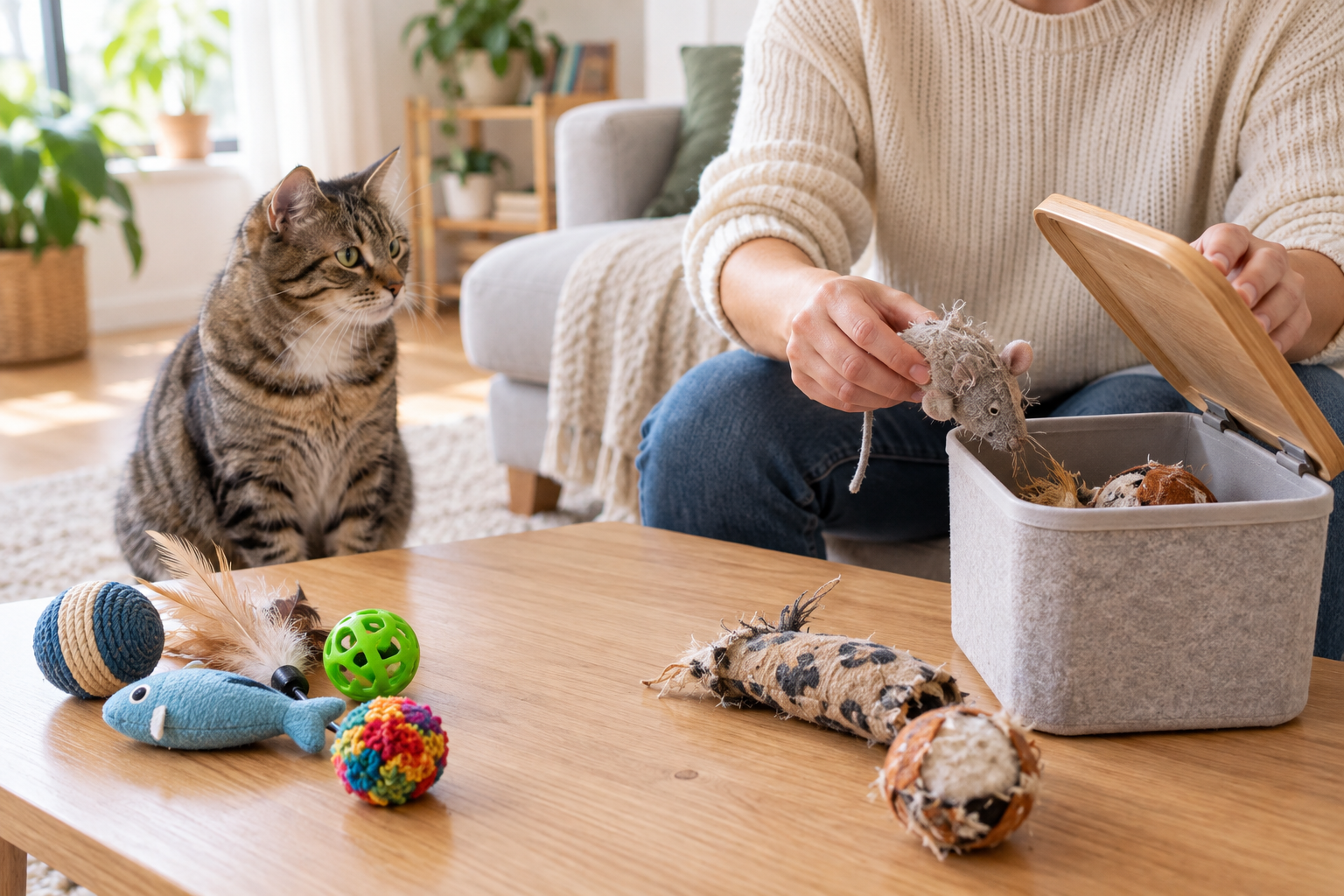
- Rotate toys weekly to keep novelty high
Laser pointers (optional, use carefully): Some evidence links frequent laser-pointer play with owner-reported abnormal repetitive behaviors in cats, so treat it as an occasional tool—not the main game. If you use it, keep sessions short and end with a “catch” (toss a toy or give a small treat) to avoid frustration.
Environment & Enrichment (indoor setup that prevents stress)
Indoor cats thrive when their home supports core feline needs—this is not “extra,” it’s foundational welfare.
Use the AAFP/ISFM “five pillars” idea as your blueprint:
- Safe resting/hiding spots (covered beds, boxes, quiet rooms)
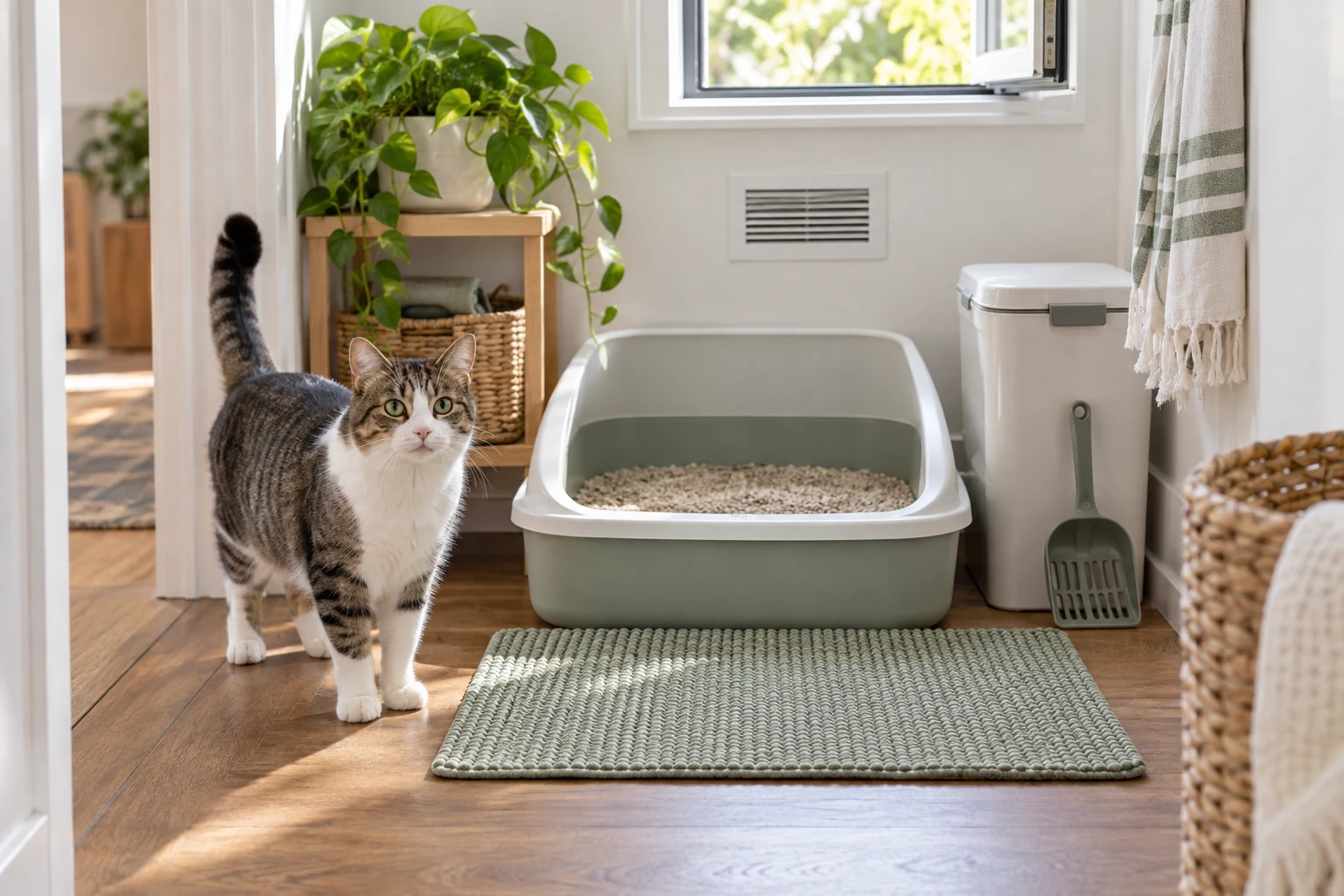
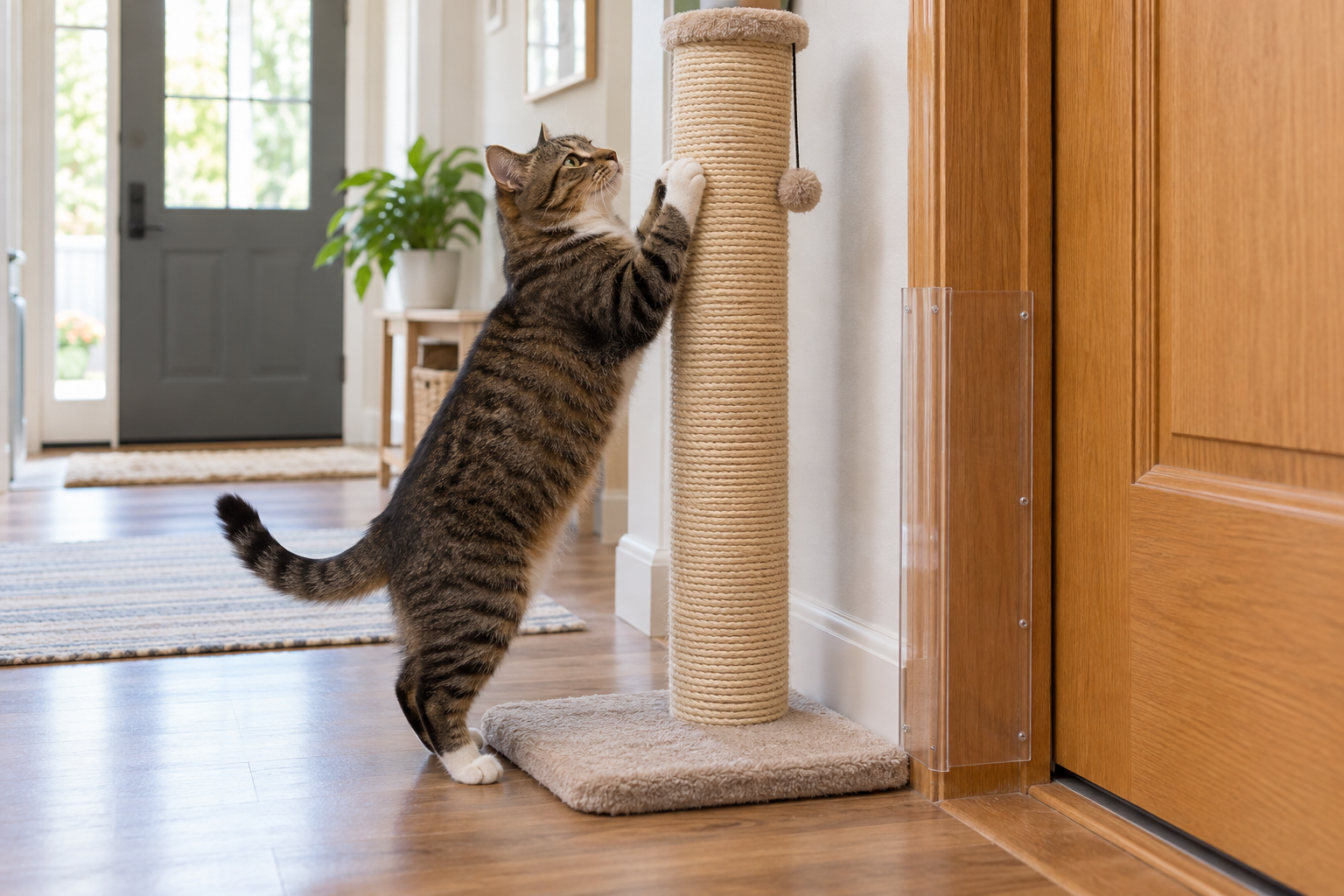
- Multiple key resources (food/water/litter/scratchers in more than one location if possible)
- Opportunities to play/hunt (daily interactive play + solo toys)
- Positive, predictable human interaction (gentle handling, choice, routine)
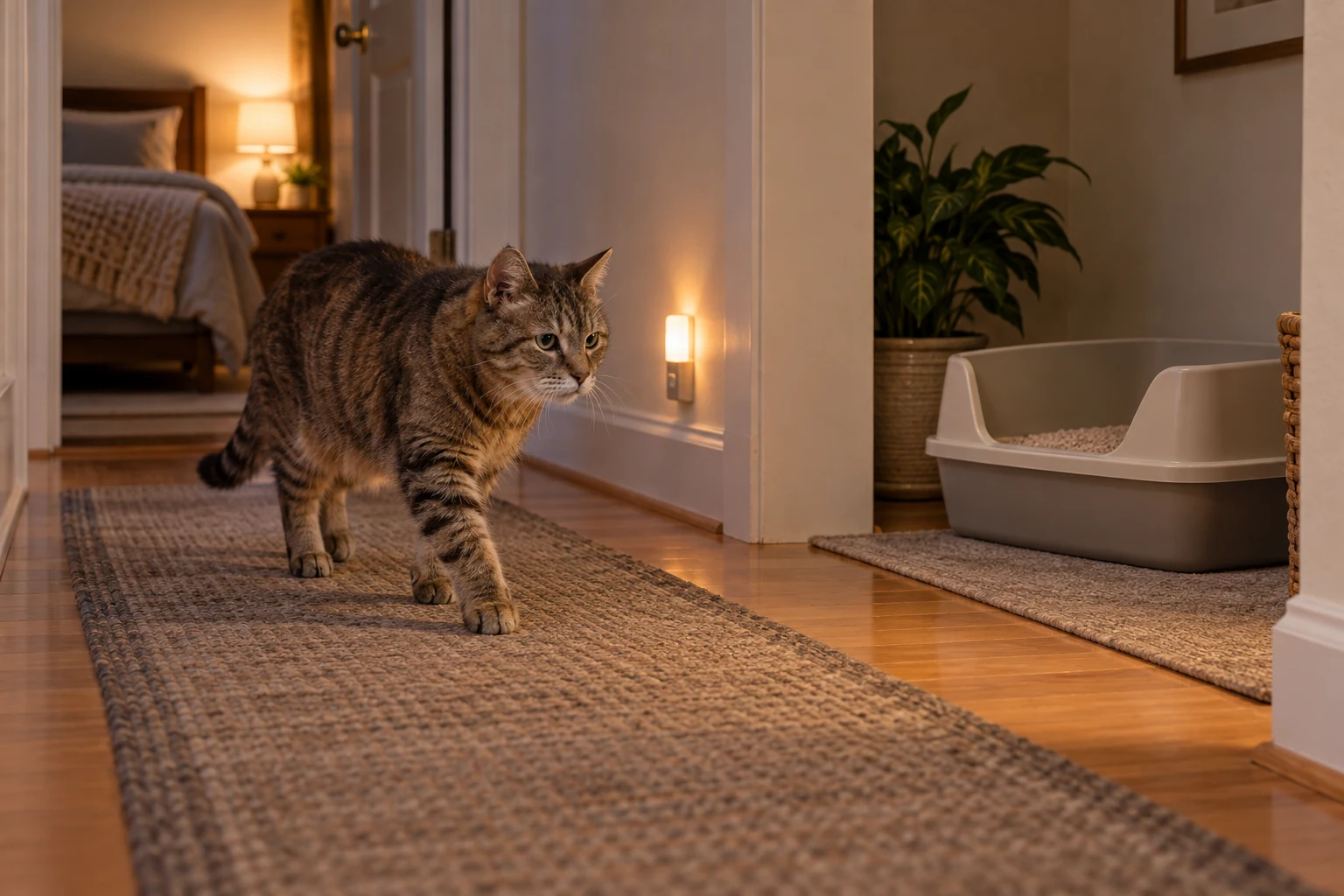
- A consistent environment (avoid sudden changes; introduce new items gradually)
High-impact upgrades (low effort):
- Espacio vertical: cat trees/perches/shelves for climbing and observation
- Window enrichment: a perch + safe viewing spot
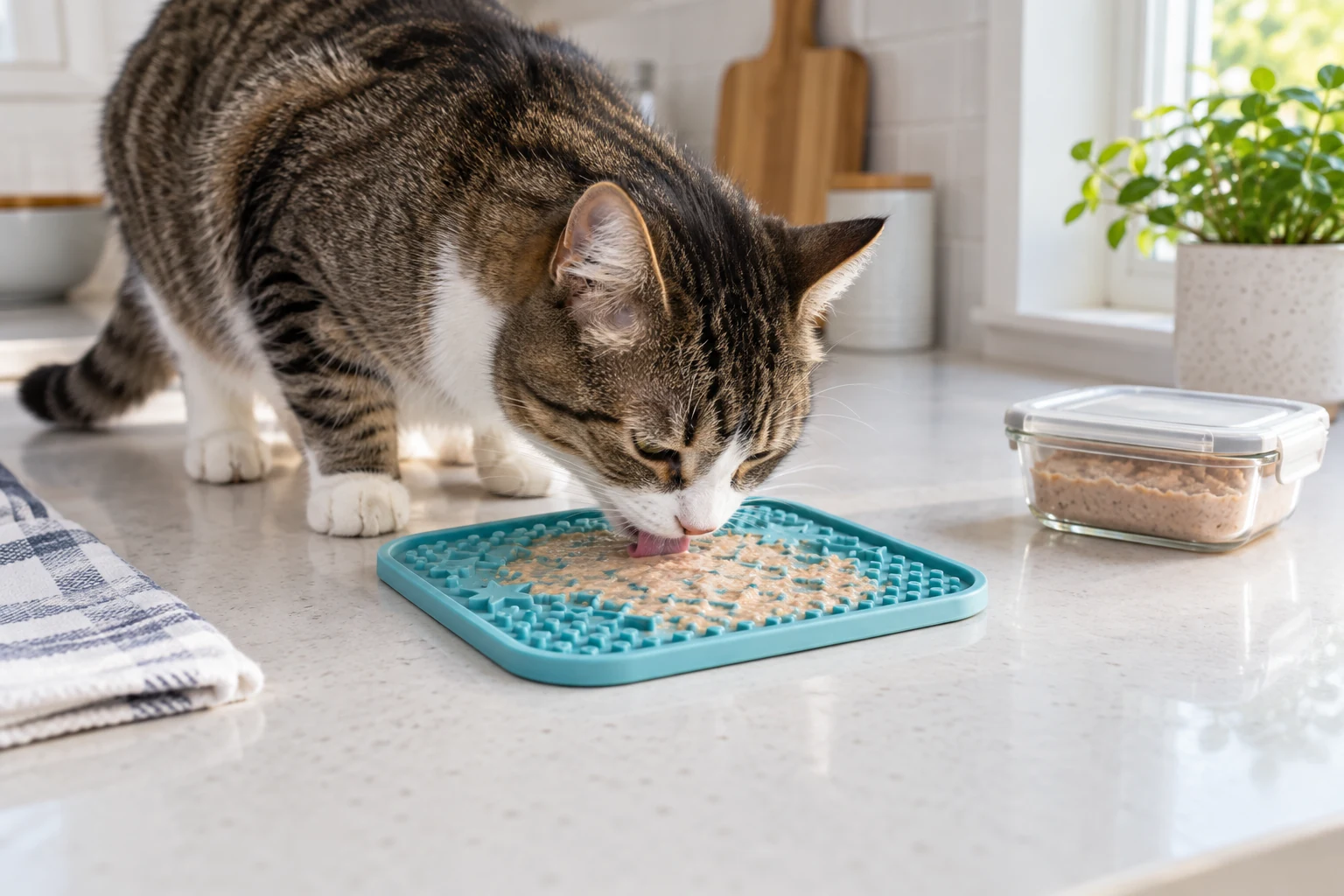
- Foraging: feed some meals with puzzle feeders to slow eating and add mental/physical work
Safe outdoor enrichment (without free roaming): If your Ragdoll wants “outside time,” choose controlled options like a catio/enclosure o supervised harness time.
Grooming (minimal time, consistent routine)
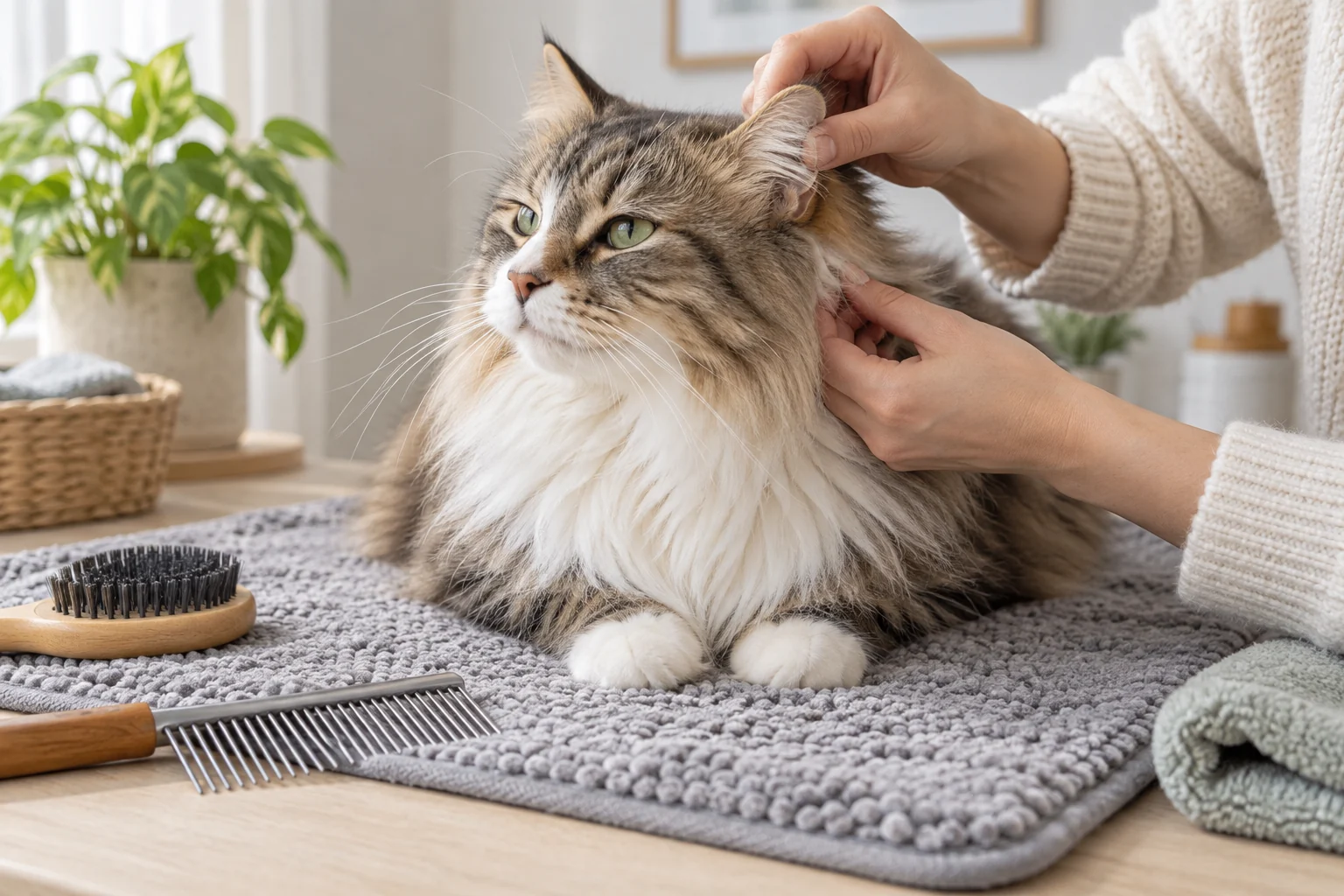
Many Ragdolls don’t need heavy grooming, but regular combing prevents tangles and reduces loose hair, especially during seasonal shedding.
Practical routine:
- Use grooming time as a quick “wellness scan” (skin, lumps, soreness) and contact your vet if you notice changes.
- Comb 1–2× per week con un steel comb (or similar), and increase frequency during heavy sheds.
- Focus on friction zones: behind ears, “armpits,” belly, and rear legs (where mats start first).
Mental Stimulation (make boredom-proof habits)
Mental enrichment is health care for indoor cats—especially for intelligent, people-oriented breeds like Ragdoll.
Easy weekly plan (owner-friendly and quotable):
- Daily: interactive play (2–3 short sessions)
- Most days: puzzle feeder / food “hunt” for at least one meal
- Semanal: rotate toys + introduce one new “micro-enrichment” (box fort, paper bag, new perch spot)
If you want to train tricks (sit, high-five, leash acclimation), keep it positive and short; many cats learn best with tiny food rewards.

Health Concerns (what’s known + what owners can do)
| Condición | What it is | Por qué es importante | Qué hacer |
|---|---|---|---|
| Miocardiopatía hipertrófica (MCH) | Thickening of the heart muscle; can be silent early | Ragdolls are among breeds where HCM is seen; complications can include blood clots that affect hind limbs | Ask breeders about HCM screening/DNA testing; vets diagnose via echocardiography |
| Kidney disease & PKD (polycystic kidney disease) | Cysts can occur in PKD; chronic kidney disease has multiple causes | A Ragdoll screening study reported low PKD prevalence (<3%) in that population; routine screening should be evidence-based | Discuss ultrasound and/or genetic testing context with your vet/breeder; don’t assume high breed risk without evidence |
| FLUTD (lower urinary tract disease) | Group of urinary problems (painful urination, blood, frequent attempts) | Cornell notes LUTD is a very common reason cats visit vets; obstruction is an emergency | Know the red flags (straining, little/no urine) → urgent vet care; focus on hydration + stress reduction |
| Obesity & joint strain | Excess weight increases disease risk | Cornell describes obesity as a common nutritional disorder and notes it can worsen disorders like osteoarthritis and diabetes | Portion control + structured play; weight loss should be vet-guided (avoid crash diets) |
| FIP (feline infectious peritonitis) | Severe disease from feline coronavirus mutation | This is no longer “no definitive cure” in the way older articles framed it | Cornell reports compounded GS-441524 became available in the U.S. with veterinary prescription context; consult your vet |
Is a Ragdoll Cat Right for You?
Ragdoll cats are best known for being affectionate, calm, and people-oriented, and many will “flop” or relax deeply when held. They tend to do well in many households—but they’re not a great match for every lifestyle.
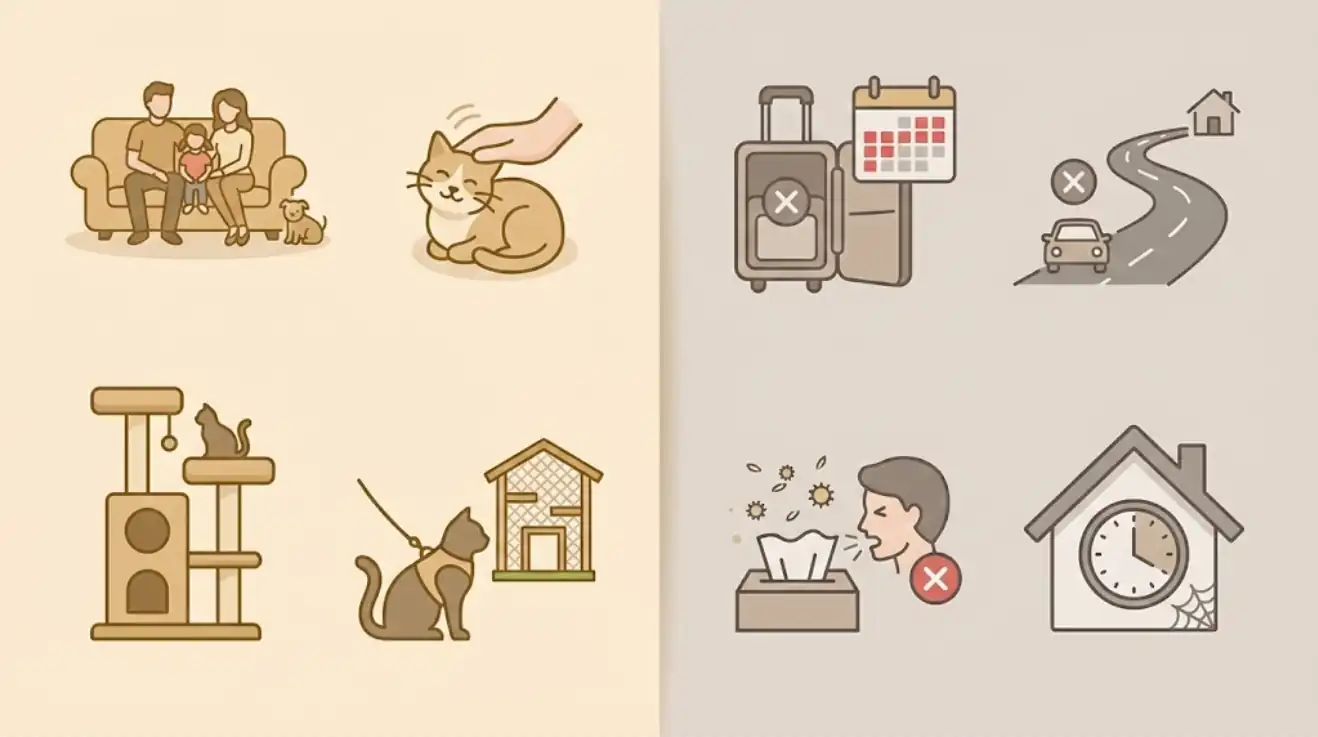
Best match if you want…
| Great fit for… | Why a Ragdoll is a good match |
|---|---|
| A cuddly, gentle, relaxed companion | Ragdolls are commonly described as laid-back, loving, and quiet, with many enjoying being held and cuddled. |
| Families with kids or other pets | Breed profiles from major registries note Ragdolls are typically tolerant and sociable, often doing well with children and other animals (with proper introductions). |
| A cat that can learn games or routines | Many owners find Ragdolls trainable (some learn fetch/come when called). |
| Apartment living or smaller spaces | Ragdolls are often described as adaptable and not needing a large home, as long as they get daily interaction and play. |
| A long-haired look with manageable grooming | They still shed, but registry guidance describes peinado semanal as a practical baseline, with extra attention during seasonal shedding. |
Think twice if you…
| Not ideal for… | Why it may not work |
|---|---|
| Want a very independent, low-contact cat | Ragdolls are commonly described as people-focused and often stay close to their humans. Research also shows cats can form strong attachment bonds and may show separation-related behaviors, so “loner cat” expectations can backfire. |
| Plan to let your cat roam outdoors unsupervised | Uncontrolled outdoor access increases risk (traffic, disease/parasites, toxins, getting lost). AVMA guidance notes that confining owned cats (indoor enrichment, catio, or leash-acclimated walks) helps reduce these risks. |
| Have significant cat allergies and need a “hypoallergenic” cat | Cat allergy symptoms are most commonly driven by Fel d 1 (the major cat allergen). Ragdolls are no hipoalergénico. |
| Don’t want to manage weight and routine play | Ragdolls love food and can be at higher risk of weight gain without regular play and portion awareness. |
| Prefer to avoid breed-linked health screening discussions | Ragdolls have a known breed-associated genetic risk for HCM, and reputable breeders commonly test for it. |
Quick self-check (fast decision)
You’re likely a good match for a Gato ragdoll if you can say “yes” to most of these:
- I want a friendly, affectionate cat that enjoys companionship.
- I can keep my cat en el interior (or use a catio / leash-acclimated outings).
- I can do peinado semanal and basic coat care.
- I’m willing to support healthy weight with daily play + portion control.
- I’m comfortable asking breeders about HCM testing (and working with a vet for preventive care).
Conclusión: If you want a calm, affectionate, family-friendly cat and you’re happy with an indoor lifestyle, the Ragdoll is often an excellent fit.
PREGUNTAS FRECUENTES
¿Cuánto cuesta un gato Ragdoll?
Breeder pricing varies widely by region, lineage, and whether a kitten is pet-quality or show/breeding-quality. Instead of relying on a single number, ask for: proof of health testing, a written contract, and what early veterinary care is included. (This is more trustworthy than a rigid price claim.)
¿Cuánto crecen los gatos Ragdoll?
Los ragdolls son una raza grande. Los machos pueden pesar 6,5-9 kg (15-20 libras) y las hembras 4,5-6,5 kg (10-15 libras). Suelen medir de 9 a 11 pulgadas de alto y de 17 a 21 pulgadas de largo.
¿Cuánto viven los gatos Ragdoll?
Con los cuidados adecuados y un estilo de vida en interiores, los Ragdoll suelen tener una esperanza de vida superior a la media, normalmente de 12 a 17 años. Algunos ejemplares pueden llegar a vivir hasta 20 años.
¿Los gatos Ragdoll mudan?
Sí, los Ragdolls mudan, pero generalmente menos que muchas otras razas de pelo largo debido a su falta de subpelo denso. Experimentan una muda más importante durante los cambios estacionales, sobre todo en primavera y otoño. El cepillado regular ayuda a controlar el pelo suelto.
¿Son hipoalergénicos los Ragdoll?
No, los Ragdoll no se consideran hipoalergénicos. Aunque su pelaje con poca pelusa podría reducir la cantidad de caspa en el ambiente, las alergias a los gatos están causadas principalmente por las proteínas que se encuentran en la saliva, la orina y las escamas de piel de los gatos, que los Ragdoll producen como cualquier otro gato.
Datos complementarios
Todos los pura sangre tienen los ojos azules
Una característica definitoria de la raza son sus cautivadores ojos azules. Cualquier Ragdoll con ojos verdes o amarillos es probablemente una mezcla.
Nacido Blanco Puro
Los gatitos Ragdoll nacen completamente blancos. Sus colores y patrones distintivos comienzan a desarrollarse entre una y dos semanas de edad y continúan rellenándose a medida que maduran, alcanzando la coloración completa alrededor de 1,5 a 2 años de edad.
Maduración lenta
Los ragdolls se consideran "de floración tardía", ya que tardan más que la mayoría de las razas en alcanzar su tamaño y madurez plenos, a menudo hasta los cuatro años de edad.
"Ragdogs"
A menudo se les compara con los perros por su carácter afectuoso, leal y sociable. Siguen a sus dueños, los saludan en la puerta e incluso pueden jugar a buscarlos.
Naturaleza tranquila (y ocultar el dolor)
Aunque por lo general son tranquilos y no excesivamente ruidosos, este rasgo significa que pueden no mostrar fácilmente signos de angustia o dolor, lo que requiere una observación atenta por parte de los propietarios en busca de señales sutiles de comportamiento.
Sienten dolor
A pesar de un mito que sugiere lo contrario debido a su comportamiento tranquilo, los Ragdolls sienten absolutamente dolor. Su capacidad para ocultar el malestar significa que los propietarios deben estar muy atentos a su bienestar.
No sordo
La asociación entre ojos azules y sordera es un mito para los Ragdoll. Mientras que la sordera es más común en gatos blancos puros con ojos azules debido a una mutación genética específica, los Ragdolls vienen en varios colores y no comparten esta mutación en particular.
Intrigados por el agua
A diferencia de muchas razas de gatos, a los Ragdoll les suele fascinar el agua y pueden incluso seguir a sus dueños hasta la ducha o sentarse en el borde de la bañera.
Referencias
Becker, Marty; Spadafori, Gina (16 de septiembre de 2006). ¿Por qué los gatos siempre caen de pie?: 101 de las preguntas más desconcertantes ... - Marty Becker, Gina Spadafori - Google Books. Health Communications, Incorporated. ISBN 9780757305733. Consultado el 15 de agosto de 2014.
Benjamin L. Hart; Lynette A. Hart (2013). Su gato ideal: diferencias de raza y sexo en el comportamiento felino. Purdue University Press. pp. 99-101. ISBN 9781557536488.
"Ragdoll". Petplan. Recuperado el 14 de mayo de 2021.
"Ragdoll - La Asociación de Aficionados a los Gatos, Inc". cfa.org. Recuperado el 20 de noviembre de 2020.
"Historia de la raza de gato Ragdoll". 19 de febrero de 2023.
Helgren, J. Anne (2006). "Ragdoll". Iams. Telemark Productions. Archivado desde el original el 13 de noviembre de 2014.
"Historia de Ragdoll - Los comienzos". Sociedad Histórica Ragdoll. Archivado del original el 9 de abril de 2025. Recuperado el 16 de junio de 2025.
Mattern, Joanne (2001). El gato de trapo. Mankato, Minnesota: Capstone. pp. 5-16. ISBN 0736808973.
Robbins, Nancy (14 de febrero de 2012). Gatos domésticos: Historia, razas y otros datos. CreateSpace. p. 220. ISBN 9781470075385.
"Raistrick Ragdolls". Raistrickragdfolls.co.uk. Archivado desde el original el 29 de noviembre de 2014. Recuperado el 15 de noviembre de 2014.
"Ragdoll". Consejo de Gobierno de Cat Fancy. Archivado del original el 30 de marzo de 2025. Recuperado el 16 de junio de 2025.
Comprender el comportamiento del gato: El completo solucionador de problemas felinos Roger Tabor (2003). P 33.
¿Los gatos siempre caen de pie? Gina Spadafori, Marty Becker
"¿Por qué cojean los gatos Ragdoll?". 17 de enero de 2021. Recuperado el 17 de septiembre de 2021.
El gato: comportamiento, nutrición y salud Linda P. Case, Kerry Helms, Bruce Macallister (2003). P 31.
Dina (2 de febrero de 2019). "¿Son juguetones los gatos Ragdoll?". purrcraze.com. Recuperado el 24 de junio de 2021.
Braaksma, Hilary; Guthrie, Claudia. "Ragdoll". Patas diarias. Consultado el 1 de diciembre de 2021.
"Consejos de aseo para un gato Ragdoll". Petango. 28 de marzo de 2012. Recuperado el 31 de mayo de 2022.
"Información sobre la raza de gato Ragdoll". www.purina.co.uk. Recuperado el 24 de junio de 2021.
"Gatos Ragdoll - Guía completa de la raza de gatos Ragdoll". El sitio del gato feliz. 14 de mayo de 2019. Recuperado el 24 de junio de 2021.
Braaksma, Hilary; Guthrie, Claudia (1 de diciembre de 2021). "Ragdoll". Patas diarias. Consultado el 1 de diciembre de 2021.
"Presentación de Ragdoll". Tica.org. Recuperado el 15 de diciembre de 2017.
Mattern, Joanne. El gato de trapo. capstone press. p. 19.
"Birmano vs Ragdoll". El pequeño carnívoro. Consultado el 24 de enero de 2022.
"Ragdoll Internacional Patrones y Colores". Ragdollinternational.org. Consultado el 11 de junio de 2012.
Teng, Kendy Tzu-yun; Brodbelt, Dave C; Church, David B; O'Neill, Dan G (2024). "Tablas de esperanza de vida anual y factores de riesgo de mortalidad en gatos en el Reino Unido". Revista de Medicina y Cirugía Felina. 26 (5): 1098612X241234556. doi:10.1177/1098612X241234556. ISSN 1098-612X. PMC 11156239. PMID 38714312.
Egenvall, A.; Nødtvedt, A.; Häggström, J.; Ström Holst, B.; Möller, L.; Bonnett, B. N. (2009). "Mortalidad de los gatos suecos con seguro de vida durante 1999-2006: Edad, raza, sexo y diagnóstico". Revista de Medicina Interna Veterinaria. 23 (6): 1175-1183. doi:10.1111/j.1939-1676.2009.0396.x. PMC 7167180. PMID 19780926.
O'Neill, Dan G; Church, David B; McGreevy, Paul D; Thomson, Peter C; Brodbelt, David C (2014-06-12). "Longevidad y mortalidad de los gatos que acuden a consultas veterinarias de atención primaria en Inglaterra". Revista de Medicina y Cirugía Felina. 17 (2). SAGE Publications: 125–133. doi:10.1177/1098612×14536176. ISSN 1098-612X. PMC 10816413. PMID 24925771.
Albasan, H.; Osborne, C. A.; Lulich, J. P.; Lekcharoensuk, C. (2012). "Factores de riesgo de urolitos de urato en gatos". Revista de la Asociación Americana de Medicina Veterinaria. 240 (7): 842-847. doi:10.2460/javma.240.7.842. PMID 22443437.
O'Neill, D.G.; Gostelow, R.; Orme, C.; Church, D.B.; Niessen, S.J.M.; Verheyen, K.; Brodbelt, D.C. (2016-06-29). "Epidemiología de la diabetes mellitus entre 193.435 gatos que acuden a consultas veterinarias de atención primaria en Inglaterra". Revista de Medicina Interna Veterinaria. 30 (4). Wiley: 964-972. doi:10.1111/jvim.14365. ISSN 0891-6640. PMC 5094533. PMID 27353396.
Oliver, James A.C.; Mellersh, Cathryn S. (2020). "Genetics". En Cooper, Barbara; Mullineaux, Elizabeth; Turner, Lynn (eds.). Libro de texto de enfermería veterinaria de la BSAVA (Sexta ed.). Asociación Veterinaria Británica de Pequeños Animales. p. 131. ISBN 978-1-910-44339-2.
"Variantes de ADN de la proteína C de unión a miosina en gatos domésticos (A31P, A74T, R820W) y su asociación con la miocardiopatía hipertrófica" (PDF). Vetogene.it. Archivado desde el original (PDF) el 11 de febrero de 2015. Recuperado el 15 de diciembre de 2017.
"Miocardiopatía hipertrófica (MCH) en gatos". Fabcats.org. Recuperado el 15 de diciembre de 2017.
 EN
EN DE
DE ES
ES PT
PT