
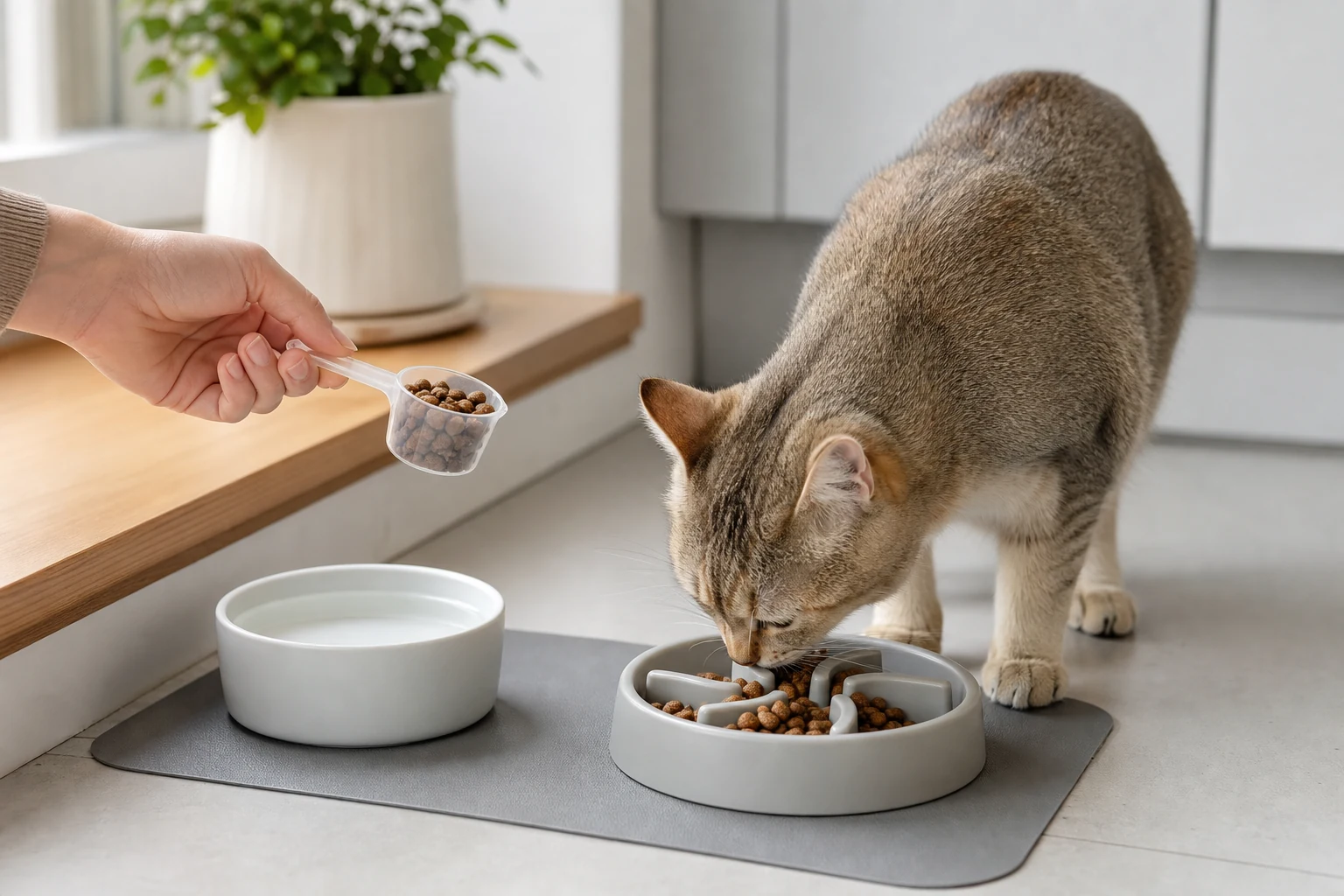
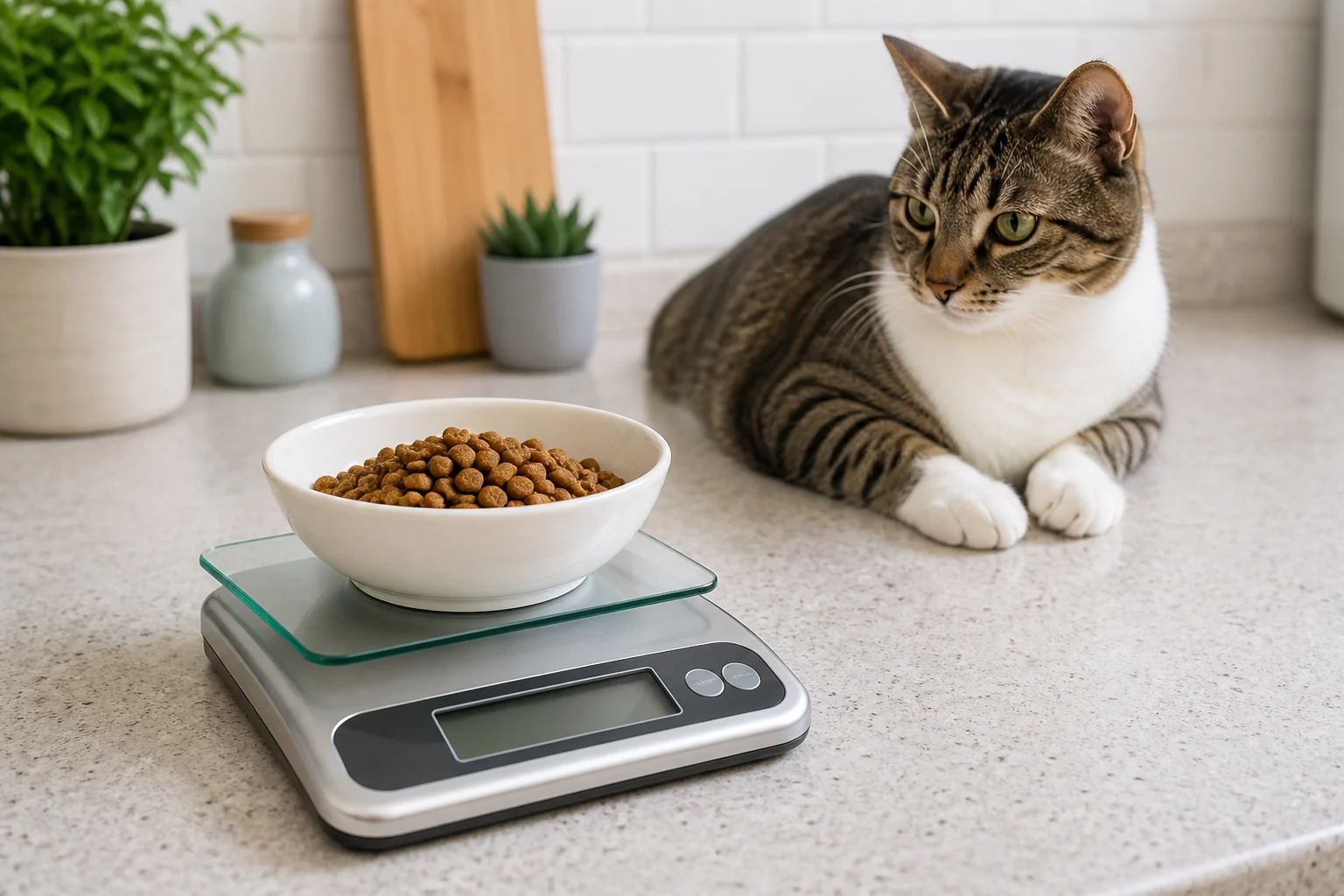
Slow feeder bowls for cats can help some fast eaters take smaller bites and spend longer with a measured meal, but they are not a weight-loss plan by themselves. Use them as a feeding tool: measure the food first, choose a shallow cat-friendly design, and switch to a puzzle feeder when your cat needs more mental work than a bowl can provide.
A good slow feeder makes eating a little less automatic without making the cat anxious, hungry, or sore. That matters because indoor feeding is not only about calories. Cats also need a feeding setup that protects comfort, routine, and natural foraging behavior.
The best choice depends on the problem you are solving. A cat who gulps dry food may benefit from a simple slow feeder bowl. A bored indoor cat who finishes meals and immediately looks for something else to do may need an easy puzzle feeder, play routine, or better meal schedule.
Índice
- Do slow feeder bowls work for cats?
- When does a slow feeder bowl help most?
- Is a slow feeder bowl or puzzle feeder better for your cat?
- How do you choose a safe slow feeder bowl?
- How do you use a slow feeder without overfeeding?
- How do you introduce a slow feeder safely?
- What mistakes make slow feeders stressful?
- What if your cat still begs after using a slow feeder?
- Conclusion: The best slow feeder is the one your cat can use calmly
- Preguntas frecuentes
- Referencias
Do slow feeder bowls work for cats?
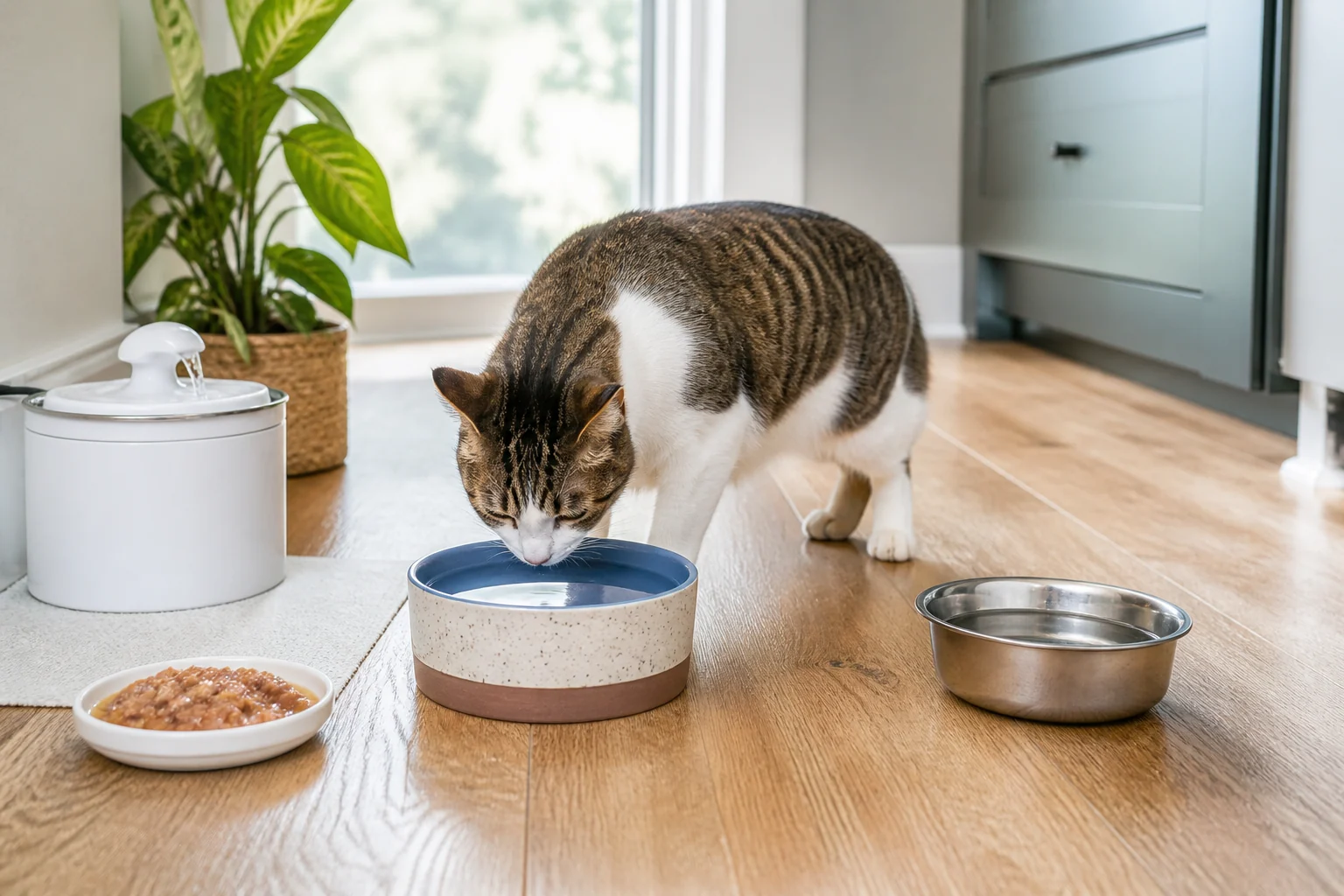
Slow feeder bowls can work for cats who eat dry food too quickly, especially when the design is shallow and easy enough for the cat to succeed. They work by spreading food around ridges, grooves, or raised shapes so the cat has to lick or pick up smaller amounts instead of taking large mouthfuls.
That does not mean every cat needs one. Cornell Feline Health Center notes that cats vary widely in how much food they need, and healthy weight depends on the right diet, body condition, and veterinary guidance when adjustments are needed 1. A slow feeder may change eating speed, but it does not decide the correct portion.
Think of the bowl as a brake, not a steering wheel. It may slow the meal, reduce gulping in some cats, and make dry food a little more engaging. The feeding plan still comes from measured calories, your cat's body condition, and any instructions from your veterinarian.
When does a slow feeder bowl help most?
A slow feeder bowl helps most when the main issue is speed: your cat inhales kibble, finishes far ahead of other cats, or seems unsettled by a meal that ends in seconds. It can also be useful when you want a lower-effort step before a puzzle feeder.
VCA describes meal feeding with portion control as a useful strategy for cats prone to overeating or excessive weight gain 2. A slow feeder can support that strategy because it makes a measured meal last longer, but it should not create unlimited access to extra food.
Common good-fit situations include:
| Situación | Why a slow feeder may help | What to watch |
|---|---|---|
| Fast dry-food eating | The cat has to work around shallow ridges instead of scooping mouthfuls | Coughing, gagging, vomiting, or distress still needs veterinary advice |
| Early-morning hunger pressure | A small measured meal may last longer | A timed feeder for cats may fit better for schedule problems |
| Beginner enrichment | It asks for a little effort without a complicated puzzle | Frustration, pawing aggressively, or walking away hungry |
| Portion-control transition | It makes a smaller measured meal feel less abrupt | Weight plans should be guided by your vet if your cat is overweight |
A slow feeder is not the right first step if your cat is losing weight, refusing food, vomiting repeatedly, drooling, pawing at the mouth, or suddenly changing appetite. Those signs deserve a veterinary call before you experiment with feeding equipment.
Is a slow feeder bowl or puzzle feeder better for your cat?
A slow feeder bowl is usually better for simple speed control. A puzzle feeder is usually better when the goal is enrichment, activity, or foraging-style feeding.
AAFP and ISFM environmental guidance emphasizes that cats benefit when indoor homes support species-appropriate needs, including opportunities for play and normal behavior 3. Food puzzles can be part of that enrichment, and the Ohio State Indoor Pet Initiative recommends making diet and container changes gradually, after the cat is eating normally and feeling well 4.
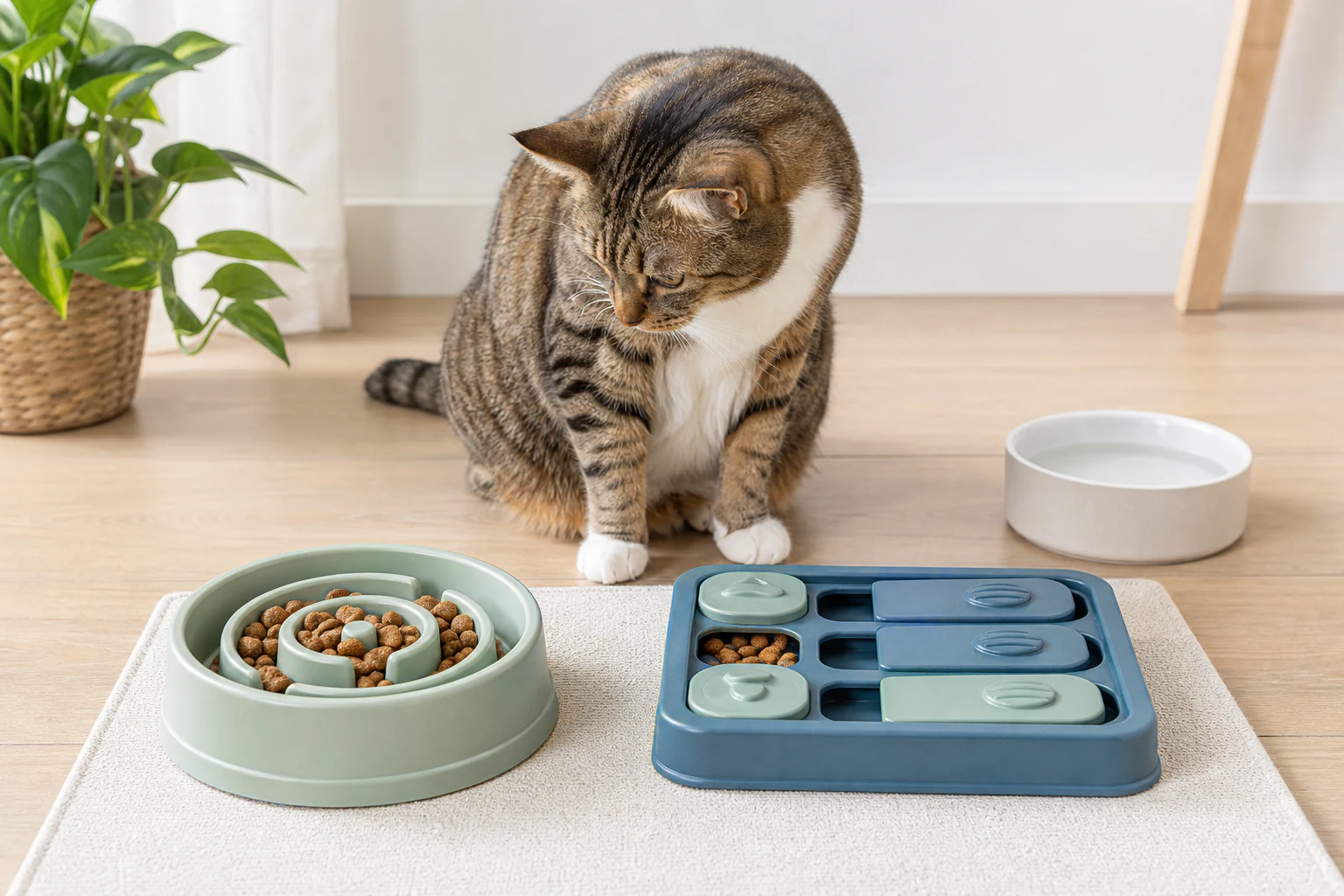
Slow feeder bowls mainly change eating speed, while puzzle feeders add more searching, pawing, and problem-solving.
Use this quick comparison:
| Feeding tool | Lo mejor para | Less ideal for |
|---|---|---|
| Slow feeder bowl | Cats who gulp dry food, beginners, low-effort meal slowing | Cats who need more activity, cats frustrated by ridges, wet-food-only cats unless the bowl suits wet food |
| Puzzle feeder tray | Indoor enrichment, boredom, foraging practice, confident eaters | Cats who are ill, under-eating, very anxious, or new to food challenges |
| Rolling puzzle toy | Active cats who like batting and chasing kibble | Multi-cat homes with food guarding, cats on strict medical diets unless supervised |
| Timed feeder | Schedule consistency and predictable small meals | Cats who need active enrichment or cats who steal from housemates |
If you want a deeper enrichment setup, use this article alongside the SnuggleSouls guide to comederos tipo rompecabezas para gatos. If the problem is timing rather than boredom, a timed feeder may be the more practical tool.
How do you choose a safe slow feeder bowl?
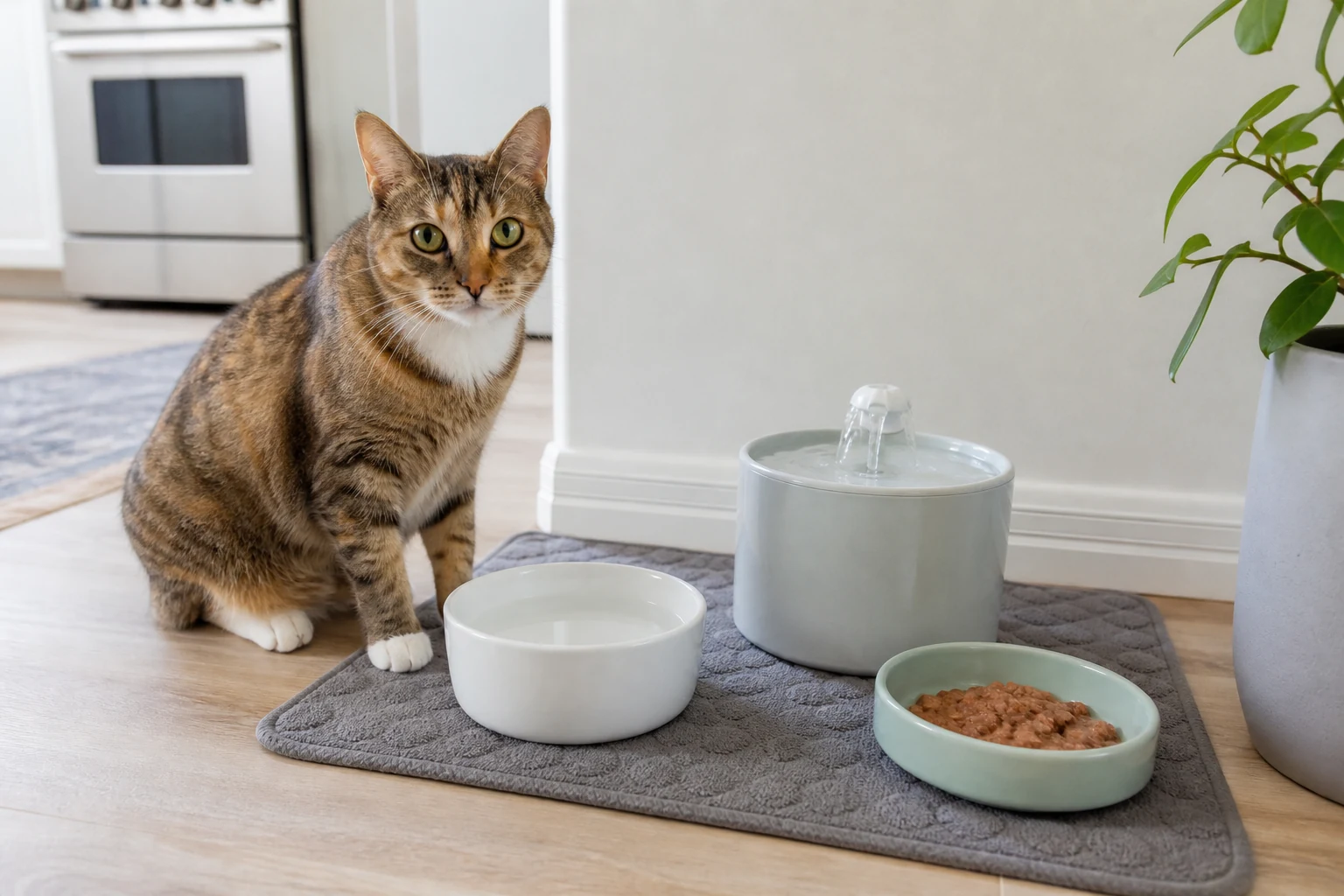
Choose a slow feeder that is shallow, stable, easy to clean, and not so complicated that your cat gives up. Cats have sensitive whiskers, so deep narrow channels can feel unpleasant for some cats even when the product is marketed as a slow feeder.
Busca:
- Low ridges instead of tall maze walls.
- A wide base that does not slide across the floor.
- Food-safe material that can be washed thoroughly.
- Open spaces large enough for your cat's muzzle and tongue.
- No removable small parts that could be chewed or swallowed.
- A design that works with the food texture you actually feed.
Avoid turning the bowl into a test of persistence. The cat should be able to get food with a little effort, not become trapped in a frustrating task. If your cat backs away, bites the feeder, flips it, or seems more stressed at meals, make the setup easier.
How do you use a slow feeder without overfeeding?
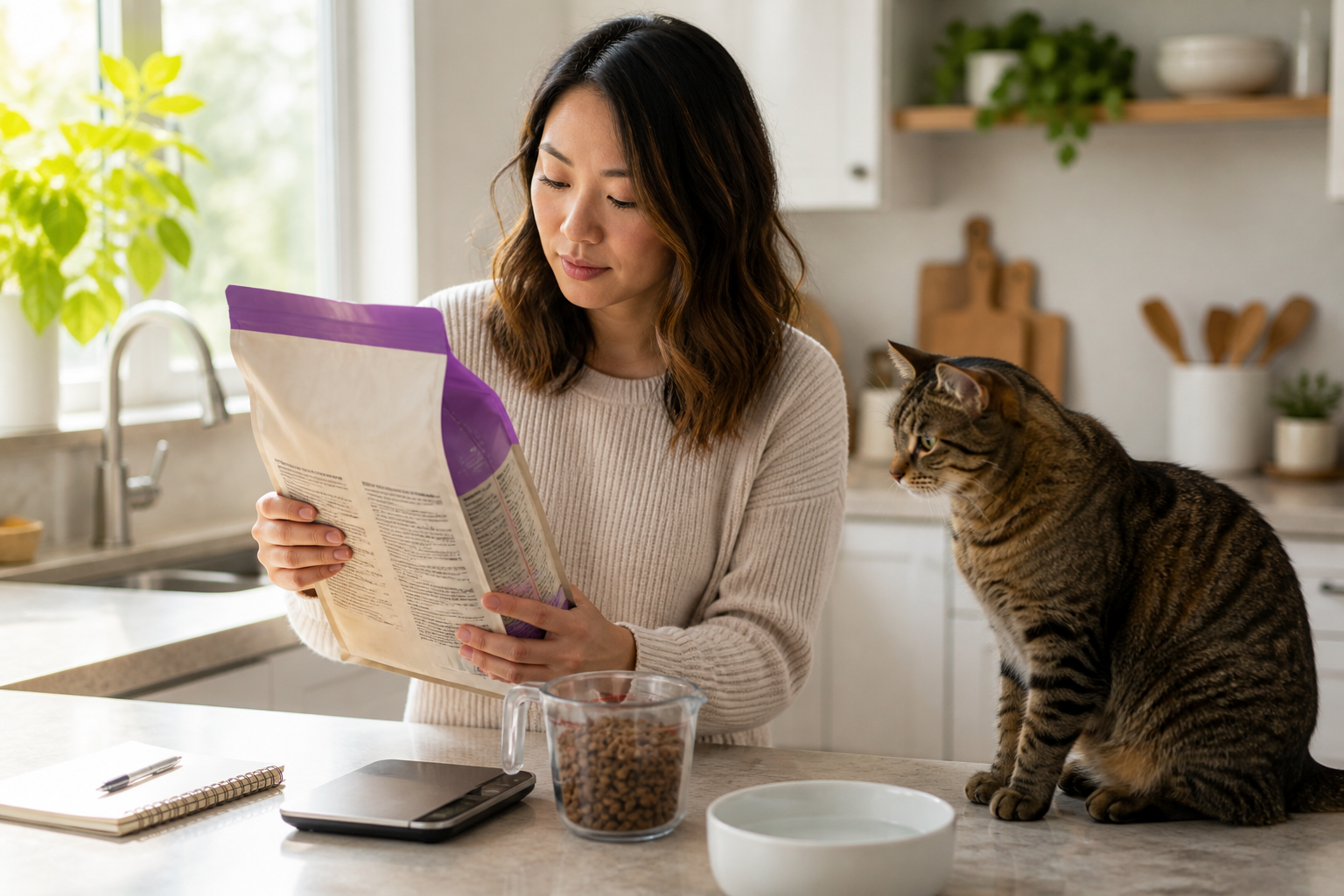
Measure the full meal first, then put that measured amount into the slow feeder. Do not fill the grooves until they look satisfying to you; slow feeder shapes can make portions look smaller than they are.
Cornell notes that obesity is a common nutrition-related problem in cats and that ideal weight should be discussed with a veterinarian 1. That is why the portion comes before the bowl. Use the SnuggleSouls guide to ¿Cuánto debo darle de comer a mi gato? or the calculadora de calorías para gatos to organize your notes, then confirm weight-loss or medical-diet changes with your vet.
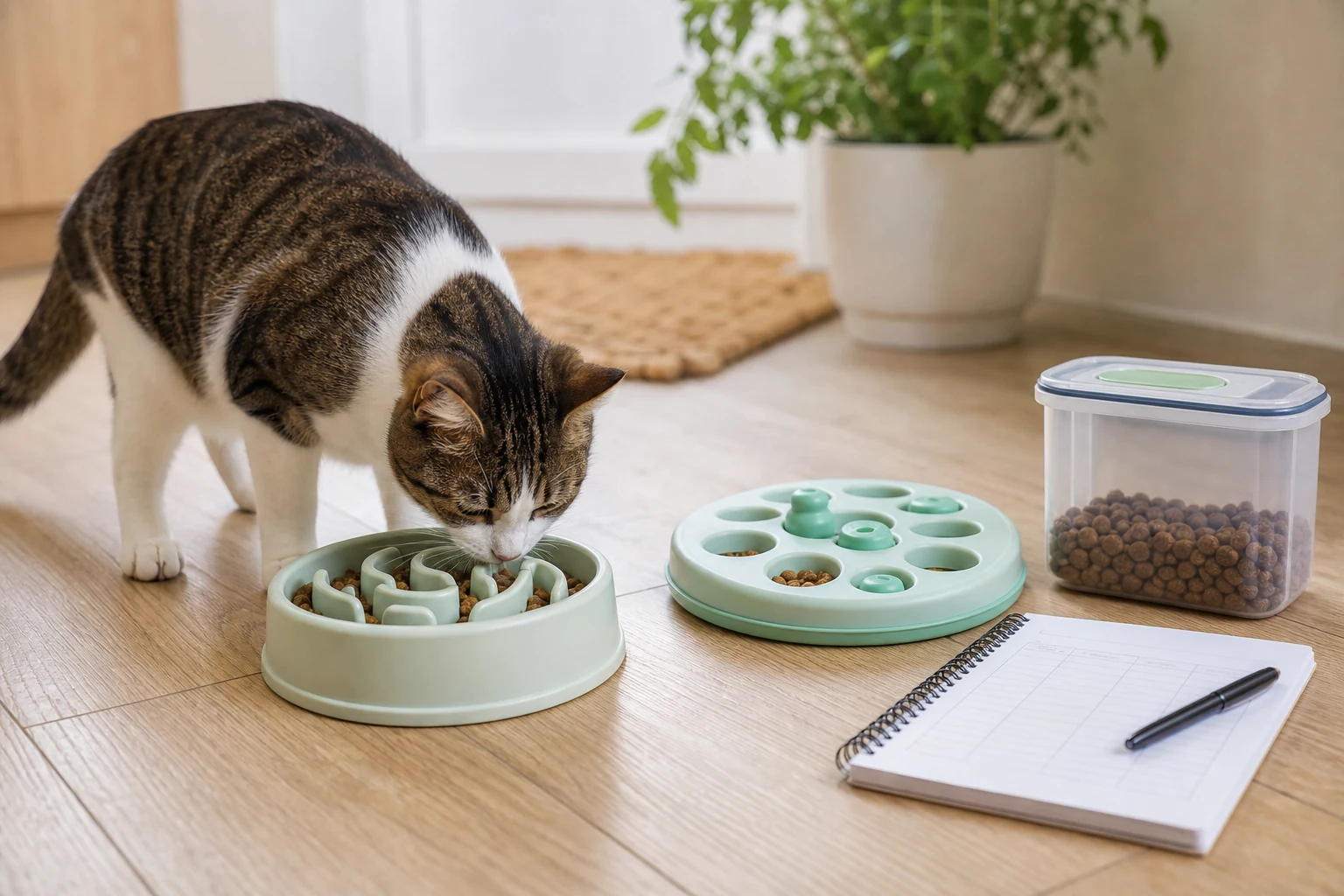
Splitting a measured daily ration across meals, bowls, and enrichment feeders prevents slow feeding from turning into extra feeding.
For a simple routine:
- Decide the daily food amount with your veterinarian's guidance or the food label as a starting point.
- Divide that amount into meals.
- Put only one meal's portion into the slow feeder.
- Count treats, toppers, and puzzle-feeder kibble within the same daily budget.
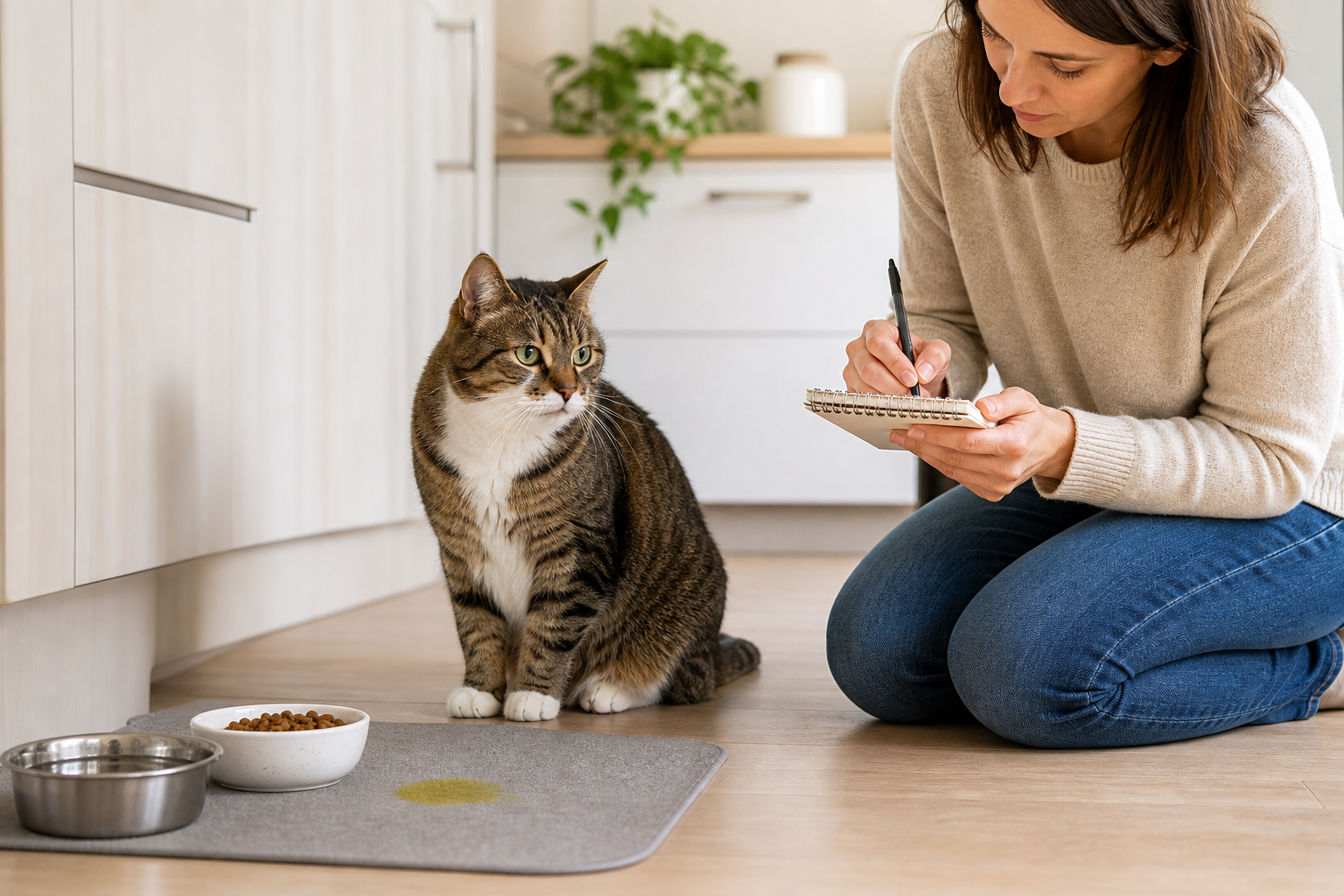
- Track weight, body condition, appetite, and stool changes.
If your cat is on a prescription diet, has diabetes, kidney disease, urinary disease, food allergies, gastrointestinal disease, or a history of not eating, ask your veterinarian before changing the feeding method.
How do you introduce a slow feeder safely?
Start easier than you think you need to. Put a small amount of your cat's usual food in the slow feeder and leave some food visible and easy to reach. For the first few meals, you can place the slow feeder beside the regular bowl rather than replacing the familiar setup immediately.
The Ohio State Indoor Pet Initiative advises gradual feeding changes and notes that cats should be eating their usual diet normally before changing to a puzzle feeder 4. The same principle applies to slow feeder bowls. The goal is confidence, not surprise.
A gentle introduction plan:
- Day 1: Offer a few pieces of kibble in the slow feeder after part of the normal meal.
- Days 2-3: Put a larger share of the meal in the slow feeder if your cat uses it calmly.
- Days 4-7: Move the full measured dry-food meal into the slow feeder if eating remains relaxed.
- After week 1: Consider an easy puzzle feeder for one small portion if your cat seems curious and confident.
Kittens, seniors, newly adopted cats, and cats recovering from illness often need slower transitions. If you are already changing meal timing, use the Horario de comidas para gatos según la edad as a planning reference so you are not changing every part of the routine at once.
What mistakes make slow feeders stressful?
The biggest mistake is choosing a feeder that is too hard, too deep, or too competitive. A slow feeder should not make a cat fight for every bite.
Watch for these problems:
| Mistake | Why it backfires | Better option |
|---|---|---|
| Using a deep dog-style maze bowl | It may bother whiskers or make food hard to reach | Choose a shallow cat-specific design |
| Changing the bowl during illness | Appetite changes can become harder to interpret | Wait until your cat is stable and eating normally |
| Using one feeder for multiple cats | Faster cats may guard or steal food | Separate feeding stations or microchip feeders for cats |
| Adding extra food because the bowl looks empty | It undermines portion control | Measure before filling |
| Making every meal difficult | Some cats need predictable easy meals too | Use enrichment for part of the ration |
Multi-cat homes need special care. Place feeding stations apart with visual separation when possible, and do not assume one slow feeder solves food stealing. If one cat is on a medical diet or another cat is guarding food, equipment choice should support separation first.
What if your cat still begs after using a slow feeder?
Begging after a slow feeder does not always mean your cat needs more food. It may mean the meal schedule is uneven, the cat wants attention, the portion is too small, the food is not satisfying for that individual cat, or there is a medical reason for appetite changes.
Start by checking the basics:
- Was the food measured accurately?
- Did anyone else give treats?
- Is your cat gaining, losing, or maintaining weight?
- Has thirst, urination, vomiting, stool, or activity changed?
- Does begging happen near meal times or all day?
For behavior and routine troubleshooting, read Gato pidiendo comida después de haber comido y why your cat is always hungry. Call your veterinarian promptly if hunger is sudden, intense, paired with weight loss, or paired with increased thirst, vomiting, diarrhea, weakness, or not eating normally.
Food puzzles have been discussed in veterinary behavior literature as enrichment tools that may support physical and emotional wellbeing when introduced appropriately 5. But a feeder cannot replace medical assessment, a measured diet, or a calmer daily routine.
Conclusion: The best slow feeder is the one your cat can use calmly
Slow feeder bowls for cats are useful when you need a simple way to slow dry-food eating, but they work best as part of a measured feeding plan. Choose a shallow, easy-to-clean design, introduce it gradually, and watch your cat's comfort as closely as the clock.
If your cat needs more mental work, rotate in beginner puzzle feeders for a small part of the ration. If your cat needs a stricter schedule, use timed meals. If your cat's appetite, weight, vomiting, or stool changes worry you, pause the equipment experiment and ask your veterinarian.
Preguntas frecuentes
Are slow feeder bowls good for cats?
They can be good for cats who eat dry food too quickly and tolerate the design calmly. They are not necessary for every cat, and they should not make meals frustrating or painful.
Can slow feeder bowls stop vomiting?
They may help some cats who regurgitate after gulping dry food, but vomiting and regurgitation can have medical causes. Repeated vomiting, weight loss, appetite change, lethargy, or blood should be checked by a veterinarian.
Can cats use dog slow feeder bowls?
Some can, but many dog slow feeders are too deep or maze-like for cats. A shallow cat-friendly bowl is usually a better starting point.
Are puzzle feeders better than slow feeder bowls?
Puzzle feeders are better for enrichment and foraging practice. Slow feeder bowls are better when you mainly want a simpler way to slow eating speed.
Can I put wet food in a slow feeder bowl?
Only if the design is easy to clean and the food can be reached comfortably. Wet food should not sit out for long periods, and leftover portions need safe storage.
Should overweight cats use slow feeders?
Some overweight cats can use slow feeders, but weight loss should be planned with a veterinarian. The feeder may slow the meal, but the measured calorie target matters most.
Referencias
[1] Centro de Salud Felina de Cornell. (2026). Cómo alimentar a tu gato. Facultad de Veterinaria de la Universidad de Cornell
[2] VCA Animal Hospitals. (2025). Feeding a Cat Who is a Glutton. VCA Animal Hospitals
[3] AAFP and ISFM. (2013). Directrices sobre las necesidades ambientales de los gatos. Catvets
[4] The Ohio State University Indoor Pet Initiative. (2026). Low-Stress Diet and Feeding Changes for Cats. Indoor Pet Initiative
[5] Dantas, L. M. S., Delgado, M. M., Johnson, I., & Buffington, C. A. T. (2016). Rompecabezas alimenticios para gatos: una alimentación que favorece el bienestar físico y emocional. PubMed Central
 EN
EN DE
DE ES
ES PT
PT