
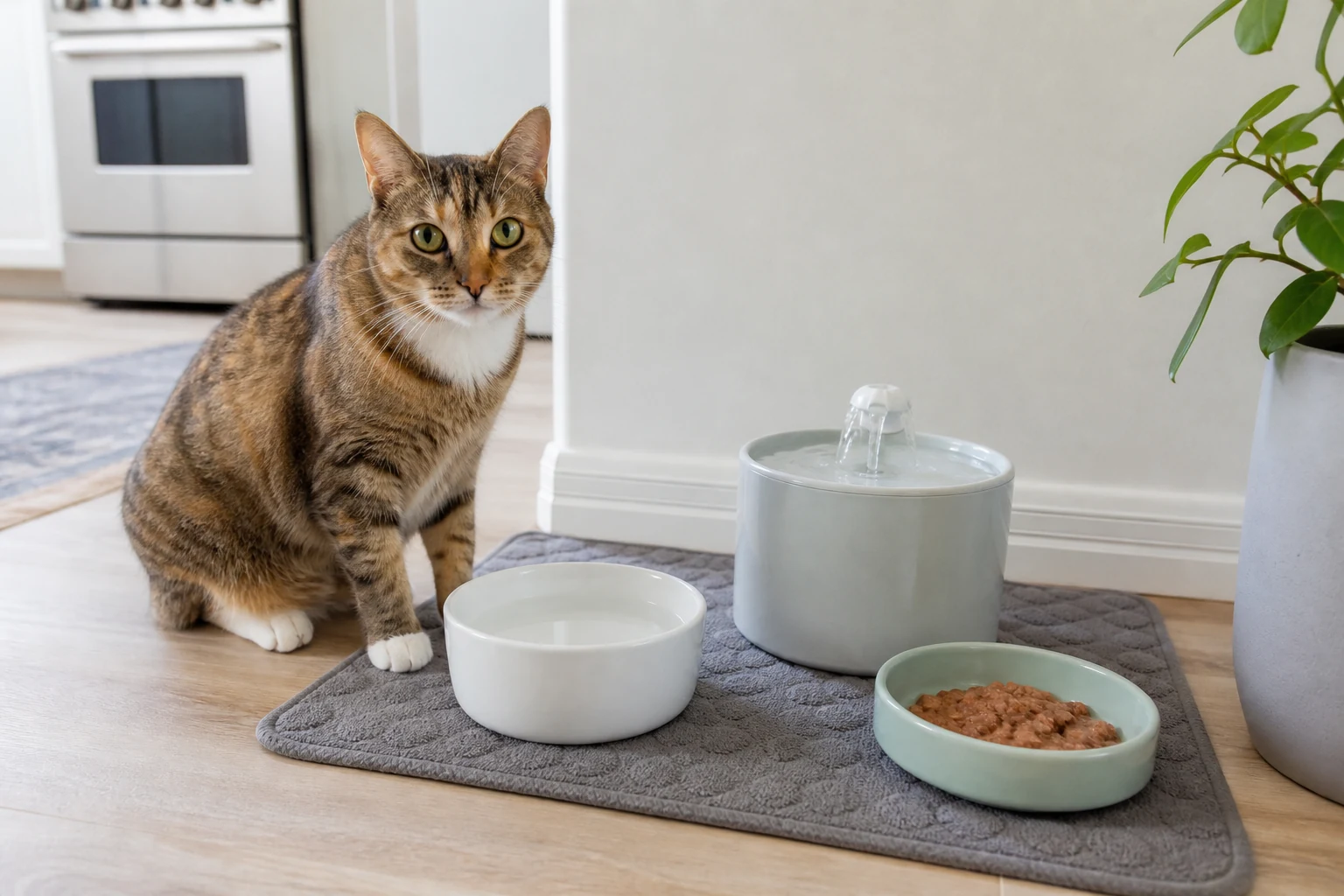
If your cat has had urinary problems, the goal is not to force water. It is to make moisture easier, safer, and less stressful to take in every day while you keep following your veterinarian's treatment plan.
Cats with lower urinary tract signs may strain, urinate often, cry in the litter box, pass blood-tinged urine, or urinate outside the box. A cat who cannot pass urine, especially a male cat, needs emergency care because urethral obstruction can become life-threatening quickly 1. Once your veterinarian has treated the acute problem, hydration habits, wet food, litter box comfort, and stress reduction can all become part of a recurrence-prevention routine.
This guide focuses on home support: bowls, fountains, wet food moisture, safe monitoring, and what not to do. It does not replace diagnosis, prescription diets, pain control, recheck testing, or emergency instructions from your vet.
Índice
- When is drinking more not enough?
- Why does water intake matter after urinary problems?
- What water station setup helps cats drink more?
- Are fountains better than bowls for cats with urinary history?
- How can wet food support hydration after urinary problems?
- What should you monitor while changing hydration habits?
- What hydration mistakes should cat parents avoid?
- Conclusión
- Preguntas frecuentes
- Referencias
When is drinking more not enough?
Drinking more is never a substitute for urgent veterinary care if your cat is straining and producing little or no urine. Cornell describes urethral obstruction as an absolute emergency, and the risk is especially serious in male cats because their urethra is narrower 1.
Call an emergency veterinarian now if your cat:
- Visits the litter box repeatedly but passes no urine or only drops
- Cries, pants, hides, collapses, vomits, or seems rapidly weaker
- Has a swollen or painful belly
- Is a male cat with any possible blockage signs
- Stops eating, becomes dull, or declines after recent urinary treatment
For aftercare details after a blockage has already been treated, keep your vet's discharge instructions first and use SnuggleSouls' cat urinary blockage aftercare guide as a companion checklist. Home hydration can support recovery habits, but it cannot unblock a cat, dissolve every stone, treat pain, or replace recheck urine testing.
Why does water intake matter after urinary problems?
More moisture can help some cats produce less concentrated urine and urinate more regularly, which may reduce bladder irritation for certain urinary conditions. Merck notes that feline idiopathic cystitis management can include environmental management, litter box management, attention to multi-cat interactions, and dietary adjustment such as canned food 2.
The important word is "support." Feline lower urinary tract disease is not one single disease. It can involve idiopathic cystitis, stones, plugs, infection, inflammation, stress, anatomy, weight, diet, or more than one factor at the same time 1. That is why your veterinarian may recommend urinalysis, imaging, culture, prescription diet, pain control, anti-spasm medication, recheck visits, or a weight plan depending on your cat's case.
Hydration is one lever you can often improve at home. It works best when paired with a low-stress routine: clean litter boxes, predictable meals, safe resting spots, and reduced competition for resources.
What water station setup helps cats drink more?
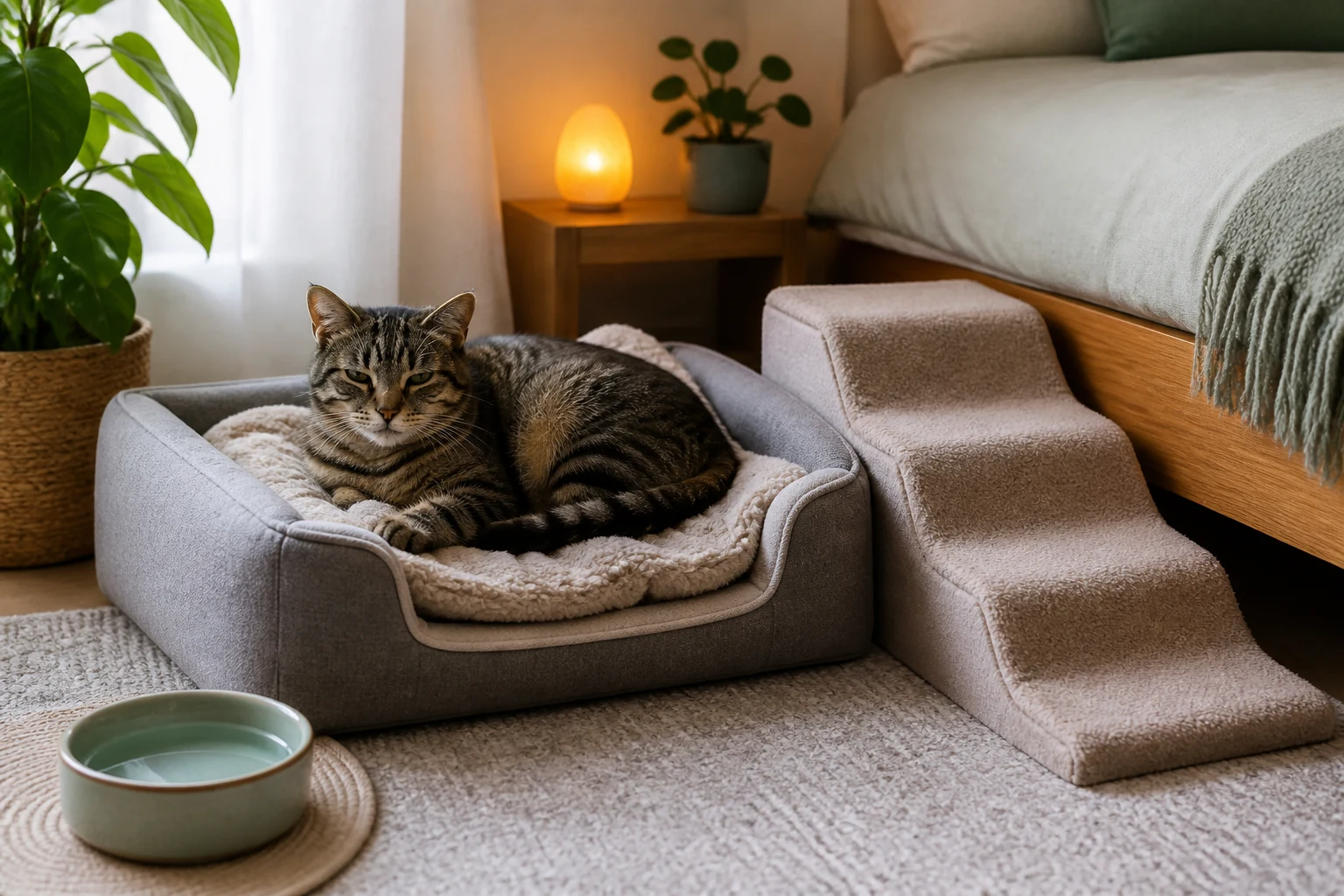
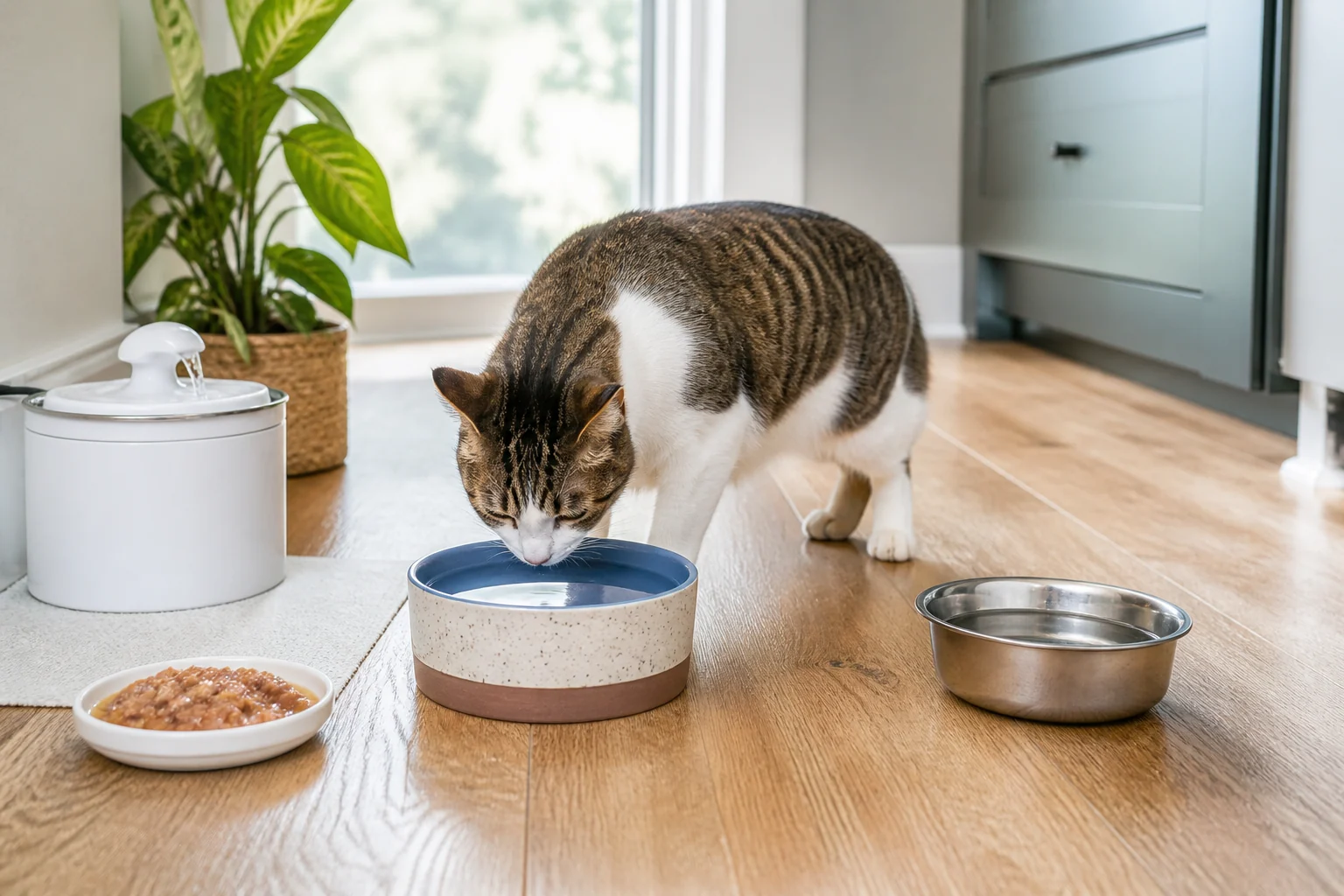
The best water setup is quiet, clean, easy to approach, and offered in more than one place. Many cats avoid water that sits beside noisy appliances, busy foot traffic, strong food smells, or litter box odors.
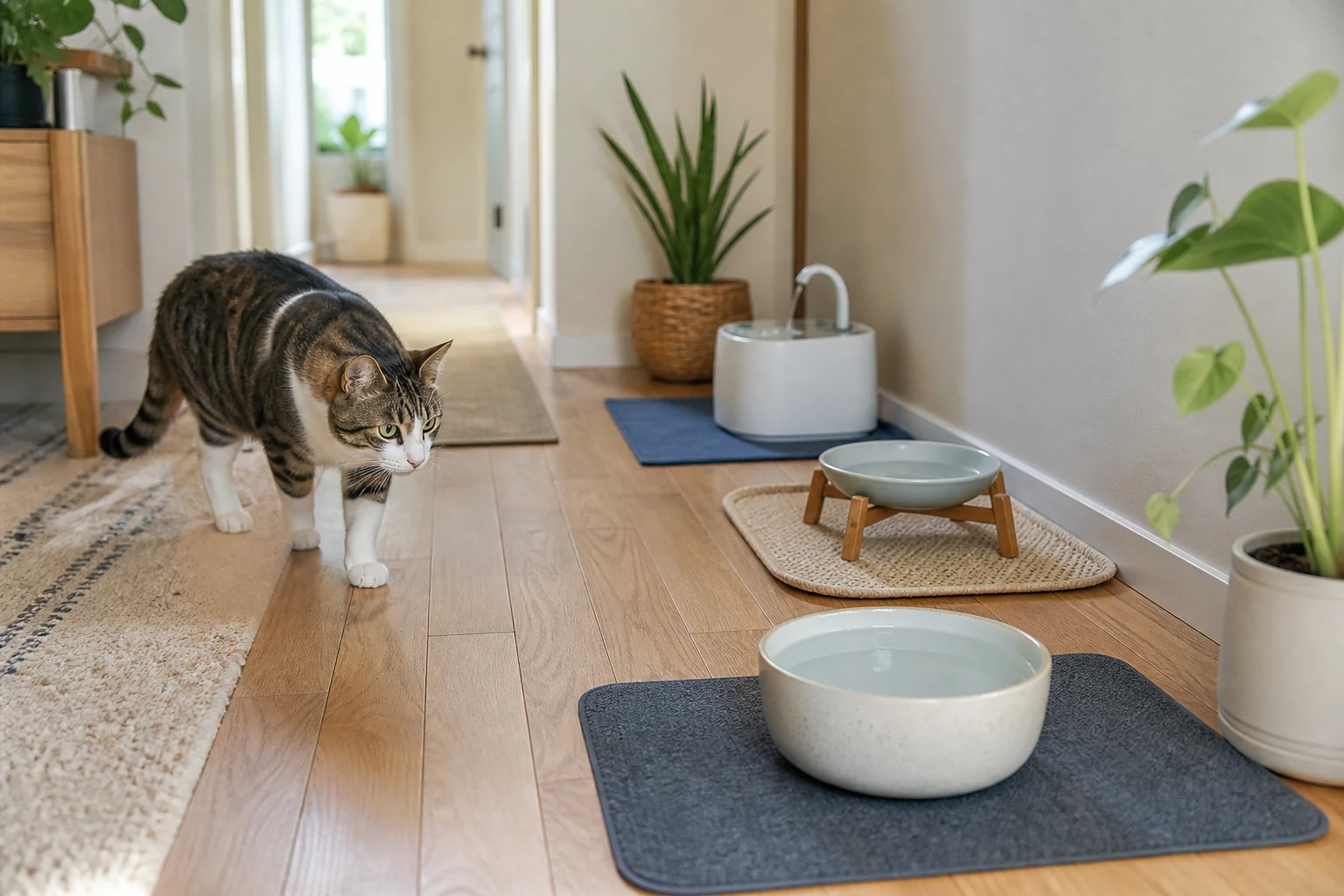
Try this basic setup for one week:
| Water option | Why it may help | How to set it up |
|---|---|---|
| Wide ceramic or stainless bowl | Some cats dislike narrow bowls touching their whiskers | Use a low, stable bowl and wash it daily |
| Second bowl in a different room | Gives choice and reduces competition | Place it in a quiet route your cat already uses |
| Raised shallow bowl | Helps some older or stiff cats drink comfortably | Keep the surface stable so it cannot slide |
| Fountain | Moving water interests some cats | Clean the pump and filter on schedule |
| Water added to wet food | Adds moisture without relying only on thirst | Start with a small amount and keep texture acceptable |
Today's Veterinary Nurse recommends considering dish shape, low-traffic location, cleanliness, canned food, and fountains when trying to increase water consumption for cats with feline idiopathic cystitis 4. In multi-cat homes, give each cat access to water without having to pass a cat who blocks doorways, hallways, or feeding zones.
Location matters more than buying the most expensive fountain. A plain bowl in a trusted hallway may work better than a fountain beside the laundry machine.
Are fountains better than bowls for cats with urinary history?
Fountains are useful for some cats, but they are not automatically better for every cat. A 2024 study on water source found that increasing water intake and lowering urine concentration are recommended goals for cats with urolithiasis and idiopathic cystitis, but individual drinking behavior can vary 5.
Use a fountain as one option, not the only option. Keep at least one still-water bowl available because some cats dislike motor noise, splashing, vibration, plastic surfaces, or water that tastes different after filtration. If your cat drinks more from a bowl, the bowl is doing its job.
A fountain is worth trying when:
- Your cat already seeks sinks, dripping faucets, or moving water
- You can clean the unit thoroughly every few days
- The motor is quiet enough that your cat approaches it calmly
- The fountain material does not develop slime, odor, or scratches
Skip or pause the fountain if your cat stares at it anxiously, avoids the room, swats at it without drinking, or drinks less after you remove the old bowl. Urinary cats benefit from lower stress; a new object that worries them can work against the goal.
How can wet food support hydration after urinary problems?
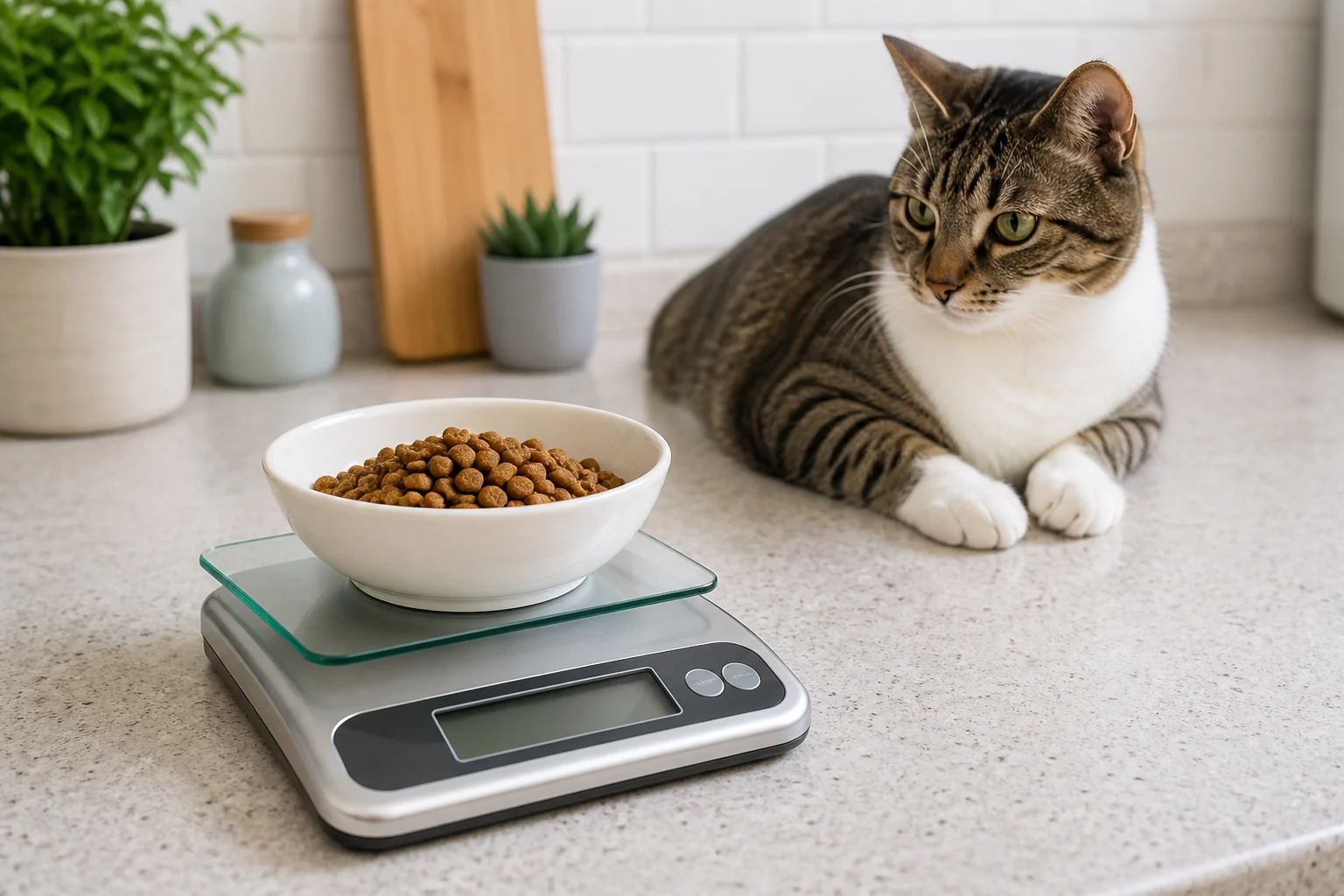
Wet food is often the simplest way to increase daily moisture because the water is part of something the cat already eats. MSD Veterinary Manual notes that changing from dry to canned food may help add water for cats with noninfectious urinary conditions 3.
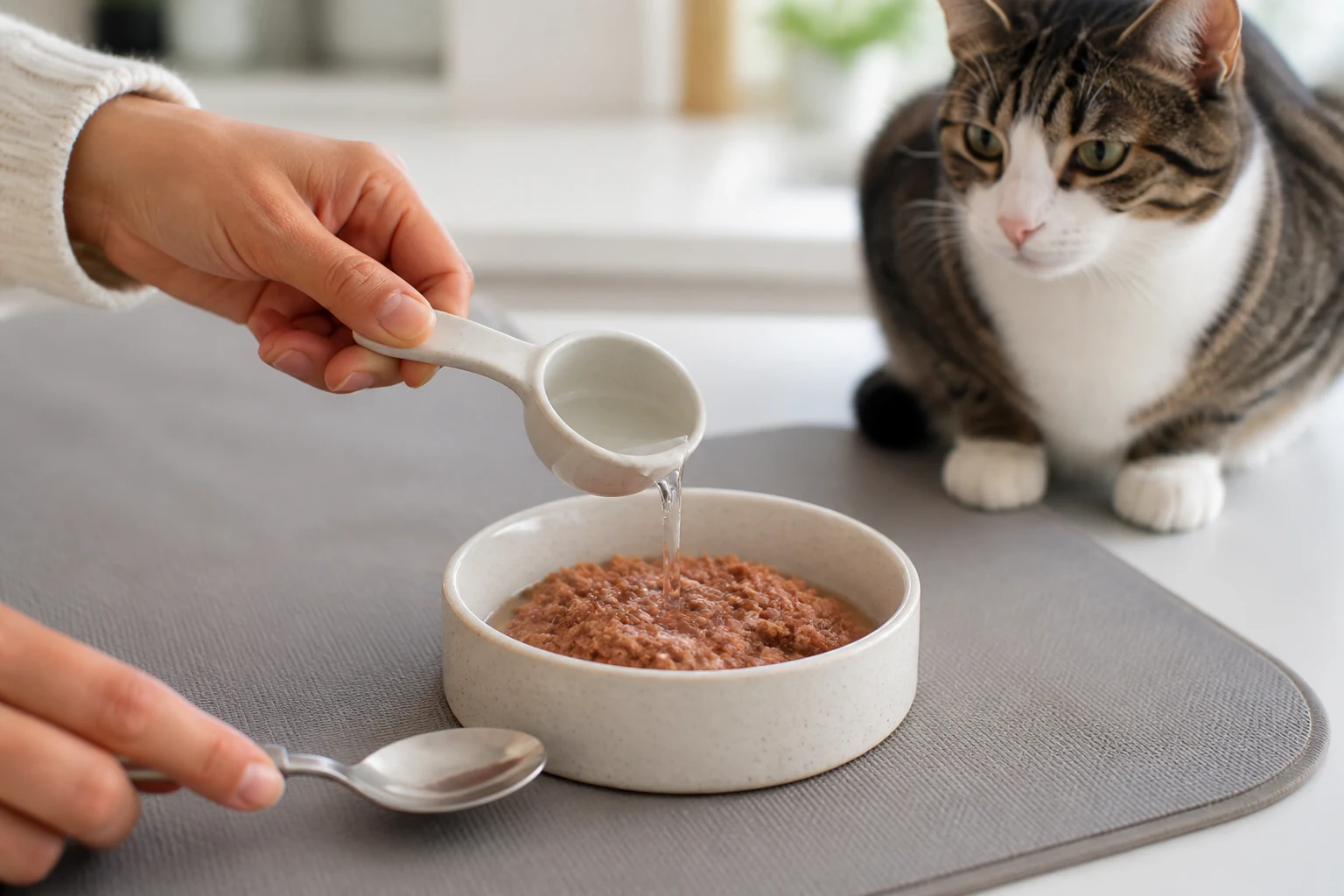
If your veterinarian has approved your cat's diet, you can ask whether one of these approaches fits:
- Feed part or all of the daily calories as wet food.
- Add a teaspoon or two of water to wet food, then increase only if your cat still eats normally.
- Serve smaller wet meals more often so food stays fresh.
- Warm refrigerated wet food slightly by stirring in warm water, not by overheating it.
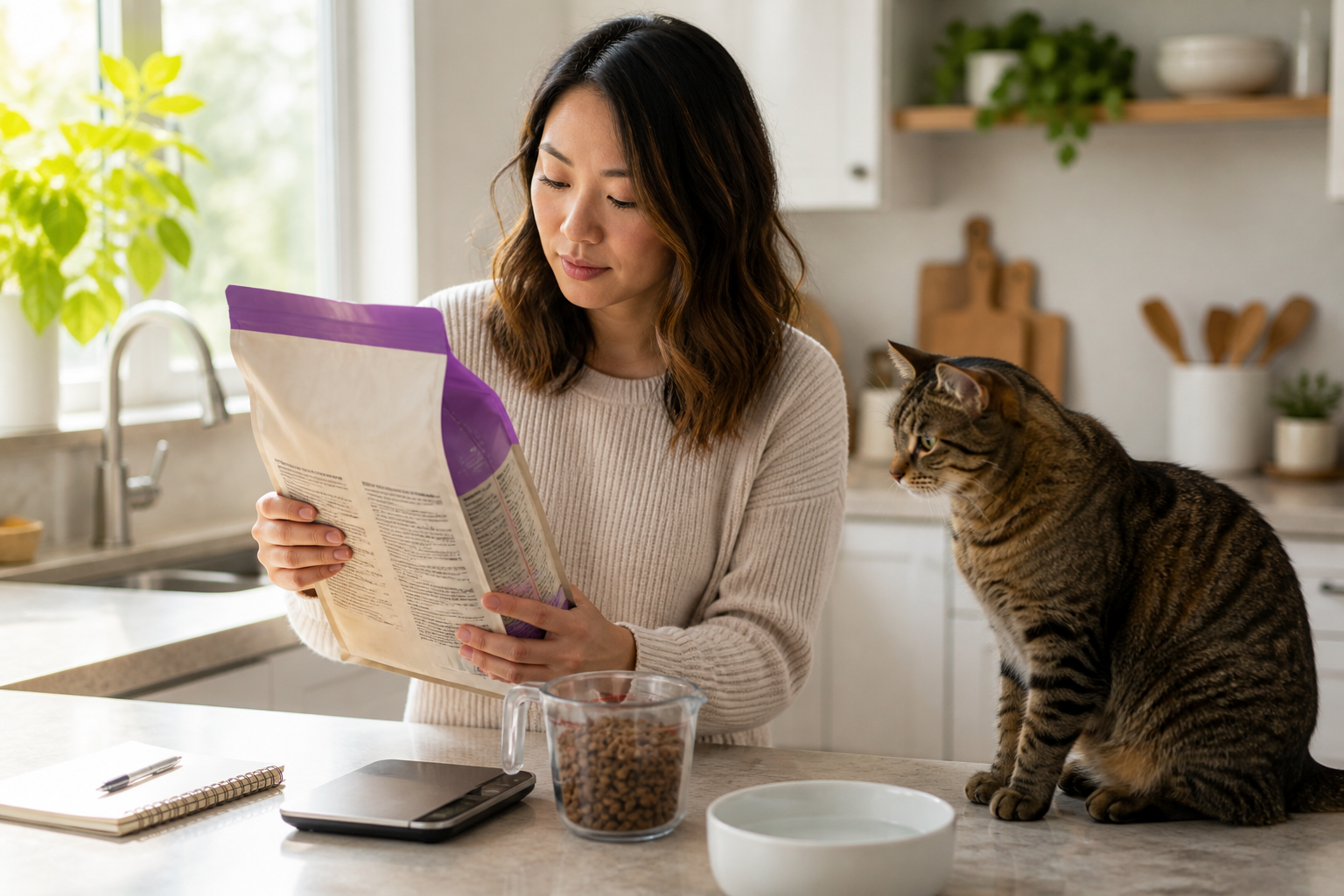
- Track calories so extra moisture does not accidentally become extra food.
Texture is the sticking point. Some cats like a soupy pate; others stop eating if dinner changes too much. Change slowly and protect appetite. A urinary cat who is also not eating well needs veterinary advice, not a bigger experiment at home.
For a broader nutrition overview, see SnuggleSouls' guide to the benefits of wet food for cats. If your cat is on a prescription urinary diet, do not mix in toppers, broths, supplements, or acidifiers unless your veterinarian approves them. Cornell specifically cautions against adding urinary acidifiers to acidifying diets because over-acidification can cause harm 1.
What should you monitor while changing hydration habits?
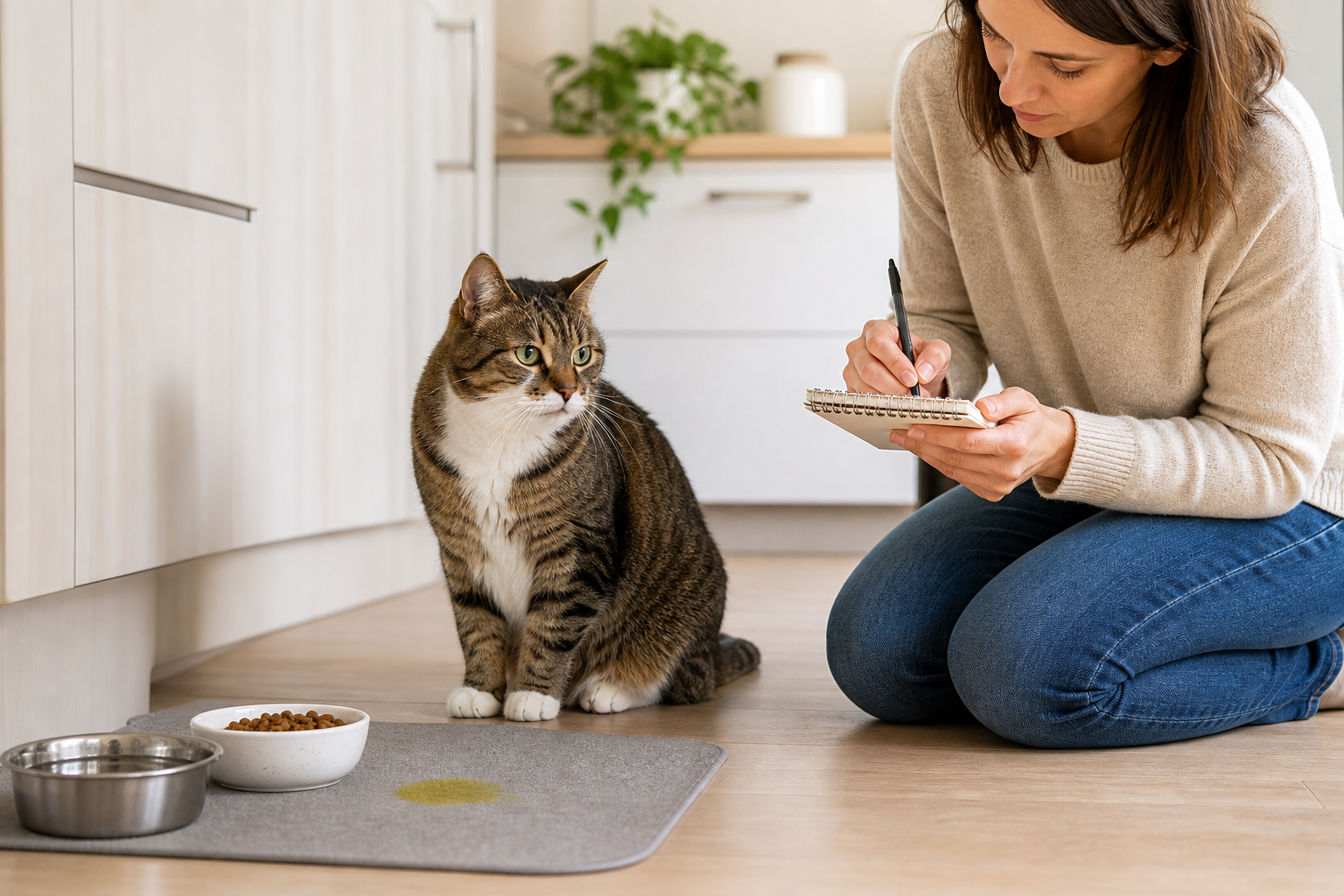
Monitor output as much as input. A cat drinking more but still straining, licking the genital area, urinating outside the box, or producing bloody urine needs veterinary follow-up.
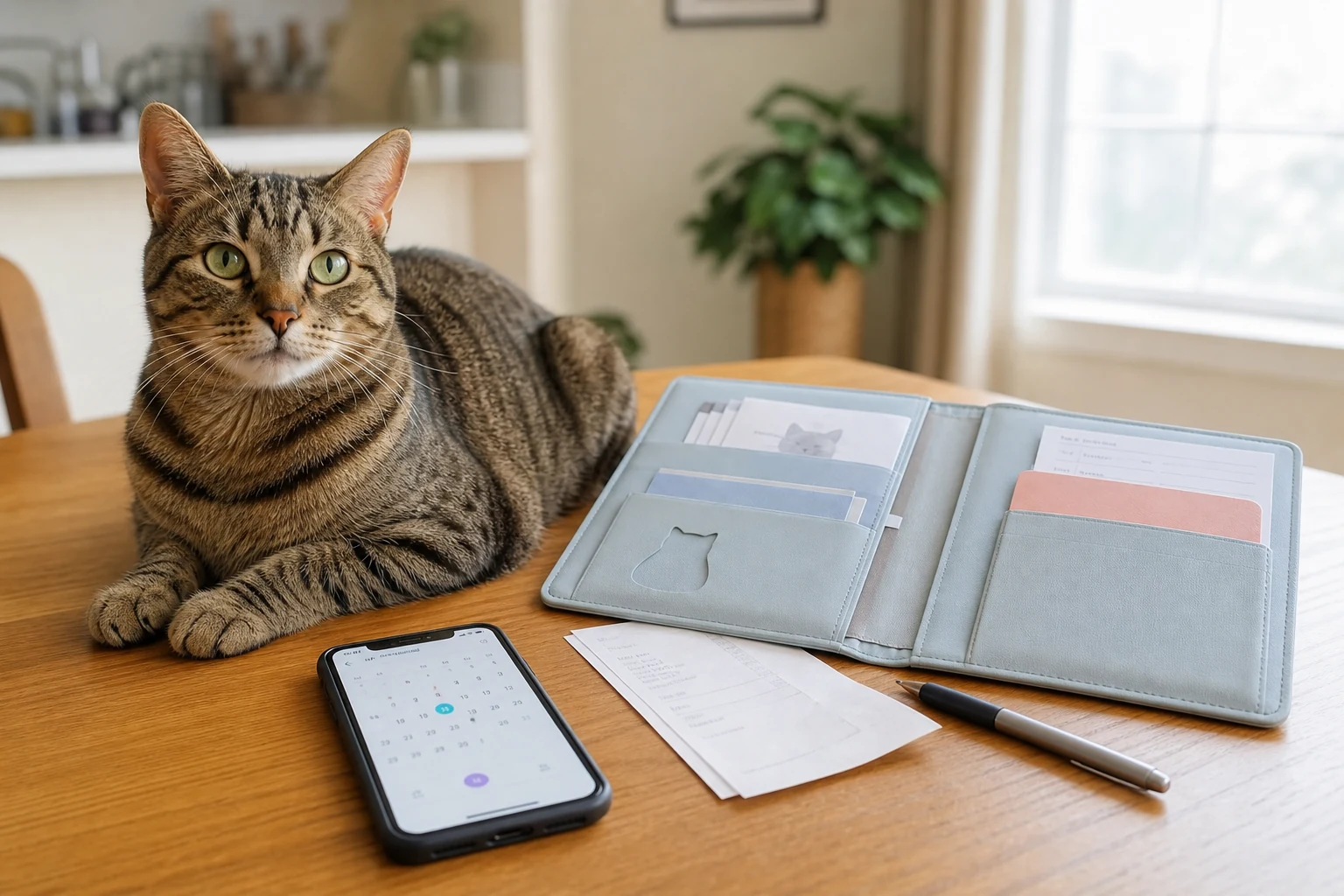
Use a simple daily log for two weeks:
| What to track | Normal direction | Call your vet if you see |
|---|---|---|
| Litter box visits | Comfortable, predictable trips | Repeated trips, crying, or no urine |
| Urine clump size | Similar or slightly larger clumps | Tiny frequent clumps, blood, or sudden change |
| Appetite | Normal meals eaten | Skipping meals or nausea |
| Drinking behavior | Calm use of bowls or fountain | Sudden excessive thirst or sudden refusal |
| Mood and movement | Relaxed, normal routine | Hiding, pain posture, aggression, rapid decline |
The litter box setup should make monitoring easy. Open boxes, enough boxes for the household, quiet placement, and daily scooping help you notice changes sooner. SnuggleSouls' La mejor configuración para la bandeja sanitaria del gato guide can help you improve access without making a urinary cat feel cornered.
Sudden excessive thirst is also worth a vet call. More drinking can be a response to a better water setup, but it can also appear with kidney disease, diabetes, hyperthyroidism, medication effects, diet changes, or other health issues. Do not assume every change is good just because water is involved.
What hydration mistakes should cat parents avoid?
Avoid big, stressful changes. Urinary conditions often have a stress component, and Merck describes feline idiopathic cystitis as involving interactions between the urinary tract, stress, and neurohormonal factors 2.
Common mistakes include:
- Removing the old water bowl the same day you introduce a fountain
- Placing all water near food, litter, dogs, toddlers, or busy traffic
- Adding salty broth, tuna water, milk, or supplements without veterinary approval
- Letting fountains get slimy or bowls develop biofilm
- Switching to a new diet abruptly
- Using hydration changes to delay urgent care for straining
- Assuming a cat is "fixed" because symptoms stop for a few days
Make one or two changes at a time. For example, add a second wide bowl in a quiet room and mix a small amount of water into wet food. If your cat accepts those changes, then consider a fountain. If your cat becomes suspicious, step back to the last version that worked.
Conclusión:
After urinary problems, the most useful hydration plan is simple: clean water in several calm places, food moisture when appropriate, low-stress routines, and close litter box monitoring. Your veterinarian should guide the medical plan, especially after obstruction, stones, infection, repeated cystitis signs, prescription diet use, or any return of straining.
For more practical follow-up topics, browse SnuggleSouls' Guías sobre la salud de los gatos, and keep your cat's emergency plan easy to find. Hydration helps most when it is steady, low-pressure, and paired with fast action when warning signs return.
Preguntas frecuentes
How much water should my cat drink after urinary problems?
There is no single target that fits every cat because body size, diet type, temperature, activity, and medical history all matter. Ask your veterinarian what is appropriate for your cat, especially if your cat has kidney disease, stones, diabetes, or a prescription urinary diet.
Is wet food better than a fountain for urinary problems?
Wet food and fountains solve different problems. Wet food adds moisture through meals, while a fountain may encourage voluntary drinking for cats who like moving water. Many cats do best with both wet-food moisture and clean bowl choices, if their veterinarian approves the diet.
Can I add water to dry cat food?
Sometimes, but it must be handled carefully because moistened dry food can spoil if left out. Ask your veterinarian first if your cat is on a prescription diet, and discard uneaten moistened food promptly.
Should water bowls be near the food bowl?
Some cats drink more when water is away from food and litter areas. Try at least one bowl in a quiet route your cat already uses, and keep another option near the feeding area if your cat likes it.
What if my cat refuses all new water ideas?
Go slower. Keep the old bowl, add one new option nearby, and reward calm investigation without forcing contact. If your cat has urinary signs, poor appetite, or sudden drinking changes, call your veterinarian instead of continuing home experiments.
Referencias
[1] Cornell Feline Health Center. (2016). Feline Lower Urinary Tract Disease. URL
[2] Merck Veterinary Manual. (2025). Lower Urinary Tract Disease in Cats. URL
[3] MSD Veterinary Manual. (2025). Noninfectious Diseases of the Urinary System of Cats. URL
[4] Today's Veterinary Nurse. (2025). Nutrition and Behavior Therapy for Feline Idiopathic Cystitis. URL
[5] National Library of Medicine. (2024). Effect of water source on intake and urine concentration in healthy cats. URL
 EN
EN DE
DE ES
ES PT
PT