
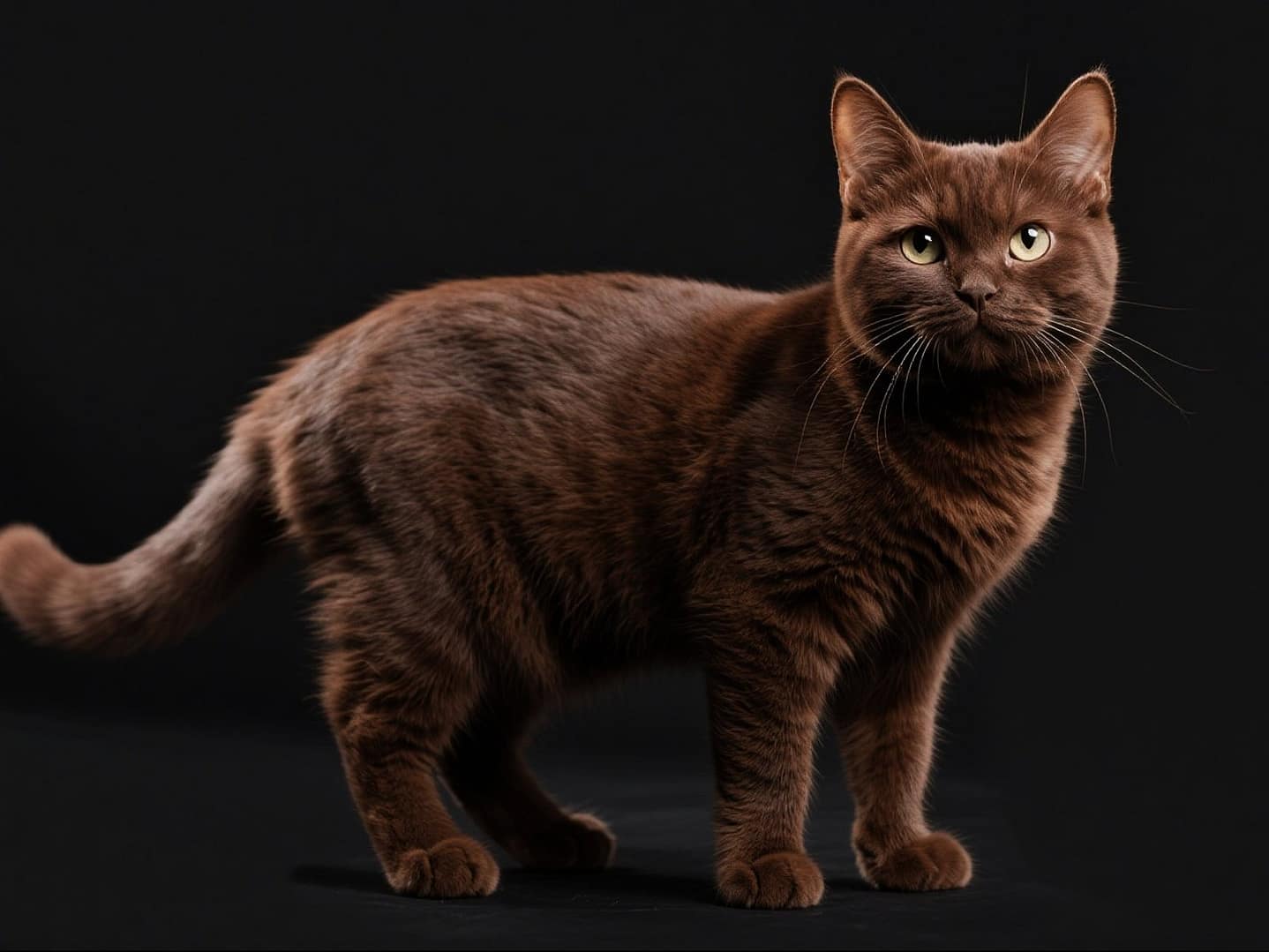
Chocolate York is a rare American cat breed that began in Nova Iorque em 1983, famous for its silky chocolate-brown or lavender coat and an unusually people-focused, playful temperament.
In this guide, you’ll learn quick breed facts, personality traits, grooming and shedding needs, health considerations, and what to know if you’re trying to find one responsibly.
Insert immediately after the intro paragraph:
- Melhor para: People who want an affectionate “shadow” cat and enjoy daily play
- Coat: Medium/semi-long, silky; chocolate or lavender are most common
- Notable quirk: Many York Chocolates enjoy playing with water
Índice
York Chocolate Cat: Quick Answer
O Chocolate York is a rare American cat breed that began in New York in the early 1980s and is best known for its chocolate or lilac/lavender coat and an affectionate, people-oriented personality. Many owners describe York Chocolates as loyal “shadow cats” that follow family members around the home and enjoy interactive play. Because the breed is uncommon and not widely recognized across major registries, finding a confirmed York Chocolate may take patience and careful vetting of breeders.
Visão geral da raça
| Característica | Descrição |
| Personalidade | Altamente afetuoso, leal, brincalhão, enérgico, inteligente e curioso. Cria laços fortes com seus companheiros humanos e gosta de brincadeiras interativas. |
| Tipo de carroceria | De tamanho médio a grande, constituição física musculosa e robusta, com algumas descrições indicando corpos esguios e ossos delicados. Possui músculos firmes e ossos sólidos, capazes de saltos impressionantes. |
| Peso | Os machos pesam normalmente entre 4,5 e 7,3 kg; as fêmeas entre 2,7 e 5,4 kg. |
| Região de origem | Estado de Nova Iorque, EUA |
| Tempo de vida | 12 a 16 anos |
| Tipo de casaco | Medium to semi-long, silky and dense. Breed standards describe a well-developed undercoat that should not be woolly; many owners still find the coat easier to maintain than other semi-longhaired cats. |
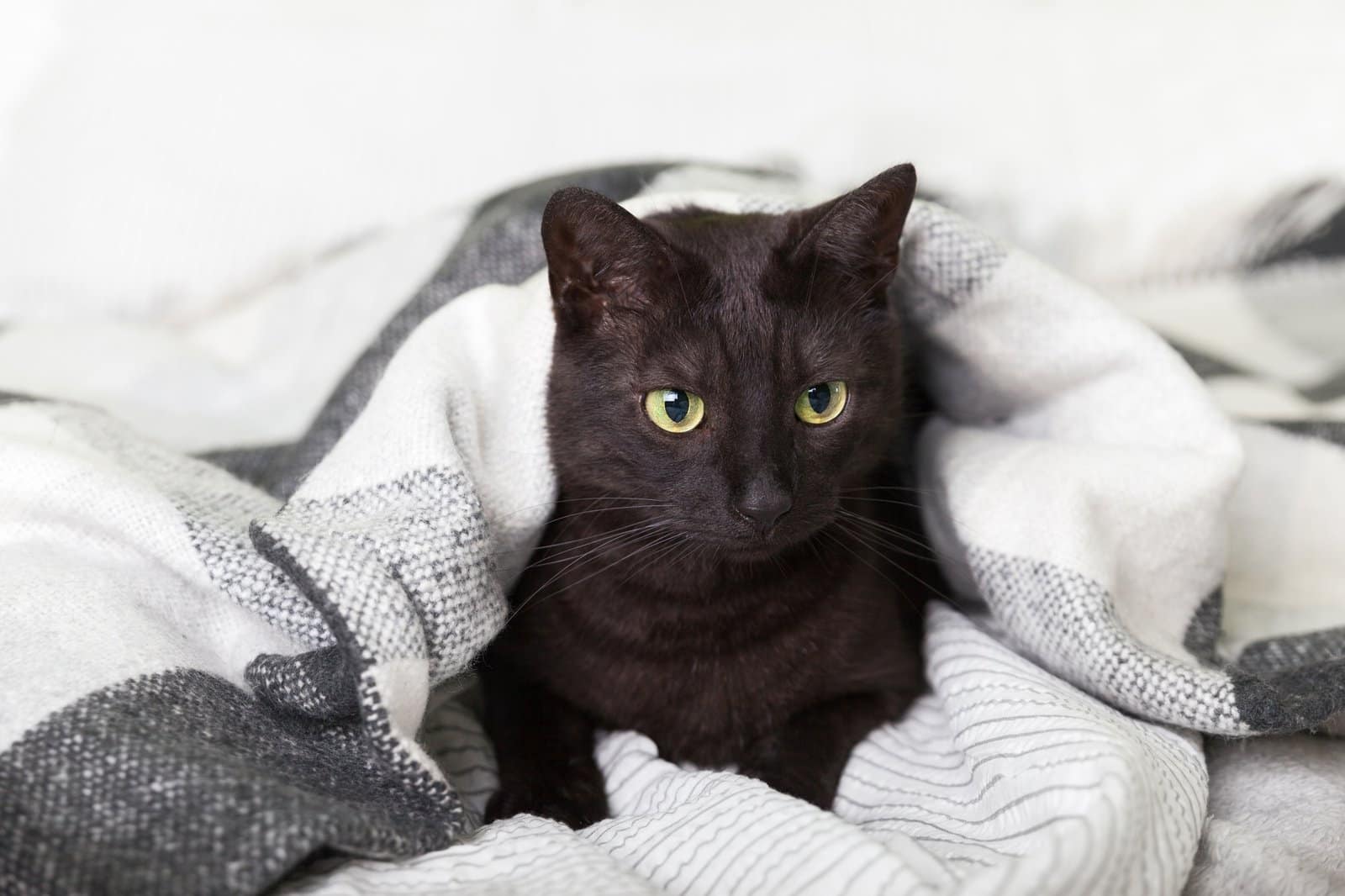
| Cores da pelagem | Principalmente castanho-chocolate ou lavanda (uma forma diluída de castanho). Também pode aparecer como bicolor chocolate e branco, ou bicolor chocolate e lilás. A pelagem dos gatinhos é geralmente mais clara e escurece com a maturidade. |
| Nível de derramamento | ⭐⭐⭐☆☆ (low–moderate) |
| Afeto para com os seres humanos | ⭐⭐⭐⭐⭐ (Muito alto) |
| Dificuldade de atendimento | ⭐⭐⭐☆☆ (Moderado) |
Introdução
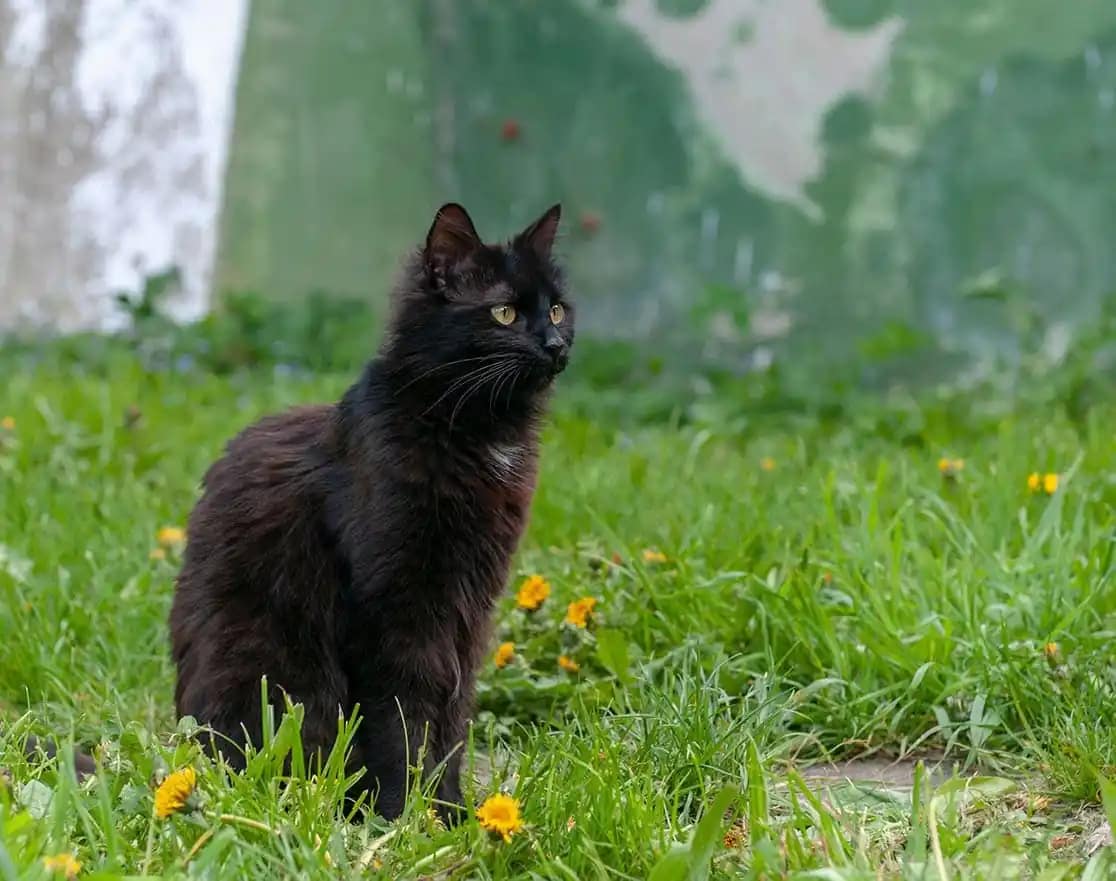
O York Chocolate cat (often shortened to “York”) is a rare American breed that traces back to farm cats in New York State, with the first documented kitten (“Brownie”) born in 1983.
The breed is best known for its rich chocolate coat and the dilute shade often called lilac/lavender (and, in some standards, chocolate/lilac with white). Breed standards describe a silky, medium-length coat with an undercoat that should não be woolly.
In temperament, the York Chocolate is commonly described as affectionate, loyal, people-oriented, and playful—a cat that enjoys staying close to its humans and joining everyday household activity.
Because the breed has historically had a small breeder base and limited mainstream registry visibility, it may not appear on major “recognized breed” lists such as CFA, TICAou FIFe—which is one reason it remains uncommon today.
Some owners and breed guides also describe York Chocolates as unusually curious about running water—though this trait is anecdotal and can vary by individual cat.
História da raça
A raça era formalmente estabelecida em 1983 por Janet Chiefari em Estado de Nova Iorque, dando à raça o seu homônimo geográfico.
Sua gênese foi bastante acidental, decorrente de um acasalamento inesperado entre um gato macho de pêlo preto e comprido e um fêmea de pêlo comprido preto e branco. From this initial pairing, a kitten named Brownie nasceu, apresentando um coloração castanha distinta. Essa tonalidade única foi posteriormente atribuída ao presença de ancestrais siameses no linhagem dos gatos pais.
Reconhecendo o potencial neste coloração incomum, Chiefari continuou suas observações. Posteriormente, Brownie teve uma ninhada. com um gato preto de pêlo comprido, que produziu dois gatinhos com pelagem e tipos de corpo consistentes: a chocolate masculino e um fêmea branca e chocolate. The breed was aptly named “York” após o seu estado de origem e “Chocolate” para refletir sua cor característica do revestimento.
Despite its charm and distinct look, the York Chocolate remains uncommon today. A big reason is limited registry presence and limited breeding population, which reduces visibility and makes it harder for people to locate verified lines. Some registries and clubs have referenced or recognized the breed at various times, while others do not list it among their currently recognized breeds.
What this means for owners: availability is limited, information online can be inconsistent, and anyone searching for a “purebred York Chocolate” should verify documentation carefully (registry paperwork where applicable, written lineage info, and vet records). If a seller can’t clearly explain the cat’s background, it’s safer to assume the cat is a chocolate-coated domestic longhair rather than a verified York Chocolate.
Recognition & Rarity (Why the York Chocolate Is Hard to Find)
Is the York Chocolate cat officially recognized?
The York Chocolate is often described as a rare breed with limited recognition. Some organizations have published breed standards or references at different times, but it’s not consistently listed across major registries. Because registry status can be confusing or change over time, the safest approach is to treat “recognized” as a documentation question: ask for the exact organization name, registration proof (if any), and lineage details.
Is the York Chocolate cat extinct?
You may see claims online that the breed is “extinct.” In most cases, that wording reflects how rarely verified lines appear publicly—not necessarily that no York Chocolates exist anywhere. The practical reality is: confirmed York Chocolate cat can be extremely difficult to locate, and many cats marketed as York Chocolates are more likely chocolate-colored domestic longhairs.
Why is the breed so rare?
Common factors include:
- Small breeding population (hard to sustain visibility and consistency)
- Limited mainstream registry exposure
- Geographic concentration (availability may cluster by region)
- Low public awareness compared to popular breeds
Quick takeaway: If you’re set on this breed, you’ll need patience—and a strong checklist for breeder verification (next section).
Características físicas
O York Chocolate cat is typically described as a medium-to-large, athletic cat with a long body, estrutura óssea substanciale firm muscle—a build that supports active climbing and confident movement around the home.
Tamanho e construção
Most York Chocolates fall into a solid “working-cat” build: sturdy without being cobby, with balanced proportions (in the WCF standard, the shoulders should not be broader than the hips, and the hind legs are slightly higher than the front).
For weight, published sources vary, but adult males are commonly cited in the 10–16 lb (4.5–7 kg) range in the CCA standard; females are generally smaller in most descriptions.
Head, ears, and eyes
Breed standards describe a modified wedge-shaped head with a slightly rounded forehead, a long straight nose, a defined muzzle, and a firm chin.
As orelhas são grande, set wide apart, and often show tufting, which adds to the breed’s plush, “semi-longhair” look.
Eyes are typically oval/almond-shaped and slightly slanted toward the nose; acceptable eye colors range from golden/hazel to green (deeper, clearer color is preferred in the WCF standard).
Legs, feet, and tail
York Chocolates have long, slender-but-powerful legs with oval or rounded paws, and many standards mention tufts between the toes.
The tail is medium-to-long and visually “finished” with plumed hair, which contributes to the breed’s elegant outline in motion.
Coat texture and length
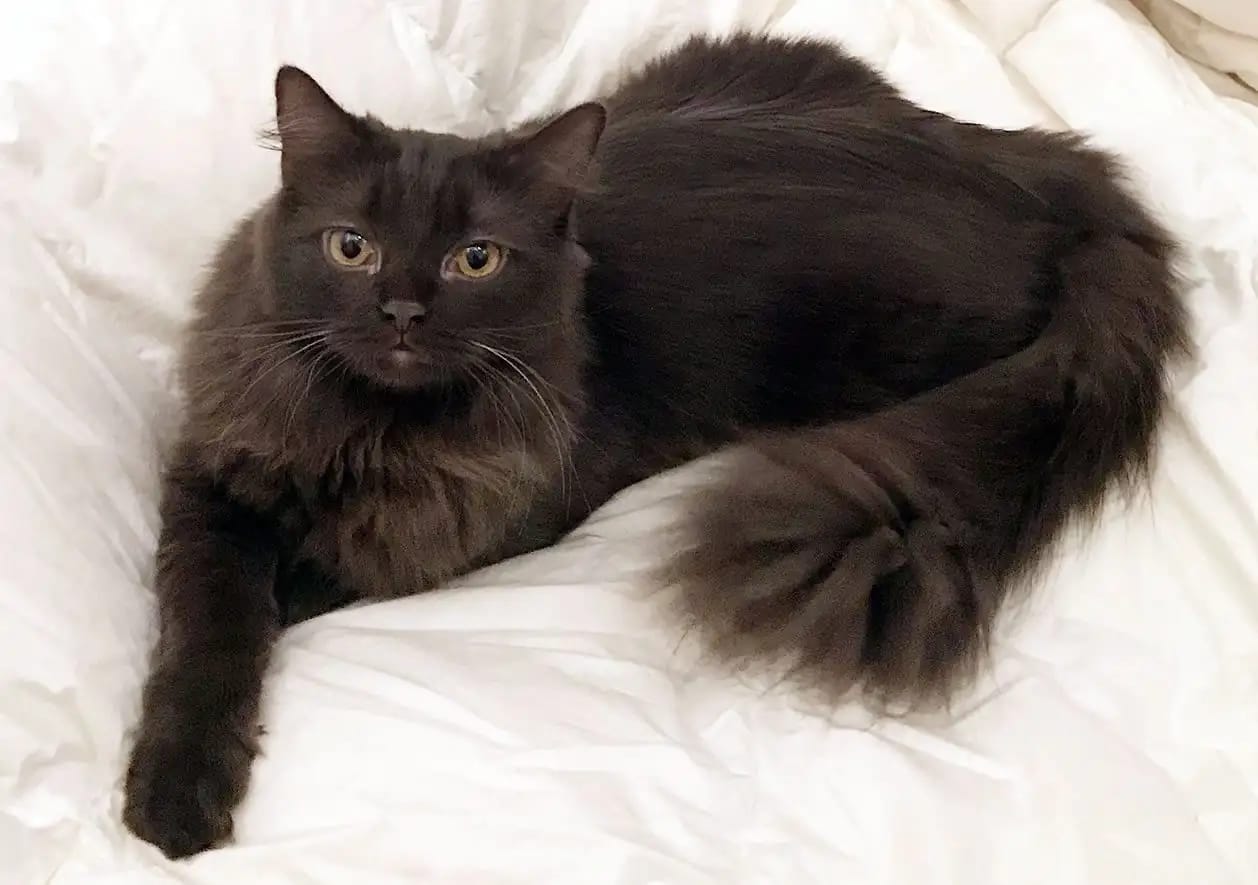
The coat is one of the York Chocolate’s signature features: comprimento médio, fine, glossy, and soft/silky to the touch.
Importantly for accuracy, published standards describe an undercoat that is present and should not be woolly (often summarized as “light/not woolly”), which helps explain why many owners describe the coat as less prone to heavy matting than some other semi-longhaired cats.
Coat length tends to be shorter on the face and lower legs and longer toward the back, with a slight ruff and a flowing, body-hugging finish.
Coat colors (chocolate and lavender)
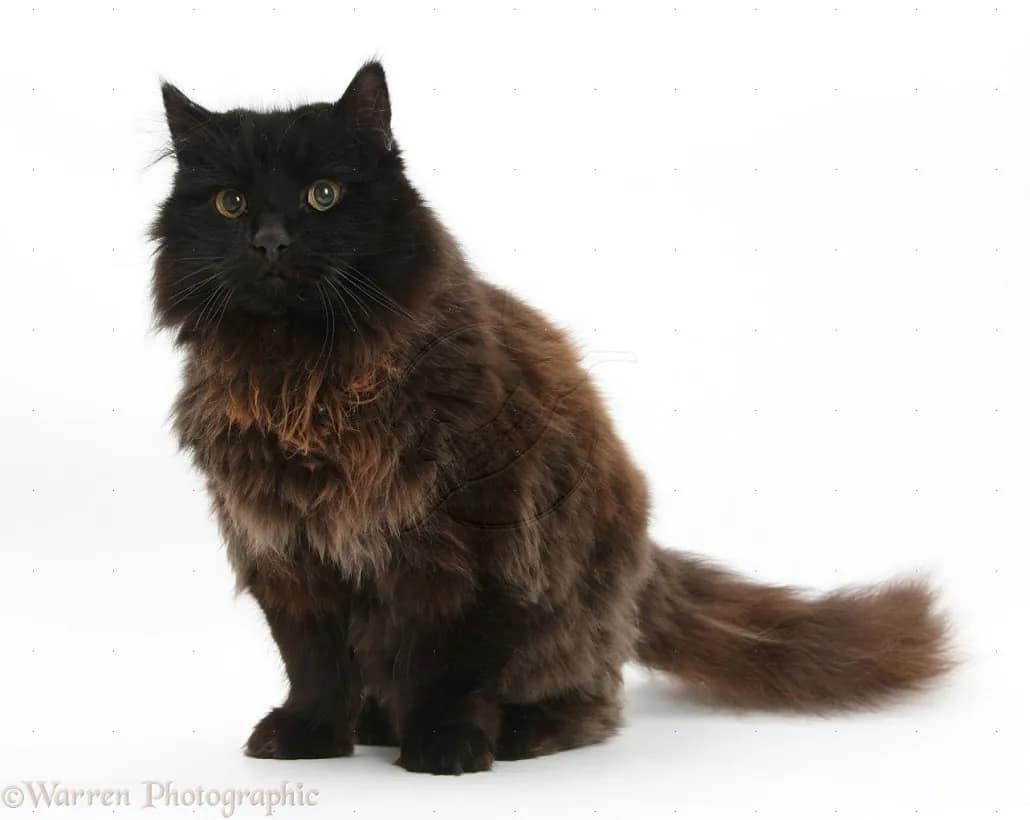
In published standards, the recognized colors include chocolate e lilac/lavender, either solid or with white.
Adults should show an even coat color to the roots (with breed-standard notes that “ghost markings” can be allowed in kittens up to around 10 months).
Many descriptions also note that kittens may start lighter and deepen into a richer shade with maturity—especially in the chocolate coats.
Comportamento e personalidade
York Chocolate cat are widely described as affectionate, people-oriented companions with a playful “farm-cat” drive. Breed profiles consistently highlight strong bonding, high engagement with humans, and a preference for interactive play over solo entertainment.
1. Affection and “shadow cat” companionship
York Chocolates are often described as loyal and physically affectionate—the type to seek petting, cuddle time, and involvement in household routines (including “supervising” whatever you’re doing).
This fits what we know about domestic cats more broadly: research shows cats can form distinct attachment styles toward human caregivers, meaning many cats actively use people as a source of security and comfort (not just food).
What this means for owners: If you want a cat who “checks in” often and prefers being near you, the York Chocolate is commonly portrayed as a strong match—but individuals vary.
2. Play drive, intelligence, and training potential
York Chocolates are frequently portrayed as bright, energetic, and happiest with interactive play (wand toys, chase games, puzzle toys).
This isn’t just “nice to have”: play is linked in the literature to positive welfare outcomes and can help reduce boredom-related problem behaviors while improving the human–cat relationship. Practical feline behavior guidelines also recommend simulating natural foraging/hunting patterns (eg, puzzle feeders, “hunt” style feeding) to support mental stimulation.
What this means for owners: Plan for daily play that looks like “hunt → chase → pounce.” It’s enrichment e relationship-building.
3. Communication style: purrs, trills, and “chatty but not loud”
Breed descriptions note York Chocolates may use purring as a friendly greeting and communication tool, sometimes “purring instead of meowing.”
In feline vocal communication research, purrs and trills are recognized as common domestic cat vocal types used in social contexts (alongside meows, growls, etc.). (Translation: the “soft, friendly sounds” framing is consistent with established cat communication categories—even if exact intensity varies by individual.)
If you want a quick science nugget for a sidebar: recent biomechanics research suggests domestic cat larynges can produce purr-like low frequencies based largely on physical tissue properties (not purely rapid muscle contractions), helping explain how purring is so reliably produced.
4. Kids, other cats, dogs—and small pets
York Chocolate profiles commonly describe the breed as family-suitable and generally able to do well with children and other animals when introductions are respectful and gradual.
That said, many cats retain strong predatory tendencies (especially those with “farm cat” heritage), so supervision around very small pets (rodents, birds) is still the sensible default—even for friendly cats.
Owner tip: Use slow introductions + protected escape spaces; socialization can happen after the early sensitive period, but it typically takes longer and requires more positive reinforcement.
Care Guide (York Chocolate Cat)
Diet (what to feed + how to feed)
York Chocolate cat are carnívoros obrigatórios—they rely on nutrients found in animal products, and their natural diet pattern is high protein, moderate fat, and low carbohydrate.
Choose a “complete & balanced” main diet (non-negotiable).
For everyday feeding, pick a cat food whose label includes a nutritional adequacy statement (often tied to AAFCO nutrient profiles or feeding trials). That’s the simplest way to avoid accidental nutrient gaps.
Practical diet checklist (owner-friendly):
- Prioritize animal-based ingredients (meat / poultry / fish) among the first ingredients to support essential amino acids and fatty acids.
- Wet food helps hydration (canned foods are high-moisture), but many cats do well on wet, dry, or a mix—choose what your cat thrives on.
- Keep fresh water available at all times.
Portion control (Yorks can overdo it):
Free-feeding (keeping dry food available all day) is a common contributor to feline weight gain. Cornell notes feline obesity is extremely common and highlights free-feeding as a major factor—meal feeding puts you back in control.
Treats (good for bonding, bad when they take over):
- Treats should be <10% of daily calories (WSAVA).
- Treats don’t replace meals and can unbalance the diet if overused.
- If your cat needs weight loss, do it with a vet’s plan—rapid restriction can be risky.
Cats prefer multiple small meals, and using puzzle feeders/food puzzles can increase activity and mental stimulation while reducing boredom-eating.
Exercise (daily movement without “gym vibes”)
York Chocolates are bright, athletic, and people-focused—so they do best with interactive exercise, not just “here’s a toy, good luck.”
Aim for 2–3 short play sessions daily (5–10 minutes each is plenty for many cats). Focus on quality, not marathon length.
Make play actually satisfying:
- Use toys that mimetizar a presa (wand feathers, toy mouse dragged across the floor).
- Let your cat “catch” the prey sometimes to avoid frustration.
- Rotate toys so they stay interesting.
Use their natural athleticism:
- Add jumping routes (cat tree → shelf → perch) and “up/down” chase games.
- Food puzzles also count as movement because your cat has to “work” the environment.
If a York Chocolate gets under-stimulated, boredom can show up as destructive behavior or attention-seeking—daily play prevents that spiral.
Environment & Enrichment (set up your home like a cat sanctuary)
A cat’s environment affects both behavior and health. FelineVMA/iCatCare emphasize meeting cats’ environmental needs to reduce stress and problem behaviors.
Use this simple home checklist:
1. Safe places (non-shared “retreat zones”)
- Every cat needs a secure hideout (box, covered bed, carrier, raised perch).
2. Multiple separated resources
- Separate food, water, litter, scratching, play, rest areas so the cat can access them without feeling challenged.
3. Play + predatory outlets
- Interactive prey-style play and quebra-cabeças de alimentos let cats express natural hunting behavior.
4. Predictable, positive human interaction
- Let the cat initiate contact; don’t force handling—especially important for sensitive or clingy cats.
5. Respect scent + minimize “stress smells”
- Cats rely heavily on scent; avoid over-sanitizing the places they rub/mark and be mindful with strong cleaners.
York-specific enrichment idea: many Yorks enjoy water play—supervised faucet drips or shallow splash time can be a “special interest activity.”
Grooming (silky coat, usually easier than it looks)
Breed standards describe a soft, silky coat com um well-developed undercoat that should not be woolly.
The Canadian Cat Association standard also notes the coat requires little or no grooming and that A queda é mínima (for the breed standard ideal).
Simple routine most owners can stick with:
- Brush 1–2x/week (more during seasonal shedding or if your cat loves rolling in chaos).
- Use a comb on friction areas: behind ears, armpits, belly, and the “pants” area.
- Add basic hygiene: nail trims, ear checks, and dental care as recommended by your vet.
Bathing is optional—only if your cat gets dirty, you’re managing allergens, or your vet suggests it.
Mental Stimulation (because Yorks are smart and nosy)
York Chocolates tend to thrive when their brain gets a job.
High-impact ideas:
- Puzzle feeders / food puzzles (start easy, then level up).
- “Hunt the kibble” games: hide small portions in multiple spots so mealtime becomes foraging.
- Clicker training (sit, touch, fetch) using tiny treats within the <10% treats rule.
- Rotate “novelty”: swap toys weekly instead of leaving 25 toys out forever.
Preocupações com a saúde
Because York Chocolate cats are rare, there’s limited breed-specific health research available. The safest approach is to follow evidence-based feline preventive care and watch for common cat conditions—especially weight, dental health, parasites, and age-related disease
| Condição | What you might notice (at home) | Management & prevention |
|---|---|---|
| Preventive baseline (all cats) | Often no symptoms until a problem is advanced | Schedule regular wellness exams (more often for seniors), keep vaccines and parasite prevention current, and track weight/body condition at home. |
| Obesity → higher diabetes risk | Gradual weight gain, less jumping/playing, fatigue | Portion control + daily play. Re-check calories with your vet if weight creeps up. Aim for slow, steady weight loss if needed (crash dieting can be risky—see hepatic lipidosis below). |
| Hepatic lipidosis (fatty liver syndrome) (risk rises when overweight cats stop eating) | Not eating, rapid weight loss, lethargy; may progress fast | If your cat stops eating or eats dramatically less, contact a vet promptly—especially if the cat is overweight. Avoid rapid weight-loss plans without veterinary guidance. |
| Dental disease (gingivitis/periodontal) | Bad breath, red gums, drooling, pawing at mouth, reduced appetite | Brush teeth if your cat tolerates it; use cat-specific toothpaste (human products can be toxic). Vet dental checks/cleanings as recommended. |
| Alergias (especially flea allergy dermatitis) | Intense itching, scabs/“miliary” bumps, hair loss; worse seasonally or with flea exposure | Use vet-recommended flea prevention consistently; treat the cat + environment. If itching persists, ask your vet about other causes (food/environmental allergy, mites, infections). |
| Senior screening: CKD & hyperthyroidism | CKD: subtle early, later increased drinking/urination, appetite/weight changes. Hyperthyroidism: weight loss with big appetite, vomiting/diarrhea, fast heart rate, restlessness/vocalizing. | For older cats, ask your vet about periodic bloodwork/urinalysis and blood pressure checks. Track appetite, weight, water intake, and litter box changes. |
| Eye alignment changes (crossed eyes / strabismus) (optional note) | Eyes look crossed or suddenly misaligned | If it’s new/sudden—especially with head tilt, stumbling, or behavior changes—see a vet. |
Is This Breed Right for You? (Quick Fit Guide)
York Chocolate cats are often described as bright, energetic, playful, and easy-going, with a coat that may require little or no grooming e mínimo de queda in the Canadian Cat Association (CCA) standard.
More importantly, cats thrive when their environmental needs are proactively met, including needs related to social interaction and responses to human contact.
30-Second Self-Check
A York Chocolate is more likely to be a good match if you can honestly say:
- You enjoy a cat that wants to be “in the mix” daily (not just a decorative roommate).
- Você pode fornecer daily play + enrichment (climbing space, toys, puzzles).
- You’re okay with a rare breed search (and doing extra verification on breeders/paperwork).
Lifestyle Fit at a Glance
| Best match if you… | Not ideal if you… |
|---|---|
| Want an affectionate, interactive companion and enjoy spending time with your cat daily (social needs matter for wellbeing). | Are away most days/nights and can’t reliably offer interaction or enrichment (unmet needs can contribute to stress/unwanted behavior). |
| Like energetic, playful cats and you’ll commit to enrichment (vertical space, hideouts, routine play). | Prefer a very low-engagement pet or don’t want to schedule play/enrichment. |
| Have children or other pets e you’re willing to supervise and introduce gradually (slow intros, scent work, patience). | Have a chaotic household where gentle handling/supervision is unlikely (poor intros raise stress and conflict risk). |
| Don’t mind “light grooming” and can brush occasionally (some standards describe low grooming/minimal shedding, but real coats vary). | Strongly dislike any grooming or shed management, or you need a truly “hands-off” shorthaired routine. |
| Appreciate quirky traits (some Yorks are reported to enjoy water play) and an involved personality. | Want a very independent cat that rarely seeks attention. |
| Are comfortable researching a rare breed and verifying legitimacy (CCA document notes “Dormant” status, which can correlate with limited availability). | Want an easy-to-find, widely available breed, or prefer adopting a commonly available cat without a long search. |
How to Find a York Chocolate Cat (Breeder & Adoption Tips)
Because York Chocolates are rare, your biggest risk is paying “rare-breed” prices for a cat with no verifiable background. Here’s how to shop safely:
If you’re contacting a breeder, ask these questions
- Can you provide written lineage information (parents/grandparents) and explain how the cats are identified as York Chocolate?
- Do you provide vet records, vaccination history, and a written health guarantee?
- What is your socialization plan for kittens (handling, sounds, litter training)?
- Can you share recent photos/videos showing the kitten’s coat, eyes, and temperament?
- Will you take the cat back if circumstances change? (A strong ethical signal.)
Red flags to avoid
- “Rare York Chocolate” listings with no paperwork, no lineage info, no vet records
- Pressure to pay fast, or refusing video calls
- Vague answers like “they look York-ish” or “trust me”
If you can’t find a verified York Chocolate
Consider adopting a chocolate-coated domestic longhair with a similar look and focusing on temperament and health. Many shelters and rescues have cats with comparable coats and equally affectionate personalities.
Similar Breeds & Look-Alikes (If You Love the York Chocolate Look)
If your goal is a chocolate-colored, affectionate cat, you may also like:
- Havana Brown (often searched as a “chocolate cat breed”; typically shorthaired)
- Birmanês (often associated with rich brown coats and social personalities)
- Oriental-type cats (some lines can present similar sleek looks; coat length varies by type)
- Chocolate domestic longhair (common look-alike; temperament varies by individual)
Quick guidance: If “York Chocolate” availability is the blocker, you’ll often get a better outcome by prioritizing temperament + health + breeder ethics over a specific label.
PERGUNTAS FREQUENTES
Is the York Chocolate cat recognized by CFA / TICA / FIFe?
Registry recognition varies by organization and may change over time. If recognition matters to you, ask the seller which organization they claim, and request documentation. For a rare breed like this, clear paperwork and lineage info matters more than marketing language.
Where can I adopt a York Chocolate cat?
Because the breed is rare, York Chocolates are uncommon in shelters. You may have better luck finding a similar-looking chocolate domestic longhair through rescues while focusing on personality and health.
What’s the difference between a York Chocolate and a Havana Brown?
They’re often confused because both relate to “chocolate” coloring. In general, Havana Browns are typically discussed as shorthaired, while York Chocolates are described as semi-longhaired/medium-length coated. If you’re comparing them, prioritize coat type, temperament fit, and verified background.
Why do some sources say the York Chocolate is extinct?
Usually it means “extremely rare” or “hard to find verified lines,” not necessarily that none exist. Treat those claims as signals to be extra careful with verification.
Are York Chocolate cat good with children and other pets?
Yes, York Chocolate cat are generally good with children and tend to get along well with other pets, especially when introduced properly and socialized from a young age.
Do York Chocolate cat like water?
Sim, eles são uma das poucas raças de gatos conhecidas por realmente gostarem de água. Muitos York Chocolates podem brincar com água corrente ou até mesmo nadar.
Are York Chocolate cat vocal?
While not excessively loud, York Chocolate cat are quite communicative. They often use soft trills and distinctive purrs, sometimes described as an “engine ticking over,” to express their needs and seek attention.
Are York Chocolate cat lap cats?
Sim, eles são frequentemente descritos como verdadeiros gatos de colo que adoram ser acariciados e mimados. Eles prosperam com a proximidade física e muitas vezes seguem suas pessoas favoritas pela casa.
Are York Chocolate cat hypoallergenic?
No, York Chocolate cat are not considered hypoallergenic. They produce the Fel d 1 protein, a common allergen found in cat saliva and dander, which can trigger allergies in sensitive individuals.
How much do York Chocolate cat shed?
São animais que perdem pêlo em quantidade moderada a elevada, com níveis de queda sazonais, especialmente durante a primavera e o outono. No entanto, a sua pelagem não tem subpêlo denso, o que a torna menos propensa a emaranhados em comparação com outras raças de pêlo comprido.
Are York Chocolate cat rare?
Sim, eles são uma raça incomum e não alcançaram reconhecimento generalizado dos principais registros internacionais de gatos. Essa raridade pode torná-los difíceis de encontrar.
O que é o Qual é a expectativa de vida típica de um gato York Chocolate?
A expectativa de vida típica de um gato York Chocolate varia de 12 a 16 anos.
Fatos bônus
Accidental farm origins (1983)
The York Chocolate began as a naturally occurring “working cat” line—the first known kitten, “Brownie,” was born in 1983 in Grafton, New York.
Built like an athlete (and yes, they can jump)
Breed standards describe a medium-to-large, muscular cat com pernas longas and a flexible, athletic build. And while “six times their height” isn’t unique to Yorks, many healthy cats can leap around 5–6× their body length/height—so give them vertical space (cat trees/shelves) to use that talent safely.
The “engine purr”
Some breed write-ups describe York Chocolates as having a low, rumbling purr likened to an “engine ticking over.”
Farm-cat instincts: confident mousers
Because the breed developed from farm “working cat” roots, many sources describe Yorks as having fortes instintos de caça—they often enjoy prey-style play (wand toys, fetch, puzzle feeders).
Easygoing, people-first temperament
The Canadian Cat Association standard describes Yorks as bright, energetic, playful, and easygoing, which fits the “adaptable family companion” reputation.
Potential as therapy cats (temperament matters)
Gatos pode participate in feline-assisted therapy, but suitability depends on stable temperament, good health, and comfort with strangers.
Given York Chocolates are often described as easygoing and people-oriented, they may be a good candidate as an individual cat—not a guarantee for every York.
“Il Gatto Cioccolato” (Italy nickname)
The York Chocolate is also associated with the Italian nickname “Il Gatto Cioccolato” (“the chocolate cat”).
Extreme rarity (use precise wording—avoid “extinct” as a blanket claim)
Instead of saying “extinct,” use verifiable registry language: the CCA document labels the breed “Dormant,” which helps explain why finding a documented York Chocolate can be difficult.
Tip for readers: if someone offers a “York Chocolate,” ask for pedigree/registry paperwork—many lovely cats are “York-like” in color and coat without being the registered breed.
Referências
“Padrões da raça: York”. WCF-Online.de. Essen, Alemanha: Federação Mundial de Gatos (WFC). 1º de janeiro de 2010. Arquivado from the original on August 26, 2013. Retrieved March 5, 2013. A PDF version is available Arquivado 04/03/2016 no Máquina Wayback.
The Cat Fanciers’ Federation (CFF) mentions the breed name in its list of breeds Arquivado 14 de agosto de 2010, no Máquina Wayback, mas não fornece nenhuma informação sobre ele, nem mesmo seu status, muito menos um padrão da raça.
“Chocolate York”. www.petmd.com. Acessado em 24/03/2020.
“York Chocolate” (PDF). CCA-AFC.com. Mississauga, Ontário, Canadá: Associação Canadense de Gatos (CCA). 28 de janeiro de 1995. Arquivado (PDF) from the original on February 6, 2011. Retrieved March 5, 2013.
The Canadian Cat Association (CCA) has a placeholder page for the breed Arquivado 25 de abril de 2007, no Máquina Wayback em seu site, mas não há conteúdo. A versão em PDF, citada acima, inclui referências a datas limite de 2004 para o cruzamento exogâmico, como se ainda estivessem no futuro.
“Federação”. IYCF.org. Aramengo e Rivoli Veronese, Itália: Federação Internacional de Chocolate de York (IYCF). 2003. Arquivado de o original em 16 de fevereiro de 2009. Acessado em 5 de março de 2013.
“Chocolate York”. Página inicial da FFE. Nuremberg, Alemanha: Federação Felina Europeia (FFE)/Associação Bávara de Criadores de Gatos (BCFA). 17 de maio de 2004. Arquivado from the original on September 23, 2015. Retrieved March 5, 2013.








 EN
EN DE
DE ES
ES PT
PT