
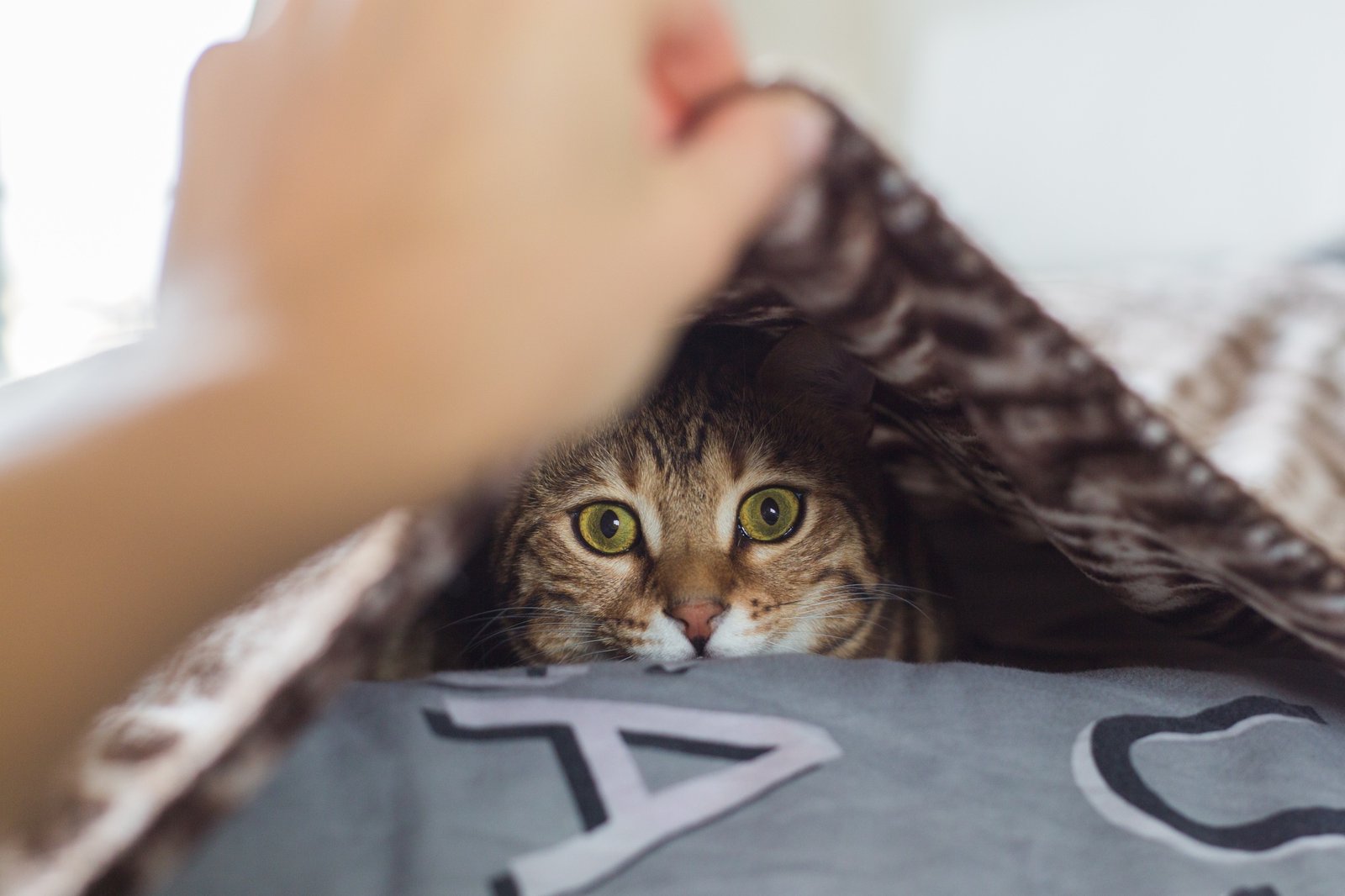
Cats hide to rest, feel protected, avoid noise or conflict, adjust to change, or cope with pain or illness. Hiding is usually normal when it fits the situation and your cat still eats, drinks, moves, grooms, and uses the litter box normally. Sudden or persistent hiding with other changes deserves veterinary advice.
The useful question is not simply whether your cat hides. Ask whether the pattern is normal for this cat, whether they come out for usual activities, and whether anything else has changed.
Table of Contents
- Is my cat’s hiding normal or concerning?
- Why do cats hide?
- Why is my new cat hiding?
- When should I call a vet about a hiding cat?
- What should I do when my cat is hiding?
- How can I create safer hiding places?
- What should I track when hiding is new?
- How can I prevent conflict-related hiding?
- Conclusion
- Frequently Asked Questions
- References
Is my cat’s hiding normal or concerning?
Hiding is usually normal when it is brief, predictable, and followed by your cat’s usual routine. It is more concerning when it begins suddenly, lasts much longer than usual, or occurs with appetite, litter box, mobility, grooming, breathing, or behavior changes.
| What you notice | Usually more reassuring | More concerning |
|---|---|---|
| Timing | Hides during visitors, vacuuming, naps, or other familiar situations | Hiding starts suddenly without a clear reason |
| Duration | Comes out at usual times for food, play, or attention | Remains hidden most of the day or progressively longer |
| Eating and drinking | Normal intake | Eating less, refusing food, or drinking much more or less |
| Litter box | Normal urine and stool | Straining, repeated visits, accidents, diarrhea, or no observed use |
| Movement | Walks, jumps, and stretches normally | Limping, stiffness, weakness, or reluctance to move |
| Body language | Loose posture, soft eyes, settles comfortably | Tense crouch, flattened ears, wide pupils, trembling, pain response |
| Overall routine | Normal grooming, sleep, play, and social pattern | Poor grooming, unusual sleepiness, vomiting, vocalizing, or withdrawal |
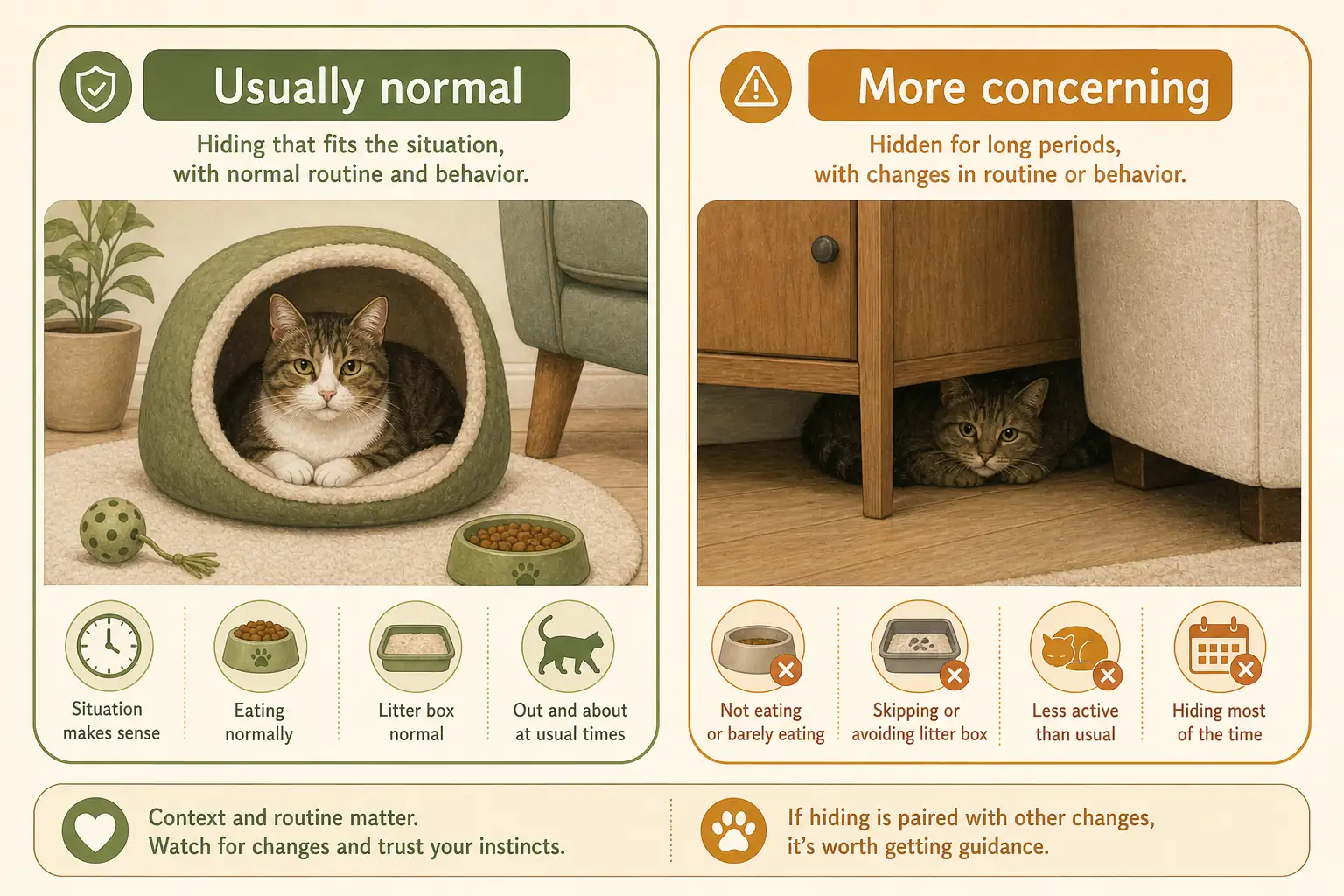
Do not assume that a cat is fine simply because they are quiet. Cats may withdraw when they are stressed or unwell, so look at the whole pattern rather than the hiding spot alone.
Why do cats hide?
Cats hide because a small enclosed space can provide privacy, safety, warmth, and control. Hiding is a normal coping behavior, but the trigger can range from an ordinary nap to environmental stress or physical discomfort.
Common reasons include:
| Possible reason | Clues that may fit | Helpful response |
|---|---|---|
| Rest and privacy | Familiar hiding time; relaxed body; normal routine afterward | Let the cat rest undisturbed |
| Noise or visitors | Hides during vacuuming, repairs, parties, or unfamiliar voices | Reduce noise and protect a quiet room |
| Household change | Move, new furniture, schedule change, new person, or new pet | Restore predictability and give choices |
| Social conflict | Another pet blocks paths, stares, chases, or guards resources | Separate resources and reduce forced contact |
| Temperature or comfort | Chooses a warm, dark, or enclosed resting area | Provide safe covered beds in comfortable locations |
| Pain or illness | Hiding is new and paired with appetite, movement, grooming, or litter box changes | Contact a veterinarian |
The AAFP/ISFM environmental needs guidelines identify safe places, separated key resources, play opportunities, and predictable positive interaction as important parts of a healthy feline environment.1 A hiding place is useful when the cat can enter and leave freely and is not trapped by another pet or person.
Why is my new cat hiding?
A new cat often hides while learning the home’s sounds, scents, people, routes, and routines. The safest response is to start small, provide essentials nearby, and let trust develop without pulling the cat from hiding.
Set up one quiet room with:
- an open-sided covered bed or sturdy box
- food and water placed away from the litter box
- an accessible litter box
- a scratching surface
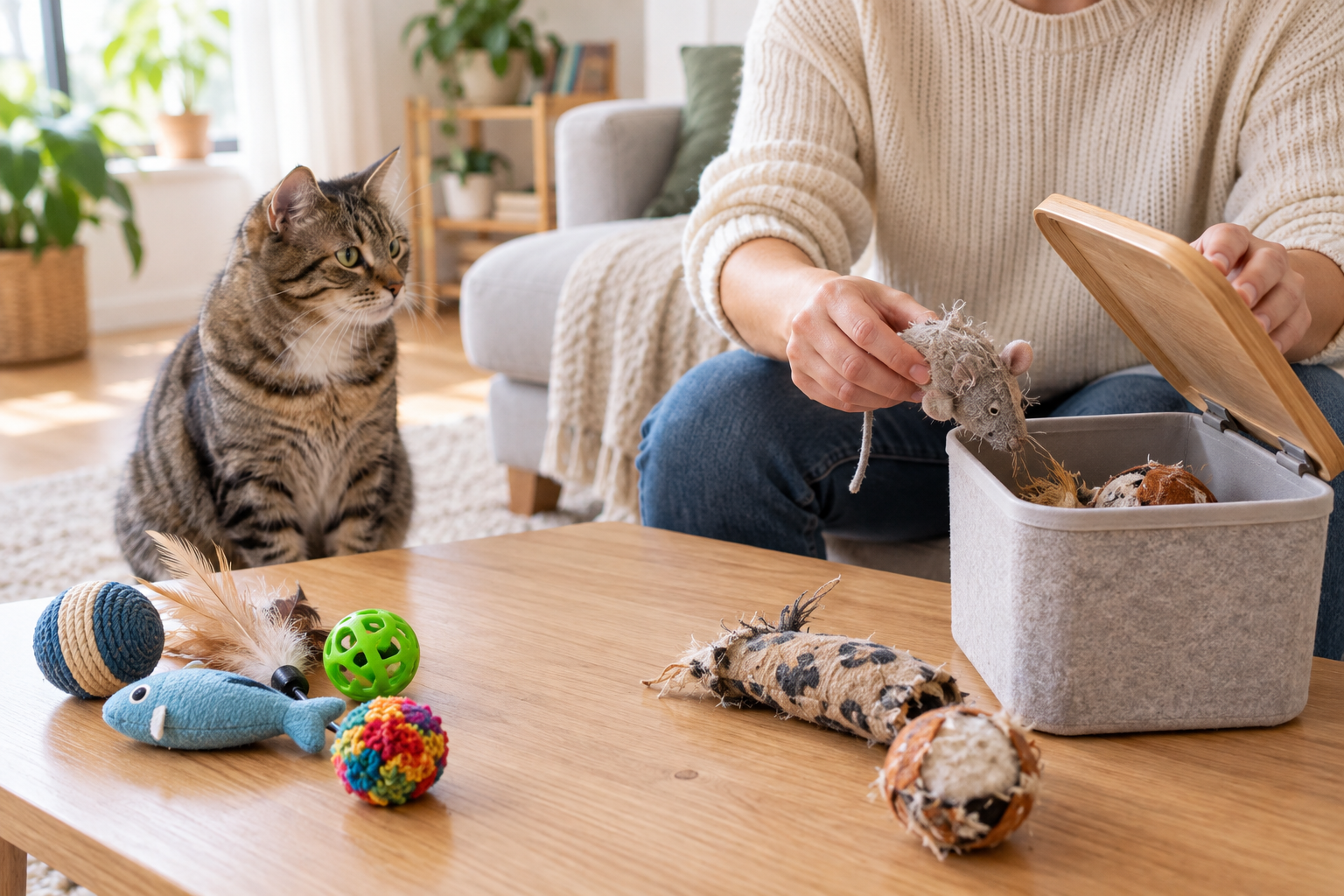
- a few simple toys
- a chair or floor cushion where you can sit quietly
Spend short periods in the room without staring, reaching, or blocking the exit. Speak softly, offer food or play at a comfortable distance, and let the cat choose whether to approach.
Use the SnuggleSouls guide to the first 30 days with a new cat for a gradual settling plan. Arrange the new cat’s first veterinary visit rather than assuming all hiding is adjustment.
When should I call a vet about a hiding cat?
Call your veterinarian when hiding is a sudden personality change, persists without improvement, or occurs with another physical or behavioral change. Cats can hide signs of illness, so withdrawal may be an early clue rather than a diagnosis.2
Call promptly if your cat is hiding and also:
- eats less, refuses food, or loses weight
- vomits repeatedly or has persistent diarrhea
- strains to urinate, makes repeated litter box trips, or produces little or no urine
- breathes with difficulty or open-mouth breathes
- seems weak, collapses, or cannot walk normally
- reacts painfully to touch or avoids jumping
- has a wound, swelling, or suspected trauma
- stops grooming or develops a suddenly unkempt coat
- vocalizes unusually, seems confused, or cannot settle
Inability to urinate, breathing difficulty, collapse, severe weakness, seizures, suspected poisoning, and major trauma require urgent veterinary care. Do not delay care while trying to coax the cat out; call the clinic for safe transport guidance.
The SnuggleSouls guides to cat litter box medical causes and chronic diarrhea in cats can help organize related observations without replacing veterinary assessment.
What should I do when my cat is hiding?
Pause, make the area safe, provide nearby essentials, and let the cat decide when to emerge. Do not chase, drag, spray, corner, or punish a hiding cat.
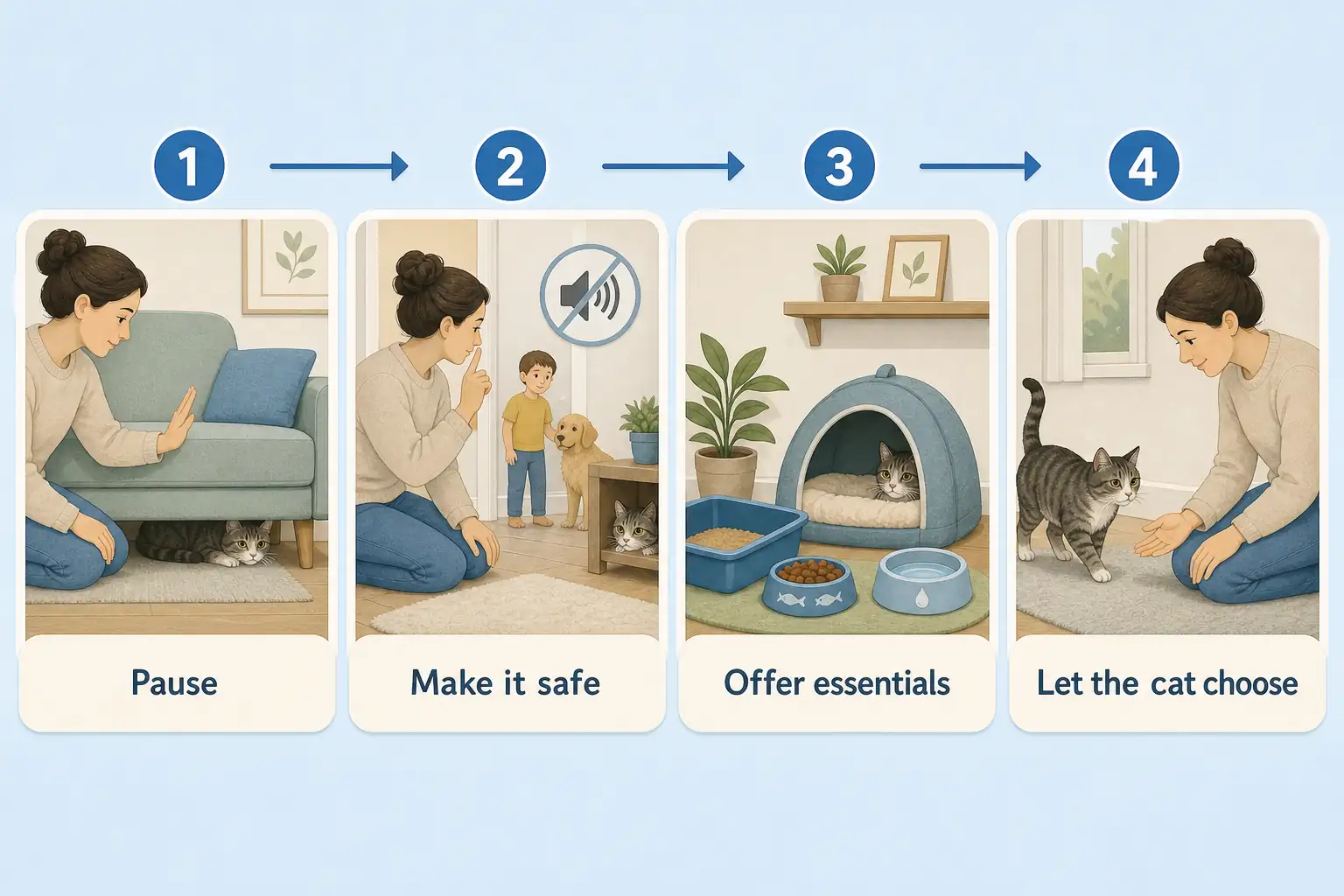
Follow these steps:
- Check from a distance for breathing trouble, injury, or immediate danger.
- Reduce noise and keep children or other pets away.
- Make sure the cat is not trapped behind an appliance or in an unsafe space.
- Keep food, water, and a litter box accessible without crowding the hiding place.
- Sit nearby quietly or leave the room if your presence increases tension.
- Offer a treat or gentle play later, but do not use it to force contact.
- Call a veterinarian when the pattern or accompanying signs are concerning.
Body language can help you choose the right distance. Soft eyes and a loose posture are different from a compressed crouch, flattened ears, wide pupils, or tense stillness. The SnuggleSouls cat tail language guide and Cats Protection body-language guide emphasize reading signals together with context.3
How can I create safer hiding places?
Provide approved hiding spaces that offer privacy while remaining accessible for observation and emergencies. A covered bed, carrier left open, sturdy box, or elevated cubby is safer than gaps behind appliances or inside furniture.
Good hiding places should:
- allow the cat to enter and leave freely
- have at least one clear route that another pet cannot easily block
- sit in a quiet but usable part of the home
- stay dry, stable, and free of cords or hazards
- be reachable if emergency transport is necessary
- exist in more than one area of a multi-cat home
Never seal every hiding place in an attempt to make a cat social. Instead, block genuinely dangerous gaps and replace them with safer options. A secure hiding place can help a cat feel confident enough to emerge.
What should I track when hiding is new?
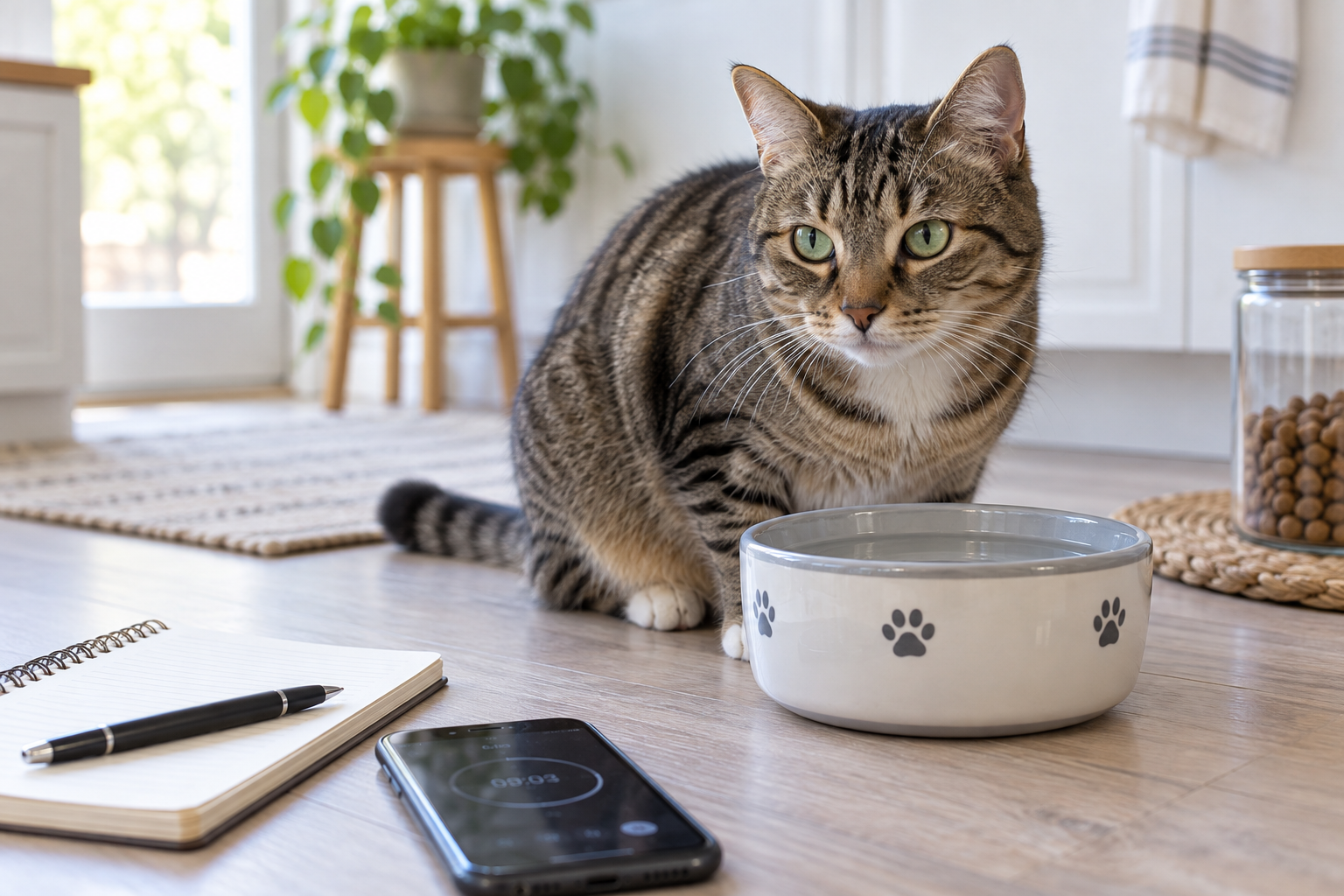
Track the hiding pattern alongside appetite, drinking, litter box use, movement, grooming, and household changes. Specific observations help distinguish a situational response from a broader health or welfare problem.
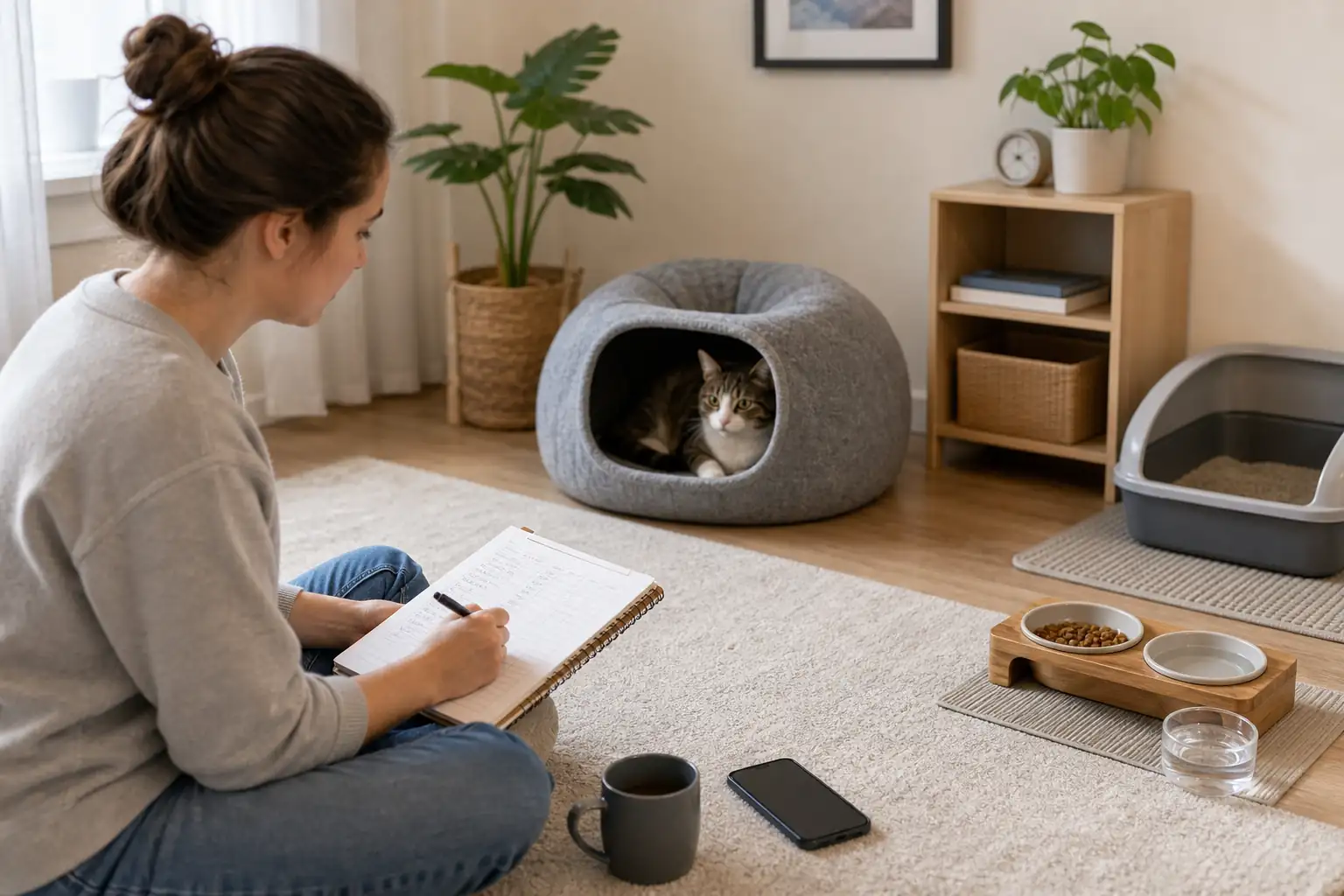
For several days, record:
- when and where the cat hides
- how long the cat stays hidden
- whether the cat comes out when the home is quiet
- food and water intake
- urine and stool changes
- vomiting or diarrhea
- grooming, walking, jumping, and play
- unusual sounds, visitors, schedule changes, or pet conflict
- any new medication, diet, or recent event
Short videos can help when body language or movement changes are difficult to describe. Do not delay a needed appointment simply to complete a log.
How can I prevent conflict-related hiding?
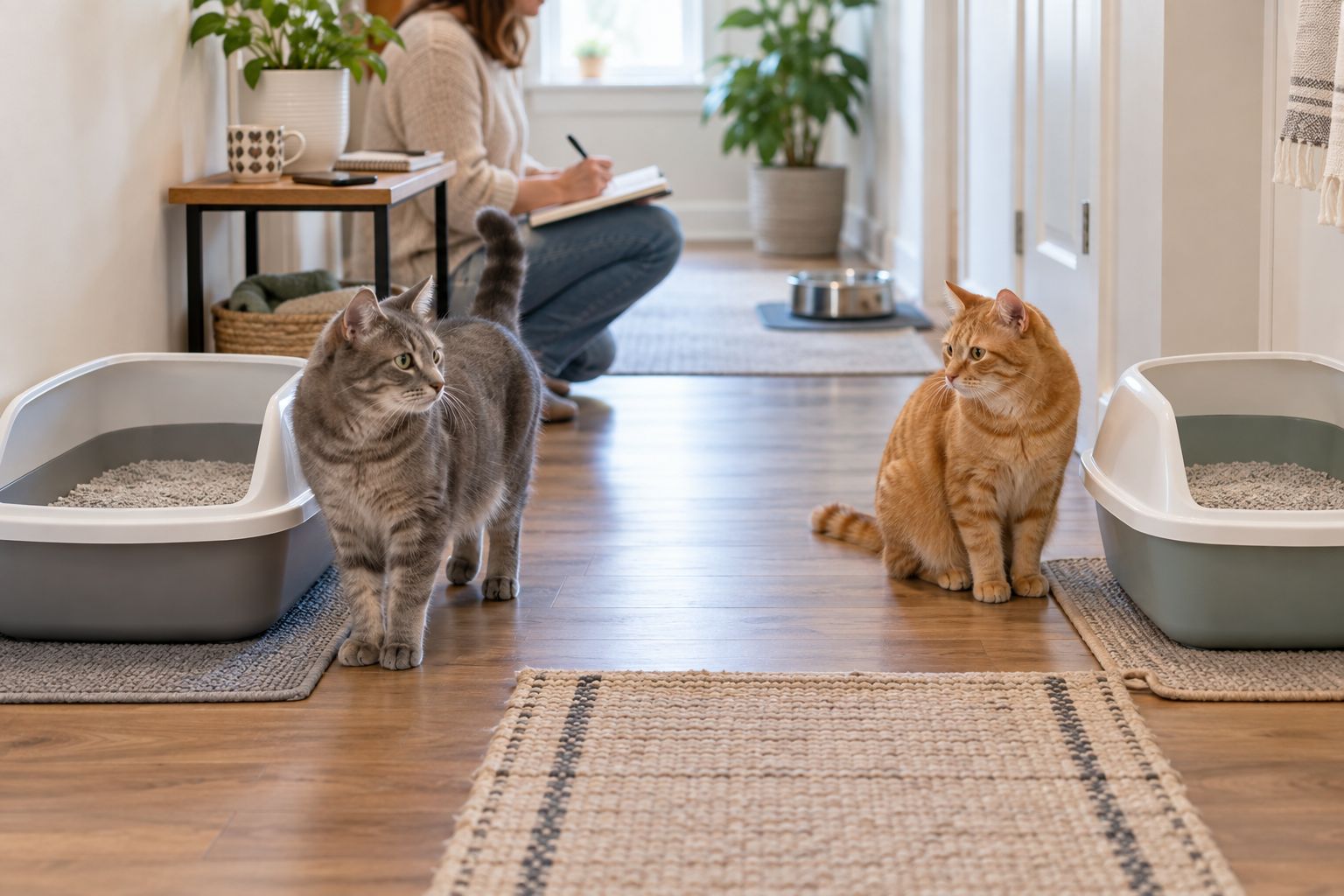
Reduce conflict by giving each cat easy access to separate resources and multiple routes through the home. Subtle staring, blocking, chasing, or guarding can make one cat hide even when overt fights are rare.
Provide:
- multiple food and water locations
- enough litter boxes in separate accessible areas
- several resting and hiding choices
- vertical perches and escape routes
- individual play and attention
- gradual introductions for new pets
If hiding occurs with urine marking or litter box avoidance, use the SnuggleSouls guide to cat stress and peeing while arranging appropriate veterinary assessment. Browse the cat behavior guides for related low-pressure support.
Conclusion
Hiding is a normal and useful cat behavior when it fits the situation and the cat continues their usual eating, drinking, movement, grooming, and litter box routine. The safest response is to respect the hiding place, reduce pressure, and provide predictable access to essentials.
Take a sudden or persistent change seriously. Hiding paired with poor appetite, pain, weakness, vomiting, diarrhea, breathing trouble, or urinary changes needs veterinary guidance. Watch the whole cat, not only the place where they disappear.
Frequently Asked Questions
How long should I let my cat hide?
Let a relaxed cat use a safe hiding place as long as they choose. Contact a veterinarian when hiding is new, prolonged, worsening, or paired with appetite, litter box, movement, grooming, or other health changes.
Should I pull my cat out of hiding?
No, unless the cat is in immediate danger and you can move them safely. Pulling or cornering can increase fear and damage trust. Call a veterinarian for handling guidance when illness or injury is possible.
Why is my cat suddenly hiding from me?
A sudden change may follow noise, visitors, conflict, routine disruption, pain, or illness. Review what changed and monitor eating, drinking, litter box use, movement, grooming, and body language.
Why does my cat hide during the day and come out at night?
Some cats feel safer when the home is quiet. This can be common in new or cautious cats, but seek guidance if the cat avoids food, water, litter boxes, or normal interaction.
Do cats hide when they are sick?
Some cats do. Hiding alone cannot diagnose illness, but sudden withdrawal paired with appetite, energy, grooming, movement, breathing, vomiting, diarrhea, or urinary changes needs veterinary attention.
Is hiding normal after adoption?
Yes, temporary hiding is common while a new cat adjusts. Start with a quiet room, provide safe hiding options and essentials, and allow voluntary contact. Arrange a veterinary visit if the cat is not eating or seems unwell.
Why is my cat hiding from another cat?
The other cat may be staring, chasing, blocking routes, or guarding resources. Separate key resources, add escape routes and elevated spaces, and seek veterinary or qualified behavior support if conflict continues.
References
[1] Ellis, S. L. H., et al. AAFP and ISFM Feline Environmental Needs Guidelines.
[2] VCA Animal Hospitals. Recognizing Signs of Illness in Cats.
[3] Cats Protection. Cat Body Language.

 Why Does My Cat Jerk Awake Suddenly? Startle Reflexes, Sleep Starts, and Vet Clues">
 Cat Scratching Door Frame: How to Protect Trim">
 EN
EN DE
DE ES
ES PT
PT